Edith Gay Little and the wooden memorial

wooden grave

The re-imagined story …

He knew exactly what type of memorial he wanted for Edith, and he would make it himself.

He sketched it out on the table in the front room at 59 Station Road. A large cross, something that would stand proud and obvious.

In Memory of Edith Gay, the beloved wife of Edward Little. He practised the style of lettering he would use. He wanted something elegant. No, that was too ornate. He rejected his first attempt. The next was too difficult to read. Eventually he settled on a simple script, something Edith would have liked.

Would he leave a space for his own name to be added in the future? He decided not to. He couldn’t trust anyone else to choose the right script or to execute the work to a sufficiently high standard. This memorial was a symbol of his love. He didn’t want it spoilt by some ham fisted amateur.

He sat in the silent house; the late summer afternoon sunshine streamed through the window. He’d make a start now, he decided. He had a nice piece of seasoned timber in the shed.

Little

The facts …

I first discovered this memorial more than ten years ago and each spring when the guided walks resume, I always have difficulty finding this grave again. And every year I wonder if it has managed to survive another winter, because this extremely unusual memorial is a wooden one.

It marks the grave of Edith Gay Little, a former nurse, who died on August 23, 1928 at the Great Western Railway Medical Fund Hospital.

Edith’s husband was Edward Little and I believe it was he who made this wooden memorial. Edward was employed as a bodymaker in the carriage and wagon works at the Midland & South Western Junction Railway at Cirencester. He was promoted to chargehand and eventually foreman and by 1923 was based in Swindon.

Edward was no stranger to Swindon as it was here that he married his first wife, Elizabeth Ann Bindon, at St Paul’s Church on August 21, 1897. Elizabeth died in 1909 aged 38 and was buried ‘under Coroner’s warrant’ in South Cerney where they were living at the time.

On September 22, 1911 Edward married for the second time. By now he was 41 and his bride Edith Gay Smith was 43. The couple married at Holy Trinity Church, Trowbridge.

Unfortunately, there are no known photographs of this memorial when it was new. How distinctive it must have looked, standing out against the surrounding white gravestones. I imagine Edward would have visited the grave regularly, polishing and treating the wood to preserve it.

It would appear that Edward had no children by either of his wives. He retired from the railway works in 1935 and continued to live at 59 Station Road, the home he had shared with Edith.

Sadly, he ended his days in Roundway, the psychiatric hospital in Devizes, where he died on March 17, 1953. Probate was proved at Oxford and his effects, valued at £2,369 16s 5d, were placed in the hands of Lloyds Bank.

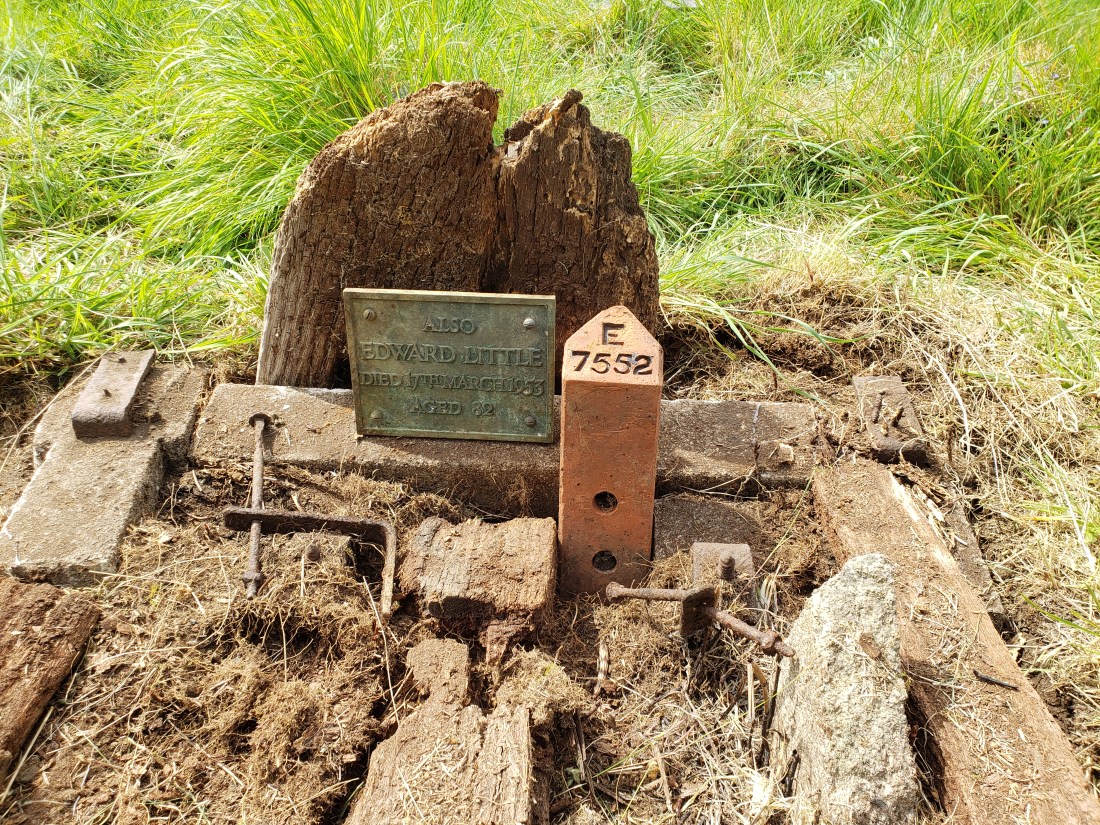
He was buried with Edith. With no one left to come and polish the wooden memorial it now lies at the mercy of the elements.

This week Radnor Street Cemetery volunteers Kevin and Brian managed to locate and reveal the wooden grave. They even found a memorial plaque to Edward, the man who I believe was the maker of this unique and poignant memorial.
Little (2)

The Bentley family

Sometimes a family leaves a very small footprint in this world and the Bentley family seems to be just such a one. But there is a lot to say about their stylish headstone full of symbolism. The fluted columns represent the entrance to heaven while the furled scroll indicates a life that had more to be lived. The bouquet of flowers express condolences and grief.

This is the last resting place of Pelham Bentley who is buried with his parents. It is likely their names are mentioned on the kerbstone edging.

William Charles Bentley married Sarah Wynn Malley at St. George’s Church, Wolverton in 1877. Like Swindon, Wolverton was established as a locomotive repair shop for a railway line under construction, situated at the midpoint of the London & Birmingham Railway in 1838.

William and Sarah both hailed from Lancashire, William from Bury and Sarah from Lancaster. In 1878 Sarah gave birth to twins, a boy Pelham and a girl Lily. By 1881 they had moved to Swindon where William worked as a Coach Trimmer and the family lived at 11 Harding Street.

By 1901 Pelham was lodging in North Manchester where he was was also working as a Coach Trimmer but by 1911 he was back in Swindon. Aged 32 he was living at 129 Broad Street with his parents and his sister Lily who was an Elementary School Teacher.

Lily married John Wells in Swindon during the December quarter of 1912 but at the moment I can find nothing more about him or them. William died in 1937 and by 1939 both Lily and her mother Sarah are widowed and living at 21 York Road.

The Bentley family were obviously a small, close knit family, the type of ordinary people who worked hard and contributed to the building of Swindon. They do not seem to have left us much to remember them by, except this rather beautiful headstone.

What can a headstone tell you Pt 2?

There are 33,000 burials in Radnor Street Cemetery but rather fewer memorials. The spread of headstones vary in the different sections with E and D sections the most densely populated and dotted across the cemetery are 104 distinctive Commonwealth War Graves headstones.

When the Burial Board published a list of fees concerning interment in the new cemetery in 1881 it included the following statement:

All inscriptions and plans of monuments, tablets, and stones, to be erected in the Cemetery or chapels to be submitted to the Board for its approval.

The majority of the headstones in Radnor Street Cemetery are simple and stylish, but have a closer look and you will find some fascinating detail.

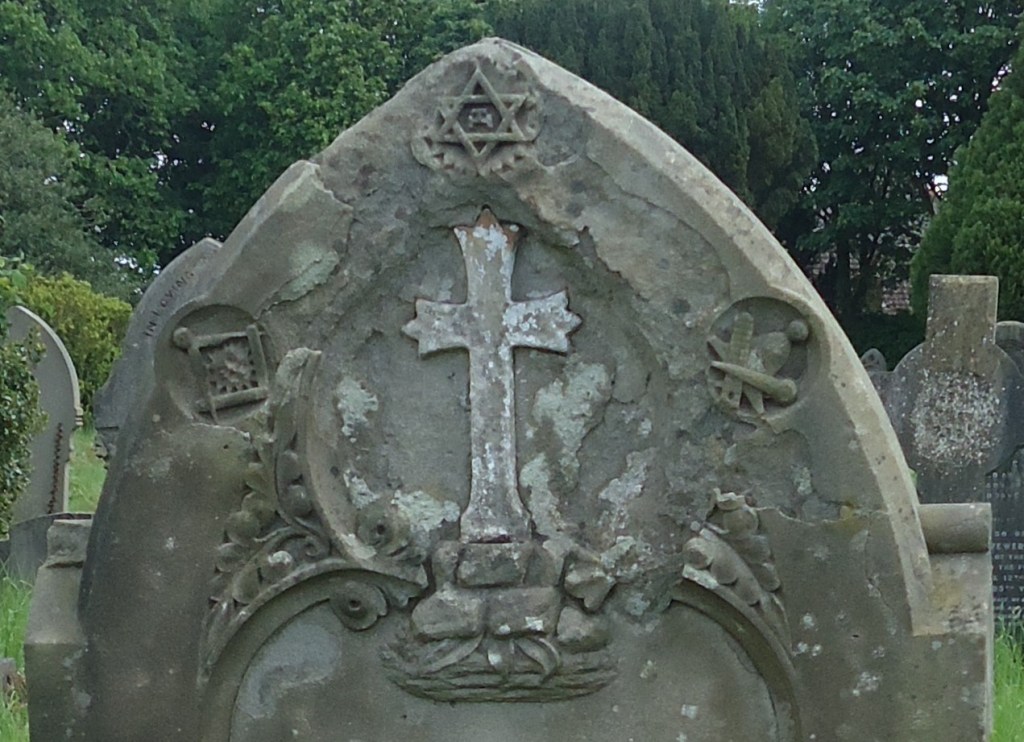
Victorian Swindon had strong links with Freemasonry and this headstone (see below) has examples of Freemasonry symbolism, including the Square and Compasses, which depict a builder’s square joined by a compass.

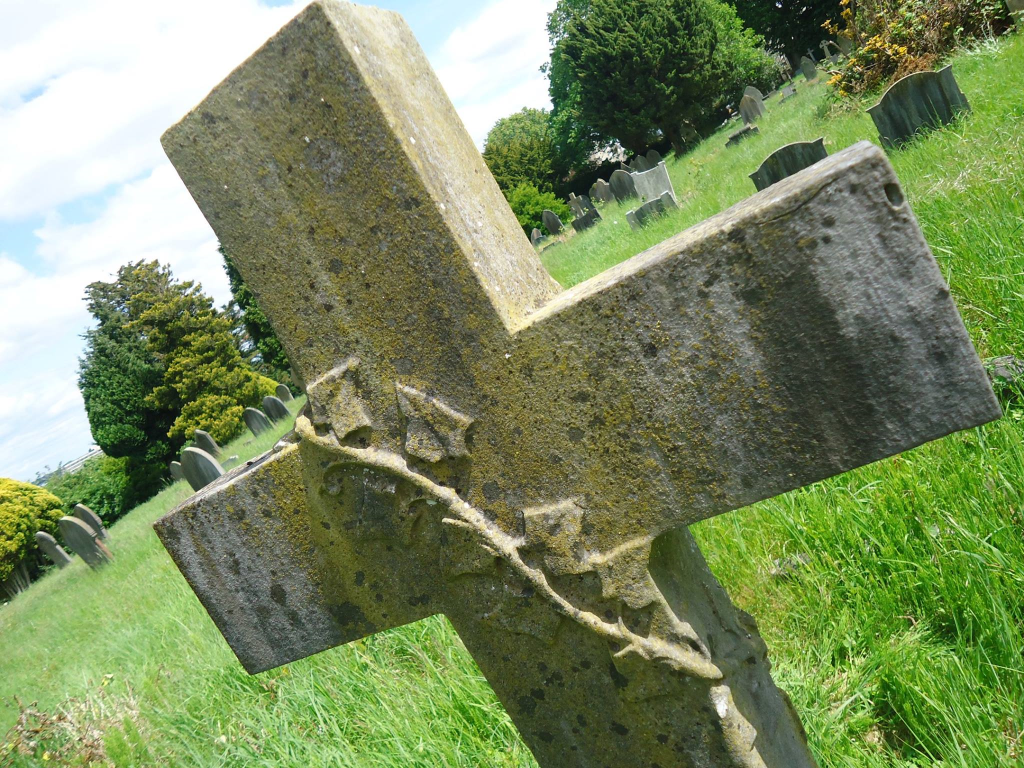
Ivy trailing across a headstone symbolises friendship and immortality.

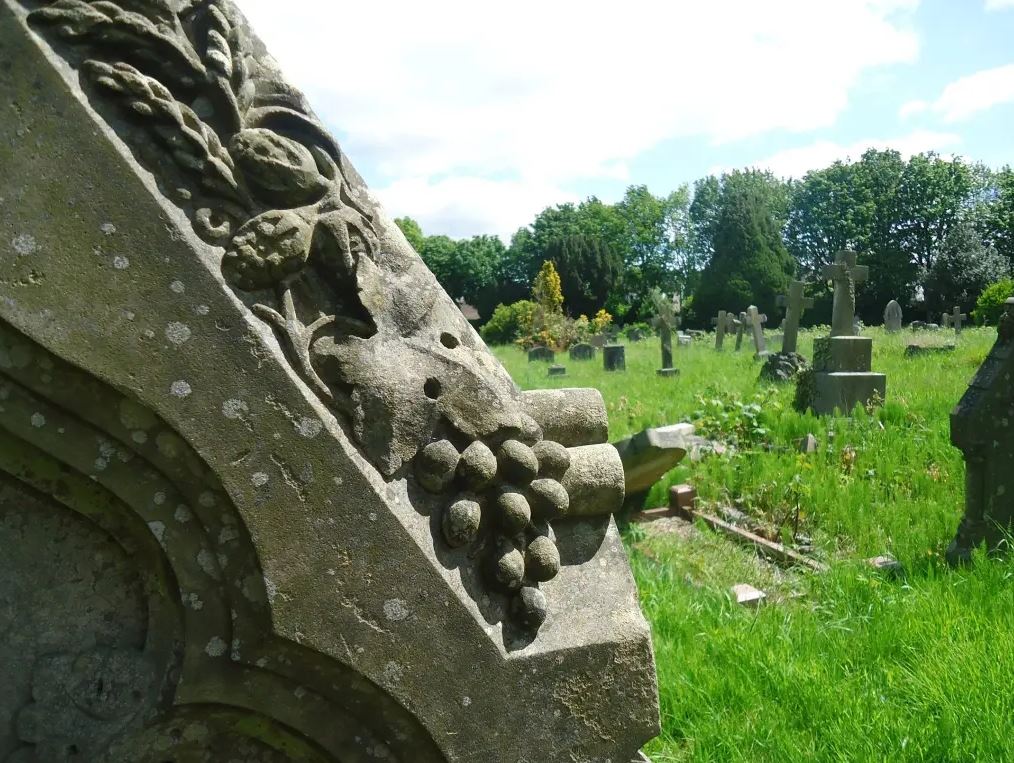
Fruits in many varieties are symbolic of the fruit of life, while grapes and leaves represent Christ and Christian faith.

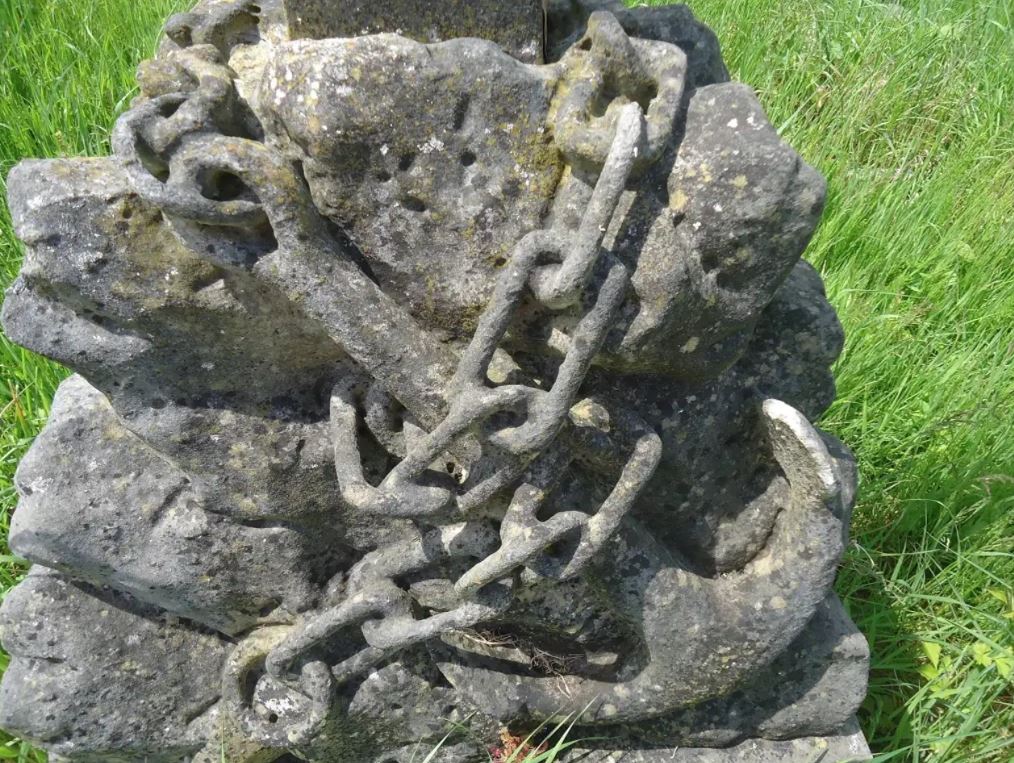
An anchor and/or chains have various meanings, apart from the obvious naval one, and include the severance of the body and soul. There is also a connection with the International Order of Odd Fellows, another popular organisation here in Swindon.

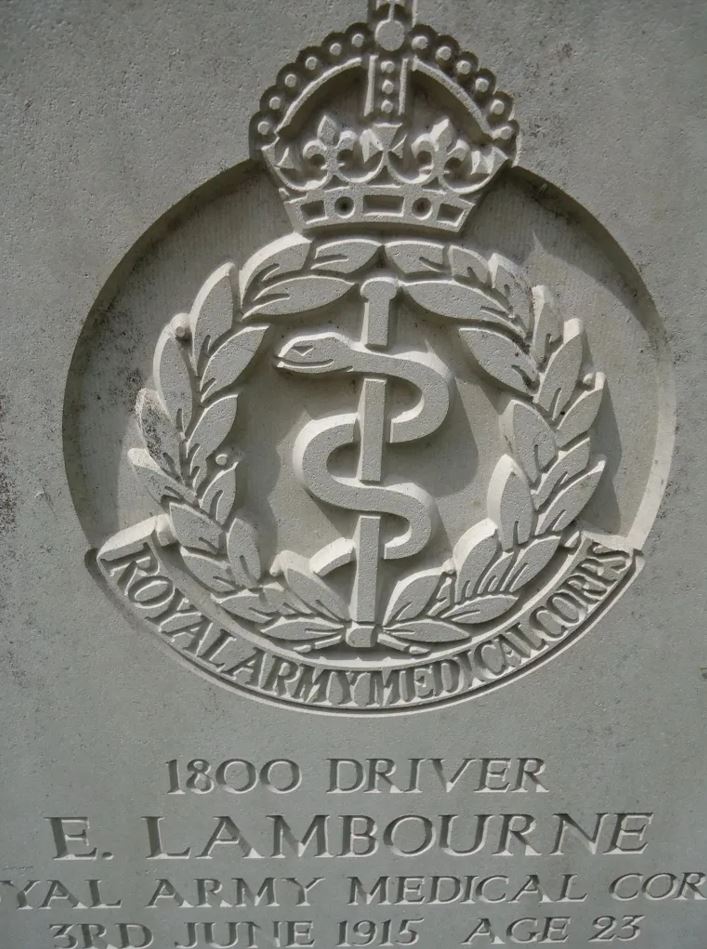
The Commonwealth War Graves headstones all carry the regimental insignia of the deceased service personnel. This is the badge of the Royal Army Medical Corps.

Flowers have various meanings for example the rose is symbolic of love and virtue. A rosebud can indicate the death of a young person. The problem is trying to identify what the variety of flower is on a weathered headstone.

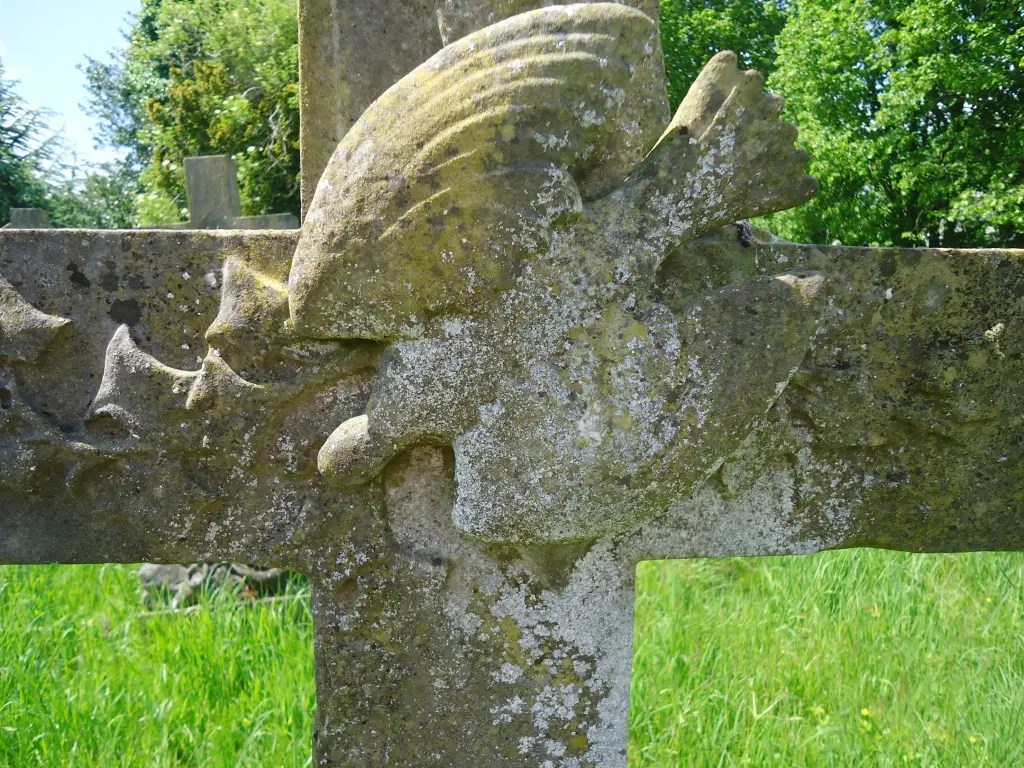
The bird/dove has various meanings including that of eternal peace.

And the letters IHS seen on many headstones in the cemetery, come from the Greek spelling of Jesus and symbolise the first three letters – Iota, Eta, Sigma.

What can a headstone tell you?

Thomas-and-Susan-Hughes

What can a headstone tell you? A surprising amount actually, and that doesn’t just include the inscription.

In older churchyards you might find skulls and crossed bones and dancing skeletons on headstones but you are unlikely to come across these symbols in Radnor Street Cemetery. There are angel monuments and angels carved in relief, but most of the iconography is more subdued.

The cemetery was established in response to several urgent needs. The rapid growth of the town saw diminishing space for burials in the existing churchyards (see Proposed Cemetery for Swindon) and a large and a growing congregation of Dissenters or Non-Conformists. This accounts for the non-denominational nature of the cemetery chapel (most municipal cemeteries have an Anglican and a Dissenters’ Chapel) and why the burial ground itself is unconsecrated ground.

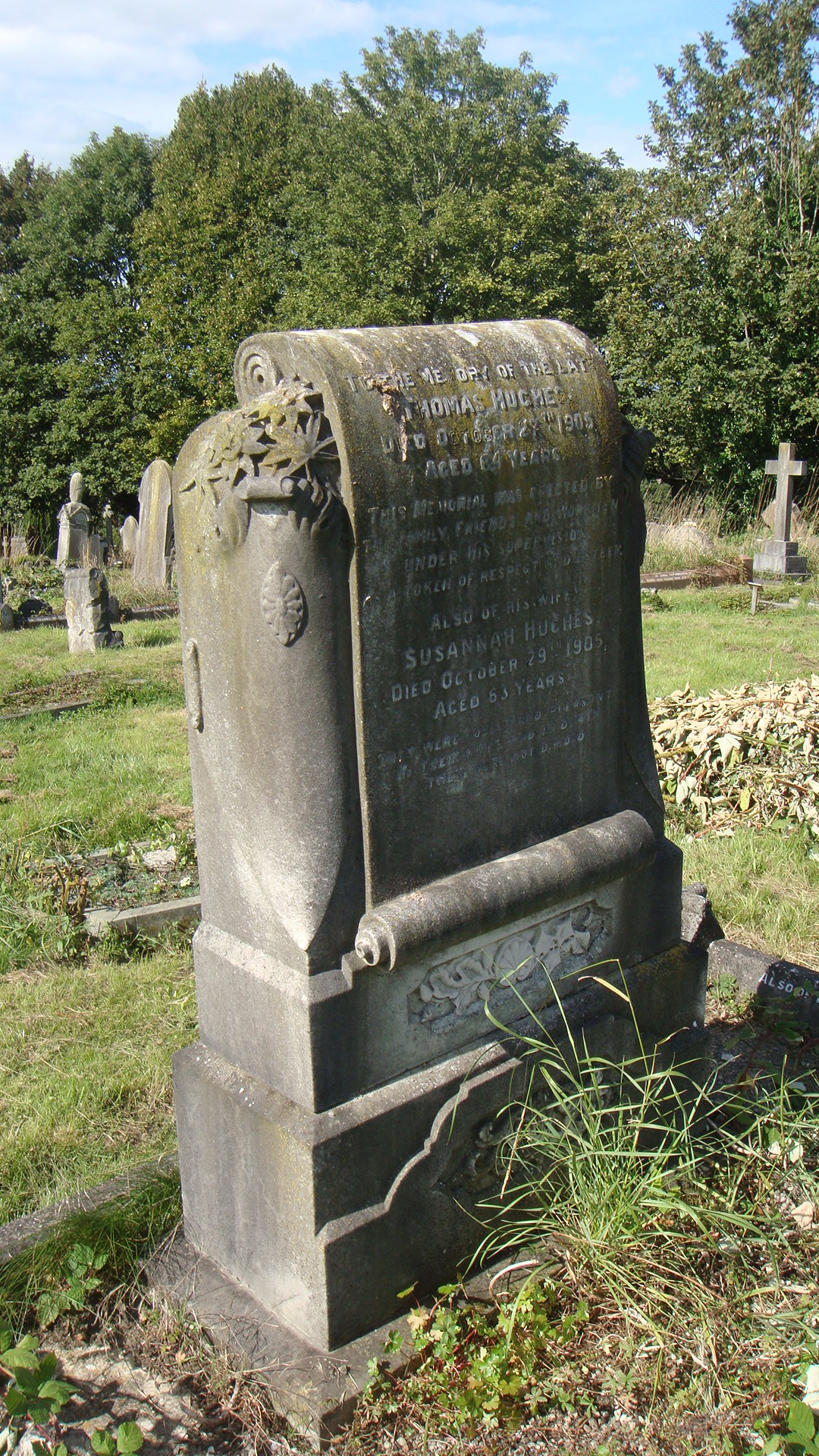
So, what does the inscription on Thomas and Susannah Hughes’s headstone tell us?

To the memory of the late Thomas Hughes/Died October 27th 1905/Aged 64 years/This memorial was erected by the family friends and workmen under his supervision/a token of respect and esteem/also of his wife/Susannah Hughes/died October 29th 1905/aged 63 years/They were (illegible) and pleasant/(illegible) their lives and death/they were not divided

The headstone is in the shape of a scroll, which itself has various interpretations. It can signify a love of learning or a religious conviction. A scroll partially unfurled can indicate a premature death, although not in this case as both Thomas and his wife Susannah were in their 60s.

Acanthus leaves are a classical symbol dating from antiquity and represent both immortality and life’s prickly path. Ivy leaves represent friendship and immortality and oak leaves hospitality and endurance. The medallion shaped flower is most probably a sunflower, representing affection and remembrance while the Easter lily signifies resurrection.

The facts …

We regret to announce the death, on October 27th, after a very short illness, of Mr Thomas Hughes, foreman of the Erecting Shops at Swindon.

Mr Hughes was born at Smethwick, Staffordshire in 1841, and in 1855 was apprenticed to Messrs. James Watt & Co., late Boulton & Watt, Engineers, Soho Foundry, Smethwick, near Birmingham, as general engineer, machinist, turner, fitter and erector. He left Soho Foundry in 1862, after the completion of his apprenticeship, and joined the service of the London and North Western Railway at Crewe, where he stayed for only a short time, returning to Soho Foundry and eventually entering the service of the Great Western Railway Company at Swindon in 1866, as an erector. He was appointed foreman in 1876, and his position was one of the most important at Swindon, as he had full control of the erection of new engines, also of the erecting work in connection with repairs.

He was a man of marked ability in his profession, and was held in high esteem by the officials, particularly by the Chief Superintendent, who, at the opening meeting of the Junior Engineering Society on October 31st, alluded to the said incident in the following terms: – “This Society is unfortunate in a lost which we have sustained within the past  few days. I allude to the death of poor Foreman Hughes. He was a member of our Committee, and I am sure I express your views when I say he was one of your most respected members. I am proud to say that Tom Hughes was a friend of mine for a great number of years, and I can scarcely express to you the shock it gave me when I heard of his death.”

For a number of years Mr Hughes held the position of First Engineer in the Company’s Fire Brigade, and in this direction exhibited characteristic energy and interest. He was also a Member of the Council of the Mechanics’ Institution, to which he was devotedly attached. The case is a peculiarly sad one, as within a day or two of Mr Hughes’s death, his wife, who had been ailing for some time, passed away.

Great Western Railway Magazine December 1905.

Death of Mr Hughes

We regret to announce the death, which took place on Friday morning, at his residence, 8 Faringdon Street, Swindon, of Mr T. Hughes, a foreman in the GWR works. Deceased, who had only been ailing a short time, passed away somewhat suddenly. He had been a foreman in the GWR works – over the A Shop (New Work & Erectors), B Shop (Erectors), and P Shop, for 30 years, having been employed in the GWR Works 40 years. He was well known as a member of the Council of the Mechanics’ Institute, in which he took an active interest, especially in the Library and Reading Room, having been a member of the council for seven years. Deceased leaves a widow and grown up family, for whom the deepest sympathy will be felt, especially as Mrs Hughes is lying seriously ill. Mr Hughes was also a prominent member of the GWR Fire Brigade.

Death of Mrs Hughes

An extremely pathetic sequel to the death of Mr T. Hughes, a GWR foreman, which took place on Friday last, is the fact that his wife passed away yesterday morning. She had been ill for some time, and was lying prostrate when her husband died. The funeral takes place tomorrow, when the bodies of Mr & Mrs Hughes will be buried in the same grave in the Swindon cemetery.

Swindon Advertiser November, 1905

In 1871 Thomas and Susannah lived in a shared property at 24 Oxford Street. By the time of the 1881 census they had moved with their six children into one of the larger, foreman’s houses at 8 Faringdon Street where they remained for the rest of their married life.

They were buried on the same day, October 31, 1905 in plot D141. They share their grave with their eldest son Charles Thomas, who died in 1907 and their son in law, Ernest James John Tarrant, the husband of their daughter Alma Susan, who died in 1914.

Thomas-Hughes

Mr Thomas Hughes

James John Brown – a colourful life

When James John was born in Bristol in 1857 he shared the family surname Green. His parents, James Henry Green and Sarah Kettle Cummings, had married at St. James, Bristol on December 25, 1856. In 1861 they were still living in Bristol, still under the name of Green but sometime after this they adopted the name Brown and so far I haven’t been able to discover why.

Their eldest son James John Green/Brown led an equally colourful life. He had three wives (not all at the same time) and 9 children.

In 1879 he married Annie Russell the first of his three wives and by 1881 they were living with the Brown family at 13 Holbrook Street, Swindon where James worked as a Hair Carder.

By 1891 he had set up in business as a Furniture Dealer at 8 Station Road where the couple were living with their five children Annie 9, Charles 8, Nellie 6, Mabel 4 and three year old Archibald. It is here that Annie sadly died in 1899 aged 37 years and the couple’s daughter Nellie in 1906 aged 21.

In 1900 James John married Emma Harrison who died in 1903. His third wife was Elizabeth Nutman whom he married in 1908. She died in 1920. Neither of these two wives appear to be buried in Radnor Street Cemetery.

In 1911 James John Brown was the licensed victualler at the Bell Hotel in Old Town. In 1915 he was a candidate in the local elections where he represented Queens Ward.

James John Brown died on November 27, 1921 at the Duchess of Sutherland Public House in Hornsey, London where his son was the landlord. His home address was given as The Burlington, 8 Buenos Ayres, Margate.

His body was returned to Swindon where he was buried Radnor Street Cemetery in grave plot D40. He is buried with his first wife Annie and their daughter Nellie. The grave is marked by an obelisk memorial. All things Egyptian were popular in the 19th century and remained so into the 20th. The Egyptian obelisk is a symbol of eternal life and resurrection and represents the sun god Ra. Perhaps James John Brown was hoping to have a go at continuing his colourful life!

Elizabeth and George Atkins – reunited

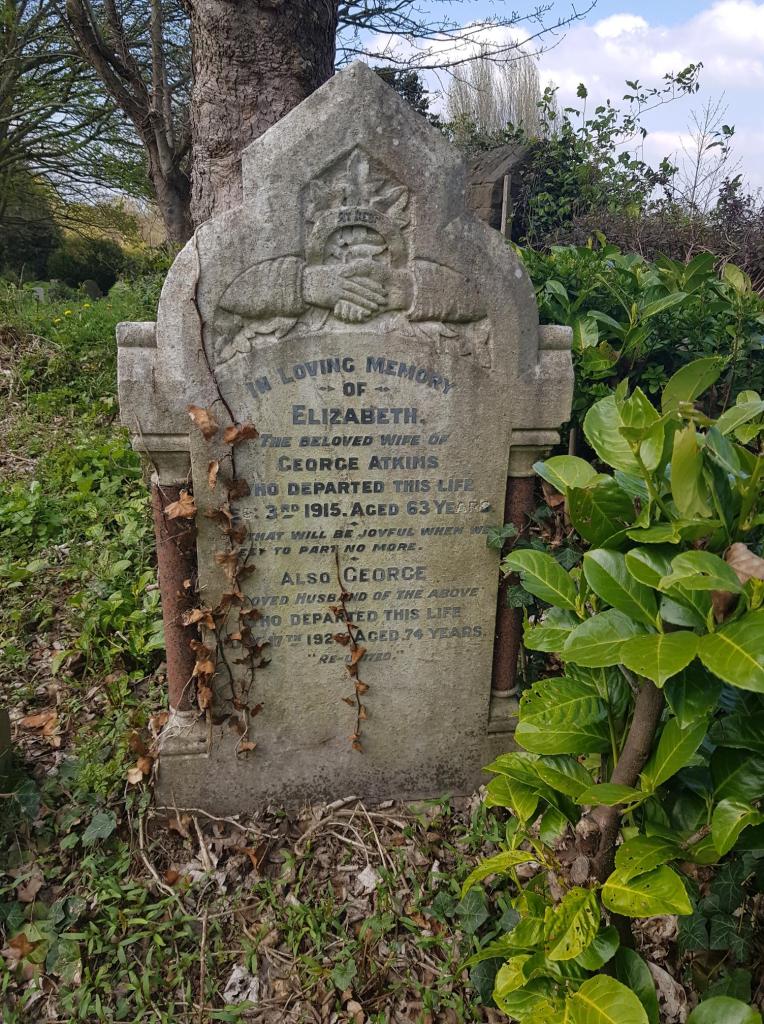
In recent years the hedge on the periphery of the cemetery has engulfed this headstone, so it was fortuitous that I was passing just after it had been trimmed and was able to take a photograph. A very elegant memorial, this headstone is full of funerary iconography and symbolism and tells us much about the couple’s relationship and religious faith.

The clasped hands is a symbol dating back to Greek and Roman funeral art. Interpretations of this symbol include the parting of a couple by death but also their reunion in the afterlife. In this example the hands are surrounded by ivy leaves which in turn represent friendship and immortality. The columns at either side of the inscription represent the entrance to heaven and the afterlife. So there is quite a lot going on here!

It would be fair to assume that the couple had a strong faith.

Their marriage banns were read at Christ Church but the marriage does not appear to have taken place there. Their first two children were baptised at the Faringdon Road Wesleyan Chapel where the couple worshipped and where they could possibly have been married.

By 1881 they were living at 7 Mount Pleasant, a short terrace of houses situated between Havelock Street and Brunel Street, lost beneath the 1970s development of the town centre. Originally from Birmingham, George worked as a brass finisher in the railway factory.

By 1891 George Elizabeth and their four children, Grace, John, Joseph and George were living at 92 Westcott Place. They would later live at 166 Westcott Place where Elizabeth died in 1915.

Elizabeth, aged 60 years, was buried in grave plot B3329 on December 8, 1915. George died aged 74 years at 49 Shelley Crescent (most likely Shelley Street) and was buried with Elizabeth on July 21, 1926. Elizabeth and George Atkins, reunited.

The Fortune family and those pesky grave markers

This is a tale of two disintegrating headstones and a misplaced grave marker. What began as an attempt to trace the occupants of two neighbouring graves has involved some confusing paperwork, but I’ve got there in the end.

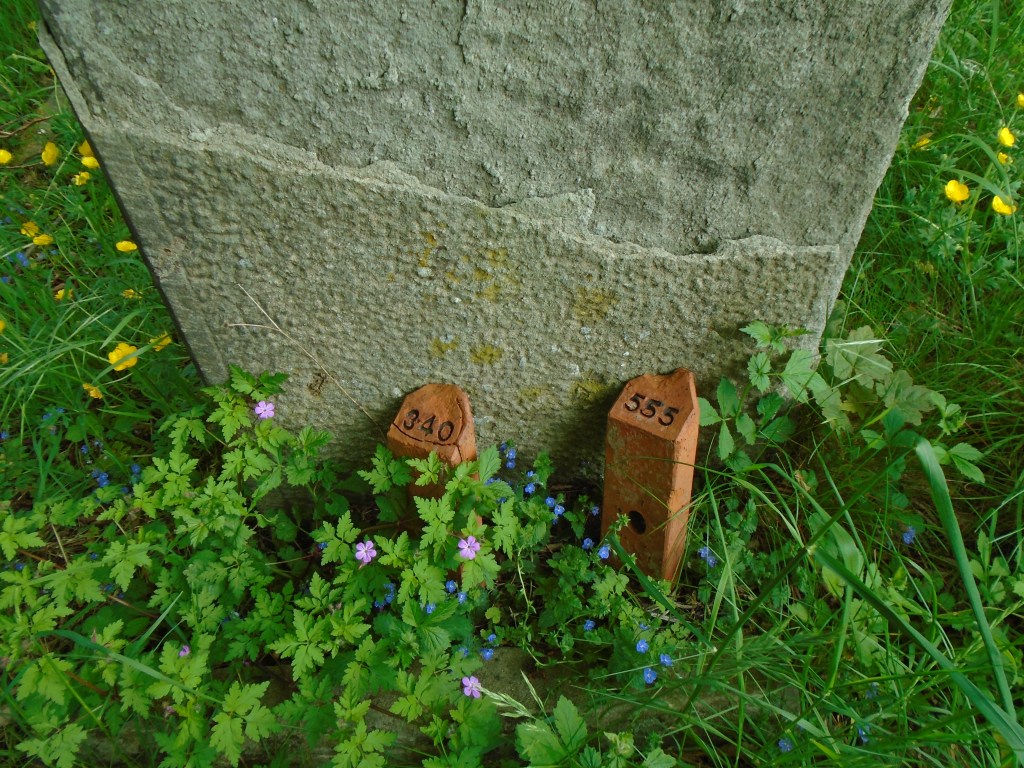
This is a cautionary tale of relying too heavily on the terracott grave markers in the cemetery. These portable brick like markers stamped with a letter and a number can be a big help when trying to pin point a plot, however they are very often in the wrong place. Perhaps back in the working day when there was a team of staff caring for the cemetery these markers were a useful identification aid. Unfortunately today they can be more of a hindrance, leading those searching for a grave on a confusing journey.

Many of the earliest burials in the newly opened cemetery took place here in Section A in the 1880s. In this area there are many public graves with numerous unrelated occupants. Funerals have always been an expensive business for the poor and frequently they had to bury their loved ones in a communal grave without a headstone. However, there are surviving headstones in Section A, among them several like these two badly weathered examples. Sadly, the inscriptions are completely lost and so it would appear is the identity and history of those buried here.

Someone has at some point propped up two of these grave markers at the back of one of the headstones, so I decided to see if they helped unlock the identity of who is buried here.

A consultation of the cemetery map quickly revealed that these are not the numbers of the two adjacent headstones. Grave plot A555 is a few rows removed from A340, as you can see from this image. However the marker for A340 is probably in the right location. The number of the neighbouring grave is plot A341 so now it was time to hit the burial registers, firstly the grave plot register.

After some research I was able to confirm that the two plots belong to the same extended family; the first of these to be buried in the new cemetery was Sarah Fortune, wife of William Fortune. She was 81 years old and her last home was at 1 Vilett Street, New Swindon where she lived with her daughter and her family. Her funeral took place on December 21, 1881 in plot A340.

The second family member to be interred in the cemetery was Mary Pickett, Sarah’s daughter. Mary was 67 years old and her funeral took place on May 3, 1890. Her last home had been Alderley, Gloucester, which has a connection to her husband’s family. Mary was buried in plot A340.

On October 11, 1904 Kate Minnie Brond was buried in plot A341. Kate was 35 years old and the granddaughter of Sarah Fortune. Her last home was at 25 Devizes Road where she lived with her parents Richard and Charlotte Fortune, her three younger sisters and her son Wilfrid Brond.

The last burial in this plot was on December 7, 1904. Wilfrid Percival Brond aged 5 years old died just weeks after the death of his mother.

Entries in the burial registers are slightly confusing. Sarah Fortune is described as being buried in plot A340 but the entry for her daughter Mary suggests she is the only one buried there. The details for plot A341 list Kate Brond, W.P. Brond and S. Fortune. All that we can be sure of is that Sarah Fortune is buried in one of these family graves. No doubt the lost inscription on the headstones would have settled the matter.

So, now all that is left to do is discover if there is a headstone on plot A555 and find out who is buried there.

Richard James Leighfield – Master Builder

This is another magnificent pink granite memorial full of funerary iconography.  The fluted pillars or columns at the top symbolise the door to heaven and the passageway to eternity.  The letter L is displayed prominently passing through this entrance. The thorny acanthus leaves symbolise the prickly path of earthly life to death and eventual eternal life.

This is the last resting place of the Leighfield family. Firstly, of Elizabeth, ‘the devoted wife of Richard James Leighfield of Witney Street, Swindon who died after a long and painful illness after which she sweetly fell asleep in Jesus on February 2, 1910 aged 49 years.’ Elizabeth was buried with the couple’s second son David who had died aged just 3 weeks old in 1892.

The inscription on this memorial is the first verse of a hymn called The Christian’s Good Night – lyrics by Sarah Doudney and music by Ira D. Sankey.

Sleep on beloved sleep and take thy rest,

Lay down thy head upon thy Saviour’s breast.

We love thee well but Jesus loves thee best.

Good night, good night, good night.

Richard was born in Wootton Bassett in 1859 the son of postman James Leighfield and his wife Ann. At the age of 12 Richard was already working as a mason’s labourer, later becoming a bricklayer and by 1891 he was a Master Builder.

In 1887 he married Elizabeth Hunt and at the time of the 1891 census they were living at 83 Clifton Street with their two year old son James. 

Richard built houses on Clifton Street, Whitney Street* and Ponting Street. At the turn of the century, encouraged by the growth of New Swindon, he purchased a parcel of land on the east side of Whitney Street on which he built a house known as 1 Whitney Street. Behind the house he developed office accommodation, yard, stables and a workshop from which he conducted his business. On the rest of the land he built 6 cottages which he let, principally to members of his staff. Between 1901-1916 the family firm built 39 houses at St Mary’s Grove.

Following Elizabeth’s death, Richard married Clara Williams in 1913. The couple married at the Primitive Methodist Chapel in Regent Street where they were both members. Clara was a descendant of John and Mary Pike who opened their home on Eastcott Hill for meetings during the early days of Primitive Methodism in Swindon.

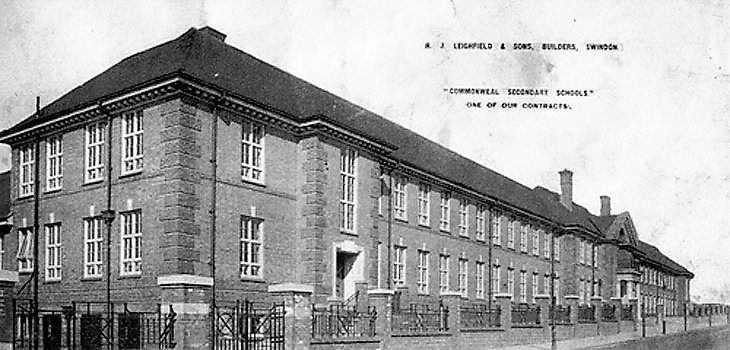
The Leighfield family firm continued to be busy during the 1920s and 30s when among their projects they built the Primitive Methodist Church at The Circle, Pinehurst; Commonweal School, The Mall, Old Town; the Co-op on Groundwell Road and the Swindon Corporation Electricity Dept showrooms at Regent Circus.

Richard died at his home 109 Bath Road in 1948 aged 89. His funeral took place on April 22 when he was buried in grave plot E8440 with his first wife and son. His second wife Clara died in 1964 and was buried in the family plot.

The Leighfield business continues today at the Coped Hall Business Park in Royal Wootton Bassett.

*The spelling of Whitney/Witney Street varies.

John and Alice Robson – a memorial full of meaning

This is the final resting place of John Davison Robson, an engineer whose last home was at 24 Read Street.  John was another person who had moved around the country.  We tend to think of this as a modern trend, but people have always moved to go where the work is and 19th century Swindon had plenty of that to offer.

John was born in Wellington, County Durham in 1839.  By 1858 he was living in Bristol where he married Alice Storey that year.

Each set of census returns reveal John and Alice living at a different address, with their children born in Bristol, Frome and Trowbridge. 

This memorial is full of symbolism.   The inscription is on a scroll, a symbol of life and time. Both ends rolled up indicate a life that is unfolding like a scroll of uncertain length with the past and future hidden. 

The acanthus leaf has several meanings in funeral iconography.  One of the oldest and most common motifs to appear on headstones, it is associated with the rocky ground where most ancient Greek cemeteries were located.  Its thorny leaves also represent life’s prickly and difficult path.

Passion flowers represent Christ’s passion during Easter week. Across the cemetery there is a memorial to Esther Swinford, who was murdered by her former fiancé. Her headstone has a spray of passion flowers tumbling across it, possibly a misplaced reference to her murder as a crime of passion.

John died on December 4, 1904 and his wife Alice died just eight days later on December 12.

They are buried with their daughter Margaret who died in 1902.  Another daughter Alice Cooper is remembered on this memorial.  She died in 1893 and is interred in Cardiff cemetery.