For some considerable time the Davis family memorial stood in a dilapidated, collapsed condition. This was one of the first restoration projects our dedicated team of volunteers undertook.
William Davis was born in Faringdon in 1856, the son of Joseph and Jane Davis. He married Agnes Greenaway, the daughter of John, a farmer in Stratton St Margaret, and his wife Susan. For most of their married life William and Agnes appear to have had a member of the Greenaway family living with them.
William worked as a draper’s assistant and the couple began married life at 14 Edgeware Road. By 1891 they had moved to Rose Cottage next to the catalogue houses on Drove Road.
On one side of the monument you can see the name of Reginald Ernest Davis, the couple’s second son. Reginald had a complicated personal life and a tragic death.
He worked first as a teacher at a local board school here in Swindon. In 1908 he married Rose Louise Gorton in the parish church in Clapham, South London when he described himself as a dairy farmer. Rose’s father was a farmer at South Marston.
The following year Reginald, now described as a clerk, and Rose, emigrated to Canada and in 1916 they were living in Regina, Saskatchewan with their six year old daughter.
The next time I find the couple is at the time of their re-marriage on December 7, 1923, describing themselves as divorcees on the marriage certificate, so presumably they divorced sometime after 1916.
Sadly it was not to be a happy ever after story as less than a year later Reginald committed suicide at his home in Toronto, which is where he is buried.
Moving around the monument we see a reference to William and Agnes’ eldest son. William Harold Davis worked as an agent for a British Merchant in West Africa. In November 1917 he was returning home from a business trip on the SS Apapa when the ship was torpedoed by a Germany submarine off the coast of Anglesey. William was one of 77 people lost.
Non conformity had a small presence in Swindon until the arrival of a large industrial workforce who came from across the country to work in the Great Western Railway. In fact the large number of nonconformists who wished to bury their loved ones without the rites of the Church of England was a contributing factor to the building of Radnor Street Cemetery.
This is the grave of Wesleyan Minister, Henry Clifton Bassett. Born in St. Stephens, Launceston, Henry was the son of agricultural labourer John Bassett. John must have been ambitious for his son as the 1871 census reveals that 12 year old Henry was a boarder at a school in Launceston.
By 1881 Henry, then aged 22, was a Wesleyan Minister lodging in Paignton with William Anderson, a joiner and carpenter, and his family. In 1884 he was employed at Lerwick with John H. Hooper, working on the Shetland Isles circuit.
He married Mary Ann Read in 1887 and the couple had three children – a daughter Hilda Constance and two sons, Clifton Read and Henry Norman.
Death of the Rev. H.C. Bassett
Swindon Circuit Wesleyan Supt. Minister
We regret to record the death of the Rev. Henry Clifton Bassett Supt. of the Swindon Wesleyan Circuit, which took place at his residence, Eastcott House, Regent circus, Swindon, last Saturday afternoon, at the age of 60 years.
The rev. gentleman was born at St. Stephens, Launceston, Cornwall, and had been in the Wesleyan Ministry for 36 years, holding important appointments in a large number of Circuits, more recently as Superintendent. Among the town in which he laboured were Newton Abbot, Lostwithiel, Northampton, Barton-on-Humber, Accrington, Sheffield, Darleston, Willenhall, Whitby, Selby, and latterly at Swindon.
The term of a minister’s tenure in a Circuit is three years. It speaks much for the popularity of Mr Bassett that after serving his full term in most of the Centres in which he has ministered he has been invited to remain for a longer period, so acceptable has his preaching and his work generally been to the people.
He came to Swindon from Selby in September 1917, as Supt. of the Circuit. His principal reason for coming South was the health of his wife, who had been in indifferent health for some years, Mrs Bassett being unable to withstand the rigours of the northern climate.
Mr Bassett had always enjoyed good health. He was an extremely hard and conscientious worker, a circumstance which in point of fact brought about the illness which ended in his death. He overtaxed his strength in visiting and preaching during the prevailing epidemic of influenza with the result that after preaching on Sunday, December 8th at the Wesleyan Central Mission, he arrived home from the evening service utterly exhausted. Dr. Lavery was summoned, and Mr Bassett was ordered to bed, from which he was never able to rise. His case was diagnosed at first as influenza. His heart became affected and pneumonia supervened. On Christmas Eve Dr. J. Campbell Maclean was called in in consultation, and his report as to Mr Bassett’s condition was grave.
Death took place on Saturday afternoon, in the presence of his wife and daughter and a trained nurse who had been in attendance.
Deceased leaves a widow, two sons, and a daughter. One of the sons is engineer to the Sunderland Corporation and the other is serving as an apprentice in the Great Western Works at Swindon.
Sympathetic references were made in all the Wesleyan Churches in the Circuit on Sunday to the great loss the Church had sustained in the Connexion by the death of the Rev. Clifton Bassett.
The funeral took place on Wednesday. There was a service at Wesley Chapel at 2.30, conducted by the Rev. H.W. Perkins, assisted by the Ministers of the Circuit and neighbourhood, and an address was delivered by the Chairman of the District, the Rev. Grainer Hargreaves of Oxford.
The Faringdon Advertiser, Saturday, January 25, 1919.
Henry Clifton Bassett was buried on January 22, 1919 in grave plot D1304 where he was joined by his wife Mary Anne in 1923. The cremated remains of their daughter Hilda Constance was buried with them in 1975 and their son Henry Norman in 1986.
In the beginning the cemetery was simply called Swindon Cemetery, but it could so very easily have become known as Redcross Street Cemetery.
Today this is the only reference to Radnor Street’s previous name.
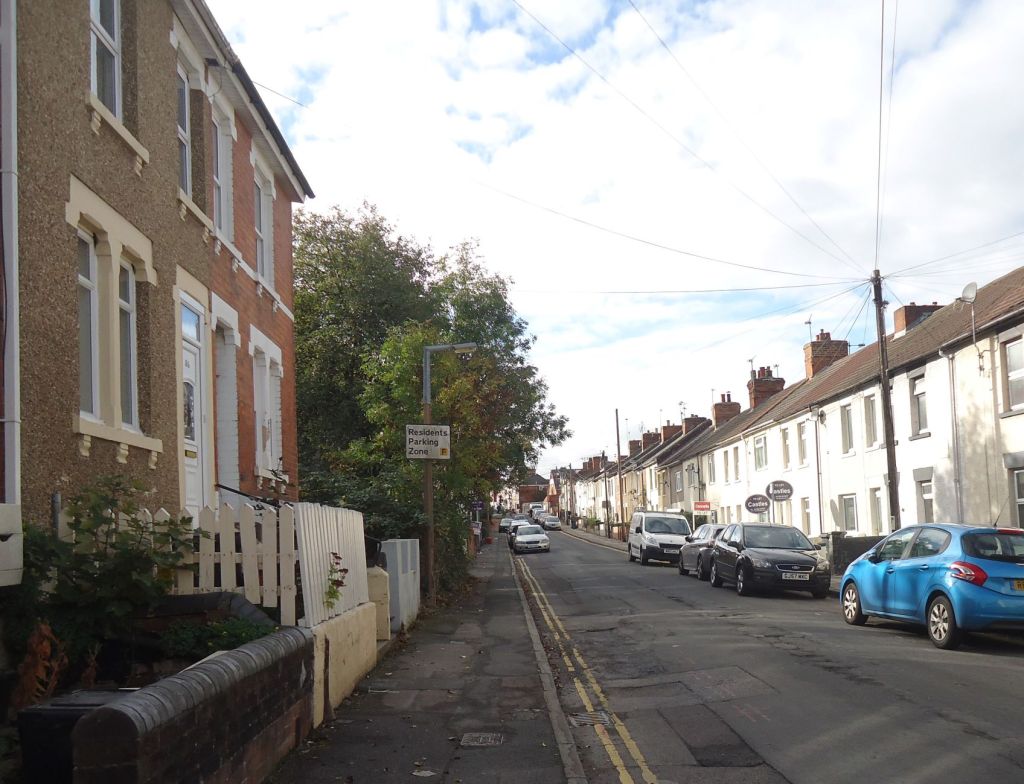
When building began in the street that would begin at the top of the precipitous Stanmore Street and continue to the junction with Shelley Street and Cambria Bridge Road it was known as Redcross Street.
Mr James Hinton, auctioneer, announced that on January 29, 1879 there would be a sale of ‘All those EIGHT NEWLY-ERECTED SIX ROOMED, COTTAGES with GARDENS thereto, Situate on the North side of Redcross-street, Kingshill, Swindon, being Nos. 177, 178, 179, 180, 181, 182, 183, And 184 on the Plan of the Lower Kingshill Estate, which Plan will be produced at the time of Sale.’
Just a week later more properties and additional building plots in Redcross Street came under the hammer. Lot 1. All those five newly-erected six-roomed COTTAGES, and five similar COTTAGES not quite completed, with gardens thereto, situate on the north side of Redcross-street, Kingshill, Swindon, being Nos. 185, 186, 187, 188, 189, 190, 191, 192, 193 and 194 on the plan of the Lower Kingshill Estate, which plan will be produced at the time of sale. Lot 2. All those ten PLOTS of valuable FREEHOLD BUILDING LAND, situate on the south side of Redcross street aforesaid, being Nos. 223, 224, 225, 226, 227, 228, 229, 230, 231, and 232 on the plan of the Lower Kingshill Estate. Each plot has a frontage of 15 feet to Redcross-street.
By 1881, when negotiations for the new cemetery were under way, the street was already being referred to as Radnor Street, however at the time of the census taken in April 1881 it was still called Redcross Street and was apparently renamed sometime later that year.
Jacob Pleydell-Bouverie, 4th Earl of Radnor served as Lord Lieutenant of Wiltshire from 1878 until his death in 1889. The Pleydell-Bouverie Wiltshire base was at Longford Castle, near Salisbury and closer to home, they owned the stately pile that was Coleshill House. Maybe Swindon thought it advantageous to name one of their many streets of red brick terrace houses after the local aristocracy.
Building continued in Radnor Street throughout the 1880s with properties built by S. Spackman, J. Longland and B. Jefferies.
The problem with being steeped in the history of Swindon is that sometimes you miss the gems a short journey away. This week I have spent three glorious days at the Gloucester History Festival and heard talks by eminent historians such as David Olusoga, Michael Wood and the dynamic Janina Ramirez, Life President of the Festival.
The Gloucester History Festival events take place in the Blackfriars priory in Ladybellegate Street. Founded by Henry III in about 1239 some 40 Dominican friars lived in the priory during the Middle Ages. In addition to their ecclesiastical duties within the priory the friars were also involved with the community beyond its walls, preaching, hearing confessions and taking part in funeral processions.
The priory was closed during the Reformation and the Dissolution of the Monasteries when Henry VIII broke with the Catholic Church in Rome in order to divorce his first wife, Catherine of Aragon and marry his second, Anne Boleyn.
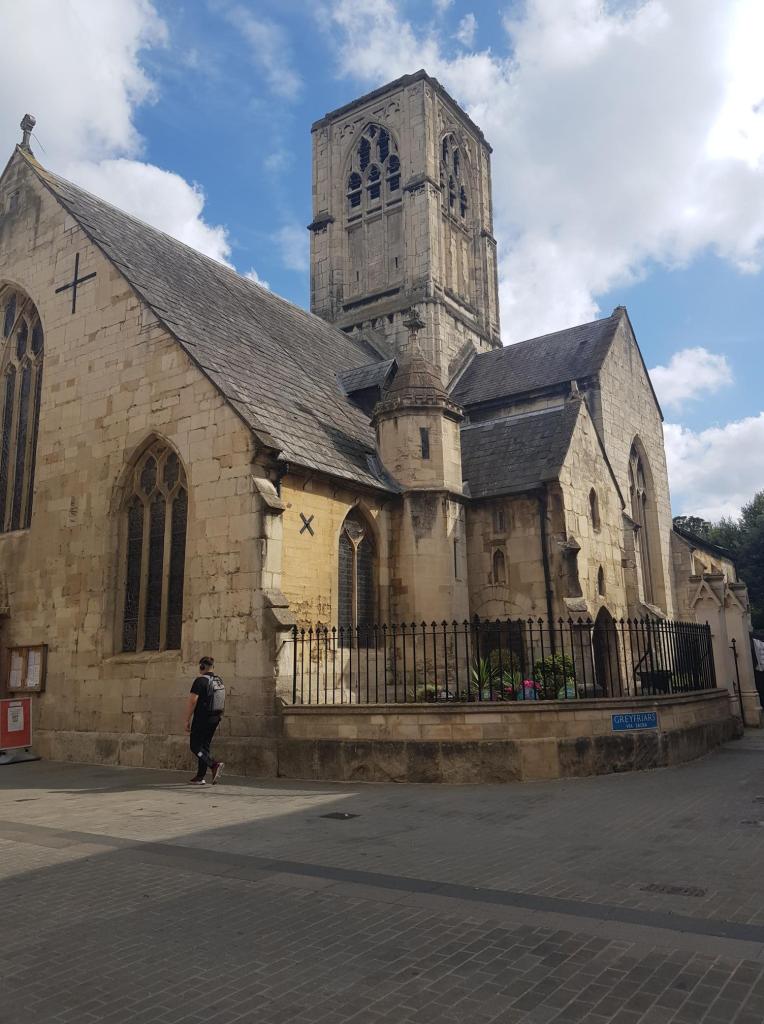
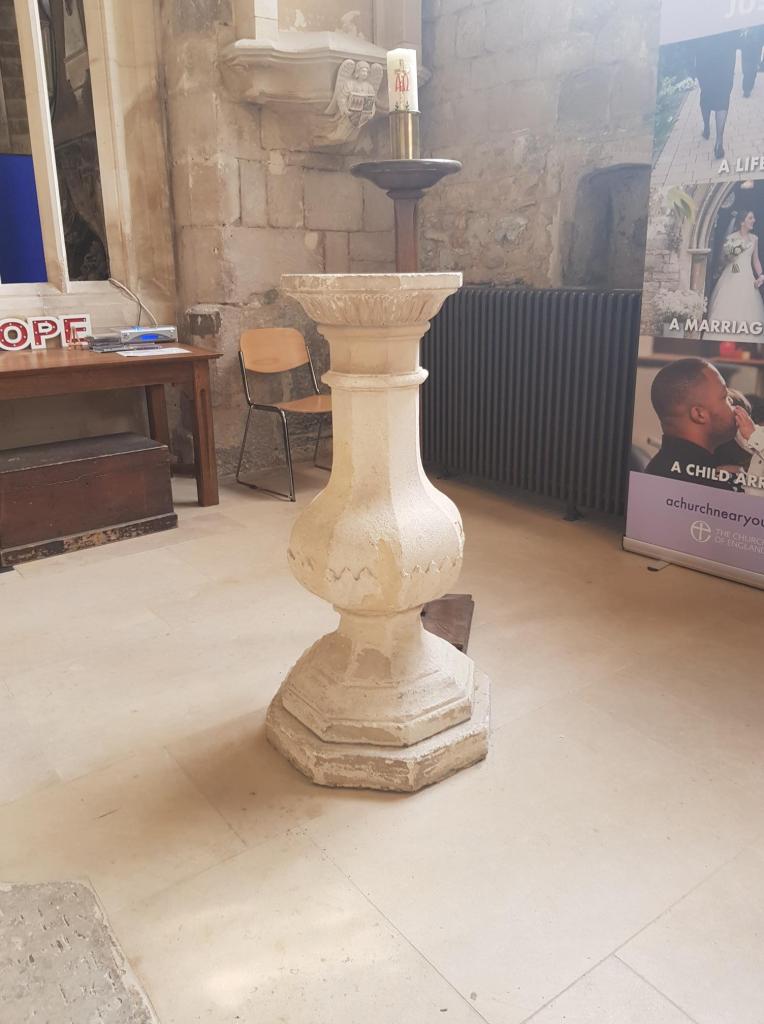
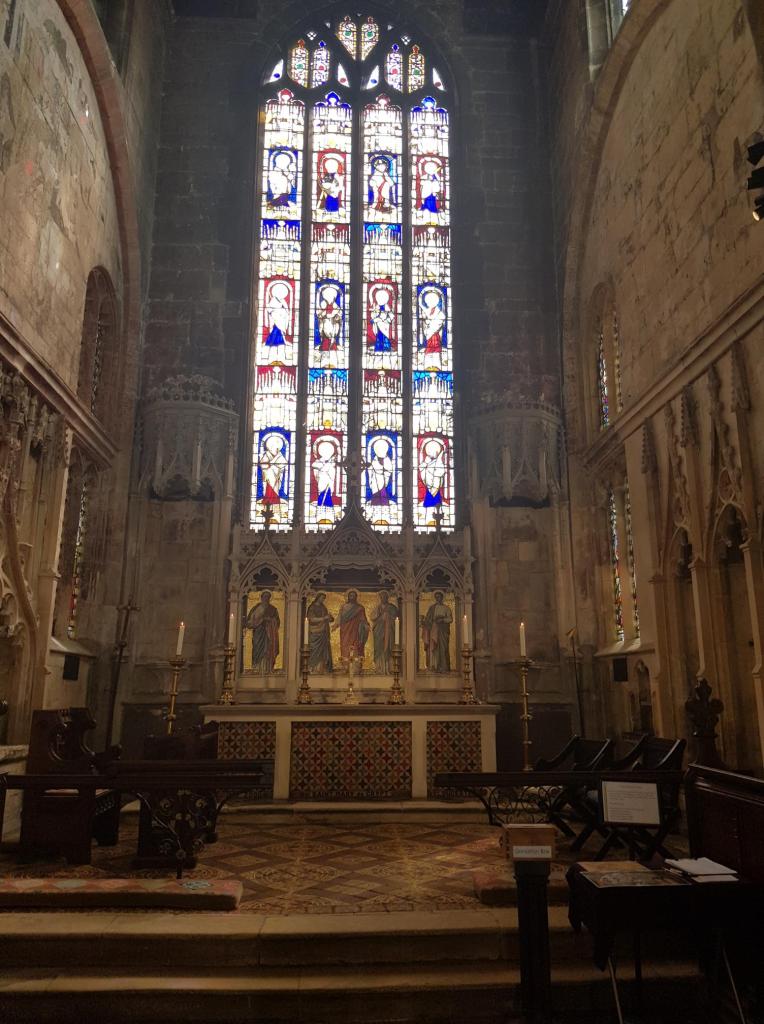
During breaks in the festival talks I took the opportunity to visit the church of St Mary de Crypt in Southgate Street. First recorded in c1140 the medieval church received extensive restoration throughout the 19th and early 20th century. Stepping out of the 21st century Southgate Street into the Grade I listed building, revealed a busy group of volunteers hard at work. However, there was plenty to see with 14th, 15th and 16th century features.
I don’t know if there was ever a cemetery around the church, but as usual those with influence (and money) were able to secure a burial inside the church.
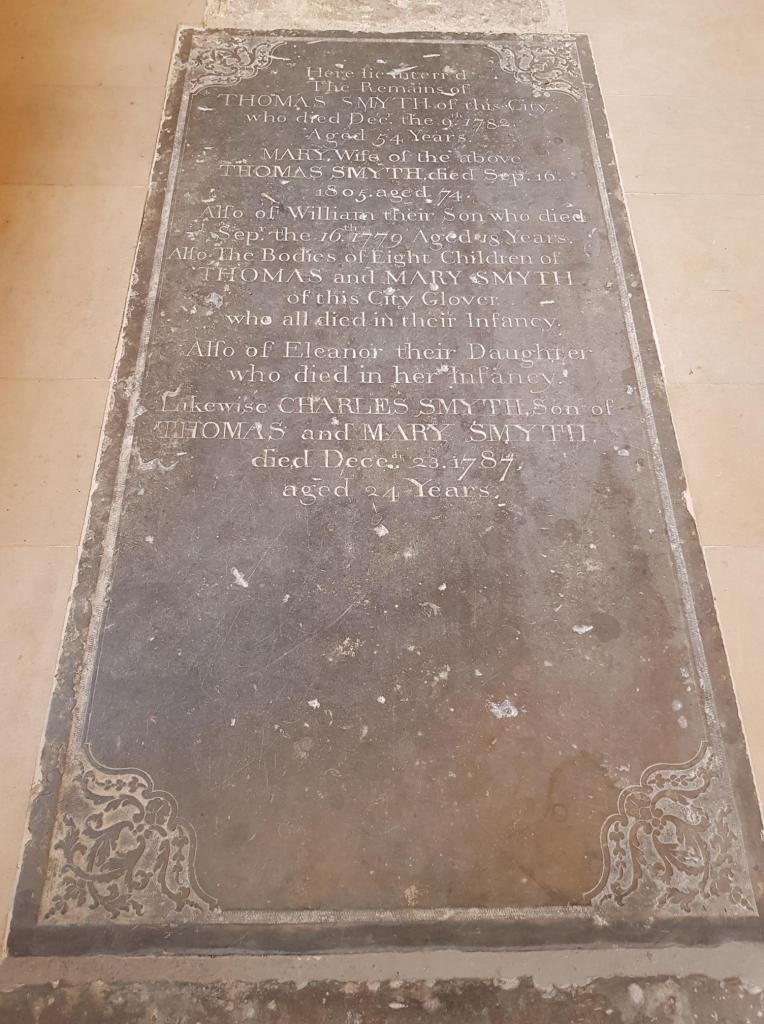
Remembered here is the Smyth family. Thomas who died on December 9, 1782 aged 54. Buried with him are his wife Mary, eight of their children, and a daughter named Eleanor, who all died in infancy, two sons, William who died in 1779 aged 18 and Charles who died in 1787 aged 24.
I would like to know more about Thomas and Mary Smyth and I’m sure someone has at sometime researched this family. I would especially like to know more about Mary, the wife and mother who lost so many children during her own lifetime and died in 1805 at the age of 74.
As this unseasonal September heatwave looks set to continue for the next few days, I revisit September 1929 when Swindon was hit by a devastating water shortage.
Additional inspectors were assigned to locate cases of wilful misuse, and Mr Thompson, Borough Engineer and Water Engineer, said it was the duty of the housewife to be sparing in the use of water, adding somewhat threateningly “if she is not she will have to be taught how to be sparing.” A total ban was imposed upon the use of water in the cemetery.
Water Shortage
Alarming Situation in Swindon: Utmost Economy Needed
News regarding the position of Swindon’s water supply is of an alarming nature. During the week-end there was a most serious drop in the amount of water available.
The townspeople have already effected some economies in their usage of water; but it is now vitally necessary that the present consumption should be cut down by at least another 50 per cent.
It is therefore the immediate duty of everyone to use only half the amount of water they have been doing. For the present the use of baths should certainly be given up, and their place taken by an ordinary sponge-down with the minimum quantity of water.
Housewives can do much to help. They must look on water as a precious fluid, and cut down their usage to the least possible quantity.
Every step is being taken by the Borough Engineer and his staff to augment the supply; but the co-operation of the general public is essential.
Mr J.B.L. Thompson, the Borough Surveyor and Water Engineer, tells the North Wilts Herald that the fall in the available supplies which has taken place over the week-end is unprecedented, and has forced the Water Committee to reconsider the whole position.
Unless still more drastic economies are made, Swindon is going to be faced with a very unpleasant situation.
The use of water for certain specified purposes must, under heavy penalty, be absolutely discontinued. Leakages, however small, must be reported at once.
Warning to Wasters
The Borough Engineer has been instructed to employ further inspectors to locate cases of wilful misuse.
Official Notice
In an official notice, signed by the Town Clerk, to be distributed to householders, it is stated:
“Owing to a rapid and unprecedented decrease during the past two days in the water supplies available in the well belonging to the corporation, the attention of all consumers of water is drawn to the urgent necessity of preventing waste and of strictest economy in the use of water.”
It is further stated that water must not be used for the purpose of washing foot-pavements, yards, cars or garage floors, nor used on allotments, tennis courts, bowling green, cricket patches or gardens.
Prosecutions will be instituted where there is evidence of waste of water.
A Critical Three Months
“It will be the end of December before we can hope for the wells to recover,” said the Borough Surveyor to a North Wilts Herald representative.
“The next three months are going to be very precarious from the point of view of obtaining water sufficient to keep the town going.
“Unless people limit their consumption by at least 50 per cent, it will mean that as a last resource the town will have to be shut off from the regular supply and that we shall have to draw it from certain points.”
Meanwhile wells at Ogbourne continue to diminish, and though water is being drawn from the GWR supply at Kemble the time will come when this supply must stop.
It is the duty of the housewife to be sparing in the use of water. If she is not – to use Mr Thompson’s words – “she will have to be taught how to be sparing.”
Owing to the acute shortage, the Swindon Corporation have stopped the use of water for growing plants in the Swindon Cemetery. Water has now been banned from any kind of use in the Cemetery.
The supply in the Highworth parish at present is fairly satisfactory, this being attributed mainly to the fact that some two or three years ago the district council constructed auxiliary works at Eastrop.
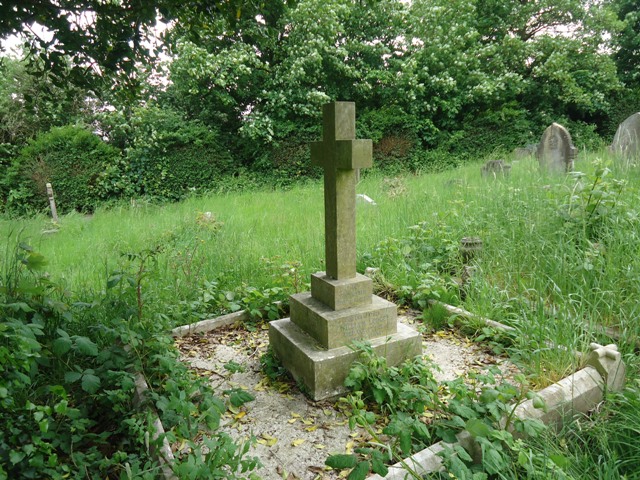
In recent years we have been fortunate to have the occasional assistance of the Community Payback Team in the cemetery. This group does some sterling work, often tackling the most overgrown sections of the cemetery. It was on one such occasion some years ago that they cleared a huge amount of shrubs and brambles and in doing so revealed several graves that had been hidden for years. Among those newly revealed graves was this magnificent memorial to the Lodge family.
William Lodge and Elmira Faville were both born in Gloucester and married in St James’ Church, there on October 13, 1867. By 1871 they had moved to London where they were sharing accommodation at 33 Desborough Lane, Paddington with James Affleck (another Swindon connection). In 1881 they were living in William Street, Swindon where William worked as an engine driver. By 1901 William was working as Railway Engine Inspector and the family lived at 36 Rolleston Street, one of the few houses that remain after the demolition work of the 1960s and now tucked away behind the doomed Regent Circus development.
So, who is buried beneath this memorial in this spacious, double plot E8482/3.
First we have Elmira who died in 1905, then Mary who died in 1917. William Lodge died in 1922 followed by another daughter, Emma who died in 1926. Eldest daughter Ellen died in 1950 and son Charles and his wife Annie are buried here, they died in 1945 and 1963 respectively.
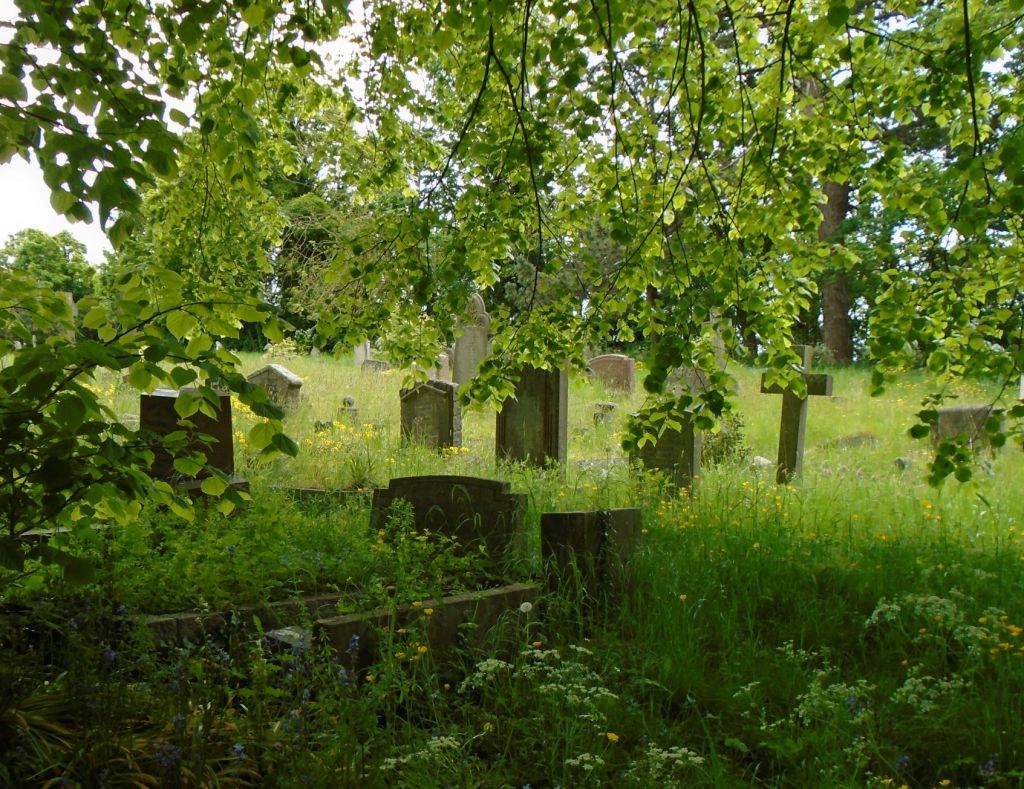
Looking at this impressive memorial it is difficult to imagine it was once hidden by brambles. When so little maintenance is done by the local authority it would be great to see the Community Payback Team back in the cemetery.
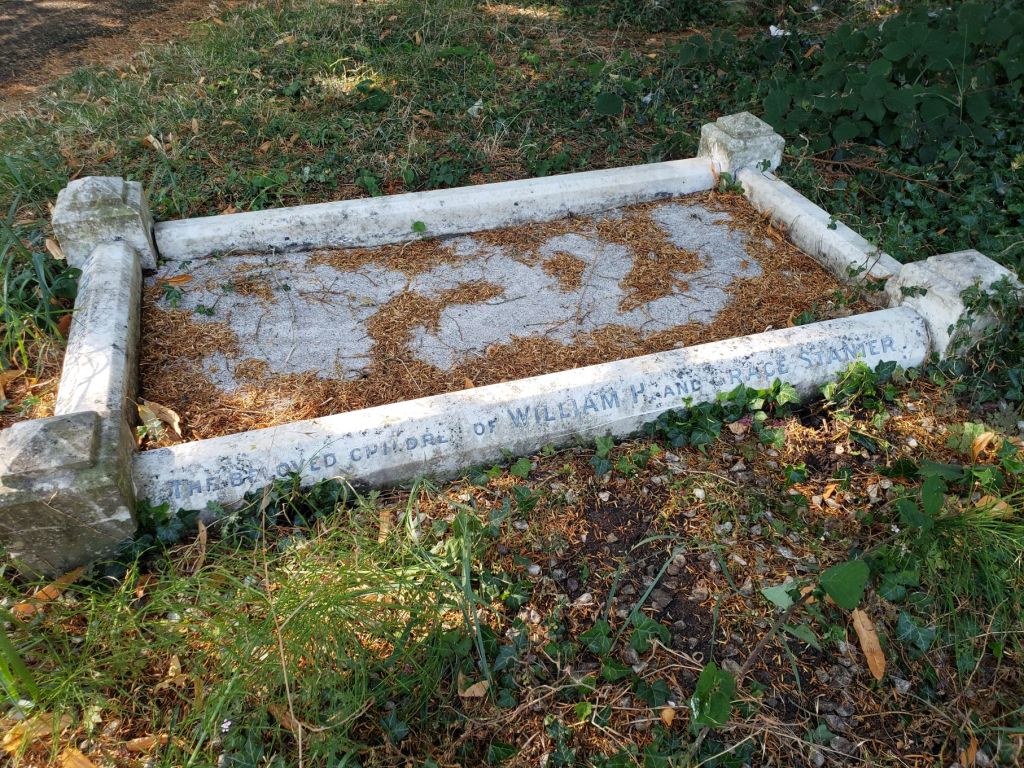
As you might guess, this diminutive grave is that of a child – two young children, infact. Francis John Stanier was born in the summer of 1881 and died in January 1885. He was buried in grave plot A188, aged 3 years old. On May 7, 1886 his 3 week old baby brother Alfred was buried with him. These children were the sons of William Stanier and his wife Grace.
William Henry Stanier was born in Wolverhampton in 1849 and entered the services of the Great Western Railway on November 7, 1864 in the Managers Office, Loco Works, Wolverhampton. He moved to Swindon in 1871 at the insistence of William Dean, Chief Locomotive Engineer and became Dean’s clerk and personal assistant, his right hand man. In 1879 he was appointed Chief Clerk Loco & Carriage Department and in June 1892 he was made Stores Superintendent. He was elected to the Swindon School Board in 1879, serving as chairman for many years. He was appointed JP for Swindon in 1906 and for Wiltshire in 1915. He served as Swindon’s 8th Mayor in 1907-8 and Stanier Street is named after him. William Henry Stanier retired from the GWR in 1919 but continued to serve on the Railway Executive Committee in connection with the distribution of controlled materials.
His son, William Arthur Stanier, the elder brother of these two little ones, was born on May 27, 1876 and went on to have a prestigious railway career. He became Assistant Works Manager at Swindon in 1912 and then Works Manager in 1920 before being head hunted by the London Midland and Scottish Railway where he became the Chief Mechanical Engineer. He was knighted on February 4, 1943. He died in Rickmansworth, Herts in 1965 aged 89.
You can’t help but wonder what future those two little boys might have had – Francis who died in 1885 aged 3 years and Alfred who died in 1886 at just three weeks old.
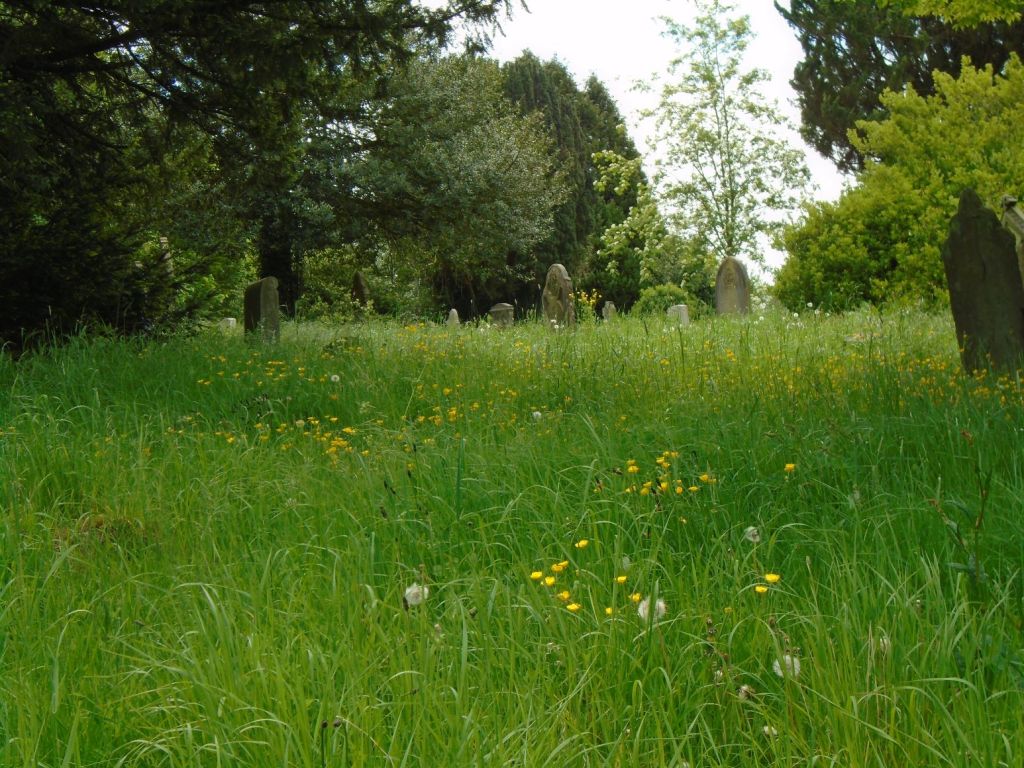
In the cemetery we have a problem with grass and it would appear that it was ever thus …
There was quite a commotion at the monthly meeting of the New Swindon Local Board held in the summer of 1882.
Mr Dawson asked the Chairman if he would be in order in referring to the late sale of grass at the Cemetery? –
Mr Dawson then said there were three tenders received for the grass, one from Mr Wiltshire of £5, Mr Barker £5 and Mr Morris, junr., or one of the young Morris’s, of £4 5s. The committee appointed to sell the grass, Messrs W. Wearing and W. Morris, after opening the tenders, went and looked at the grass, and then Mr Morris said he would give £5 5s for the same for his son, and this was agreed to between the two. He (Mr Dawson) looked upon this as a very unfair and discreditable transaction on the part of Mr Morris, and having said this much left the matter in the hands of the Board.
The Chairman said there certainly appeared to have been some irregularity, but after what had taken place he did not think such a thing was likely to occur again.
Mr W.E. Morris said he had heard a good deal about the said “tenders,” were they in writing or by word of mouth?
The committee had no idea that there was £5 worth of grass at the place, and simply gave instructions that any one wishing to purchase could leave word with the caretaker at the lodge. The grass, however, appeared to have grown very rapidly and hence the competition for it.
The Chairman repeated that much irregularity appeared to have taken place, but the fault rested as much with the whole committee as with any individual member. The sum in question appeared to be so small that no one for a moment would believe that a gentleman in Mr Morris’ position would knowingly sacrifice his honour over it.
After further remarks the subject dropped, and the meeting broke up at an early hours.
Extracts from the Swindon Advertiser, Saturday, August 5, 1882.
By the spring of the following year the situation would appear to have been resolved and the sale of grass was advertised in the Swindon Advertiser.
Swindon Cemetery
The Swindon Burial Board are desirous of selling the GRASS growing in the Cemetery, for cropping or feeding purposes, to the 31st October next.
Particulars may be obtained of the Caretaker at the Cemetery.
Sealed tenders to be sent to the undersigned, on or before the 16th April latest.
J.C. Townsend, Clerk.
42 Cricklade-street, Swindon, 6th April, 1883.
The Swindon Advertiser, Saturday, April 7, 1883
Now I wonder if anyone would be prepared to come and cut the cemetery grass for a fiver today!
August 1882 and the new cemetery on Kingshill had been open a year. There were 14 burials during the month of August 1882, numbered 221 to 235 in the burial registers. In those early years most of the burials took place in Section A.
The oldest person buried in August 1882 was Richard Cowley aged 91. Richard Cowley was baptised on December 12, 1790 at St. Mary’s Church, Lydiard Tregoze, the son of John and Sarah. In 1810 he married Susannah Smith at the church where he had been baptised and they had five children (possibly more) Maria, Joseph, William, Sarah and John. In 1841 they were living in the Lodge Gate, Spittleborough Farm, Lydiard Tregoze, close to present day Junction 16 on the M4. They were living alone, both in their 50s, the children had all left home. In 1851 the couple were living near Marsh Farm, Lydiard Tregoze. No chance of retirement for Richard who still worked as an agricultural labourer. Susannah died in 1858.
The following year Richard married Elizabeth Green at All Saint’s Church, Lydiard Millicent. He was 68, she was twenty years younger. In 1861 Richard and Elizabeth lived at The Green, Lydiard Millicent. Richard, aged 70, was still working as an agricultural labourer, possibly for Anthony Kibblewhite at neighbouring Godwin Farm. By 1871 Richard was widowed for the second time; still living in Lydiard Millicent, still working.
Richard died in August 1882, aged 91. His last home was 63 Westcott Place where he lived with his youngest son John and daughter-in-law Caroline. He was buried on August 19, 1882 in grave plot A551, a public grave.
The youngest person to be buried in August 1882 was 2 month old Arthur William Thomas. He was baptised William Arthur Thomas at St. Mark’s Church on August 13. He was buried 15 days later in a babies grave plot A285 when he was recorded as Arthur William Thomas. Were his parents too distraught to notice his name was incorrectly recorded?
If William Arthur Thomas had lived as many years as Richard Cowley he would have seen man land on the moon!
In August 1882 Radnor Street Cemetery had been open a year; 14 burials took place that month, the oldest person was Richard Cowley, the youngest was William Arthur Thomas.
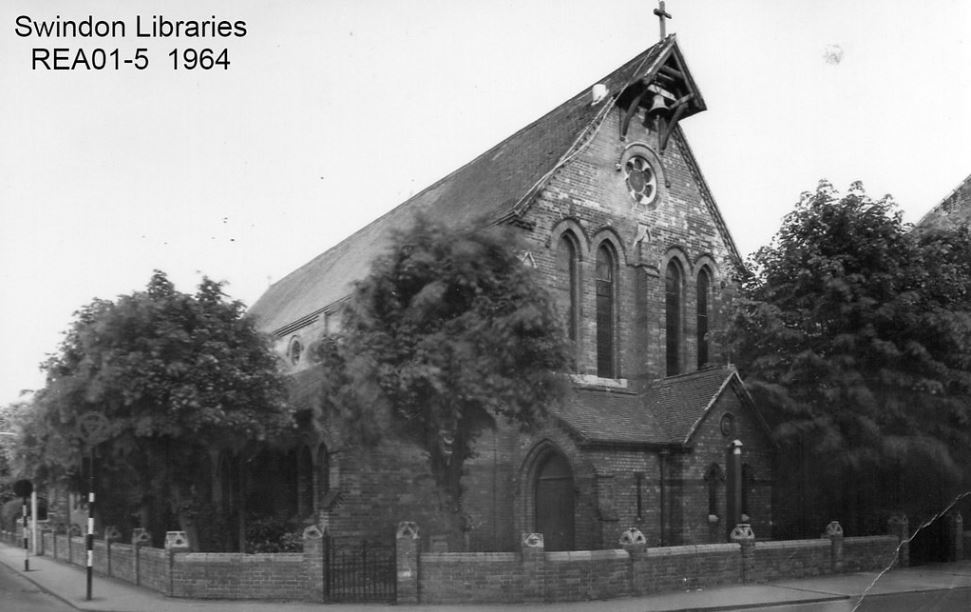
St Paul’s Church, Edgware Road, Swindon published courtesy of Local Studies, Swindon Central Library
You could be forgiven for never having heard of St Paul’s Church. It used to stand on the Woolworth’s site, although that won’t help you either as that store too has disappeared from Swindon’s town centre.*
The church of St Paul was designed by Edmund Ferrey and built in 1881 with a chancel added in 1883. St Paul’s served the myriad of town centre streets – Regent Place, Brunel Street, Gordon Gardens and others – all demolished during the 1960s re-development. An estimated population of 4,500 people were moved to housing estates on the outskirts of town and the prime retail site went on the market at £90,000. The church was demolished in 1965 when the valuable plot was acquired by F.W. Woolworth & Co. The St. Aldhelm’s Chapel stands on a small section of the former church plot.
The Rev Hanworth Hart Rackham arrived in Swindon following the death of Rev Douglas Ware in 1899. Born in Liverpool in 1860, Hanworth Hart Rackham was the son of Matthew Rackham, a Shipping Master Board of Trade, and his wife Katherine.
Swindon Clergyman’s Death
Rev. H.H. Rackham Passes Away in His Church
Death on Saturday evening carried away one of Swindon’s best-known clergymen, the Rev. Hanworth Hart Rackham, who had ministered as vicar of St. Paul’s parish for nearly 16 years. Happily there had been no long weary struggle for life, for the passing took place suddenly during vespers on Saturday evening in the church which he loved so well. It was a wonderfully peaceful end, and those who stood around the remains noted how the face was illumined with a happy smile.
Comparatively few of the congregation heard the sad news on Saturday night, and were greatly shocked with the intelligence which greeted them on reaching the church on Sunday morning.
Mr. Rackham, who was a native of Liverpool, was 55 years of age. He was educated at Worcester College, Oxford, where he took the BA degree in 1889 and the MA degree four years later. He was ordained deacon at Coventry, in the Worcester Diocese, in 1890, and priest in 1891. The first ten years of his ministerial life he spent as a curate at Kidderminster, where he had charge of a district church; but on the death of the Rev. D. Ware, he was presented by the Bishop of Bristol to the living of St. Paul, New Swindon, where he continued to labour until the moment of his death.
The late Vicar of St. Paul’s was a man of remarkable energy, which he displayed almost to the last, despite the fact that he suffered severely at times from disease of the heart. On taking charge of his parish he found its finances far from satisfactory, and he has left them thoroughly sound, besides building the Dowling Street Mission Hall and a new vestry to the church. This he accomplished owing to his splendid persuasive powers and his great faith in voluntary effort. He inaugurated in the parish a scheme of regular voluntary contributions, called the Sacred Treasury, to which members of the congregation undertook to subscribe week by week such sums as their means enable them to afford. The scheme soon became the backbone of the church’s finances in this thoroughly working-class parish. The outstanding feature of Mr Rackham’s work was not merely his energy, but his personal influence, which has been shown by the fact that his advice on spiritual matters has been sought by people living in all parts of England.
At St. Paul’s Church on Sunday morning, and again in the evening, when there was a large congregation, the Rev. H.J.W. Wrenford, in place of a sermon, made a short statement concerning the late Vicar’s passing. There was nothing in his condition to make one apprehensive that the end was coming. He was, as he had been on many previous occasions, obviously in pain and short of breath; but all through the day he was cheerful and bright, as he always was, surmounting all his pain and trouble. In the morning he was for a short time tending his roses in the garden, which showed that he was happy. Just before evensong, which he conducted in his usual bright and happy way, he came into the vestry, and we noticed that he paused for a moment, as he had often done before, to gain his breath. He went into the church to say evensong. He said the Confession and Lord’s Prayer. We noticed that he seemed in pain. We started the Psalms, and we had just finished the first of the Psalms for the evensong, which closed with the words “Put not your trust in man; put your trust in God, for vain is the help of man.” As soon as we had said these words he quietly collapsed on the floor. We did what we could to help him, but it was of no avail. It was God’s will; his time had come. I am sure of this – that he seemed to be conscious of no pain. It was certainly the most peaceful passing that one can imagine that one had ever seen. Immediately after he had passed from this world he lay with a smile on his face. I noticed that particularly, so I think we had great cause for thankfulness to God. We thank God that He gave him just the kind of death that he would have desired. Our Vicar, as you all know, would prefer to die in harness. I am sure there was no way in which he would sooner have passed from the world than in the presence of God in His Sanctuary.”
At the Cemetery
Thousand of people lined the streets as the coffin was taken up the steep declivity to the Cemetery, by way of Regent Circus, Eastcott Hill and Dixon Street. Such a funeral procession has probably never before been witnessed in Swindon. It stretched in a close line from St. Paul’s Church to the Town Hall.
The grave had been dug on the high ground near the Church of England chapel,** and in order to keep back the general public a large space was roped off and guarded by policemen.
Extracts from the North Wilts Herald, Friday, January 28, 1916.
Hanworth Hart Rackham 55 years old, priest of Edgware Road Vicarage was buried on January 27, 1916 in grave plot E7370 where he lies alone.
The Rev. Rackham’s grave has recently been rediscovered in Radnor Street Cemetery.
*The former Woolworth’s store is now occupied by OneBelow discount shop and Peacocks.
**The cemetery chapel was a non-denominational chapel.









 Radnor Street Cemetery