Rev P. Maddocks – Funeral of Swindon’s Oldest Vicar

Philip Maddocks was born in St. Helier, Jersey in 1850, the son of Primitive Methodist minister Philip Maddocks and his wife Lucinda Beck. In fact, Philip junior would begin his own clerical career as a Primitive Methodist minister serving between 1868-1873 on circuits at Chippenham and Stroud (among others) before becoming an Anglican vicar.

In 1880 Philip married Florence Jane Sherrat at St Mary’s, Birkenhead and at the time of the 1881 census he was working as curate at St Peter’s Church, Burnley. He arrived at St Barnabas, Gorse Hill in 1883 and at the time of the 1891 census he is recorded as living at St Barnabas Vicarage, 268 Cricklade Road with his wife Florence and their ten year old daughter Florence Ida Louise. A son, Cyril, was born the following year but died in 1895 aged three years old. A second daughter, Philippa, was born in 1897. Florence died in 1902 and Philip married Blanche McGovern in 1918.

Philip served at St Barnabas’ for 48 years and at his funeral was described as Swindon’s oldest vicar.

Rev. P. Maddocks,

Funeral of Swindon’s Oldest Vicar

The high esteem in which the late Rev. Phillip Maddocks, the first and only Vicar of St. Barnabas’ Church, Gorse Hill, Swindon, who had held the curacy of souls in that parish from its formation in 1890 – he was curate from 1883 – was held, was shown by the large congregation at the funeral, which took place on Saturday morning.

A crowded congregation attended at St. Barnabas’ Church at 10 a.m., when there was Requiem Mass. The celebrant was Canon A.G.G. Ross (vicar of St. Mark’s) and the Bishop of Malmesbury also took part in the service. Canon Ross also officiated at the graveside in the Radnor street cemetery.

Choral Service

The choir were in attendance, and special hymns were sung, Mr. J. Padgett presiding at the organ.

The Young Men’s Guild, of which the Rev. P. Maddocks was president, was largely represented.

The funeral arrangements were carried out by Mr. A.E. Smith, of Gordon road.

Extracts from the North Wilts Herald, Friday, March 20, 1931

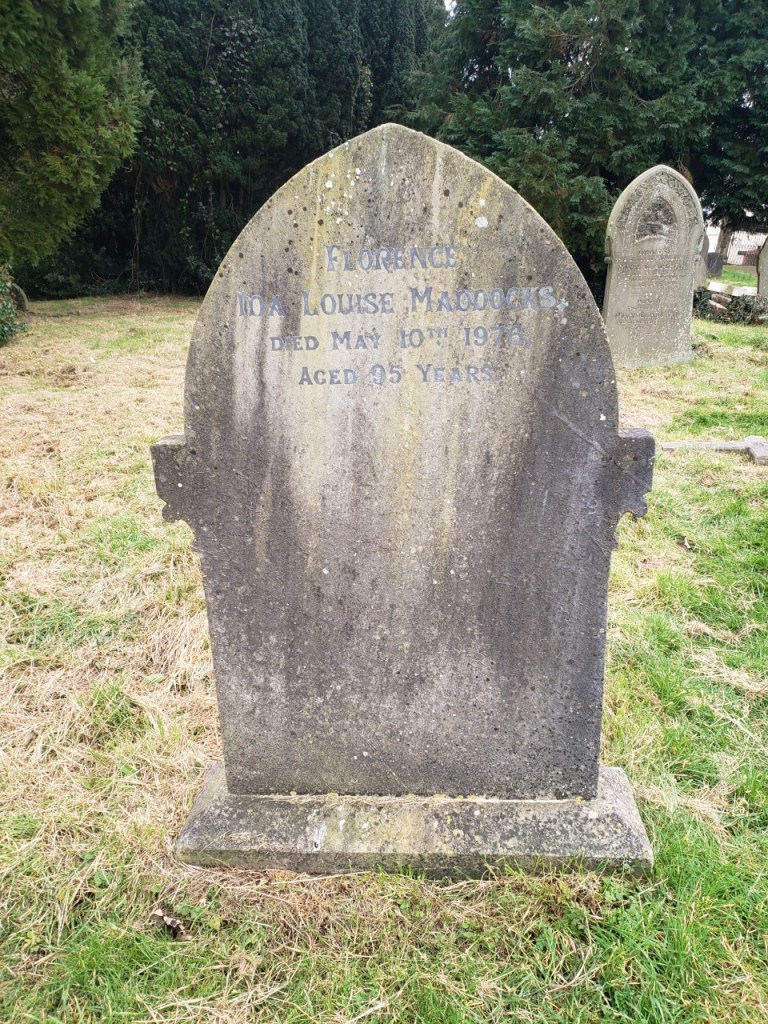
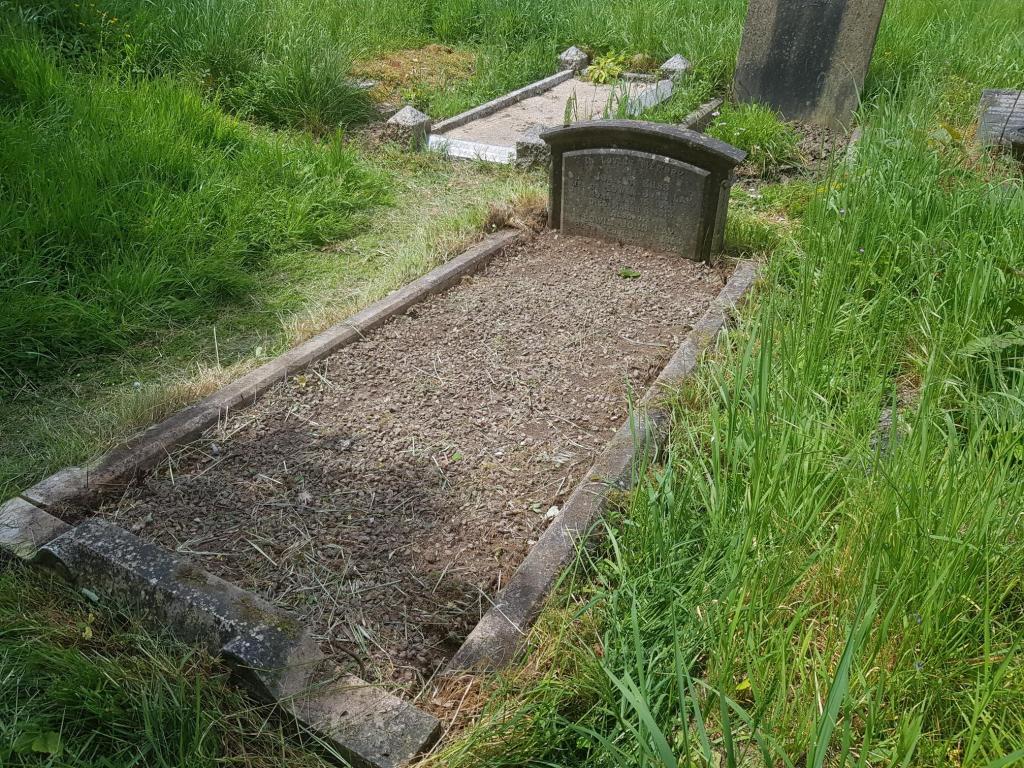
Rev Philip Maddocks two daughters both died in Roundway Psychiatric Hospital in Devizes. Florence Ida Louise was first admitted for a short stay in April-September 1912. She died there in 1976 aged 95. Younger daughter Philippa died in Roundway Hospital in 1926 aged 29. Both women are remembered on the headstone.

Philip was buried in Radnor Street Cemetery in a double grave plot A882/3 with his first wife Florence, their two daughters and their young son.

You may also like to read:

Florence Jane Maddocks – Vicar’s Wife

George Eatwell – Primitive Methodist

George Eatwell was born in Winterbourne Bassett in about 1841, the fifth son of William Eatwell and his wife Mary. He was the youngest of the brothers actively involved with the Primitive Methodist Church. He first appears in Swindon on the 1861 census lodging with the Pressey family in Old Town and working as an agricultural labourer. In 1863 he married Fanny Vivash.

George had a number of occupations during his working life. In 1869 he was working as a Tea Dealer and in 1871 he ran a boarding house at 5 Station Road where a whole clutch of Vivash relatives were staying on census night. In 1881 he was the proprietor of the Temperance Hotel at 2 Station Road where he lived with Fanny and their six children plus a servant and three boarders. By 1891 he was living at 32 Gloster [Gloucester] Street and still running his cab business.

Cab Stand. – Application was received from George Eatwell, of Station-road, for permission to stand a cab near the large lamp in front of the GWR Station. It appeared that one side of the lamp is railway property, and the other public. On this latter permission is already given to one cab proprietor, and it was decided to give the same to the present applicant.

The Swindon Advertiser, Saturday, October 3 1885.

But throughout it all ran his faith and his work within the Primitive Methodist Church.

George was appointed along with Rev. T. Powell to secure a room in Clifton Street for Sunday afternoon meetings. In 1880 cottage services took place in the home of J. Deacon and later in Horatio Westmacott’s house. There were also open air meetings. In 1882 a chapel was built on land gifted by James Hinton at the Clifton Street cemetery gates. In 1900 a larger chapel was built next to the first one, which was then used as a schoolroom.

In 1887 both George and his brother Maurice are mentioned in the following report:

Regent Street Primitive Methodist Chapel

Presentation to the Chapel Secretary

During the week ended Saturday last a most successful evangelical mission was conducted at the above place of worship by Miss Plowman, of Uffington. On Saturday evening there was a tea meeting in the School-room, as which about 90 persons sat down. The ladies who presided at the tables were: Mrs Herridge, Mrs Morse, Mrs Elliot, Mrs M. Eatwell, Mrs Sheppard, Mrs Neale, Mrs Green, and Mrs Franklin.

A public meeting was afterwards held in the chapel, at which there was a large attendance. This meeting was made the occasion of presenting Mr C. Hill, the energetic secretary of the Regent street Chapel, with a marble time piece and an illuminated address, in recognition of services rendered by him during many years.

The chair was occupied by Mr Maurice Eastwell, who was supported by Miss Plowman, the Rev. J. Herridge, the Rev. Richards, and Messrs L.L. Morse, Geo. Eatwell and C. Hill.

The Chairman, in the course of a few opening remarks, observed that they had been holding special and protracted services at that chapel for some time past, all of which had proved successful. He alluded to the great success which they experienced some six years ago, and said he trusted that a similar prosperity would accompany their labours at the present time.

Mr George Eatwell next addressed the meeting. He said what a blessing it was that they were enabled to put forth some efforts to reclaim the outcast. He feared that when they did not put forth strong efforts to bring about the saving of souls it was because they did not themselves partake of the blessings which God provided for them.

Extracts The Swindon Advertiser, Saturday, November 26, 1887.

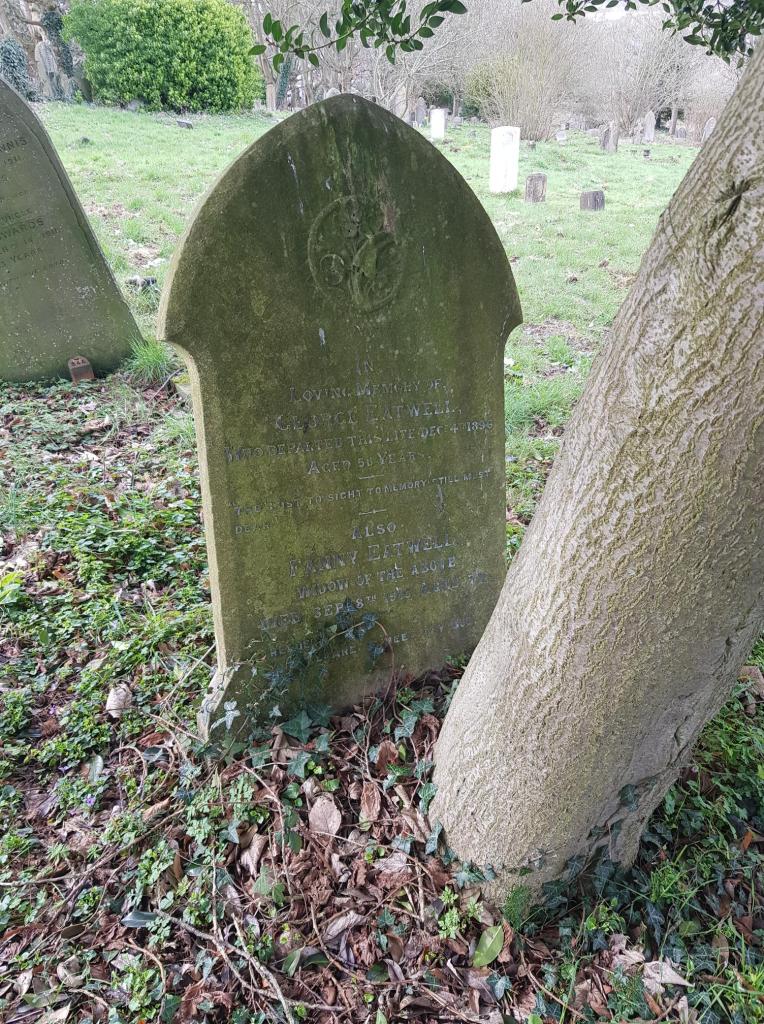
George died at his home in Gloucester Street on December 4, 1896. He was buried in grave plot C780 where Fanny was later to join him following her death in 1910.

You may also like to read:

Maurice Eatwell – well known Swindon Methodist

Maurice Eatwell – well known Swindon Methodist

There can be no denying the contribution and the influence of members of the non-conformist congregations to the development and prosperity of Swindon.

The necessity for a new burial ground in Swindon in the last quarter of the 19th century was driven by two factors. The continuing expansion of the Great Western Railway Works and the growth of the town had created a dire need for more burial space. Furthermore, the growth of non-conformity in Swindon saw a demand for a burial ground where members could bury their loved ones independent of the rites of the Church of England.

The Primitive Methodist movement began in Swindon with the establishment of ‘the Wiltshire Mission’ in 1824. The Primitive Methodists were a breakaway group from the main Methodist Church. Led by a preacher called Hugh Bourne, members stressed simplicity in their chapels and their form of worship and gave new focus to the role of lay people in their church. Among those mentioned in the Official Handbook of the Brinkworth & Swindon Centenary District Synod 1910 were the Eatwell brothers.

Maurice Eatwell was born in 1830 in Winterbourne Bassett, the second of five sons. His parents William and Mary both worked as agricultural labours, as did all five boys.

Maurice married Ameilia Hibberd in Melksham in 1851 and the couple had six daughters (Emily born in 1859 died in 1860). By 1871 the family had moved to Swindon and were living at 20 Havelock Street. In 1881 Maurice, Amelia and their two youngest daughters were living at 12 Brunel Street where Maurice, then aged 50, is described as Railway Labourer Prim[itive] Methodist Local Preacher.

The couple’s home at the time of the 1901 census was 7 Ashford Terrace where they lived with their married daughter Elizabeth, her husband James Hart and their 6 year old granddaughter Madeline Hart.

The Radnor Street Cemetery burial registers record that Maurice Eatwell Retired Insurance Agent aged 74 years living at 79 Ashford Road, was buried on October 8, 1904 in grave plot D26, a public grave. He is buried with his wife Amelia who died in 1906.

Death of Mr Maurice Eatwell

A well known Swindon Methodist

On Tuesday last, after a long and painful illness, Mr Maurice Eatwell, of 79 Ashford Road, Swindon, quietly passed to his rest. Until a few years ago, when he had a physical breakdown, his life had been a strenuous one. Although denied even the rudiments of an education during his boyhood, yet later he succeeded in acquiring sufficient information to qualify him for much acceptable service in the Primitive Methodist Church, of which he was for 56 years an enthusiastic member and official.

He was also greatly interested in politics, and for many years gave much time to canvassing, and in various ways sought the promulgation of the principles of Liberalism.

Mr Eatwell was born on May 3, 1830, at Winterbourne Bassett. At the age of 18 years he was converted, and soon after authorised to accompany Mr George James to his preaching appointments. In 1851 Mr Eatwell married Amelia Hibberd, who survives him. After a residence of eight years at Clack, he removed to Swindon, where he remained until his death.

He has represented the Brinkworth District of Primitive Methodist Churches in the annual Conference once, and his Circuit in the District Assembly three times. He has also filled the office of Circuit Steward, [succeeding Charles Morse, head of the influential Primitive Methodist Morse family] and has been a class leader for more than 50 years.

Mr and Mrs Eatwell celebrated their golden wedding three years ago.

The interment takes place at the Swindon Cemetery to-morrow (Saturday) at 2.30 p.m.

Swindon Advertiser, Friday, October 7, 1904.

You may also like to read:

George Eatwell – Primitive Methodist

Thomas William Harry – member of the Baptist Tabernacle

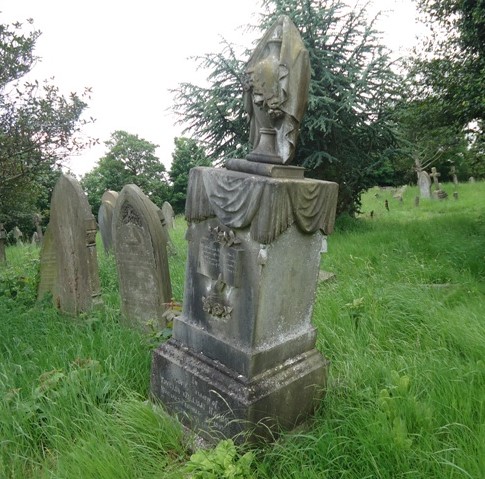
This impressive monument suggests to me it was originally meant to mark the final resting place of an entire family, but there is only one person buried here, Thomas William Harry.

Among some fine examples of Victorian funeral iconography there is the urn symbolising immortality, heavily draped signifying mourning.  Books are a reference to scholarly habits and religious faith.  There is a book beneath the urn and one opened on the first verse of a hymn – Hiding in Thee.

It reads:

O safe to the Rock that is higher than I

My soul in its conflicts and sorrows would fly

So sinful, so weary, Thine, Thine would I be,

Thou blest Rock of Ages, I’m hiding in Thee.

Written by William Orcutt Cushing with music by Ira David Sankey.

This is the last resting place of Thomas William Harry, born in Swindon in 1863 the eldest child of William and Mary Harry.  This young couple were among the advance guard that moved from South Wales when the new Rolling Mill opened at the Works.

It is likely their first home was in the Barracks, the unpopular lodging house in the railway village that became a Wesley chapel, then the Railway Museum and then a youth project called The Platform.

By 1871 the Harry family were living at 7 Cambria Place, a two up two down terraced house in to which they managed to squeeze William, Mary and their five sons, Mary’s mother, two nephews (both employed at the Works) and two nieces.

William and Mary eventually returned to Wales to run a pub in Jenkins Town near Swansea.  They took their four younger children with them but the four elder boys stayed in Swindon and lived at 12 Clifton Street.  Head of the household was young Thomas, aged 18 and an apprentice fitter at the Works.

Thomas eventually left the works to set up in business as a grocer in a shop on Park Lane.  He married in 1890 and in 1895 his son Cyril Arthur was born.  Sadly, Thomas died before the little boy was two years old.

Thomas’ brother Henry known as Harry (making him Harry Harry) took over not only Thomas’s business interests but in 1909 married his widow as well. 

Funeral of Mr T.W. Harry. – The funeral of Mr T.W. Harry, whose death was recorded in our last weekly issue, took place on Saturday afternoon at the Swindon Cemetery. The mournful cortege left deceased’s late residence, Bath Road, Old Swindon, at 2.15, the mourners being Mr H. Harry, Mr W. Harry, Mr C. Harry, and Mr A. Harry (brothers), Mr D. Harry and Mr Evan Harry (uncles), Mr F. Williams, Mr J. Williams, and Capt J.G. Morris (brothers-in-law), Mr A.W. Burson (partner), Mr G. Howells, etc. Upwards of 60 members of the Swindon Trader’s Association were present, including the president (Mr W.G. Little) and the secretary (Mr J.S. Protheroe), and representatives also attended of the deacons, the Sunday School, and the Christian Endeavor Society in connection with the Baptist Tabernacle, where deceased was a prominent member.

The bearers and representatives of the firm (Messrs Freeth & Son) included Mr Frank Burson, Mr Woolfrey, Mr Sutton, Mr Banwell, Mr Carver, Mr Hancock, Mr Strong, Mr Galpin, and others. A short service was held at the Tabernacle previous to the internment, the Rev F. Pugh (pastor) officiating. In addressing the large congregation Mr Pugh referred to his having baptised deceased as a member of the Church, and touched upon Mr Harry’s earnest and self-sacrificing labors on behalf of movements associated with the Tabernacle. He also paid a feeling tribute to deceased’s personal character and worth. Mr. Pugh conducted the service at the grave-side, which was witnessed by a large number. The coffin was of polished and panelled Canadian elm, with plain brass furniture, the brass plate being inscribed: “Thomas William Harry, died Feb. 2. 1897, aged 34 years.” Numerous floral offerings were received …

The funeral arrangements were efficiently carried out by Mr A.J. Gilbert, of Swindon. At the morning service at the Tabernacle on Sunday the pastor preached an impressive sermon on “The Passing of Jordan” from Joshua iii, 17, and made special reference to the circumstances of Mr Harry’s life and death. During the service deceased’s favourite hymns, “Hiding in Thee,” and “He fell asleep” were sung.

Extracts from the North Wilts Herald, Friday, February 12, 1897.

Read more about the Harry family on the excellent http://www.swindonbottles.co.uk/harry.html

Joanna C. Lay – silent, quiet and faithful worker

Today we celebrate International Women’s Day with the story of Joanna C. Lay.

It’s difficult to imagine a farm located in what is now Corporation Street, Swindon but this is where Joanna Cuss Smith and her seven siblings grew up.

When Joanna was born in 1851 her father worked as a master butcher with a shop in Wood Street but by 1861 he also farmed 110 acres at Lower Eastcott Farm, employing three men and two boys.

Joanna married jeweller Edwin John Lay in the summer of 1884. The couple had three sons and lived at 17 Bath Road, an elegant establishment opposite Apsley House.

Sometimes there is not much I can add to a sympathetic obituary published in the local media – so let me hand you over to the Swindon Advertiser.

Death of Mrs E.J. Lay

Well Known Swindon Lady

We regret to have to announce the death of Mrs Joanna Lay, wife of Mr Edwin J. Lay, watchmaker and jeweller of 17, Bath Road, Swindon. The deceased lady was a member of a very old Swindon family, being the eldest daughter of the late Mr Edward Smith, butcher and farmer, who carried on business in the town for many years at High Street and Eastcott Farm.

Mrs Lay possessed a great personal charm, a kindly nature, and thoughtful disposition, which she had always exhibited from her girlhood upwards. She was 62 years of age, and had been ailing a few weeks, but not seriously ill. Then she had an attack of bronchitis.

On Friday her condition was better, but on Saturday she had a relapse, and passed peacefully away.

The deceased lady leaves a sorrowing husband and a family of three sons – two of whom are in South Africa – to mourn the loss of a loving and devoted wife and mother.

Funeral at Swindon

Attended by a large number of sympathising friends, the funeral of the late Mrs Edwin Lay, of Bath Road, took place at Swindon on Wednesday afternoon.

Enveloped in a profusion of beautiful floral tributes, the coffin was conveyed from the deceased’s residence to the Baptist Church on a hand-bier. The deceased lady was a prominent member of the Tabernacle, being for 27 years the Secretary of the Sewing Circle (with Mrs W. Clappen as President), and the respect and esteem in which she was held by the members of the congregation was strikingly testified to by the large number of people who attended the funeral service. Conducted by the Pastor (Rev. J. Ivor Cripps) and the Rev. F.C. Shellard, the service was of an impressive character. The hymns, “Come let us join our friends above,” and “Calm on the bosom of thy God,” were sung, and in the course of the service the Pastor paid a touching tribute to the memory of the deceased. They looked upon something that day, he said, as something incredible, something which they found difficult to believe was true, for less than a fortnight ago Mrs Lay gave, at the annual Church social, a report on behalf of the Sewing Circle, and only last Sunday week was present at the Sacrament. He left to others who knew her more intimately the honour of praising her, but he knew her enough to say that she was one of the silent, quiet and faithful workers on whom the substance of Church life relies and depends. What she did she did faithfully and well, and those who were acquainted with her work could say that hers was indeed a place of honour in the Church.

The interment subsequently took place at the Cemetery, where the last sacred rites were performed by the Rev. J. Ivor Cripps.

Extracts from the Swindon Advertiser, Friday, March 14, 1913.

Joanna Cuss Lay 62 years of 17 Bath Road buried 12 March 1913 in grave plot E7310. Joanna is buried with her husband E.J. Lay.

You might also like to read:

Elsie Wootten White – wartime volunteer

Harriett Annie Veness – political activist

Edith Whitworth – Mrs Great Heart

Celia Morkot – the first woman employed in the Works

Mr J.C. Westmacott – Primitive Methodist Preacher

When John Christopher Westmacott died in 1931 the North Wilts Herald published a lengthy obituary. I visited his grave in Radnor Street Cemetery where I discovered an elegant headstone, which included an inscription dedicated to his wife who died twenty years later. When I saw that his wife included the name Morse in her name I presumed that he had married into the prominent Primitive Methodist Morse family.

Elizabeth Jane Morse Trotman was born in Stratton St. Margaret and her baptism was performed by Charles Morse. Elizabeth was the daughter of Jane Morse Austin who married Cornelius Trotman. Jane was the daughter of Robert Austin and his wife Elizabeth Morse who was the daughter of William and Elizabeth Morse of Purton, but as yet I have been unable to make that all important link with the mighty Morse family (and I bet you’re glad I’ve stopped trying!)*

John Christopher Westmacott married Elizabeth Jane Morse Trotman in 1898. The marriage was registered in the Hungerford area of Berkshire. By 1901 they were living in Kingshill before eventually moving to 133 Goddard Avenue. They had no children.

When Elizabeth died there was no fulsome obituary, just a brief death notice published in The Reading Standard on Friday March 16, 1951.

Westmacott – on March 9, 1951, at Prince of Wales Avenue, Reading, Elisabeth Jane Morse Westmacott, aged 81 years, widow of John Christopher Westmacott, formerly of Swindon, passed peacefully away. – Sadly missed.

Mr J.C. Westmacott

Death of a Swindon Local Preacher

Funeral Tributes

The funeral took place on Friday afternoon of Mr J.C. Westmacott, of 133, Goddard Avenue, Swindon.

Mr Westmacott, who was 60 years of age, was a member of an old Swindon family, and had been in the service of the GWR Company for many years. He was well known in Primitive Methodist circles, having been a local preacher for nearly 40 years. He leaves a widow, and is also survived by his widowed mother, who is now 87 years of age.

The first portion of the service was conducted at the Regent Street Primitive Methodist Church, by the Rev G. S. Hooson (supt. Minister), the Rev F.W. Harper (a former supt. minister at Regent Street Church and now at Wootton Bassett), the Rev. T. Sutcliffe, the Rev. F. Sellers, and Mr G.P. Pickard. Special hymns were sung, and the organist (Mr. A. Barrett) played the “Dead March.”

38 Years as a Preacher

The Rev. G.S. Hooson paid tribute to the good work Mr Westmacott had done as a lay preacher. He had been a faithful and loyal member of the Regent Street church and his chosen sphere of work was preaching. For 38 years he was a lay preacher, and during that period he rendered a true and complete ministry in the Methodist Church.

The interment took place in the Radnor street cemetery.

The family mourners were: Mrs J.C. Westmacott (widow), Mr. and Mrs. C.H. Westmacott, Mr and Mrs J.A. Westmacott (Stroud), Mr Wm. E. Westmacott, Mr and Mrs H.G. Westmacott (brother and sister in law), Miss F.A. Trotman (sister in law), Mr F.T. Trotman (brother in law) Mr H.C. Trotman (brother in law, of Reading), Mr R.R. Trotman (nephew, of Oxford), Miss Freda Parsons (niece), Mrs W.H. Watts, Mrs E. Austin (cousin, Highworth), Mrs T. Austin (cousin), Mr and Mrs Uzzell, Mr and Mrs Pockett, Nurse Booth.

The bearers were Messrs C. Hands, H.T. Budgell, W. Robinson, Gingell, Deaman and M. York (local preachers).

GWR Works Representatives

The representatives of the GWR Works were Messrs. F. Hyde (chief foreman), J. Bond, and B. Thorne (of J. Shop) E. Thomas (retired foreman), J. Summerhayes, R.W. Newport and F. Dennis (of the chair foundry).

Amongst the representatives of the Primitive Methodist Connexion were Messrs. W. Webb, J. Haydon. J.T. Robins, H. Martin, J.P., T. Minchin, W. Bayliss, Wheeler, Uzzell, G.H. Hunt, C.J. Iles, J.P. (Purton) H.J. Franklin, H.J. Hancock, W.T. Harding, and H. Thatcher.

The funeral arrangements were carried out by Messrs. Smith and Son, Gordon road, under the personal supervision of Mr. A.E. Smith.

North Wilts Herald, Friday, January 23, 1931.

*So, I returned to my research and managed to find the connection between Elizabeth Jane Morse Trotman and the prominent Primitive Baptist family by the name of Morse. Elizabeth traces her ancestry back three generations to William and Mary Morse of Purton. These were the parents of Charles Morse, leading figure in the Primitive Methodist Church in Swindon.

You might like to read:

Mr Levi Lapper Morse – the end of an era

Raymond George Cripps – first Mayor to be invested in new Civic Offices

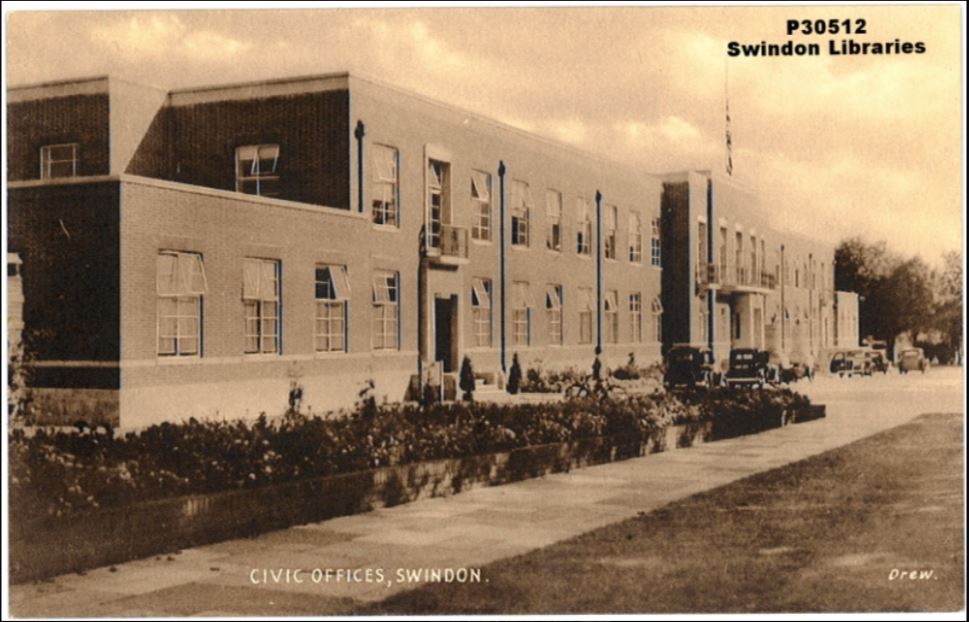
As Swindon residents eagerly await the opening of the temporary museum and art gallery space in the Civic Offices, let’s visit the opening of the building in 1938 and the first Mayor to be invested there.

The Civic Offices in Euclid Street were designed in a Moderne style by Oxford architects Bertram, Bertram and Rice and officially opened on July 5, 1938 by the Duke of Gloucester. The North Wilts Herald reported that ‘one of the highlights of the tour was when the Duke, with the Mayor, appeared on the balcony. His Highness was loudly cheered, and he waved an acknowledgement.’

The building was given a Grade II listing in 2020 when Historic England described it in the designation details ‘as a symbolic expression of Swindon’s civic identity during the interwar period.’

Image published courtesy of Local Studies, Swindon Central Library

Raymond George Cripps was born on December 18, 1877 in Kings Lynn, the son of Primitive Methodist Minister George Cripps and his wife Ursula Ellen. The family moved around the country following George’s ministry, but by 1901 George had retired and the family were living at 134 Goddard Avenue. Raymond was 23 years old and working as a railway clerk.

In 1906 Raymond married Beatrice Maud Raggett, the daughter of another prominent Primitive Methodist Henry Raggett and granddaughter of Charles Morse, one of the founders of the church in Swindon. The couple had two children, Cyril and Marjorie.

Raymond George Cripps first stood for office in the local elections of 1924 but was disqualified owing to his nomination papers not been filled in properly. He sought election the following year and continued to represent the King’s Ward.

Raymond George Cripps died aged 82 years at his home, 85 Croft Road. He was buried on January 25, 1960 in grave plot D85A which he shares with his wife Beatrice Maud who died in 1954.

Swindon’s New Mayor

Unanimous Election of Councillor R.G. Cripps

Labour’s Support

Just an ordinary man, unpretentious, not a Swindonian, but very proud of the town, in which he has lived for 40 years.

That was how Councillor Raymond George Cripps described himself on Wednesday when he was elected Mayor Swindon.

With the usual ceremonial his election was approved by the full Council, in the presence of members of his family and friends and representatives of the public life of the town.

Thirty-ninth in the list of Swindon Mayors, Mr Cripps, a retired GWR clerk, is the first Mayor to be invested in the new Civic Offices.

This year, for the first time in Swindon civic history, the members of the Council and visitors were deprived of the ceremony of robing and investiture with chain of office. This took place in an ante-room during a brief adjournment of the special Council meeting.

Mr Cripps made the customary reference to the work which lay ahead of the Council. He thought the dispute with the Wilts Standing Joint Committee over the police strength in Swindon would be settled on advantageous terms to the Council. The cattle market scheme would call for all the resources possessed by the Council in the way of financial judgment and wise planning. Mr Cripps described Swindon’s educational facilities as unequalled in the country, and he appealed for greater civic pride in the town.

Among those occupying reserved seats at the rear of the Council Chamber were the new Mayoress and members of her family the retiring Mayoress, Mrs Niblett, and Mrs L.J. Newman, a former Mayoress, the Rev. E. Banks and the Rev C.H. Cleal.

Mr Cripps election was proposed by Councillor A.E. Harding, and seconded by Ald. T.C. Newman.

In proposing Councillor Cripps as a ‘qualified person’ to be Mayor, Councillor A.E. Harding described Swindon as one of the best governed towns in the country. ‘Our offices and officials are second to none; we are proud of them.’

Then as an aside he made the suggestion to the Transport Committee that ‘bus conductors should be supplied with spectacles ‘so they might see people hurrying to catch the bus.’

Mr Harding spoke of the new Mayor’s church and Council work as providing excellent training for the exalted position he was to fill.

Tribute to Mrs Cripps and her ability to fulfil her duties was added by Mr. Harding.

Ald T.C. Newman seconded, and referred to his long association with Mr Cripps.

Labour’s Support

On behalf of the Labour group Coun. W.R. Robins supported the nomination and said the Mayor could rely on the support of his colleagues.

‘We differ in political allegiance but we are as desirous of doing the best for the town and people as any other members of the Council.’ Coun Mrs May George and Coun A.H. Wheeler also supported the nomination.

Coun. H.R. Hustings protested against the discordant note brought into the proceedings by the insult to the ‘bus conductors. He was very surprised at the remark being made on such an occasion of dignity. It was a very inopportune time.

The election of the Mayor was then approved unanimously, and the Council adjourned for a few moments while the new Mayor robed and was invested with chain of office.

When the new Mayor returned robed and took his place in the Mayoral chair he was loudly applauded.

The Mayor, speaking of Council work, said he was afraid that Swindon people did not appreciate the educational advantages of the town. He questioned whether any other town of its size could equal them.

Promising to do his work to the best of his ability he confessed that he had been tempted to withdraw after being proposed as Mayor-elect. He realised the responsibility he was assuming.

Referring to a reference in the Press in which it was suggested that he would need good humour, he said he could still see the funny side of things. ‘God help the man in public life who cannot,’ he said. He hoped to serve impartially and he knew the Mayoress would do all in her power to render service and forward any good cause in the town.

Provision had been made in current estimates for erection of a cubicle block at the isolation hospital. It was anticipated that during the coming year the Victoria road improvement would be completed, or at least substantial progress made.

The programme of educational development would, in the main, be completed and proposals for a central education and health clinic were approaching realisation.

North Wilts Herald, Friday, 11 November, 1938

You may also like to read:

Henry Raggett – a humble God fearing Christian

Levi Lapper Morse – the end of an era

Regent Street Primitive Methodist Chapel

Ada Ellen McHardy – always happy, always in a hurry.

A fatal road traffic accident and a mysterious ‘dark shadow’ on the road made front page news in the North Wilts Herald, Friday January 15, 1937.

Ada Ellen McHardy died of her injuries following the accident at the Bath Road and Goddard Avenue junction when she was struck by a car driven by Mr Edwin Bradley. Witnesses at the inquest referred to a ‘large black shadow’ seen on the road when wet, although it was not explained whether this shadow contributed to Mr Bradley’s driving or Mrs McHardy’s ability to safely navigate the road.

Ada Ellen Cave was born in Bath in 1860 the eldest of ten children. Her father Isaac W. Cave was an engine fitter and turner who moved to Swindon from Wolverton. In 1882 Ada married Robert S. McHardy, a clerk in the railway works. The couple and their two children lived at 24 Sheppard Street before moving to 53 Newhall Street, Ada’s home for many years.

Ada was a member of the Baptist Tabernacle and heavily involved with the work of the church (see newspaper report below). At her funeral the Rev. C.H. Cleal quoted – “As a writer in the Swindon Press rightly said of her. ‘She was always happy, always in a hurry, seemingly, to be about her Master’s business, possessing the helping hands of Martha, and the loving heart of Mary. She has left Swindon the poorer by her death.’”

Ada’s funeral took place on January 16, 1937. She is buried in grave plot D166 which she shares with her husband who died in 1902.

Swindon Resident Killed in Road Accident

Motor Car Driver Exonerated from Blame at the Inquest

Mrs Ada Ellen McHardy, president of the Swindon Women’s Free Church Council, was knocked down by a motor-car on Tuesday night and received injuries from which she died early on Wednesday.

The accident took place on Tuesday at about 7.45 at the junction of Bath-road and Goddard-avenue.

The car, which was driven by Mr Edwin Bradley, of 55, Okus-road, Swindon, was going along the Bath-road. Mrs McHardy was taken to the Victoria Hospital with head and leg injuries and died at 6.30 on Wednesday morning without regaining consciousness. She lived at 151 Goddard-avenue, and was 77 years of age.

For about 60 years Mrs McHardy had been a keen member and worker for the Baptist Church in Swindon, and it was only a month ago that she had a presentation made to her on her resignation of the post of secretary of the Baptist Women’s League of the church after 28 years’ service. In the year 1920 she was appointed a Deacon of the church, and for a few years occupied the office of Elder.

For 12 years she has represented the Church on the Wilts and East Somerset Association Executive Committee and was called to the presidency of the association for the year 1929. Always keenly interested in the young people, she was for many years a Sunday school teacher and was with her class last Sunday morning. She was a great help to the church in visiting the sick, while the Sewing Circle claimed her services since its formation nearly 50 years ago.

During Carnival week she was always a hard-working collector for the hospital, working for the council, and also at the stall run by the Free Church Council.

Loyal Worker

When Mrs J.F. Marquis, secretary of the Swindon Women’s Free Church Council, was informed by a “Swindon Advertiser” reporter of Mrs McHardy’s death, she expressed considerable concern. “I always found her a most conscientious and loyal worker,” said Mrs Marquis. “She was a woman of very high Christian character. She conducted our executive and general meetings most ably, and she will be greatly missed. I think I shall be expressing the general view of all the Free Church women of the town, especially those connected with the Baptist Church, when I say how sorry I am to hear the news.”

Mrs Marquis pointed out that this is the second loss that the Women’s Free Church Council has sustained during the past few months, Mrs Harrison, the vice-president, having died a short while ago. On Monday Mrs McHardy presided at a meeting of the council, when the question of filling the vacancy created by Mrs Harrison’s death was discussed.

The daughter of an engineer in the Great Western Railway Swindon Works, Mr Isaac William Cave, Mrs McHardy had lived in Swindon all her life. She was one of a family of ten, five girls and five boys, of whom two sisters and three brothers are living. She married Mr Robert Stewart McHardy, who was employed as a draughtsman in the Swindon Works of the railway and was a well-known figure in the town. Her husband died some years ago. For many years he was choirmaster at the Tabernacle. She had two children, a son and a daughter.

Before her marriage, Mrs McHardy was employed as a teacher at a College-street school. Her son is the Rev. Robert McHardy, B.Sc., of Chorley Wood, a Baptist minister, who received his education at Swindon College, and later at Aberystwyth University. Her daughter, Ethel, was also in the scholastic profession before her marriage to Mr Ernest Hughes, of Trowbridge. Her brother-in-law, Mr J. Ballinger, of 20, Goddard-avenue, is senior master at Even Swindon school.

The Inquest

A large black shadow which only appears on the road after rain, at the Bath-road and Goddard-avenue junction, in Swindon, was referred to by witnesses at the inquest at Old Town Police Station yesterday afternoon.

A verdict of “Accidental death” was returned, and the jury exonerated the driver of the car from blame.

Police Constable Worth, who was called to the scene of the accident, said he took up a position in Bath-road, over which a vehicle might normally be expected to travel. At the spot were three lights – a large green overhead lamp and two ordinary street lamps.

“Between two of the lights – the green one and a yellow,” he said, “was a large black shadow extending to Goddard-avenue in a triangular shape.

Witness went on to say that when he visited the scene on Wednesday night, the shadow was not there. Apparently it was only caused when the roads were wet.

In advising the jury, the Deputy-Coroner (Mr Harold Dale) said they should consider the question of a black patch which was caused by the green lights and the smaller ones.

Evidence of identification was given by Rev. R.S. McHardy, a son, who said his mother’s hearing was good but not perfect, while her eyesight was good.

Dr Christina Alexandra Gunn said Mrs McHardy was admitted to hospital about 8 o’clock. She was semi-conscious, and had a depressed fracture of the skull above the left eye and a fracture of the left leg. She died at 6.30 a.m. from hemorrhage of the brain as a result of the fracture of the skull.

Driver’s Story

The driver of the car. Edwin Bradley, 55 Okus-road, Swindon, said that on 12 January about 7.55 p.m. he was driving his car along Bath-road towards Okus-road.

“I passed Goddard-avenue,” witness went on “And the only person I saw was someone who stepped right in front of my car. There was no traffic about and I saw no other pedestrians.”

Answering the Deputy-Coroner, Mr Bradley said he did not see Mrs McHardy at all until she was directly in front of his car on the offside. She was then hardly more than a foot away from the front of the car.

“I pulled up as soon as I could – in the length of my car – and immediately jumped out.” The offside headlamp struck the woman and she was thrown forward.

It was a dark night and raining at the time. He had his side lights and a spot light on.

Asked by Mr Lemon if he had since visited the scene of the accident and noticed anything peculiar, witness said that in between the streets lamps was a black shadow, just where the accident happened. His speed was between 15 and 20 m.p.h.

“A Black Spot.”

Mr W.J. Colman, 77, Goddard-avenue, Swindon, said he was walking down the avenue towards Bath-road. “On reaching the junction I saw a car approaching from Bath-road. I stood on the zero (sic) to let it pass and it had gone 10 to 12 yards towards Okus-road when it pulled up with a sudden jerk.

“I walked along and found a woman on the ground lying about two feet directly in front of the car.”

Mr Colman said he noticed particularly a black spot in the road where the rays of overhead lights ended.

Mrs McHardy was lying seven or eight feet out from the kerb.

Mr Anthony Snow, foreman of the jury, expressed sympathy with the relatives, while similar sentiments were expressed by Mr H. Lemon, solicitor, Swindon, on behalf of Mr Bradley.

Mr D.C.A. Morrison, solicitor, Swindon, appeared on behalf of relatives of Mrs McHardy.

North Wilts Herald, Friday, 15 January, 1937.

Florence Jane Maddocks – Vicar’s wife

There is no doubt Florence Maddocks played an important role in the Gorse Hill community as the wife of Rev Maddocks at St Barnabas Church.

Florence was born in Manchester on January 6, 1856, the daughter of a solicitor’s clerk, William Sherratt, and his wife Sarah Jane. She married Philip Maddocks at St Mary’s Church, Birkenhead, Cheshire on July 6, 1880.

At the time of the 1881 census Philip was curate at St Peter’s Church, Burnley but for some reason Florence was boarding with her baby daughter Florence at the home of Charles Behenna and his wife Winifred at St Oswald in Cheshire.

Ten years later the Rev Maddocks was living at St Barnabas Vicarage, 268 Cricklade Road with his wife Florence and their ten year old daughter Florence Ida Louise. A son, Cyril, was born the following year but died in 1895 aged three years old. A second daughter, Philippa, was born in 1897.

It is sad and frustrating that so little can be discovered about a woman who played such an active role in the Gorse Hill community. Perhaps someone out there knows more about her.

The Late Mrs Maddocks

Funeral on Saturday

Amidst every manifestation of sorrow and regret on all sides, the funeral took place on Saturday last of Mrs Maddocks, wife of the Rev. Philip Maddocks (Vicar of St. Barnabas, Gorse Hill), who painfully sudden death was recorded in our columns last week. The mortal remains of the deceased lady were laid to rest in Swindon Cemetery, alongside the grave of her only son, Cyril, who fell asleep on Feb. 25, 1895, at the age of three years.

Holy Communion was celebrated in St. Barnabas Church, Gorse Hill, at ten o’clock, by the Rev. G.J. Saywell, curate: The organist, Mr. James Gaskell, played “No shadows yonder,” from A.R. Gaul’s “Holy City,” and also a selection from a Requiem of Anderton’s.

The funeral service took place at 12.45 in the same church, and the sacred edifice was crowded with parishioners and friends, anxious to take part in the solemn service. Canon the Hon. M. Ponsonby (Vicar of St Mark’s Church, and Rural Dean), officiated, assisted by the Rev. G.J. Saywell.

After the service at the church, the funeral procession wended its way to the Cemetery, where the last sad rites were performed at the graveside by Canon Ponsonby. Rain fell heavily during the long journey from Gorse Hill, but the sun shone out brightly as Canon Ponsonby solemnly delivered the committal sentences.

The coffin was of polished oak, with massive brass furniture, and the breast-plate born the following inscription:- “Florence Jane Maddocks, died 2nd April, 1902, aged 46 years.” The funeral arrangements were most satisfactorily carried out by Messrs Chandler Bros., of Swindon.

The floral tributes were most numerous and beautiful, and covered the space of two graves.

At St. Barnabas Church yesterday, the services were conducted by the Rev. G.J. Saywell, who made fitting allusion to the great blow the Vicar and the whole parish had received.

Extracts from the Swindon Advertiser, Monday, April 7, 1902.

Daniel Skinner – Florence Street Mission Hall

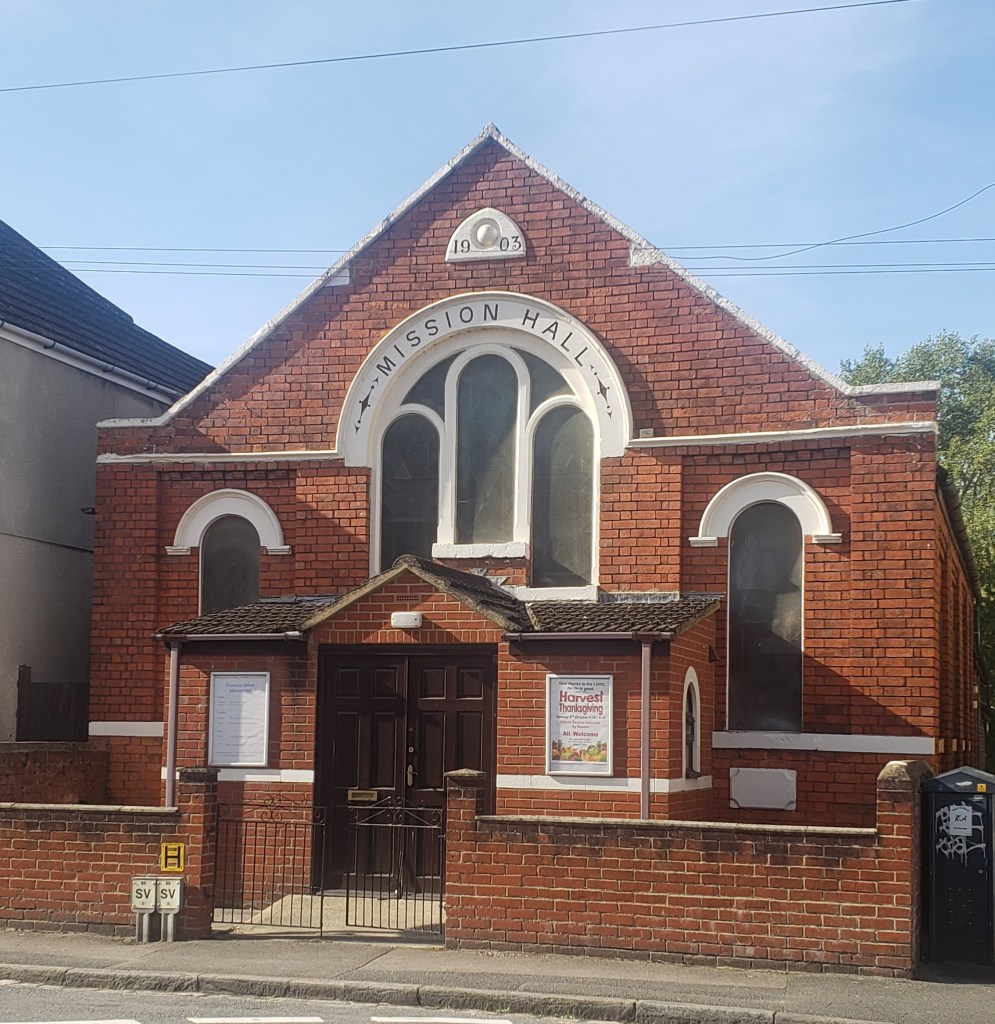
In 1903 baker Daniel Skinner decided to “build a place of worship free for the unfettered preaching of the gospel.” He engaged architect George Davis and local builders Colborne to build his Mission Hall in Florence Street, Gorse Hill. He also built several houses in the same street and moved into No 27, next to the Mission Hall.

Daniel Skinner was born in Whelford, Kempsford, Gloucestershire in 1861 the son of William and Mary Skinner. In 1889 he was working as a baker in Stratton St Margaret when he married Jemima Day Clack in the parish church in Lechlade. The couple had four children who survived to adulthood, William born in 1890, Lilian Mary in 1892, Frank Edward in 1893 and Ethel May in 1896. Jemima died in the summer of 1897. At the time of the 1901 census the Skinner family were living at 198 Cricklade Road, Gorse Hill. Jemima’s sister Fanny Evans Clack was living with them, caring for the young children aged 5-10 years old.

Daniel and Fanny were married in 1907 and the 1911 census finds them living at 27 Florence Street, next door to the Mission Hall. The four surviving children still live at home. William George is 20 and working as a railway clerk, Lilian May is 19 and a dressmaker, Frank Edward 18, works as a shop assistant and 15 year old Ethel May is still at school.

New Mission Hall – The Florence Street Mission Hall was opened on Saturday last. The proceedings commenced with a tea meeting, when about 180 sat down to an excellent repast, the following ladies and gentlemen waiting upon their visitors:- Mesdames Clack, Wakefield, Norton, Rouse, Williams, Elliott, Powell, Flowers, Willis and Harrison. Misses Clack, F.E. Clack, and Richens, the fair sex being ably assisted by Messrs Clack, Beasant, and Norton. After tea a public meeting was held, Mr G. Davis, of Swindon, presiding, supported by the Rev. J. Sprunt (Mission Preacher, of London), Mr J. Stranger (Evangelisation Society, London), Mr J. Stanger (Evangelisation Society, London), Mr Daniel Skinner, and others.

The meeting opened with the hymn, “All hail the power of Jesu’s name,” followed by an address from the Chairman extending a hearty welcome to all present. At the same time he informed his hearers that that Hall was the third it had been his pleasure to assist at the opening ceremony. The Rev Sprunt then offered the dedicatory prayer, and also later in the evening gave an interesting address. Mr J. Stanger also delivered a very interesting address. Mr. Daniel Skinner, of Crichdale [Cricklade] Road, then said it afforded him great pleasure in returning his hearty thanks to so many friends who had so generously responded to his appeal for assistance at the opening ceremony, more particularly those ladies and gentlemen who so kindly got up and waited upon the tea table. He had no doubt many of those present would like to know what induced him to build this hall.  (Mr Skinner built the hall at his own expense). Some three years ago mission services were held in a small room at Gorse Hill. Then, at a later period, tent services and camp meetings were held. He believed that on this side of the railway bridge there were about 10,000 souls, and only church and chapel accommodation for 2,000. Consequently, he felt inspired to do what he could in his power. He added that the building cost £500.

The hall was built for all denominations, and members of all churches were cordially invited, and a hearty invitation would be given to all-comers. In conclusion, Mr Skinner said he felt it his duty to express his entire satisfaction in which the building had been carried out by Mr. Thos. Colborne, of Swindon.

During the evening Miss Clack gave a solo. Master Willie ably presided at the organ. The new edifice is built of red pressed brick, with bath stone dressings. In the interior of the building the walls are plastered, with yellow deal at the sides, and with ornamental dado, the ceiling being of the same. There is a large rostrum and boarded floor. The building is well lighted with twelve incandescent burners. The dimensions of the building are 40 feet by 24 feet, by 20 feet high. The building was designed by Mr George Davis, of Swindon.

Swindon Advertiser, Friday, October 30, 1903.

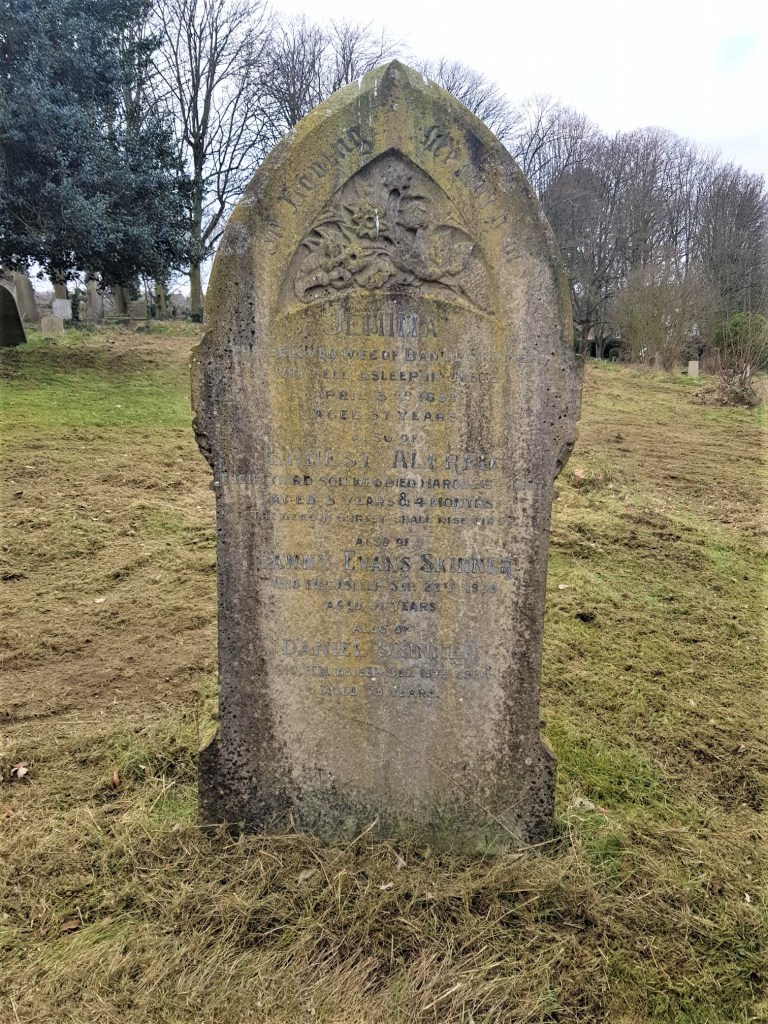
Jemima is buried in Radnor Street Cemetery, grave plot C477. Fanny died in 1928 and Daniel in 1934 and both were buried with Jemima. Daniel and Jemima’s third son, Ernest Alfred, is remembered on the headstone. He died in 1897 aged 3 years and four months and is buried in a neighbouring grave.