This story was submitted by their great-granddaughter.
‘John Henry Hayes was born 2 Nov 1872 to parents William (ox carter) and Mary of 27 The Street, Broad Hinton. He was the 7th of 8 children, having 3 brothers and 4 sisters.
Living in a rural community he initially trained as a blacksmith before entering the Great Western Railway as a springsmith. (1911 census gives his occupation as Blacksmith Striker GW Railway).
Circa 1898 John Henry, aka Jack, married Alice Maude Mary (nee Pyke born 1879 Wroughton).
They moved to 50 Summers St. Swindon and he became a churchwarden at the Rodbourne Road Methodist Chapel. My father remembers having to play quietly on Sundays whilst his stern granny read her bible. He also remembers she didn’t cook on a Sunday so there were only ‘cold cuts’ for lunch.
I understand he taught other railway employees in his front room. I don’t know whether this was religious studies or reading/writing.
Their family expanded and by the 1911 census they had 3 living and 2 deceased children. To my knowledge there were a further 2 girls and a boy, 6 in all surviving to adulthood.
My grandfather, imaginatively named Thistle Ewart aka Tom, was his second child. He, together with his only child my father Barrie John, and myself all in our turn ‘went inside’ GWR/BREL. We have a 4 generation plaque on the wall at Steam.
John Henry lost his wife in 1939 and passed away 11 Feb 1951. He was buried at Radnor Street Cemetery Swindon, plot C4160′
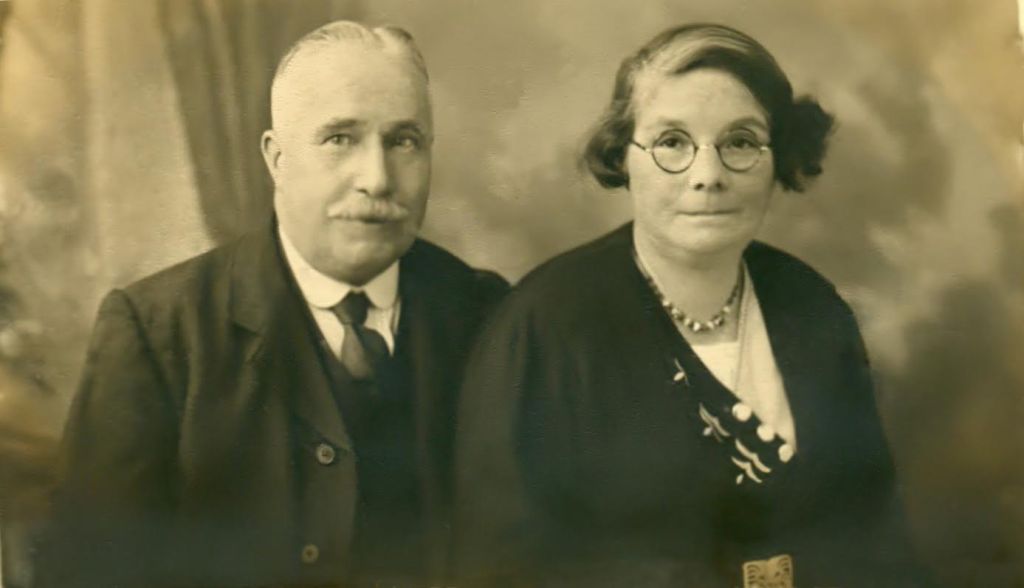
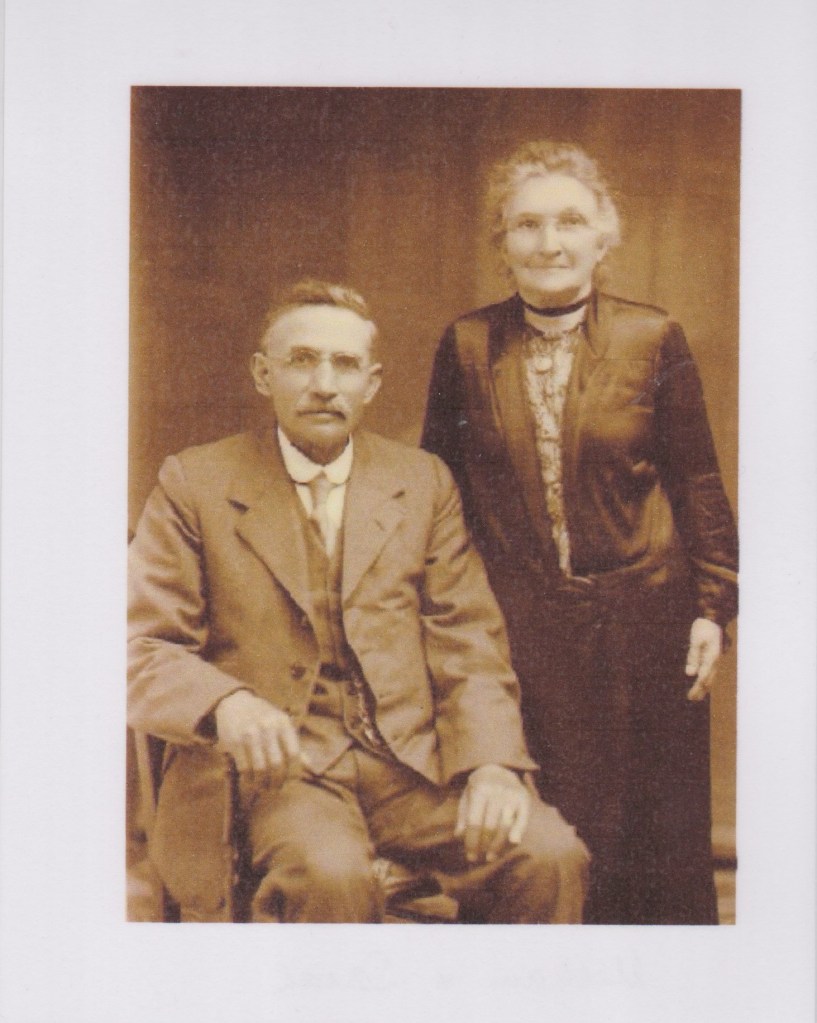
The attached photo is of John Henry and Alice taken in approx. 1934.
*The couple share their grave with Alice’s mother Jane who died in November 1926. Her last address was given as 50 Summers Street.
Central Hall, Clarence Street published courtesy of Local Studies, Swindon Central Library.
Rev John Whitehead Spargo was born in 1875, the eldest son of Samuel Spargo, a joiner, and his wife Maria Ann. He married Isabella Maud Walford in 1904 and the couple had three children, one of whom died in infancy. At the time of the 1911 census Pastor Spargo was working as a Wesleyan Methodist Missioner in Reading. By 1917 he had moved to a post at the Central Mission Hall in Clarence Street, Swindon.
Pastor Spargo’s name appears frequently in the Radnor Street Cemetery burial registers during his seven year ministry in Swindon. In 1919 he conducted the funeral of Frederick Cosway 14, Frederick Rawlinson 14 and Stanley Palmer 13, three boys killed in an explosion at the Chiseldon Military Camp.
A Popular Pastor
Mr Spargo Leaves Swindon Brotherhood
After seven years’ work in Swindon as missioner to the Central Mission, Pastor Spargo has left to take up his duties in a new sphere of work at Finsbury Park, London. He gave his farewell address at the Brotherhood on Sunday.
Speaking to a large audience, Pastor Spargo said he was sorry that his long connection with the Swindon Brotherhood was coming to an end. He was grateful to have had the opportunity of being connected with the various societies and organisations identified with the Swindon Brotherhood. If there had ever been a cry for help and need in Swindon, the Brotherhood always heard and responded to that cry.
The Pastor took as the subject of his address, “God’s Fellow Workers.” He remarked that as members of the Brotherhood it was their high privilege to labour for Jesus Christ and to promote the principles laid down by Him. It was a mistake to think that everlasting happiness meant contentment and rest, for there could be no happiness without work.
In his opinion, lasting happiness would be having a vocation, and understand work in the right spirit. All the great men of the past had been people with great tasks, and the glorious heroes of the faith had been men and women with something to do.
But before the Brotherhood as a movement could get to work, the individual member must himself work, and before they could bring repentant sinners to Jesus Christ they themselves must first come repentant to God. He (the speaker) believed that Christ came into the world to pardon sin, but that belief was not one iota of good to him or to any-one else unless he possessed a practical experience of that belief.
Brotherhood’s Work
Continuing, Pastor Spargo said that he did not believe the world of to-day was in the state which God meant it to be, for He could not be satisfied with a world in which there was so much sin abounding. There was, then, a glorious work before the Brotherhood, although it might not be a romantic work. But every man in the Brotherhood could help to make Swindon a better town with the help of God, for if God made a man, then surely He could use him, although he might possess but one single talent. The speaker concluded by saying that if they of the Brotherhood could but appreciate the height, the depth, the strength and the glory of God, then they could make this world a place in which it would be more difficult to do evil, and more easy to follow the right.
Pastor Spargo was then presented with a cheque for £5 on behalf of the Brotherhood Committee by Mr Cotsell, and with a further £5 which had been given by private subscription as tokens of the great esteem in which the missioner was held by all members of the Brotherhood.
In presenting the gifts, Mr. Cotsell said that Pastor Spargo’s presence created an atmosphere, and he always felt that something was missing when the pastor was not on the platform. He expressed his heartfelt gratitude to the retiring missioner for all the work which he had done for the Swindon Brotherhood.
There was a crowded congregation at the evening meeting at the Mission, when Pastor Spargo delivered his farewell address on “God’s way of working” to a company numbering over a thousand.
North Wilts Herald, Friday, August 22, 1924.
William and Sarah Tydeman
Although Rev Spargo left Swindon in 1924, he retained his connection with the congregation at the Central Mission Hall, particularly with the Tydeman family and in 1935 he returned to conduct the funeral of Sarah Tydeman.
Rev John Whitehead Spargo died in 1960 in Ware, Hertfordshire.
A comprehensive list of burial dos and don’t in Radnor Street Cemetery was published when the new burial ground opened in August 1881. The cost of a common grave was 5s (25p) but sadly, many working class families could not afford even this and there are numerous public graves in the cemetery where more than one unrelated persons are buried together. The cost rose considerably for a multi occupancy plot and a 9ft (2.7 metres) deep vault cost £4.4s (£4.20) while a brick or boarded grave for a single burial 9ft (2.7 metres) deep cost £1.1s (1.05). It is likely that the graves in the chapel area are vaults or brick lined, which would increase the cost.
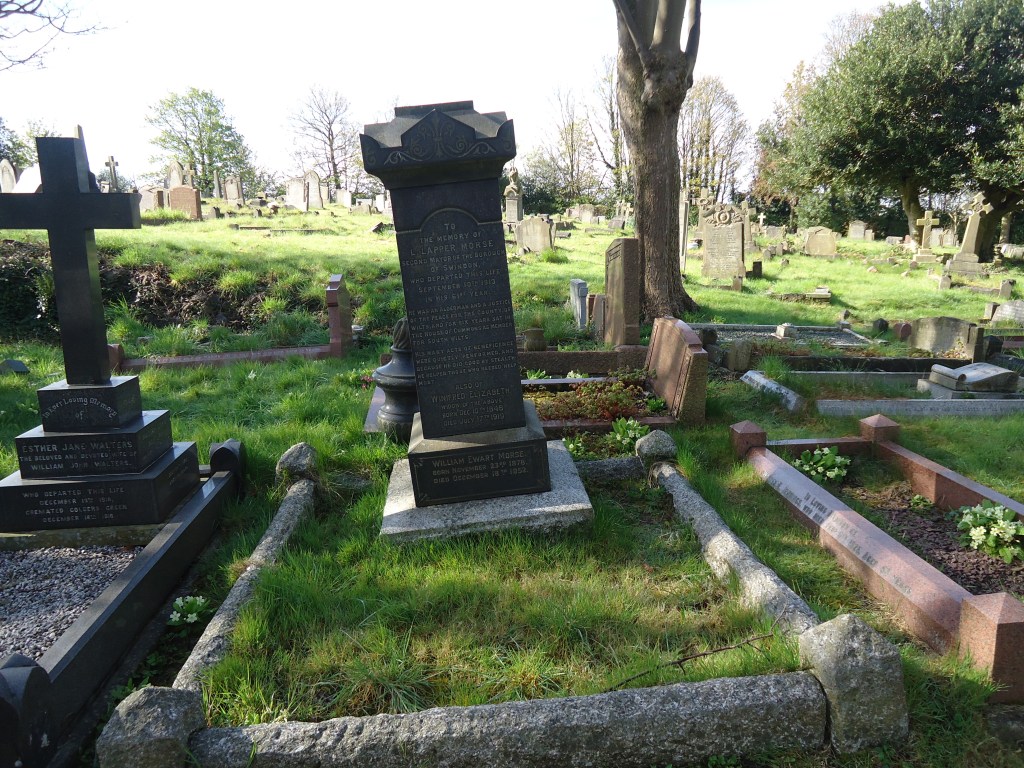
The Morse family grave is surmounted by a magnificent black, granite monument and occupies two plots, 27A and 28A in Section D.
This is the last resting place of Levi Lapper Morse and as the inscription explains he was a Justice of the Peace and served as an Alderman and the second Mayor of Swindon. He was MP for South Wiltshire for six years. He was an active and energetic member of the Primitive Methodists, serving as Circuit Steward of the Swindon II circuit from its formation until his death. He was elected chair of the Brinkworth District Meeting and Vice President of Conference in 1896 and also served as District Missionary Treasurer for about nine years. He was a lay preacher, Sunday school teacher and an accomplished organist. Levi played a prominent role in both the political, commercial and religious life of Swindon and there is plenty of information available about him, but what about his wife?
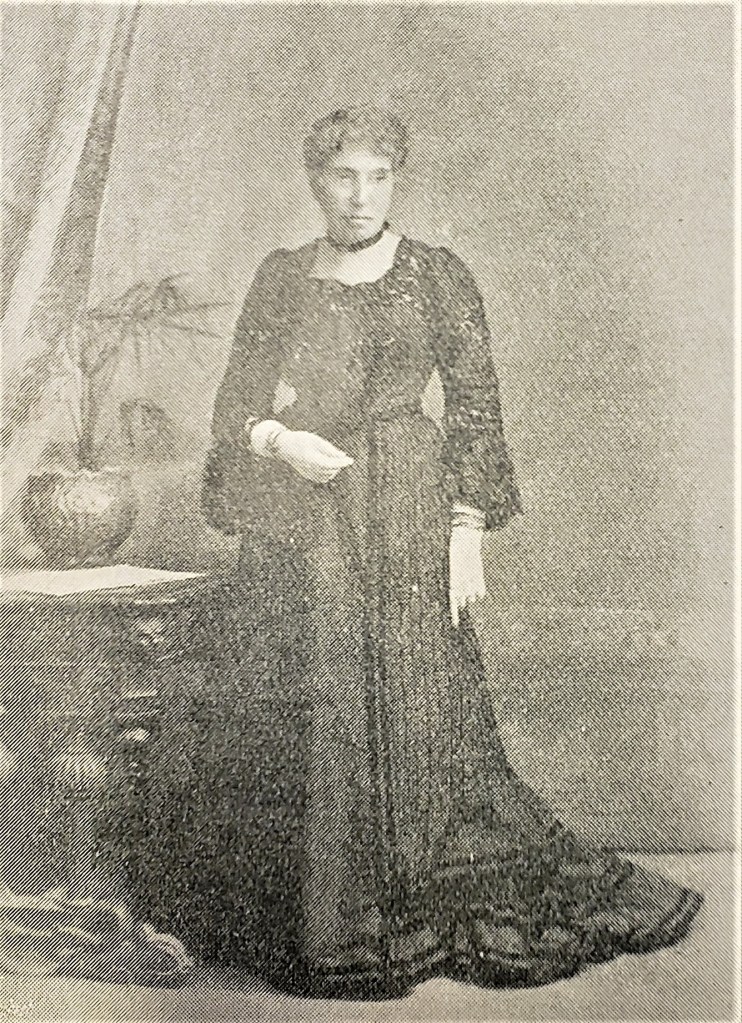
Winifred Elizabeth Humphries was born on December 10, 1848 the eldest child of Farmer Isaac Humphries and his wife Elizabeth. She grew up at Cockroost Farm, Broad Hinton where her father employed five men and two boys and a 17 year old governess to teach his growing family.
Charles Morse established a family retail business in Stratton St Margaret but his son Levi went on to accomplish far greater things. Levi opened one of Swindon’s first departmental stores, which until the 1960s stood on the present site of W H Smith’s in Regent Street, Swindon.
Levi and Winifred married in 1875 and set up home above the shop in Stratton Street, Stratton St. Margaret where he described himself as a grocer and draper, employing two men, two females and two boys. Winifred’s first child Ella Elizabeth was born in 1876 with seven more to follow. Levi states on the census returns of 1911 that he and Winifred had been married 35 years and that they have eight children, six of whom are still living while two have died.
Winifred supported her husband throughout his political career, but it was within the Primitive Methodist Church that she did most of her work. Winifred had been an active member of the Primitive Methodist Church since before her marriage and as a young girl played the organ at chapel services, often walking several miles from her home on a Sunday morning. The first Primitive Methodist Church in Regent Street was built in 1849. Further structural changes saw the church become the largest of the three Primitive Methodist Churches that formed the Swindon Circuit in 1877. It was also the focal point for the missionary activities of the Primitive Methodists in Swindon in the 1880s and where Winifred was the founder of the Women’s Missionary Federation Swindon branch in 1909.
The Morse family moved into The Croft in 1896, an elegant property that stood in four acres of land with paddocks, flower beds and ornamental trees, a tennis lawn and a fountain. William Ewart Morse, the couple’s son, remained in residence until his death in 1952 after which the house fell into disrepair and was eventually demolished. Hesketh Crescent built in 1957 now stands on the site.
Winifred died on 17 July 1919 following a long illness. Her funeral took place at the Regent Street Primitive Methodist Church with which she had so long been associated. The service was conducted by Rev F.W. Harper assisted by Rev J. Dobson, an old family friend. The Rev Dobson spoke in his address of Winifred’s good works and the loss which the church had sustained by her death.
The store closed the day of Mr Levi’s funeral, as a mark of respect. That kind of thing seldom happens now, but things were different in those days.
I had only just started work at Morse’s in the summer of 1913. Drapery assistants worked a long day and as a new, young apprentice I was called upon to do the more menial tasks as I learned my trade. I remember doing a lot of dusting.
Morse’s had begun as a small draper’s shop in Stratton St Margaret, opened by Mr Levi’s father Charles, more than 50 years ago. It was Mr Levi who opened the Regent Street store where he proudly announced that you could furnish your house ‘cheaply and well.’
I often wondered how much of his own stock he used to furnish his big old house at The Croft where he entertained his political friends and held the large Primitive Methodist conventions. My mum told me not to let the manager at Morse’s hear me speak like that as I would soon get my marching orders.
The staff were gathered together when the announcement of his death was made earlier that week. Many were moved to tears. I hung my head but to be honest I didn’t know him, his days of calling into the store and overseeing the business had long passed. We opened late that day, after we dressed the store in black, trimming last used when the old Queen died.
That week in September everyone spoke about Mr Levi in hushed, reverent voices. I wondered if he was really that well liked, or whether this was just the ‘old order’ speaking; those who touched their forelock when the squire drove past in his carriage.
The end of an era, people said. At 16 you don’t really appreciate what that means. But a year later the world was at war. Nothing was ever the same again.
The facts …
The remains of the late Mr Levi Lapper Morse were laid to rest at Swindon Cemetery on Saturday, when nearly 5,000 people witnessed the last rites.
The Cortege, on leaving The Croft, proceeded to the Regent Street primitive Methodist Church. It was headed by a posse of police under Inspector Winchcombe. Then followed the borough magistrates and the Mayor (Mr J.J. Shawyer). The deputy mayor (Mr G. Brooks), and the Town Clerk (Mr R. Hilton). Most of the members of the Corporation and representatives of the principal public bodies brought up the rear of the first portion of the procession. Two carriages laden with beautiful wreaths proceeded the handbier, on which the coffin was laid.
An imposing spectacle was made by the male and female employees of Mr Morse’s business, who came immediately behind the carriages conveying the family mourners. Next were the representatives of religious bodies, and finally about 200 friends and acquaintances who had attend to pay their last tributes of respect.
Besides the family wreaths were tributes from Sir William and Lady Hartley, the members of the Swindon Primitive Methodist circuits, the North Wilts Liberal Association, Members of the second Methodist circuit quarterly meeting, the business staff etc.
A Friend’s Tribute
An impressive panegyric was delivered by the Rev T.M. Pinnock, who described the late alderman as ‘my faithful and true friend for 40 years.” Speaking with evident emotion, the reverend gentleman referred to Mr Morse’s generosity to the Church both locally and in the connexion generally. Without him it would have been impossible for their church in Swindon to be what it was that day. Reference was also made to Mr Morse’s unobtrusiveness and natural business talent, which latter quality he made of immense serve to the Church. “He never forsook the friends of his youth,” added the speaker, “and he died fearing God. He sought to make God’s will the rule of his conduct, God’s service the joy of his heart, and God’s glory was the aim of his life.”
Another brief but earnest tribute was given by the Rev J.D. Thompson (general committee secretary), who said the sympathy of Primitive Methodists all over the country went out to the bereaved.
During the service the hymns “O God our help in ages past” and “Rock of Ages” were sung.
A cordon of police had been drawn round the chapel, on the west side of which was the grave, lined with the deceased’s favourite flowers – red roses – and many other beautiful blooms. Large and sympathetic crowds witnessed the final rites, conducted by the Revs. J.D. Jackson and J. Dobson.
A memorial service was conducted by the Rev T. Mostyn Pinnock (formerly of Swindon), at the Regent Street Church on Sunday night.
Extracts from The Wiltshire Times Saturday published September 20 1913
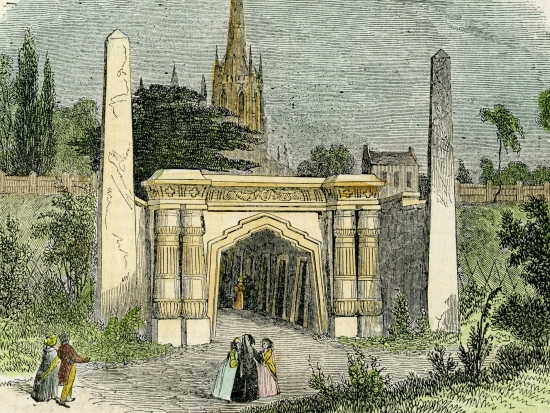
Unlike Highgate Cemetery in London, Radnor Street Cemetery is not a tourist destination. Plenty of Swindonians don’t even know of its existence. There are no elaborate mausolea, no Egyptian Avenue or Terrace Catacombs and although at first sight there appear to be large numbers of headstones, the vast majority of graves are unmarked.
The GWR Works opened in 1842 and employed more than 1,700 men twenty years later. At the same time a shortage of burial spaces in the town became of critical concern, but the Radnor Street cemetery was not opened until 1881.
Highgate Cemetery has been the setting for numerous books, several films and in the 1970s was subject to a bizarre vampire obsession. Radnor Street cemetery online archives include just a few early 20th century photographs and a 1980s music video filmed by Swindon music legend XTC.
Highgate Cemetery is famous for being famous; for the number of people of note and celebrities interred there. Radnor Street cemetery is all about working class history. The men who rose through the ranks of the railway engineering hierarchy and others who spent a lifetime on the factory floor in the GWR Works. Those men who served in two world wars and died as the result of their service. The women who trained as nurses, who taught in Swindon’s schools, worked in factories, shops and offices and raised large families who began the cycle all over again.
This is Swindon’s working class history – stories of the triumphs and the tragedies and the sheer hard work.
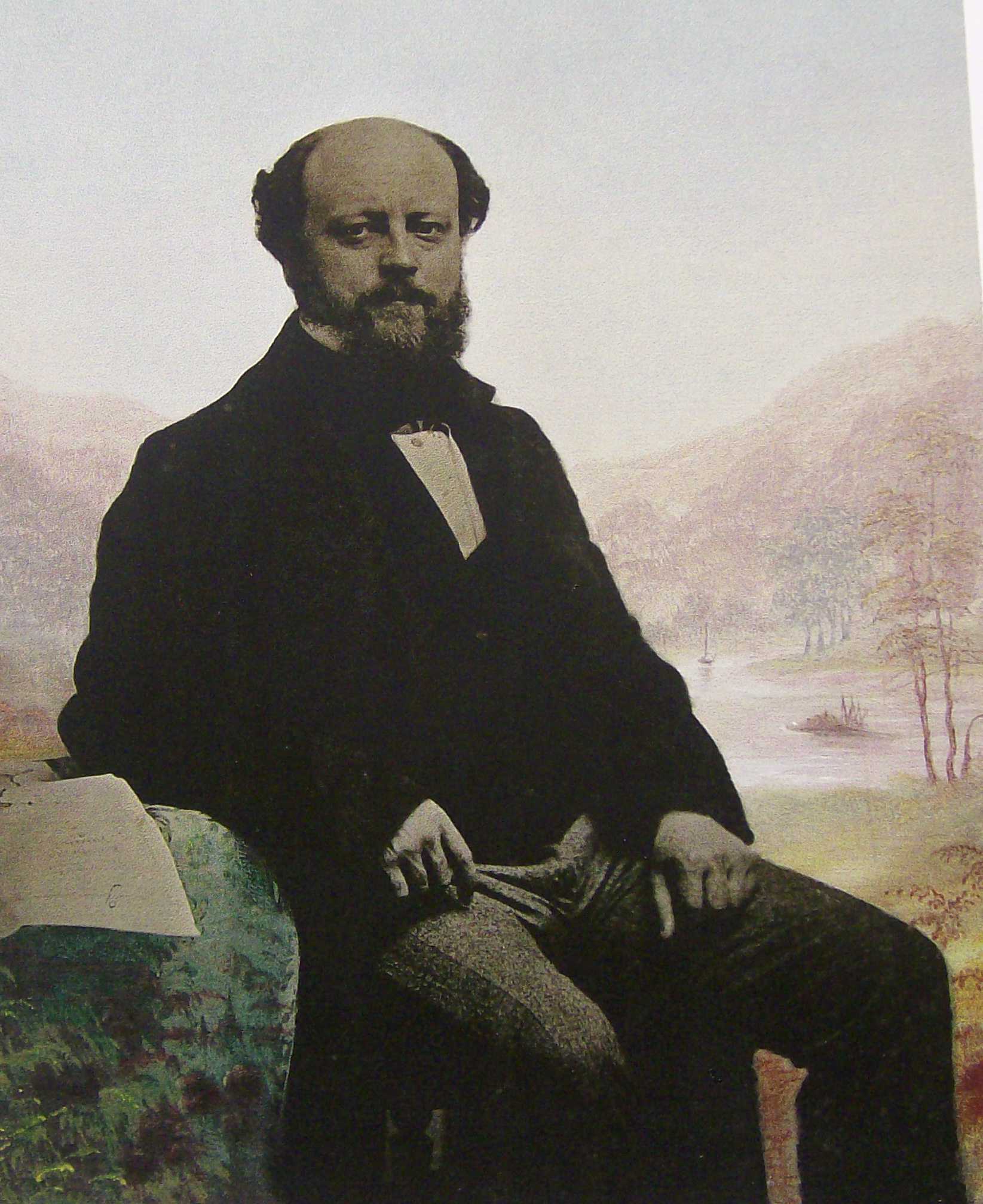
William Morris – published courtesy of Desmond Morris
The re-imagined story …
Father adjusted his spectacles and carefully turned the pages of the Swindon Advertiser. “Mr Morris has written an excellent editorial,” he said. “I’d like to read it aloud to you.”
I sat in Mother’s chair by the kitchen range and picked up the mending from her workbox.
Tom and Owain looked up from their books; both were studying for a mathematics qualification at the Mechanics’ Institution. They had precious little time for their studies after a long day in the Works, but we all knew how important this matter was to Father.
He began reading in his measured, melodious voice, his Welsh accent still rich and strong after so many years living in Swindon.
“…But Swindon, as we have said, has drifted into that unique, and we do not hesitate to say disgraceful, position of having literally no place to bury its dead.”
The ‘cemetery question’ as it had become known, had raged for many years and was particularly personal to our family.
We worshipped in the Britannia Chapel, better known now as the Cambria Baptist Chapel. In the early days, when Father and Mother first moved here from Tredegar, the services were still delivered in the Welsh language. That was not the case so much now, but whenever the congregation met for social events the conversation in Welsh still buzzed around the room.
The stone-built chapel backed on to the canal and had no burial ground, which was a source of great sorrow to those who worshipped there. The same could be said for the members of the numerous other non-conformist chapels and churches across the town with no special place to bury their dead.
But now the problem had become even greater. The burial ground at St Mark’s was to be closed and there would then be no burial places in Swindon at all.
Mr Morris explained the long history of the cemetery question in great detail in this week’s edition of his newspaper. Anyone unfamiliar with the disgraceful story would find it difficult to believe, but for my family it was close and personal.
Father had long been a member of the community who agitated for a separate burial ground where non-conformists could bury their loved ones to our own traditions by one of our own ministers.
When Mother died, we had no option but to lay her to rest in the waterlogged and overcrowded churchyard at St Mark’s. And when my eldest brother Gwyn passed away there was no room for him to join her.
“So now the Local Board members are rushing around like headless chickens, writing obsequious letters to the Queen’s ministers while the burial ground at St Mark’s is closed and the people of Swindon have nowhere to bury their dead,” said Tom.
Father folded the newspaper and placed it in his lap. He removed his spectacles and I noticed again how careworn he looked these days, much older than his years.
“My greatest sorrow is that when my times comes, I shall be unable to lie at rest with your mother.” I reached across to touch his hand. “But God willing, Swindon will eventually get its own burial ground, free from the constraints of the established church.”
Victorian non-conformist churches and chapels in the Swindon district.
Top row, left to right: Salvation Army Citadel, Devizes Road; Railway Mission, Wellington Street (demolished); Primitive Methodist Chapel, Butterworth Street.
In 1869 the people of New Swindon went to the polls to vote upon the question of a new cemetery. More than 480 votes were cast, 153 in favour of a new cemetery, 333 against, influenced no doubt by the Great Western Railway Company’s announcement that they intended to oppose the proposal.
The Wilts & Gloucestershire Standard reported – ‘The question, therefore, resolves itself into a sentimental grievance on the part of the Dissenters, who object to be buried in the churchyard. The proper course to have pursued would doubtless have been for the Dissenters to form a company, as was suggested by one of the speakers at a former meeting, and not to put an unnecessary tax on Churchmen and Dissenters alike.’
But the cemetery problem did not, and could not, go away. There were more meetings and discussions and William Morris continued to publish letters in his newspaper, the Swindon Advertiser. Then, more than eleven years later a crisis situation was reached.
The Editorial
“Swindon, with its eighteen or twenty thousand of population, is drifting, or rather had drifted, into a position which even the smallest of communities might desire to avoid. For long anterior to the time when it was counted a public duty to decently house the living, the work of providing a last resting place for the dead was undertaken, and has always been most religiously adhered to. But Swindon, as we have said, has drifted into that unique, and we do not hesitate to say disgraceful, position of having literally no place to bury its dead.
A fortnight since we published in these columns a letter addressed to the vicar and churchwardens of St Mark’s, New Swindon, from the Home Secretary, in which the following sentence occurs. – “I hereby give you notice by direction of the Right Honorable Sir William Vernon Harcourt, one of her Majesty’s Principal Secretaries of State, that it is his intention to represent to Her Majesty in Council, that for the protection of the public health no new burial ground shall be opened in the parish of New Swindon, in the County of Wilts, without the approval of one of such Secretaries of State, and that burials be discontinued forthwith and entirely in the parish church of St Mark’s, New Swindon, in the County of Wilts; and also in the churchyard, except as follows: “In such vaults and graves as are now existing in the churchyard, burials may be allowed, on condition that every coffin buried therein be separately enclosed by stonework or brickwork properly cemented.”
This, we know, is practically to close all means for burying the dead in the ecclesiastical district of St Mark’s, New Swindon, for there is absolutely no other place beside the churchyard of St Mark’s in which interments can take place.
Then, as to the churchyard of the Old Town district. It has but very little more burying space left than has the churchyard of St Mark’s. So full has the yard become, and so far have the graves advanced westwards, the interments having been commenced in the eastern part and gradually worked on westward, that poor Cook, the unfortunate man who, the other day, was found dead in the snow at Walcot, now lies in his grave within ten or twelve yards of the very spot where he left his cart in Brock-hill on the night of the dreadful snow storm.
It cannot be long before, in the interest of the public health, this burying place also will be peremptorily closed. And what have we then? Absolutely nothing in the shape of accommodation for the burial of the dead out of the population of a parish of from eighteen to twenty thousand inhabitants: Is there in the whole country another town in such a pitiable, or, rather, disgraceful, position?
In addition to the two churchyards, there are, or rather have been – for the bodies have been sometime since removed from one of the places, the ground being required for building purposes – four other burial places connected with Non-conformist chapels – if, indeed, a strip of land, about ten feet wide, between the front of a chapel and a public street, can be called a burial ground. And, then, one of the two remaining graveyards – the old Independent yard, in Newport street, has been closed for very many years, thus leaving one place only in the parish in addition to the two churchyards – the small yard in Prospect belonging to, and exclusively used by, the Particular Baptists, for the interment of the dead of the whole parish, which, on a very moderate computation, cannot be less than from two hundred and fifty to three hundred per annum.
We believe we are within the mark when we say that by utilizing every foot of ground in all the available graveyards in the parish there could not be made room enough for the decent burial of one year’s dead without using ground “over again” and disturbing the remains of those who have pre-deceased friends and relatives still living only a few years.
And this is what a place like Swindon has come to! We hesitate not to say it is simply disgraceful, and when the reason for it all is understood, no right minded person can help pronouncing it contemptible. In answer to this it may, no doubt, be said Swindon has a Burial Committee of the two Local Boards, to be some day converted into a Burial Board, and that the two Local Boards are acting in concert with a view of providing a Cemetery, that they have submitted plans, and have made an application to borrow ten thousand pounds sterling for the purpose of carrying out the works.
But what can all this be worth in the estimation of those who are acquainted with the parochial history of Swindon for the past ten or twenty years. What, indeed, can it be worth in the face of such reports of the proceedings of the Local Board as we had to publish in our last issue? The question of providing a public Cemetery is no new thing in Swindon. Twenty years ago it was regularly and persistently advocated on the ground that without such a convenience the inhabitants did not enjoy that full religious liberty to which they were entitled, and which the providing of a public Cemetery would give them. But the insidious priestly intrigues of those who are interested only in the narrowest and most exclusive of sectarian bigotry always succeeded in crippling every effort that was made.
In Swindon, for many years past, there has appeared no possible chance of carrying out so important a work as that of providing a public Cemetery on the simple basis of the duty we owe each other on the platform of equal rights in all matters of conscience and religious liberty. There would seem to have been a sad falling off in the stuff of which the present race of Nonconformists are made compared with that of those days when the oldchapel and graveyard in Newport street was first built and opened. There must have been a time in the history of the place when men were ready, if need be, to suffer for conscience sake. But there also has been a time when those who dared to resist the fascination of the sanctimonious look, the hypocritical whine, or an imaginary wishing of saintly hands, have had to submit to a social ostracism, and to find themselves the subject of lies and slanders innumerable, and of all uncharitableness.
But it has not been in the interest of an arbitrary and dogmatic religious intolerance alone that the providing of a public Cemetery for Swindon has been opposed. For the past twenty years or more no plan or scheme for the general benefit of the parish has been brought forward without its being met by the claims of certain property in the parish to be exempt from liability to contribute to any of the costs that might follow. In the interest of these claims the parish was divided into two Local Board districts, with a rural district outside of both districts, but still within the parish. We doubt if another such extraordinary division of a parish containing an area of 2,766 acres only is to be met with in the United Kingdom. And the same thing is now being suffered in the matter of the Cemetery question. The two Local Board districts are united for the purposes of a Burial Board. But the Walcot and Broome Farms are excluded, and by means those living on these farms are going to obtain their right of burial we are at a loss to know. This, however, may be a small matter compared with the all important one of the present position of the parish with respect o the burial of its dead. Again and again, for years past, efforts have been made to avoid the difficulty in which the parish is now placed. Public meetings were held, resolutions passed, and committees formed, but it was always so managed that nothing further could be done. At one time elaborate statistics and statements were read to show that the existing burial space would be sufficient for years to come; at another time the always “sure card” of increased rates and unnecessary expense was played, and always, with the same result as now, a great deal being done “on paper,” but nothing anywhere else. The present position of the parish in the matter is so well described in the pathetic appeal addressed by the Swindon New Town Local Board to the Local Government Board in London that we cannot do better than reproduce it in this place. It was as follows:-
1. That your petitioners, the Swindon New Town Local Board, in conjunction with the Old Swindon Local Board, have, subject to the approval of the Local Government Board, agreed for the purchase of a plot of land within their district to form a cemetery for the use of the inhabitants of their district and of the district of the Old Swindon Local Board, which site has been approved by Her Majesty’s Home Secretary, and a local enquiry was held by an inspector, appointed by the Local Government Board, on the 23rd of November last, in reference to the application of the said Local Board for the sanction of the Local Government Board to a loan for the purpose of laying out and construction of such cemetery.
2. That, in accordance with the instruction of the said inspector, on the 24th day of December last your petitioners, the said Local Boards, forwarded plans with estimates in details of such cemetery, and at the same time applied to the said Local Government Board for sanction for loans amounting to £10,000 to enable them to lay out and construct the said cemetery, but no answer has as yet been received to their application.
3. That your petitioners are only waiting for the sanction of the Local Government Board to such loan for the purpose of enabling them to carry out the necessary works, to at once commence the laying out of such cemetery, and the preparation of the same for the reception of interments.
4. That your petitioners have been shown a notice sent to the vicar and churchwardens of the parish of St Mark’s, New Swindon, informing them of the intention of Her Majesty’s Principal Secretary of State to apply to Her Majesty in Council for an order discontinuing burials forthwith and entirely in their churchyard, except as therein mentioned.
5. That as there is no other burial ground within the district of Swindon New Town (which contains a population of 15,000), there will be no place for the inhabitants to bury their dead until the proposed new cemetery has been laid out and prepared for interments.
6. That the closing of the said churchyard before such cemetery has been laid out and completed will cause great inconvenience and hardship to the inhabitants of the district of Swindon New Town.”
It will be in the recollection of our readers that this was to have been a joint memorial by the Local Board and the Vicar and Churchwardens of St Mark’s. But for a reason which will be found embodied in a letter, which we publish in another column, the Hon. and Rev. M. Ponsonby refused to sign the memorial. Indeed, it is clear from the letter that it is due to the Vicar’s action that the order for the closing of the churchyard for interments has been brought about.
We admit we cannot read the terms of the order “that burials be discontinued forthwith and entirely” as the Hon. and Rev. M Ponsonby interprets them when he says – “The order for closing will probably not be issued for a few months,” theordinary meaning of the word forthwith being given in our dictionaries as immediately; without delay; directly. But otherwise the Vicar’s letter is most satisfactory, and enunciates a doctrine in every way more satisfactory than that taught in the time of his predecessor to the effect that “when the yard was full the ground might be gone over again.” The Hon. and Rev. M. Ponsonby has come very recently on the scene of action, and is therefore untrammelled by the course hitherto so persistently pursued by those who, in the interest of Mother Church, have disregarded an absolute sanitary requirement, and have so successfully played the part of the dog in the manger for no better purpose than that “the Church” might have the exclusive right of burying the dead.
But again we ask: How does the parish stand in this matter? A loan of £10,000 has been applied for, and that sum the parish – that is, the parish less Walcot and Broome Farms – will have to repay. Land has been secured upon which this £10,000 will be expended in a hurry, and money spent in a hurry on public works is too often little better than squandered. But worse by far than this is the prospect of the parish having a year’s dead thrown on its hands with nowhere to place it. Progress is bound up hand and foot in that most tenacious of all bondages – red tape; on sanitary grounds every burying place in the parish ought to be peremptorily closed forthwith, and men, women, and children will continue to die. The work has now to be done under the most ruinous of conditions, and under the most unfavourable of all circumstances, and for no better reason, we hesitate not to assert, that in the past, reasons, which should have had no influence with reasonable and rational men for one moment, have been allowed to be all powerful and to stand in the way of anything and everything being done.
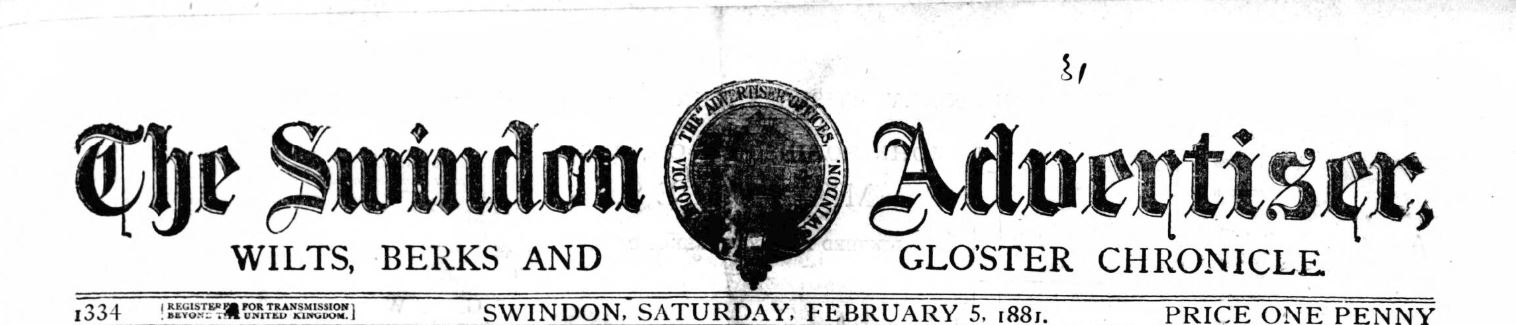
The Swindon Advertiser – Saturday, February 5,1881.
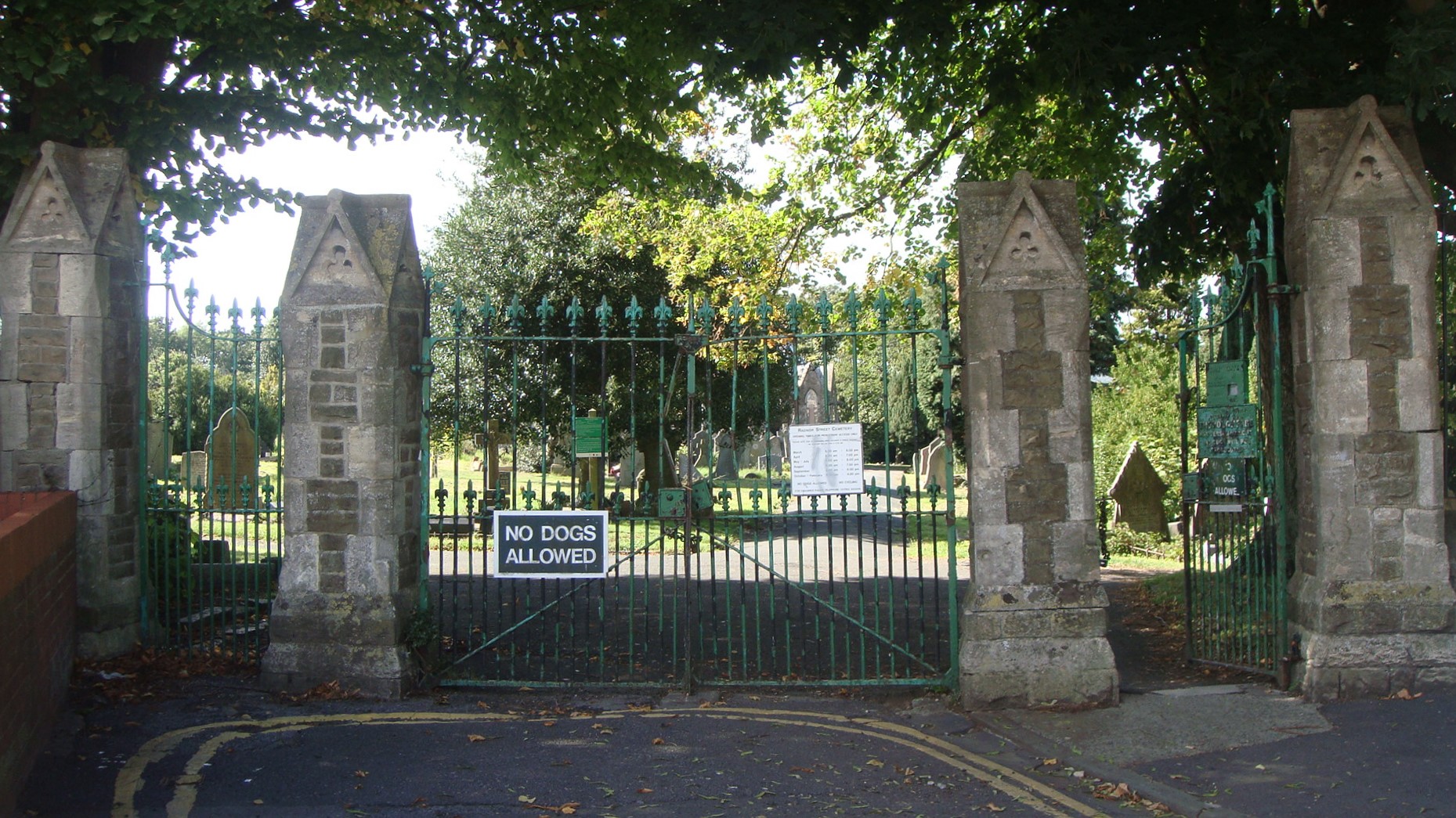
Kent Road Cemetery gate
Coming next …
James Hinton – a good and trusted and esteemed servant – I will admit to having a grudging admiration for Mr. James Hinton, but I wouldn’t say I actually liked him.
published on Radnor Street Cemetery blog January 17, 2019.
Welcome cemetery followers to this new blog launching today.
Radnor Street Cemetery tells the history of Swindon. The civic dignitaries and members of the Great Western Railway hierarchy; the boilermakers and platelayers; the philanthropic benefactors and trailblazing women; the teachers and tradespeople and the 104 servicemen who lost their lives as a result of their military service in two world wars. The ordinary men, women and children of the town.
This blog will combine research and fictional, re-imagined stories to create an account of those lives.
So, if you enjoy local history with a different slant, please read on. You might like to read the ‘essential information’ first.
The re-imagined story …
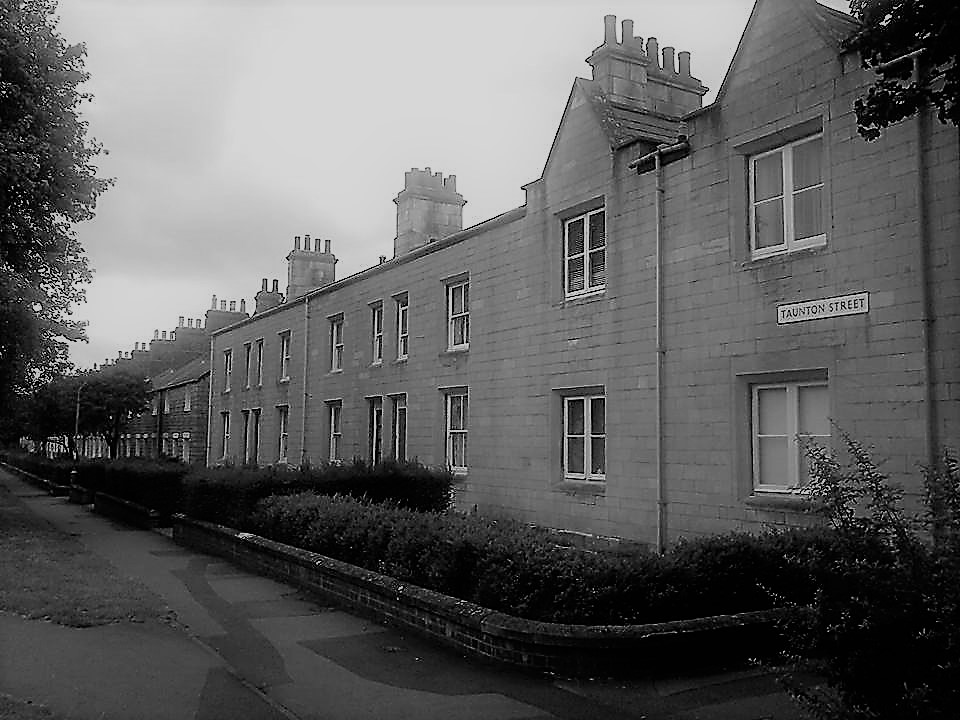
Night had drawn in early on a grey, sullen afternoon. A biting, north easterly wind accompanied me home on the walk from Old Swindon to Taunton Street, chilling my body but not so much as the events of that afternoon had chilled my heart.
A lamp was lit in the front room window. Emily opened the front door, clutching her shawl about her. I removed my coat, shaking off a dusting of snow. My worn garment served little protection against the elements and I badly needed something thicker, newer, but the boys needed boots and they must come first.
I took my seat before the range and warmed my hands as Emily brewed a fresh pot of tea.
“How did the meeting progress?”
“There were a great many people there. The meeting had to move from the Vestry to the Town Hall to accommodate the crowd,” I cradled the warming mug in my cold hands.
“Was Mr Morris there?”
“He was, and so was anyone of importance. Mr Hill had a lot to say as did Mr Hurt. And a lot of opposition to raising the parish rate was made in consideration of the poor people.”
“So little heed was made of our wishes?” Emily sat down wearily on the chair opposite and I wished I could have brought her better news.
“There was some mention of dissenters objecting to the burial of their dead in the parish church yard. However greater emphasis was given that it was the gentlemen’s considered opinion there was sufficient burial space in Swindon for years to come and the condition of the waterlogged graveyard in Old Swindon was an exaggeration.”
“That is an end to the matter then.”
“There is to be a poll next Saturday at the Mechanics’ but I am not hopeful.”
We sat in silence.
Twelve dissenting chapels, Mr Pruce had noted at the Vestry meeting. Swindon had two churches and twelve chapels. I could name them all. Chapels with a growing congregation, a Sunday School and Bible classes and volunteers who helped where there was a need, not only in the New Town but in the poor streets of Old Swindon, and yes there was poverty in prosperous Old Swindon. Twelve chapels but nowhere to bury our dead in the beliefs we held dear. Local dignitaries boasted that Swindon had an ethos of acceptance and tolerance but maybe that did not extend to religion. I considered that at the meeting this afternoon there had been more than a whiff of prejudice.
“So that’s an end to it then,” said Emily as she dampened the hearth and made everything safe for the night.
“Let us see what the result of the poll will bring,” I said, but I feared she was probably correct.
The facts …
A CEMETERY FOR SWINDON. The question, shall Swindon have a cemetery, and in this matter be put on a par with other towns and villages? has again cropped up.
There no single question where the principles of right and good taste are more clear than they are in this question of a public cemetery. There is no call made by the religious liberty we as a nation enjoy more emphatic than is the call that each religious denomination should enjoy the right to consign its dead to the earth after its own fashion. Yet there are to found those who can stand in the way of this right being granted, and who can prate loudly about increased burdens on the shoulders of the poor, and such like prattle, without the real interests the poor being for one moment seriously thought of, and we are therefore to see a pretty squabble before this question, ” Shall Swindon have a Cemetery” is settled.
A short time since a proposition was before the nonconformist bodies of our town for providing a purely unsectarian cemetery, open to all parties, influenced by none. This plan it was perfectly within the power of those whom it would have served to have adopted, and have made successful. Had it been adopted it would have carried with it this recommendation—it would have been in strict conformity with the very principles of nonconformity: it would been established on purely independent grounds, and no man against his will would been compelled to pay a single farthing.
But no sooner was this independent course suggested to those who profess to love and live by independency, than there were found those who could cry out most lustily, “We don’t want to be independent; let tax others for that which we are asking.” The scheme was in consequence knocked in the head, and now we have the question, “Shall a cemetery be provided by a rate on all property within the parish claiming the attention of ratepayers.”
There is this to be said in favour of the proposition as it now stands before ratepayers: a public burying place is a public necessity, and should, therefore, be provided for out the most broadly collected public fund we have. The public weal demands that the dead body should be at once consigned to the earth this being so it surely can be no act of injustice if we call upon the public purse for funds to accomplish that which the public weal demands.
There is another aspect to this question to which we need not refer beyond this: In a town like Swindon, with its two churches, established as by law, and its twelve chapels, established in conformity with the consciences of men, that religious liberty upon which we so much pride ourselves, and which has been fought for, through many generations, cannot said truly to exist among us long as we are deprived of the opportunity of burying our dead after our own fashion; so long as it remains the power of one man to harrow and distress the feelings, by an arbitrary act. Of those who dare to hold independent views on some mere matter of detail in the great scheme of God’s religion. But, as we have said, we are to have a fight over this cemetery business, and Saturday next is appointed for the first great marshalling of the forces.
There was a skirmish on Saturday last, but it was mere babbling piece of business; the fight has yet to come.
Extracts taken from a report in The Swindon Advertiser published Monday February 1, 1869
Coming next …
Mr Morris’s Editorial – The ‘cemetery question’ as it had become known, had raged for many years and was particularly personal to our family.
published on Radnor Street Cemetery blog January 10, 2019.





 Radnor Street Cemetery