The lost village of Imber

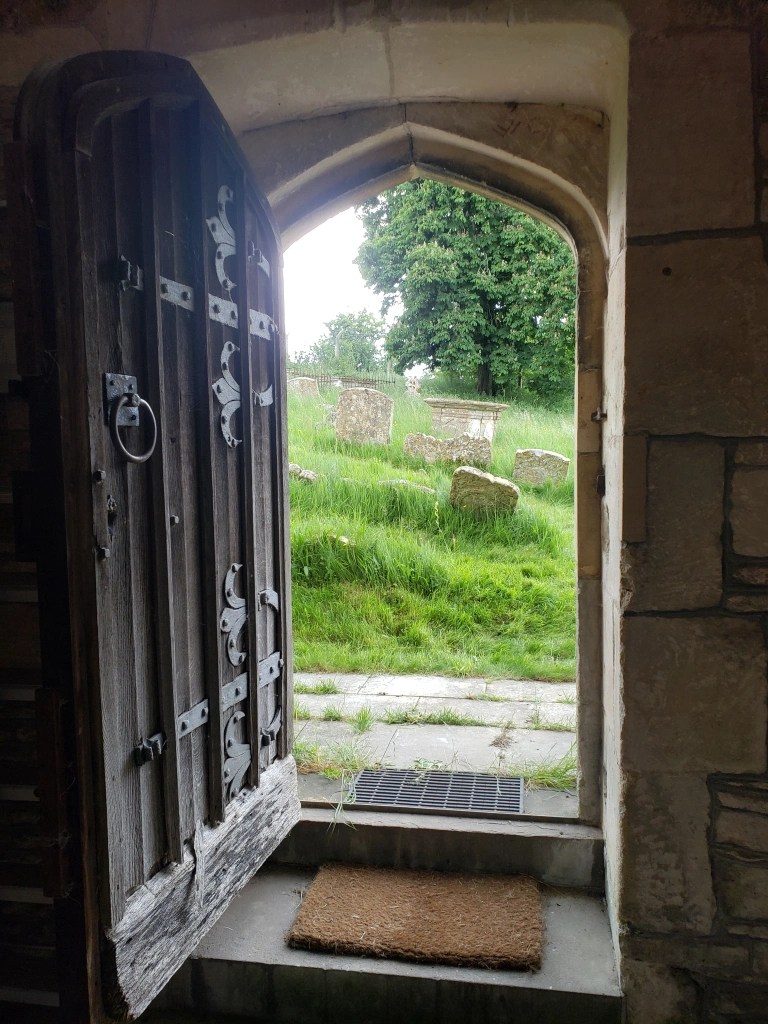
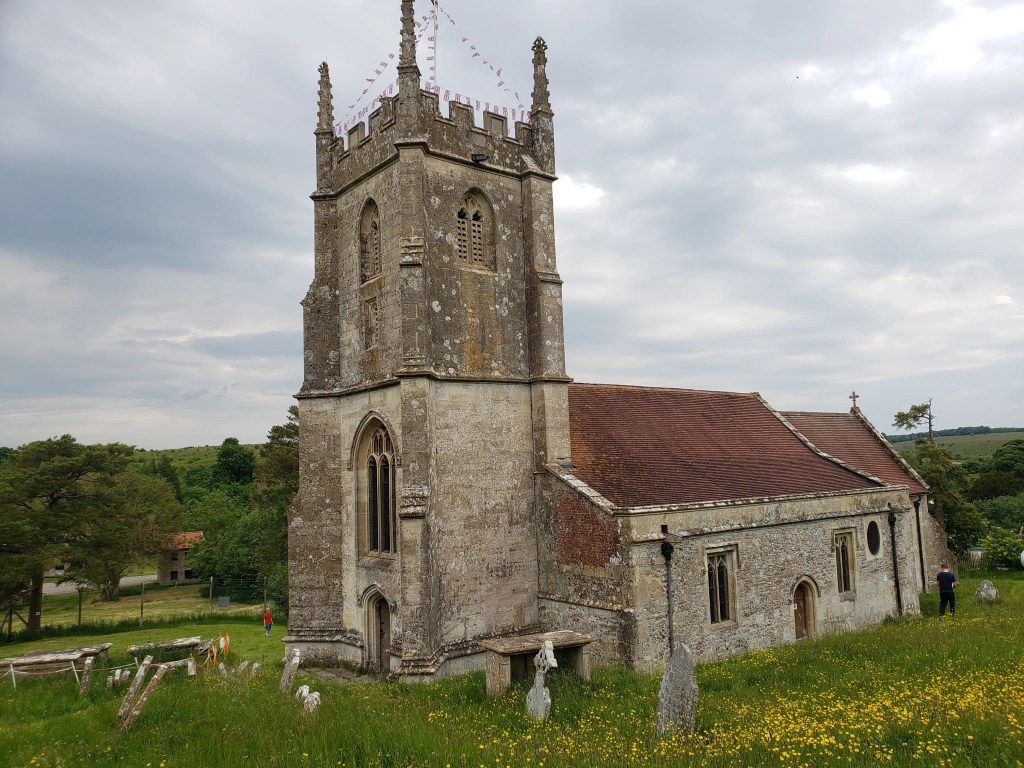
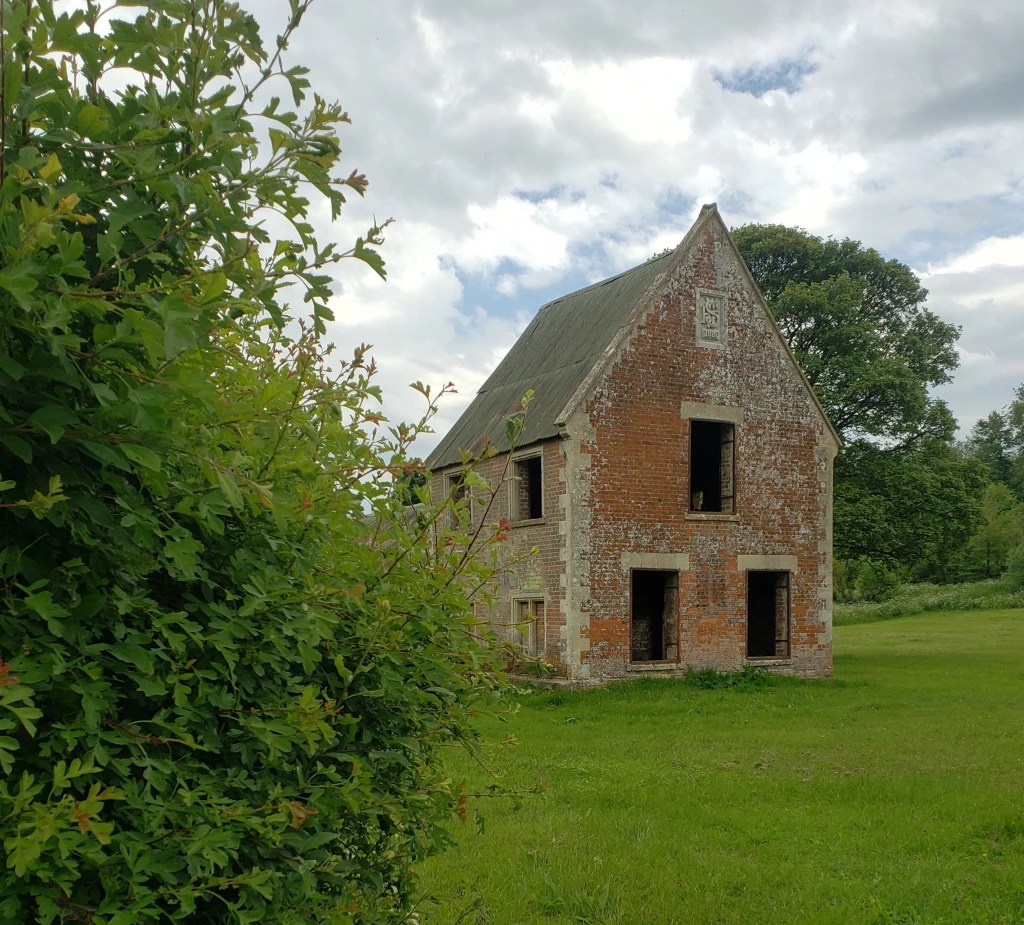
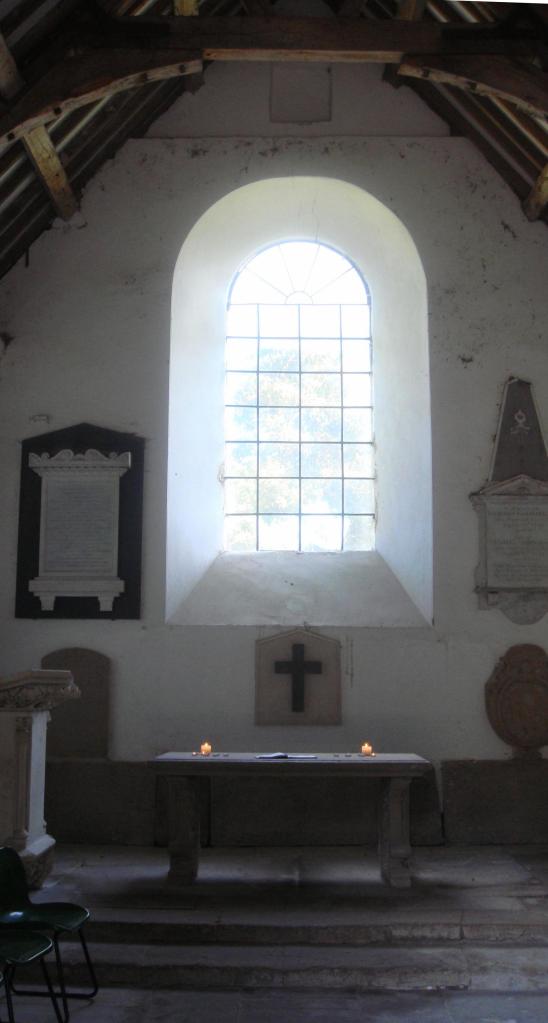
A spur of the moment decision saw me and my two ‘grave’ friends Jo and Tania set off for a trip to the village of Imber. Deep in the heart of the Salisbury Plain MOD training area the village of Imber is inaccessible except on a few, rare occasions during the year and in 2022 volunteers were able to open the church of St. Giles during the late Queen’s Platinum Jubilee weekend.

In 1943 the village was occupied by the War Department for training purposes ahead of the D-Day landings. Already owned by the MOD, the village had long been under siege with villagers well used to a military presence all around them. But when the official order came to give up their homes, the patriotic Imber villagers complied with a heavy heart under the assurance that it would be for the duration of the war alone.

However, when the villagers prepared to return, they quickly discovered this was not, and never would be, possible.

For the story of the campaign to reclaim the village visit the Imber Village Facebook page and watch the video.

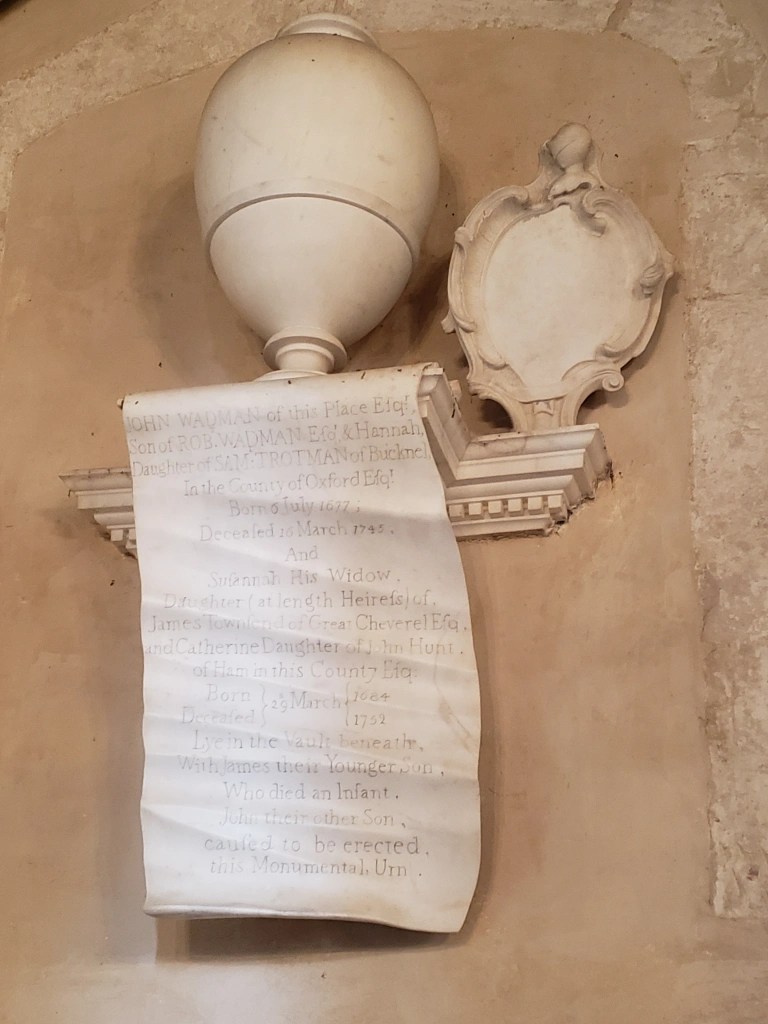
This stylish plaque inside the church is to the Wadman family of Imber Court, Lords of the Manor during the 17th and 18th centuries.

The text of Susannah’s last Will and Testament appears to have been a few informal words, which later required endorsement by two independent witnesses familiar with Mrs Wadman’s writing and signature.

My Son

I desire you will give to the poor of Road, five pounds and to the poor of Imber five pounds, and to the poor of Amesbury ten pounds each to be paid and distributed in a Nook after my Funeral. S:Wadman

My Son

I likewise give ye Servant ye is living with me at my death one years wages and as much of my Wearing Apparel of every kind as my daughter will not accept of

If Mrs Tayler will accept of such part of my Apparel as my daughter shall think proper to part with

(indorsed) This to my Dear Son

Visit the website for the opening dates in 2025 and do allow plenty of time – it maybe awhile before you can make a return visit.

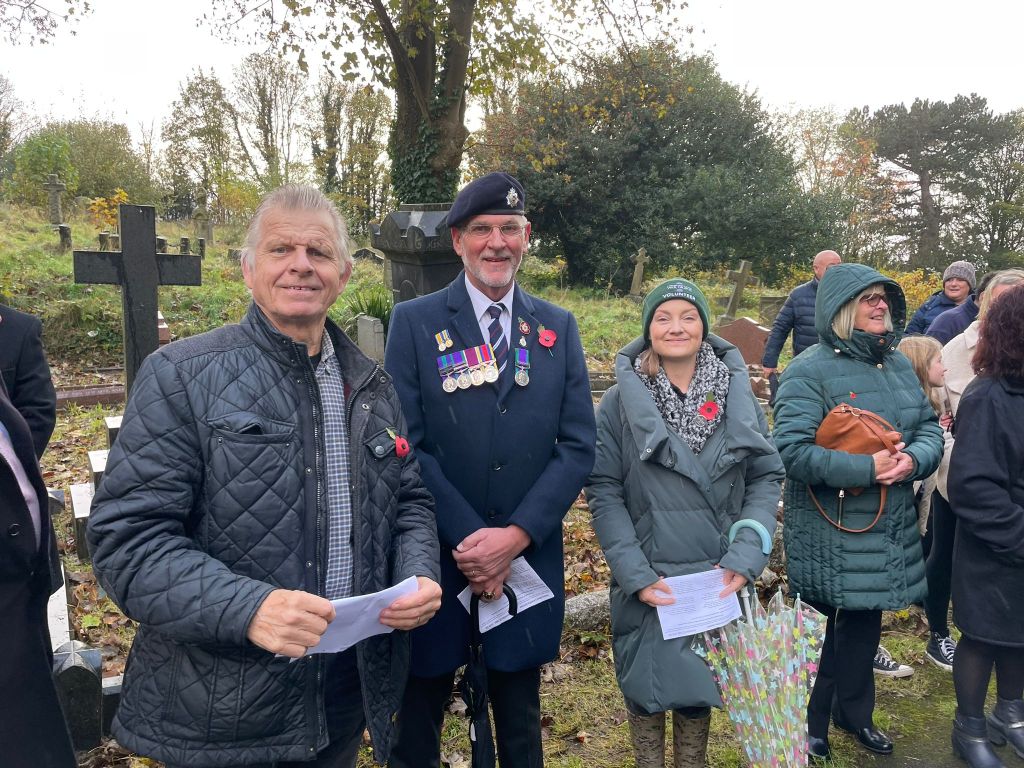
Let’s hear it for the volunteers …

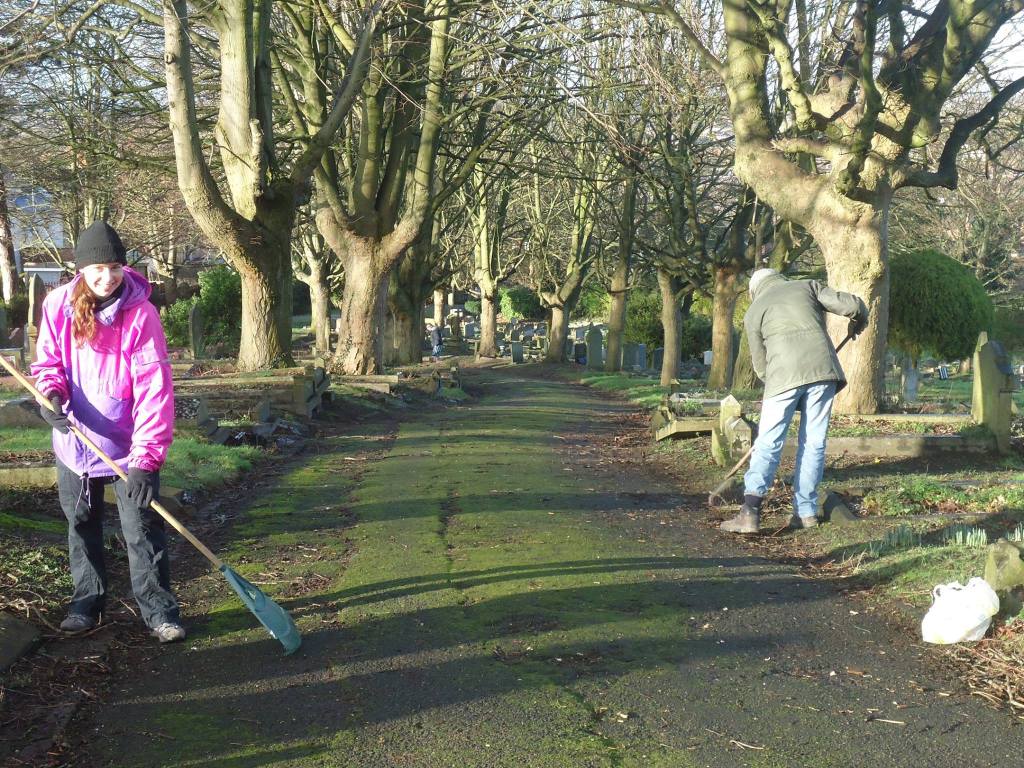
Time to say a big thank you to all our fantastic volunteers, new and old, and for all the hard work they have undertaken in recent months.

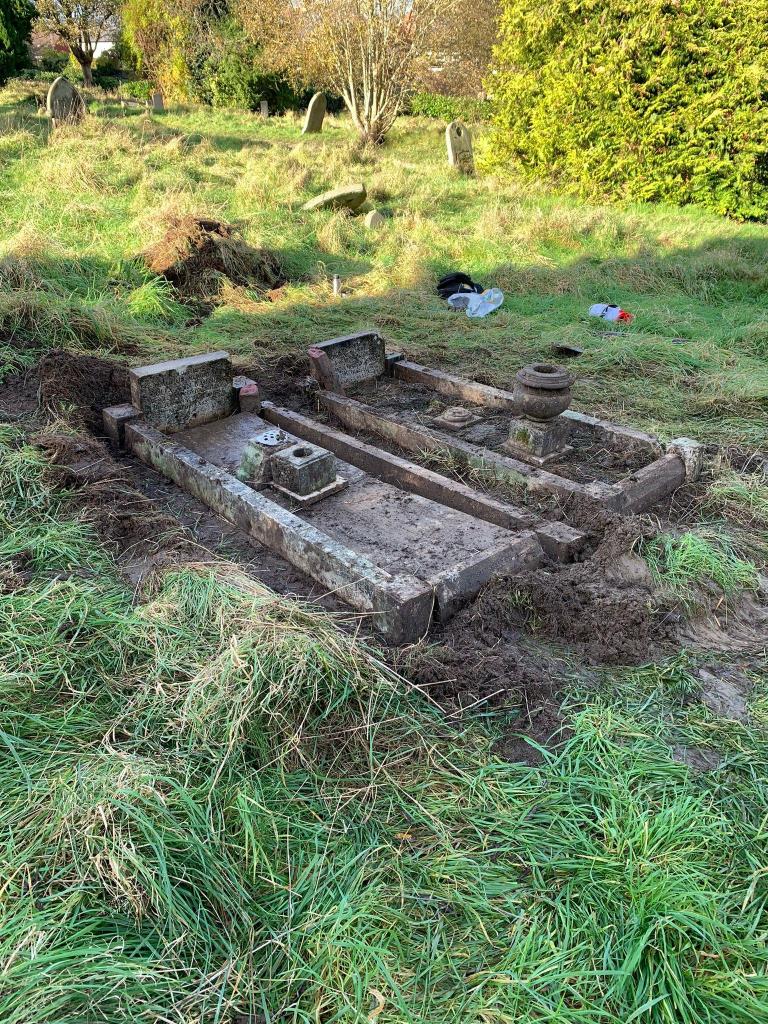
They have dug, mown, trimmed, clipped, cut down and rediscovered hidden and lost graves.

They have also …

Cared for the war graves and discovered new ones

Shared their expertise on our guided walks and special events

Uncovered and revealed lost paths and edgings.

Let’s hear it for the volunteers…

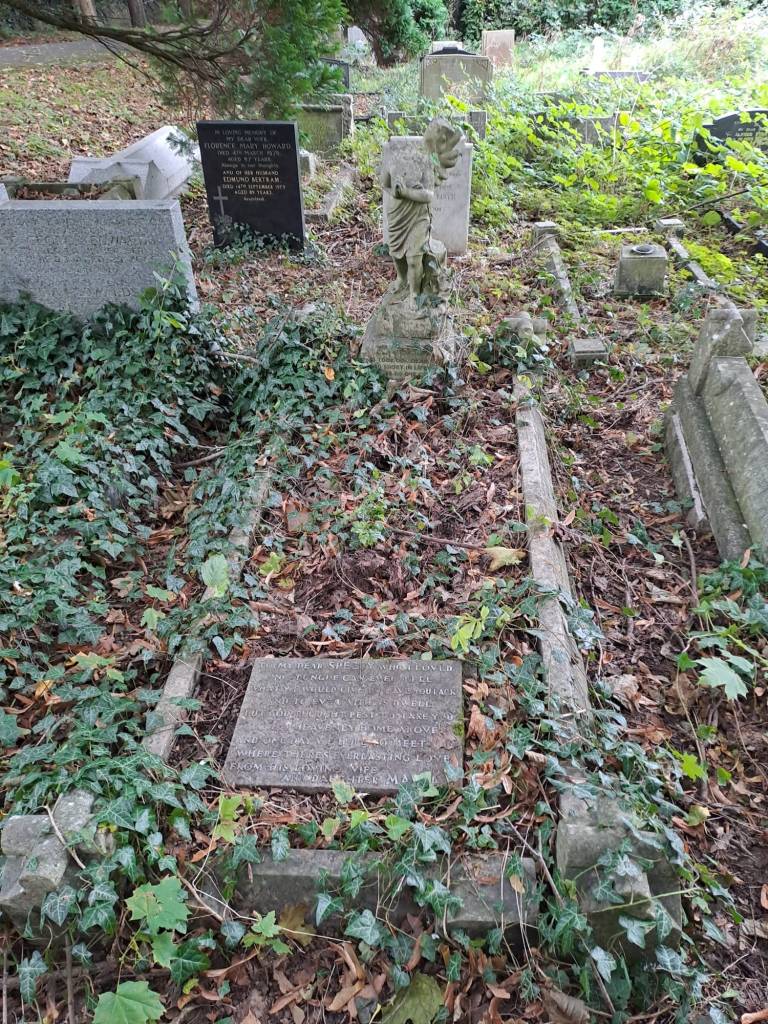
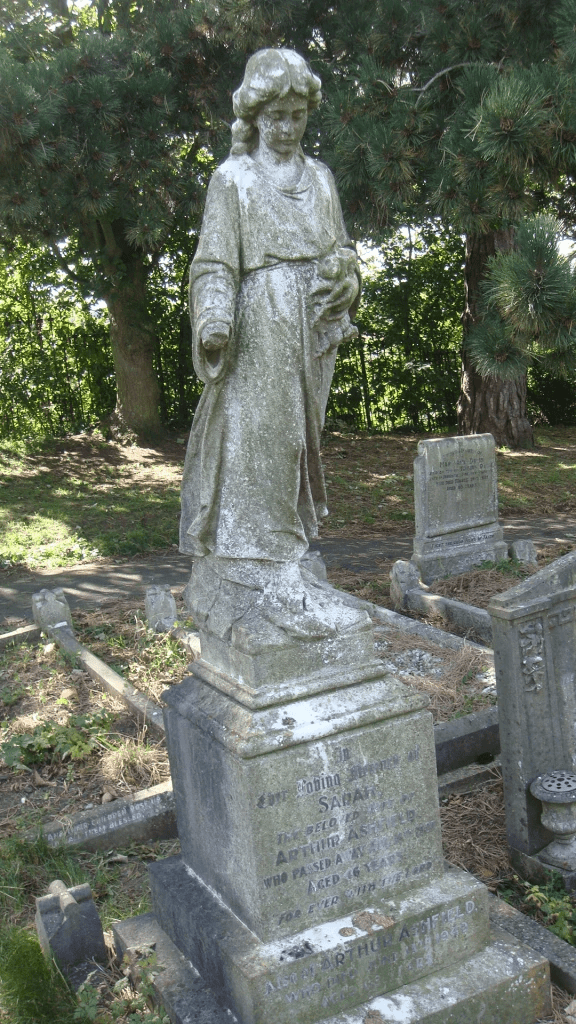
Arthur and Sarah and the Ashfield angel

The re-imagined story …

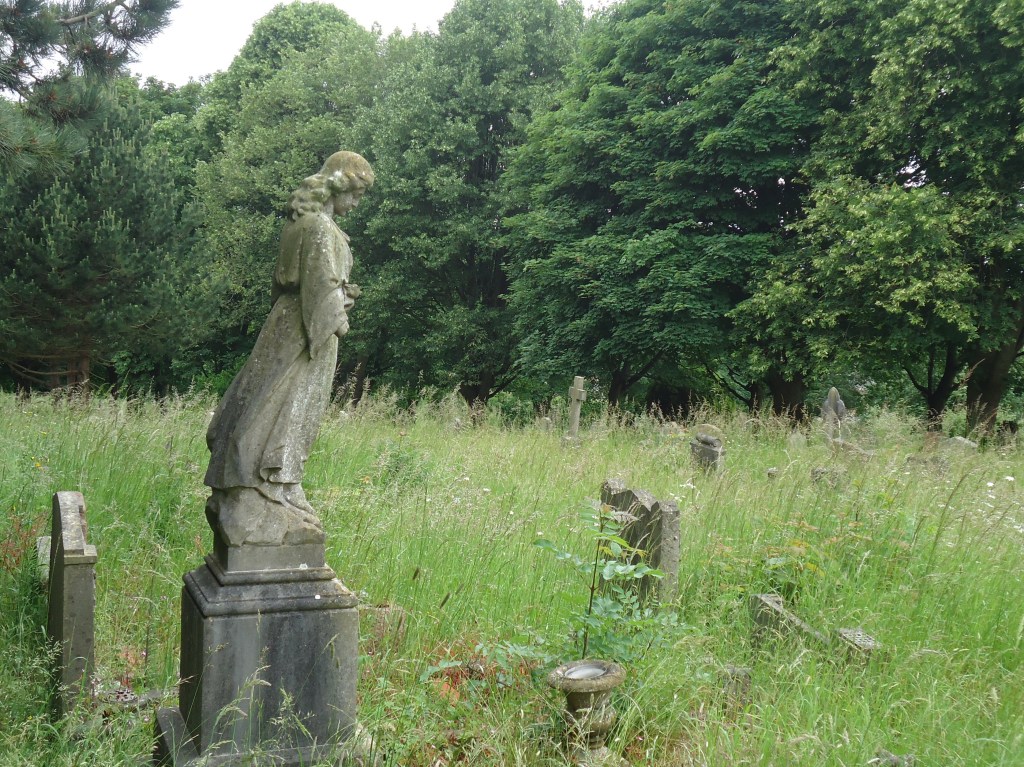
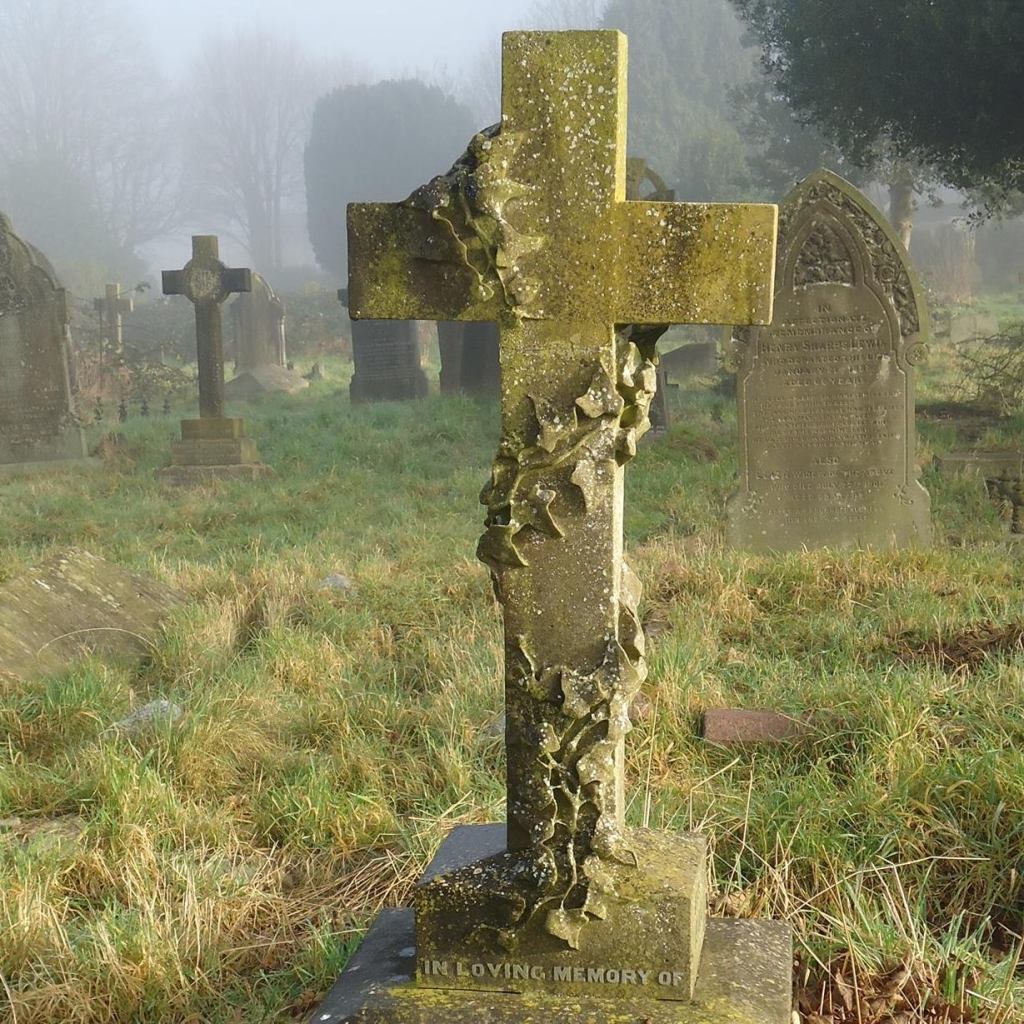
The Ashfield angel was my mum’s favourite memorial in Radnor Street Cemetery. Weird, I know, but my mum was like that.

She wanted a ‘Victorian’ funeral with a hearse drawn by black horses with plumes and mutes (whatever they are) in attendance, until she realised how much it would all cost. I thought it sounded like an East End gangster’s funeral myself.

My mum loved Radnor Street Cemetery but she always knew it could never be her final resting place. The cemetery had long since closed to new burials and we didn’t have an existing family plot.

Mind you she spent enough time up there when she was alive and as I mentioned the Ashfield angel was one of her favourites.

“She looks like she has taken them by the hand and led them away to heaven,” she used to say. I know, vaguely creepy.

Mum wasn’t even that religious and she certainly didn’t believe in a life after death and heaven. Personally, I don’t think the statue is even an angel, but there we are. It’s funny the effect Radnor Street Cemetery can have on a person. Take me for example, wandering around the graves and stopping at the Ashfield angel.

The facts …

This is the final resting place of Arthur and Sarah Ashfield.

Arthur worked as a carpenter and railway horse box builder in the GWR Works. In 1904 he married Sarah Gray, the daughter of a steam engine maker and fitter. At the time of the 1911 census Arthur and Sarah lived at 30 Alfred Street with their five year old son Charles and Arthur’s widowed mother Annie.

The youngest child of Charles and Annie Ashfield, Arthur was born in 1881, the year that Radnor Street Cemetery opened. Although his birth place is stated as Stratton, by the time he was a month old the family were living at 19 Redcross Street, the original name for Radnor Street.

In 1891 Arthur and his family were living at 71 Radnor Street in quite possibly the same house, following the renaming and renumbering of the street.

Sarah died in 1927 aged 46 and Arthur 22 years later when he was 68.

The Goddard family tomb and Swindon’s first ‘modern’ burial ground

As we put our heads together to plan our cemetery walks for 2025 we hope to make a return visit to the churchyard at Holy Rood Church where burials pre-date those at Radnor Street by more than 700 years…

The Goddard family were Lords of the Manor of Swindon for more than 350 years but you won’t find any of them buried in Radnor Street Cemetery.

The Goddard family home was set in extensive parkland with spectacular views across the Wiltshire country side. Until the early 19th century the property was known as Swindon House after which it received a bit of a makeover and was renamed The Lawn. The family worshipped in the neighbouring parish church where Richard Goddard Esquire was buried on May 20, 1650 according to the wishes expressed in his Will that his body was ‘to be interred and buryed in the parish church of Swindon.’

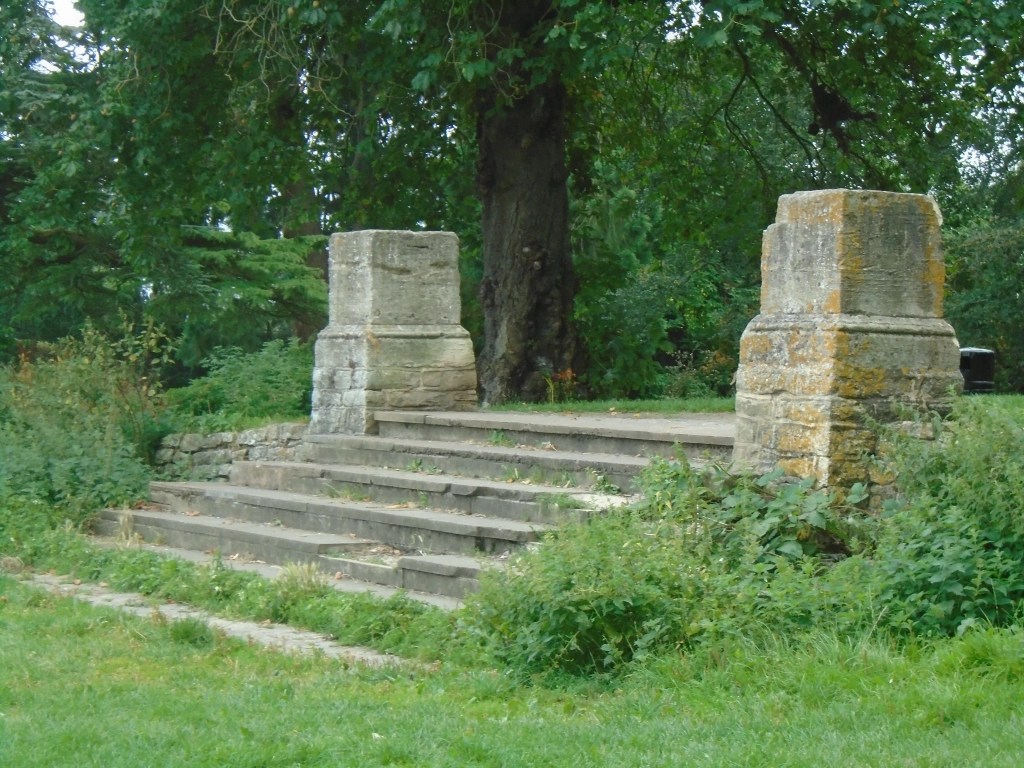
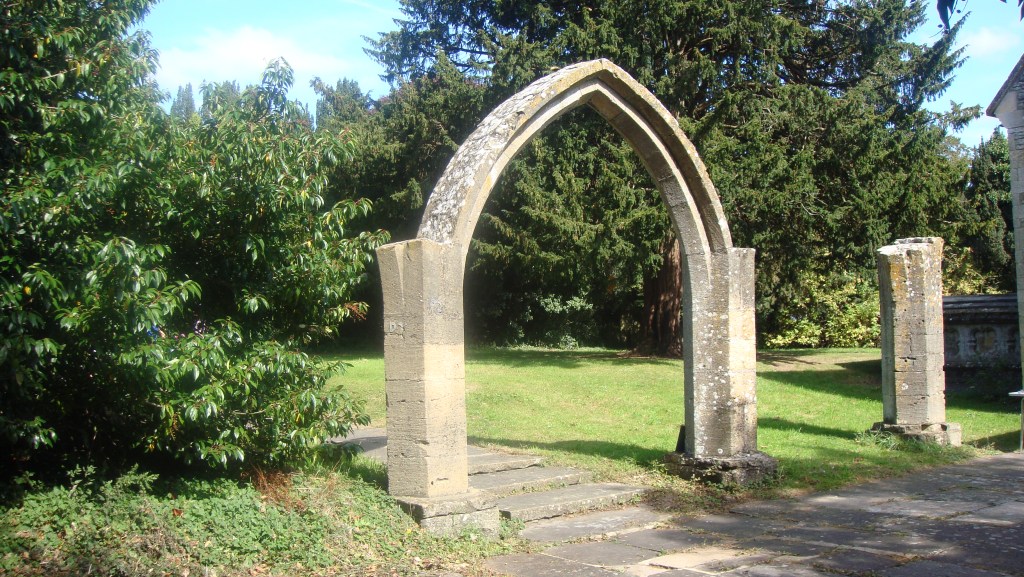
The ancient parish church closed to general worship in 1851 after which most of it was demolished leaving only the chancel, the 14th century arches, a few chest tombs and the Goddard family tomb.

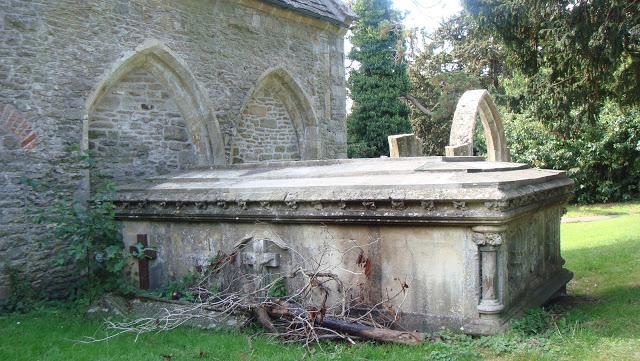
The Goddard family vault stood beneath the floor of the North Chapel. When this was demolished a mausoleum was built above it. Today the Goddard family tomb is a Grade II listed monument described as made of limestone with sandstone panels and built in the Gothic revival style. In his book The Story of Holy Rood – Old Parish Church of Swindon published in 1975, Denis Bird confirms that the Goddard tomb dates from around 1852 and was constructed on the site of the north chapel. Exposed to the elements and random acts of vandalism during its 169 year history, today the plaques on the side of the tomb are difficult to read.

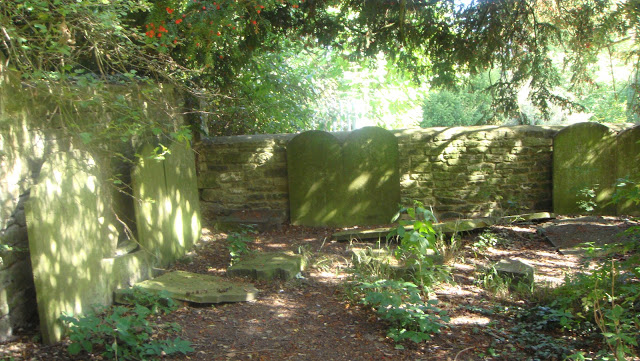
Following the construction of Christ Church the ruins of Holy Rood came under the watchful eye of the Goddard family. Although the churchyard closed to new burials, interments in existing family graves continued for some years. A drawing dated c1800 shows the churchyard contained numerous headstones. Sadly, these were all repositioned in 1949 and arranged around the churchyard wall.

The last Lord of the Manor to live at The Lawn, Fitzroy Pleydell Goddard died at the family home on Friday August 12th 1927. Major Fitzroy Pleydell Goddard’s dying request was that his funeral service be as simple as possible and that he wished to be buried in a “plain elm coffin made from timber grown on my estate.” The Major’s funeral took place on Monday August 15 at 8pm. Swindon Advertiser headlines read ‘Interred at Sunset’ and ‘Large Attendance.’ As requested the Major’s coffin was made from one of his trees, cut down in Drove Road during road widening work. Covered by a Union Jack flag the coffin was carried from The Lawn to the Parish church on a handbier where Canon C.A. Mayall and Dr. R. Talbot, the Archdeacon of Swindon conducted a simple service in Christ Church. The congregation was estimated to number in the thousands as Swindon marked the end of an era.

The last member of the family to be buried in the Goddard tomb was Charles Frederick Goddard, Rector of Doynton, Gloucestershire who died on May 11, 1942 and is buried alongside his parents Ambrose Lethbridge and Charlotte Goddard.

Bird writes: ‘To say that ten thousand people may have been buried here may be no exaggeration, for although the population of early Swindon may have numbered no more than a few hundred souls at any one time, it was here that nearly all found their last resting place, generation after generation, for perhaps more than 700 years.’

The churchyard at Holy Rood, Swindon’s first ‘modern’ burial ground.

The view from the Goddard mansion in the Lawn.

The Goddard family tomb

A corner of the churchyard and the repositioned headstones

W.H. Read – local architect

The re-imagined story …

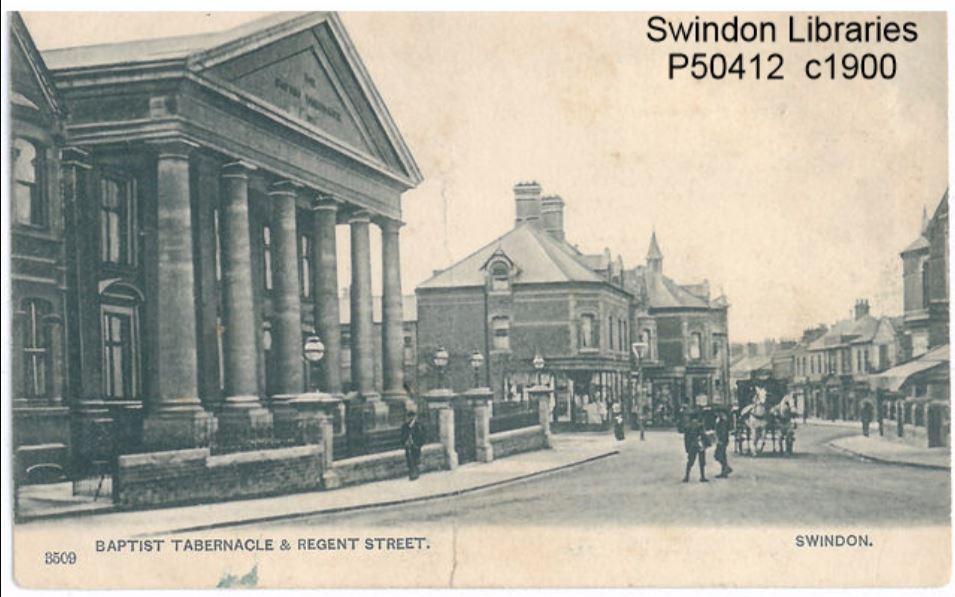
They began dismantling the Baptist Tabernacle as if it were a child’s construction kit. The classically designed building dominated the top end of town but not everyone was a big fan. Some said it was too posh for Swindon and that it didn’t sit well among the other red brick buildings in the town centre.

Gran was a Sunday School teacher at the Tabernacle and insisted we grandchildren attend. My sister and I were reluctant bible students. I’d have rather been up the Rec playing football with my mates and my sister was terrified the building would fall down about our ears. Any number of pictures and paintings would fail to cheer up that dank schoolroom and my sister was forever watching out for falling lumps of masonry.

Baptist Tabernacle

Demolition of the Baptist Tabernacle published courtesy of Local Studies, Swindon Central Library.

And that’s what sounded the final death knell for the building. It wasn’t demolished by the Council as everyone has repeated for the last forty or more years, but by the Baptist church itself. The congregation was too small and the reduced income not enough to pay for the vast amount of repair work necessary.

Today it is difficult to imagine a magnificent, classically designed building with a colonnade of six Tuscan columns and a flight of stone steps the width of the building lording it over the shops in Regent Street.

I would have liked to have one last look around inside, for old times’ sake. I’d have liked to have stood in the pulpit, forbidden to us as children. Neither were we allowed to hang over the gallery to see who sat below us, we soon felt the warmth of Gran’s hand if we stood up in our seat.

Funnily enough my sister wouldn’t have stepped inside that building again if you paid her.

Baptist Tabernacle 2

The Baptist Tabernacle in its heyday – published courtesy of Local Studies, Swindon Central Library.

The facts …

William Henry Read was a popular and prolific local architect whose commissions included the Victoria Hospital, the Anderson’s Almshouses in Cricklade Street and the Baptist Tabernacle.

He was born at Croft House, Swindon in 1850 the son of surveyor William Read and his wife Louisa and educated at Henry C. Lavander’s Grammar School in New Park Street, Devizes. The family later moved to 31 Wood Street and William Henry married Susannah Elizabeth Chandler, the girl who lived next door, in 1876.

The couple lived at Moravia, 10 Bath Road where they raised their family of four sons, William, Kenneth and Norman, and a daughter Grace.

William died at his Bath Road home on Sunday November 3, 1901. The announcement in the local press noted that ‘although a prominent townsman [he] took small part in local government.’

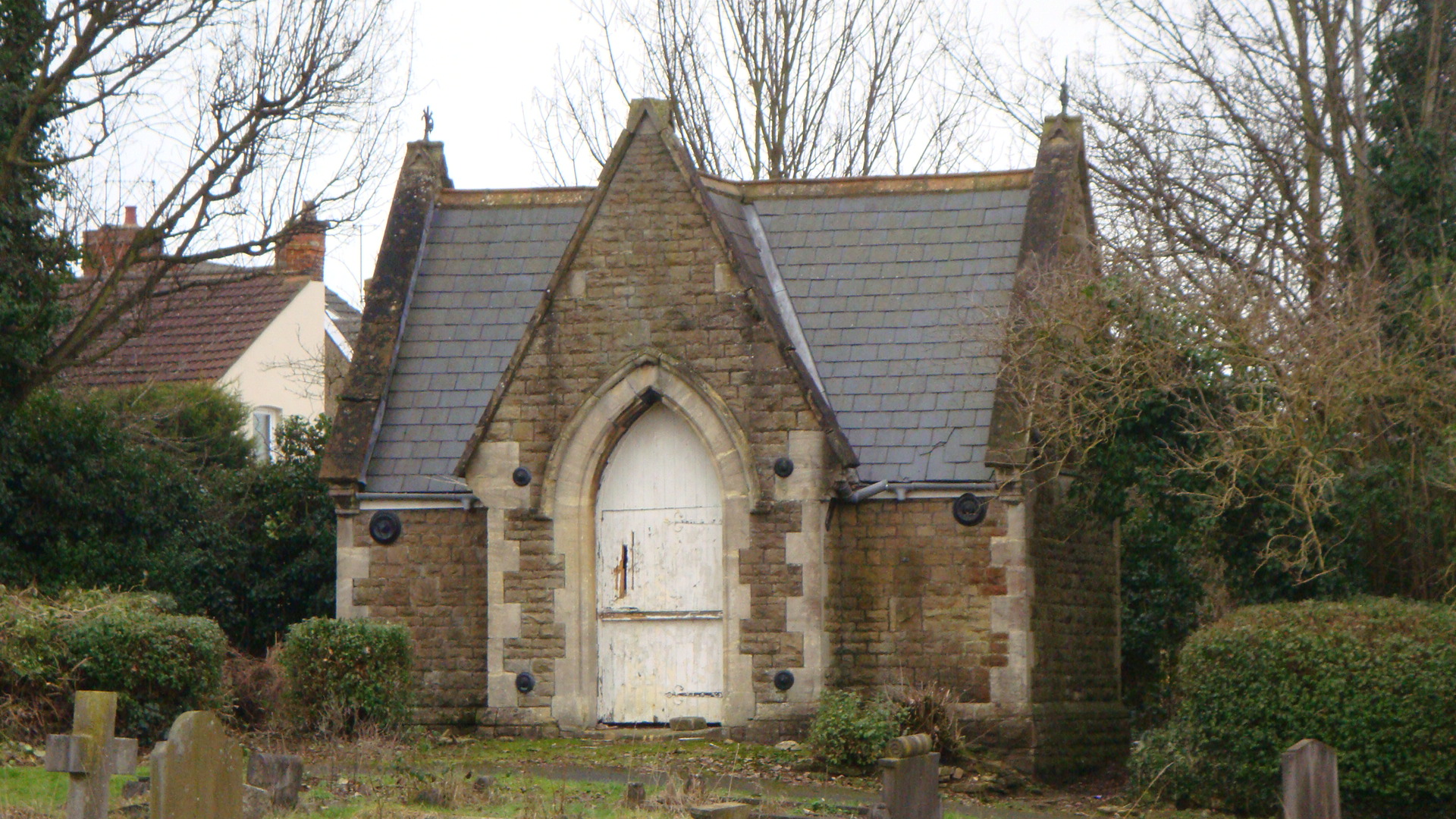
mortuary

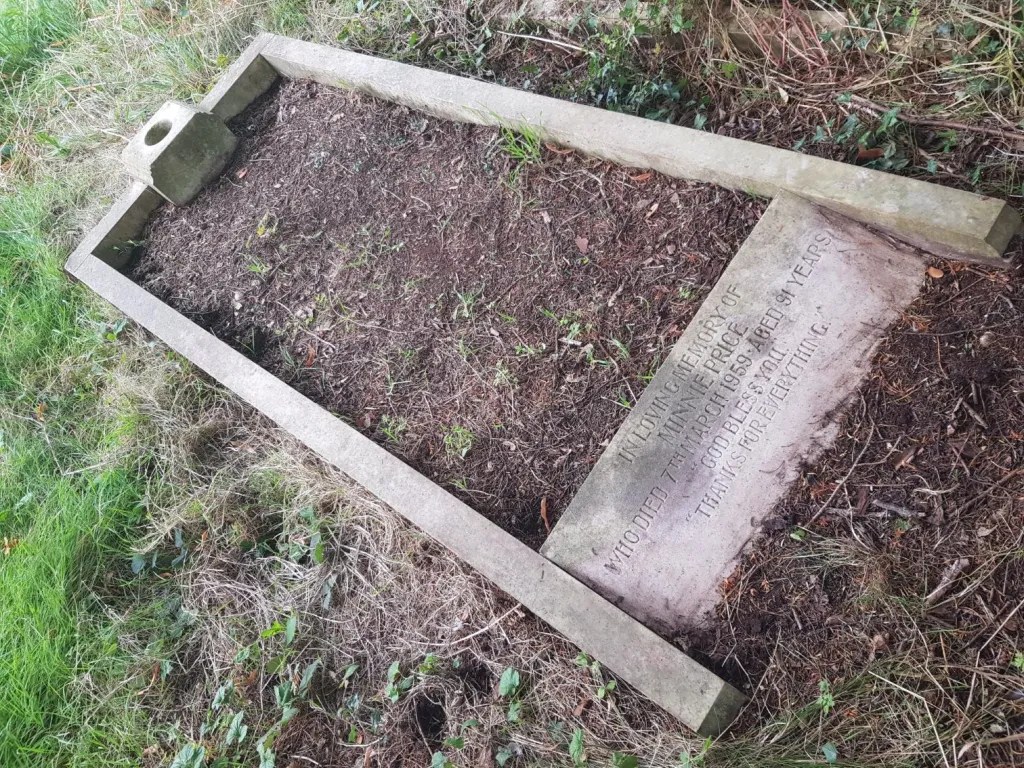
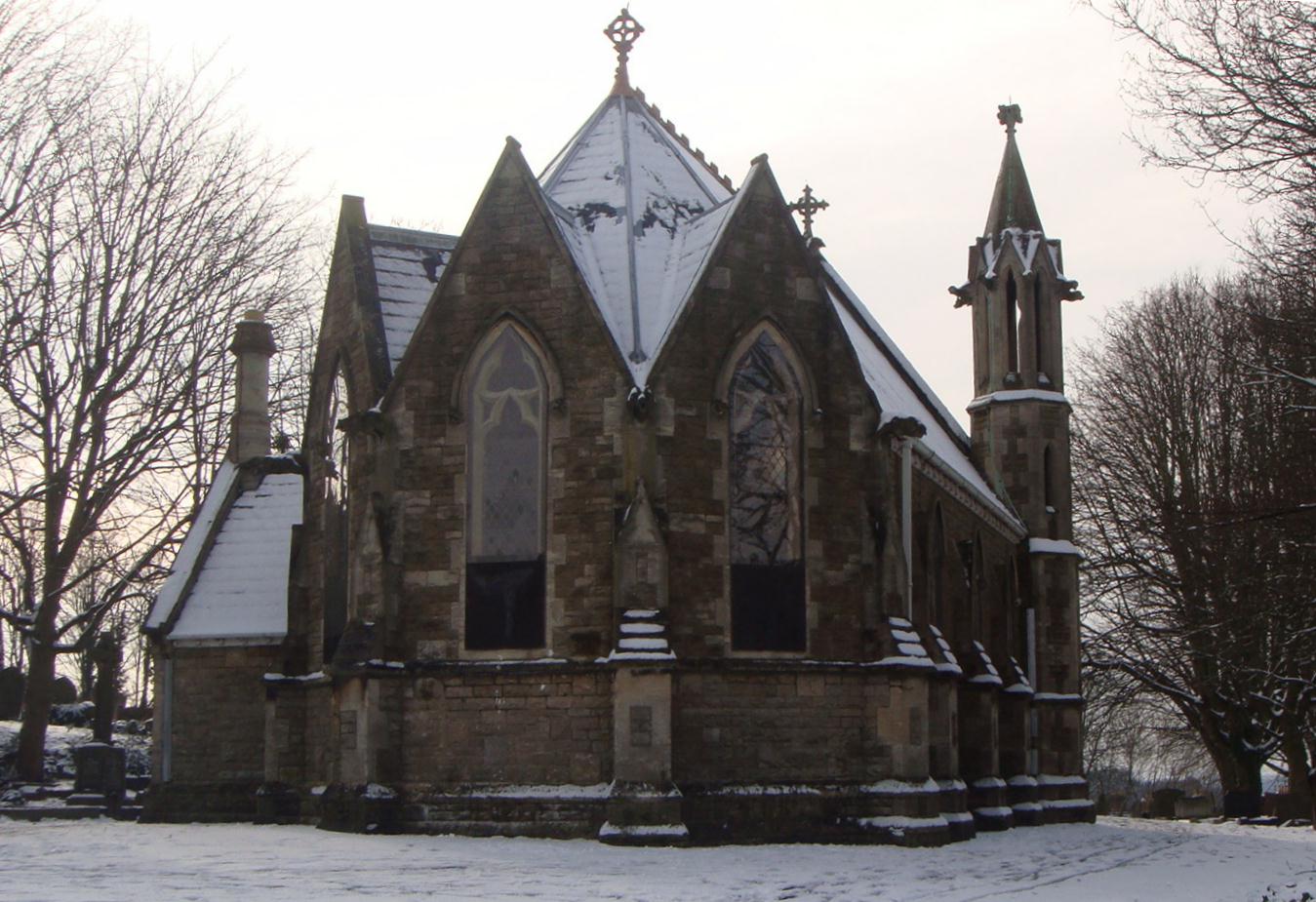
William designed the chapel, mortuary building and caretakers lodge at Radnor Street Cemetery in 1881 where he was buried twenty years later. He must have liked how it all turned out! Susannah died on March 21, 1903 and is buried with her husband.

chapel in the snow

The best bits of the Baptist Tabernacle building materials were sold off. The portico was bought by artist Stanley Frost, the columns, bases and façade wall went elsewhere. People had big plans, which sadly never came to fruition. Then in 2006 Swindon Borough Council bought back the remains at a cost of £360,000 but so far their plans to incorporate them into a town centre regeneration project have failed to materialise and these remain in storage.

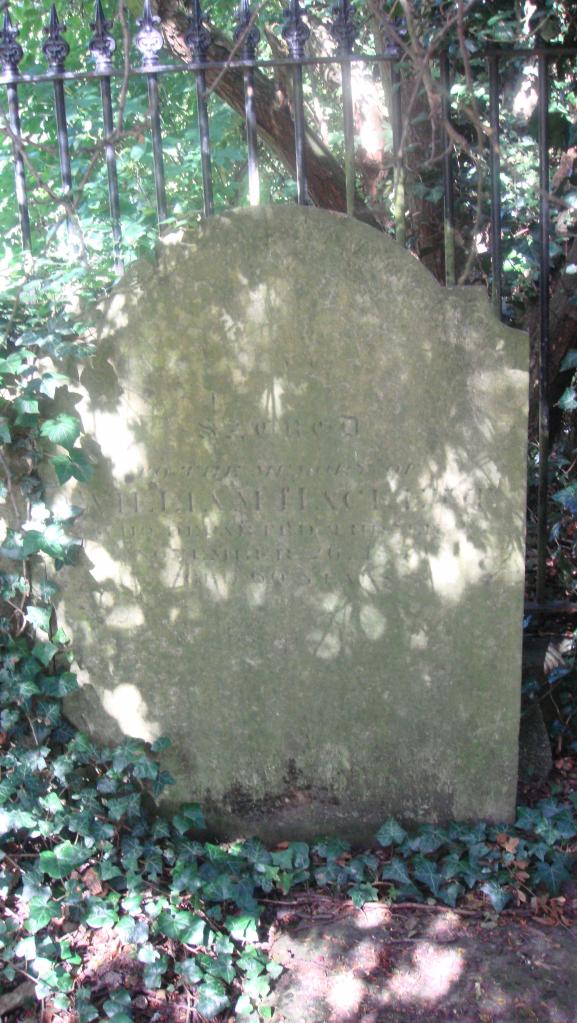
William Henry and Susannah Read


Photographs of the cemetery

Today there is a worldwide interest in cemeteries both as an historical resource and also as a place of beauty. From pristine perfection to benign neglect, cemeteries are of interest to many.

I follow a wide selection of ‘Friends’ groups including the Friends of Brompton, Kensal Green and Highgate cemeteries. And then, of course, there is Sheldon K. Goodman of Cemetery Club fame who receives rave review on Tripadvisor.

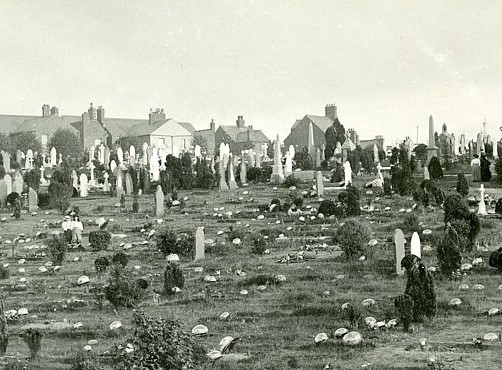
Between the Radnor Street Cemetery group of volunteers we have collected many hundreds of photographs but we seldom come across any taken at the beginning of the cemetery’s history. So it came as something of a surprise to find the following snippet of news published in the Swindon Advertiser in 1889.

Old Swindon Local Board

Cemetery Committee

A report was read from this committee, being of a formal nature. Amongst other business the committee recommended that a sum not exceeding £20 should be spent in purchasing and planting trees in the cemetery. A local photographer had applied to the committee, and was granted permission, to take photographs of and in the cemetery.- The report was adopted and this concluded the business.

The Swindon Advertiser, Saturday, November 23, 1889.

Who was that photographer and where are his photographs? Can anyone enlighten me?

These are the earliest known photographs of the cemetery – unless you know differently.

A photograph dated c1910 taken by William Hooper
A photograph taken following the funeral of Levi Lapper Morse in 1913.

Edith Gay Little and the wooden memorial

wooden grave

The re-imagined story …

He knew exactly what type of memorial he wanted for Edith, and he would make it himself.

He sketched it out on the table in the front room at 59 Station Road. A large cross, something that would stand proud and obvious.

In Memory of Edith Gay, the beloved wife of Edward Little. He practised the style of lettering he would use. He wanted something elegant. No, that was too ornate. He rejected his first attempt. The next was too difficult to read. Eventually he settled on a simple script, something Edith would have liked.

Would he leave a space for his own name to be added in the future? He decided not to. He couldn’t trust anyone else to choose the right script or to execute the work to a sufficiently high standard. This memorial was a symbol of his love. He didn’t want it spoilt by some ham fisted amateur.

He sat in the silent house; the late summer afternoon sunshine streamed through the window. He’d make a start now, he decided. He had a nice piece of seasoned timber in the shed.

Little

The facts …

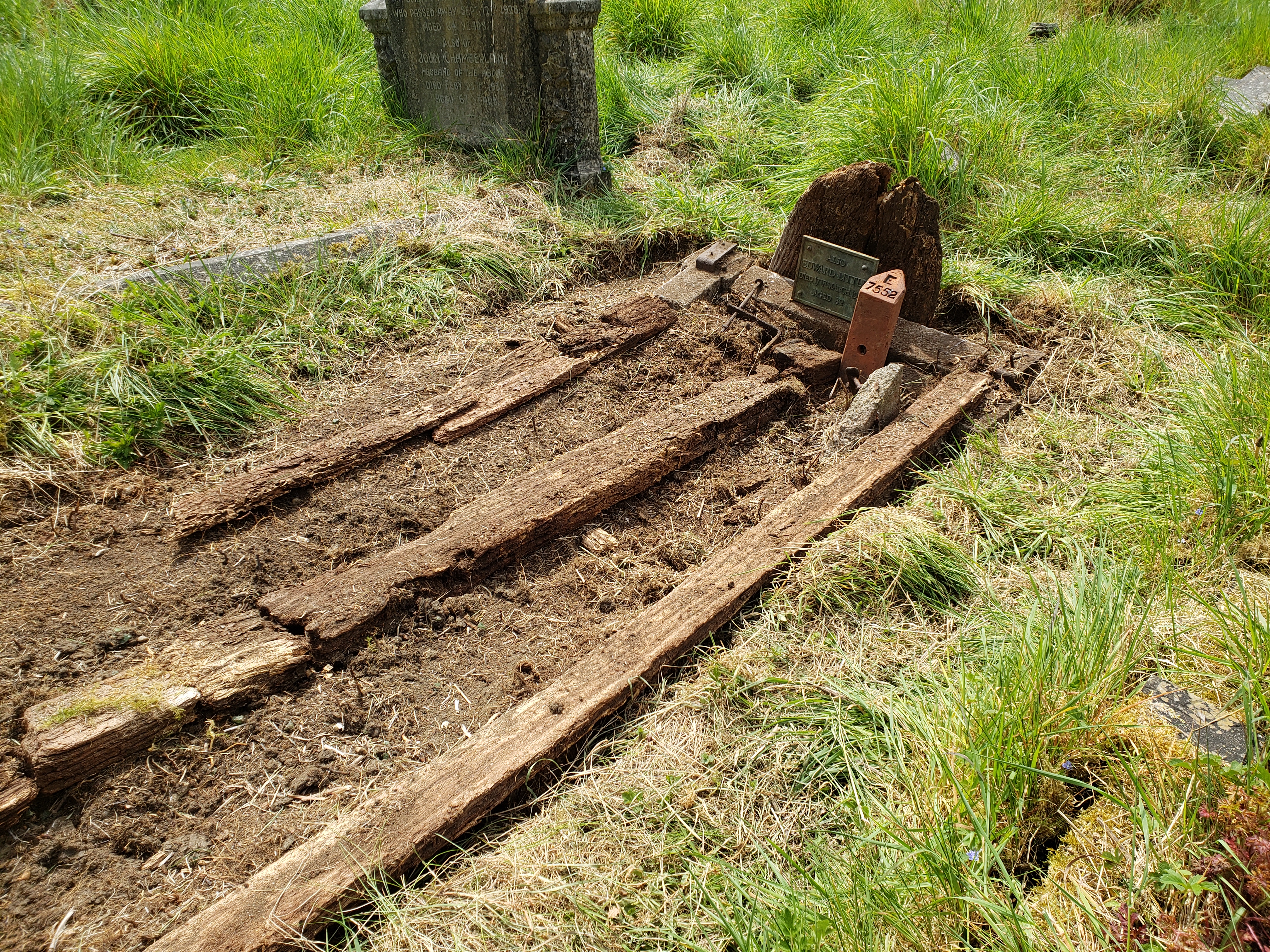
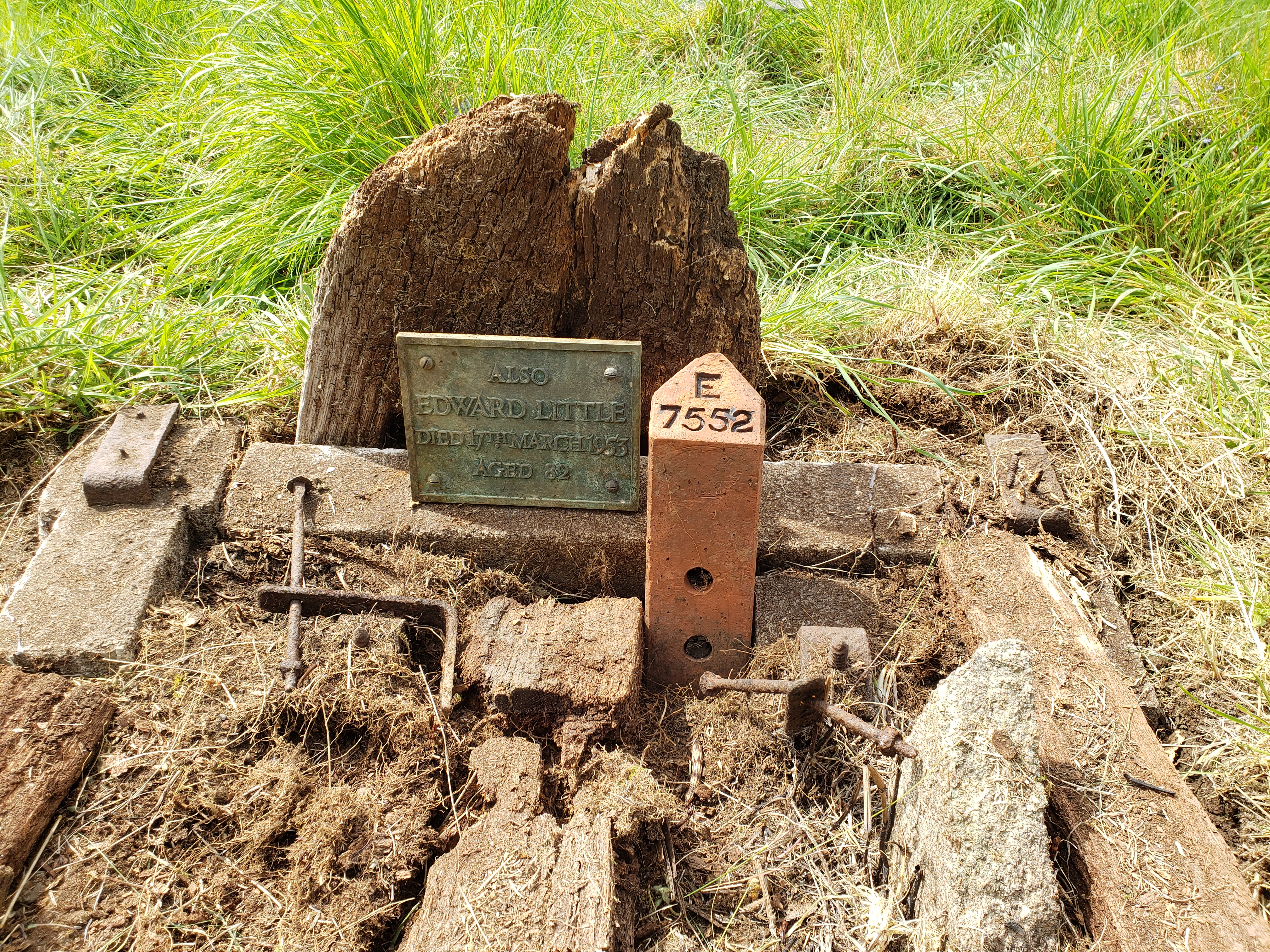
I first discovered this memorial more than ten years ago and each spring when the guided walks resume, I always have difficulty finding this grave again. And every year I wonder if it has managed to survive another winter, because this extremely unusual memorial is a wooden one.

It marks the grave of Edith Gay Little, a former nurse, who died on August 23, 1928 at the Great Western Railway Medical Fund Hospital.

Edith’s husband was Edward Little and I believe it was he who made this wooden memorial. Edward was employed as a bodymaker in the carriage and wagon works at the Midland & South Western Junction Railway at Cirencester. He was promoted to chargehand and eventually foreman and by 1923 was based in Swindon.

Edward was no stranger to Swindon as it was here that he married his first wife, Elizabeth Ann Bindon, at St Paul’s Church on August 21, 1897. Elizabeth died in 1909 aged 38 and was buried ‘under Coroner’s warrant’ in South Cerney where they were living at the time.

On September 22, 1911 Edward married for the second time. By now he was 41 and his bride Edith Gay Smith was 43. The couple married at Holy Trinity Church, Trowbridge.

Unfortunately, there are no known photographs of this memorial when it was new. How distinctive it must have looked, standing out against the surrounding white gravestones. I imagine Edward would have visited the grave regularly, polishing and treating the wood to preserve it.

It would appear that Edward had no children by either of his wives. He retired from the railway works in 1935 and continued to live at 59 Station Road, the home he had shared with Edith.

Sadly, he ended his days in Roundway, the psychiatric hospital in Devizes, where he died on March 17, 1953. Probate was proved at Oxford and his effects, valued at £2,369 16s 5d, were placed in the hands of Lloyds Bank.

He was buried with Edith. With no one left to come and polish the wooden memorial it now lies at the mercy of the elements.

This week Radnor Street Cemetery volunteers Kevin and Brian managed to locate and reveal the wooden grave. They even found a memorial plaque to Edward, the man who I believe was the maker of this unique and poignant memorial.

Little (2)

Tell Them of Us – Pte. R.A. Cook – promoted for gallantry

Continuing a series remembering Swindon’s sons who served in the First and Second World Wars.

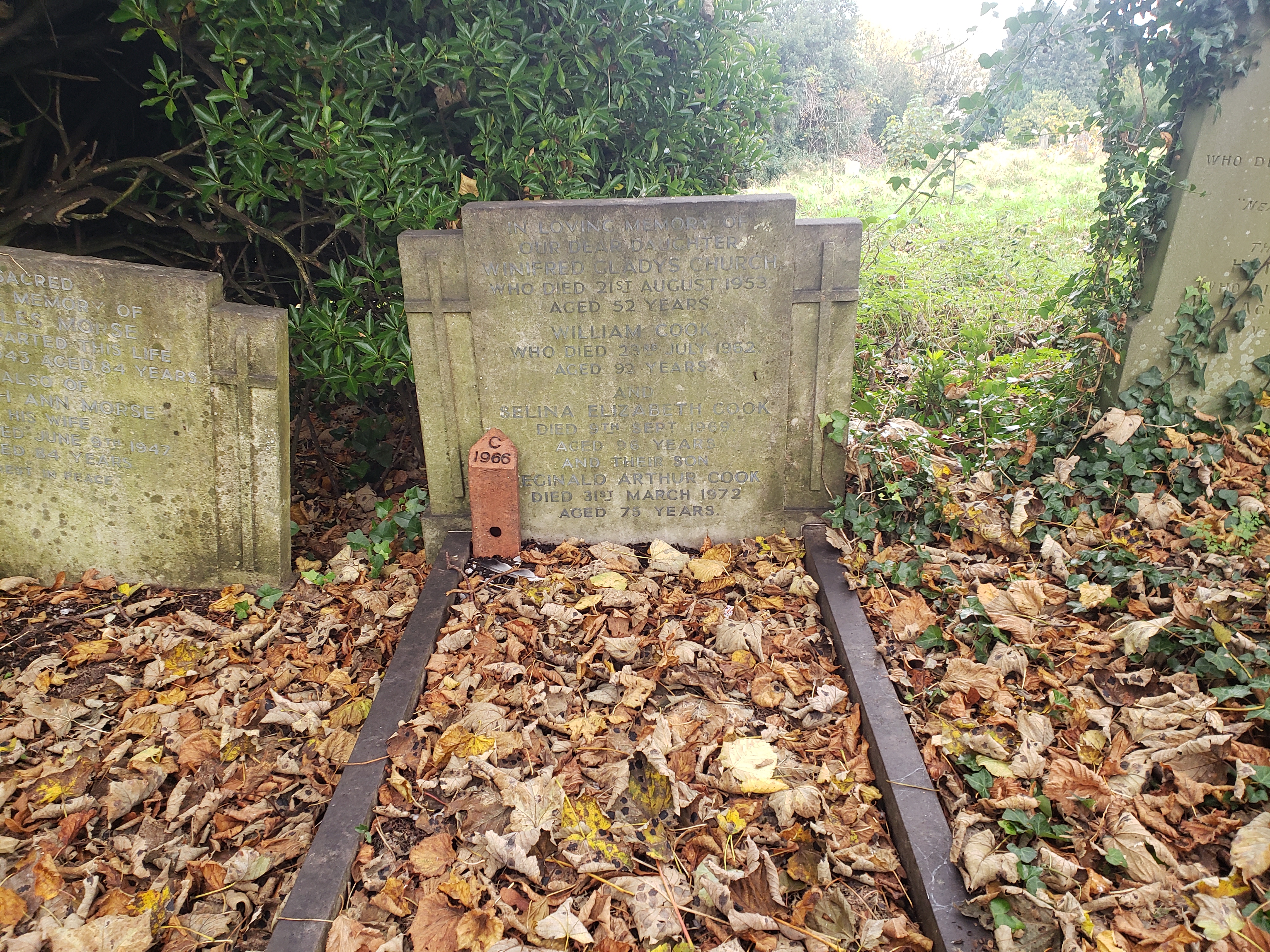
Reginald Arthur Cook was born in Swindon on September 8, 1896 the son of William and Selina Cook. Reginald entered the employment of the GWR shortly after his 14th birthday and stayed with the company until his retirement. His only absence was during the First World War when he served on the Western Front and was promoted for an act of gallantry.

Swindon Soldier Promoted for Gallantry

Pte. R.A. Cook, the only son of Mr. W. Cook, Cemetery Superintendent, Radnor Street, Swindon, has been promoted to the rank of lance-corporal for gallant conduct.

Major-General H.D.E. Parsons, Director of Ordnance Services, British Armies in France, has written to Pte. Cook, dated October 19th, as follows: “Your name has been brought to my notice by your Commanding Officer for ‘gallant conduct in snatching an enemy stick-grenade, that had become ignited, from another man, and throwing it into a shell hole some ten yards away, thus saving the man’s life at grave risk of your own. The report reflects credit on yourself and the Army Ordnance Corps.”

Lce. Copl. Cook is 21 years of age, and is a native of Swindon. On leaving school he entered the GWR Works as a clerk. He joined the Army on October 6th, 1915, and proceeded to Woolwich for training, but after being there three weeks he was transferred to France, where he has been ever since. He is now home on leave, and will return to France on December 21st.

North Wilts Herald, Friday, December 14, 1917.

Reginald returned home to Swindon at the end of the war and lived with his parents at 63 Kent Road where he died on March 31, 1972. Reginald never married and was buried with his parents and his only sister Winifred Gladys, in the cemetery where his father once worked as Cemetery Superintendent.

To Autumn

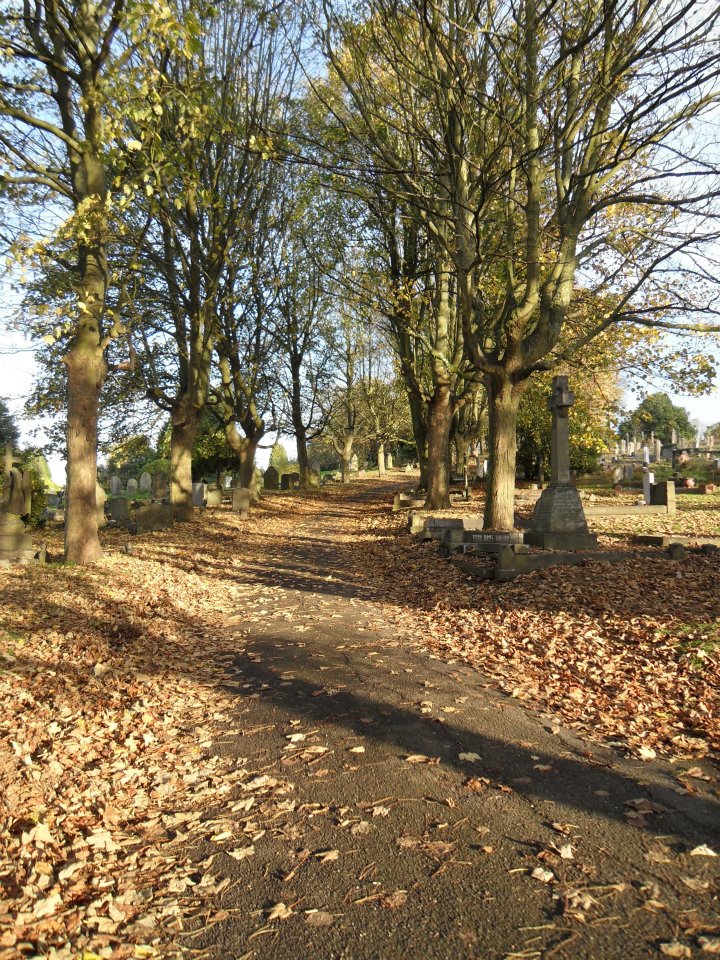
It is the season of mists and mellow fruitfulness and time for a virtual walk among the memorials at Radnor Street Cemetery.  

Branches creak and the leaves are swept off the trees across the cemetery on the hill today.  Doesn’t the cemetery look beautiful in its Autumn finery? But then it always looks beautiful to me. I shall don my raincoat and carry an umbrella as the weather forecast is not good, but you can put on the kettle, make a cup of tea and join me from the comfort of your sitting room. The sun is shining and I’m wrapped up warmly, so off we go.

These photographs have been taken across a 20 year period. There have been some changes. Remembering Mark Sutton.

To Autumn by John Keats

Season of mists and mellow fruitfulness,
  Close bosom-friend of the maturing sun;
Conspiring with him how to load and bless
  With fruit the vines that round the thatch-eves run;
To bend with apples the moss’d cottage-trees,
  And fill all fruit with ripeness to the core;
    To swell the gourd, and plump the hazel shells
  With a sweet kernel; to set budding more,
And still more, later flowers for the bees,
Until they think warm days will never cease,
    For summer has o’er-brimm’d their clammy cells.

Who hath not seen thee oft amid thy store?
  Sometimes whoever seeks abroad may find
Thee sitting careless on a granary floor,
  Thy hair soft-lifted by the winnowing wind;
Or on a half-reap’d furrow sound asleep,
  Drowsed with the fume of poppies, while thy hook
    Spares the next swath and all its twined flowers:
And sometimes like a gleaner thou dost keep
  Steady thy laden head across a brook;
  Or by a cider-press, with patient look,
    Thou watchest the last oozings, hours by hours.

Where are the songs of Spring? Ay, where are they?
  Think not of them, thou hast thy music too,—
While barred clouds bloom the soft-dying day,
  And touch the stubble-plains with rosy hue;
Then in a wailful choir the small gnats mourn
  Among the river sallows, borne aloft
    Or sinking as the light wind lives or dies;
And full-grown lambs loud bleat from hilly bourn;
  Hedge-crickets sing; and now with treble soft
  The redbreast whistles from a garden-croft,
    And gathering swallows twitter in the skies.

Written September 19, 1819 and first published in 1820.

Or you may like to join us on our last guided cemetery walk of 2024 today, Sunday 27. Meet at the cemetery chapel 1.45 for a 2pm start.

The Cemetery – Why Were the Gates Locked?

Following the verdict of the jury of ‘Suicide from drowning, while temporarily insane’ upon Sarah Richens, the Coroner’s attention turned to the pressing matter of the discourteously way in which he and the jury had been treated at the cemetery.

At the close of the inquest the coroner made some comments on how the jury and himself had been treated. When they arrived at the cemetery gates to go and view the body, about 4.45, they found the gates locked at the Ashford Road entrance. The police constable who was with them displayed some agility by climbing over the high iron gates and going down to the caretaker’s house and obtaining the keys.

Sergt. Everett informed the Coroner and jury that the caretaker of the cemetery was warned to have the gates open, as the inquest would be held at 4.30 p.m.

The Coroner asked the representatives of the Press to take notice of the facts, as the District Council ought to know that the Coroner and jury had been treated discourteously by having the gates locked against them.

A Juryman: I think they might also provide a light in the mortuary.

The Coroner: Yes, I think so too. We had no light whatever beyond a lighted match which one of the jurymen held.

The enquiry then closed.

The Swindon Advertiser, Friday, November 17, 1899.

The mortuary building, Chapel and Radnor Street Cemetery caretakers lodge were designed by popular local architect W.H. Read.