Howse’s Coppice

aerial-photo

For nearly a hundred years the cemetery was well maintained, the graves cared for by families, the gardens by groundsmen. And then the cemetery closed to new burials and families did not visit so often and nature began to reclaim the ancient Howse’s Coppice.

In 2005 the cemetery was designated a Local Nature Reserve. Areas of grass were left to grow long, providing habitat for insects. Hedgerows, corridors for wild life to move across the site, were maintained and bird and bat boxes were installed in the mature trees.

Following the financial crash of 2008 and subsequent local government spending cutbacks the cemetery was left to rest in peace. Today the plane trees are broad and lush, the grasses grow tall and some think it is a disgrace that the cemetery is so neglected, but there is a small group of volunteers who keep the history of the cemetery alive. Regular guided cemetery walks are attended by a growing number of people who come to listen to the story of Swindon’s history.

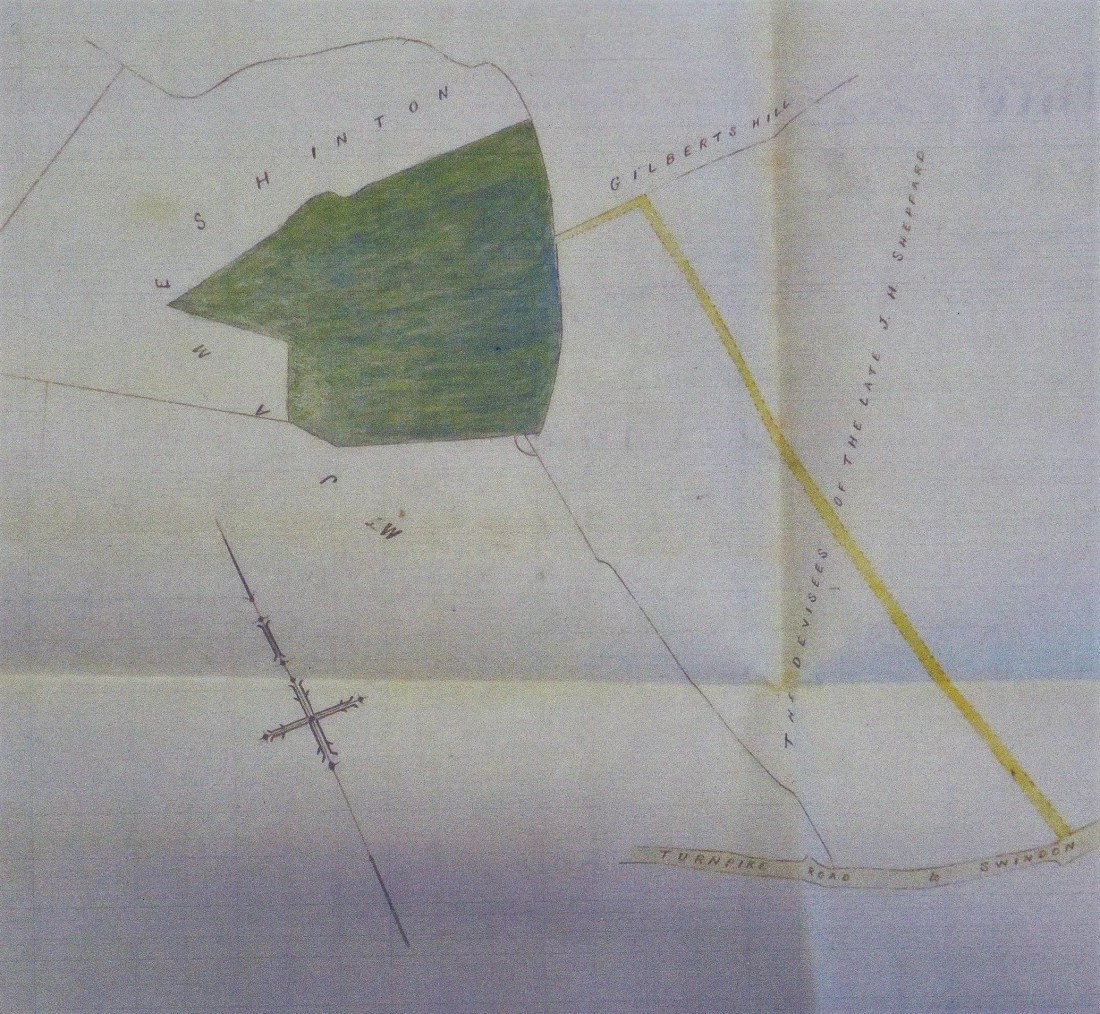
Documents held in the Wiltshire and Swindon History Centre, Chippenham trace the history of Howse’s Coppice back forty years before the cemetery was laid out.  The land then belonged to James Bradford and appears on the Tithe Map details of 1840 where it is described as a coppice ground (an area of managed woodland) formerly called Wibley’s but later known as Howse’s Coppice.

James Bradford was a solicitor who lived and worked at a property in the High Street, Old Swindon, close to what was then the King of Prussia public house. His wife, Annica Werden Bradford, was a member of the Goddard family. James died in August 1861 and the following year Annica sold the coppice ground to John Harding Sheppard for £559 14s.

John Harding Sheppard was a farmer and brewer and owned large tracts of land across both New and Old Swindon, including the Kingshill area where Howse’s Coppice stood.

In 1871 the executors of Sheppard’s will, his sons John and William, sold Howse’s Coppice, by then described as a close of land, to James Edward Goddard Bradford, bringing it back into the possession of the Bradford family.

In 1878 James Hinton bought Howse’s Coppice, which formed part of the plot he would eventually sell to the Cemetery Committee two years later.

Howses-Coppice-Ground

Howse’s Coppice was all that remained of ancient woodland that had once stood on Swindon’s doorstep before the arrival of industrialisation and the railways.

Howses-Coppice-Ground-1

Sale of Property – Pursuant to advertisement in our paper, Mr. Dore submitted for sale the landed estate of the late John Harding Sheppard, Esq., This estate being situated on the Sands, and to the West between Old and New Swindon, has been considerably enhanced in value of late years, and a brisk competition for the various lots was anticipated. Some of the lots were not sold, consequent upon the reserved price not being reached. Though every lot obtained bidders. A piece of pasture land near Kingshill, and known as “Howse’s Coppice Ground,” 4a 3r 38s was knocked down to Mr J.E.G. Bradford for £490. Two pieces of land situate on the Sands, at Swindon – one having a frontage of 83 feet, and an average depth of 360 feet, and containing 2r 27p the other with a frontage of 80 feet, and containing 2r 18p, were sold to Mr Kinneir and Mr Lansdown, respectively for £220 and £235. The spacious premises occupied by Mr Matthews, draper, High-street, realised £1160, Mr Bradford being the purchaser. The house in the Square occupied by the late Mr J.H. Sheppard, was sold to Mr Kinneir for £1220, and, after a spirited competition, Mr Kinneir was declared the purchaser of the premises lately held By Mr Kimberley, for £400. The White Hart Inn, Newport-street, and six cottages adjoining, fell to Mr R. Bowly, at £1070; a dwelling house near to this lot, producing £13 a year, was purchased by Mr Jason Hutt, at £185. The Running Horse Inn, mill, land, and cottages, were purchased by Mr John Jacobs, for £680; two cottages near fetched £180 from the same purchaser. The house occupied by Mr. Oakford, in Wood street was bought by Mr Westmacott, for £420.

Wilts and Gloucestershire Standard, Saturday, October 8, 1870

Howses-Coppice-Ground-2

Aunt Charlotte would have loved all this

The re-imagined story …

It was a bitterly cold morning but we were the best dressed passengers on the platform at Swindon Junction that Boxing Day in 1906.

Uncle Alfred had polished his top hat to a shine and Bill looked prosperous, if a bit portly, with his fob watch chain stretched across his ample stomach.

I wasn’t sure how we would keep the children neat and tidy for the duration of the journey, but so far, they have been very well behaved.

We managed to find seats all together in one carriage, although it was a bit of a squeeze and Fred almost sat on Annie’s hat.

Aunt Charlotte would have loved all this.

My mother came prepared with a picnic hamper and enough food to sustain us on an expedition across the dark continent, never mind a trip to Cardiff.

No sooner had we passed through the station at Wootton Bassett Junction than my mother was handing round the scotch eggs.

We were met at Cardiff station by Florence’s uncle who took us to the church at Canton where the wedding ceremony took place and then it was back to the Davies’s home in Conbridge Road for the wedding breakfast.

The other day I was looking through some of my old bits and pieces with Maisie, my granddaughter. I’m moving in with her and her husband, I just can’t manage living alone anymore. I have to get rid of so much. It’s difficult.

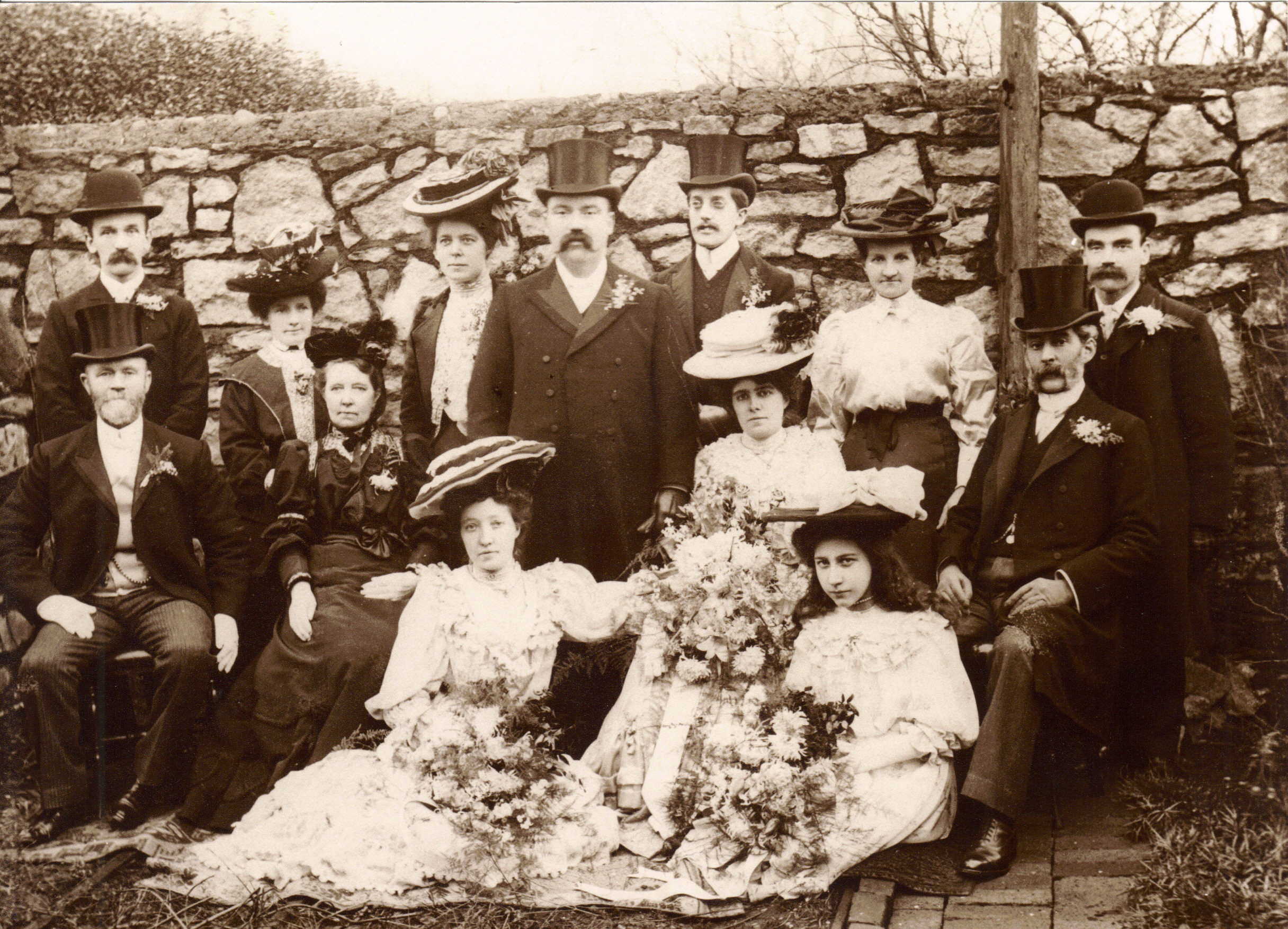
Maisie found Florence and Bill’s wedding photograph taken in the back garden in Canton on Boxing Day 1906.

“I love the ladies dresses,” said Maisie as she studied the sepia image. “Who are they all?”

I pointed out Uncle Alfred and Bill and Florence.

“I can’t remember who the others are, they are all members of the bride’s family.”

“They look a serious bunch,” she pulled a straight face. “Where are the Drinkwaters?”

“We were laughing and talking behind the photographer. I remember he asked us to be quiet as we were too much of a distraction.”

Aunt Charlotte would have loved that.

charlotte-and-alfred-drinkwater

The facts …

Alfred Drinkwater was born in Barton St Michael, Gloucestershire in 1848. He married Charlotte Dent at St Mark’s Church, Gloucester on April 12, 1869. The couple had a large family of eight sons and four daughters.

Alfred worked as an engine cleaner, a fireman and a 1st Class Engineman (Engine Driver) The family moved from Gloucester to Reading, eventually arriving in Swindon in the mid-1890s. There is a family story that he once drove Queen Victoria’s train.

Charlotte died at the family home in Theobald Street and was buried in Radnor Street Cemetery in plot D1453 on June 29, 1904.

Alfred outlived her by almost 30 years. He died at 112, Millbrook Street, Gloucester on July 26, 1932, his body returned to Swindon and the plot he shares with his wife.

Alfred and Charlotte’s nine-year-old daughter Nellie died in 1895. She is buried in Radnor Street Cemetery in plot B2398.

The couple’s eldest son Alfred James Henry served a six-year apprenticeship in the railway factory where he worked as a fitter. He married Annie Cummins in 1892 at St Mark’s, Swindon. The couple never left Swindon and their last family home together was at 27 Whitehead Street. Alfred James Henry died in 1949 and his wife Annie died the following year, 1950. They are buried together with Alfred’s parents. The cremated remains of L.C. Drinkwater, probably Alfred and Annie’s daughter Lilian Charlotte, were interred in the family plot in 1989.

William Charles John Drinkwater and his wife Florence, the couple who married in Cardiff on Boxing Day 1906, were living at 40 Montagu Street, Rodbourne at the time of the 1911 census. They later moved to Wales. William died in the Pontypool and District Hospital on July 9, 1942 and Florence died at her home, 21 Saint Matthews Road, Pontypool on June 5, 1958.

86d506fc-6c0e-40d4-8f67-92cea80dd834

Additional family history information obtained from Public Member’s Trees on http://www.ancestry.co.uk.

Rev Thomas Trafford Shipman

The re-imagined story …

We gathered outside the farmhouse where father fired the traditional shots above the rooftop to ward off evil spirits. Then the little party of ladies and gentlemen consisting of father and I, Uncle Richard, Charles and Letty, Thomas Plummer and his sister Ellen then set off down the carriageway from Hook to Lydiard House and the parish church of St Mary’s.

Although barely eight o’clock in the morning our friends and neighbours came out of their cottages, throwing showers of rice and as we made the short walk children linked hands and barred our way until Uncle Richard threw them some coins.

Those family and friends who had not joined our merry parade were already seated in the box pews. The beautiful little parish church with its monuments to the St John family. The ancient font where Letty and I had been baptised and where I in turn would bring the child I carried to be christened and blessed by Rev. Shipman.

Rev. Shipman knew I was expecting a baby and he knew Will was not the father, but he made no judgement.

“You’re not the first bride and you won’t be the last who walks down this aisle carrying a child who is not the grooms,” he said. “Do you love Will?”

It seemed a strange, romantic kind of thing for a clergyman to ask. I’d expected him to tell me to repent of my sins, to look to Christ for forgiveness and guidance.

Will was a good man. I’d known him all my life, we had grown up together. He was reliable and dependable and hard working and his prospects were good. But he didn’t make the breath catch in my throat or the heat surge throughout my body.

Will promised he would look after me all the days of our life. He did not promise to transport me to unprecedented levels of physical delight, as Ambrose had. He probably wouldn’t even know what that meant. He does not use flowery language, or pay me extravagant compliments.

Ambrose St John, a cousin of Lord Bolingbroke, had whispered fancy words into my receptive ear, and played my body with his expert lovemaking. And then he had left. I was not the woman I had been before he kissed me, before he touched me, but he had not reached my heart.

St Mary's pews 2

Will was aiting for me at the church door where Letty fussed with my sash and straightened my bonnet.

“I know,” he whispered. “And I love you.”

Rev. Shipman baptised our daughter on Michaelmas Eve. We brought two more babies to St Mary’s to be blessed by the kindly clergyman, but he would not be officiating at the baptism of our next child.

Rev. Shipman died recently following a short illness. Sadly, he will not rest at St Mary’s among the parishioners he served so well. The churchyard is closed and discussions are in progress as to where the people of Lydiard Tregoze shall bury their dead.

The funeral of Rev Thomas Trafford Shipman takes place tomorrow in St Mary’s Church with the interment at Radnor Street Cemetery in Swindon. I will be there, with my husband.

The facts …

Thomas Trafford Shipman was born in Sedgebrook, Lincolnshire in 1831, the younger son of William Shipman, a farmer, and his wife Harriet.

After studying at St Catherine’s, Cambridge he was made deacon at Carlisle in 1856 and ordained the following year. He served as a curate at Barbon, Westmorland 1856-58 and at Christ Church, Carlisle in 1858-59. He was Rector at Scaleby, Cumberland from 1859-1866 and at Nether Denton from 1866-1872 when he became Vicar at Aspatria, a position he exchanged for one at Lydiard Tregoze where he was instituted on April 1, 1879.

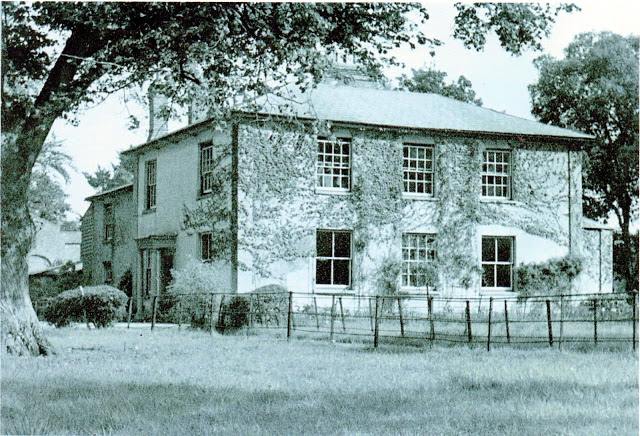
He married Margaret Sidney Roper-Curzon at St Mary’s, Cheltenham on October 13, 1859. Thomas was 28 and Margaret 24. The couple had four children, daughters Alice, Ethel and Mary and a son Francis Trafford Shipman. The 1881 census records Thomas and Margaret with their three daughters living at the Rectory, Lydiard Tregoze.
new rectory

The Rectory, Lydiard Tregoze – published courtesy of Roger Ogle

Thomas died suddenly in 1884 and is buried in Radnor Street Cemetery.

Thomas Trafford Shipman (2)

Canon Brian Carne writes in Notes on Rectors, Curates, and Patrons published in Friends of Lydiard Tregoz Report No. 38 published in 2005.

“Shipman’s death must have been sudden, because it became a legend. Right up to the 1960s it was said – at least by Mrs Large – that he appeared at the top of the rectory stairs to presage the death of the current incumbent.”

Set in stone

This headstone is a victim of weathering. Other deteriorating examples can be found across the cemetery, but this is the end result, when the surface cracks and eventually falls away.

It might seem that the history of those buried here is lost, but it is possible to piece together the family history.

A cemetery marker is propped up against the headstone. These should be treated with caution as many are in the wrong place, but I struck lucky with this one. Using the cemetery maps and grave plot registers I was able to trace the story of not only the people buried in this grave but those in the one next to it as well.

James and Dorah Neate

This is the last resting place of James and Dorah Neate. James was born in Box, Wiltshire and Dorah in Bruton, Somerset. They married at St James Church, Bath on October 30, 1877.

James worked as a railway engine driver and the couple moved about a fair bit. At the time of the 1891 census they were living in St Brides, Bridgend with their two sons. William 10 who had been born in Box, Wilts and Frederick 9 born in Weymouth, Somerset. By 1901 they were living at 7 Park Terrace (Faringdon Road) in Swindon. William and Frederick were both working for the GWR, William as a stoker and Frederick as a fitter. The couples’ last home was at 13 Jennings Street where James died in 1925 and Dorah in 1930.

James was buried in Radnor Street Cemetery on April 27, 1925 in plot D519. Dorah’s funeral took place on July 7, 1930 and she is buried in the same plot.

The collapsed pink granite monument next to James and Dorah’s plot is the grave of their son William.

Like his father William also became a railway engine driver. He married Elsie Maria Tyler at St Paul’s Church, Swindon on June 24, 1907. At the time of the 1911 census William and Elsie were living in Goodwick on the Pembrokeshire coast with their two-year-old daughter Kathleen Dora. They also had a son, Arthur William T. Neate, who was born in Wales in 1915.

William and Elsie eventually returned to Swindon where Kathleen died in 1931 aged 22.  William died at 30 South View Avenue, Walcot, Swindon on September 11, 1948 and Elsie died at 20 Castle View Road, Stratton St Margaret on December 13, 1968.

William, Elsie and Kathleen are buried in plot D520 next to William’s parents.

Elsie Maria Neate 4

The Tyler family photo was shared on Ancestry by Debra Tyler on February 8, 2010. Elsie is standing on the left with her arm resting on her mother’s shoulder.

Elsie Maria Neate nee Tyler

Elderly Man Expires in the Cemetery

The re-imagined story …

I leaned back on the bench and closed my eyes, my face turned towards the sun. Bird song filled the air on this glorious summer’s day. But how could there ever be a glorious summer’s day again? All I could think about were the days so many had been robbed of, and yet here was I in my 60th year, an old woman, enjoying the bird song and the sunshine.

I often come to sit in the cemetery. There is usually someone here, tending a grave. We exchange a few words, pleasantries. Sometimes we even talk about our boys.

The guns have been silent for many months, the servicemen returned home. Even those who were prisoners of war are back, aimlessly walking the streets of Swindon. They stop and speak. Everyone knew my boy.

I wish I could have brought his body home and buried him here in the cemetery. I’ve seen photographs of the battlefield cemeteries, row upon row of crosses. My boy has no known grave.

A parent shouldn’t out live their child. Will this be a country full of old people now? Parents mourning sons.

I open my eyes, ahead of me there is an old man, walking slowly up the hill. I think I recognise him. Another old man. This world is full of old people, all the young ones are dead.

He stops and lays the flowers he holds on a grave. I watch as he appears to stumble. I stand up and begin to walk towards the Dixon Street gate. I’ve had enough now, watching other old people. I shouldn’t be here, none of us old people should be here.

DSC07141

The facts …

Elderly Man Expires in the Cemetery

The death of a well known Swindonian, Mr Donald Macdonald Andrew, a retired GWR foreman, occurred under tragic circumstances in Swindon Cemetery on Saturday last. It appears that Mr Andrew, who was 72 years of age, and resided at 142 William Street, went on Saturday morning to the Cemetery, with the intention of placing some flowers on his wife’s grave. When walking along the pathway towards the grave he was seen by Mrs Amy Haynes, wife of Ald. A.W. Haynes, ex Mayor of the Borough, to fall. She ran to his assistance, and also a gravedigger, named Sidney Iles, who was working nearby. But deceased expired in a few minutes.

The Faringdon Advertiser Saturday June 21 1919.

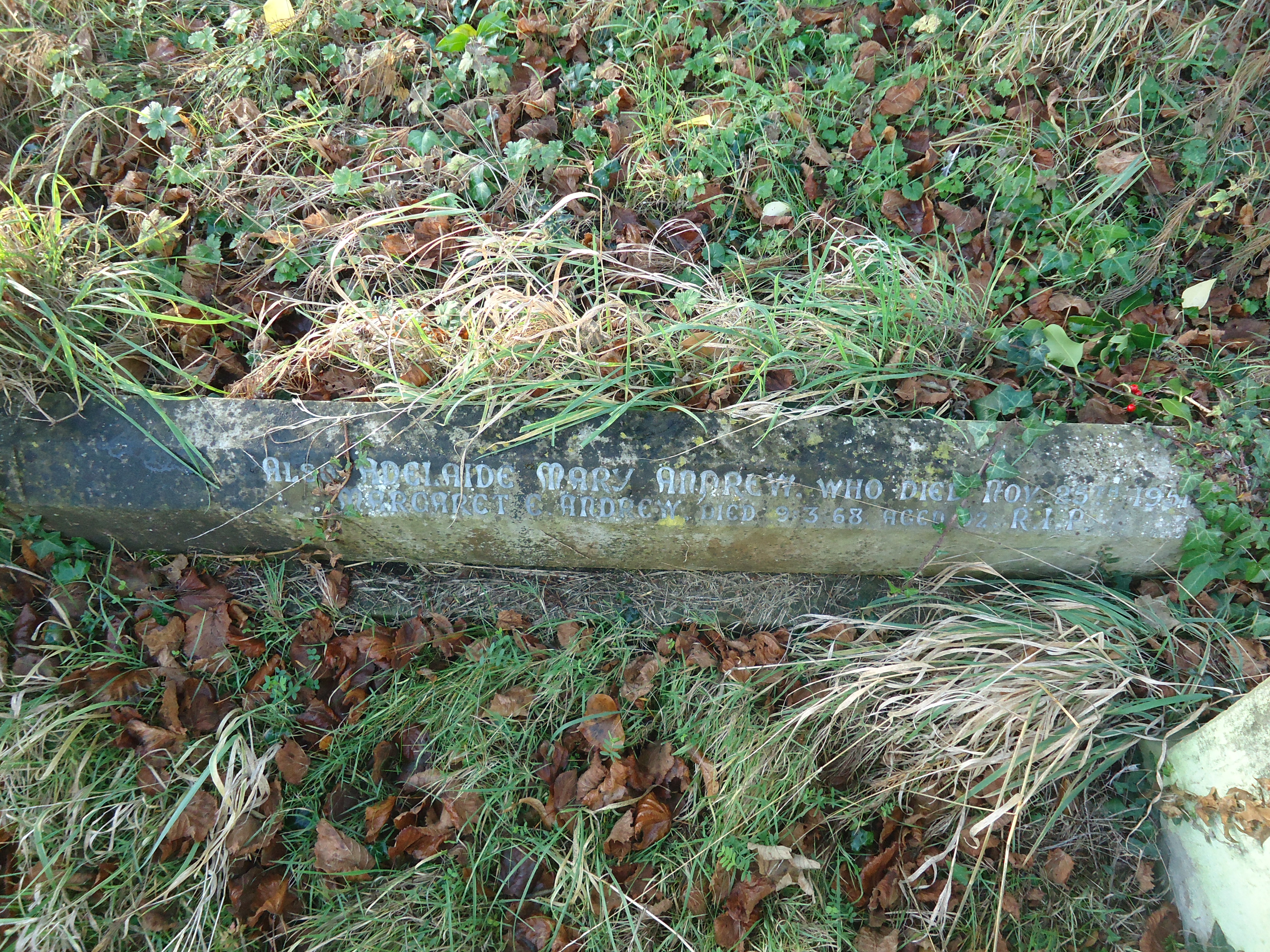
The Andrew family lived at 142 William Street for more than sixty years. Donald Macdonald Andrew, an engine fitter in the Works, and his wife Emily Jane had six children, a seventh had died before the 1911 census – Samuel Henry, George Edward, Ralph Macdonald, Florence K and twins Adelaide Mary and Margaret Elizabeth.

Donald’s funeral took place on June 17, 1919. He is buried in a double grave plot E8347/8 with his wife, son Ralph and daughters Adelaide and Margaret.

Adelaide Mary and Margaret Andrew

The terracotta grave markers

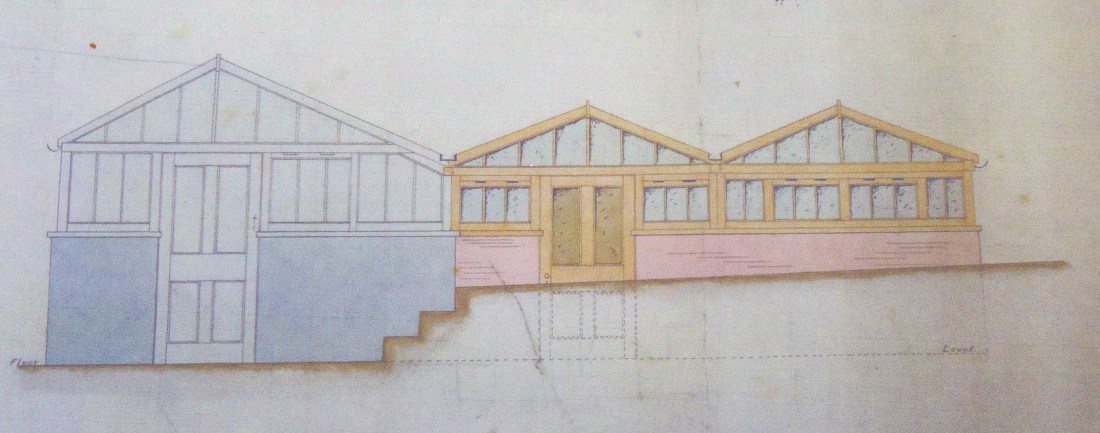
Back in the day there were flowers everywhere, right across the cemetery, displayed beneath glass domes; cultivated in the greenhouses. In 1907 the groundsmen were so busy that planning permission was sought for additional glasshouses to be built behind the caretakers lodge (see above illustration).

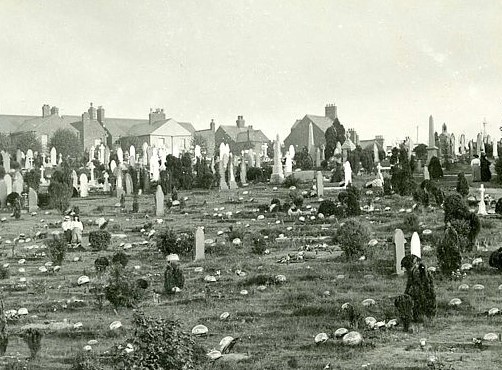
For those families who could not afford a headstone the flowers were a monument among the graves so densely arranged with barely a foot’s breadth between each plot.

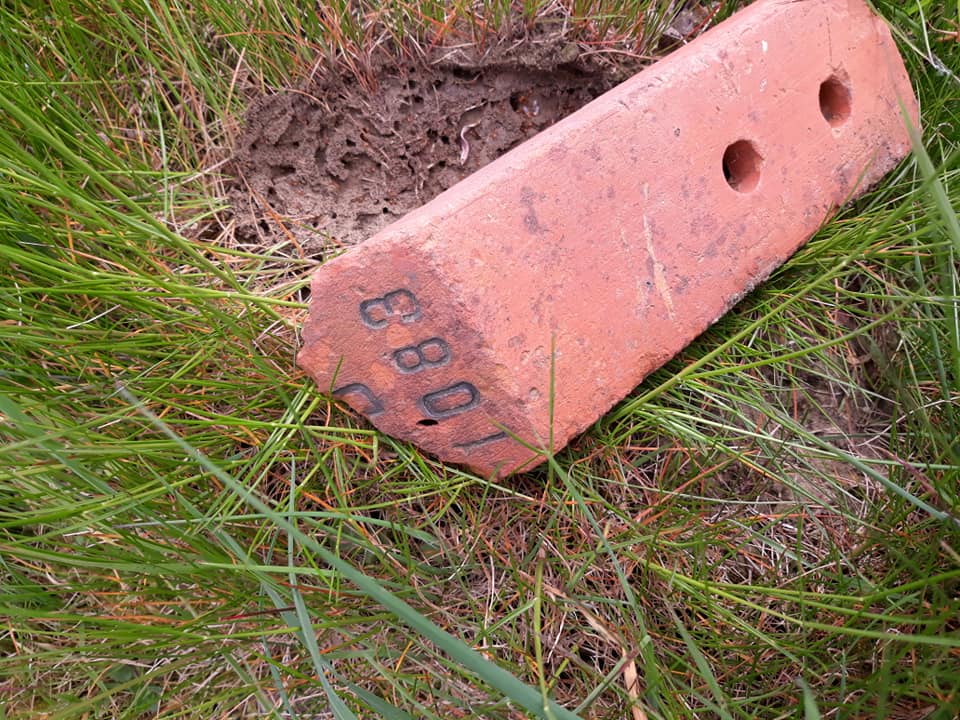
Every grave was identified by a terracotta marker, sadly an unsatisfactory method. The system had worked well when a caretaker and gravediggers were employed in the busy cemetery but today they lie broken and scattered about. Some graves sport several of the brick like markers, others have none, and when searching for a grave they should be used with caution and only as a rough guide.

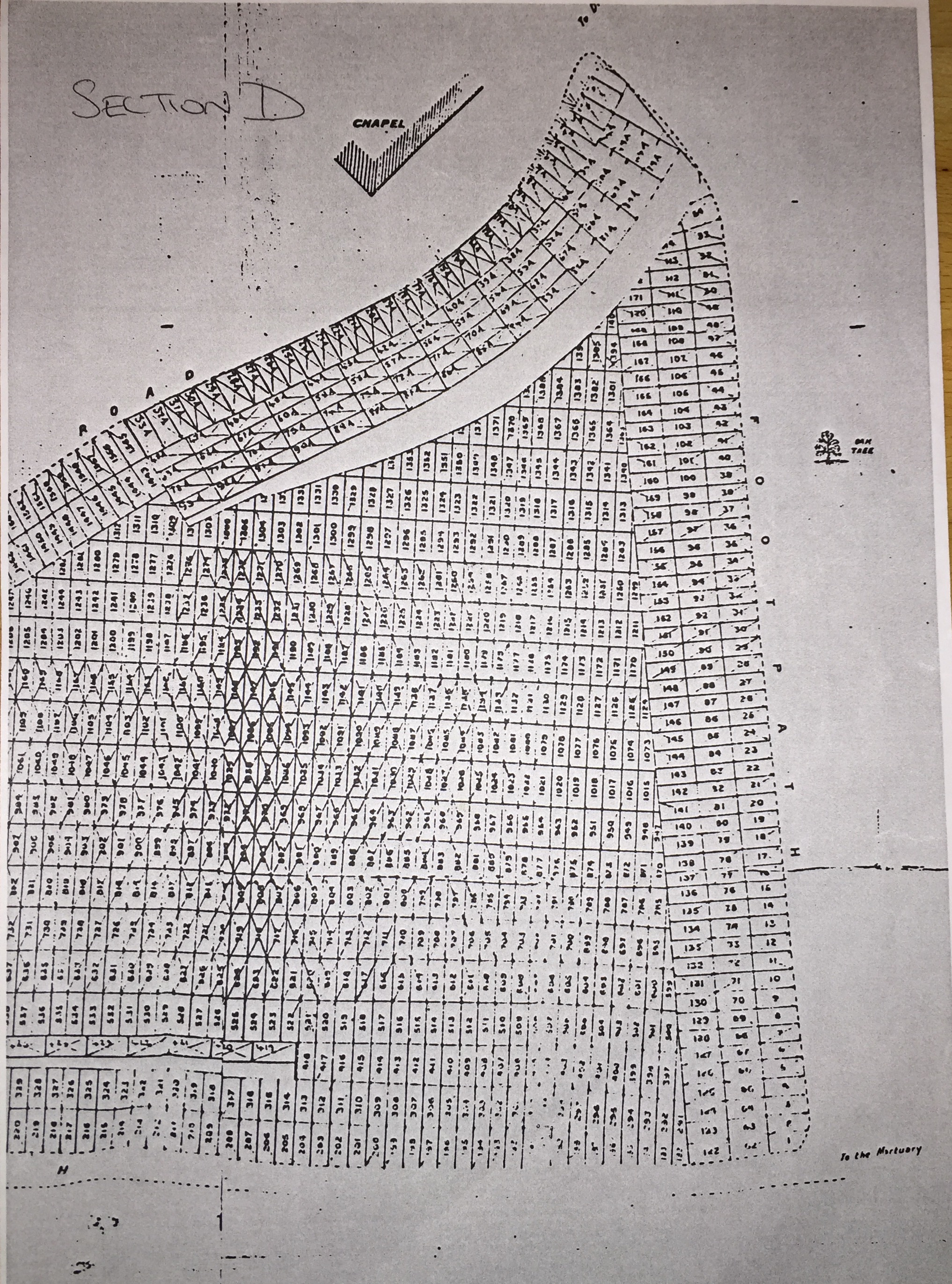
Section D 3 of 3

So what about the marker pictured here, found on a mound of earth. Is there a fallen headstone buried somewhere beneath? There are no clues, but it is possible to trace who was buried in plot D1083…

Molden 2

The facts …

The Radnor Street Cemetery burial registers reveal that there is only one person buried in plot D1083. His name was William John Molden, a boilermaker at the Works, who died on March 3, 1919 at his home, 145 Clifton Street. He was 44 years old and his funeral took place on March 8. Administration of William’s estate was awarded to his widow, Emily and his effects were valued at £179 5s.

Without applying for William’s death certificate we cannot ascertain his cause of death. Unfortunately we do not have a budget to pay for all the death certificates we need when researching the cemetery.

William was born on February 23, 1875 in Purton, the son of Eli and Hannah Molden. He began a six year boilermaking apprenticeship in the Works on February 23, 1890 aged 15. The 1891 census lists William as a 16 year old GWR Boiler Maker Apprentice living with his parents and older brother Sidney at Battle Well, Purton.  

William married Emily Painter in 1898 and at the time of the 1901 census they were living at 65 Redcliffe Street, Rodbourne with their four month old daughter Dorothy.

The family appears on the 1911 census living at 122 Clifton Street where William lists his occupation as Boilermaker Rivetter. The couple have three children, Dorothy Maud aged 10, Muriel Louise Hetty, 8 and Harold Sydney John 2. Another son, Raymond Edward Joseph was born in 1917.

William was a relatively young man when he died. Perhaps he died as a result of the post-war ‘flu epidemic which raged through Swindon as it did everywhere else.

SWINDON - RADNOR ST CEMETARY (3) 1905(2) - Copy

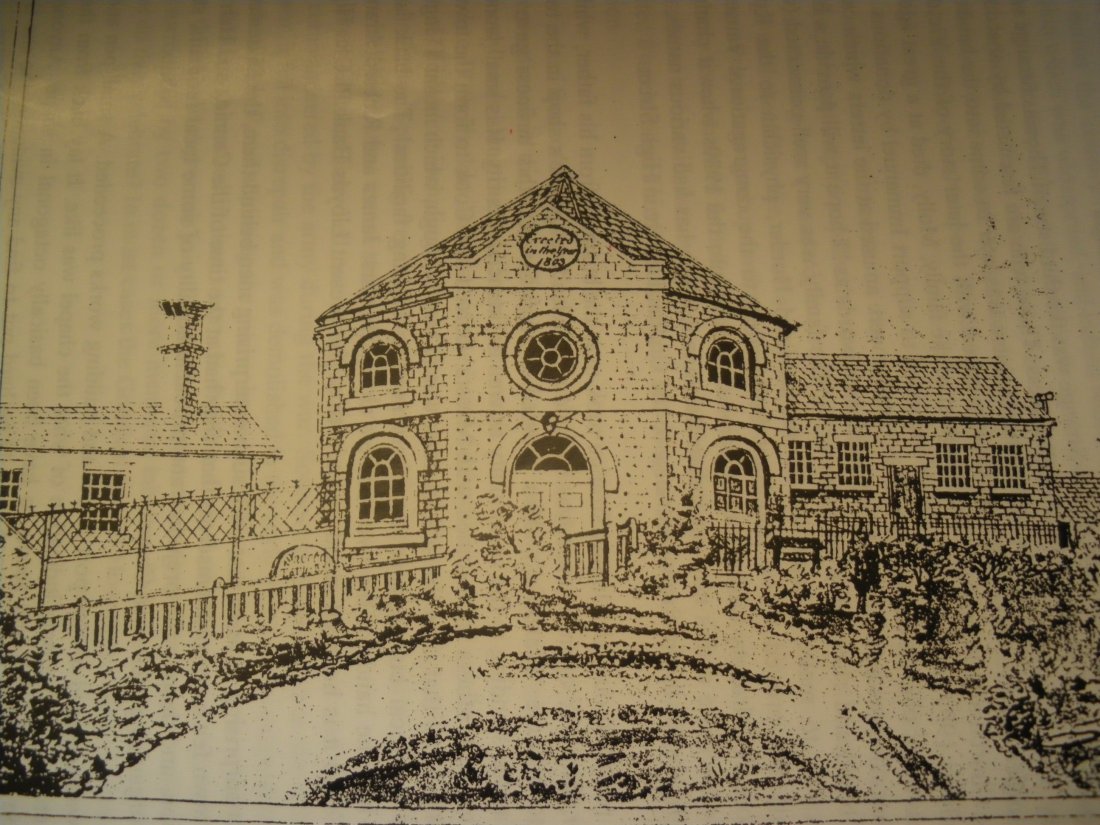
The Old Congregational Church

The re-imagined story …

Tomorrow I will hang up my check at V Shop for the last time. I’m looking forward to retirement with some trepidation. My body has had enough of the hard graft but I will miss my mates and the camaraderie. Fifty-five years I’ve been ‘inside.’

I left school at 13 and worked for a local builder until I could begin my apprenticeship in the Works. Some dates stick in your mind. On March 23, 1883 I was sent to join a group of labourers excavating the burial ground in Newport Street. The old Congregational Church had been demolished almost twenty years earlier, but the burial ground had been left intact, until now when the area was required for redevelopment. We were to locate and exhume the graves for reburial in the new Swindon Cemetery on Kingshill.

It had rained for most of the previous week and the clay soil was heavy and claggy and difficult to dig. You had to use a lot of force to shift the earth but all the time I was worried about what I might be disturbing. Some of the burials were more than 60 years old, the coffins rotting away. Every time my spade made any contact, I gave out an involuntary noise, something between a cry and a yelp. The men got angry with me and told me to have some respect for the dead. I was only a lad, I hadn’t known what to expect and I feared hitting a decomposed body, I tried not to look too closely, frightened of what I might see.

Eventually the foreman gave me a different job to do while the men transferred the exhumed remains to the mortuary in the cemetery. The new grave had already been dug by the cemetery Sexton.

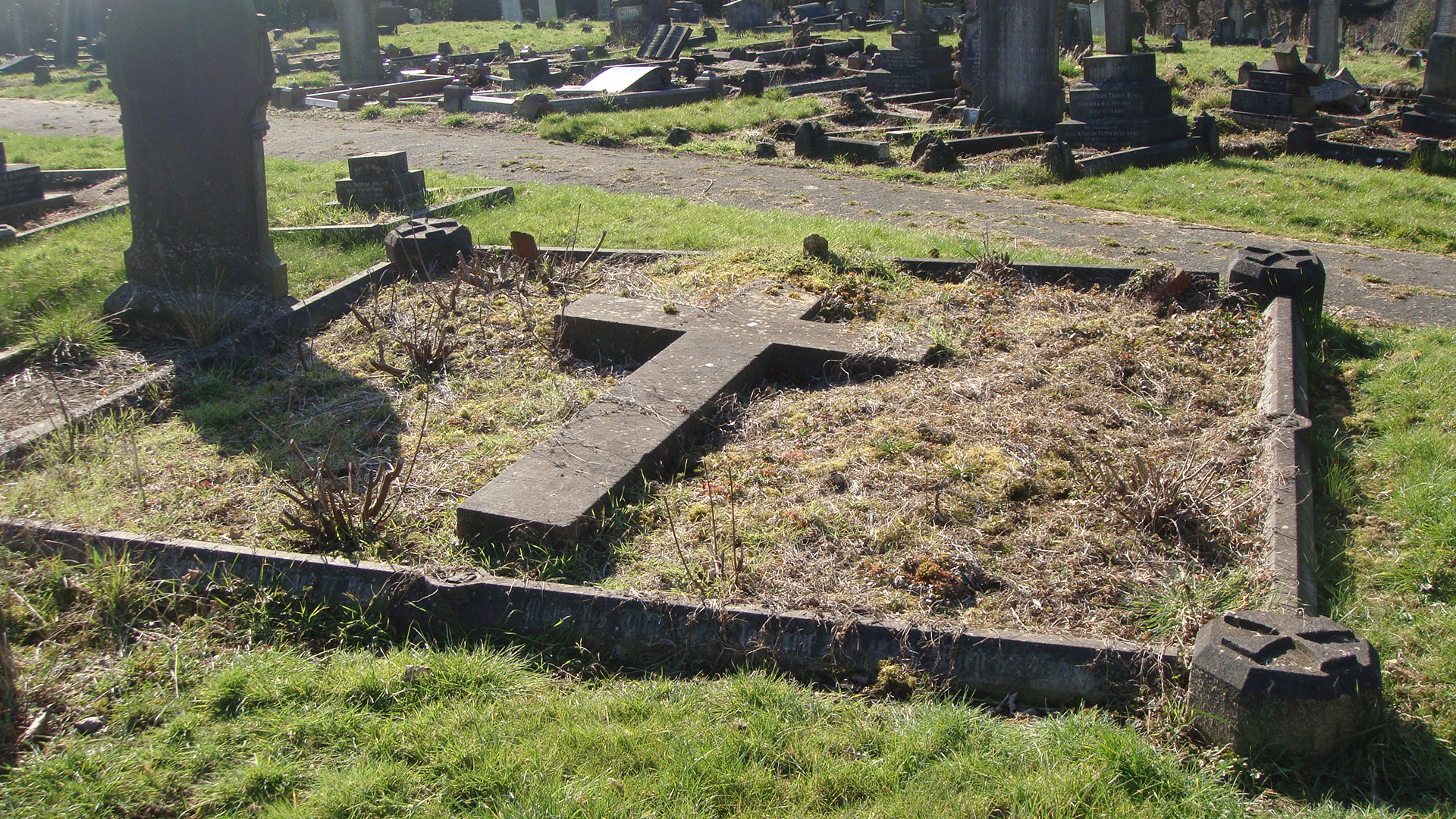
A few weeks later I went to pay my respects at the graveside of the Strange family whose remains had been re interred. I stood by the large plot with the tall cross and made my apologies.

Richard Strange Mannington Farm (4)

The facts …

The extended Strange family were prosperous members of 18th and 19th century Swindon society. They were farmers and salt and coal merchants, grocers and drapers and they even opened the first bank in the town in 1807 Strange, Garrett, Strange and Cook.

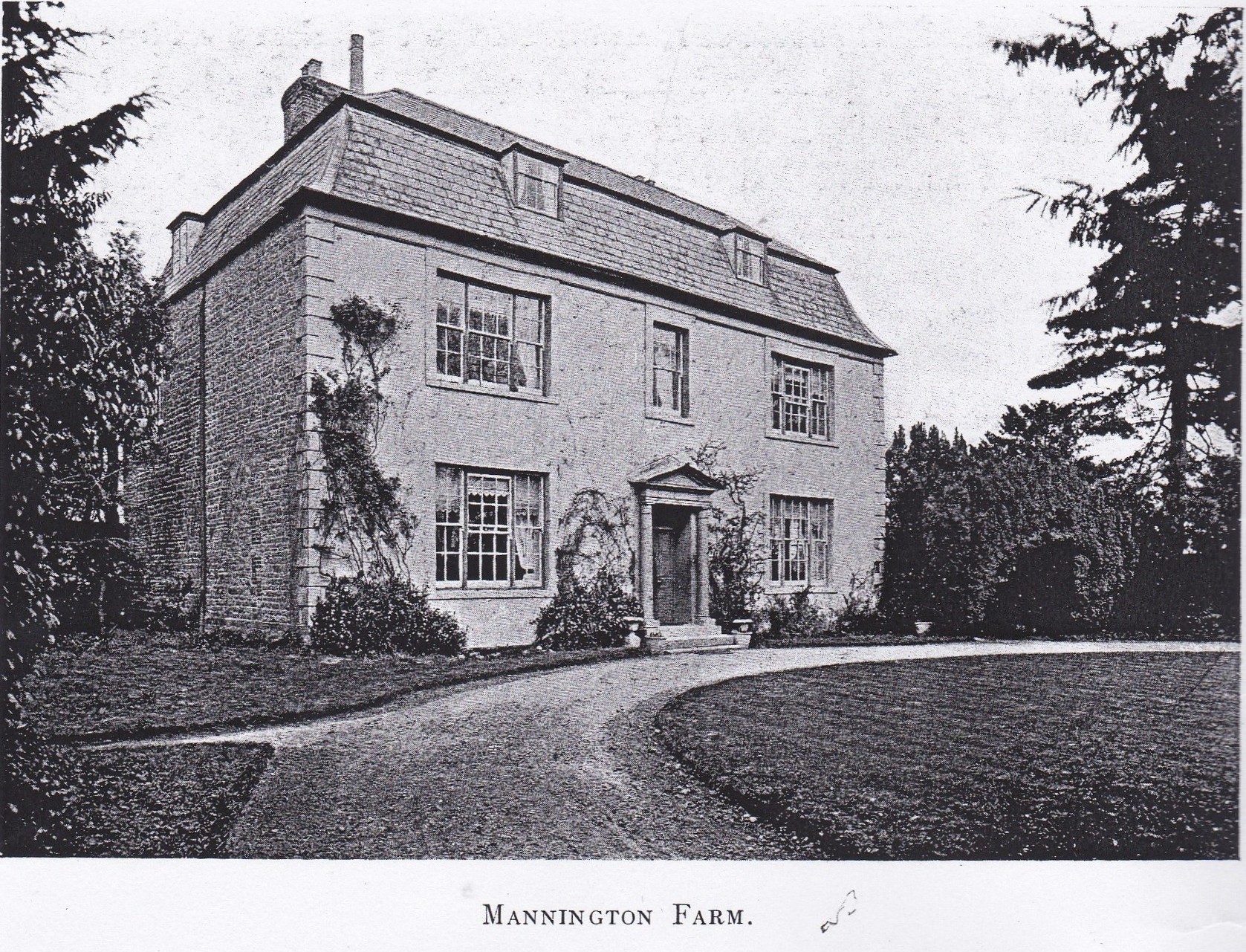
Richard Strange junior was born in 1799, the son of banker and grocer Richard senior and his wife Mary.  Richard married his cousin Martha, youngest daughter of Uncle James and Aunt Sarah Strange at Holy Rood Church on January 9, 1834.  Richard farmed at Mannington Farm from 1841 until his death in 1883 when his daughter Julia took over the tenancy of the farm.

Mannington FarmThe Strange family were prominent non-conformists in the town and Martha’s father James founded the Congregational Church in Newport Street where members of the family were interred in the small burial ground. The Newport Street Church was demolished in 1866 but the burial ground remained intact for more than 15 years. However, in 1883 the graves of Richard Strange’s immediate family were exhumed for re-burial in Radnor Street Cemetery. The remains of his mother Mary who died in 1829, his father Richard who died in 1832 and his 16-year-old sister Sarah who died in 1820 along with those of Richard’s wife Martha who died in 1858 and a one-day old baby son also called Richard, were re-interred in plots E8463/4/5.
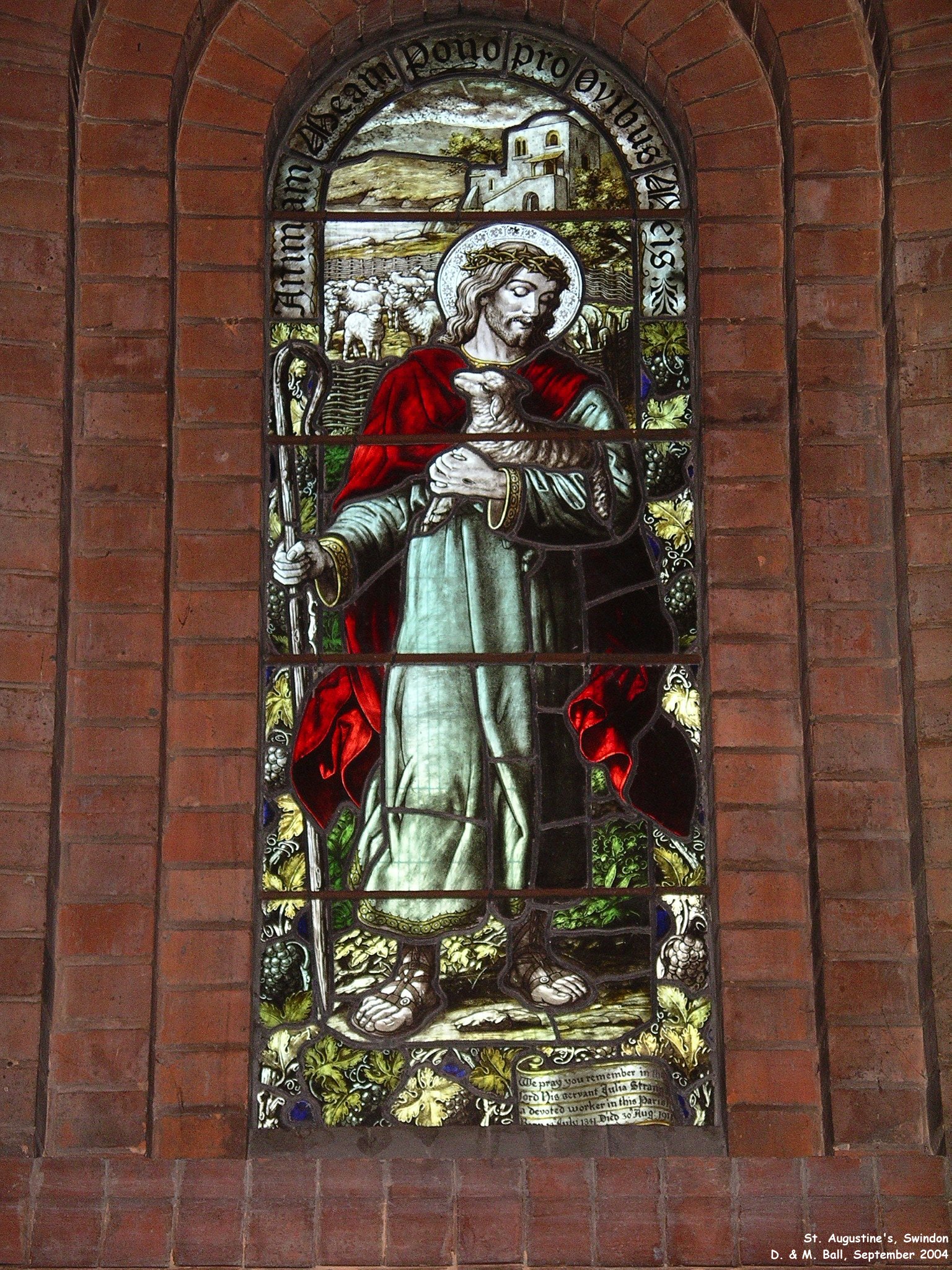
Richard Strange junior died at Mannington Farm on June 23, 1883 aged 83 and was buried in this large family plot. He left a personal estate of £4,775 1s 6d to his only daughter Julia who took over the running of the farm. Julia was buried in the family plot when she died on August 30, 1911.

A stained-glass window is dedicated to Julia in St Augustine’s Church, Rodbourne. The dedication reads ‘a devoted worker in this Parish.’

Aug-0095

Photograph published courtesy of Duncan and Mandy Ball.


You may also like to read:

The Pitt and Osman family – a life in service

First caretaker – Charles Brown

Radnor Street entrance

The re-imagined story …

It’s a long trek back home from the market to Clifton Street. I usually walk up Deacon Street and cut through the cemetery. Of course, in the old days you weren’t allowed to and if Mr Brown caught us kids, we were in for a right telling off.

Mr Brown was the caretaker who lived in the lodge at the Radnor Street gates. He used to keep all the other gates locked so the only way in and out was past his front door.

Us kids used to climb the railings, but woe betide you if he caught you scratching the paintwork.

He and his team kept that cemetery in a beautiful condition. The grass edges were always neat and tidy and come Autumn the paths were all kept clear of leaves. We reckoned he polished the gravestones as well, they were so clean.

He was very proud of the place. Well, he’d been caretaker from the day it opened. Funny to think he’d known the cemetery in its empty state. Strange thing was he died on July 31, 1905 the anniversary of the date he began work in 1881.

People say he’ll be missed. I’m sure he will, but my generation will always remember him as the scary man who used to chase us out the cemetery.

cemetery-lodge-front-door-2

The facts …

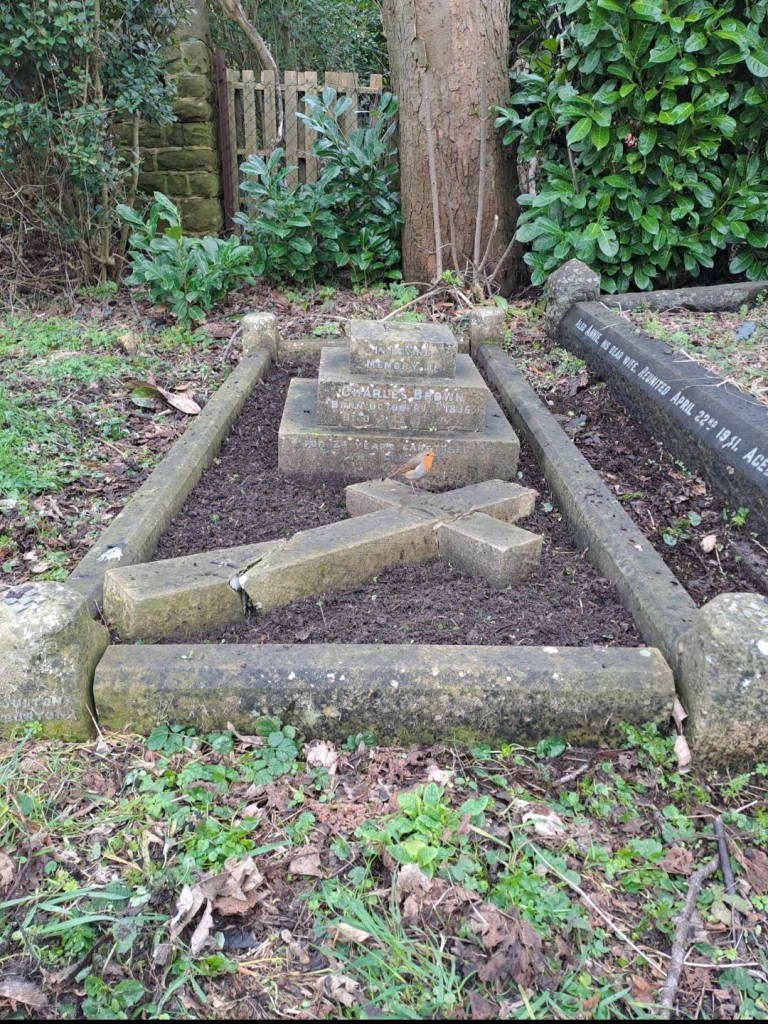
With the opening of the cemetery imminent the Cemetery Committee advertised for a caretaker and sexton, at a Salary of £1 a Week, and House-Rent Free. The successful applicant was 44-year-old Charles Brown who in 1881 was working as a Coachman in Wroughton.  Charles worked as caretaker for 24 years.  He died at home in the Cemetery Lodge on July 31, 1905 and is buried in the cemetery in plot E8661.

Death of Mr C. Brown. The death of Mr C. Brown, the caretaker at the Swindon Cemetery, took place on Monday afternoon. Deceased was born at Lambourne Berks 68 years ago, and after living at Burderop for some time, he removed to Swindon, and became the first caretaker of the Cemetery, being appointed just 24 years ago, his death occurring on the anniversary day. Deceased had been failing in health for the last twelvemonths, and went away a short time ago for the benefit of his health. He was taken seriously ill about a fortnight ago, and passed away on Monday, as already stated. Deceased was always most unobtrusive and courteous in the discharge of his duties – On Thursday afternoon, at 2.30, the mortal remains of the late Mr Brown were laid to rest in the Swindon Cemetery, over which he had had charge for so many years. The remains were enclosed in a polished elm coffin, with brass furniture, and the breast place bore the inscription: “Charles Brown, died July 31, 1905, aged 68 years.”

Extracts from the Swindon Advertiser, Friday, August 4, 1905.

Family dynamics and a rediscovered grave

One winter several years ago before public spending cuts became so constrained, Swindon Borough Council cleared a large area of the cemetery swamped by brambles, revealing many hidden graves. One of the rediscovered plots was that of the Barnes family.

This double plot E8410/E8411 is surrounded by an elegant, black marble kerbstone memorial. Although still partially concealed, two names can be detected. From these slim pickings it was possible to trace much of the history of this family, using a combination of sources beginning with the Radnor Street Cemetery burial registers.

On October 15, 1878 John Barnes and Elizabeth Jane (also known as Jane Elizabeth) Farmer married at St Mark’s, the church in the railway village. John worked as a plumber, most probably with his father Richard who was also described as a plumber on the marriage certificate. Elizabeth Jane was the daughter of Thomas Farmer, a mason.

At the time of the 1881 census John, Jane and their daughters Edith Ellen aged 1 and three-month-old Florence Beatrice, lived at 9 William Street. By 1891 they were still living in William Street where their family had increased by four sons – Harold E 6 years old, Ernest A 5, Herbert H J 3, and one-year old Frederick W.

By 1901 they were living at 5 Tennyson Street, their family complete with the birth of Edgar A in 1897. Their elder sons Harold aged 16 and Ernest 15 were both working in the building trade, Harold as an apprentice house carpenter and Ernest as an apprentice house painter. At a time when the railway works dominated the town, this large Swindon family worked independently and within the building trade. Maybe the family would look back on these times as the good years.

On September 4, 1907 18-year-old Frederick set sail for Australia. Perhaps the building trade had taken a temporary down turn, although that seems unlikely in fast growing Swindon. Was his departure a shock for his parents, or perhaps he had always been a daring, adventurous type?

But worse was to come. The first real tragedy struck on November 26, 1907 when 21-year-old Harold Ernest died, the first of the family to be buried in the large, double plot in Radnor Street Cemetery and whose name is visible on the re-discovered grave. It was Harold’s death that gave me an entry into this family’s history.

The 1911 census confirms some details. Jane states that she and John have been married for 34 years and that they had eight children, 7 of whom were living and one who had died. The couple’s four sons were listed at home in Tennyson Street, including Frederick returned from Australia.

On Boxing Day 1911 eldest son Herbert Horace John married Kate Gray Hill at St Mark’s, the church where his parents had married.

The following year Frederick and his younger brother Lionel set sail on the Orvieto bound for Sydney, Australia. John and Jane would never see Frederick again. He died in Drummoyne, New South Wales in 1913. His name is remembered on the family memorial.

Lionel remained in Australia where he married Lucy Amelia Hunt, a girl from Wootton Bassett, in 1913. They came back to England at some point, but returned to Australia in 1951 where Lionel died in Drummoyne, New South Wales in 1963 aged 71.

On September 23, 1914 Herbert’s wife Kate gave birth to a baby girl called Freda but sadly they both died the following day. Kate and her baby daughter were the first of the family to be buried in the adjoining plot E8411.

With the declaration of war, the parents must have feared for their sons, especially when their widowed son Herbert enlisted with the Royal Marines Divisional Engineers. He later transferred to the Royal Air Force.

Herbert returned safely from the war to marry Mabel Homer in 1919. He died in 1959 and was buried with his first wife and their baby daughter in plot E8411. They share the grave with Herbert’s sister Edith Ellen Lucas who died in 1962 and her husband Ernest Lucas.

Another son served in and survived the First World War. Edgar Arthur Thomas Barnes, a motor engineer, joined the army at the beginning of the war and served in the Royal Army Service Corps. He was awarded the Military Medal for repairing a motor under fire and bringing three wounded soldiers safely to hospital. Edgar died in Lincoln in 1961.

Jane died in 1922 and John in 1924. They were buried in plot E8410 with their son Herbert and daughter-in-law Mabel Barnes.

Eight family members and a day-old baby were buried in that newly discovered double grave plot. Thanks to the hard work of the Swindon Borough Council team it has been possible to trace the events of the Barnes family history.

Have you seen the doctor?

albert ramsden surgeon (2)

The re-imagined story …

Every Saturday Nan and me would come into town on the bus. We’d buy a bunch of flowers from a stall in the market and then walk up Deacon Street to the cemetery.

After we had spent a few moments looking at the wonky little headstone we would lay the flowers on the grave. Then I’d skip off down the steep path and out of the gate to Grandma’s house in Dixon Street, arriving at the front door ahead of Nan.

“Have you seen the doctor?” was the first thing she always said. Before “hello Marilyn, why aren’t you wearing a coat?” or “hello Marilyn I’ve got some chocolate cake in the pantry.”

Grandma was a wizen, little, ancient lady, who always dressed in black, I assumed in perpetual mourning for my dead Grandpa. Old ladies did that in my childhood. Of course, you don’t see that now. These days they get a tattoo and move on to a 50-year-old boyfriend. Grandma was my great-grandmother, someone to be revered and obeyed. That’s all changed as well.

When I was very young, I thought ‘the doctor’ was a relative of ours, but when I came to understand social politics I realised that’s wasn’t very likely; all the men in our family had been railwaymen.

Then one day Nan mentioned that the doctor was a surgeon, one of the GWR doctors employed at the Medical Fund Hospital. Perhaps he had performed some life saving operation on a family member. Perhaps that was why Grandma had been leaving flowers on the grave for more than 60 years.

Suddenly, as happens, life passed by. Grandma died and my much loved Nan took her place as the little old lady I took my children to visit on a Saturday afternoon. We didn’t call in at the cemetery first though as Nan lived just around the corner from us in Gorse Hill.

We talked about the past a lot, same as I find I do now, and then one day I asked her who the doctor was we used to visit in the cemetery.

She took her time replying and I wondered if she might have forgotten.

“When my mother, your Grandma, was young she worked for the railway doctors. The surgery was at Park House where Dr. Swinhoe lived, but the younger doctors lived in a house in London Street.” She paused for a moment and I sensed she was about to share a confidence that had not be spoken of for many years.

“Grandma used to do the washing for the young doctors, keep the house tidy and cook them a midday meal, returning in the afternoon to finish her duties. Remember mind, she was only 15 or 16. That was a lot of work for a young girl to be doing. That particular day, she left the meal for the doctors and went home for her own dinner.

“Just as she was about to leave her house a young boy knocked on the door with a note for her telling her not to return to work as one of the doctor’s had died suddenly. She would be expected at work the following morning. She never went back to her job or the house in London Street.”

It was a sad story. “Grandma must have been very fond of that doctor,” I said.

Nan sipped her tea and I could sense that wasn’t the end.

“It wasn’t that Marilyn. No one explained to her what had happened, or why he had died. She thought she had killed him.”

“Killed him?”

“She wasn’t a very good cook. Her family used to tease her and say one day she’d kill someone. That day she thought she had killed the doctor.”

Views of London Street taken in 2019

The facts …

Albert Ramsden was born in 1852 the son of Charles Ramsden and his wife Ann. At the time of the 1851 census, the year before Albert’s birth, the family was living at an address in the Beast Market, Huddersfield where Charles worked as a dry-salter. A dry-salter was a dealer in dry chemicals and dyes and in the 1857 Post Office Directory Charles is listed as living at 9 Beast Market, a dry-salter and oil merchant. By 1861 he was employing five men and two boys and obviously earning enough to pay for his son’s education. That same year Albert was a boarder at a school in Ramsden Street, Huddersfield, run by John Tattersfield.

Albert moved to Swindon in 1881. At the time of the census earlier that year he had been lodging at 35 Bromfelde Road, Clapham where he was described as a medical student. He had previously worked for Dr John Sloane at his large practise in Leicester.

Sudden Death of a Medical Man – An inquest was held at Swindon on Wednesday, August 31st on the body of Albert Ramsden, aged 29, who died suddenly on the previous Monday afternoon, at his lodgings No 5 London-street, Swindon, where he resided with four or five other gentlemen of the medical staff. It appears that deceased, when at dinner, rose suddenly and went into the drawing room where he stayed two or three seconds, and then upstairs. On entering his room shortly afterwards his body was found lying across the bed with the head on the floor. The four medical gentlemen present did what they could for him, but to no effect. Deceased it seemed had fallen in a fit, death resulting from a flow of blood to the head. A verdict was returned in accordance with the evidence. The deceased had only resided at Swindon three weeks, having been an assistant to Dr Sloane, of Leicester, for several years. He was a member of the Royal College of Surgeons, and had passed his examination as L.R.C.P. only four weeks previously.

Leicester Chronicle and Leicestershire Mercury, Saturday September 10, 1881.

Albert had died during an epileptic seizure. He was buried in plot A137, the 14th burial to take place in the new cemetery at Radnor Street.

albert ramsden surgeon