First impressions

The re-imagined story …

There was a lot of talk in the workshop about the new cemetery. We had a vested interest as undertakers, and wondered at the choice of location.

“Makes you wonder why the Local Board settled on that piece of land.”

“Must have been something to be made out of it for one of them.”

“It belonged to Mr. Hinton.”

“Enough said.”

“Which gate will be the usual entrance?”

The new cemetery was situated in the middle of Kingshill with an approach by four entrances at Dixon Street, Clifton Street, Radnor Street and Kent Road.

“I’m assuming it will be the Radnor Street one. That’s going to be quite a climb with a handbier.”

“Kent Road might be a better option.”

“Which ever way you approach from New Town there’s going to be a hill to climb.”

“Has anyone been to have a look?”

“It’s one big building site up there at the moment. There’s work going on in all the surrounding streets. I pity anyone who has to bury a loved one during the next few weeks.”

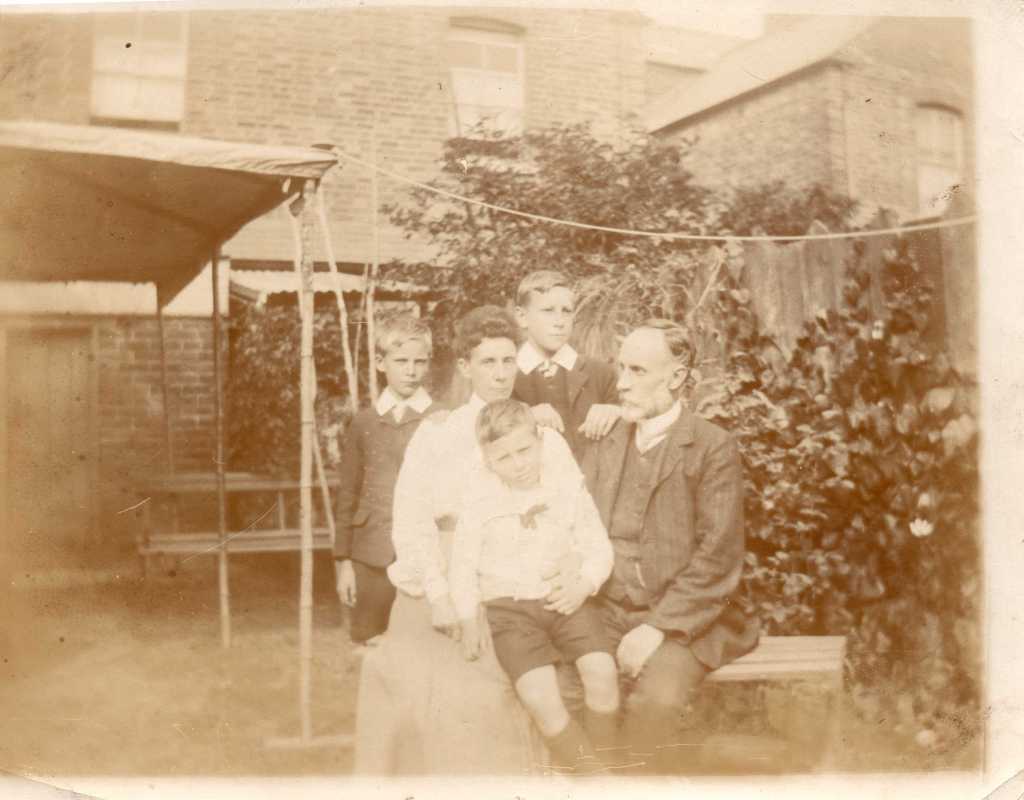
Little did we know we would be burying our own governor, Mr Edward Hemmings, just five days later.
dsc07135

The facts …

Edward Hemmings, a carpenter, joiner and undertaker, was born in Charlton Kings, Cheltenham. He and his wife Eliza lived in London between 1851 and 1861 and moved to Fleet Street, Swindon in the mid-1860s.

By 1871 he had a business at 43 Fleet Street and ten years later they were living and working at 22A Fleet Street. This may have been the original property, renumbered as building work continued in that area.

Following her husband’s death Eliza placed an announcement in the Swindon Advertiser.

Mrs Hemmings, of 22, Fleet Street, New Swindon, begs to inform the inhabitants of Swindon and the neighbourhood that she intends carrying on the business of her late husband Edward Hemmings, Builder, Carpenter, and Undertaker, and trusts to meet with the same liberal support bestowed upon him during the past 15 years.

Six years later the following announcement appeared in the Swindon Advertiser.

22 Fleet St New Swindon

Fredk. Hemmings

Builder, carpenter, & Undertaker

Begs respectfully to inform the inhabitants of Swindon and neighbourhood that he intends carrying on the business of his later Brother Edward Hemmings, who preceded him as above so successfully for many years.

F.H. begs to remind them that the same earnest attention to business, and care in the execution of all orders entrusted to him, will be paid, and that there shall be nothing wanting on his part to give the same satisfaction as heretofore.

Funerals Economically Conducted.

Estimates given for all Work connected with the Building Trade.

The Swindon Advertiser, Saturday March 11, 1882.

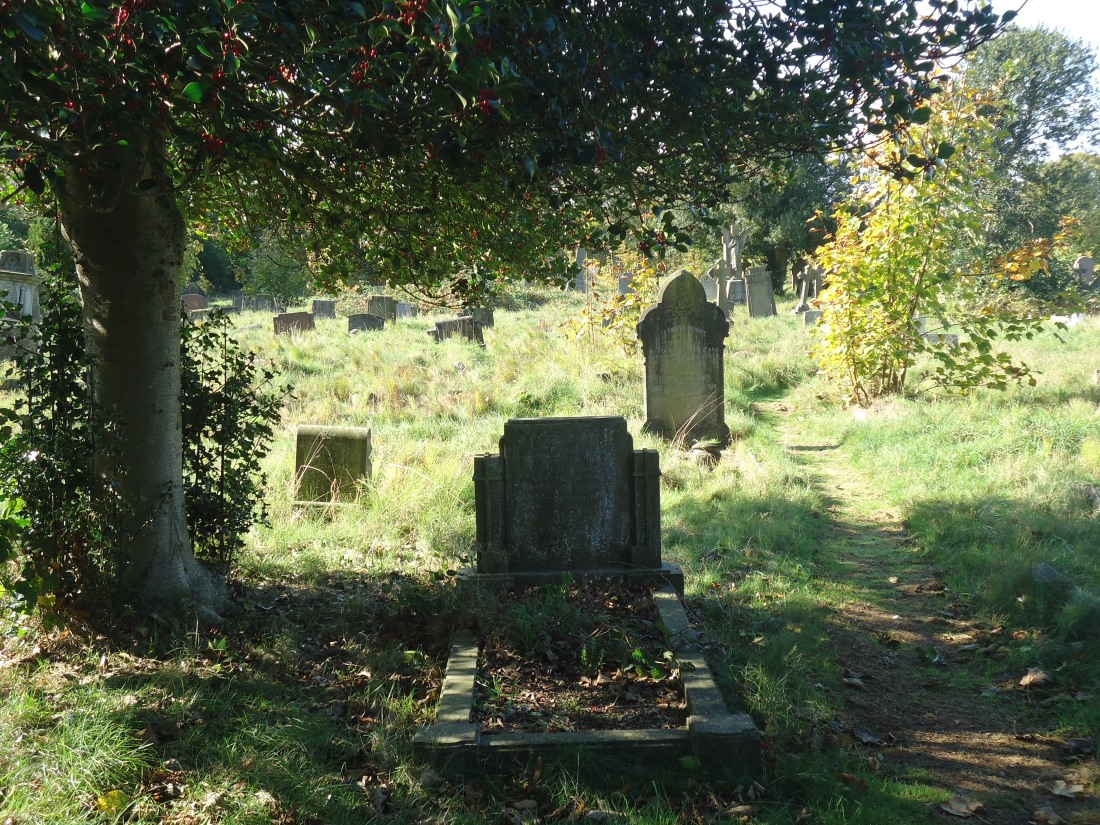
Edward was buried in plot A137 on August 11, 1881, the fifth burial to take place in the new cemetery. He was buried in a public or pauper’s grave where he lay alone for more than twenty years. In 1904 a child by the name of Frank Batt was buried with him.
dsc07126

Standing at the graveside

dsc07096

The re-imagined story …

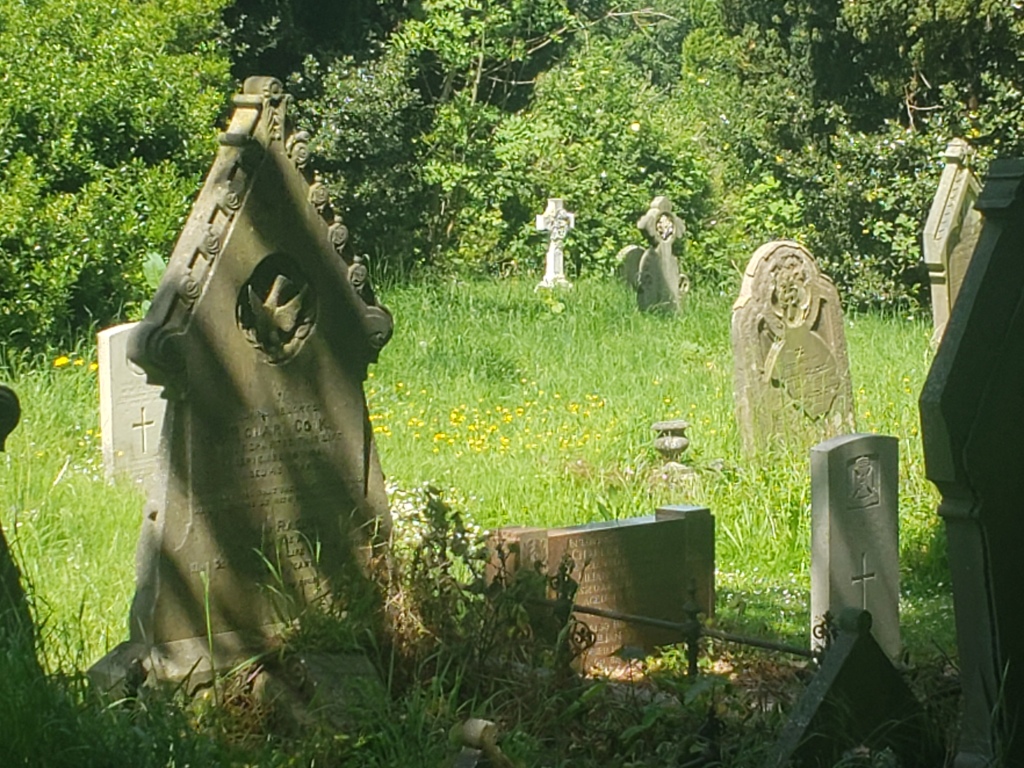
That first week she visited her baby’s grave every day.  She stood by the small mound of freshly turned earth, every day.  There would soon be a bench placed close to the grave.  Somewhere she could sit and think about him, but today the cemetery was a barren, vast gash in the hillside.

A few trees remained scattered about, relics of the cemetery’s past when it had been a coppice ground called Howses.

And the new chapel stood in all its Gothic splendour, if on a small, parochial scale, the modest bell tower guarded by grotesques.  But there had been no tolling bell for her baby, no headstone, no marker for there was no money to buy the burial plot in which he lay.

On the day of his funeral she laid flowers.  The following day she bought a small pot plant and knelt on the soft soil and pressed in the roots with her fingers, reaching for her baby.

summer3

But the next day the plant had gone.  There could be no permanent marker on this grave, for this was a pauper’s grave and even in the vastness of the new, now empty cemetery, soon there would be others buried with her baby.  She didn’t know if this was a comfort or not.  She hated the thought of him lying there alone in the cold earth, but she didn’t want to share this space with anyone.

Then just four days later there was another woman standing at that graveside, the earth freshly turned, again.

They looked into each other’s eyes and saw the grief, but they did not speak.

After that she stopped coming every day, now another child lay on top of hers, placing him a little further out of reach.  She visited on a Sunday, sometimes, and always on his birthday and, so quickly afterwards, his death day, and then there were the other days, when she just wanted to remember him.

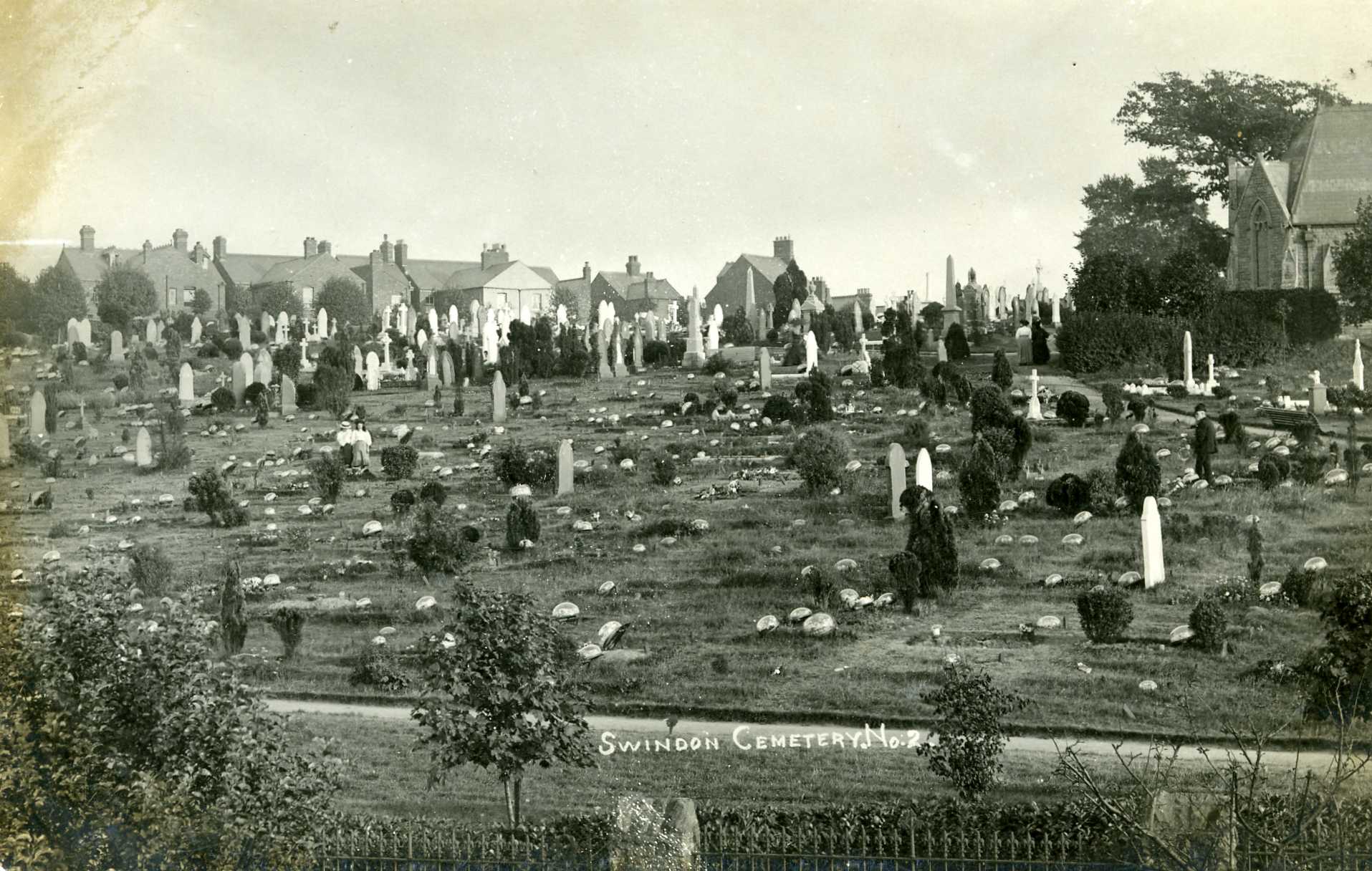
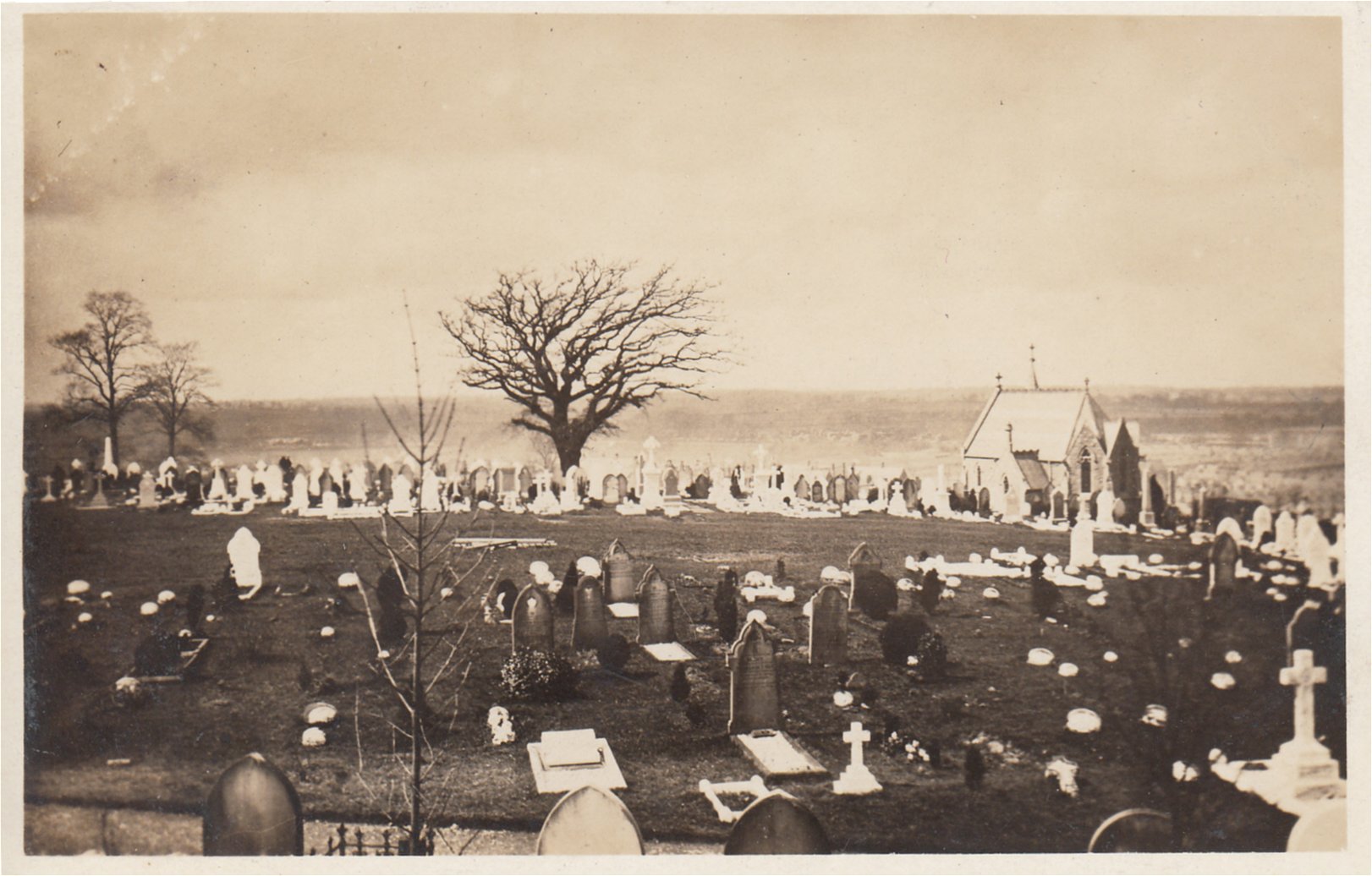
Shrubs were planted, headstones raised, she watched the grass grow and one day the bench appeared.  Sometimes she would sit there and watch; the cemetery was a busy place now.  Mourners left flowers set beneath a glass dome; she would have liked one of those for her baby.

She never met again that other mother.

The facts …

Albert Edward Wentworth was the second burial to take place in Radnor Street Cemetery on the day it opened, August 6, 1881.  He was one-month old.  His mother’s name was Lucy. Matthew Henry Bissell was buried in the same grave plot four days later.  He was one-year old.  His mother’s name was Susan.

Frederick Gore – The Closing of the Churchyard

The re-imagined story …

I bet there will be a good attendance for the funeral of Mr Gore; he was a popular man and well liked.  Some will be there out of friendship, others in respect, but I can tell you there will be plenty who just turn up out of curiosity. After all, it will be the first funeral at the new cemetery.

Rev. Ponsonby had announced the closure of St Mark’s churchyard in the August edition of the parish magazine. Who would have thought a burial ground could fill up so quickly, the church had only been dedicated thirty years previously. It was rumoured that with the coming of the railway factory the life expectancy in the town had dropped to under 30 years. Unbelievable! That’s worse than in my parents day when the average job was on the land.

I suppose Mr Gore had done well to live to the age of 54. Perhaps if he had died in the middle of winter people would have been less keen to climb up Kingshill to visit the new cemetery. There’s even talk of some bringing a picnic. Unbelievable!

Images are of the churchyard at St. Mark’s Church.

The facts …

The New Cemetery – On Sunday evening last, when giving out the usual weekly notices at St Mark’s Church, the Rev. M.J. Ponsonby took occasion to remind his congregation that in accordance with the order received some time previously from the Local Government Board, the churchyard would be closed for burial on the following day, remarking that as neither the ground or the Church at the New Cemetery were consecrated, any of the congregation wishing to have the first part of the service performed over their dead in a consecrated building, could have it done at the Church, by giving not less than one day’s notion – The first interment in the Cemetery, will, it is believed, take place this (Saturday) afternoon, at half past three, the deceased being a painter named Frederick Gore, recently employed in the GWR Works, who died on Tuesday morning. Gore had often, we are told, during his long illness, expressed a wish to be buried in the Cemetery, if it was sufficiently advanced at the time of his death, and, although a member of the Baptist church, had obtained a promise from the Rev M. Ponsonby, who had visited him, that he would officiate at the funeral, and allow his body to be taken into the church. It is somewhat remarkable that Gore died within an hour or two of the time the order for closing St Mark’s Churchyard came into force.

The Swindon Advertiser, Saturday August 6, 1881.

The Closing of the Churchyard

Dear Friends,

We are no longer allowed to bury in our Churchyard, except under certain circumstances.  It was, we all know, necessary that this regulation should be passed, but this will not prevent the great regret of many that they cannot lay the bodies of their dead in the hallowed precincts of the Church.

Probably no part of the public cemetery will be consecrated; but a prayer authorised by the Bishop, will be said by the Priest over each grave, and that particular spot in the cemetery will thus be solemnly dedicated to Almighty God.

Many who have been accustomed to carry their Blessed Dead into the Church in which they have worshipped, and which is set aside for God’s service, will feel aggrieved at entering an unconsecrated building, such as that which has been erected in the Cemetery. 

I have, therefore, arranged that, where it seems fit, the body may be brought first to the Church, when the usual service will be performed, and may be carried thence direct to the cemetery, where the service will be concluded.

Application for permission to do this should be made to one of the Clergy not later than the day preceding the burial.
I remain,

Your affectionate Friend and Vicar,

Maurice Ponsonby

St Mark’s Parish magazine, August 1881.

Swindon

The first interment in the new cemetery will take place on Saturday afternoon, St. Mark’s Churchyard now being closed. The laying out of the cemetery will not be completed until the end of next month.

The Western Daily Press, Bristol, Saturday August 6, 1881.

Frederick was buried on August 6, 1881. The service was conducted by Rev. Ponsonby. Frederick was buried in plot A140, a public or pauper’s grave. He lay there alone for more than 20 years. In 1902 Ann Bishop, a widow from 16 Stanley Street was buried in the same plot and in 1918 27-year-old Emily Annie Walklett of 188 Beatrice Street was also buried there.

The second burial to take place that day was that of Albert Edward Wentworth, a one month old baby from Gilberts Hill, New Swindon.

You may also like to read:-

Charles Herbert Henry Gore – Swindon Museum’s First Curator

A Nice View

Radnor Street Cemetery

William Hooper photograph published courtesy of P.A. Williams

The re-imagined story …

“It’s going to be an expensive business, getting buried in the new cemetery.”

“Perhaps we ought to invest in a grave now, before the prices go up.”

“How big a plot were you thinking of buying?”

“Well, we ought to consider your parents.”

“Do we want a vault?”

“How much would that work out at?”

“It says here – For a Vault in perpetuity, to contain four corpses abreast, not exceeding 9ft deep £4 4s.”

“How much?! I don’t think so.”

“What section shall we plump for?”

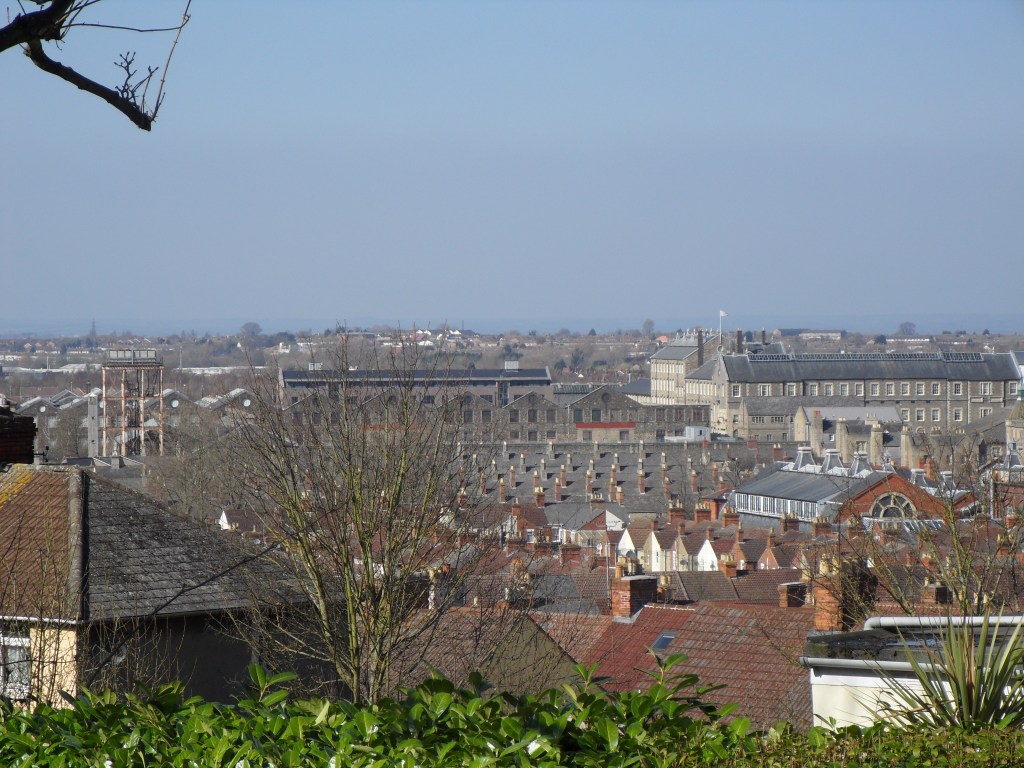
“There’s a nice view from the top of Section D. We could see our house from there as well.”

“That would cost another 21s.”

“What about a headstone? It says here ‘all inscriptions and plans of monuments, tablets, and stones, to be erected in the Cemetery or Chapels, to be submitted to the Board for its approval.’

“Oh, I’d like a pink granite one with fluted pillars and foliage tracery and maybe a verse from a hymn, or perhaps a bit of Shakespeare.”

“You’d better start saving up now then.”

“It’s going to be an expensive business, getting buried in the new cemetery.”

“Well I suppose they’ve got to pay for it somehow.”

The facts …

Swindon Cemetery

List of Fees proposed to be taken by the Burial Board.

On interment of any resident in either of the Local Board Districts in a common grave 5s

For a Vault in perpetuity, to contain four corpses abreast, not exceeding 9ft deep £4 4s

The like, three corpses abreast £3 3s

The like, two corpses abreast £2 2s

If more than 9ft. deep, per foot extra £1 1s

For a brick or boarded Grave, for one corpse only, not exceeding 9ft. deep £1 1s

For re-opening a Vault or Brick Grave 10s 6d

For interments in selected situations £1 1s

Entry in Register of vault or grave in perpetuity 2s 6d

Certificate thereof 2s 6d

For erecting a head-stone 15s

For erecting a foot-stone 3s 6d

For every additional inscription on any stone 10s 6d

For erecting or placing a coffin-shaped tomb, or flat stone, or stone or slate enclosure over the grave, not exceeding 18 inches high (without palisades) £1. 1s

For erecting any other Tomb or Stone, or Palisading only not exceeding 8ft. by 4ft. £2 2s

The like, not exceeding 10ft. by 8ft £4 4s

For enclosing any Tomb or Stone with palisades, any space not exceeding 8ft by 4ft. (extra) £1 1s

The like, not exceeding 8ft. square (extra) £2 2s

On erecting any mural monument in chapels, not exceeding 3ft. by 2ft. £10 10s

For an extra size, subject to an agreement

For Sexton’s Fees

For digging and filling in a common grave for any resident, his wife, or child 3s

The like for an out resident 8s

Every grave to be 6ft. deep, if above, per foot extra 5s

For digging, excavating, and levelling ground over a vault for two corpses, 9ft. deep, and attending burial £2 2s

For every additional corpse 7s

For filling up and turfing when required 2s

For tolling Chapel bell if required 1s

For tolling Chapel bell above one hour extra, and so on in proportion 1s

For Hand Hearse

For the use of a Hand Hearse (without attendants), at the burial of any resident, his wife, or child, time not exceeding one hour 2s 6d

For every additional period of time up to half an hour 1s

For searching register of burials, one year 1s

For every additional year 6d

For each certified copy of an entry therein 2s 6d

All walls of vaults to be nine inches thick and every wall between two vaults to be nine inches thick and every wall between two vaults to be a party wall. All damage to any boundary wall by making a vault or grave to be substantially repaired by the party causing the same.

All inscriptions and plans of monuments, tablets, and stones, to be erected in the Cemetery or Chapels, to be submitted to the Board for its approval.

On interment of non residents all fees and payments to be charged double.

By Order of the Board,

James Copleston Townsend, Clerk.

Any objection to the above mentioned Board Fees to be communicated to the Clerk to the Board, 42 Cricklade Street, Swindon, on or before Saturday, the 20th August instant.

Swindon Advertiser, Saturday, August 13, 1881

RADNOR STREET CEMETERY(2)

The entrepreneurial James Hinton

The re-imagined story …

I will admit to having a grudging admiration for Mr. James Hinton, but I wouldn’t say I actually liked him. We’ve done business together on a couple of occasions and he’s very shrewd. He strikes a hard bargain and you have to respect him for that. And he works hard; the stamina of the man!

He’s been in the news most recently for offering up a piece of land on which to build the new cemetery. Some say he has gifted the land, but in fact he has sold it to the Burial Board. He’d probably like it to go down in history that he was a generous benefactor, but he’s sold it at a very competitive price. As the debacle of the cemetery question needs a quick resolution his fellow members on the Board were happy and grateful to accept the offer.

I’m quite surprised he didn’t win the contract to lay out the cemetery and construct the requisite buildings, but perhaps he didn’t put in a tender. Perhaps that would have been an audacious step too far. Next would have been a vote to name the new burial ground the James Hinton Municipal Cemetery.

But I will admit, I secretly quite admire the man.

Death of Ald. J. Hinton

A painful sensation has been caused throughout the town by the news of the death of Alderman James Hinton, of The Brow, Victoria Road, Swindon…

For some time past it had been known that Mr Hinton had not enjoyed what may be termed the best of health, and on several occasions recently he had to resort to medical care, but no one, even those nearest to him, ever thought for one moment that he would be stricken down with such painful suddenness…

The deceased Alderman was 65 years of age. He was essentially a native of Swindon having been born in Newport Street in 1842. He had been for very many years intimately connected with the moving forces of the Borough, and took a keen practical interest in its commercial developments. There is not a class in the town, no matter what their religious or political opinions may be, but what will deeply deplore the loss of a public man whose best energies were given to the service of the community in which he lived.

The deceased Alderman’s career was one characterised by much interest, inasmuch as by his own industry and business acumen he rose from a somewhat humble position to one of comparative affluence…

The deceased Alderman became well known too, for his judicious speculative undertakings. Important estates, capable of considerable developments, were laid out by him, notable amongst which was the Kingshill building estate laid out in 1879. He became a large owner of land, enterprise dominated his thought and action followed; money flowed in and accumulated, and by dint of patience and perseverance Mr Hinton emerged from the obscurity with which Newport Street and the butcher’s shop had somewhat enshrounded him into the full light of prosperous, active life…

As Mr Hinton became absorbed in the growing interests of the town, further important undertakings came in his way. In conjunction with Mr Haines, he had the contract for constructing the Swindon and Highworth railway, which upon its completion was acquired by the GWR Co. During his speculative undertakings Mr Hinton did not at once relinquish the auctioneering profession, in which he was eventually succeeded by his son, Mr Fred Hinton…

It is about 30 years ago that he was elected on the then New Swindon Local Board, taking the place of the late Mr J. Armstrong, who was for some time Loco. Superintendent at the GWR Works, Swindon…

The old Local Board existed up to the year 1894, when the District Councils’ Act came into operation, and Mr Hinton then succeeded Mr T. Brain as the Chairman of the Council. He represented the East Ward, and did not suffer defeat until 1896, on which occasion he was touring in Australia, and was as a matter of fact unaware that his name had again been submitted to the electors…

In 1900 the Charter of Incorporation was granted to Swindon, and that august body, the Town Council, was constituted. Mr Hinton once again entered the arena of active local life, still representing the East Ward. He was elected a member of the Wilts County Council on its formation in 1889, and was a member of that body up to the time of his death. It was only the other week that he was returned unopposed for the East Ward. He was for four years a member of the Board of Guardians in the time of the late Mr William Morris, who was then the proprietor of the Swindon Advertiser. He was Swindon’s fourth Mayor, and it was, of course, largely in consequence of his associations with the almost phenomenal development of the town that his acceptance of the Mayoralty was invested with exceptional interest…

Mr Hinton was a Freemason, and was a member of the Gooch Lodge. He was also a Forester, being initiated an honorary member of “Briton’s Pride” Court at the Eagle Hotel during his year of Mayoralty…

He was raised to the Alderman’s bench on the same occasion that he was elected to the Mayoral chair. He was a man who possessed a broad and liberal mind, and by his death the town has lost a good and trusted and esteemed servant…

Extracts taken from James Hinton’s obituary published in The Swindon Advertiser, Friday, March 15, 1907.

Cemetery problem resolved

In 1869 the people of New Swindon went to the polls to vote upon the question of a new cemetery. More than 480 votes were cast, 153 in favour of a new cemetery, 333 against, influenced no doubt by the Great Western Railway Company’s announcement that they intended to oppose the proposal.

The Wilts & Gloucestershire Standard reported – ‘The question, therefore, resolves itself into a sentimental grievance on the part of the Dissenters, who object to be buried in the churchyard. The proper course to have pursued would doubtless have been for the Dissenters to form a company, as was suggested by one of the speakers at a former meeting, and not to put an unnecessary tax on Churchmen and Dissenters alike.’

But the cemetery problem did not, and could not, go away. There were more meetings and discussions and William Morris continued to publish letters in his newspaper, the Swindon Advertiser. Then, more than eleven years later the matter appeared to have been resolved, but not without further problems as William Morris discusses in this hard hitting, editorial.

“Swindon, with its eighteen or twenty thousand of population, is drifting, or rather had drifted, into a position which even the smallest of communities might desire to avoid. For long anterior to the time when it was counted a public duty to decently house the living, the work of providing a last resting place for the dead was undertaken, and has always been most religiously adhered to. But Swindon, as we have said, has drifted into that unique, and we do not hesitate to say disgraceful, position of having literally no place to bury its dead.

This, we know, is practically to close all means for burying the dead in the ecclesiastical district of St Mark’s, New Swindon, for there is absolutely no other place beside the churchyard of St Mark’s in which interments can take place.

Then, as to the churchyard of the Old Town district. It has but very little more burying space left than has the churchyard of St Mark’s. So full has the yard become, and so far have the graves advanced westwards, the interments having been commenced in the eastern part and gradually worked on westward, that poor Cook, the unfortunate man who, the other day, was found dead in the snow at Walcot, now lies in his grave within ten or twelve yards of the very spot where he left his cart in Brock-hill on the night of the dreadful snow storm.

It cannot be long before, in the interest of the public health, this burying place also will be peremptorily closed. And what have we then? Absolutely nothing in the shape of accommodation for the burial of the dead out of the population of a parish of from eighteen to twenty thousand inhabitants: Is there in the whole country another town in such a pitiable, or, rather, disgraceful, position?

In addition to the two churchyards, there are, or rather have been – for the bodies have been sometime since removed from one of the places, the ground being required for building purposes – four other burial places connected with Non-conformist chapels – if, indeed, a strip of land, about ten feet wide, between the front of a chapel and a public street, can be called a burial ground. And, then, one of the two remaining graveyards – the old Independent yard, in Newport street, has been closed for very many years, thus leaving one place only in the parish in addition to the two churchyards – the small yard in Prospect belonging to, and exclusively used by, the Particular Baptists, for the interment of the dead of the whole parish, which, on a very moderate computation, cannot be less than from two hundred and fifty to three hundred per annum.

We believe we are within the mark when we say that by utilizing every foot of ground in all the available graveyards in the parish there could not be made room enough for the decent burial of one year’s dead without using ground “over again” and disturbing the remains of those who have pre-deceased friends and relatives still living only a few years.

And this is what a place like Swindon has come to! We hesitate not to say it is simply disgraceful, and when the reason for it all is understood, no right minded person can help pronouncing it contemptible.

The question of providing a public Cemetery is no new thing in Swindon. Twenty years ago it was regularly and persistently advocated on the ground that without such a convenience the inhabitants did not enjoy that full religious liberty to which they were entitled, and which the providing of a public Cemetery would give them. But the insidious priestly intrigues of those who are interested only in the narrowest and most exclusive of sectarian bigotry always succeeded in crippling every effort that was made.

In Swindon, for many years past, there has appeared no possible chance of carrying out so important a work as that of providing a public Cemetery on the simple basis of the duty we owe each other on the platform of equal rights in all matters of conscience and religious liberty.

Again and again, for years past, efforts have been made to avoid the difficulty in which the parish is now placed. Public meetings were held, resolutions passed, and committees formed, but it was always so managed that nothing further could be done. At one time elaborate statistics and statements were read to show that the existing burial space would be sufficient for years to come; at another time the always “sure card” of increased rates and unnecessary expense was played, and always, with the same result as now, a great deal being done “on paper,” but nothing anywhere else.

A loan of £10,000 has been applied for, and that sum the parish – that is, the parish less Walcot and Broome Farms – will have to repay. Land has been secured upon which this £10,000 will be expended in a hurry, and money spent in a hurry on public works is too often little better than squandered. But worse by far than this is the prospect of the parish having a year’s dead thrown on its hands with nowhere to place it. Progress is bound up hand and foot in that most tenacious of all bondages – red tape; on sanitary grounds every burying place in the parish ought to be peremptorily closed forthwith, and men, women, and children will continue to die. The work has now to be done under the most ruinous of conditions, and under the most unfavourable of all circumstances, and for no better reason, we hesitate not to assert, that in the past, reasons, which should have had no influence with reasonable and rational men for one moment, have been allowed to be all powerful and to stand in the way of anything and everything being done.

Extracts from The Swindon Advertiser – Saturday, February 5, 1881.

Just a few of Swindon’s non-conformist churches and chapels

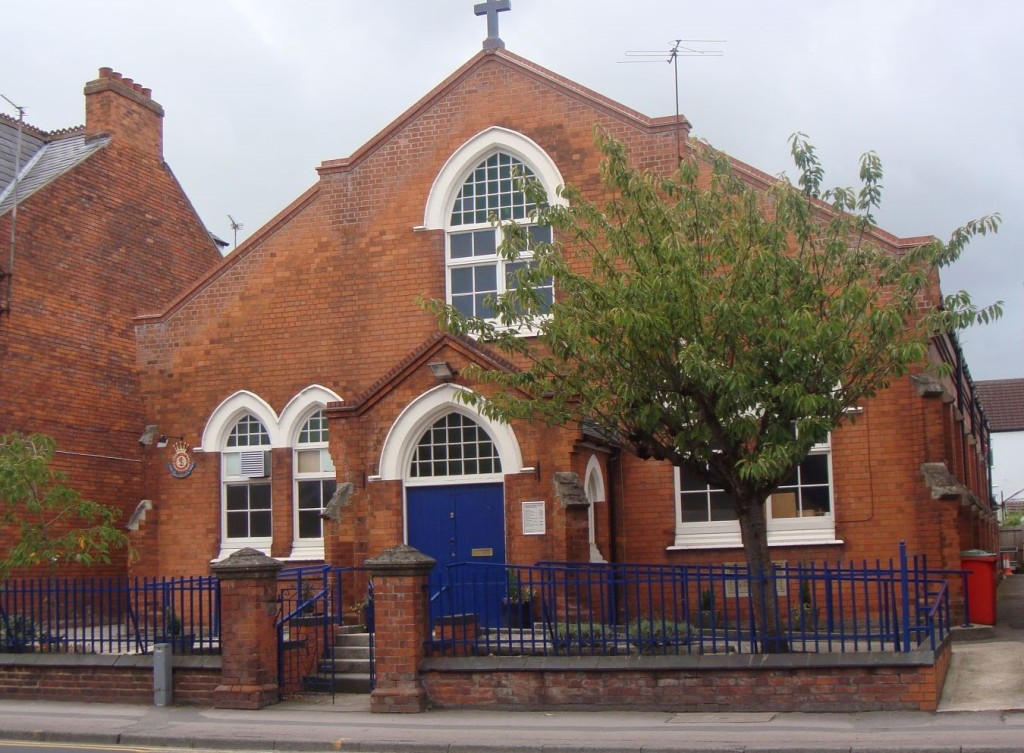
Salvation Army Citadel, Devizes Road

Rodbourne Baptist Church

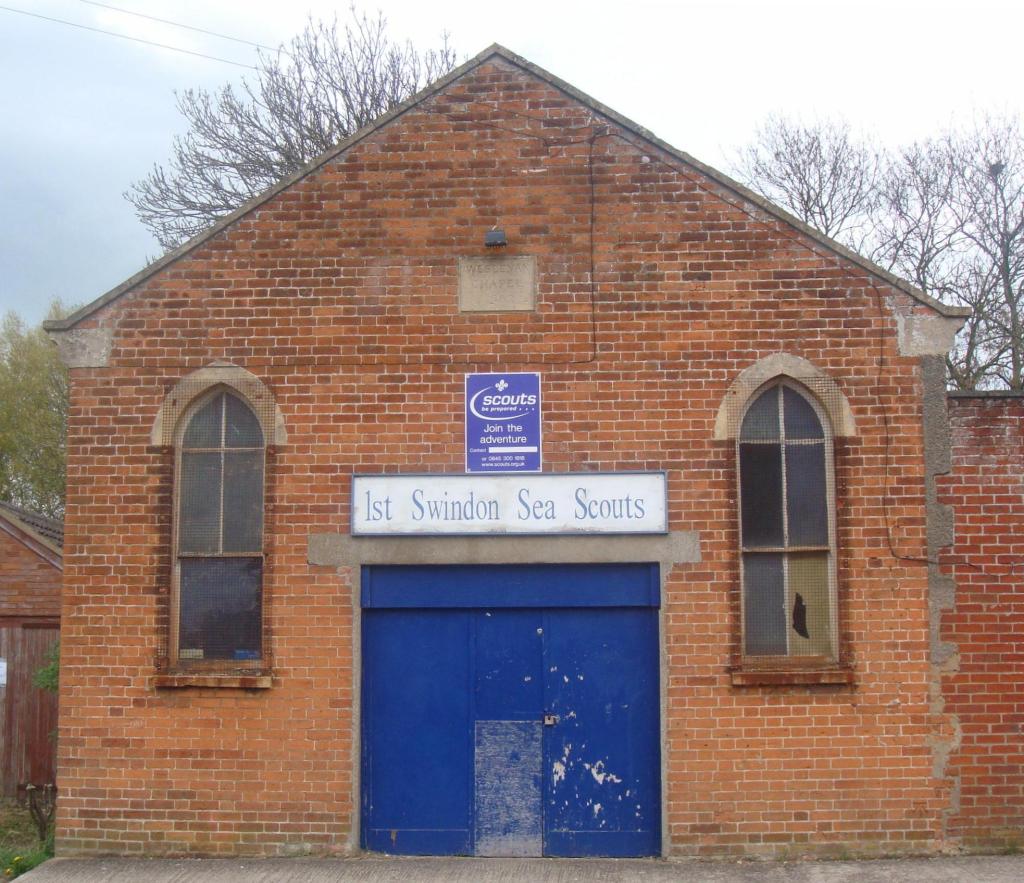
Wesleyan Chapel, Haydon Wick

Moravian Church, Dixon Street

A few more words …

At the beginning of our cemetery walks Andy makes a short introduction and then hands over to me to say something about the beginnings of the cemetery.

I recently found some additional information on the UK Parliament website which you might find interesting.

Burying the dead

Six foot under

In 1666, and again in 1679, Parliament ordered that all bodies should be buried in a shroud of woollen cloth. Though chiefly intended to stimulate the English woollen industry, the measure remained on the statute book until it was repealed in 1814.

The practice of digging graves to a depth of six feet goes back at least to the 16th century and is believed to be a precaution against plague.

Regulations now specify that there must be a layer of earth of at least six inches between each coffin in a grave and that there must be at least three feet (sometimes two feet) between the final coffin and the surface.

Nonconformists and Catholics

Until town cemeteries were set up in the mid-19th century, most burials took place in parish churchyards. The Church of England provided burial space both for its own members and for those of different faiths – such as nonconformists, Catholics and Jews – but burials had to be conducted by Anglican clergymen in accordance with the prayer book service.  

In the larger towns, however, non-Anglican groups set up their own burial grounds where they could hold the services specified by their own faiths and denominations.  

In 1880, after many years campaigning by nonconformists, Parliament passed the Burial Law Amendment Act, which removed the obligation to follow the prescribed form of service for burial in Anglican churchyards.  

This was of particular importance in parishes where there was no nonconformist or Catholic burial ground nearby.

Suicides

Suicides were traditionally buried at a crossroads, sometimes with a stake through their body. This barbaric practice was condemned in Parliament in 1822 after the foreign secretary, Viscount Castlereagh, committed suicide but was buried in Westminster Abbey.  

An Act passed in 1823 allowed suicides private burial in a churchyard, but only at night and without a Christian service. A review of the law resulted in a new Act in 1882 allowing burial in daylight hours. Parliament did not decriminalise suicide until 1961, despite the fact that it had been suggested in 1823.

Shall Swindon have a Cemetery?

The history of Radnor Street Cemetery began long before James Hinton sold the 11½ acre plot of land on Kingshill; long before popular local architect W.H. Read was commissioned to design the cemetery and Messrs. Phillips and Powell and George Wiltshire won the contract to lay out the ground and construct the requiste buildings.

Read here about the campaign that began in earnest in 1869 – more than ten years before the cemetery was built.

A CEMETERY FOR SWINDON. The question, shall Swindon have a cemetery, and in this matter be put on a par with other towns and villages? has again cropped up.

There no single question where the principles of right and good taste are more clear than they are in this question of a public cemetery. There is no call made by the religious liberty we as a nation enjoy more emphatic than is the call that each religious denomination should enjoy the right to consign its dead to the earth after its own fashion. Yet there are to found those who can stand in the way of this right being granted, and who can prate loudly about increased burdens on the shoulders of the poor, and such like prattle, without the real interests the poor  being for one moment seriously thought of, and we are therefore to see a pretty squabble before this question, ” Shall Swindon have a Cemetery” is settled.

A short time since a proposition was before the nonconformist bodies of our town for providing a purely unsectarian cemetery, open to all parties, influenced by none. This plan it was perfectly within the power of those whom it would have served to have adopted, and have made successful. Had it been adopted it would have carried with it this recommendation—it would have been in strict conformity with the very principles of nonconformity: it would been established on purely independent grounds, and no man against his will would been compelled to pay a single farthing.

But no sooner was this independent course suggested to those who profess to love and live by independency, than there were found those who could cry out most lustily, “We don’t want to be independent; let tax others for that which we are asking.” The scheme was in consequence knocked in the head, and now we have the question, “Shall a cemetery be provided by a rate on all property within the parish claiming the attention of ratepayers.”

There is this to be said in favour of the proposition as it now stands before ratepayers: a public burying place is a public necessity, and should, therefore, be provided for out the most broadly collected public fund we have. The public weal demands that the dead body should be at once consigned to the earth this being so it surely can be no act of injustice if we call upon the public purse for funds to accomplish that which the public weal demands.

There is another aspect to this question to which we need not refer beyond this: In a town like Swindon, with its two churches, established as by law, and its twelve chapels, established in conformity with the consciences of men, that religious liberty upon which we so much pride ourselves, and which has been fought for, through many generations, cannot said truly to exist among us long as we are deprived of the opportunity of burying our dead after our own fashion; so long as it remains the power of one man to harrow and distress the feelings, by an arbitrary act. Of those who dare to hold independent views on some mere matter of detail in the great scheme of God’s religion. But, as we have said, we are to have a fight over this cemetery business, and Saturday next is appointed for the first great marshalling of the forces.

There was a skirmish on Saturday last, but it was mere babbling piece of business; the fight has yet to come.

Extracts taken from a report written by William Morris and published in The Swindon Advertiser Monday February 1, 1869.

James George Merricks

James George Merricks has already appeared on our radar, thanks to Rhonda and her Astill family history research.

She tells us that Amy Maud Astill’s husband Arthur Mills was assistant to Mr Merricks of Gilbert’s Furniture shop in Newport Street, Swindon in 1900, becoming a partner in the business in 1923 and moved the shop to Bridge Street, Swindon and renamed it Mills and Merricks – of course Gilberts is still trading in Newport Street to this day, perhaps Arthur and James became partners in an independent venture.

Now I need someone to fill in a few more gaps, such as how did James end up in South Africa in 1891 and what was Alice doing there?

In 1881 Alice was working as a governess for farmer Walter G. Cloke at Wiltshire Farm in Wokingham. Meanwhile James was working as a draper’s assistant in Bath. But by 1891 they were getting married in South Africa where three of their four sons were born, Eric George in 1892, Edward Alfred in 1893 and Lionel Marten in 1896. A fourth son, John Gordon was born in Swindon on June 14, 1900.

James George Merricks

By the time of the 1901 census James and Alice were living at 42 St. Margarets Road, possibly where this photograph was taken in the back garden.

James George Merricks was a member of the Baptist Tabernacle, acting as Treasurer for 21 years. In 1934 shortly before his death, Mr J.G. Merricks presented a complete set of individual Communion bread plates to fit the cups previously given by his great friend and associate Mr. E.J. Lay. The two men are pictured together here.

There is still more to be learnt about this man. Especially how he came to spend such a lengthy spell in South Africa. Could this have been to do with the Baptist Tabernacle, I wonder?

James George Merricks died aged 75 years at his home 38 Devizes Road. He was buried on April 20, 1935 in grave plot E7574, joining his wife Alice who died in November 1923.

Cemetery Walk

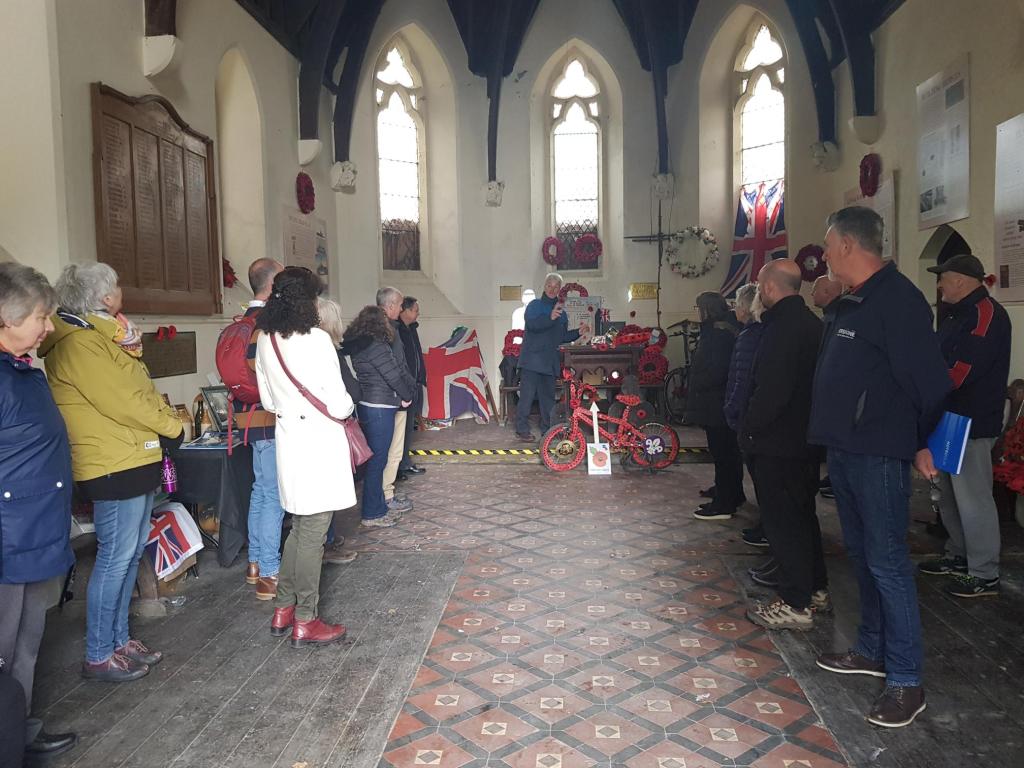
We had torrential rain, thunder and eventually beautiful sunshine on our guided cemetery walk yesterday, during which we welcomed regular and new cemetery followers.

Kevin updated us on the work of the CWGC Eyes On Hands On team and in honour of the forthcoming 80th anniversary he spoke about Private Kenneth William Scott-Browne, killed in an air accident during D Day training.

Here are some photos from the day.