Daniel Campbell McBeath Walker

Daniel Campbell McBeath Walker was born on October 5, 1834 according to his GWR employment records. The sister with whom he lived, Charlotte Hartford Walker, was born in 1825 in Edinburgh, the daughter of Duncan Walker and Elizabeth McBeath so it is probably safe to assume similar facts apply to Daniel.

He first joined the Great Western Railway as a clerk on July 19, 1870 and in 1871 he was boarding with the Brooks family at 3 Eastcott Lane. However, ten years later he was living at 7 Hill Street, Bedminster with his two sisters Charlotte Hartford Walker, an upholsteress and Sarah McIntyre Walker, a Lady’s Maid.

Returning to the GWR employment records, Daniel re-entered the company on January 2, 1882. He was 48 years old. In 1895 he was living with his sisters at 16 Eastcott Lane.

The following inquest was held to establish the events of his traumatic death on May 30, 1895, some of the details are too distressing to be published here and have been omitted.

On Thursday morning Mr W.E. Nicholson Browne, County Coroner, held two inquests at Swindon. The first was held at the “Globe” Tavern, Old Swindon, touching the death of Daniel Campbell Walker, a clerk in the GWR Works, residing in Eastcott Hill.

Charlotte Hertford Walker was the first witness called. She said deceased was her brother, and his age was 60 years. He was a clerk in the GWR Works but had not been to work since Tuesday week. He had a fall in the Quarries about ten days ago, which shook him up a great deal, and he went to Clevedon with witness, and returned on Tuesday last. He had suffered from fits some 12 years ago. About 5 years since he was confined in Dr Iles’ private lunatic asylum at Fairford for some thirteen weeks. The witness also said that his (deceased’s) second brother committed suicide in the same manner. Deceased had a religious mania. He went to bed about 10 o’clock on Wednesday night, when he was very calm and collected. She (witness) looked into his bedroom about seven o’clock Thursday morning, when he seemed to be asleep.

The jury, of whom Mr Job Day was foreman, returned a verdict of “Suicide whilst in a state of temporary insanity.”

Extracts from The Swindon Advertiser, Saturday, June 1, 1895

Daniel Campbell Walker of 16 Eastcott Lane was buried in Radnor Street Cemetery on June 1, 1895. He is buried in grave plot B2407, a public grave. His sisters remained living in Swindon until 1903 when Sarah died and was buried in grave plot B2409, another public grave and close to her brother. Charlotte returned to Bristol where she died in 1907 and was buried in Ridgeway Park Cemetery.

A Bench with a View

It was a blustery Monday at the cemetery with a chill in the air and rain on the wind, but it didn’t prevent me from stopping at my favourite bench.

There are four benches (I’m honour bound to keep the 4th one secret) in the cemetery; but this is my favourite one with a view across what was previously known as New Swindon, a railway town.

Here the eye is drawn to the housing development built in the early 2000s on the site of the ‘A’ (Erecting) Shop. A Shop covered more than 11 acres (coincidentally the same size as Radnor Street Cemetery) and was one the largest covered workshops in the world. The red brick apartment blocks, clearly seen from the bench, and the surrounding houses are named in honour of George Jackson Churchward Locomotive Works Manager at the GWR Swindon Works 1902-1916 and Chief Mechanical Engineer from 1916 until his retirement in 1922.

From this bench you can see what remains of the 19th century railway works, more familiar to a younger generation as the McArthur Glen Designer Outlet Village and the railway village, the company houses once home to the early workforce. So many of those railway men and their families moved up the hill to rest in peace in this cemetery.

It was at this bench that I composed the ghostly story of Edie and her soldier son – a tribute to one Swindon family, yet typical of so many others.

This is my favourite bench. Perhaps we’ll meet here one day.

Elizabeth and George Atkins – reunited

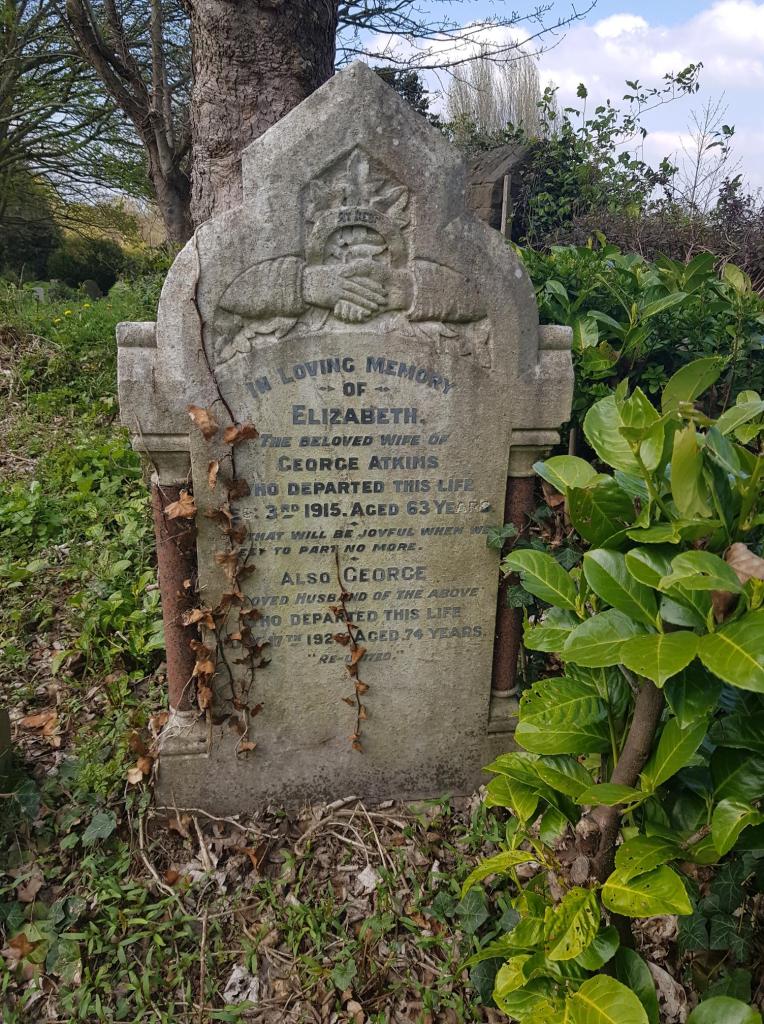
In recent years the hedge on the periphery of the cemetery has engulfed this headstone, so it was fortuitous that I was passing just after it had been trimmed and was able to take a photograph. A very elegant memorial, this headstone is full of funerary iconography and symbolism and tells us much about the couple’s relationship and religious faith.

The clasped hands is a symbol dating back to Greek and Roman funeral art. Interpretations of this symbol include the parting of a couple by death but also their reunion in the afterlife. In this example the hands are surrounded by ivy leaves which in turn represent friendship and immortality. The columns at either side of the inscription represent the entrance to heaven and the afterlife. So there is quite a lot going on here!

It would be fair to assume that the couple had a strong faith.

Their marriage banns were read at Christ Church but the marriage does not appear to have taken place there. Their first two children were baptised at the Faringdon Road Wesleyan Chapel where the couple worshipped and where they could possibly have been married.

By 1881 they were living at 7 Mount Pleasant, a short terrace of houses situated between Havelock Street and Brunel Street, lost beneath the 1970s development of the town centre. Originally from Birmingham, George worked as a brass finisher in the railway factory.

By 1891 George Elizabeth and their four children, Grace, John, Joseph and George were living at 92 Westcott Place. They would later live at 166 Westcott Place where Elizabeth died in 1915.

Elizabeth, aged 60 years, was buried in grave plot B3329 on December 8, 1915. George died aged 74 years at 49 Shelley Crescent (most likely Shelley Street) and was buried with Elizabeth on July 21, 1926. Elizabeth and George Atkins, reunited.

Dr Charles Reid – Scottish rugby international

Following the nail biting Scotland victory over Wales 27-26 in the opening weekend of the 2024 Rugby Six Nations, I am republishing the story of Dr Charles Reid, Scottish International, who is buried in Radnor Street Cemetery.

Edinburgh Academicals – Charles Reid pictured seated middle row 4th from left

Charles Reid was born January 4, 1864 at Lochwinnoch, Renfrewshire, the youngest son of John and Margaret Reid. By the age of 17 he stood 6ft 3ins tall and weighed in at around 15-16 stone.

He played for Edinburgh Academical Football Club, the oldest rugby club in Scotland and the second oldest in the World, which he captained from 1883-1888, beginning his international career in 1881.

Charles Reid’s first cap published courtesy of Edinburgh Academicals

He was 17 years and 36 days old when he was first capped in 1881, the first schoolboy to play in a forward position in an international match. He went on to captain Scotland to 17 wins in 21 games. He was known for his skilful play and his ferocious tackling and today many rugby pundits place him in their ‘fantasy rugby team.’

Charles Reid continues to be a national hero in the history of Scottish rugby and he’s buried here in Radnor Street Cemetery. Perhaps I should let Finn Russell (Bath Rugby and Scotland) know.

Death of Dr. Reid

Well known Medical Practitioner

A Great Rugby Football Player

Famous International

The news of the death of Dr. Charles Reid, partner with Dr. J. Campbell Maclean, of Swindon, was received with unfeigned regret on Tuesday last. Deceased, who was only 45 years of age, passed away at a Surgical Home in London on Monday night, whither he had undergone several operations of a painful malady. He had been in failing health for some time, but the end came somewhat suddenly. Dr. Reid lost his wife by death about four years ago after being married only 18 months.

Deceased was born in Scotland, and was educated at the Royal Academy, Edinburgh, and subsequently studied at Edinburgh University. He secured the degree of M.B., and of C.M. (Edinburgh) in 1883, and practised for some time at Selkirk, where he fell into bad health. He then lived at Craigie with Mr. Campbell for several years, and in 1903 came to Swindon to join Dr. Maclean. He then married, but his wife died 18 months later.

Dr. Reid was an able practitioner, and his opinion was held in high estimation by members of the profession. With patients he was most popular.

Dr. Reid was in his early days a great athlete, and he captained the Scottish Rugby team for many years and possessed no less than a score of International caps. He was the great Edinburgh Academical and Scottish International forward of the early eighties. A new football generation has grown up, but the twenty times capped giant forward is far from being forgotten across the border, he being spoken of as perhaps the greatest forward Scotland ever produced.

The fact that his death took place at the comparatively early age of 45, brings the reminder (says an Edinburgh correspondent) that he was barely 17 when he played against England in 1881 for the first time, and he was only 24 when he retired from football. From 1883 to 1888 he captained the Edinburgh Academical team, and in his last two International matches no fewer than five of the Scottish forwards were Edinburgh Academicals.

The funeral

The mortal remains of the deceased were brought to Swindon on Wednesday night, and the interment took place in Swindon Cemetery this afternoon, where lie the remains of his late wife.

The Swindon Advertiser, Friday, October, 29, 1909.

Dr Charles Reid was buried on October 29, 1909 in grave plot E8478. He had died following a surgical procedure in London. His body was returned to Swindon to lie next to his wife here in the cemetery.

Dr Charles Reid’s medical practice was at 32 Wood Street where he had been based for some four years. His medical qualifications were registered at the University of Edinburgh in 1888. He worked for sometime in Selkirk where he met and married Catherine Louise Steedman. Sadly, Catherine died just 18 months later after their arrival in Swindon.

Swindon Cemetery – practically free of debt

In 1913 the Swindon Ratepayers’ Association met to discuss how the local authority was handling some major projects, including the Swindon (Radnor Street) Cemetery.

Generally speaking things seemed fairly satisfactory. Thirty years after the opening of the cemetery they were happy to reveal it was ‘practically’ free from debt.

There was one last comment in reference to the amount originally paid for the 11 acres of land purchased on which to lay out the cemetery. In 1881 the land was owned by entrepreneurial local businessman (and Local Board Member) James Hinton who was always quick to recognise a profit making opportunity.

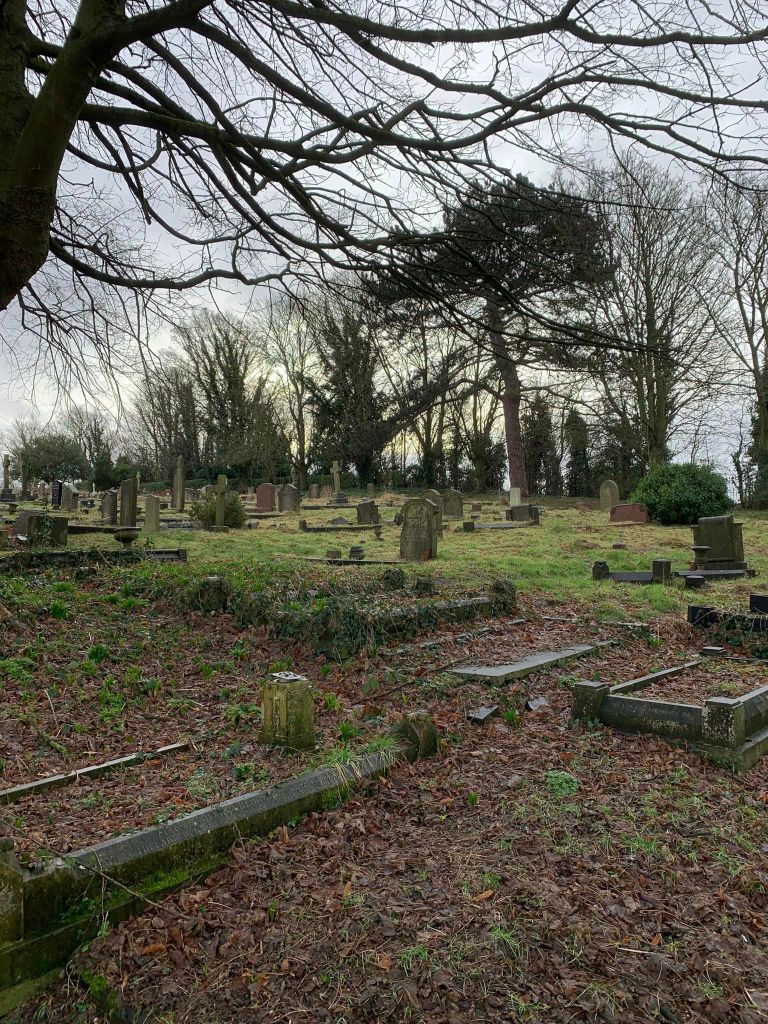
A ‘working’ cemetery is one thing, a closed one quite another. A working cemetery has expenses but it also has an income. Unfortunately, Radnor Street Cemetery, closed to new burials for some 50 years, generates no income and in these straightened financial times there is little public money left for maintenance.

There is a lot of excitement within Swindon Borough Council about the imminent opening of the ‘new’ museum in the Civic Offices, Euclid Street. In this new (and very welcome) climate of heritage appreciation perhaps Radnor Street Cemetery will soon bask in the glory too.

Municipal Matters

Meeting of the Swindon Ratepayers’ Association

A meeting of the Swindon Ratepayers’ Association, convened to discuss three questions of absorbing interest to those concerned in the government of the town – the Poor Law administration, the derelict canal, and the various undertakings of the Council – was held at the Town Hall on Wednesday evening. Major F.G. Wright presided…

As regards the Swindon Cemetery, it is now practically free from debt, the annual charges for interest and sinking fund on a small out-standing loan only amounting to about £27 per annum.

As you are aware, we have purchased land for a new cemetery at Whitworth Road, which is now being laid out, and which will be ready for use probably by next spring. Before the new cemetery was purchased, the loss on the Swindon Cemetery every year used to amount to something a ½ d rate. Last year, nothwithstanding the increased charges arising out of the purchase of the new cemetery at Rodbourne, instead of being a loss, there was a slight profit after paying all working expenses and interest and sinking fund charges. This was brought about by a revision on the scale of charges in the Swindon Cemetery, etc., the income for the past year on the Swindon Cemetery being no less than £923, as against £621 in 1910, £638 in 1911 and £856 in 1912. Of course, this will not continue in future years, as there will be additional working expenses when the new cemetery is opened.

Only 10 acres of land are at present being laid out at the Whitworth Road Cemetery, but this is expected, will last at least 20 or 30 years. The total area of land purchased in 35 acres, and the remainder will be let out and will produce an income. The Swindon Cemetery will also last for a great many years yet. The purchase money paid for the 35 acres of land at Whitworth Road was £3,016, while the purchase money for the 11 acres at Swindon Cemetery was £3,970. I leave you to form your own opinion on the favourable nature of these transactions…

Extracts from the North Wilts Herald, Friday, October 31, 1913.

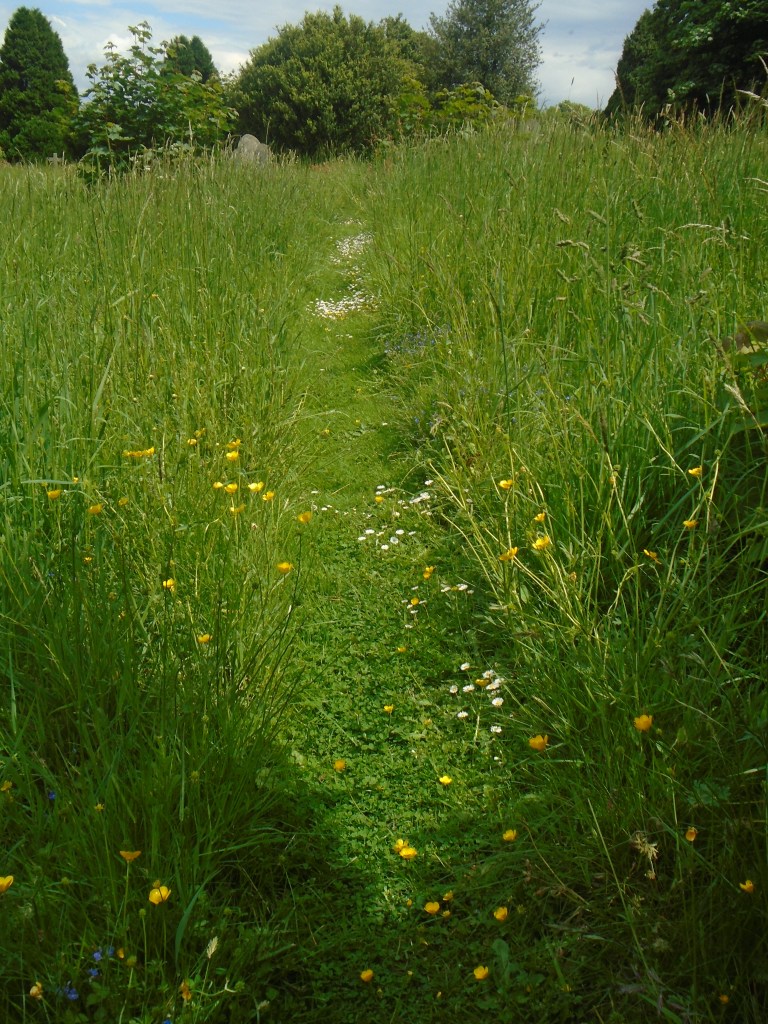
Cemetery volunteers at work clearing the paths

Cemetery volunteers maintain mown paths creating access to the Commonwealth War Graves Commission graves.

Views of a Spectator

If, like me, you enjoy walking through old cemeteries and reading the inscriptions on the headstones you will find the views of this ‘Spectator’ thought provoking. At the beginning of 1881 the cemetery question was upper most in the thoughts of many Swindonians.

A cemetery should be a wooded garden, with walks and avenues and glades according to its size, and not, as in most villages now, a stonemason’s yard, studded with squat temples and tombs, or with tall, meaningless headstones so mouldy that it would be nearly impossible to read the inscriptions, even if the undertakers did not have them made as illegible as possible, in order to “make business” of the work of cleaning them out. These headstones are the destruction of all beauty or solemnity in a graveyard. Nothing uglier or more meaningless in form has ever been conceived by man, and nothing worse adapted for exhibiting an inscription. If they are upright, they gradually sway out of the perpendicular with their own weight; and if they are flat, they destroy the reverential vegetation which else, without means, watchfulness or exertion, would, but for the stones, clothe the surface of the grave. They are, besides, utterly needless. What is required by each grave is a number cut in granite – cut solid, we mean, not out of granite – a number distinguishable for centuries, and referring to a granite tablet, which need not be more than six inches by a foot, with an inscription identifying, describing, and, if you will, praising the dead. – Spectator

The Swindon Advertiser, Monday, January 3, 1881

Swindon Borough Council workers have recently done a grand job at the cemetery. I am sharing here some photographs taken by Kevin a CWGC and dedicated Radnor Street Cemetery volunteer.

This path clearing project is a work in progress by our own dedicated volunteers

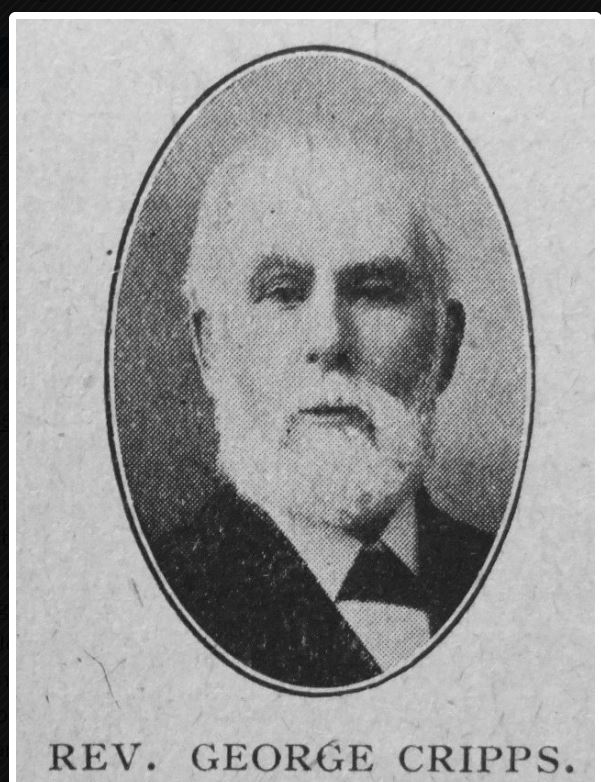
George Cripps – Primitive Methodist Minister

George Cripps was born on May 2, 1839 in Badbury and baptised on May 26 at Chiseldon Parish church.  He was the son of James and Sarah Cripps and when aged just 15 he dedicated himself to a life of Christian service. Within months of his conversion he was preaching on the local circuit and embarked upon a long career as a travelling preacher. He began his ministry in Witney in 1861 travelling the country and serving in various circuits including those at Andover, Thetford and Ipswich before returning to Swindon in 1897.

In 1866 he married Ursula Ellen Bayman and the couple had six children, two of whom had sadly died before 1911. Their son Raymond George Cripps married Beatrice Maud Raggett, a member of another prominent local Primitive Methodist family, and went on to become Mayor of Swindon in 1938-39.

George retired to Swindon where he worshipped at the Prospect Place Primitive Methodist Chapel. In 1901 he and Ursula were living at 134 Goddard Avenue. George died at his home on August 25, 1920 and was buried in grave plot D300 which he shares with Ursula who died in 1918.

A lengthy obituary written by Joseph Burton was published in the Primitive Methodist Magazine in 1920 – extracts can be read below:

After a period of further preparation, involving much thought and prayer, he commenced his life’s work as a minister of the glorious gospel of our Lord and Saviour Jesus Christ in 1861. The Witney Circuit pledged him, and he laboured with considerable success and acceptance on the Sturminster Newton, Faringdon, Andover, Newbury, Basingstoke, Thetford, King’s Lynn, Wangford, Ipswich, Tunbridge Wells and Guildford Circuits.

There were many preaching places on most of these circuits, covering a wide area, and sometimes necessitating a walk of fifteen or sixteen miles each way. Besides the ordinary week-night work, our brother frequently preached three and four times on the Sabbath. He built five chapels and reduced debts on others. It seemed to be his lot to have to grapple with such cases, but with indomitable perseverance and tact, he generally succeeded. At Ipswich, where I first formed his acquaintance, he waited upon a gentleman with the intention of getting financial help, but was unable to see him. He called again—twenty times—before he was granted an interview. The gentleman said: ‘‘I believe you have been before.” Our brother replied that he had called twenty times, and should call again unless he got what he desired. The gentleman bade him sit down, and retired to another room. Presently he brought a cheque for £20—a pound per visit—as a reward for his pertinacity, and, told him whenever he needed help, he could call again. 

The same zeal was in evidence for winning souls. Well do I remember as a probationer, the Saturday evening open-air services, with sometimes opposition, sometimes police interference; but if we were moved from one place it was to begin again elsewhere: the singing and exhortations went on, and, we had reason to believe, were made a blessing to souls.

He got the Free Church ministers to join him in a mission in connection with our Rope Walk Church, and as they proceeded down the Rope Walk, headed by a brass band, it was the signal for a tremendous opposition that required the whole of the town’s police, except two, to quell. But not before much damage was done. They smashed the windows of the chapel, brick-ends falling on to the platform, and those who had ventured inside the chapel had to be got out by the back door and through the caretaker’s house. Happily no one was seriously hurt. The windows were boarded up, and the mission proceeded for some weeks, leading ministers and friends of other Churches taking part. The riot was due to a misapprehension that the Salvation Army were beginning their mission in the town, but it turned out for great good, many souls professing conversion.

It was while on the Tunbridge Wells Circuit, under the strain of heavy chapel liabilities, and special services—including mid-day services to men during their dinner hour—that his health broke down. His condition was so serious that his medical adviser ordered a sea voyage to New Zealand on a sailing vessel. In a crisis of this kind, one sometimes discovers that: some of God’s servants have been watching the struggle. It was so in his case. One friend secured his passage, others sent useful presents for his comfort on his voyage, and almost weekly, during an absence of eleven months, never failed to minister to his wife and family. On his return it was found there was very little improvement in his health. The Conference of 1887 stationed him at Guildford, from whence he superannuated in 1892, having travelled thirty-one years. He settled down in Swindon. Though broken in health and a great sufferer, he served nine years on the Swindon Board of Guardians, and preached in nearly all the, Free Churches in the town. His wife, never strong in health, but a great helpmate on his circuits, ideal in the home, hospitable and very kind, predeceased him in 1918. Most of the time after her death he was obliged to remain indoors, and latterly was confined to his room suffering from a complication of diseases—uncomplaining, bright, cheerful and hopeful in spirit, and heartily responsive to prayer and spiritual conversation. 

Image published courtesy of My Primitive Methodists

You might also like to read:

Raymond George Cripps – first Mayor to be invested in new Civic Offices

Archdeacon Samuel Christelow – missionary

Samuel James Christelow was born in 1883 the son of John Christelow,-  a boilermaker, and his wife Priscilla. He was baptised at St Mark’s Church on November 30, 1879 and grew up at 42 Wellington Street, a property that remained the family home for more than 70 years. After several years working in the railway factory, Samuel Christelow travelled to Zimbabwe where he was ordained. In 1938 the Rev Christelow returned to Swindon for an extended holiday with his family.  A reporter from the North Wilts Herald interviewed Rev Christelow at the home of his sister and brother in law in Goddard Avenue.

Home From South Africa.

Archdeacon’s Five Months’ Leave

Native of Swindon

After a trip from South Africa aboard the Llanstephan Castle, the liner in which a mystery illness caused four deaths on the way, Archdeacon Samuel Christelow, of Southern Rhodesia, has arrived in Swindon on five months’ leave. image Swindon born and bred – he is an old Sanford-street scholar – Archdeacon Christelow has been working in the mission field in South Africa for 30 years, that time being spent in periods of five years in the Dark Continent broken up by spells on leave.

Plenty of Travel.

The diocese of Southern Rhodesia includes part of Bechuanaland, Mashonaland and Matabeleland, and the Archdeacon is also Director of Missions for the whole diocese. This mission work affords him plenty of travel – chiefly by car – throughout the whole territory in which are one and a half million natives and 65,000 whites. The whites are chiefly concentrated in Salisbury and Bulawayo. A good deal of translation work occupies Archdeacon Christelow’s attention, for he has an excellent knowledge of the languages of the country. He speaks Chishona, the language of Mashonaland, Zulu in Matabeleland, and Sechuana, which is spoken in Bechuanaland. “I learned the languages fairly quickly,” he told me. “I used to have to go off on trips lasting several weeks with natives who could not speak a word of English, so of course I had to learn. Most of my journeys then were done on foot, although I sometimes had a horse, but these animals were inclined to get horse sickness. We had to take all food with us to last for journeys of several hundred miles, covering about 25 or 30 miles each day. Occasionally, of course, I was able to shoot some game.”

Native Problems

Of the changes which had taken place in his 30 years’ experience of the country, Archdeacon Christelow said: “The attitude of the Government towards mission work has changed. It is much more sympathetic and shows it in various ways; among them it has started a scheme for providing medical aids for there is very little medical work indeed, most of it having been done by the missionaries, who also had to fill the roles of dentists, builders and carpenters. “The Government has also begun a series of clinics. Extracts from the North Wilts Herald, Friday, 4 March, 1938. samuel-james-christelow Widowed and retired he returned to Swindon where he lived with his sister Rosa at 125 Goddard Avenue. He died in St Margaret’s Hospital in 1972 and is buried in plot D1587. You might also like to read: Up at the Castle  
The Summer Cemetery

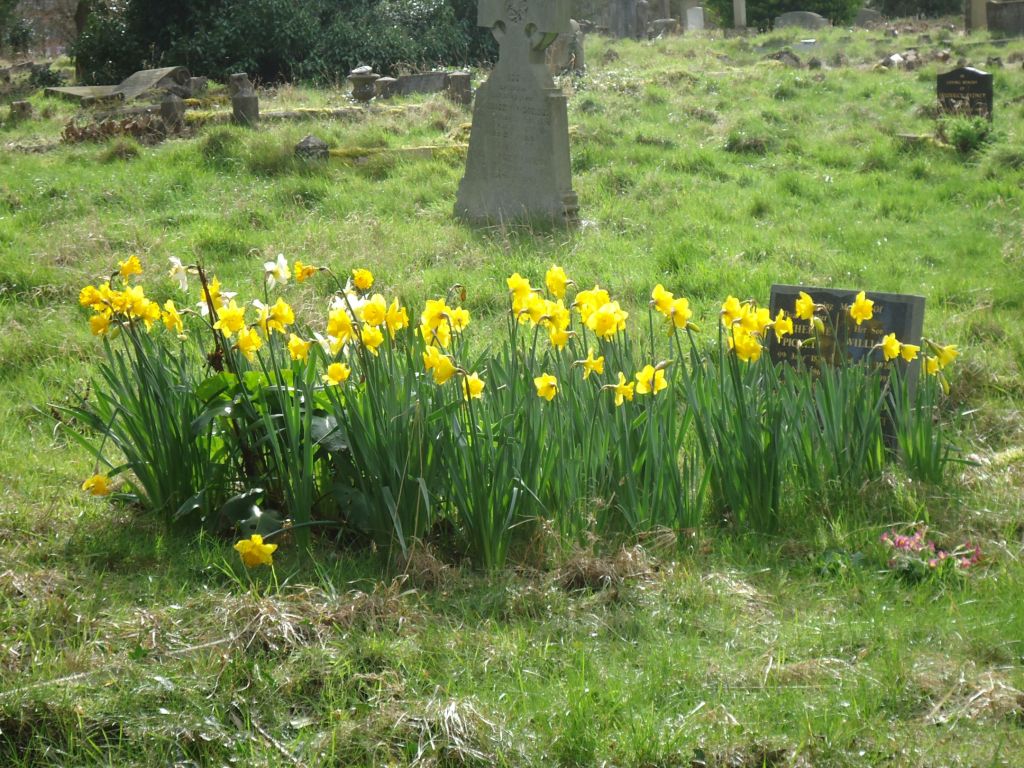
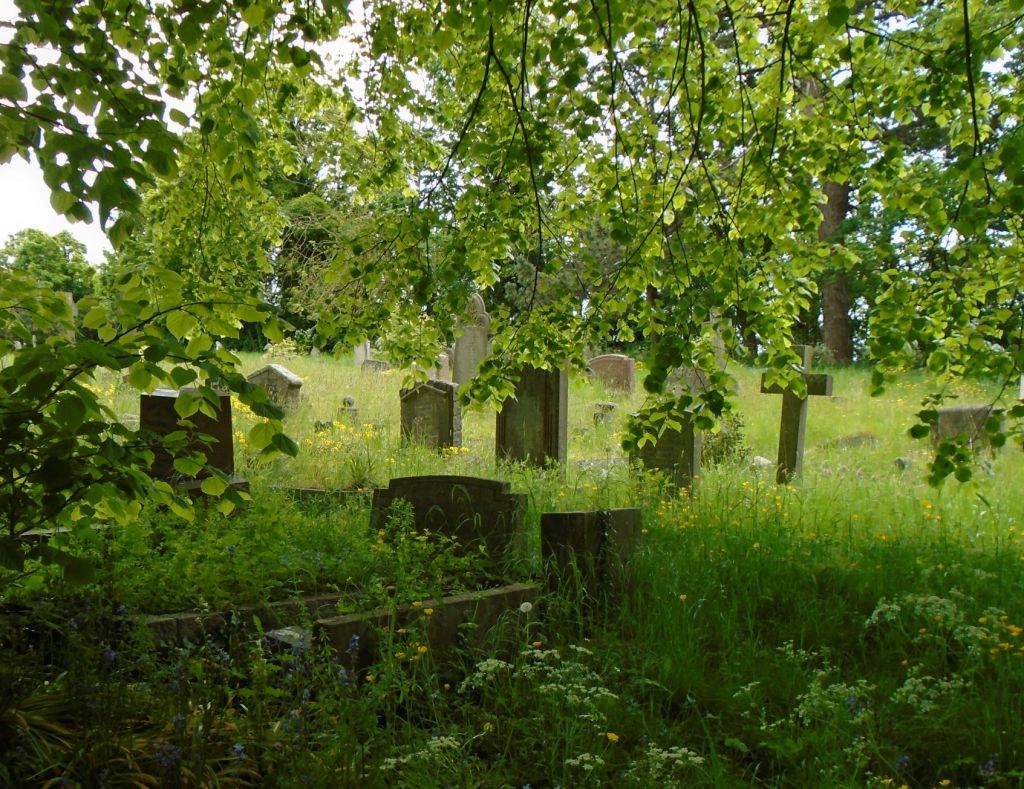
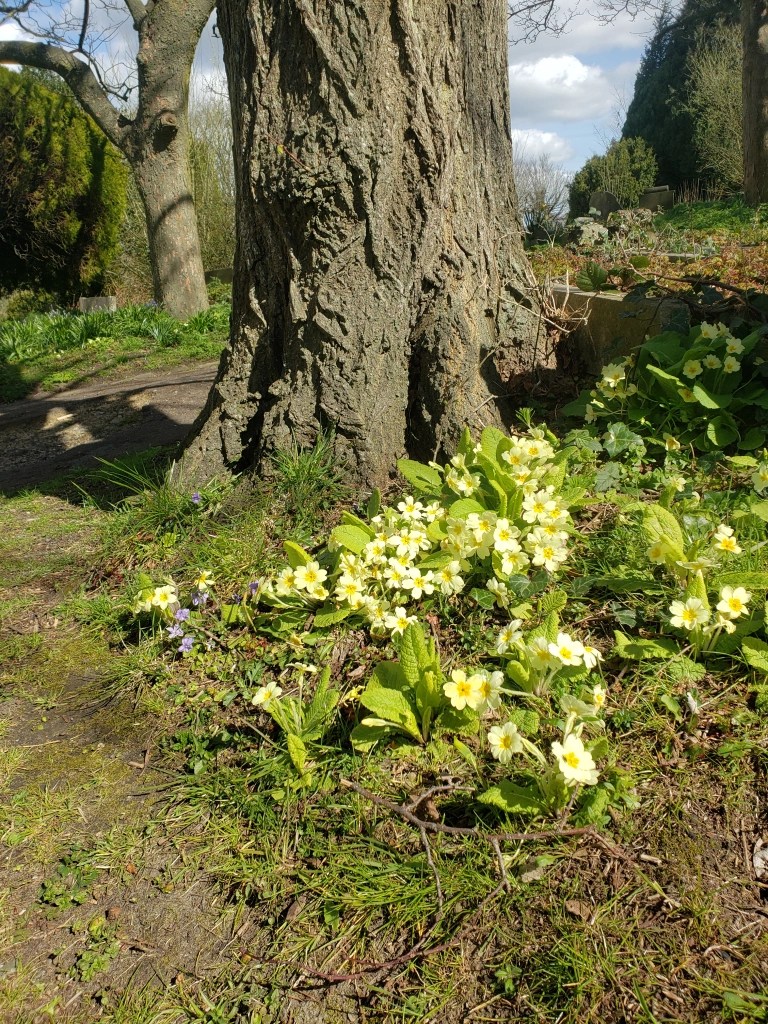
Listening to Storm Jocelyn battering Britain, I’m looking forward to kinder, calmer climes. While the bluebells hunker down and the ox-eye daisies rest their roots, let’s revisit the summer cemetery.  With our guided walks paused during the winter months, we are compiling our 2024 calendar of events – dates to be announced soon.

Meanwhile, you might like to check out our video page where you can see Noel’s sunny reports from New Zealand.

Albert and Elizabeth Beak – safe in the arms of Jesus

Albert George Beak and his wife Elizabeth (Eliza), devout members of the Baptist Church, died within 12 hours of one another. They were not old; he was 35 and she was 44. Without ordering their death certificates I do not know their cause of death. They left four orphaned children – Herbert 12, Albert 10, Clara 6 and four year old Sydney. I had hoped they were taken in by family members, but this does not appear to have been the case.

I discovered the two younger children Clara and Sydney on the 1901 census living in the Mueller Orphan Houses, Ashley Down Bristol. The Mueller orphanage was founded by Prussian born evangelist minister George Mueller. Mueller founded his first home for orphans in Wilson Street, Bristol in 1836. By 1870 the number of destitute children had increased to such an extent that Mueller built additional homes to accommodate more than 2,000 children.

The two older boys were more difficult to trace. I discovered two boys fitting their description on board the SS Sardinia with a number of unaccompanied children and young boys bound for Quebec on June 27, 1895. Could Herbert and Albert have been among more than 100,000 “home children” sent from Britain to Canada between 1869-1939 as part of a child emigration movement?

What happened to them is difficult to discover. There is a Herbert Beak who died in Devizes in 1909 aged 27. Could this be the elder brother, returned home? It would seem that Albert remained in Canada until 1946 when a man named Albert Harry Beak born ‘1 Feb 1883 New Swindon’ arrived in Buffalo NY.

Clara remained in Bristol where she died in 1907 aged 21. However, there is more reliable information available concerning Sydney, the youngest member of the family who was just 4 years old when his parents died.

Sydney Beak joined the Wiltshire Regiment as a tailor (most probably a trade taught him in the orphanage). He married Louisa Webber on August 2, 1917 in Lausanne, Switzerland. He was 29 and she was 22. Sydney died in Plymouth in 1962 aged 74.

Two in One Grave

A Sad Incident at Swindon

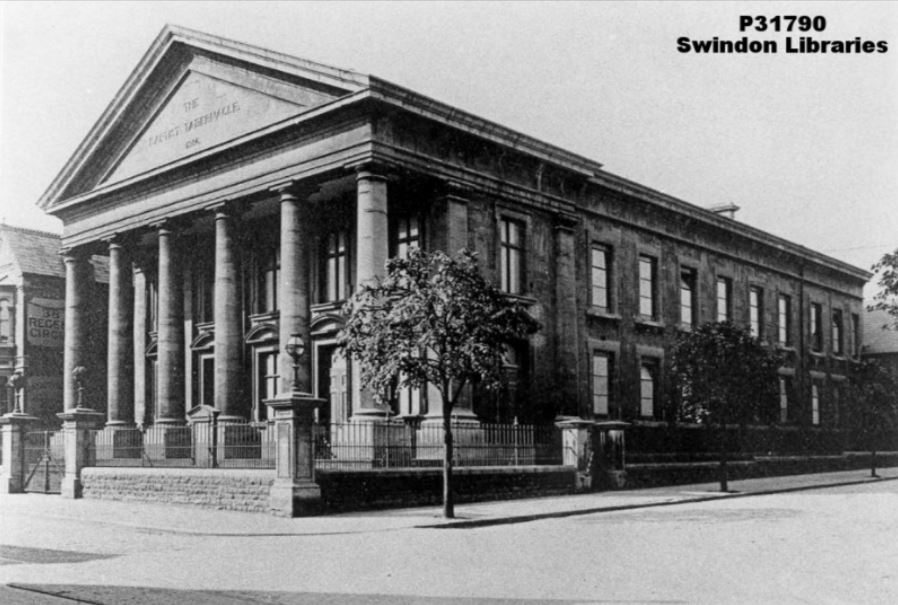
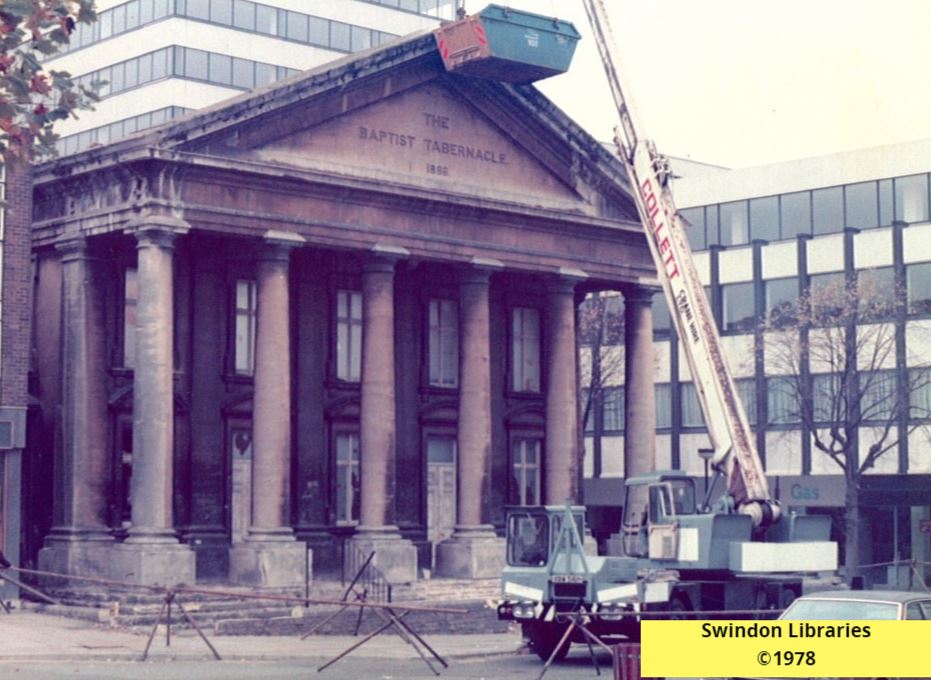
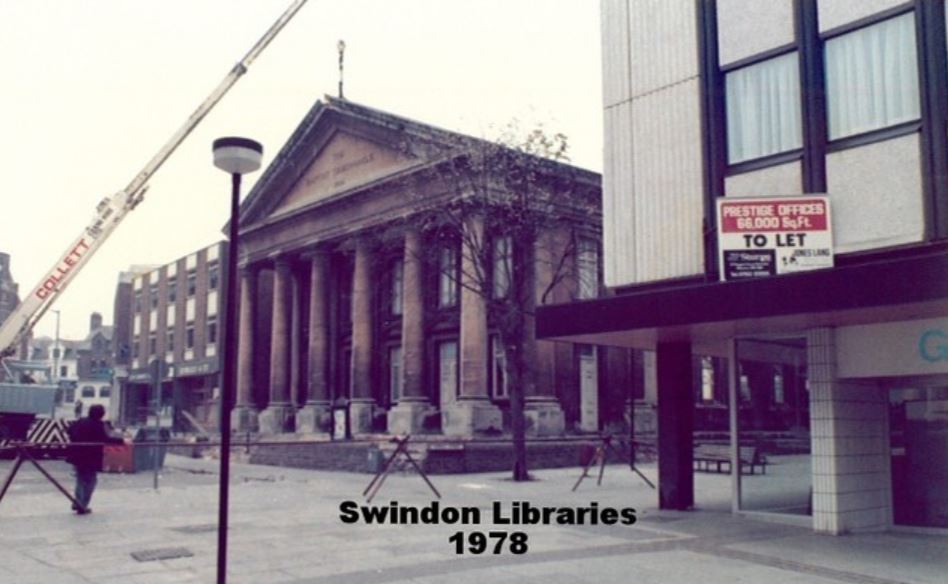
On Saturday last the funeral took place at New Swindon, of Mr and Mrs Albert George Beak, a married couple each about 40 years of age, who died almost within twelve hours of each other at the beginning of last week, leaving a family of four little children. Such an event as a double funeral, as theirs was, is not often seen in Swindon, and the ceremony at the graveside in the Cemetery was witnessed by something like 1,500 people. In addition to the relatives of the deceased, there were about 100 other mourners. Both husband and wife were ardent members of the Baptist Church, and the first portion of the funeral service was conducted at two o’clock in the Baptist Tabernacle by the pastor the Rev F. Pugh. There was a crowded congregation, and the service was very impressive. It commenced with the singing of a favourite hymn of the deceased persons, “Safe in the arms of Jesus.” After reading a portion of Scripture, the Rev F. Pugh offered a few remarks appropriate to the occasion, and then another hymn, “Oh, how sweet when we mingle with kindred spirits here,” was sung, and the concluding portion of the service conducted in the Cemetery.

Extract – Swindon Advertiser, Saturday, July 1, 1893.

Albert and Elizabeth Beak of 131 Princes Street, were buried together on June 24, 1893 in a public grave B1847, which they share with two others.