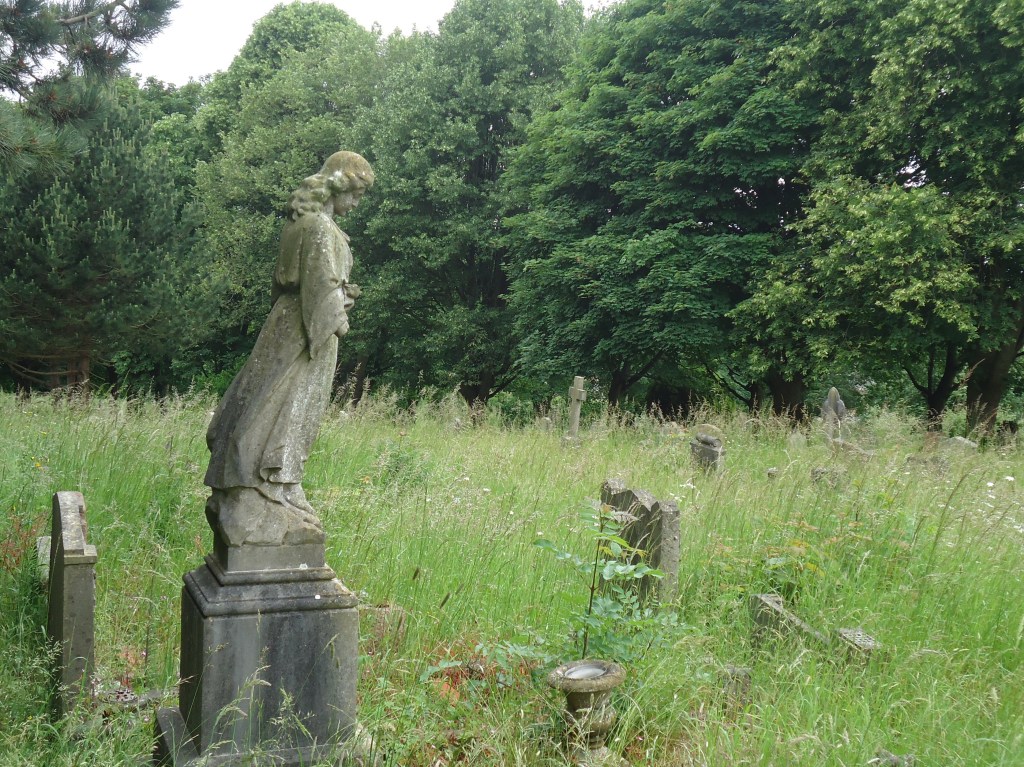
Cemetery stone – an absurd monstrosity?

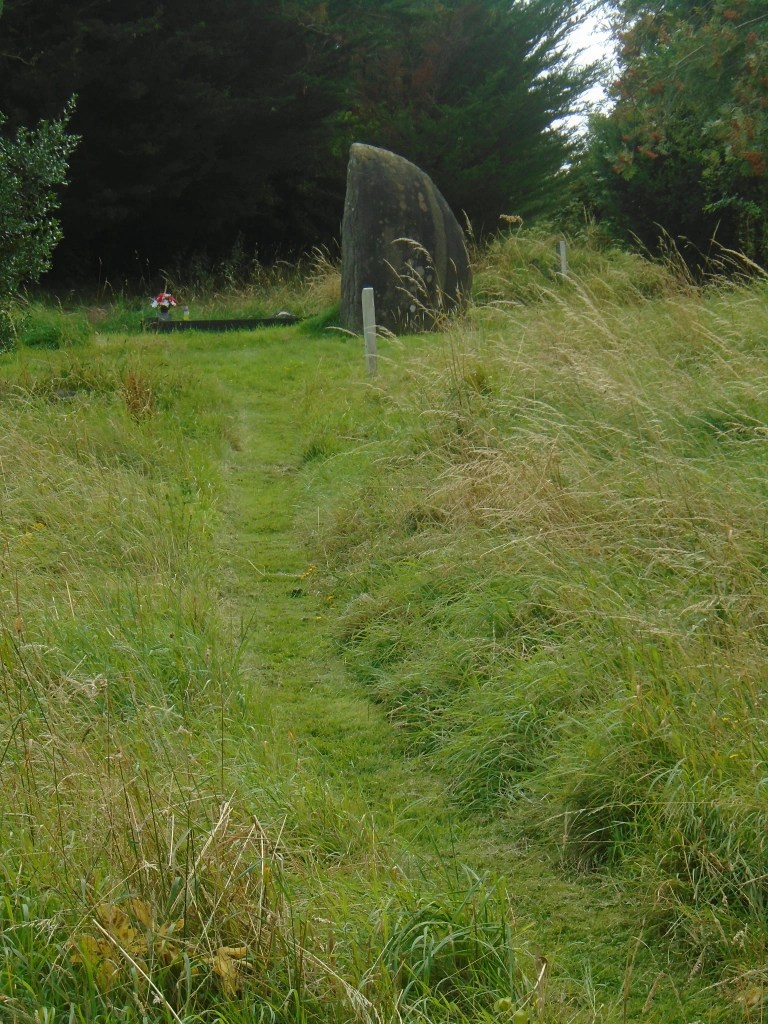
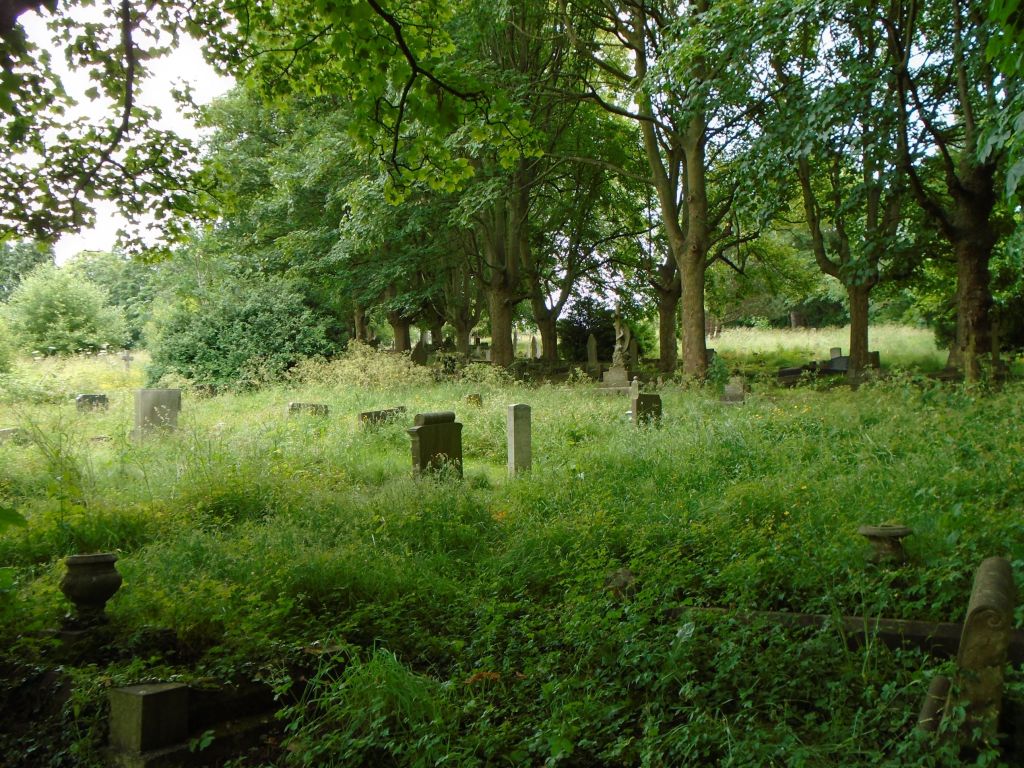
So, what is that stonking great big stone set beside the path leading from the Dixon Street gate to the cemetery chapel?

Some have suggested it could be a standing stone associated with ancient sites and early places of worship. This seems unlikely as the land was previously a coppice (an area of managed woodland). The remains of Swindon’s 13th century parish church still stand in the Lawn, the former home of the Goddard family.

Others have suggested the stone may stand on a ley line, connecting ancient sites of importance. Support for this theory lies in the fact that the cemetery stone is apparently in alignment with another in the former GWR Park in Faringdon Road, which is in an alignment with … ?

However, there maybe a much more prosaic geological explanation for the siting of this stone as the following articles suggest, published in the Swindon Advertiser during the construction of the cemetery in 1881.

The Cemetery .- On Tuesday evening last a meeting of the Joint Burial Board was held at the Board-room, Cricklade-street, when there were present, Messrs James Holden, in the chair, and W. Reynolds, W. Dawson, W.E. Morris, R.S. Edmonds, and C. Barker. – Mr W.H. Read, the architect, attended and explained that some considerable difficulty had been met with in draining and laying out the ground in consequence of the contractors meeting with a number of large boulder stones. Where these came in the way of the drains of course the contractors removed them, but there was the fact that others would be found all over the ground where graves would be dug, and he thought it his duty to bring the matter before the committee so that some arrangement could be made to get them removed before the turf was laid down. – The Chairman thought this would form a portion of the contract to lay out the ground, and also that it would pay the contractors to remove the stones for the value of the stone for road making purposes. – Mr Read said it would only pay them to remove the very large ones. The whereabouts of small ones could only be ascertained by pricking the ground over.- The committee decided to meet on the ground on Monday to consider this matter, and also the question of levelling, and the alteration of one of the approaches to the cemetery and the style of fence to be used at the back of Clifton-street.

The Swindon Advertiser, Saturday, May 21, 1881.

Swindon Cemetery

To the Editor of the Swindon Advertiser,

Sir, – The other day I was at Swindon, and went to see what the new cemetery was like. The first thing to attract my attention was a huge stone stuck up on end by the side of one of the principal paths, and on which there had already been scratched a number of letters, inscriptions, and hieroglyphics, evidently the work of those vulgar little boys who are to be found in every community. I was anxious to obtain some reason for the erection this absurd monstrosity, which appeared to be of no other possible use than that to which it had been already applied by the aforementioned vulgar little boys, and this having given me, I beg to submit the following as a suitable inscription to be engraven on a brass plate and affixed to the stone:-

Here stands exhibited

The Taste

(which was Nasty, Rude, and without Form),

of the

Swindon Cemetery Committee,

who,

for a whim,

Consented to write themselves

Je-rusalem Ponies,

I am, Sir, your obedient servant,

A Swindonian

Jerusalem pony is a slang term for a donkey

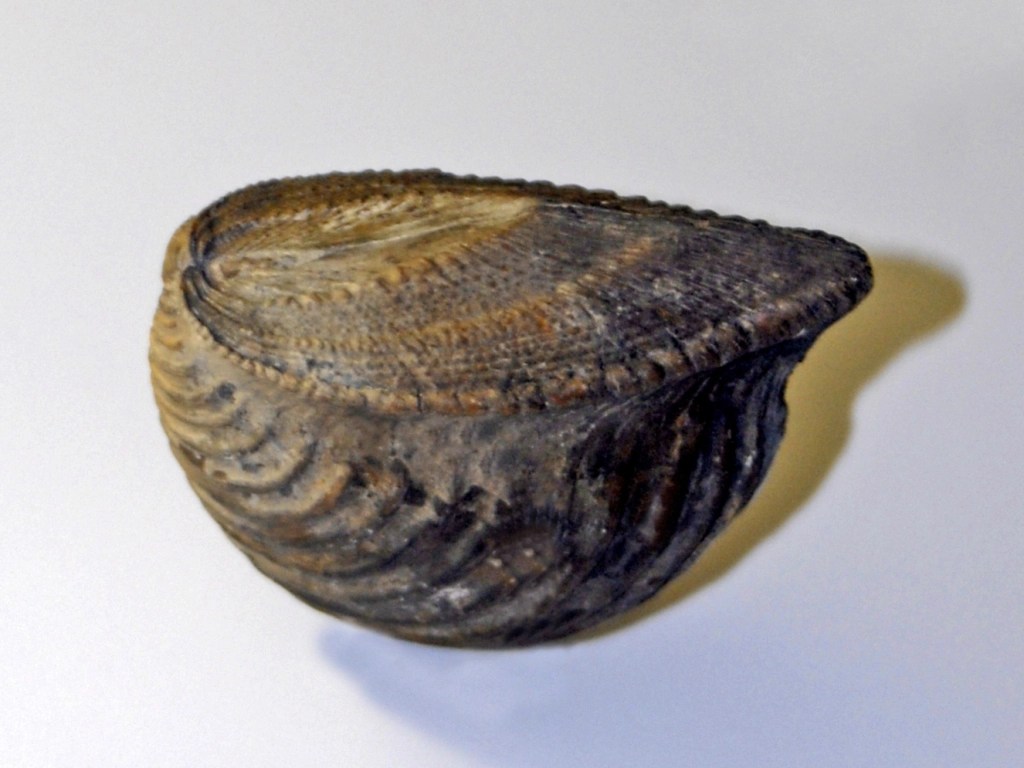
A correspondent asks for information respecting the extraordinary geological discoveries said to have been made in preparing the ground in the new cemetery, and is particularly anxious to know about the shells which are said to be found in pairs as they had never been met with before. In answer to the enquiry we would say the whole thing is nothing better than what is known as a “Mares’ nest.” The shell about which so much fuss has been made is one of the commonest found in the Swindon quarries – the trigonia, and that which has been described as shells lying side by side in pairs is simply the two halves of a ‘dead’ shell lying perfectly open and flat instead of closed as a ‘live’ shell would be at the time when it was submerged – a shell out of which some antediluvian caw had exhausted the fish in the days before Adam delved and Eve spun [span].

The Swindon Advertiser, Saturday, July 16, 1881.

A “Mares’ nest” a discovery imagined to be important but proving worthless – Collin’s Dictionary.

Trigonia, genus of mollusks that first appeared during the Jurassic period, which began about 208 million years ago. – Encyclopaedia Britannica

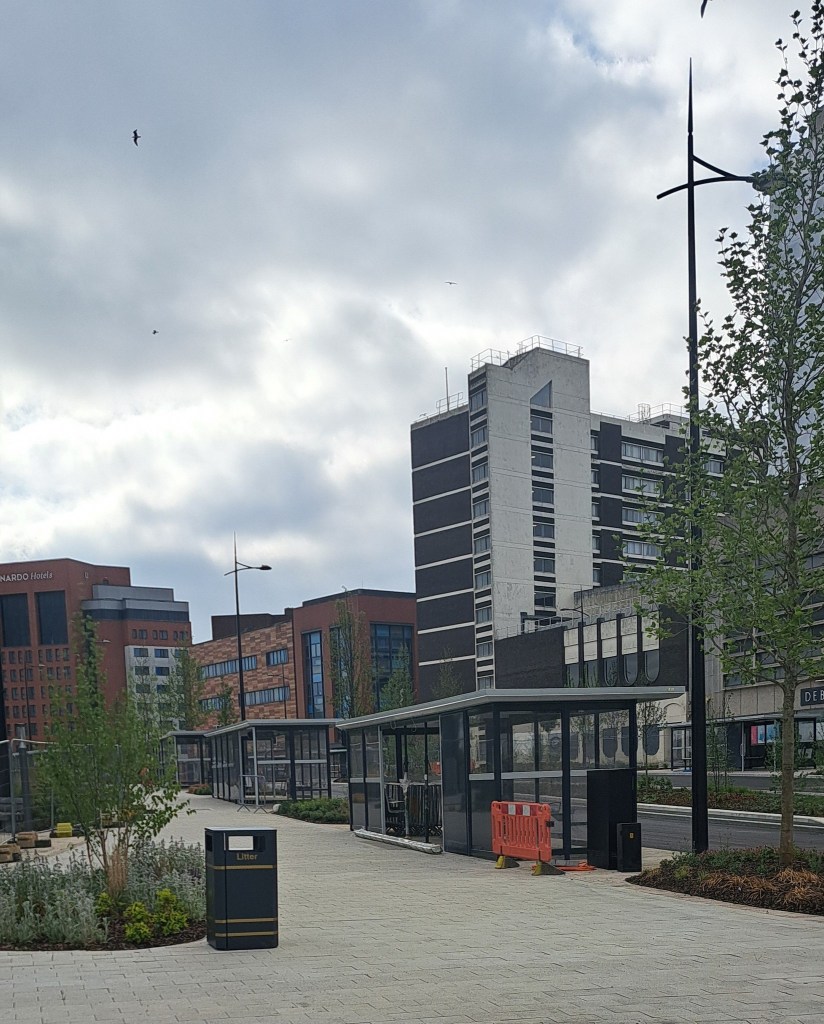
George Kinch, Carfax Street and the bus boulevard

Image courtesy of Diane Everett

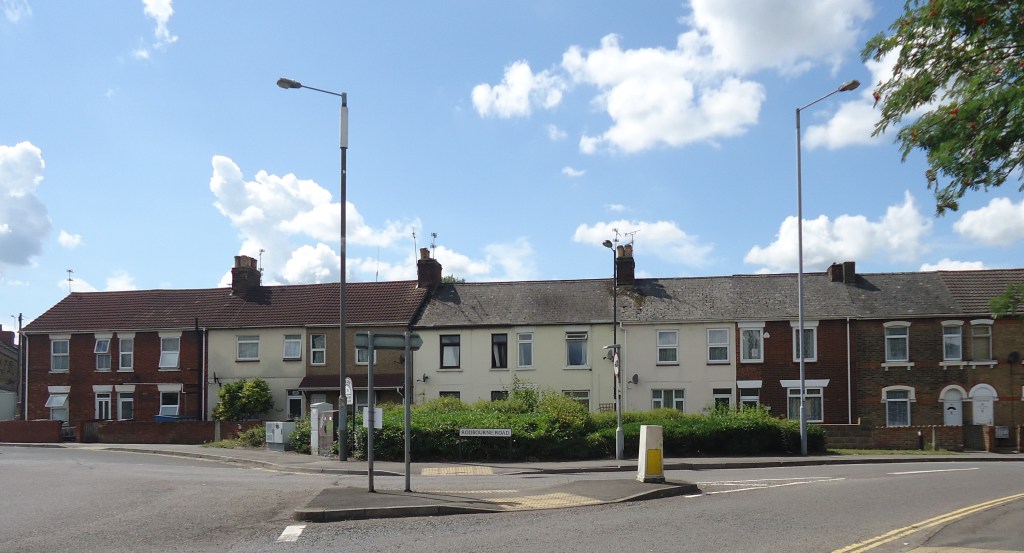
As Swindon’s long awaited bus boulevard nears completion, what lies in wait for the area that backs on to it?

In the 19th century this was recognised as a prime town centre location when the Oxford Building and Investment Co Ltd built 108 houses on the site. The Oxford Building Society was a relatively short-lived organisation registered in February 1866 and going into liquidation 17 years later.

When the company folded in 1883 it had an interest in 225 properties in Oxford and more than 100 Swindon.

The New Swindon properties were built on a parcel of land called Brierly Close, between the canal and Lower Eastcott Farm orchard, part of the extensive Rolleston Estate.

Named after Oxford City Centre locations, construction began on Merton Street in 1873 followed by Turl Street in 1874, Carfax Street in 1875 and Oriel Street in 1876 – an area that is unrecognisable now.

In 1881 the census enumerator who travelled from door to door collecting information seems to have struggled with the 34 households in Carfax Street. The census returns are covered in scrawled amendments and crossings out and could the details about No 21 actually be accurate? It would appear that 15 adults and four children occupied this small, terrace property, which can’t possibly be correct!

Head of the household was George Kinch aged 61. His occupation is given as Miller and he was born in Shrivenham in about 1820. At home with him in 21 Carfax Street on census night 1881 were his wife Sarah, his sister Charlotte, his stepdaughter Elizabeth, his 3 year old grandson William and his brother John. A pretty busy household – but then if the census is to be reckoned with there was also Albert Cove and his wife Lydia, John Williams and his wife Elizabeth, William Hibberd and William Watkins, his wife Ellen and their children William 4, Mary A. 3 and one year old Charles.

The terrace houses in Carfax Street were demolished in the 1970s and few photographs survive. It is, therefore, impossible to assess whether No 21 was actually a very large property or if 15 adults and four children actually squeezed into a more modest terrace house. Or perhaps the census enumerator recorded facts we cannot now unravel.

George’s wife Sarah died at No 21 shortly after the census was taken. She was buried in Radnor Street Cemetery on May 11, 1881 in a public grave plot A228. George died ten years later while still living at No. 21. He was buried with his wife on June 11, 1891. As in life so in death the couple shared their final resting place with a number of others. Hannah Scarrot who died in 1901, Frederick Boulton who died in 1918 and his wife Eliza Ann who died in 1944.
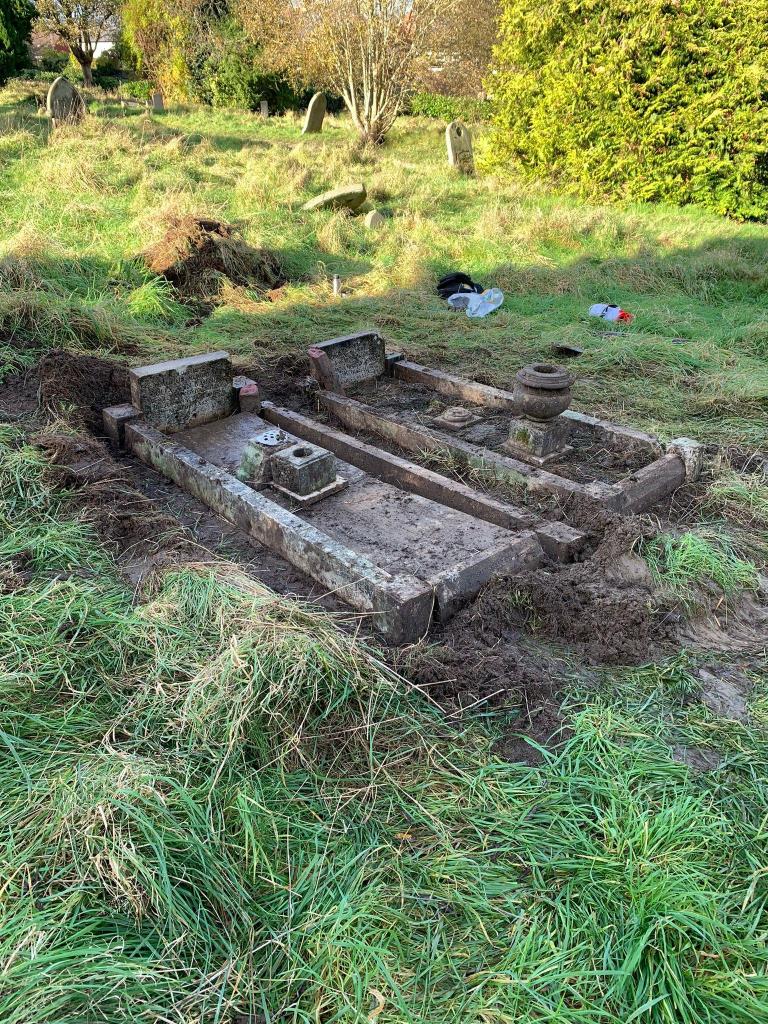
Radnor Street Cemetery event – May 2011

I have spent this week scrolling through the Radnor Street Cemetery archives in search of stories to tell on our next guided cemetery walk. And then up popped a memory on Facebook from May 2011.

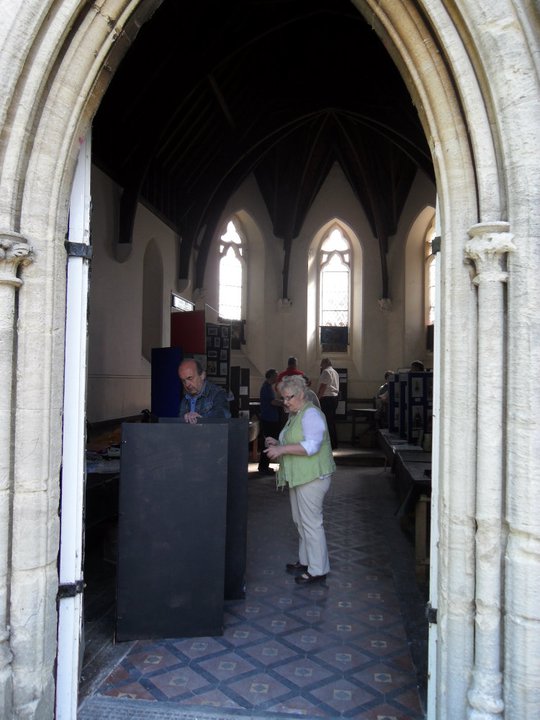
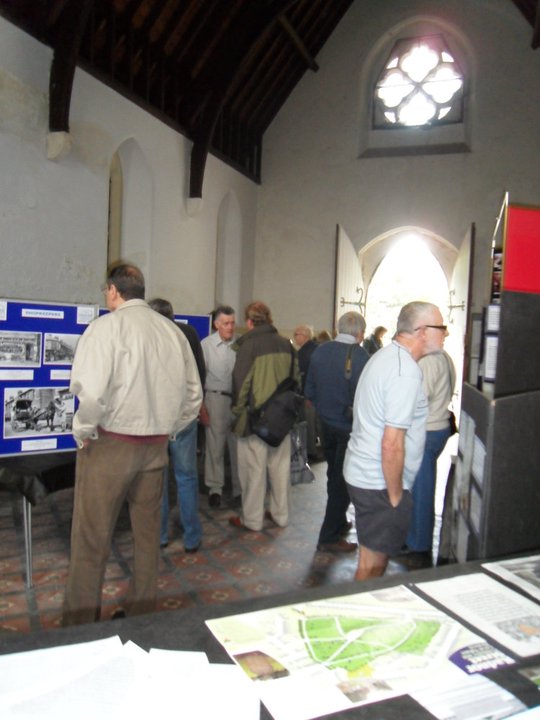
Mark and I had long established a programme of cemetery walks when I suggested holding a local history exhibition in the cemetery chapel. We fixed a date, May 21 and 22, and invited the local history groups who supported our cemetery walks to bring along a display.

I look back now and I’m amazed at how supportive and enthusiastic everyone was and how hard they worked across the two days.

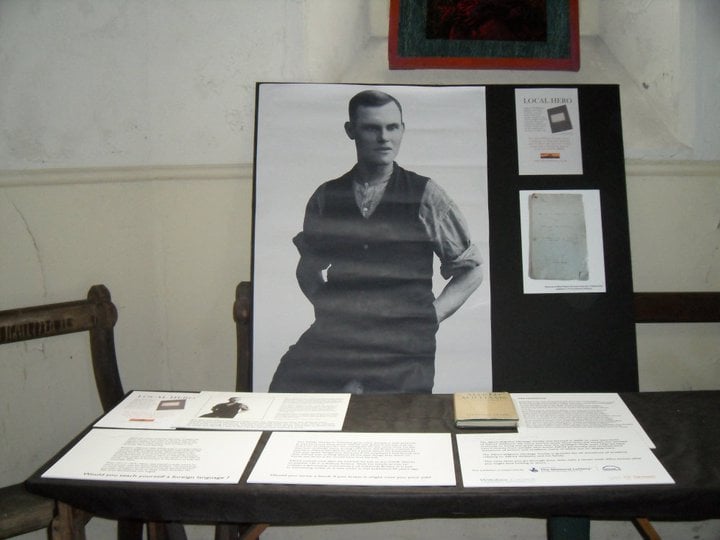
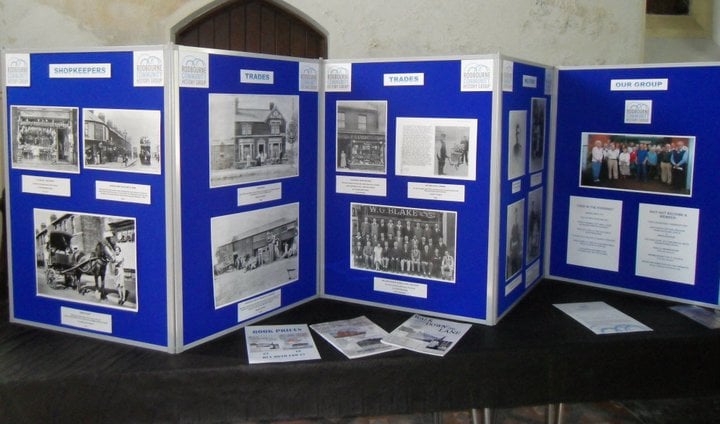
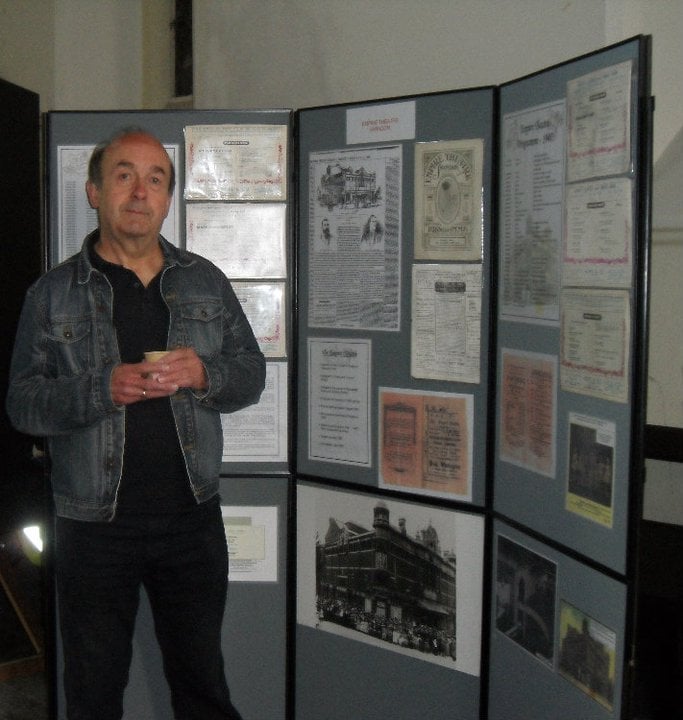
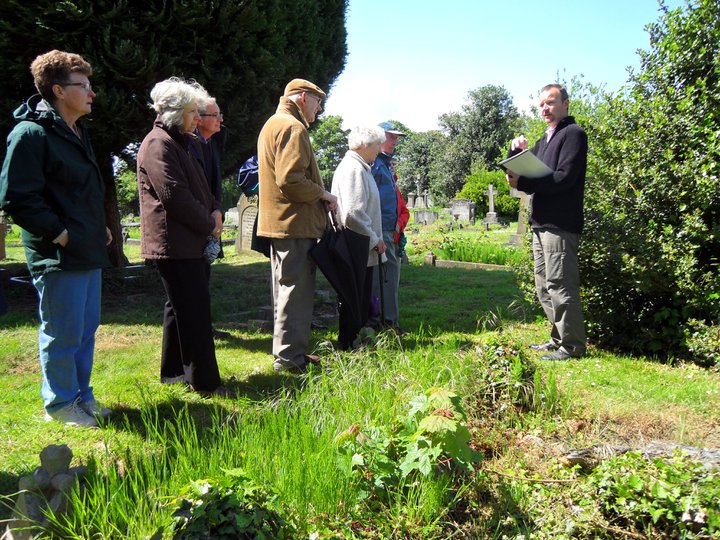
Members of the Swindon Society, the Rodbourne Community History Group, staff from Swindon Central Library Local Studies and Graham and Julie from the Alfred Williams Heritage Society all lugged their display boards, books and pamphlets up the steep cemetery incline to the chapel. Roger brought his Empire Theatre display and artist Andy Preston brought his ethereal artworks of the Radnor Street Cemetery angels. Mark and I conducted two guided walks across the two days.

Together we all shared our love of the cemetery and the fascinating history of Swindon and the people who made it a town of which to be proud. That weekend we met old friends and made new ones. We heard familiar stories retold and learned new ones. And we laughed – a lot!

As I look at the photos of that amazing weekend I am sad to see the faces of those we have lost in recent years. Bob, slight of stature but bold and brave, who we tried (unsuccessfully) to persuade to climb the old bell tower on a recce; and Mark, who told the stories of his First World War heroes, something those who heard him will never forget.

Join Andy and myself on Sunday June 1, 2025 for another guided cemetery walk. Meet at the chapel 1.45 pm for a 2 pm start.

Setting up

Alfred Williams Heritage Society

Artist Andy Preston

Radnor Street Cemetery display

Rodbourne Community History Group

Roger and the Empire Theatre display

The Swindon Society display

Setting up

the Dream Team

Our poster for the 2011 weekend event

The Airspeed Oxford propeller unveiled

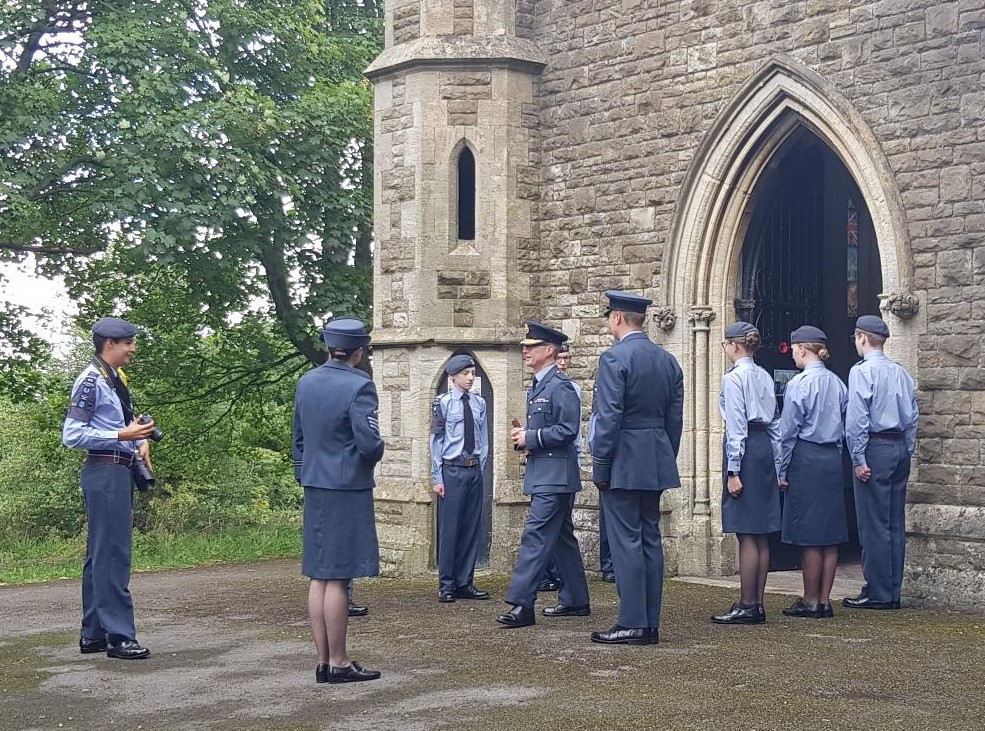
The rain clouds parted and the sun made a plucky appearance during our guided walk yesterday when we were delighted to welcome Air Commodore Tony Keeling OBE, Commandant Royal Air Force Air Cadets, to Radnor Street Cemetery.

Following the closure of the RAFA Club in Belle Vue Road the propeller mounted on the front of the building faced an uncertain future. Then a group of concerned Swindonians, among them Carole and David Bent, Neil Robinson, Toby Robson and Graham Carter, stepped in to rescue it.

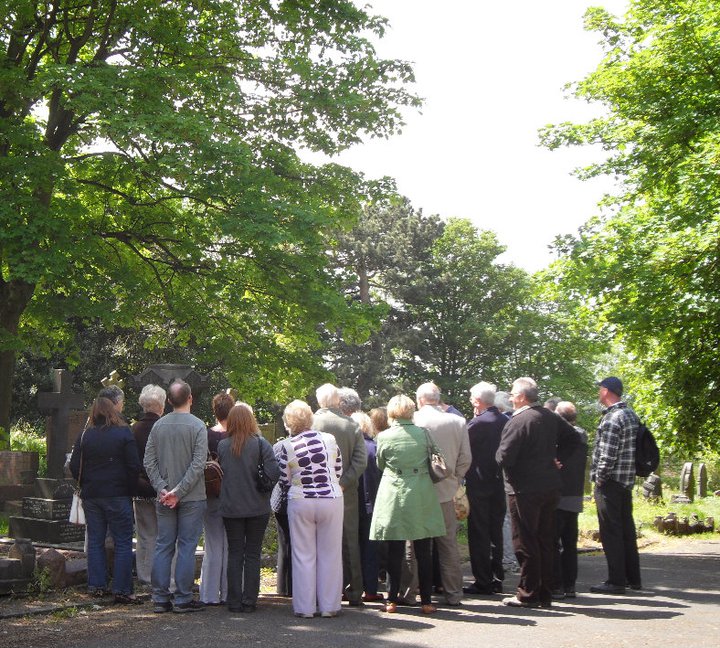
At Sunday’s event Air Commodore Keeling cut the ribbon and led the assembled visitors into the chapel to view the propeller, now mounted above the door. Cemetery volunteer Kevin, a member of the Eyes On Hands On team, gave an informative talk about the history of the Airspeed Oxford to a packed chapel, as you can see from Andy’s photographs. Then, accompanied by fellow officers and air cadets, Air Commodore Keeling joined us on our walk.

Guest speaker, Paul Gentleman, gave an account of the career of Wing Commander John Starr who is remembered on his brother’s (Squadron Leader Harold Starr) grave. Paul and his wife Caroline along with Noel Beauchamp have been researching the life and times of the two Starr brothers for several years. Paul, Caroline and Noel, in association with Green Rook and Swindon Heritage, organised the Swindon Remembers event to commemorate the Battle of Britain 75th anniversary held in the cemetery in 2015.

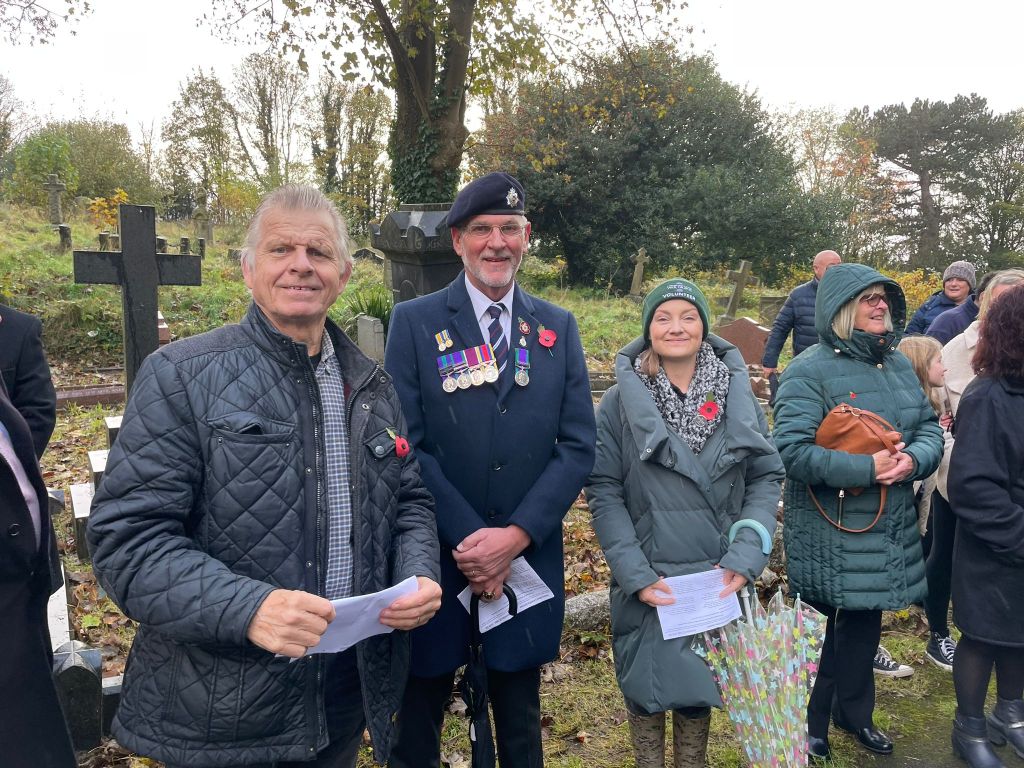
Our visitors at Sunday’s event donated generously to the memorial plaque for Mark Sutton. This will be unveiled at the Remembrance Day Service, an event Mark established many years ago.

Here are some photos of the day captured by Andy and myself.

George Bayliss – Your Majesty

The re-imagined story …

Swindon certainly pushed the boat out when King George V and Queen Mary came to town. The streets were all decorated and the people turned out in their thousands, cheering and waving their handkerchiefs as the royal car travelled down Regent Street.

The King’s first port of call on that April day in 1924 was to lay a wreath at the cenotaph, a gesture that gained him the respect of even the most anti royalist for the King was not that popular in some quarters so soon after the Great War. But not in our family – we were Royalists through and through – and after that visit in 1924 people used to call my Pops ‘Your Majesty.’

The Royal couple visited the Victoria Hospital and the Medical Fund building, but the highlight of the day for us was their tour of the Railway Works. I was working in the Carriage and Wagon Works, making luggage rack netting and we knew the Queen was going to be brought around. I don’t think I have ever been so nervous in all my life. She stood right behind me, watching me work. She smelt lovely, lilies of the valley. I didn’t dare look round, even when I heard her say ‘what nimble fingers you have young lady.’

But the star of our family show was my Pops, George Bayliss. Some 75 old railwaymen who had worked for the GWR for more than 50 years were introduced to the King and Queen that day and the King actually spoke to my Pops. It was all there, published in the Adver. He asked him how old he was – “I am 69, your Majesty, and I have had 58 years’ service,” to which the King replied “I hope to be as good a man as you are when I am your age.”

Afterwards a photograph was taken to commemorate the occasion. You can’t miss my Pops, sitting in the front row in his spotless white ducks, the white jacket and trousers worn by railwaymen in the old days. Pops took it all in his stride, but for me it was the proudest day of my life. The Queen admired my work and my Pops got to talk to the King. I wish I had a copy of that photograph.

The facts …

George was born in 1855 in Newark on Trent, Nottinghamshire the son of John Bayliss, a boiler maker and his wife Hannah. By 1881 he was living in Swindon and lodging at 17 Harding Street with Samuel Shallcroft and his wife and two daughters. He was 25 years old and working as an engine fitter.

George married Henrietta Kirby in 1882 and at the time of the census in 1891 they were living at 14 Charles Street, Rodbourne with their children William, Frederick, Walter, Lilian, Mabel and Edith. A seventh child, Beatrice May was born in 1893.

By 1901 the family had moved to 189 Rodbourne Lane, George’s home until his death in December 1926 aged 71 years old. George Bayliss was buried on December 11, 1926 in plot D760.

The home of George Bayliss in Rodbourne Road

The couple were non conformists and had children baptised on the Highworth Primitive Methodist Circuit and the Regent Primitive Methodist Circuit. George would no doubt have been happy to be buried in Radnor Street Cemetery where the burial ground was unconsecrated and the cemetery chapel non denominational.

Swindon Advertiser.

“He (Bayliss) is one of the old brigade and was conspicuous by the fact that he wore the old time white jacket and trousers. Though not worn nowadays, Mr Bayliss will not discard the old style and has a clean suit every week. His Majesty chatted with him for a few minutes and said to him “I hope to be as good a man as you are when I am your age.”

The photograph titled Swindon Works Veterans Inspected by Their Majesties the King and Queen on April 28th 1924 is published courtesy of Local Studies, Swindon Central Library, although the general consensus is that this is probably not the original. Carefully examination has revealed a couple of super imposed images, presumably those of men unable to attend on the day.

Let’s hear it for the volunteers …

Time to say a big thank you to all our fantastic volunteers, new and old, and for all the hard work they have undertaken in recent months.

They have dug, mown, trimmed, clipped, cut down and rediscovered hidden and lost graves.

They have also …

Cared for the war graves and discovered new ones

Shared their expertise on our guided walks and special events

Uncovered and revealed lost paths and edgings.

Let’s hear it for the volunteers…

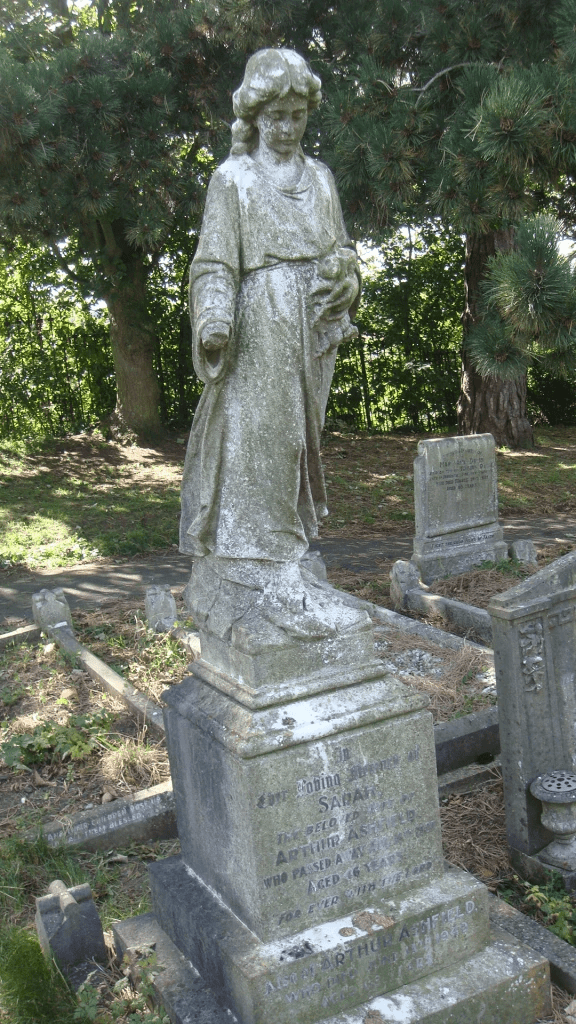
Arthur and Sarah and the Ashfield angel

The re-imagined story …

The Ashfield angel was my mum’s favourite memorial in Radnor Street Cemetery. Weird, I know, but my mum was like that.

She wanted a ‘Victorian’ funeral with a hearse drawn by black horses with plumes and mutes (whatever they are) in attendance, until she realised how much it would all cost. I thought it sounded like an East End gangster’s funeral myself.

My mum loved Radnor Street Cemetery but she always knew it could never be her final resting place. The cemetery had long since closed to new burials and we didn’t have an existing family plot.

Mind you she spent enough time up there when she was alive and as I mentioned the Ashfield angel was one of her favourites.

“She looks like she has taken them by the hand and led them away to heaven,” she used to say. I know, vaguely creepy.

Mum wasn’t even that religious and she certainly didn’t believe in a life after death and heaven. Personally, I don’t think the statue is even an angel, but there we are. It’s funny the effect Radnor Street Cemetery can have on a person. Take me for example, wandering around the graves and stopping at the Ashfield angel.

The facts …

This is the final resting place of Arthur and Sarah Ashfield.

Arthur worked as a carpenter and railway horse box builder in the GWR Works. In 1904 he married Sarah Gray, the daughter of a steam engine maker and fitter. At the time of the 1911 census Arthur and Sarah lived at 30 Alfred Street with their five year old son Charles and Arthur’s widowed mother Annie.

The youngest child of Charles and Annie Ashfield, Arthur was born in 1881, the year that Radnor Street Cemetery opened. Although his birth place is stated as Stratton, by the time he was a month old the family were living at 19 Redcross Street, the original name for Radnor Street.

In 1891 Arthur and his family were living at 71 Radnor Street in quite possibly the same house, following the renaming and renumbering of the street.

Sarah died in 1927 aged 46 and Arthur 22 years later when he was 68.

Photographs of the cemetery

Today there is a worldwide interest in cemeteries both as an historical resource and also as a place of beauty. From pristine perfection to benign neglect, cemeteries are of interest to many.

I follow a wide selection of ‘Friends’ groups including the Friends of Brompton, Kensal Green and Highgate cemeteries. And then, of course, there is Sheldon K. Goodman of Cemetery Club fame who receives rave review on Tripadvisor.

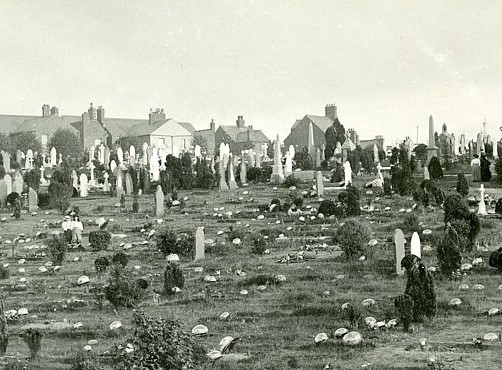
Between the Radnor Street Cemetery group of volunteers we have collected many hundreds of photographs but we seldom come across any taken at the beginning of the cemetery’s history. So it came as something of a surprise to find the following snippet of news published in the Swindon Advertiser in 1889.

Old Swindon Local Board

Cemetery Committee

A report was read from this committee, being of a formal nature. Amongst other business the committee recommended that a sum not exceeding £20 should be spent in purchasing and planting trees in the cemetery. A local photographer had applied to the committee, and was granted permission, to take photographs of and in the cemetery.- The report was adopted and this concluded the business.

The Swindon Advertiser, Saturday, November 23, 1889.

Who was that photographer and where are his photographs? Can anyone enlighten me?

These are the earliest known photographs of the cemetery – unless you know differently.

A photograph dated c1910 taken by William Hooper
A photograph taken following the funeral of Levi Lapper Morse in 1913.

Tell Them of Us – Pte. R.A. Cook – promoted for gallantry

Continuing a series remembering Swindon’s sons who served in the First and Second World Wars.

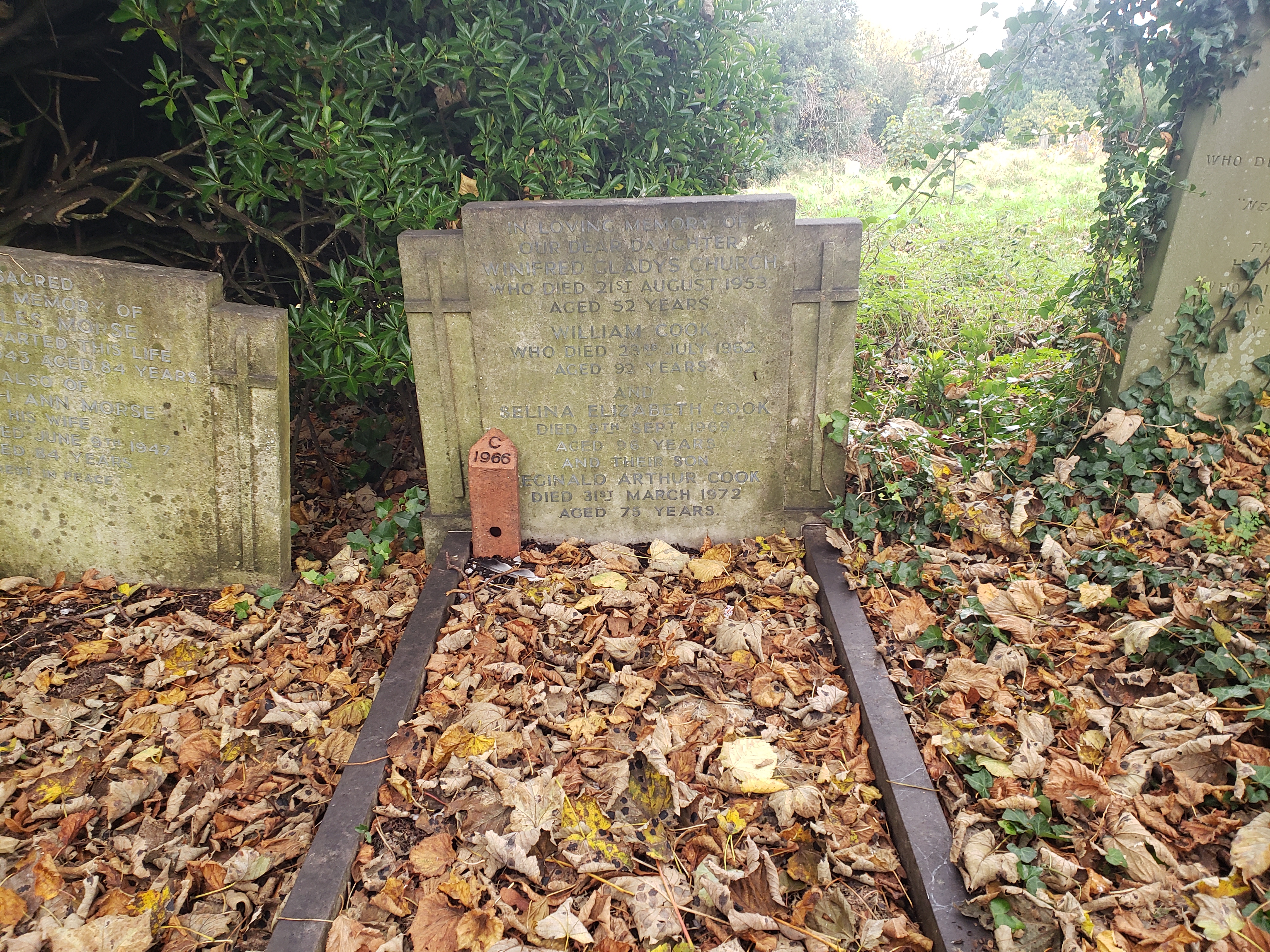
Reginald Arthur Cook was born in Swindon on September 8, 1896 the son of William and Selina Cook. Reginald entered the employment of the GWR shortly after his 14th birthday and stayed with the company until his retirement. His only absence was during the First World War when he served on the Western Front and was promoted for an act of gallantry.

Swindon Soldier Promoted for Gallantry

Pte. R.A. Cook, the only son of Mr. W. Cook, Cemetery Superintendent, Radnor Street, Swindon, has been promoted to the rank of lance-corporal for gallant conduct.

Major-General H.D.E. Parsons, Director of Ordnance Services, British Armies in France, has written to Pte. Cook, dated October 19th, as follows: “Your name has been brought to my notice by your Commanding Officer for ‘gallant conduct in snatching an enemy stick-grenade, that had become ignited, from another man, and throwing it into a shell hole some ten yards away, thus saving the man’s life at grave risk of your own. The report reflects credit on yourself and the Army Ordnance Corps.”

Lce. Copl. Cook is 21 years of age, and is a native of Swindon. On leaving school he entered the GWR Works as a clerk. He joined the Army on October 6th, 1915, and proceeded to Woolwich for training, but after being there three weeks he was transferred to France, where he has been ever since. He is now home on leave, and will return to France on December 21st.

North Wilts Herald, Friday, December 14, 1917.

Reginald returned home to Swindon at the end of the war and lived with his parents at 63 Kent Road where he died on March 31, 1972. Reginald never married and was buried with his parents and his only sister Winifred Gladys, in the cemetery where his father once worked as Cemetery Superintendent.

To Autumn

It is the season of mists and mellow fruitfulness and time for a virtual walk among the memorials at Radnor Street Cemetery.  

Branches creak and the leaves are swept off the trees across the cemetery on the hill today.  Doesn’t the cemetery look beautiful in its Autumn finery? But then it always looks beautiful to me. I shall don my raincoat and carry an umbrella as the weather forecast is not good, but you can put on the kettle, make a cup of tea and join me from the comfort of your sitting room. The sun is shining and I’m wrapped up warmly, so off we go.

These photographs have been taken across a 20 year period. There have been some changes. Remembering Mark Sutton.

To Autumn by John Keats

Season of mists and mellow fruitfulness,
  Close bosom-friend of the maturing sun;
Conspiring with him how to load and bless
  With fruit the vines that round the thatch-eves run;
To bend with apples the moss’d cottage-trees,
  And fill all fruit with ripeness to the core;
    To swell the gourd, and plump the hazel shells
  With a sweet kernel; to set budding more,
And still more, later flowers for the bees,
Until they think warm days will never cease,
    For summer has o’er-brimm’d their clammy cells.

Who hath not seen thee oft amid thy store?
  Sometimes whoever seeks abroad may find
Thee sitting careless on a granary floor,
  Thy hair soft-lifted by the winnowing wind;
Or on a half-reap’d furrow sound asleep,
  Drowsed with the fume of poppies, while thy hook
    Spares the next swath and all its twined flowers:
And sometimes like a gleaner thou dost keep
  Steady thy laden head across a brook;
  Or by a cider-press, with patient look,
    Thou watchest the last oozings, hours by hours.

Where are the songs of Spring? Ay, where are they?
  Think not of them, thou hast thy music too,—
While barred clouds bloom the soft-dying day,
  And touch the stubble-plains with rosy hue;
Then in a wailful choir the small gnats mourn
  Among the river sallows, borne aloft
    Or sinking as the light wind lives or dies;
And full-grown lambs loud bleat from hilly bourn;
  Hedge-crickets sing; and now with treble soft
  The redbreast whistles from a garden-croft,
    And gathering swallows twitter in the skies.

Written September 19, 1819 and first published in 1820.

Or you may like to join us on our last guided cemetery walk of 2024 today, Sunday 27. Meet at the cemetery chapel 1.45 for a 2pm start.