The Cemetery – Why Were the Gates Locked?

Following the verdict of the jury of ‘Suicide from drowning, while temporarily insane’ upon Sarah Richens, the Coroner’s attention turned to the pressing matter of the discourteously way in which he and the jury had been treated at the cemetery.

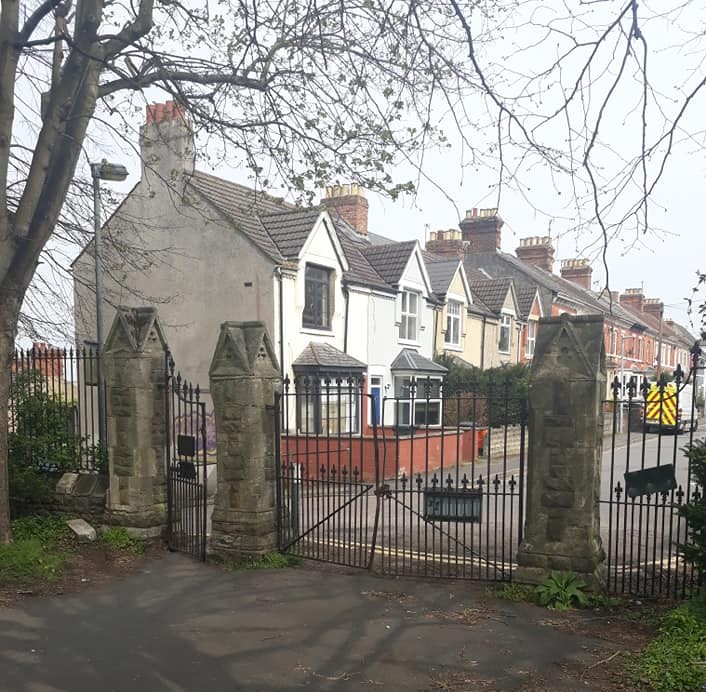
At the close of the inquest the coroner made some comments on how the jury and himself had been treated. When they arrived at the cemetery gates to go and view the body, about 4.45, they found the gates locked at the Ashford Road entrance. The police constable who was with them displayed some agility by climbing over the high iron gates and going down to the caretaker’s house and obtaining the keys.

Sergt. Everett informed the Coroner and jury that the caretaker of the cemetery was warned to have the gates open, as the inquest would be held at 4.30 p.m.

The Coroner asked the representatives of the Press to take notice of the facts, as the District Council ought to know that the Coroner and jury had been treated discourteously by having the gates locked against them.

A Juryman: I think they might also provide a light in the mortuary.

The Coroner: Yes, I think so too. We had no light whatever beyond a lighted match which one of the jurymen held.

The enquiry then closed.

The Swindon Advertiser, Friday, November 17, 1899.

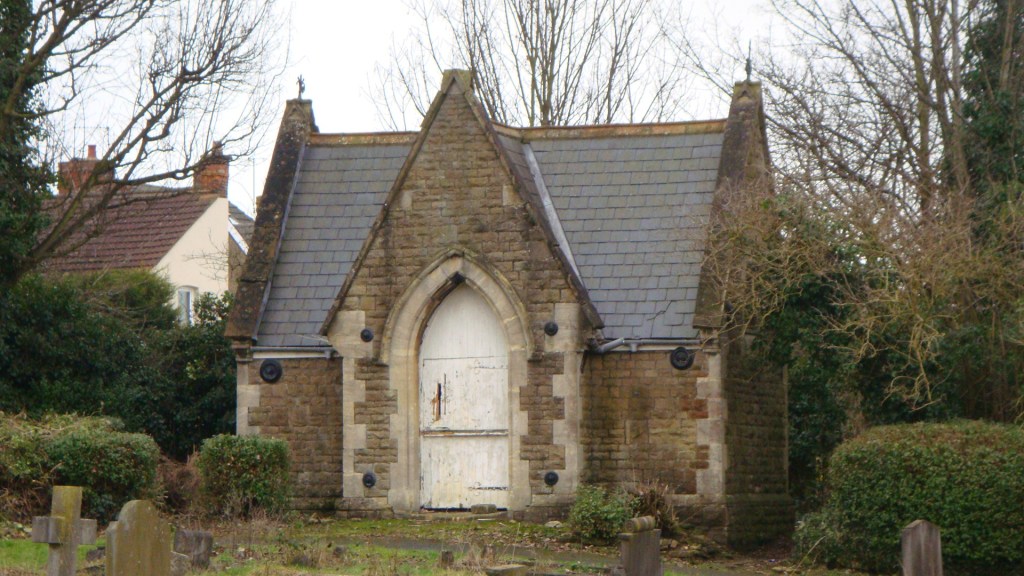
The mortuary building, Chapel and Radnor Street Cemetery caretakers lodge were designed by popular local architect W.H. Read.

Cemetery conveniences

Having read my story about John and Florence Sterry, Elaine Maloney was prompted to write to me about her recollections of the cemetery conveniences. Elaine grew up in Clifton Street and writes of her childhood memories, extracts of which I share here with you.

I remember the gent’s urinal very well. I used to live in nearby Clifton Street, just across from the pub. My Mum, Joan Maloney, used to run the Clifton Street Playgroup in the Methodist Church Hall opposite the Post Office and next to the Clifton Street entrance to the cemetery. I was often hanging about in that area waiting for my Mum to lock the Playgroup hall up and come home. During these times my Clifton Street pals and I would often climb up the quite steep path to the chapel and we would dare each other to quickly dash in and out of the urinals. Hardly surprising I suppose but the urinal always smelled strongly of stale urine, which added to the fun of the dare.

With your back to the chapel and facing the urinal straight ahead you entered from an opening in the bottom right area and went down a couple of broad steps in keeping will the slope it was built into. At the bottom of the steps you turned left into the one room toilet. A long trough was situated on the southern wall and ran all along that wall only stopping at the edge the steps began at so from your starting point you would have turned 180 degrees to use the urinal so would now be facing south or thereabouts. It wasn’t very interesting architecture just utility concrete probably covering brick. At the bottom of the walls there was moss or lichen growing up the wall. If I remember correctly I believe the floor was tiled but with quite a few of them broken. Also I believe the roof was like corrugated iron but with possibly a layer of what looked like a layer of asbestos on top of the iron.

From outside the urinal at times you could have blinked and missed it as it was often overgrown with some kind of vegetation which would cover the whole roof and hang down the side walls. Just before it was due to be trimmed back it always covered the whole building so from other areas of the cemetery you could easily miss it and I can never recall any signs about the cemetery announcing it was even there.

Of course there were also a gents and a ladies toilet located to the left of the Radnor Street entrance if you were heading out of the gates there. I cannot remember inspecting the gents but you could cram maybe six people into the ladies. It contained one of those sanitary towel burners where you would pull the handle and a wedge shaped box section, hinged at the bottom, would come into view revealing a hollow section where you could place what needed burning, supposed to be sanitary towels ONLY and when you closed this part again you could hear the furnace flash up and whatever you had placed inside would be turned to ash.

Nobody could tell you were in there and if you ran down the path back onto the pavement quickly enough you lessened the chances of a parent driving by and seeing you come out. I can never remember anybody asking us to vacate the toilet for them to use so when we decided to spend time in there we were pretty much left alone.

It’s a shame but as I take an interest in public toilets when browsing online as often they have been built in a multitude of styles depending on the era they were commissioned and I find them fascinating. Many toilet blocks were sold off and later transformed into magical looking homes. I even saw some right on a seafront which an enterprising couple turned into a neat little home with the best views you could ever hope for.

I noticed a while back after looking through some old Victorian maps of Swindon that we used to have lots of urinals dotted around Swindon with them marked clearly on the corner of every third or fourth street. This must have been fantastic for the men as they were well catered for. I have noticed though that this is far from the case for women who had to trek much further to find a lavatory suitable for them to use, which seemed to be few and far between.

Today I have found the situation is no better in fact it is several times worse and even if you can find a public toilet marked on a map you would be extremely lucky to find it is still open and serviceable which is a crying shame as once you begin to age you may find you have need of them more often than previously yet you will find yourself disappointed and will be unlikely to find any toilets today.

From Swindonian Elaine Maloney

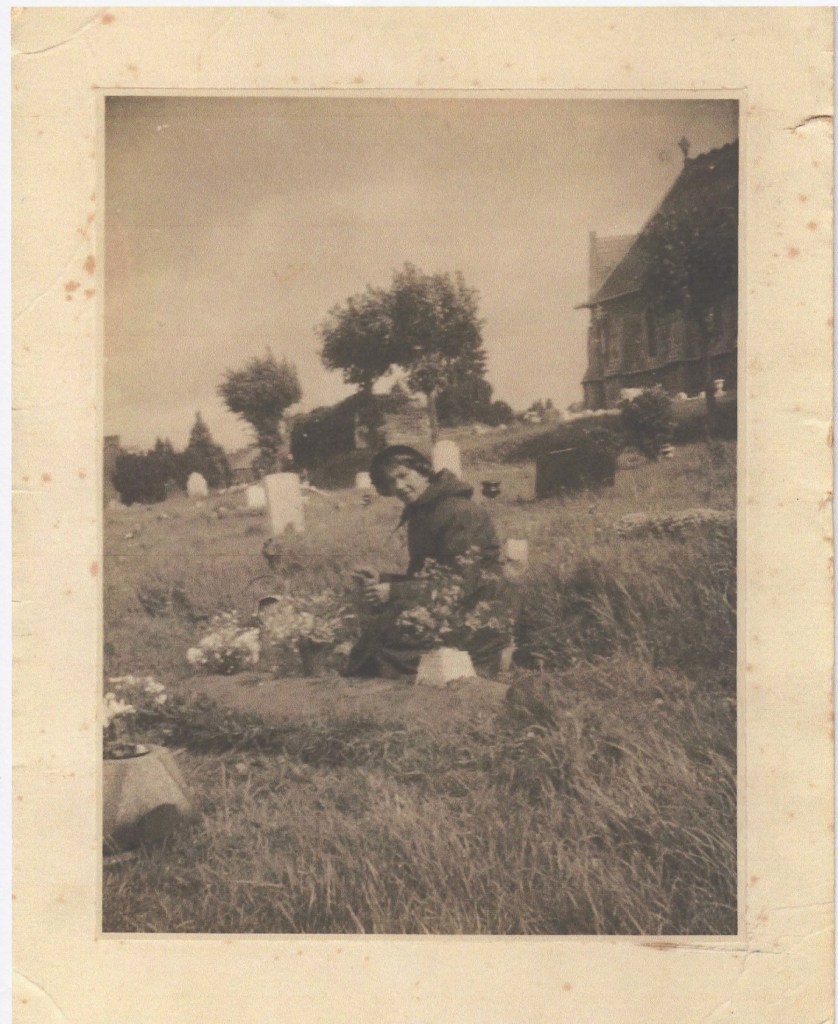
Florence Skerry pictured at her husband’s grave (with the urinals in the background).

Cemetery map with the site of the urnials

August

These are difficult times for old cemeteries, long closed and with no dedicated caretaker and groundsmen. When interments take place only occasionally and few people attend their family graves, cemeteries today are quiet places.

Some complain about the lack of care and maintenance provided by local authorities whose budgets are sorely stretched. So, what is the answer for our cemeteries?

Highgate Cemetery in London has long led the way in cemetery conservation and guided cemetery walks. Opened in 1839 by a private company (as most Victorian cemeteries were) by the 1970s the cemetery was no longer a profitable concern and became neglected and vandalised. Today it is run by volunteers of the Friends of Highgate Cemetery Trust supported by some members of paid staff. Highgate remains a working cemetery although space for new burials is running out, which presents more problems.

Abney Park Cemetery in Stoke Newington is another of the ‘Magnificent Seven’ garden cemeteries of London. The cemetery was opened in 1840, again by a private company. In the 1970s the company went into administration and the cemetery was abandoned and fell into disrepair. Today it is thriving as a woodland memorial park and Local Nature Reserve maintained by the Abney Park Trust, a small volunteer led charity, and the London Borough of Hackney.

Our closed Victorian cemeteries pose a problem nationwide. In 1999 the Friends of Lister Lane Cemetery came to the rescue of the Halifax General Cemetery, again after a long period of neglect. This cemetery opened in 1841 and was designed according to the ethos of the period to be not only a burial ground but to provide a public space for walks and outdoor relaxation. The Friends group now cares for the cemetery with support from Calderdale Bereavement Services when funds permit.

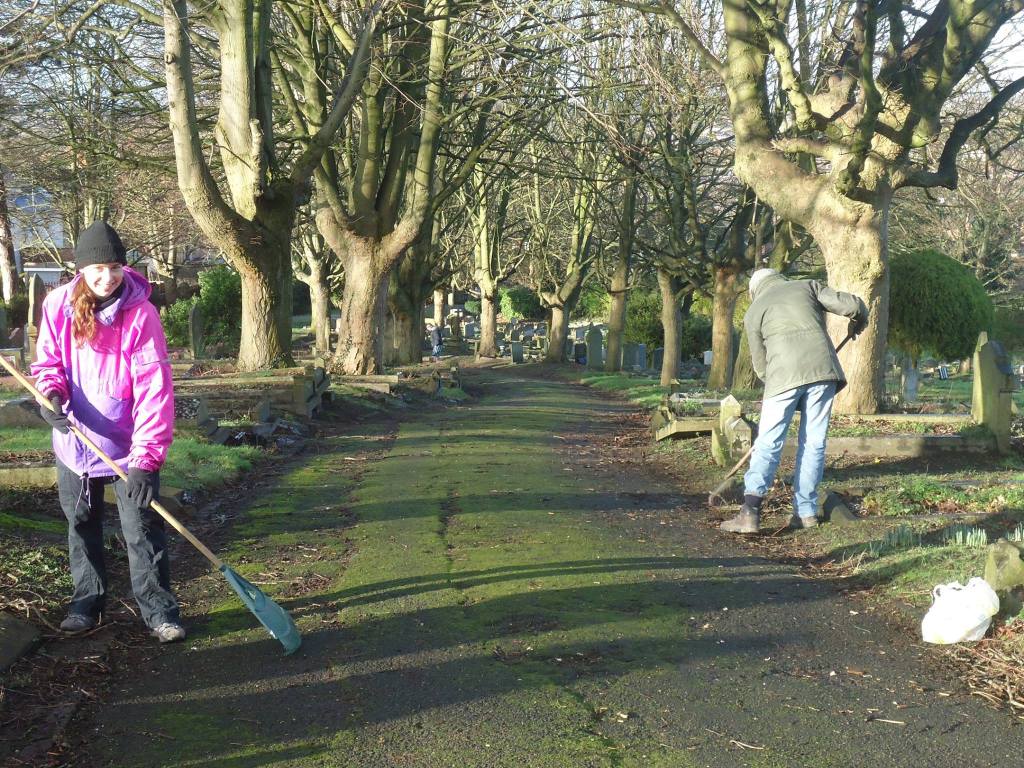
Here in Radnor Street Cemetery we have a small team of volunteers who attend to not only the Commonwealth War Graves, but other graves where a fallen serviceman is remembered. Occasionally the Community Payback Team are allocated to the cemetery and always perform valuable work. Sadly, the local authority can only perform the most basic of maintenance and mowing now takes place just once a year.

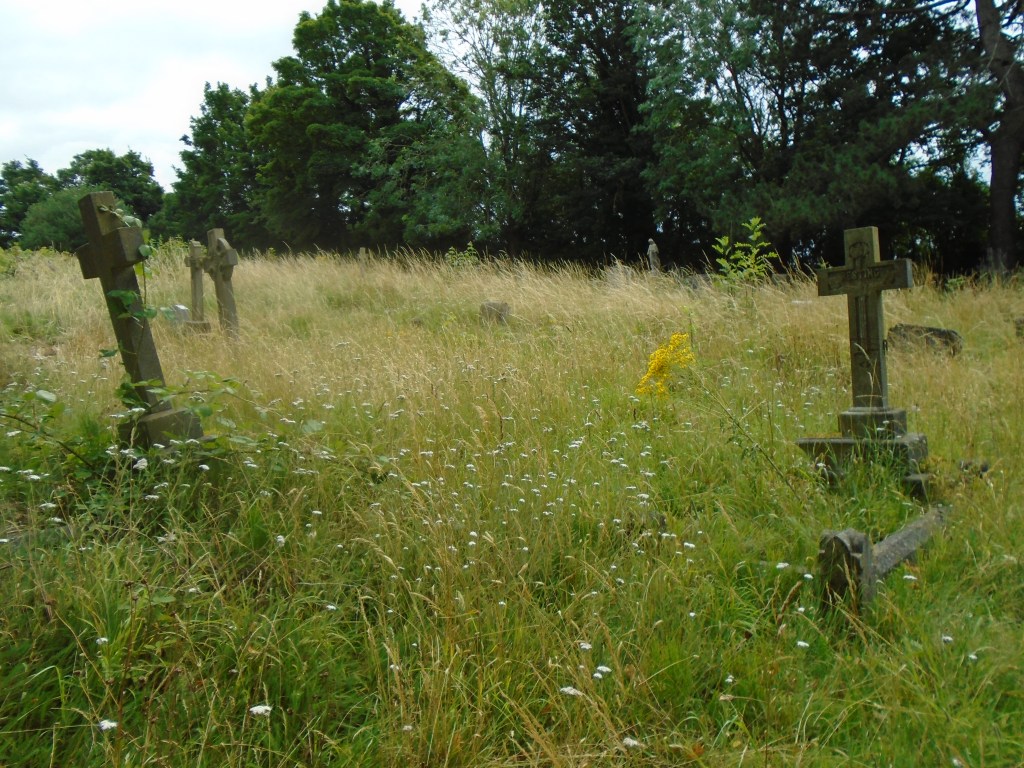
The summer of 2024 has served up a combination of heavy rain and long, hot sunny days. Today the cemetery is a vision of wild abandonment. A place of serene beauty and perfect for the proliferation of wildlife and biodiversity in this densley populated urban area. For the time being we must try to be patient and rest awhile, as the cemetery residents are so well practised at doing.

You may like to join us for a guided cemetery walk during the Heritage Open Days next month. Meet us at the cemetery chapel Sunday September 15 at 1.45 pm for a 2 pm start.

Joseph Deacon “in a passion”

It took local residents living in the Kingshill area a little while to get to grips with the rules and regulations concerning the new cemetery. And the ever vigilent caretaker Charles Brown was always keen to enforce them.

Joseph Deacon found himself in trouble with the Burial Board barely four months after the opening of the Swindon Cemetery after finding himself locked in the burial ground. But the full story may have been left untold.

Damaging the Cemetery Fence – Joseph Deacon, 36, carpenter, 6, Albion Street, was charged with committing wilful damage to the rails enclosing the Swindon Cemetery. Mr J.C. Townsend appeared to prosecute on behalf of the Burial Board. On Monday, the 5th inst. The defendant was in the cemetery and went to the Clifton street gates to leave. He was told by John Bastin, a man working there, that the gates were locked, and that he would have to go to the lodge entrance. The gate had been locked by order of the board. Defendant replied to Bastin that he should not go any further round, but should get over the rails. He was told not to do so, but he went up to near the mortuary, and climbed over the rails, scratching off the paint, and telling witness that he could go and tell Brown (the keeper) if he liked. The damage was estimated at 1s – Defendant said he did what he did in a passion. He never heard that the lodge gate was open or he should have gone out by it, that being his nearest road. He should like to know if a person could go through the cemetery? – The Chairman said certainly not; the cemetery was a sacred place and must not be trespassed on. If he was to send defendant to gaol for two months, or fine him £2 and costs, as he could do, every man in Swindon would know that it was a private place. – The defendant said he did not know this. – The Chairman fined defendant and costs, in all £1 8s.

Swindon Advertiser Monday December 19, 1881.

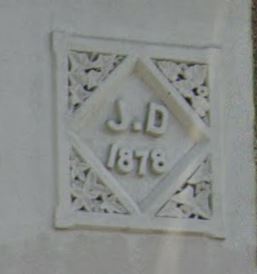
Plaque above No. 9 Albion Street

So how had Joseph come to find himself locked in the cemetery on Monday December 5, and why had he acted “in a passion” as he told prosector Mr J.C. Townsend.

Joseph Deacon married Eliza Wakefield in 1875 at the parish church in Dauntsey. Their daughter Sarah Jane was baptised at Christ Church, Swindon on July 25, 1877 and by the time of the 1881 census Joseph and Eliza with Sarah 3, Harry 2 and one month old William were living in Albion Street.

At the time of the 1891 census Joseph and Eliza’s family had increased with the birth of Julia, then aged 8 years old – but what had happened to little Harry, not mentioned on the census returns of that year.

On October 11, 1881, just weeks before Joseph’s cemetery crime, he had buried his 2 year old son in a pauper’s grave in the new cemetery. Could it be that Joseph was visiting the child’s grave that day when he discovered he had inadvertantly been locked in? Was this why he had acted “in a passion” still mourning the death of his little boy? We’ll never know, but it is worth a consideration.

Numbers 9 and 10 Albion Street

Eliza Deacon died in February 1917 aged 74 years and was buried in grave plot C3416 where Joseph joined her upon his death in 1925. Their daughter Julia was buried with her parents when she died in 1956.

You may also like to read:

Swindon – more interesting than many towns which are more beautiful

First Caretaker – Charles Brown

James Hill and the case of the stolen flowers

This is the case of a man who placed a few stolen flowers on a grave where he would later lie himself.

Helen Hill died on January 31, 1885. She was 84 years of age and a widow. The Hill family were originally from Scotland where her husband Mathew worked as a Flax Mill Spinner in Leven, Fife. By 1861 Helen, and her son James, a turner in the Works, and her daughter Henrietta, were living in Faringdon Street.

This wasn’t exactly the crime of the century, more the act of a grieving son. Even Mr. H. Kinneir, Clerk to the Local Board, emphasised that this was a trivial case but the theft of flowers on existing graves was taking place all over the cemetery. Standards had to be unheld and such petty thieving would not be tolerated! (I detect here the opinion of cemetery caretaker Charles Brown.)

Charge of stealing flowers from a grave – James Hill, 51, fitter, of Faringdon street, New Swindon, was summoned at the instance of the Swindon Local Board and Burial Board, charged with stealing some flowers – daisies – from a certain grave in the Swindon Cemetery and placing them on that of his mother – Mr. H. Kinneir, Clerk to the Local Board, appeared to prosecute, and in opening the case stated that the action was taken at the instance of the New Swindon Local Board and the Cemetery Committee. The case, although not a serious one – possibly a trivial one to many – was one of importance to the Cemetery Authority, and people interested in the cemetery. It was well known that persons who had relatives lying buried therein took pains with the graves, and planted flowers thereon. The present action arose through defendant, who was a man well known and highly respected, going through the cemetery on a Sunday and plucking several flowers from a certain grave and placing them on his mother’s grave. It was to point out the seriousness of the case that the present action was taken. Mr Kinneir said the Board did not wish to press the case, but wished for a small fine to be imposed, to let the public know that they must not gather flowers from a churchyard or cemetery. This proceeding of gathering flowers was going on all over the cemetery, and the Board wished to put a stop to it. The maximum penalty for the offence was £5. Without hearing any witness the bench imposed a fine of 2s 6d, and ordered payment of court fees.

James died in 1897 and was buried with his mother in grave plot A631, a public grave. They share the grave with 23 years old Lily Palmer who died in 1928 and is unlikely to be any relation.

William Crook – charged with damaging the cemetery fence

Kent Road gate

If you are in the habit of cutting through the cemetery to reach your destination you will appreciate what an inconvenience it is to find the gates locked.

This is just the situation in which William Richard Crook found himself on October 17, 1882. The 25 year old carpenter did what any able bodied young man would do and climbed over the fence.

However, he had been spotted by the fiercesome cemetery caretaker Charles Brown. Brown’s care of his kingdom and its deceased residents was exemplary. He had less patience with the general public!

Radnor Street gate

Damaging the Cemetery Fence – William Crook, carpenter, Swindon-road, was charged by the Burial Board with damaging the fencing at the Swindon Cemetery, on the 17th inst. Charles Brown, caretaker, proved seeing defendant climb over the rails of the cemetery when he found the gate locked. – Defendant admitted the offence, and was ordered to pay 1s damage, 1s fine, and 7s costs, the Bench cautioning him not to offend again.

The Swindon Advertiser, Monday, October 30, 1882.

Dixon Street gate

William was born in Pewsey in about 1858, the younger son of George and Amaryllis Crook. By 1871 the family had moved to Swindon and were lodging at 4 Union Street.

William married Alice Pauline Carlton the same year in which he was charged with damaging the cemetery fence. The couple went on to have two children, Victor and Lilian, and by 1891 William was working as a publican at the Oddfellows Arms in Queen Street.

He died at the prematurely young age of 35 years old in 1893 and, of course, his last resting place was in the cemetery, the scene of his fence vaulting crime. I wonder if Charles Brown ever made the connection.

William lies in an unmarked, public grave B1702 which he shares with three others, including his son Victor who died in 1899 aged 15.

Clifton Street gate

Howse’s Coppice

aerial-photo

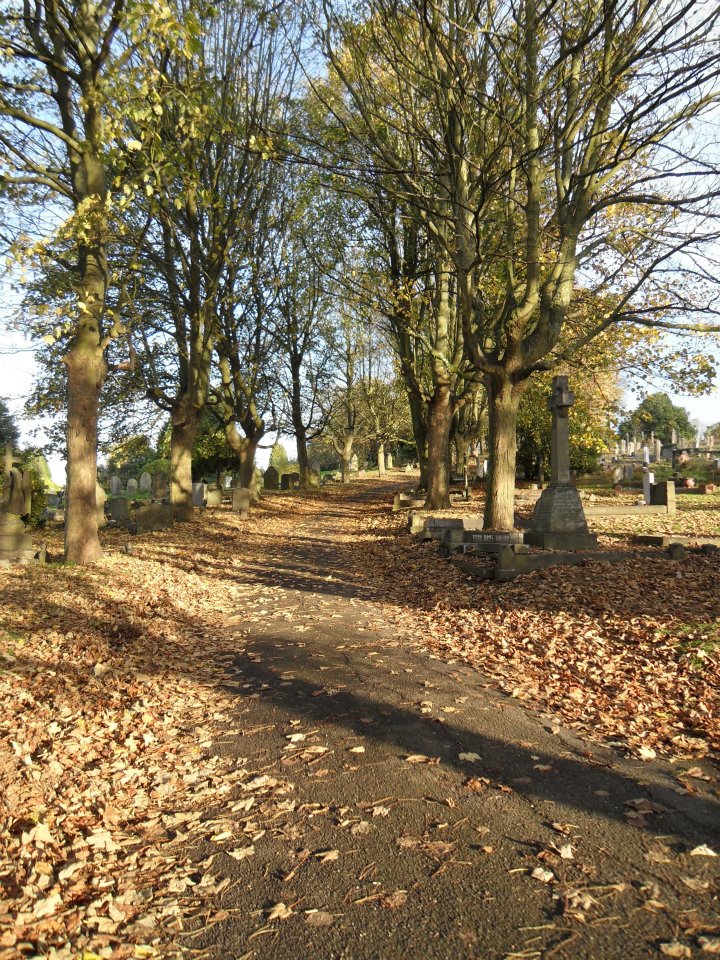
For nearly a hundred years the cemetery was well maintained, the graves cared for by families, the gardens by groundsmen. And then the cemetery closed to new burials and families did not visit so often and nature began to reclaim the ancient Howse’s Coppice.

In 2005 the cemetery was designated a Local Nature Reserve. Areas of grass were left to grow long, providing habitat for insects. Hedgerows, corridors for wild life to move across the site, were maintained and bird and bat boxes were installed in the mature trees.

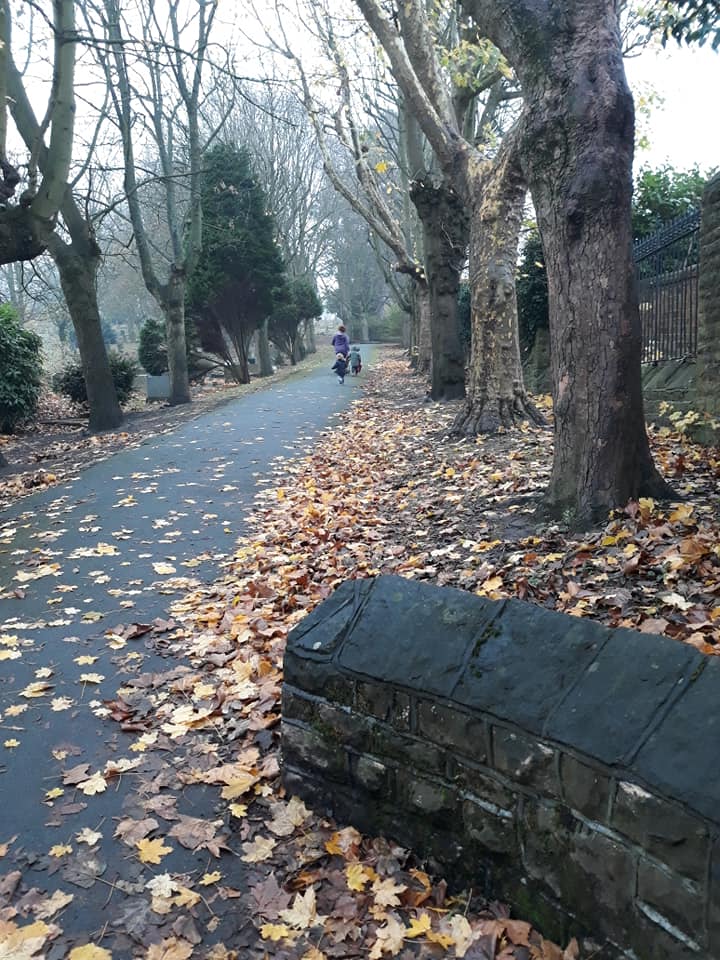
Following the financial crash of 2008 and subsequent local government spending cutbacks the cemetery was left to rest in peace. Today the plane trees are broad and lush, the grasses grow tall and some think it is a disgrace that the cemetery is so neglected, but there is a small group of volunteers who keep the history of the cemetery alive. Regular guided cemetery walks are attended by a growing number of people who come to listen to the story of Swindon’s history.

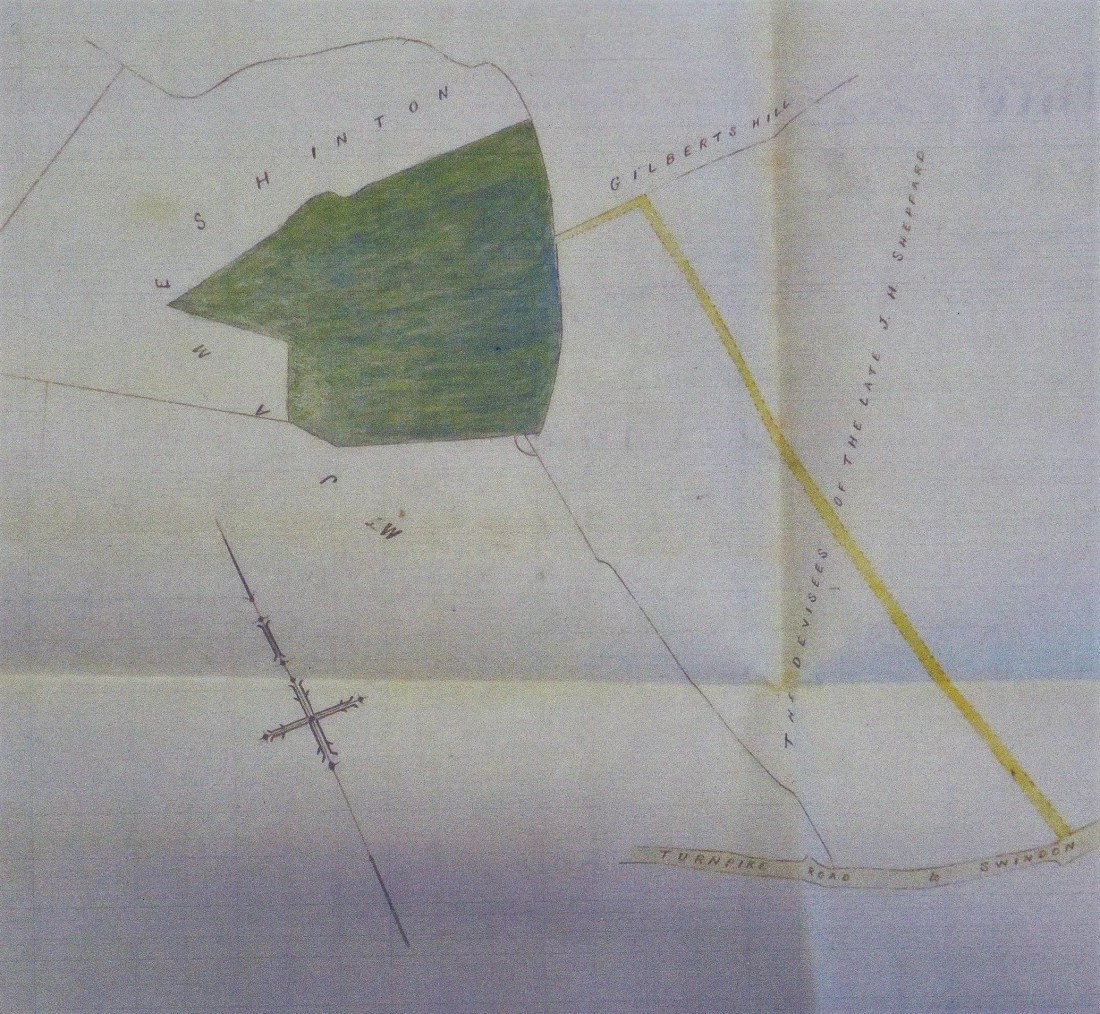
Documents held in the Wiltshire and Swindon History Centre, Chippenham trace the history of Howse’s Coppice back forty years before the cemetery was laid out.  The land then belonged to James Bradford and appears on the Tithe Map details of 1840 where it is described as a coppice ground (an area of managed woodland) formerly called Wibley’s but later known as Howse’s Coppice.

James Bradford was a solicitor who lived and worked at a property in the High Street, Old Swindon, close to what was then the King of Prussia public house. His wife, Annica Werden Bradford, was a member of the Goddard family. James died in August 1861 and the following year Annica sold the coppice ground to John Harding Sheppard for £559 14s.

John Harding Sheppard was a farmer and brewer and owned large tracts of land across both New and Old Swindon, including the Kingshill area where Howse’s Coppice stood.

In 1871 the executors of Sheppard’s will, his sons John and William, sold Howse’s Coppice, by then described as a close of land, to James Edward Goddard Bradford, bringing it back into the possession of the Bradford family.

In 1878 James Hinton bought Howse’s Coppice, which formed part of the plot he would eventually sell to the Cemetery Committee two years later.

Howses-Coppice-Ground

Howse’s Coppice was all that remained of ancient woodland that had once stood on Swindon’s doorstep before the arrival of industrialisation and the railways.

Howses-Coppice-Ground-1

Sale of Property – Pursuant to advertisement in our paper, Mr. Dore submitted for sale the landed estate of the late John Harding Sheppard, Esq., This estate being situated on the Sands, and to the West between Old and New Swindon, has been considerably enhanced in value of late years, and a brisk competition for the various lots was anticipated. Some of the lots were not sold, consequent upon the reserved price not being reached. Though every lot obtained bidders. A piece of pasture land near Kingshill, and known as “Howse’s Coppice Ground,” 4a 3r 38s was knocked down to Mr J.E.G. Bradford for £490. Two pieces of land situate on the Sands, at Swindon – one having a frontage of 83 feet, and an average depth of 360 feet, and containing 2r 27p the other with a frontage of 80 feet, and containing 2r 18p, were sold to Mr Kinneir and Mr Lansdown, respectively for £220 and £235. The spacious premises occupied by Mr Matthews, draper, High-street, realised £1160, Mr Bradford being the purchaser. The house in the Square occupied by the late Mr J.H. Sheppard, was sold to Mr Kinneir for £1220, and, after a spirited competition, Mr Kinneir was declared the purchaser of the premises lately held By Mr Kimberley, for £400. The White Hart Inn, Newport-street, and six cottages adjoining, fell to Mr R. Bowly, at £1070; a dwelling house near to this lot, producing £13 a year, was purchased by Mr Jason Hutt, at £185. The Running Horse Inn, mill, land, and cottages, were purchased by Mr John Jacobs, for £680; two cottages near fetched £180 from the same purchaser. The house occupied by Mr. Oakford, in Wood street was bought by Mr Westmacott, for £420.

Wilts and Gloucestershire Standard, Saturday, October 8, 1870

Howses-Coppice-Ground-2

Set in stone

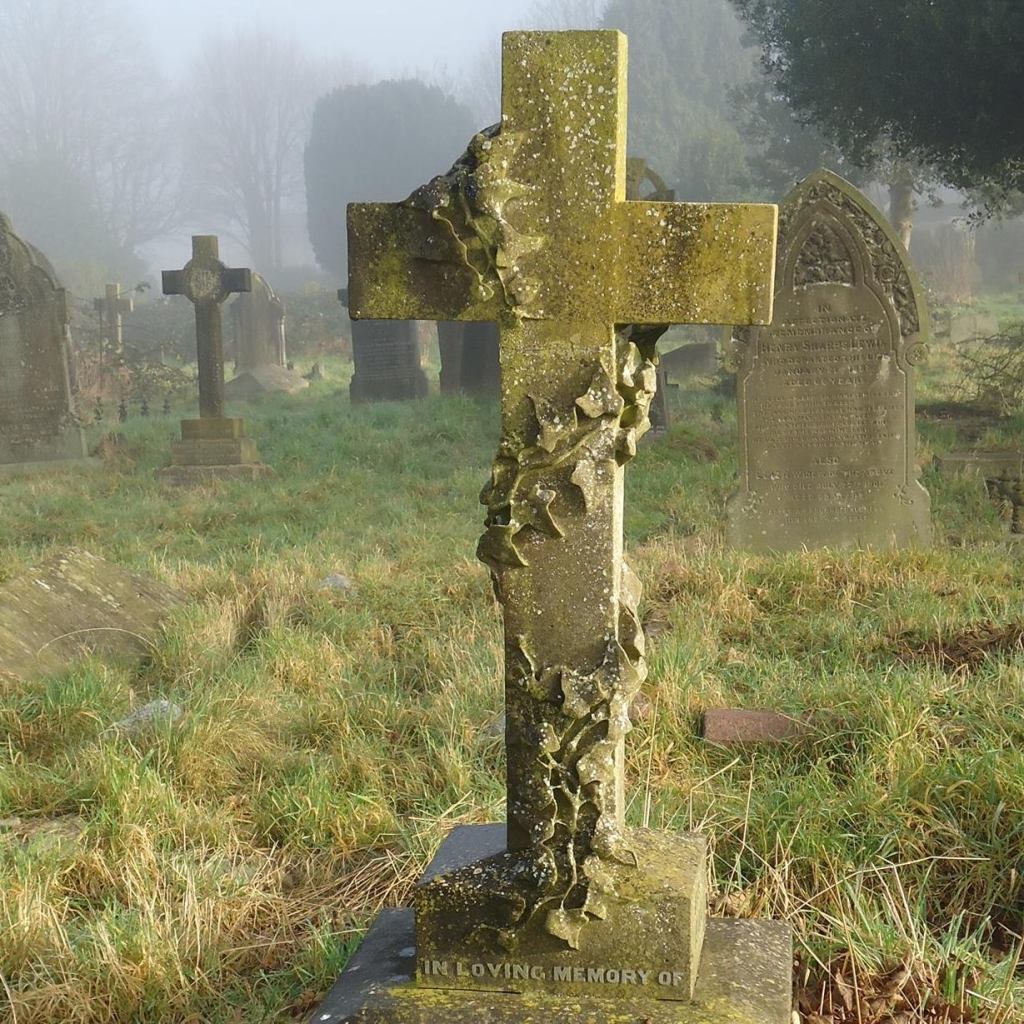
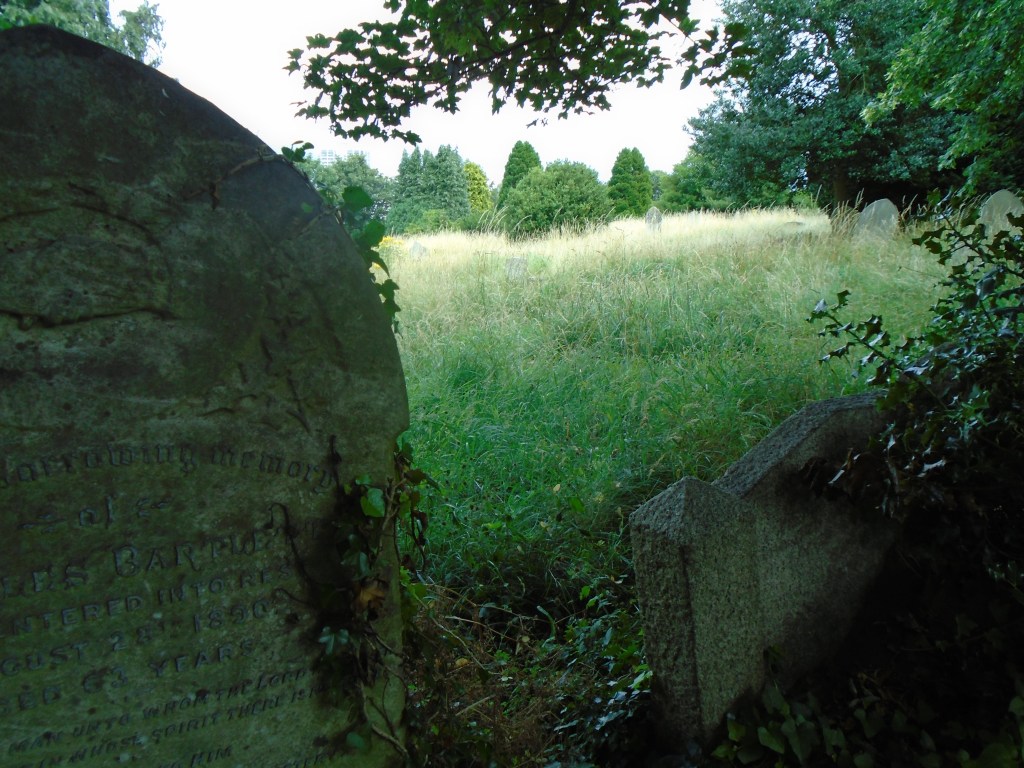
This headstone is a victim of weathering. Other deteriorating examples can be found across the cemetery, but this is the end result, when the surface cracks and eventually falls away.

It might seem that the history of those buried here is lost, but it is possible to piece together the family history.

A cemetery marker is propped up against the headstone. These should be treated with caution as many are in the wrong place, but I struck lucky with this one. Using the cemetery maps and grave plot registers I was able to trace the story of not only the people buried in this grave but those in the one next to it as well.

James and Dorah Neate

This is the last resting place of James and Dorah Neate. James was born in Box, Wiltshire and Dorah in Bruton, Somerset. They married at St James Church, Bath on October 30, 1877.

James worked as a railway engine driver and the couple moved about a fair bit. At the time of the 1891 census they were living in St Brides, Bridgend with their two sons. William 10 who had been born in Box, Wilts and Frederick 9 born in Weymouth, Somerset. By 1901 they were living at 7 Park Terrace (Faringdon Road) in Swindon. William and Frederick were both working for the GWR, William as a stoker and Frederick as a fitter. The couples’ last home was at 13 Jennings Street where James died in 1925 and Dorah in 1930.

James was buried in Radnor Street Cemetery on April 27, 1925 in plot D519. Dorah’s funeral took place on July 7, 1930 and she is buried in the same plot.

The collapsed pink granite monument next to James and Dorah’s plot is the grave of their son William.

Like his father William also became a railway engine driver. He married Elsie Maria Tyler at St Paul’s Church, Swindon on June 24, 1907. At the time of the 1911 census William and Elsie were living in Goodwick on the Pembrokeshire coast with their two-year-old daughter Kathleen Dora. They also had a son, Arthur William T. Neate, who was born in Wales in 1915.

William and Elsie eventually returned to Swindon where Kathleen died in 1931 aged 22.  William died at 30 South View Avenue, Walcot, Swindon on September 11, 1948 and Elsie died at 20 Castle View Road, Stratton St Margaret on December 13, 1968.

William, Elsie and Kathleen are buried in plot D520 next to William’s parents.

Elsie Maria Neate 4

The Tyler family photo was shared on Ancestry by Debra Tyler on February 8, 2010. Elsie is standing on the left with her arm resting on her mother’s shoulder.

Elsie Maria Neate nee Tyler

Elderly Man Expires in the Cemetery

The re-imagined story …

I leaned back on the bench and closed my eyes, my face turned towards the sun. Bird song filled the air on this glorious summer’s day. But how could there ever be a glorious summer’s day again? All I could think about were the days so many had been robbed of, and yet here was I in my 60th year, an old woman, enjoying the bird song and the sunshine.

I often come to sit in the cemetery. There is usually someone here, tending a grave. We exchange a few words, pleasantries. Sometimes we even talk about our boys.

The guns have been silent for many months, the servicemen returned home. Even those who were prisoners of war are back, aimlessly walking the streets of Swindon. They stop and speak. Everyone knew my boy.

I wish I could have brought his body home and buried him here in the cemetery. I’ve seen photographs of the battlefield cemeteries, row upon row of crosses. My boy has no known grave.

A parent shouldn’t out live their child. Will this be a country full of old people now? Parents mourning sons.

I open my eyes, ahead of me there is an old man, walking slowly up the hill. I think I recognise him. Another old man. This world is full of old people, all the young ones are dead.

He stops and lays the flowers he holds on a grave. I watch as he appears to stumble. I stand up and begin to walk towards the Dixon Street gate. I’ve had enough now, watching other old people. I shouldn’t be here, none of us old people should be here.

DSC07141

The facts …

Elderly Man Expires in the Cemetery

The death of a well known Swindonian, Mr Donald Macdonald Andrew, a retired GWR foreman, occurred under tragic circumstances in Swindon Cemetery on Saturday last. It appears that Mr Andrew, who was 72 years of age, and resided at 142 William Street, went on Saturday morning to the Cemetery, with the intention of placing some flowers on his wife’s grave. When walking along the pathway towards the grave he was seen by Mrs Amy Haynes, wife of Ald. A.W. Haynes, ex Mayor of the Borough, to fall. She ran to his assistance, and also a gravedigger, named Sidney Iles, who was working nearby. But deceased expired in a few minutes.

The Faringdon Advertiser Saturday June 21 1919.

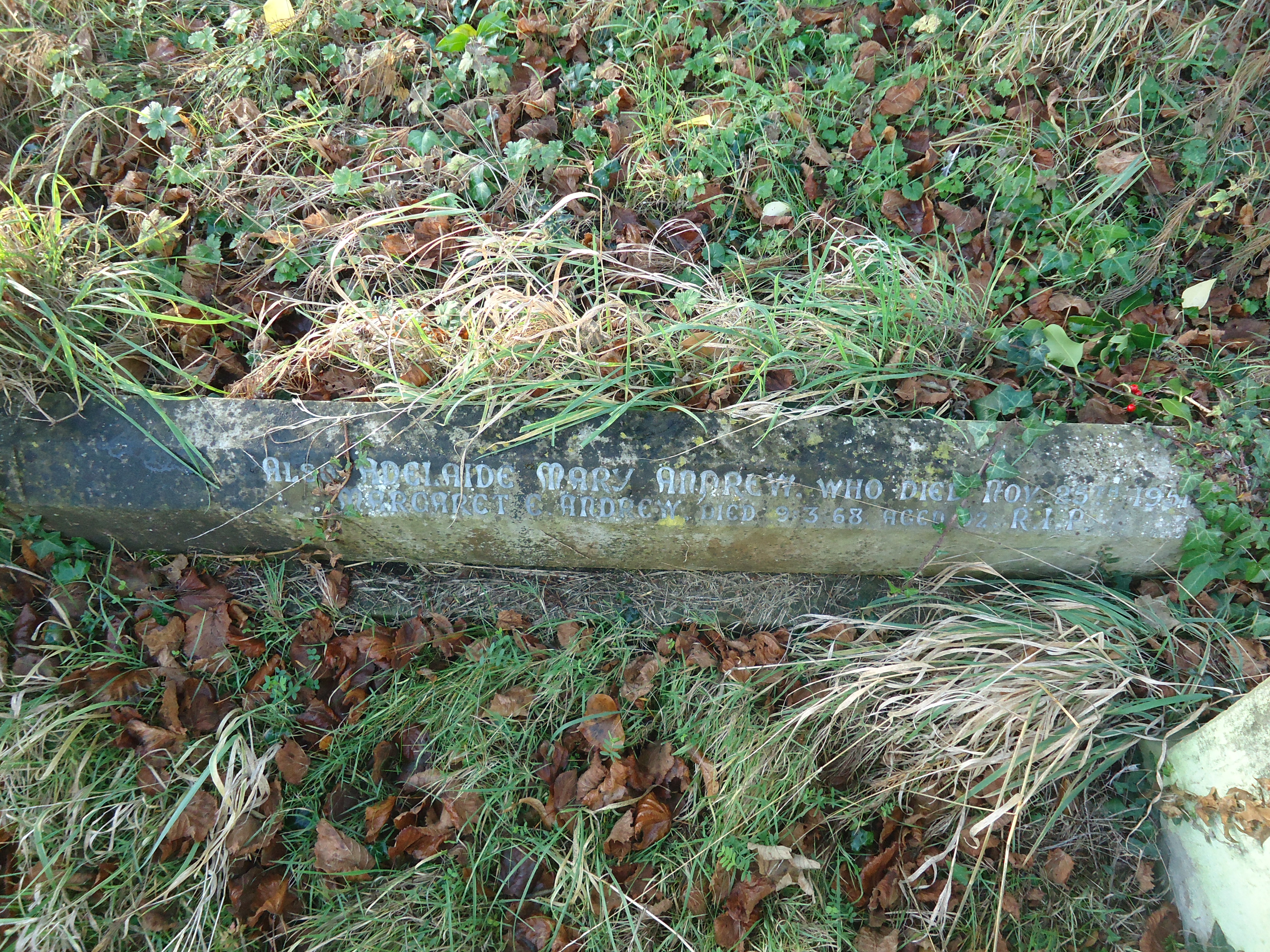
The Andrew family lived at 142 William Street for more than sixty years. Donald Macdonald Andrew, an engine fitter in the Works, and his wife Emily Jane had six children, a seventh had died before the 1911 census – Samuel Henry, George Edward, Ralph Macdonald, Florence K and twins Adelaide Mary and Margaret Elizabeth.

Donald’s funeral took place on June 17, 1919. He is buried in a double grave plot E8347/8 with his wife, son Ralph and daughters Adelaide and Margaret.

Adelaide Mary and Margaret Andrew

The terracotta grave markers

Back in the day there were flowers everywhere, right across the cemetery, displayed beneath glass domes; cultivated in the greenhouses. In 1907 the groundsmen were so busy that planning permission was sought for additional glasshouses to be built behind the caretakers lodge (see above illustration).

For those families who could not afford a headstone the flowers were a monument among the graves so densely arranged with barely a foot’s breadth between each plot.

Every grave was identified by a terracotta marker, sadly an unsatisfactory method. The system had worked well when a caretaker and gravediggers were employed in the busy cemetery but today they lie broken and scattered about. Some graves sport several of the brick like markers, others have none, and when searching for a grave they should be used with caution and only as a rough guide.

Section D 3 of 3

So what about the marker pictured here, found on a mound of earth. Is there a fallen headstone buried somewhere beneath? There are no clues, but it is possible to trace who was buried in plot D1083…

Molden 2

The facts …

The Radnor Street Cemetery burial registers reveal that there is only one person buried in plot D1083. His name was William John Molden, a boilermaker at the Works, who died on March 3, 1919 at his home, 145 Clifton Street. He was 44 years old and his funeral took place on March 8. Administration of William’s estate was awarded to his widow, Emily and his effects were valued at £179 5s.

Without applying for William’s death certificate we cannot ascertain his cause of death. Unfortunately we do not have a budget to pay for all the death certificates we need when researching the cemetery.

William was born on February 23, 1875 in Purton, the son of Eli and Hannah Molden. He began a six year boilermaking apprenticeship in the Works on February 23, 1890 aged 15. The 1891 census lists William as a 16 year old GWR Boiler Maker Apprentice living with his parents and older brother Sidney at Battle Well, Purton.  

William married Emily Painter in 1898 and at the time of the 1901 census they were living at 65 Redcliffe Street, Rodbourne with their four month old daughter Dorothy.

The family appears on the 1911 census living at 122 Clifton Street where William lists his occupation as Boilermaker Rivetter. The couple have three children, Dorothy Maud aged 10, Muriel Louise Hetty, 8 and Harold Sydney John 2. Another son, Raymond Edward Joseph was born in 1917.

William was a relatively young man when he died. Perhaps he died as a result of the post-war ‘flu epidemic which raged through Swindon as it did everywhere else.

SWINDON - RADNOR ST CEMETARY (3) 1905(2) - Copy