Cemetery problem resolved

In 1869 the people of New Swindon went to the polls to vote upon the question of a new cemetery. More than 480 votes were cast, 153 in favour of a new cemetery, 333 against, influenced no doubt by the Great Western Railway Company’s announcement that they intended to oppose the proposal.

The Wilts & Gloucestershire Standard reported – ‘The question, therefore, resolves itself into a sentimental grievance on the part of the Dissenters, who object to be buried in the churchyard. The proper course to have pursued would doubtless have been for the Dissenters to form a company, as was suggested by one of the speakers at a former meeting, and not to put an unnecessary tax on Churchmen and Dissenters alike.’

But the cemetery problem did not, and could not, go away. There were more meetings and discussions and William Morris continued to publish letters in his newspaper, the Swindon Advertiser. Then, more than eleven years later the matter appeared to have been resolved, but not without further problems as William Morris discusses in this hard hitting, editorial.

“Swindon, with its eighteen or twenty thousand of population, is drifting, or rather had drifted, into a position which even the smallest of communities might desire to avoid. For long anterior to the time when it was counted a public duty to decently house the living, the work of providing a last resting place for the dead was undertaken, and has always been most religiously adhered to. But Swindon, as we have said, has drifted into that unique, and we do not hesitate to say disgraceful, position of having literally no place to bury its dead.

This, we know, is practically to close all means for burying the dead in the ecclesiastical district of St Mark’s, New Swindon, for there is absolutely no other place beside the churchyard of St Mark’s in which interments can take place.

Then, as to the churchyard of the Old Town district. It has but very little more burying space left than has the churchyard of St Mark’s. So full has the yard become, and so far have the graves advanced westwards, the interments having been commenced in the eastern part and gradually worked on westward, that poor Cook, the unfortunate man who, the other day, was found dead in the snow at Walcot, now lies in his grave within ten or twelve yards of the very spot where he left his cart in Brock-hill on the night of the dreadful snow storm.

It cannot be long before, in the interest of the public health, this burying place also will be peremptorily closed. And what have we then? Absolutely nothing in the shape of accommodation for the burial of the dead out of the population of a parish of from eighteen to twenty thousand inhabitants: Is there in the whole country another town in such a pitiable, or, rather, disgraceful, position?

In addition to the two churchyards, there are, or rather have been – for the bodies have been sometime since removed from one of the places, the ground being required for building purposes – four other burial places connected with Non-conformist chapels – if, indeed, a strip of land, about ten feet wide, between the front of a chapel and a public street, can be called a burial ground. And, then, one of the two remaining graveyards – the old Independent yard, in Newport street, has been closed for very many years, thus leaving one place only in the parish in addition to the two churchyards – the small yard in Prospect belonging to, and exclusively used by, the Particular Baptists, for the interment of the dead of the whole parish, which, on a very moderate computation, cannot be less than from two hundred and fifty to three hundred per annum.

We believe we are within the mark when we say that by utilizing every foot of ground in all the available graveyards in the parish there could not be made room enough for the decent burial of one year’s dead without using ground “over again” and disturbing the remains of those who have pre-deceased friends and relatives still living only a few years.

And this is what a place like Swindon has come to! We hesitate not to say it is simply disgraceful, and when the reason for it all is understood, no right minded person can help pronouncing it contemptible.

The question of providing a public Cemetery is no new thing in Swindon. Twenty years ago it was regularly and persistently advocated on the ground that without such a convenience the inhabitants did not enjoy that full religious liberty to which they were entitled, and which the providing of a public Cemetery would give them. But the insidious priestly intrigues of those who are interested only in the narrowest and most exclusive of sectarian bigotry always succeeded in crippling every effort that was made.

In Swindon, for many years past, there has appeared no possible chance of carrying out so important a work as that of providing a public Cemetery on the simple basis of the duty we owe each other on the platform of equal rights in all matters of conscience and religious liberty.

Again and again, for years past, efforts have been made to avoid the difficulty in which the parish is now placed. Public meetings were held, resolutions passed, and committees formed, but it was always so managed that nothing further could be done. At one time elaborate statistics and statements were read to show that the existing burial space would be sufficient for years to come; at another time the always “sure card” of increased rates and unnecessary expense was played, and always, with the same result as now, a great deal being done “on paper,” but nothing anywhere else.

A loan of £10,000 has been applied for, and that sum the parish – that is, the parish less Walcot and Broome Farms – will have to repay. Land has been secured upon which this £10,000 will be expended in a hurry, and money spent in a hurry on public works is too often little better than squandered. But worse by far than this is the prospect of the parish having a year’s dead thrown on its hands with nowhere to place it. Progress is bound up hand and foot in that most tenacious of all bondages – red tape; on sanitary grounds every burying place in the parish ought to be peremptorily closed forthwith, and men, women, and children will continue to die. The work has now to be done under the most ruinous of conditions, and under the most unfavourable of all circumstances, and for no better reason, we hesitate not to assert, that in the past, reasons, which should have had no influence with reasonable and rational men for one moment, have been allowed to be all powerful and to stand in the way of anything and everything being done.

Extracts from The Swindon Advertiser – Saturday, February 5, 1881.

Just a few of Swindon’s non-conformist churches and chapels
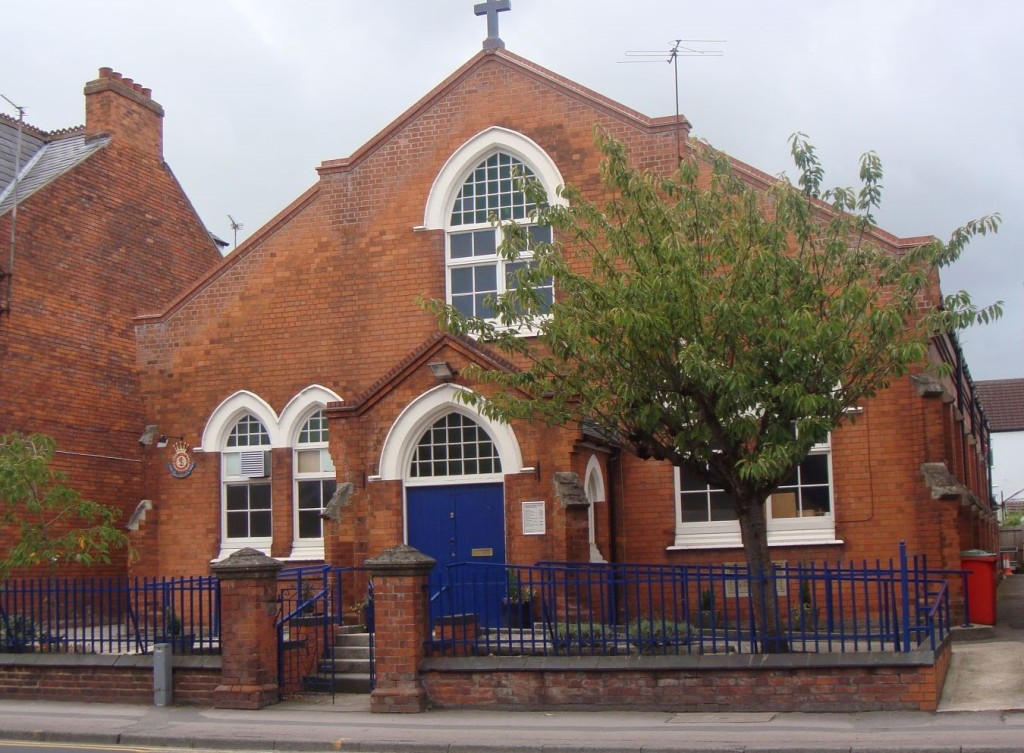
Salvation Army Citadel, Devizes Road

Rodbourne Baptist Church
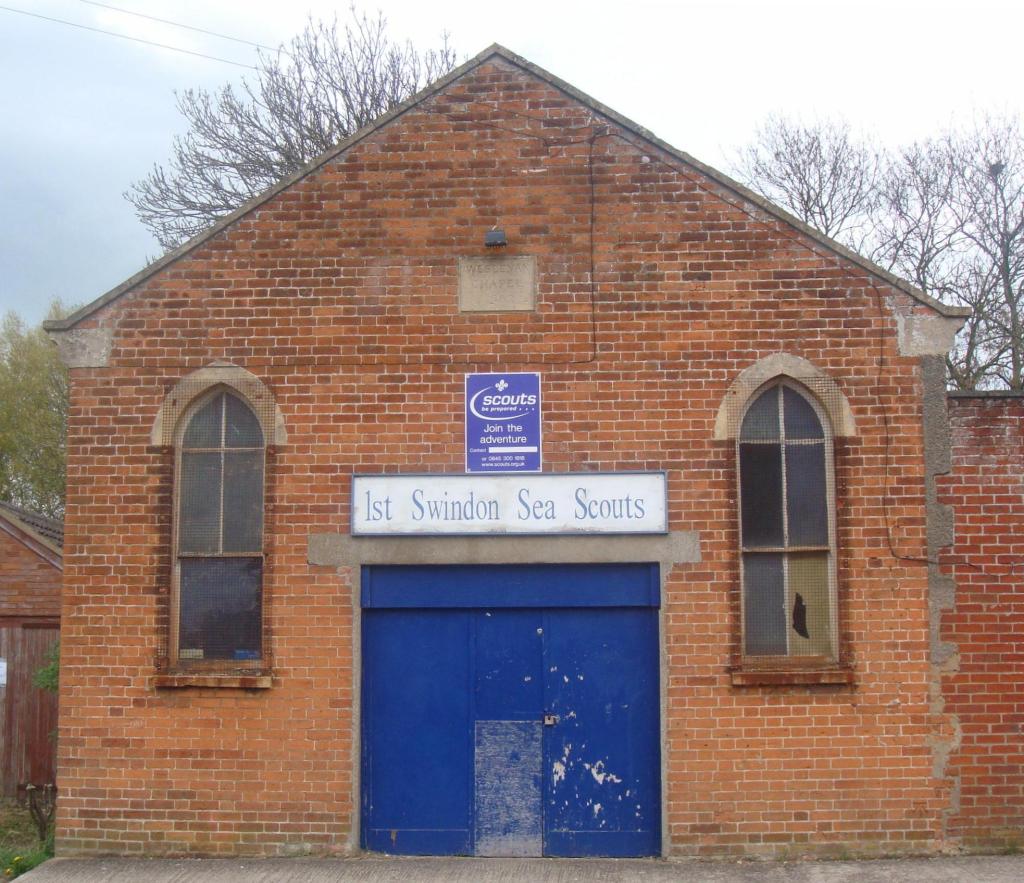
Wesleyan Chapel, Haydon Wick

Moravian Church, Dixon Street

A few more words …

At the beginning of our cemetery walks Andy makes a short introduction and then hands over to me to say something about the beginnings of the cemetery.

I recently found some additional information on the UK Parliament website which you might find interesting.

Burying the dead

Six foot under

In 1666, and again in 1679, Parliament ordered that all bodies should be buried in a shroud of woollen cloth. Though chiefly intended to stimulate the English woollen industry, the measure remained on the statute book until it was repealed in 1814.

The practice of digging graves to a depth of six feet goes back at least to the 16th century and is believed to be a precaution against plague.

Regulations now specify that there must be a layer of earth of at least six inches between each coffin in a grave and that there must be at least three feet (sometimes two feet) between the final coffin and the surface.

Nonconformists and Catholics

Until town cemeteries were set up in the mid-19th century, most burials took place in parish churchyards. The Church of England provided burial space both for its own members and for those of different faiths – such as nonconformists, Catholics and Jews – but burials had to be conducted by Anglican clergymen in accordance with the prayer book service.  

In the larger towns, however, non-Anglican groups set up their own burial grounds where they could hold the services specified by their own faiths and denominations.  

In 1880, after many years campaigning by nonconformists, Parliament passed the Burial Law Amendment Act, which removed the obligation to follow the prescribed form of service for burial in Anglican churchyards.  

This was of particular importance in parishes where there was no nonconformist or Catholic burial ground nearby.

Suicides

Suicides were traditionally buried at a crossroads, sometimes with a stake through their body. This barbaric practice was condemned in Parliament in 1822 after the foreign secretary, Viscount Castlereagh, committed suicide but was buried in Westminster Abbey.  

An Act passed in 1823 allowed suicides private burial in a churchyard, but only at night and without a Christian service. A review of the law resulted in a new Act in 1882 allowing burial in daylight hours. Parliament did not decriminalise suicide until 1961, despite the fact that it had been suggested in 1823.

Shall Swindon have a Cemetery?

The history of Radnor Street Cemetery began long before James Hinton sold the 11½ acre plot of land on Kingshill; long before popular local architect W.H. Read was commissioned to design the cemetery and Messrs. Phillips and Powell and George Wiltshire won the contract to lay out the ground and construct the requiste buildings.

Read here about the campaign that began in earnest in 1869 – more than ten years before the cemetery was built.

A CEMETERY FOR SWINDON. The question, shall Swindon have a cemetery, and in this matter be put on a par with other towns and villages? has again cropped up.

There no single question where the principles of right and good taste are more clear than they are in this question of a public cemetery. There is no call made by the religious liberty we as a nation enjoy more emphatic than is the call that each religious denomination should enjoy the right to consign its dead to the earth after its own fashion. Yet there are to found those who can stand in the way of this right being granted, and who can prate loudly about increased burdens on the shoulders of the poor, and such like prattle, without the real interests the poor  being for one moment seriously thought of, and we are therefore to see a pretty squabble before this question, ” Shall Swindon have a Cemetery” is settled.

A short time since a proposition was before the nonconformist bodies of our town for providing a purely unsectarian cemetery, open to all parties, influenced by none. This plan it was perfectly within the power of those whom it would have served to have adopted, and have made successful. Had it been adopted it would have carried with it this recommendation—it would have been in strict conformity with the very principles of nonconformity: it would been established on purely independent grounds, and no man against his will would been compelled to pay a single farthing.

But no sooner was this independent course suggested to those who profess to love and live by independency, than there were found those who could cry out most lustily, “We don’t want to be independent; let tax others for that which we are asking.” The scheme was in consequence knocked in the head, and now we have the question, “Shall a cemetery be provided by a rate on all property within the parish claiming the attention of ratepayers.”

There is this to be said in favour of the proposition as it now stands before ratepayers: a public burying place is a public necessity, and should, therefore, be provided for out the most broadly collected public fund we have. The public weal demands that the dead body should be at once consigned to the earth this being so it surely can be no act of injustice if we call upon the public purse for funds to accomplish that which the public weal demands.

There is another aspect to this question to which we need not refer beyond this: In a town like Swindon, with its two churches, established as by law, and its twelve chapels, established in conformity with the consciences of men, that religious liberty upon which we so much pride ourselves, and which has been fought for, through many generations, cannot said truly to exist among us long as we are deprived of the opportunity of burying our dead after our own fashion; so long as it remains the power of one man to harrow and distress the feelings, by an arbitrary act. Of those who dare to hold independent views on some mere matter of detail in the great scheme of God’s religion. But, as we have said, we are to have a fight over this cemetery business, and Saturday next is appointed for the first great marshalling of the forces.

There was a skirmish on Saturday last, but it was mere babbling piece of business; the fight has yet to come.

Extracts taken from a report written by William Morris and published in The Swindon Advertiser Monday February 1, 1869.

Cemetery Walk

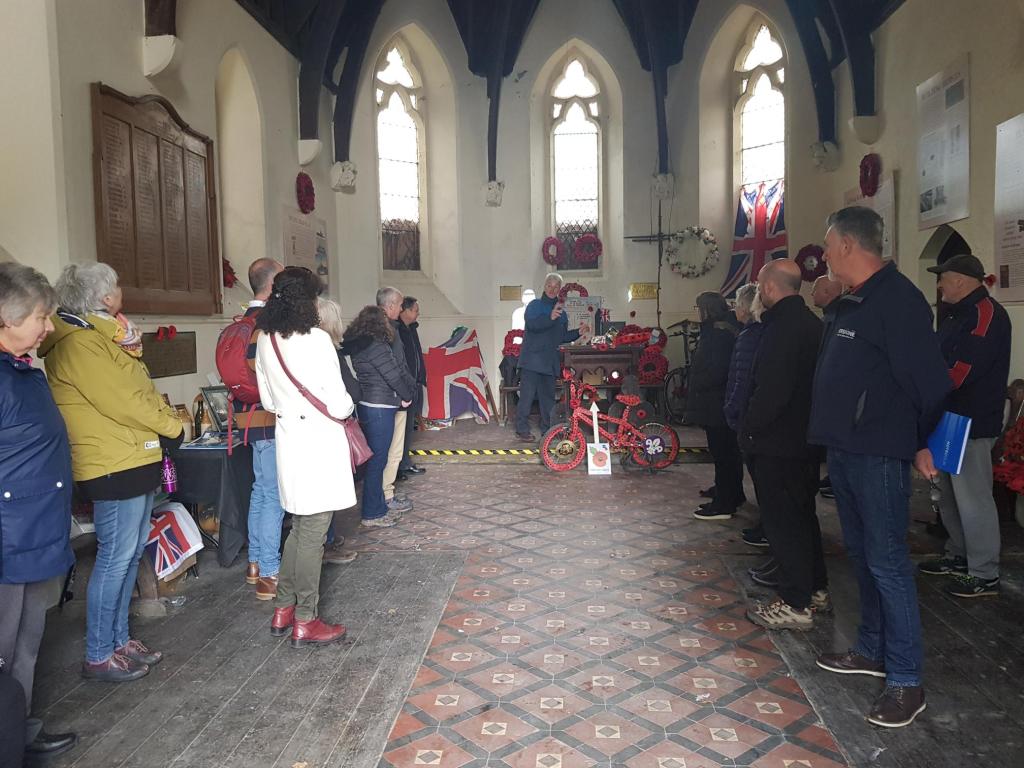
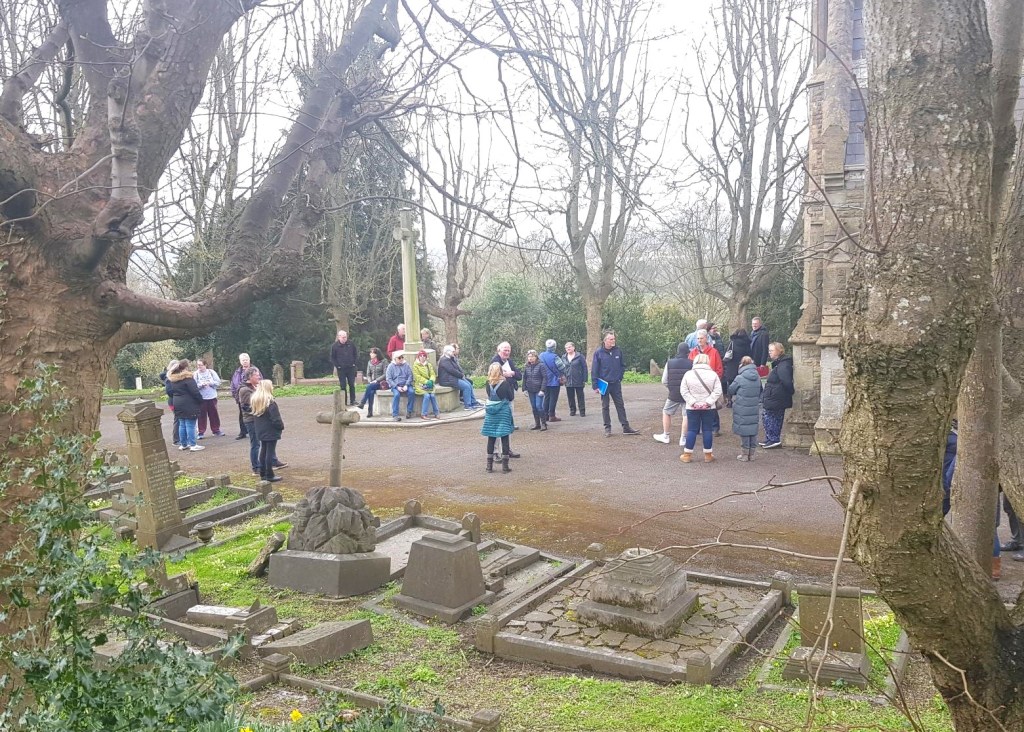
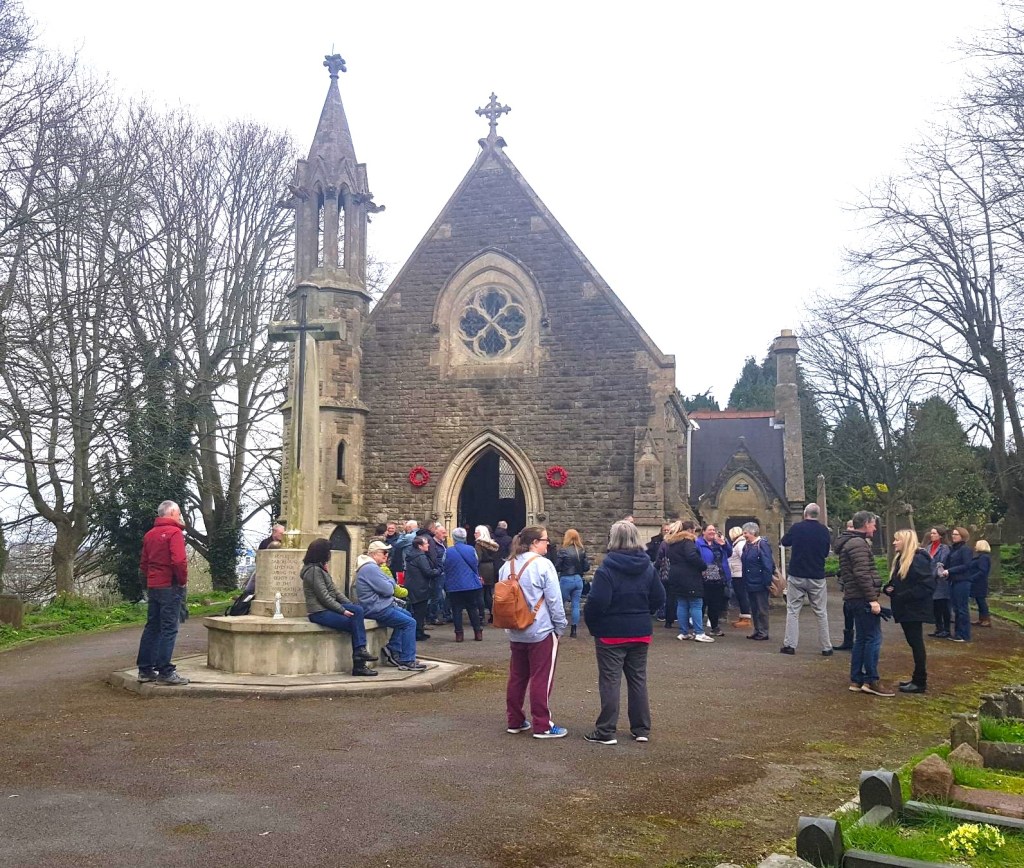
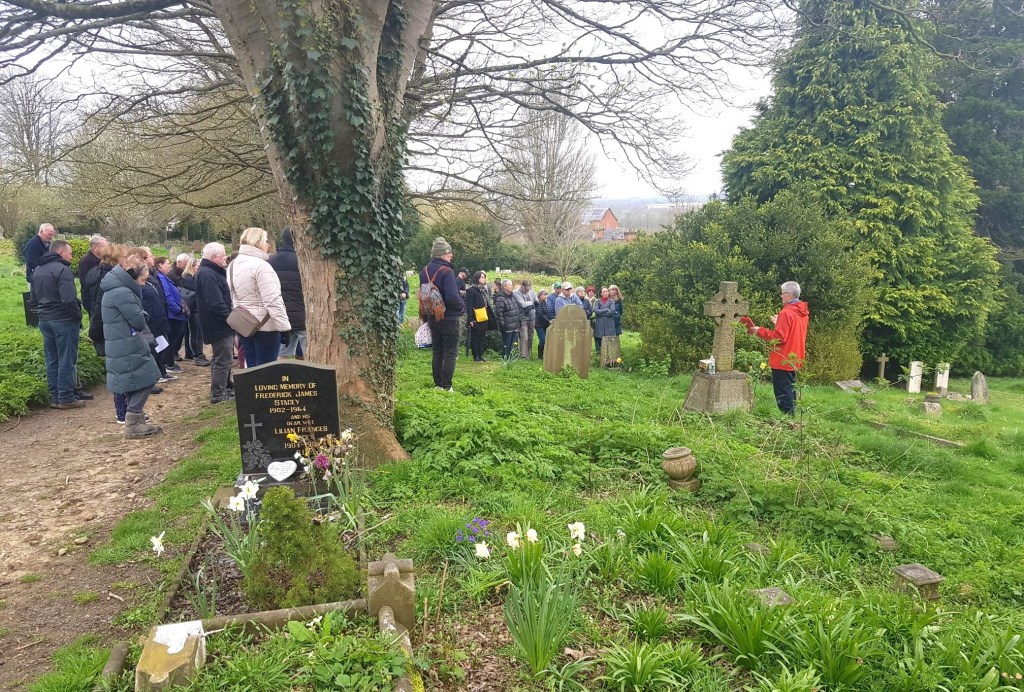
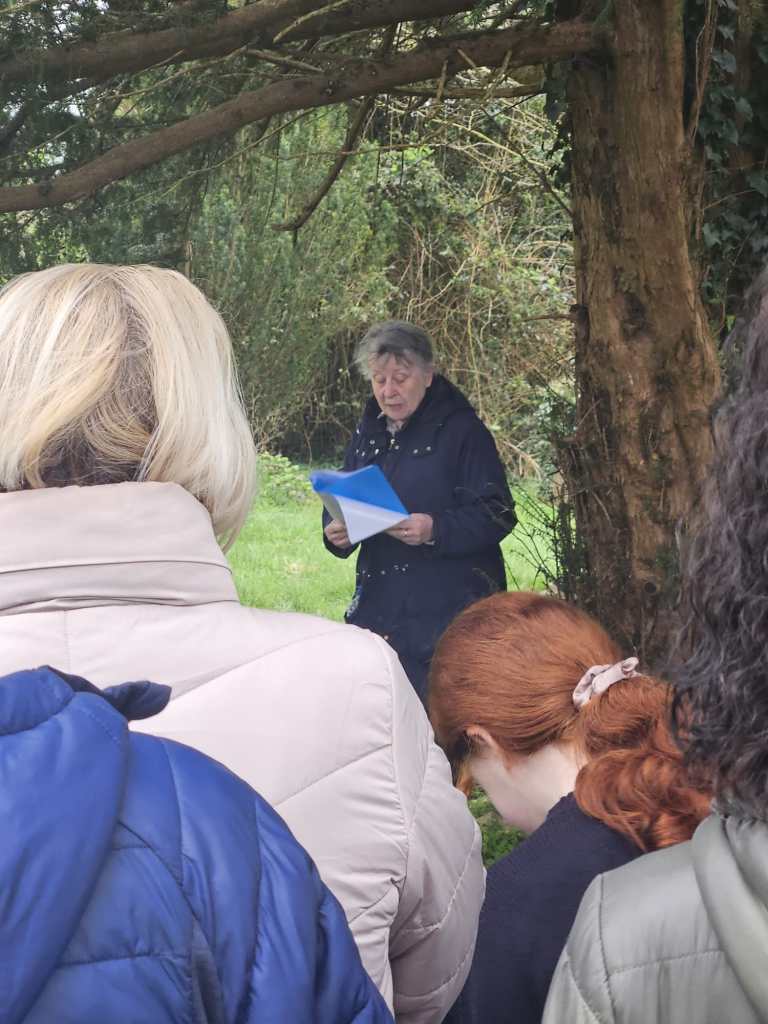
We had torrential rain, thunder and eventually beautiful sunshine on our guided cemetery walk yesterday, during which we welcomed regular and new cemetery followers.

Kevin updated us on the work of the CWGC Eyes On Hands On team and in honour of the forthcoming 80th anniversary he spoke about Private Kenneth William Scott-Browne, killed in an air accident during D Day training.

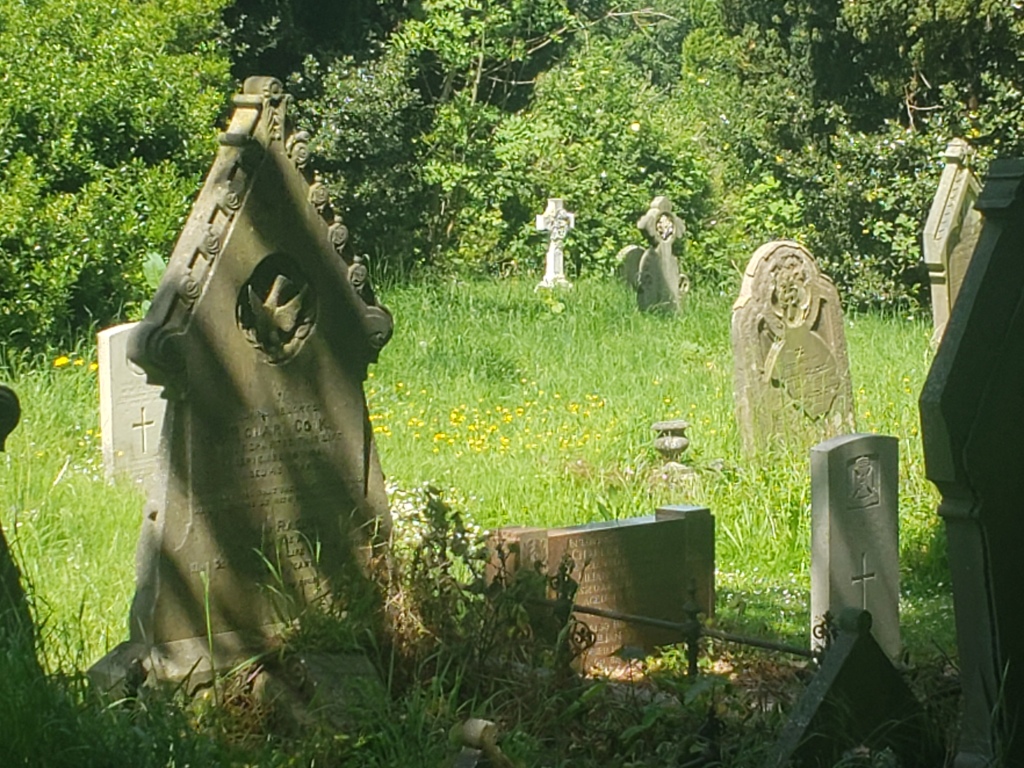
Here are some photos from the day.

Guided Cemetery Walk April 28.

Thank you to everyone who joined us on Sunday for a guided cemetery walk. We are always so fortunate with the weather and following a morning of rain we enjoyed a dry and pleasant afternoon.

This week Andy, Kevin and I told the stories of Trooper Cecil Howard Goodman and Scout leader William Rowland Bird among others and I will (eventually) sort out the story of Olive Henry, which has left me in confusion over recent weeks.

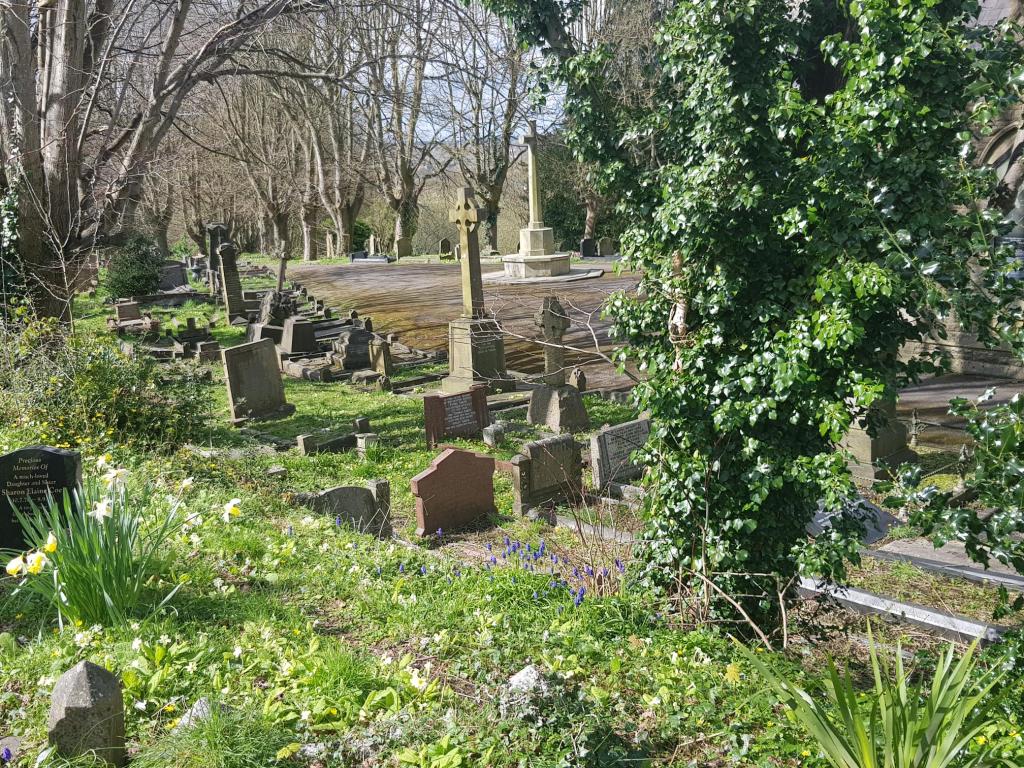
Here are a few cemetery photographs. Our next walk is on Sunday May 26.

Guided cemetery walk

Many thanks to everyone who joined us for the first of this season’s walks. The weather was kind and the rain held off.

We were joined by members of the Menham family as Andy spoke about Swindon Town football legend Bob Menham. Kevin followed by telling us of the military career of his son Reginald Menham and reading a poignant letter taken from Mark Sutton‘s book Tell Them of Us.

Further talks included the stories of Frederick and Elizabeth Alley, Minnie Price, Ethelwyn May Collet, Elsie Wootten White and another sporting legend Scottish rugby player Dr. Charles Reid. Jon told us about the continuing work of the volunteers and introduced members of the team who give so much of their time to looking after the war graves and helping visitors find family graves.

There were lots of fascinating conversations as visitors shared their family history stories with us. It was lovely to meet Clare and I hope you found your family grave. I look forward to receiving your information and photographs to publish here.

Our next walk will take place on Sunday April 28. Meet at the chapel for 2 pm.

Guided Cemetery Walks

Looks like we might all see some rain today. But spring is just around the corner and our guided cemetery walks will begin again at the end of this month.

The Spring walks are scheduled for:

March 31, April 28 and May 26.

Summer walks are yet to be arranged but our Autumn walks are already in the diary.

September 1 and 29 and October 27.

Our Remembrance Day Service is Sunday November 10.

Well, what can you expect from a typical guided cemetery walk?

A gentle meander through 11½ acres of our picturesque Victorian cemetery. Our CWGC volunteers will tell you about their work to maintain the war graves and the incredible stories they have discovered. Learn about the people who made Swindon; from the boilermakers to the businessmen. Hear about the women who contributed to every aspect of life in Swindon from the home, the factory floor and the magistrates bench! This year we will have even more stories to tell.

We meet at the cemetery chapel for 2 p.m.

Another chapter in the Uzzell family history

And this time I need some help identifying a couple of photographs.

We’ve already met David Uzzell – the inspiration behind the work of war poet Edward Thomas, so now let’s meet his brother John.

John married Rachel Bennett on Christmas Day 1864 at the parish church in Cirencester. He worked as a baker and in 1871 lived with Rachel and their two children Emily 6 and Frank 4 in Gloucester Street, Cirencester. His parents lived in nearby Factory Yard alongside his brother David and his wife Fanny and their son William.

John and Rachel went on to have a large family of at least nine children. Four sons – Frank, Harris, James John and Raymond and five daughters – Emily Rosina, Edith Ellen, Mabel Harris, Mary Maria and Minnie Bennett. In 1881 they lived in Ashton Keynes; in 1891 they were at 27 Stepstairs Lane, Cirencester and in 1901 they were in South Cerney.

At the time of her death in 1907 Rachel was living at 17 Ipswich Street, here in Swindon. A couple of her married daughters had moved to Swindon, which maybe how she came to be here. She was buried in grave plot B2754 on November 12, 1907.

John survived her by 15 years. He died aged 79 at the Purton Infirmary and was buried with Rachel on September 12, 1922.

And now those photos.

Is this John and Rachel with their children? Or is it John Uzzell the elder with his wife Sarah and their children? Unfortunately, the photograph is undated.

And who is this? John Uzzell the elder or the younger? Is this Rachel? Again, undated.

Daniel Campbell McBeath Walker

Daniel Campbell McBeath Walker was born on October 5, 1834 according to his GWR employment records. The sister with whom he lived, Charlotte Hartford Walker, was born in 1825 in Edinburgh, the daughter of Duncan Walker and Elizabeth McBeath so it is probably safe to assume similar facts apply to Daniel.

He first joined the Great Western Railway as a clerk on July 19, 1870 and in 1871 he was boarding with the Brooks family at 3 Eastcott Lane. However, ten years later he was living at 7 Hill Street, Bedminster with his two sisters Charlotte Hartford Walker, an upholsteress and Sarah McIntyre Walker, a Lady’s Maid.

Returning to the GWR employment records, Daniel re-entered the company on January 2, 1882. He was 48 years old. In 1895 he was living with his sisters at 16 Eastcott Lane.

The following inquest was held to establish the events of his traumatic death on May 30, 1895, some of the details are too distressing to be published here and have been omitted.

On Thursday morning Mr W.E. Nicholson Browne, County Coroner, held two inquests at Swindon. The first was held at the “Globe” Tavern, Old Swindon, touching the death of Daniel Campbell Walker, a clerk in the GWR Works, residing in Eastcott Hill.

Charlotte Hertford Walker was the first witness called. She said deceased was her brother, and his age was 60 years. He was a clerk in the GWR Works but had not been to work since Tuesday week. He had a fall in the Quarries about ten days ago, which shook him up a great deal, and he went to Clevedon with witness, and returned on Tuesday last. He had suffered from fits some 12 years ago. About 5 years since he was confined in Dr Iles’ private lunatic asylum at Fairford for some thirteen weeks. The witness also said that his (deceased’s) second brother committed suicide in the same manner. Deceased had a religious mania. He went to bed about 10 o’clock on Wednesday night, when he was very calm and collected. She (witness) looked into his bedroom about seven o’clock Thursday morning, when he seemed to be asleep.

The jury, of whom Mr Job Day was foreman, returned a verdict of “Suicide whilst in a state of temporary insanity.”

Extracts from The Swindon Advertiser, Saturday, June 1, 1895

Daniel Campbell Walker of 16 Eastcott Lane was buried in Radnor Street Cemetery on June 1, 1895. He is buried in grave plot B2407, a public grave. His sisters remained living in Swindon until 1903 when Sarah died and was buried in grave plot B2409, another public grave and close to her brother. Charlotte returned to Bristol where she died in 1907 and was buried in Ridgeway Park Cemetery.
A Bench with a View

It was a blustery Monday at the cemetery with a chill in the air and rain on the wind, but it didn’t prevent me from stopping at my favourite bench.

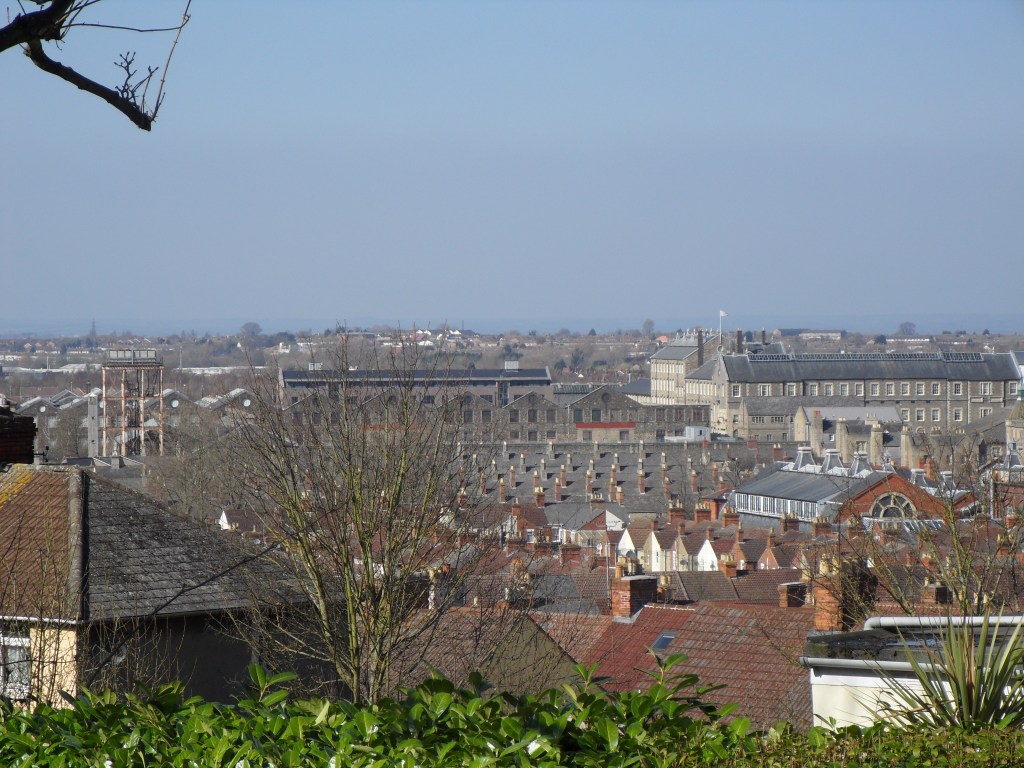
There are four benches (I’m honour bound to keep the 4th one secret) in the cemetery; but this is my favourite one with a view across what was previously known as New Swindon, a railway town.

Here the eye is drawn to the housing development built in the early 2000s on the site of the ‘A’ (Erecting) Shop. A Shop covered more than 11 acres (coincidentally the same size as Radnor Street Cemetery) and was one the largest covered workshops in the world. The red brick apartment blocks, clearly seen from the bench, and the surrounding houses are named in honour of George Jackson Churchward Locomotive Works Manager at the GWR Swindon Works 1902-1916 and Chief Mechanical Engineer from 1916 until his retirement in 1922.

From this bench you can see what remains of the 19th century railway works, more familiar to a younger generation as the McArthur Glen Designer Outlet Village and the railway village, the company houses once home to the early workforce. So many of those railway men and their families moved up the hill to rest in peace in this cemetery.

It was at this bench that I composed the ghostly story of Edie and her soldier son – a tribute to one Swindon family, yet typical of so many others.

This is my favourite bench. Perhaps we’ll meet here one day.