William James Pitt – no longer physically fit to serve

During this month of remembrance I will be telling the stories of those buried in the cemetery who died as a result of their military service.

Originally published on January 30, 2022.

This image has an empty alt attribute; its file name is pitt-wj.jpg

The re-imagined story …

Who would have thought the country could be so excited at the prospect of going to war? Perhaps it was the heat – it was unseasonably hot, that second week in August 1914.

Thousands of soldiers, some said more than 17,000, arrived in Swindon with as many as five or six soldiers billeted in one house. Even the school buildings were temporarily used as barracks, delaying the return after the summer holiday, much to the excitement of the children. Common sense did eventually prevail and they were soon returned to the classroom.

The normally quiet streets of Swindon were transformed by military movements – soldiers on route marches and long columns of motor lorries and ambulances.

The excitement was palpable – after all, it would all be over by Christmas. What an opportunity to travel for the young men who only ever expected to see the inside of the Works. No one could have ever imagined how it would all play out, the crippling injuries, the dreadful death toll, the loss.

The shops were busy, even though tradesmen were encouraged to supply their regular customers with no more than their usual requirements. Panic buying was discouraged but those who had the wherewithal stocked up on essentials.

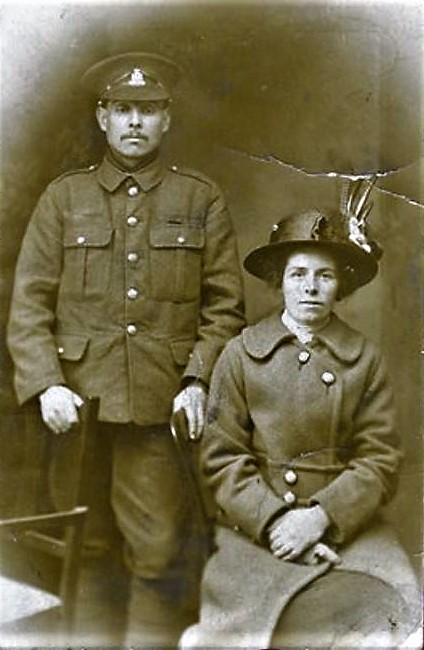
And even the photographic studios were busy, the appointment books full day after day. Young lads having their photographs taken with friends as they went on their way to enlist at the Recruitment Office. Sweethearts photographed to mark a hastily announced engagement and the promise of a wedding. A young mother and baby whose photograph would nestle in a father’s top pocket, gazed on in some filthy trench on the Western Front.

But William Pitt was different. He had already seen war at first hand. He had served in India and South Africa. A look in his eyes said he wanted no more of it.

Celia wore her best coat, the one with the big buttons, and her hat with the feathers and the bow. They both stared into the camera. After all, it would all be over by Christmas.
The facts …

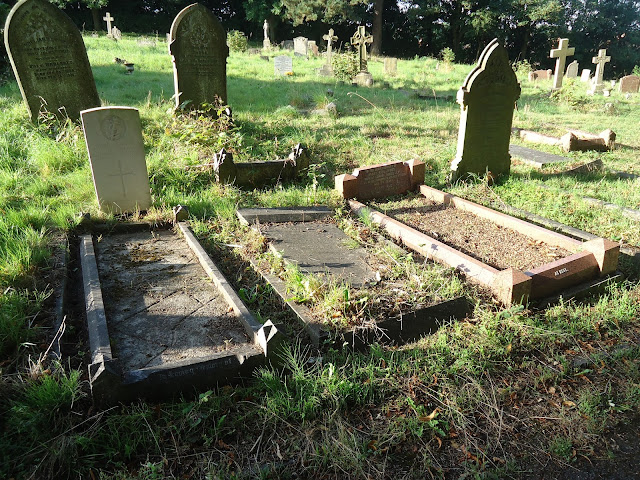
When William James Pitt died in 1917 he had served his country well, but of course that didn’t mean he had a fine funeral and a headstone on his grave – not then. But a hundred years later his record of service was rediscovered and the Commonwealth War Graves Commission added him to their records and erected a headstone to commemorate his sacrifice.

William James Pitt was born in 1871 in Newport, Monmouthshire.  He married Celia Sarah Davis on November 25, 1905 at the Register Office here in Swindon.  William worked as a Boiler Maker and Labourer in the Loco Works and the 1911 census shows the couple living at 12 Hawkins Street, Rodbourne with their four young children.  They went on to have another two children.

William enlisted in Swindon on October 20, 1914. He was a member of the National Reserve having previously served in the Royal Warwick Regiment. He had served in India for 5 years and 4 months; South Africa 1 year and 9 months and Bermuda 11 months.

He took ill while serving as a railway guard. His medical records include the following report:

Originated at Newton Tony April 1915 History of repeated colds during past winter, April 1915 16 days in Hosp: with so called ‘influenza’ after this kept losing flesh, cough did not leave him July 11th again reported sick, admitted to Hosp: with pleurisy, tuberculosis of lung developed caused by ordinary military service exposure whilst on duty. Has cough, pains in chest, rapid pulse, loss of weight & night sweats.

He was suffering from Tuberculosis (lung) & Pleuritic adhesions and was declared unfit for military service. The cause of his illness was exposure & getting constantly wet and not caused by active service or climate, but by ordinary military service (exposure whilst on duty). He was discharged in September 1915 in consequence of being no longer physically fit, having served 346 days.
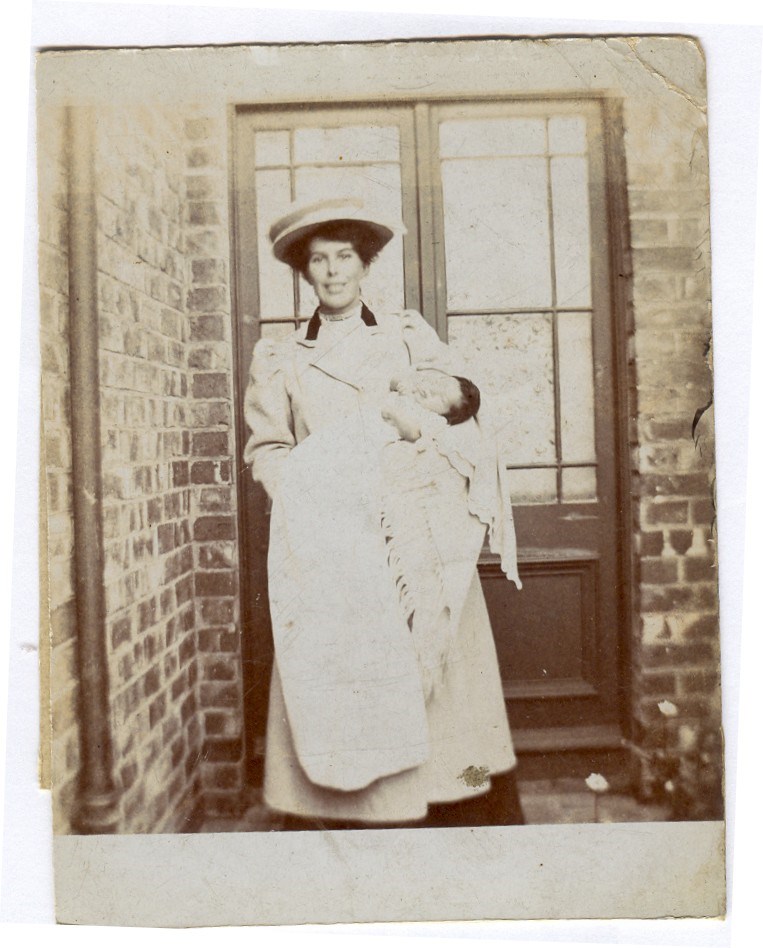
Celia and baby

The family history information on the Ancestry website tells how William’s daughter Violet remembered playing round her father’s feet in the kitchen, making dens under the blanket that covered his knees.  She remembered that when he came back from the war he was ill and had to live in a special shed in the garden of 21 Hawkins Street.

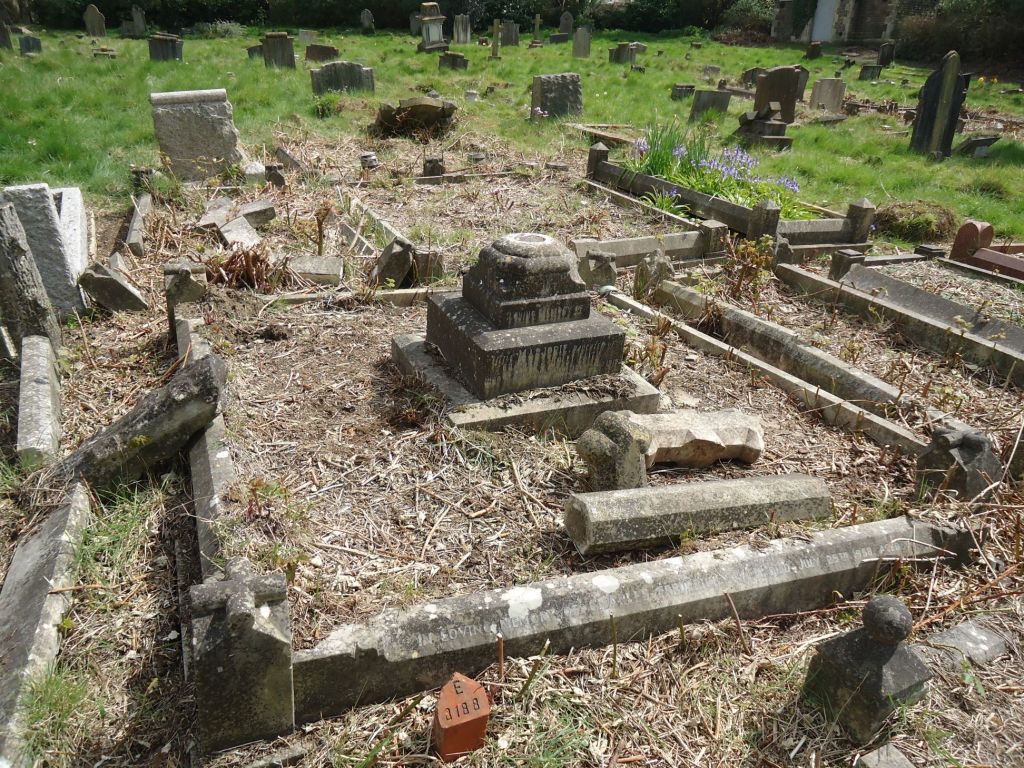
William died on July 17, 1917 at 21 Hawkins Street. He was 45 years old. The cause of death was Pulmonary Tuberculosis. He was buried in Radnor Street Cemetery on July 21 in plot B1854, a public or pauper’s grave, which he shares with three other unrelated persons. Their names are inscribed at the bottom of the Commonwealth War Graves headstone.

Celia later worked as a cleaner at the Civic Offices in Euclid Street but how she managed in those early post war years with six children to raise alone has passed out of family memory.  She later lived at 142 County Road, opposite the football ground.  She died there in 1947 having survived yet another world war.
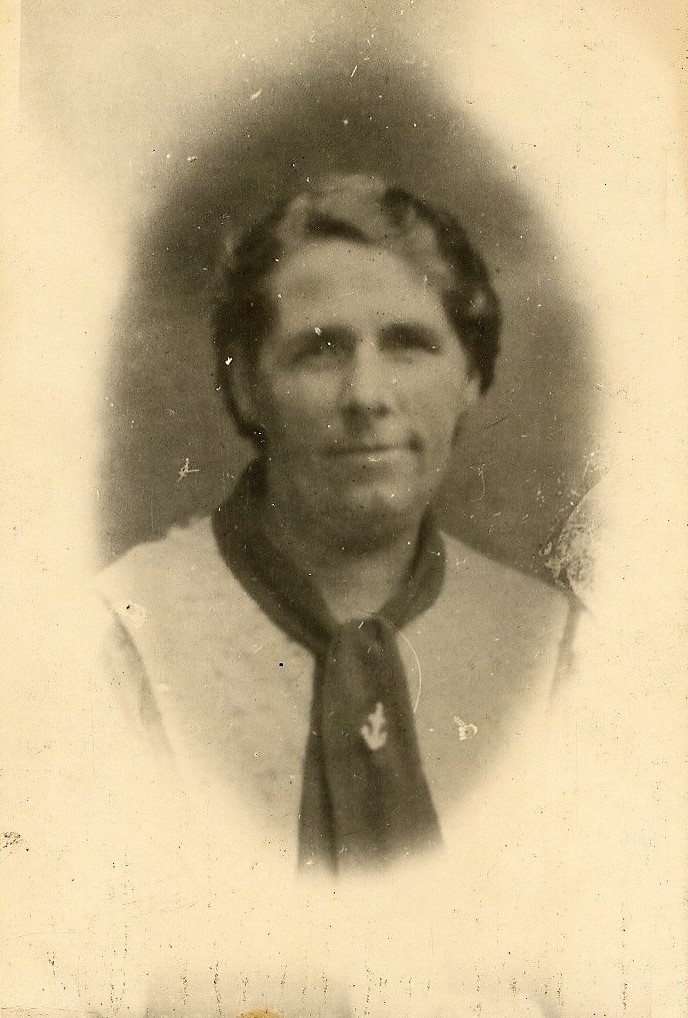
Photographs published courtesy of S. Arman
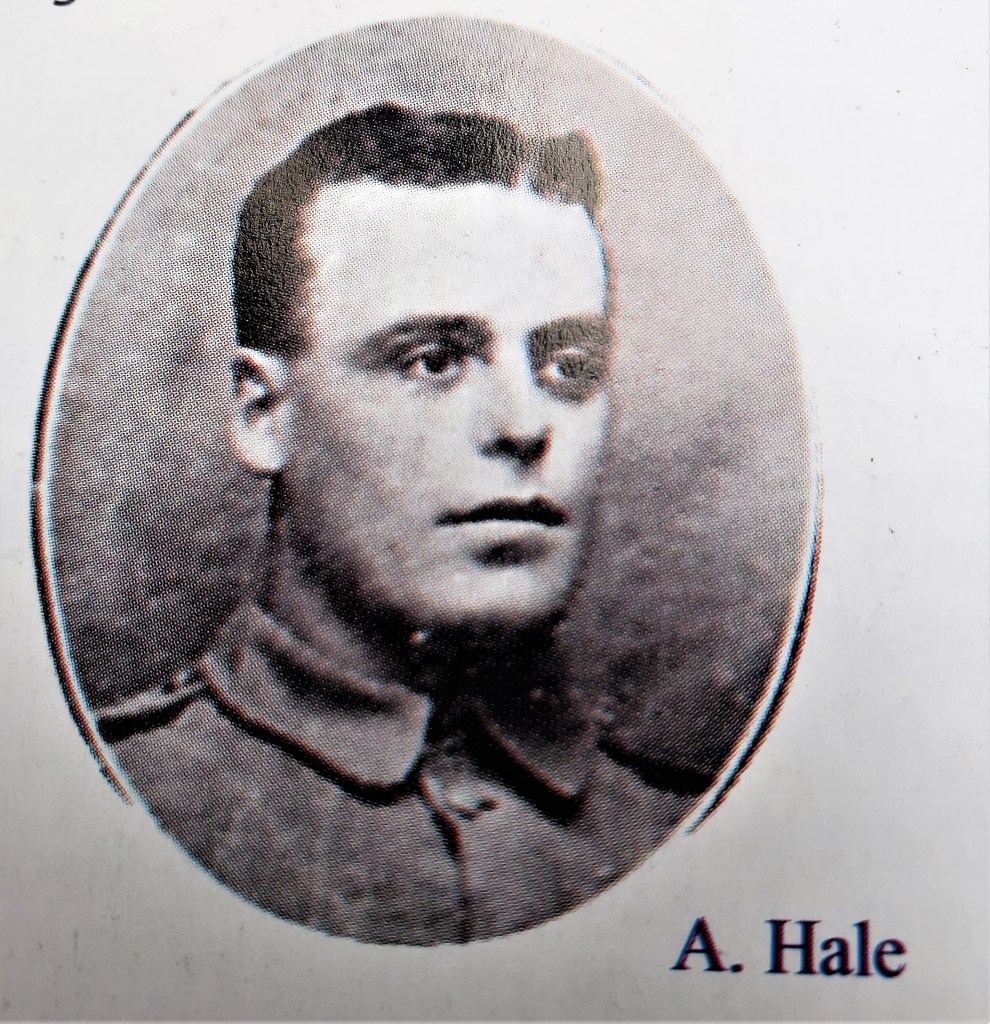
Pte. Alfred Hale – father and son

During this month of remembrance I will be telling the stories of those buried in Radnor Street Cemetery who died as a result of their military service.

The Commonwealth War Graves headstone on grave plot C3653 commemorates two military heroes who served in not only the Great War but in the South African campaign as well.

Alfred Hale born in c1869 in Enford, Wiltshire was about 17 years old when he enlisted with the Wiltshire Regiment in 1886. Having served for 7 years he was transferred to the Reservist List. In 1894 he married Mary Jane Paradise at the church of St. Mary the Virgin, Devizes. He was recalled to serve in 1898 and again in 1900. (A son born that same year was named Frederick William Mafeking). He was discharged and added to the Reservist List in 1902. Having received the Queen’s South African Medal with clasps he might have expected that this was the end of his military career. However, in September 1914 he was recalled to serve yet again, by then he was 44 years old.

Perhaps Mary Jane was used to being a soldier’s wife. Perhaps she never expected her husband would return from that terrible war in South Africa. But the outbreak of the Great War in 1914 must have brought a whole new level of worry when her eldest son Alfred enlisted and her husband was recalled.

3655 Pte Alfred Hale was discharged unfit to serve on September 25, 1916. He had cataracts in both eyes. His medical records state that his condition was not the result of and not aggravated by his military service and that an operation was advised. Alfred returned to his home at 163 Beatrice Street, Gorse Hill. He died at the London Hospital on November 7, 1919 aged 49. He was buried in grave plot C3653 on November 13, 1919.

200214 Pte Alfred Hale, aged 24 was serving in Israel and Palestine when he died from pneumonia on February 21, 1919. He was buried in Ramleh War Cemetery. He left £30 11s 11d to his mother, which included a War Gratuity of £26 10s.

Father and son are both remembered on a CWG headstone. The inscription reads:

3655 Private A. Hale

Wiltshire Regiment

7th November 1919 Aged 49

Also in memory of his son

200214 Pte A. Hale

Wiltshire Regiment

21.2.1919

Sharing the grave with Alfred is Mary Jane, his wife, who died in 1958 aged 85 years old. The inscription reads ‘Rest After Weariness.’ Buried with them is their son Frederick William Mafeking who died in 1953 and George Saloway, their daughter’s husband, who died in 1954.

Tell them of Us by Mark Sutton

Corporal Charles Edward Stroud – Tell Them of Us

Charles Edward Stroud was born on March 8, 1894 the son of William Henry Stroud, a storekeeper in the railway factory, and his wife Elizabeth Mary. William and Elizabeth had a large family of nine children but by the time of the 1911 census only four were still living.

We can find out a lot about Charles’ working life thanks to the UK Railway Employment Records 1833-1956 available on Ancestry.

Charles began work in the railway factory on June 1, 1908 as a 14 year old office boy. On December 6, 1909 he transferred to R shop to begin a five year fitting and turning apprenticeship. These records were meticulously updated and the last entry referring to Charles reads: War – Military duty, last at work 29/8/1914. Apprenticeship terminated.

Sadly, we know little about Corporal Stroud’s military career. You may wonder why so many of the WWI servicemen’s’ records are lost. In September 1940 the War Office repository in Arnside Street, London was hit during a bombing raid, destroying more than half the military records stored there. What remains of these records (referred to as the ‘burnt documents’) are available to view on microfilm at the National Archives and also online at Ancestry and Find My Past. There is roughly a 40% chance of finding the service record of a WWI soldier. But before you get started on your research why not visit Local Studies at Central Library, Swindon where the staff will be able to help you.

The go-to-book for information on Swindon men who served is Tell Them of Us by Mark Sutton. We have a few copies for sale, available during our cemetery walks. (Our next walk is Sunday October 29, meet at the chapel for 2 pm).

Corporal Charles Edward Stroud served with the 2nd Battalion of the Wiltshire Regiment. He died of wounds on March 6, 1916 at the General Hospital Cambridge. His body was returned to 41 Stanier Street, Swindon and the funeral took place on March 11. He is buried in plot D1501 with his parents. He was 21 years old.

The life and times of Richard and Ada Jones

Today’s story has been revealed by an enquiry through the Radnor Street Cemetery Facebook page and two newspaper articles.

When Hilda Lawes was interviewed by the Swindon Advertiser in 1995 she spoke with affection about her childhood, living in Faringdon Road above her parents’ fish shop.

It had taken Ada and Richard Jones a long time to get to Swindon.

Ada was born in 1879 in Canton, Cardiff the daughter of Edward Barrow, a stonemason, and his wife Mary. She married Richard William Amhurst Jones in Cardiff in 1897. Their daughter Ada was born that same year in Cardiff. In 1899 a second daughter Emma was born followed by son Richard William in 1902 when the family lived in Tilehurst, Reading where Richard worked as a Ferryman. The family were soon on the move again and Edna was born in 1905 and Hilda in 1907 in Southampton. They eventually arrived in Swindon where Matilda was born in 1910. By 1911 the family were living at 26 Commercial Road where Richard worked as a fish dealer. The census of that year informs us that they have been married for 14 years and have 6 children who are all living. Their last child, Freda, was born in Stratton St. Margaret in 1912.

Their family complete, their business established, Richard and Ada might have thought they were settled.

The Great War was raging when Richard enlisted in Swindon in November 1915.  He was 41 years of age with a family of seven children to support. His military records reveal that he served in the RAMC as a Motor Driver and Mechanic from 1916 to 1919 in what was then known as German East Africa. During 1916 he was injured in a bomb explosion suffering wounds to his left leg. That year he also contracted malaria. He remained in East Africa until the end of the war, returned to England in January 1919 when he was declared 30% disabled, but still transferred to the Reservists List.

Hilda, then aged 12, remembers him returning from the war and how the family moved to new premises at Faringdon Road.

Despite his injuries, work carried on apace for Richard, but family life sounds as if it was rather fun.

In June 1931 Richard and Ada’s youngest daughter Freda entered the Carnival Queen competition organised by the Evening Advertiser. She was crowned by popular actress Evelyn Laye (who had a Swindon connection) and was presented with a silver rose bowl.

The Swindon Advertiser report includes a fantastic photograph of Richard riding his motorbike with Ada sitting in a wicker sidecar. The second photograph is a grainy picture taken from the North Wilts Herald of their youngest daughter Freda crowned Carnival Queen in 1931.

Ada died aged 63 at 39 Faringdon Road. Her funeral took place on October 13, 1937 when she was buried in Radnor Street Cemetery in grave plot C4490. Richard died aged 65 at 176 Pinehurst Road, the home of his youngest daughter Freda, and was buried with Ada on November 24, 1939.

Many thanks to Helen Diggens

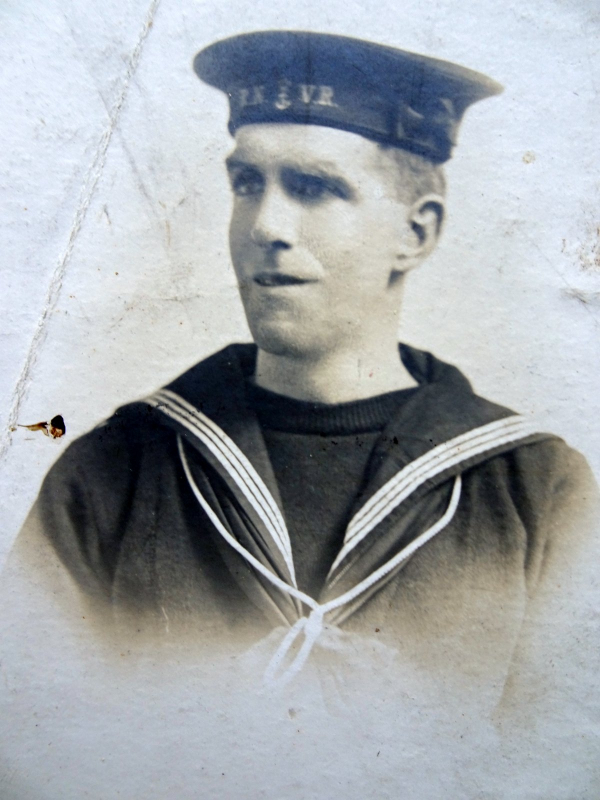
Charles Edwyn Jones – Royal Naval Volunteer

Tuberculosis was one of the main causes of death in the early 20th century and the most common cause for medical discharge from the armed services during the Great War.

Living in unhygienic close quarters, suffering from exposure and exhaustion, servicemen were prime candidates; becoming newly infected or suffering the resurgence of a disease lying dormant after a previous attack.

One set of records describe the death of Ordinary Seaman Charles Edwyn Jones as caused by pleurisy and pneumonia, another says empyaemia, which probably come down to the same thing – tuberculosis.

Charles was born on October 8, 1878 at 37 Reading Street, the son of Edwin Jones, a fitter in the Works, and his wife Mary.

Edwin had moved to Swindon from Bristol, but blinded in an accident in the railway factory, Edwin could no longer work at the job he was trained for. However, he went on to lead a full and active life and became Mayor of Swindon in 1920-21.

Charles Edwyn, the second of five children and the only son, chose not to follow his father into the railway factory but worked as a buyer of ladies clothing. At the time of the 1911 census he was working in London and boarding at 53 Eardley Crescent, Kensington. In 1915 he married Ethel Elizabeth Brown.

A Royal Naval Volunteer, Charles was based at the RN Depot Crystal Palace. He died at the Norwood Cottage Hospital on March 17, 1918 aged 39 years. Charles’s wife Ethel was pregnant at the time of his death and a daughter named Edwyna was born that summer.

Charles’s body was returned to Swindon where he was buried on March 21 in grave plot D1575, next to two other Jones family graves.

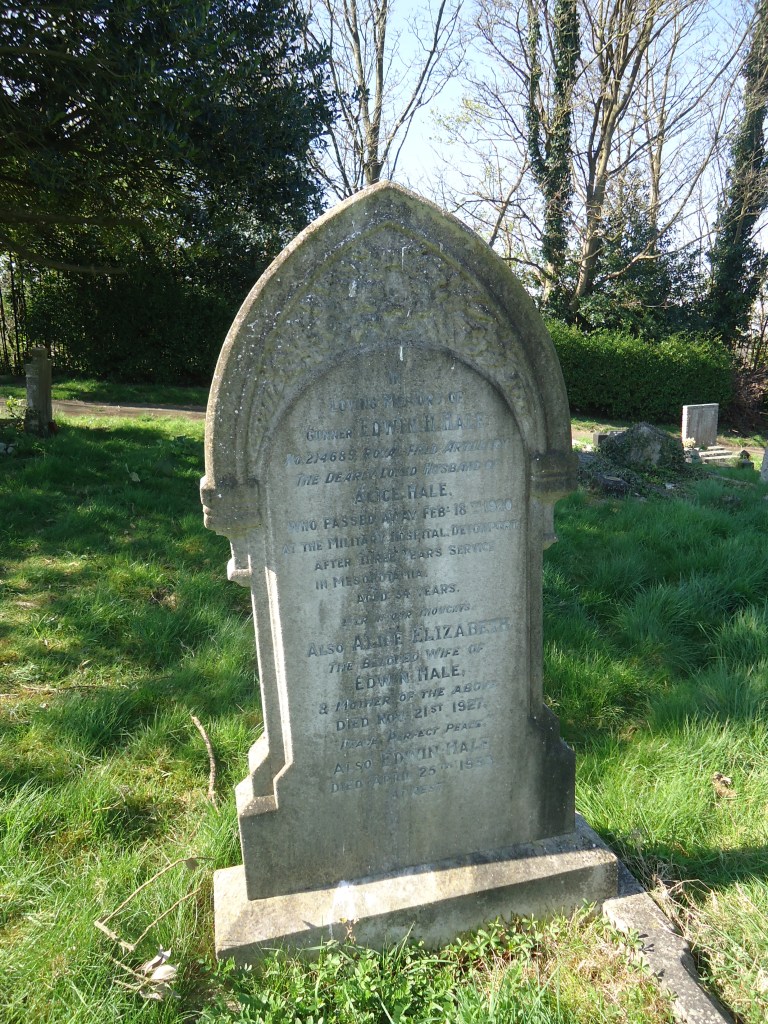
Gunner Edwin Henry Hale – served in Mesopotamia

If you’re familiar with the CWGC commemorative headstones it might surprise you to know that this is one too. Families were given the choice of an official headstone or one of their own choosing and this is what the family of Edwin Henry Hale did.

Edwin Henry Hale was born on March 30, 1885, the only child of Edwin and Alice Elizabeth Hale. He was baptised at St. Paul’s Church on April 7, 1885 just around the corner from the family home at 2 Regents Place.

In May 1899 as a fourteen year old boy he entered the employment of the GWR as an office boy while he waited to begin an apprenticeship. Six months later in September 1899 he began a six and a half year apprenticeship in the Coach Trimming Shop.

In 1908 Edwin married Alice G. Gleed at St. Mark’s Church and by the time of the census in 1911 the couple were living at 53 Sydney St. Hornsey, London N.1. They had been married for three years but had no children.

Edwin’s military records did not survive the bombing during the Second World War, so the inscription on this headstone is crucial to our understanding of his military service during the First World War.

Gunner Edwin H. Hale gave three years service in Mesopotamia. Historically the area of Mesopotamia was situated between the Tigris and Euphrates rivers and today is home to Syria, Turkey and most of Iraq.

During the 1914-18 war the conditions on the battlefields were horrendous. Temperatures regularly reached 120 degrees Fahrenheit (49 degrees centigrade) in this arid desert area, which was prone to flooding. More than 12,600 soldiers died of sickness; 51,800 were wounded with 3,900 dying of their wounds; 11,000 were killed in action and 13,400 reported missing or taken prisoner.

And yet somehow Edwin survived this and was brought back to England. Sadly, he didn’t make it home to Swindon though, dying on February 18, 1920 at the Military Hospital in Devonport.

Alice Elizabeth Hale, Edwin’s mother died on November 21, 1927 and his father Edwin died on April 25, 1933. They were buried in the same plot with their only son.

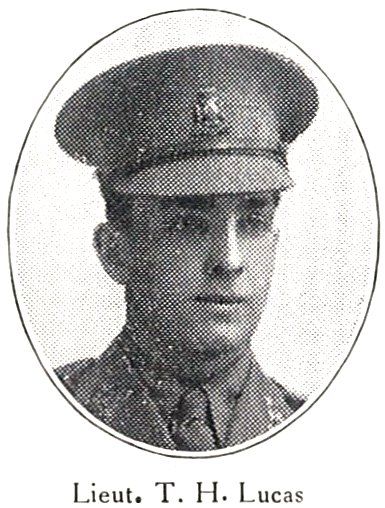
Thomas Henry Lucas – Lieutenant in the RAF

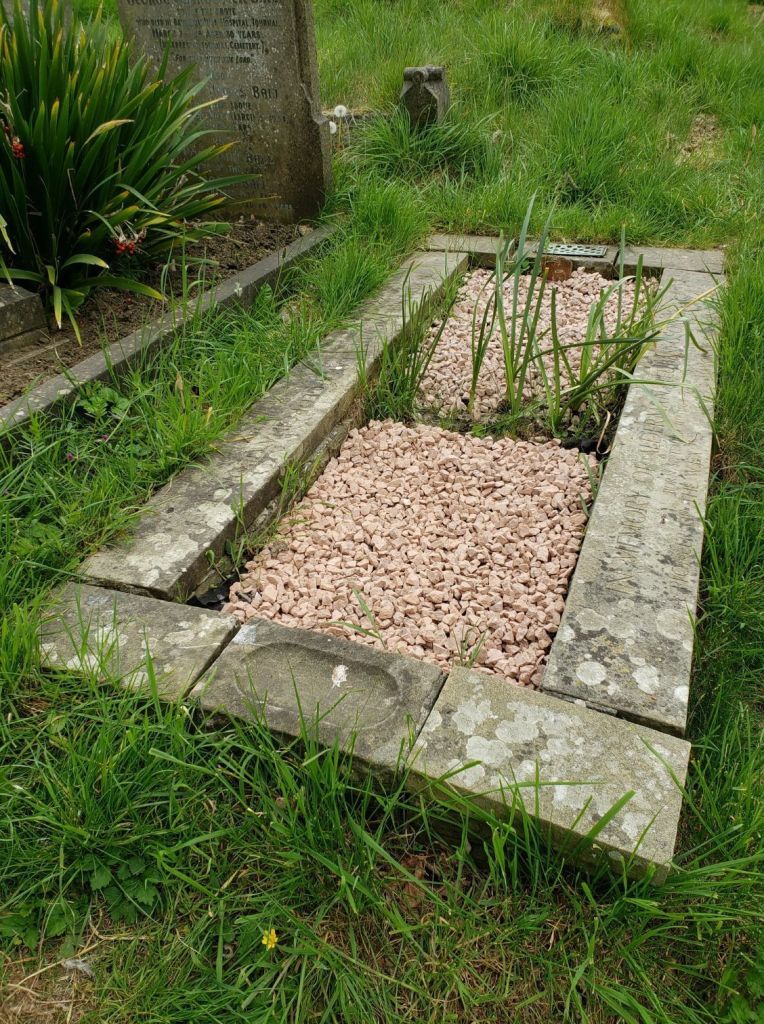
Graves appear and disappear with the passing seasons here in Radnor Street Cemetery. At the moment the grass is tall and the brambles rampant, but in the autumn the Borough Council will come and mow and perhaps this large family grave will reappear again.

Research has revealed several stories associated with this double grave, which extends across plots E8188 and E8189. The first story involves not a burial but a dedication on the kerbstone surround of the plot.

To the dear memory of Thomas Henry Lucas Lieutenant RAF Killed whilst flying in Egypt May 15, 1918 aged 27 years.

Thomas Henry was born in November, 1890 the son of William and Minnie Lucas, and baptised at St. John the Evangelist (a Chapel of Ease in the parish of St. Mark’s) on January 25, 1891. In May 1905 he began a 6½ year apprenticeship as a Coach Finisher in the Carriage & Wagon Works, later transferring to the Coach Body Making Shop.

Some of his military records survive and we know that he served with the Hampshire Regiment and also the Royal Air Force. He was killed in action on May 15, 1918 and is buried in the Cairo War Memorial Cemetery, Egypt. Were his grieving parents able to visit his grave? It is unlikely.

Thomas’s will was proved in 1919 when his address was given as 6 Lorne Terrace, Station Road. Administration went to his father William, a chargeman in the Works. His effects were valued at £360.

The first burial in this plot took place on January 3, 1920, that of five year old Marjorie Violet L. Faith, the daughter of Charles Frederick Faith and Violet Frances Euphemia Faith nee Lucas. (Charles was buried in this plot when he died in 1958).

Thomas’s parents William Henry and Minnie Sarah were buried here in 1942 and 1951 respectively, but there is one last story to tell.

The household at 6 Station Road was always a large and busy one. In 1901 William and Minnie Lucas lived there with their three children Violet 17, Minnie 14 and 10 year old Thomas. There were also two boarders living with them and on census night they had four visitors as well. And then there was their 18 year old domestic servant Mary Ann Gee. Mary Ann never married and remained with the family for many years. At the time of her death in 1948 she lived with William and Minnie at 67 County Road. She died that same year when she was also buried with them.

Horace Lett Golby – Tell Them of Us

Horace Lett Golby was born on April 18, 1887 the youngest of five children. He grew up living at various addresses in Gorse Hill where his father James worked as a house painter. As a 15 year old boy he began a 6 year carpentry apprenticeship in the GWR Works.

On April 5, 1915 he married Ethel Florence Phillip at the parish church in Seend, Wiltshire, the bride’s home parish. He was 28 and she was 25. Their daughter Dorothy Mary was born on January 22, 1916 and later baptised in the church where her parents had married.

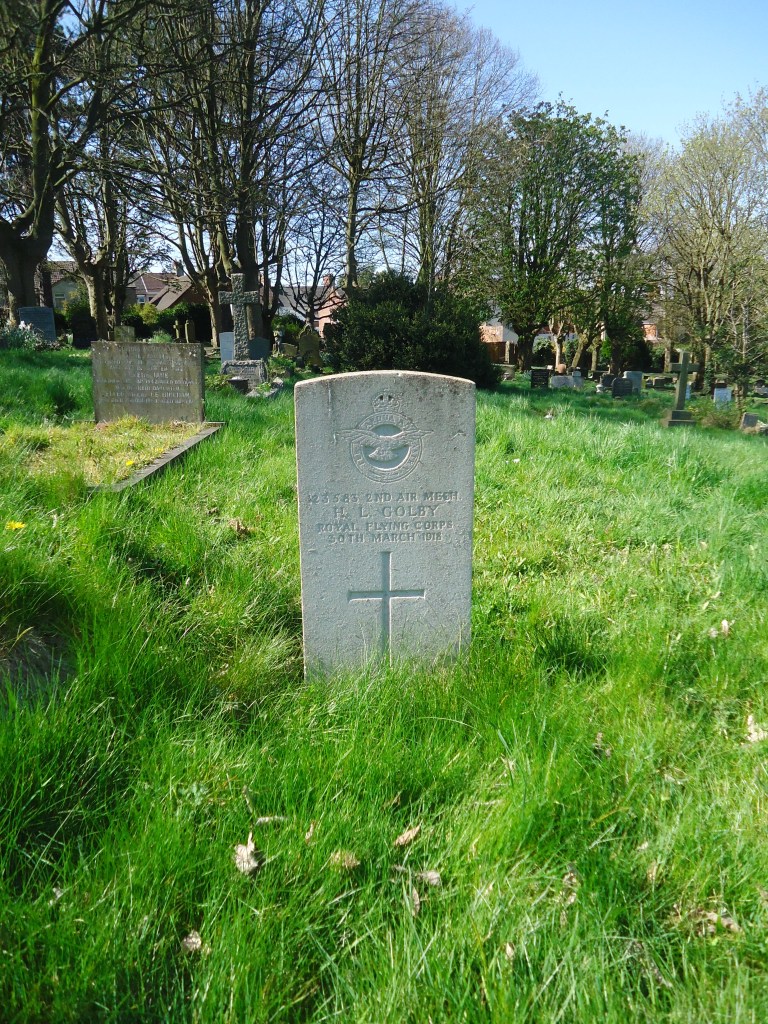
Most of Horace’s military records are lost. All we know is that he served as an Air Mechanic 2nd Class in the Royal Flying Corps, the precursor of the RAF. He died on March 30, 1918 at the Military Isolation Hospital in Aldershot. The Army Registers of Soldier’s Effects reveal he left £7 8s 6d to his widow.

We know nothing about his military service, nor about the kind of man he was. What were his hobbies, did he play football or cricket, did he like gardening? A life sacrificed in war, but still remembered 105 years later.

Horace was buried on April 3, 1918. He shares a grave with his mother Mary who died in December 1913 and his father who died in 1939.

Clara George – Mayoress

Clara Acton was born in 1864. She married Rueben George in 1887 and the couple had three sons, Herbert, Granville and Stanley. By 1901 they were living at 132 Goddard Avenue.

Reuben George came from humble beginnings and spent a lifetime working for the good of the poor man. He became a local politician and founder of the Swindon branch of the Workers’ Education Association. Clara was described as being deeply interested in her husband’s work for the WEA and served on the Executive Committee for a number of years. Clara supported her husband as Mayoress during his mayoral year and reference is also made to the fact that she was connected to the Co-operative Society and also served on the Education Committee for some years.

But as we remember the great and many good works both Rueben George and Clara performed, there is no mention of the son they lost during the First World War. Their eldest son Herbert Gladstone George was a Battery Sergeant Major in the Royal Field Artillery, 6th Bde and serving in Lahore in 1917 when he took his own life. His military records state that he ‘Committed Suicide on May 7, 1917 whilst temporarily insane.’

Suicide, along with soldiers shot for military offences, was frequently seen to have brought disgrace upon their families. Today we are able to bring some humanity and compassion to the situation and on November 7, 2006 the British Government granted posthumous conditional pardons to all soldiers executed in WWI for military offences. It remains unknown whether Reuben and Clara were informed of the cause of their son’s death, and if so whether they would have been able to share that knowledge with anyone. The grief was probably too great.

Reuben George died in June 1936. Clara attended her husband’s funeral at Christ Church against the advice of her doctor. Just hours after the funeral on June 10 she was admitted to the Victoria Hospital where she lay seriously ill for several days. An emergency operation to amputate her arm was undertaken but Clara died hours later. She died on June 20, 1936, just 16 days after her husband.

Former Mayoress of Swindon

A large number of mourners attended the funeral, yesterday, at the parish church, Swindon, of Mrs Clara George, a former Mayoress of the borough, who died in Swindon Hospital exactly a fortnight after her husband, Alderman Reuben George, who died in the same hospital.

Mrs George was buried in the same grave as her husband. Both were 72 years of age, and had been closely identified with the Workers’ Educational Association and other social movements in the town.

The chief mourners were deceased’s two sons, Mr Granvill George, of Manchester, and Mr Stanley George, of Swindon; also a sister (Mrs Symonds) and three brother-in-law, all from Gloucester, of which city Alderman and Mrs George were natives.

Mr A.E. Douglas Smith represented Bristol University and the WEA (Bristol Centre), and Mr A.H. Shipman represented Sir James and Lady Currie.

Letters of condolence were received from the Archbishop of York and Mr Ramsay MacDonald, also from Miss May Morris of Kelmscott, daughter of the late William Morris.

Western Daily Press and Bristol Mirror, Thursday, June 25, 1936.

You may also like to read:

Reuben George and the Christmas card

Inkerman John Garlick

Photograph taken at the funeral of Daisy Garlick’s brother. Daisy and Inkerman are the second couple on the right.

The Battle of Inkerman took place on November 5, 1853 during the Crimean War between Russia and the UK and her allies. Inkerman later became popular as a street name, although we don’t have one here in Swindon but it is curious how battle names were chosen for the naming of children. During and immediately after the First World War children named Ypres, Verdun and Arras appear in birth registration records.

Inkerman John Garlick was born in October 1863 in Wootton Bassett, the son of John and his wife Julia. He grew up at the Pack Horse Inn, Chippenham where his parents were the publicans. He married Ada Jane Barnes in 1889 and the couple had five children. In 1891 they were living at 26 Carfax Street, with their baby son Percy and Ada’s two brothers, Ernest and Sholto Barnes. Inkerman worked as a wood sawyer. Sadly, Ada was admitted to the Wiltshire County Lunatic Asylum where she died in 1903 aged 39.

In the summer of 1904 Inkerman married Daisy Ayers and at the time of the 1911 census they were living at 69 Port Tennant Road, Swansea. Inkerman was 47 and worked as a Railway Timber Inspector. Daisy was 29. They lived with children from both his marriages – Elsie 19, Frederick 15, Arthur 13, Iris 5 and one year old Myrtle.

This stylish art deco headstone marks the grave of Daisy Garlick who died in 1938 aged 57 and was buried in grave plot C1821. Inkerman died less than three months later and was buried with her on September 5. He was 75 years old.