For so many women wartime losses came at an age when they would have expected, or at least hoped, that their life was entering a more peaceful phase; when the worry of raising a family was past.
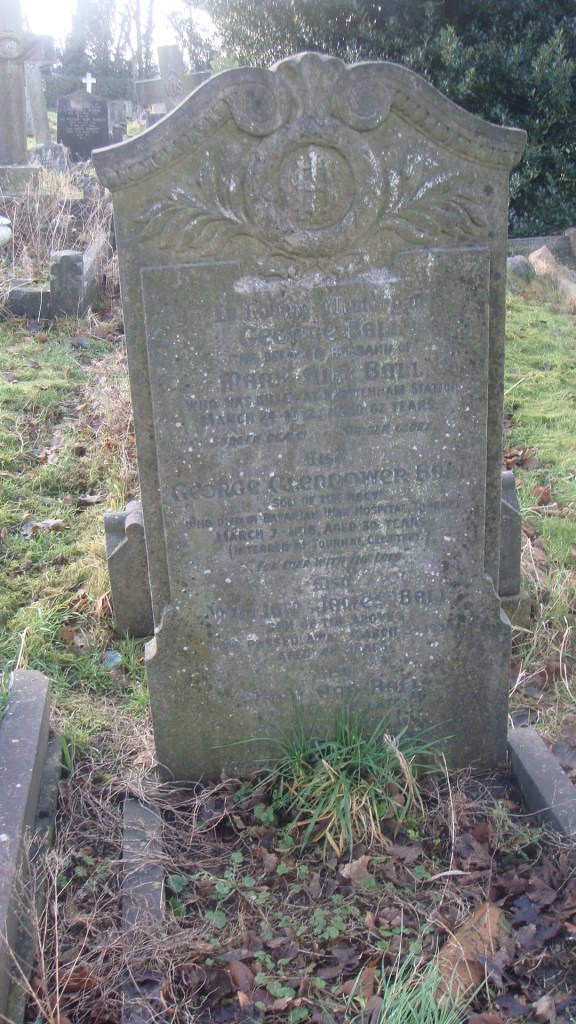
Mary Ann faced some tough challenges during her lifetime. She was 61 years old when her second son, George Glendower Ball, died in 1918 during the First World War. George Glendower Ball was rejected for military service twice before successfully enlisting with the Norfolk Regiment. 33800 Private George Glendower Ball died in the Bavarian War Hospital, Tournai on March 7, 1918, his 30th birthday. He is buried in the Tournai Communal Cemetery.
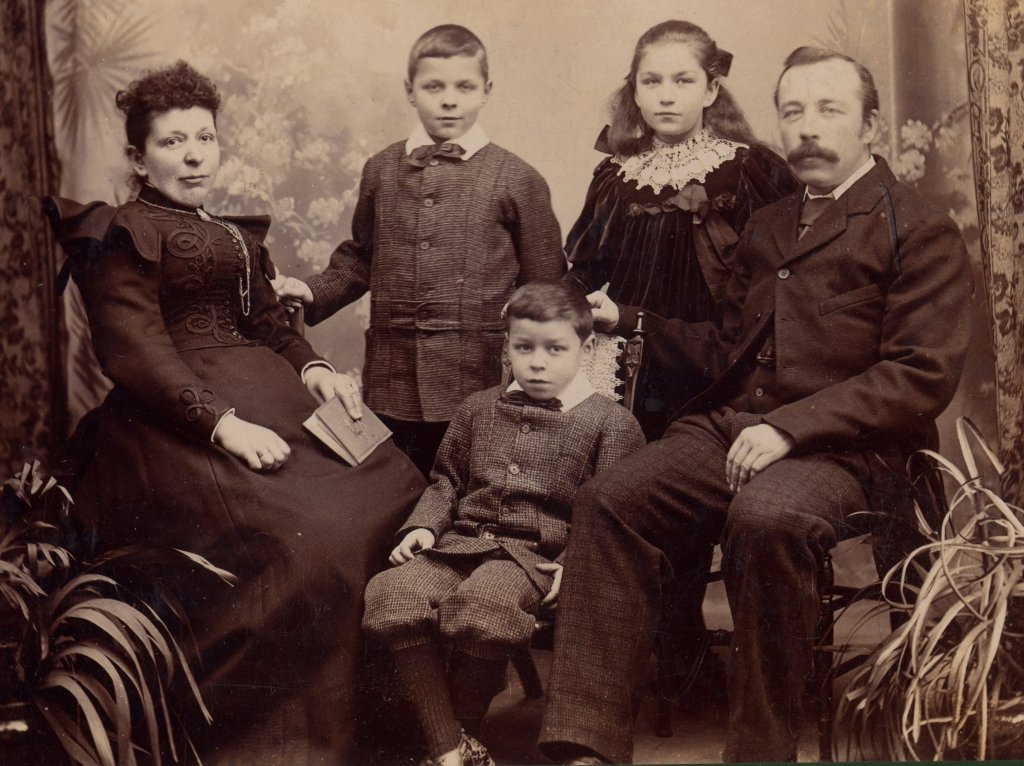
Born in Bristol in 1857 Mary Ann married George Ball in 1885 and by 1891 the couple were running the Temperance Hotel on Station Road. The census returns of that year record their four young children William 5, Millicent 4, Glendower 3 and Samuel just three months old. What the stark facts and figures of subsequent census returns are unable to convey are the tragic circumstances surrounding their eldest son. William had contracted measles at the age of two, which left him disabled; he never appeared in any family photographs.
This photograph of Mary Ann and her family is published courtesy of Duncan and Mandy Ball.
In 1922, when Mary Ann was 65, her husband George was killed in a railway accident when he was struck down while crossing the line at Shrivenham station. Then two years later her disabled son William died aged 48. Mary Ann died just a few months later.
Mary Ann is one of the extraordinary ordinary people buried in Radnor Street Cemetery.
The parents and their son are buried together in grave plot D1305. Their son George Glendower Ball is mentioned on their headstone.
This is the last resting place of Charles Henry Wiltshire, one of 104 war graves here in Radnor Street Cemetery.
Charles was born in 1897, the youngest of ten children. His father William was an engine driver and in 1901 the family lived at 32 Regent Circus. In 1911 the family were living at 57 Eastcott Hill. On the census of that year Mary Ann declared that the couple had been married 32 years and 2 of their 10 children had previously died. She could hardly have anticipated the war that was to follow and the loss of yet another child.
Charles’s service records date from May 1, 1916 when he enlisted as an 18 year old. At the time of his death he was an Air Mechanic First Class in the Royal Naval Air Service.
Charles was invalided out of the Royal Naval Air Service on September 1, 1917. His service records state that he was suffering from tuberculosis caused by his military service. He died on October 16, 1918 at the family home, 39 Commercial Road. He was buried on October 22 in grave plot A2459 and later awarded an official Commonwealth War Graves headstone. He is buried with his father William who had died in 1913 and escaped the fear of seeing his young son in service during war time.
Charles’s mother, Mary Ann, was buried with her husband and son following her death in 1927. The last person to be buried in this grave was Winifred Jessie Wiltshire, William and Mary Ann’s daughter, who died in 1948 following yet another world war.
The story of Charles Wiltshire was remembered at our recent special event at the cemetery.
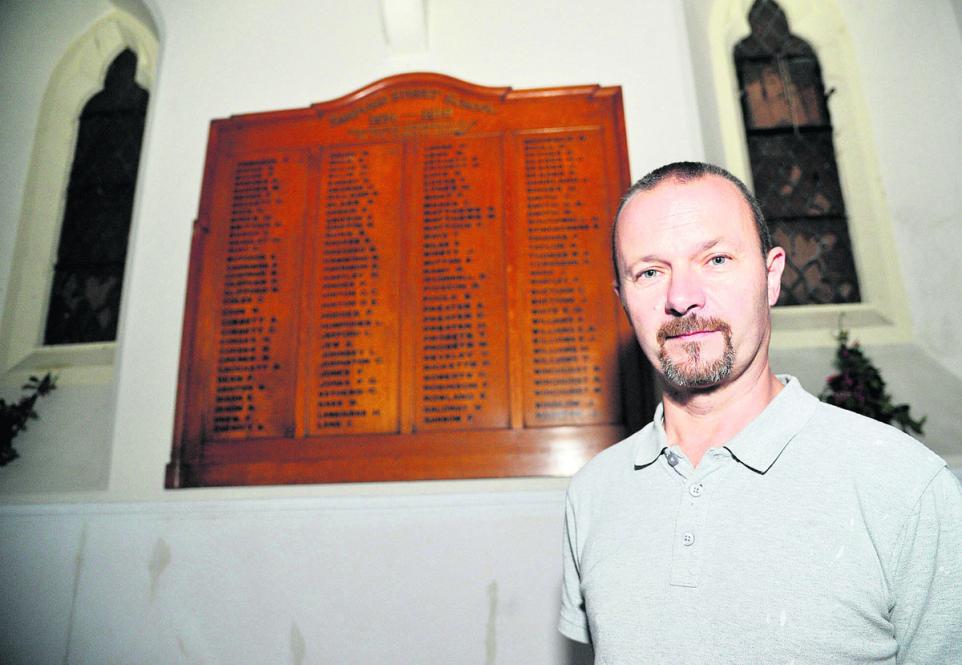
In recent years the Radnor Street Cemetery chapel has become a repository for rescued and recovered war memorials. Ten years ago Mark Sutton was instrumental in seeing the Sanford Street School War Memorial removed to Radnor Street Cemetery Chapel from the then empty school building where it was considered to be vulnerable. Then in 2015 a memorial to 19 Gorse Hill men who died during the First World War might also have been lost forever until rescued by Mark. In subsequent years more plaques and memorials have been deposited in the cemetery chapel.
During our next guided cemetery walk we will be unveiling another war time relic that was in danger of being lost to the history of Swindon.
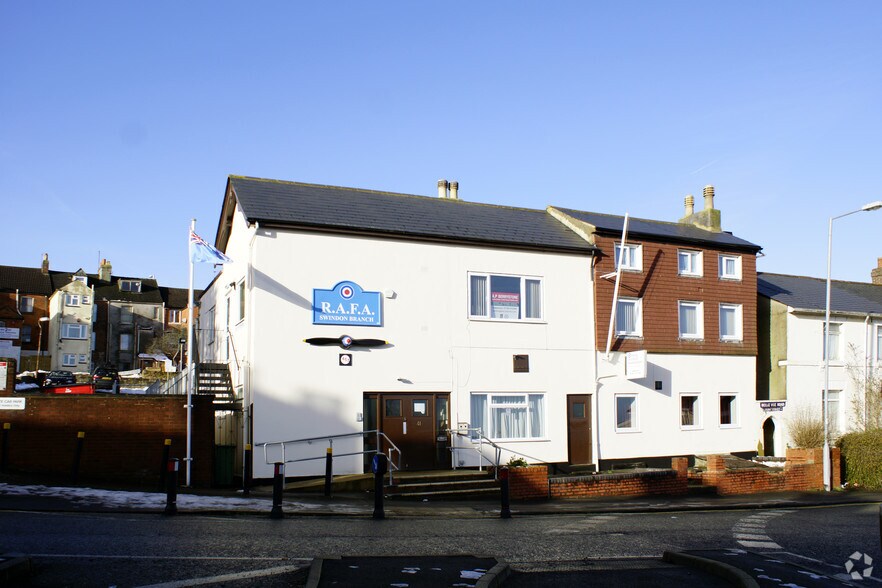
Following the closure of the RAFA Club in Belle Vue Road the propeller mounted on the front of the building faced an uncertain future. Then a group of concerned Swindonians, among them Carole Bent, Neil Robinson, Toby Robson and Graham Carter, stepped in.
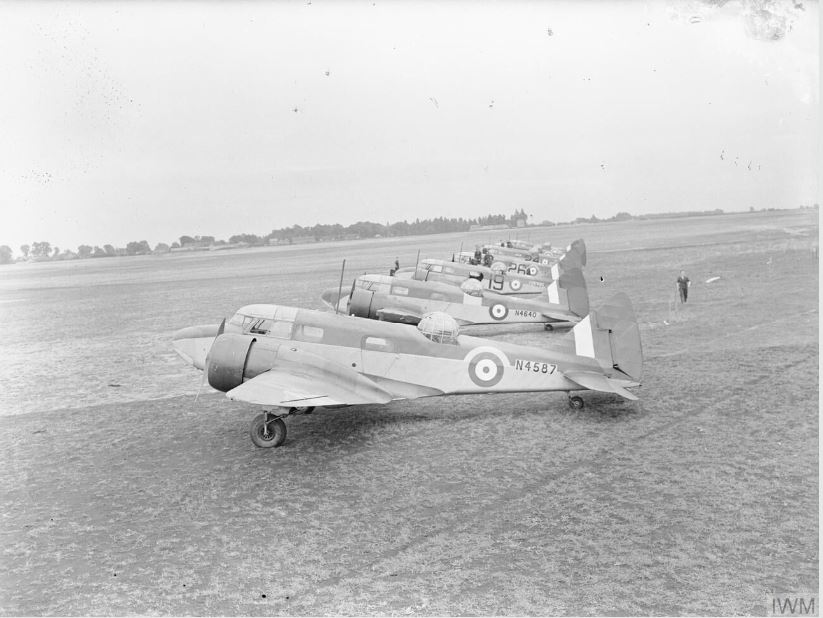
The propeller, which has been identified as belonging to an Airspeed Oxford – a trainer for RAF bomber aircrews, has now been installed in the cemetery chapel and will be unveiled by Air Commodore Tony Keeling OBE, Commandant Royal Air Force Air Cadets.
‘I’m delighted to see this propeller returned to display in Swindon. This is a visible celebration of the historic links between the town and the Royal Air Force. I am most grateful to the members of the local community who made this happen. Thank you.’
Following the unveiling our walk will follow a military theme during which we will visit the graves of several airmen who served during both World Wars and are buried in the cemetery.
Join us outside the cemetery chapel on Sunday August 13 for the unveiling at 2 p.m.
Thomas Fletcher was born in Stratton St Margaret on February 2, 1885, the son of George and Martha Fletcher. On August 2, 1899 he began a 6 and a half year Blacksmithing apprenticeship in the Works.
By 1901 George and Martha had moved to 85 Redcliffe Street in Rodbourne. Here George worked as a carpenter in the Works and Thomas was employed as blacksmith, although not yet out of his apprenticeship.
The last time we see Thomas in Swindon is on the 1911 census when he is 26 years old and living with his parents in Redcliffe Street. When his father completed the census returns that year he stated that he and Martha had been married for 35 years and that they had 6 children, all of whom were still living. Sadly, that would all change.
Mark Sutton continues to be the most knowledgeable historian of Swindon’s sons who served in the First World War and wrote a book entitled Tell Them of Us. If you went to one of Mark’s talks or followed one of his walks here at Radnor Street Cemetery you left feeling you had met the men he talked about, that he had known them himself – and of course Mark has been able to fill in the details of what happened to Thomas Fletcher. He writes:
“He had served an apprenticeship in the Loco and Carriage Dept GWR before leaving for Canada in 1912. He worked then for the Canadian Pacific Railway Company Workshops at Montreal. He joined the army in November 1914.”
Tell Them of Us.
Sergeant Thomas Fletcher was killed in action on August 28, 1918 during fighting to retake the village of Cherisy. He was 33 years old. He is buried in the Sun Quarry Cemetery, Cherisy, France.
Mark made frequent visits to the Western Front battlefield cemeteries, visiting the graves of the Swindon men buried there. I wonder if he ever visited Thomas Fletcher? I bet he did.
Thomas’s father George died in 1923 and is buried in Radnor Street Cemetery in grave plot C1880 with his wife Martha who died in 1937 and their youngest daughter Catherine Shakespeare who died in 1954.
Before he died on September 27, 1918 Charles Godfrey Montague Deacon had his family firmly on his mind.
Charley was born in 1886, one of William and Rose Deacon’s seven children. He grew up at 4 Western Street where William worked as a brickmaker. When Charley left school he became an assistant in an ironmongers.
Like so many others, Charley’s military records are lost, but we know that he served as a private in the 15th Battalion Lancashire Fusiliers and that he died of his wounds (Gas) in one of the Exeter War Hospitals. He was 33 years old.
The UK Army Register of Soldiers’ Effects 1901-1929 reveal an account of Charley’s money and where he wished it to go.
He left £35 3s 9d (about £35.15) and with no wife or children he divided his money between members of his family. To his widowed mother Rose he left £5 0s 7d (about £5.03). He left the same amount to each of his two surviving brothers, Irving Tom and Percival Oscar. To his sisters Daisy, Flossie and Hilda (the wife of Thomas Mott), he left £5 0s 6d each (about £5.02).
His last two bequests reveal another family tragedy. In the autumn of 1916 Charley’s brother Louis Stanley Deacon was ‘found drowned.’ He left a wife and several children. Charley left £3 7s (about £3.35) to ‘GW Bizley Guardian of children of Bro Louis’ and £1 13s 6d (about £1.67) to his nephew Sidney.
Charley gave his life for his country and the money he had saved to his family.
Charles Godfrey Montague Deacon was buried on October 2, 1918 in plot number B2819 which he shares with his brother Louis, his father William and his mother Rose.
The report of the death of Albert William Hall published in the North Wilts Herald in 1920 is, in my opinion, a carefully worded account of an interview with his grieving family. Only they could have known the awful development of his ill health, the repeated operations, his re-admission to hospital again and again and the agonies of his final days.
Swindon Family’s Bereavement
The Late Mr A.W. Hall
The death occurred on July 13th, at 86 Ponting Street, Swindon, of Albert William Hall, the only son of Mr. and Mrs W.J. Hall, from disease contracted on active service.
Prior to the war deceased was employed at the Town Hall, under Mr. H.J. Hamp (the borough surveyor). Enlisting in the local Territorials in January, 1914, he was in training at the outbreak of war and was mobilised for service with the Wilts RAMC (T). Through a minor defect he was marked for home service, and subsequently transferred to the 2/1st Wilts RAMC (T) on the formation of that Unit.
As soon as possible he underwent an operation, thus fitting him for foreign service, and, joining the staff of the “Aquitania” in December, 1916, he proceeded abroad, and was attached to the Mediterranean Expeditionary Force. On the outward journey he contracted pneumonia, and on the ship’s return he was admitted to Netley Hospital, on December, 1916.
Following a successful operation in that hospital, he was in May transferred to the War Hospital at Bath. After a further five months in Hospital he was taken to Winsley Sanatorium for treatment lasting over four months. He arrived home in January, 1918, but progress was unsatisfactory, and two months later he was admitted to University College Hospital, London, where another operation was performed. In September he was transferred to a convalescent hospital at Cobham, Surrey, and remained there until January, 1919. He then returned home, but two months later was re-admitted to the University College Hospital, to undergo yet another operation.
After four months in this hospital he was, at his own wish, brought to the GWR Hospital, Swindon, where he remained an in-patient for three months. From October, 1919, until a few days before his death he attended the hospital daily for surgical treatment. Altogether his illness extended over 3½ years, during which time he was constantly brave and cheery, thus commanding the respect and admiration of doctors and nurses, and, indeed, of all with whom he came in contact. What he really suffered can never be known, because he always hated to complain, and it was only latterly when he began to experience great difficulty with his breathing, that he showed any signs of weakening under the strain. He was confined to his bed for a day or two only before his rather sudden death, and though suffering great pain during that time he retained consciousness to the last, and passed away very peacefully.
The greatest sympathy is felt by all for his parents and fiancée, who in the midst of their great sorrow can yet feel justly proud of a life which, though taken so early, has been one of such splendid example.
The funeral took place on Saturday, and the presence of so many old friends from church, school, office, etc., spoke eloquently of the sympathy manifested by all who knew him. Leaving his home in Ponting Street, the cortege proceeded to the Railway Mission, where the first part of the burial service was conducted by Mr. Ernest M. Lewis (former Sunday School teacher), the bearers being old Sunday School friends. During the service special tribute was made to the brave and patient manner in which deceased bore his long illness, and the hymn, “Loved with an everlasting love,” was sung. The interment was in the Radnor Street Cemetery, and at the graveside Mr. Lewis again officiated, a prayer being offered by Mr. Ludlow (Supt. Of the Railway Mission Sunday School). The coffin was of polished elm with brass fittings, and bore the following inscription:-
Albert William Hall,
Died
July 13th, 1920.
Aged 23 years.
Mr and Mrs W.J. Hall and family desire to tender their heart-felt thanks for the many beautiful tokens and the sympathy shown to them in their sad bereavement, also for the many kind enquiries made during their son’s long illness.
Extracts North Wilts Herald, July 23 1920
Albert William 23 years of 86 Ponting Street was buried on July 17, 1920 in grave plot D1088. He shares the plot with his father and mother – William John Hall who died in 1946 and Esther Tucker Hall who died in 1958.
This photograph was taken several years ago before the Radnor Street Cemetery volunteers began caring for the war graves. Today you will find access across the cemetery to the headstones via a mown path. The area around each headstone is kept clear and maintained by the Eyes On, Hands On team of volunteers working under the supervision of the Commonwealth War Graves Commission.
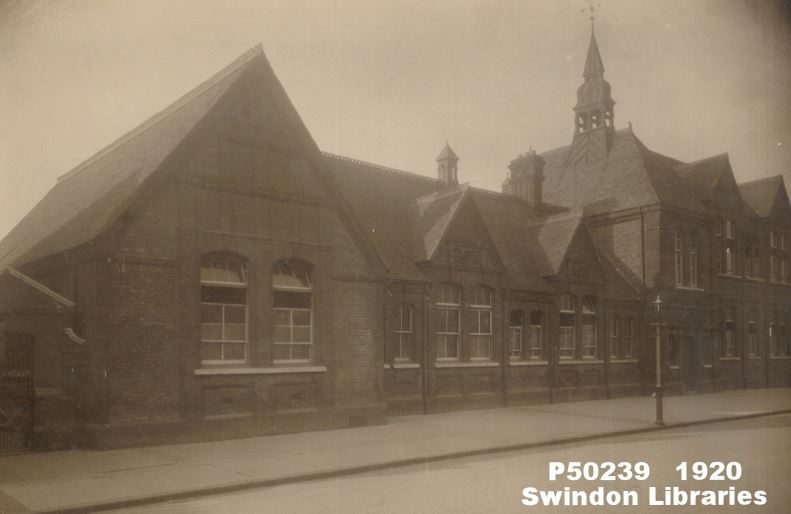
Image published courtesy of Local Studies, Swindon Central Library.
Ten years ago Mark Sutton was instrumental in seeing the Sanford Street School War Memorial removed to Radnor Street Cemetery Chapel. Swindon Council’s children’s department had moved out of the former school during 2012 and the building was empty and vulnerable, its future hung in the balance – demolition was even being suggested!
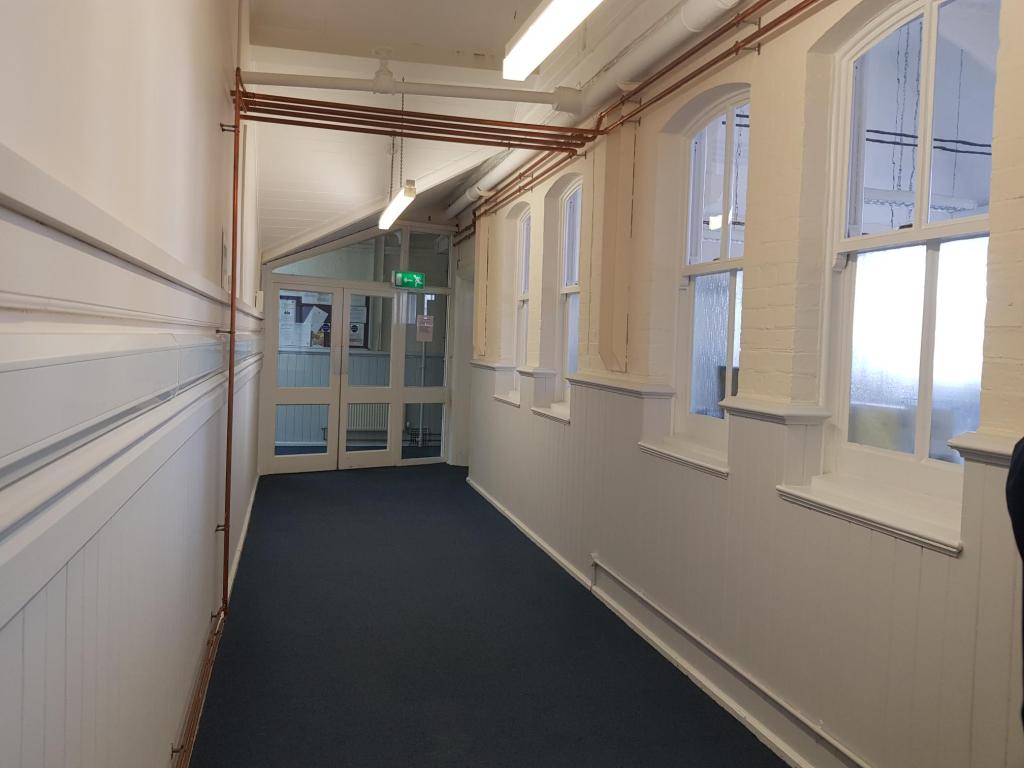
Today the building is known as the Swindon Community Hubb and is run by Voluntary Action Swindon, accommodating the Citizens Advice Bureau, Swindon Advocacy Movement and the Swindon Carers Centre among many other local voluntary organisations.
Yesterday I was fortunate enough to attend the unveiling of a portrait of the architect Brightwen Binyon and to listen to Martin Robins, a pupil from 1961-66, talking about his long association with the school.
Guests were also able to join James Moss on a tour of the building, which still includes many original features.
The memorial in the Radnor Street Cemetery Chapel includes the names of several sets of brothers who died in the First World War. Mark knew the history of all of them – how they lived and how they died.
The memorial can be viewed during our guided walks when the chapel is open. Our next walk is on Sunday May 7, meet at the chapel for 2 p.m. For more information visit our Facebook page.
Mark Sutton and the Sanford Street School War Memorial
Portrait of Brightwen Binyon – architect of Sanford Street School
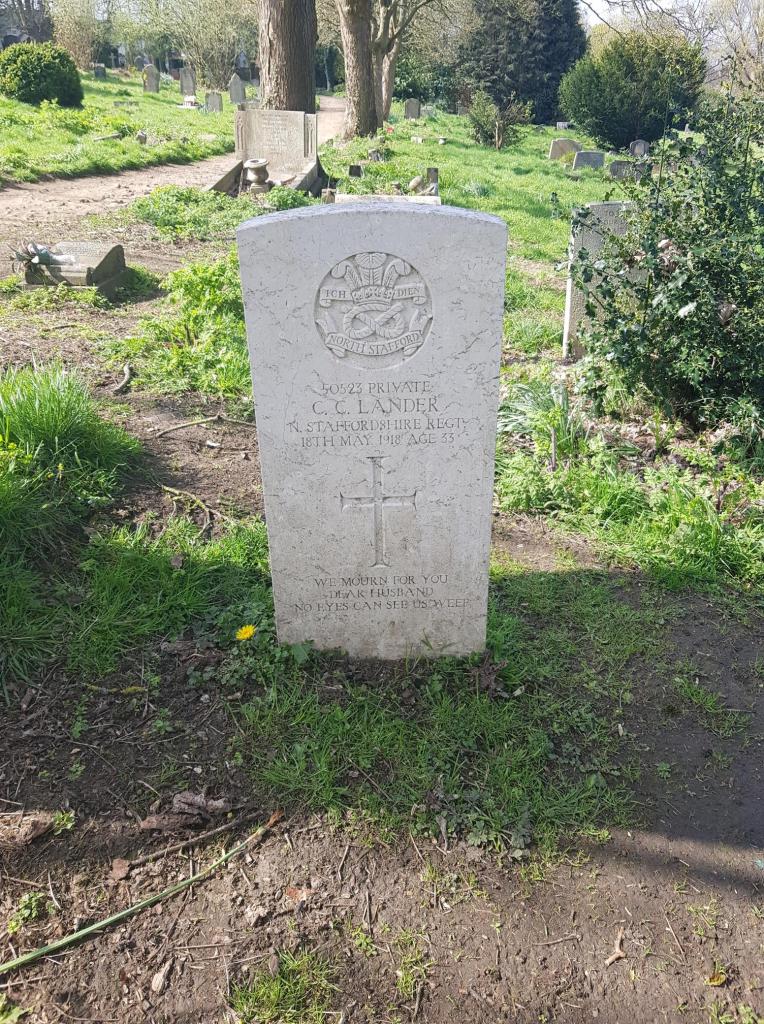
In 1914 Charles Lander was working as a cowman in Purton when the Great War broke out. Having previously served in the Army Service Corps he was on the reservist list and was immediately recalled for service. Just ten days later he was in France with the 14th Ambulance, a horse driver in the ASC with the 5th Division. He was later transferred to the North Staffordshire Regiment.
Charles Christopher Lander was born in Fairford in 1885 one of John and Agnes Lander’s three sons. He married Susan Dolman in 1907 and at the time of the 1911 census they were living with their three children and Susan’s father at a house in the High Street, Purton.
As the war raged on Charles was wounded, shot in the upper right arm during fighting on April 21, 1918. Within a week he was returned to England. He died on May 18 at the City of London Military Hospital following an operation to amputate his arm. He was 33 years old.
Susan received a pension of 37/11 (approximately £1.4) a week for herself and her five children. She was also sent her husband’s personal effects.
2 pocket wallets containing 2 packets of blades (razor)
1 pocket mirror
Purses
Safety razor & blades
Pair scissors & case
Linen bag
Buttons, pencils etc.
1 writing pad & Envelopes
3 Handkerchiefs
1 Chevron (overseas)
Cap Bade & Broach
Diary & Letters
2 Discs
2 Numerals
2 Lockets
1 Pen Knife
1 Crucifix
1 key on ring
2/- (10p) postal order No. c/53 590295
1/- (5p)
Charles was buried on May 23, 1918 in grave plot C3514.
In 1919 Susan married Frederick Arthur Hatton and raised a second family at 12 Queen Street, Swindon. In 1923 Charles and Susan’s son Douglas Napoleon Lander died and was buried with his father. Susan died in 1961 and her second husband Frederick in 1962. They were also buried in grave plot C3514.
February 1915 – Coach bodymaker Francis Richard Lang had two sons serving in the war and he was sick with worry. At work his foreman showed him a letter he had received from his son at the front; all was well with him. But this good news was of no consolation to Francis. The distraught father left for work as normal that final day but was not seen again until his body was found at Coate Water. He had taken his own life. A razor and empty case and a pocket knife were found in his clothes.
And so, Mercy, his wife, was left alone to worry about her boys until the inevitable happened.
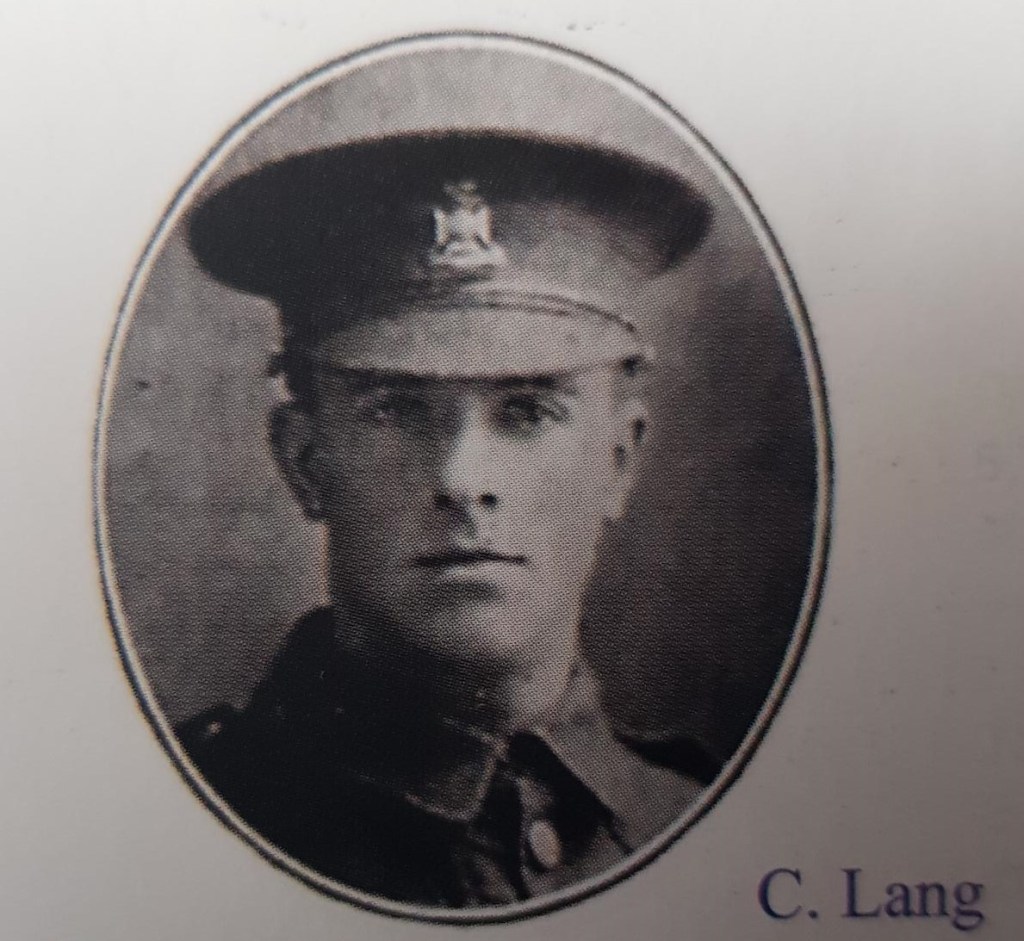
Cecil Arthur Lang was born on March 19, 1882 and baptised at Holy Trinity Church, Dalston, East London, one of 11 children born to Francis Richard and Mercy Caroline Lang. By 1892 the family had moved to Swindon and in 1911 the census of that year states that along with their father, five sons worked in the railway factory. Eldest son, also named Francis Richard, was a Railway Coach Bodymaker, Leonard, Arthur and Walter were Carriage Fitters & Turners while Cecil, aged 21, was a Coach Bodymaker. The census reveals that of Francis and Mercy’s 11 children, 3 had already died. A heavy loss for parents and one that was going to increase.
Cecil Lang 26, was killed in action on June 16, 1915. He is remembered on the Menin Gate in Ypres. On his parents’ memorial in Radnor Street Cemetery, he is reported as ‘missing’. Some families could never accept that their loved ones had been killed, but continued to hope they might be found and eventually return home.
On our recent guided walk, cemetery volunteer Jon explained that in addition to the official Commonwealth War Graves, the volunteers also tend to family graves that include an inscription to a fallen serviceman. It may not be possible to restore this monument with its tall standing stone cross, but the volunteers will maintain the grave.
Mercy died on May 19, 1927 and is buried here with her husband in grave plot B3293.
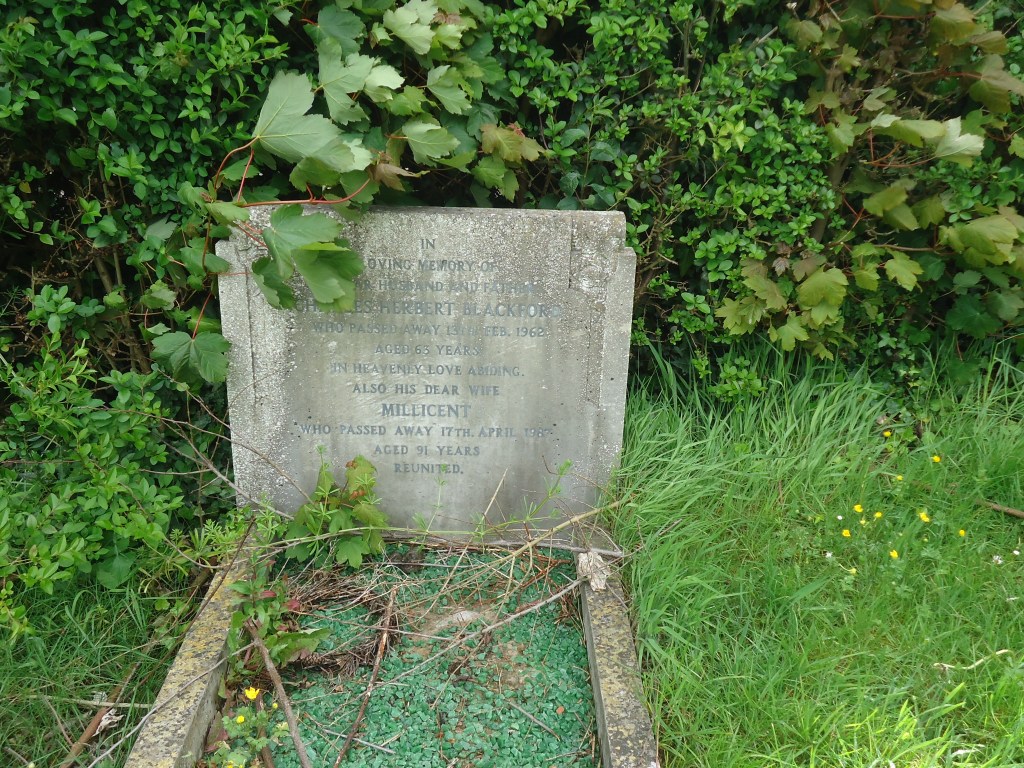
This is the last resting place of Charles and Millicent Blackford.
Charles Herbert Blackford was born on August 8, 1898 in Malmesbury, one of wheelwright and carpenter Daniel Blackford, and his wife Kate’s four children. Millicent was born in Polperro, Cornwall on January 5, 1897, the daughter of fisherman Richard Libby and his wife Ellen.
Charles enlisted with the Royal Naval Reserve in 1916 and served for three years during the First World War. Upon demobilisation Charles joined the GWR. Using the UK Railway Employment Records it is possible to follow Charles’ career on the railways.
He began work as an engine cleaner in January 1919 before quickly becoming a fireman. An entry dated December 14 1920 records that he was making the fire upon engine 3412 when his hand was pinned against a piece of coal. Top of middle finger on his right hand was crushed.
By 1939 Charles was working as a temporary Acting Driver at Didcot, after which he worked as a driver in Swindon. During the Second World War he was working as a temporary Relief Supervisor.
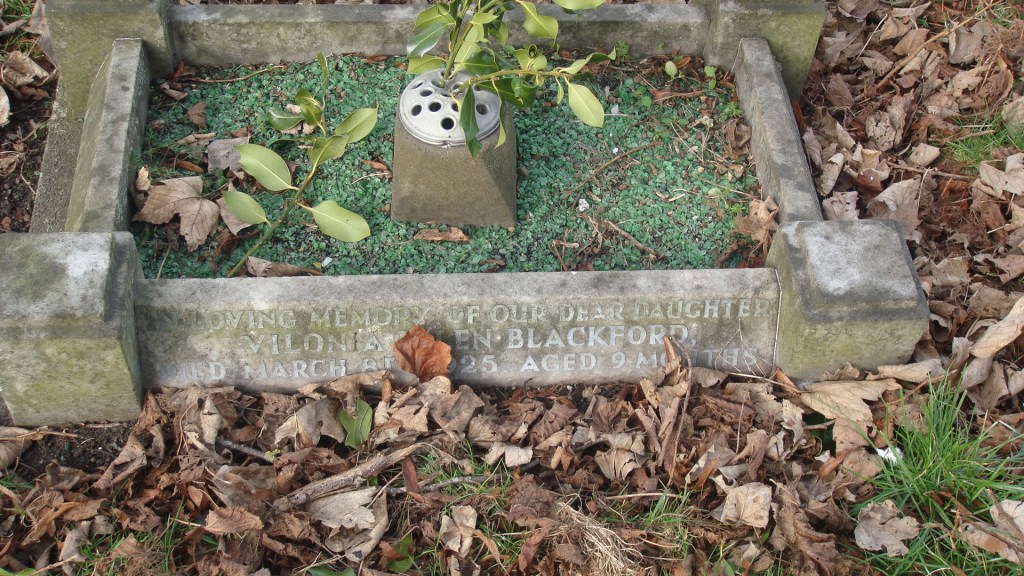
Charles married Millicent Libby in the June quarter of 1923 and the couple had two children, Vilonia and Royston. Vilonia died in infancy. Royston followed his father into the railway works as a coach finisher. Charles and Millicent lived at 23 Poulton Street, Gorse Hill until the time of Charles’ death in 1962. (Millicent may have remained at that address after his death.)
Charles died in February 1962. Millicent survived him by 25 years. She died in 1987 at the age of 91. They are buried together in grave plot C3351-0. This area of the cemetery has experienced some renumbering of the plots, but Charles and Millicent’s grave has an elegant headstone and is easy to find.
The burial of infants depended very much on the parent’s financial situation. In the past some babies were buried in a family plot, their names added to the memorial at a later date. Others were placed in a communal grave with other babies. Vilonia is buried in this beautiful little grave, close to the path leading to the cemetery chapel.









 Radnor Street Cemetery