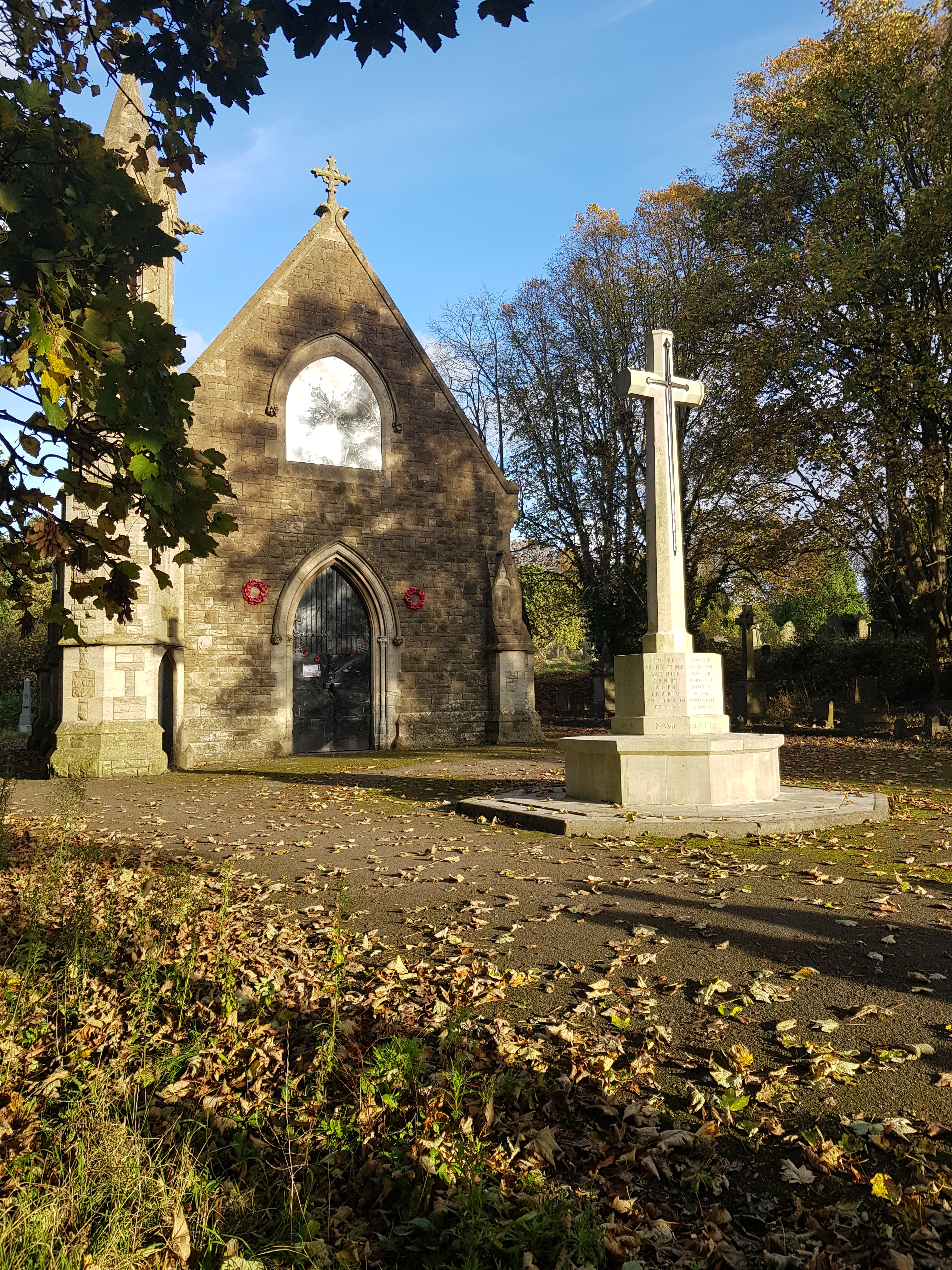
Jacob and Anne Elizabeth Wheeler and a family connection

I have come to think of those buried in Radnor Street Cemetery as belonging to one, very big, family.

This week I have been researching the life and times of Jacob and Anne Wheeler and fortunately I have been able to discover a lot about them – see below the accounts of their Golden Wedding anniversary and their obituaries published in the local press.

Then studying their family tree, a name suddenly jumped out at me. When Jacob Wheeler died in 1936 Probate was awarded to his son Richard Wheeler, a fitter and turner, and to his son-in-law Frank James Richman, a grocer.

My friend and colleague, Mark Sutton, military historian and author of Tell Them of Us – Remembering Swindon’s Sons of the Great War 1914-1918, would often talk about the two Richman brothers, killed in action during WWI.

Graham Carter, friend and co-founder of the Swindon Heritage magazine published 2013-2017 recently wrote about Mark:

‘Nobody ever did more for preserving the memory of Swindon war heroes than Mark, or knew more about their sacrifices. Whenever I spoke to him about it, it was almost as if he had been there with them. Swindon owes him a debt for what he did for those men.’

And so it was with the Richman brothers.

Frank was the elder brother of Archibald David and Alfred George Richman. He started work in the GWR offices at the age of 13. In 1909 he married Annie Mary Wheeler and at the time of the 1911 census they were living at 86 Kent Road with their baby daughter Phyllis. The couple went on to have more children and eventually Frank would take over the family’s grocery business. He didn’t go to war. Annie died in 1957 and Frank in 1969.

Swindon Veterans

Golden Wedding of Mr and Mrs J. Wheeler,

Family Re-Union

Mr and Mrs Jacob Wheeler, of 12 Deacon Street, Swindon, celebrated their golden wedding on Sunday. They were married on 30 December, 1879, at the old Baptist Chapel, at the corner of Fleet Street and Bridge Street, by the Rev. Frederick Pugh, who was the last Pastor at that Church, prior to the building of the Baptist Tabernacle, in Regent Circus.

Mr Jacob Wheeler is a Wiltshireman, being a native of Trowbridge, and his wife, Mrs Ann Elizabeth Wheeler, is eldest daughter of Mr Richard Harris, is a Swindonian and has resided in the town practically all her life.

Coming to Swindon in 1873, Mr Wheeler entered the service of the GWR Company and was for 38 years employed as a machineman in the Locomotive Department. For over 40 years Mr and Mrs Wheeler – Mr Wheeler is 78 years of age, and his wife three years his junior – resided in Haydon Street and removed to Deacon Street seven years ago. Mr and Mrs Wheeler have a family of four children – three daughters and one son – and 13 grandchildren.

Family Congratulations

There was a happy family re-union at her eldest daughter’s (Mrs Richman’s) home, 86 Kent Road, on Monday, and the aged couple have been the recipients of many congratulations and presents.

Mr Wheeler is one of the oldest members of the “Briton’s Pride” of the North Wilts District of the Ancient Order of Foresters. Both he and his wife have been for many years members of the Baptist Church.

During their long residence in Swindon they have witnessed the wonderful growth of the town. The district in which they now reside was green fields when Mr Wheeler came to Swindon.

North Wilts Herald Friday January 3, 1930.
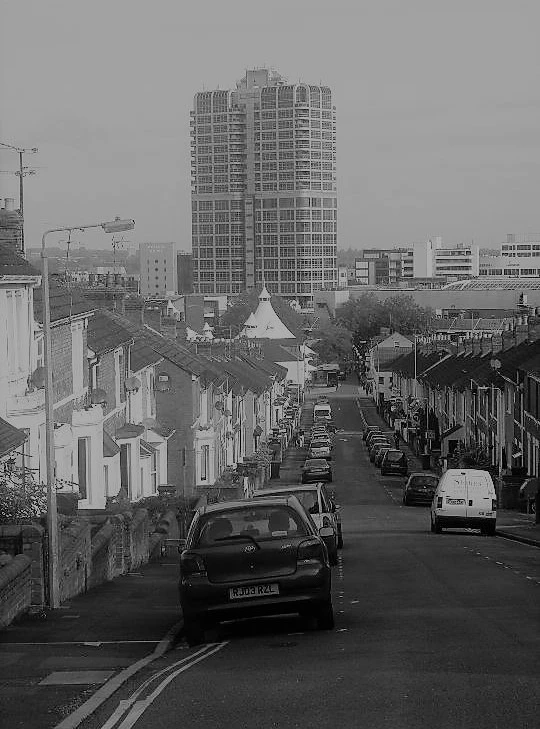
looking down Deacon Street

Mrs A. Wheeler

Funeral of a Swindon Baptist Worker

The funeral took place on Saturday afternoon of Mrs Annie Elizabeth Wheeler, wife of Mr Jacob Wheeler, of 12 Deacon Street, Swindon.

Mrs Wheeler, who was 77 years of age had resided in Swindon practically all her life. She was the oldest member of the Baptist Church, having joined it when the services were held in the old church at the corner of Bridge Street and Fleet Street, many years before the Tabernacle was built. It is not long since Mr and Mrs Wheeler celebrated their golden wedding.

The first portion of the funeral service was conducted at the Tabernacle, where there was a large congregation of mourners. Mr. A.E. Ford was at the organ and played the “Dead March,” and the hymn “For ever with the Lord,” was sung.

The Pastor (the Rev. E.W. Probert) conducted the service and also officiated at the graveside in Radnor Street Cemetery.

Extracts North Wilts Herald Friday November 13, 1931.

The Late Mr J. Wheeler

Funeral of a Swindon Octogenarian

The funeral of Mr Jacob Wheeler late of 12 Deacon Street, who died at his daughter’s residence 31, Downs View Road, at the age of 84 years, took place on Monday afternoon. The service at the Baptist Tabernacle was conducted by Rev. C.H. Cleal, who also officiated at the interment in Radnor Street Cemetery.

Mr Wheeler, who was a native of the Westbury district, had lived in Swindon over 60 years and retired a quarter of a century ago from his employment as a machinist in the old G Shop of the GWR Works. For over 50 years he had been a member of the Baptist Church. He leaves a son and three daughters.

Extracts North Wilts Herald, Friday, 11 September, 1936.
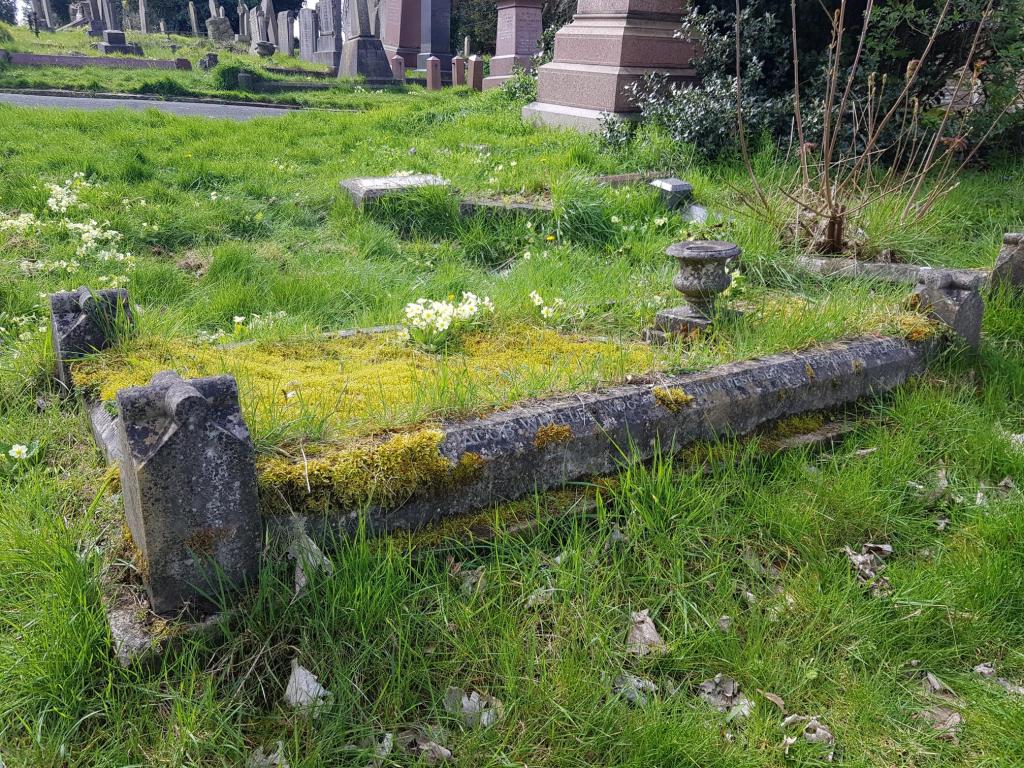
Anne and Jacob Wheeler are buried together in grave plot A1095.

#MarkSutton

#TellThemofUs
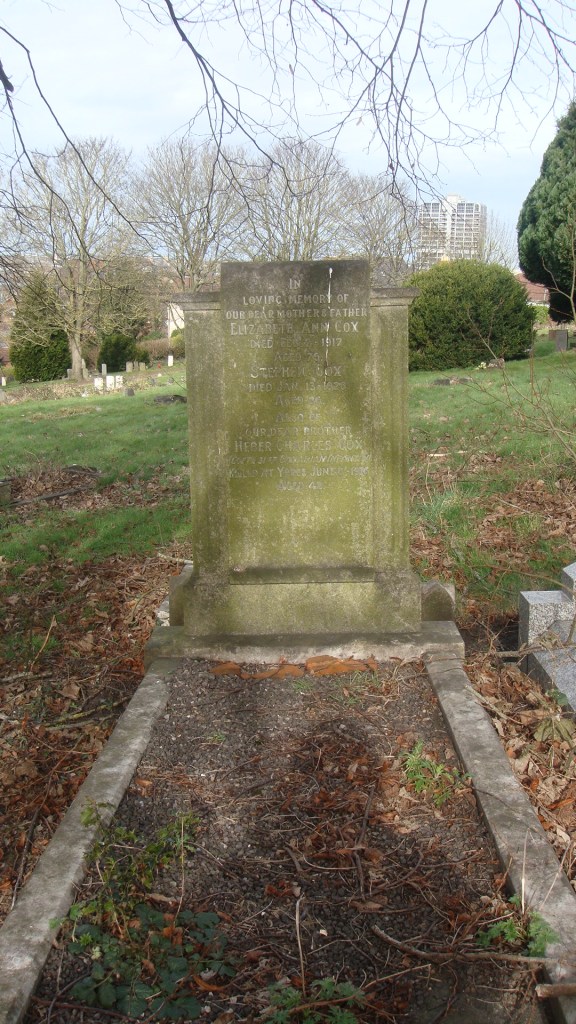
Heber Cox – a new life of opportunity

This is the final resting place of Stephen and Elizabeth Cox.  Elizabeth died in 1917 and Stephen in 1926.

Stephen was born in Aldbourne and Elizabeth in Marlborough but by 1871 they had moved to Swindon and between the years 1871 to at least 1881 they managed a beer house in Queen Street.

At the time of the 1891 census Stephen was farming at The Wharf in Stratton with the help of his son Heber.  When Stephen retired the couple moved to 32 Guppy Street in Rodbourne where they were living in 1901.

In 1908 Heber set sail upon the Sardinia, bound for Canada.  On the ships schedule Heber, then aged 34, describes himself as a farmer and states his ultimate destination as Calgary, all set, no doubt for a new life of opportunity.

But on November 14, 1914 and by then aged 40 and still single, Heber enlisted with the Canadian Overseas Expeditionary Force.  He served in the 31st Canadian Infantry and was killed in action at Ypres on June 6, 1916.  His name is mentioned on the Menin Gate memorial and here in Radnor Street on his parents’ headstone.

William Henry Gladwin – accordionist

William Henry Gladwin (known as Bill) was born in Malmesbury in 1883, the eldest of three children. His father died when Bill was a child and his mother married two years later. Her second husband was Albert Lea and they went on to have a further six children.

Bill was well known for playing his accordion, even taking it with him to the trenches of the First World War. One of the family stories is that along with entertaining his fellow soldiers, the German soldiers could also be heard singing along to his accordion.

Bill never married or had children, but was much loved by his large family, close to brothers and sisters, nephews and nieces, which makes the circumstance of his burial so surprising and still the cause of a deep family sadness to this day.

Bill was struck by a bus and killed after coming out of Bright Street Club in Gorse Hill on February 19, 1954. His burial took place a few days later, attended by members of his family.

Bill was buried in a public grave. This burial is when a person has insufficient funds to pay for the cost of the funeral and the expense is met by the local authority.

Bill’s surviving family members still find the circumstances of his burial upsetting and surprising and have numerous questions that sadly remain unanswered. They wonder why the large extended family didn’t club together to cover the cost.

Bill left a will in which his effects were valued at £32 14s 9d.

Many thanks to Mandy who told this story on one of our cemetery walks.

Stoker Tom Pictor

Tom Pictor was the eldest of John and Emma Pictor’s seven children. He was baptised at St. Mark’s Church on September 1, 1878 and grew up in the Westcott Place/Rushey Platt area where his father worked variously as a timber yard labourer, a railway labourer and a railway watchman.

Tom joined the navy on January 1, 1895 for a period of 12 years. By 1901 22 year old Tom was working as a steamship stoker. His naval records state that his date of birth was July 26, 1876, although his baptismal records and the census returns suggest he might have been two years younger than this. A physical description states Tom was 5ft 5½ ins tall with dark hair and a dark complexion, hazel eyes and tattooed rings on his fingers. In 1907 he joined the Royal Fleet Reserve from which he was discharged on January 8, 1912, declared medically unfit. However, he re-joined the RFR twelve months later.

Tom served on a number of ships including Vivid II, the Stokers and Engine Room Artificers School based at Devonport. The last ship on which Tom served was HMS Teutonic. Built for the White Star Line in Belfast in 1887 and launched in 1889, the Teutonic was one of the first armed merchant cruisers. The Teutonic served as an ocean liner travelling between Liverpool and New York City but reverted back to military use during times of war. During the Boer War, HMS Teutonic served as a troop transport ship and in 1914 it served as a convoy escort and troop transport ship. It was while the ship was berthed in Liverpool dock in December 1915 that Tom’s fatal accident occurred. His records indicate that during 1915 Tom served three periods of detention for being absent without leave.

Drowning Coincidence

Under somewhat similar circumstances two men employed on Government vessels whilst lying in the Canada Dock fell into the water on different dates and died from the effects of immersion. Inquests were held today.

In the first case the deceased man was Tom Pictor (44), a stoker, whose mother resides at Swindon. On Saturday night Pictor, when stepping from the gangway on to the ship slipped backwards and fell into the water and was drowned.

The second case was that concerning Thomas Henry Evans, aged 47, greaser in the Royal Navy, who belonged to Southampton. On the night of the 18th he was going on board his ship when he fell into the Canada Dock. He was rescued, and taken to hospital, where he died on Saturday from pneumonia.

“Death from drowning” was the verdict in each case.

The Liverpool Echo, Monday, December 6, 1915.

Tom Pictor was buried on December 9, 1915 in grave plot B1812, a public grave, which he shares with two others. The burial registers indicate he was 37 years old.

Pte. William Henry Thomas – art student

What did the future have in store for William Henry Thomas? It could have been so different. His mother Amy died in 1903. She at least was spared the horror of the First World War. The last time Henry saw his son he was an art student.

William Henry Thomas was born in 1888, the only son of Henry William and Amy Thomas and baptised at St Paul’s Church on March 25. He grew up at The Eagle Hotel where his father was licensed victualler. The Eagle stood on the corner of Regent Street and College Street and was demolished during the redevelopment of the area.

Read more about the Eagle here.

A Swindon Soldier’s Death

The distressing news is to hand of the death – killed in action on May 25th – of Pte. William Henry Thomas, of the H.A.C. He was the only son of Mr H.W. Thomas, of 63 Bath Road, Swindon, and was 29 years of age. Previous to joining the Army, about 18 months ago, Pte. Thomas had been studying art in London. He had been at the front since November last.

North Wilts Herald, Friday, June 1, 1917.

Until 9 April 1917, the Allied front line ran practically through the village of St. Laurent-Blangy. The trench (known to the Germans as Mindel Trench and called in 1918 McLaren Trench) was taken by the 9th (Scottish) Division on 9 April 1917, and the cemetery was made by the side of the trench after the battle. It was used by fighting units and field ambulances until September 1918, and was at times called Stirling Camp and St. Laurent-Blangy Forward Cemetery. Mindel Trench British Cemetery contains 191 burials of the First World War, nine of which are unidentified. The cemetery was designed by N A Rew.

From the Commonwealth War Graves website.

Thomas W.H. William Henry

Private 5116 A Company 1st Battalion

Honourable Artillery Company

Died of Wounds 25 May 1917 29 years old

Son of H.W. and Amy Thomas of 63 Bath Road

C24 Midel Trench British Cemetery St Laurent Blangy

One of the bells in Christ Church was bought by his father in memory of him in 1923.

Tell Them of Us by Mark Sutton

Radnor Street Cemetery volunteers

This Thursday morning you are likely to find members of the Radnor Street Cemetery volunteers busy in the cemetery. Here are a few words from Kevin explaining some of the work the volunteers undertake.

‘There are currently seven volunteers working in Radnor Street Cemetery. These include Jon, Jonathan, Brian, Pauline, Val, Jo and myself.

We are volunteering in an official capacity for the CWGC as part of their Eyes On Hands On project. The Commission is responsible for 103 plots at the cemetery, 90 WWI and 13 WWII, of these there are 101 Commonwealth and 12 private. Basically, it is up to us to look after these plots and feedback any concerns to the Commission such as illegibility, damage, unsafe leaning etc.

We are authorised to softly clean the Commonwealth headstones, using just water and brushes, and carry out light weeding, grass trimming etc. For the private memorials we should only carry out only light weeding and not clean the headstones, but feed back to the Commission.

Of the casualties at the cemetery a lot of them died from illness, but there are also those who died in accidents or more sadly those who took their own lives often following the horrors they had experienced.

We have recently been photographing all of the headstones and memorials for the Commission website. The Commission now try and include photographs on their casualty database, which people can search.

Outside of the Commission’s responsibility there are also many private family plots at the cemetery that we have come across that make reference to loved family members lost during the two wars.

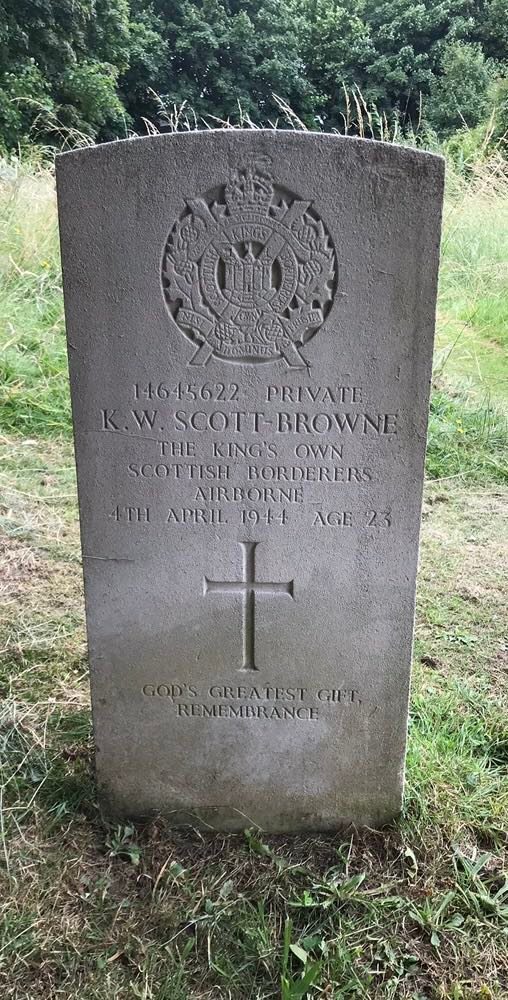
The first two images show a little bit about the Eyes On Hands On project. The next photo is a private plot commemorating 2nd Lt W.S. Hunter, Royal West Kent Regiment. The second photo is a Commonwealth headstone marking the grave of Pte K.W. Scott-Browne, sadly killed in a flying accident whilst training for D Day. The last photo is a family grave for Mildred Cook, commemorating her husband Hubert James Cook, killed in action during WWI.’

Read more about the work of the Commonwealth War Graves Commission here.

Archibald Edward Knee – Tell Them of Us

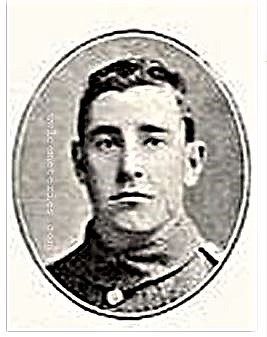
Archibald Edward Knee was born in Stroud in 1892, the son of Francis and Rose Knee. The family later moved to 123 Albion Street where Francis worked as a railway carriage painter in the GWR Works and Rose cared for their seven young children. Archibald joined his father in the GWR Works on leaving school, working as a railway carriage painter and sign writer; a job he could safely expect to hold for life.

Archibald enlisted in the Wiltshire Regiment in July 1915, when a war initially anticipated to be over by Christmas 1914 approached its first anniversary. He embarked for France on New Year’s Eve 1915, part of desperately needed reinforcements at the front.

Archibald Edward Knee

The British army began preparing for the ‘big push,’ in the Spring of 1916. It was believed this allied offensive would finish the war. The Battle of the Somme, in which more than 57,000 British soldiers were killed, wounded or reported missing during the first 24 hours of action, was yet to come.

The 1st Battalion of the Wiltshire Regiment was at Pylones, three kilometres north of the German held Vimy Ridge. The German army bombarded this section of the Western Front on May 21, firing everything at their disposal, including gas and lachrymatory (tear gas) shells.

The men of D Company were in battle by day and making running repairs to fencing and trenches throughout the night.

Lt Col W.S. Brown recorded the events of May 24 in the regimental war diary:

“In the trenches. The enemy were able to reach the Birkin Crater post with Cylinder stick bombs and some casualties were caused.

Many rifle grenades were fired at the outpost line of P73: those fired in retaliation appeared to do considerable damage. After 5 p.m. the enemy fired several heavy trench mortars at P74 and P75 and also at the head of Grange C.T. Snipers claimed three Germans. Repairs to the P line were carried out and a large amount of wire was put out along the whole front during the night of 24th/25th.”

Private F. Daniels of A Company was killed outright. Lance Corporal Knee was among 10 other casualties that night.

Archibald was taken to the 22nd General Hospital at Etaples where he received emergency treatment. He had suffered a gunshot wound to his left thigh, which in itself would probably not have proved life threatening. It was the effect of the German gas attack that proved fatal. Archibald developed gas gangrene and died at 11.20 on the morning of May 29. He is buried in the Etaples Military Cemetery.

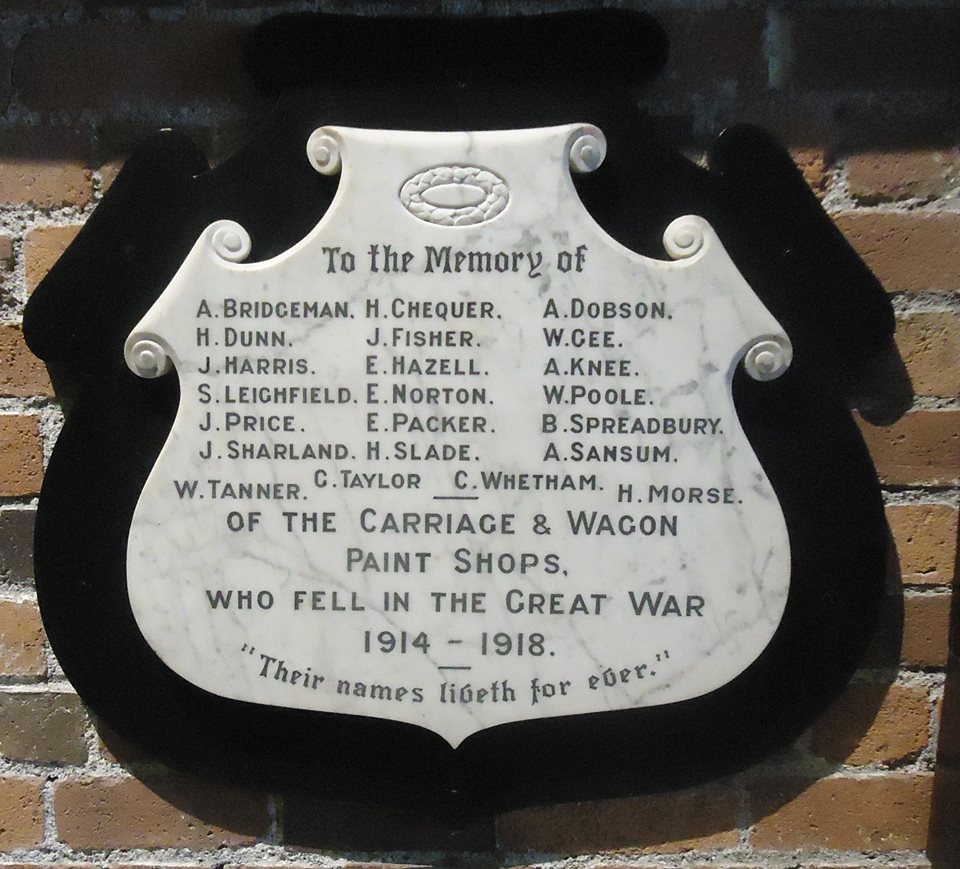
Archibald’s name appears on the memorial dedicated to the memory of those from the Carriage & Wagon Paint Shops who gave their lives in the Great War. This plaque can now be seen in the STEAM Museum.

#TellThemofUs

#MarkSutton

Comrades of the Great War

The re-imagined story …

I stood in front of the Baptist Tabernacle and watched the crowds gather, ten, twelve, fifteen deep in some places, packing all the approaches to the Town Hall.

Hundreds upon hundreds of people had come to pay their respects. Grieving parents stood next to those who had welcomed home their shattered sons, everyone touched by the horror of four long years of war.

Soldiers on crutches, soldiers with no obvious injuries. Widows holding the hands of little children, who even at such a young age appreciated the solemnity of the occasion.

Gathered immediately around the shrouded war memorial were the Mayor and civic dignitaries standing next to members of the clergy from the various Swindon congregations. Alongside detachments of the local military units were a group of Boy Scouts and Girl Guides, all standing to attention.

I went to school with the Preater brothers. I was in the same class as Bert, the youngest. Six sets of brothers were lost from Sanford Street School and I knew them all. Reginald Corser, an Engine Room Artificer who died on board HMS Defence in 1916. His brother Horace died on the Western Front two years later.

The Leggett brothers both served with the Wilts 1st Battalion and died within three months of each other in 1915. Bill was shot through the stomach. He was 22 years old. Ern was also killed in action. He was 21.

I went to school with the Preater brothers and Bill and Ern Leggett and the Corser brothers, but I didn’t go to war with them. The British Army wouldn’t have me. I tried to enlist twice, but each time I failed the medical.

The ladies used to wait outside the Works with their white feathers. I keep mine in an envelope in my sock drawer.

And then it was time for the service to begin. The Mayor unveiled the Cenotaph as the Last Post was sounded.

The band of the Comrades of the Great War played the introduction to the hymn “Nearer my God, to Thee” and a great swell of voices carried the words heavenwards on that serene and sunny day in October 1920.

After the prayers the short service closed with another hymn, “For all the saints who from their labours rest” and as the voices stilled, relatives made their way to the war memorial to lay their flowers. The silence only broken by the sound of sobs. How many more tears could we shed?

Mrs Preater leaned heavily on the arm of her son John, the only one of four who went to war and returned home. She looked frail. Three sons lost and no grave to visit for any of them.

The war had been over for almost two years but for families like the Preater’s it would never be over.

It took a long time for the crowd to disperse. People were reluctant to leave this place, this time.

I stood and watched and wondered how I could continue to face the men who had returned home broken. The war casualties continued long after the armistice.

I am writing my memories of that day. Maybe in the future someone will be interested. At the moment I can’t see a future.

These words were found with a white feather in an envelope in his sock drawer.

Preater family

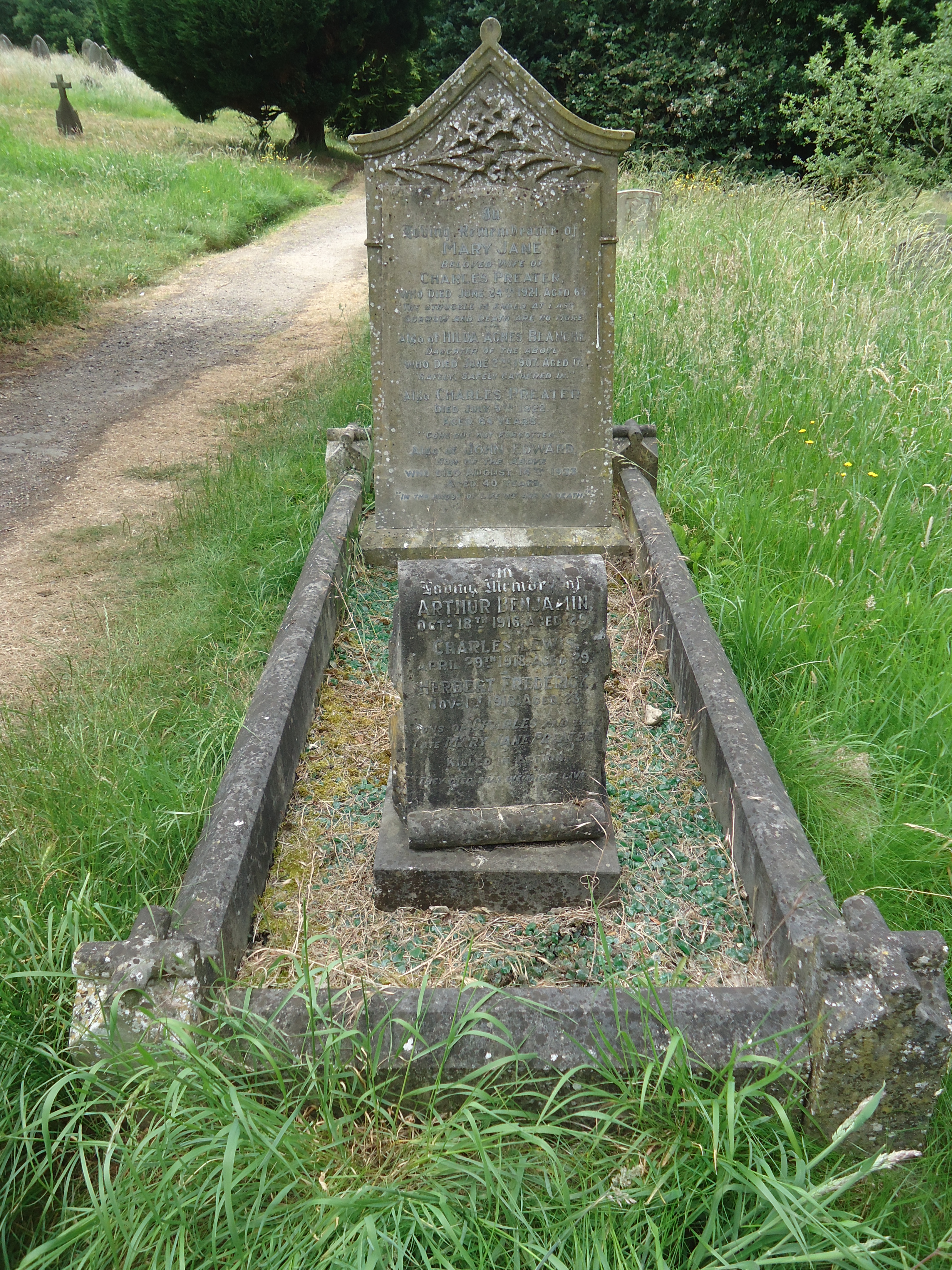
The Preater family grave in Radnor Street Cemetery

The facts …

Buried in this grave are Charles and Mary Jane Preater, their daughter Hilda who died in 1907 and John Edward Preater, the son who survived the First World War.

A memorial to the three sons who died stands on the grave.

Arthur Benjamin Preater was born in 1886 and served in the 2nd battalion of the Wiltshire Regiment. The battalion had been involved in the Somme battles since July 8, 1916. On October 18 they were in the line along with the 2nd Liverpool, 2nd Manchester Pals and the 2nd Yorks and attacked the German positions not far from Flers. The attack was not successful and the battalion reported casualties of 14 officers and 350 other ranks. Arthur was among those killed. He is remembered on the Thiepval memorial and has no known grave.

Charles Lewis Preater was born in 1889 and served in the 6th battalion of the Wiltshire Regiment. In April 1918 the 6th were in the Messines area of Belgium about seven miles from Ypres. The 2nd part of the great German offensive took place on the night of the 9/10 and the objective was Ypres again. In the path of this onslaught was the 6th Wilts. By the time the battalion was relieved on April 20 they had lost over half their strength. Charles had been severely wounded and died as a result on April 29. His grave was lost due to constant shelling and he is remembered on the Tyne Cott memorial.

Herbert Frederick Preater was born in 1896 and served with the 2nd/8th Battalion of the Worcestershire Regiment. He was killed in action on November 1, 1918 and is buried in France in the Cross Roads Cemetery Fontaine au Bois.

John Edward Preater was born in 1893. He served with the Worcestershire Regiment. He survived and returned home. He took over as landlord at The New Inn following his father’s death in 1922. John collapsed at the GW Railway Station, Chippenham on August 14, 1933. He was travelling with a group of friends and his fiancée. They were off to Weymouth for a short holiday. He died on the platform before a doctor could arrive. There was no inquest as John was under the care of a doctor at the time of his death. He is buried with his parents and his sister.

Two elder sons didn’t serve.

There were two daughters. Eva Emma Leah Preater who married James Ernest Wood, an Engine Erector, in 1909. Eva died in 1974 aged 90 and is buried close to the Preater family grave. Youngest child, Ada Cora Preater, never married. She took over as proprietor of The New Inn after her brother’s death in 1933. She died on February 26, 1956 at the pub where she had lived all her life. She is also buried in Radnor Street Cemetery in plot D65A.

Resources include Tell Them of Us by Mark Sutton

Swindon’s War Record by W.D. Bavin

William (left) Ernest (right) Leggett (1)

The Leggett Brothers – William (left) Ernest (right)

Sanford Street School memorial 2

Sanford Street School Memorial, Radnor Street Cemetery chapel

Join us in a Service of Remembrance at Radnor Street Cemetery on Sunday November 10. Meet at the Cross of Sacrifice memorial for 2pm.

20241027_145956