Below you will read the awful story of Charles Robert Thompson. A story of a broken marriage, a runaway wife and a tragic suicide. It makes for dreadful reading. And in the middle of all this are two girls – the couple’s twelve year old daughter, Mabel Annie Thompson and a young servant girl, Beatrice Ferris.
Mabel was called as a witness at the inquest where she gave evidence about the events that had led up to her mother’s departure and her father’s state of mind and Beatrice told how she found the body of her employer.
It is impossible to imagine how these two girls were affected by the events of that terrible time and whether they ever truly recovered. There would have been no talking therapies available to them then nor probably any other form of help.
Mabel was born in Cirencester on January 11, 1891. In 1901 the family were living at 1 Stafford Street, although Charles’ name does not appear on the census as living with Emily and their three children. Was the marriage already in crisis?
In 1915 Mabel married George Woodward, a butcher with a shop at 107 Cricklade Road, Gorse Hill. At the time of her marriage she was living at Swindon House, The Square, Old Town. In 1939 Mabel was living at 220 Ferndale Road with her husband, three children and her father-in-law. She died in the June quarter of 1972, aged 81. She is not buried in Radnor Street cemetery.
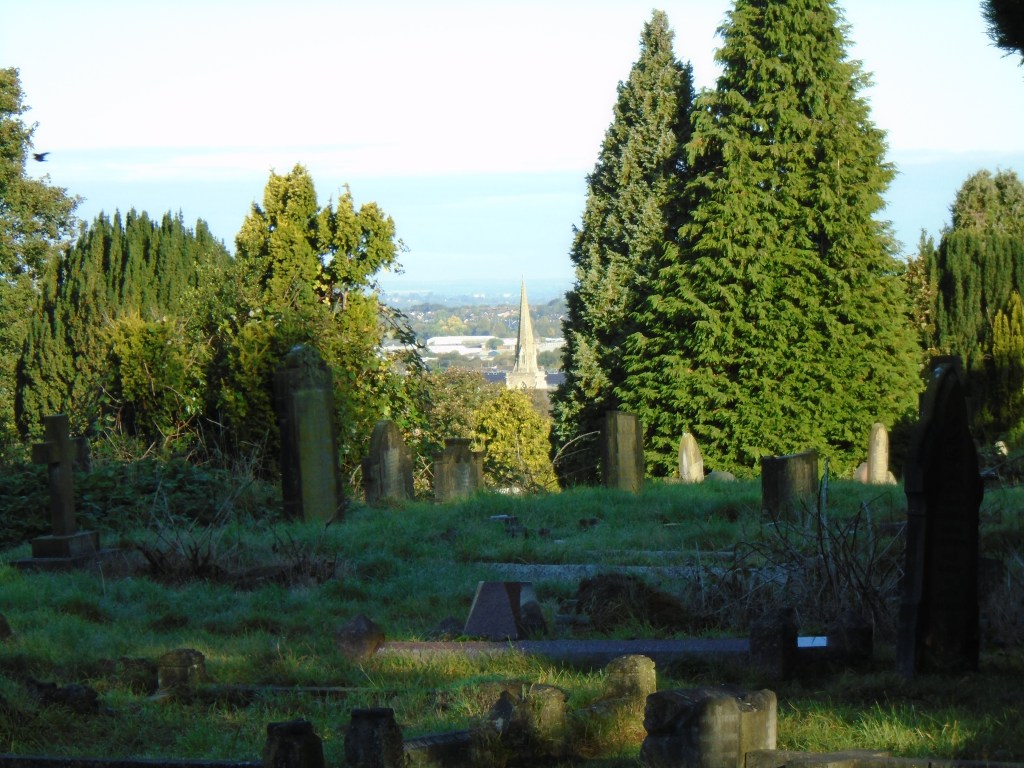
A summer view across the cemetery
A Carpenter’s Suicide
Deserted by his Wife
A Pathetic Story
A further inquest was conducted by Mr W.E. Nicolson Browne at the Ship Hotel, Swindon this afternoon, touching the death of Charles Robert Thompson, carpenter in the employ of the GWR Co., residing at No. 12 Cambria Place, Swindon, who was found with his throat cut on Saturday morning.
Mabel Thompson, aged 12, daughter of the deceased, who gave her evidence admirably, said her father was 39. Her mother went away nine weeks ago with a Joe Barratt, and nothing had been heard of her. Joe Barratt was a lodger at deceased’s house, and was employed in the factory.
The Coroner: Was your father cut up about your mother going away?
Witness: Yes, sir. He mentioned it every day, and went to Cirencester and Glo’ster to try and find her.
Witness further said that Barratt was introduced as a lodger by her mother. One night her father had repeatedly to ask her mother and Joe Barratt to go to bed. They said they would go when they thought they would. A bill had recently arrived for her father who said on receiving it, he could not face it.
Beatrice Ferris, servant at deceased’s house, said she had been with deceased for six weeks. He had not in her presence or to her knowledge stated or hinted that he intended to take his life. He never drank to any extent. On Friday she bought him some brandy.
He frequently exclaimed, “Oh my poor head.” On Thursday he expressed a wish to be let alone when she went to rouse him she could not wake him. A bottle (produced) was found near him by his daughter Mabel. He woke eventually and went to bed. There was no disturbance during the night. On Saturday morning she saw a light in the w.c. She called to ask who was there, and receiving no reply, she pushed the door open and found Mr Thompson dead, with his throat cut. There was a chair there.
Hubert Knew, said he was living in deceased’s house at the time of the death. On Saturday morning he got up before six o’clock. He heard Mr Thompson shout from his room. “Who’s about?” He (witness) replied: “It’s only me,” and Mr Thompson said. “All right.” Deceased had appeared very much depressed lately. He knew that deceased and his wife had had a few words at times. Mrs Thompson had been away nine weeks.
Dr H. Brown, assistant to Dr Swinhoe, said he was called at 7.30 on Saturday morning to the deceased. He found the man dead with his throat cut, and a razor beside him. Death was due to haemorrhage, arising from the wound in the throat.
At this point a letter, which the deceased had left was handed to the Coroner. On the envelope was written: “My purse is on the shelf with all I have.” On looking at the letter enclosed in the envelope the Coroner said that there was no doubt the man had himself cut his throat, and he did not think it necessary that the letter should be read.
The jury returned a verdict of suicide during temporary insanity.
Swindon Advertiser Monday November 23, 1903
Charles Robert Thompson was buried on November 27, 1903 in grave plot C1395. He is buried with his wife Emily who died just three years later in November 1906. Also in the same grave are William S. Stone who died in 1929 and Charlotte Rose Wearing who died in 1933.
The jury delivered a verdict of ‘Accidental death’ while the Coroner added that Chatten had evidently been too zealous in attempting to unload the wagon himself, and thus caused his own death. Behind this tragic story is a further one of sorrow and loss.
Fatal Accident in the GWR Works, Swindon
A Labourer Killed
Inquest and Verdict
A fatal accident occurred on Tuesday morning last to a man named Henry Chatten, widower, aged 36 years and recently employed in the GWR Works. Deceased was killed by the falling of a log of wood, weight 16 cwt from a truck on which it was stacked. The log in its fall dashed Chatten against the sleepers of the line, breaking both his legs and killing him on the spot.
The Inquest was held on Thursday morning, in the Lecture Hall of the Mechanics’ Institute, New Swindon, before Mr W.E.N. Browne, County Coroner, and a jury of whom Mr Thomas Pearse was chosen foreman. The following evidence was taken:-
George Keen said deceased lodged with him at Dean-street, New Swindon. He was a sober, steady man and appeared in the best of health when he went to work at six o’clock on Tuesday morning. Witness heard no more of him until he was informed that he was dead.
William Mason, steam crane driver, then, stated that he was on duty on Tuesday morning, and whilst passing the truck of timber in question, he saw deceased laid down by the truck. He stopped his engine and cried out to some men of the staff, but when they reached Chatten he was dead. In answer to the Coroner, witness said he did not see the timber fall. He was about forty yards away when he first saw the deceased. There was no indication as to how the timber fell off the truck.
William Yeo, foreman of the timber gang, said there were 17 men working under him, and on Tuesday morning they were unloading the timber trucks. Deceased’s duty was to sweep up the yard and clear away the ropes, etc. He had no need to touch the trucks at all. In his opinion deceased had loosened the ropes of the truck and thus let the timber fall on him. The weight of the log was 16 cwt. Cross examined by the Inspector: The timber would not fall off the truck without a little jerk.
Dr. Grant, assistant to Dr. Swinhoe and Howse, stated that he was called about half-past seven o’clock on Tuesday morning. He saw deceased lying upon his back, and evidently a log had fallen from the truck and dashed the man against the sleepers, breaking both legs and fracturing the skull. He was quite dead. This was about twelve minutes after the accident, and death must have been instantaneous. A verdict of “Accidental death,” was returned by the jury, the coroner remarking that Chatten had evidently been too zealous in attempting to unload the wagon himself, and thus caused his own death.
Mr T.O. Hogarth watched the case on behalf of the GWR Company, whilst Mr. J.S. Maitland, of Bristol, Inspector of Factories and Workshops, was also in attendance.
Swindon Advertiser, Saturday, June 12, 1897.
Henry Chatten was born in Norwich, Norfolk in 1862, the son of John and Rachel Chatten.
By 1891 he had moved to Swindon and was working as a labourer in the GWR Works. At that time he was boarding with George Keen (the witness at the inquest) in Iffley Road.
The intervening years between 1891 and his death in 1897 are difficult to navigate.* There is a marriage of a Henry Chatten to Elizabeth Siney at St Stephen’s Church, Norwich in 1894 but this Henry Chatten describes himself as a greengrocer living at 73 King Street, Crooks Place, Norwich.
The details given at the inquest indicate that Henry was a widower and I have discovered the death of Elizabeth Chatten during the March quarter of 1897 – was this Henry’s wife? She does not appear to have been buried in Radnor Street Cemetery.
Henry was buried on June 12, 1897 in grave plot C853. He is buried in a public grave with four others. His address at the time of his death was 37 Dean Street.
And then another entry in the registers caught my eye. John E. Chatton, a 7 week old baby, was buried in plot C721 on February 20, 1897. The baby’s address was 37 Dean Street.
It would seem, therefore, that Henry lost both his wife and baby within a period of three months.
*spelling of name in transcriptions vary from Chatten to Chatton and Challen
To give him his proper title, William Bonner was the Railway Station Superintendent at Swindon and the fifth person to fulfil that role.
Railway village builders Joseph D. & Charles Rigby built the railway station, known as Swindon Junction, in 1842. The building accommodated the Refreshment Rooms on the ground floor and a hotel and lounge above. In 1881 the hotel staff numbered 25 members all living on site. The Victorian building was largely demolished in 1972.
William Bonner began his railway career as a clerk before serving as station master at West Drayton, Uxbridge and Wrexham before moving to Swindon in 1873.
His accommodation as Railway Station Superintendent was Station Villa, one of the Managers Houses on Station Road, long since demolished.
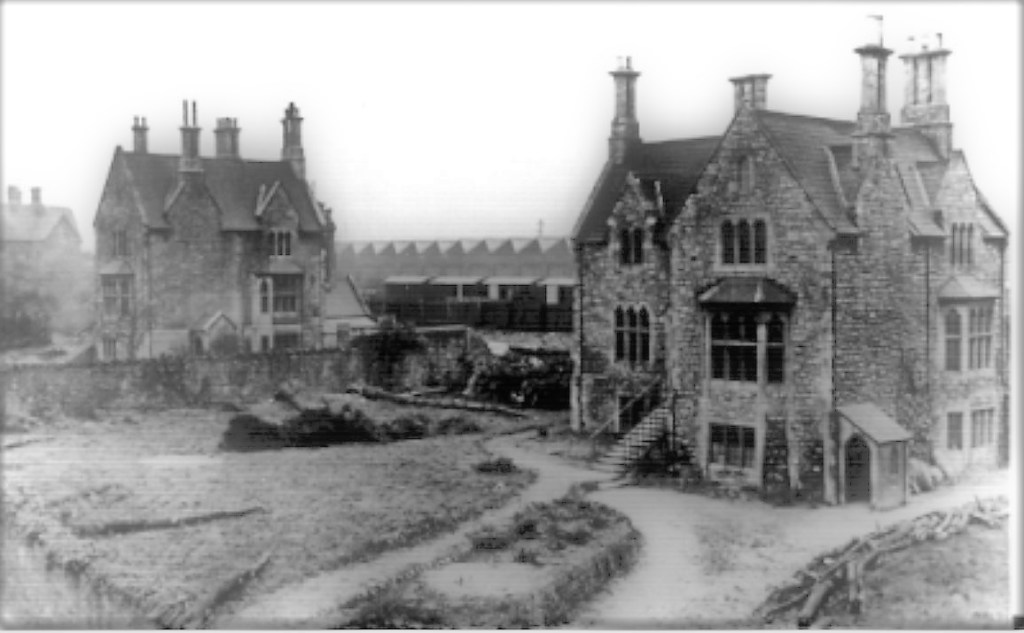
Station Villa is to the right of this photograph pictured in around 1910
Sad Death of Mr Bonner,
The GWR Station Master
A long life passed in the care and preservation of other people’s lives was brought to a sad end on Tuesday last, at Swindon, when Mr W. Bonner, the highly respected but unpresuming, station master at Swindon GWR junction, met with his death whilst in the discharge of his duty. The particulars of the sad event will be found below.
The GWR authorities have been particularly happy in their choice of station masters at Swindon. Mr Holmes, the almost immediate predecessor of Mr Bonner, being as remarkable for his courteousness and urbanity as was Mr Bonner. At such a large and important station, a man of much tact and skill is an absolute necessity, not only for the safety and comfort of the travelling public but for the governance of the large staff of station hands at such a junction as Swindon.
Mr Bonner proved himself the right man in the right place – civil, courteous, and obliging to all, to such a degree that his loss is felt more than by the natural feeling experienced at the sadness of his going from amongst his family and friends.
But like so many, the deceased gentleman went through all the numerous dangers to life and limb incidental to his occupation, only to be overtaken at a time when he might pardonably have been looking forward to a period of retirement and rest after a busy life. Capt. Speke, the explorer, passed through the dangers of the African jungle to come home to shoot himself whilst getting through a hedge: Mr Bonner’s sad ending may be somewhat likened to this, and to many others of a like nature.
Deceased had been in the service of the Company about 40 years, and commenced his duties at Paddington. He had been at Swindon just a quarter of a century, having come here from Wrexham, where he was presented with a gold watch and chain by the station employes as a token of their appreciated of his kindness and consideration. When his body was discovered on Tuesday evening the watch and chain, slight damaged, were found in the six footway. The watch had stopped at 6.47 p.m.; the train reached Swindon at 6.50 p.m.
The Inquest
Was held at the Queen’s Hotel, GWR Station, on Wednesday, before Mr W.E.N. Browne, County Coroner, and a jury of whom Mr H.J. Deacon was foreman, Mr Kislingbury, Divisional Superintendent of Bristol; Inspector Wheeler, of Chippenham; and Mr W. Martin, Locomotive Shed Foreman, of Swindon, were present on behalf of the GWR Company. The following evidence was taken:
Mr Kislingbury, Divisional Superintendent of Bristol, said deceased came to Bristol to see him on Tuesday, and was engaged with him from 11 a.m. till 1.30 p.m. He was in his usual health, and witness had never seen him brighter.
William Readings, a GWR engine driver, said he was driving one of the recently constructed express trains. He left Bristol at 5.50 p.m. Deceased got on the engine at Bath. Witness asked him for his pass and he produced it. During the run from Bath they conversed together and deceased spoke of his son who was a Loco Superintendent in India. He also referred to the difference in the present day lines and the old broad guage.
When reaching Hay Lane signals witness found he had not shut off the train steam warning signal cock. When he shut it off deceased asked him what he had done and witness explained to him. That was the last word he spoke. Directly afterwards when witness shut off the steam he turned round and saw deceased falling off through the opening near the engine tender, and all witness could see was the tail of his coat. – By a juryman: Deceased might have looked over at the side to see if the signals were right, but witness did not see that. – By another juryman: He had never travelled with witness on the engine before. He had his engine pass on this occasion. – By another juryman: The train was going at the rate of 50 miles an hour. Witness had not the least chance of saving him.
George Cole, fireman on the same train, said he did not see deceased fall off the engine. The train was not stopped until it arrived at Swindon. Witness was looking for the signals on his side. Deceased fell in the six foot way.
George Rochester, platform Inspector at Swindon, said that on the arrival of the train at Swindon at 6.50 p.m., the driver Readings reported to him what had happened, telling him that Mr Bonner had fallen off the engine near Major Dean’s house. Witness immediately obtained the assistance of three men, and they took a stretcher and went on an engine down towards Rodbourne Road. They pulled up beyond Major Dean’s house, and then walked along the line in search of deceased, whom they found lying on his face with his two legs on the down line. Deceased’s head was fearfully cut about, and there was not the slightest sign of life. They placed the body on a stretcher and took the train on to Wootton Bassett in order to get on the up line. Witness had previously sent word to Swindon Station for a doctor to be there in readiness, and Dr. Swinhoe attended. There was not doubt that deceased was struck by some part of the train after he pitched on the ground.
The Coroner said Dr Swinhoe was not present, but if he were he could only corroborate what Inspector Rochester had said with regard to life being extinct. He (the Coroner) had no doubt Dr. Swinhoe, like most of them, was suffering from shock at the sad way in which the life of an old friend had been brought to a close. It was only a few days ago that deceased told him (Mr Browne) that he would be retiring shortly on a superannuation. Deceased was always kind and considerate to the staff, and the GWR Co. had lost a most valuable servant. He (Mr Browne) deeply regretted his untimely death, and had hoped he would have lived many years to enjoy a well earned rest. He was sure they all sympathised with the bereaved family in their great bereavement.
The jury concurred; they returned a verdict of “Accidental death,” and gave their fees to the Victoria Hospital.
The funeral which will be of a public character, will take place to-day (Saturday), leaving the deceased’s late residence at 1 p.m., 1.30 p.m. at St Mark’s Church, and 2 p.m. at the Cemetery.
Swindon Advertiser Saturday February 13, 1897
The Late Mr William Bonner
Funeral of Deceased
As announced in our last Saturday’s edition, the funeral of the late Mr William Bonner, for over a quarter of a century the courteous and obliging station master at the GWR Swindon station, took place on Saturday afternoon amidst every token of respect for the deceased (who met his death in such a tragic and sudden manner), and sympathy for his sorrowing children.
The funeral cortege left deceased’s late residence, Station Villa, shortly after one o’clock, and the solemn procession wended its way to St. Mark’s Church, New Swindon where the first part of the funeral rites were conducted.
The body was enclosed in an interior shell, with an exterior coffin of 1¼ inch polished elm, with raised moulded lid, brass furniture and engraved brass plate on panel bearing the following inscription: “William Bonner, died Feb. 9th, 1897, aged 59 years.”
The coffin was conveyed in a pair horse funeral car, and on arriving at the church gates it was carried into the sacred edifice by eight of deceased’s staff in uniform. The first part of the service at church was conducted by the Hon and Rev Canon Ponsonby, vicar of St. Mark’s and rural dean, whilst the lesson, taken from the first epistle to the Corinthians, 15th chapter, and starting at the 20th verse, was impressively read by the Rev. A.G. Gordon Ross, priest in charge of the district church of St. John, in which parish deceased lived. Service over, the procession was re-formed, and way was made for the cemetery, where the service was conducted by the Hon and Rev Canon Ponsonby.
The mourners numbered between 150 and 200, including over 50 of the men employed on Swindon platform, who attended in uniform.
There follows a long list of mourners and floral tributes…
Whilst at the graveside, one of the sons of the deceased, who had only just recovered from a serious illness, was taken with a fit and had to be carried away. He was immediately driven home and placed in bed. On making enquiries on Monday we were glad to find that he had recovered from the shock, and was as well as could be expected under the circumstances.
The funeral arrangements were satisfactorily carried out by Messrs Chandler Bros., Wood Street, and Mr Joseph Williams, Devizes Road, Swindon.
Swindon Advertiser, Saturday, February 20, 1897.
William was buried on February 13, 1897 in grave plot E8365 which he shares with his wife Caroline who had died the previous year.
The grave of William and Caroline Bonner
The Late Mr. Bonner – A handsome memorial to the late Mr W. Bonner, who was for nearly half-a-century superintendent of the Swindon GWR Station, has been erected in the Swindon cemetery. The memorial takes the form of a massive wheel cross, with carved face, standing on a moulded die, raised on two spacious bases, the material of the whole being white marble. The monument, which is 7 ft. in height, is enclosed with massive marble kerbs, and corner block; and its appearance is at once striking and artistic. It has been erected by the officials of the GWR Company, and Mr Bonner’s own personal staff at Swindon Station, also many other friends, to “mark the esteem in which he was held during the 24 years as station superintendent.”
The Marlborough Times and Wilts and Berks County Paper, Saturday, December 18, 1897.
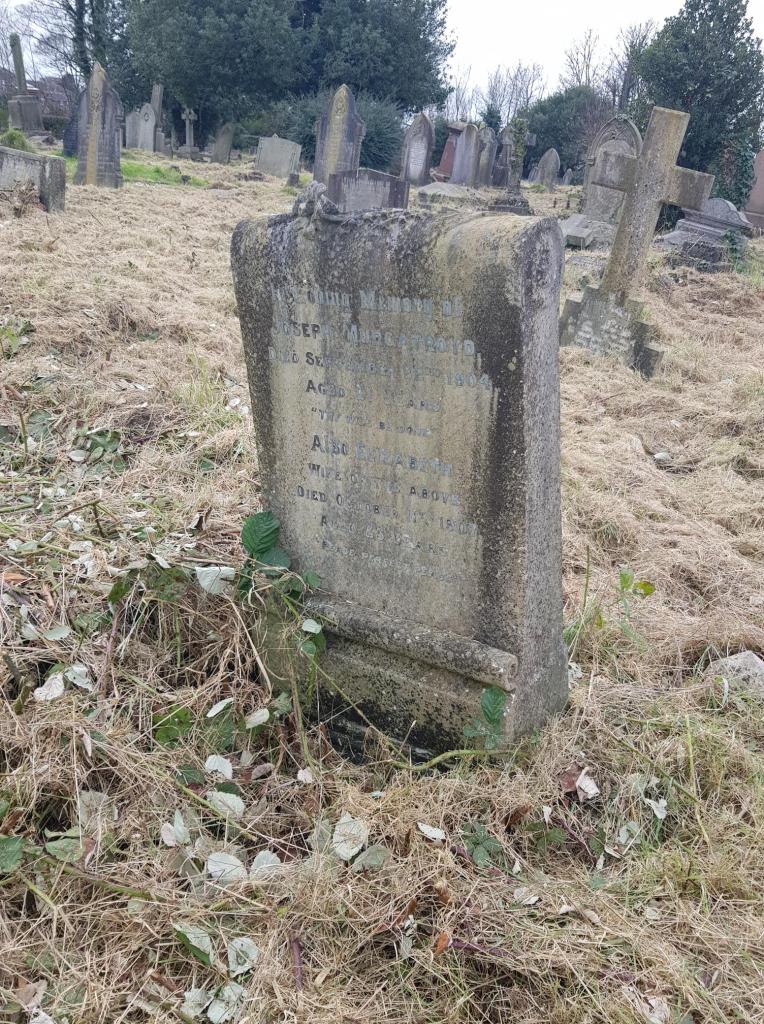
Swindon Borough Council have been busy at Radnor Street Cemetery in recent weeks and have cleared a great swathe of brambles from Section E, a particularly difficult area to navigate. Section E has probably the greatest collection of headstones and memorials in the cemetery and as Noel, Andy and I took a walk, Andy’s eye was drawn to the grave of James and Elizabeth Murgatroyd.
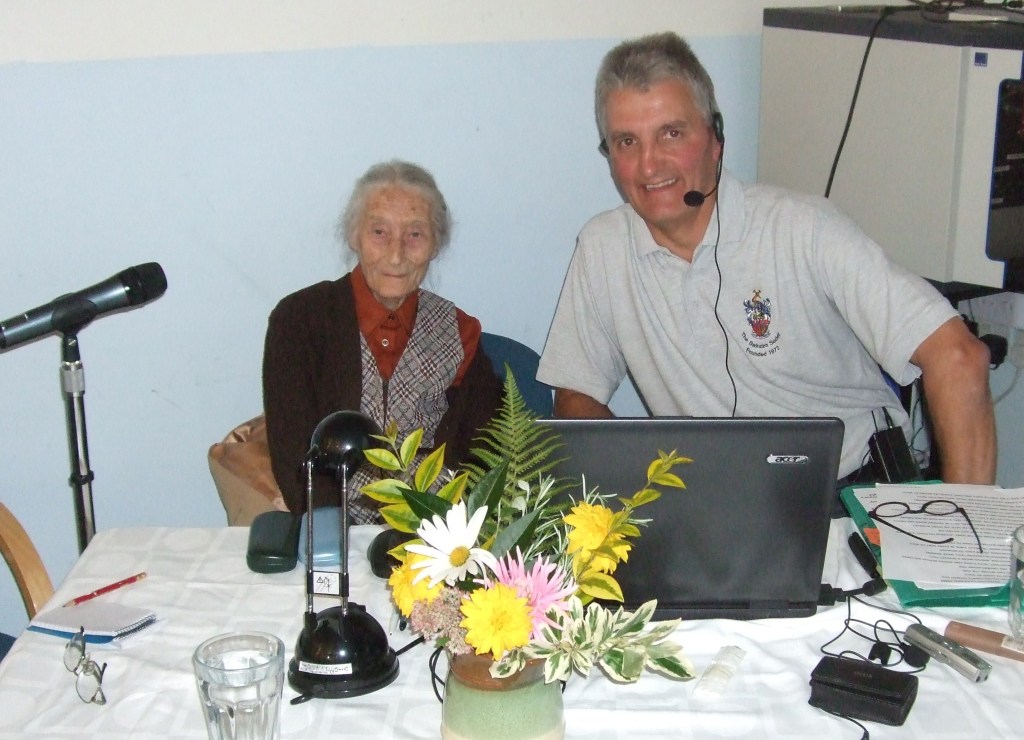
Joyce Murgatroyd was a great friend of Andy’s for many years. Teacher, artist, poet, musician and repository of Swindon’s history, Joyce died in 2017 aged 100 years.
I have written about Joyce’s family, including her great grandmother SarahPeaple and cousin Elsie Morse but have never looked into the history of her husband Henry Murgatroyd’s, family.
The headstone we discovered was that of Joseph Murgatroyd, born in Bradford in 1823. He married Elizabeth Dewhirst at St. Peter’s Church, Bradford on August 26, 1844. At the time of the 1851 census Joseph and Elizabeth were living in Okehampton Street, Exeter where Joseph’s occupation was engineer. They had two children Alfred, 5 and Priscilla, 3. It seems as if they may have already lived in Swindon at some point as this is where Priscilla was born.
By 1861 they were living at No 7, Alliance Terrace, Bridge Road, Swindon where Joseph was a Fitter & Turner at the Engine Factory. Their eldest son had died by that time – now their family comprised three children, Priscilla 13, Alfred Edwin 3 and one year old Sarah.
In 1871 they were living at 8 York Place before moving to 12 Sheppard Street, which would remain Joseph’s home until he died. His funeral took place on September 21, 1904 when he was buried in plot E7809. Elizabeth died in 1907 at her son’s home, 54 Eastcott Hill. Her funeral took place on October 15 when she was buried with Joseph. Their son Alfred Edwin, his wife Ellen and their daughter Annie Irene are buried in E7810, the neighbouring plot.
Joyce and Andy pictured together getting ready for a Swindon Society presentation in 2012.
Sadly, I did not establish a link to Joyce and Henry Murgatroyd, but I have been able to add another account to the Radnor Street Cemetery archives remembering Swindon’s ordinary people.
George Henry Flewellen was born on August 4, 1861, the youngest of John and Betsy Flewellen’s five children and grew up in the hamlet of Ford, Wiveliscombe Somerset. He began working for the GWR in June 1878. At the time of the 1881 he was living in Bristol with his mother and stepfather. Aged 19 George worked for the GWR as an engine cleaner.
On August 12, 1889 he married Ada Elizabeth Horton at St Luke’s Church, Bristol. By 1891 the Flewellen family were living in Devonport and George states his occupation as railway engine driver. The couple had two children who survived childhood, Henry born in Bristol in about 1895 and Winifred born in Taunton in about 1897. By the time of the 1911 census the family had settled in Swindon and were living at 23 County Road.
This photograph was taken by Swindon photographer William Hooper, it is believed, in the garden at the back of his studio at 6 Cromwell Street. It was taken on the occasion of the marriage of Henry John Flewellen and his bride Elsie M. Parker in 1917. This may have been a regular ‘professional’ assignment for Hooper, but I wonder if the two families were possibly friends of Hooper’s through his membership of the Open Brethren Movement.
The groom’s father, George Henry Flewellen, is pictured standing left, his hand on the shoulder of the seated woman in front of him, his wife, Ada.
The photograph is kindly published by P.A. Williams on the Local Studies, Swindon Central Library flickr page, among more than 1,131 images by William Hooper and other local photographers.
George had a long and illustrious career in the GWR (see below). He retired in 1926 and enjoyed a retirement of some 15 years, relatively unusual as many old railwaymen died within a year or two of finishing work.
Inspector George Henry Flewellen, who retired on August 4, is one of the best known locomotive railway inspectors on the G.W.R., which company he has served since 1878, when he commenced as an engine cleaner. He had thus completed 48 years’ service. Mr. Flewellen had been associated with many of the most notable developments in locomotive operation and train running on the G.W.R. He was on the City of Truro when it gained the world’s highest authenticated speed record, touching 102.3 m.p.h. down Wellington Bank with an Ocean Mail special. This was in May, 1904. He continued on the same train, but with the old single locomotive, No. 3065, Duke of Connaught, which ran the 118 ½ miles from Bristol, to Paddington, via Bath, in 99 min. 46 sec. start-to-stop, incidentally covering the 81 ¾ miles from Wootten Bassett to Westbourne Park in 62 min. 55 sec., maximum speed 91.8 m.p.h. He was in charge when H.M. the King drove the engine Windsor Castle for a short distance in 1924. The photograph reproduced shows him standing alongside the engine which inaugurated the Swindon-Paddington run at an average speed of 61.8 m.p.h.
newspaper cutting
George and Ada’s last home together was 23 Wills Avenue. George died at St Margarets Hospital, Stratton and was buried in Radnor Street Cemetery on April 30, 1941. He was 79 years old. Ada died less than two years later, also at St. Margarets Hospital. She was 77 years old. She was buried with her husband in grave plot C4863 on December 22, 1942.
I went to school with Lucy Hobbs. She lived with her dad and her uncle’s family at 13 Omdurman Road. The two brothers were well known in Gorse Hill. Lucy’s dad was a bricklayer and his brother John was a carpenter. I never knew Lucy’s mother, she had died when Lucy was very young.
It always appeared to be a happy, busy home but you can never tell what pain and sorrow people live with. Neighbours said William had never recovered from the death of his wife. Williams’ bereavement might seem in the past to others, but for him it must have been a daily presence.
I lost touch with the family as we all grew older. I heard that the eldest son, William joined the navy and Beatrice went into service but I don’t know what became of the other son. My friend Lucy married and left Swindon to live in London.
We’ve had tough times as a family, but I can’t imagine the desperation Lucy’s father must have felt. How does anyone do what he did, he could have seen no hope for the future.
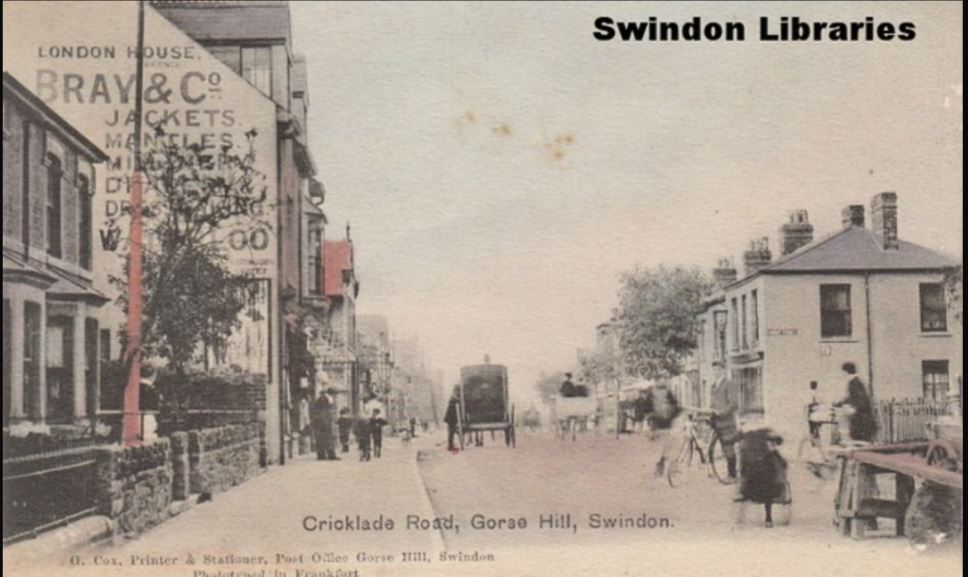
View of Cricklade Road, Gorse Hill published courtesy of Local Studies, Swindon Central Library.
The facts …
William Joseph Hobbs was born in 1868 in Poulton, Gloucestershire, the eldest of William and Sarah Ann’s nine children. William senior worked as a stonemason and both sons William Joseph and John William followed him into the building trade.
William Joseph Hobbs married Jennetta Williams on October 4, 1890 at the parish church in Poulton and by the time of the 1891 census the couple were living at 3 Ferndale Road with the two younger Hobbs brothers, John William and Tom.
William and Jennetta had four children, William Joseph, Henry Charles, Beatrice May and Lucy Amelia Jennetta who were all baptised at St Barnabas Church, Gorse Hill. The youngest child, Lucy, was baptised on April 7, 1911 aged 14 and is described in the register as ‘Candidate for Confirmation.’
Jennetta’s death was registered at Marylebone district in the June quarter of 1899. She was 34 years old and died leaving William with four children to raise. Somewhat surprisingly William did not remarry as most men left in this predicament usually did. At the time of the 1901 census he is living at 53 Ferndale Road with his four children aged 8, 7, 5 and 3, with a housekeeper Emily Button.
The newspaper account reads:
Railway Tragedy
A terribly mutilated and decapitated body of a man was found on the GW Railway Highworth branch line at Swindon at 5.30 Saturday morning. The discovery was made by a shunter, the body lying across the six foot way with the neck across the metals in such a manner as to indicate deliberate design. Enquiries set on foot by the police led to the identification of the body as that of a bricklayer named William James [Joseph] Hobbs, a widower, who, up to a fortnight or so ago, had been lodging in Cheltenham Street, New Swindon. He was stated to be in comfortable circumstance, although he had not been at work lately.
The [Gloucester] Citizen Monday 30 September 1912.
Swindon
A Case of Suicide
During a fit of temporary insanity was the verdict at which a coroner’s jury arrived on Monday, when sitting to inquire into the death of a man whose decapitated body was found on the GWR line near the Swindon goods station on Saturday. It was said that the deceased – William Joseph Hobbs, a bricklayer, 44 years of age – had behaved somewhat queerly of late, but beyond being irregularly employed there was little to worry him. He was a widower.
The [Gloucester] Citizen, Tuesday October 1st, 1912
The entry of William’s death in the Radnor Street Cemetery burial registers reads:
William Joseph Hobbs 44 found on GWRailway 13 Omdurman Street 1st October 1912 plot A5.
William was buried in a public or pauper’s grave with two other unrelated people.
Charles Morkot never appears to have lived in Swindon. Perhaps his two sons made a case for his burial in Radnor Street Cemetery following the dramatic circumstances of his death.
Charles Morkot was born in 1832 at Goring, Oxford, the son of agricultural labourer James and his wife Ann. Like his father, Charles began his working career as an agricultural labourer. However, the UK Railway Employment Records 1833-1956 (available to view on Ancestry) record that Charles began work as an Engineman with the GWR on April 24, 1856, shortly after his marriage to Susan Jane Hinton Shrimpton on April 5.
At the time of the 1861 census Charles had moved his family to Aston, Warwickshire where he worked as a Railway Engine Fireman. He progressed his career to become an Engine Driver and for sometime was employed on the record breaking Flying Dutchman loco. The Flying Dutchman was in operation between 1849 and 1892 travelling from Paddington to Exeter (and later Penzance) reaching speeds of 60 miles an hour in 1876.
Good Friday 1898 and George was enjoying his day off working in his garden at 5 Primrose villas, Kingston Road, Southall. He got up early and told his daughter Nellie that he was off to collect some manure for the garden from the stables at the “Three Tuns.” Returning with the wheelbarrow he told Nellie there were two more loads for the taking, and set off again.
Nellie told the Coroner’s Court that she saw him bring the three barrow loads home. She went into the garden where her father had been planting potatoes and spoke to him. She then saw a pint bottle with a Whitbread’s label on it, and remarked. “You have a little bottle here.” He replied, “Yes; the man in the yard said, ‘Here, Charlie, have a drink.'” He told her not to take it indoors, as it was a drop of beer. Nellie left him to his gardening and went back into the house.
Within minutes Charles staggered into the kitchen. The Whitbread bottle contained not a swig of refreshing beer; Charles had taken a fatal gulp of carbolic acid. Charles asked for a drink of water after which he appeared unable to talk again.
James D. Windle, the attending doctor, said he knew Charles had ingested carbolic acid by the smell on his breath. He washed out the patients stomach but Charles died from ‘coma and failure of the heart produced by poison.’ He had drank about one-third of the bottle. Less than a teaspoonful would have been fatal.
Annie Sanger, wife of the landlord of the “Three Tuns,” William Gladman, cabman, and local resident Henry Woodward were all called as witnesses but no one had any information on the mystery man in the yard who had given Charles the fatal drink.
The Coroner thought the best thing would be to adjourn the case for a few days. The carbolic might have been purchased somewhere. In the meantime they might try to discover who gave deceased the bottle. If whoever did so would come forward and say so they would be out of the difficulty, but in the event of his not doing so, they must try to find him.
The report in the Middlesex County Times concluded:
‘The Coroner: It is a matter of great public importance. Cases in my experience are every now and then cropping up which can be traced to carelessness of some kind, and it will put people on their guard. There was more than that in the present case. Deceased had said “A man in the yard gave it me to drink”; had he meant suicide he would not have said that. There was somebody who gave him the bottle, but had not the manliness to come forward and say so. A few days longer may find it out. He might know nothing of this inquiry, and when it goes forth he may come forward and help to clear it up.
Dr Vere Benson re-opened the inquiry in the hope that further evidence might be forthcoming. Two new witnesses, Phillip Rouse, groom and a man by the name of Fox, employed by the District Council, were called to give evidence but neither could add any additional information.
The report continued:
‘The Coroner then put the three following questions to the jury: – (1) Was the cause of death, in their opinion, carbolic acid poisoning? (2) Did deceased drink it in mistake for beer? (3) Did the evidence given prove to their satisfaction how he came into possession of the bottle? To the first two questions, the foreman answered in the affirmative, and to the third a negative reply was given. The verdict was therefore as follows: “That deceased died from the effect of carbolic acid poisoning, but that the evidence was not sufficient to show how he came by it, and that death was due to misadventure.”
To this, at the request of the jury, was attached the following rider: “That the practice of putting carbolic into vessels other than bottles properly labelled is highly dangerous and reprehensible.”
Charles Morkot, 65 years old, of 5 Primrose Villas, Kingston Road, Southall was buried on April 15, 1898 in Radnor Street Cemetery in grave plot C28. His wife Susan Jane Hinton Morkot was buried with him following her death in 1912. Other persons buried in the grave are Charles and Susan’s daughter Harriett Ellen Ham who died in 1954 and her husband Charles Ham who died in 1933. The cremated ashes of their daughter Nellie Lilian Jane Horley and her husband George G. Horley were interred in 1984 and 1963 respectively.
You might also like to read the story of Charles Morkot’s daughter-in-law.
It is always a wonderful surprise to find images and family memories about those buried in Radnor Street Cemetery. This week I came across a photograph on the fantastic Local Studies Flickr page and a comprehensive, illustrated family tree on Ancestry posted by Steve Clements.
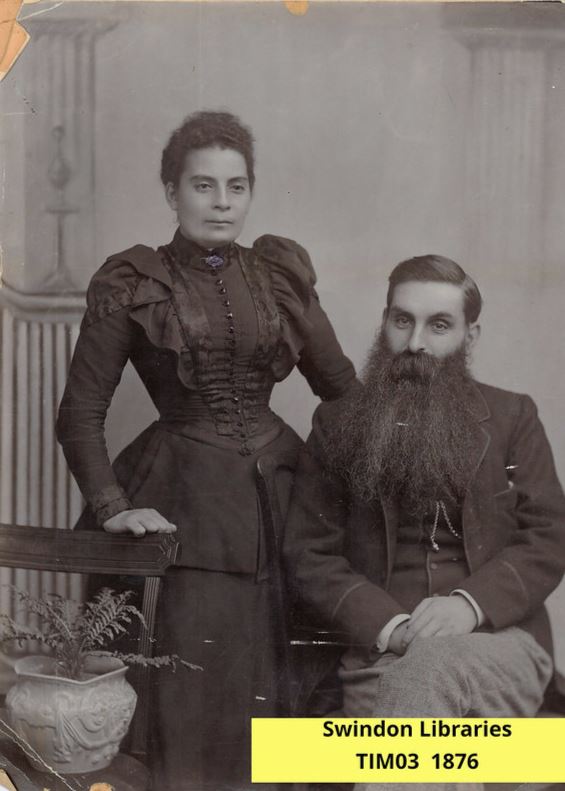
My first find was a studio portrait of Edith Jemima nee Ricketts and her husband Samuel John Whiteman published courtesy of Brian Timbrell. The couple look young, despite Samuel’s impressive beard, and I wonder if this photograph might have been taken on the occasion of their marriage (look at Edith’s nipped in waist!). Edith and Samuel were married at St. Stephen’s Church, Kensington on April 17, 1876. They were both 24 years old.
Samuel was born in 1851 in Chippenham, the son of George, a smith, and his wife Elizabeth. Edith was also born in 1851 in Down Ampney, Gloucestershire, the daughter of Richard Ricketts and his wife Elizabeth.
At the time of the 1881 census the couple lived 8 Read Street with their two children Edith and Francis (a second son Lancelot was born in 1883) and two boarders Robert Dean and Caroline Hewer who were possibly members of Edith’s extended family from Down Ampney. Samuel worked as a clerk in the GWR Works. In later years Edith worked from home as a dressmaker.
The couple lived at various addresses across Swindon – in 1891 they were at 178 Clifton Street and in 1901 at 51 Curtis Street. In 1911 they lived with their daughter and her family at 14 Curtis Street before moving to 7 Curtis Street where Edith died in 1923. She was buried on August 1 in a public grave, plot C482. Samuel outlived Edith by a further 16 years. He died in 1939 and was buried on November 11 in a public grave, plot C696. His last address was 4 Temple Street.
Edith and Samuel pictured with their little granddaughterEileen Edith Young
Sadly, as both these graves are public plots there is no headstone on either of them, so it is especially pleasing to remember Edith and Samuel with photographs.
A Veteran Forester
Death of Mr S.J. Whiteman of Swindon
The funeral took place on Saturday of Mr Samuel John Whiteman, aged 88 years, of 4 Temple street. He had been in ill health for some six years and had been confined to his bed for the past 12 months.
Mr Whiteman was born at Chippenham and came to Swindon when a young man. When 19 he entered the service of the GWR Co., being employed as a clerk in the Q Shop, and later in the Accounts Department. He retired from the Works some 35 years ago, and was for some years in the employ of Mr. L. J. Chappell, then owner of the Swindon Motor Coy., retiring on his 72nd birthday.
Mrs Whiteman died 16 years ago. He is survived by one daughter and two sons, also three grandchildren and five great-grandchildren.
Mr Whiteman was one of the oldest members of Court Briton’s Pride, North Wilts District A.O.F.
The first portion of the service was held at St. Paul’s Church by the Rev. M.C. Melville (curate) and the interment was at Radnor Street Cemetery.
The Chief mourners were: Mr Frank Whiteman and Mr Lancelot Whiteman (sons), Mr R. Dean (brother-in-law), Mr J. Dean (nephew), Mr E.H. Elliott and Mr B.W. Phillips (friends).
The funeral arrangements were carried out by Messrs A.E. Smith and Son, of Gordon road.
When David Watson heard about the new railway town being built in Wiltshire, he decided to apply for a job.
He packed his apprenticeship indentures in a leather pouch, kissed his wife and his two daughters goodbye and set off from his home in Scotland. He intended making the journey of 500 miles on foot.
That was the story handed down through generations of railwaymen. Today such an epic effort is unfathomable. In 1843 the railway network was in its infancy and the road system was basic and hazardous. Today a journey by car travelling on the M6 would taken an estimated 7 and a half hours and even a train journey would take more than 8 hours. How long did it take David Watson and which route did he follow? Did he hitch a ride with a passing carter or did he travel part the way by stagecoach? Did he stop to sleep on route at a roadside inn or did he shelter in the hedgerow over night? Did he really walk 500 miles?
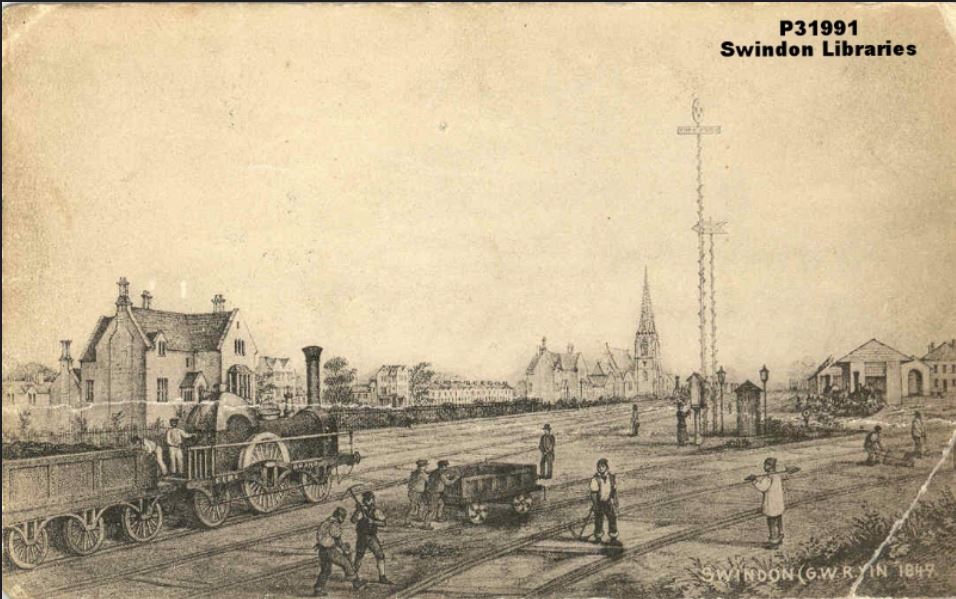
New Swindon 1847
The facts …
Death of Mr David Watson
ASwindon Octogenarian
The news of the deathof Mr. David Watson which occurred on Wednesday at the residence of his son, Mr. Alex. Watson, 24 Cambria Place, will be received with keen regret by a host of friendsamongst the older generation of Swindonians. Mr. Watson was 89 years old about a month ago, but, notwithstanding his great age, he had until recently been a familiar figure in that part of the town near his home. As recently as a week before his death, the old gentleman was seen out, but on Friday he had an attack of bronchitis, to which he succumbed shortly after noon on Wednesday.
A fine, burly figure of a Scotsman, Mr. Watson was born at Cragie, near Glasgow, in 1824. Serving his apprenticeship as a fitter in Dundee, he came to Swindon as long ago as 1843, and obtained employment in the GWR Factory. For about 30 years, the old gentleman, whose hearty and genial manner soon won him a large circle of friends, was chargeman over the fitters in the R Shop, and even after advancing years compelled him to give up the chargemanship he continued to work “Inside.” Indeed, it was only 11 years ago, in ’99, when Mr Watson had reached the age of 79 years, that he finally left the GWR Company’s employ, thus severing a 56 years’ connection with the Railway Company.
Mr Watson had been a member of the ASE for about 71 years, being superannuated by that Society when he gave up work. One of the first members of the Mechanics’ Institution and Medical Fund Society he was President of the latter on one occasion in the “fifties.”
In politics, the deceased was an ardent Liberal. During the whole of his residence in Swindon he had staunchly supported the Progressive cause, and took a prominent and active part in local contest in the old days.
Mr Watson, it might be mentioned, was one of the earliest contributors to the columns of the “Advertiser.” He was living in Swindon when this paper was founded in 1854, and he was a friend of the late Mr. William Morris, the founder, and, for nearly forty years, editor of this paper. Amongst his most treasured possessions was an old copy of the Swindon Advertiser, dated June 31st 1859, containing a report of a speech given by Mr Watson when presiding over a “Bobbie Burns” Centenary dinner at the Union Hotel, Swindon.
Mr Watson leaves three sons and two daughters out of a family of eleven, to mourn his loss.
The funeral of deceased will take place in Swindon Cemetery tomorrow (Saturday) afternoon.
The Swindon Advertiser, Friday, April 15, 1910.
At the time of the 1851 census David and Elizabeth and their five children were living at 7 Reading Street. By 1881 the widowed David was living at 31 Sheppard Street, his four sons were all working as engine fitters in the railway factory.
David Watson aged 89 of 24 Cambria Place was buried in grave plot B2967 on April 16, 1910. Hewas later joined by his son Alexander and daughter-in-law Eliza.
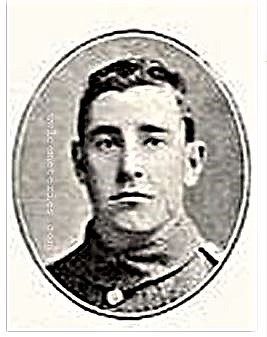
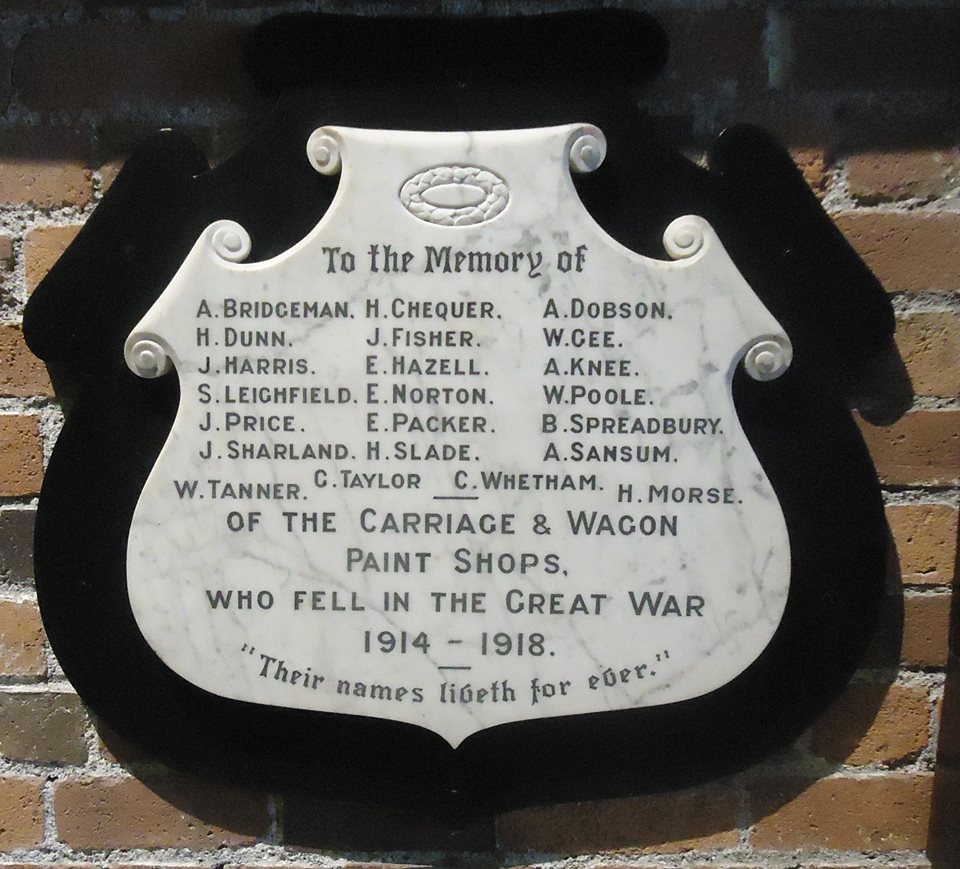
Archibald Edward Knee was born in Stroud in 1892, the son of Francis and Rose Knee. The family later moved to 123 Albion Street where Francis worked as a railway carriage painter in the GWR Works and Rose cared for their seven young children. Archibald joined his father in the GWR Works on leaving school, working as a railway carriage painter and sign writer; a job he could safely expect to hold for life.
Archibald enlisted in the Wiltshire Regiment in July 1915, when a war initially anticipated to be over by Christmas 1914 approached its first anniversary. He embarked for France on New Year’s Eve 1915, part of desperately needed reinforcements at the front.
Archibald Edward Knee
The British army began preparing for the ‘big push,’ in the Spring of 1916. It was believed this allied offensive would finish the war. The Battle of the Somme, in which more than 57,000 British soldiers were killed, wounded or reported missing during the first 24 hours of action, was yet to come.
The 1st Battalion of the Wiltshire Regiment was at Pylones, three kilometres north of the German held Vimy Ridge. The German army bombarded this section of the Western Front on May 21, firing everything at their disposal, including gas and lachrymatory (tear gas) shells.
The men of D Company were in battle by day and making running repairs to fencing and trenches throughout the night.
Lt Col W.S. Brown recorded the events of May 24 in the regimental war diary:
“In the trenches. The enemy were able to reach the Birkin Crater post with Cylinder stick bombs and some casualties were caused.
Many rifle grenades were fired at the outpost line of P73: those fired in retaliation appeared to do considerable damage. After 5 p.m. the enemy fired several heavy trench mortars at P74 and P75 and also at the head of Grange C.T. Snipers claimed three Germans. Repairs to the P line were carried out and a large amount of wire was put out along the whole front during the night of 24th/25th.”
Private F. Daniels of A Company was killed outright. Lance Corporal Knee was among 10 other casualties that night.
Archibald was taken to the 22nd General Hospital at Etaples where he received emergency treatment. He had suffered a gunshot wound to his left thigh, which in itself would probably not have proved life threatening. It was the effect of the German gas attack that proved fatal. Archibald developed gas gangrene and died at 11.20 on the morning of May 29. He is buried in the Etaples Military Cemetery.
Archibald’s name appears on the memorial dedicated to the memory of those from the Carriage & Wagon Paint Shops who gave their lives in the Great War. This plaque can now be seen in the STEAM Museum.







 Radnor Street Cemetery