Granddad’s Museum

The re-imagined story …

As children my brother and I thought our granddad lived in a museum. His house was packed full of stuff; ornaments on every surface, paintings, prints and photographs and books, so many books.

Inside the house we had to manoeuvre our way around, careful not to knock anything over, but fortunately for us there was a long back garden where we played, whatever the weather. We were even allowed inside the shed if it was lashing down with rain.

The shed was a microcosm of the house, but without the china. There were racks and racks of old fashioned tools but no one seemed to worry that we might sever a limb or drive nails into each others eyes.

One day we found a wooden model train in a box under the workbench. I remember how we stared at one another apprehensively. It looked like a toy, but could we play with it or was it another museum piece? We just didn’t know. We decided we would play with it, only very carefully, and if it got broken we would say it was like that when we found it.

It was actually pretty robust. Not big enough to sit on, although we tried that, but sturdy.  The wheels turned and the bell on the front moved, but that was about it really. We sat our Action Men in the cab and created war time scenarios, but there wasn’t a lot you could do with it really.

Clearing granddad’s house after he died was a nightmare. Our poor parents spent weeks and weeks at the job. I would have liked longer to go through it all, but there just wasn’t the time and I couldn’t store anything in my small, one bed flat.

The shed was one of the last things we tackled and this yielded some of the biggest surprises. The tools my brother and I had looked upon as instruments of torture turned out to be real museum pieces, some of them dating back to the 18th century.

When I saw the train for the first time in years I realised it was a model of the famous King George V loco made in the Swindon Works in 1927. Perhaps the owner of the tools, or one of his descendants had made the model. Sadly there was no way of finding out who. The Carriage and Wagon Works employed hundreds of skilled carpenters and throughout its history Swindon had numbered countless building firms, large and small.

As we bagged and boxed and dumped so much of granddad’s treasure I wondered how he had come by it all, especially those tools. And who had made the model of the King George V loco, which now sits on the coffee table in my lounge.

sarah-and-william-leighfield

The facts …

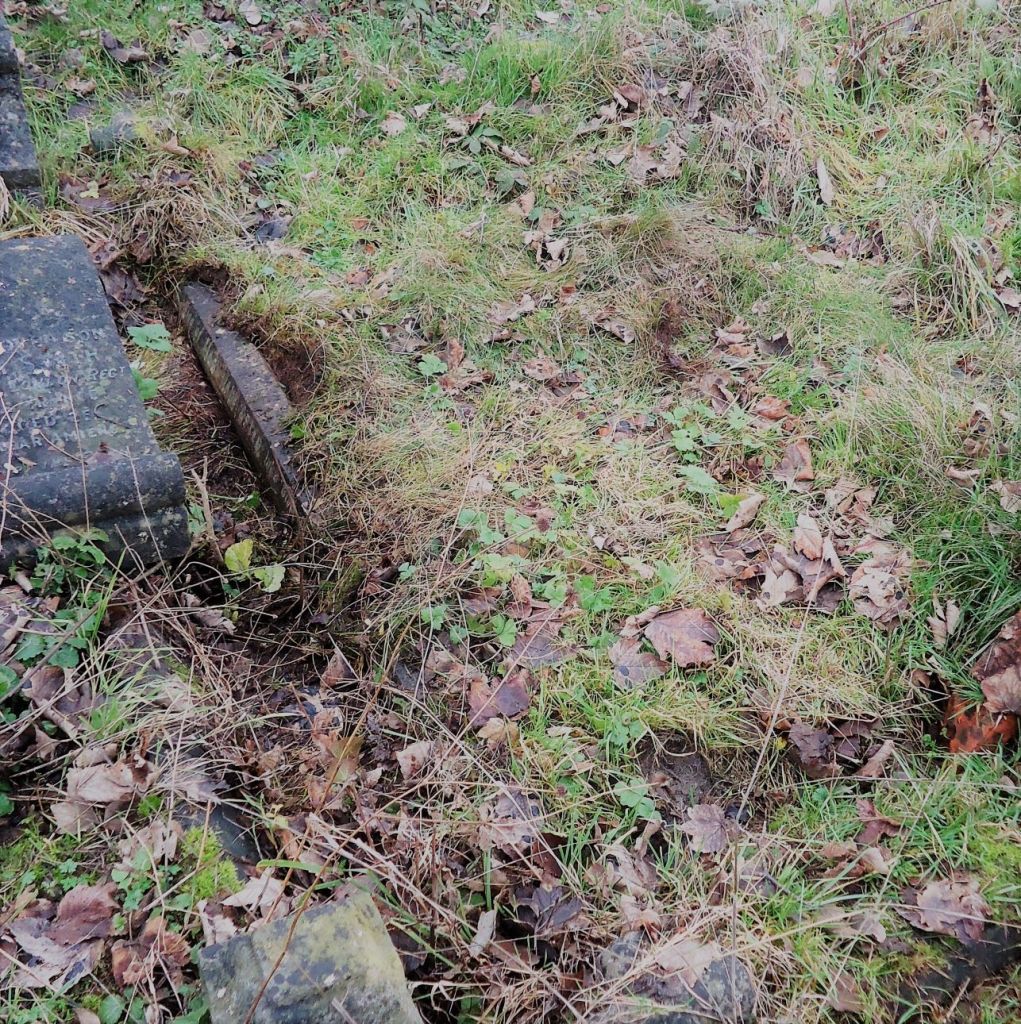
This memorial was revealed several years ago during a major bramble clearance exercise in Radnor Street Cemetery by Swindon Borough Council.

This is the final resting place of Sarah Leighfield, her husband William and their son-in-law James George Plank.

Sarah was born in Swindon in c1851 and married William Leighfield in 1871. William was born in Wootton Bassett in c1851 the eldest son of James and Ann Leighfield.

By the time of the 1911 census William and Sarah were living at 91 Curtis Street with four of their children. William, aged 61, was by then working as a Wood Sawyer in the railway works. His son Robert was a Coach Painter in Motor Works, Alfred and Albert were both House Decorators and Ernest also worked as a Coach Painter.

Curtis Street

1915 Curtis Street photograph published courtesy of Swindon Museum and Art Gallery.

His younger brother Richard James Leighfield established a successful construction business at 1 Witney Street. In 2015 the Royal Wootton Bassett based firm celebrated their 130th anniversary.

Sarah died in April 1911 and was buried on April 13 in plot E7339. William died in June 1915 and was buried with his wife on June 9. The last person to be buried in this plot was their son-in- law James George Plank, their daughter Emily’s husband. J.G. Plank died at St Margaret’s Hospital on July 3, 1955.

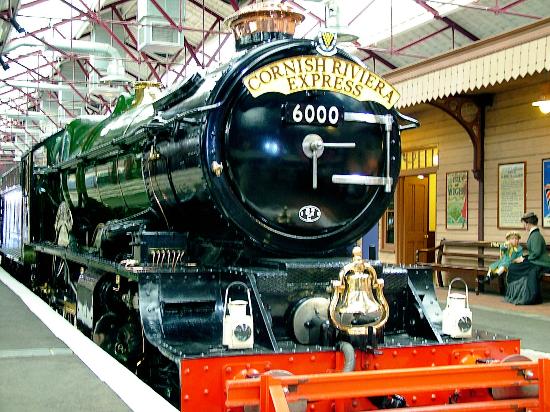
The King George V Loco, designed by Charles B. Collett and built in the Swindon Works in 1927, was the prototype for Great Western Railway’s (GWR) King class. It was the first of a thirty strong fleet built in Swindon from 1927-1930  to meet the demands of rising passenger numbers and heavier carriages.

Photo of King George V published courtesy of STEAM Museum of the Great Western Railway, Swindon.

Frank Apted

The following account of Frank Apted’s life was published in the Great Western Railway Magazine at the time of his retirement in 1908. It records only the details of his career, which is probably all you should expect to find in a work place publication, but Frank’s life was so much more than this.

Born in Peckham in about 1842, Frank was the son of schoolmaster Henry Apted and his wife Ruth, a schoolmistress. By 1861 Frank had begun his career with the Great Western Railway and was lodging with Thomas Jones and his family at 16 Faringdon Street. Frank would go on to marry Thomas Jones’s daughter Sarah but sadly this was to be a brief marriage as Sarah died in 1867 aged 25. She was buried in the churchyard at St. Mark’s.

Frank married for a second time in 1869. His second wife was Mary Jane Stone and this marriage would prove a long one but not without great sadness as well. At the time of the 1911 census Frank and Mary were living at 23 Park Lane. They had been married for 41 years during which time they had had 7 children. Sadly, only three survived to adulthood – daughters Alice, Louisa and Edith.

Later that same year their daughter Louisa died aged 30 in the Devizes Asylum. She was buried on August 24, 1911 in Radnor Street Cemetery, grave plot D125. Frank died on October 7, 1920 aged 78 and was buried with his daughter.

Mary Jane continued to live at 23 Park Lane where she died in 1930 aged 82. She was buried with Frank and their daughter on May 14.

When lives are reduced to facts and figures it can detract from the experience of these ordinary people. Perhaps Frank’s demanding and successful career with the GWR focused him, giving him strength amidst so much loss and sorrow. Perhaps he had a strong, religious faith which sustained him. Maybe I will find a reference to this in my future research. And what about Mary Jane …

Mr Frank Apted entered the service in 1856 as an apprentice to engine fitting, etc. He was subsequently transferred to the Running Department at Gloucester, returning to Swindon as an inspector in the works. Subsequently, Mr. Apted was placed in charge of the Works Drawing and Cost Office and in 1880 was given charge of the plant for testing chains, etc.

In his younger days Mr. Apted, realising the value of technical knowledge, studied assiduously, and obtained certificates qualifying him as a science teacher, which vocation he followed with conspicuous success for a number of years at the evening classes connected with the Mechanics’ Institute. In the pursuit of his various callings, Mr. Apted exhibited marked ability, and was one of the most capable of the technical staff at Swindon.

Great Western Railway Magazine 1908

Frank was buried in grave plot D125. Today his grave and modest kerbstone memorial is very overgrown and almost lost.

Wentworth Joseph Evans – impressive funeral of late GWR foreman

The magnificently named Wentworth Joseph Evans was born on October 17, 1857 and spent his early childhood in Melcombe Regis, Dorset. By 1871 the family were living at 18 Gloucester Street, Swindon when Wentworth joined the GWR aged 14. He finished his apprenticeship in 1877 and went on to become an Assistant Foreman in 1897 and then a Foreman in 1905 working in A Shop, B & C Sheds and the Tender Shop before his death in 1912.

Wentworth married Eliza Ann Bugler in Weymouth, Dorset on December 29, 1880 and the newly weds began married life at 20 Carr Street. The couple went on to have three children and lived for many years at 10 Queens Terrace, Station Road.

The 1911 census provides lots of information about the family. Wentworth and Eliza had his widowed father and her widowed mother living with them in 1911. Wentworth’s father, Jabez [James] Evans is described as 79 years old, a retired Engine Erector (no pension). Eliza’s mother, Ann Bugler, is described as 82 years old, a widow and Old Age Pensioner 5/- per week. Wentworth and Eliza’s youngest son Alfred Arthur aged 25 works as a Pianoforte Tuner and is described as ‘totally blind from birth.’

When I checked the burial registers I discovered that Wentworth had died just 9 days after his father. Jabez [James] was buried with his second wife Catherine Evans in grave plot D1588.

A lengthy funeral report was published in the Swindon Advertiser.

The Late Mr W.J. Evans

Impressive Funeral of Late GWR Foreman

Seven Hundred Follows

The funeral of the late Mr Wentworth J. Evans, at the Swindon Cemetery, on Saturday, was the occasion of a most impressive tribute to the memory of the late foreman of the Erecting Shop of the GWR Works. Not only were Mr H.C. King and other officials of the Works present, but the Foremen’s Association, the Medical Fund, and the Council of the Mechanics’ Institute were also represented, while it is estimated that the number of men who showed their respect for their late foreman at the graveside must have numbered also seven hundred. It was the largest number of followers ever known in the Swindon Cemetery.

The cortege formed at Mr Evans’ late residence, 10, Queen’s Terrace, Station Road, and headed by a hand-bier bearing the beautiful floral tributes, and followed by an immense column of mourning men, proceeded to St. Mark’s Church. Here, the building was quite filled when the Vicar (The Rev. A.G.G. Ross) read the first portion of the sad rites for the dead. Re-forming, the procession made its way to the Cemetery, and here the Vicar of St. Mark’s again conducted the service. The remains were enclosed in a polished elm coffin with brass fittings, and the breastplate was inscribed:- “Wentworth Joseph Evans, died April 15, 1912, aged 54 years.

Extracts from The Evening Swindon Advertiser, Monday, April 22, 1912.

Wentworth Joseph Evans was buried on April 20, 1912 in grave plot D1480 where his wife Eliza Ann joined him following her death in 1913.

Charles Adolphus Sylvester Toogood

With such a distinctive name as Charles Adolphus Sylvester Toogood it should be easy to trace this gentleman, and up to a point it is. His employment records provide a birth date, December 13, 1869 and his entry into the GWR company as September 20, 1886. And from 1891 to his death in 1946 we can trace him through the census records. But there is a gap – something catastrophic appears to have happened to the family between the 1871 and 1881 census’s. It seems likely that Charles Toogood’s mother died before 1881; neither she nor his father Alfred can be reliably traced on the 1881 census. However, a ten year old boy by the name of Adolphus Toogood can be found in the Lyncombe & Widcombe Workhouse. Could this be Charles?

Charles married Florence Ann Greenaway at St. Mark’s Church on January 31, 1895 and the couple had five daughters, the youngest Pearl died before her first birthday.

The following account was published in the Great Western Railway Magazine when Charles retired in 1930.

Mr C.A.S. Toogood, of the Chief Mechanical Engineer’s Department, Swindon, retired from the Company’s service on December 13, after nearly 44 years’ service, practically the whole of which was spent in the Locomotive, Carriage and Wagon divisional superintendent’s office, at Swindon. With the abolition of the Swindon division in May 1922, Mr. Toogood, with others of the staff, was transferred to Bristol, but he returned to Swindon in December 1928 and has been attached to the accounts section since that time. Mr Toogood received a handsome timepiece and notes as a parting gift from his past and present colleagues.

Great Western Railway Magazine March 1930.

Charles Adolphus Sylvester Toogood died in 1946 and was buried on November 27 in grave plot C983 where he joined his wife Florence who died in 1937.

John Oliver Warren – accounts clerk

We’ve already met the Warren family on this blog. John was the younger brother of Lilium Lancifolium Warren, infact, she was named as a witness at his wedding in 1915 and when he died in 1930 she was awarded probate of his will.

John was born on September 27, 1886, the son of Alfred Warren, a goods guard, and his wife Marcellina.

His employment records with the GWR reveal he began work on May 5, 1902 and as his obituary states ‘he had been in the Company’s service for 28 years, the whole of which time he had spent in the accounts section.’

He married Frances Alice Iles at St. Paul’s Church, Swindon on April 12, 1915 and served in WWI. Unfortunately his military records are incomplete and all that survive indicate that he served as an Acting Sergeant in the Royal Army Medical Corps and that he was discharged on July 11, 1919.

His many friends will learn with regret of the death of Mr. J.O. Warren, of the Chief Mechanical Engineer’s Department, accounts section, Swindon, who died on January 20, after a short illness. Mr. Warren was 43 years of age and had been in the Company’s service for 28 years, the whole of which time he had spent in the accounts section. He leaves a widow and one little girl, and his loss is greatly deplored by his colleagues, many of whom attended the funeral on January 24.

Great Western Railway Magazine March 1930.

John Oliver Warren died on January 20, 1930 and was buried in grave plot E7367 where he joined his baby daughter Marjorie Olive who died in 1916 and his wife Frances Alice who died in 1926.

Richard Renwick Pattison – another story from St. Mark’s churchyard

It is seldom possible to read the words of our working-class ancestors, after all, what time was there to write diaries or even letters, but there is one source where occasionally we can hear their voice and that is in contemporary local newspapers.

In 1874 Richard Renwick Pattison retired from the Great Western Railway Company after a career spanning more than thirty years and the men with whom he had worked all that time had a whip round.

Richard Renwick Pattison was born in Houghton le Spring, Durham in 1819, the son of Christopher and Jane (Renwick) Pattison. He married Sarah Bellwood in Heighington, Durham on December 31, 1839 and by 1843 they had moved to Swindon, the new railway town in Wiltshire.

The GWR records state that Richard R. Pattison, engineer and fitter, was the third foreman of the Erecting Shops appointed in 1843 alongside Thomas Atkinson and Walter Mather. He is recorded as being a member of the team who erected the first engine built at the works, the “Premier,” completed in under two weeks in 1846 and later renamed the Great Western.

When Richard retired in 1874 the Swindon Advertiser covered his testimonial in some length:-

‘On Saturday week, the workmen employed in the B Shed, over which Mr. Pattison had been foreman, presented him with a silver inkstand and a very handsome writing desk, nearly all the men and lads in the department having contributed to the testimonial fund.

The subscribers and friends having been assembled in the B Shed, at the close of the day’s work, the desk and inkstand were duly presented to Mr Pattison by Mr Evans, accompanied by a few brief remarks expressive of the feelings which had dictated the offering, and hoping that the recipient of it might be spared to enjoy it, retaining always the good-will of those over whom for so many years he had acted as foreman.’

Richard then took to the floor and gave the following address:

‘I need not tell you how pleasing it is to my feelings to have this mark of respect shown to me on our separation, for it is really more than I could have expected, for I have done nothing more than to fulfil my duty as a foreman between master and man, and which duty I have endeavoured to fulfil impartially, and without favour. If I have in any way failed in this it has been an error in judgement. But, really, a foreman’s position is the most difficult to properly fulfil that I know of, for what with engines, masters, men, and those confounded boys – a toad under a harrow has a more comfortable life.

However, I may truly tell you all one thing, and that is, that I have never made one favourite in the shop, and those amongst you who have been promoted or raised one step higher up the ladder, have been promoted entirely through your own merit; at least so far as my judgement and conscience enabled me to judge fairly between you. And I am proud to say that there is not a shop in the kingdom that can surpass us for steady good workmen.

Another thing I should like to refer to, and it is this; we have had less change of men than in any other shop, and I sincerely hope this state of things will continue. And I have every reason to believe it will, for I have no doubt my successor will do all he can to pursue the same path; and I hope this splendid testimonial will be an inducement to him so to act, that should the day come when he shall be enabled to retired from his work, he also may receive a similar reward or mark of respect.

Now, fellow workmen, let me once more seriously thank you for this splendid testimonial and mark of respect which I shall highly prize, and which I hope may be handed down by my children for generations to come. But before we part I should like to ask one favour of you all, and that is forgiveness for past hard words, which perhaps was my greatest sin. But then, when you had the word you had the worst. There was no after sting or malice, for that is a thing unknown to me; and I am pleased to be able to say that I take farewell of you all with the best and kindest feelings and wishes, and I assure you I feel the separation more than I can express.’

That same evening the members of the testimonial committee entertained Richard at the Queen’s Arms Hotel. Following a toast to his health Richard spoke a few words, reminiscing on his time in the Works, saying ‘there were one or two things he should like to refer to, because they formed the foundation of his success.’ He went on to say that he had always kept his time in the works and that he could honestly say that for the first two years of his being at New Swindon he never lost ten minutes, and when, after he had been there about three years he lost his first quarter, he thought it would have broken his heart. He and a companion were talking and did not hear the bell ring, and this put him behind, and he could assure them he had never forgotten the circumstance.

He continued – another thing was this: whenever he had a pound he put it by – he put it in a building society, and in fourteen years it became two. This was a point he had always carried out: whenever he could save a pound he saved it, and when he had once saved a pound he never afterwards spent it, but left I to make more.’

The Works foremen had huge power and influence and were not the best loved of colleagues, but it would seem that Richard Pattison might have been of a different mould, for he received not just one, but two testimonials.

‘On Saturday afternoon last, after the day’s work in the shop, the boiler makers employed in the same department, but under another foreman, presented Mr Pattison with another testimonial, consisting of a silver goblet, and a pair of gold eye glasses.’

Again, we have the opportunity to read the words of Richard:

‘Mr Amos, Mr Sharps, and fellow workmen: This mark of respect is truly more than I could expect of you, for it is no secret that we have been continually at war with each other – my shop against the boilersmiths’ shop. But then it was only a friendly war in our effort to get the company’s work forward. You all know that your esteemed foreman (Mr Sharps), always liked to steal a march over the fitters, and then he quietly enjoyed a laugh at us. But then, we not unfrequently had our laugh at the blessed boilermakers. However, it is very gratifying to find that in our struggle to get the company’s work done we have preserved good fellowship, which is due in a great measure to your good and valuable foreman, Mr Sharps, whom you ought all to esteem, for he is truly a good man.

Now, my friends, you will not expect a long speech from me, but I must again express my sincere thanks for this splendid testimonial and mark of respect, and I wish the goblet had been full of wine so that I might have drunk all your healths. However, I hope you will all have an opportunity of drinking out of it yet, for I hope to have many a quaff from it in memory of bye gone days in the B shop, and of my kind friends there. (Loud and long continued cheering).’

Sadly, after so many years hard work, Richard Pattison did not enjoy a long retirement. He died aged 60 at his home in Sheppard Street on December 4, 1879 and was buried in the churchyard at St Mark’s.

Henry Alfred Stanier – railway royalty

The Stanier family were railway royalty in Swindon.

William Henry Stanier entered the services of the Great Western Railway on November 7, 1864 in the Managers Office, Loco Works, Wolverhampton. He moved to Swindon in 1871 at the insistence of William Dean, Chief Locomotive Engineer and became Dean’s clerk and personal assistant, and became his right hand man. In 1879 he was appointed Chief Clerk Loco & Carriage Department and in June 1892 he was made Stores Superintendent. His son, William Arthur Stanier had a prestigious railway career. He became Assistant Works Manager at Swindon in 1912 and then Works Manager in 1920 before being head hunted by the London Midland and Scottish Railway where he became the Chief Mechanical Engineer. He was knighted on February 4, 1943.

But did you know that William Henry’s brother, Henry Alfred Stanier, also left Wolverhampton and moved to Swindon?

Photograph of Henry dated 1873

The third of Thomas and Ann’s four sons (they also had a daughter), Henry grew up in Wolverhampton. By 1871 the two elder sons, Thomas and William, were working as railway clerks while 18 year old Henry was a Canal Carriers clerk.

He married Caroline Annie North on January 21, 1879 and soon after moved down to Swindon. His employment records state that he re-entered the Great Western Railway employment on May 4, 1882 as a clerk in the Wagon Department, Manager’s Office. By 1901 the family were living at 12 London Street where Henry remained until his death in 1930.

Caroline Anne Stanier nee North – Henry Alfred’s wife

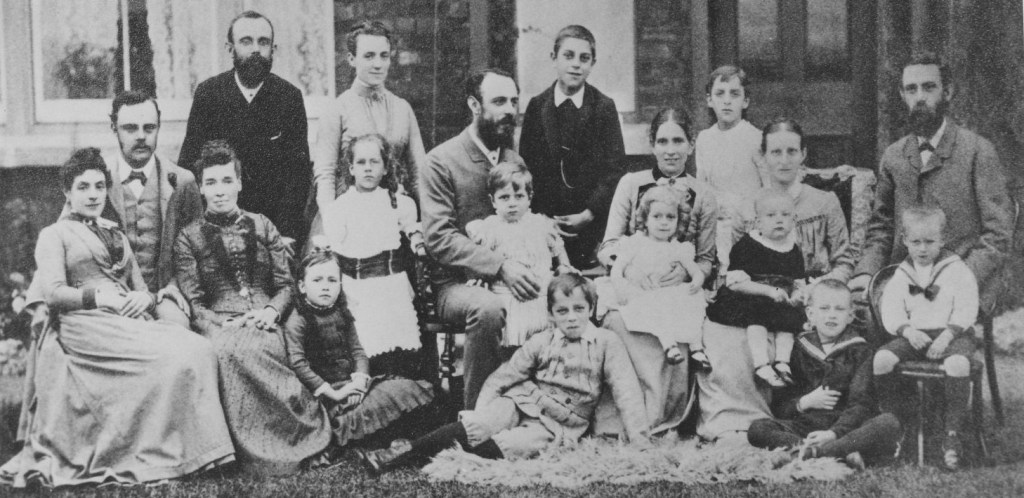
And I made a lucky find on Rootsweb – a photograph taken of the Stanier family outside William Henry’s home, Oakfield, Bath Road, Swindon, dated 1888. The four Stanier brothers are pictured as follows: seated left – Charles Frederick, standing – Henry Alfred, seated middle – William Henry and seated right – Thomas William.

Henry died on February 7, 1930 was buried in grave plot C1886A. His wife Caroline joined him there when she died just six months later.

The death occurred at Swindon, on February 7, at the age of 77, of Mr. H.A. Stanier, who, at the time of his retirement from the Company’s service, in May, 1917, was chief clerk in the carriage and wagon department. Mr Stanier took a keen interest in local affairs, and especially concerned himself with Poor Law administration. He will be remembered for much devoted work for the welfare of the inmates at the Stratton Institution. Mr. Stanier also took an active part in the work of the Mechanics’ Institution and the adult school movement.

Great Western Railway Magazine March 1930.

Henry and Caroline’s grave before our volunteers got to work

Locked out!

So, what do you do when you go up to the cemetery with a long list of graves to find and photograph to discover the cemetery gates are locked. Well you go to another churchyard instead!

There are few remaining headstones in the churchyard at St. Mark’s. It is unlikely there were ever many more as this was the burial place of the early residents of the railway village, most of whom were young with large families and little money.

By the end of the 1870s burial space at St Mark’s was running out and a new burial ground was urgently needed. This and the increasing demands of the large non-conformist congregations for an independent burial ground saw the establishment of Radnor Street Cemetery in 1881.

Robert Hanks was born in Bristol, the son of Thomas and Elisabeth Hanks, and baptised at St. Phillip and St Jacobs, Bristol on October 16, 1796. He married Elizabeth Phillips at St Paul’s, Portland Square, Bristol on September 10, 1820 and the couple had six surviving children.

The 1841 census finds the family living at an address at the Viaduct Foundry, Newton in Mackerfield, (Newton le Willow) Lancashire, where both Robert and his eldest son, also named Robert, are working as mechanics.

By 1851 the family had arrived in New Swindon where they lived at 13 High Street (later renamed Emlyn Square).

In 1866 Robert was killed in an accident in the Works when an iron truck on which he was working toppled over, crushing him. He was 71 years old.

It is said that after this fatal accident, Joseph Armstrong, Locomotive, Carriage and Wagon Superintendent, began a series of measures designed to improve safety in the railway factory.

The continuing story of James Henderson

When I began researching the Henderson family grave I suspected this might be a story that would run and run.

First there was the account of how James Henderson averted a train collision with Royalty on board the “Lord of the Isles” loco. Next came Noel’s story about the Musical Stones of Skiddaw. Today we have an account of James Henderson’s career upon his retirement complete with a photograph of the man himself!

Swindon. – On November 7 Mr James Henderson, who for the last twenty years has been an inspector attached to the Locomotive Running Department, retired from the service, and was made the recipient of a handsome testimonial, subscribed to by the officers and staff, and a large number of enginemen and firemen, throughout the system. Mr. Henderson joined the GW Railway as a fireman at Paddington in 1865, and acted in that capacity on the engine “Lord of the Isles,” which frequently worked royal trains between Windsor and Paddington. He quickly reached the position of driver, and from 1874 until his removal to Swindon as inspector was a familiar figure on express broad-gauge engines. Mr W.H. Waister, in making the presentation, which consisted of a solid silver cigar case and a purse of gold, stated that during the time Mr. Henderson had been inspector he had won the respect and esteem of all the staff. It is interesting to note that during the Olympic Regatta at Henley in August last Mr. Henderson was presented with a silver cup and an illuminated address by the Traffic Department staff in appreciation of his work there, he having taken charge of the locomotive arrangements during the Henley Regatta for a number of years.

Great Western Railway Magazine

You may like to read:-

James Henderson – how a railway disaster was averted

Today’s story is one for the railway enthusiasts among you and another example of the fascinating ordinary people who lie in Radnor Street Cemetery.

Swindon Inspector’s Reminiscences

How a Railway Disaster was Averted

An interesting incident has been recalled by the frontispiece in the Great Western Railway Magazine for April, showing the “Lord of the Isles,” bedecked to draw the royal train, conveying the Shah of Persia, on the occasion of his visit to England in 1873. The name of the fireman was given as Hetherington, but it transpires that Mr James Henderson (late inspector at Swindon), is the man referred to. An exciting occurrence attended the journey of the royal train, and is related in this month’s magazine by Mr. Henderson thus:-

“I have good reasons for remembering the day the photograph was taken – June 24th, 1873. We left Paddington with the Shah of Persia, the late King Edward with Queen Alexandra, and the late Czar of Russia and his Consort on the train, attended by many distinguished persons. In honour of the Shah’s visit, a great review was being held at Windsor, and many excursion trains were being run. All went well with the train until we were passing through Slough Station. At that time there was no “locking gear” there, and trains had to pass from the down main line and go through the down platform road to reach Windsor. At the western end of the platform there was a pair of points turned by hand, which led either to Windsor, or across the Windsor Branch to the main line. On passing through Slough Station I noticed that these points were wrong, being set for the main line instead of for Windsor. I shouted to my driver. “Whoa, mate, the points are wrong,” and we stopped the train just in time to avert a collision with an empty train coming from Windsor. We put the train back over the points, and I jumped down and turned the points myself, the man whose duty it was to attend to them being so overcome that he was unable to do any more work.

Mr Tyrrell (then Superintendent of the Line), was on the platform, and witnessed the whole affair. He got on to the engine and rode with us to Windsor. After we started from Slough he enquired from my driver who had first noticed that the points were wrongly set, and the engineman, who was Jos. Groves, replied, “My fireman, sir.” Mr Tyrrell turned to me and expressed his pleasure at my having observed the position of the points. Subsequently I was sent to Swindon to see Mr. Joseph Armstrong, (late Locomotive Superintendent), who promised that I should receive recognition for the occurrence. Shortly afterwards I was promoted to be a driver, and before long made a driver on the broad gauge expresses, being the youngest man ever promoted to that position. Many people wondered at the time at my early promotion, but it was the prevention of that collision that led to it. It may be imagined that the occasion on which the photograph was taken stands out as a red-letter day in my life.

“I may say that during my service with the Company I had the good fortune to be the means of preventing five other collisions with passenger trains.”

The Evening Swindon Advertiser, Saturday, June 1, 1912.

James Henderson died aged 89 years at his home, 51 Rolleston Street. He was buried on November 14, 1934 in grave plot A2526.