George Albert Hallard – Swindon Veteran of Industry

It was said that an apprenticeship served in the Great Western Railway Works was a passport to a job anywhere in the world. Some of the long past railway men might argue that it didn’t necessarily guarantee a job in the Swindon Works though! Skilled, newly qualified men went up a pay scale and the GWR only retained those where vacancies existed in specific shops.

In Doing Time Inside – Apprenticeship and Training in GWR’s Swindon Works Dr. Rosa Matheson reproduces the regulations under which apprentices were employed in the GWR Carriage Works in Swindon in both 1892 and 1908. Apprentices were not taken on under 15 nor over 16½ years of age (later revised to 15½ and 17 years). All candidates had to complete a one month trial without wages before being accepted.

In 1892 a working day began at 6 am and finished at 5.30 pm with a 45 minute breakfast break and an hour for lunch. The daily rate for an apprentice in his first year was 10d. He was expected to ‘commence work punctually at 8 am and to make, as a rule, full time (54) hours during the week.’

One such apprentice was George Albert Hallard who began his months trial on February 20, 1879 aged 15.

George Albert Hallard was born in Bristol in 1864, the eldest of 8 children. His father George was an Erector, Engineer, Fitter and by 1881 the family were living at 38 Westcott Place, next to the Falcon Inn.

George Albert Hallard married Marcella Ellen Kirkham in 1889. At the time of the 1891 census the couple were living at 13 Conduit Street, Plumstead, London but by 1901 they had returned to Swindon and a home in Birch Street.

George Albert Hallard was one of 228 men who retired under the 66 year retirement age limit in 1931.

Mr G.A. Hallard, of 70, Jennings Street, chargeman fitter and turner in “W” Shop, worked in the GWR works for 38 years and was chargeman for about 27. He was apprenticed in the works and then obtained a position in London. He then returned to Swindon. Mr. Hallard’s father, who is 91 years of age, also worked in the works for many years.

Swindon Veterans of Industry – North Wilts Herald, Friday, January 2, 1931.

George Albert Hallard died aged 77 years in Ogbourne Hospital. His home address was 70 Jennings Street. His funeral took place on December 12, 1941 when he was buried in grave plot C745 with his wife Marcella who died in 1903.

W Shop where George Albert Hallard worked for more than 27 years. Image published courtesy of Local Studies, Swindon Central Library.
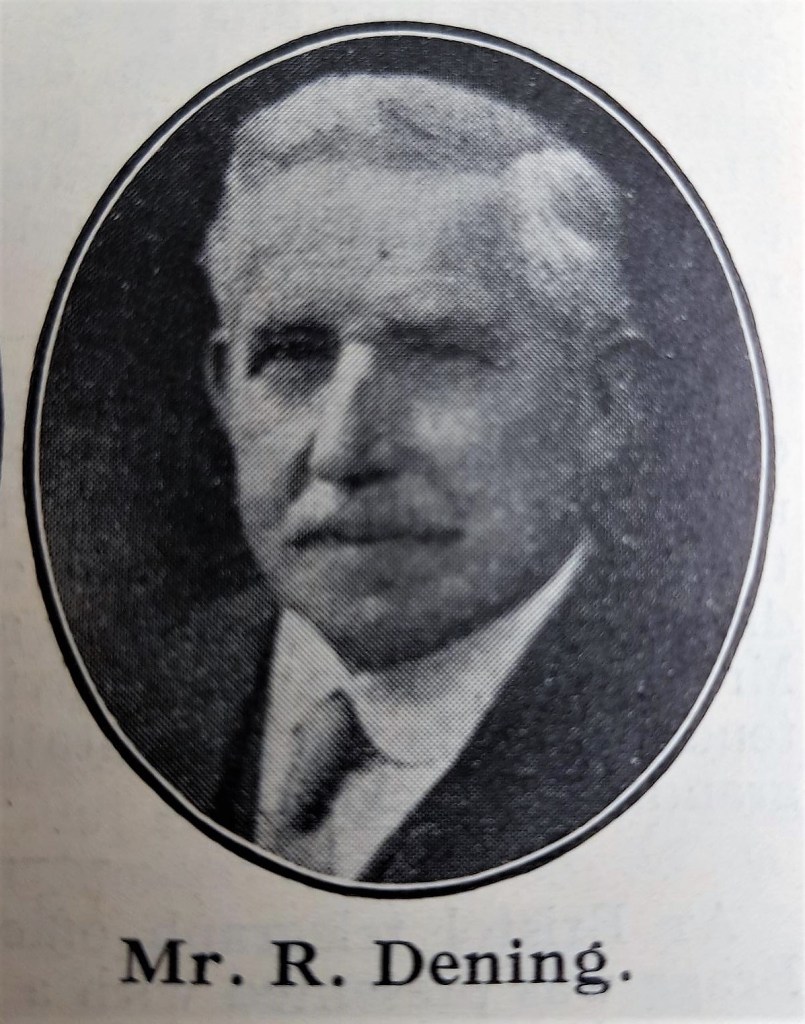
Richard Dening and another Great Western family

I frequently take Radnor Street Cemetery visitors to the grave of Freda and Irene Dening. These two sisters enjoyed a long career in the Great Western Railway at a time when it was unusual for women so to do. I must admit that I have made little attempt to find out much about their father, until I came across a note of his retirement in the Great Western Railway Magazine.

Richard Dening was born on April 20, 1866 in Winsham, Somerset, the son of Nimrod Dening, an agricultural labourer, and his wife Sarah Anne. He married Alice Louie Hunt in 1890 and the couple began their married life together at Clarence Street, Townstal, Devon.

Richard entered employment in the GWR on July 28, 1891 and is recorded as being Assistant Foreman in Fitting No 3 Shop. The family can be found on the 1901 census living at 61 Hythe Road with their three children Henry 9, Freda 3 and 7 month old Irene.

You can read about Richard’s career below:

Mr R. Dening, who for over four years was foreman of Nos. 3, 15, 15A, 18 and 19D shops, carriage and wagon works, Swindon, has retired from the Company’s service. He was held in high esteem, and widespread regret was felt on his retirement. At a smoking concert at the Great Western Hotel on April 18, a large company assembled to pay tribute to Mr Dening’s popularity. Mr. C.J. Coleman presided, and several interesting presentations were made. These consisted of an armchair and a grandfather clock, together with a handbag for Mrs Dening, from the men in Nos. 3, 15, 15A, 18 and 19D shops, and a set of four woods from the foremen and clerical staff. Tributes to the interest which Mr. Dening had taken in the shops were paid by Mr. S.J. Owen (who made the presentation), and Messrs H. Burchell, W. Clements, A. Fleming, F. Spackman, W. Watts, W. Blanchard, W. Newman, G. Dunn, A.E. Carter, C Thompson, T. Greenwood, and C. Garrett.

Mr Dening entered the Company’s service in July 1891, and commenced work in No. 15 shop. In 1906, he was appointed assistant foreman, and became head foreman in September, 1926. For 21 years he had been connected with the GWR Locomotive and Carriage Department Foremen’s Association, having occupied the positions of auditor, assistant secretary, secretary, vice-president, and finally president. For ten years he was also a member of the GWR Sick Fund Society committee, being chairman for eight years, and a member of the revision committee appointed to deal with the society’s financial position. In connection with his association with the Sick Fund Society, Mr. Dening helped in the formation of a benefit societies’ council, of which he became the first president. He is greatly interested in bowls, and is a vice-president of one of the clubs in Swindon.

Mr Dening’s son and two daughters attained outstanding educational distinction in each winning the Brunel medal at the London School of Economics, Mr H.R. Dening secured the medal in 1920, and Misses F.E. and I.A. Dening in 1921 and 1922, respectively.

Great Western Railway Magazine

Richard Dening died aged 85 years in the Cheriton Nursing Home. He was buried on February 13, 1953 in grave plot D187. His wife Alice Louie Dening died at her home, 60 Goddard Avenue, aged 90 years. She was buried on March 18, 1958 with her husband. Their daughters Freda and Irene were buried with them. Irene died in 1982 and Freda in 1994.

You might also like to read

Freda and Irene Dening – winners of the Brunel Medal

Alfred Guess Cook – Swindon Veterans of Industry

In 1900 the Great Western Railway employed more than 12,000 people in the Swindon Works. It has to be said that most Swindon families were a Great Western family.

This is the story of the Cook family.

John Cook was born in Wootton Bassett. He married Emily Smith at Christ Church, Swindon in 1852. At the time of the 1861 they were living in Oxford with their four children. In 1871 John returned to Swindon and brought his family (5 sons and a daughter) back to a home at 22 Westcott Place where two more children were born.

John worked as a boilermaker and by 1881 all five sons were employed in the Works. George 23 was an engine fitter, Henry 21 and Walter 19 were both boilermakers like their father, Alfred was an engine fitter and even 14 year old Frank had begun a boilermaker’s apprenticeship.

Alfred Guess Cook was born in 1863 and baptised at St. Thomas’s Church, Oxford where the family lived at 71 Bridge Street, Osney Town. At the time of the 1871 census the family were still living in Oxford, although it seems likely John had already returned to Swindon and a job in the Works.

By 1911 Alfred 48, lived at 25 Westcott Place with his two sisters Alice 42, and Emily 37, and his youngest brother James Irving Cook 33, a locomotive engine erector.

Six brothers all employed in the GWR – a fact observed in the newspaper report of 1931 when 228 men retired under the compulsory retirement age. It would be interesting to work out how many years combined the members of the Cook family gave to the GWR. They could hardly have anticipated there would come a time when the mighty Works would be no more.

Mr A.G. Cook, chargeman fitter, of 25, Westcott place, worked in the GWR works for 55 years, and held the position of chargeman for 42½ years. During the past 23 years he has inspected and put into traffic about 16,000 locomotives and rail cars.

Swindon Veterans of Industry – North Wilts Herald, Friday, January 2, 1931.

Mr A.G. Cook, who retired from the Company’s service on December 24, was a chargeman erector in the locomotive works for over 42 years. He had been in the Company’s employment a total of 55 years. Mr Cook comes of a Great Western family; six of his brothers are, or have been, chargemen under the Company.

Great Western Railway Magazine 1931

Alfred died at his home in March 1934, aged 71 years old. He was buried in grave plot D242 where he was later joined by his brother James, who died in 1944 and his sister Emily who died in 1947.

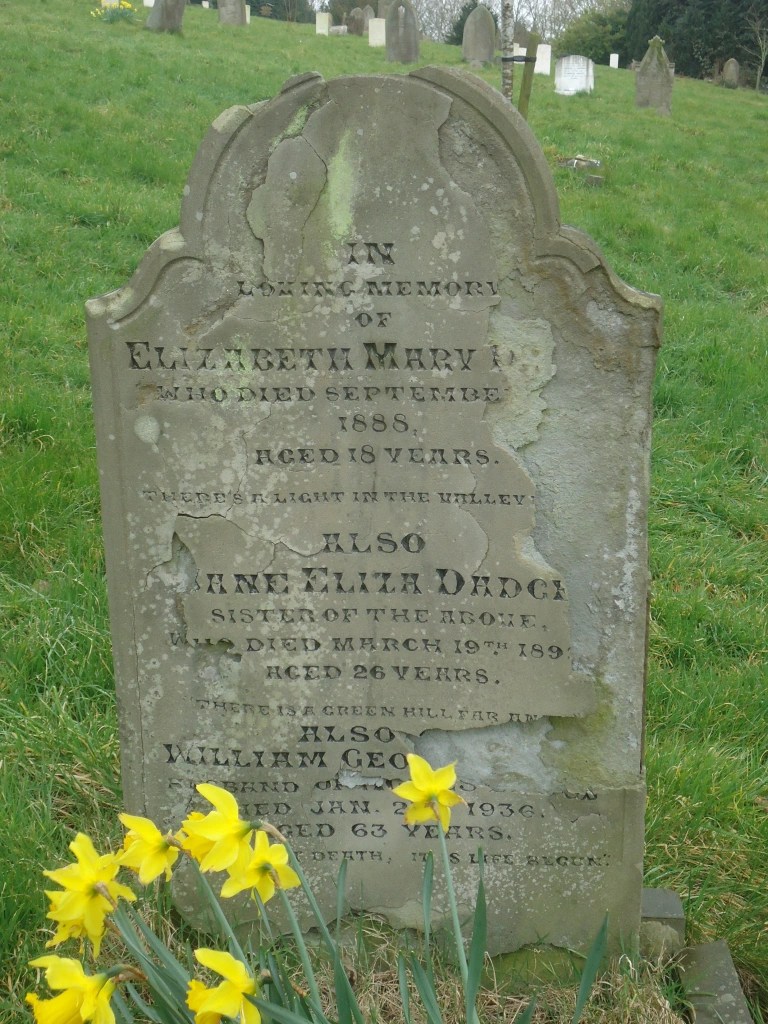
The Dadge family

As you will see the front of the headstone with all the family details on it is gradually coming away. This is caused by frost getting into the stone and you will see many headstones like this in the cemetery. Sometimes the whole front comes away in one sheet.

Fortunately there were enough details left on this one to allow me to piece together the family history.

Elizabeth Mary Dadge was born in 1871 the daughter of William Dadge, a smith’s striker, and his wife Martha.

From 1881 to at least 1901 the family lived at No 3 Brunel Street, a town centre street that has long since vanished. For most of that time William had his brothers Albert and George lodging with the family. As young men they worked as iron dressers in the Works, then labourers until in 1901 Albert, then aged 41, was working as a storekeepers assistant. William meanwhile worked as a striker into his 60s.

Sadly, little is known about Elizabeth who died very young. As an unmarried young woman we can safely assume she didn’t die in childbirth, but without ordering her death certificate her cause of death is unknown. Next on the headstone is her sister Jane who died four years later at the age of 26, again unmarried.

The last name on the headstone is William George Dadge the girls’ brother. At 15 years old he followed his father into the railway works to begin a 6½ year boilermaker’s apprenticeship. However the UK Railway Employment Records show that he absconded in January 1888.

I can’t find him on the 1891 census records. This may be due to a transcription error. Perhaps he called himself George. That and a spelling mistake would make it very difficult to find him.

Anyway, by 1901 he is back home with his parents living at No 3 Brunel Street where he is working as a joiner. In 1905 he married Agnes Brown and by the time of the 1911 census they were living with their baby daughter Winifred on the Hursley Park estate, Winchester where William was employed as estate carpenter.

In the last years of his life William was back in Swindon living at 74 William Street. He died on January 21, 1936.

I don’t think this stone will weather many more winters, but with the use of the cemetery records and online genealogy sites, the family will not be lost.

Swindon Veterans of Industry

In the 1880s and 90s it was not unusual to find men like Robert Laxon still employed in Swindon’s GWR Works into their 80s. However, by the 1930s there was a state pension and an official retirement age. In December 1930 more than 200 men retired from the Great Western Railway Works, an event of such importance to warrant a detailed article in the first January edition of the North Wilts Herald published in 1931.

The names and address of those men forced to retire under the introduction of the 66 years age limit were recorded in appreciation of their long years employed in the Works. Men who had joined the company in the 1880s and 90s; men like Tom Solven who had completed 52½ years’ service and George Edge, of 39, Medgbury Road, 43 years a chargeman wagon builder. Chargemen in the Locomotive Department such as E.P. Cave, a fitter who lived in Pleydell Road, G.A. Hallard, turner, 70 Jennings Street and G.F. Randell, fitter, 19 William Street.

Mr William George Woodward, 43, Havelock street, retires after 50 years’ service in the GWR works, and he has spent the whole of that time in one shop – No 7 Finishing Shop, Carriage Department.

A native of Oaksey, Mr Woodward came to Swindon on 11 October, 1880, and started work as a machineman in the factory. He was made chargeman 32 years ago last July.

He has served under three Chief Mechanical Engineers, the late Major William Dean, Mr. G.J. Churchward and Mr. C.B. Collett. His first foreman was Mr. Thomas Rose. He has seen the number of employees in his particular shop grow from 50 to between 300 and 400.

Mr. Woodward has a vivid recollection of a bit of the first work he did during his initial year in Swindon. It was to help clear the line between the railway station and the transfer sheds during the great snowstorm in January, 1881. Greatly interested in Friendly Society work, Mr. Woodward has been a member of the Oddfellows Society for many years. He has been for 19 years secretary of the juvenile branch, and 17 years secretary of the Stratton St. Margaret lodge.

Last Saturday he was appointed secretary to the Widows’ Hope lodge – one of the oldest and largest in the Swindon district – to fill the vacancy caused by the death of Mr. A.C. Nethercot. He is Past Grand Master of the Swindon District, and was one of the delegates who attended the Centenary A.M.C. of the Order at Southampton in 1910.

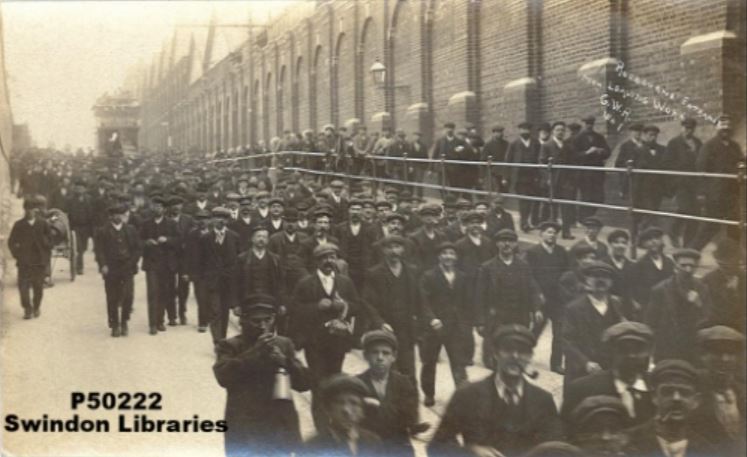
Perhaps for many of the men it was a relief to no longer have to work. But no doubt for others it was more akin to a bereavement. What would they do with their time?

Home time – men leaving the Works. Image published courtesy of Local Studies, Swindon Central Library.

William George Woodward’s retirement was not a long one. He died in December 1939 and was buried in grave plot D573 with his father-in-law Harry Ball who died in 1928 aged 96. William’s wife Hannah died in 1960 and was buried with them both.

Tom Tindle – on the move

Today many families live at opposite ends of the country (and the world) and we tend to think of this as a modern phenomenon brought about by improved methods of transport. But people have always travelled to where there was work and Radnor Street Cemetery has many residents who came to Swindon and a job in the Great Western Railway Works.

Tom Tindle, or to give him his full name Tom Henry William Tindle, was born in York on April 18, 1855, the eldest of six children. In 1871 the family were living in Ashford in Kent, but when you look at the birth places of Tom’s siblings you can see they had also lived in Scarborough and London before settling down in Ashford, Kent.

Tom married Phillis Sarah J. Alderton, an elementary school teacher, at St George the Martyr in Southwark on April 24, 1878 when they both lived in the Old Kent Road area.

By 1881 the young couple were living in Stratton St. Margaret. Tom worked as a Coach Body Maker. He joined the Great Western Railway on May 23, 1887 as a Carriage Body Maker later becoming a foreman. By 1891 they had moved to 37 Regent Street where Phillis describes herself as a postmistress. In 1901 they lived at 10 Victoria Road with their four children. Phillis 18 and Nellie 14 were both working as pupil teachers. The boys Stuart 12 and Tom 5 were still at school. The 1911 census provides us with the additional information that Tom and Phillis had 6 children and that sadly 2 had previously died.

Tom lived in Swindon until at least 1920 when his address was 166 Victoria Road. He died in 1933 by which time he was living in Luton. The family returned the body to Swindon where he was buried with his daughter Phillis who died in 1905.

His wife Phillis out-lived him by eleven years. When she died in 1944 she was living in Bournemouth.

The Lodge family grave revealed

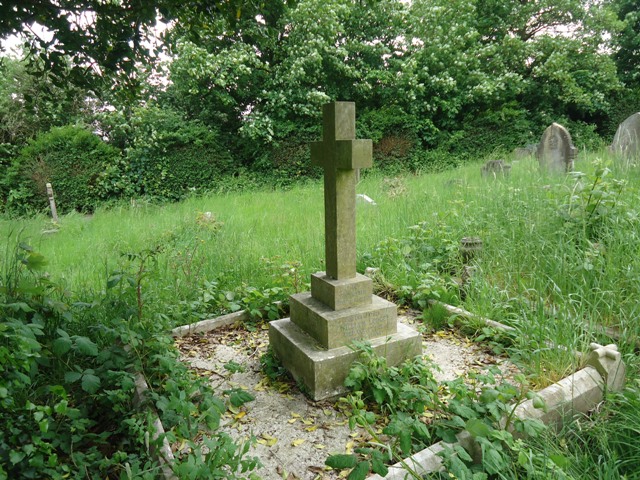
In recent years we have been fortunate to have the occasional assistance of the Community Payback Team in the cemetery. This group does some sterling work, often tackling the most overgrown sections of the cemetery. It was on one such occasion some years ago that they cleared a huge amount of shrubs and brambles and in doing so revealed several graves that had been hidden for years. Among those newly revealed graves was this magnificent memorial to the Lodge family.

William Lodge and Elmira Faville were both born in Gloucester and married in St James’ Church, there on October 13, 1867. By 1871 they had moved to London where they were sharing accommodation at 33 Desborough Lane, Paddington with James Affleck (another Swindon connection). In 1881 they were living in William Street, Swindon where William worked as an engine driver. By 1901 William was working as Railway Engine Inspector and the family lived at 36 Rolleston Street, one of the few houses that remain after the demolition work of the 1960s and now tucked away behind the doomed Regent Circus development.

So, who is buried beneath this memorial in this spacious, double plot E8482/3.

First we have Elmira who died in 1905, then Mary who died in 1917. William Lodge died in 1922 followed by another daughter, Emma who died in 1926. Eldest daughter Ellen died in 1950 and son Charles and his wife Annie are buried here, they died in 1945 and 1963 respectively.

Looking at this impressive memorial it is difficult to imagine it was once hidden by brambles. When so little maintenance is done by the local authority it would be great to see the Community Payback Team back in the cemetery.

Jesse Singer – engine driver

I chose to research this memorial as a bit of a challenge. It is often difficult to find sufficient details to tell the story of the men buried in Radnor Street Cemetery, but for the women it is even more so. So many times the census returns make no mention of the married women’s occupation as they worked part-time, seasonal jobs. With numerous children, no modern household appliances and often a family firm to support as well, these women obviously just sat around all day doing the odd bit of embroidery!

Ellen Hill was born in Cirencester in about 1859, the daughter of John Hill, a coach builder’s labourer, and his wife Eliza. She married Jesse Thomas Singer in Melksham in 1880 and at the time of the census the following year Jesse and Ellen are lodging at 32 Oriel Street, Swindon with Horace Wall, his wife and their 7 month old baby.

Jesse worked first as a fireman and then an engine driver and the family moved around a fair bit. Their first child named Jesse after his father, was born in Swindon, the next three children were born in Trowbridge. Ellen gave birth to Arthur in Swindon in 1890 and seven months later at the time of the 1891 census they were living in Newton Abbot. Ellen had two more children during their time in Newton Abbot. Her youngest son Leonard was born in 1898 back in Swindon and in 1901 they lived at 72 Curtis Street.

Ellen died in 1915, aged 55 at her home 31 Curtis Street. She was buried on January 7 in grave plot D1615. And a year later Jesse married Elizabeth Harvey. Jesse Thomas Singer died in May 1926 at 58 Newhall Street aged 69 years. He was buried with Ellen on May 29, 1926. His second wife Elizabeth died at 116 Tydeman Street on November 28, 1936 aged 79 and was buried with Jesse and Ellen.

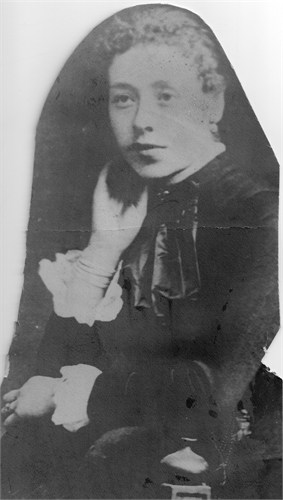
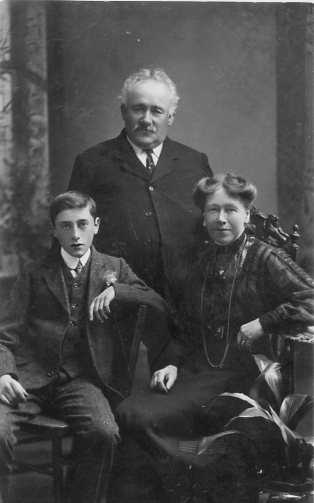
I have been extremely fortunate in being allowed access to family photos, one of Ellen as a young woman, one of her and Jesse and their youngest son Leonard and another of Jesse. Unfortunately none of Elizabeth but would you believe it, of course I find that Jesse goes one better and I have here a portrait of him painted as a young man.

Richard Bellwood Pattinson – following in his father’s footsteps

Richard Bellwood Pattinson was born in Heighton in Durham on November 28, 1841 and moved to Swindon as a child. His father, Richard Renwick Pattison, was one of a large contingent of railway workers from the north east who moved down to Swindon in the early years.

In 1861 Richard married Alice Grandison, the daughter of another early incomer David Grandison, and the couple had three daughters.

Richard jnr followed his father into the Works, as most sons did. The UK Railway Employment Records provide a resume of the various roles he filled in his working career.

His service with the GWR began as an Office Boy in the Goods Department in April 1854 when he was 12 years old. He worked there until he was older enough to begin an apprenticeship. He then worked as a draughtsman, then a valve setter. He became an Assistant Foreman and then a Foreman. He resigned on June 2, 1897 aged 56 after approximately 43 years of service. Perhaps he was secure enough financially to retire early. Richard died on December 2, 1900, just three years after his retirement. His effects were valued at £10,884 11s 2d, a fortune in 1900.

Death of Mr R.B. Pattison – Mr Richard Bellwood Pattison, who for 23 years was foreman of the B1 and C sheds (erectors’) in the GWR Works at Swindon, died at his residence, No. 7 Sheppard street on Sunday, at the age of 59. The deceased gentleman succeeded his father as foreman in 1874, after a previous experience of 20 years in the workshops, and retired in 1897. He leaves a widow and two married daughters.

The Citizen, Tuesday, December 4, 1900

Richard Bellwood Pattison was buried on December 2, 1900 in grave plot E8497. He is buried with his daughter Sarah Bellwood Jones who died in 1926. His wife Alice and their two other daughters are buried in the neighbouring grave plot E8496

Dabchick Thomas Sawyer

When the end came it was peaceful. Thomas got up early with the intention of sitting with his wife who was ill. He was found dead in his usual chair at 8.30 a.m.

Aldbourne by Kate Tryon published courtesy of Swindon Museum and Art Gallery

Thomas was born in Aldbourne in about 1834, although finding him there has proved difficult. At the age of 17 he apparently upped and left Aldbourne for London, some adventure for a young Dabchick. Did he go alone or was there a flock of them?

It was here he met Ann Hill and on October 16, 1858 they married at Trinity Church, Paddington. In 1861 they were living at 52 Alfred Road, a multi occupancy property in Paddington, where Thomas worked as a porter.

By 1871 the family were living at Wootton Ville, Gloucester. Thomas was working as a railway guard. He had a large family to support – six children aged 10 and under.  Another son was born before they left Gloucester. By 1881 they were in Swindon living at 27 Princes Street, 4 more children and their family was complete. Where did they all sleep – those houses weren’t very big.

Thomas & Ann raised 10 of their 11 children – set them up in good jobs, their youngest became a school teacher. Not bad for a Dabchick, Thomas would no doubt reflect.

And at the end there was sadness, but isn’t there always? At his funeral the hymn “Now the labourer’s task is o’er” was sung.

Died in his Chair

Swindon Railway Veteran Passes Away

The remains of the late Mr Thomas Sawyer, who was one of the oldest inhabitants of Swindon and a railway veteran, were laid to rest in the Cemetery on Monday afternoon. The funeral was largely attended by railwaymen, amongst whom were many “old hands” and intimate friends of the deceased. From the residence, 48, Princes Street, the cortege proceeded to the Sanford Street Congregational Chapel, where a service was conducted by the Rev. J.H. Gavin, who also officiated at the graveside. At the chapel service the well known hymn, “Now the labourer’s task is o’er” was feelingly sung, and the organist subsequently played the Dead March in “Saul.” Six railway employes, in uniform, acted as pall-bearers.

Mrs Sawyer and family wish to thank all kind friends for their kindness and sympathy in their sad bereavement.

The deceased, who was in his 79th year, was a native of Aldbourne. He entered the service of the GWR Company at the age of 17 years, when he joined the Goods Shed staff at Paddington. After serving there for some time he was transferred to Gloucester, and later to Swindon, where he worked himself up to the position of Chief Goods Inspector. He retired from the Company’s service 13 years ago. While at Paddington he was married, and his golden wedding was celebrated three years ago. There were several children of the marriage. Mr. Sawyer never had a serious illness, but the illness of his wife and the death of one of his daughters, which took place in October last, affected his health. He got up as usual at an early hour on Friday, when he expressed his intention of going to sit with his wife, who was dangerously ill. This he did, but at 8.30 a.m. he was found dead in his chair. Deep sympathy is felt for the family in their bereavement.

The funeral arrangements were carried out by Messrs. Smith & Son, of Gordon Road.

Extracts from the North Wilts Herald, Friday, June 6, 1913.

Princes Street changed little between 1913 and 1965. Image published courtesy of Local Studies, Swindon Central Library.
Thomas Sawyer died aged 79 years at his home, 48 Princes Street. He was buried on June 2, 1913 in grave plot E7309. Ann died a month later. She was buried with her husband on July 12, 1913.