The Perkins family rediscovered

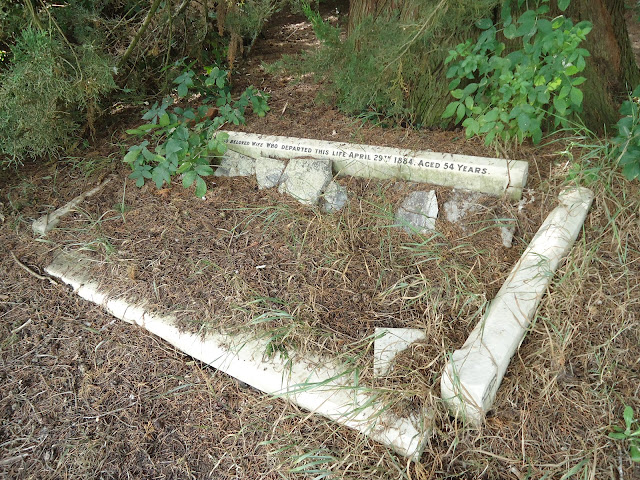
You may think that when a memorial is in this condition that it is impossible to discover who is buried there.

Aha! Not if you have access to comprehensive records such as the ones existing for Radnor Street Cemetery.

The burial registers for Radnor Street Cemetery come in various forms. There is a set of alphabetical indices plus a set of chronological volumes. I was able to check the date closest to Mary’s death on April 29, 1884 and soon found her surname and the date of her burial on May 3. The entry in the burial registers provided her address as 10 Bridge Street, Swindon and, helpfully, that she was the wife of John Perkins. From here I was able to search the grave plot register and discover with whom she was buried.

Then it was back to the Ancestry website to piece together the family history.

In 1881, three years before Mary’s death, the family were living at 10 Bridge Street. John aged 47, was born in Banbury, Oxfordshire and worked as an Iron Moulder in the railway factory. Mary was 51 and was from Burton upon Trent, Staffs. Living with them were their three children, Mary A. 23, Joseph 21 who also worked as an Iron Moulder in the Works, and Emily 16. They also had a year old baby living with them, Seth John Perkins who is described as John’s nephew and was born in Bristol. There appears to be some confusion concerning this baby as he is described on subsequent census returns as son and grandson.

Following Mary’s death, John married for a second time in 1886. The marriage took place in Brackley, Northamptonshire and in 1891 John is still living at 10 Bridge Street with his second wife Sarah 49 and Seth aged 11. By 1901 John, Sarah and Seth are living at 63 Curtis Street.

Sarah died at her home 39 Bathampton Street in February 1911 and was buried with Mary in grave plot A529.

John remained living at Bathampton Street until his death in 1915 aged 81 years old.  He was buried with his two wives.

And I bet they wonder who planted the blooming great tree next to their grave.

William Laverick – Forge Foreman

The re-imagined story …

New Swindon has been much criticised for its rows and rows of red brick housing, but it wasn’t always like that. In the beginning there was the Works and the company houses, constructed from stone quarried locally at Kingshill and Bath and Corsham. But granddad said those early cottage were built just for show.

“Railway men and their families began arriving in such numbers that those building their homes couldn’t finish them quickly enough. The first cottages were little more than hovels, just two rooms often with two large families sharing one property.”

Mr granddad used to say Swindon was a work in progress.

“The whole place was one big building site.”

Granddad could remember Bath Street before it was renamed Bathampton Street and Faringdon Street before it became Faringdon Road.

“Mr Hall lived at number 1, Mr Laxon at number 2 and the Laverick family at number 3,” he recalled. “Mr William Laverick senior lived there first and then his son, William junior took on the property.

There was a sad story surrounding young Mr William Laverick, but granddad would never tell me what it was.

“Old Mr Laverick was the Superintendent at the Wesleyan Sunday School. My mother would have had me go, but my father wasn’t insistent so I managed to avoid it.” That made him chuckle, which brought on his cough.

My granddad used to say Swindon was a work in progress. I wonder what he would say if he could see it now.

Wesleyan Methodist Chapel published courtesy of Local Studies, Swindon Central Library.

The facts …

William Laverick was born in Bedlington, Northumberland on September 16, 1843 the son of William and Mary Ann.

He entered employment in the GWR Works on July 3, 1858 as a Door Boy in the Loco Factory before beginning his apprenticeship as a forgeman in 1860. In 1885 he was made a foreman.

The family were Wesleyan Methodists and William Laverick senior was Superintendent of the Wesleyan Methodist Sunday School for 35 years.

William Laverick junior and his wife Maria had a large family and the registers for the Wesleyan Methodist Chapel, Faringdon Road list the baptisms of six of their children.

Sadly, four of their children died young – Henry Allen Laverick at 9 months old and Arundel Laverick also died before his first birthday. Francis Charles died aged 2 and James Lightford Laverick aged 6 years. James died shortly after the opening of Radnor Street Cemetery and is buried in plot A100. Henry Allen died the following year and is buried in plot E7035. The other two children died before the cemetery opened in 1881 and are most likely buried in the churchyard at St. Marks. There is a mention of the four children on William’s memorial, but the inscription is badly weathered and incomplete.

William was admitted to the County Asylum at Devizes on July 22, 1890 where he died on November 9, aged 46 years.

William was buried in plot A2497 on November 13. In the 1891 census William’s widow Maria continued to live at number 3 Faringdon Street with her three remaining children, William Richard a 19 year old Engine Pattern Maker apprentice, Muriel Beatrice, 18, and six year old Arthur George. She married Francis Davies Morgan in 1895. Maria died in 1904 and is buried with her first husband in Radnor Street Cemetery.

George ‘Yorky’ Bramley

In her comprehensive and readable book Swindon Works – The Legend, Rosa Matheson devotes a section to the legend that was ‘Nicknames.’

She writes:

‘The Works’ sense-of-humour is a notrious legend in its own right from its earliest times.

And it came as no surprise to me that Andy Binks, cemetery guide and fellow volunteer at Radnor Street Cemetery, had contributed a few nicknames for Rosa’s book, for example – ‘Melvyn, otherwise known as Drill Head from when a drill fell on his head and floored him!’

From ‘the Clockie’ to Big Arthur, Arthur and Little Arth, all members of the same family, none of whom were called Arthur, it would seem every man in the Works had a nickname.

This is the story of George Bramley who hailed from Yorkshire. Guess what his nickname was?

George Bramley was born in Leeds in 1831, the second child of William Bramley, a weaver, and his wife Mary. George married Margaret Dunwell in 1852 and at the time of the 1861 census he was working as a labourer in an Iron Foundry and living in Tallow Hill, Worcester. By 1871 the family had moved to Swindon and were living at 10 High Street (later named Emlyn Square) with their four children James 16, Lucy 15, Maria 8, William 3 and three boarders. They later moved to 18 Oxford Street, which would be their last home.

Death of an old GWR Servant – The death took place on Sunday last, after a short illness of Mr George Bramley, of 18, Oxford Street, New Swindon. Mr Bramley passed away in his sleep at the age of 66 years. Deceased, who was better known throughout the Works by the soubriquet of “Yorky” (from the fact that he hailed from Yorkshire), came to Swindon in 1859*, and has been employed in the GWR Works, under the late Mr. Holden, and the late Mr Edward Brittain, ever since. He was one of the first Volunteers in the town, having joined the New Swindon Corps when it was formed in 1859, and did a considerable amount of work in assisting to make the first shooting range. He had been in failing health since the death of his wife last February, but continued to go to his work regularly up to last Saturday week. Deceased leaves two sons and two daughters. The funeral will take place on Saturday next, leaving the residence at 2.45 p.m., and proceeding to St. Mark’s Church at three o’clock. Friends will please accept this intimation.

Swindon Advertiser, Wednesday, November 22, 1899.

The backsies in the Railway Village

Margaret died in February 1899 and George in November of the same year. They are buried in grave plot C98 where their daughter Maria joined them when she died in 1933.

*census returns indicate that George may have moved to Swindon later than 1859.

John Jones – Rolling Mills foreman

The re-imagined story …

When the Rolling Mills opened in the 1860s the large contingent of incoming workers from Wales were housed in a building better known as the Barracks. The story goes that the Welsh women couldn’t get along together and that they used to fight and argue, but my Nana didn’t hold with that.

Wesleyan Chapel

The former GWR lodging house, known as the Barracks, later became a Wesleyan Chapel image published courtesy of Local Studies, Swindon Central Library.

“We had to live in dreadful conditions; if it hadn’t been for the other women, I don’t know how I would have survived. Two years we were there. It felt more like ten.

“We couldn’t keep the place clean, the water closets were permanently blocked and we had nowhere to put our rubbish or the ashes from the fire. There was always someone sick. It was all down to the water see, ‘unfit for drinking purposes,’ the public health inspector said. Two days a week we had water, Wednesday and Saturdays, and then it came from the canal.

Five hundred people there were crammed into that building. I had small children, why we all did, I don’t know how they all survived, many didn’t, I know. My sister Gwen gave birth in that place. I don’t know how they expected people to live like that.

The company cottages were bad enough, but that building. In the early days the men used to call it the Barracks. I don’t know about barracks, more like a prison it was.

When they started building the cottages at Cambria Place I used to go along every day. I used to will that little house along. I loved every square inch of that place. Mind after two years in that hell hole it was like living in heaven.”

Cambria Place

Cambria Place

The facts …

“I consider this building in its present state quite unfit for human habitation and dangerous to the health of the district,” Inspector Henry Haynes wrote to the monthly meeting of the New Swindon Local Board held on 2nd August 1866. What had once been intended as a model lodging house for the single men in the railway village was an unmitigated disaster.

Designed to accommodate young men in single rooms with a variety of communal facilities the lodging house, complete with Gothic turrets, was built to ease overcrowding in the GWR company houses. Unpopular from the outset, the building soon became known as the Barracks. Constrained by GWR rules and regulations the young men moved out, preferring to lodge in the cramped conditions of the railway village cottages instead.

The building stood empty until the construction of the new Rolling Mills in 1861 saw an influx of migrant Welsh workers and their wives and children. The GWR Company responded by converting the Barracks into supposedly family friendly accommodation.

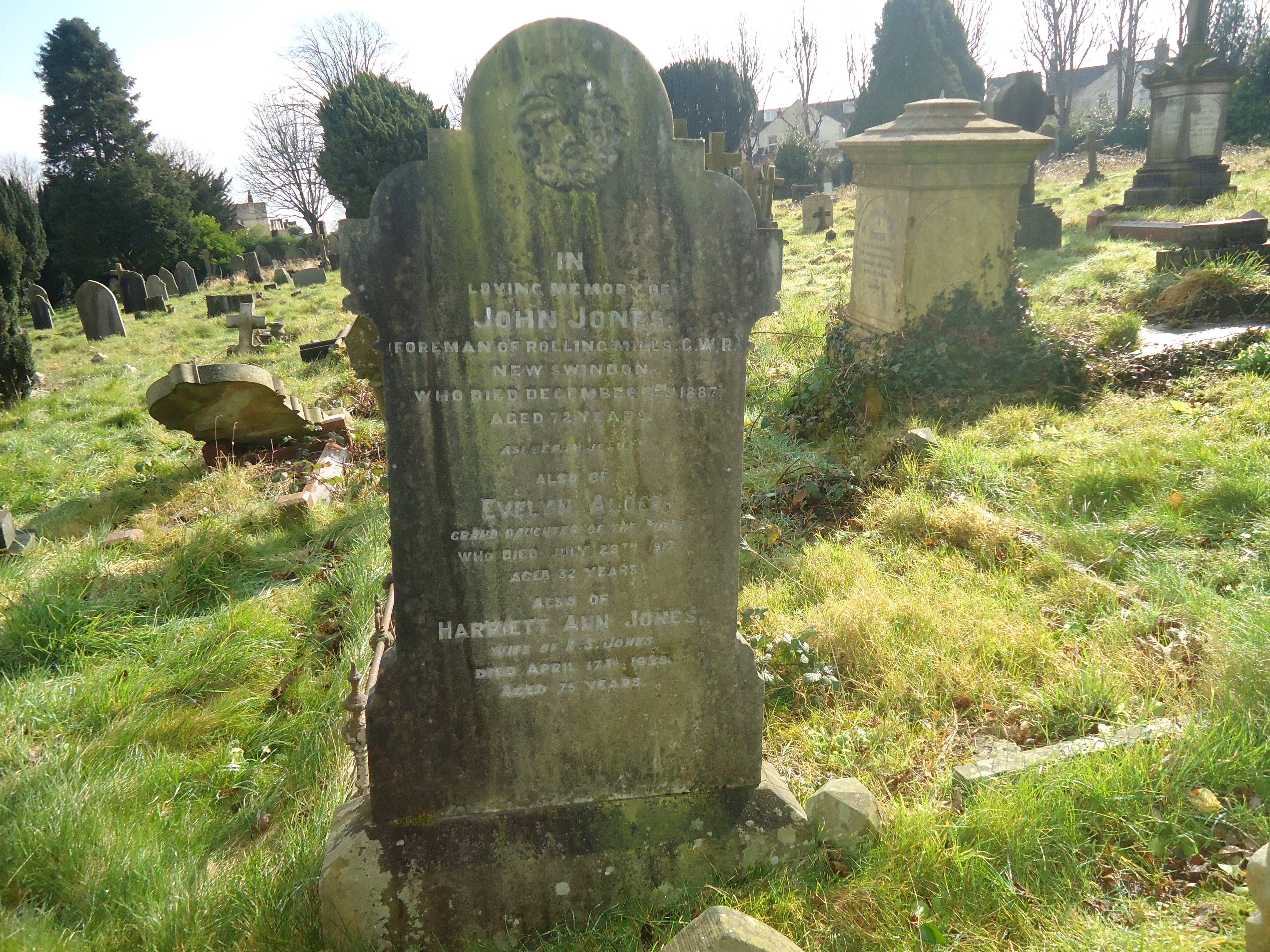
This is the final resting place of John Jones, who as can be seen from the inscription on the headstone, was foreman of the Rolling Mills. John was born in Tredegar, Monmouthshire on March 13, 1815.

In 1851 John was living at Thomas Road, Llanelly with his wife Sarah, and their children. Edwin 14, (already working as a forgeman), Elizabeth 13, Isabella 11, Ephraim 9, Emma 7, Enos 5 and Elijah S. who was 5 months old.

John was a highly experienced worker by the time he entered the GWR service here in Swindon on May 25, 1861. As a Foreman Roller he was paid 7 shillings a day (that’s 35p) although worth considerably more 155 years ago.

The Rolling Mills opened in the 1860s and saw the arrival of a large Welsh community in Swindon. In 1869 the manager Mr Ellis told the Advertiser there were about 310 men employed in the Rolling Mills, divided into a day and a night shift working alternate weeks.

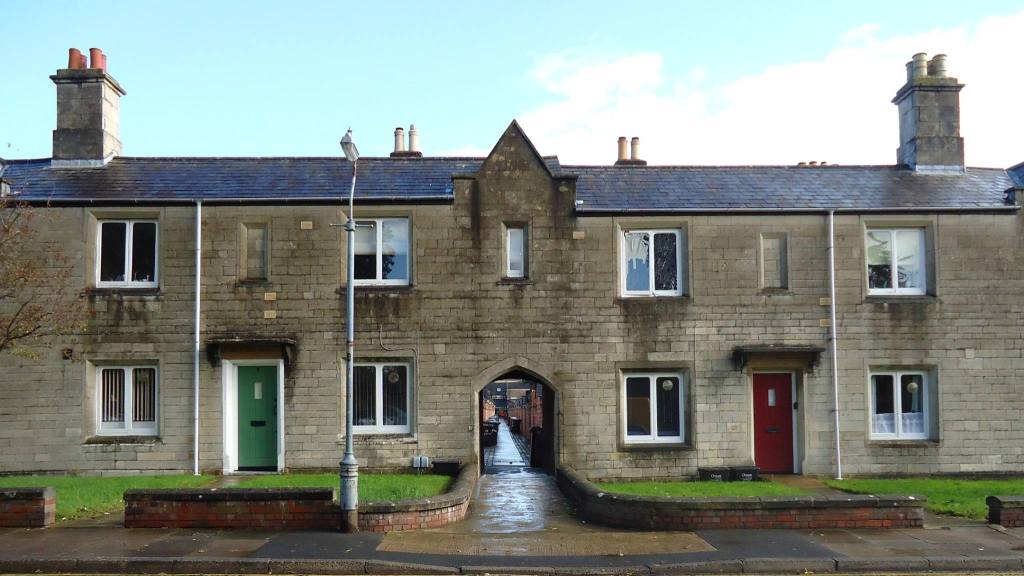
The arrival of so many families placed huge pressure on the available accommodation in New Swindon. The first Welsh families in the Barracks lived in appalling, insanitary conditions, and work soon began on Cambria Place and it was here at No 22 that we find John and his family living in 1871.

John died in December 1887 and is buried in Plot E8296 in Radnor Street Cemetery with his granddaughter Evelyn Alder who died in 1917 aged 32 and his daughter in law Harriett Ann Jones (Evelyn’s mother) who was the wife of Elijah Stockham Jones, John’s youngest son.

John Jones

StoryTrails – Swindon

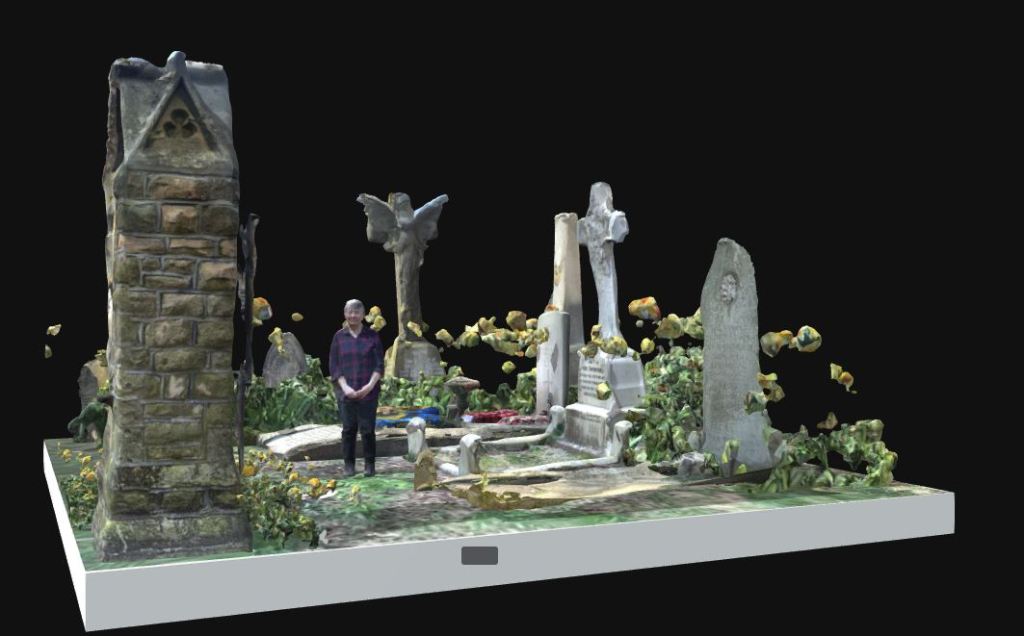
Last year I was invited to take part in a project called StoryTrails. Fifteen locations across the UK were represented in this immersive storytelling project. Events in Swindon included an augmented reality trail called ‘Snapping Swindon with the Hoopers’, which involved visiting present day locations and viewing them as photographers William and Mary Hooper saw them a hundred years ago.

The other part of the project was a series of short interviews with local people talking about the places in Swindon that have a special meaning for them.

I met Lucinda in the cemetery on a beautifully sunny, but rather windy spring day. where we grappled with some unfamiliar technology (I was her first interviewee) and tried to capture the birdsong.

You can read all about the project on the StoryTrails website, which is full of futuristic phrases such as ‘3D dioramas’, ‘immersive installations’ and ’emotional geography,’ but if you don’t understand what all that actually means you can click on to this link. Here you will find not only me but a whole cast of local people talking about Swindon. My favourites include Lee who talks about growing up in The Limes, a boy’s home in Upper Stratton; Nancy, who speaks so movingly about her husband Ashley and the Prospect Hospice, and Martha who loves living in her little house in the Railway Village.

Proposed Cemetery for Swindon

Welcome cemetery followers to this new blog launching today. 

Radnor Street Cemetery tells the history of Swindon. The civic dignitaries and members of the Great Western Railway hierarchy; the boilermakers and platelayers; the philanthropic benefactors and trailblazing women; the teachers and tradespeople and the 104 servicemen who lost their lives as a result of their military service in two world wars. The ordinary men, women and children of the town.

This blog will combine research and fictional, re-imagined stories to create an account of those lives.

So, if you enjoy local history with a different slant, please read on. You might like to read the ‘essential information’ first.
taunton-street-21

The re-imagined story …

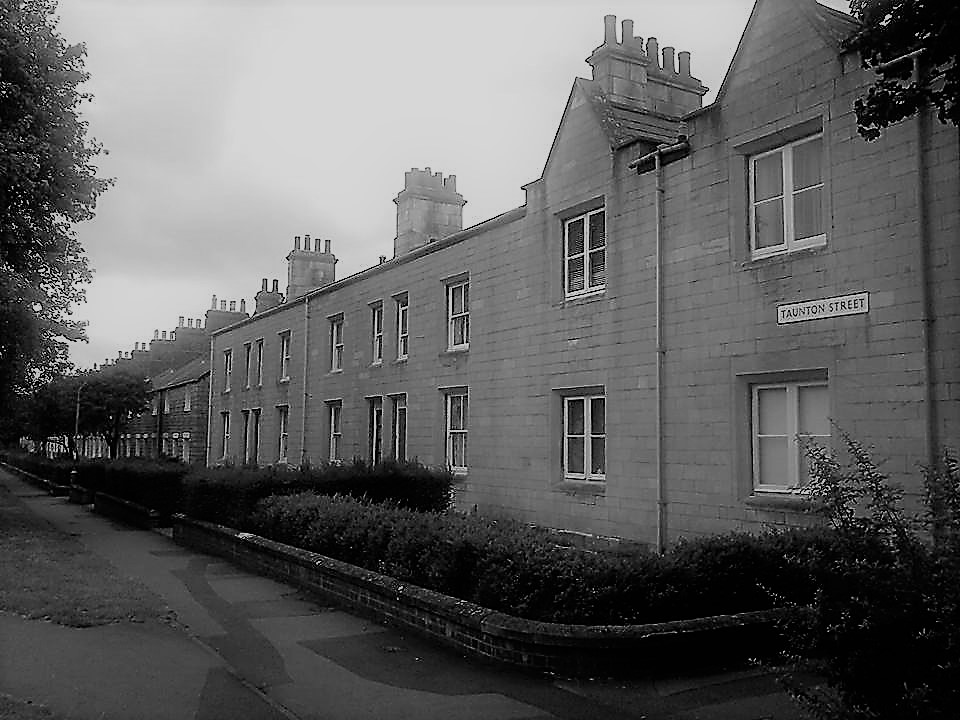
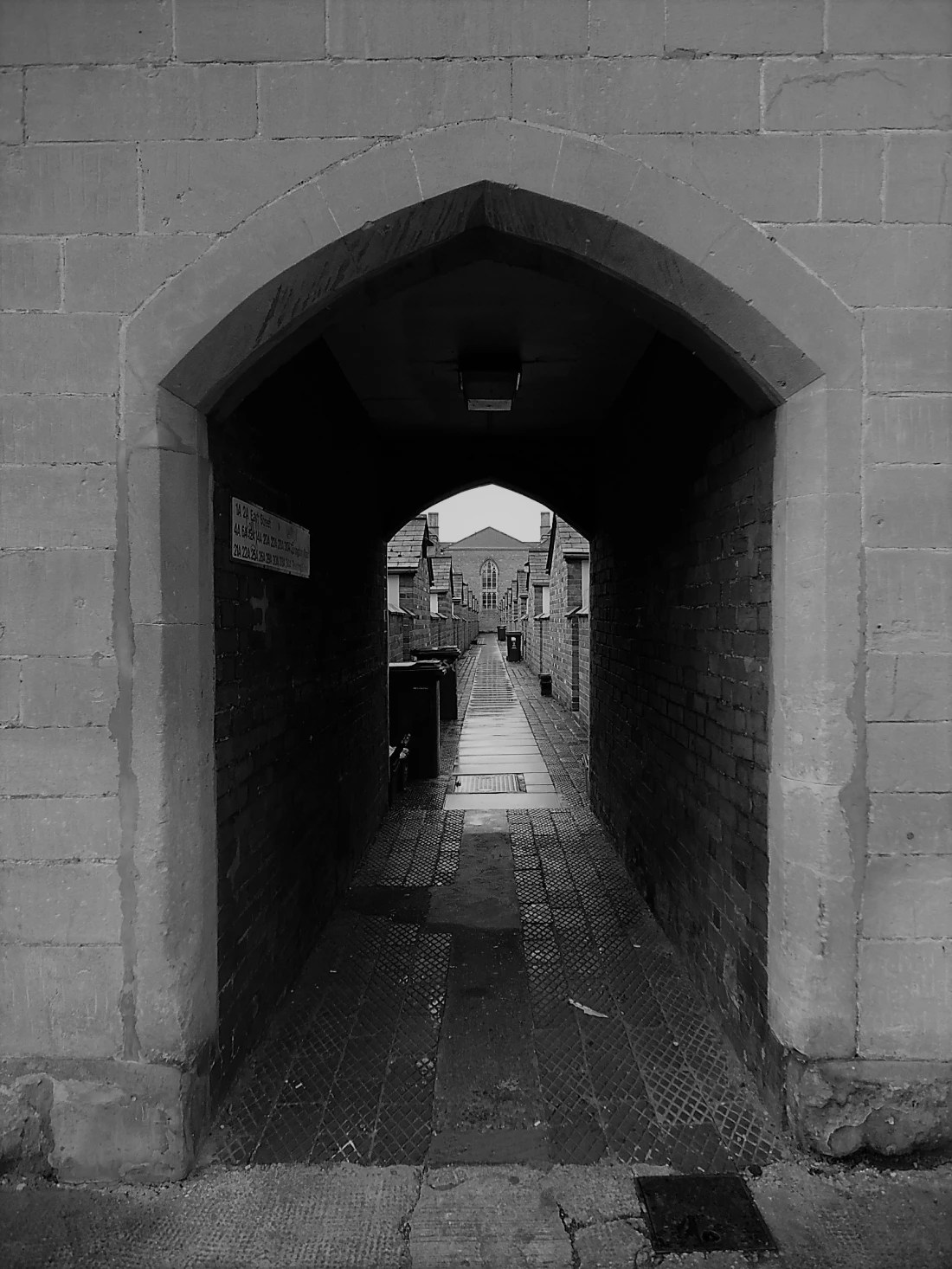
Night had drawn in early on a grey, sullen afternoon. A biting, north easterly wind accompanied me home on the walk from Old Swindon to Taunton Street, chilling my body but not so much as the events of that afternoon had chilled my heart.

A lamp was lit in the front room window. Emily opened the front door, clutching her shawl about her. I removed my coat, shaking off a dusting of snow. My worn garment served little protection against the elements and I badly needed something thicker, newer, but the boys needed boots and they must come first.

I took my seat before the range and warmed my hands as Emily brewed a fresh pot of tea.

“How did the meeting progress?”

“There were a great many people there. The meeting had to move from the Vestry to the Town Hall to accommodate the crowd,” I cradled the warming mug in my cold hands.

“Was Mr Morris there?”

“He was, and so was anyone of importance. Mr Hill had a lot to say as did Mr Hurt. And a lot of opposition to raising the parish rate was made in consideration of the poor people.”

“So little heed was made of our wishes?” Emily sat down wearily on the chair opposite and I wished I could have brought her better news.

“There was some mention of dissenters objecting to the burial of their dead in the parish church yard. However greater emphasis was given that it was the gentlemen’s considered opinion there was sufficient burial space in Swindon for years to come and the condition of the waterlogged graveyard in Old Swindon was an exaggeration.”

“That is an end to the matter then.”

“There is to be a poll next Saturday at the Mechanics’ but I am not hopeful.”

We sat in silence.

Twelve dissenting chapels, Mr Pruce had noted at the Vestry meeting. Swindon had two churches and twelve chapels. I could name them all. Chapels with a growing congregation, a Sunday School and Bible classes and volunteers who helped where there was a need, not only in the New Town but in the poor streets of Old Swindon, and yes there was poverty in prosperous Old Swindon. Twelve chapels but nowhere to bury our dead in the beliefs we held dear. Local dignitaries boasted that Swindon had an ethos of acceptance and tolerance but maybe that did not extend to religion. I considered that at the meeting this afternoon there had been more than a whiff of prejudice.

“So that’s an end to it then,” said Emily as she dampened the hearth and made everything safe for the night.

“Let us see what the result of the poll will bring,” I said, but I feared she was probably correct.

The facts …

A CEMETERY FOR SWINDON. The question, shall Swindon have a cemetery, and in this matter be put on a par with other towns and villages? has again cropped up.

There no single question where the principles of right and good taste are more clear than they are in this question of a public cemetery. There is no call made by the religious liberty we as a nation enjoy more emphatic than is the call that each religious denomination should enjoy the right to consign its dead to the earth after its own fashion. Yet there are to found those who can stand in the way of this right being granted, and who can prate loudly about increased burdens on the shoulders of the poor, and such like prattle, without the real interests the poor  being for one moment seriously thought of, and we are therefore to see a pretty squabble before this question, ” Shall Swindon have a Cemetery” is settled.

A short time since a proposition was before the nonconformist bodies of our town for providing a purely unsectarian cemetery, open to all parties, influenced by none. This plan it was perfectly within the power of those whom it would have served to have adopted, and have made successful. Had it been adopted it would have carried with it this recommendation—it would have been in strict conformity with the very principles of nonconformity: it would been established on purely independent grounds, and no man against his will would been compelled to pay a single farthing.

But no sooner was this independent course suggested to those who profess to love and live by independency, than there were found those who could cry out most lustily, “We don’t want to be independent; let tax others for that which we are asking.” The scheme was in consequence knocked in the head, and now we have the question, “Shall a cemetery be provided by a rate on all property within the parish claiming the attention of ratepayers.”

There is this to be said in favour of the proposition as it now stands before ratepayers: a public burying place is a public necessity, and should, therefore, be provided for out the most broadly collected public fund we have. The public weal demands that the dead body should be at once consigned to the earth this being so it surely can be no act of injustice if we call upon the public purse for funds to accomplish that which the public weal demands.

There is another aspect to this question to which we need not refer beyond this: In a town like Swindon, with its two churches, established as by law, and its twelve chapels, established in conformity with the consciences of men, that religious liberty upon which we so much pride ourselves, and which has been fought for, through many generations, cannot said truly to exist among us long as we are deprived of the opportunity of burying our dead after our own fashion; so long as it remains the power of one man to harrow and distress the feelings, by an arbitrary act. Of those who dare to hold independent views on some mere matter of detail in the great scheme of God’s religion. But, as we have said, we are to have a fight over this cemetery business, and Saturday next is appointed for the first great marshalling of the forces.

There was a skirmish on Saturday last, but it was mere babbling piece of business; the fight has yet to come.

Extracts taken from a report in The Swindon Advertiser published Monday February 1, 1869
taunton-street

Coming next …

Mr Morris’s Editorial – The ‘cemetery question’ as it had become known, had raged for many years and was particularly personal to our family.

published on Radnor Street Cemetery blog January 10, 2019.