Francis Edward Allen – Mayor of Swindon 1940-41

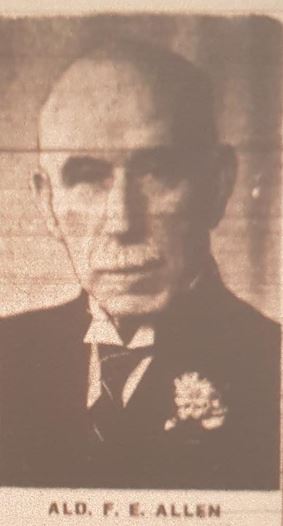
Francis Edward Allen was 77 years of age when he served as Mayor of Swindon during one of the difficult years of the Second World War, 1940-1941. Among his numerous duties during that year he launched Swindon Food Week, an initiative to help housewives make better use of rations; he lent his support to a national flag day on behalf of the air raid distress fund and he welcomed evacuees to the town.

Francis Allen was born in 1863 and baptised in the parish of Widcombe, Somerset, the son of stonemason Joseph Allen and his wife Mary Ann. By the 1880s he was living in Swindon where he married Emily Brooks on December 25, 1883 at the church of St. Paul’s. The couple went on to have 9 children and lived for all of their married life in the Rushey Platt/Wootton Bassett Road area.
Ex Mayor of Swindon’s Sudden Death

Alderman Francis Edward Allen Mayor of Swindon in 1940-41, died suddenly at his home, 9, Wootton Bassett road early this morning. He was 80 years of age.

Mr. Allen was born at Bath and came to Swindon as a young man to taken up employment in the GWR Works. He rose to chargeman of the gas works and retired about 18 years ago, after 42 years service.

On his retirement Mr Allen took up public life and was returned to the Town Council as councillor for the East Ward. Later he was made an alderman and was elected Mayor in 1940-41.

Mr Allen was well-known for his work in connection with the North Wilts district of the Ancient Order of Foresters, of which he was senior trustee at the time of his death. As recently as Wednesday evening he attended a Foresters’ meeting in Swindon.

Mr Allen also made a name for himself by his interest in horticulture. In the days of the old Swindon Flower Show, then held in the Town Gardens, he was a most successful exhibitor and was also a very competent judge of flowers.

He had taken innumerable prizes in local club flower shows, and at one time was on the committee of the “Evening Advertiser” Flower Show.

He was a former treasurer of the Swindon Division Liberal Association.

Mr Allen leaves a widow, three sons (two living in Australia and one in Swindon) and six daughters. All the sons and daughters are living and married.

The Evening Advertiser, June 13, 1943.

Funeral of Ald. F.E. Allen, Former Mayor of Swindon

Ald. F.E. Allen

Alderman Francis Edward Allen, aged 80, Mayor of Swindon in 1940-41, of 9 Wootton Bassett road, who died last Saturday, was buried with civic and forestry honours yesterday.

The Mayor (Ald. A.J.B. Selwood), wearing his chain of office, attended the funeral service at Wesley Church, Faringdon road, and the Foresters’ burial service was read at the graveside in Radnor street cemetery by Bro. F.J. Franklin, District Trustee.

The service at Wesley Church was conducted by the Rev. A..E. Banks, who, in the course of a short address, referred to the integrity and steadfastness of purpose with which Ald. Allen had served the town, and said the qualities of character he had shown in his public work had won for him a warm place in the hearts of his fellow citizens.

Extracts from the Evening Advertiser, Thursday, June 17, 1943.
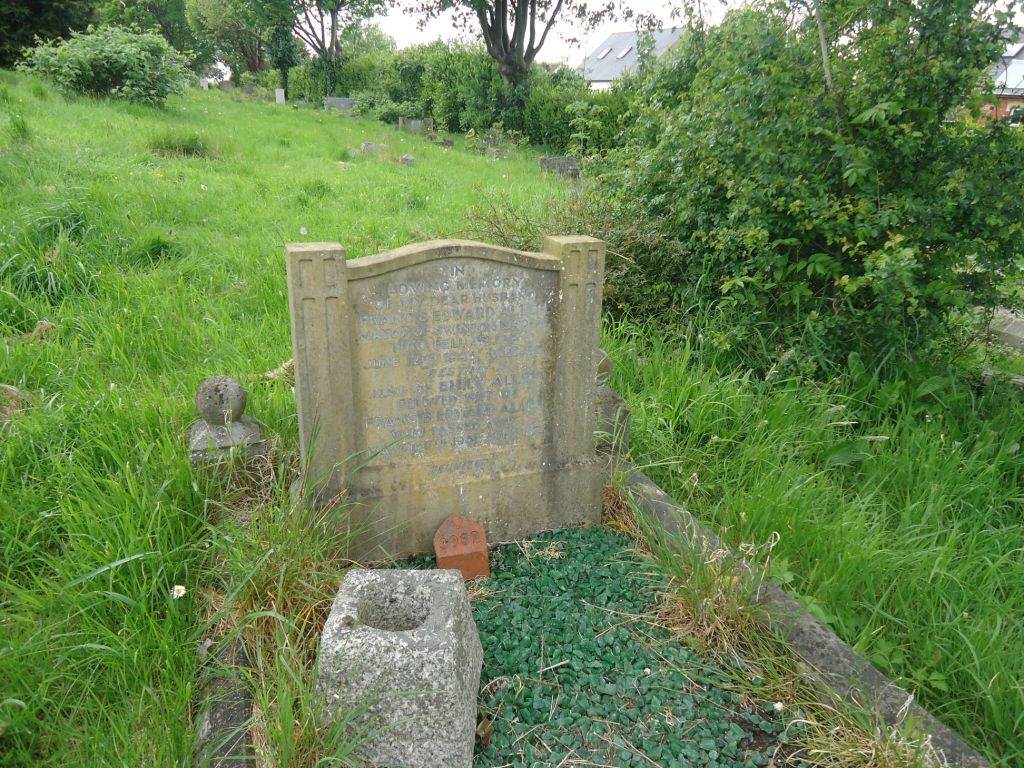
Francis Edward Allen died at his home 9, Wootton Bassett Road, aged 80. He was buried on June 16, 1943 in grave plot B3130, which he shares with his wife Emily who died in 1951. The couple are buried with Emily’s sister, Elizabeth Hannah Wilden who died in 1910.
The lubbly jubbly Fred Kiddle

I wonder what Fred Kiddle looked like. I imagine him as the loveable rogue Del Boy Trotter from the 1980s sitcom Only Fools and Horses, complete with medallion and sheepskin coat.

Fred had numerous jobs, including that of a ship brokers clerk, a traveller, pub landlord, shopkeeper, greengrocer but he is probably best remembered as a Turf Commission Agent – a bookies runner. Infact, we know he even had a nickname ‘Speedy.’

Fred’s great nephew David contacted me with a chapter from the Fred Kiddle story:

‘Most of Fred’s money came from bookmaking – both on course and off, with Duart House (his home) being furnished with antiques and silver ‘redeemed’ from unlucky gamblers in lieu of their debts. I understand Fred gloried in being nouveau-riche, owning many cars, from the windows of which he liked to scatter coins for local boys to run after! At the start of WWII he donated premises for the local Red Cross to use as their HQ – a wise investment, as they had preferred access to petrol, and made sure his car was never without, despite rationing.’

Now that is pure Del Boy.

Frederick Charles Kiddle was born in Gloucester in 1879 the son of Charles Kiddle, a railway foreman, and his wife Harriett. He first married Dora Henrietta Stephens in 1903. I’ve been unable to discover what happened to this marriage (or to Dora) In 1921 Fred married his second wife Ethel Maud Dunn but by that date they already had two children, Hugh born in 1914 and John in 1916. Their daughter Marcia Mary was baptised at St. Mark’s on February 13, 1922. During this period the family lived at 13 Cambria Bridge Road where Fred had a grocer’s shop.

By 1939 Fred was recorded as a Turf Commission Agent with premises at 26 Clarence Street, Gloucester and 2 College Place, Cheltenham. He died on died March 25, 1943. Probate was awarded to William Edward Kiddle (his younger brother) and William Canniford, insurance officials and Joseph Thomas Weston commission agents clerk and secretary. He left effects valued at £18,623 13s.

Fred was buried in grave plot C4878 in March 1943 where he joined his son John who had died in 1939. The inscription on the grave reads – ‘To my dear Speedy who I loved/No tongue can ever tell what we would give to have you back.’ Ethel died in 1964 and was buried in the neighbouring plot C4879. She is buried with the couple’s daughter Marcia, well known for her charitable works during the war, who died in 1994.

Unveiling of Airspeed Oxford propeller

In recent years the Radnor Street Cemetery chapel has become a repository for rescued and recovered war memorials. Ten years ago Mark Sutton was instrumental in seeing the Sanford Street School War Memorial removed to Radnor Street Cemetery Chapel from the then empty school building where it was considered to be vulnerable.  Then in 2015 a memorial to 19 Gorse Hill men who died during the First World War might also have been lost forever until rescued by Mark. In subsequent years more plaques and memorials have been deposited in the cemetery chapel.

During our next guided cemetery walk we will be unveiling another war time relic that was in danger of being lost to the history of Swindon.

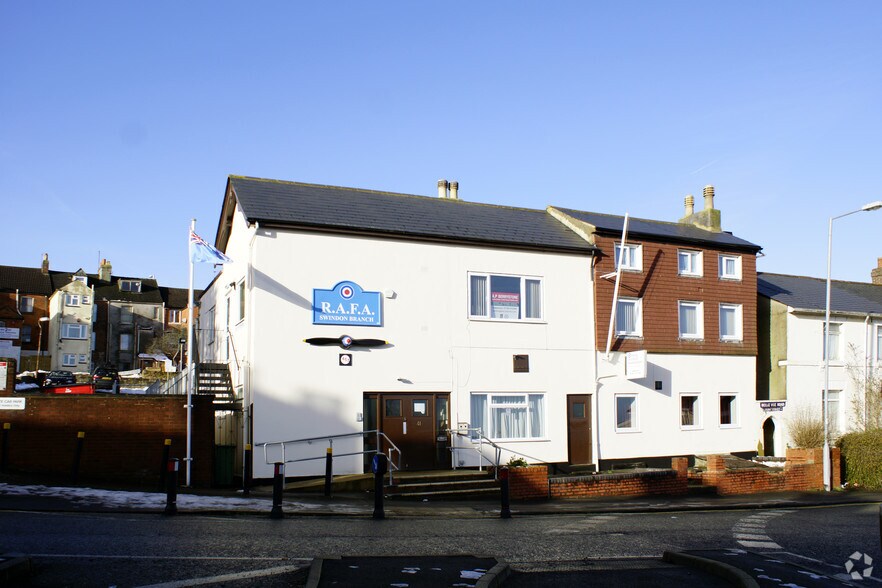
Following the closure of the RAFA Club in Belle Vue Road the propeller mounted on the front of the building faced an uncertain future. Then a group of concerned Swindonians, among them Carole Bent, Neil Robinson, Toby Robson and Graham Carter, stepped in.

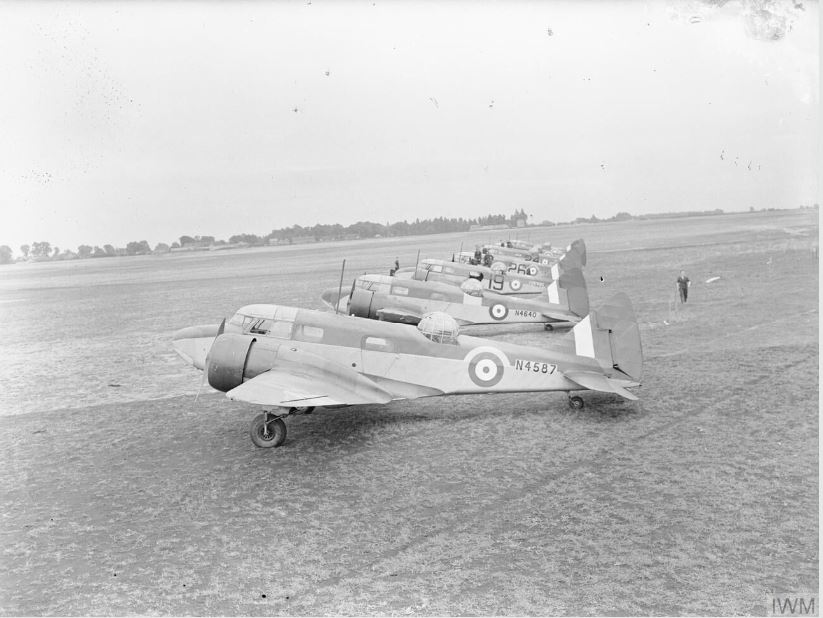
The propeller, which has been identified as belonging to an Airspeed Oxford – a trainer for RAF bomber aircrews, has now been installed in the cemetery chapel and will be unveiled by Air Commodore Tony Keeling OBE, Commandant Royal Air Force Air Cadets.

‘I’m delighted to see this propeller returned to display in Swindon. This is a visible celebration of the historic links between the town and the Royal Air Force. I am most grateful to the members of the local community who made this happen. Thank you.’

Following the unveiling our walk will follow a military theme during which we will visit the graves of several airmen who served during both World Wars and are buried in the cemetery.

Join us outside the cemetery chapel on Sunday August 13 for the unveiling at 2 p.m.

published courtesy of Imperial War Museum.

Radnor Street Cemetery volunteers

This Thursday morning you are likely to find members of the Radnor Street Cemetery volunteers busy in the cemetery. Here are a few words from Kevin explaining some of the work the volunteers undertake.

‘There are currently seven volunteers working in Radnor Street Cemetery. These include Jon, Jonathan, Brian, Pauline, Val, Jo and myself.

We are volunteering in an official capacity for the CWGC as part of their Eyes On Hands On project. The Commission is responsible for 103 plots at the cemetery, 90 WWI and 13 WWII, of these there are 101 Commonwealth and 12 private. Basically, it is up to us to look after these plots and feedback any concerns to the Commission such as illegibility, damage, unsafe leaning etc.

We are authorised to softly clean the Commonwealth headstones, using just water and brushes, and carry out light weeding, grass trimming etc. For the private memorials we should only carry out only light weeding and not clean the headstones, but feed back to the Commission.

Of the casualties at the cemetery a lot of them died from illness, but there are also those who died in accidents or more sadly those who took their own lives often following the horrors they had experienced.

We have recently been photographing all of the headstones and memorials for the Commission website. The Commission now try and include photographs on their casualty database, which people can search.

Outside of the Commission’s responsibility there are also many private family plots at the cemetery that we have come across that make reference to loved family members lost during the two wars.

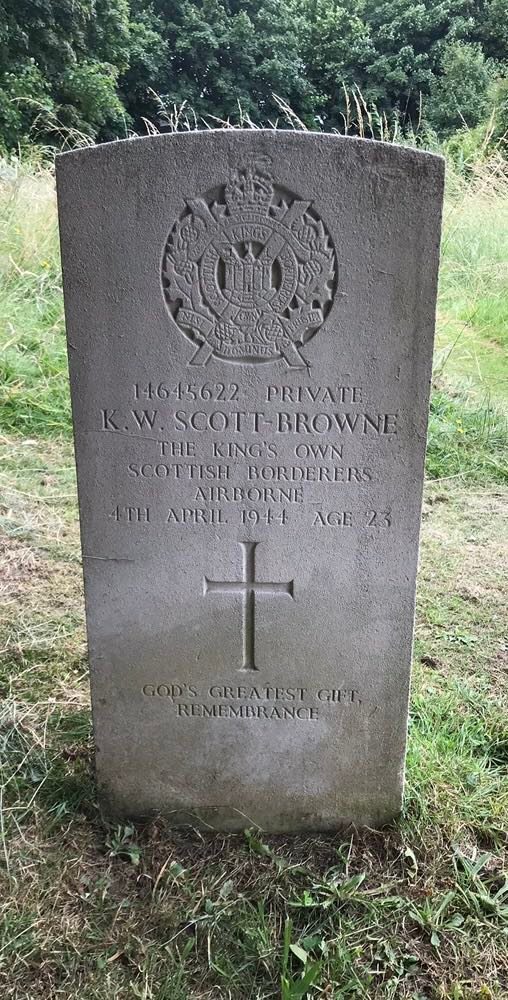
The first two images show a little bit about the Eyes On Hands On project. The next photo is a private plot commemorating 2nd Lt W.S. Hunter, Royal West Kent Regiment. The second photo is a Commonwealth headstone marking the grave of Pte K.W. Scott-Browne, sadly killed in a flying accident whilst training for D Day. The last photo is a family grave for Mildred Cook, commemorating her husband Hubert James Cook, killed in action during WWI.’

Read more about the work of the Commonwealth War Graves Commission here.