On your marks

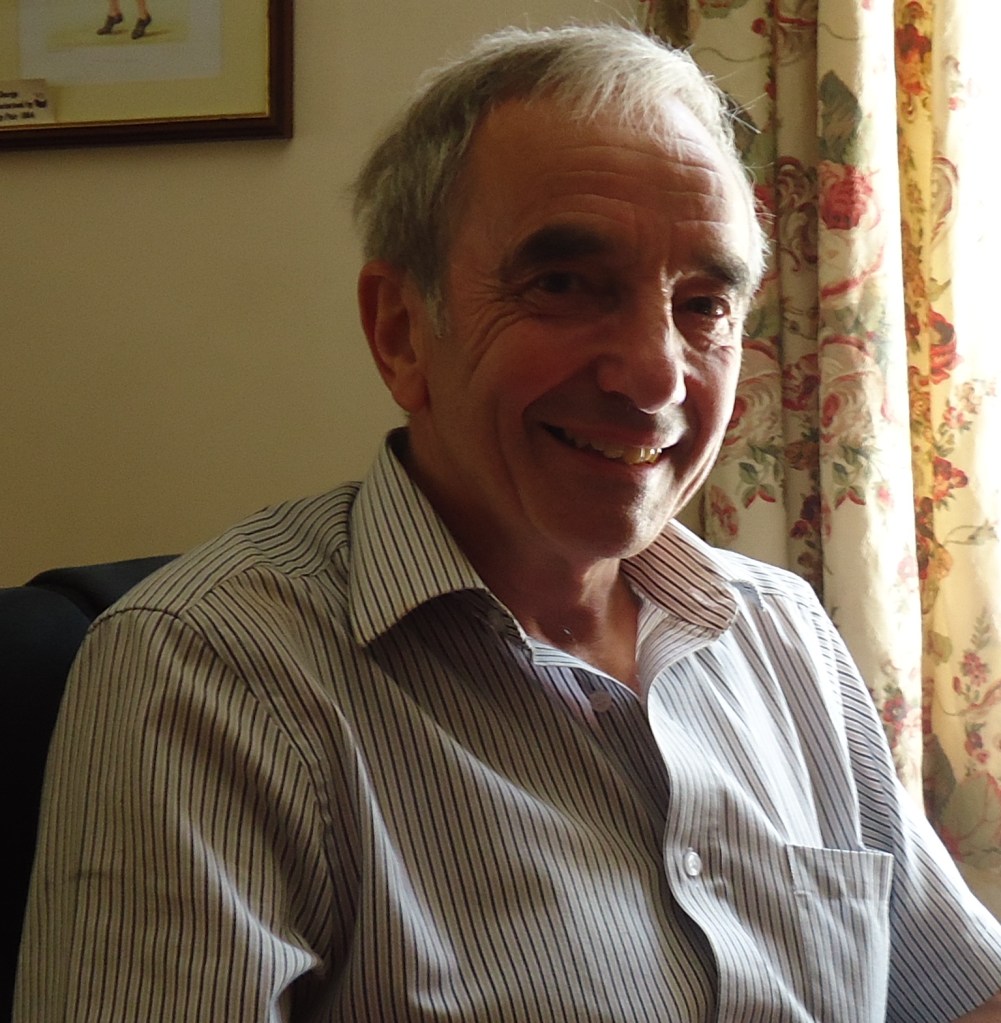
In the summer of 2013 I had the privilege of interviewing Bob Townsend at his home in Wroughton. I knew him as a member of the Swindon Society, but he had many more strings to his bow! Here is the article published in the Swindon Heritage Magazine in the 2013 Autumn edition.

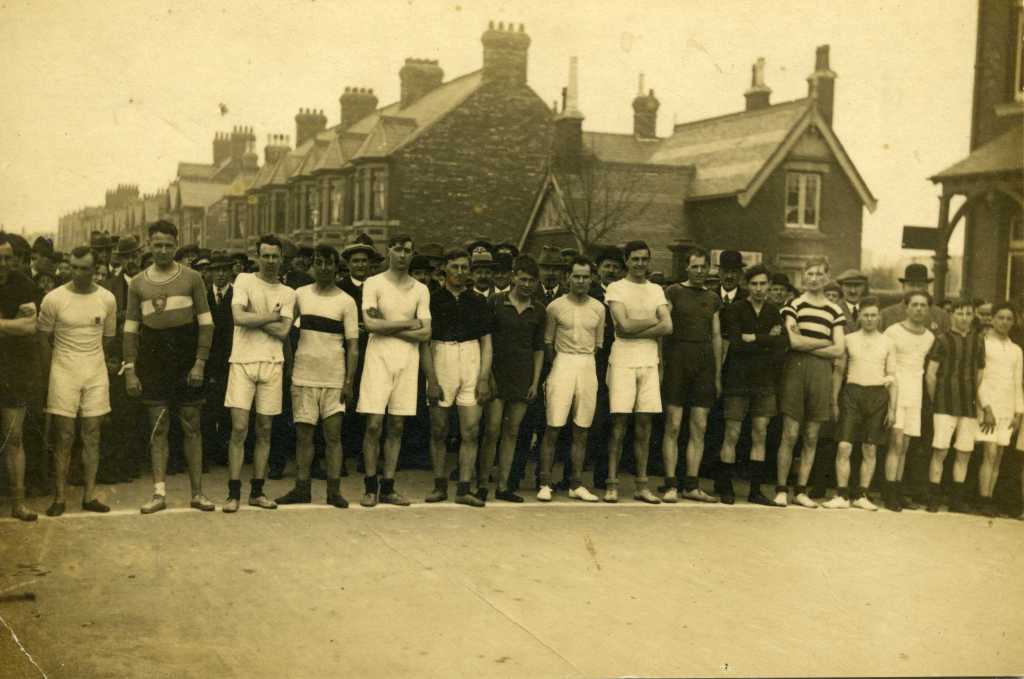
On March 19, 1921, a crowd gathered at the County Ground to see history being made – but this time they weren’t there for the football.

They had come to see the first road race organised by the newly founded Swindon Athletic Club, over three miles.

Swindon historian Bob Townsend’s father William, a 17-year-old novice, not only ran in that historic race, but won it.

And so began a long family association with the club that would last for more than 60 years.

“Some of the lads joked that it might as well have been called the Townsend Athletic Club,” said Bob, who joined the committee in his teens and was chairman for more than 20 years, following in his father’s footsteps as President.

Bob got the running bug when his father organised the Swindon School Championships, held at Ferndale Road School in the mid 1950s. “I was in my last year at school and dad asked if I fancied comming down and having a run,” said Bob, so he and his older brother John joined the Townsend training camp and were soon making headlines on the sports pages of the Evening Advertiser.

In May 1961, at the RAOC Depot Hawthorne, the Adver reported: “Leading all the way, and taking turns to set the pace, the brothers shook of Brooksby (Salisbury Athletic Club) at the halfway mark and increased their lead, eventually to lap two of the competitors.” Both achieved a personal best over three miles, with John finishing first and Bob close behind.

Bob has competed in events all over the country, running in cross country and road races of varying distances.

He set the Wiltshire record for the 3,000m senior steeplechase championship when the Wiltshire Athletic Association held the event at Marlborough College in the 1960s, and twice won the Wiltshire Cross Country Championship.

In 1965 he ran the course in 33.07 minutes, coming in 200 yards ahead of the rest of the field – just one of the many occasions when he “finished before anyone else did” as he modestly puts it.

Bob was selected three times for the British Rail Staff Association (BRSA) team to compete in the prestigious Railwaymen’s International Cross Country Championship. At Leipzig in 1962 the British team came second in both the men’s and women’s overall championship.

In 1981 the club celebrated its 60th anniversary with a jubilee run. Bob is picture wearing number 502 and one of the original 1921 vests.

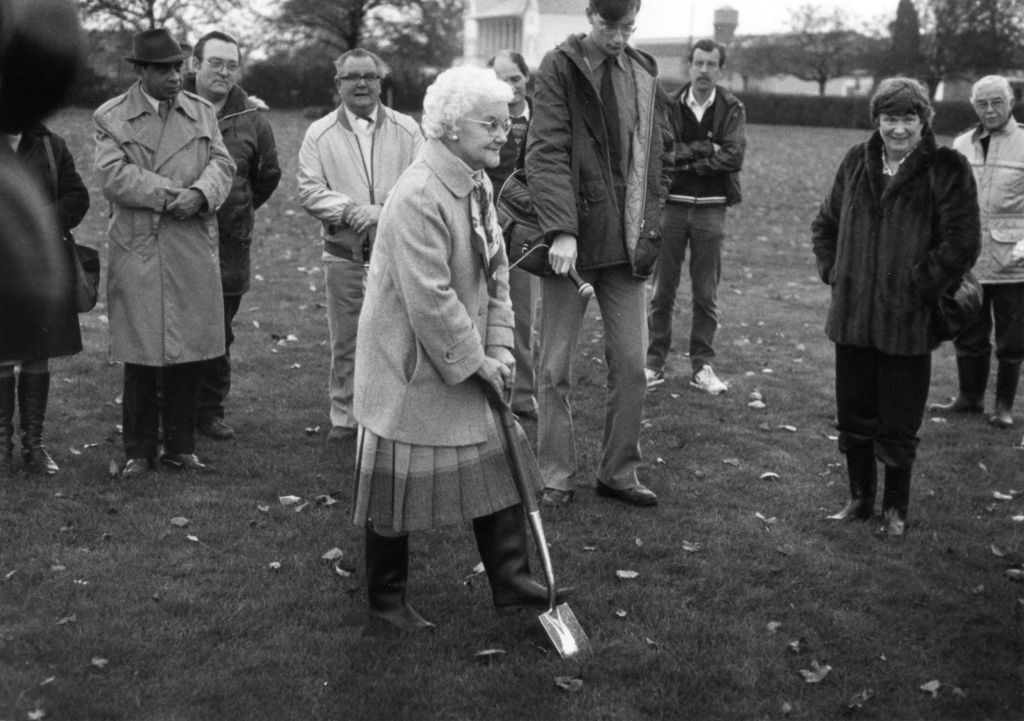
In the early days the club had no running track and their headquarters were on the County Ground car park, so when Swindon finally did get a track, in 1984, it was fitting that Bob’s mother Emily was asked to cut the ceremonial first sod.

Although Bob’s competitive running career began to tail off in the 1980s, his involvement with the sport continued.

He served on the Wiltshire Athletic Association, where he was secretary and team manager of the Cross Country Championships for 27 years. He did everything from finding a course to typing up the race schedule and ordering the medals.

Today he helps organise the Lions Disabled Games, hed every August at the County Ground track – a meeting that attracts teams from all over the country.

“It’s a wonderful afternoon,” he said.

The Swindon AC name has now gone, but the club lives on because it amalgamated with Swindon Road Runners in 1996 to become Swindon Harriers.

And, driven by the ‘marathon mania’ of the 1980s and no doubt the legacy of London 2012, athletics in Swindon goes from strength to strength.

Bob reflects on his early days with Swindon AC when the average entry for a County Champtionship numbered 40-50.

“My dad wouldn’t believe it today to see 500 entries in a Swindon half marathon,” he says.

The Townsend family are at the heart of Swindon athletics history, and although Bob is reluctant to talk about his own achievements, both on and off the track, he does recall when the story came full circle at Babbacombe in Devon in the 1960s.

“I won the mile handicap and an old man came out of the crowd waving his programme at me.

“‘I’ve been coming to his meeting for more than 30 years,’ he said, ‘and about 30 years ago another boke called Townsend from Swindon won this race.’

“That was my dad,” said Bob, proudly.

Bob died in August following a long battle with Alzheimer’s. His funeral took place yesterday at Immanual Church, Upham Road, Swindon where a large congregation of family and friends celebrated his life and said goodbye.

Swindon AC’s first race, in March 1921, with Bob Townsend’s father William, aged 17, second from the right.

Swindon wins South of the Thames Cross Country Championships, Sevenoaks, Kent 1961.

The British Rail Sports Association athletics team bound for Leipzig, East Germany, in 1962 – Bob is pictured seventh from the left.

The club’s 60th anniversary race in 1981. Bob is pictured wearing number 502 and one of the original 1921 vests.

Bob’s mother Emily cutting the first sod at the County Ground athletics track in 1984.

Bob (right) and his brother John.

Photographs published courtesy of Bob Townsend.

James Munro – Swindon Town football legend

Swindon Town 1898-1899 – James Munro is pictured 5th from right in the back row

James Munro was born on January 23, 1870 in Dundee, the youngest of Betsy and James Munro’s five children. He began his football career at Dundee Our Boys team, joining Swindon Town F.C. in 1895 after playing for Bolton and Burton Swifts. A good allrounder, captain Munro played as inside forward, half back, centre half, full back and even in goal.

On New Year’s Eve Munro led his team out onto a rain sodden County Ground pitch to play Tottenham Hotspur in a Southern League Division One match. Swindon Town picked up a 4-3 win in a hard fought game in difficult conditions. It is thought Munro caught a cold during this match, although he was seen out and about in town later that day. Sadly, he died a few days later, the cause of death being spinal meningitis.

Many thousands of people attended the commital of the young footballer into plot E7375 on January 7, 1899. A magnificent memorial was later erected on the grave but in recent years this itself has become weather damaged and in March 2021 Swindon fan James Turner and members of the Swindon Town’s Official Supporter’s Club raised £1,505 to restore the Munro memorial.

The James Munro memorial before restoration

Death of a Footballer

James Munro, captain of the Swindon Town Football Club, died rather suddenly on Wednesday. He played against Tottenham Hotspur in the Southern League last Saturday, and contracted a chill. The deceased, who had captained the Swindon Club for the past four seasons, was 29 years old, and had only been married five months. He came from Dundee, and first played for the Bolton Wanderers and afterwards for the Burton Swifts, from which team he came to Swindon.

The Derby Daily Telegraph, Thursday, January 5, 1899.

The Late Mr James Munro

In Memoriam – The Last Goal

A goal! Ah, now the cheers burst forth

When through our Captain’s play,

Another goal was gained for us,

And we had won the day.

A goal! Ah, yes, another goal,

A goal, for him to-day,

And Swindon mourns their Captain brave,

Whom death has called away.

L Maberly, Lambourn, Jan 16

The Swindon Advertiser, Friday, January 20, 1899.

The Funeral of Mr James Munro

The funeral of the late Mr James Munro for the past four seasons captain of the Swindon Town Football Club, who died almost suddenly last Wednesday, took place on Saturday afternoon amidst every token of respect for the deceased and sympathy for the family. In dismal weather the funeral cortege left deceased’s late residence in Kent Road, Swindon, at three o’clock, and proceeded to the Trinity Presbyterian Church, where the first portion of the service was conducted by the pastor, the Rev. J.H. Gavin. The Rev. W. Llewelyn Williams (Baptist) gave a short address. The former gentleman conducted the service at the graveside in the Cemetery, where several thousand people had assembled to pay their last tribute of respect to the ever popular “Jimmy.” The solemn procession was headed by the New Swindon Town Military Band (without instruments), and the coffin, on a hand bier, was covered with beautiful wreaths, besides which a carriage was laden with floral tributes. The members of the team acted as bearers, and amongst those present were the directors of the Swindon Town Football Co. (Limited), with the secretary and treasurer, and representatives from the Reading Football Club, the Tottenham Hotspur club, the Western League, the Southern League, etc. Amongst the floral tributes was an everlasting one from deceased’s comrades of the Swindon Town team, which bore the inscription, “Manfully he did his duty,” and the verse, “A star from out our tanks is gone; a light which shone the best; no more will he play the manly game, for Jimmy has gone to rest.” There were also wreaths from St. Mark’s F.C., Tottenham Hotspur players, directors of the Reading F.C., Swindon Amateur Swimming Club, Bedminster F.C., the directors, treasurer, and secretary of the Swindon Town F.C., and the Southern League.

The Western Daily Press, Bristol, Monday, January 9, 1899.

The newly restored James Munro memorial

With thanks to James Turner, Paul Plowman and Dick Mattick.

Frank Crossley – a safe pair of hands

The re-imagined story…

Swindon Town Football Club had been founded less than ten years when Frank joined the team. This was before the team turned professional in 1894, when they played at the Croft and changed into their kit at The Fountain public house. Football was a different game in 1887.

Swindon Town FC

The players may have been amateurs but there was nothing amateurish about their game. Take Frank Crossley for example, a fitter in the Works who played in the late 1880s.

Frank Crossley was an intelligent player and a safe pair of hands. Fans wondered why he didn’t play more regularly for the Town. Frank played just seven games in a career that spanned five seasons from 1887 to 1892.

He then went on to referee matches and he didn’t mince his words.

I suppose the war will change football in the same way it has changed everything else. So many good players lost. Our own Freddie Wheatcroft lost, killed in action in 1917. Freddie notched up more than 90 goals in six seasons at Swindon. We won’t see the likes of him again.

And what about Frank? Will he be forgotten too?

William Elizabeth and William Crossley

The facts …

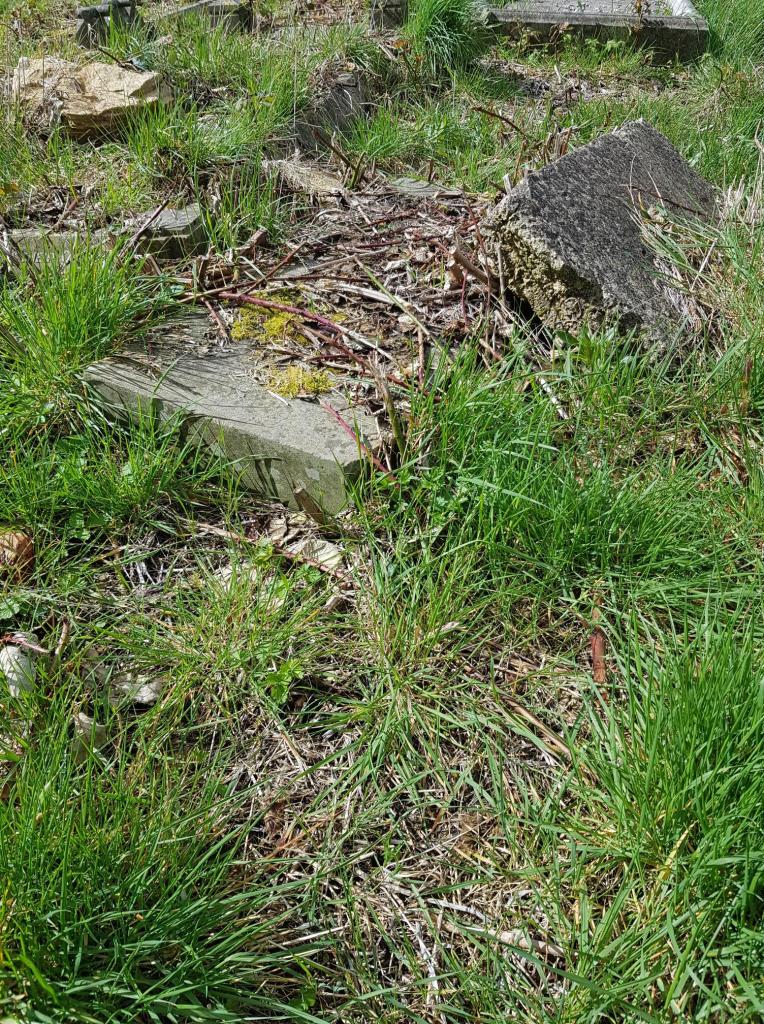
This headstone marks the burial place of William and Elizabeth Crossley and their son William. The kerbstone surround has sunk into the ground and it is no longer possible to see an inscription, if there is one. It is likely the names of two further sons both buried here, Frank and George, are mentioned.

William senior was a steam engine maker and fitter. He was born in Yorkshire in about 1827. By 1860 he and Elizabeth had moved to Stratton St Margaret and later a home in the railway village where they raised their five children, William, Frank, Emma, Sarah and George. All three sons followed William into the Works and jobs as fitters.

As the headstone reveals William died in 1895, Elizabeth in 1910 and their son William in 1899. William and Elizabeth are buried in plot A990, their son William is actually in the neighbouring plot A991. There is no obvious mention of the two sons who share the grave with their parents.

After William senior died, Elizabeth, Frank and George left their long-time family home at 15 Oxford Street and moved to 126 Broad Street. Following Elizabeth’s death Frank and George continued to live together.

Research has revealed that Frank played for Swindon Town Football Club from 1887 to 1892 and later went on to be a football referee.

In the last months of the Great War George was called up; he was 44 years old. As a skilled man he enlisted with the Royal Engineers, serving as a Sapper in the Royal Engineers and the Inland Waterways and Dock Companies. He served his time in Britain, returning to his job in the Works at the end of the war.

Frank died in 1947 aged 82 and George died in 1959 aged 85. Neither men married and left no descendants. Their lives forgotten, their amazing stories untold.

Frank Crossley of 126 Broad Street Swindon, died aged 82 years old. Burial took place in plot A990 on February 24, 1947.

Some sporting stories

Frank also played for the county team.

Football Gloucestershire v. Wiltshire

The most important match on Saturday in and about Bristol was the one between the representatives of the above counties, which was played on the St George’s ground, in the presence of about 2000 spectators. Although the Wiltshire men had to travel some distances, they were the first to take possession of the battlefield, but they had not to wait long before the home defenders jumped over the roses and took up their different positions ready for the attack.

From the throw in a combined rush was made by the visitors, who worked the leather in close proximity to the home territory, but Percy Newnham was not found wanting, and, with the help of Russell, stopped the attacking party, and the former player, with a clever kick, placed the globe half way down the ground, where, unfortunately, the ball was handled, and on the appeal being made a free kick was awarded the visitors…

From the kick off, Francis and Perrin sent in a stinger which puzzled Crossley, and matters were made equal admist the vociferous cheering of the spectators. The ball was kicked from the centre, and the home men, encouraged by their success, made another heavy attack upon the visitors’ territory, Noble, Taylor, and Francis sending in shot after shot, which were all well stopped by Crossley…

Poole next had a try with the leather, got from Francis; he sent in a clinking shot to Crossley, who saved in splendid style by falling with the ball and putting it behind…

Some very pretty passing play was witnessed between Perrin and Francis, who were loudly cheered by the spectators; the former headed the ball in front of the goal, but Crossley saved. The home forwards pressed the game, and Thompson getting the leather from C. Newnham had a chance of scoring, but he misjudged his shot and the ball went behind.

For five or ten minutes the visitors were penned in, Francis, Poole, and Perrin sending in some sharp shots, but Crossley was equal to the work, and his fisting out was remarkably clever.

Eventually the scene of action changed, and the visitors working together the ball was driven up the field and was placed between the sticks for the third time.

Up to half time the play was of a give and take nature, neither side being able to notch any further point. Immediately after the change of ends an appeal for hands was allowed the visitors, the leather being near the back division of the home quarters, but from the free kick the ball was sent out of play.

Directly after the ball was restarted it was kicked into touch, and from the throw in Taylor got it, and passing it to Poole, that player put in a shot, but Crossley cleared the goal.

Stancomb drove the leather down the ground, and Thomas tried a shot which Phipps hit over the crossbar, thus giving a corner, from which nothing resulted. Shortly afterwards W.H. Williams scored another goal for the visitors by heading the leather between the uprights. Up to the call of time no further point was scored. The game stood Wiltshire, five goals; Gloucestershire, two.

Extracts from The Wiltshire Times, published Saturday December 7, 1889

Football: Prospects of the Coming Season

“Can you manage to write something for us about the coming football season, and what we may expect to see the Town Club doing?” queried our Editor the other day.” What, football already? Why its only a few weeks since when we took up the willow for the first time this year! You might at least wait until the first-class cricket teams have made up their averages.”

It was not to be, however, for the “season” is already upon us, and almost before we could get a talk with some of the knowing ones of the local teams Swindon Town are hard at it – and at first-class matches, too.

Our first wail must be over the retirement of the popular captain of the past few years, for who can doubt that during the time Frank Crossley has held the exalted, but not at all time enviable, position of captain, Swindon has, under his care, and by plucky challenges well sustained, worked its way to a prominent position amongst southern teams. Le roi est mort; vive le roi! Frank Crossley retires, but Gordon Wainwright takes his stead, and in their new captain the Swindon eleven have not only a most firm commander, but also a thorough-going athlete. So after all, Crossley’s “stiffness” did not develop at a most critical time in the club’s history; he has assisted mightily his team’s accession to an exalted place in the football world, and does but leave other hands (and feet) to continue the work.

Extracts from The Swindon Advertiser published Saturday September 10, 1892

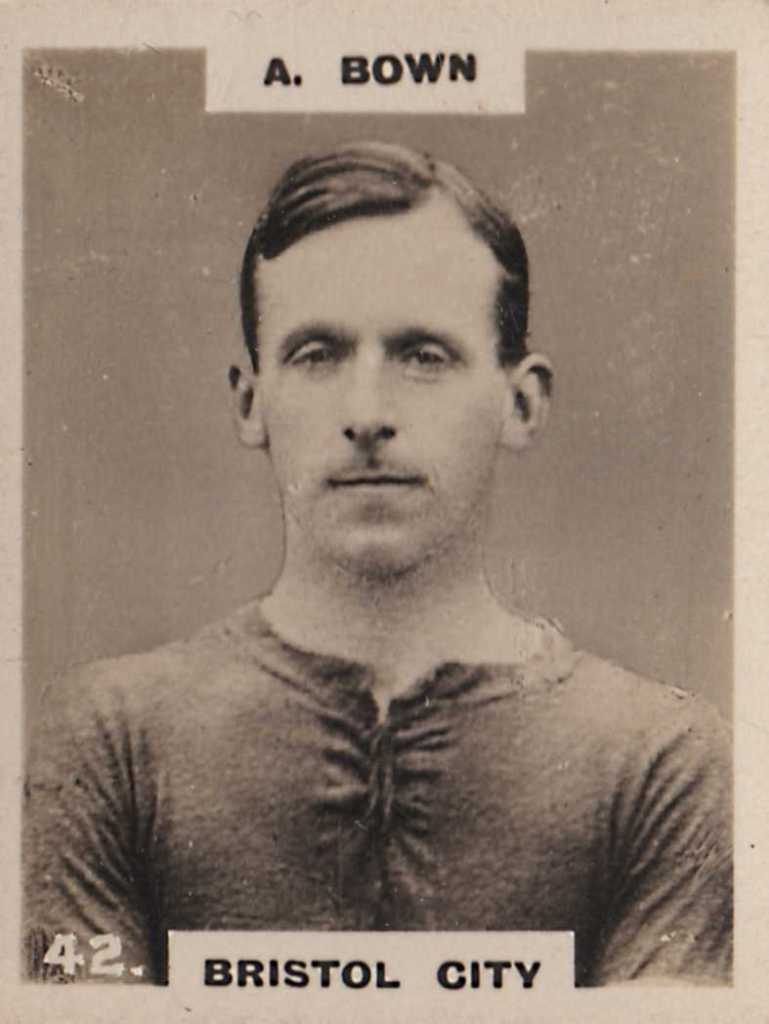
Archie Bown – Swindon Town FC player

The names of James Thomas Bown and his wife Mary Jane may not mean much to you. He was a clerk in the Works and she was a wife and mother. She was probably a lot of other things as well but wife and mother are the roles we know her by on official documents.

They married on August 20, 1881 at St. Mark’s Church and had four children of whom three survived to adulthood.

Now the Swindon Town football fans among you may have heard of their eldest son Archibald James William Bown. Born on July 22, 1882 Archibald entered the Works on January 11, 1897 as a draughtsman in the Carriage Department. It was something of an inauspicious start. Written in the margin of his employment records on February 24, 1897 was the comment ‘unsatisfactory character.’ He had been at work less than 2 weeks and was just 15 years old. He would show them!

Archie played his first game for Swindon Town on February 10, 1902 – an away game at West Ham. He didn’t score a goal – not that day. In a career that spanned 12 seasons Archie played a total of 291 games in which he scored 142 goals. He remains the Town’s fifth highest goal scorer in the club’s history.

In 1906 he married Beatrice Annie Scott and in 1911 the couple lived at 37 Roseberry Street with their two daughters Gladys and Trissie. Throughout his career with Swindon Town Archie continued to work as an Engine Fitter in the Works.

He also played for Swindon Casuals, Whiteheads, Southampton (as a guest) Bristol City and Weymouth where he ended his career and opened his own Sports Department. He died in 1958.

Archie’s parents continued to live in Swindon at various addresses including Commercial Road, County Road and Cumberland Road where Mary Jane died in December 1938. She was buried on December 26 in Radnor Street Cemetery, grave plot B2843. James married Alice Knee in 1944. He died three years later aged 87 years and was buried with his first wife on October 10, 1947.

It is also believed that Archie was related to athlete James Kibblewhite whose story featured on this blog recently. His grandfather was James Kibblewhite Bown born in 1836. More research is required to establish the connection kindly provided by Andrew Griffiths.

James Kibblewhite – athlete

Another day, another churchyard…

Legend has it that amateur Victorian athlete James ‘Kibby’ Kibblewhite would race alongside the train from his home in Purton to the GWR Works in Swindon, an amazing feat, but just one of many achieved by the middle distance runner.

James Kibblewhite was born at Purton in 1866, one of agricultural labourer James and Caroline Kibblewhite’s seven children.  He began work as a Post Office Messenger boy but like his father and brothers later found employment in the Swindon railway works.  Following a full working week as a machinist in R shop, Kibby ran record breaking races at events across the country in a career that spanned eleven seasons.

In 1889 he won the Three Mile Open Handicap Race at the Stamford Bridge Ground, Fulham finishing in 14 minutes 29 3/5 seconds, 9 2/5 seconds faster than the record set by Calne born Victorian super star runner W.G. George in 1884.

“The running of J. Kibblewhite furnishes one of the most remarkable performances of the season,” reported The Times. “Quite recently he ran a very fast mile on the Paddington track, and his record for three miles on Saturday, at the annual sports of the Spartan Harriers, is fresh proof of his abilities as a runner.”

The following year ‘Kibby’ led the Spartan Harriers to victory in the Four Mile Inter Club Race at the Kennington Oval.  “He took the lead very early in the race and won by 200 yards in the fast time of 20 min 20 3-5 sec,” The Times reported.

Competing in Birmingham that same summer he ran the One Mile Race in 4 minutes 23 1/5 seconds in the Amateur Championships, beating W.J. Fowler of the Finchley Harriers.  Back at the Kennington Oval in 1891 Kibby came in first, 80 yards ahead of Spartan Harrier team mate W.J. Manktelow.  “J. Kibblewhite covered the distance in the excellent time of 26 min 14 4/5 sec, a most creditable achievement, especially when the nature of the turf is considered.”

Modern membership restrictions did not apply in the 19th century allowing Kibblewhite to compete for several different clubs and in 1892 he broke the record for the Four Miles Race at Stamford Bridge running for the Essex Beagles.  Towards the finish of the race the crowd broke into the enclosure to greet the runners as Kibby finished in 19 minutes 50 3/5 seconds with a three yard lead.

In 1894 James married Mary Bristow and the couple had four children.  Their three sons all ran competitively.

By 1895 James Kibblewhite’s running career had ended.  He sold some of his prizes, valued at more than £1,000 and with the proceeds built a home he named Spartan Cottages after his old club.

Image published courtesy of Duncan and Mandy Ball.

James Kibblewhite died in 1941 and is buried in the churchyard at St. Mary’s, Purton.  Today Kibblewhite Close in Purton is named in his honour.

With grateful thanks to Bob Townsend.

Arthur Jefferies Lewis White – Prominent GWR Official and Swindon F.C.’s Chairman

Arthur Jefferies Lewis White was born on November 23, 1872, the son of Richard Lewis and Elizabeth Corbett White. He entered employment in the GWR on January 3, 1887, a month after his 15th birthday. A year later at a GWR Board Meeting to consider the promotion of the Lad Clerks Arthur was described as shorthand writer with previous office experience. He was already on a career path that would see him become Chief Clerk and Chief Accountant to Charles B. Collett, Chief Mechanical Engineer.

Arthur married Emily Sendell at Christ Church on October 2, 1917. He was 44 years old and she was 42.

A keen musician and mandolin player, Arthur White was chairman of the Great Western Railway Amateur Operatic and Dramatic Society and President of the Swindon Great Western Railway Social and Education Silver Band. He was a director of the New Swindon Permanent Building Society and a Freemason and member of the Sussex Lodge of Emulation, No. 355. He was also a writer and wrote several books about the Swindon Railway Works. But it is probably fair to say his greatest love (after his wife, of course) was football.

Arthur White was elected Chairman of the directors of Swindon Town Football Club in the 1910-11 season and served for nearly 20 years. The obituary published in the North Wilts Herald on Friday November 1, 1929 declared his pride of the club knew no bounds.

Swindon Town Football Club 1910-11 squad – the year in which Arthur J.L. White was elected Chairman

Arthur Jefferies Lewis White died at his home at 13 Okus road, Swindon after suffering a year of poor health.

The funeral service at St. Saviours Church was attended by a great many mourners and the North Wilts Herald reports that:

Practically every shop in the GWR Works was represented, and directors, players and officials of the Swindon Town Football Club also attended.

A guard of honour was formed by the local Freemasons, who led the procession and behind the coffin walked the family mourners, representatives of the Great Western Railway, the different societies with which Mr White was connected and the Town footballers.

Arthur Jefferies Lewis White was buried in grave plot E8134. His wife Emily survived him by nearly 40 years. She died aged 92 years of age at the Cheriton Nursing Home and was buried in the neighbouring plot E8134A.

Dr Charles Reid – Scottish rugby international

Following the nail biting Scotland victory over Wales 27-26 in the opening weekend of the 2024 Rugby Six Nations, I am republishing the story of Dr Charles Reid, Scottish International, who is buried in Radnor Street Cemetery.

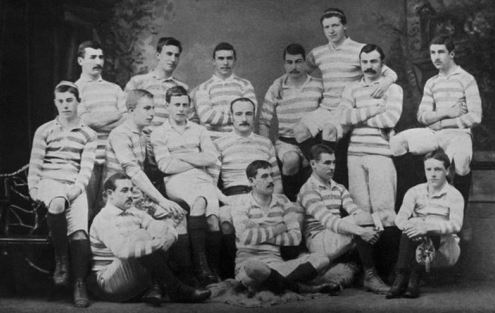
Edinburgh Academicals – Charles Reid pictured seated middle row 4th from left

Charles Reid was born January 4, 1864 at Lochwinnoch, Renfrewshire, the youngest son of John and Margaret Reid. By the age of 17 he stood 6ft 3ins tall and weighed in at around 15-16 stone.

He played for Edinburgh Academical Football Club, the oldest rugby club in Scotland and the second oldest in the World, which he captained from 1883-1888, beginning his international career in 1881.
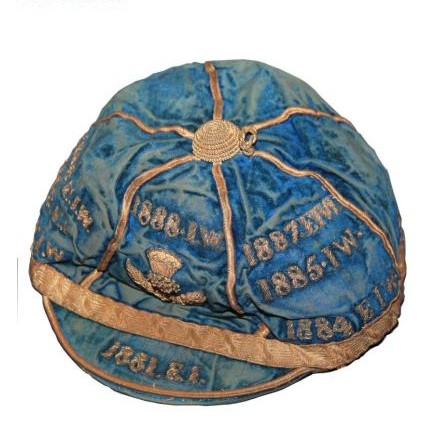
Charles Reid’s first cap published courtesy of Edinburgh Academicals

He was 17 years and 36 days old when he was first capped in 1881, the first schoolboy to play in a forward position in an international match. He went on to captain Scotland to 17 wins in 21 games. He was known for his skilful play and his ferocious tackling and today many rugby pundits place him in their ‘fantasy rugby team.’

Charles Reid continues to be a national hero in the history of Scottish rugby and he’s buried here in Radnor Street Cemetery. Perhaps I should let Finn Russell (Bath Rugby and Scotland) know.

Death of Dr. Reid

Well known Medical Practitioner

A Great Rugby Football Player

Famous International

The news of the death of Dr. Charles Reid, partner with Dr. J. Campbell Maclean, of Swindon, was received with unfeigned regret on Tuesday last. Deceased, who was only 45 years of age, passed away at a Surgical Home in London on Monday night, whither he had undergone several operations of a painful malady. He had been in failing health for some time, but the end came somewhat suddenly. Dr. Reid lost his wife by death about four years ago after being married only 18 months.

Deceased was born in Scotland, and was educated at the Royal Academy, Edinburgh, and subsequently studied at Edinburgh University. He secured the degree of M.B., and of C.M. (Edinburgh) in 1883, and practised for some time at Selkirk, where he fell into bad health. He then lived at Craigie with Mr. Campbell for several years, and in 1903 came to Swindon to join Dr. Maclean. He then married, but his wife died 18 months later.

Dr. Reid was an able practitioner, and his opinion was held in high estimation by members of the profession. With patients he was most popular.

Dr. Reid was in his early days a great athlete, and he captained the Scottish Rugby team for many years and possessed no less than a score of International caps. He was the great Edinburgh Academical and Scottish International forward of the early eighties. A new football generation has grown up, but the twenty times capped giant forward is far from being forgotten across the border, he being spoken of as perhaps the greatest forward Scotland ever produced.

The fact that his death took place at the comparatively early age of 45, brings the reminder (says an Edinburgh correspondent) that he was barely 17 when he played against England in 1881 for the first time, and he was only 24 when he retired from football. From 1883 to 1888 he captained the Edinburgh Academical team, and in his last two International matches no fewer than five of the Scottish forwards were Edinburgh Academicals.

The funeral

The mortal remains of the deceased were brought to Swindon on Wednesday night, and the interment took place in Swindon Cemetery this afternoon, where lie the remains of his late wife.

The Swindon Advertiser, Friday, October, 29, 1909.

Dr Charles Reid was buried on October 29, 1909 in grave plot E8478. He had died following a surgical procedure in London. His body was returned to Swindon to lie next to his wife here in the cemetery.

Dr Charles Reid’s medical practice was at 32 Wood Street where he had been based for some four years. His medical qualifications were registered at the University of Edinburgh in 1888. He worked for sometime in Selkirk where he met and married Catherine Louise Steedman. Sadly, Catherine died just 18 months later after their arrival in Swindon.

Wally Richardson – Swindon Town footballer

When William ‘Wally’ Richardson died suddenly in 1911 he was known to have a collection of football memorabilia including his own medals and team photographs of Swindon Town FC. Wally’s football career as left back with Swindon Town began in 1890/1 and spanned the teams’ transition from an amateur club to a professional one in 1894/5.

William ‘Wally’ Richardson was born in Edinburgh in 1869 and came to Swindon in around August 1889 – not as a professional footballer but as an engine fitter and a job in the GWR Works. At the time of the 1891 census he was lodging with Charles E. Chappell and his family at 17 Marlborough Street and was already playing with the Swindon team.

The 1911 census taken shortly before Wally’s death records him living at 8 Marlborough Street with his wife Kate. The couple had been married for 20 years. Sadly, two of their three children had died in childhood.

Photograph published courtesy of Swindon Town FC

Death of Mr. W. Richardson

A Well-Known Local Footballer

Funeral on Wednesday

On Wednesday afternoon the mortal remains of the late Mr William Richardson, who was a popular member pf the Swindon Town F.C. in the old amateur days, and for the first few seasons after the Club embraced professionalism, were interred at the Swindon Cemetery amidst many tokens of sympathy and respect.

“Wally” Richardson, as he was known to his intimates, was by birth a Scotsman, and it was in his native City of Edinburgh that he served his apprenticeship as a fitter. Twenty two years ago last May he came South, and after working for the GWR Co. at Newton Abbot, until August of the same year, he was transferred to Swindon. As soon as he came to the railway town, Mr Richardson commenced playing for the Town Football Club, and very soon made himself indispensable to the team in the left full-back position. Wally Richardson’s first season with the Club commenced in 1890, and when the Club became a professional Club, he signed forms for them and continued playing for several seasons. It was exactly 19 years ago, last Easter that “Wally” went down to Warminster to play in a six-a-side contest for a silver shield. The Swindon party won the shield, and, if we remember rightly, the trophy was given to the Swindon Schools’ League to be played for annually by the boys. Mr. Richardson had a most interesting collection of photographs of Swindon football teams for various seasons, and the medals won in his favourite pastime. Everybody regarded “Wally” as an excellent sportsman in the best sense of the word, and his rather sudden death on Saturday, after an attack of dropsy, will be regretted by a large following of friends.

Extracts from the Swindon Advertiser Friday July 7, 1911.

William ‘Wally’ Richardson was buried on July 5, 1911 in plot E7317, a grave he shares with his daughter Daisy who died in 1903.

Les Newman – motorcyclist

A big thank you to everyone who joined us for the last guided cemetery walk this season. We next meet on Sunday November 12 for the Remembrance Sunday service during which a plaque dedicated to Mark Sutton will be unveiled. Meet at the chapel for 2 pm.

Here is one of the stories I told yesterday (with thanks to Kevin Leakey for his information and research).

Leslie Charles Newman was born on October 17, 1907, the son of Thomas Charles Newman (Alderman and Mayor of Swindon 1923-24) and his wife Frederica.

In 1921/2 Leslie, then aged 14, began an apprenticeship at his father’s printing works, the Borough Press. He took over the business following the death of his father in 1941, but it is probably fair to say his first love was motorcycle racing.

Kevin Leakey writes:

Having purchased his first motorcycle as a 17 year old in 1924, Leslie Newman quickly took to participating in many different forms of motorcycle racing and competition, including trials, grass track racing and hill climbs.

Leslie also raced at the first dirt track (speedway) meeting at the Gorse Hill Autodrome in 1928.

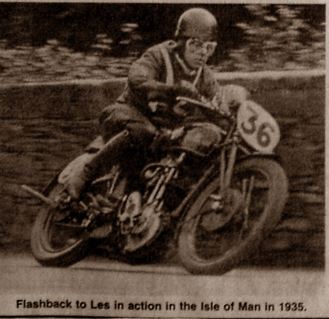
As well as competing in and organising many local motorcycle competitions through his connections with the Swindon based North Wilts Motorcycle & light car Club, Les also found time to compete in the Isle of Man Grand Prix, the amateur races held on the T.T. circuit.

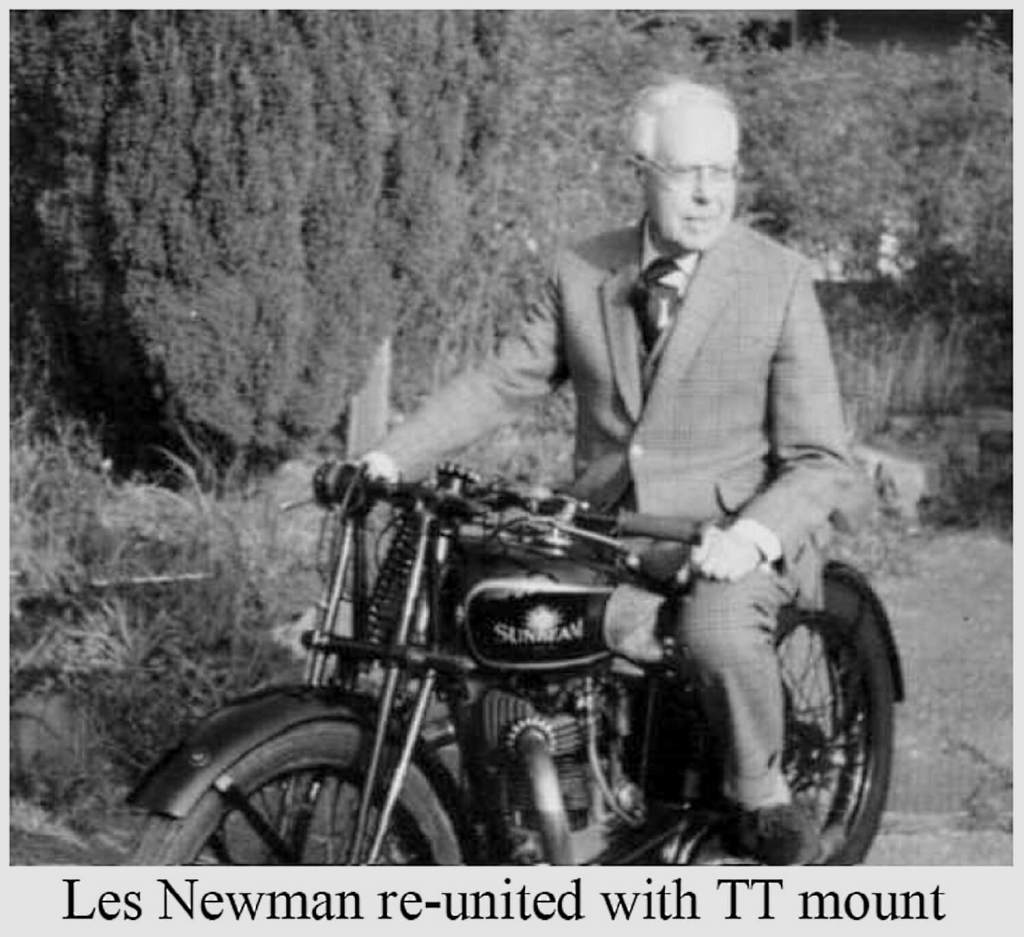
Although he had considered retiring from motorcycle competition in 1933, having never competed in road racing events, the call of the famed Manx race was too much for Leslie, so he scraped together the £35 needed to purchase a four year old T.T. Sunbeam motorcycle and had it race prepared by the factory for an additional £10.

In order to prepare for the gruelling race he devised a 21 mile training circuit similar in shape to the TT track. Taking in many of the villages on the Downs, Leslie would set out at dawn from Swindon, and be back for breakfast followed by a 2 mile walk to start work at 8am.

Leslie competed in four Grand Prix races between 1934 and 1937. His most successful performance was in the 1934 Senior race. Despite crashing at one point, he still managed to finish a highly creditable 12th place out of 57 starters, averaging almost 70 mph over 6 laps of the 37 ¾ mile circuit. Quite a feat considering some of his fellow competitors were either professional racers, or would eventually turn professional.

It’s also interesting to note that, unlike today, where the whole circuit is on tarmac roads, back in the 1930’s it was often narrow, had loose surfaces in parts and had many dangerous blind corners.

In recent years, his Isle of Man efforts have been remembered by the Marston Sunbeam Club by holding an annual ‘Les Newman memorial run’. They follow the route across the Downs that Leslie used for his practice runs.

Post war Leslie was involved in the early speedway meetings at the Abbey Stadium as Starting Line Marshal, and his business, the Borough Press (Eastcott Hill) printed the meeting programmes. He also continued to organise vintage bike runs and rallies for many years.

Leslie died at the Princess Margaret Hospital on October 13, 1989, aged 81. His ashes were later placed in this large family grave with his parents, sister, his wife Doris and their son John Charles Newman who died in 2005.

Les pictured in his heyday and reunited with his motorcycle in later life.

Some photos taken at our guided cemetery walk yesterday.