Down Your Way – Princes Street

photograph published courtesy to Local Studies, Swindon Central Library.

Building on Princes Street dated from about 1876. In Roadways published in 1979, Peter Sheldon and Richard Tomkins state that the name commemorates Prince Albert Victor, Duke of Clarence, son of Queen Victoria and Prince Albert.

Demolition on the Victorian houses took place in the 1960s. Photograph taken during the 1960/70s redevelopment shows the Courts and in the distance the Police Station, since demolished as well.

Read about some of the residents below:

All photographs published courtesy of Local Studies, Swindon Central Library.

Stephen and Augusta Nicholas

Dabchick Thomas Sawyer

Albert and Elizabeth Beak – safe in the arms of Jesus

Season of mists Pt III

Where are the songs of Spring? Ay, where are they?
Think not of them, thou hast thy music too –
While barred clouds bloom the soft-dying day,
And touch the stubble-plains with rosy hue;
Then in a wailful choir the small gnats mourn
Among the river sallows, borne aloft
Or sinking as the light wind lives or dies;

To Autumn by John Keats

Join me on another virtual cemetery walk from the comfort of your home.

There has been heavy rainfall over night and underfoot is very damp and slippy.  But I have come prepared as today I am taking you to a crowded corner of the cemetery where there are some magnificent monuments with some classic funeral iconography. 

The IHS on this cross is the Greek representation of Jesus Christ’s name.  The garland of flowers around the cross represents victory in death. This is the last resting place of Edward Henry Sammes.  It’s interesting that his family should make a point of adding ‘of Swindon’ to the inscription because Edward was not originally from Swindon but was born in Lambeth in January 1842, the son of William and Sarah Sammes.

The first reference to Edward in Swindon is in the 1871 census when he is 29 years old and living a 1 Belle Vue Road where he describes himself as a grocer.  That same year he married Sarah Anne Spackman from Wootton Bassett. The couple had two children William and Millicent who are both buried here as well.

At the time of the 1881 census Edward described himself as a retired grocer.  By 1889 he was a member of the Old Swindon Local Board, so well placed to know plans for development in the town.  The family were then living at Wycliffe House in Devizes Road.

In 1892 Edward submitted a planning application to build eight houses on the corner of Kent Road and Maidstone Road. The land had orginally come on the market in the 1870s but development was slow to take off. However, by the 1890s the area was pretty much one huge building site. 

A map of Edward’s project shows an empty site next door on the corner of Kent Road and Ashford Road with another empty site opposite.  The building specifications for Edward’s houses describe three bedrooms, a parlor, sitting room, kitchen, conservatory, scullery, WC, coals and pantry. At the other end of the road rival builder William Chambers had a yard opposite his own development at Ashford Terrace.  

Edward died in 1897 aged 55. He left £5,814 18s 6d to his widow Sarah and son William, worth today somewhere in the region of £2.7 million.

I’m not sure if his son William ever worked or whether he spent his whole life living off his inheritance.  In the 1911 census the family are living at 31 Devizes Road where William, then aged 35, and his sister Millicent 27 are both living on private means.

We have been fortunate with the weather today. And doesn’t the cemetery look beautiful in its Autumn finery. But then it always looks beautiful to me. I look forward to keeping your company tomorrow.

Season of mists in Radnor Street Cemetery

Season of mists and mellow fruitfulness,
Close bosom-friend of the maturing sun;
Conspiring with him how to load and bless
With fruit the vines that round the thatch-eves run;

To Autumn by John Keats

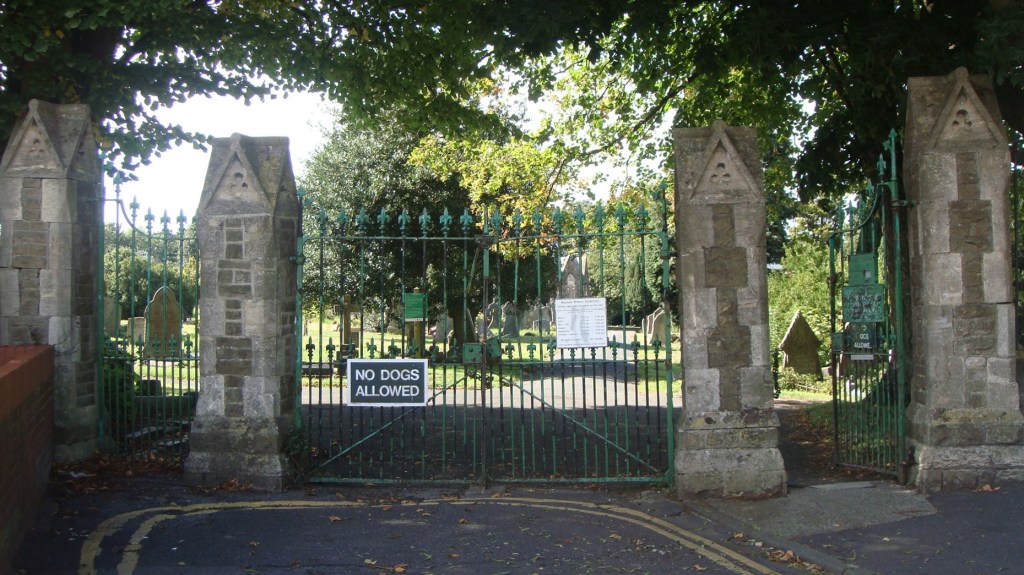
It is the season of mists and mellow fruitfulness and time for a virtual walk among the memorials at Radnor Street Cemetery. I shall don my raincoat and carry an umbrella as the weather forecast is not good, but you can put on the kettle, make a cup of tea and join me from the comfort of your electronic device. Meet me at the Kent Road gate.

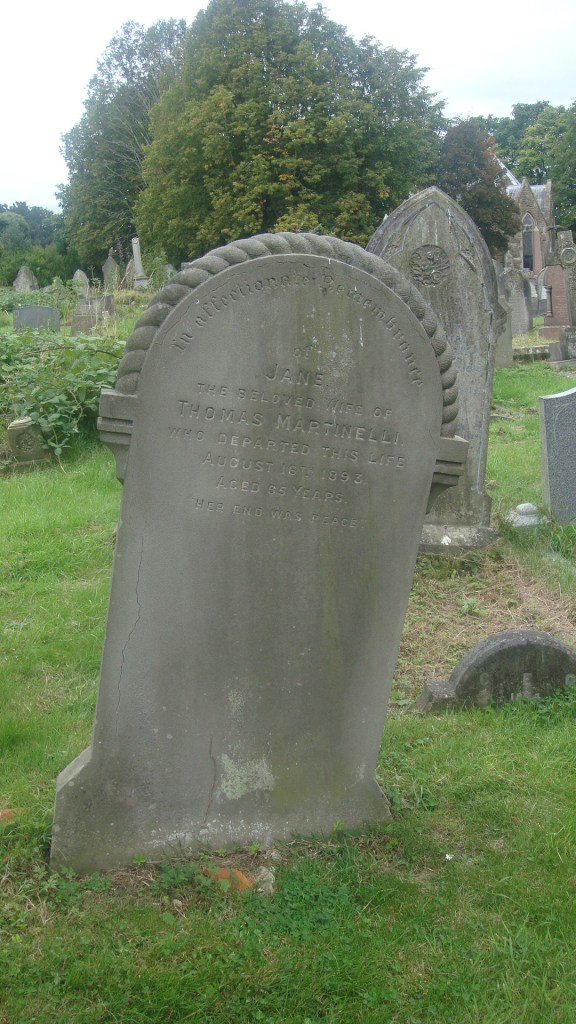
We begin with an incomer to Swindon and a gravestone in a precarious condition. As you can see there is a crack beginning to creep around the edge. Invariably, when this happens the whole surface of the stone shears off when all record of that person is lost. Sadly, there are a number that have so suffered when you look around the cemetery.

This is the last resting place of Jane Martinelli who died in 1893 aged 65. From the brief details on the gravestone I wondered if Jane and Thomas might be Italian however, further research has revealed that Jane was born in Worcester, and this is about all that can be discovered about her. The Martinelli story, on the other hand, is one of fluctuating fortunes. 

In the 1891 census Jane is living with husband Thomas at 13 John Street, Swindon. Thomas worked as a Railway Coach Builder and states his place of birth as St. Pancras, London. He was baptised at Trinity Church on December 26, 1831, the son of Louis Martinelli, also a coach maker.

Thomas was descended from an Italian family famous for making barometers and thermometers and was the grandson of Aloysious Louis Martinelli born in Como, Italy sometime between 1761-1771.  By 1799 he was living in London where he married Abigail Marshall at St. Anne’s Church, Soho. He died in the Lambeth Workhouse in 1845 aged 84.

Returning to Swindon and Jane’s story.  The Martinelli’s didn’t have any surviving children and  tracking them through the Victorian census returns reveal they lived in Manchester and Birmingham before arriving in Swindon.

Thomas married again in 1894, the year after Jane’s death. When he died in 1905 he was buried here with Jane. Regrettably, his name was not added to the headstone.

Well, the predicted downpour has ensued and I feel a chill in my bones. Time to be heading home, I think. Join me again tomorrow. Same time, same place?

No place like home

At last there is some good news about the future of the derelict property on Victoria Road as published in yesterday’s Swindon Advertiser.

Unfortunately, a misinterpretation of my article No place like home has led to an erroneous link between the property and the suffragette leader Emmeline Pankhurst. This is not the case. There is no connection between the militant suffragette leader of the Women’s Social & Political Union and Oxford House, 57 Victoria Road.

But, you may like to read the story of this house and the remarkable Clarke sisters who lived there at the beginning of the 20th century.

Half way up Victoria Road, behind the bus stop called The Brow, stands an empty and derelict property and so it has been for many years. Last year, or maybe it was longer ago, the builders arrived and I was hopeful the property, called Oxford House, might be about to begin a new life. The roof was stripped and new dormer windows inserted. Then the builders left, the new windows were boarded up and the pigeons moved back in. And so it stands, dilapidated, unloved.

dsc05329-copy-2

At the time of the 1881 census the Clarke family lived at 17 Wellington Street.  William worked as an Iron Turner in the GWR Works, but he was an ambitious, intelligent and determined young man.

Ten years later William had moved his family up the social ladder and up the hill to a house in Victoria Road where he worked as a solicitor’s clerk.

When William died on December 16, 1898, the obituary in the Advertiser recalled how for many years he had been employed as a mechanic in the GWR Works. ‘But eventually [he] resigned his post to act as an accountant and debt collector.  In the latter capacity he has worked up undoubtedly the largest business of the kind in the county, and has been of great assistance to the business men of the town,” the report continued.

Oxford House dates from around the end of the 19th century when development at the northern end of Victoria Street began.  Known first as New Road and then later as Victoria Street North the road was eventually renamed Victoria Road in 1903.

dsc04980-copy-2

In 1903 Emmeline Pankhurst established the Women’s Social and Political Union at her home in Nelson Street, Manchester and at Oxford House, 57 Victoria Road, Swindon the three Clarke sisters, Rosa, Mabel and Florence, established their own financial business, as accountants and debt collectors.

The Institute of Chartered Accountants in England and Wales set up in 1880, discussed admitting females in 1895.  Sadly, Rosa died in 1904 and it would be another fifteen years before the first woman became a member in 1919.

The two remaining sisters kept Rosa’s initial letter R in the company name. While the campaigning suffragettes boycotted the 1911 census, refusing to be counted without representation, Florence and Mabel Clarke filled in their census form and are recorded still in business at 57 Victoria Road.

In 1918 Mabel died, leaving an estate of £2,609 4s to her surviving business partner and sister Florence.  Interestingly, when Rosa and Mabel died neither sister received the press recognition that their father had.

Florence carried on the business following Mabel’s death in 1918 but by 1920 the North Wilts Trade Directory records that H.T. Kirby, registrar of births and deaths, lived at 57 Victoria Road.

Mabel is buried in plot E8015 with her father William and mother Mary Anne Tilley Clarke.

clarke-family-from-oxford-house

During the 1980s architect Geoffrey Drew worked out of offices in Oxford House. Brian Carter sent me a photograph taken then and a few words about his father-in -law.

‘My reason for photographing it in 1983 was that the first floor was then the offices of Architect Drew. This was the business of my late father-in-law, Geoffrey Drew (and his secretary – my mother-in-law – Elisabeth Drew).

Geoff was born in Southampton in 1928, was evacuated to Corfe Castle during World War II, and started his working life in Ipswich. Later, he went into partnership in a business in Bristol. This brought him to Swindon for the first time in the 1960s (his first job in the town was working on the original BHS shop in Swindon town centre).

He set up a satellite office in Swindon and liked the place so much that he spent the rest of his life in Bishopstone, and married my future mother-in-law in 1972.

He set up in business on his own in 1981 – briefly in Newport Street, before moving to 57 Victoria Road. In about 1999, they vacated those premises and worked from home in Bishopstone.

Sadly, Geoff died in 2006, aged 77.’

57-victoria-road

Job Richardson – House and Estate Agent

Image of Rodbourne Road published courtesy of Local Studies, Swindon Central Library.

It’s not very often I get the opportunity to visit a house owned by the same family for 100 years (unless they are an aristocratic family) but recently I did. One hundred years of children running up and down the narrow stairs, one hundred years of washing on the line. There was even a saucepan dating back to those days – how many meals had been dished out from that pan and eaten at the kitchen table where I looked at family photographs and letters?

At the end of the 1860s Even Swindon was still mostly farmland but with the Great Western Railway Works on the doorstep it was growing fast. Development began in the 1870s with the sale of Northaines Farm, Edwards Farm and part of Even Swindon Farm and an early speculator was Job Richardson.

Job Richardson was born in 1842 in Somerset, the son of coal miner Elijah Richardson and his wife Eleanor. By 1861 19-year-old Job was also working in the Somerset coal mines.

In 1866 Job married Henrietta Milsom in Radstock.  Sadly, Henrietta died the following year, during or soon after the birth of her daughter Henrietta Milsom Richardson. She is buried in the churchyard at Radstock, most probably with the baby who died. By 1871 Job had moved to Bath, lodging in St James Parade, where he worked as a mason.

In 1872 Job married Sarah Rebecca Tanner at the parish of Widcombe, Somerset and by 1877 they had arrived in Swindon where Job bought land in Even Swindon. In 1881 Job was living at 33 Henry Street (quickly renamed Hawkins Street to avoid confusion with a street in the town centre) and working as a House & Estate Agent.

1884 notice published courtesy of Rodbourne Community History Group.

Job and Rebecca later moved to 133 Clifton Street but continued to rent out their properties in Rodbourne. Job died in 1903 and is buried in grave plot D163 with his father-in-law Henry Tanner who died earlier that same year. Rebecca sold her stake in the Rodbourne properties in 1924 and was buried with her husband and her father on January 4, 1928.

John Seward – retired butcher

Butcher John Seward was born in Dunsford, Devon in 1835. In 1861 he was living in London when he married Mary Jane Connett at St Dunstan’s Church in the West, Fleet Street.

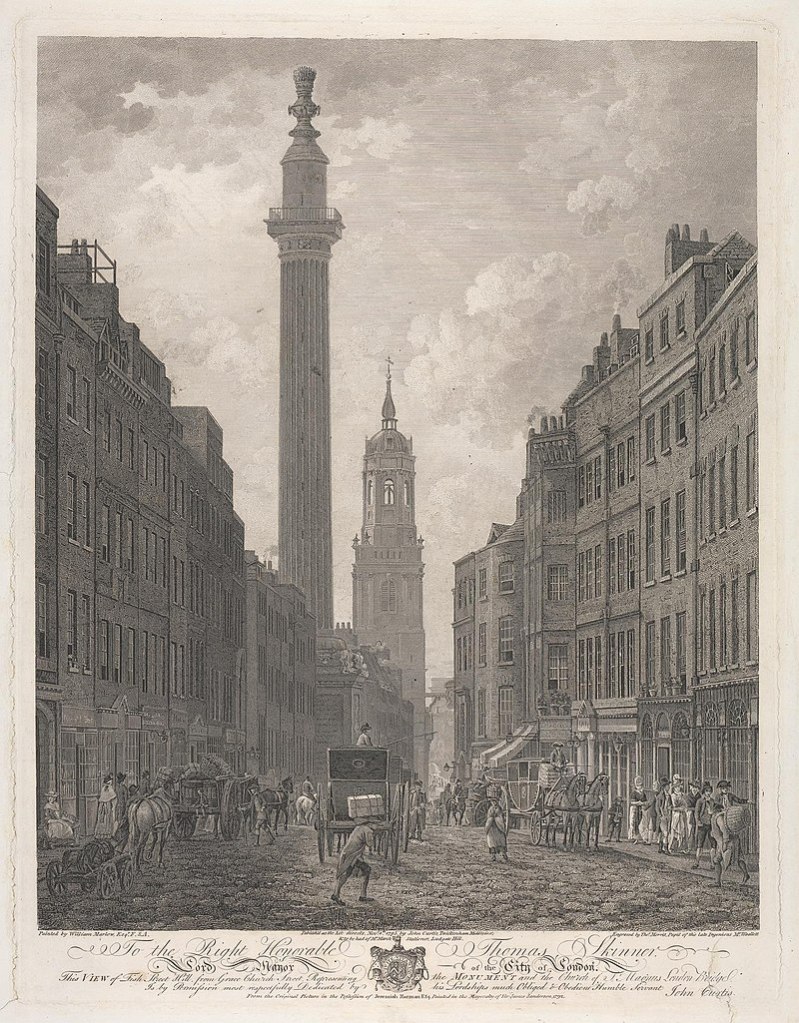
The newly weds set up home in a fishy part of London with butcher John Connett, no doubt a relative of Mary Jane. They all lived in Fish Street Hill in the parish of St Margaret New Fish Street, which runs at the back of the Monument to the Great Fire of London.

In subsequent years they lived in Haggerston Road, Hackney and Paignton Road, Tottenham. Then, after more than 30 years living and working in London, John and Mary retired to Swindon and a property in Ashford Road that they named Devonshire House.

John died in 1903 and was buried on July 25 in grave plot E8606. He was later joined by his son-in-law John P. Jackson who died in 1905 and his wife Mary Jane Seward who died in 1906.

The Gwyther family – but from where?

After my walk around St. Mark’s churchyard recently I began looking for family connections between there and Radnor Street Cemetery. And If you’ve ever pursued a line of family history research beyond the bounds of a possible resolution you’ll probably empathise with me!

The closure of the churchyard at St Mark’s in 1881 was not well received by Rev Ponsonby. (You can read his letter to his parishioners published in the parish newsletter here.) And how distressing it must have been for God fearing families to be buried separately.

Having come upon this stylish headstone to Richard Gwyther who had died aged 14 in 1875 I wondered what had happened to the rest of his family.

Now a name like Gwyther piqued my interest too. In the 1860s the GWR opened a Rolling Mill at the Swindon site, which saw a great many Welsh iron workers move here. Was the Gwyther family part of this first Welsh migration? Well actually no it wasn’t.

Research revealed that the boy’s father, also named Richard, was born on April 22, 1818 not in Wales but in Bristol. Richard was a boiler maker working in the iron and steel ship building industry. He married Caroline Cooper at the church of St Mary le Port in Bristol on May 14, 1843 and for more than 25 years the family continued to live in Bristol.

I eventually found the couple in Swindon on the 1871 census when they were living in Westcott Place, four years before the death of their son Richard.

Richard and Caroline remained living at 90 Westcott Place where Richard (senior) died in 1884. He was buried in grave plot A161 where another son James later joined him. Given the stylish headstone in St. Mark’s churchyard I was surprised to discover Richard and James buried in an unmarked public grave.

In 1891 Caroline, then aged 70, was living with her married daughter at an address in Wootton Bassett in an area at the back of the church near the Rope Walk. She died in 1897 and was buried in grave plot 285 in Royal Wootton Bassett Cemetery.

I did eventually find the Welsh connection – I knew there had to be one! Richard (senior) was the son of Stephen Gwyther, a clock and watchmaker, and his wife Sarah. This couple had married at St. Paul’s, Portland Square, Bristol in 1801, but Stephen was born in 1781 in Jeffreyston/Jeffreston, a village in Pembrokeshire close to Tenby, a popular TRIP destination for Swindonians in the 19th century – but don’t get me started on that line of research!

Plaum’s Pit

A family of Belgian immigrants have left their name to a beauty spot in Rodbourne Cheney, possibly one of Swindon’s best kept secrets.

Plaum family history facts can be gleaned from notes on the 1911 census made by George Jacques Plaum. At that time he was newly married and living with his wife Catherine and his younger brother Robert Maximilian (who he describes as ‘feeble minded since birth’) at 489 Ferndale Road. He also adds that his father was German and his mother English and that the family had been resident in England since 1888.

Matthias and Clara Plaum had lived in Antwerp, Belgium from at least 1882 to 1887 during which time their children Georgius, Ernestus, Joannes, Robert and Frederick were all born. As George states in 1911, they have been living in England since 1888, so it should be possible to find them on the 1891 census.

On August 25, 1893 Matthias was admitted to the Wiltshire County Lunatic Asylum in Devizes where he sadly died on October 13. Now it was up to Clara to support three sons, one of whom could not work due to a disability. In 1901 she was living at 21 Vilett Street where she worked as a dressmaker. George 19 is employed in the GWR. Younger brother Frederick 13 claims he is a Railway Fitter and Wheel Turner. It is more likely he was an apprentice or perhaps a labourer. Robert is 15 years old. Life was obviously very difficult for them. The Radnor Street Cemetery registers state that Clara died in 1908 at 29 Villett Street aged 48 years. She was buried on December 10 in a public grave with two other unrelated persons.

But by dint of hard work and an entrepreneurial talent, George Plaum and his family prospered.

He purchased the Rodbourne Bathing and Boating Pool in the 1920s with financial help from a Bristol business man. The lake, like the one in Queens Park, began life as a clay pit feeding Victorian Swindon’s rapacious brick making industry. Quarrying came to an end when diggers hit underground springs and forced the closure of the clay pit.

By the 1920s the lake offered a number of leisure activities including swimming, boating and fishing. An additional income was derived from entrance and camping fees and refreshments. Grass, grazing and allotment fees brought in £5 7s 6d in 1925.

Today Plaum’s Pit is home to Plaum’s Pit Angling Club who can be contacted via their website.

Plaum’s Pit swimming pontoon in the 1930s

Image of Plaum’s Pit published courtesy of Brian Robert Marshall

Down Your Way – Old Town

The ‘fur coated women of Old Town’ received a bad press when the Swindon Advertiser interviewed local bus drivers and conductresses during the Second World War.

“They expect to be picked up and put down outside their own homes, regardless of the approved stopping places, take twice as long as the average passenger to leave the bus because they are too busily engaged in a conversation which almost monopolises the vehicle, and invariably need change from a half crown or a note,” reported the Advertiser.*

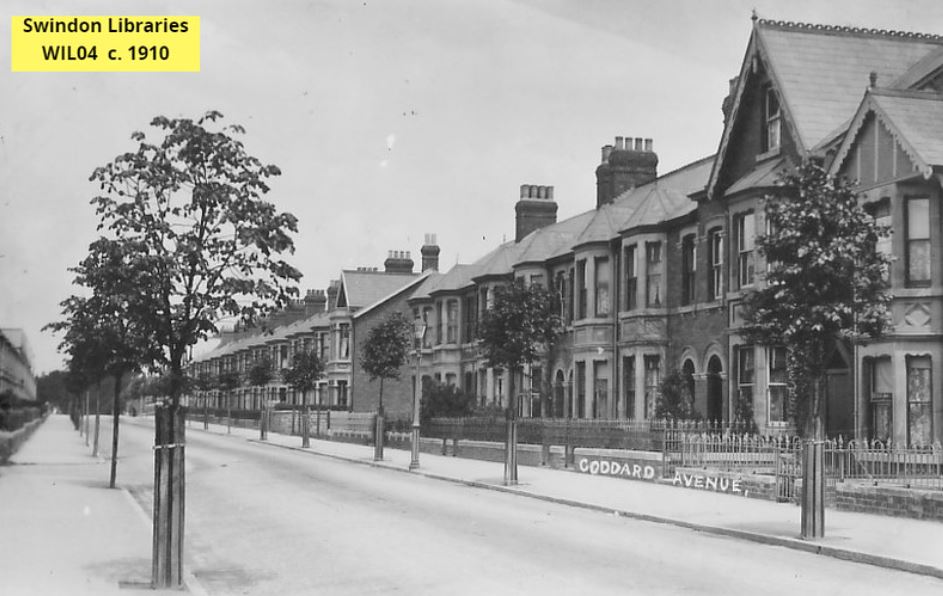
Read about some of the former residents of Goddard Avenue who were hopefully less annoying!

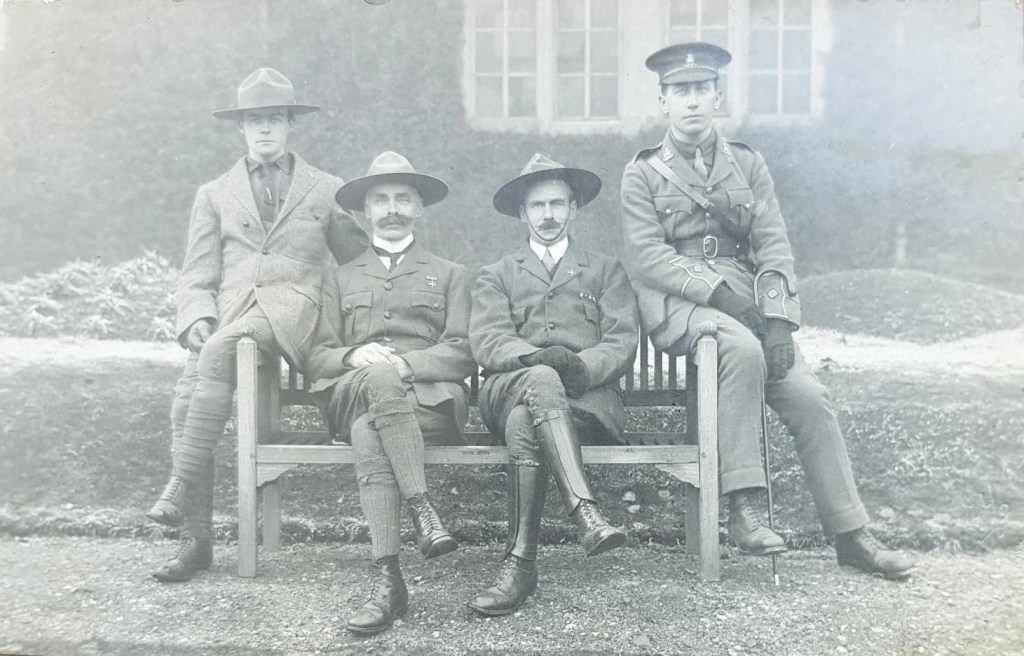
William Rowland Bird – chief chemist at GWR Works and Scout Leader

Phyllis Mary Peters – Railway Clerk

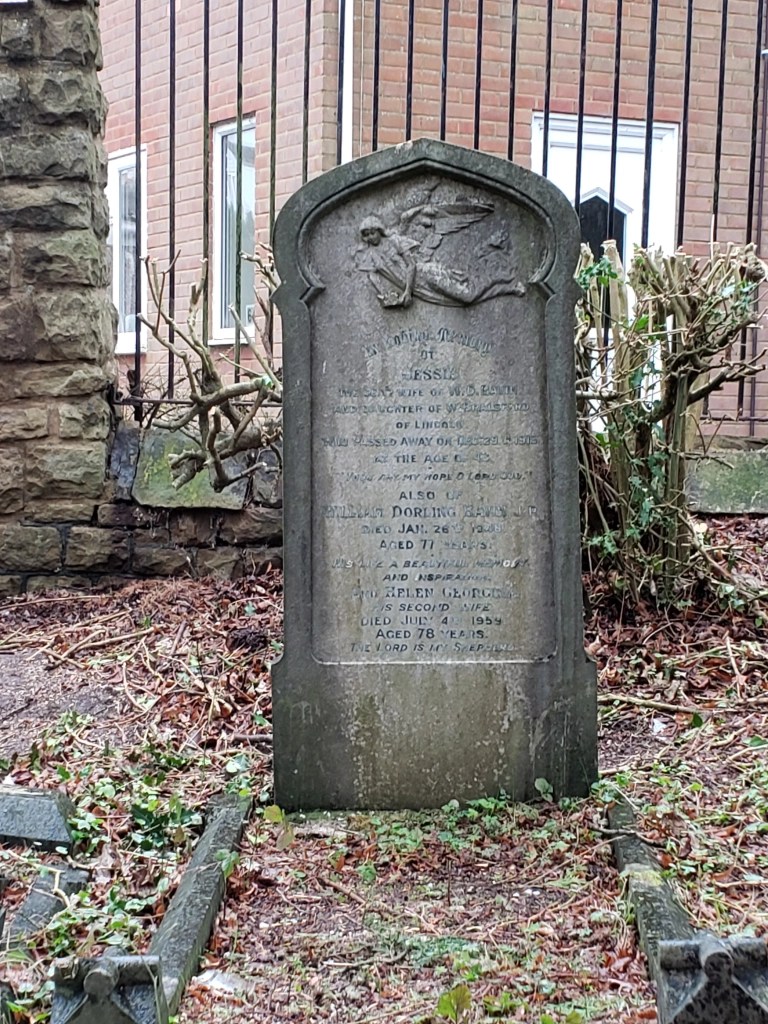
William Dorling Bavin – Swindon’s War Record

*Swindon at War was a series of articles published in 2011 sourced from the Swindon Advertiser 1939-1941 and compiled by myself.

Down Your Way – Clifton Street

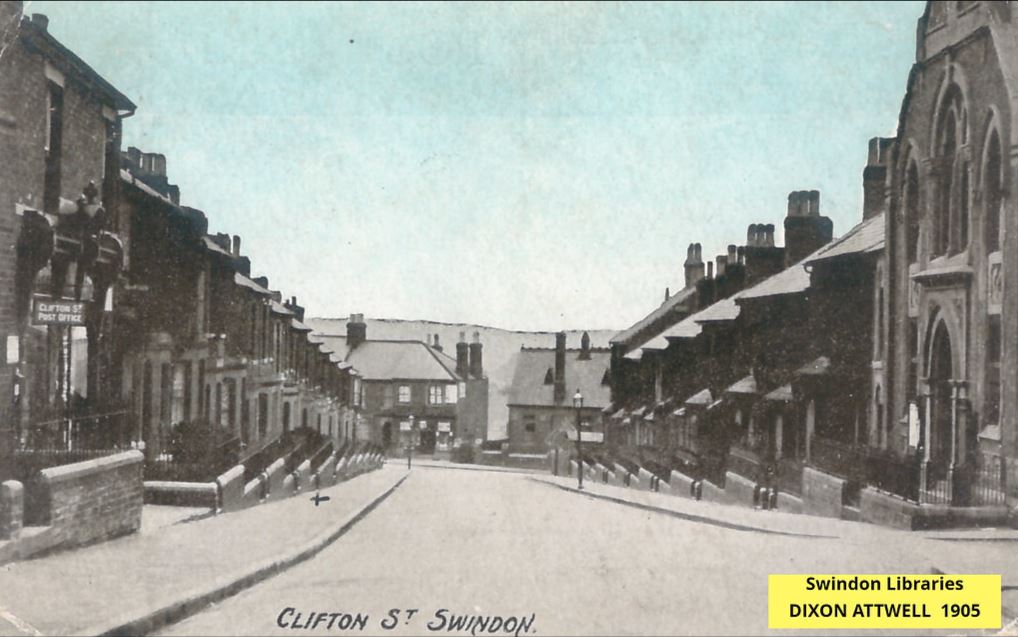
Building began in Clifton Street in about 1879. There were a lot of builders involved, Job Day, James Hinton, Richard Leighfield, which is why the houses all look a little different. There is the Clifton Hotel and 180 houses in Clifton Street; some detached, semi detached, some terraced. Some of them have extensions and loft conversions or porches and some have a name incised in the stonework above the front door, a remnant of a bygone era. There’s a blue house and another with a pink front door and a pink gate and artificial flowers and a heart in the window. The Clifton Stores, still there, stood opposite the the Primitive Methodist Chapel, long gone. There were probably other shops along this long street that stretches from the top of Kingshill to Radnor Street. And tucked away behind is the cemetery.

In the 19th century Clifton Street was home to a lot of railwaymen and their families, now all gone as well.

You might like to read about some of the former residents of Clifton Street who now reside in the cemetery.

Miss Beatrice Wall

Henry Smith – undertaker and monumental mason

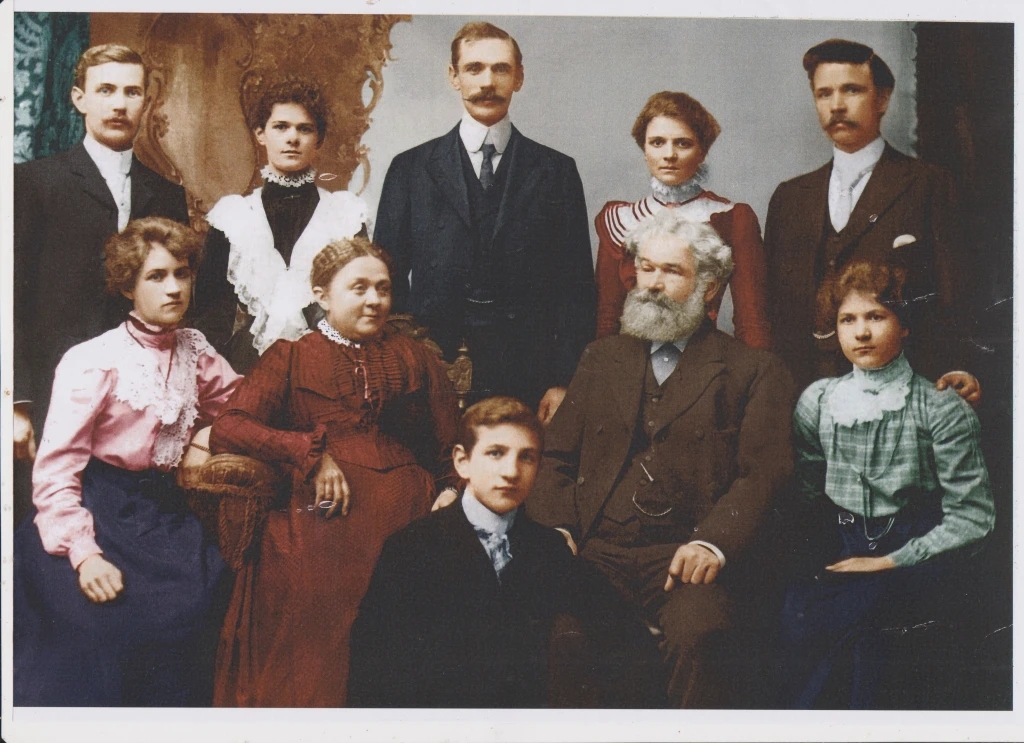
The Griffin family – another Swindon Story

Fred Tegg – a well known Swindonian