Emma Louisa Newberry

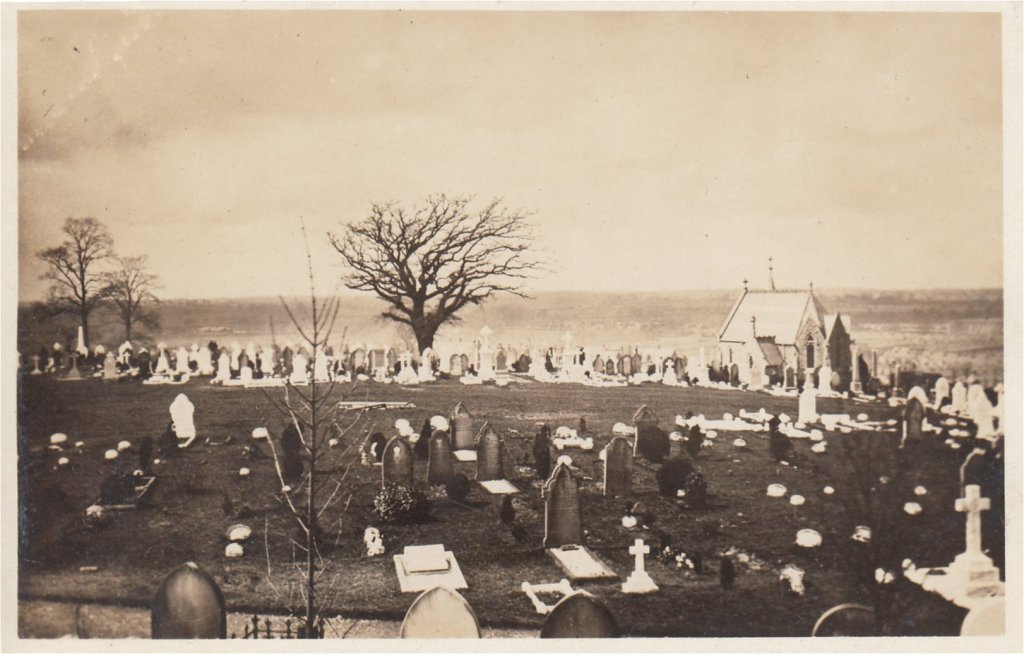
Image of Drove Road taken c1926 and published courtesy of Local Studies, Swindon Central Library.

Emma Louisa Newberry died in 1964 aged 96 years. Emma was born in Guernsey in 1867. She had lived through almost a century of enormous social change including two world wars, the second of which saw the German occupation of her former island home.

Unfortunately, I can find out very little about her family background, not even her maiden name, but I will continue to research.

By 1893 she had married Ernest Walter Newberry, a gas fitter, quite probably in Guernsey where he was also born and raised. Emma’s Swindon story begins in 1894 when her daughter Gertrude May was baptised at St. Mark’s Church on May 27. Emma and Ernest, who was employed in the GWR Works, then lived at 28 George Street. In 1901 they were living at 54 Dean Street where their second daughter Clarice Louise was born. In 1939 Ernest and Emma were living at 86 Drove Road, their last home together.

Emma outlived not only her husband Ernest but both her two daughters as well. She died in the Isolation Hospital, Swindon on May 17, 1964.

Emma was buried on May 22, 1964 in grave plot B2669 which she shares with her husband Ernest who died in 1940, her daughter Clarice Hallard who died in 1958 and her son-in-law Herbert Hallard who died in 1948.

Her elder daughter Gertrude May died in 1954 but she is not buried here in Radnor Street Cemetery.

Do you know where Carr Street is?

Do you know where Carr Street is? If someone asked you for directions, would you be able to help them? Today Carr Street runs behind the Waiting Room pub, an access road with parking for several businesses including Da Vinci’s Restaurant.

However, it wasn’t always so. Carr Street was built in around 1878/9 by the United Kingdom Land and Building Society along with Catherine Street and Farnsby Street. In 1881 Carr Street comprised 27 houses and cottages and was built in a most convenient situation.

In 1885 numbers 2-10 came on the market when they were described as four roomed cottages, ‘yielding the sum of £128 14s per annum.’ As today, investors bought property to rent and Carr Street was an attractive proposition. The advertising blurb stated ‘The Houses are only a short distance from the Great Western Railway Works, and therefore let readily.’

In 1888 numbers 11 and 12 Carr Street were also on the market when they were described as follows – ‘Each house contains Passage, Parlor, Kitchen with Cupboards, 3 Bed-Rooms, back kitchen, with fire-place and copper, coal house and, outside, a closet. The Houses have Gardens, and water is laid on.’

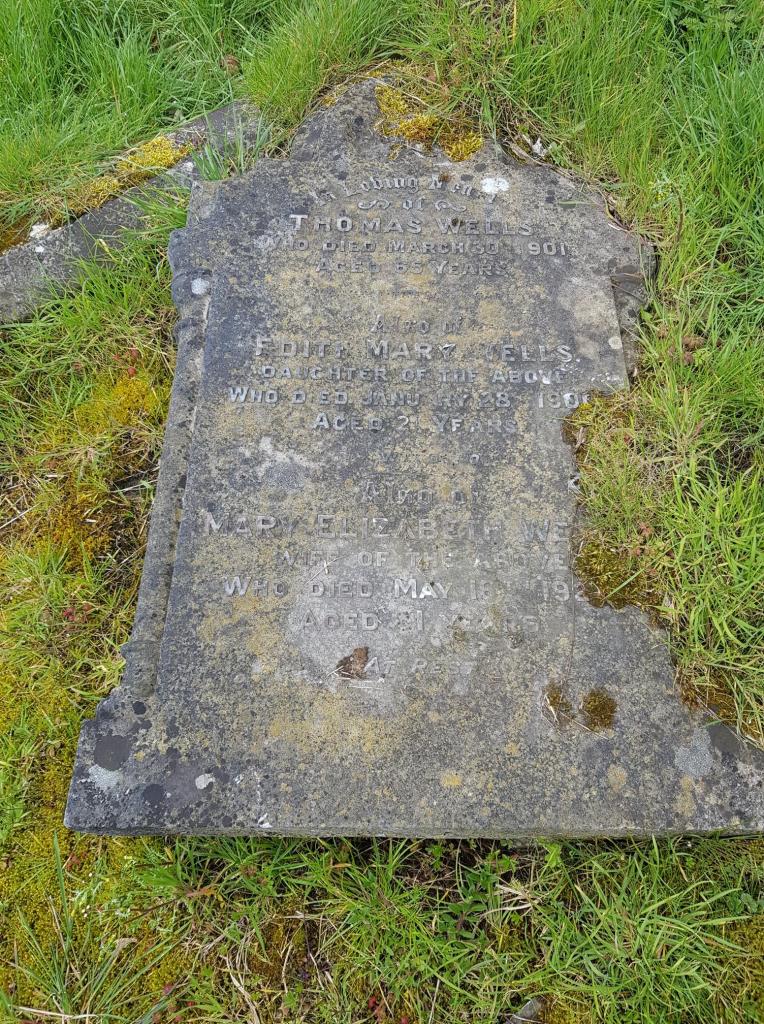
New-build number 13 Carr Street was probably of a similar design when Thomas & Eliza Wells moved there in 1879. Edith Mary was born that same year and Frederick James in 1883. Thomas was employed as a carpenter in the Works and by 1881 his two elder sons had already joined him there – George William 16 worked as a carpenter and 14 year old John as a railway clerk.

The Wells family lived at 13 Carr Street for more than 15 years. By 1900 they had moved to 5 Dean Street where Thomas died in March 1901. He was buried on April 3 in one of three Wells’ family graves, E7644, E7645 and E7646. He was buried with his wife Elizabeth who died in May 1924.

George Restieaux and the French connection

Today it is so easy to begin your family history research. With a couple of clicks of a laptop mouse you can enter a whole world of internet possibilities. Of course, there are pitfalls one of which is mis-transcriptions with websites such as Ancestry and Find My Past littered with them. I came across some examples such as Rasticand and Reastreamy when researching the surname Restieaux.

George Francis Restieaux was just sixteen years old (the newspaper report says 18) when he died in 1881. George was born in Neath, Glamorgan but Restieaux was definitely not a Welsh name.  He was the son of coachbuilder/painter Edward Alban Restieaux and Susannah Matthews. Edward was employed in the GWR Works and in 1881 the family lived at 2 Bristol Street. Edward and Susannah had married in 1854 at St Pancras Church when they both lived in that London parish. By 1861 they were living in Neath, Glamorgan where George was born in 1865. His father Edward states that his own place of birth was Norwich in Norfolk and I wondered how the Restieaux family had ended up there.

With a few clicks of that laptop mouse I was able to find Edward’s parents Joseph Restieaux and Elizabeth Tidman who married in St John de Sepulchre, Norwich in 1804. Back one more generation and I arrived at the French connection; Andre Restieaux born in Bordeaux about 1740 who married Marguerite Magdalaine Mignot on January 6, 1766 at St Anne’s, Soho.

There is, however, only so far you can get with internet research and at some point you have to look at original documents. It would be interesting to discover what Andre’s occupation was and how he and Marguerite ended up in London, but that is a task for someone else out there. But beware of the pitfalls.

The first burial service in accordance with the rites of the Roman Catholic Church in the new cemetery was performed on Saturday last by the Rev Father Eikerling and the members of the St. Cecilia Society, of which deceased was a member. The body of deceased, George Restieaux, aged 18 years, having been removed from the house of his parents to the Roman Catholic Chapel in Regent Street, the service, which throughout was choral, commenced, lasting close upon an hour, when the body was removed to the hearse and conveyed to the cemetery, accompanied by the Rev Father Eikerling and his attendant acolytes, the relatives and friends and members of the choir and society. At the cemetery chapel the service was resumed by the singing of the Requiem aeternam of Cacciolini, at the close of which the officiating priest preached a brief sermon, in course of which he reviewed the life of deceased and his connection with the St. Cecilia Society. The procession having been reformed, the corpse was borne to the grave, the choir singing the “Miserere,” concluding with the Requiem aeternam. At the grave the singing, which was particularly effective, was brought to a close by the singing of the anthem “I know that my Redeemer liveth.”

The former Roman Catholic Chapel painted by local artist George Puckey in 1890

Despite a rather elaborate funeral service, young George was buried in Radnor Street Cemetery in a public grave, plot A353, where he lies alone.

His father Edward died 14 years later in 1895 and his mother Susannah in 1912. Both were buried in separate, public graves. Edward in B2434 and Susannah in B1609. George’s brother John Valentino Restieaux died in 1928 and was buried in grave plot C61, another public grave.

Swindon – more interesting than many towns which are more beautiful

John Betjeman (Poet Laureate 1972-1984) wrote an essay for a book entitled Studies in the History of Swindon published in 1950 to celebrate the fiftieth anniversary of the incorporation of the Borough. Betjeman’s ‘short architectural study of Swindon’ provides some examples of architecture (and yes, we still have some) but he also gives credit to the construction of the familiar red brick terraces, describing Swindon as ‘more interesting than many towns which are more beautiful.’

Much of 19th century Swindon, old and new, was built piecemeal in short terraces by individual builders; houses that are different styles and different sizes. Occasionally a terrace name survives in brick work such as Albert Terrace in Dixon Street.

Betjeman talks about ‘artisan buildings’ for ‘mechanics and handicraftsmen built consciously as such’ ‘well built and weatherproof,’ and he mentions Hawkins Street, Thomas Street, Charles Street and Manton Street in Rodbourne.

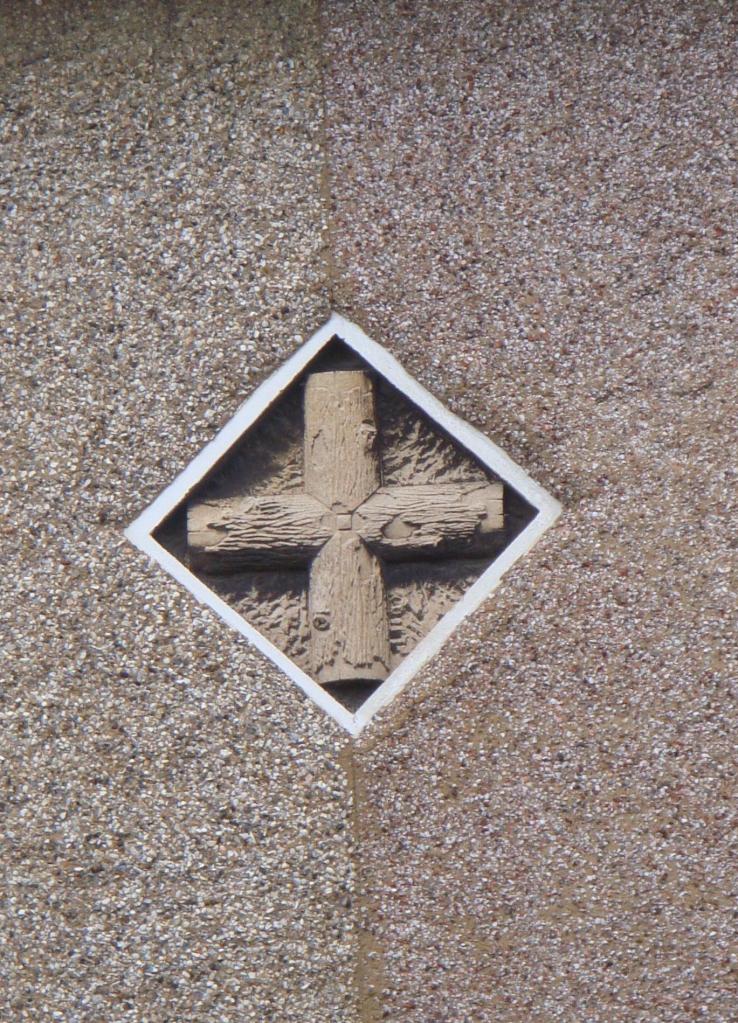
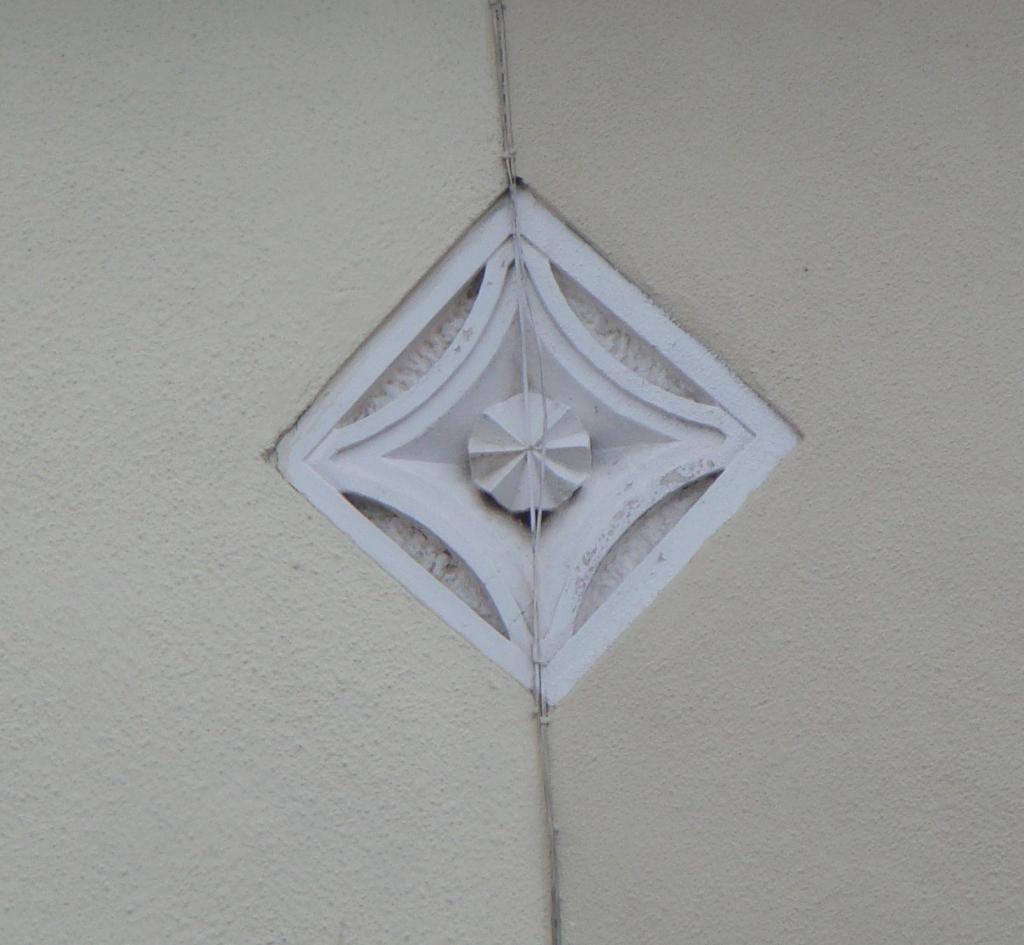
And more than 70 years later there are still interesting features to be found; the trick is to look up! Take a wander down any street in Rodbourne and you will see decorative plaques beneath the eaves. On the terrace between Linslade Street and Jennings Street there is a plaque – Lucknow Terrace 1880 – named to commemorate the Siege of Lucknow in 1857. Perhaps the builder, TP, was a veteran of that war?

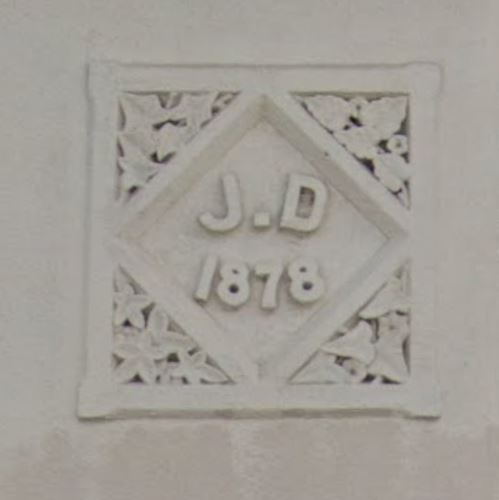
Closer to the cemetery is Albion Street where building dates from 1877. Between house numbers 9 and 10 there is situated a decorative plaque enclosing the initials JD and the date 1878.

Three years later, at the time of the 1881 census, Joseph Deacon, a carpenter and joiner, lived in number 9, (a property he probably built along with number 10) with his wife Eliza and their three young children Sarah Jane 3, Harry 2 and one month old baby William James.

For more than 70 years the Deacon family lived at numbers 9 and/or 10 Albion Street. In 1901 Eliza ran a general shop at number 10 where she later died in 1917 and youngest daughter Julia died at No 9 in 1955.

Joseph died in 1925. He was buried on June 4 and shares grave plot C3415 with his wife Eliza and daughter Julia.

Below – decorative plaques on Rodbourne streets

Albert Terrace, Dixon Street

Mary Jeanes and her granddaughter

What was life like for the ordinary people who lived and died in Swindon at the end of the 19th century? So many were incomers, attracted to the town by the many opportunities presented by the Great Western Railway Works and the affiliated jobs that grew up around it, including the food and vibrant retail industries. Some families put down roots and stayed, others moved on. The Jeanes family did both.

Widowed Mary Jeanes appears to have arrived sometime in the 1870s with her daughter Ellen 21 and her 15 year old son (Frederick) John. The family were originally from North Petherton, Somerset and arrived in Swindon via Bridgewater.

By 1881 they were living at 46 Regent Street where Mary’s son worked as a Master Baker. Frederick married and settled down in Swindon. His sister Ellen married Frederick Barnstaple/Barnstable and left. By 1891 they were farming at Llantarnam, Monthmouthshire.

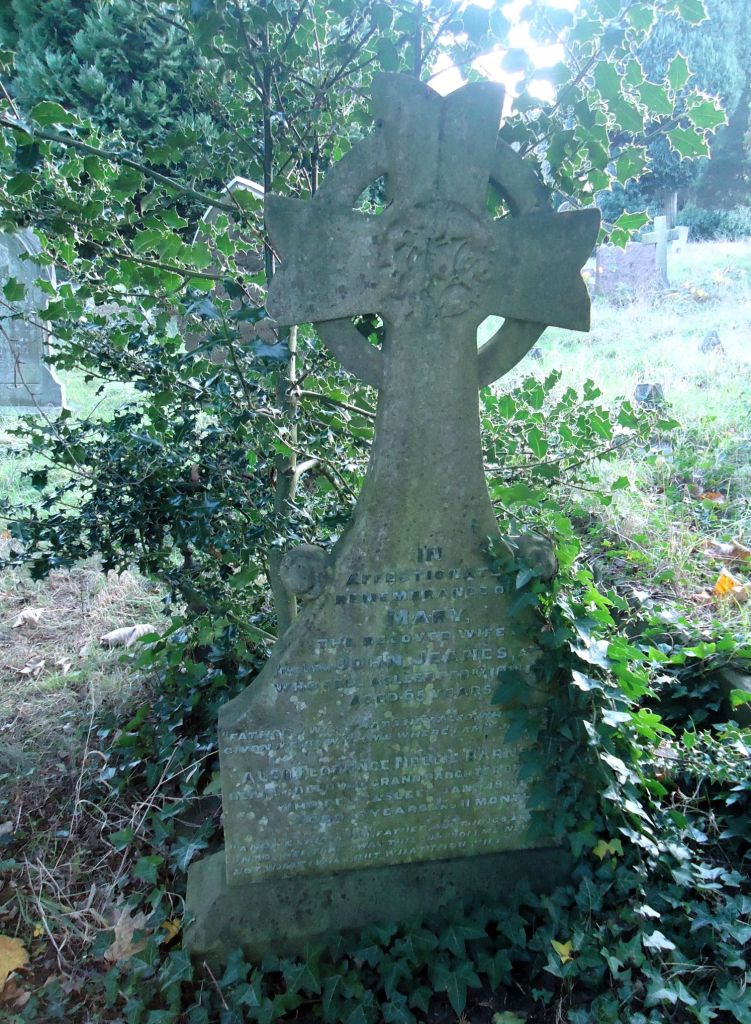
Mary Jeanes died in February 1887 aged 65 and was buried in grave plot A1038. When Ellen and Frederick’s 15 year old daughter Florence Nelly died in 1888 they chose to have her buried with her grandmother Mary in Radnor Street Cemetery.

Nellie and William James Bacon – a Gorse Hill story

In the 1970s and 80s West Swindon was built as a cluster of village centres – it seemed to be a plan particularly favoured by Swindonians. In the 1840s there was the Railway Village followed by development in Even Swindon and then a satellite suburb Gorse Hill built in the late 1890s and 1900s. And it seemed that once people put down roots they seldom moved away. Take, for example, Nellie Bull, daughter of George and Maria Bull.

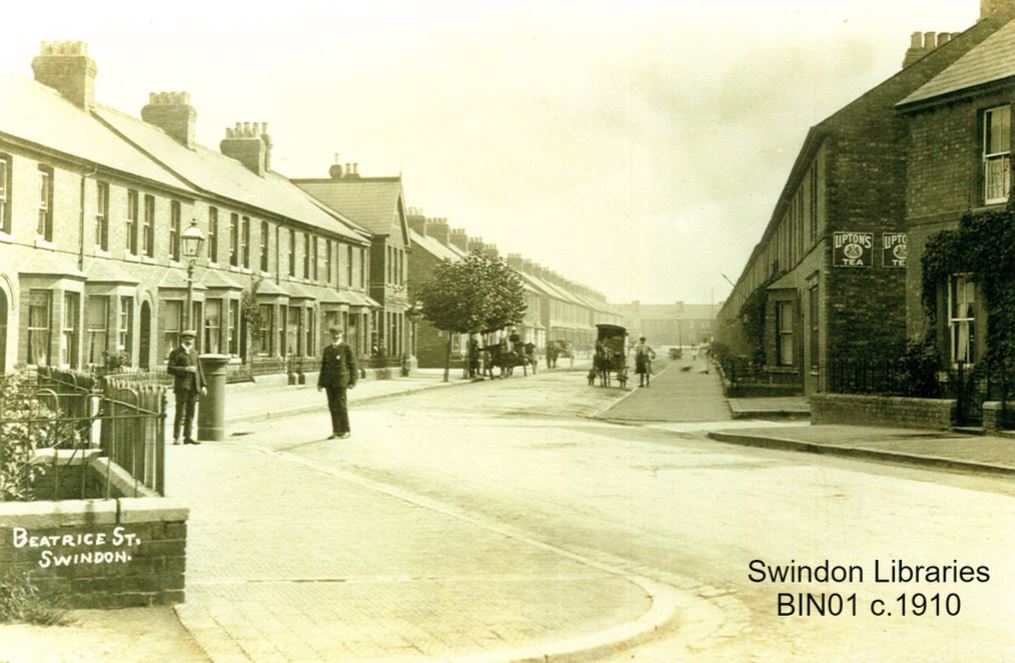
This image of Beatrice Street taken in around 1910 is available to view with a selection of Gorse Hill photos at Local Studies, Swindon Central Library.

Nellie and her brother George grew up in spanking, brand new Gorse Hill in the 1890s. In 1891 they lived at 70 Hinton Street, built in 1890 by entrepreneur James Hinton, Swindon Mayor in 1903/4 who also once owned the land on which the cemetery was built. By 1901 the family had moved to 119 Beatrice Street, another new build, and it was here that William George Bacon came to lodge with them. On Christmas Day that same year he and Nellie were married at St. Mark’s Church.

The young couple continued to live with Nellie’s parents in Beatrice Street where their baby daughter Nellie Gladys was baptised at St. Barnabas’ Church in 1902. They were still living at 119 Beatrice Street when Berty was born two years later, although he was baptised at St. Luke’s Church, Barton Hill, Bristol. By 1909 the family were at 7 Suffolk Street, just around the corner, when George Stanley was baptised at St. John’s the Evangelist. In 1939 William and Nellie were living at 33 Beatrice Street with their daughter Nellie and her husband Percival and Anna (Maria) Bull.

This stylish headstone with discreet art deco features marks Nellie and William’s last resting place, the only time they left Gorse Hill. William James Bacon died on June 18, 1948 at his home, 33 Beatrice Street. Nellie died March 2, 1956 at 33 Beatrice Street.

If you’d like to know more about Swindon’s 1980s West Swindon development – West Swindon – What the eye doesn’t see by Angela Atkinson, Roger Ogle and me is available from Hobnob Press, Bert’s Books, Amazon and other Swindon bookstores.

A Tale of Two Towns

Until the Incorporation of the Borough in 1900, Swindon operated as two, quite separate entities. First there were the two Local Boards of Health (Old and New Swindon), then after the Local Government Act of 1894, the two Urban District Councils (Old and New Swindon). It was part of the reason the cemetery was so long in the consultation stage – neither of the local authorities wanted to pay for it!

One edition of the Swindon Advertiser, published on Saturday, November 23, 1895, included a Cemetery Committee report from the Old Swindon District Council while further down the page was a report from the Joint Cemetery Committee of the New Swindon Urban District Council.

How did local government ever get anything done?

Old Swindon Urban District Council

Cemetery Committee

This Committee in their report stated that during the last quarter 77 burials had taken place as against 72 in the corresponding period of last year. Dr Hoffmann, Her Majesty’s Inspector, had visited the cemetery and expressed his satisfaction at everything he had seen. The drainage at the Cemetery was now finished.

Swindon Advertiser, Saturday, November 23, 1895.

New Swindon Urban District Council

Joint Cemetery Committee

The report of this committee, among other items, contained the information that a sum of £79 15s 4d, was still unexpended of the £600 borrowed for draining the cemetery, the work having been completed. By this drainage scheme, the Surveyor reported that space had been made available for 6,996 more burials than was the case before, and that it was his (the Surveyor’s) intention of re-arranging the grave spaces, which would allow for about 800 more burials. Mr Longland, in moving the adoption of this report, expressed the indebtness of the Council to the surveyor and caretaker for the efficient manner in which the work was carried out at the cemetery.

Swindon Advertiser, Saturday, November 23, 1895.

published courtesy of Local Studies, Swindon Central Library.

The busy Rye family

This attractive headstone drew my attention, partly because of the number of people recorded on it.

It is a scroll which in funeral symbolism can mean several things. It can indicate that the person buried had a religious conviction and a love of learning. When it is unfurling, like this, with the beginning and end rolled up it can mean a life half lived – the past is hidden and the future yet to be revealed. This is more often used on the grave of a young person, but no one buried here is particularly young.

Let me introduce you to Arthur Joseph Rye. The more I researched this family the more I pondered on the life led by Annie Rye, the last person recorded here who died in 1950.

This is the Rye family grave plot – Arthur Joseph Rye, his two wives and his eldest daughter Annie. The Rye family home had always been a bit crowded so their busy grave is no surprise.

We think 21st century family life is complicated …

Like so many Swindon residents, Arthur was an incomer. He was born in April 1856 in Irthlingborough in Northamptonshire but he didn’t come to Swindon because of the railways.

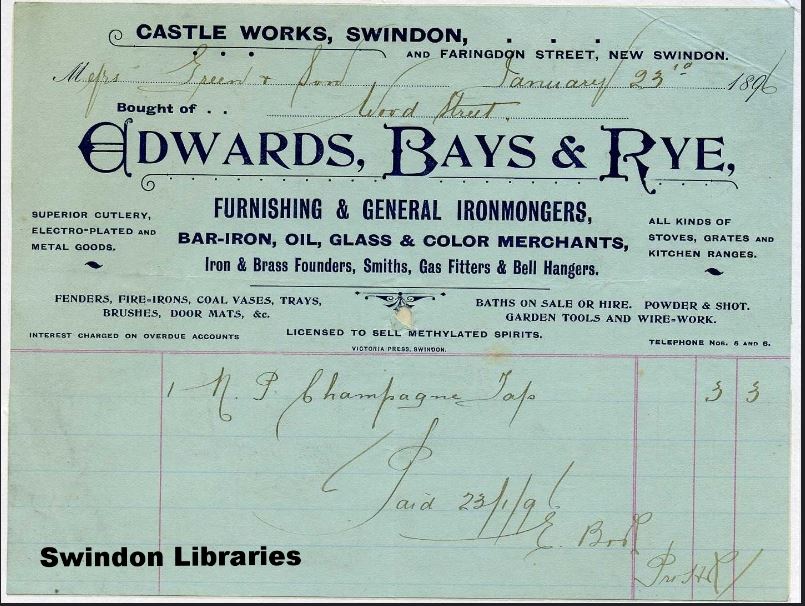
In 1871 Arthur was at a school in Spalding, Lincolnshire run by John C Jones, a Baptist Minister. Ten years later Arthur was in Swindon, newly married to Emily Beckingsale Greenaway and living at 1 Faringdon Road, employed as manager at the Castle Iron Works. In 1885 the Rye family moved to 55 Commercial Road.

In 1892 Arthur was taken into the ironmongery partnership and the firm became Edwards, Bays and Rye, with the Castle Iron Works and shops in Wood Street and Faringdon Road.

In 1901 Arthur and Emily are living at 2 Devonshire Villas, The Sands with their four children, eldest daughter Annie who at 19 is working as a Telegraphist in the Post Office; Joseph 15; Margaret 7 and six year old Frank.

Emily died in the summer of that year but Arthur doesn’t hang around and in the summer of 1902 he married Adelaide Lucy Langfield and the Rye family part 2 begins.

In 1911 we find Arthur and Adelaide at 58 Upper Mall, Hammersmith with Adelaide’s brother Herbert, their mother, sister and two nieces. They are all listed as one large household – there’s no mention if they are just visiting. Arthur and Adelaide have just two of their five children with them, Olive 7 and Arthur E. 7 months (I think the baby’s name might be incorrectly transcribed as they already have a son called Arthur). But where are the rest of the Rye family.

Back home in Swindon 29 year old Annie is the head of a busy household at 100 Bath Road. She continues to work at the Post Office as a Sorting Clerk and Telegraphist. At home she is looking after her sister Margaret 17, who works as a milliner’s apprentice, her brother Frank 16 who is still at school along with her father’s three younger children by his second marriage Arthur 6, Herbert 5 and Kenneth 1. She has a live-in general servant called Clara Holland Mayling, but that’s still a pretty heaving workload.

Arthur Rye died here in Swindon in 1919 and Adelaide in 1922 but I can’t help wondering about Annie. Was she a career woman or did she miss the opportunity to marry and have her own family in order to help look after her father’s one?

Annie spent her last years at 89 Avenue Road. She died on October 24 and left effects valued at £3,347 7s 5d to the administration of her brother Joseph and her solicitor John Wignall Pooley.

A little girl from Brixton

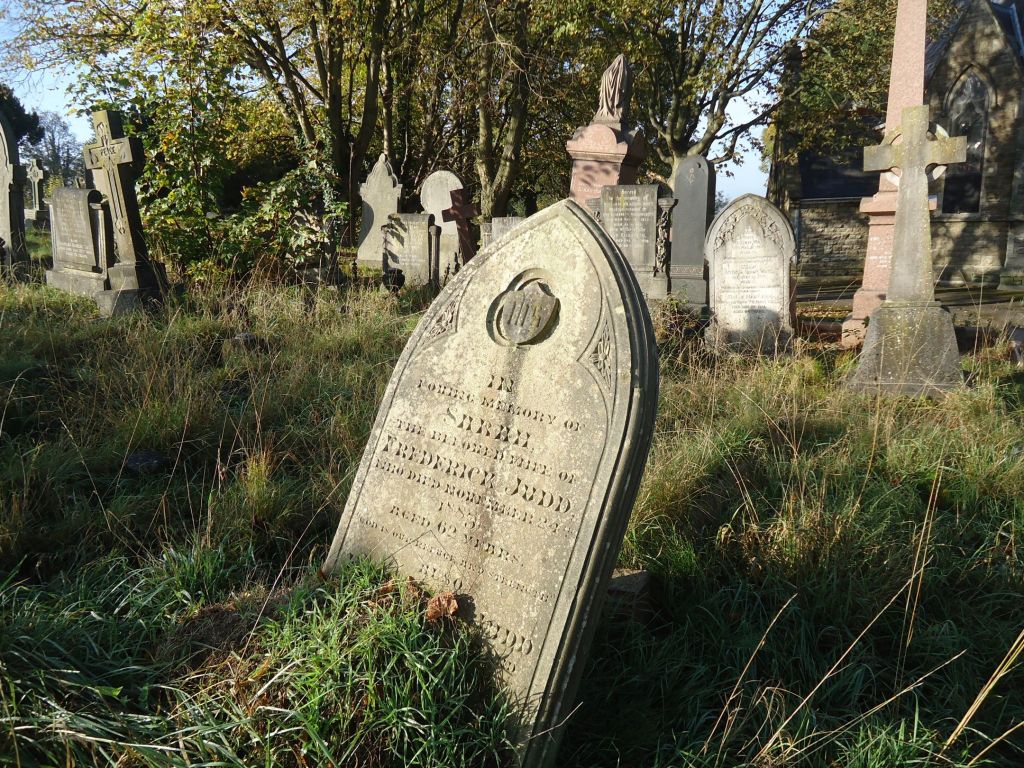
You can spend a whole lot of time on research when a particular fact piques your interest. This most recently happened to me when I was researching Sarah Judd who died at her home, 27 Havelock Street in 1883. For the past 140 years she has been resting in this sunny spot in Radnor Street Cemetery but before that she had lived in a great many other places.

Sarah was born in 1821 in Palling, Norfolk, the daughter of James and Rosetta Hicks. She married Frederick Judd in Chatham, Kent on January 17, 1850 and at the time of the 1851 census Sarah, Frederick and their baby son James were living with Sarah’s parents in Gillingham, Kent.

During the next 10 years the family moved about – a lot – their six children born at various addresses in Kent and Hampshire. By 1861 Frederick was employed as a Police Constable and they were living at No 19, Archbishop Place, a leafy suburb at the top of Brixton Hill, Lambeth. In 1862 their daughter Elizabeth was baptised at St Matthew’s Church, Brixton and in 1866 a second daughter Harriet was also baptised there.

The Tate Library, Brixton, Lambeth.

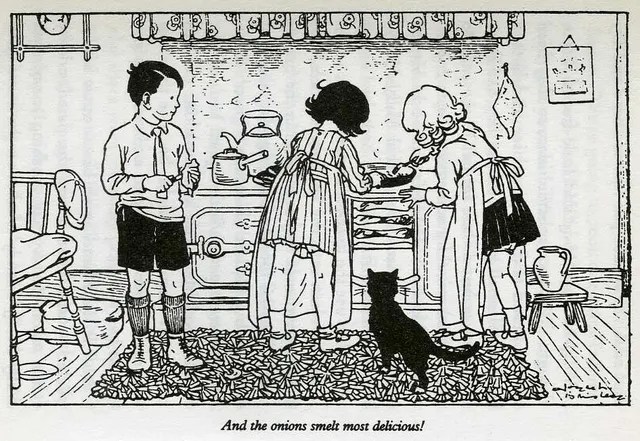
I grew up in Brixton in the 1950s and 60s and I know exactly where St Matthew’s Church is; it’s just a stones throw away from the Tate Public Library where I spent a lot of my childhood. Elizabeth was born some 30 years before the library was built in 1890 and 100 years before I used to borrow books there. One of my favourites was the stories about a little girl called Milly Molly Mandy who had the kind of life I wished I had. I used to carefully colour in the pictures before I returned the books.

Milly Molly Mandy and a picture in need of my careful colouring skills

The Judd family had arrived in Swindon by 1881. Frederick had long since left the police force and was working as a house painter. Still living with Frederick and Sarah were James 30 (born in Kent) Sarah 21 (born in Hampshire) and Elizabeth 18 and Harriet 15 (both born in Brixton).

Basking in the sunshine, the leaning headstone has a large ants nest obscuring the last inscription, probably the name of Sarah’s husband Frederick who died in 1907 at his home, 53 Crombey Street.

And buried in this plot in 1944 was their daughter Elizabeth, the little girl born in Brixton more than 161 years ago. I shall call round and say hello next time I’m passing.

Redcross Street Cemetery?

In the beginning the cemetery was simply called Swindon Cemetery, but it could so very easily have become known as Redcross Street Cemetery.
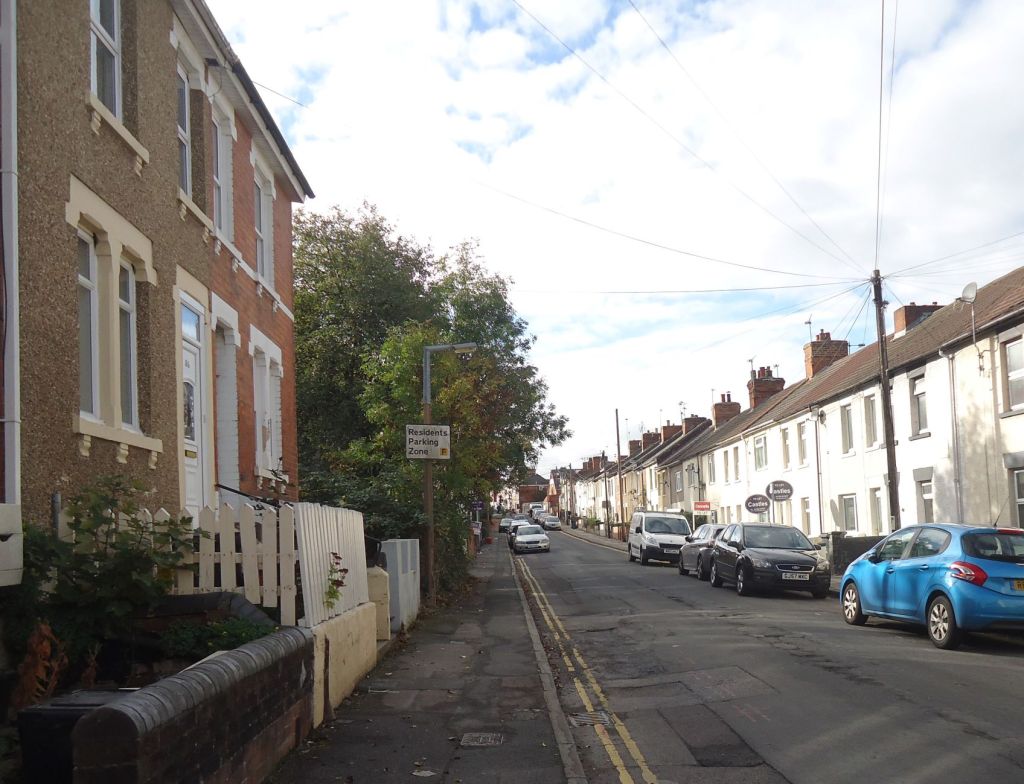
Today this is the only reference to Radnor Street’s previous name.

When building began in the street that would begin at the top of the precipitous Stanmore Street and continue to the junction with Shelley Street and Cambria Bridge Road it was known as Redcross Street.

Mr James Hinton, auctioneer, announced that on January 29, 1879 there would be a sale of ‘All those EIGHT NEWLY-ERECTED SIX ROOMED, COTTAGES with GARDENS thereto, Situate on the North side of Redcross-street, Kingshill, Swindon, being Nos. 177, 178, 179, 180, 181, 182, 183, And 184 on the Plan of the Lower Kingshill Estate, which Plan will be produced at the time of Sale.’

Just a week later more properties and additional building plots in Redcross Street came under the hammer. Lot 1. All those five newly-erected six-roomed COTTAGES, and five similar COTTAGES not quite completed, with gardens thereto, situate on the north side of Redcross-street, Kingshill, Swindon, being Nos. 185, 186, 187, 188, 189, 190, 191, 192, 193 and 194 on the plan of the Lower Kingshill Estate, which plan will be produced at the time of sale. Lot 2. All those ten PLOTS of valuable FREEHOLD BUILDING LAND, situate on the south side of Redcross street aforesaid, being Nos. 223, 224, 225, 226, 227, 228, 229, 230, 231, and 232 on the plan of the Lower Kingshill Estate. Each plot has a frontage of 15 feet to Redcross-street.

By 1881, when negotiations for the new cemetery were under way, the street was already being referred to as Radnor Street, however at the time of the census taken in April 1881 it was still called Redcross Street and was apparently renamed sometime later that year.

Jacob Pleydell-Bouverie, 4th Earl of Radnor served as Lord Lieutenant of Wiltshire from 1878 until his death in 1889. The Pleydell-Bouverie Wiltshire base was at Longford Castle, near Salisbury and closer to home, they owned the stately pile that was Coleshill House. Maybe Swindon thought it advantageous to name one of their many streets of red brick terrace houses after the local aristocracy.

Building continued in Radnor Street throughout the 1880s with properties built by S. Spackman, J. Longland and B. Jefferies.