Photograph taken at the funeral of Daisy Garlick’s brother. Daisy and Inkerman are the second couple on the right.
The Battle of Inkerman took place on November 5, 1853 during the Crimean War between Russia and the UK and her allies. Inkerman later became popular as a street name, although we don’t have one here in Swindon but it is curious how battle names were chosen for the naming of children. During and immediately after the First World War children named Ypres, Verdun and Arras appear in birth registration records.
Inkerman John Garlick was born in October 1863 in Wootton Bassett, the son of John and his wife Julia. He grew up at the Pack Horse Inn, Chippenham where his parents were the publicans. He married Ada Jane Barnes in 1889 and the couple had five children. In 1891 they were living at 26 Carfax Street, with their baby son Percy and Ada’s two brothers, Ernest and Sholto Barnes. Inkerman worked as a wood sawyer. Sadly, Ada was admitted to the Wiltshire County Lunatic Asylum where she died in 1903 aged 39.
In the summer of 1904 Inkerman married Daisy Ayers and at the time of the 1911 census they were living at 69 Port Tennant Road, Swansea. Inkerman was 47 and worked as a Railway Timber Inspector. Daisy was 29. They lived with children from both his marriages – Elsie 19, Frederick 15, Arthur 13, Iris 5 and one year old Myrtle.
This stylish art deco headstone marks the grave of Daisy Garlick who died in 1938 aged 57 and was buried in grave plot C1821. Inkerman died less than three months later and was buried with her on September 5. He was 75 years old.
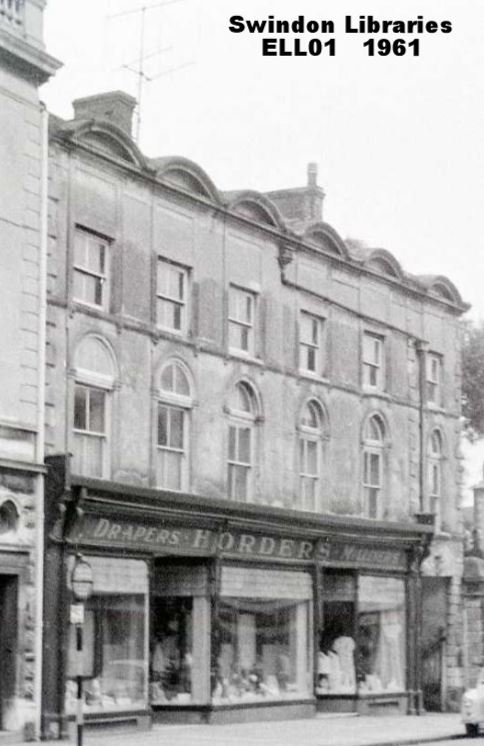
Albert Horder was born in Donhead St Mary in 1831, the son of a farmer William and his wife Sylvia. As the couple’s sixth son, Albert realised he was unlikely to inherit the 200 acre Lower Wincombe Farm, so he carved out a career for himself in the drapery business, and never looked back.
The 1861 census finds him living above his shop in the High Street, Shaftesbury with his sister Mary who acted as his housekeeper, a house servant and four assistants. In 1865 he married Mary Ellen Jeeves and the couple had four children.
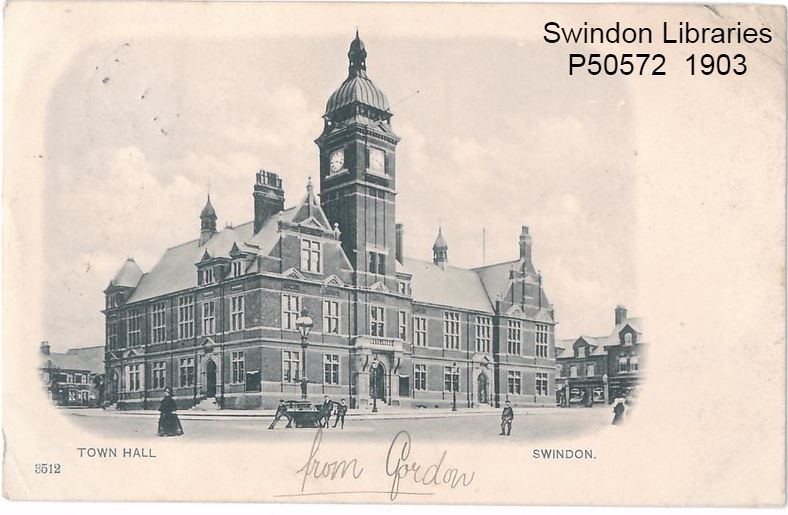
Image published courtesy of Local Studies, Swindon Central Library.
In the early 1870s Albert and Mary Ellen moved to Swindon and set up business in premises in the High Street once occupied by Thomas Strange. Business flourished and the autumn and winter fashions of 1882 included “a good assortment of Tailor-made Ulsters, Jackets, Dolmans in Plain & Broche Cloth, Velvet, Sealskin & Fur” where “an inspection was respectfully solicited.” By the 1890s Horder Bros, Drapers, Milliners, Mantle Makers and Costumiers boasted an expansive three-bay shop frontage.
Having handed over the reins to his son Edward Jeeves Horder, Albert and Mary Ellen retired to a house in Devizes Road, which they named Wincombe after the family farm.
The Horder’s store eventually closed shortly before the firm’s centenary and the building was subsequently demolished. The Pinnacle, a block of apartments, stand on the site of Albert’s drapery business, his name immortalised in the access road, Horder Mews.
Swindon
Death of a well-known resident – The death took place late on Sunday night, at his residence, Wincombe, Swindon, of Mr Albert Horder, who for many years carried on a successful drapery business in the High-street. He was an active member of the Congregational church, having been deacon at the Victoria-street Chapel for many years. Deceased, who was born at Winchcombe, Dorset, nearly 73 years ago, leaves a widow, three sons, and one daughter.
The Wiltshire Advertiser, Thursday, March 27, 1902.
Albert died aged 72 in 1902 and was buried in a large double grave plot E8032/33. He is buried with his wife Ellen, their son Edward Jeeves Horder and his wife Alice Emma.
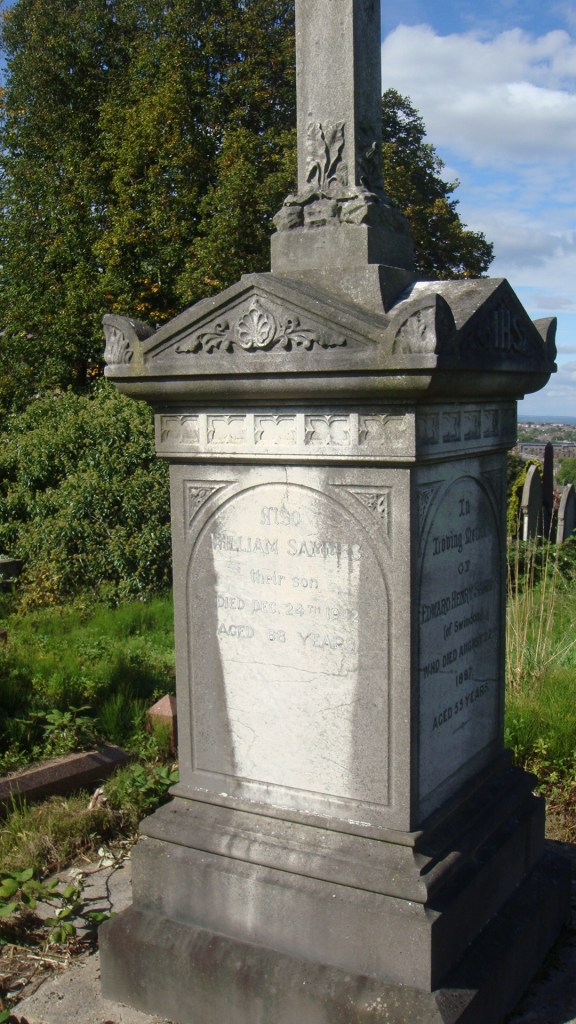
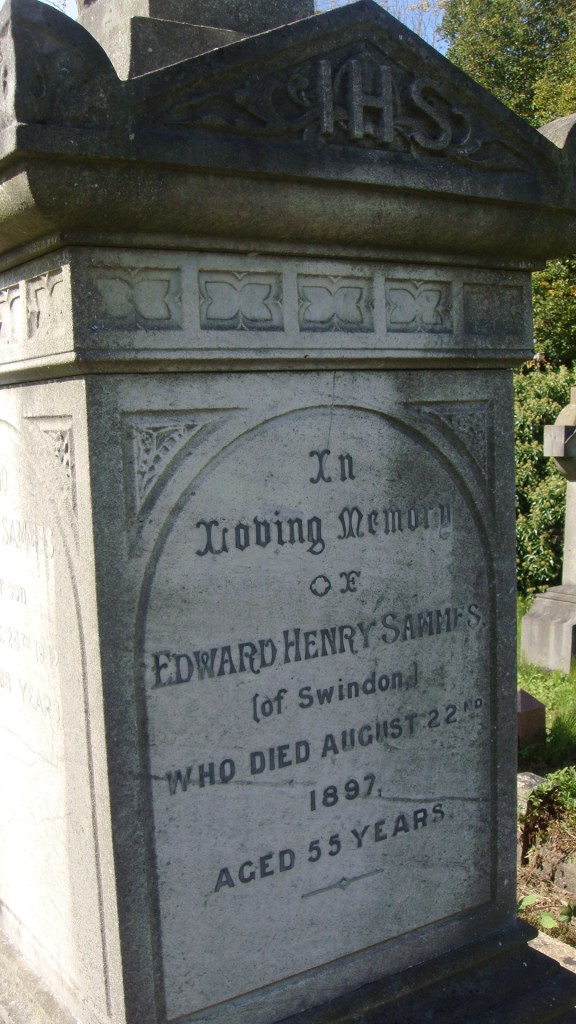
This is the last resting place of Edward Henry Sammes. It’s interesting that his family should make a point of adding ‘of Swindon’ to the inscription because Edward was not Swindon born.
Edward was born in Lambeth in January 1842, the son of William and Sarah Sammes.
The first reference to Edward being in Swindon is in the 1871 census when he is 29 years old and living a 1 Belle Vue Road where he describes himself as a grocer. That same year he married Sarah Anne Spackman from Wootton Bassett and the couple had two children William and Millicent, who are both buried here as well.
By 1889 he was a member of the Old Swindon Local Board, so well placed to know plans for development in the town. The family were by then living at Wycliffe House in Devizes Road.
In 1892 Edward submitted a planning application to build 8 houses on the corner of Kent Road and Maidstone Road. The building specifications for Edward’s houses describe three bedrooms, a parlour, sitting room, kitchen, conservatory, scullery, WC, coals and pantry.
This area of Kingshill was pretty much one big building site during the 1890s. The land had originally come on the market in the 1870s with the death of John Harding Sheppard but development was slow to take off. However, by the 1890s numerous speculative builders had snapped up the building plots and were busy at work. A map of Edward’s project shows an empty site next door on the corner of Kent Road and Ashford Road with another empty site opposite. At the other end of the road rival builder William Chambers had a yard opposite his own development at Ashford Terrace.
Edward died in 1897 aged 55. He left £5,814 18s 6d to his widow Sarah and son William, worth today somewhere in the region of £2.7 million.
I’m not sure if his son William ever worked or whether he lived off his inheritance. In 1911 William 35, was living at 31 Devizes Road, with his sister Millicent 27. Both of them were living on ‘private means’.
Local historian David Lewis has been able to add a some further information.
Edward Sammes lived at 31 Devizes Road “Wycliffe” in 1895 according to the Kellys directory as a private residence. Millicent was still there in 1951. Sometime in the 1960/70s, it became the Spiritualist Centre.
I’ve spent a couple of hours browsing the Local Studies flickr site, looking at photos of Swindon during the 1970s and 80s. This was a period when the town centre, still largely Victorian in design and layout, was modernised. Rows of red brick terrace houses came down as multi storey office blocks (now themselves out of date and unfit for purpose) went up. Granville and Morley streets were two victims, most of the properties sacrificed to create – a car park.
In 1891 our own home grown Liberal MP, Levi Lapper Morse, financed the construction of two town centre streets, which he named after Earl Granville, Liberal politician and former Foreign Secretary and Viscount John Morley, Liberal MP for Newcastle upon Tyne.
In 1901 Charles Watkins, a blacksmith, was living at No 19 Granville Street with his wife Margaret and their son Charles 27, also a blacksmith. Charles Watkins senior died in 1907 but Margaret was still living at number 19 Granville Street in 1911 with her son Charles. Living with her were her three grandsons, Thomas 18 an apprentice blacksmith in the GWR Works, George 16, an apprentice shoeing smith and 11 year old schoolboy Archibald, the children of her son Thomas. The grandsons were living with Margaret following the death of their mother Blanche Louisa Watkins that same year.
Margaret and her younger sister Fanny spent their early childhood in Loughborough Street, Kennington, pretty close to where I spent mine in Brixton. Margaret would remain living at 19 Granville Street until her death in 1923. She chose a perfect place to rest for all eternity.
Charles Watkins senior died in 1907 aged 71 years and was buried in Radnor Street Cemetery in plot B2618. Buried with him are his wife Margaret and their daughter-in-law Blanche who died in 1911. George Sydney Watkins, Charles and Margaret’s second son, was buried with them on November 2, 1936 and their youngest son, Charles John following his death in November 1943.
You can’t help but wonder what the Watkins family would make of the 20th century improvements to our town – or the 21st century ones either, come to that!
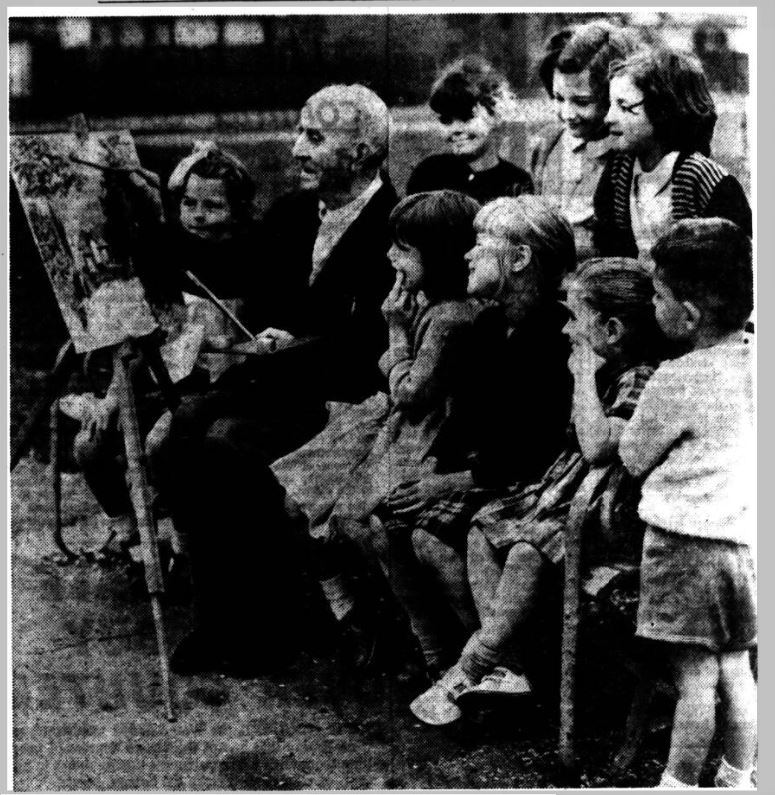
When the Hammersmith & Shepherds Bush Gazette and Post interviewed George Puckey in 1961 they reported how the 74 year old pensioner had developed a profitable hobby in his retirement.
Any self-respecting local art enthusiast would be quick to point out that George had honed his talent here in Swindon where we have a clutch of his work, once available to view in the Swindon Museum and Art Gallery.
George was born in Plymouth in 1888, the son of Charles and Sarah Puckey. The family had moved to Swindon by 1901 when they lived at 2 John Street Terrace where Charles worked as a Butcher journeyman. By 1911 23 year old George was working as a van driver for a house furnishing firm; his 16 year old brother Frederick was a general labourer in the GWR Works.
George’s work is hung Down Under
A 74 year old Acton man has found a novel way of supplementing his old age pension. He is Mr. George Puckey, of Northfield-road, North Acton, and since he retired eight years ago he has been painting pictures.
As Mr Puckey’s fame as a painter spread, so more and more orders for his colourful pictures, most of them of Kew Garden scenes, have rolled in.
Two of them are the proud possessions of an Australian family. They were bought by an Acton shopkeeper who sent them to her Australian relatives.
Exhibition
Mr Puckey, an Acton resident for 30 years and a former packer for the Metal Box Co., has just reached a proud highlight in his painting career.
He told the Gazette last week that he has had a picture accepted for the Middlesex County old people’s handiwork exhibition, to be held at Wembley Town Hall.
The picture is of Queen’s Cottage, in Kew Gardens.
Mr Puckey started painting when a young man living at Swindon. “I attended the Swindon College of Art but since then I have done very little painting. It was only when I retired that I seemed to find the time.
But I was very successful with my pictures at Swindon and a number of them of interest to local historians were bought by the Swindon Museum.”
Mr Puckey’s views on modern art? “It is awful, terrible, most of it,” he said.
Gazette and Post, Thursday, September 28, 1961.
George’s younger brother Frederick died in 1926. He is buried in Radnor Street Cemetery in grave plot C3760 where he lies alone.
The family later moved to Acton, Middlesex, where George remained for the rest of his life. He died in 1963, a couple of years after the newspaper article appeared in the local press.
In 1950 John Betjeman, Poet Laureate 1972-84, famously wrote in Studies in the History of Swindon that ‘there is very little architecture in Swindon and a great deal of building’. He did however add ‘but Swindon is more interesting than many towns which are more beautiful’. And it is the rows of red brick terrace houses that I’m interested in; more especially the people who lived in them.
For instance, how did Ernesto Poletti, born in Milan, arrive in Swindon and a job in the Works? How was Henry Kirby, a farm labourer, who at the time of his marriage was unable to sign his own name, end up living off a private income in 1911? And who was Mrs Griffin?
In 1906 Mrs Griffin engaged auctioneers Dore, Fielder & Matthews to sell four houses she owned on Kingshill Road.
The properties were to be sold in two lots and were described as follows:
Lot 1 – A pair of substantially erected dwelling houses, beings Nos. 55 and 56 Kingshill Road, Swindon, each containing entrance passage, sitting room, kitchen, washhouse and 2 bedrooms, together with w.c. and large garden at rear (with back entrance) in the respective occupations of Messrs Darling and Pellotti [sic] at weekly rentals producing £28 12s per annum, owner paying outgoings.
Lot 2 – A pair of similar dwelling houses adjoining Lot 1, being Nos 57 and 58 Kingshill Road, Swindon, in the respective occupations of Messrs Waite and Kirby at weekly rentals producing £28 12s per annum owner paying outgoings.
The Poletti’s must have liked Kingshill Road. From 1906-1918 they lived in three different properties, numbers 56, 64 and 188.
Ernesto Cesare Poletti was born in Milan, Italy in 1870. In the December quarter of 1896 he married Bessie Daymond in the Newton Abbot registration district, Devon and the first time I find him in Swindon is on the 1901 census. Then the couple lived at 34 Clifton Street with their two young sons, both born in Torquay, and Ernesto was employed as a carpenter in the railway factory. Ernesto became a naturalised British Subject in 1923. He died at his home in William Street in 1952 aged 83 and is buried in Radnor Street Cemetery.
Henry Kirby was born in Stratton in 1833 and spent most of his life working as an agricultural labourer. He married Eliza Cavey at St Margaret’s Church, Stratton St Margaret on October 20, 1860 when both bride and groom signed the marriage register by making their mark, indicating neither of them could write sufficiently well to sign their names.
In 1911 Henry 78 and Eliza 71 were living at 58 Kingshill Road with their unmarried son William George 41. Eliza states that they had been married 51 years and had ten children, one of whom had died by 1911. William worked as a boiler smith’s driller in the Works while Henry was living off ‘private means.’
Henry died in 1916 and is buried in grave plot C494, a public grave. Eliza died in 1920. Her funeral took place on July 1 when she was buried with Henry.
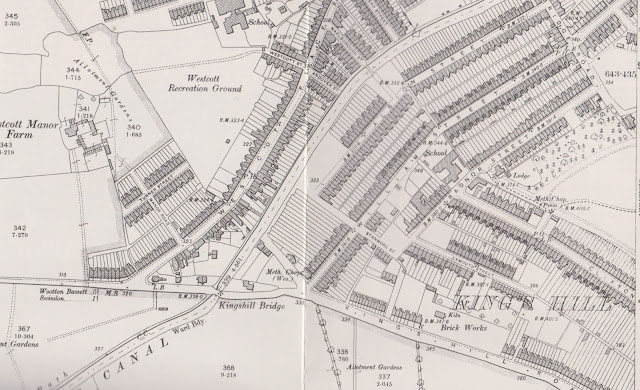
But how does the street numbering system work on Kingshill Road. The 1899 Ordnance Survey map reveals the road was barely built up at the turn of the twentieth century. The canal side was allotment gardens and on the opposite side there was a large gap in the housing, just before the steep incline begins.
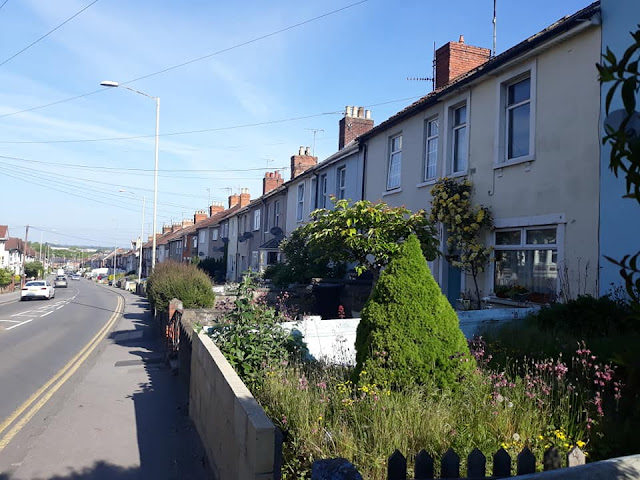
So, as I stand in front of the present-day numbers 55 – 58, while taking photographs and looking extremely suspicious, I’m left wondering if these houses were the homes of Ernesto Poletti and Henry Kirby and who was Mrs Griffin?
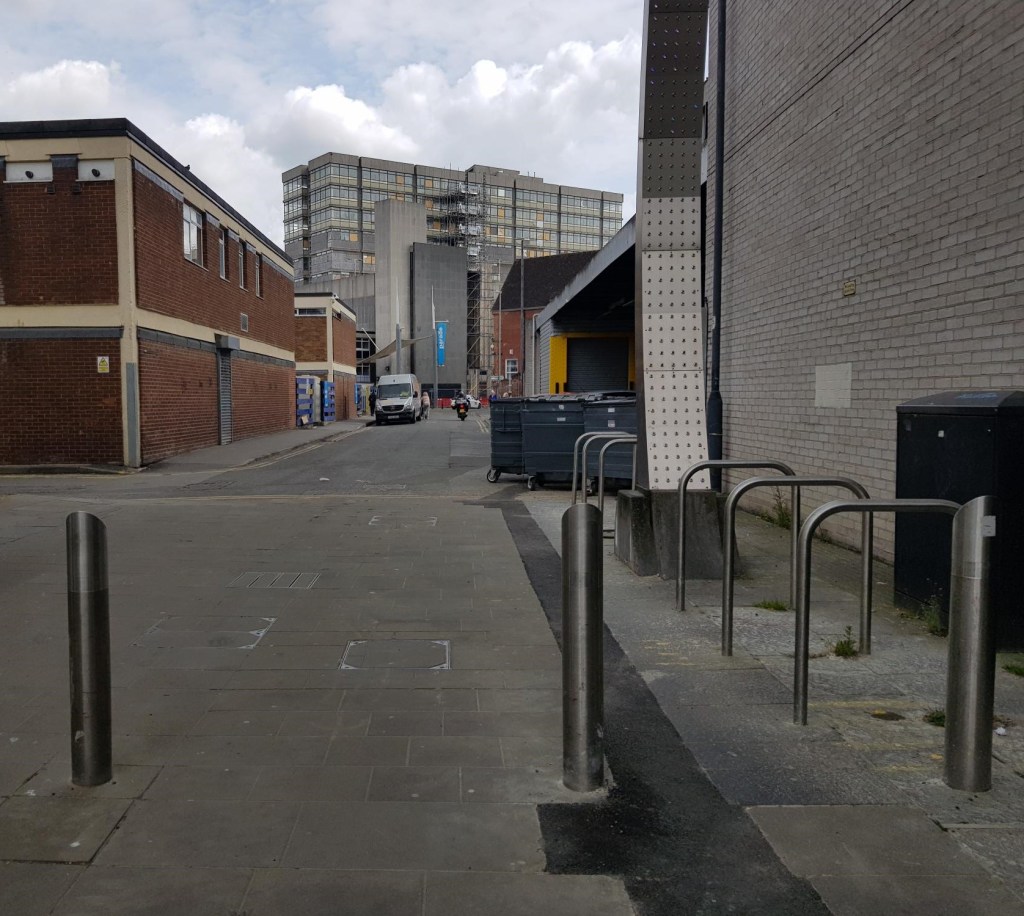
The house in College Street where Alfred Ernest Evans died is gone. The town centre street where the prestigious College Street School once stood is now no more than an access road for shops.
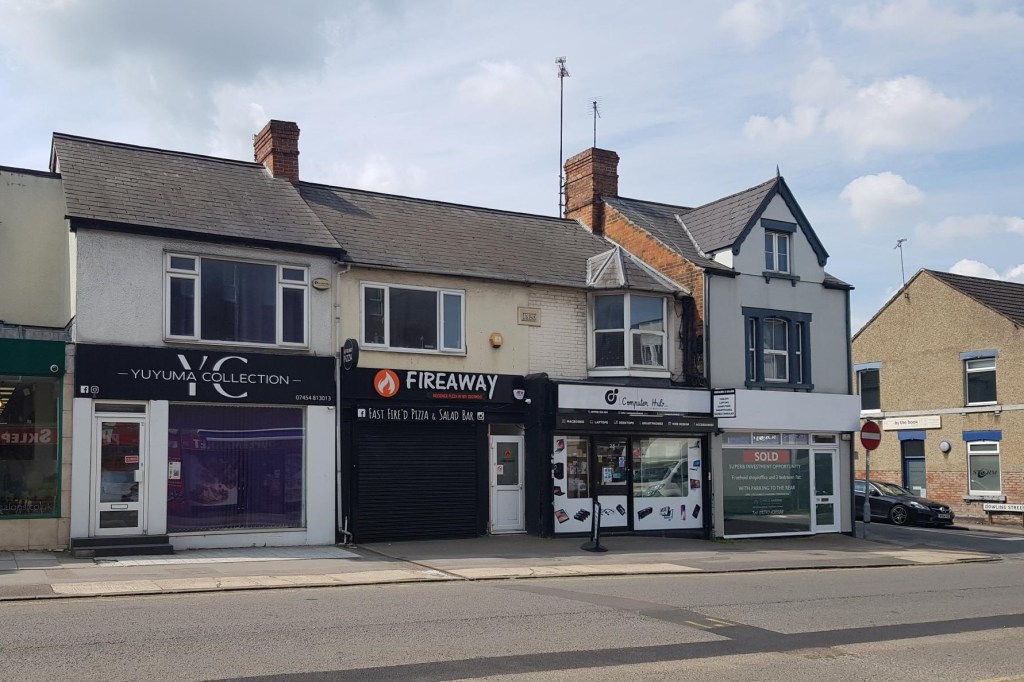
The family home at 23 Commercial Road where William and Salome lived in 1928 looks a little different these days too.
And Princes Street where Salome died in 1936 was redeveloped in the 1970s.
Image published courtesy of Local Studies, Swindon Central Library.
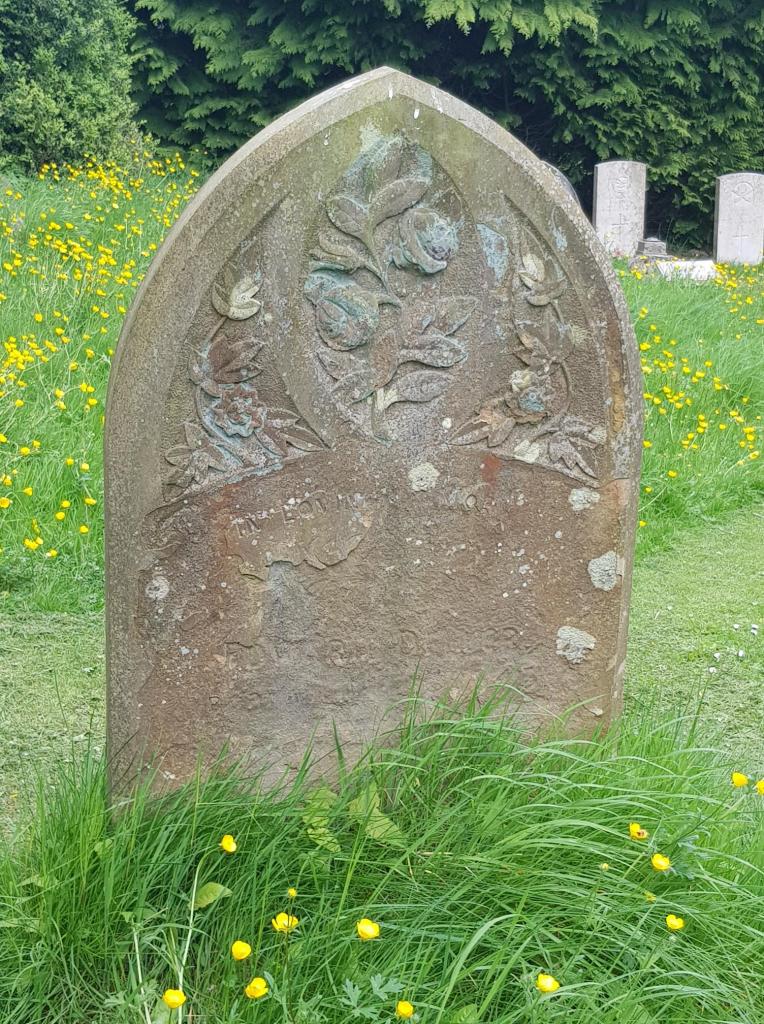
Meanwhile, the inscription on the family’s headstone has all but disappeared.
But it is still possible to piece together the details of the Evans family life.
William Evans and Salome Purnell married in the December quarter of 1879 in Paulton, Somerset. Paulton was a coal mining village where William worked in the iron foundry there. The 1881 census sees the couple living in the Paulton Engine Houses – William aged 26, an iron turner, Salome 25 and their sixth month old daughter Florence with William’s mother Sarah 69, who states that her husband is ‘in asylum’.
By 1891 the family had moved to Swindon and were living at 7 Stafford Street. At the time of the 1901 census they were living in 49 Dixon Street and by 1911 they were at College Street. Salome states that the couple had been married 31 years and that they had 6 children still living (one had already died). Still living at home were Ethel 20 a tailoress, Alfred Ernest 17 a boot repairer and 15 year old Arthur Algernon who was still at school.
Alfred Ernest Evans died in 1916 at 4 College Street. He was 22 years old. He was buried in grave plot C3360 on April 22. William George Evans, a retired fitter, died aged 73 in 1928 when he and Salome were living at 23 Commercial Road. He was buried in grave plot C3360 on August 1. Salome was living at 47 Princes Street at the time of her death in September 1936. She was buried with her son and her husband on September 17.
From this unpromising start with a disintegrating headstone and Swindon streets altered beyond recognition, town centre homes demolished and properties repurposed, it has still been possible to recover the lives of one ordinary Swindon family.
In 1900 the two towns of New and Old Swindon were incorporated to form a
single municipal borough. It was a sensible idea promoted by many for some
years. Today Old Swindon is still referred to as Old Town but the moniker New
Swindon has pretty much slipped out of usage.
The first Mayor of Swindon was George Jackson Churchward, Chief Mechanical
Engineer of the Great Western Railway but did you know a Provisional Mayor was
appointed in 1899? No, neither did I?
It was thanks to @jratcliffephoto who posted on twitter on
March 8, 2023 This month in Swindon history – 1899 – A draft Charter of
Incorporation is produced, making provisional appointments of Mayor (J.
Longland, Chairman of the Old Swindon Council), Deputy Mayor and Town Clerk.
Well, this led me on the trail of Swindon’s first and possibly only,
Provisional Mayor and whether he might be buried in Radnor Street Cemetery.
Image published courtesy of Local Studies, Swindon Central Library
Late Mr. J. Longland
Sudden Death of Swindon Resident,
His Public Work
The death took place on Friday at his residence, 6 Volta Road,
Swindon, of Mr James Longland, J.P. The deceased, who was 79 years of age, had
been in failing health for some months, but he was attending to business as
recently as the previous day.Mr Longland came to Swindon about 45 years ago, and started in
business as a grocer at premises at the corner of Bristol Street. Later he
removed to larger premises at the corner of Deacon Street and Commercial Road.
He retired, however, and in more recent years he had been engaged as clerk to
Messrs. Protheroe and Moon, income tax collectors.Deceased was a member of the old Urban District Council for New
Swindon, and once held the position of chairman of the Finance Committee. He
was the last chairman of the Council when the town was incorporated in 1901.
When, by a commission dated November 23rd, 1906, the borough of
Swindon was granted a magistracy of its own, Mr Longland was one of the first
of the appointed magistrates. He had not sat on the Bench in recent years, but
he was a regular attendant at the annual Licensing Sessions in February of each
year. He was a regular worshipper at the Baptist Tabernacle, and had filled
many offices, including those of treasurer and deacon.Mr Longland leaves two sons – one in business in London, and the
other in South Africa – and a daughter, who resided at home with her father.
Another daughter died a few years ago. Mr. Longland lost his wife two or three
years since, and had never fully recovered from the shock.
Funeral
The funeral on Tuesday was attended by a representative company. By
the request of the family the obsequies were of a semi-private character, and
the desire was expressed that no flowers should be sent. A short service was
conducted at the residence by the Rev. E.W. Probert (pastor of the Baptist
Tabernacle), and the internment took place in the Cemetery, Mr Probert again
officiating.
Mourners including members of the Baptist
Church.
In the course of a brief address at the graveside, the Rev. E.W.
Probert said they were assembled, as representatives of the Baptist Church and
of the civic life of Swindon, to pay their last tribute of respect to one whose
long life must assuredly be of a sweet memory to all. Mr. Longland was not only
a devoted member of the Baptist Tabernacle, but he was also an honoured
representative of the civic life of Swindon, pure in character, and filled with
honour and integrity. That was the type of men we required to-day in public life,
men who would carry the Spirit of Christ into the civic life. They were
grateful for his noble life, and he hoped that young people would arise and
fill the gaps made by the departure of such men as the late Mr. Longland.
The Mayor’s Tribute
At the meeting of the Town Council on Tuesday evening, the Mayor
(Ald. R. Evans) said he wished to refer to the passing of a gentleman who in
days gone by took an active interest in local government.Mr J. Longland was elected a member of the New Swindon Local Board in
April, 1893, and a member of the New Swindon Urban District Council in April,
1897. He took an active interest in the negotiations and the detail work for
bringing about the Incorporation of the borough, and might be termed the
“Charter Mayor,” as he was the gentleman named in the Charter as the person to
act as Mayor for conducting the election of the first Council and to preside at
the first meeting of the Council held on November 9th, 1900. At that
meeting he was also elected an alderman of the borough and served the full term
of six years, retiring in November, 1906. He was also one of the first
magistrates appointed on the grant of a separate Commission of the Peace for
the borough. All who knew Mr Longland knew him to be a man of upright character
and sterling integrity and a man who placed his best at the service of the town
in those days.
The Council passed a resolution tendering sincere sympathy and
condolence to the family.Extracts from North Wilts Herald, Friday, September 11, 1925
James Longland, aged 79 years of 6 Volta Road, was buried on September 8,
1925 in plot E7369, a grave he shares with his wife Naomi and two daughters,
Jessie who died in 1916 and Kate who died in 1942.
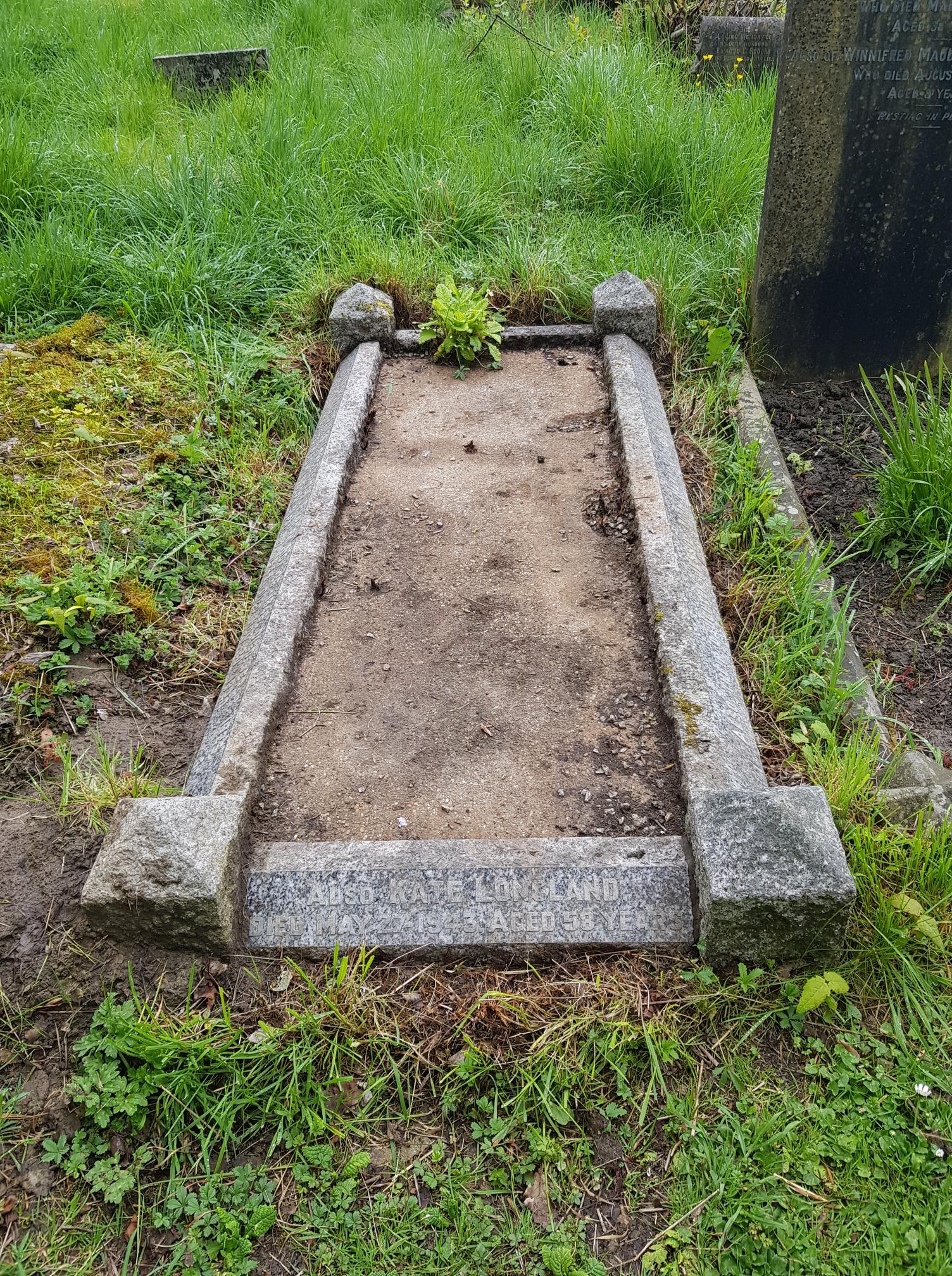
This kerbstone memorial was pretty much hidden, covered in grass and weeds, when I visited the cemetery last week. Radnor Street cemetery volunteer Rebecca has made a fantastic job of clearing and tidying it up.
And then there are the little lives, the quiet lives, the people who leave little trace. No children, no legacy, no letters, no diaries. No death notice in the local newspaper, no lengthy obituary.
John Iles was born in 1820, possibly in Broad Blunsdon, maybe in Lydiard Tregoze. Born before the introduction of civil registration, there is no birth certificate for him. Neither can I find a baptism entry but we know that by 1841 he was living in the parish of Lydiard Tregoze where he worked as a labourer.
Honor was baptised at the parish church in Lyneham on May 18, 1817, the daughter of John and Mary Burchell, and grew up in the Preston area of Lyneham.
John and Honor were married at St Mary’s Church, Lydiard Tregoze on November 12, 1844. John signed his name in the parish register, Honor made her mark. They both gave their address as Mannington, Lydiard Tregoze. John was a labourer, Honor a servant. Perhaps they worked for Richard Strange, farmer at Mannington Farm. There was little else there in that part of the parish. Or was John working at the recently built GWR Maintenance and Repair Works in New Swindon, just a short walk across the fields? Or maybe he was a builders’ labourer employed by J & C Rigby who were building the GWR company houses.
In 1851 they were living in Moredon, Rodbourne Cheney – John worked as a ‘rail labourer’. Seven years married and no children. Children were not planned in the mid-19th century – they were either conceived or they weren’t. There was little choice. There were old wives’ tales and potions and prayers, to encourage or prevent a birth. Perhaps Honor tried them all. Perhaps there was a child, born between 1844 and 1851, maybe more than one, but they failed to thrive and appear on subsequent census returns. By 1861 the couple were living in Even Swindon. John and Honor had been married 17 years and Honor was 44, perhaps the likelihood of a child was now remote.
In 1861 they were living in Even Swindon, lodging with William and Jane Handy. In 1871 they were living in Cow Lane and in 1881 they were at 22 Eastcott Villas, still in the same area. Then suddenly it was all over. John died in January 1889 aged 69 years. He was buried on January 26 in grave plot E8467. Honor died that same year, aged 72 years and was buried with him.
And marking their grave is this substantial memorial. Who paid for it? Who installed it? Perhaps the lives of John and Honor were not so little, not so quiet, after all. Perhaps there is a whole lot about them left to be discovered.
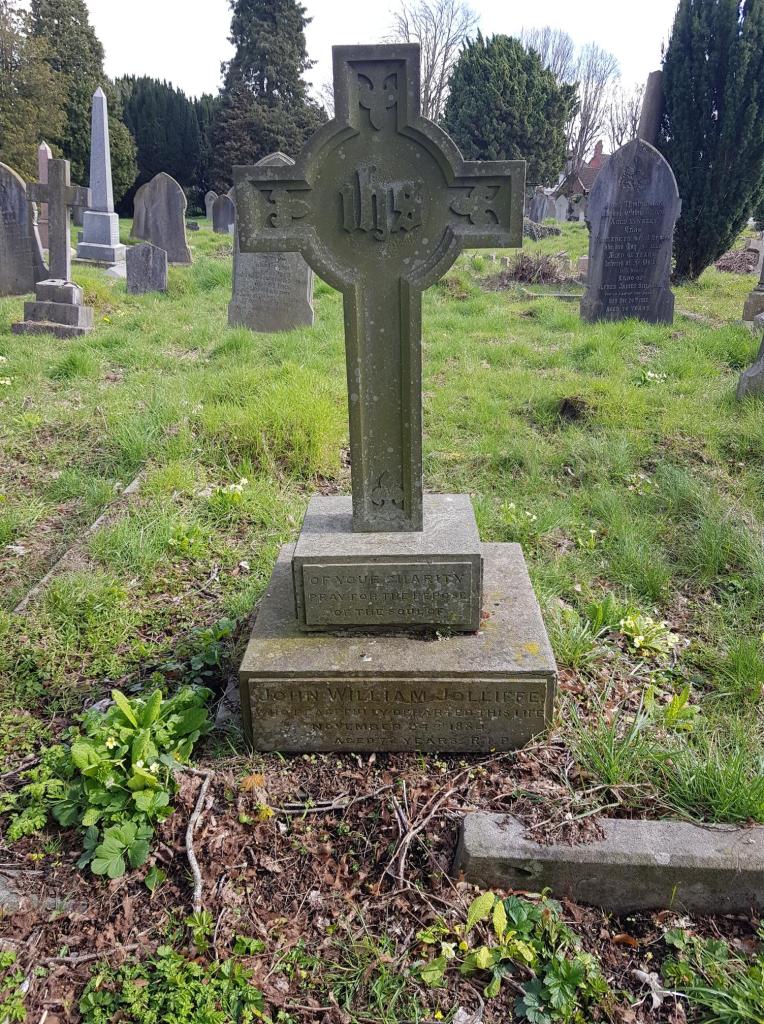
Our Victorian town centre streets are frequently named after the great and the good of Swindon – take Jolliffe Street, for instance. Built in around 1891 this street was named after John William Jolliffe, surveyor and collector for the New Swindon Local Board district.
John William Jolliffe was born in 1838, the son of John, a builder, and his wife Elizabeth. John William grew up, married his wife (another Elizabeth) and spent most of his life living on the Isle of Wight. In 1861 he was living in Newchurch, Ryde, Isle of Wight and described himself on the census of that year as a Master Builder employing 50 men.
At the time of the 1871 census he was living in High Halden in Kent where he was employed as Clerk of Works in Building. He moved to Swindon soon after this to a post as Surveyor of Swindon New Town Local Board. His first job was to oversee the building of the new sewerage works in Even Swindon. He appears to have specialised in the building of sewage treatment plants including work at Gorse Hill and at the time of his sudden death he was working on improvements in the disposal of sewage in the town.
Sudden death of Mr J.W. Jolliffe – Our readers will hear with regret of the almost sudden death of Mr J.W. Jolliffe, for some years surveyor and collector for the Swindon (New Town) Local Board District, which took place on Monday morning last. Although in his 73rd year, Mr Jolliffe was up to the time of his death apparently a hale and hearty man. In fact, all the previous week he was about the town as usual, and attended to his duties up to Saturday evening. On Sunday evening he was seized with spasms round the heart, and appeared to suffer much pain. His son fetched Dr. Howse, who attended, and the pain abated. At 1 a.m., however, the deceased was taken worse, and medical aid was again sought, but this time it was of no avail, Mr Jolliffe breathing his last before 2 a.m.
The deceased came to Swindon some 12 or 14 years ago to superintend the carrying out of the new sewerage works which was executed to convey the sewage of the town to the farm at Even Swindon, having previously been in business at Ryde, in the Isle of Wight, as a builder.
When the late Mr W. Read resigned the office of Surveyor the Local Board appointed him their surveyor, collector, and inspector of nuisances. Since then the district has grown rapidly – in fact more than doubled – and some twelve months ago the Board felt that the duties of the office of surveyor were so great that they relieved Mr Jolliffe of his duties as inspector of nuisances.
Recently he has been engaged on many important works. The Gorse Hill Sewerage was carried out from his plans and under his supervision. The whole of the private streets at Even Swindon, at Gorse Hill, and many on the Kingshill Estate have been made by him and since dedicated to the board. At the time of his death he was engaged on the plans for a fresh means of disposal of the sewage at the farm, and also on the plans of the proposed new bridge at the end of Wellington street.
The general regard and esteem in which the deceased was held by his neighbours was evidenced on Thursday at the funeral, which took place at the Swindon Cemetery. In addition to members of the New Town Board there were most of the builders and architects of the town, representatives of the Old Town Board, of the GWR Co’s, permanent way and mechanical engineering staff, of the Gas Company, Canal Company, and many tradesmen, with whom the deceased has been brought into business relation.
The religious portion of the ceremony was conducted by the Rev. Father Eikerling and the choir of the Roman Catholic church, of which deceased was a member. At the cemetery chapel the rev. gentleman delivered an impressive address, extolling the many virtues of the deceased, pointing out the lessons to be learnt from such a life and death. The service was fully choral, and was watched by a large crowd of sympathising friends. The deceased leaves a widow some three or fours years his senior. We hear that A Solemn Requiem will be sung for the soul of the deceased this (Saturday) morning at the Holy Rood Church by the members of the St. Cecilias Society, the deceased having been an honorary member of that society.
The Swindon Advertiser, Saturday, November 29, 1884.
John William Jolliffe was buried on November 27, 1884 in grave plot E8290. His wife Elizabeth died in 1885 and is buried with him.
And if you are wondering about the derivation of the name Sheppard Street; this was named after prosperous landowner John Henry Harding Sheppard who owned great tracts of land in this part of New Swindon. You will also find John, Henry and Harding Streets in this area of town.







 James Longland, aged 79 years of 6 Volta Road, was buried on September 8,
1925 in plot E7369, a grave he shares with his wife Naomi and two daughters,
Jessie who died in 1916 and Kate who died in 1942.
This kerbstone memorial was pretty much hidden, covered in grass and weeds, when I visited the cemetery last week. Radnor Street cemetery volunteer Rebecca has made a fantastic job of clearing and tidying it up.
James Longland, aged 79 years of 6 Volta Road, was buried on September 8,
1925 in plot E7369, a grave he shares with his wife Naomi and two daughters,
Jessie who died in 1916 and Kate who died in 1942.
This kerbstone memorial was pretty much hidden, covered in grass and weeds, when I visited the cemetery last week. Radnor Street cemetery volunteer Rebecca has made a fantastic job of clearing and tidying it up.

 Radnor Street Cemetery