The Palphramand family

This large family plot has many stories to tell. From Joseph Strong, a pattern maker, who moved to Swindon from Bolton in Lancashire in the 1850s to his son-in-law George Palphramand, who in retirement moved to Coventry and in death returned to Swindon to be buried with his family.

But I am beginning the story of the Strong and Palphramand’s with a family tragedy and the death of a little boy.

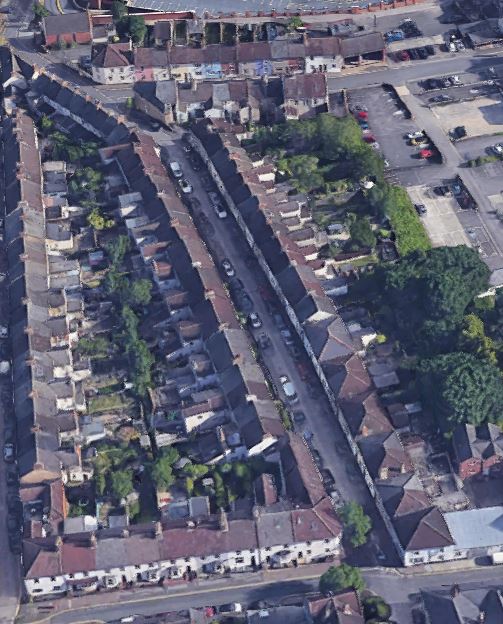
George Palphramand and Mary Ellen Strong married in St. Mark’s Church on April 13, 1876. Their first child Isabel was baptised on November 4, 1877 in the church where they were married. At the time of the 1881 census George and Mary were living at 24 Read Street with their three children Isabel 3, George 2 and 7½ month old baby Ernest. Mary’s brother Joseph Strong and his family lived next door at number 25. In the 1880s Read, Marlborough and Andover streets abutted the Wilts & Berks Canal.

Work began on the Wilts & Berks Canal at Semington in 1795 expressly for the transportation of Somerset coal to the towns in Wiltshire and Berkshire. However, with the completion of the Great Western Railway line from London to Bristol, trade on the canal diminished. It was closed by an act of parliament in 1914 and eventually filled in from about the 1930s. Today the short stretch of the former canal provides a route into Swindon town centre from the bottom of Kingshill.

At the inquest into the death of Ernest, a witness drew attention to the fact that there was really no fence there to keep little children from getting on the canal side, and ‘it was a great inducement for children to play there.’ Returning a verdict of accidental death the jury ‘expressed a wish that the Canal Company should endeavour to carry out such improvements to their fences that would hinder the occurrence of similar fatalities.’

Was this recommendation acted upon? Would this have been any consolation to the Palphramand family?
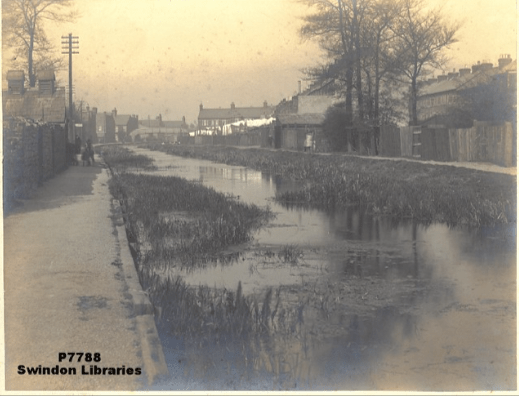
The Wilts & Berks canal looking east towards Marlborough Street footbridge c1914 published courtesy of Local Studies, Swindon Central Library.

Another Death From Drowning – On Tuesday afternoon, Mr Baker held an inquest at the Ship Inn, New Swindon, on the body of Ernest Strong Palphramand, aged three years and eleven months, son of George Palphramand assistant foreman in the P Shop, G.W.R. Works, of 24, Read street, who was drowned in the canal at the end of Read street, on Sunday afternoon. Mr George Thomas was foreman. The father of the deceased deposed that he last saw his son alive at about half past four o’clock on Sunday afternoon. The deceased was then playing with his brother in the backyard. The two children then went out at the back-gate, down the yard, and round by the front. The deceased went on to the path, and must then have fallen into the water. The other brother did not go on the path, but saw the deceased in the water, and gave the alarm. Witness ran up the street and jumped in, but could not find the child. His wife called the children back when they first went out of the gate, but they did not come; the elder of the children was five years old. When his older son came back from the water he seemed confused and could not tell where his brother was. No one really saw the child fall in the canal; and he must have been in the water for quite a quarter of an hour. Every effort was used to restore animation by those on the bank before the doctor arrived. Witness wished to call the attention of the jury to the bad state of the fences, and the path; there was really no fence there to keep little children from getting on the canal side, and it was a great inducement for children to play there. Henry Fraine, carpenter, of 44, Albion street, who helped to get the child out of the water, and Dr. Swinhoe also gave evidence. The jury returned a verdict of accidental death, but expressed a wish that the Canal Company should endeavour to carry out such improvements to their fences that would hinder the occurrence of similar fatalities. The jury also expressed their deep sympathy with the bereaved parents.

Wilts and Gloucestershire Standard, Saturday, July 26 1884.

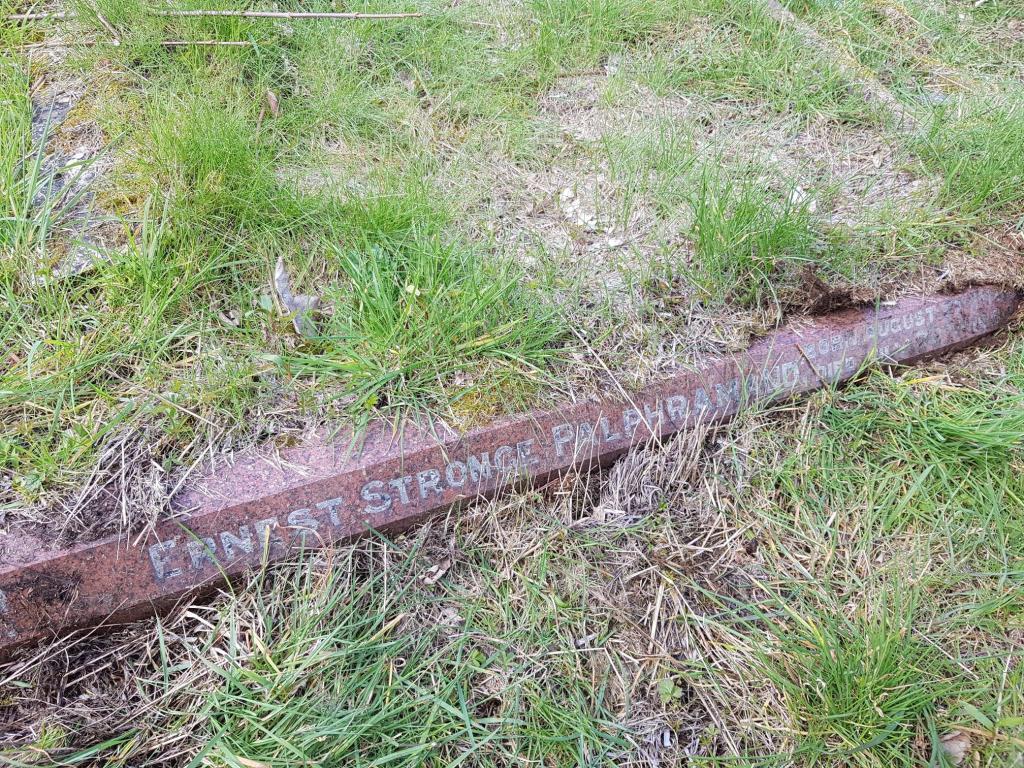
Ernest Strong Palphramand was buried on July 23, 1884 in grave plot E8469. The burial registers record that he was 3 years old and that his place of death was ‘The Canal near Read Street’.
John and Florence Sterry

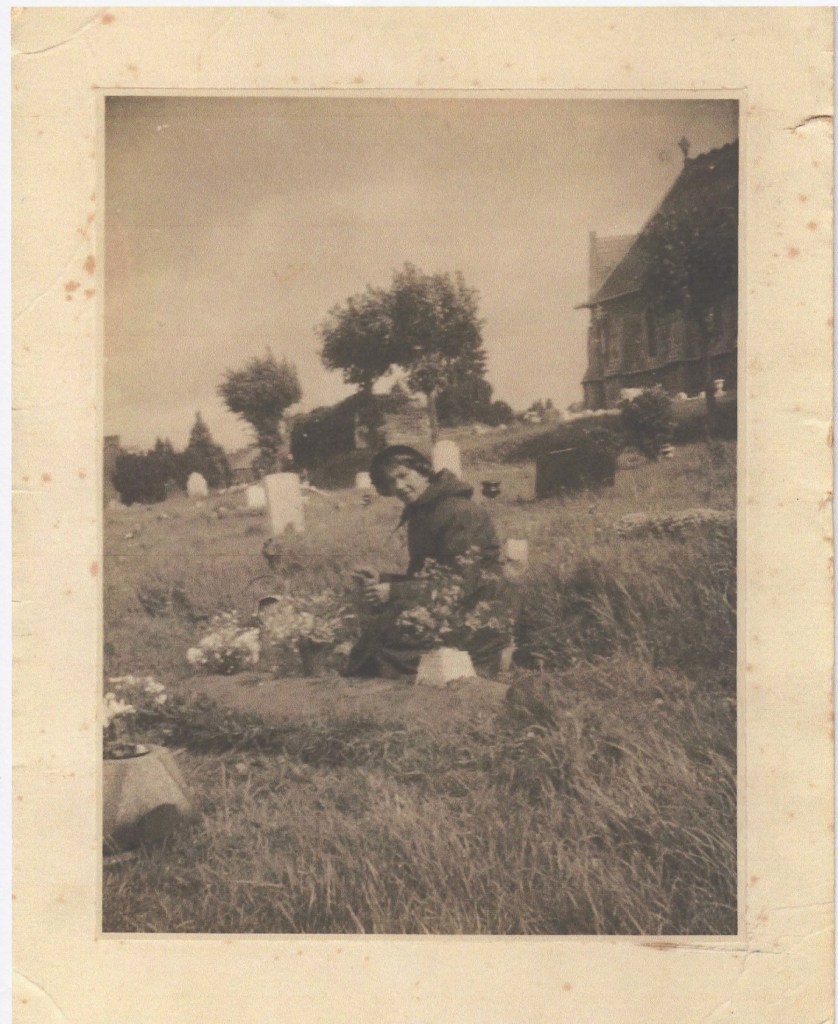
Old photographs of the cemetery are rare and always prove very intriguing and we don’t come across them very often. This one was sent to me several years ago by Sue and pictures her grandmother, Florence Sterry attending the grave of her husband John.

John Charles Howard Sterry, a rail carriage examiner, married Florence Nellie Hiscocks in St. Mary’s Church, Rodbourne Cheney on February 19, 1912. They were both 22 years old. Some Sterry family researchers with Ancestry online family trees record that John Charles Sterry served as a Driver in the Royal Field Artilery (RFA) during the First World War. However, a local source informs me that railwayman John was in a reserved occupation and did not go to war. The couple had three sons, Albert born 1914, William 1916 and Ronald in 1920.

At the time the 1939 List was compiled the family were at 129 Albion Street where John and Florence would remain for the rest of their lives. John died in St Margaret’s Hospital 1954 and was buried in grave plot C598. Florence died in 1957 and was buried in the same plot.

When I frst saw this photograph I was surprised at how long the grass was in the cemetery and that everywhere looked rather unkempt. This came as a surprise to me as I was under the impression that these were the years when the cemetery was still busy and where a staff (although probably small) of groundsmen were employed. If anyone has any memories (or photographs) of the cemetery in the 1950s and 60s we would love to share them here.

An extremely interestisng feature of this photograph is the glimpse of a small building in the background opposite the cemetery chapel. This building has long gone but appears on the map of the cemetery as ‘urinal’ – see below.

William Hulbert and the lost headstone

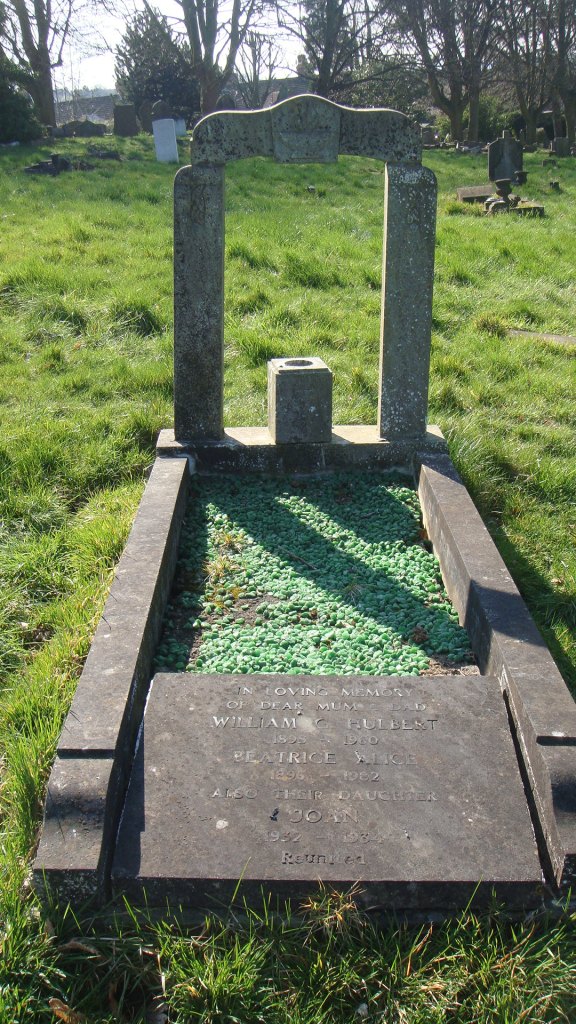
How is it possible to lose a headstone, especially such a striking one as this?

I took this photograph about fifteen years ago, but when I recently decided to update my records, I couldn’t find it. It once stood proud and very obvious in a area of Section C where there are few other headstones. How was it that I just couldn’t find it anymore?

This headstone, with it’s symbolic entrance to eternity, has a very interesting history. The plot was first established as a public grave for the burial of infants. The first child buried here was Ethel Louisa Marsh, just three months old when she was buried on October 18, 1897. All that can be discovered about this baby (without purchasing her death certificate) is the address her death was registered at in the burial registers – 34 Avenue Road. Just five days later Edith May Burgess, aged one month old was buried here. Again, all that can be discovered (without a death certificate) is the address in the burial registers at which her death was registered – 11 Carfax Road.

The two babies lay undisturbed for more than thirty years until Joan Edna Hulbert was buried here on January 9, 1934 and just days later Molly Gwendolen Dodson on January 25, 1934. Molly was eight months old, the daughter of Edwin and Ivy Dodson who in 1934 were living at 48 Percy Street, Rodbourne.

There are still a few gaps in my reasearch and it is not known at what point the Hulbert’s decided to purchase the grave.

Both William George Hulbert and his wife Beatrice Alice Shepherd would appear to have been born and raised in London. They married in the Lambeth registration district in the June quarter of 1921. By 1934 they were living at 54 Exmouth Street, Swindon where little Joan Edna died that year aged 2 years old. William died in 1960 aged 65. His last home address was 27 Beckhampton Street. Beatrice died more than 20 years later at St Margaret’s Hospital, Ridgeway House, Wootton Bassett.

But, thankfully, this distinctive headstone has not disappeared completely, as I discovered when armed with a cemetery I went exploring. A seedling has sprouted through the opening and toppled the whole thing over while grass has grown up and covered the kerbstone. If there are any family members still living in Swindon who would like to help restore the headstone, we’d love to hear from you.

Frank Chandler – draper and outfitter

The Chandler family was a large one and for many years the business of Chandler Brothers dominated the corner of Wood Street and Devizes Road.

Frank was born in 1860, one of John and Susannah Chandler’s large family and was running the business alongside his widowed father at the time of the 1881 census. He married farmer’s daughter Ada Keziah Edmonds at St Paul’s Church on June 10, 1890. He was 30 years of age and she was 23.

The couple’s first home was above the shop in Wood Street where a staff of eight boarded with them including three draper’s assistants, 2 dressmakers and a milliner.

Their only child, a daughter Ada, was baptised on April 21, 1891, at the church where the couple had married but sadly she died around the time of her first birthday.

At the time of the 1901 census Frank and Ada lived at South View, a house on the Sands in Old Swindon, just a short walk from the family business.

Death of Mr Frank Chandler

We regret to announce the death, which has taken place under painfully sudden circumstances, of Mr Frank Chandler, of South View, The Sands, Swindon, and a member of the firm of Messrs Chandler Bros., drapers and outfitters, 35, Wood Street, and Devizes Road.

The deceased gentleman, who was 46 years of age, and who leaves a wife, but no children, was recovering from a long attack of acute rheumatism. He went to Bournemouth, where he caught a chill, and he was compelled to return home. Unhappily, the chill was followed by complications which necessitated an operation being performed. Accordingly, on Saturday afternoon his medical attendant, Dr J. Campbell Maclean, accompanied him to London, where, at a surgical home, he was attended to. The operation took place on Saturday evening, but Mr Chandler, without recovering consciousness from the anaesthetic, died suddenly from syncope.

Mrs Chandler, who also accompanied her husband to London, and whose own health is by no means satisfactory, returned to Swindon soon after Mr Chandler’s demise.

Mr John Chandler proceeded to London very soon after hearing of his brother’s death.

The painful news was announced to a large congregation yesterday morning by Canon Estcourt before the sermon at the Parish Church, of which the deceased gentleman was a member, and the intelligence came as a severe shock to the many by whom Mr Chandler was intimately known.

The body will be brought to Swindon for interment.

By the death of Mr Frank Chandler, the town has lost an inhabitant who was held in the highest esteem. He was the youngest son of the late Mr John Chandler, and his long connection with the well known business in Wood Street brought him into contact with very many people. His gentlemanly and courteous bearing, his kindly disposition won for him a large circle of devoted friends to whom his sudden loss will occasion keen sorrow. What lends a further degree of painfulness to the event is the fact that, as stated by Canon Estcourt, the deceased gentleman was about to take over control of the whole of the important Wood Street business. Mr Frank Chandler never took any active part in the town’s affairs, though as a sterling business man he was warmly respected by all with whom he came into business contact.

At Swindon Parish Church on Sunday morning, the Vicar, Canon Estcourt, before commencing his sermon, referred to the sad death of Mr. Chandler. He said: As I was on my way to Church this morning I heard the distressing news of the death of Mr Frank Chandler, which took place after an operation which he underwent in London. He was, as you know, just about to take over the management of one of the large business establishments in the town. But God has seen fit to order things otherwise for him. I am sure today our sympathy and our prayers will go forth to his many relations, and to his wife especially.

The Evening Swindon Advertiser, Monday, November 19, 1906.

The Late Mr Frank Chandler

The Funeral

Amid every manifestation of deep sympathy and regret the funeral took place on Wednesday of the late Mr Frank Chandler, of the well known firm of Chandler Bros., Wood Street, Swindon whose sad death in London we announced last Monday.

The body was conveyed from Paddington by the train leaving there at 11.40, and arrived at Swindon GWR Station at 1.20 p.m. Thence it was removed to the Parish Church, where the first part of the funeral service was conducted by the Vicar (Canon E.W. Estcourt), who also officiated at the graveside.

The cortege, headed by a carriage laden with floral tributes, left the Church at 2.30, and proceeded to the Cemetery via Cricklade Street, Wood Street, Bath Road, Lansdown Road, and Kent Road.

Extract from the funeral report published in the Evening Swindon Advertiser Thursday, November 22, 1906.

The funeral took place on November 21, 1906 when Frank was buried in Radnor Street Cemetery in grave plot E8327. He is buried alone.

Robert Affleck

I think this gravestone is a particularly attractive one.  Quite modest. It’s made from pink granite and the entwined ivy is a symbol of friendship, fidelity and immortality.

This is the grave of Thomas J. Stewart, a former blacksmith who was born in Scotland.  But the person I’d like to draw your attention to is Robert Affleck, his son-in -law, who is buried with him.

This is a photograph of Robert Affleck published with a report in the Adver at the time of his death, which described him as tall and upright and that up until his death he was still often seen walking in Swindon and the surrounding countryside.

The Affleck family left their mark on the streets of Swindon.  I’m sure you’ve all stepped over this type of drain cover (see below). Larger manhole covers also survive.

Robert Affleck was the eldest of William and Maria Affleck’s five sons, all of whom, I believe, joined the family firm.

William was born in Gateshead and served his engineering apprenticeship at Hawkes & Son before joining the prestigious Lambeth based engineering firm of Maudsley and Field.  This then led to a job with the GWR in Paddington and in around 1843 William moved to 33 Exeter Street and a job in the GWR Works.

By 1853 William had struck out on his own, establishing a foundry and engineering works in Prospect.  The 1861 census describes William as a machinist and coal merchant employing 17 men and 3 boys.

In accordance with William’s will his executors, who included Robert, put the business up for sale.  It was bought for £3,000 by two of the sons Frederick and Theodore Affleck.  There is an advertisement published in 1908 where they describe themselves as Millwrights & Machinists, Iron and Brass Founders – sole agents in the district for the “Vollmar” washing machine.

William and his wife are both buried in the churchyard at Christ Church, but Robert chose to be buried in Radnor Street with his father in law.

The Affleck sons all lived to a ripe old age.  Robert was 94 when he died in 1940. 

When Robert died in 1940 he left £11,541 2s 2d worth today about one and a half million.

Thomas Baker – Watercress seller and umbrella mender

My first impressions on reading the newspaper article regarding the death of Thomas Baker was that he was an elderly gentleman. It was not until I checked the burial registers that I realised he was just 33 years old.

His wife said he had never been a healthy man and his occupation as ‘watercress seller and umbrella maker’ suggested (to me) that he was an older man, possibly retired.

This newspaper report continues that Dr LeWarren checked for ‘marks of violence’ and decided that ‘the immediate cause of death was heart disease’.

Corner of Belle Vue Road looking down towards Christ Church

Sudden Death – On Tuesday, Mr W.E.N. Browne, County Coroner, held an inquest at the Bellevue Inn, Victoria Street, Swindon, on the body of Thomas Baker, a watercress vendor and umbrella mender, lately residing in Bellevue Road, and who died suddenly early that morning. Mr Job Day was chosen foreman of the jury.

Emily Baker, wife of deceased, was called and said her husband had never been a healthy man. He had often complained of pains in his chest. He earned a livelihood by mending umbrellas and selling watercress.

The previous day (Monday) deceased went out and came home to dinner at one o’clock. He then went out again and returned to tea at five o’clock. Afterwards he went to the Old Town Station to see if some watercress had arrived which he was expecting. At 9 p.m. he came home. He was quite sober, and had a half pint of stout and went to bed about ten o’clock. At a quarter past five in the morning he awoke her and said “Emily, I’m going to die.” She thought he had a fit, and she called to James Major, who was lodging in the house, and he came and said deceased was in a fit. They then sent for a doctor and also called in P.C. Crook, who was on his beat in that neighbourhood.

James Major, a watercress vendor, the man referred to by the previous witness, said Mrs Baker called him up, saying that her husband was dying. When he saw deceased he said, “Mrs Baker I think he’s dead.” He then went for a doctor, but on his return Baker was dead. He (witness) went to the Old Town Station with deceased the previous evening; they were expecting some watercress from Marlborough. Deceased had two glasses of stout whilst in his company Deceased was on good terms with his wife. Witness had heard him complain of pains in his side and chest.

Dr Frank LeWarne, assistant to Dr J.C. Maclean, said he was called to deceased about twenty minutes past seven that morning, and he went immediately, but found the man was dead. He examined the body, but found no external marks of violence. In his opinion the immediate cause of death was heart disease. He knew nothing of deceased, but had heard that he was medically attended about a year ago for influenza. The jury returned a verdict in accordance with the medical evidence.

The Swindon Advertiser, Saturday, February 29, 1896.

Thomas Baker of 21 Belle Vue Road was buried on February 29, 1896 in grave plot E7245. He was 33 years old.

StoryTrails – Swindon

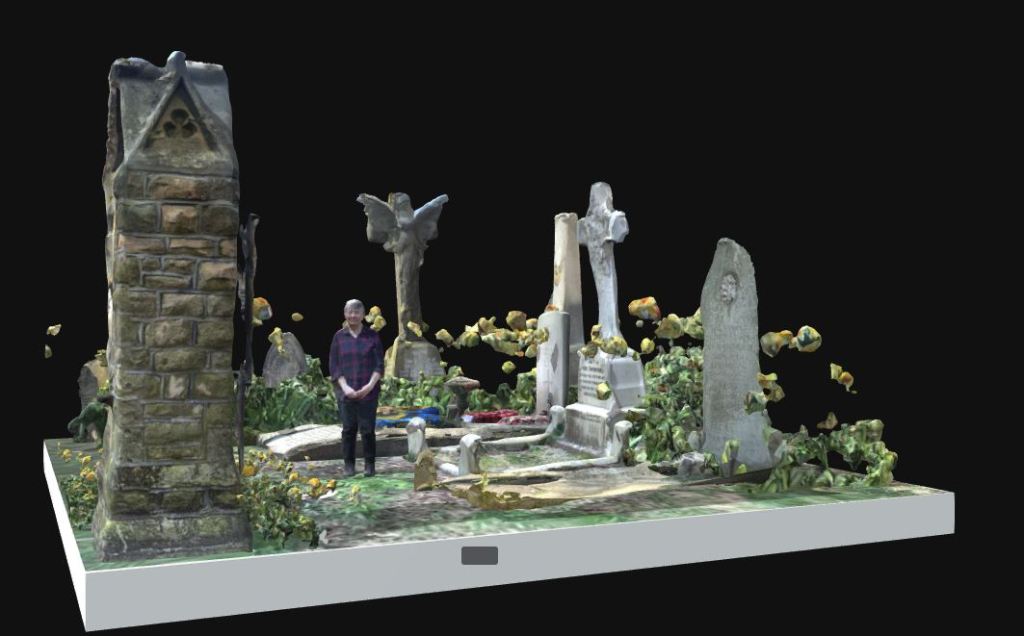
Last year I was invited to take part in a project called StoryTrails. Fifteen locations across the UK were represented in this immersive storytelling project. Events in Swindon included an augmented reality trail called ‘Snapping Swindon with the Hoopers’, which involved visiting present day locations and viewing them as photographers William and Mary Hooper saw them a hundred years ago.

The other part of the project was a series of short interviews with local people talking about the places in Swindon that have a special meaning for them.

I met Lucinda in the cemetery on a beautifully sunny, but rather windy spring day. where we grappled with some unfamiliar technology (I was her first interviewee) and tried to capture the birdsong.

You can read all about the project on the StoryTrails website, which is full of futuristic phrases such as ‘3D dioramas’, ‘immersive installations’ and ’emotional geography,’ but if you don’t understand what all that actually means you can click on to this link. Here you will find not only me but a whole cast of local people talking about Swindon. My favourites include Lee who talks about growing up in The Limes, a boy’s home in Upper Stratton; Nancy, who speaks so movingly about her husband Ashley and the Prospect Hospice, and Martha who loves living in her little house in the Railway Village.

The Cost of a Kiss?

The re imagined story …

Arranging this evening had been an organisational nightmare, I can tell you. I had to persuade Daisy to come out with me in the first place, then I had to wait until she had a Saturday evening off work. Probably the most difficult task was getting my father to allow me the use of the pony and trap. I couldn’t tell him I planned to take a young lady for an evening drive, he already thought I was irresponsible and not to be trusted. In the end I told him a lie. I said a friend had to make an emergency trip into the Medical Fund Hospital. I could hardly have guessed how prophetic this would be.

I managed to drive the pony and trap out of the yard without him glimpsing me. He would surely have seen through my deception had he caught me wearing a new collar and my Sunday best jacket.

I pulled up outside the manor house and waited for Daisy. I didn’t really know what we could do or where we could go, I hadn’t planned that far ahead. But it was a beautiful evening so I suggested we go for a walk through the copse to the stream.

I parked the pony and cart at the road’s edge along Church Hill. Mol was a placid old horse, I knew she would stay where she was left. I never thought of the bend in the road or that the light might soon be fading. I never imagined there would be any other traffic at that time of the evening, quite forgetting the shopper’s bus from Moredon to Swindon.

All I could think about was Daisy and how beautiful she looked that summer’s evening and whether she would let me kiss her as we walked down by the stream.

We had hardly walked into the copse before we heard the sound of galloping horses and raised voices and the Moredon bus travelling down the hill at a furious speed. Suddenly there were shouts and screams and a splintering crash.

Daisy had already begun to run back to the roadside. The pony and trap still stood where I had left them, but all around was a scene of mayhem. The bus had crashed into the bank, throwing several passengers out of the vehicle and onto the road. The driver must have climbed out, or perhaps was thrown out, as he stood between the two horses holding their bridles, attempting to calm them.

Everything was in chaos. A woman lay on the ground beneath the bus while others were trapped inside. I saw one poor man so covered in blood I could hardly see his features.

Daisy rushed forward to be of assistance while I stood rooted to the spot. “What will I tell my dad?” I pleaded. Could the trap I had left unattended just beyond the bend in the road be the cause of this disaster? I could tell by the expression on Daisy’s face that she thought so.

Valentine 2

The facts …

Road Car Accident at New Swindon

Several Persons Injured

One Man Dies

As already reported, an accident occurred on Saturday evening that to the 8.40 pm car from Moredon to Swindon, by which several persons received injuries, and unfortunately in one case a fatal result has followed. It appears that on Friday and Saturdays special cars are run to Moredon by the Swindon Road Car Company to enable persons to visit Swindon for shopping purposes, etc.

On Saturday last this car left Moredon as usual. On arriving at the Church Hill, Rodbourne, we are informed (and we give it with all reserve) that the driver did not put the brake full on, but allowed the horses to keep up the pace whilst descending the hill. The car was running on the right side of the road, and on turning the corner just below the churchyard a baker’s cart belonging to Mr H. Robins, baker, of Moredon, was seen. The driver immediately pulled to the left side, and ran into the bank, the swing turned the car over on its side. The occupants of the front seats were thrown out, and those inside were violently thrown about.

Assistance was soon to hand, and everything was done on the spot that was possible. Just after a waggonette belonging to Mr Hall, of New Swindon, and conveying a party of cricketers to Swindon, arrived. This party quitted the conveyance, and the injured were conveyed to the GWR Medical Fund Hospital therein. There were five adults and three children brought to the Hospital. After they had been attended to by Dr. G. Rodway Swinhoe, they were sent home with the exception of a man named Harry Marshall, a married man with a family, and residing at 17 Morse Street. He was suffering from a nasty scalp sound and an injury to his back. On enquiring this morning, we find he is progressing favourably.

Another man, named Herbert Newsome, a cripple, living with his parents in Spring Gardens, was found to be suffering from a cut on the forehead and chin. After receiving attention he was driven home. It appears however, that he suffers from bleeding, and on Tuesday it became so serious that he was removed to the Hospital about 2 am. Under the careful treatment of the staff the haemorrhage was stopped. He died, however, last evening and the cause of death will be the subject of an inquiry this afternoon. Deceased who was quite a young man had been a cripple for some seven years He was a member of the Wesleyan Chapel in Princes street and on the day of the accident was returning from the anniversary tea in connection with the Moredon Wesleyan Chapel in company with friends.

The Matron told us that the people presented an awful sight on their arrival at the Hospital on Saturday evening last ….

Extract from the Swindon Advertiser Friday June 9 1899

 At the inquest the bus driver told how he had worked around horses all his life and was an experienced coachman who had until recently lived in London. He said he had never had an accident before in his life.

A number of contributory factors to the accident were revealed – the bus was overloaded, braking equipment had failed and passengers said the driver was travelling too fast.

‘The Doctor’s Evidence

Dr G.R. Swinhoe said he was called to the cases at about 11 o’clock on Saturday night, and found two women and three men at the GWR Hospital, suffering from injuries received in the accident. They were all brought there in a carriage. Amongst them was the deceased, and when witness saw him he was told that he (deceased) was a “bleeder,” or a person who would bleed at the slightest scratch. Witness therefore attended him first. They did what they could for the man and put on such pressure as he could stand, and they apparently stopped all bleeding. He went home, but haemorrhage started again, and on Tuesday he was taken worse, and sent back to the Hospital. He (witness) would not have sent him out, but he had a little doubt as to whether he should or not, because he was not a factory hand. He eventually died from the effects of bleeding as a result of the accident. There were two cuts – one on the scalp and a very tiny one on the chin. It was this latter which caused the most trouble, for they could not get any pressure on it to stop the bleeding. Deceased must have lost a tremendous amount of blood before he came to the Hospital.

The Coroner said he thought they could all understand how the accident happened, and from the evidence no blame rested on the driver of the car.

The jury then returned a verdict of “Accidental death.”’

Extract from the Swindon Advertiser published Friday, June 16th 1899

Herbert Newsome was born in Twerton on Avon, the eldest son of Joshua and Lydia Newsome. At the time of the 1891 census the family were living at 6 Spring Gardens. Joshua was a general labourer in the GWR Works while Herbert worked as a Clothier’s Assistant. Herbert was buried in plot C934 on June 13, 1899.

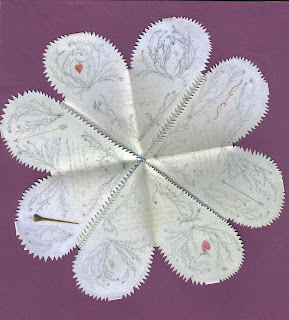
You might also like to read a story I wrote some years ago about a local Valentine card (see above) that appeared on the Antiques Roadshow in 2008.

Alfred James Charsley – theatrical impresario

“For someone who clearly loved the limelight, Alfred James seems to have been quite camera shy,” said Rhoda Murray who kindly supplied this story of her ancestor. The grainy, black and white photograph (see below) is all that Rhoda has been able to find.

Alfred was a colourful character, changing his name to James Allington Charsley and somewhat creative when applying his age to official documents. Born in Leicester in 1867, the fourth of Joseph and Lucy Charsley’s five sons, Alfred took to the stage performing a song and step-dance routine in pantomime aged 11-13. however on leaving school he worked in the boot making industry as did the rest of his family.

In 1892 Alfred briefly joined the London Metropolitan Police Force, but by the time of the 1901 census he was living in Northampton, once again working in the shoe and boot making industry, while continuing to pursue his theatrical career. By the time of his marriage to Emily Beatrice Wheeler in 1910, Alfred described his occupation as ‘Theatrical Manager.’

Alfred and Emily arrived in Swindon in 1934 when he took on the lease of the Playhouse Theatre in the Mechanics’ Institution.

He died on October 17, 1940 at Roundway Hospital, Devizes. His cause of death was recorded as broncho-pneumonia.

Emily took over the lease of the Playhouse and continued to live at the home she had shared with Alfred at 94 Croft Road. In April 1950 she married Arthur William Thraves and moved to Stratton St Margaret. She died in January 1962 and was buried with Alfred in grave plot C1750.

The Mechanics’ Institution Theatre c1931

Death of Mr J.A. Charsley

Swindon Playhouse Lessee

One of the best known personalities in the provincial theatrical world, Mr J. Allington Charsley, lessee of the Playhouse, Swindon, died last night after a short illness. He was 69 years of age.

Mr Charsley was taken seriously ill less than a fortnight ago.

A native of Staffordshire, Mr Charsley had been associated with the theatre from his early days, filling with distinction the roles of actor, producer and lessee. He was particularly interested in opera, and for many years toured the biggest company that has ever been assembled to play in provincial towns and cities. Many men and women, who have since gained world wide fame, were first brought to public notice as members of Mr Charsley’s companies.

He had a remarkable memory for names and dates, and would often recall how some of the stars-to-be were discovered in the back row of his choruses.

Mr Charsley has made a host of friends during his six years at the Playhouse, and in face of great difficulties has succeeded in bringing to his theatre – the only one in Wiltshire presenting flesh and blood shows – many of the best known variety and revue stars of the present day.

A fine sportsman, he was particular interested in racing and football, and his generosity, when approached to assist any deserving cause, was widely appreciated.

He leaves a widow, who is carrying on the Playhouse.

A brother of Mr Charsley, Mr, Chris Charsley, who is now living in retirement at Weston-super-Mare, was formerly Chief Constable of Coventry.

North Wilts Herald, Friday, 18 October, 1940.

Many thanks to family historian Rhoda Murray for providing the story of Alfred James Charsley – theatrical impresario.

William Henry Bennett – Press Reader

We tend to think that back in the day people remained pretty much where they were born, growing up, marrying and dying in the same village or somewhere very close. But it has always been a fact of life that people went where the work was and Swindon is a perfect example. Take William Henry Bennett and his wife Edith, buried in Radnor Street Cemetery.

William and Edith married at St Michael’s Church, Wood Green on April, 8, 1888. William was a 32-year-old widower and Edith was just 20 years old. At the time of their marriage they both lived in Wood Green. William worked as a Press Reader and the couple lived at various addresses in Kentish Town and Camden for most of their married life.

But by the time of her death in 1931 Edith was living at 43 Stafford Street, Swindon. William died less than three years later when he was also living at 43 Stafford Street. Their eldest daughter Elizabeth Mary Sophia is buried with them and at the time of her death in 1952 she was living at 14 Prospect Hill.

So, what had brought the family to Swindon? Not a job in the Works, which is what invariably was once the attraction. The clue comes with Elizabeth Mary Sophia’s home in Prospect Hill in 1952.

Prospect Hill begins at the Beehive pub on the corner of Western Street with the Rehoboth Chapel opposite and climbs up to the junction with North Street. Prospect Hill doesn’t appear to come within any of the Swindon Borough Council’s Conservation Areas, which is a bit of a shame as it is one of the streets that links the history of the two towns, Old and New Swindon.

When the railway settlement at the bottom of the hill was first built in the 1840s the amenities were pretty poor. The only shops were in Old Swindon, which constituted a long, muddy walk for the housewives across fields and up Prospect Hill. Development of this area began in 1869 when the Berkshire Estates Company laid out Dover Street, Western Street, North Street and Prospect Hill with part of Cross Street, although building was not completed until after 1885.

The 1911 census records George Smith living at No. 14 Prospect Hill with his son Arthur. George worked as a groom, most probably for one of the wealthy Old Swindon families, while Arthur was an Engine Fitter’s labourer in the GWR Works; a family embracing both halves of Swindon’s history. But George and Arthur were only tenants at No 14, the house belonged to our William Henry Bennett. In 1881, twenty years earlier, William was working as a jobbing printer and lived at No. 14 with his first wife Margaret Elizabeth.

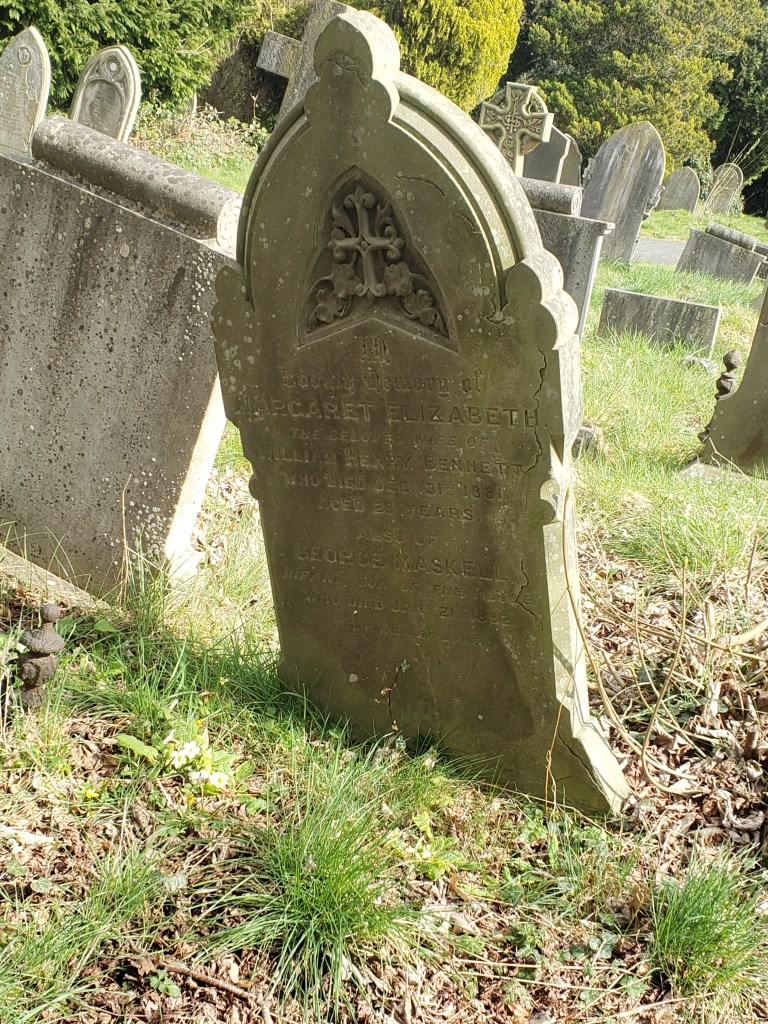
Sadly, Margaret died in January 1882 aged just 29 years old, shortly after giving birth to a baby boy. Her son, George Maskell Bennett, died later that same month. They are buried together in Radnor Street Cemetery in plot E8212.

When did William decide to move to London? Perhaps he could not face living at No. 14 where he and Margaret had excitedly prepared to welcome their baby? 

When he eventually returned to Swindon with his second wife Edith, more than 20 years later, they made their home in Stafford Street. However, he had obviously held on to the house in Prospect Hill during the time he lived in London as this is where his daughter Elizabeth Mary Sophia ended her days in 1952.

Edith died on September 10, 1931 at 43 Stafford Street. William died on May 2, 1934 at the Stratton Infirmary and was buried with Edith in plot C2A close to the cemetery chapel. Their daughter Elizabeth Mary Sophia was buried with them in 1952.

Margaret and her baby are buried not too far away.

Prospect Hill

The grave of William, Edith and Elizabeth Bennett