Can you call yourself a Swindonian? Many an argument has ensued about how long you have to live in Swindon before you’re considered a local; 20 years, 30 years, 2 generations – or more?
Walter Rumble was born in Chieveley, Berkshire in 1864 and began his working life as a Carter Boy (a farm servant). In 1890 he married Annie Caines and by the time of the 1891 census the couple were living at 128 Stafford Street. Walter worked as a general labourer, most probably in the GWR Works where he remained for the rest of his working life.
Yesterday I met Walter’s great-grandson at the Swindon Society Open Day held at the Lawn Community Centre, Guildford Avenue. There were displays from the Society’s extensive photographic collection (including the many albums of Beaney photos) talks about Alfred Williams and Radnor Street Cemetery and more local historians on call than you could shake a stick at!
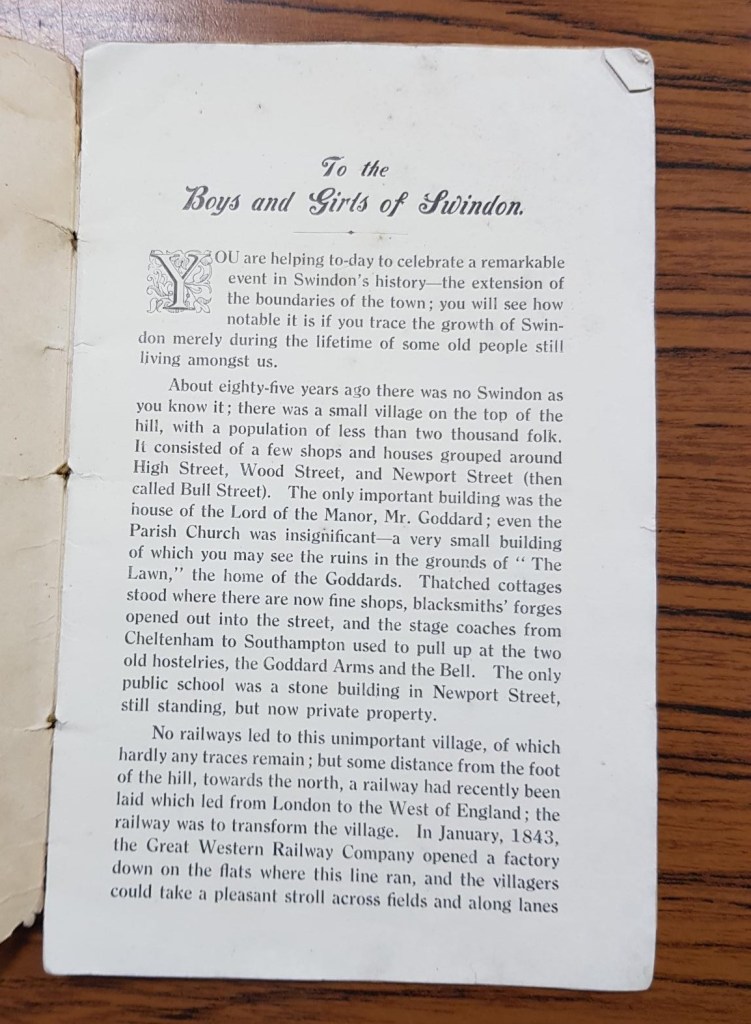
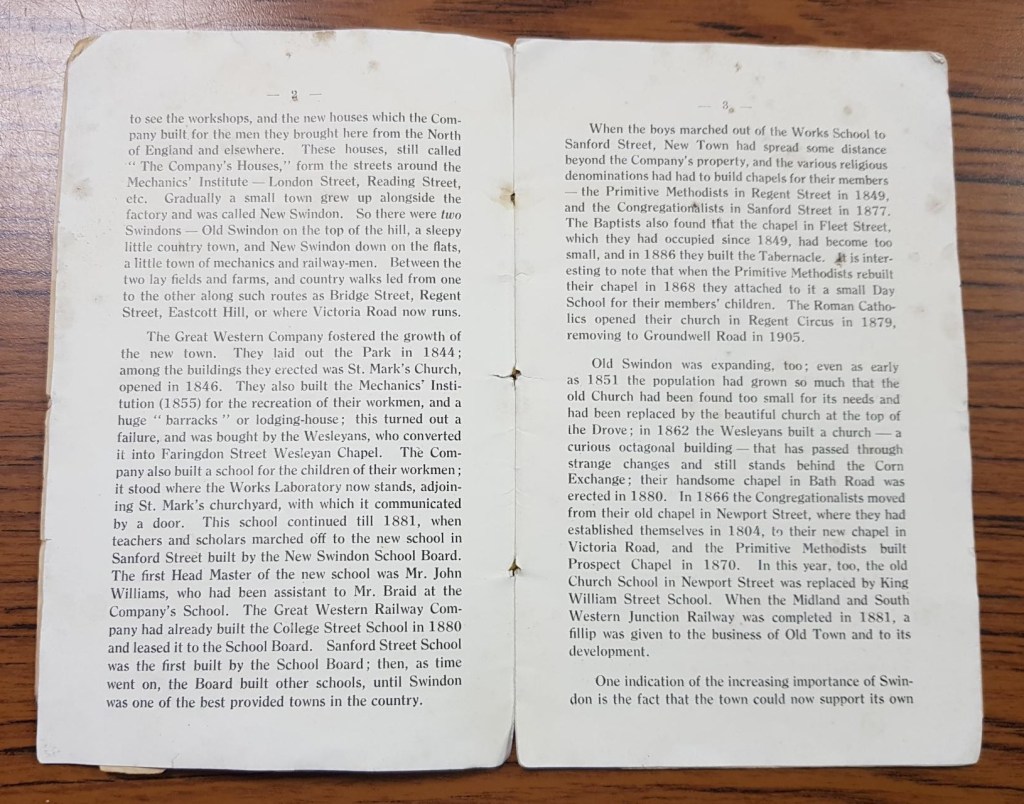
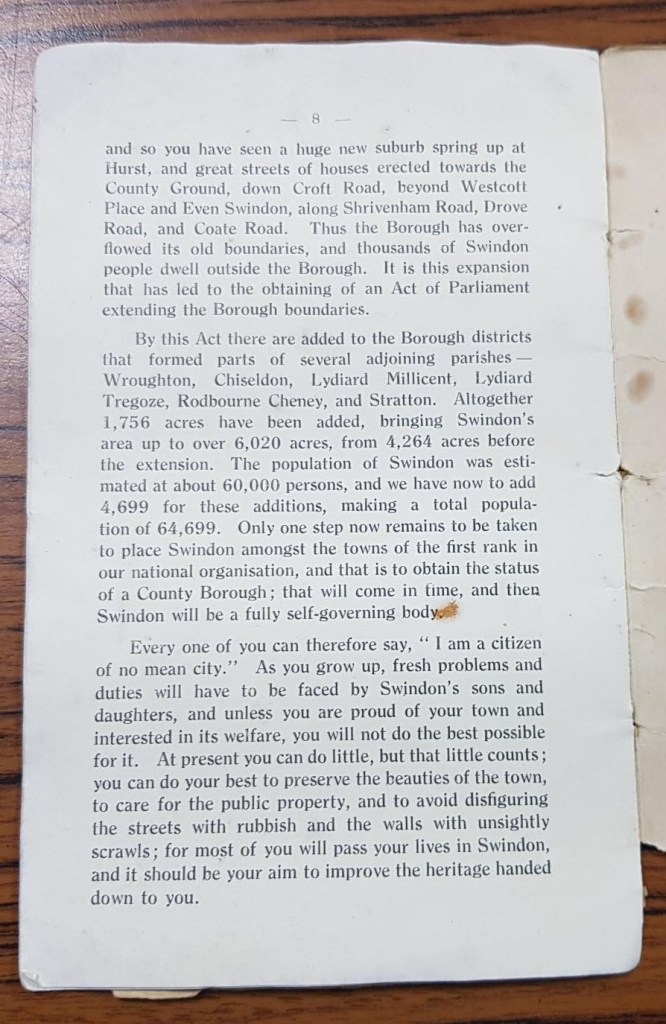
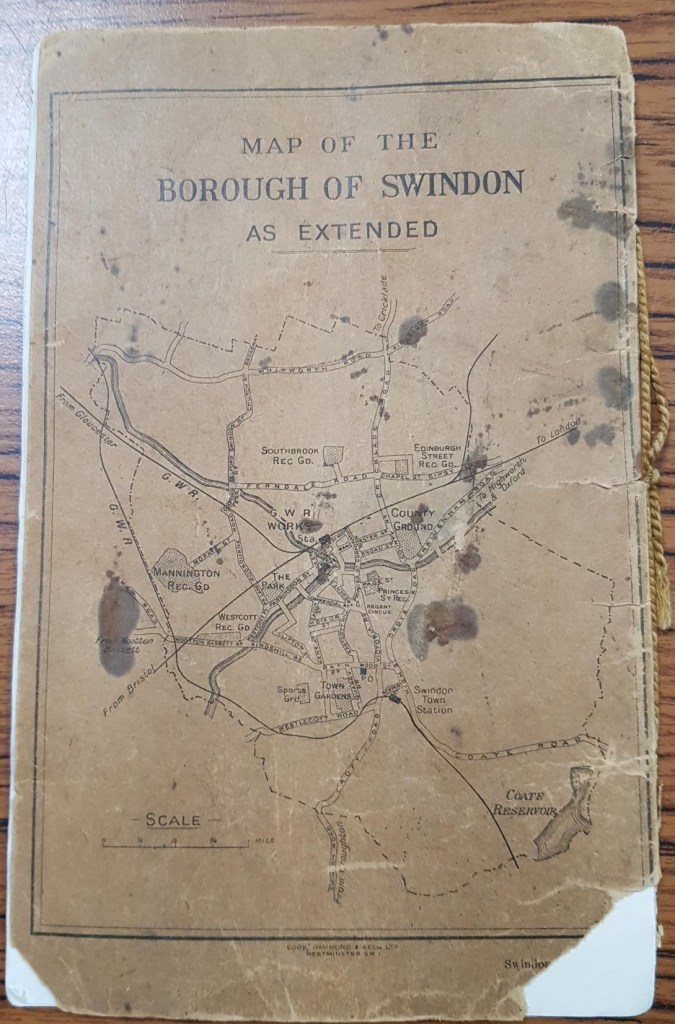
And then Mr Rumble showed me a booklet his father was presented with as a schoolboy in 1928 – Borough of Swindon – Extension of the Borough 1st October 1928.
Walter and Annie lived at various addresses in Stafford Street where Annie died at No. 105 in 1926. She was buried in Radnor Street Cemetery in grave plot D826.
Walter later lived with his son Frank and daughter-in-law Violet at 134 Ferndale Road where he died aged 80 and was buried with his wife in 1944.
I think members of the Rumble family can consider themselves Swindonians – but what about you?
In December 1930 more than 200 men retired from the Great Western Railway Works, an event of such importance to warrant a detailed article in the first January edition of the North Wilts Herald published in 1931.
The names and addresses of those men forced to retire under the introduction of the 66 years age limit were recorded in appreciation of their long years employed in the Works.
Mr E.T.W. Robins – A large number of different interest have claimed the attention of Mr. Robins. He has had 52 years’ service as a fitter with the GWR Co., and has been a chargeman for 37 years, working as a fitter in the B Erecting Shop.
He is now 66 years old. A Londoner by birth, he has lived in Swindon since he was a child.
Mr Robins was one of the first secretaries of the Swindon Hospital Saturday Fund in 1894 and 1895, and has also been a member of the Hospital Management Committee.
He has done a great deal of church work at St. Mark’s, Swindon.
He is a member of the Foresters (Court Britain’s Pride). He was at one time secretary of the Swindon Chrysanthemum Society.
Swindon Veterans of Industry – North Wilts Herald, Friday, January 2, 1931.
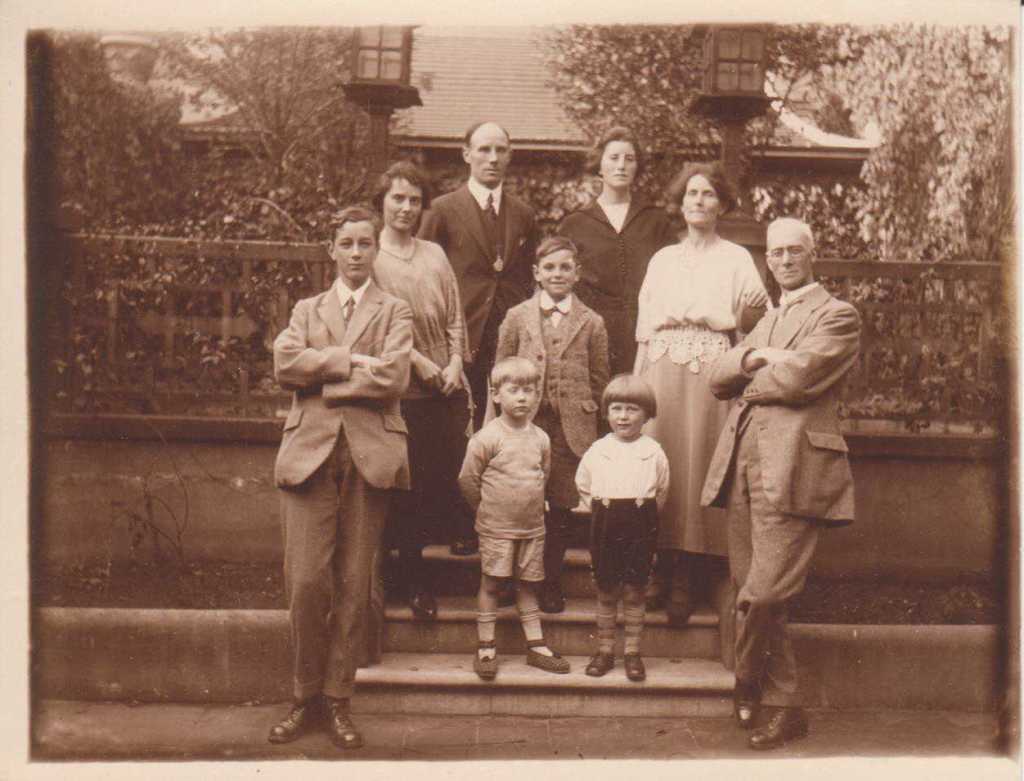
Agnes and Edward Thomas William Robins are pictured to the right of the photograph
Edward Thomas William Robins was born in March 1864 and baptised at St. Stephen’s Paddington June 26, one of Thomas and Henrietta’s 11 children. The family appears on the 1871 census as living at 16 Reading Street.
Edward married his first wife Hannah Williams on February 10, 1889 at the Independent Church, Victoria Street. Following her death he married his second wife Agnes Thomas at St. Mark’s on April 17, 1897. The couple had two sons Thomas Arthur and Cecil.
Edward Thomas Wm Robins died aged 82 years and was buried on March 25, 1947 in grave plot B3102 where Agnes joined him when she died in 1948.
Sunday September 15 saw the last day of the fab Heritage Open Days 2024 event. Apparently Swindon had more events on offer than historic Bristol, so we were well proud. Thank you to the fantastic Karen Phimister for all her hard work.
At Radnor Street Cemetery we welcomed more than 80 people to a guided cemetery walk. Yes, it was a bit crazy and yes, we were concerned that people couldn’t hear us, but we can’t turn people away and Andy and I both have loud voices!
I managed to attend quite a few other events (not as many as I would have liked) including an excellent talk at Swindon Central Library – Electric Wonderland? Women and the 1930s Modern Home by Sarah Yates.
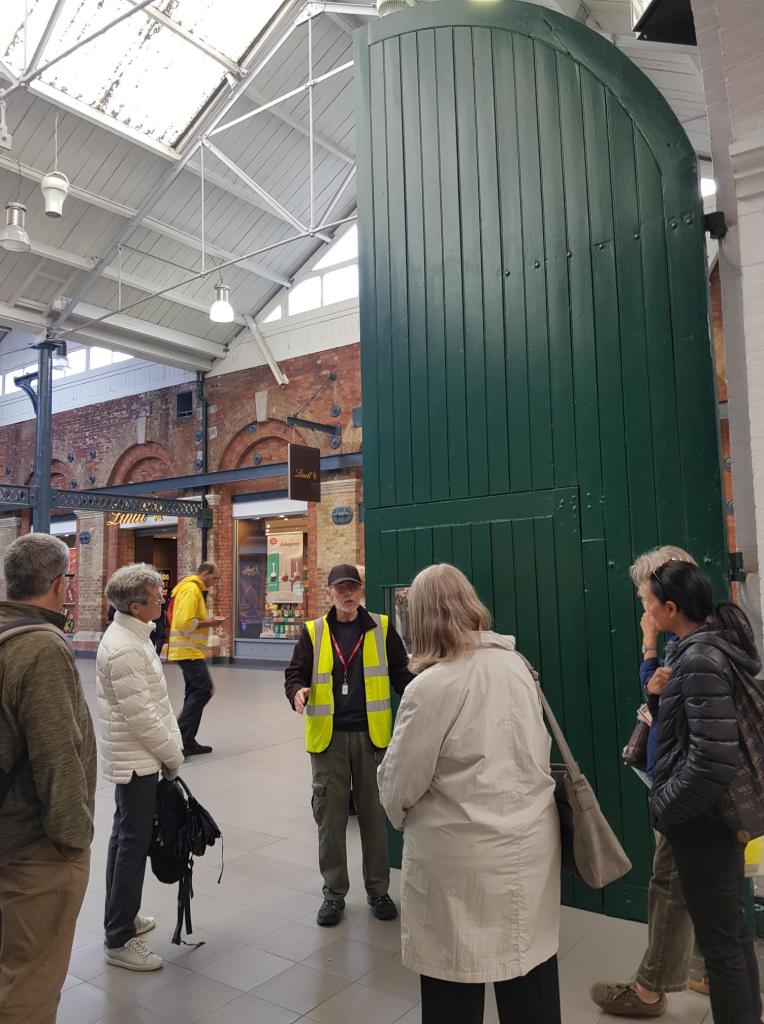
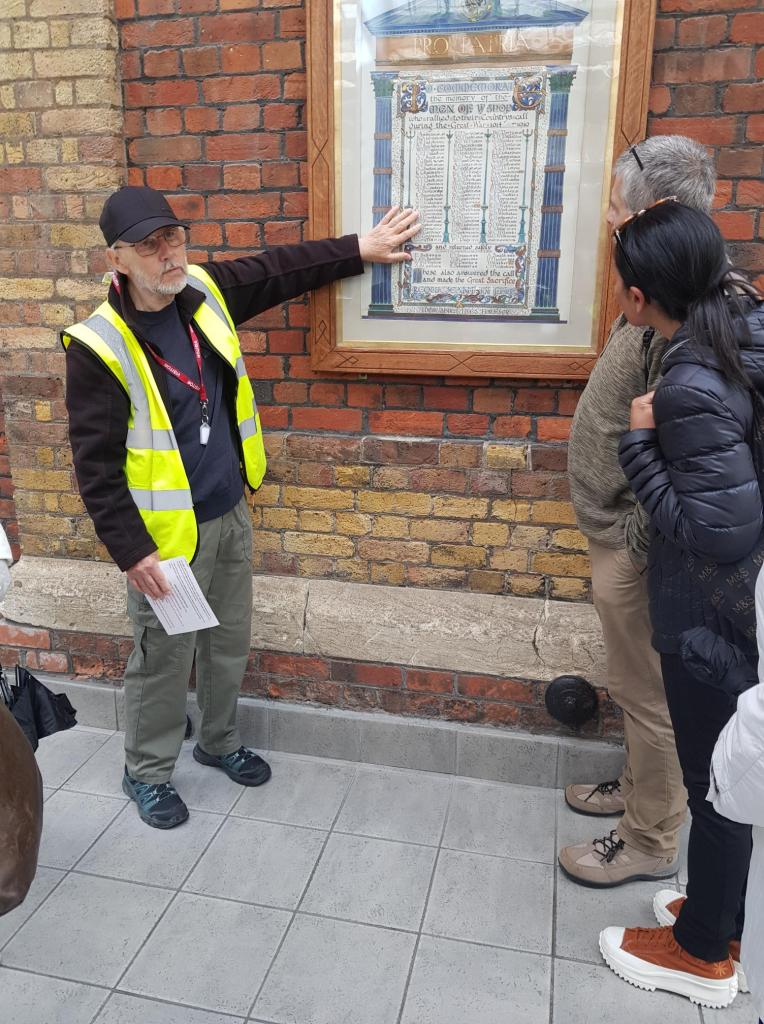
A guided tour of the Railway Village with Karen followed by a GWR Factory Tour with Gordon.
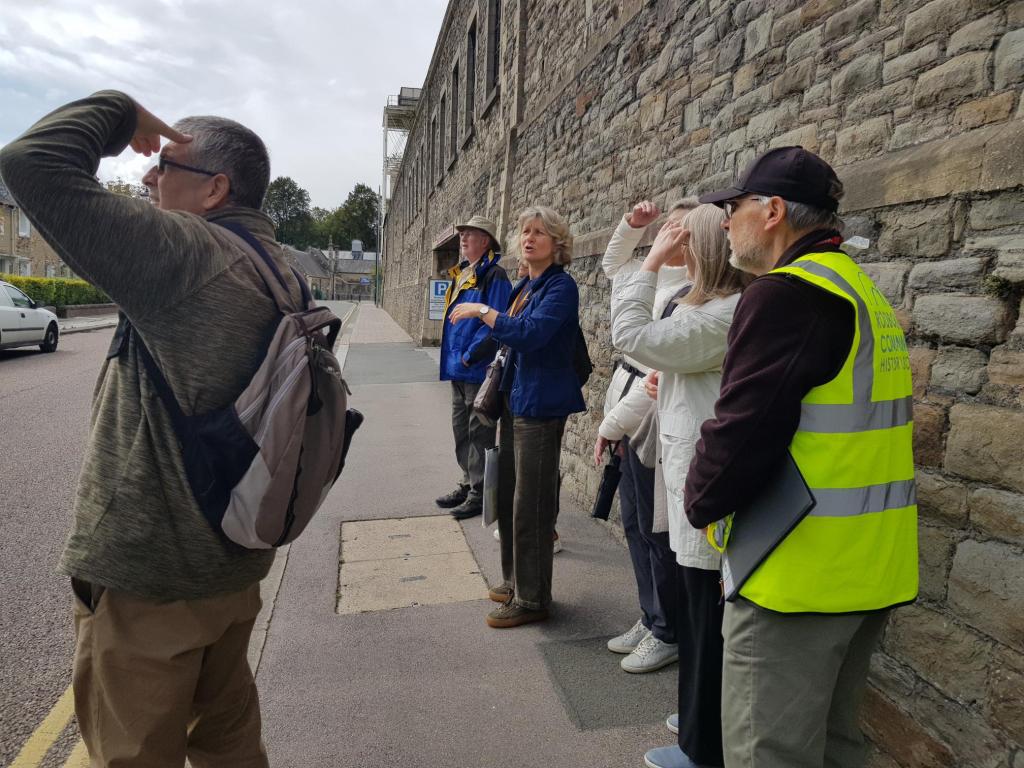
And then a guided tour of the Prospect Place Conservation Area with Michael and Geoff.
Here are a few photographs.
Radnor Street Cemetery guided walk
Guided tour of the Prospect Place Conservation Area
Railway Village with Karen
GWR Factory Tour with Gordon
And if you’re hungry for still more history join the Swindon Society for an Open Day this Saturday September 21, at the Lawn Community Centre on Guildford Avenue, running between 10.00am and 4.00pm.
How good are you at dating photographs? This one is thought to have been taken around 1920. I have been unable to discover any details about this photograph taken outside W.J. Knee’s shop in Emlyn Square. What clues are there in the fashions? The girl at the centre of the group is holding a photograph – is this someone who has recently died or someone who has left Swindon to work abroad? And finally, is this a gathering of the Knee family?
The following two stories may help us date this photograph.
Postcard reproduction
William James Knee was the eldest of Arthur and Eliza Knee’s large family of 10 children. William was born in Melksham but by the time of the 1891 census the family had moved to Medgbury Road, Swindon where Arthur was employed as a Rivetter in the Works.
William also entered the GWR and in 1911 he was working as a labourer in Newport, Monmouthshire where he was lodging with a relative by the name of John Knee. That same year he left Newport to return to Swindon where he subsequently opened a newsagents shop on the corner of London Street and Emlyn Square.
Death of Mr W.J. Knee -The death has taken place at the Old Manor House, Salisbury, of Mr William James Knee, son of Mr and Mrs Arthur Knee, of 78 Medgbury Road, Swindon. Mr Knee, who was in his 46th year, carried on business as a newsagent in Emlyn square for a number of years. He had a breakdown in health and went to Salisbury for treatment of an internal complaint. He was well known in Swindon and was popular with many GWR employees. A telegram announcing his death was received this morning.
North Wilts Herald Friday January 10, 1930.
William was buried on January 13, 1930 in grave plot D494. His mother Eliza died in 1937 and his father Arthur in 1940 and both were buried with him.
The second story is that of William’s younger brother Dennis Arthur Knee.
Dennis was born in 1895 after the family arrived in Swindon, and at the age of 16 he was working as a Rivetter Carrier in the Works. But like so many men of his generation, Dennis would leave the Works to serve in the First World War. Unfortunately, Dennis’s attestation papers do not survive but we do know that in 1917 he was serving as a gunner with the Royal Marine Artillery on board HMS Vanguard. Dennis died on July 9, 1917 when the Vanguard sunk following a series of internal explosions while on a routine patrol in Scapa Flow. He was 22 years old and one of 843 out of 845 men who died that night.
Acting Bombardier Dennis Knee is remembered on the Portsmouth Naval Memorial.
Please get in touch if you have any further information about this photograph and/or the Knee family.
Have you picked up your copy of Moonies, Movers and Shakers yet (available from the Library Shop, Central Library, Hobnob Press and Amazon)? If so, you will have read about Frank Wallington.
Frank Samuel Wallington was born in Gloucester in 1865, the son of Francis and Mary Ann Wallington. By 1871 the family had moved to Swindon where Francis worked as a fireman on the locos, eventually progressing to engine driver.
By 1891 Frank had completed his engine fitter’s apprenticeship in the Swindon Works and had moved to London where he boarded with his brother William in Plumstead.
He joined The Association of Wiltshiremen in London (The Moonies in London) and from 1893-1901 acted as Honorary Secretary. Frank eventually emigrated to the United States where he died in Eton, Georgia in 1936.
But other members of the family stayed in Swindon and found their final resting place in Radnor Street Cemetery.
Cemetery volunteer Bex discovered the family graves and what a fantastic job she made of clearing them.
Francis Wallington died aged 49 years at his home 4 Edgeware Road in May 1884 and was buried in grave plot A287. His wife Mary Ann survived him by more than 30 years and died aged 85. She was buried with him on May 31, 1916. These are Frank Samuel Wallington’s parents.
George Harry Wallington and his wife Maud Annie Kate are buried in neighbouring plot A288. George was another of Francis and Mary Ann’s sons and brother of Frank Samuel Wallington.
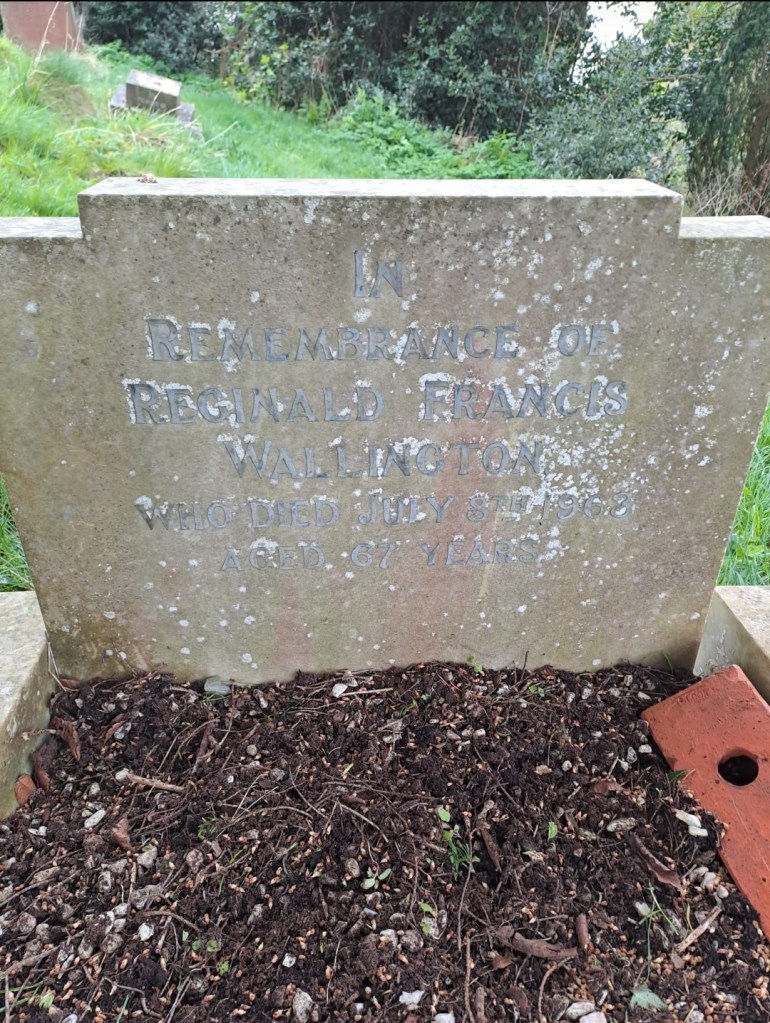
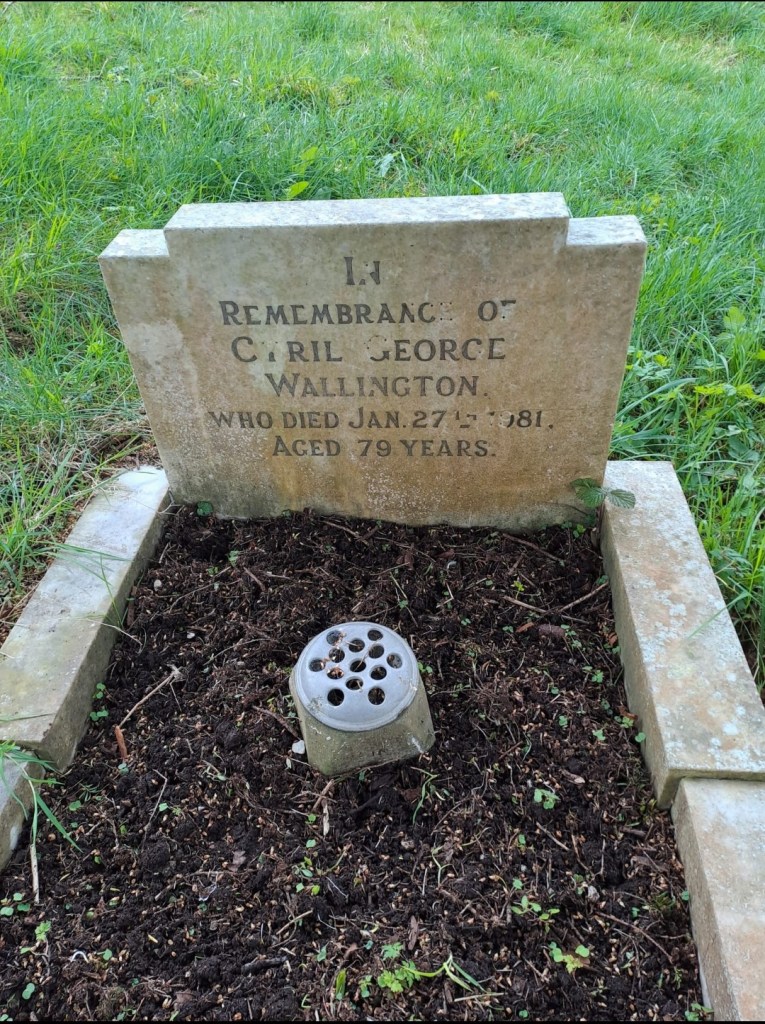
Buried next to George and Maud are their two sons, Reginald Francis Wallington who died in 1963 and Cyril George Wallington who died in 1981.
Before and after photographs of the Wallington family graves.
Love is the sweetest thing
What else on earth could ever bring
Such happiness to ev’rything
As Love’s old story.
How wonderful it must be to find love twice in a lifetime. In my mind’s eye I can see mother’s sardonic expression. She didn’t believe in love, or luck – she’d never had much of either in her life, but I was the eternal romantic.
Mother and I would go into town every Friday. We’d do some shopping and then we’d have afternoon tea in McIlroys. We used to meet Mrs Sessford, as she was then, at the bus stop on Kingshill Road.
Mother and Mrs Sessford were about the same age, but you would never have guessed it. Mother was, how can I put this kindly? Well let’s say she wasn’t a bundle of laughs. Mrs Sessford, on the other hand, was joyful, yes, that is the correct word to describe her. She was joyful.
Love is the strangest thing
No song of birds upon the wing
Shall in our hearts more sweetly sing
Than Love’s old story.
Mother always complained about the weather; it was either too cold or too hot. But for Mrs Sessford, the sun always shone.
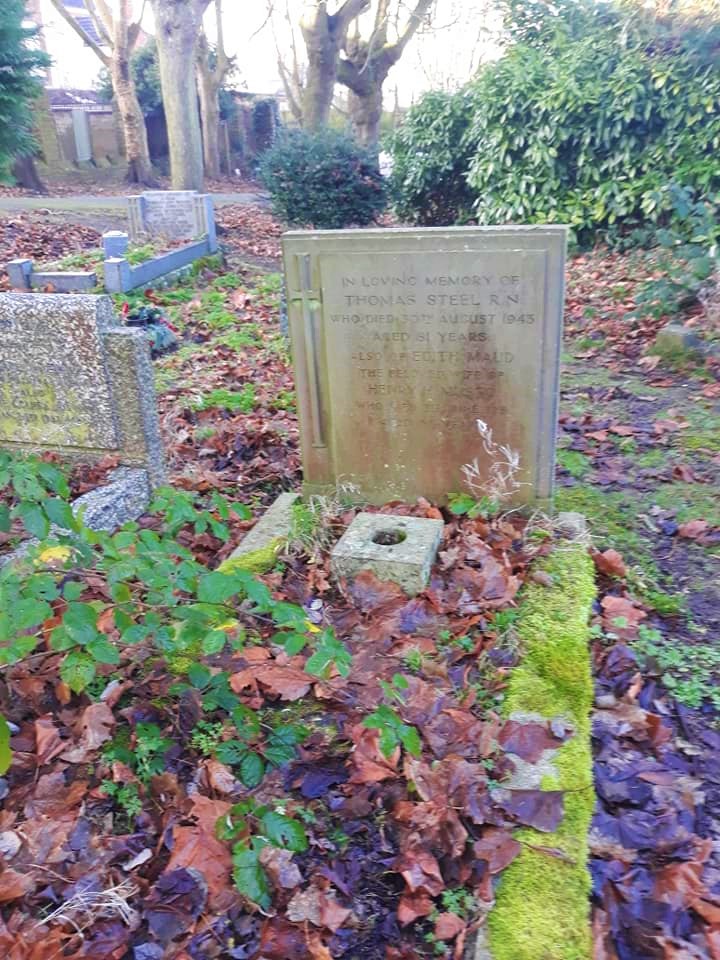
Mrs Sessford lived with her father at 155 Kingshill Road where he died on August 30, 1943. Within weeks Mrs Sessford married Henry Harold Musto.
Whatever heart may desire
Whatever life may send
This is the tale that never will tire.
This is the song without end.
“They must be almost 60,” Mother tutted. “There’s something fishy about it all, you mark my words. I bet he’s after her money.”
Mother thought it ridiculous. I thought it was rather lovely, and how lucky Mrs Sessford had been, to find love twice in her lifetime. Sadly, it passed me by completely.
Love is the strongest thing
The oldest yet, the latest thing
I only hope that fate may bring
Love’s story to you.
Love is the sweetest thing written by Ray Noble and performed by Al Bowlly 1932
The facts …
Edith Maud Steel was born on February 9, 1886, the eldest of Thomas and Letitia Steel’s three children. She grew up in Devonport where in 1908 she marred James Henry Sessford. Lieut Sessford died on September 15, 1927 at the Royal Naval Hospital in Chatham from Broncho Pneumonia and Cardiac Failure.
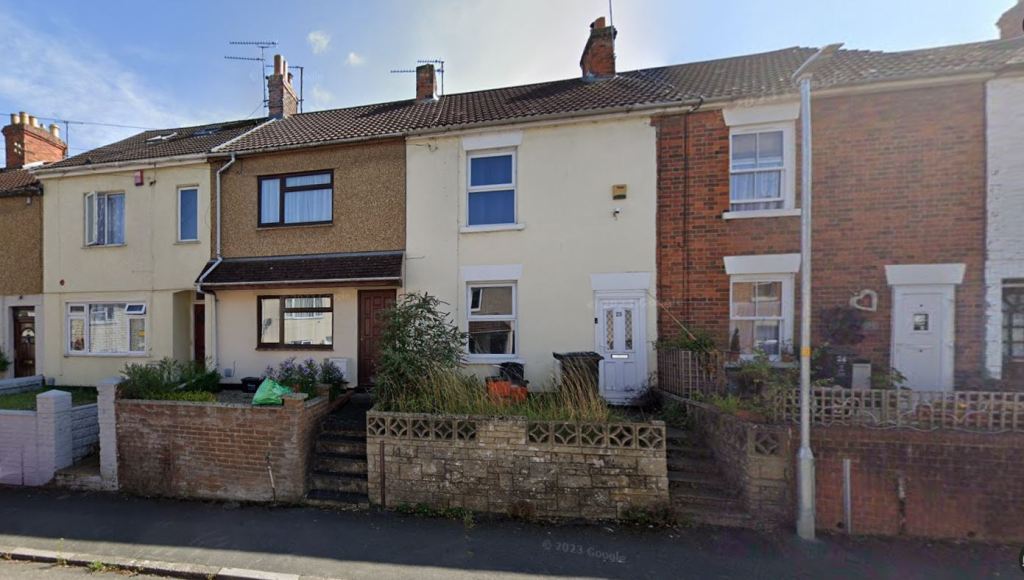
By 1939 Edith was living with her father Thomas, Chief E.R.A. Royal Navy (Retired) at 155 Kingshill Road. Thomas was 77 years old and Edith was 53.
Thomas died at his home on August 30, 1943. His funeral took place in Radnor Street Cemetery on September 2 where he was buried in plot C4911.
Edith married Henry Harold Musto in the December quarter of 1943. She died in St Margaret’s Hospital, Stratton St Margaret on June 3, 1951. Her funeral took place on June 7 when she was buried with her father. They are the only two interments in plot C4911.
Henry Harold Musto died in the December Quarter of 1971. His death was registered in the Plymouth district.
Henry Harold Musto was the only child of Joseph Henry Musto and his wife Margaret. He was a railway clerk in the Works and had grown up at 146 Clifton Street.
At the time of her marriage to Thomas Steel, Edith’s mother was living at 21 Regent Street; Letitia Fanny was one of William and Jane Musto’s five children, along with brother Joseph Henry.
This is the story of Thomas and Rhoda Timms. It’s the story of an ordinary family, like so many of the others we discover here in Radnor Street Cemetery.
Thomas was born in 1868 in Steventon, Berkshire. His father Joseph was an agricultural labourer and his mother was called Esther. Rhoda was born in 1873 in Yatesbury, Wiltshire. Her father Joseph Shergold was also an agricultural labourer. Her mother was called Sarah.
By 1897 Thomas had moved to Swindon and was living at 14 Westcott Place. Rhoda was living at 2 Brunswick Terrace. Thomas worked as a labourer in the Railway Works and Rhoda as a domestic servant when the couple married at St. Mark’s Church on October 23, 1897. Their first child, a son whom they named Harold Joseph, was born in about 1898. By 1900 the family were living at 24 Stafford Street where three daughters were born, Kathleen Rose in 1900, Winifred Evelyn in 1901 and Gladys Esther in 1909. All three girls were baptised at St. Paul’s Church. In 1913 another son, Albert Thomas, was born.
By then Thomas was working as a bricklayer in the GWR Waggon Works. The couple lived at 24 Stafford Street until Thomas died in 1952 and Rhoda in 1965. They are buried here in grave plot D390 with their daughter Winifred Evelyn Timms who died at St Margaret’s Hospital in 1994. She was 92 years old and although she died in hospital, her home address was given as 24 Stafford Street.
I’ve chosen to write about this family because they are typical of the average working class Swindon family and because the memory of Winifred lives on for one of our cemetery followers. Paul grew up in Stafford Street and remembers Winifred as a little old lady who always had a smile and a wave for her neighbours.
It was my privilege to try and find out a little bit about the lady he knew as Winnie and to be able to tell him where she is buried.
Victorian Swindon was the product of some daring speculative building. Streets grew up in rows of terraces as local builders bought up small plots of land. Sadly, today there are few remaining examples of the early names these builders gave their rows of terraces.
Built in 1883 by James Hinton, number 141 Clifton Street began life as 5 Graham Terrace. The first owner was Alfred Reynolds, a coach builder obviously keen to invest in the Swindon property boom, who bought the property from James Hinton in 1884 and speedily sold it on.
On May 13, 1884 schoolmaster Samuel Snell paid £200 for No 5 Graham Terrace. The deeds provide some fascinating details of the property and a glimpse of the Kingshill area in the middle of development.
The house at 5 Graham Terrace, Clifton Street is described as being ‘lately erected.’ The parcel of land on which the property was built had “a frontage to the said Street and being of the width throughout of fourteen feet eight inches.” It was bounded “on the South Western end by a back road ten feet wide as the same is made or intended to be made parallel with Clifton Street.”
Samuel Snell didn’t live long in the house on Clifton Street before moving into the school building at The Willows, The Sands with his family, two assistant masters, three domestic servants and nine boarders.
John T. Mayell, a 24 year old boilermaker from Brierly Hill in Staffordshire was the next owner and moved into 141 Clifton Street with his wife and baby daughter. In 1889 he took out a second mortgage on the property with Swindon solicitor Walter H. Kinneir, which he had repaid by 1901. John lived in the house for more than ten years.
By 1899 the street was built up along its entire length saving a few empty plots on the bend of the road opposite the Clifton Hotel. The new road mentioned in the 1884 deeds is Exmouth Street.
In 1911 the property came on the market again. Jabez Bull was the owner occupier and he sold the house to Charles Frederick Farr, an engine erector who lived just up the road at number 159. Although now commonly known as Clifton Street, prospective buyers were reminded that the property had once been known as 5 Graham Terrace.
James Hinton, New Swindon Local Board member, had land laid out between Dixon, Stafford and Clifton Streets by 1879. In 1883 he built numbers 136-145 Clifton Street and the following year he built numbers 70-81 on the same street.
In 1880 James Hinton sold an 11½ acre plot in the middle of the Kingshill estate to Swindon’s two Local Boards for the building of the town’s much needed new cemetery.
He later served as Vice Chairman of New Swindon Local Board and became Mayor of Swindon in 1903-1904. Hinton Street in Gorse Hill was named after him. James Hinton died in 1907 and was buried in Radnor Street Cemetery.
When the churchyard at St. Mark’s was forced to close to new burials in 1881 it came as a great sadness to the railway families of New Swindon. During Victorian times death was a large part of life; there were funeral rituals to observe and traditions to be kept and large, municipal cemeteries were not so common outside the big cities. But now Swindon was to have one and the first families to have moved here in the 1840s were to be separated in death.
During my recent walk around the churchyard I came across the grave of George and Susannah Margetts. George was born in Buckingham in 1783 just as the Industrial Revolution was picking up pace and more than 50 years before the birth of New Swindon.
In 1841 George was landlord at The Ship in Wantage, Berkshire where he lived with his second wife Susannah and five of his 10 children. But by the late 1840s he had arrived in Swindon where the family lived in Exeter Street. Aged 67 he was working as a carpenter, presumably in the Works as he lived in one of the company houses. Still living with his parents was youngest son Samuel, an apprentice boilermaker.
Another son, Jesse, had also arrived in Swindon where he married Martha Townsend at St. Margaret’s church in Stratton St. Margaret on Christmas Eve, 1849. In 1851 he was living in Taunton Street with Martha and their 10 month old daughter named Susannah after his mother. Jesse worked as a labourer, again presumably in the Works as he too lived in the railway village. Jesse and Martha went on to have a large family of at least 10, possibly 12, children.
The first person buried in the St Marks grave plot was not George, but that of his six year old granddaughter Ellen, one of Jesse and Martha’s children, who died in 1862. There was obviously money enough to buy this plot and in due course an elegant headstone – not every family could afford this as is evident by the paucity of memorials in the churchyard. George died in 1868 having attained the impressive age of 85. His wife Susannah died in 1871.
When Jesse’s wife Martha died in 1885 she was buried in the new Swindon Cemetery, which later became known as Radnor Street Cemetery. She was buried in grave plot E8294.
Jesse quickly married again and in 1891 is living at 72 Albion Street with his second wife Eliza and his youngest son John who is employed as a boilermaker in the Works.
Eliza Margetts, Jesse’s second wife, died in 1904 and was buried in grave plot E7886.
When Jesse died the following year he had the choice of two wives and two burial spaces. He chose to be buried with his second wife Eliza. The remaining space in this grave was later occupied by his sister Rosa who died in 1920.
Sadly, the inscription on Martha’s headstone had partially disintegrated but the burial registers reveal that she does not lie here alone. Her son, also named Jesse, died in 1916 and was buried here with his mother.
I’m sure further research will discover plenty more members of the Margetts family buried in Radnor Street Cemetery, and maybe some at St. Mark’s before the churchyard was closed in 1881.
The first time I heard the story of Charles Edgar Haggard was more than 20 years ago on a cemetery walk with Mark Sutton. He told how Charles, a regular soldier at the outbreak of war in 1914, was captured in 1915 and spent the rest of the war in a German prisoner of war camp.
Mark told the story with such pathos that it has always remained in my memory and I too have written and spoken about Charles Haggard on many occasions since.
This is the story of his brother Edward and his three sons, Gordon, Eddie and Cyril.
In the middle of Section C there is a cluster of Haggard family graves, the family of Charles’s brother Edward.
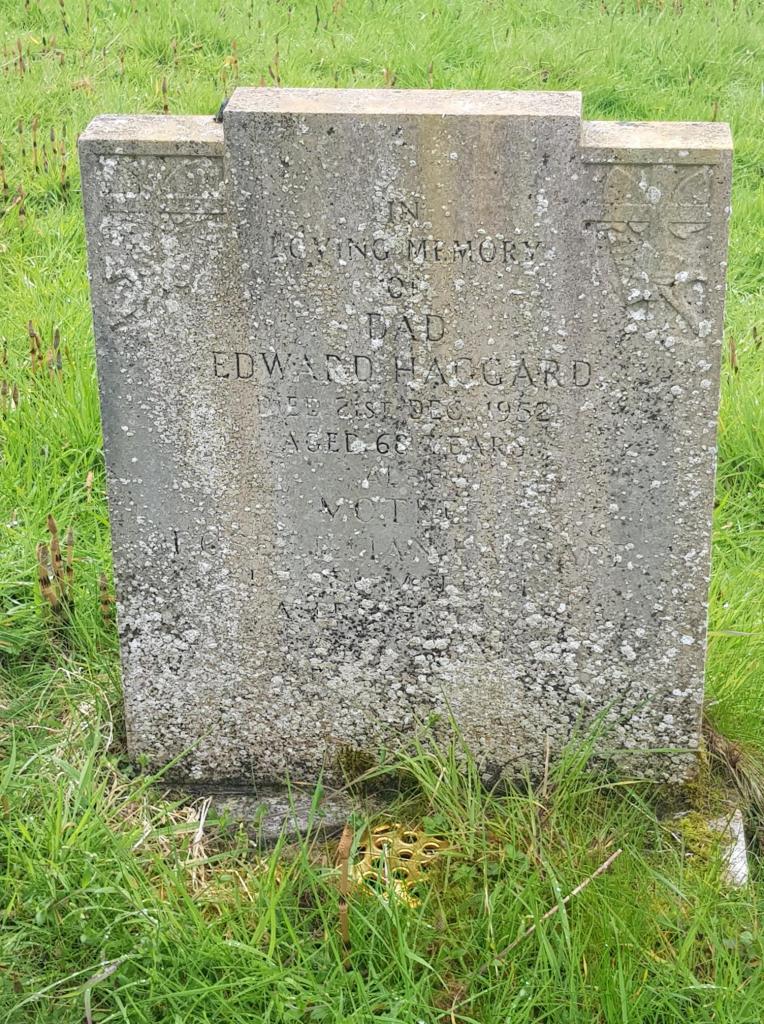
Edward was younger than Charles by two years. Like Charles he was born in Minety while his father was landlord at the Old Red Lion Inn. By 1891 the family were living at 60 Stafford Street, Swindon where on his 15th birthday in 1899 Edward began a 6½ year Tender & Fitting apprenticeship in the Works. He married Rose Lillie Edwards in 1913 and the couple had three sons.
Edward died in 1952 and Rose in 1969 and they are buried in grave plot C180.
They are surrounded by the graves of their three sons. Gordon died in 1933 aged just 10 years old. He is buried in grave plot C155 with his brother Eddie who died in 1992 aged 78.
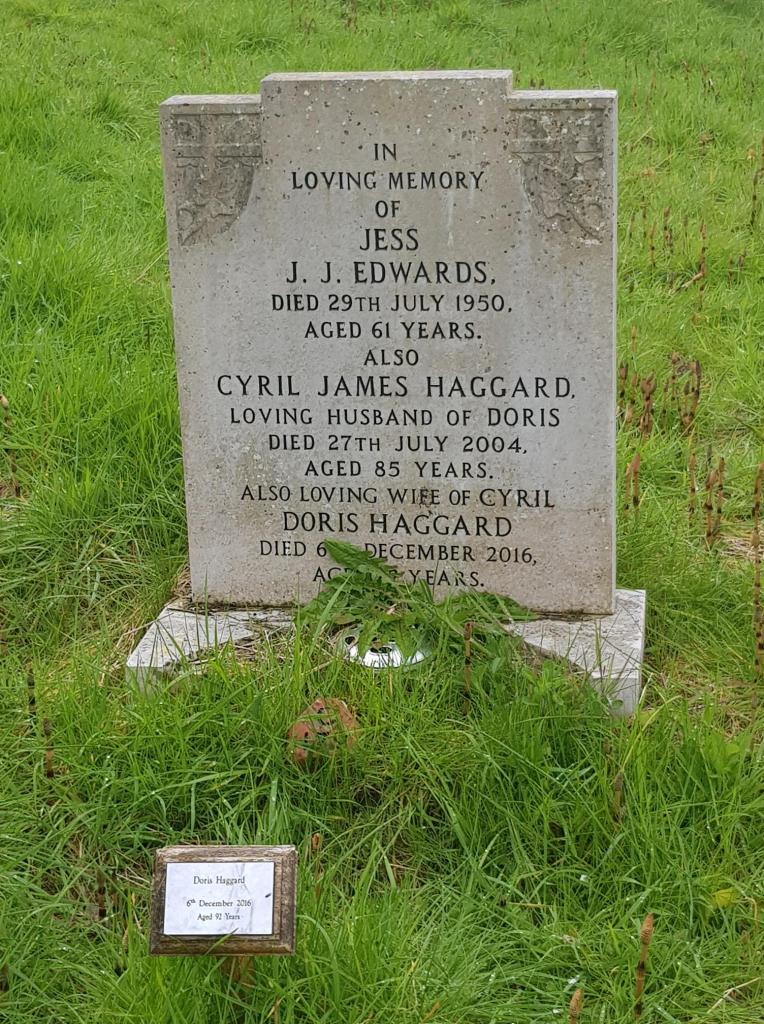
Close by in grave plot C179 is family member Jess J. Edwards who died in 1950, and is buried with the youngest Haggard son, Cyril, who died in 2004 aged 85. The last burial in this family plot was that of Cyril’s wife Doris who died in 2016 aged 92.












 Radnor Street Cemetery