The purpose of this blog is to record the lives of the ordinary people of Swindon, and that is exactly what Walter was.
Born in 1884 Walter makes an appearance on the 1891 census when he lived at 20 Vilett Street. His father Joseph, born in Banbury, was an Iron Moulder in the Works. His mother Elizabeth, born in Stratton, was busy having babies – five by 1891. She had 9 in total with 7 surviving childhood.
By 1901 the family were living at 21 Farnsby Street. Walter 17, and his younger brother Hubert 14, had already begun their Fitting apprenticeships in the Works.
In 1911 Walter was one of 6 children still living at home with Joseph and Elizabeth at 63 Curtis Street. He was the eldest at 27, William John Perkins, his youngest brother, was 9.
Walter married Florence M. Farr in the June quarter of 1919. He died on May 18, 1933 aged just 49 years. He was buried in grave plot C88 where he was later joined by his sister-in-law Frances Annie Hardiman who died in 1959.
There are so many facts about Walter’s life that remain unknown. Did he serve in WWI? Did he and Florence have any children?
Walter Perkins, one of the ordinary people of Swindon.
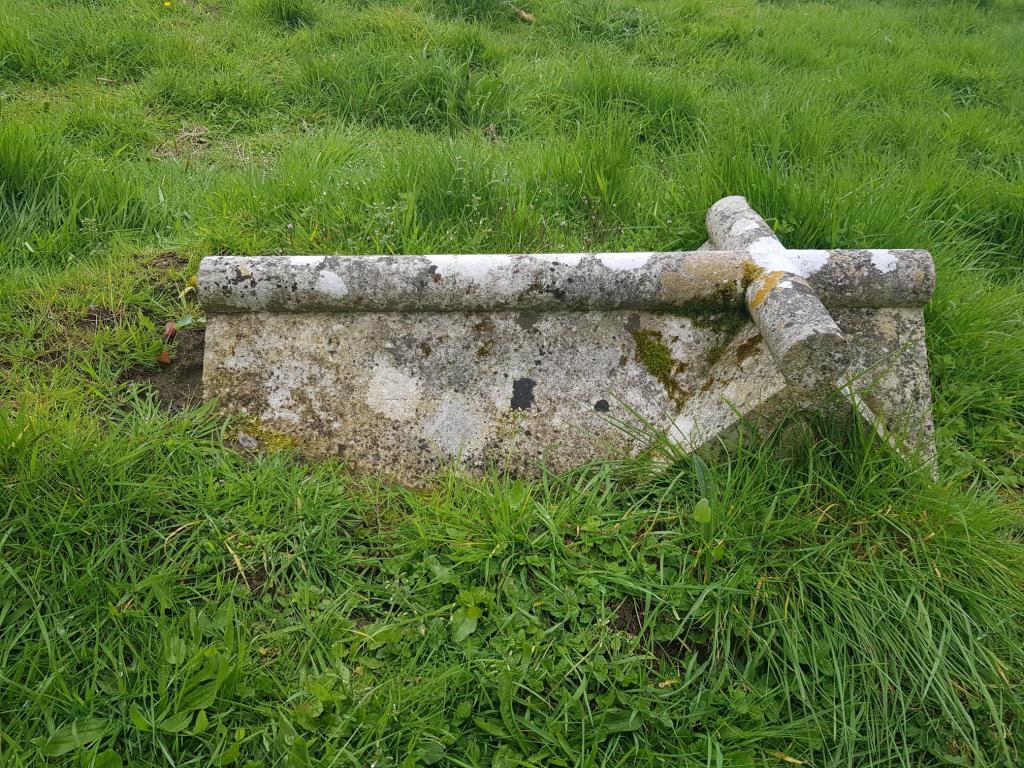
I’ve often stopped at this beautiful little memorial discovered by Bex last November.
On our recent seed scattering exercise, Bex and I paused here and wondered if there might be an inscription we were both missing. Using a cloth she carefully rubbed a handful of loose earth across the stone and as if by magic an inscription began to appear. We could soon see the name of Frederick Leonard Hayes who died in 1890 aged 15 months, eldest son of Joseph and Teresa – enough information for me to begin researching when I got home.
In 1891, the year after Frederick’s death, I found his parents living at 63 Prospect where Joseph worked as a Master Stone Mason. Joseph and Teresa left Swindon soon after this and ten years later, at the time of the 1901 census they were living in Shrewsbury with their younger son Bernard, where they remained for the rest of their lives.
But there is something special about little Frederick’s memorial. The grave is a public one that Frederick shares with two other children; four year old Maud Mary Young who died around the same time as Frederick in 1890 and Dorothy Ann Cowley, a 5 month old baby girl who died in 1905 – 15 years after Frederick.
It is most unusual to discover a memorial on a public grave. I wonder when Frederick’s family were given permission to install it and whether Joseph, the master stone mason, made it himself.
During the excitement of writing and producing the first edition of Swindon Heritage, co founder Mark Sutton provided a book he thought might be of interest. I remember it was quite a large book, the binding broken and the pages loose, but I now can’t remember the title. In it were short biographies of the great and the good of Wiltshire. Mark photographed those pages with a particular reference to Swindon and saved them on a CD ROM on which he wrote ‘Details from Wilts Book.’
Here is one of those biographies …
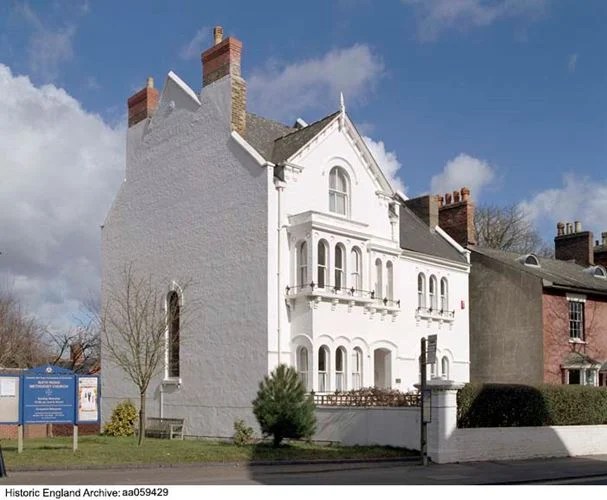
James Carson Rattray M.D., Granville Bath Road, Swindon; son of the late William Rattray of Edinburgh; born at Penicuik, Midlothian, May 1st, 1864; educated at Edinburgh University; M.B., C.M., and M.D. Edin. Member of the British Medical Association; Hon. Surgeon to the Swindon Victoria Hospital. Recreation; motoring, orchid growing, and is noted for breeding Scotch deerhounds, for which he has taken many First Prizes, Medals, and Championships.
James Carson Rattray can be found living and working as a General Medical Practitioner in Purton in 1888 aged 26. By 1901 he was living at Granville House, Bath Road where several members of the Rattray family had joined him – brother Sam, also a doctor; Pat, another brother, a dental student and sisters Bella who was his housekeeper and Mary.
James Carson Rattray died on November 19, 1906 while staying at 5 Albyn Place, Aberdeen. He was buried in North Merchiston Cemetery, Edinburgh.
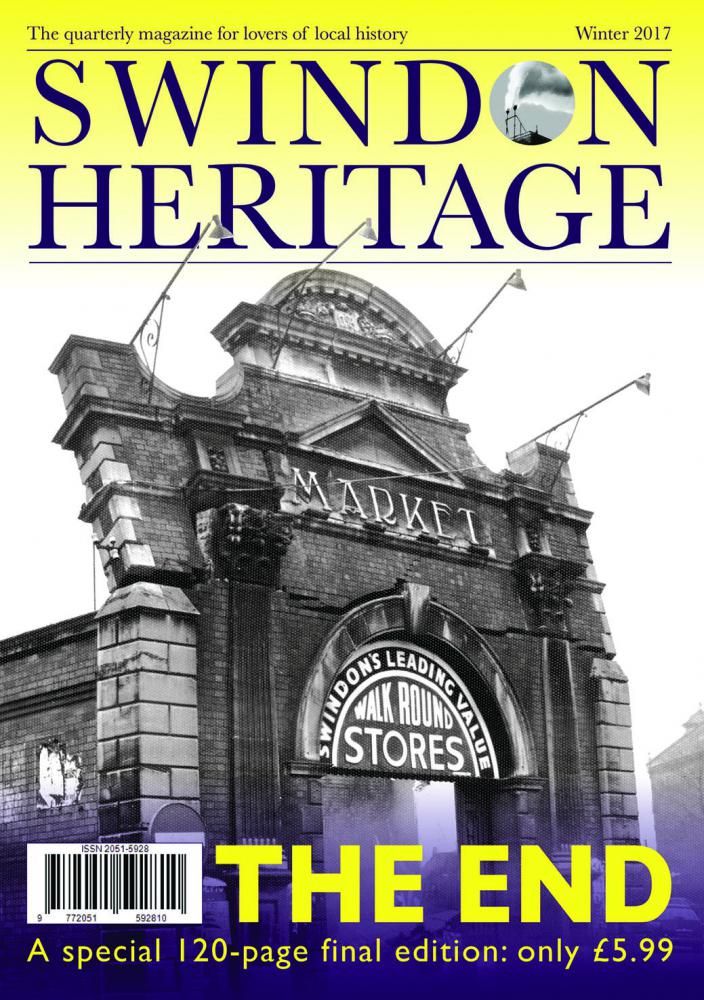
In 2013 Graham Carter, Mark Sutton and I launched Swindon Heritage with the strapline ‘the quarterly magazine for lovers of local history,’ which it was.
We bought together local historians and writers from across the Swindon district. Early contributors included Clive Carter, Historic Surveys Draughtsman at the Wiltshire Buildings Record; Mark Child, author of numerous books about Swindon including The Swindon Book and The Swindon Book Companion available from Hobnob Press and Noel Ponting, co author with Graham Carter of the Life, Times and Works of George Ewart Hobbs and A Swindon Radical: Life between the Wars with George Ewart Hobbs, also available from Hobnob Press.
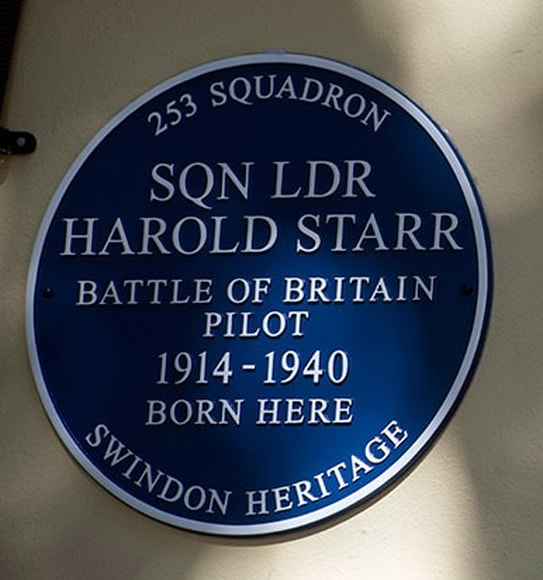
Stalwart members of the Swindon Heritage team, Andy Binks and Noel Beauchamp are today behind the Swindon Heritage Blue Plaques project. Visit the website to see where these are situated.
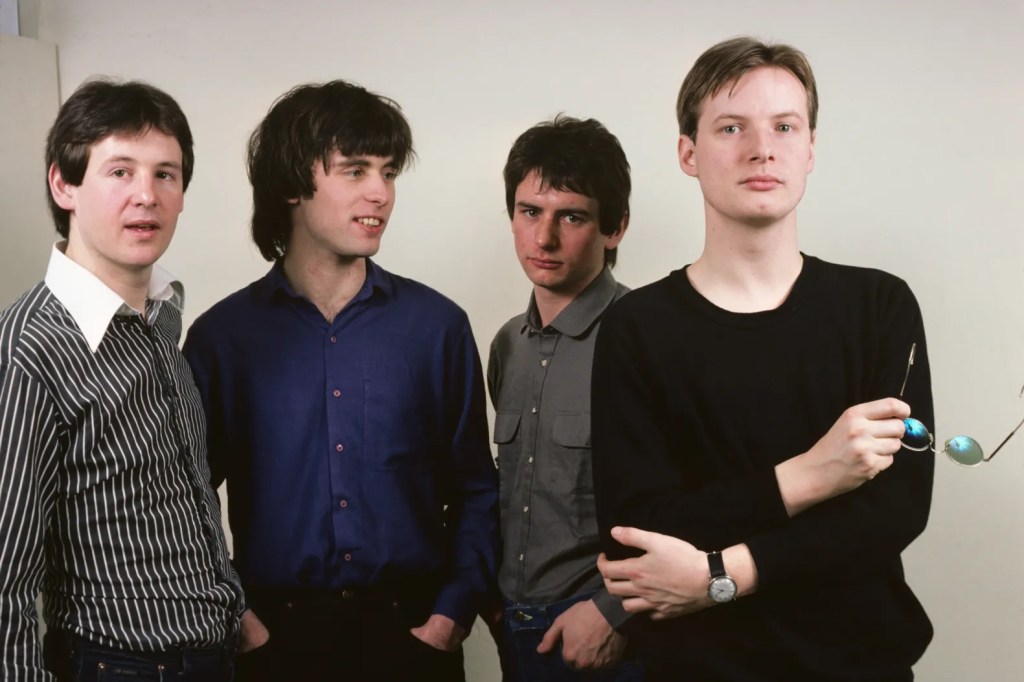
After 5 years and 21 editions Swindon Heritage went out on a high note with a long anticipated interview with Andy Partridge of XTC fame.
Back editions of Swindon Heritage magazine are available on our guided cemetery walks. Our next walk is on Sunday April 28, 2024. We meet at the chapel at 1.45 pm for a 2 pm start.
Thomas George had three very different occupations during his lifetime – that of Engine Fitter and Turner; Beerhouse keeper and finally farmer!
Thomas was born in about 1848 in Pencombe, Herefordshire, the son of Timothy and Martha George. By 1871 he was living in Swindon at 43 Taunton Street lodging with George Miggens and his family and working as a Turner. The following year he married Lucena Rathbone at St John’s Church, Bedminster.
By 1881 Thomas was a beer house keeper and green grocer living at Bridge House, 34 Fleet Street with Lucena and their four sons. Lucena died in 1889 aged 42. She was buried on February 27 in grave plot E8225.
In 1890 Thomas married Mary Smith Thomson and in 1891 the couple are recorded on the census as living in Park Lane in a property called Rathbone Villa, presumably named after his first wife. Lucena’s seven sons still lived at home with Thomas and their stepmother Mary. The elder three, William, Henry and Albert were all Engine Turner apprentices.
And then in his fifties Thomas decided to try his hand at farming. As a child growing up in Herefordshire there had been periods when he had lived with both his grandfather and his uncle on farms in Yarpole and Lucton. So, at around the turn of the 20th century, Thomas moved to Kite Hill, Wanborough where he remained until his death in 1930.
Mary, his second wife, died in 1920 and was buried in grave plot E8086 with her parents George and Mary Smith Thomson and her sister Agnes Cooper Thomson.
In 1922, in his mid 70s, Thomas married again. His third wife was Catherine Burns Thomson, his second wife’s sister.
Thomas died in 1930 and was buried on November 12 in grave plot E8087. Catherine died just six months later and was buried with him.
The late Mr T. George – The funeral of Mr T. George, who died at his residence, “Blenheim,” Kite Hill, Wanborough, took place at Swindon Cemetery on Wednesday, the first part of the service being at St. Mark’s Church. The family mourners were: Mr W.T. George (New Cross, London), Mr H. George (Swindon), Mr S. George (Wanborough), Mr P. George (Clydach, Swansea), (sons), and Mr S. Mills (Swindon). (cousin)
Others present were: Messrs. A.W. Norris, G. Turner and G. Gibbs. Floral tokens were received from Mrs George (widow), Mr and Mrs W.T. George, Mr and Mrs S. George and son, Mr and Mrs P. George, Ernest and Olive George, Mr and Mrs Allen (Bristol), Mr S. Mills and family, Mr and Mrs G. Turner and Mrs Bray, Mr and Mrs H. Stratford, Mr and Mrs Cook, Mr and Mrs Norris and Mr and Mrs G. Gibbs.
The coffin was inscribed, “Thomas George, fell asleep Nov. 7th, 1930, aged 83 years.”
The deceased was an old member of the ASE, and formerly a well-known Swindonian, having being employed in the GWR Works. He was a member of the 2nd Wilts Battalion Volunteers, and was the last surviving non-commissioned officer. Subsequently he held an off-licence in Fleet Street and the Volunteer Inn. Leaving urban pursuits behind 34 years ago, he started farming at Wanborough, and continued until a short while ago. His local friends and neighbours came to regard him as a very straightforward man, who took much interest in national affairs.
North Wilts Herald, Friday, November 14, 1930
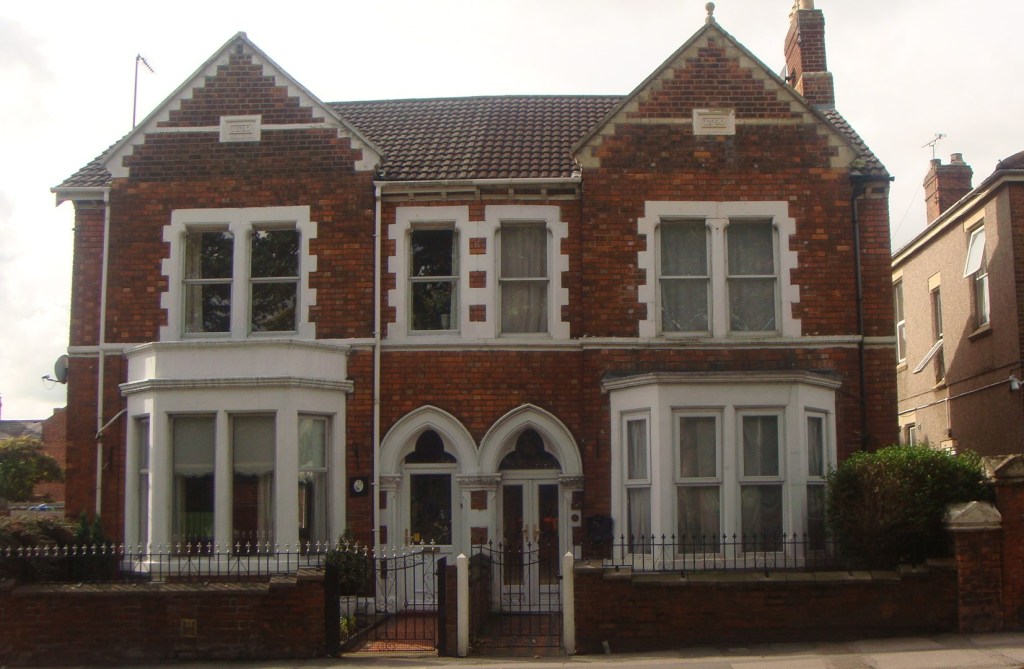
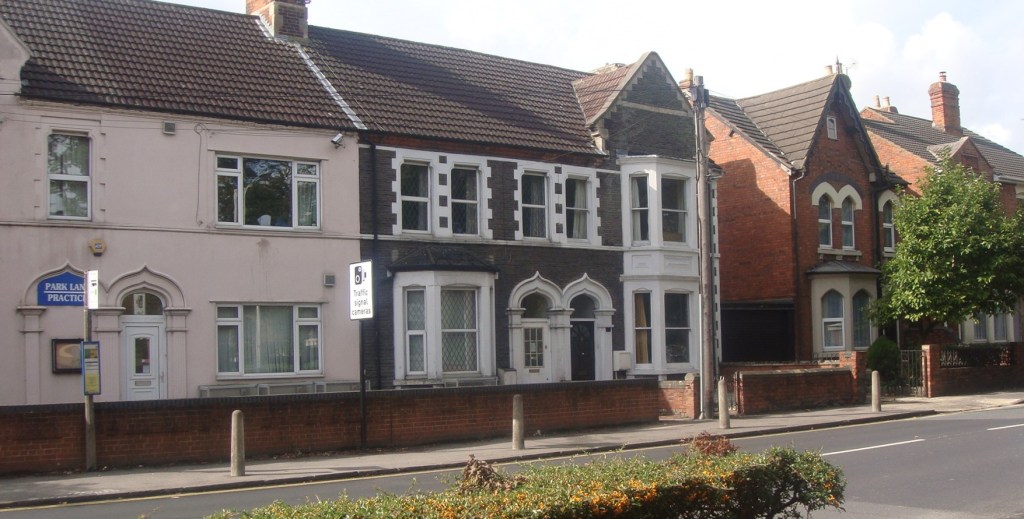
Recent views of houses in Park Lane. Could one of these be Rathbone Villa? We’d love to hear from you if it is.
The cemetery volunteers have done an incredible job of clearing and revealing the grave of Scottish rugby international Dr. Charles Reid. In doing so they have also revealed the fallen headstone of the Cocks family buried in the row behind.
Here is another family who moved across the country and a head of household who changed his occupation, presumably to one that was more lucrative.
William Cocks was a joiner at the time of his marriage to Sarah Townsend Ulett in 1864. His father Thomas was a cabinet maker so both men were skilled craftsmen.
At the time of the 1871 census William was living at 45 Cheltenham Street where he worked as a Coach Body Finisher in the GWR. Sarah and the children were staying with her parents in Birmingham but she obviously joined him at some point as their son Ernest Albert was born in Swindon in the autumn of 1871.
By 1881 the family were living in High Wycombe where William then worked as an Insurance Agent. Perhaps work in the railway factory was too insecure at this time. In 1891 they were in Hungerford where William worked for the Super Prudential Assurance Company and in 1901 William and Sarah were living at 8 Turl Street, Swindon. William aged 66 was still working as an insurance agent and their son Ernest as a dispenser. Two daughters had married – Pauline lived with her husband Walter William Poulston in Brecon where they worked as Hairdresser and Fancy Dealers and where her spinster sisters Lillian and Eugenie often stayed. Ada married Albert John Gomm and lived in 15 Durham Street, Swindon in the 1940s.
The Cocks family headstone cleaned up after its reveal
Sarah Townsend Cocks died aged 69 years at her home 8 Turl Street. She was buried on May 15 in grave plot E8445. Her son Ernest Albert Cocks, the only one of her children who was born in Swindon died later that same year aged 34 years. He was buried on November 6 with his mother. William Cocks moved to Bristol where he lived with his unmarried daughter Eugenie at 2 Rookery Road, Knowle. He died in January 1918 aged 82 years and was buried with his wife and son. The last person buried in this family grave is Albert John Gomm, the husband of Ada Frances, who died in 1947 and was buried on April 3.
What impression can a 20 year old make on history? Unmarried and without children, once his parents and his sister died, who would remember Henry John Hatter. He didn’t die on a battlefield as so many young men would during two World Wars. Unless we order his death certificate we will not know what killed him.
More than 100 years after his death, we can remember him.
Henry John Hatter was born on June 4, 1884 in Swindon. His father Henry was a Sawyer and Machine Man in the Works. His mother Selina was a housewife. The following year a daughter was born. The family was complete.
Henry John began work as an office boy in the GWR Works on July 18, 1897 aged 14. Just after his birthday in June 1904 he transferred to the General Manager’s Office at Paddington. He proved to be a popular member of staff.
By special request we give a portrait of Mr. H.J. Hatter, who death occurred at the end of February. Mr Hatter, who was only 20 years of age, was a member of the staff of the General Manager’s office, having come to London from the Locomotive Engineer’s office, Swindon, as recently as July last. In this short time he had established himself a favourite with his office colleagues and with the Athletic Association, of which he was regarded as a promising member. His early death caused much sympathy and regret both at Paddington and Swindon.
Great Western Railway Magazine 1905
Henry John Hatter of 31 Granville Street died aged 20. He was buried on March 3, 1905 in grave plot E8612.
Selina Hatter died in 1915 at her home in Granville Street. Henry died a year later. They are buried with their son. Mabel Louise became a teacher. She never married. She died on March 26, 1948. Who would remember Henry John now, or her come to that. We can.
A family of Belgian immigrants have left their name to a beauty spot in Rodbourne Cheney, possibly one of Swindon’s best kept secrets.
Plaum family history facts can be gleaned from notes on the 1911 census made by George Jacques Plaum. At that time he was newly married and living with his wife Catherine and his younger brother Robert Maximilian (who he describes as ‘feeble minded since birth’) at 489 Ferndale Road. He also adds that his father was German and his mother English and that the family had been resident in England since 1888.
Matthias and Clara Plaum had lived in Antwerp, Belgium from at least 1882 to 1887 during which time their children Georgius, Ernestus, Joannes, Robert and Frederick were all born. As George states in 1911, they have been living in England since 1888, so it should be possible to find them on the 1891 census.
On August 25, 1893 Matthias was admitted to the Wiltshire County Lunatic Asylum in Devizes where he sadly died on October 13. Now it was up to Clara to support three sons, one of whom could not work due to a disability. In 1901 she was living at 21 Vilett Street where she worked as a dressmaker. George 19 is employed in the GWR. Younger brother Frederick 13 claims he is a Railway Fitter and Wheel Turner. It is more likely he was an apprentice or perhaps a labourer. Robert is 15 years old. Life was obviously very difficult for them. The Radnor Street Cemetery registers state that Clara died in 1908 at 29 Villett Street aged 48 years. She was buried on December 10 in a public grave with two other unrelated persons.
But by dint of hard work and an entrepreneurial talent, George Plaum and his family prospered.
He purchased the Rodbourne Bathing and Boating Pool in the 1920s with financial help from a Bristol business man. The lake, like the one in Queens Park, began life as a clay pit feeding Victorian Swindon’s rapacious brick making industry. Quarrying came to an end when diggers hit underground springs and forced the closure of the clay pit.
By the 1920s the lake offered a number of leisure activities including swimming, boating and fishing. An additional income was derived from entrance and camping fees and refreshments. Grass, grazing and allotment fees brought in £5 7s 6d in 1925.
Today Plaum’s Pit is home to Plaum’s Pit Angling Club who can be contacted via their website.
Image of Chapel Street, Gorse Hill published courtesy of Local Studies, Swindon Central Library.
The lives of the ordinary people of Swindon never cease to amaze me. When I began researching the Rodway and Sellwood families of Gorse Hill I discovered a combined military history spanning almost 70 years.
Ellen Rodway was born in 1856 in Newport on the Isle of Wight, the daughter of Joseph Rodway, a soldier who served in the 28th Regiment of Foot from 1843 to 1864. In 1861 Joseph was serving in St. Helena, Coast of Africa, where Ellen’s brother, Joseph Thomas and sister Jane were both born before the family returned to England. By 1871 Joseph Rodway and his family were living in Barton St. Michael, Gloucestershire and in 1881 they were in Stratton St. Margaret where Joseph, the former soldier, worked as a railway porter. And we tend to think people didn’t move about much in the old days!
Joseph Thomas Rodway would later enlist in the Royal Marines, serving for more than 20 years. His son, William John Rodway, aged 16 in 1911, was a soldier in the Kings Royal Rifles and on census night of that year was staying with his uncle William Rodway at 126 Chapel Street.
In 1881 Ellen Rodway married Henry Sellwood who had recently retired from B. Brigade R.H.A. (Royal Horse Artillery) aged 24 and was described as a Royal Hospital Pensioner. Henry settled down to a job in the railway factory and married life in Gorse Hill.
In 1891 the couple were living at 116 Chapel Street with their four children, Henry 9, Joseph 6, Rosa 4 and one year old Robert. By 1911 they had moved to 95 Edinburgh Street, which remained their home until Ellen died in 1940.
Henry died in 1918 and was buried on October 17 in grave plot B2850 joining two of the couple’s sons – Robert Charles who died in 1907 aged 19 and Joseph William who died in 1914 aged 28.
Ellen died on May 7, 1940 at her son’s home in Broad Street aged 83 years old. Her funeral was reported in the North Wilts Herald. She was buried on May 11 and joined her husband and two sons in grave plot B2850.
Ellen’s mother, Kate Rodway, died at 44 Chapel Street in 1901. She was buried in Radnor Street Cemetery on May 7 in grave plot A317, a public grave. Her husband, that old soldier Joseph who served in the 28th Regiment of Foot for more than 20 years, died at 126 Chapel Street in 1910 aged 84 and was buried with his wife on September 3.
Mrs E. Selwood
The funeral took place on Saturday, of Mrs Ellen Selwood, of 95, Edinburgh-street, Swindon, who died on 7 May, at her son’s home, 66 Broad-street, a few days before her 84th birthday. The service at the *Russell Memorial Church was conducted by Rev. Burgin, who also officiated at the interment in Radnor-street Cemetery.
Chief mourners were: Mr F.R. Selwood (son and daughter), Mr W. Rodway (brother), Mrs C.D. Love (granddaughter), Mrs. E.M. Selwood (daughter-in-law), Mr T. Robins, Mrs E. Bell, Mrs. L. Scott, Mrs M. Griffiths.
Funeral arrangements were carried out by Messrs. A.E. Smith and Son, 24, Gordon-road, Swindon.
North Wilts Herald, Friday, 17 May, 1940.
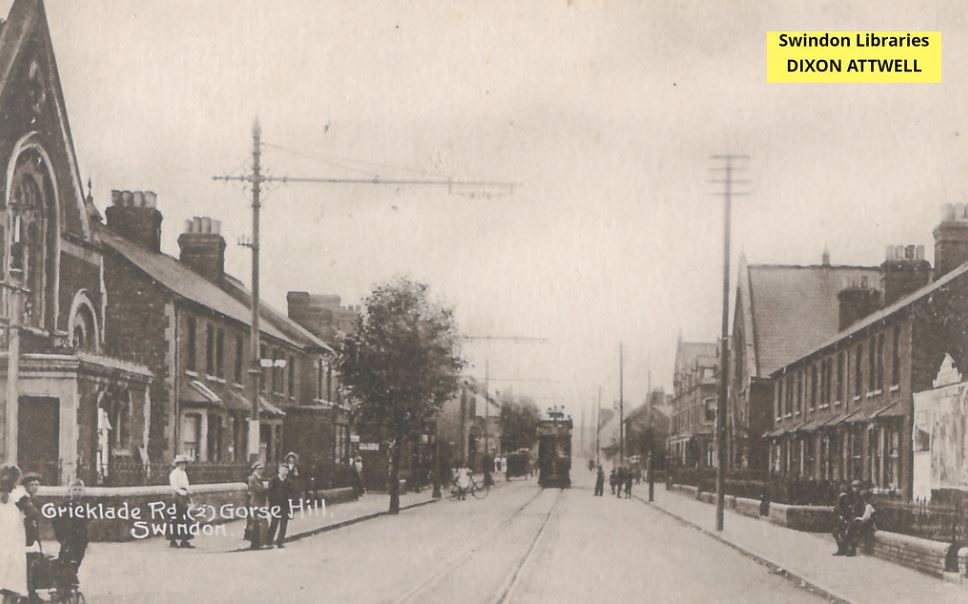
Image of Cricklade Road, Gorse Hill published courtesy of Local Studies, Swindon Central Library.
*The Russell Memorial Church was built in 1890 on the corner of Cricklade Road and Edinburgh Street. It was named after Thomas Russell the early missioner.
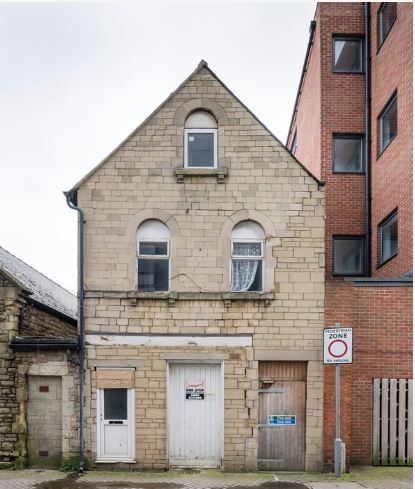
Is this the original Bridge Street Club where Frederick William Scammell moved to when he left the police force?
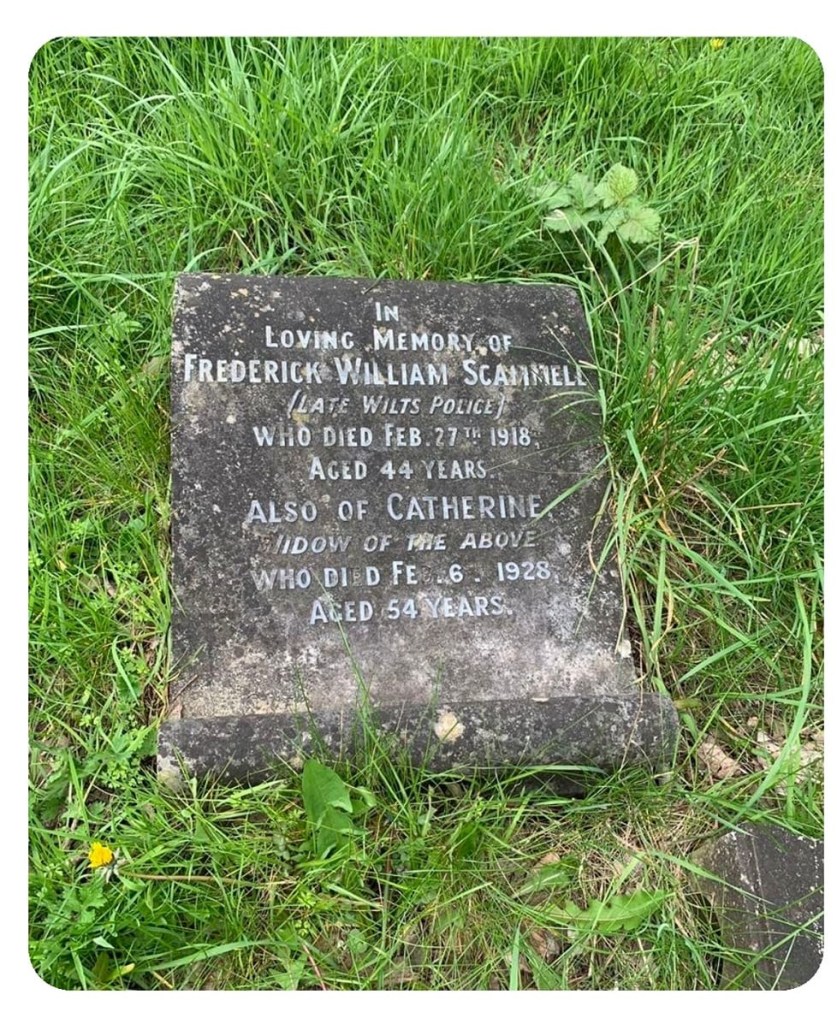
Born in Donhead St Mary in 1872 Frederick was posted to the Police Station in Eastcott when he married Catherine Noad at Christ Church in 1897.
By 1901 he was serving in Shalbourne, Wiltshire. The couple had three sons Philip Edwin, Norman Robert and three weeks old Maurice Frederick.
Of these three boys two would enlist in the Wiltshire Regiment during the First World War. Philip, 19, was discharged just 13 days after he enlisted in Devizes in 1914, declared “Not being likely to become an efficient soldier.” Maurice died on January 14, 1917 in hospital in England. His cause of death was a fracture to the base of the skull, but it is not known how this happened.
But in 1901 this was all in the distant future for Frederick and Catherine. In 1911 Frederick was serving in Corsley Heath, Warminster. He was 38 years old and Catherine 37. They had been married for about 13 years and had 6 children who were all living.
Frederick died in 1918 when the burial registers record that he was Club Steward at the Bridge Street Club. He was buried on March 4 in grave plot C3468.
Catherine moved to Gorse Hill where she ran a shop at 147 Beatrice Street. She died at the Glenwood Nursing Home and was buried with Frederick on February 9, 1928.
Their son Philip Edwin, who was spared the ordeal of serving in the First World War, was buried with his parents in 1965.








 Radnor Street Cemetery