James Smith Protheroe – no busier man in Swindon

From local dignitaries and Victorian edifices to pageants and poets, photographer James Smith Protheroe and his partner Thomas Henry Simons captured them all.  But it could have turned out very differently.

One of tailor Thomas Protheroe’s eleven children, James was born in 1858 over the shop in Goat Street, Swansea, next door to the public library.  By 1871 13 year old James was already working alongside his father, described as ‘young tailor’ in the census of that year. 

But his artistic leanings had the support of his elder brother Thomas, an artist, who left Wales following his marriage to Emma Chapman in 1872.  Thomas moved to Bristol and by 1876 had his own photographic studio at 33 Wine Street and encouraged James with his ambitions.

Thomas remained in Bristol, while James established himself at 30 Regent Street, New Swindon.   In 1881 the Protheroe studios won a first class silver medal for oil painting at the Plymouth Art and Industrial Exhibition and proudly declared royal patronage by HRH Prince of Wales.

Image published courtesy of Local Studies, Swindon Central Library.

Towards the end of the century Prothero’s sitters included Queenstown School teacher Edith New who would shortly leave Swindon to join the Women’s Social and Political Union and the fight for Votes for Women. And in 1903 the GWR Hammerman poet Alfred Williams took his bride Mary Peck along to the Regent Street studio to pose for their wedding photograph.

By then James had taken his nephew into the business, Thomas Henry Simons, the son of his sister Elizabeth and her husband Henry, a commercial shipping clerk.  James married Fanny Jane Redman, a dress mantle maker, in 1894 and the new century saw the family photography firm based at 96 Victoria Road. 

Although the Protheroe name still headed the firm it was Thomas who increasingly took care of the day to day business as James involved himself with the public life of Swindon. 

Conductor of the Baptist Tabernacle choir, Justice of the Peace and Wiltshire County Council member, Chairman of the Swindon and Highworth Board of Guardians and member of the Swindon Victoria Hospital Committee are among just a few of the organisations on which James served.

James died at Eirianfa, Newton Villas, Mumbles, overlooking Swansea Bay, in October 1929 aged 72. His body was returned to Swindon for burial in Radnor Street Cemetery.

His obituary published in the North Wilts Herald declared that ‘there was no busier man in Swindon, and few who will be more missed.’
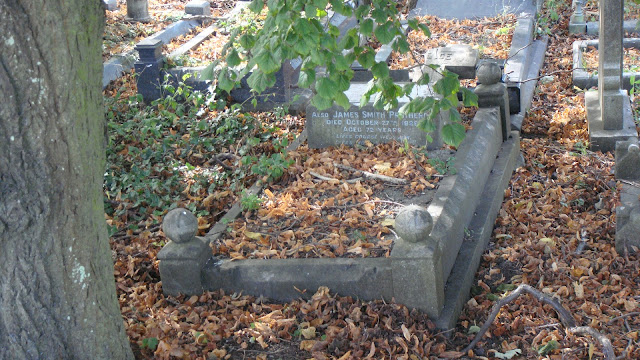
James Smith Protheroe was buried on October 30, 1929 in plot D34A, a plot he shares with his wife Fanny who died in 1925.
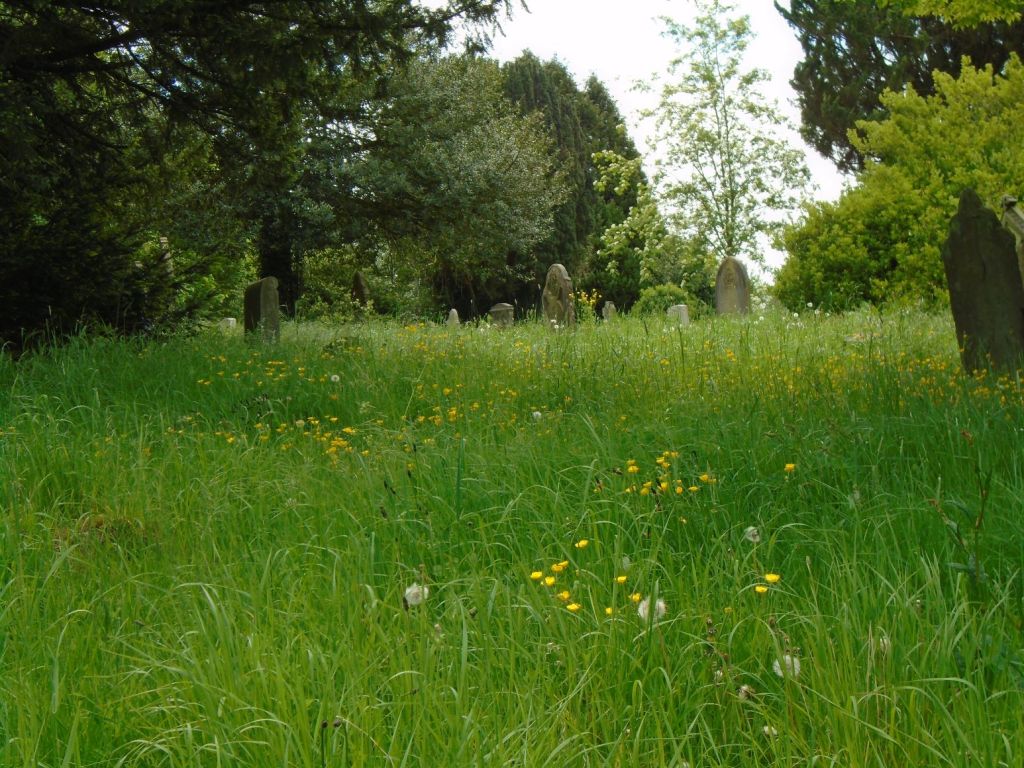
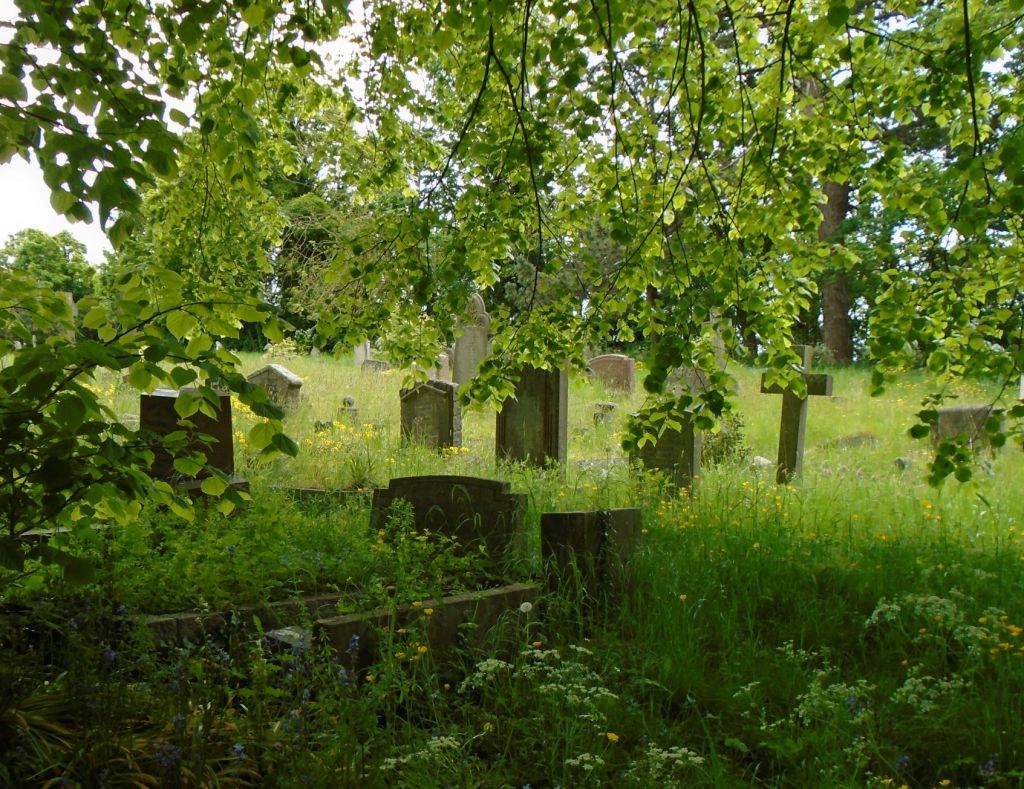
Grass for sale

In the cemetery we have a problem with grass and it would appear that it was ever thus …

There was quite a commotion at the monthly meeting of the New Swindon Local Board held in the summer of 1882.

Mr Dawson asked the Chairman if he would be in order in referring to the late sale of grass at the Cemetery? –

Mr Dawson then said there were three tenders received for the grass, one from Mr Wiltshire of £5, Mr Barker £5 and Mr Morris, junr., or one of the young Morris’s, of £4 5s. The committee appointed to sell the grass, Messrs W. Wearing and W. Morris, after opening the tenders, went and looked at the grass, and then Mr Morris said he would give £5 5s for the same for his son, and this was agreed to between the two. He (Mr Dawson) looked upon this as a very unfair and discreditable transaction on the part of Mr Morris, and having said this much left the matter in the hands of the Board.

The Chairman said there certainly appeared to have been some irregularity, but after what had taken place he did not think such a thing was likely to occur again.

Mr W.E. Morris said he had heard a good deal about the said “tenders,” were they in writing or by word of mouth?

The committee had no idea that there was £5 worth of grass at the place, and simply gave instructions that any one wishing to purchase could leave word with the caretaker at the lodge. The grass, however, appeared to have grown very rapidly and hence the competition for it.

The Chairman repeated that much irregularity appeared to have taken place, but the fault rested as much with the whole committee as with any individual member. The sum in question appeared to be so small that no one for a moment would believe that a gentleman in Mr Morris’ position would knowingly sacrifice his honour over it.

After further remarks the subject dropped, and the meeting broke up at an early hours.

Extracts from the Swindon Advertiser, Saturday, August 5, 1882.

By the spring of the following year the situation would appear to have been resolved and the sale of grass was advertised in the Swindon Advertiser.

Swindon Cemetery

The Swindon Burial Board are desirous of selling the GRASS growing in the Cemetery, for cropping or feeding purposes, to the 31st October next.

Particulars may be obtained of the Caretaker at the Cemetery.

Sealed tenders to be sent to the undersigned, on or before the 16th April latest.

J.C. Townsend, Clerk.

42 Cricklade-street, Swindon, 6th April, 1883.

The Swindon Advertiser, Saturday, April 7, 1883

Now I wonder if anyone would be prepared to come and cut the cemetery grass for a fiver today!

Jessie H. Goddard – animal lover

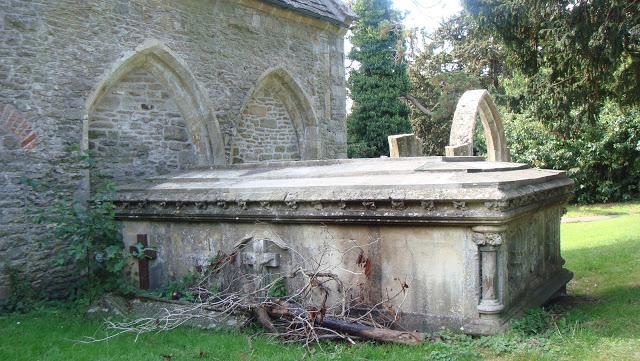
This photograph was published in Swindon in Old Photographs collected by The Swindon Society in 1988. The pet tombstones were discovered in the grounds of the Goddard family home The Lawn, but it is unlikely they will be there now.

Jessie Henrietta Goddard was born in 1850 at the London home of Ambrose Lethbridge Goddard and his wife Charlotte. She was baptised in Swindon on June 7, 1850 in the old parish church of Holy Rood during a service to bless the building of the new one, Christ Church.

Charlotte Goddard died in 1904 and following a lifetime devoted to her mother, Jessie moved into Tollington House, Faringdon where she would spend her last years surrounded by her pets.

But, the instructions in her will may seem at odds with her reputation as an animal lover.

‘My dogs Jill and Gem, to be put to sleep when I die, and buried with me if possible.’ She added:- ‘I should like Mr Crundell to come and put to sleep my pony Kitty, and my dogs Jill and Gem and Jasper, if he is still here.’

Perhaps Jessie feared for the future of her much loved pets after her death. Who would take care of them? Would they pine for their mistress – perhaps they too were elderly.

Jessie was buried on September 23, 1920. Whether her beloved dogs were buried with her is not known.

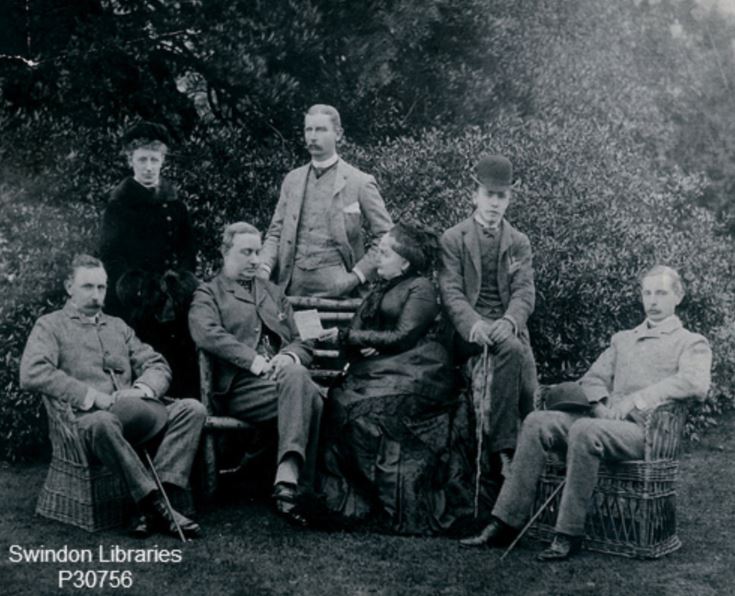
Jessie is pictured here with her parents and her four brothers published courtesy of Local Studies, Swindon Central Library.

Sudden Death of Miss Goddard

We deeply regret to announce the death of Miss Jessie Henrietta Goddard, which took place with most painful suddenness at her residence, Tollington House, Faringdon, early on Sunday morning. It was the custom of Miss Goddard, who was a great lover of animals, to rise early in the morning and tend to the needs of her pets, often before the rest of the household was astir. On Sunday morning it was noticed that she had not performed her customary duties and about 8 o’clock, the maids having heard no movement upstairs, entered her room and were horrified to find their mistress lying dead on the floor in front of the bedroom window, which she had evidently been in the act of opening when seized with heart failure, which must have proved instantly fatal. Medical aid was sent for but Dr. Dornford, who was quickly in attendance, pronounced life to have been extinct for about two hours.

Miss Goddard, who was the daughter of Mr Ambrose Lethbridge Goddard, J.P., of “The Lawn,” Swindon, had resided at Tollington House for the past fifteen years and was held in high esteem by a large circle of friends. She was a great lover of nature and besides her animal pets, took a keen and personal interest in her garden, where it gave her much pleasure to welcome her friends and neighbours. A few years ago she took an active and practical interest in the advancement of the effort to encourage home industries, a movement, which it is to be feared, has not materialised, as she, for one would have wished.

The funeral took place at Swindon on Thursday afternoon, when the remains were laid to rest in the family vault in the Old Churchyard, which immediately adjoins the family residence, in the company of numerous relatives and friends.

Extracts from The Faringdon Advertiser, Saturday, September 25, 1920.

There are no members of this branch of the Goddard family buried in Radnor Street Cemetery. They have their own mausoleum at the ancient Holy Rood Church.

Edward Henry Sammes of Swindon

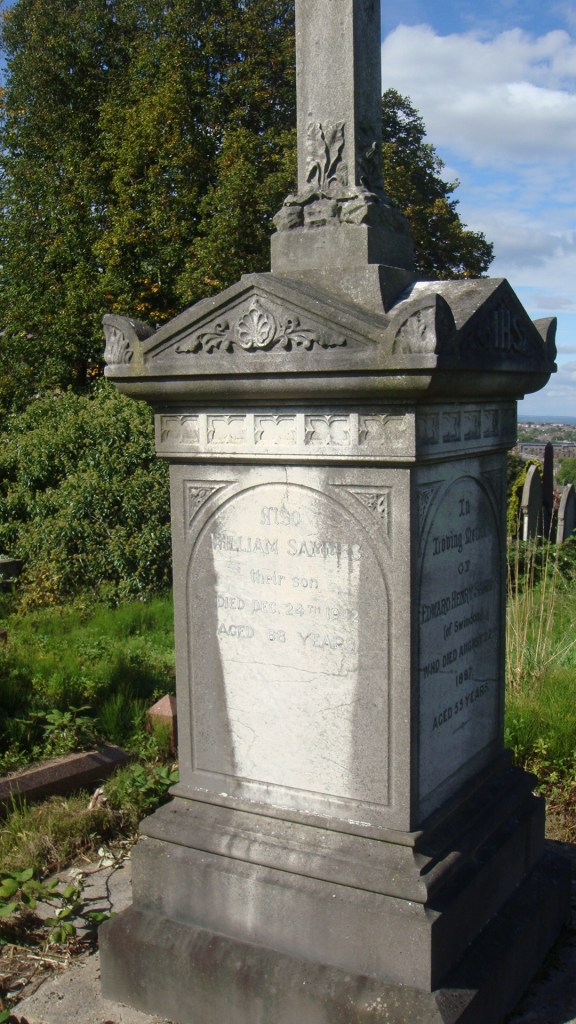
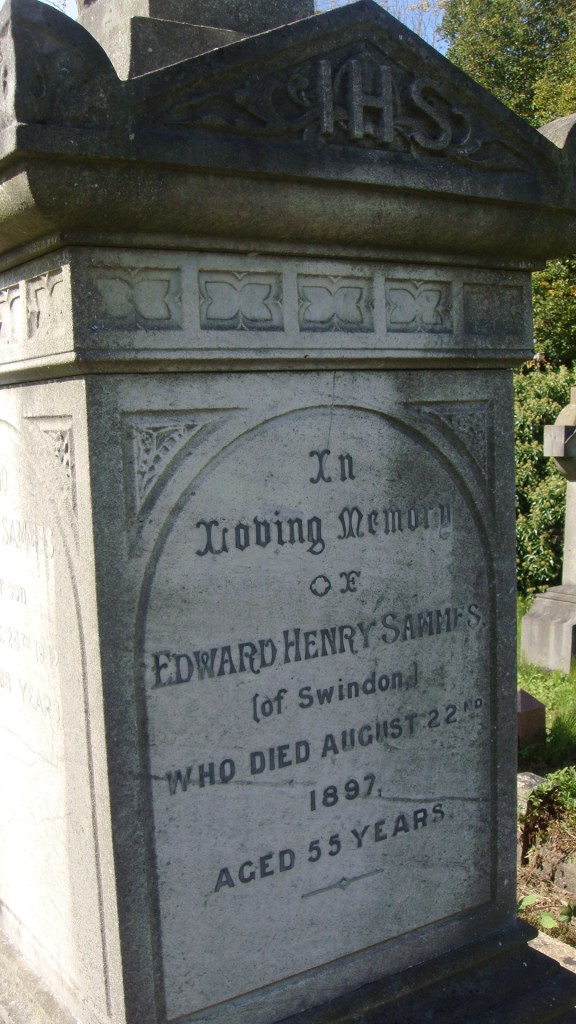
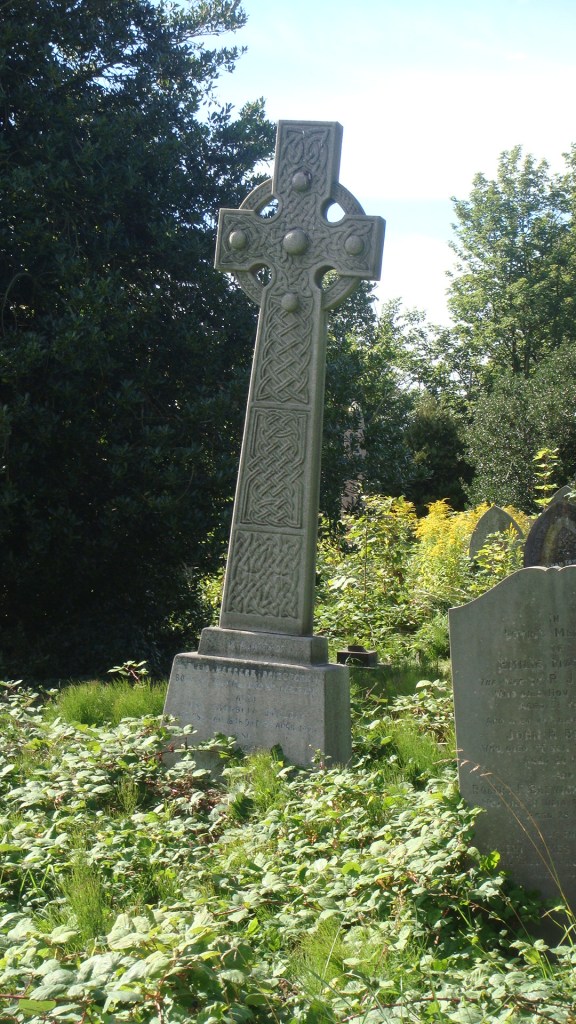
This is the last resting place of Edward Henry Sammes.  It’s interesting that his family should make a point of adding ‘of Swindon’ to the inscription because Edward was not Swindon born.

Edward was born in Lambeth in January 1842, the son of William and Sarah Sammes.

The first reference to Edward being in Swindon is in the 1871 census when he is 29 years old and living a 1 Belle Vue Road where he describes himself as a grocer.  That same year he married Sarah Anne Spackman from Wootton Bassett and the couple had two children William and Millicent, who are both buried here as well.

By 1889 he was a member of the Old Swindon Local Board, so well placed to know plans for development in the town.  The family were by then living at Wycliffe House in Devizes Road.

In 1892 Edward submitted a planning application to build 8 houses on the corner of Kent Road and Maidstone Road. The building specifications for Edward’s houses describe three bedrooms, a parlour, sitting room, kitchen, conservatory, scullery, WC, coals and pantry.

This area of Kingshill was pretty much one big building site during the 1890s.  The land had originally come on the market in the 1870s with the death of John Harding Sheppard but development was slow to take off. However, by the 1890s numerous speculative builders had snapped up the building plots and were busy at work. A map of Edward’s project shows an empty site next door on the corner of Kent Road and Ashford Road with another empty site opposite.  At the other end of the road rival builder William Chambers had a yard opposite his own development at Ashford Terrace. 

Edward died in 1897 aged 55. He left £5,814 18s 6d to his widow Sarah and son William, worth today somewhere in the region of £2.7 million.

I’m not sure if his son William ever worked or whether he lived off his inheritance.  In 1911 William 35, was living at 31 Devizes Road, with his sister Millicent 27. Both of them were living on ‘private means’.

Local historian David Lewis has been able to add a some further information.

Edward Sammes lived at 31 Devizes Road “Wycliffe” in 1895 according to the Kellys directory as a private residence. Millicent was still there in 1951. Sometime in the 1960/70s, it became the Spiritualist Centre.

George Puckey – Swindon artist

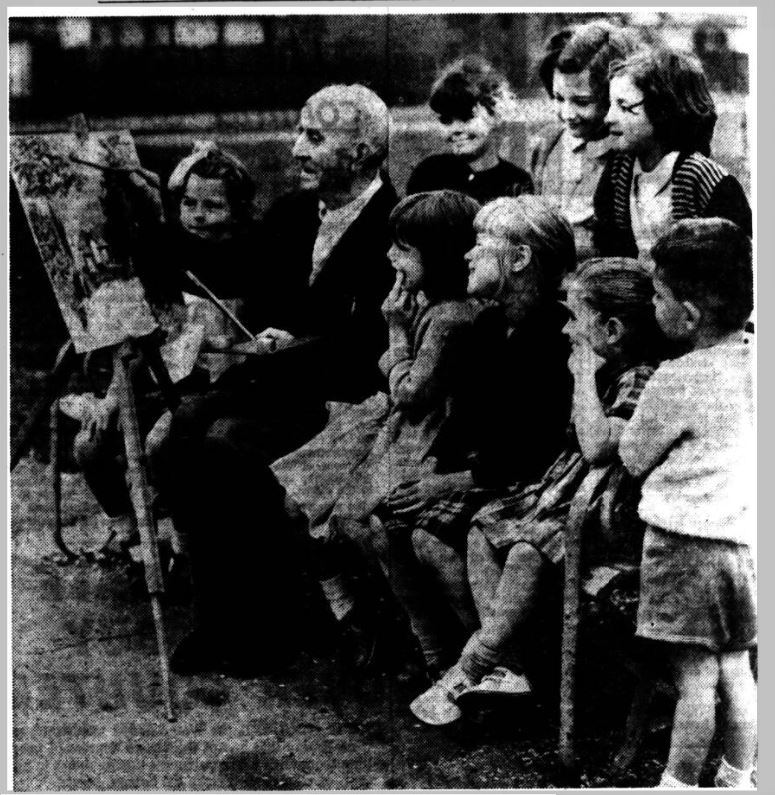
When the Hammersmith & Shepherds Bush Gazette and Post interviewed George Puckey in 1961 they reported how the 74 year old pensioner had developed a profitable hobby in his retirement.

Any self-respecting local art enthusiast would be quick to point out that George had honed his talent here in Swindon where we have a clutch of his work, once available to view in the Swindon Museum and Art Gallery.

George was born in Plymouth in 1888, the son of Charles and Sarah Puckey. The family had moved to Swindon by 1901 when they lived at 2 John Street Terrace where Charles worked as a Butcher journeyman. By 1911 23 year old George was working as a van driver for a house furnishing firm; his 16 year old brother Frederick was a general labourer in the GWR Works.

George’s work is hung Down Under

A 74 year old Acton man has found a novel way of supplementing his old age pension. He is Mr. George Puckey, of Northfield-road, North Acton, and since he retired eight years ago he has been painting pictures.

As Mr Puckey’s fame as a painter spread, so more and more orders for his colourful pictures, most of them of Kew Garden scenes, have rolled in.

Two of them are the proud possessions of an Australian family. They were bought by an Acton shopkeeper who sent them to her Australian relatives.

Exhibition

Mr Puckey, an Acton resident for 30 years and a former packer for the Metal Box Co., has just reached a proud highlight in his painting career.

He told the Gazette last week that he has had a picture accepted for the Middlesex County old people’s handiwork exhibition, to be held at Wembley Town Hall.

The picture is of Queen’s Cottage, in Kew Gardens.

Mr Puckey started painting when a young man living at Swindon. “I attended the Swindon College of Art but since then I have done very little painting. It was only when I retired that I seemed to find the time.

But I was very successful with my pictures at Swindon and a number of them of interest to local historians were bought by the Swindon Museum.”

Mr Puckey’s views on modern art? “It is awful, terrible, most of it,” he said.

Gazette and Post, Thursday, September 28, 1961.

George’s younger brother Frederick died in 1926. He is buried in Radnor Street Cemetery in grave plot C3760 where he lies alone.

The family later moved to Acton, Middlesex, where George remained for the rest of his life. He died in 1963, a couple of years after the newspaper article appeared in the local press.

Robert Albion King – Freeman of London

When Elizabeth King died in 1908 her family had the following inscription placed upon her headstone ‘The Beloved Wife of Robert Albion King of Swindon, Freeman of London.’ They were obviously very proud of Robert’s status.

However, in 1868 coach builders H. & E. King were forced to make the following announcement in the North Wilts Herald.

We are requested by Messrs. H. and E. King, coach builders, of Swindon and Stratton St. Margaret, to state that Mr Robert Albion King, recently charged before the magistrates with assaulting a Mrs Jennings, is not a coach builder, and is in no way connected with their firm.

North Wilts Herald, Saturday, April 18, 1868.

Robert Albion King appeared before Swindon Police Court on Thursday April 2, 1868 charged by Mrs Mary Jennings with damaging an unoccupied house, belonging to her, at Stratton St Margaret, by breaking two panes of glass, and with assaulting her, with intent to do her bodily harm.

Mrs Jennings said she had visited a property in Stratton which she had recently bought where she found Mr King in possession. Upon entering the property Mr King ordered her out tearing her shawl, and putting his fist in her face in a threatening manner; he was very much excited, and said he would shoot anybody who came on that property.

In his evidence King told the court he had previously informed Mrs Jennings that the property had been in his family since the 17th century and could not be sold, and if she bought it she would lose her money as he was heir-at-law to it.

He in turn accused Mrs Jennings of assaulting him on a previous occasion, insulting his wife and children and scratching his face.

In summing up the Chairman said these family feuds were most disgraceful, and the bench would bind over both parties in their own recognizances of £20 each to keep the peace for six calendar months.

You can read more about the disputed property and the family connection in The North Wilts Herald, Monday July 20, 1868.

Robert Albion King died quietly (or perhaps he was arguing the toss at the time) at his home on December 23, 1909.

Death of an old inhabitant – One of Swindon’s oldest inhabitants passed away on Thursday, December 23rd, in the death of R.A. King. Deceased, who had been suffering from heart disease for some time, died at his residence in County Road. He was the only surviving son of the late John and Ann King, of Little Britain and Moor Lane, London, and also of Stratton. Deceased’s father was a Freeman of the City and also of the Goldsmith’s Company, while deceased himself also enjoyed the same distinctions. He leaves three sons and six daughters. The remains were interred at the Swindon Cemetery on Wednesday, the coffin being of polished elm with brass fittings, bearing the following inscription: “Robert Albion King, died Dec. 23rd, 09, aged 85 years.” A number of floral tributes were sent by relatives and friends.

North Wilts Herald, Friday, December 31, 1909.

Elizabeth King died in March 1908 at 166 Beatrice Street. Her funeral took place on March 6 when she was buried in grave plot B2820. Her husband Robert Albion King died in December the following year aged 85 years at 33 Country Road. He was buried on December 29 with his wife. Their daughter Olive Magdalene Manners is buried with them. She died in December 1926 aged 37.

Ellis Herbert Pritchett – architect

Ellis Herbert Pritchett was born in Chiswick in 1861, the son of Robert Taylor Pritchett and his wife Louisa. His father is a most interesting character who at the time of Ellis’s birth was a rifle manufacturer for the War Department employing 150 men and two boys. He later went on to be a water colourist.

Ellis was articled to the prestigious Scottish architect Charles Forster Hayward from 1880-1884. He then took a year off to travel through France and Belgium before setting up in his own practice in 1885.

He appears to have arrived in Swindon in the late 1880s and at the time of the 1891 census he was living in Ivy Cottage, Purton with his mother and a little niece, Johanna C. Taylor who was just a year old.

He became partners with Charles and Ernest Bishop and the firm of Bishop and Pritchett was established as auctioneers and estate agents by 1893, a year after he married Mary Campbell Maclean.

Pritchett was Chief Officer of the Swindon Fire brigade and like so many of these professional men he was a freemason, joining the Royal Sussex Lodge of Emulation in 1890 and Gooch Lodge the following year.

Among the buildings Pritchett designed was the Euclid Street High Elementary School and several houses on The Sands and Bath Road.

Ellis died suddenly on March 16, 1905 at Poole and his body was brought back to Swindon where he was buried on March 22. His wife Mary Campbell Blythe (she later remarried) and her parents Dr John Campbell and Ellen Maclean are buried in this large, double plot E8371 and E8372.

Edwin Harvey – builder

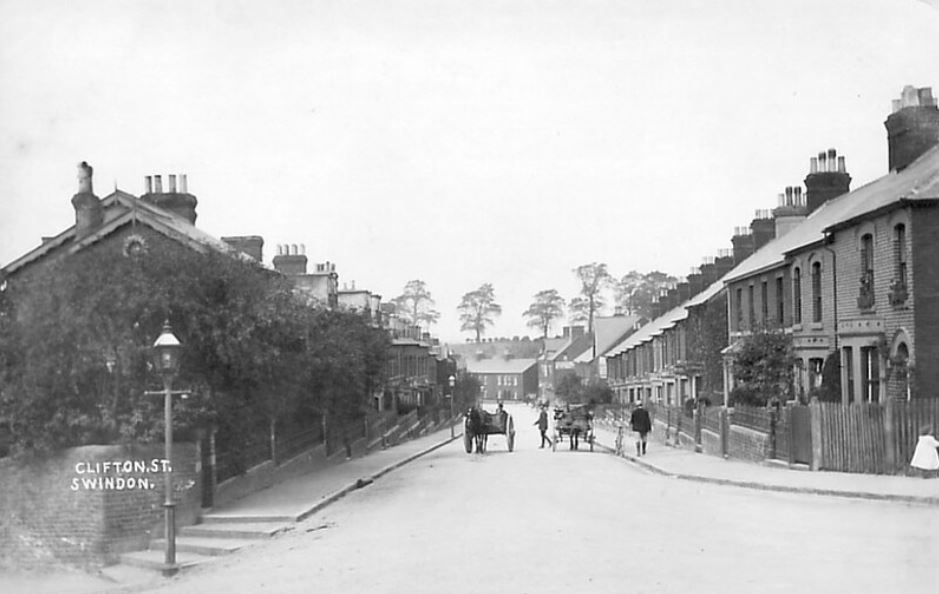
Clifton Street published courtesy of Mr P. Williams and Local Studies, Swindon Central Library.

It’s surprising that there is no road named after the entrepreneurial Edwin Harvey.

Edwin Harvey was born in Keynsham in 1843 one of William and Mary’s large family of 12 children. Edwin began his apprenticeship in the building trade working as a plasterer, most probably alongside his father, a plasterer journeyman. By 1871 aged 28 Edwin describes himself as a painter.

He married Alice Elizabeth Baker at St. Paul’s Church, Bath on November 26, 1878. Edwin, aged 36, then described his profession as Builder and his place of residence as New Swindon where he had already begun to make his mark!

In 1877 he was building a hotel and cottages on the Kingshill estate and in 1878 he built 4 houses and shops on Cambria Bridge Road with business partner William Crombey.

In 1879 he describes himself as builder and beerseller when he makes an application for a license to “Sell by Retail Beer and Cider, to be consumed on the House and Premises thereunto belonging, situate at William Street.” This beerhouse was most probably built by Edwin and occupied the corner plot of William Street and Cambria Bridge Road. It was owned by his deceased brother William and in 1879 by his widow Ann.

William Street and Park Hotel

Edwin was a busy man during the 1880s building houses in Albion Street, William Street, Clifton Street and Exmouth Street where he would eventually make his home. In addition to his building work he was elected a member of the New Swindon Local Board in 1885 and in 1887 a member of the Swindon Hospital Committee, acting on behalf of the Building Committee.

In 1881 he lived at William Street with his wife Alice and their baby daughter Ethel. By 1891 they had moved to 50 Exmouth Street where the family had grown considerably and then numbered 6 children. Edwin’s brother John lodged with them. By 1911 No 50 Exmouth Street (now named Glenthorne) was still a busy household with 4 twenty something children still living at home with Alice and Edwin, now aged 68 and retired.

Edwin Harvey died at his home in 50 Exmouth Street on October 21, 1925. He was 82 years old. The funeral took place on October 24 when he was buried in grave plot D1525 with his wife Alice who died in 1917.

With no street named in his honour, I’m hoping there will be a headstone on his grave when I find it.

You may also like to read:

William Crombey – builder

Ann Harvey – Inn Keeper

*Harvey Grove off Cheney Manor Road, was built in 1936 and named after Albert Harvey who once farmed at Manor Farm, but so far I haven’t come across a road named in honour of Edwin Harvey.

William Edwin Morris – a man of inexhaustible energy

Newspaper proprietor William Edwin Morris, eldest son of Advertiser founder William Morris, lived at Frampton Villa, home to this branch of the Morris family for more than twenty years.

Like his father William Edwin was at the forefront of Swindon society involved in various commercial and public duties.  William had worked on his father’s newspaper for more than twenty years before becoming Town Surveyor, a position he held for another twenty years. 

A man of apparently inexhaustible energy, William served on both the New and Old Swindon Local Boards.  He was a member of the School Board for Rodbourne Cheney and a member of the Highway Board until its abolition in 1894.  One of the first members of the Swindon Volunteer Fire Brigade, William served as Captain of the Brigade for more than twenty years.  A Freemason, a Forester and an Oddfellow, William was also a member of the Wilts Rifle Volunteers and a life governor of Swindon Victoria Hospital. 

Death of Mr W.E. Morris, of Swindon

The death took place on Tuesday, in last week at his residence, at Frampton Villa, Devizes road, Swindon, after a prolonged and painful illness, of Mr. William Edwin Morris. The deceased gentleman, who was born on March 28th, 1848, in Swindon, was the eldest son of the late Mr William Morris, and at an early age entered the printing business carried on by his father, in which he took a part until 1880, when he was appointed surveyor to the Old Swindon Urban District Council. He was for several years a member of that Council, and resigned in order to undertake the duties of the surveyorship. He was also a member of the New Swindon Local Board up to the time that its place was taken by the Urban District Council. He was a member of the Rodbourne School Board previous to the absorption of Rodbourne into the Swindon School Board district, and held a seat on the old Highway Board.

Together with the late Mr William Affleck, Mr Morris was instrumental in forming the Swindon Fire Brigade, he was captain for a number of years, and in that capacity took part in many Lord Mayors’ Shows. An ardent Volunteer, the deceased gentleman for a long time held the rank of Sergeant in the Old Swindon Corps, and was one of the best and most successful shots in the detachment.

He was one of the early members of the Gooch Lodge of Freemasons, and held the post of first Grand Master of the “Castle” Lodge of Odd Fellows, being also Secretary of the Lodge for some time. He was a liberal subscriber to the Victoria Hospital, the Horticultural Society, and many other organisations, and took a warm interest in everything that affected the welfare of the town of Swindon, with which he had been so closely identified all his life.

He married in 1876 a daughter of Mr George Summers, of Romsey, and has had 13 children, of whom ten survive, with the widow, to mourn his loss. Mr Morris’ health has been a serious cause for solicitude to his family for a considerable time past, and some months ago he took a trip to Morocco and the Canaries. He returned very little if anything the better for the holiday, and a visit to Scotland was similarly disappointing in its results. His condition gradually grew worse, and he had been confined to his room practically since Christmas. On Tuesday he passed suddenly, but peacefully away.

The funeral took place on Saturday afternoon amidst every sign of respect. At the parish church the first portion of the service was conducted by the Rev. Prebendary W.B. Pitt, rector of Lydington, Wilts, who officiated at the graveside in the cemetery. The mourners included Messrs. W. Summers Morris, M.F. Morris, G.S. Morris, and S.H. Morris (sons), S.P. Morris, E.J. Morris, and F.A. Morris (brothers), John Morris, Dover, (uncle), Sydney Watmore (Hampton Hill), F.W. Watmore (Portsmouth), S.E.C. Price (Teddington), and W. Willes (cousins), E.E. Morris (nephew), W.E. Smith, and A.H. Walters (brothers-in-law). Besides these, there were some 20 members of the Fire Brigade in full-dress uniform. Deceased had been captain of the Brigade for over 20 years, and had only recently resigned. A large number of the “Swindon Advertiser” employes, of which firm deceased was senior partner, and a goodly number of the tradesmen of the town, also attended. The floral tributes included many beautiful wreaths from sympathising friends.

The Wiltshire Advertiser Thursday, May 1, 1902.

William Edwin Morris died on April 22, 1902 at the aged of 54.  He was buried on April 24, in grave plot E7951. He is buried with his wife Bessie who died in 1939 and their daughter Nellie who died in 1958.

William’s modest, somewhat neglected, kerbstone grave marker is in stark contrast to that of his father’s in the churchyard at Christ Church.

Zacharias Peskett – Medical Fund Society Treasurer

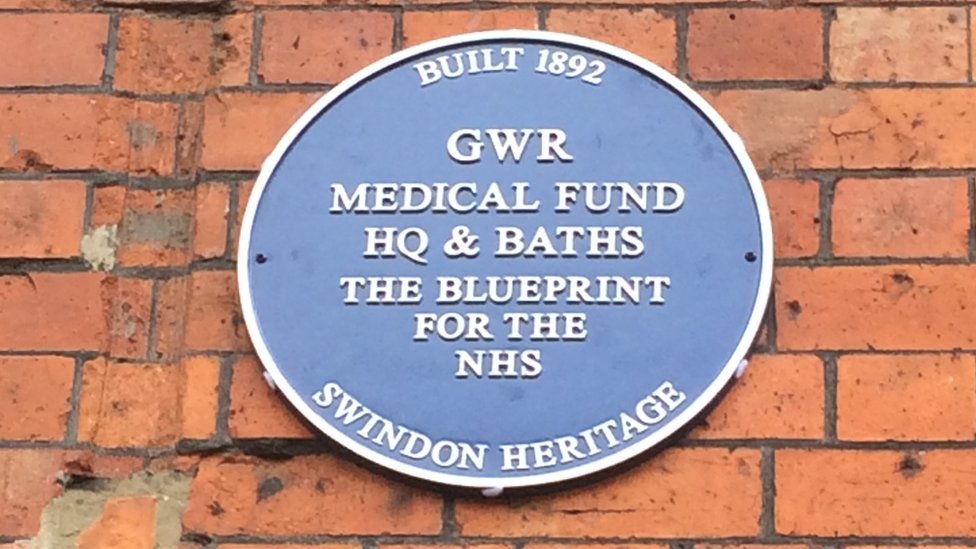
Saturday July 8 sees Swindon celebrate the 75th anniversary of the NHS with the Mechanics’ Institution Trust. Events in the Emlyn Square area include an exhibition in the Central Community Centre with a talk on the GWR Medical Fund by Adam Busby at 4 pm. Visit the Railway Village Museum open 11-3 and join a walking tour of the Railway Village focussing on ‘Health.’ The Bakers Café will be open for refreshments.

And read below about one of those pioneering members of the GWR Medical Fund Society.

Swindon

Obituary

The death occurred on Thursday morning at his residence, 6, Milton Road, Swindon, of Mr Zacharias Peskett, an old and highly respected resident of Swindon. For the long period of 44 years he had been in the service of the GWR Company, and for over 30 years he had uninterruptedly held office as treasurer of the GWR Medical Fund Society. He was generally esteemed as an upright and honourable man, and was a valued servant of the company. He was in his 70th year.

Western Daily Press, Bristol, Friday, May 29, 1914.

The Late Mr Z. Peskett,

Funeral

The esteem in which the late Mr Zacharias Peskett, of 6, Milton Road, Swindon, was held by his former colleagues in the GWR Works and by the officials of the GWR Medical Fund Society – an organisation with which his name had been prominently associated for more than 30 years – was exemplified on Tuesday afternoon, when the funeral took place at Swindon Cemetery amid every manifestation of sorrow and respect.

The cortege left Milton Road at 3.15 and proceeded to St. Mark’s Church, where a short but impressive service was conducted by the Rev. Lionel Calway.

The coffin, on which was a large cross of white flowers from the family and other beautiful floral tributes, was conveyed on a four-wheel bier, Messrs J. Lawrence, E. Griffiths, W. Sansum, T. Jackson. R.A. Zebedee and Humphries (representatives of the Medical Fund Society) acting as bearers.

Then followed a hand-bier on which were placed the wreaths, and in charge of Mr Peskett’s personal staff – Messrs. T.H. Westbury, C.E. Knapp, J. Clark and Angle. Behind the mourning coaches walked the Rev. H.J. Parker (pastor of South Street Baptist Chapel, where deceased formerly worshipped), representatives of the Medical Fund Society and the Sick Fund Society and many old friends and former colleagues of the late Mr. Peskett.

Long list of mourners …

From St. Mark’s Church the coffin was borne to the Cemetery, the route chosen being Cambria Bridge Road, Radnor Street and Clifton Street. The Blinds at many of the houses on the way to the Cemetery were drawn as a mark of respect to the deceased.

At the graveside the cortege was joined by a large number of sympathisers, and the service was impressively conducted by the Rev. L. Calway. The coffin was of polished elm, with heavy brass furnishings, and the breast plate was inscribed as follows:-

Zacharias Peskett,

Died May 28th, 1914.

Aged 69 years.

Many beautiful floral tributes were sent by relatives and friends…

The funeral arrangements were satisfactorily carried out by Messrs. H. Smith & Sons.

Extracts from the North Wilts Herald, Friday, June 5, 1914.

Zacharias Peskett was buried on June 2, 1914 in plot D1297, a grave he shares with his wife Annie who died in December 1924.