Frederick George Wright – a loss to public life of Swindon

Frederick George Wright’s grave is surmounted by a magnificent monument. The obituary published in the North Wilts Herald was fulsome, his reputation lived on long after his death. Yet he lies alone in the grave plot in Radnor Street Cemetery, which seems a little sad.

I wanted to discover more about the women in his life, but apart from the basic officialdom there is little to learn.

His first wife Minnie Florence Matthews was born in 1862 at White Cross, Hereford, the daughter of accountant William Matthews and his wife Mary Anne. At the time of the 1881 census she was living with her widowed mother and her brother Thomas at 7 Edgar Street, Hereford where she states her occupation as ‘governess.’ Minnie married Frederick at St Mary’s Church, Cheltenham where she gives her address as 3 Promenade, Cheltenham. The couple had two daughters, Amy Florence Hughes Wright born in 1885 and Margaret Evelyn Houghton Wright in 1894. Minnie died on October 16, 1920.

In the December quarter of 1921 Frederick married Violet Dorothy Hamilton Cordon. Violet was born on July 7, 1891 in Hamilton, Lanarkshire the daughter of Walter Cordon, a Colliery Proprietor and Sanitary Pipe Manufacturer, and his wife Hannah. Violet trained as a nurse, gaining her certificate at Queen Mary’s Hospital for the East End in Stratford, London in 1918. In the year following Frederick’s death she was living at 12 Okus Road, Swindon. Violet died on October 19, 1976 at the Sceats Memorial Home in Gloucester.

Both Frederick’s two wives and his two unmarried daughters are buried elsewhere.

But now for Frederick’s story?

Loss to Public Life of Swindon

Death of Major F.G. Wright: former Mayor of the Town

The death at his home in Bath-road, Swindon, in the early hours of yesterday morning, of Major Frederick George Wright, J.P., at the age of 75, has taken from public life one who for more than half a century had actively associated himself with a wide variety of interest affecting the welfare of the borough and of the county.

He had been in failing health for several years, but maintained a courageous front, and almost up to the very last his indomitable spirit remained uppermost. His advanced age was against him, however, and about two o’clock yesterday morning he succumbed to a heart attack.

Since 1936 Major Wright had, under medical advice, gradually been relinquishing some of his public work, and his personal interest had already been missed in many quarters.

Service with the GWR

An engineer by profession, he applied his knowledge to great advantage in the public interest during the war.

Born in Birmingham, Major Wright was educated at Crypt Grammar School, Gloucester, and privately. Entering the service of the GWR Company as an apprentice in the locomotive shops at Gloucester in 1876 under his father, he was moved to Bristol in 1879.

Three years later he was transferred to the Drawing Office at Swindon, and became Chief Draughtsman in 1892.

Four years later he was appointed Assistant Manager of the Locomotive Works, and in 1901 became Principal Assistant to the Chief Mechanical Engineer, from which office he retired in July, 1932, after 19 years’ service.

Major Wright, who had lived in Swindon for 56 years, was a member of the New Swindon Urban Council, and was its last chairman.

Until quite recently he was an Alderman of the Town Council and was Swindon’s third Mayor. He became a magistrate in 1906.

A member of the old Volunteer Corps, he received his commission in the 2nd Battalion of the Wilts Regiment in July 1900. On the formation of the Territorial Force in 1908, he was instrumental in raising from the GWR Works the Fortress Company of the Royal Engineers. From 1912-17 he was Major commanding the Dorset and Wilts (Fortress) Royal Engineers, T.F., and was in the Territorial Force Reserve from 1917 to 1921, retiring in October, 1921, with the rank of Major.

Medical Fund Trustee

The oldest vice-president and trustee of the GWR Medical Fund Society, Major Wright had been a trustee of the Sick Fund Society for 55 years, while he also accomplished valuable work for the Mechanics Institution. In regard to the latter movement his deep practical interest found expression in connection with the library, and he effected many economies in the purchase of books.

Serving on the County Council before the war, he was re-elected after his retirement and became an Alderman in 1934, but retired three years later.

A Conservative and a Churchman he was for 13 years churchwarden at St. Paul’s, Swindon, and was a past president of the Swindon and North Wilts branch of the former English Church Union. He was one of the oldest members of the Swindon Rotary Club.

Major Wright was also chairman and managing director of the Swindon United Gas Company, chairman of the Swindon United Gas Company, chairman of the Swindon and District Gas Corporation Ltd., and chairman of the New Swindon Permanent Benefit Building Society. From its inception until 1937 he was a member of the Territorial Force Association, and was a member of the Swindon Area Guardians Committee.

Gas Company Chairman

In later years his chief interest was as chairman of the Swindon United Gas Company, of which he had been a director for 25 years, with a break during the war.

Outstanding, perhaps, in the constructive influence that he brought to bear in his public work, was his constant interest in the County Roads and Bridges Committee, of which he was vice-chairman. It may be claimed that as a result of his efforts nearly all the roads from Swindon to the County boundaries were reconstructed. He too, actively championed the move that resulted in Swindon obtaining greatly increased representation on the County Council.

He leaves a widow (his second wife) and two daughters by his first wife – Miss Margaret Wright of 12 Okus-road, Swindon, and Miss Amy Wright.

Members of Swindon Rotary Club stood in silent tribute to Major F.G. Wright at the beginning of their lunch yesterday.

Before the business of the Swindon Borough Police Court yesterday, the chairman, Mr. F. Eyres announced Major Wright’s death. The Bench wished to place on record its regret at his passing.

North Wilts Herald, Friday, 8 April, 1938.

James Longland – Provisional Mayor

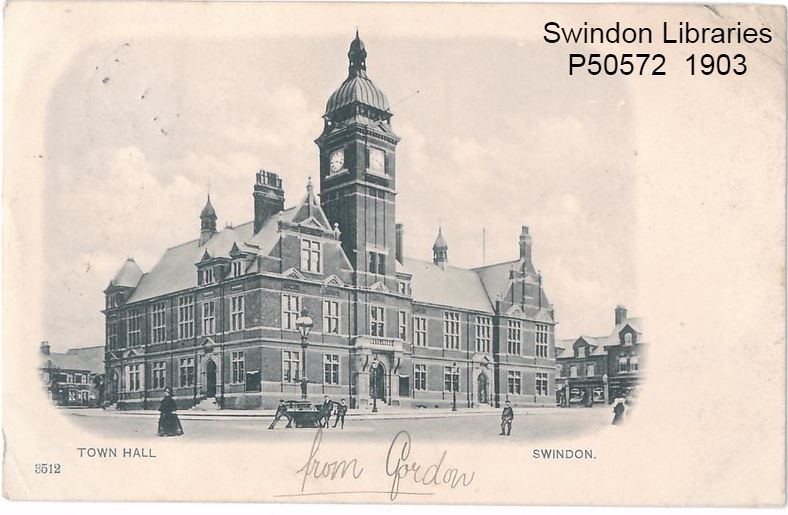
In 1900 the two towns of New and Old Swindon were incorporated to form a single municipal borough. It was a sensible idea promoted by many for some years. Today Old Swindon is still referred to as Old Town but the moniker New Swindon has pretty much slipped out of usage. The first Mayor of Swindon was George Jackson Churchward, Chief Mechanical Engineer of the Great Western Railway but did you know a Provisional Mayor was appointed in 1899? No, neither did I? It was thanks to @jratcliffephoto who posted on twitter on March 8, 2023 This month in Swindon history – 1899 – A draft Charter of Incorporation is produced, making provisional appointments of Mayor (J. Longland, Chairman of the Old Swindon Council), Deputy Mayor and Town Clerk. Well, this led me on the trail of Swindon’s first and possibly only, Provisional Mayor and whether he might be buried in Radnor Street Cemetery. Town Hall

Image published courtesy of Local Studies, Swindon Central Library

Late Mr. J. Longland

Sudden Death of Swindon Resident,

His Public Work

The death took place on Friday at his residence, 6 Volta Road, Swindon, of Mr James Longland, J.P. The deceased, who was 79 years of age, had been in failing health for some months, but he was attending to business as recently as the previous day. Mr Longland came to Swindon about 45 years ago, and started in business as a grocer at premises at the corner of Bristol Street. Later he removed to larger premises at the corner of Deacon Street and Commercial Road. He retired, however, and in more recent years he had been engaged as clerk to Messrs. Protheroe and Moon, income tax collectors. Deceased was a member of the old Urban District Council for New Swindon, and once held the position of chairman of the Finance Committee. He was the last chairman of the Council when the town was incorporated in 1901. When, by a commission dated November 23rd, 1906, the borough of Swindon was granted a magistracy of its own, Mr Longland was one of the first of the appointed magistrates. He had not sat on the Bench in recent years, but he was a regular attendant at the annual Licensing Sessions in February of each year. He was a regular worshipper at the Baptist Tabernacle, and had filled many offices, including those of treasurer and deacon. Mr Longland leaves two sons – one in business in London, and the other in South Africa – and a daughter, who resided at home with her father. Another daughter died a few years ago. Mr. Longland lost his wife two or three years since, and had never fully recovered from the shock.

Funeral

The funeral on Tuesday was attended by a representative company. By the request of the family the obsequies were of a semi-private character, and the desire was expressed that no flowers should be sent. A short service was conducted at the residence by the Rev. E.W. Probert (pastor of the Baptist Tabernacle), and the internment took place in the Cemetery, Mr Probert again officiating.

Mourners including members of the Baptist Church.

In the course of a brief address at the graveside, the Rev. E.W. Probert said they were assembled, as representatives of the Baptist Church and of the civic life of Swindon, to pay their last tribute of respect to one whose long life must assuredly be of a sweet memory to all. Mr. Longland was not only a devoted member of the Baptist Tabernacle, but he was also an honoured representative of the civic life of Swindon, pure in character, and filled with honour and integrity. That was the type of men we required to-day in public life, men who would carry the Spirit of Christ into the civic life. They were grateful for his noble life, and he hoped that young people would arise and fill the gaps made by the departure of such men as the late Mr. Longland.

The Mayor’s Tribute

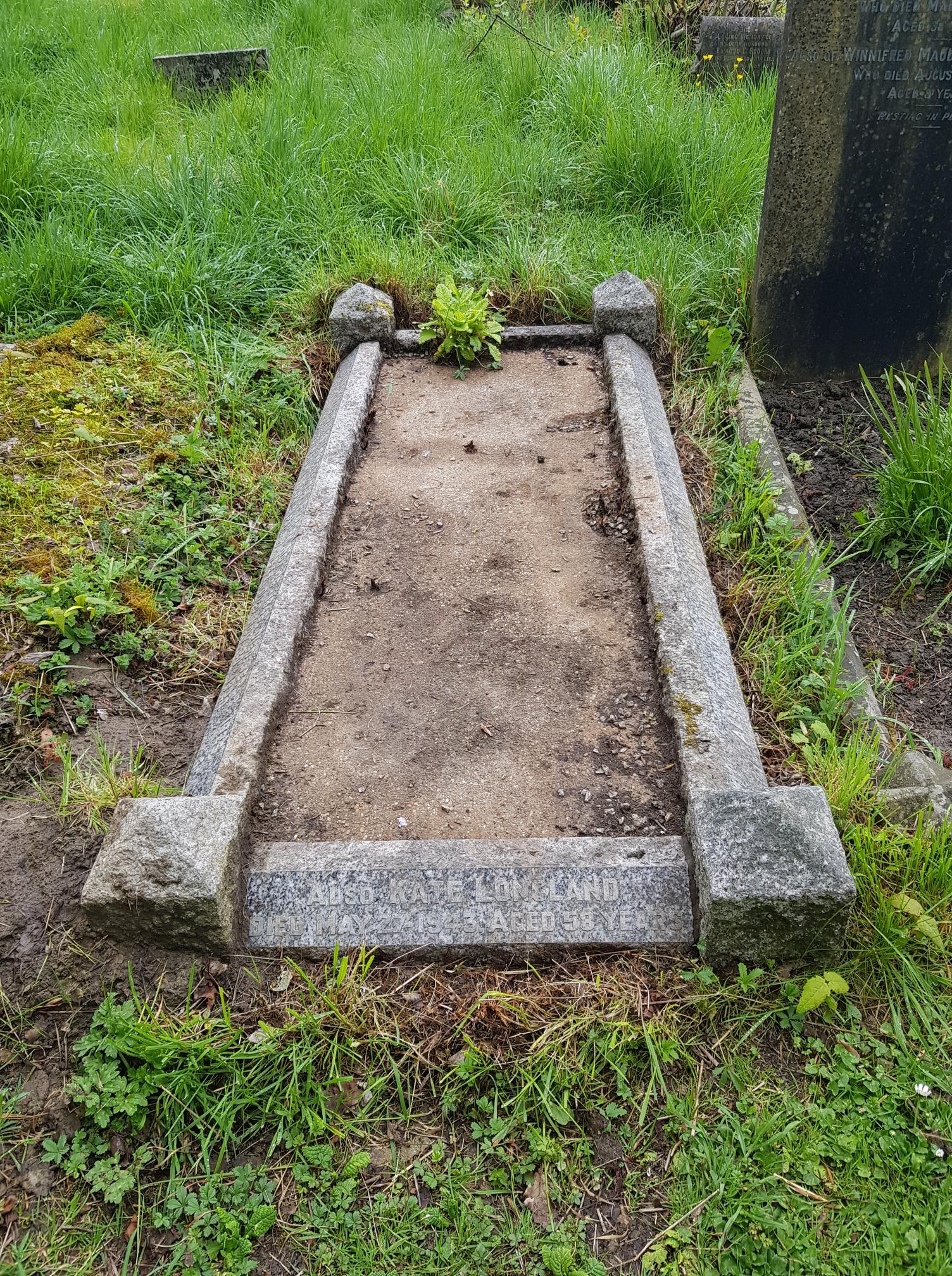
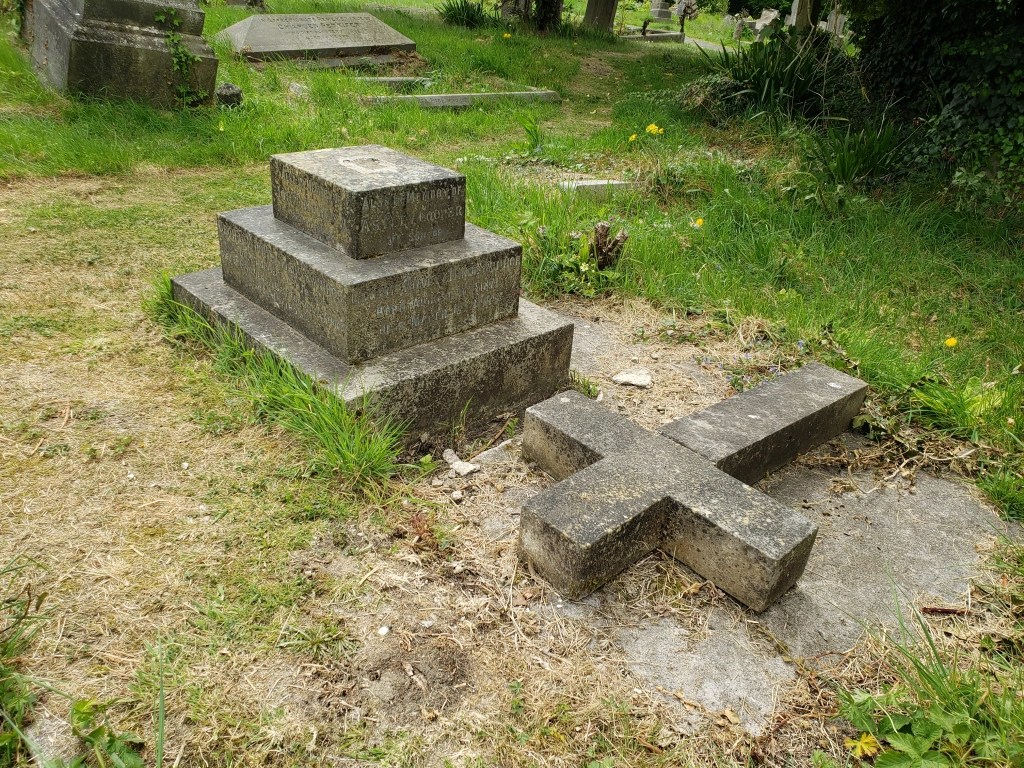
At the meeting of the Town Council on Tuesday evening, the Mayor (Ald. R. Evans) said he wished to refer to the passing of a gentleman who in days gone by took an active interest in local government. Mr J. Longland was elected a member of the New Swindon Local Board in April, 1893, and a member of the New Swindon Urban District Council in April, 1897. He took an active interest in the negotiations and the detail work for bringing about the Incorporation of the borough, and might be termed the “Charter Mayor,” as he was the gentleman named in the Charter as the person to act as Mayor for conducting the election of the first Council and to preside at the first meeting of the Council held on November 9th, 1900. At that meeting he was also elected an alderman of the borough and served the full term of six years, retiring in November, 1906. He was also one of the first magistrates appointed on the grant of a separate Commission of the Peace for the borough. All who knew Mr Longland knew him to be a man of upright character and sterling integrity and a man who placed his best at the service of the town in those days. The Council passed a resolution tendering sincere sympathy and condolence to the family. Extracts from North Wilts Herald, Friday, September 11, 1925 20230509_095922 James Longland, aged 79 years of 6 Volta Road, was buried on September 8, 1925 in plot E7369, a grave he shares with his wife Naomi and two daughters, Jessie who died in 1916 and Kate who died in 1942. This kerbstone memorial was pretty much hidden, covered in grass and weeds, when I visited the cemetery last week. Radnor Street cemetery volunteer Rebecca has made a fantastic job of clearing and tidying it up.

George Money Swinhoe – Swindon doctor

The re-imagined story …

I remember wondering why Dr Swinhoe had a sword on the top of his coffin. I kept pulling on my mother’s coat and asking – ma, ma until in exasperation she hissed at me ‘because he served in the Crimea War.’

Well, of course, I was none the wiser.

It was only years later that I learned about that bloody war where some 500,000 lost their lives due to the incompetence of commanding officers and the appalling conditions in the hospital in the converted barracks at Scutari. This was the war in which Florence Nightingale transformed nursing practices in the battlefield hospitals and back home here in England.

The Crimea War was the greatest military horror in a generation, that is until millions were sent to their death in the Great War.

Dr Swinhoe served as a medical officer in the Crimea War and I served as one in the Second World War. I didn’t get a sword though, shame about that!

Dr George Money Swinhoe

The facts …

Impressive Funeral Ceremony

Marked Expression of Public Esteem and Sympathy

The large crowds of people which followed the remains of the late Mr G.M. Swinhoe to their last resting place in the Swindon Cemetery on Saturday afternoon bore eloquent testimony to the very high and general esteem in which the deceased gentleman was held by all classes, for in these crowds were to be seen those of the very poorest circumstances mingling with those occupying important positions in connection with the public life of the town. It was a raw cold afternoon, and yet this did not deter these people from turning out in their hundreds to pay a last tribute of respect to the dead – to the memory of one who in his life time had been to so very many “a guide, philosopher, and friend.”

The solemn cortege was timed to leave the deceased gentleman’s late residence, Park House, Church Place, at two o’clock, but some time before this hour arrived, a very large number of people took up their position at a respectful distance from the house and patiently awaited the appearance of the coffin, which punctually at two o’clock, was borne out of the house. It was entirely covered with the Union Jack, and upon it, resting among a wealth of lovely flowers, was to be seen the trusty sword which the dead Crimean veteran carried with him during that eventful period in English history when he was attached to the medical staff. Within an area of but a few yards four Union Jacks could be observed flying at half mast – that at the GWR Medical Fund Hospital; that at the GWR Mechanics’ Institution; that at the Swimming Baths, and that in the Park over which Park House commands such an extensive view.

A minute or two after the hour had struck, the solemn procession moved slowly towards St Mark’s Church, where Mr Swinhoe was a regular worshipper, and where he for many years discharged the duties of Churchwarden. At the entrance to the Church the crowd was even greater than at Park House. Everyone wanted to gain admission to the sacred building, but accommodation was limited, and the police, of whom there were many on duty, firmly but gently had to stem the tide of those who sought to be present at the service. As it was, the Church was full almost to suffocation, but at no time was there any unseemly rushing, so well was the crowd controlled.

The service, conducted by the Rev. A.G.G. Ross MA Vicar of St Mark’s was of a most quiet and impressive character. As the coffin was borne into the Church, followed by the mourners, “Rock of ages” was sung as the processional hymn. Then the 90th Psalm, “Lord, Thou has been our dwelling place in all generations,” was chanted, the full Choir being present, after which Canon Ponsonby, formerly Vicar, read the Lesson from I. Cor., 15th chapter, from 20th verse. “But now is Christ risen from the dead.” The hymn, “Peace, perfect peace,” was then sung, after which, while the congregation stood, and as the funeral procession moved out of the Church, Mr E. Miles, the organist, played the “Dead March” in Saul.

All along the route to the Cemetery hundreds of people followed, and pedestrians going about their ordinary business stood and uncovered as the procession passed. At the Cemetery between three hundred and four hundred people had assembled. The grave, the same in which the remains of Mrs Swinhoe were interred some fourteen years ago, not far from the Cemetery Chapel, was within a roped enclosure outside which the people were kept back by the police, under the Deputy Chief Constable (Supt. Robinson) and Inspector Moore. The police, however, had not the slightest difficulty in controlling the crowd, no attempt being made to in any way break through the barrier.  As the funeral procession approached the grave the 130th Psalm, “Out of the depths have I cried unto Thee, O Lord,” was chanted. At the graveside the Rev. A.G.G. Ross performed the last portion of the solemn rite; then the hymn, “Now the labourer’s task is o’er,” was sung, and the impressive ceremony concluded.

The following members of the Committee of the GWR Medical fund Society acted as bearers: Messrs H. Morris (Chairman), William Humphries, W. Sansum, A Watson, B. Wheel, and Z. Peskett.

The grave is a brick one, and had been very beautifully lined with moss, snowdrops, violets primroses, crocuses, and auriculas. The remains were enclosed in an unpolished oak coffin, with a brass Latin cross down the full length of the lid, and at the foot was a brass plate bearing the following inscription: George Money Swinhoe, Died Feb 27th, 1908, Aged 77 years.

List of mourners and floral tributes …

Many of the officials connected with the Medical Fund Society carried wreaths.

In the procession of vehicles, it should be added, was to be noticed the deceased gentleman’s carriage in which he covered so many of his no doubt fatiguing rounds.

Extracts from the Swindon Advertiser, Friday March 6, 1908.

George Money Swinhoe 77 years of Park House was buried on February 29, 1908 in a large grave plot numbered E8228/29/30 which he shares with his wife and four sons.

You may also like to read:

Maurice Carew Swinhoe – banana planter and exporter

The Death of Mrs Swinhoe

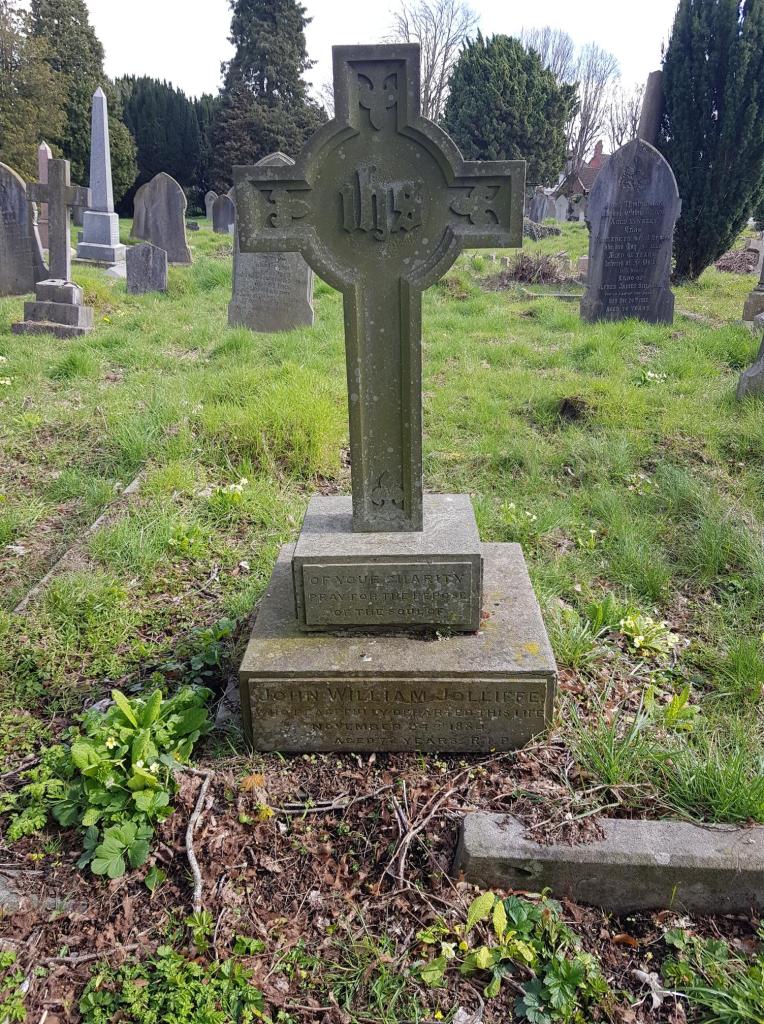
John William Jolliffe – down your way

Our Victorian town centre streets are frequently named after the great and the good of Swindon – take Jolliffe Street, for instance. Built in around 1891 this street was named after John William Jolliffe, surveyor and collector for the New Swindon Local Board district.

John William Jolliffe was born in 1838, the son of John, a builder, and his wife Elizabeth. John William grew up, married his wife (another Elizabeth) and spent most of his life living on the Isle of Wight. In 1861 he was living in Newchurch, Ryde, Isle of Wight and described himself on the census of that year as a Master Builder employing 50 men.

At the time of the 1871 census he was living in High Halden in Kent where he was employed as Clerk of Works in Building. He moved to Swindon soon after this to a post as Surveyor of Swindon New Town Local Board. His first job was to oversee the building of the new sewerage works in Even Swindon. He appears to have specialised in the building of sewage treatment plants including work at Gorse Hill and at the time of his sudden death he was working on improvements in the disposal of sewage in the town.

Sudden death of Mr J.W. Jolliffe – Our readers will hear with regret of the almost sudden death of Mr J.W. Jolliffe, for some years surveyor and collector for the Swindon (New Town) Local Board District, which took place on Monday morning last. Although in his 73rd year, Mr Jolliffe was up to the time of his death apparently a hale and hearty man. In fact, all the previous week he was about the town as usual, and attended to his duties up to Saturday evening. On Sunday evening he was seized with spasms round the heart, and appeared to suffer much pain. His son fetched Dr. Howse, who attended, and the pain abated. At 1 a.m., however, the deceased was taken worse, and medical aid was again sought, but this time it was of no avail, Mr Jolliffe breathing his last before 2 a.m.

The deceased came to Swindon some 12 or 14 years ago to superintend the carrying out of the new sewerage works which was executed to convey the sewage of the town to the farm at Even Swindon, having previously been in business at Ryde, in the Isle of Wight, as a builder.

When the late Mr W. Read resigned the office of Surveyor the Local Board appointed him their surveyor, collector, and inspector of nuisances. Since then the district has grown rapidly – in fact more than doubled – and some twelve months ago the Board felt that the duties of the office of surveyor were so great that they relieved Mr Jolliffe of his duties as inspector of nuisances.

Recently he has been engaged on many important works. The Gorse Hill Sewerage was carried out from his plans and under his supervision. The whole of the private streets at Even Swindon, at Gorse Hill, and many on the Kingshill Estate have been made by him and since dedicated to the board. At the time of his death he was engaged on the plans for a fresh means of disposal of the sewage at the farm, and also on the plans of the proposed new bridge at the end of Wellington street.

The general regard and esteem in which the deceased was held by his neighbours was evidenced on Thursday at the funeral, which took place at the Swindon Cemetery. In addition to members of the New Town Board there were most of the builders and architects of the town, representatives of the Old Town Board, of the GWR Co’s, permanent way and mechanical engineering staff, of the Gas Company, Canal Company, and many tradesmen, with whom the deceased has been brought into business relation.

The religious portion of the ceremony was conducted by the Rev. Father Eikerling and the choir of the Roman Catholic church, of which deceased was a member. At the cemetery chapel the rev. gentleman delivered an impressive address, extolling the many virtues of the deceased, pointing out the lessons to be learnt from such a life and death. The service was fully choral, and was watched by a large crowd of sympathising friends. The deceased leaves a widow some three or fours years his senior. We hear that A Solemn Requiem will be sung for the soul of the deceased this (Saturday) morning at the Holy Rood Church by the members of the St. Cecilias Society, the deceased having been an honorary member of that society.

The Swindon Advertiser, Saturday, November 29, 1884.

John William Jolliffe was buried on November 27, 1884 in grave plot E8290. His wife Elizabeth died in 1885 and is buried with him.

And if you are wondering about the derivation of the name Sheppard Street; this was named after prosperous landowner John Henry Harding Sheppard who owned great tracts of land in this part of New Swindon. You will also find John, Henry and Harding Streets in this area of town.

You may also like to read:

W.H. Read – local architect

W.H. Read – the continuing story

Mayor Tom Butler – Cabinet maker

Tom Butler was born in Ramsey, Huntingdonshire in the summer of 1856. By 1881 he had moved to Swindon and was working at premises at 81 Regent Street for master cabinet maker William Pooles. He would later have his own business and an elegant house on Victoria Road named after his birthplace.

In 1883 he married Mary Ann Turner at the Wesleyan Methodist Chapel on Bath Road. The couple had seven children, of whom five survived childhood.

The couple were devout Methodists and both played prominant roles in the church and public life in Swindon generally. Tom was elected to the Town Council in 1903 and served as Mayor in 1910/11 an auspicious year in which the coronation of George V took place and Tom’s much loved wife died suddenly.

Mayor Tom Butler published courtesy of Local Studies, Swindon Central Library.

The Late Mr T. Butler

Funeral of One of Swindon’s Most Prominent Citizens

All Sections of Public Represented

The very high regard in which the late Mr Tom Butler, ex-Mayor of Swindon, was held by all sections of the public was eloquently reflected on Saturday in the scenes that attended his funeral. From an early hour in the afternoon many people gathered in the sunlit Cemetery to witness the last phase of the passing of a noteworthy man, and long before the service was due to start the Faringdon Street Wesley Chapel was filled.

The funeral service was impressively conducted by the Rev J. Rogers (superintendent minister), who paid glowing tribute to Mr Butler’s work in the town. Mr Butler came to Swindon, said Mr Rogers, in 1878. He became a teacher at Wesley Church the same year, and after a break of some years, resumed the work in 1887. Most of them were familiar with the main incidents of his public life; he built up a prosperous business and made a competence. No aspersion had been cast upon his character or methods; he was a man of honour and integrity. There were certain dates prominent in his career which the speaker wished to recall. In 1886 he was converted, and by definite and intelligent choice made Christ the Lord of his life. To the vows then made he remained faithful. His experience of religion was real and vivid, and he was always earnest, warm-hearted and generous. In 1887 he entered the school as a teacher, in 1888 he became treasurer to the Sunday School and in 1889 he was appointed superintendent, remaining in office until his health broke down. He relinquished the office in 1914. Mr Butler was a trustee of that church and was a liberal supporter of its funds. He helped very materially in the erection of the monumental Sunday School premises, while as Circuit Steward he discharged his duties with urbane and faithful efficiency. His life of usefulness and devotion had its source in mystic fellowship with God. He was loyal to the work in the days of his activity. They all knew what Mr Butler was to the community, but they did not know what he was to that church.

Referring to Mr Butler’s public life, Mr Rogers reminded them that he was elected to the Town Council in 1903 and held office as Mayor in 1910-1911. During that year he suffered a bereavement from which he never fully recovered.

“Servant of God! Well done,” concluded Mr. Rogers, and the fervent murmurs of the congregation was an endorsement of his eulogy.

North Wilts Herald, Friday, October 20, 1922. (extracts)

Tom Butler was buried in grave plot A1033 where he lies with his wife Mary Ann who died in 1911 and their two young children, Hilda Mary who died aged 6 years in 1898 and Denis Stanley a 3 month old baby who died in 1899.

You may also like to read:

Mayoress Mary Ann Butler and the Coronation

Mayoress Mary Ann Butler and the Coronation

As the UK prepares for the Coronation of King Charles and his wife Camilla on Saturday May 6, how did it all go back in 1911? The Coronation of King George V took place on June 22, 1911 and it all went very well here in Swindon. In fact, the Mayor Tom Butler said as much when he thanked the people of Swindon in the pages of the Swindon Advertiser.

The Mayor’s Thanks

His Worship the Mayor (Mr Ald. Tom Butler) desires to congratulate the inhabitants of Swindon generally on the success with which the arrangements for celebrating the Coronation in Swindon on Thursday last were carried through, and on the enthusiastic yet orderly way in which the inhabitants generally showed their loyalty and so readily assisted in making the day such an enjoyable one to all concerned, and especially to the old folks and the children.

The Mayor also desires to express his high appreciation of the decorations and illuminations, which were so artistically and beautifully carried out in all parts of the own.

In tendering his warmest thanks to all, he would also like to acknowledge the patience and courtesy with which the police carried out their duties during a long and arduous day.

The Swindon Advertiser, Friday, June 30, 1911.

By the time the newspaper was published Mayor Tom Butler’s much loved wife Mary Ann had died.

The Late Mrs T. Butler

Funeral

Impressive Scenes

The sad death of the Mayoress of Swindon has keenly touched the hearts of Swindon inhabitants, and when the funeral took place yesterday there was a demonstration of sympathy and respect almost without parallel in the town. In the streets, in the chapel, and at the graveside thousands testified by their presence and sad demeanor the sorrow they felt at the great calamity which had befallen the Mayor and his family and also the community at large, and representative men and women of all ranks and professions accompanied the remains to their last resting-place.

The first part of the service was held at Faringdon Street Wesleyan Chapel, where the late Mrs Butler had been a worshipper with her husband for many years. The Cortege left Ramsey House, Victoria Road, shortly after 2.30, the streets being thickly lined with spectators. The official representatives, who had previously met at the Town Hall, included Messrs. L.L. Morse, A.W. Deacon, J. Clark, J. Longland, S.B. Cole, W.H. Stanier, C. Hill and A.W. Haynes borough magistrates), Mr T. Free (Mayor of Marlborough), Mr W. Small (Mayor of Chippenham), Mr W.H. Lawson (Deputy Mayor of Swindon), Mr R. Hilton (Town Clerk), Prebendary W.B. Pitt, Messrs W. H. Williams, W.W. Dickson, J. Henderson, J. Spackman, R.W. Menham, G. Brooks, H.D. Piper, F.W. Marillier, A.E. Harding. T. George, J. George, J.G. Cox, W.E. Morse, A. Church, W. Sloan, W.H. Kinneir, A.J. Gilbert, A. Balch, R. Evans, A.H. Wheeler, J. Powell, J.J. Brown, W. Johnson, W.J. Bray and H.J. Gregory (members of the Town Council) cont…

The service in Faringdon Street Wesley Chapel, where from her youth onwards the late Mayoress had been a constant attendant, was of a painfully impressive character. Long before the cortege had reached the entrance, the side aisles had been filled by members of the congregation, the central aisles having been reserved for the mourners and followers.

In his address the Rev W.J. Chant said – ‘They were in the presence of a very great sorrow, a bereavement which was very mysterious, which was beyond them. Their deceased sister seemed to have been taken away at that particular time when she was very necessary; necessary for the home, for the church and for the town. But they could not raise God’s hands, and could only ask Him to help them to trust in their darkness.’

He continued – ‘It was with pleasure and encouragement that they thought of the kindness of the late Mayoress – ever happy when she was thinking of other people, trying to help them. The Lord of kindness was in her heart. They thought of her evenness of disposition. She was always the same, no matter when one met her. They also thought of the great love which she had for her home, how the heart of her husband trusted in her and her children rose up and called her blessed. They thought of her specially during the last few months, more than ever before, when she had been called upon to serve the town, counting no effort too great, no sacrifice too much, and her efforts culminated in that wonderful day of rejoicing so recent as Thursday week, when she was one of the most active, faithful, and unselfish and devoted workers in connection with the Coronation festivities.’

The cortege then left for the Cemetery, and as the sombre procession moved down the aisle the organist played Handel’s Dead March in “Saul.” While the body was being carried away practically every eye was tear-dimmed.

On leaving the chapel the procession re-formed and proceeded to the Cemetery, where a considerable space round the grave had been roped off. A dense mass of people witnessed the brief concluding ceremony. Supt. Robinson directed the arrangements. The grave was at the east end of the chapel. The coffin of polished English oak had an elm shell and brass fittings, and the inscription was:-

Mary Ann Butler

Born 14 July, 1862

Died 28 June, 1911

The coffin was borne upon a hand bier and was covered with floral tributes. Five mourning coaches followed, the family mourners being the Mayor (Mr T. Butler) and three sons – Messrs. R.W., T.R. and F.G. Butler – Mr Turner (brother of deceased) and Mr W. Watts (cousin). Amongst others following were Mr and Mrs A.G. While. The final portion of the service was said by the Revs J. Rodwell and W.J. Chant. At the last moment the Mayor, who had borne up bravely, was quite overcome with grief.

North Wilts Herald, Friday, July 7, 1911 (Extracts)

Mary Ann was buried on July 3, 1911 in grave plot A1033. She lies with her two young children, Hilda Mary who died in 1898 aged 6 years and Denis Stanley a 3 month old baby who died in 1899.

Bob Menham – a larger than life character

“He is active and decides what to do quickly, is a good punter, fists out well, and kicks cleanly and surely. – Sporting Life April 10, 1897.

Measuring 6ft 1ins tall, Bob Menham certainly stood out in a crowd!

Robert William Menham was born in North Shields in 1871, the son of cabinet maker Henry Menham and his wife Annie and grew up in Burley, Leeds. In 1891 he enlisted with the 3rd Battalion Grenadier Guards and in 1894 he married Bessie McKay.

Meanwhile, his football career quickly took off seeing him play for Luton Town, Everton and Wigan County before being transfered to Swindon Town where he is still considered to be one of the most talented goalkeepers the club has ever had. During the 4th round FA Cup replay against Staple Hill FC he even managed to score a goal, electing to take a penalty securing a 6-0 win for the Town.

And when Swindon Town F.C. found itself in dire financial straits in 1901, Bob joined a money saving initiative, which ultimately rescued the club.

Swindon Town F.C.

Players’ Wages Fund Subscription List

The following subscription list showing the amount received up-to-date has been opened on behalf of the Swindon Town F.C. Players, who a short time ago, when the financial condition of the club was in a very critical state, agreed to accept a greatly reduced wage in order that the club might exist, at least, till the end of the present season. As a matter of fact, the wage bill was reduced to practically half the former amount, and it is on that account that the players have been compelled to appeal to the public to assist them in carrying out their resolve. It is hoped that all lovers of sport will respond to the appeal, and all subscriptions and donations will be thankfully received, and duly acknowledged on behalf of the players by Mr R.W. Menham (capt.) Radnor Street, Swindon.

The Evening Swindon Advertiser, Saturday, March 16, 1901.

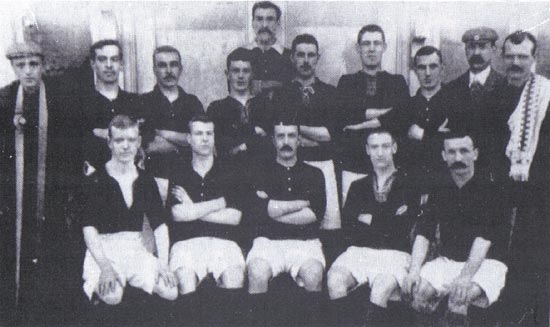
The Swindon Town FC 1902/3 squad

Bob retired in 1903, taking up a role on the team’s Board of Directors, while the family moved to the Castle Hotel, Prospect where he was licenced victualler for many years and was the president of the Swindon and District Licensed Victuallers Association. He served on the Swindon Town Council from 1907-1920 representing the East Ward.

Old-time Everton followers will regret to hear of the death of Bob Menham former Everton and Swindon goalkeeper, later a director of Swindon, and a well-known licensee there. He is still regarded at Swindon as the best goalkeeper the Wiltshire club ever had. His nephew Gordon, was also associated with Everton about twenty years ago.

The Liverpool Echo, Wednesday, January 31, 1945.

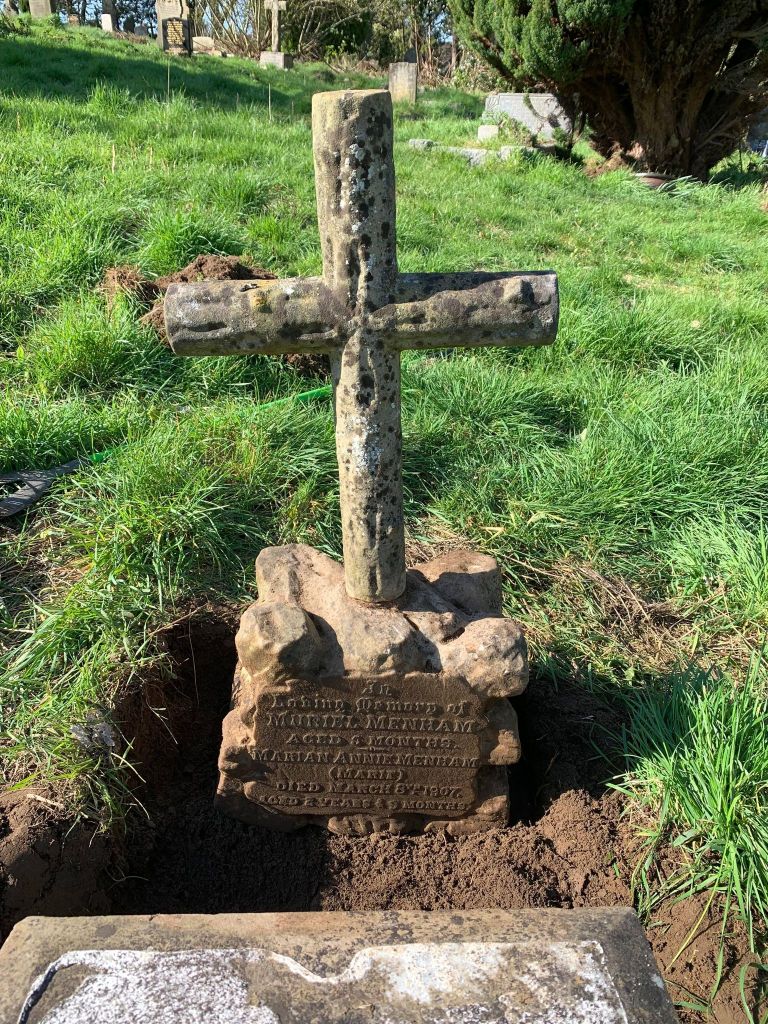
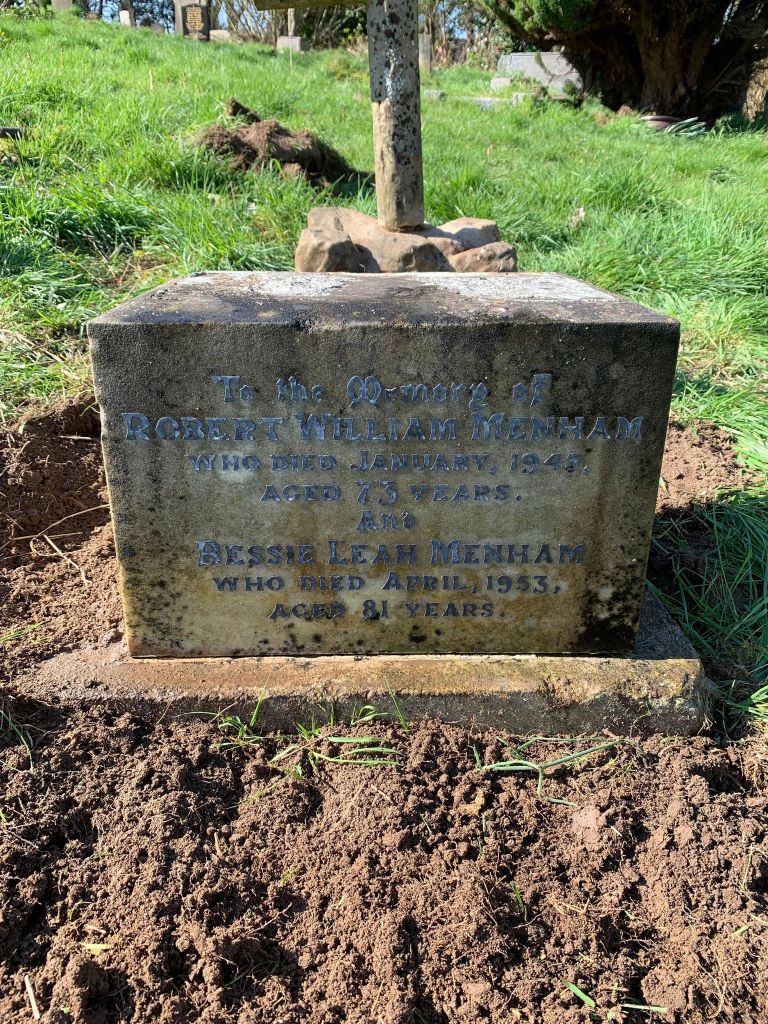
Robert William Menham died at his home, 67 Eastcott Hill, on January 30, 1945 aged 73 years old. His funeral took place on February 1, when he was buried in Radnor Street Cemetery in grave plot C1057 with his two little daughters, Muriel who died in 1900 and Marian Annie who died in 1907. Bessie Leah, his wife, died in April 1953 and is buried in the same plot.

Bob Menham’s memorial cleared and cleaned today by Kevin.

Raymond George Cripps – first Mayor to be invested in new Civic Offices

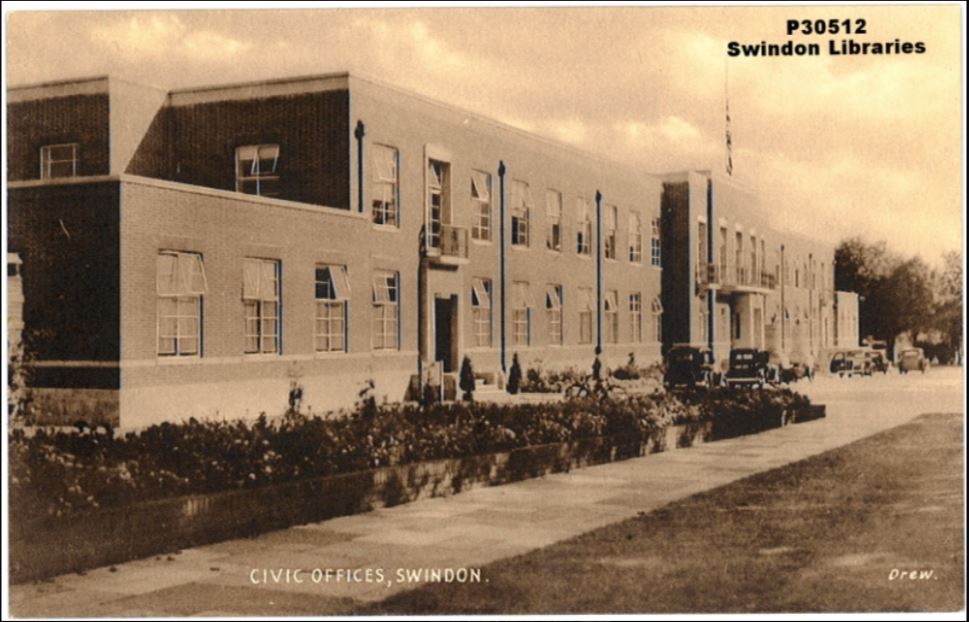
As Swindon residents eagerly await the opening of the temporary museum and art gallery space in the Civic Offices, let’s visit the opening of the building in 1938 and the first Mayor to be invested there.

The Civic Offices in Euclid Street were designed in a Moderne style by Oxford architects Bertram, Bertram and Rice and officially opened on July 5, 1938 by the Duke of Gloucester. The North Wilts Herald reported that ‘one of the highlights of the tour was when the Duke, with the Mayor, appeared on the balcony. His Highness was loudly cheered, and he waved an acknowledgement.’

The building was given a Grade II listing in 2020 when Historic England described it in the designation details ‘as a symbolic expression of Swindon’s civic identity during the interwar period.’

Image published courtesy of Local Studies, Swindon Central Library

Raymond George Cripps was born on December 18, 1877 in Kings Lynn, the son of Primitive Methodist Minister George Cripps and his wife Ursula Ellen. The family moved around the country following George’s ministry, but by 1901 George had retired and the family were living at 134 Goddard Avenue. Raymond was 23 years old and working as a railway clerk.

In 1906 Raymond married Beatrice Maud Raggett, the daughter of another prominent Primitive Methodist Henry Raggett and granddaughter of Charles Morse, one of the founders of the church in Swindon. The couple had two children, Cyril and Marjorie.

Raymond George Cripps first stood for office in the local elections of 1924 but was disqualified owing to his nomination papers not been filled in properly. He sought election the following year and continued to represent the King’s Ward.

Raymond George Cripps died aged 82 years at his home, 85 Croft Road. He was buried on January 25, 1960 in grave plot D85A which he shares with his wife Beatrice Maud who died in 1954.

Swindon’s New Mayor

Unanimous Election of Councillor R.G. Cripps

Labour’s Support

Just an ordinary man, unpretentious, not a Swindonian, but very proud of the town, in which he has lived for 40 years.

That was how Councillor Raymond George Cripps described himself on Wednesday when he was elected Mayor Swindon.

With the usual ceremonial his election was approved by the full Council, in the presence of members of his family and friends and representatives of the public life of the town.

Thirty-ninth in the list of Swindon Mayors, Mr Cripps, a retired GWR clerk, is the first Mayor to be invested in the new Civic Offices.

This year, for the first time in Swindon civic history, the members of the Council and visitors were deprived of the ceremony of robing and investiture with chain of office. This took place in an ante-room during a brief adjournment of the special Council meeting.

Mr Cripps made the customary reference to the work which lay ahead of the Council. He thought the dispute with the Wilts Standing Joint Committee over the police strength in Swindon would be settled on advantageous terms to the Council. The cattle market scheme would call for all the resources possessed by the Council in the way of financial judgment and wise planning. Mr Cripps described Swindon’s educational facilities as unequalled in the country, and he appealed for greater civic pride in the town.

Among those occupying reserved seats at the rear of the Council Chamber were the new Mayoress and members of her family the retiring Mayoress, Mrs Niblett, and Mrs L.J. Newman, a former Mayoress, the Rev. E. Banks and the Rev C.H. Cleal.

Mr Cripps election was proposed by Councillor A.E. Harding, and seconded by Ald. T.C. Newman.

In proposing Councillor Cripps as a ‘qualified person’ to be Mayor, Councillor A.E. Harding described Swindon as one of the best governed towns in the country. ‘Our offices and officials are second to none; we are proud of them.’

Then as an aside he made the suggestion to the Transport Committee that ‘bus conductors should be supplied with spectacles ‘so they might see people hurrying to catch the bus.’

Mr Harding spoke of the new Mayor’s church and Council work as providing excellent training for the exalted position he was to fill.

Tribute to Mrs Cripps and her ability to fulfil her duties was added by Mr. Harding.

Ald T.C. Newman seconded, and referred to his long association with Mr Cripps.

Labour’s Support

On behalf of the Labour group Coun. W.R. Robins supported the nomination and said the Mayor could rely on the support of his colleagues.

‘We differ in political allegiance but we are as desirous of doing the best for the town and people as any other members of the Council.’ Coun Mrs May George and Coun A.H. Wheeler also supported the nomination.

Coun. H.R. Hustings protested against the discordant note brought into the proceedings by the insult to the ‘bus conductors. He was very surprised at the remark being made on such an occasion of dignity. It was a very inopportune time.

The election of the Mayor was then approved unanimously, and the Council adjourned for a few moments while the new Mayor robed and was invested with chain of office.

When the new Mayor returned robed and took his place in the Mayoral chair he was loudly applauded.

The Mayor, speaking of Council work, said he was afraid that Swindon people did not appreciate the educational advantages of the town. He questioned whether any other town of its size could equal them.

Promising to do his work to the best of his ability he confessed that he had been tempted to withdraw after being proposed as Mayor-elect. He realised the responsibility he was assuming.

Referring to a reference in the Press in which it was suggested that he would need good humour, he said he could still see the funny side of things. ‘God help the man in public life who cannot,’ he said. He hoped to serve impartially and he knew the Mayoress would do all in her power to render service and forward any good cause in the town.

Provision had been made in current estimates for erection of a cubicle block at the isolation hospital. It was anticipated that during the coming year the Victoria road improvement would be completed, or at least substantial progress made.

The programme of educational development would, in the main, be completed and proposals for a central education and health clinic were approaching realisation.

North Wilts Herald, Friday, 11 November, 1938

You may also like to read:

Henry Raggett – a humble God fearing Christian

Levi Lapper Morse – the end of an era

Regent Street Primitive Methodist Chapel

Edwin Browne – Past Master of Gooch Lodge

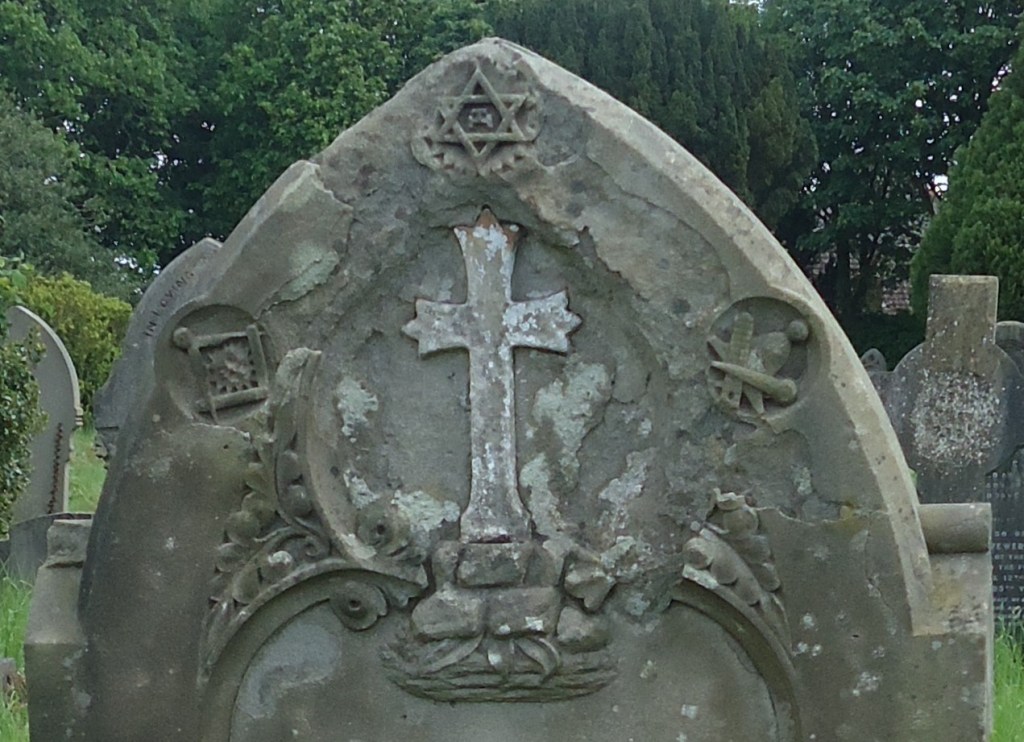
This headstone is decorated with numerous symbols, clearly indicating that Edwin Browne, who is buried here, was a Freemason.

Edwin was born in Newbury, Berkshire in 1833. By 1851 he was living with his widowed mother Mary at No. 2 Kimbers Alms Houses in Newbury where his mother is described as an ‘Almswoman’. Seventeen-year-old Edwin was working as a Postmaster’s Assistant but a year later he had left Newbury and was in Swindon where in October 1852 he began work as a clerk in the GWR Works stores.

But he was soon on the move again. In 1860 he married Anna Maria Heathcote at St. Peter & St Paul’s Church, in Aston and at the time of the 1861 census they were living in Coleman Street, Wolverhampton with their daughter Emily Vine Browne.

They remained in Wolverhampton for at least six years where two more daughters were born, Annie Amelia and Florence Lucy. Their first-born daughter Emily died in 1867 and is buried in Merridale Cemetery, Wolverhampton.

By the time of the 1871 census the family were living at 24 Prospect, Swindon before moving to 3 Church Place where Edwin died on June 2, 1885.

Research has revealed that Edwin was initiated into the Gooch Lodge on July 4, 1870 when the Lodge was only recently established. He would serve as Past Master of Gooch Lodge and PPSGO of Wiltshire.

Edwin died at his home 3 Church Place on June 2, 1885 and was buried in plot E8435 on June 5. He was 51 years old. The headstone leaves plenty of space for more inscriptions, but Edwin lies here alone.

Edwin’s second daughter Annie Amelia married Henry Simpson, a Steam Engine Fireman, in Wolverhampton in 1891. She died in Newport, Monmouthshire in 1961.

Youngest daughter Florence Lucy married Sidney Herbert Webber and remained living in Swindon. She is buried with her husband, two daughters and a son in Christ Church Burial Ground.

Edwin’s wife Annie Maria Browne remarried in 1900 in Cirencester and died there in 1913.

Mr Edwin Browne, deputy chief store-keeper to the Great Western Railway Company, died in a sudden manner on Tuesday, from heart disease, at his residence in Church Place, New Swindon. Mr Browne, who has been many years in Swindon, was generally liked by all with whom he came in contact. He was an enthusiastic Mason, being P.M. of 1295 and 355, and a P.P.S.G.O. of Wilts. The Masonic brethren of the deceased attended the funeral yester (Friday) afternoon at the Cemetery.

The Swindon Advertiser, Saturday, June 6, 1885.

Consecration of the Gooch Lodge, No. 1295

The interesting ceremony of the consecration and dedication of the Gooch Lodge, No. 1295, which had been looked forward to by the brethren in the province with a considerable degree of interest, took place at the Queen’s Royal Hotel, Swindon, on Saturday last. A very considerable number of brethren attended from London, Bath, Bristol, Gloucestershire, and several lodges in the province. Brother H. Muggeridge, as presiding officer on the occasion of the consecration, took the chair, and at once proceeded with the ceremony of consecration and dedication, which he most effectively and impressively performed. His opening address was a great treat and was listed to with much attention. The oration by the P.G.C. Brother the Rev. C. Raikes Davy also received great attention, being an exhortation to adhere to and promote the well-known objects of the Masonic Order – Charity, Benevolence, Good Will, etc.

The Lodge was afterwards formally dedicated and consecrated.

The installation of Brother Kinneir was then performed by Brother Sir D. Gooch, and the following officers were installed and invested:- Bros. J.J. New, S.W.; H.C. Tombs, Treasurer; F.J. New, S.D.; C. Lidsley, I.G.; H.J. Birch, J.W.; T. Coall, Secretary; W. Hall, J.D.; J. Burrows, Tyler.

The Banquet, to which upwards of 60 brethren sat down, was presided over by Brother Henry Kinneir, now W.M. 1295, supported on his right by the V.W. the D.P.G.M., and Brother Muggeridge, and on his left by the R.W. the P.G.M. of Berks and Bucks (Bro. Sir D. Gooch), Brother Rev. C.R. Davy, P.C.G., etc. the repast was served by Brother Westmacott, at the Goddard Arms, the resources of whose establishment were fully equal to doing honour to such an auspicious event. After the cloth was removed, the usual loyal and Masonic toasts were eloquently proposed and heartily responded to, song and glees most pleasantly alternating with the toasts.

The whole ceremony passed off with great eclat, and many brethren who came from a distance and had witnessed the consecration ceremony congratulated the members of the Gooch Lodge most warmly on a successfully inauguration.

Extracts from a much longer report published in the North Wilts Herald, Monday February 14, 1870.

David Uzzell – a bit of a country rogue.

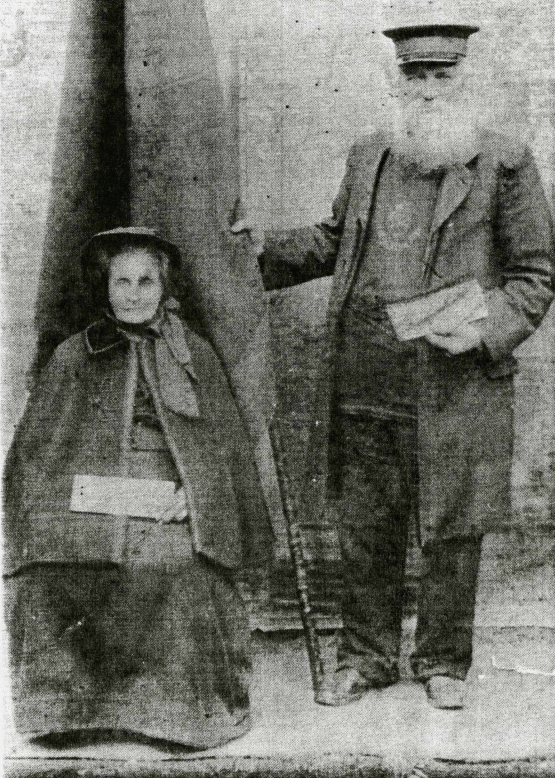
On his frequent visits to his grandmother Rachel in Swindon, Edward Thomas, literary critic, journalist, poet and biographer of Richard Jefferies, met David Uzzell – a man he referred to as ‘Dad Uzzell’

Uzzell was born in Ewen, Kemble, Gloucestershire in 1841 the son of John and Sarah Uzzell. He married Fanny Holliday on December 25, 1863 at Stratton, Gloucestershire. By 1871 they were living in Cirencester where David worked as a labourer. The couple had a six year old son William. By 1881 they were living at 95 Gloster Street, Cirencester where they would remain for many years before moving to Swindon by 1901. The couple lived at 6 John St Terrace where David worked as a Caretaker for the Salvation Army Barracks.

Uzzell has been described as a countryman, but also as a bit of a rogue. He taught Edward Thomas about country folklore and came to epitomise the agricultural labourer/poacher and fisherman that Edward later wrote about.

David Uzzell died at his home, 6 John St Terrace in December 1919 and was buried in grave plot B2190, a public grave, with four others. Fanny died three years later aged 85. She was buried on December 8, 1922 in grave plot C503, another public grave. She is buried with four others including her son William who died in 1925.

David Uzzell may have been a bit of a ‘country rogue’ but he has earned a place in literary history.

David Uzzell and his wife Fanny pictured holding their pension books.

You might also like to read:

War Poet Edward Thomas and his Swindon family