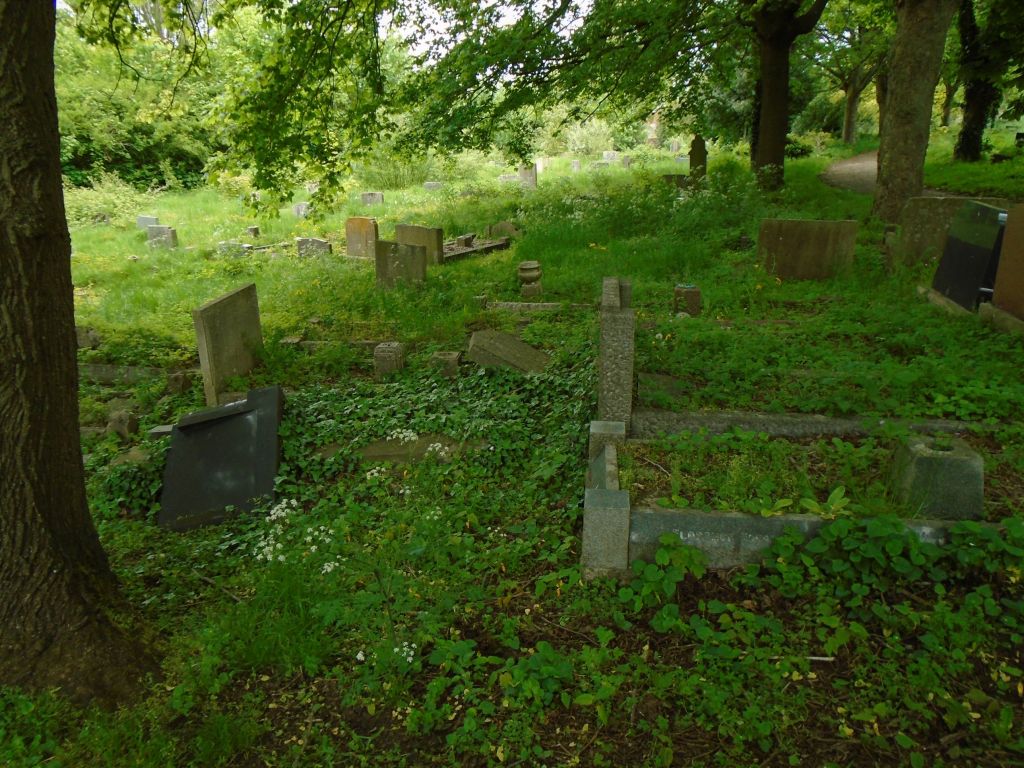
On my way to conduct a guided cemetery walk for the Old Town Belles WI group recently, I met a woman who emerged from Section Lower C where the grass is as high as an elephant’s eye (to misquote the famous song from Oklahoma).
Ilse was visiting from the Netherlands on a week long, whistle-stop, family history tour of Wiltshire. She had spent the morning in Box and the afternoon in Gorse Hill before a quick visit to the cemetery.
She had no cemetery map and had by happenstance arrived at Section Lower C. She had hoped there would be numbers on the graves, but sadly that is usually not the case. She did have a grave number she had taken from a well-known website, but it was one that I had an ‘mmmn’ about – you know what I mean? However, Radnor Street Cemetery burial registers record the grave numbers which range from a single digit up to a four digit number and always preceded by a letter (and occasionally with a letter at the end e.g. D12A). But this was a five digit number without any letter. Mmmn!
Ilse wrote her email address and the name of her great-aunt on the back of my notes and today I’ve done some research for her. As I suspected the number she had was not a Radnor Street Cemetery grave plot number – but, guess what? Where she was exploring in the wilder reaches of Section Lower C was exactly where her great aunt (and great-great-grandmother) are buried. What a coincidence!
She has a wealth of family stories, which I am hoping she will share with me when she gets home. One of these was of how her great aunt met her husband-to-be when her hat blew off on Swindon station platform and he rescued it. Ilse says she has family photographs – obviously not of the hat retrieval incident – but what others might be revealed! What a fortuitous meeting. (And the guided walk with the Old Town Belles was most enjoyable as well).
Section Lower C
An overall view of the cemetery and a scan of Section Lower C where Ilse was searching.
Those embarking on their family history research are always told to talk to older relatives first; to ask questions and make a note of family ‘legends’ which often contain valuable information. When Marilyn Beale began her research there were plenty of stories still circulating within her large family.
I recently had the good fortune to meet Marilyn, who I am sure many Swindonians will know, especially those who live in Penhill.
Marilyn moved to Penhill as a young, newly married woman and has spent more than 50 years volunteering in her local community. Beginning with a gardening club and then involvement with the Penhill Forum, the Seven Fields Conservation Group and the Penhill Community Orchard, Marilyn loves her neck of the woods.
We met to talk about Rodbourne where Marilyn grew up. Marilyn is an avid reader and has a great curiosity and interest in history. We talked about the past and her redoubtable grandmother Susan Legg born in 1868 – imagine the changes she would have experienced in her lifetime. She had lived through the reign of five monarchs and had survived the deprivations of two world wars.
Susan was the daughter of agricultural labourer Job Simpkins and his wife Elizabeth. She grew up in Purton and at the age of 14 was working as a ‘nurse girl’ at Dudgmoor Farm, Cricklade for farmer Charles Kennett, his wife Agnes and their two young daughters. In 1890 she married Richard Legg, a general labourer and they went on to have a large family of 13 children. Susan would survive at least three of her children. A daughter Mabel died in 1918 aged 11. Her son George was killed in action during the First World War and is remembered on the La Ferte-Sous-Jourarre Memorial in France. He was 20 years old. Another daughter Elizabeth Jane died in 1921 aged 30 of tuberculosis.
Marilyn remembered hearing stories about her resourceful grandmother who steered her family through financial vicissitude. A go-to woman who those in search of a reliable servant would consult as she always knew of a good, hardworking girl looking for a job.
Susan died at 31 Hawthorne Avenue in 1951 aged 82 years. She was buried on February 26 in Radnor Street Cemetery in grave plot C3544 which she shares with her two daughters – Mabel and Elizabeth Jane and her husband Richard who died aged 70 in 1934.
Marilyn continues to volunteer in her community, serving as a Parish Councillor for the Penhill Ward where she attends the Leisure & Recreation; Environment & Planning and Community Wellbeing committees, which pretty much describes her life’s work.
I had read the story of Thomas J. Stewart in the writings of the late Trevor Cockbill, railway and local historian, but sometimes the story you start out researching turns into something a little different.
Thomas Stewart was one of the very first railwaymen to arrive at the frontier town of New Swindon, travelling in an open railway truck, it is said. He started in the Works on Monday, December 20, 1842, a fortnight before the official opening and lit the very first smith’s fire in the factory.
Thomas was born in 1811 in Lanarkshire and on arriving in Swindon he first lodged in Stratton St Margaret. He appears on the first census taken in the railway village in 1851.
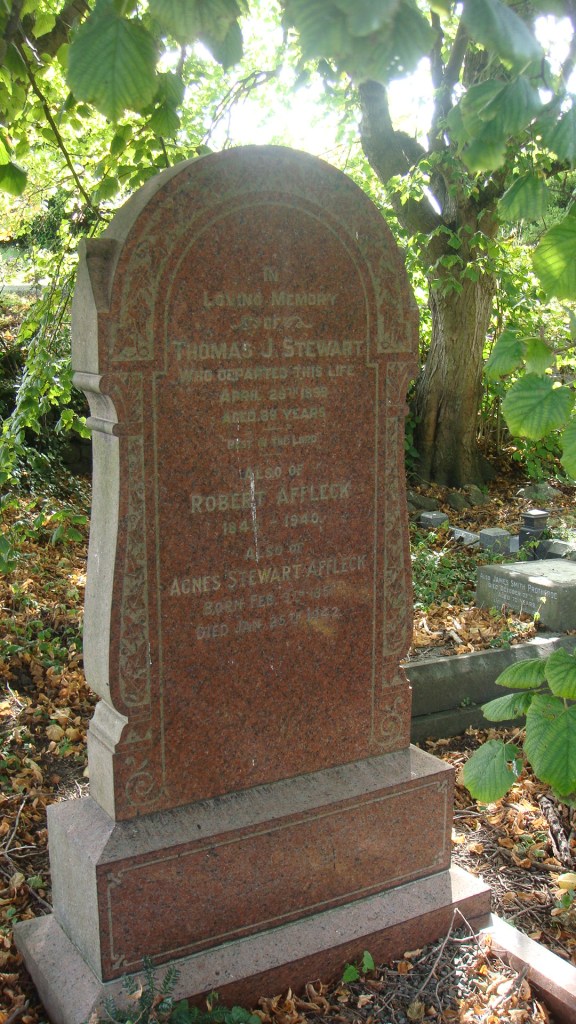
Thomas Jack Stewart died on April 26, 1899 aged 87 years at the home of his son-in-law Robert Affleck and left effects valued at £11 4s to his daughter Agness Stewart Affleck. But Thomas had never married.
Agnes was born on February 9, 1851 the daughter of Maria Smith and baptised at Christ Church on March 23. The entry in the baptism registers includes the name of Thomas Stewart but this has been crossed through and the words ‘illegitimate daughter of Maria Smith’ remain.
Maria Lucy Smith was the eldest daughter of Edward and Elizabeth Smith and at the time of the 1851 census, taken shortly after the birth of her daughter Agnes, she is living with her parents in Cricklade Street. The census records that Edward and Elizabeth have three other daughters and a niece living with them and the last entry is that of their granddaughter Agnes aged 1 month.
Thomas obviously had some involvement with his daughter. When she married Robert Affleck at Christ Church in 1875 Thomas was a witness at the wedding ceremony, although his name does not appear as ‘father’ on the marriage certificate, which is left blank. In 1891 he was living with Agnes and her husband and family at 37 Prospect Place where he is described on the census as Thomas Stewart father-in-law 79 years old retired blacksmith born in Scotland. And at the time of his death in 1899 he was still living with the Affleck family.
The Late Mr t. Stewart,
Funeral on Saturday
The funeral of the late Mr Thomas Stewart, an old GWR foreman whose death we announced last week took place on Saturday afternoon. The funeral cortege left deceased’s late residence, Southfield House, The Sands, Old Swindon, at three o’clock. The coffin was borne on a handbier, and covered with a pall, there being no flowers by request. The bier was attended by eight bearers, from the F Shop, all workmen who were formerly employed under deceased.
The coffin was of polished panelled oak with massive brass fittings and engraved plate bearing the words:- “Thomas Jack Stewart. Born June 7th, 1811. Died April 26th, 1899.” The chief mourner was Mr R. Affleck (son-in-law), the other coaches containing deceased’s grandsons, and Messrs T.B. Watson, and W. Chivers.
There were three mourning coaches, and between 20 and 30 mourners on foot, including the following:- Messrs. R. Baker, T. Patterson, J. Sykes, W. Morgan, Enoch Smith, W.S. Dawson, John Fox, E. Tomkinson, Ellison, ? ? Broadbear, Alf Bowker, Pickard, Robert Fawcett, J. Clark, W. Sewell, R. Gadd, Burrows, D. White, E.L. Pugh, etc.
The first portion of the service was conducted at St. Mark’s Church, and the remainder in the Cemetery, the Hon. Canon Ponsonby officiating.
The funeral arrangements were most satisfactorily carried out by Mr. Fred. J. Williams, on behalf of Mr. Joseph Williams.
Writing from London to Mr T.B. Watson, of New Swindon, on Saturday, in reference to the death of Mr. T.J. Stewart, Mr John Fawcett, whom we mention in our last week’s issue, says:- “I was transferred from Bristol to Swindon on January 1st, 1843, and found Stewart had been at work here about a fortnight. He lit up the first fire in the new smiths’ shop, and I the second. There were, of course, the ordinary staff of men in the Running or A Shed, under Mr Appleby, but Stewart was, I believe, the first man Mr Sturrock (the first manager at the Works), engaged for the opening of the new Works. Mr Stewart had built a couple of houses at Patercroft, where he must have been residing some four or five years before coming to Swindon. He used to go regularly to Patercroft to look after the repair of these houses long after he came to Swindon. I have made out a list of the names of all the foremen and contractors up to the time I left Swindon in 1866, and I am sorry to find that out of about 30 contractors there is scarcely one left beside myself. The same may be said of the foremen, managers and draftsmen. I was pleased to hear a few days ago that Mr Sturrock is still living and residing at Chelsea like myself, he is an octogenarian, and well into his 83rd year. I feel I am the only shopmate left who could give reliable information as to Mr Stewart’s career at Swindon in the early days.”
Thomas was buried in grave plot D1a. Robert was buried with him in 1940 and Agnes in 1942. The elegant, pink granite headstone is decorated with entwined ivy, a symbol of friendship, fidelity and immortality.
There were a lot of words written about William Nicholson following his death in 1880.
We are sorry to notice the death, on the 13th instant, at New Swindon, of Mr William Nicholson, who, for the long period of nearly 45 years, was a valued and trusted servant of the Great Western Railway Company, and who at the time of his death was, we believe, the oldest foreman in the employ of that company, having served in that capacity very close upon 40 years.
Leaving his native place, Bolton, in Lancashire, very shortly after serving his time as an apprentice to the engineering business, he went to Liverpool, where he married, and obtained employment in an establishment where Daniel (now Sir Daniel) Gooch and his brother were serving their articles as pupils. He, however, did not stay there long, but removed to Paddington, where the Great Western Railway Company had just opened their first engineering works, and when the Swindon works were opened Mr Nicholson came to Swindon, now 39 years since, and after a very short time was appointed foreman over the turning and fitting department, and in this important position he remained until about 15 years ago, when the whole of the Swindon works were considerably enlarged under the direction of the late Mr Armstrong, and the new gas works were then put under the sole charge of Mr Nicholson, and in this position he remained until his death, which took place on Tuesday week, after a somewhat protracted illness caused by heart disease and dropsy.
During his lengthened connection with Swindon and the Railway Company Mr Nicholson enjoyed the respect and esteem of all who knew him. He was devoted to his duties and the interests of his employers, and was strictly conscientious in all his dealings, whilst to the thousands of men who had been placed under his superintendence he was always kind and courteous.
Having known Mr Nicholson from the time when he first came to Swindon, it affords us some satisfaction to be able to bear our testimony to the sterling character of a strictly honest and upright man, and one who, although never ostentatious in any of his dealings, by his general demeanour set a good example before those under him or who came in contact with him. We have been asked to publish the following, which has been forwarded to us by an old workman under Mr Nicholson:
“Another old servant of the Great Western Railway Company has gone to his long home. Mr William Nicholson, who was one of the earliest arrivals from Paddington to Swindon on the opening of the line, and who for many years occupied the position of foreman in the fitting and turning shops in the local department, but latterly that of superintendent of the gas works recently erected by the GWR Company, he having only survived to witness the completion of the extensive and elaborate works of which he was so proud. He was followed to his last resting place, in St. Mark’s Churchyard, by numerous foremen of the works, and a large number of old hands who served under him, who attended to bear testimony to the respect they bore him while living. His widow, with whom he has lived for upwards of half a century on the most affectionate terms, is left to mourn her loss.”
The Swindon Advertiser, Saturday, January 24, 1880.
And in 1992 railway and local historian Trevor Cockbill wrote a few more in his excellent book A Drift of Steam, describing William Nicholson as a devout Wesleyan Methodist who founded the New Swindon Wesleyan Methodist Society and became the first Superintendent of its Sunday School.
But when it comes to his wife Betsey no one appears to have written about her.
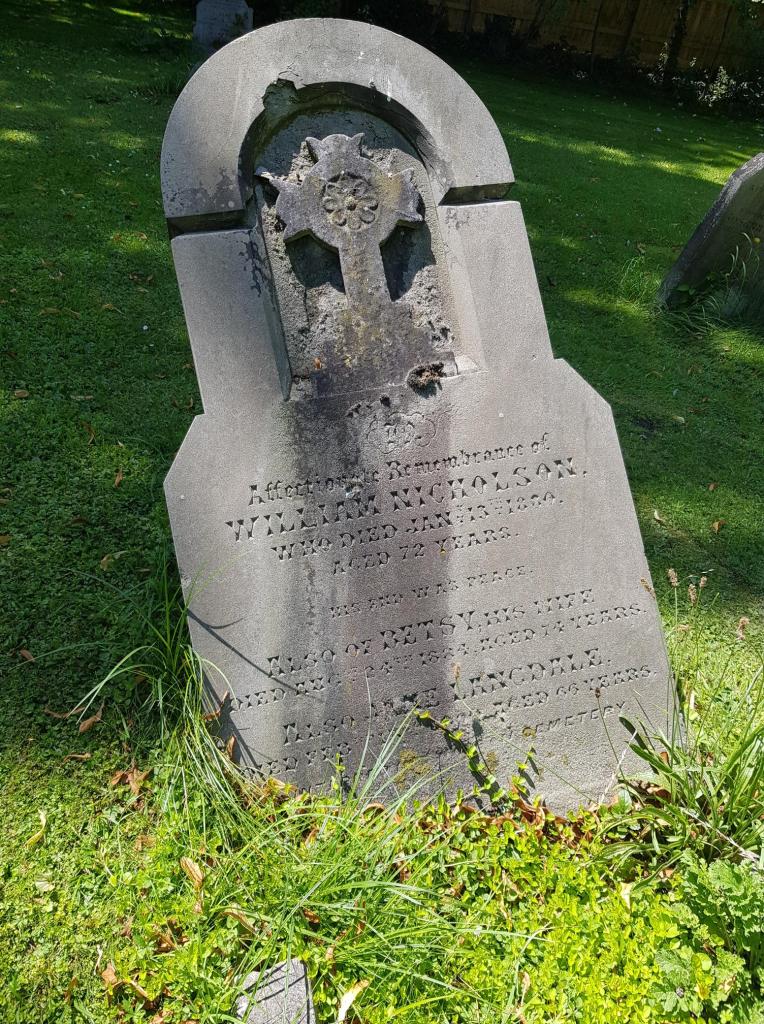
William married Betsey Langdale at St Anne’s Church Liverpool on May 17, 1830. We find them on the 1851 census living at Westcott Place, Swindon with four of their children, Betsey’s sister Jane Langdale, a lodger and a 12 year old servant girl. Apart from the official census records the only words I have discovered about Betsey appear on her headstone – and even this isn’t how things might first appear.
William died in 1880 and was buried in the churchyard at St. Mark’s. Betsey died in 1884 but by then the churchyard at St Mark’s had closed and the new cemetery at Radnor Street had opened, which is where Betsey was buried on August 30, 1884 in grave plot A55. She lies in an unmarked grave where she was later joined by the sister who had lived with her for so many years, Jane Langdale who was buried on February 17, 1890. However, the family had made sure that both Betsey and Jane were remembered by adding their names to William’s headstone – interred in Swindon Cemetery.
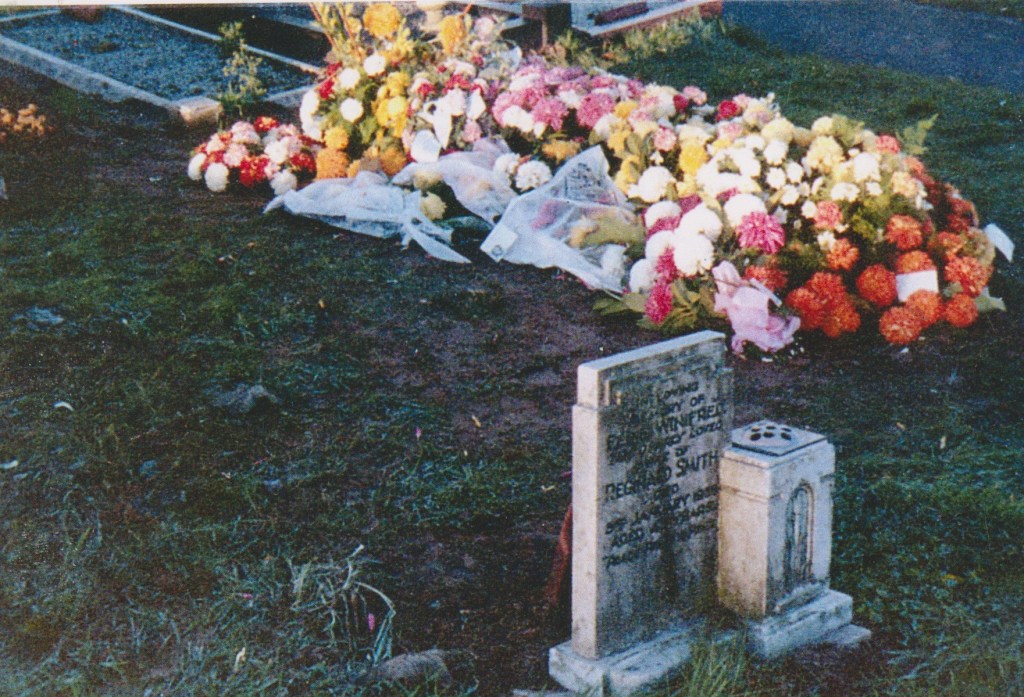
And all this time I’ve had not just one but two old photographs of the cemetery sitting in my archives. Several years ago Rose kindly gave me some documents and photographs relating to family burials in Radnor Street Cemetery. Among them are two photos of grave C1177 – one taken at the time of a funeral and another some time later when the headstone was in place. But a headstone doesn’t always tell the whole story!
It is likely this plot was originally a public grave. The first burial to take place here was that of Emily Ridlinton in 1903.
The Jefferies family probably bought the plot in 1922 upon the death of Daisy Louisa Jefferies. Daisy was the first wife of Reginald Harold Jefferies and was 27 years old when she died at her home, 43 St Mary’s Grove. She was buried in plot C1177 on November 15.
In 1924 Reginald married Violet Ruby Hillier and when the wartime census was compiled in 1939 they were living at 43 St. Mary’s Grove with their 11 year old daughter Beryl. Although Reginald had previously worked as a machineman he describes his occupation in 1939 as Music Teacher. At the outbreak of war he was also an ARP Warden.
Further research is required to discover what happened to Violet, but in 1951 Reginald married for a third time. His bride was Dorothea E.M. Keylock, the daughter of William Barnes Keylock and granddaughter of William John White Keylock. Reginald was 59 and Ruby 50, but although this was rather a late marriage for both of them it lasted for 18 years until Dorothea died in 1969. Reginald died the following year.
Regular visitors to our cemetery walks will know my pet hate – the under recording of married women’s work on the Victorian census returns. Despite official instructions to the enumerator regarding the recording of women’s work e.g. ‘women who are regularly employed from home, or at home, in any but domestic duties to be distinctly recorded,’ much was lost in translation. Casual and seasonal work was frequently omitted, as was work in a family business, so often all we see here in on the census returns for railway dominated Swindon is, for example ‘boilermaker’s wife.’
The 1939 list compiled at the outbreak of WWII also reveals most married women described as being engaged only in ‘unpaid domestic duties’ – really! Well I have found an exception – Lucy Dash who was recorded as ‘assistant to newsagent’ at 3, Kent Road. Yes, it only tells half the story, but it’s an improvement.
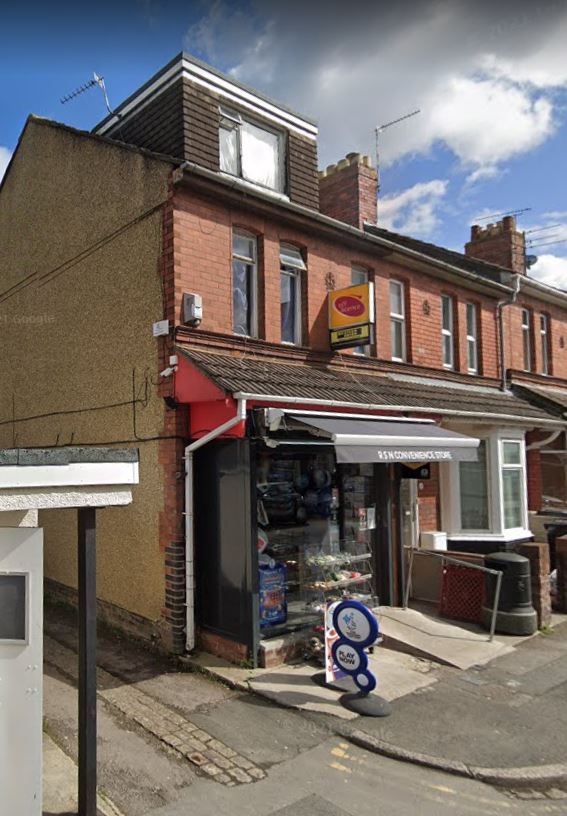
The newsagents in Kent Road where Lucy ‘assisted’
Lucy was born in 1893 in Gateshead, the third child of John, an engine fitter, and his wife Lucy Peters. The family arrived in Swindon sometime during the 1890s and a home in Stafford Street.
At the time of the 1911 census 17 year old Lucy was working as a Draper’s Assistant in Maidenhead, Berks and lodging with Mrs Edward and three other young, single women all employed in the drapery business (the occupation of single women was usually recorded). In 1923 she married Herbert George Dash and the couple went on to have four children.
In 1928 A.R. Leach occupied the newsagents at 3 Kent Road but by 1939 Herbert and Lucy (assisting, of course) were in residence.
Following their retirement the couple lived at 10 Grovelands Avenue, Swindon. Lucy died on October 14, 1955 and was buried in grave plot E7773 with her parents and her sister Phyllis.
The strapline for this blog is ‘Remembering the ordinary people of Swindon.’ This grave story is about one such ordinary family. George worked as a platelayer with the Great Western Railway, a job described by Will Thorne, a platelayer during this periodas The most neglected man in the service. The poorest of any railway employee with little or no opportunity for promotion or advancement.
In 1870 George married Martha Robinson at the parish church in Wroughton where they had both grown up. George and Martha would have 10 children but sadly four of them died young. In 1881 they were living at 13 Oxford Buildings, Rodbourne with three of their children, George’s mother and an unnamed lodger described on the census returns as having “left house.”
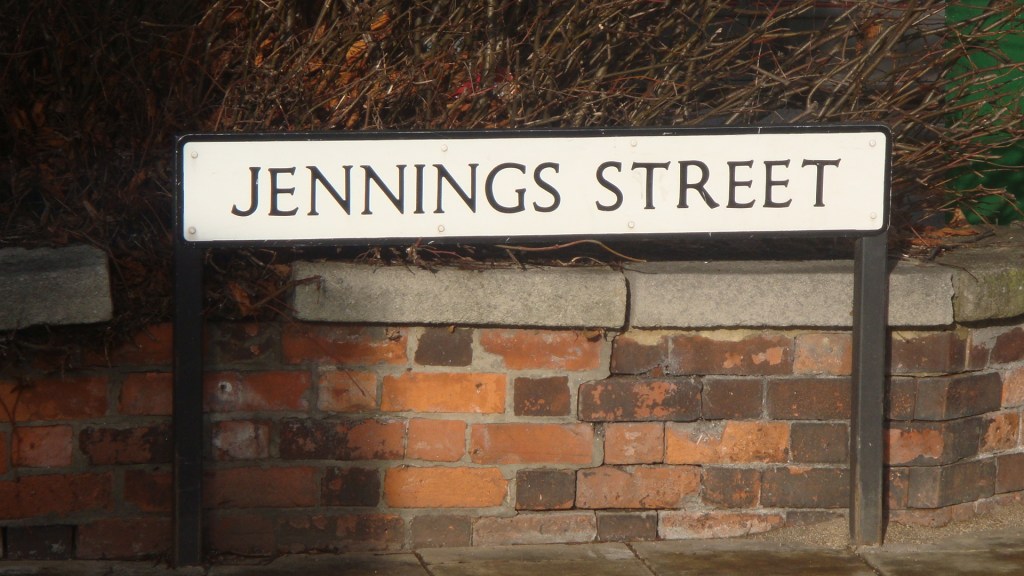
By 1891 they were living a 21 Jennings Street where they would remain for more than 20 years. It was where Martha died in 1918.
How many meals did the family sit down to eat in the kitchen? How many Mondays had Martha toiled over the boiler in the scullery, pegging out washing on a line that stretched the length of the garden. Did she dust and polish or was there little furniture to fuss over in the house at No 21 Jennings Street?
Was George a keen gardener, when all that washing wasn’t hanging in the way? Or was he too exhausted after a day’s work to do yet more digging and shifting earth? Was he a member of the Even Swindon Working Men’s Club and Institute, cutting along the backsies for a swift half? Or did he prefer to drink in the Dolphin? But then again, perhaps as a Methodist he didn’t partake of Mr Arkell’s finest.
And what about Hilda, the daughter who was buried with George and Martha. She never married and worked as a domestic servant, that much we know. She died on July 6, 1936 at 30 Twickenham Road, Isleworth, not at her home in Maze Road, Kew, nor at 49 Paxton Road, Chiswick, the address recorded in the burial registers.
So many unanswered questions about one ordinary Rodbourne family.
Martha Coster died at her home in Jennings Street in May 1918 aged 70 years old. She was buried in grave plot C1952 on May 9. Her husband George Coster died at 92 Beaufort Terrace, Rodbourne Road on January 31, 1922. He left effects valued at £266 18s 8d to his daughter Kate Fisher. He was buried on February 4 with Martha. Hilda Coster died on July 6, 1936 aged 53. She was buried with her parents on July 10.
Image of William Street with Park Hotel on the corner published courtesy of Local Studies, Swindon Central Library.
The licensing trade was a close knit community in Swindon during the late 19th and early 20th century. You might even say it was something of a family affair. However, running a pub probably didn’t feature in Ann Harvey’s plans for the future when she moved here in the 1860s.
Ann Elizabeth Ford married engine fitter William Harvey in the parish church of St Philip & St Jacob, Bristol on October 6, 1856. In 1861 the young couple lived at 4 Regent Terrace, Bristol with their three year old son William John. By 1871 they had moved to Swindon and were living at 20 Gloucester Street when William died in 1877 leaving Ann with five young children to raise.
That same year Edwin Harvey, builder and beerseller, was landlord at a beerhouse, a property he most probably built himself, and which later became known as Park Hotel. According to an application for a beer and cider license made by Edwin in 1879, the beerhouse had previously been owned by his deceased brother William, Ann’s husband. In 1879 Edwin applied for the license. He states “of which premises the trustees of the will of the late William Harvey, deceased, are the owners …” Presumably he was unsuccessful as he tried again in 1880 when it was reported in the Swindon Advertiser “Removal of the license of the King of Prussia Inn in High Street, Swindon, from the premises now occupied, to premises now occupied by Edwin Harvey, at present with an out-door license, and known as the Park Tavern, in William Street, Kingshill.“
By the time of the 1881 census Ann Elizabeth Harvey was in charge and Inn Keeper at 1 Cambria Bridge Road. Living with her were her sons, Ozias 19, a carpenter and George 17, a riveter’s apprentice. Her daughters were Emma Mary 15 who worked in the business as a barmaid and Isabella Ann 12 and Elizabeth Alice 10 who were both still at school. Lodging with them was William Crombey.
In due course Ann’s son Ozias would briefly take over the Park Hotel/Inn and in 1901 Ann, aged 64, was living with her daughter Isabella Groves who was the landlady at the Ship Hotel, Westcott Place.
Ann died later that year and was buried on October 23 in grave plot D17a alongside the cemetery chapel. Her eldest daughter Emma Mary Linsell was buried with her following her death in 1921.
Ann’s three daughters married men who all worked in the licensing trade while her sons Ozias and George worked alongside her at Park Hotel. A family affair.
The barely discernible inscription on this headstone reads Mary Ridge died June 1, 1891 aged 87 years – Thy will be done.
Mary Parcells/Parsells was born in Kentisbury, Devon is around 1809. She married William Ridge in 1846 in the Barnstaple registration district. At the time of their marriage Mary was about 37 years old and considerably older than her husband. She also had a three year old son, Arthur Parcells and had given birth to twin daughters Emily and Mary Ridge. She had a third daughter Elizabeth in 1850.
Mary raised her family in this beautiful area on the North Devon coast. In 1861 the family were living at Hele Cottage in the Village of Heal where William worked as a Sawyer but sadly, by 1871 William had died. Mary continued to live at Hele Cottage with her daughter Mary and a young domestic servant called Mary Annie along with two lodgers, Emma Spratt, a schoolmistress and William Vincent Bowen Hewett, a Lieutenant in the Royal Marines (on half pay).
In 1881 Mary can be found on the census of that year living with her daughter Elizabeth and son-in-law Edwin Sims at 59 Wellington Street, Swindon. Edwin worked as a Coach Painter in the Works and the couple had a family of five children. (It would seem that the census enumerator mis-transcribed Mary’s age, stating that she was 51 years old when she was closer to 71).
Eventually all Mary’s daughters made their way to Swindon. Emily was the last to marry in 1906 at the age of 59. After a lifetime working in domestic service with a period as a lodging house keeper, Emily married widower William Henry Lawrence, a checker in the GWR Works.
By the time of the 1891 census Edwin Sims had been promoted to Foreman of the Painters Shop and the family were living at 4 Temple Street where Mary died a few weeks later.
Mary was buried on June 5, 1891 in grave plot B2024. Her daughter Elizabeth Sims, wife of Edwin Sims, died in 1899 and was buried with her mother. Another daughter, Mary Small, wife of John Small, died in 1903 and was buried with her mother and sister.
The burial registers indicate that this plot was originally a public grave. Perhaps the two brothers-in-law ultimately bought the grave to memorialise their two wives, sisters Mary and Elizabeth, and their mother-in-law Mary Ridge.
By 1911 the population of Swindon was more than 50,000 with the Great Western Railway the largest employer by a country mile. You might think that the Radnor Street Cemetery residents would probably have a history of employment in the Works, and of course you would be correct. But just occasionally I discover a family with a history seeped in Swindon’s agricultural past.
Chiseldon Church by Kate Tryon
Rachel Hancock was baptised at the parish church Chiseldon on April 24, 1836, the daughter of William Hancock, an agricultural labourer, and his wife Mary.
By 1851 Rachel aged 15 was working as a house maid for Thomas Choules 60, a farmer at Badbury. Choules farmed 326 acres and employed 13 labourers. Living with him was his wife Mary 68 and his nephew Robert 24, a farm bailiff.
An entry in the Chiseldon parish registers record the baptism of Alfred Thomas the son of Rachel Hancock Single woman on April 25, 1851. (Could this be our Rachel?) At the time of the 1861 census Thomas is living with William and Mary Hancock in Badbury (Rachel’s parents). In the 1871 census I discovered Robert Choules living with his family in Swindon where he worked as a Railway Watchman. Boarding with him was Thomas Hancock 19, (is this our Alfred Thomas?)
Rachel married close neighbour Henry Brunsden on October 14, 1858. The couple married at St. James’s Church, Paddington, perhaps because they didn’t want a big, local wedding, perhaps because their first child (John) Henry Brunsden had been born the previous year.
I can’t discover the whereabouts of Rachel on the 1861 census (possibly a mis-transcription) but by 1871 the family are at Snodshill Farm where Henry employs 5 men and a boy, along with two live in servants – Mary Cox 17, a general domestic and Elizabeth Cook 15, a nursemaid. Henry and Rachel have seven children and Henry’s brother John also lives with them.
And Rachel’s life continues to be mis-recorded, right up to the very end.
Inquest at Coate
On Wednesday morning, with painful suddenness, the death occurred of Mrs Rachel Brunsden, widow of Mr Henry Brunsden* of Lane Farm Coate.
Deceased had not been ill for quite three years although she was 75 years of age, and therefore it was found necessary for an enquiry into the circumstances to be held.
Mr Brunsden and his wife have been well known and respected in the neighborhood for many years, and there are a number of grown up sons. Prior to their retirement for their active agricultural pursuits they tenanted the land adjoining the homestead in which they have resided for so many years.
An inquest was held the same evening by Mr A.L. Forrester at the farmhouse.
Ernest Brunsden (son) said his mother went to bed the previous night apparently in her usual health. She rose at 7 o’clock that morning and went downstairs, where she prepared breakfast.
She then took it upstairs on a tray for her husband, who was in bed. Afterwards, when she brought the tray down subsequent to partaking of her own breakfast, she complained of a pain round her heart, and almost immediately after fell down dead.
Dr Beatty said he was sent for, but could only pronounce life extinct. Death was due to heart failure.
A verdict was returned in accordance with the medical evidence.
North Wilts Herald April 12, 1912.
*Henry Brunsden was still alive at the time of Rachel’s death.
Lower Snodshill Farm where Rachel lived for most of her married life
Rachel was buried on April 13, 1912 (when the burial registers record her home address as Love’s Farm) in grave plot C1856. Henry died the following year, aged 88, and was buried with Rachel on October 25, 1913.







 Radnor Street Cemetery