A comprehensive list of burial dos and don’t in Radnor Street Cemetery was published when the new burial ground opened in August 1881. The cost of a common grave was 5s (25p) but sadly, many working class families could not afford even this and there are numerous public graves in the cemetery where more than one unrelated persons are buried together. The cost rose considerably for a multi occupancy plot and a 9ft (2.7 metres) deep vault cost £4.4s (£4.20) while a brick or boarded grave for a single burial 9ft (2.7 metres) deep cost £1.1s (1.05). It is likely that the graves in the chapel area are vaults or brick lined, which would increase the cost.
The Morse family grave is surmounted by a magnificent black, granite monument and occupies two plots, 27A and 28A in Section D.
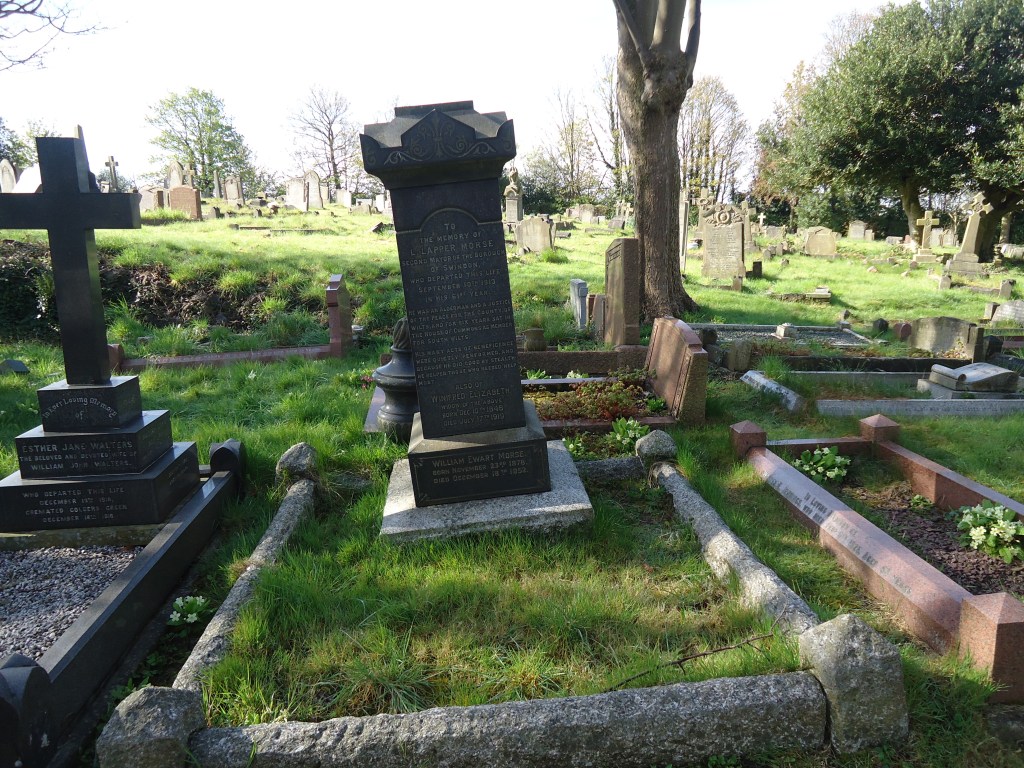
This is the last resting place of Levi Lapper Morse and as the inscription explains he was a Justice of the Peace and served as an Alderman and the second Mayor of Swindon. He was MP for South Wiltshire for six years. He was an active and energetic member of the Primitive Methodists, serving as Circuit Steward of the Swindon II circuit from its formation until his death. He was elected chair of the Brinkworth District Meeting and Vice President of Conference in 1896 and also served as District Missionary Treasurer for about nine years. He was a lay preacher, Sunday school teacher and an accomplished organist. Levi played a prominent role in both the political, commercial and religious life of Swindon and there is plenty of information available about him, but what about his wife?
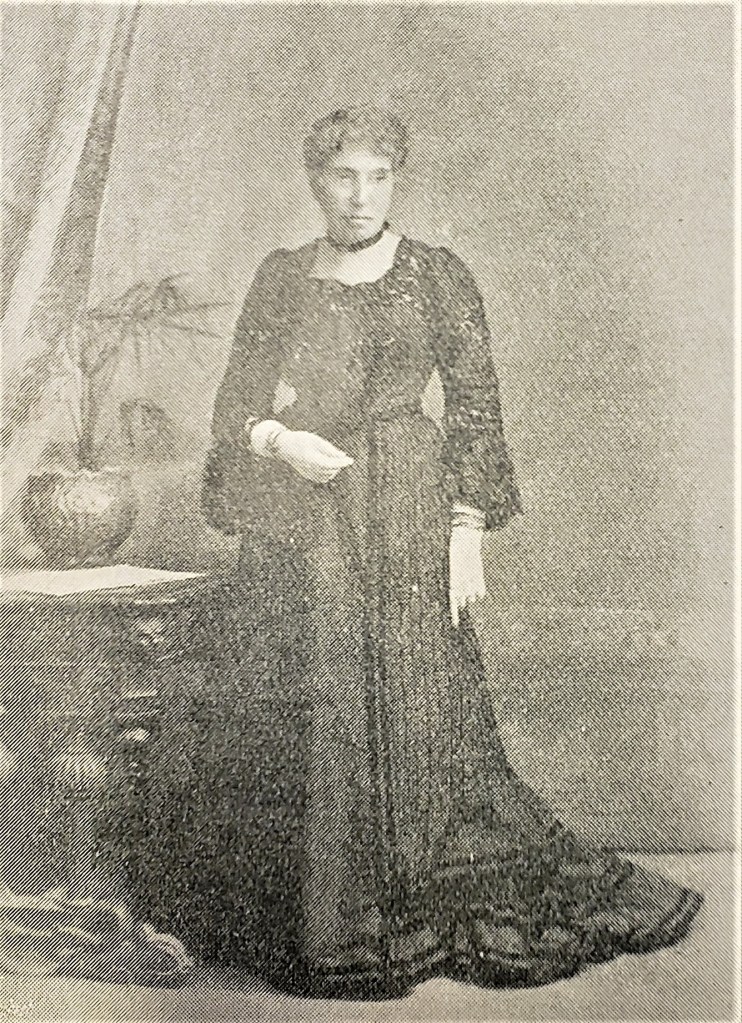
Winifred Elizabeth Humphries was born on December 10, 1848 the eldest child of Farmer Isaac Humphries and his wife Elizabeth. She grew up at Cockroost Farm, Broad Hinton where her father employed five men and two boys and a 17 year old governess to teach his growing family.
Charles Morse established a family retail business in Stratton St Margaret but his son Levi went on to accomplish far greater things. Levi opened one of Swindon’s first departmental stores, which until the 1960s stood on the present site of W H Smith’s in Regent Street, Swindon.
Levi and Winifred married in 1875 and set up home above the shop in Stratton Street, Stratton St. Margaret where he described himself as a grocer and draper, employing two men, two females and two boys. Winifred’s first child Ella Elizabeth was born in 1876 with seven more to follow. Levi states on the census returns of 1911 that he and Winifred had been married 35 years and that they have eight children, six of whom are still living while two have died.
Winifred supported her husband throughout his political career, but it was within the Primitive Methodist Church that she did most of her work. Winifred had been an active member of the Primitive Methodist Church since before her marriage and as a young girl played the organ at chapel services, often walking several miles from her home on a Sunday morning. The first Primitive Methodist Church in Regent Street was built in 1849. Further structural changes saw the church become the largest of the three Primitive Methodist Churches that formed the Swindon Circuit in 1877. It was also the focal point for the missionary activities of the Primitive Methodists in Swindon in the 1880s and where Winifred was the founder of the Women’s Missionary Federation Swindon branch in 1909.

The Morse family moved into The Croft in 1896, an elegant property that stood in four acres of land with paddocks, flower beds and ornamental trees, a tennis lawn and a fountain. William Ewart Morse, the couple’s son, remained in residence until his death in 1952 after which the house fell into disrepair and was eventually demolished. Hesketh Crescent built in 1957 now stands on the site.
Winifred died on 17 July 1919 following a long illness. Her funeral took place at the Regent Street Primitive Methodist Church with which she had so long been associated. The service was conducted by Rev F.W. Harper assisted by Rev J. Dobson, an old family friend. The Rev Dobson spoke in his address of Winifred’s good works and the loss which the church had sustained by her death.
You might also like to read
Mr Levi Lapper Morse – the end of an era
Regent Street Primitive Methodist Church
Amy Edna Riddick – life long member of the Primitive Methodist Church


