Mary Bailey – of intemperate habits

There is a world of difference between enjoying a drink and taking a bottle of whiskey to bed and I wonder what propelled Mary Bailey from the one to the other.

Drunkenness was the scourge of the 19th century working classes. Even in Swindon where the much lauded Great Western Railway Company provided wrap around care ‘from the cradle to the grave’ there was still want and destitution for those who fell through the cracks of society.

Temperance societies encouraged people to abstain from drink and to take the pledge of a lifetime of sobriety. By the end of the century Swindon numbered around 18 such organisations, including the GWR Temperance Union with around 3,000 members, however it is unlikely Mary joined their ranks.

A Fatal Taste for Alcohol

A sad case came from Coroner W.E.N. Browne, on Monday in an inquest concerning the death of Mary Baily, wife of a GWR fitter of 11 Hawkins Street, New Swindon.

The deceased who was 49 years of age, was stated by a neighbour to be of intemperate habits. Her husband on Friday night went to bed at 10 o’clock, and thinking his wife was asleep did not disturb her. He arose at five o’clock on Saturday morning and found his wife dead and quite cold. A whiskey bottle was found beneath the bed. Dr. Duffield stated that death was due to asphysxia, cause by the woman lying on her face in a helpless condition ensuing upon an over-dose of alcohol.

Gloucester Citizen Tuesday November 28, 1899.

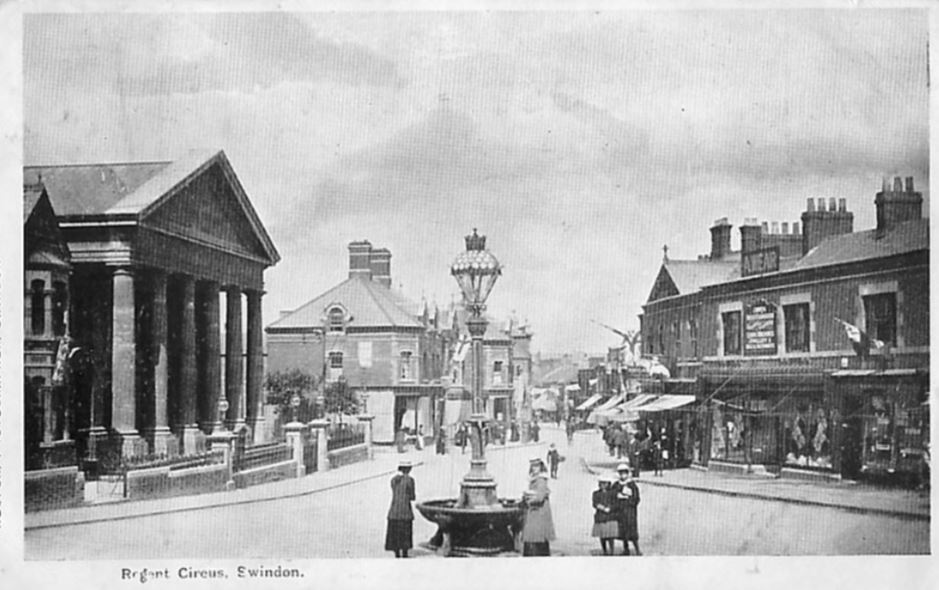
Drinking fountain erected by the Swindon United Temperance Board in Regent Circus 1893

Mary Christianna Dance was born in Stratton, Gloucestershire and baptised on February 4, 1849, the eldest of John and Jane Dance’s eight children. She married Thomas Bailey in 1871 and by 1881 they were living at 11 Henry Street (later renamed Hawkins Street) with their 8 year old son Thomas, and Mary’s brother Charles. Both men worked as carriage fitters in the Works.

So what happened to Mary between 1881 and 1899, or had her problem with alcohol begun long before? Did she try to control her drinking, or was she aided and abetted by her husband Thomas, whose comments at the inquest appear ingenuous when compared with the neighbours observations.

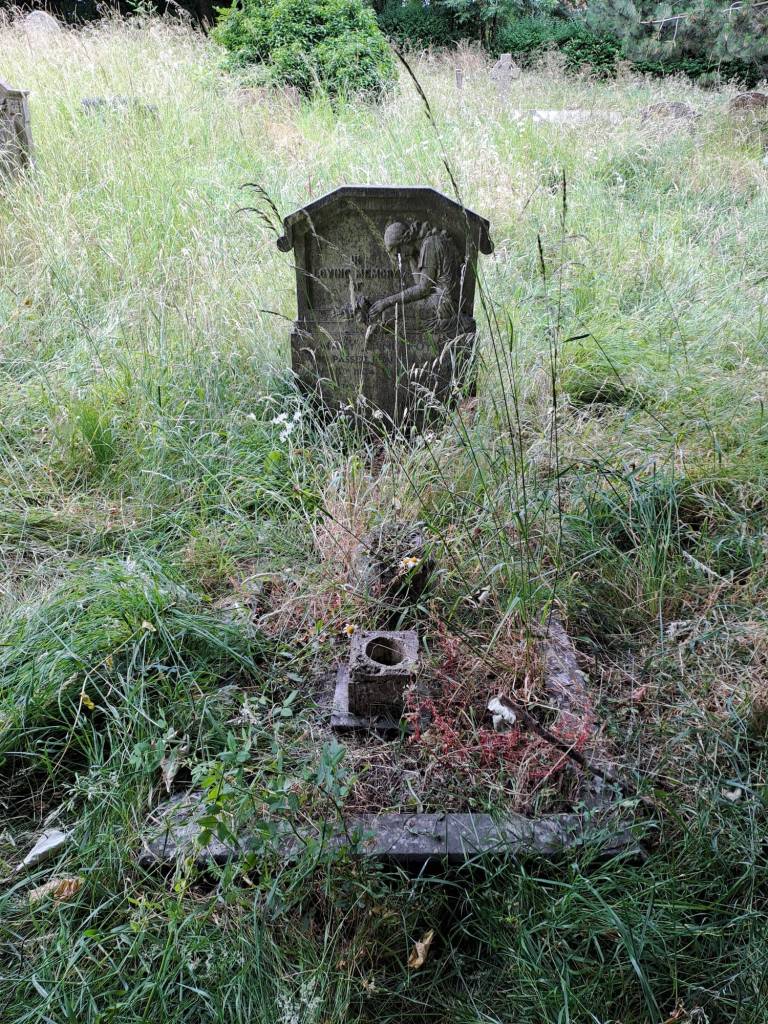
Mary was buried on November 28, 1899 in grave plot C109, a privately purchased grave, which might come as some surprise. In 1908 she was joined by Tryphena Bailey, Thomas’s second wife and then in 1937 by Thomas himself.

Many thanks to David Lewis and his book Between the Bridges – The Early Days of Rodbourne.

No place like home

At last there is some good news about the future of the derelict property on Victoria Road as published in yesterday’s Swindon Advertiser.

Unfortunately, a misinterpretation of my article No place like home has led to an erroneous link between the property and the suffragette leader Emmeline Pankhurst. This is not the case. There is no connection between the militant suffragette leader of the Women’s Social & Political Union and Oxford House, 57 Victoria Road.

But, you may like to read the story of this house and the remarkable Clarke sisters who lived there at the beginning of the 20th century.

Half way up Victoria Road, behind the bus stop called The Brow, stands an empty and derelict property and so it has been for many years. Last year, or maybe it was longer ago, the builders arrived and I was hopeful the property, called Oxford House, might be about to begin a new life. The roof was stripped and new dormer windows inserted. Then the builders left, the new windows were boarded up and the pigeons moved back in. And so it stands, dilapidated, unloved.

dsc05329-copy-2

At the time of the 1881 census the Clarke family lived at 17 Wellington Street.  William worked as an Iron Turner in the GWR Works, but he was an ambitious, intelligent and determined young man.

Ten years later William had moved his family up the social ladder and up the hill to a house in Victoria Road where he worked as a solicitor’s clerk.

When William died on December 16, 1898, the obituary in the Advertiser recalled how for many years he had been employed as a mechanic in the GWR Works. ‘But eventually [he] resigned his post to act as an accountant and debt collector.  In the latter capacity he has worked up undoubtedly the largest business of the kind in the county, and has been of great assistance to the business men of the town,” the report continued.

Oxford House dates from around the end of the 19th century when development at the northern end of Victoria Street began.  Known first as New Road and then later as Victoria Street North the road was eventually renamed Victoria Road in 1903.

dsc04980-copy-2

In 1903 Emmeline Pankhurst established the Women’s Social and Political Union at her home in Nelson Street, Manchester and at Oxford House, 57 Victoria Road, Swindon the three Clarke sisters, Rosa, Mabel and Florence, established their own financial business, as accountants and debt collectors.

The Institute of Chartered Accountants in England and Wales set up in 1880, discussed admitting females in 1895.  Sadly, Rosa died in 1904 and it would be another fifteen years before the first woman became a member in 1919.

The two remaining sisters kept Rosa’s initial letter R in the company name. While the campaigning suffragettes boycotted the 1911 census, refusing to be counted without representation, Florence and Mabel Clarke filled in their census form and are recorded still in business at 57 Victoria Road.

In 1918 Mabel died, leaving an estate of £2,609 4s to her surviving business partner and sister Florence.  Interestingly, when Rosa and Mabel died neither sister received the press recognition that their father had.

Florence carried on the business following Mabel’s death in 1918 but by 1920 the North Wilts Trade Directory records that H.T. Kirby, registrar of births and deaths, lived at 57 Victoria Road.

Mabel is buried in plot E8015 with her father William and mother Mary Anne Tilley Clarke.

clarke-family-from-oxford-house

During the 1980s architect Geoffrey Drew worked out of offices in Oxford House. Brian Carter sent me a photograph taken then and a few words about his father-in -law.

‘My reason for photographing it in 1983 was that the first floor was then the offices of Architect Drew. This was the business of my late father-in-law, Geoffrey Drew (and his secretary – my mother-in-law – Elisabeth Drew).

Geoff was born in Southampton in 1928, was evacuated to Corfe Castle during World War II, and started his working life in Ipswich. Later, he went into partnership in a business in Bristol. This brought him to Swindon for the first time in the 1960s (his first job in the town was working on the original BHS shop in Swindon town centre).

He set up a satellite office in Swindon and liked the place so much that he spent the rest of his life in Bishopstone, and married my future mother-in-law in 1972.

He set up in business on his own in 1981 – briefly in Newport Street, before moving to 57 Victoria Road. In about 1999, they vacated those premises and worked from home in Bishopstone.

Sadly, Geoff died in 2006, aged 77.’

57-victoria-road

All of us back together again – the Alley sisters

Alley sisters

The re-imagined story …

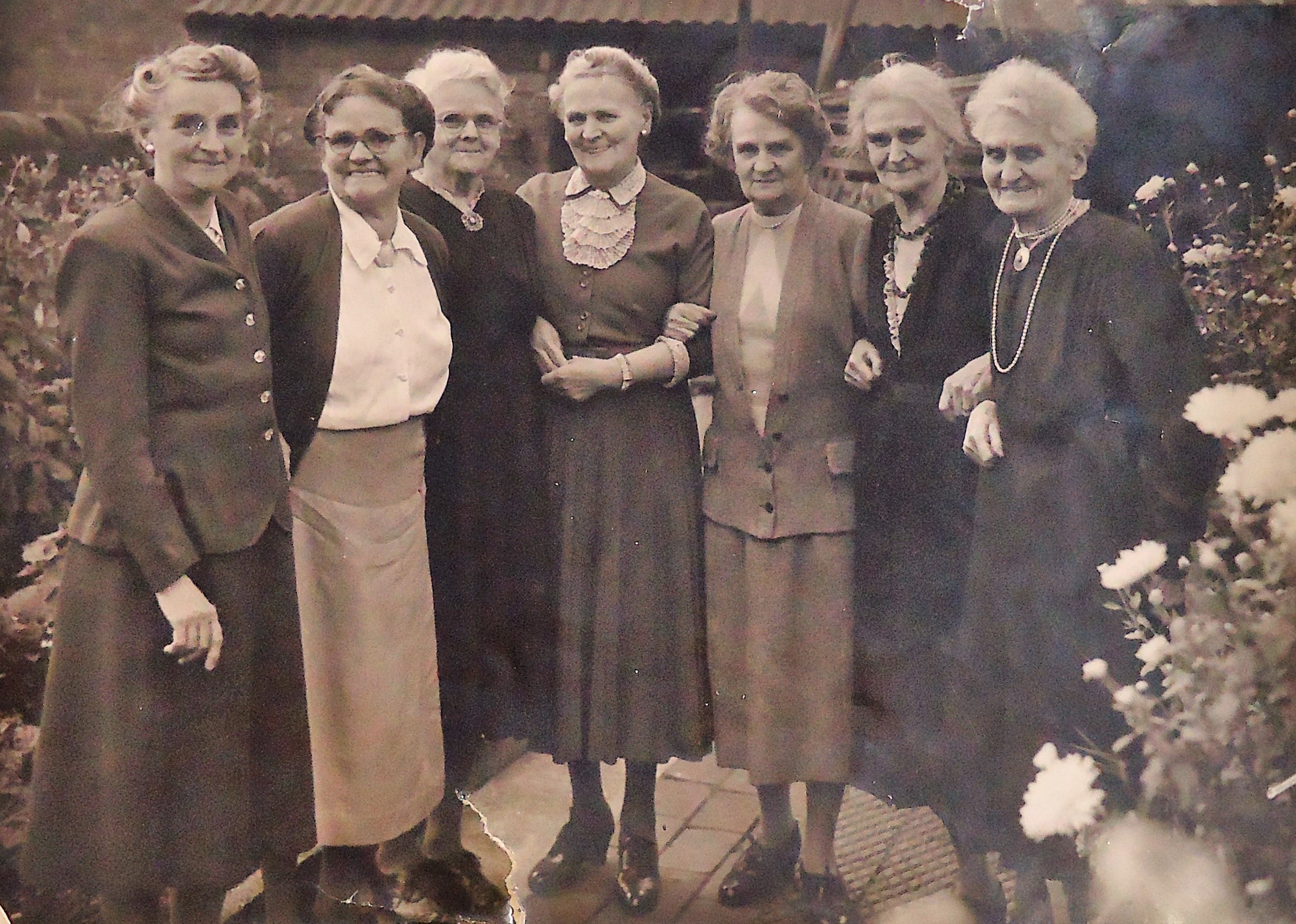
I was shown into the neat front parlour at 131 Faringdon Road where the ladies were enjoying a celebratory tea party. A trill of voices punctuated by laughter and cries of “Do you remember when …” greeted me.

The occasion was the return to Swindon of eldest sister Louisa after more than 50 years of living in Bournemouth. Today the seven sisters were enjoying tea together and had invited the Evening Advertiser to join them.

This was just the kind of human-interest story my editor liked and I had been sent to take the ladies’ photograph.

“Do you know young man we have a combined age of 517 years?”

“Oh Min, you’re exaggerating.”

“No, she’s quite right. If Louisa is 85 next month that would make Maud … “ Mabel proceeded to quote everyone’s age.

“My goodness Mabel, you’re not reckoning up in the Post Office now.”

“Where do you want us to pose, young man?” asked Ethel with a twinkle in her eye, obviously the cheekiest of the seven sisters.

The parlour was rather dark and I had caught a glimpse through the window of the pretty little back garden.

“Shall we move out into the garden?” I suggested.

“That would be perfect, let me grab my cardigan,” said Ethel.

“I hope my hair won’t be spoilt,” Eva tucked the hair grips more securely into her coiffure.

Standing at the bottom of the garden there was more chattering and giggles.

“Tallest in the middle,” former teacher Flora organised her sisters.

“Surely as the eldest Louisa should be in the middle? Would you like a chair darling? I’ll get you one from the dining room.”

I decided it was time to assert some order.

“Ladies, why don’t we form a semi-circle with the eldest at one end, down to the youngest at the other end?”

“You are a clever young man,” said Flora. “What a perfect idea. Right, Louisa you stand there, then we’ll have Maud and Mabel next. Stand next to me Min, there and Ethel and Eva on the end.”

“Lovely. Ladies, are we ready then?”

“Mummy and daddy would just love this. All of us back together again.”

The women linked arms and just as I clicked the shutter on the camera Min said something to make her sisters laugh. Ethel peeped out of place and Louisa closed her eyes.

Alley wedding photo (2)

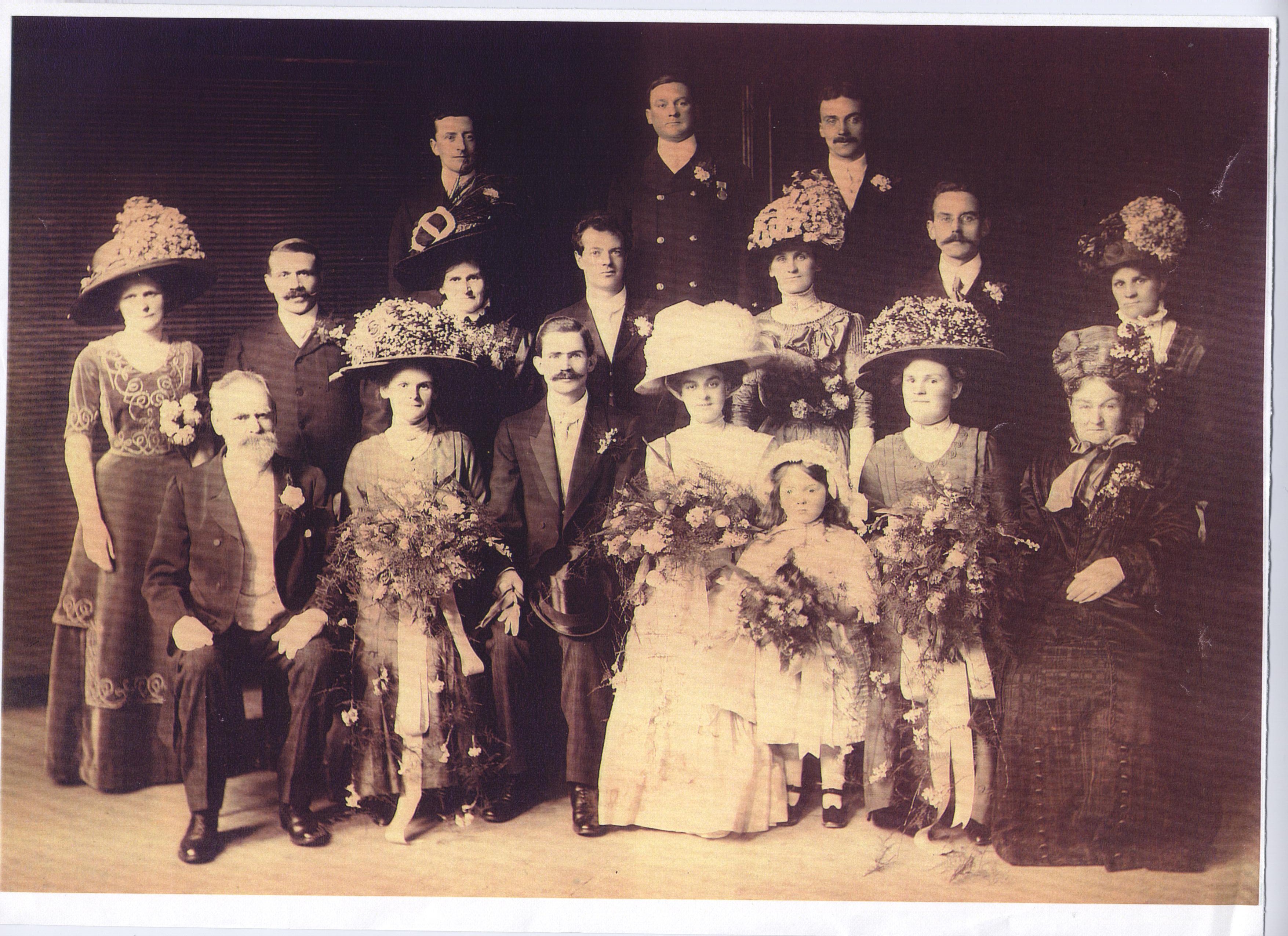
Youngest sister Eva’s wedding to George Babington in 1911. Photograph courtesy of the Alley family.

You can read more about the amazing Alley sisters in my book Struggle and Suffrage in Swindon available from Amazon

The facts …

By 1881 George Richman Alley and his wife Emma had moved to Swindon. George worked as a body maker and later a wheelwright’s foreman in the GWR Works. The couple lived first at 3 Carfax Street and then at 8 Merton Street where George died in 1925. Emma survived him by seven years. The couple are buried together in a grave in Radnor Street Cemetery, close to the Chapel.

Alley family 2

As ever my thanks go to Wendy Burrows, Kay Prosser, Di Edelman and Christine Price.

You may like to read:

The amazing Alley family

George Richman Alley and his family

The Death of Mrs Swinhoe

The re-imagined story …

I stood across the road from Park House, amongst a group of women, all of whom had been in receipt of an act of kindness performed by Mrs Swinhoe.

She wasn’t a demonstratively affectionate person, not a woman to place an arm around your shoulder, or take your hand in hers. She wasn’t one for displays of emotion, but Mrs Swinhoe was one of the kindest women I have ever met.

She was a stalwart of St Mark’s Church, a member of several committees, a fund raiser and a generous benefactor. She would be greatly missed in the railway community.

Everyone in the railway village had been in receipt of her kindness at some time yet she had never sought comfort from a stranger, except on one occasion.

I was employed as a housemaid in the doctor’s residence when the Swinhoe family lived in London Street. It was a busy household as the property served as the doctor’s consulting room and the Swinhoe family was quickly growing, three little daughters and another child on the way when I joined the establishment in 1864.

Mrs Swinhoe’s confinement proved difficult when on May 19 two little girls were born and quickly named Eliphalette and Etheldreda. On June 20 the babes were baptised by their grandfather at St Michael’s Church in Cornhill in London, but the event was quite subdued; all was not well with the smaller baby Etheldreda.

I was with Mrs Swinhoe the day her baby died. I’d never seen sorrow like that before. I was fifteen years old. I didn’t know what to do or what to say. What words of comfort can you offer to a woman who has just held her baby while it died? I put my arms about her as she sobbed and sat with her until her husband returned from the Works where he had been attending an accident. I left them to their grief.

Mrs Swinhoe is to be laid to rest in Swindon’s cemetery on Kingshill. Her little daughter was buried in the churchyard at St Mark’s, but that is closed to burials now.

It must have been a dreadful thing – to be a doctor and unable to save your child.

London Street 5 (2)

The facts …

Diana Maria Matilda Wrench was born on June 17 1836 at St Michael’s Rectory, Cornhill in the City of London the daughter of Rev. Thomas William Wrench and his wife Diana Maria. She married George Money Swinhoe, a Practitioner Surgeon, at the church where her father officiated on August 13, 1859 and by the time of the 1861 census, they were living at 4 London Street, Swindon.

The couple went on to have a large family, seven daughters and five sons survived to adulthood. Diana died after a short illness and was buried in Radnor Street Cemetery on April 25, 1894. She was the first of six members of the Swinhoe family to be buried in the large family plot numbered E8228/29/30.

Death of Mrs Swinhoe

We regret to announce the death of Mrs Swinhoe, wife of Dr G.M. Swinhoe, of Park House, New Swindon. The deceased lady had been ailing only a day or two, and died somewhat suddenly on Sunday morning. Her death will be a great loss in St Mark’s parish, where she has been such an excellent worker for many years past. The circumstances are rendered still more sad by the fact that deceased’s son Dr. G.R. Swinhoe, returned with his bride from his honeymoon trip only a day or two previously.

On Sunday at St Mark’s church (where Dr Swinhoe is vicar’s warden), the organist, Mr Geo. Burrows, played the “Dead March in Saul” at each service.

In consequence of the sad event, a concert and operetta which was to have been rendered on Monday evening in the Mechanics’ Institute, New Swindon, and in which the Misses Swinhoe were to have taken part, was postponed.

It would be altogether superfluous for us to enter into panegyrics respecting the deceased lady, the long period Dr Swinhoe has been the friend in need to the great majority of the inhabitants of New Swindon, and the “right hand” Mrs Swinhoe has been to him, are too well known and appreciated to make the telling necessary. Suffice it, that the sad intelligence was received with profound and genuine regret throughout the neighbourhood. The deceased leaves in addition to her stricken husband seven daughters and five sons to mourn their irreparable loss.

The Funeral

Took place on Wednesday morning and was of a quiet and private character. The funeral cortege left the late residence of the deceased lady, Park House, about 11.15 am. The first part of the most solemn service was read at St Mark’s Church, by the Hon and Rev Canon Ponsonby, and there was a crowded congregation, a large number being unable to gain admission.

At the grave side this number was still further increased. The first part of the service being over, the procession wended its way towards the cemetery where the Rev Canon Ponsonby read the remaining portion of the burial services. The remains were buried in a bricked grave, lined with moss, primroses and other flowers. The coffin, which was of oak, with very massive brass fittings and a large Latin cross on the lid, born the following inscription: – “Diana Maria Matilda Swinhoe, Died 22nd April, 1894, Aged 56 years.” It was conveyed in a hearse, and completely covered with beautiful wreaths.

Messrs Chandler Bros. were the undertakers, and discharged the funeral arrangements in a most satisfactory manner. The coffin was made by Mr. T. Barrett.

Extract from the Swindon Advertiser April 1894.

Swinhoe family (2)

Diana Maria Matilda Swindon aged 56 years was buried on April 25, 1894 in grave plot E8229. 
Up at the Castle

The re-imagined story …

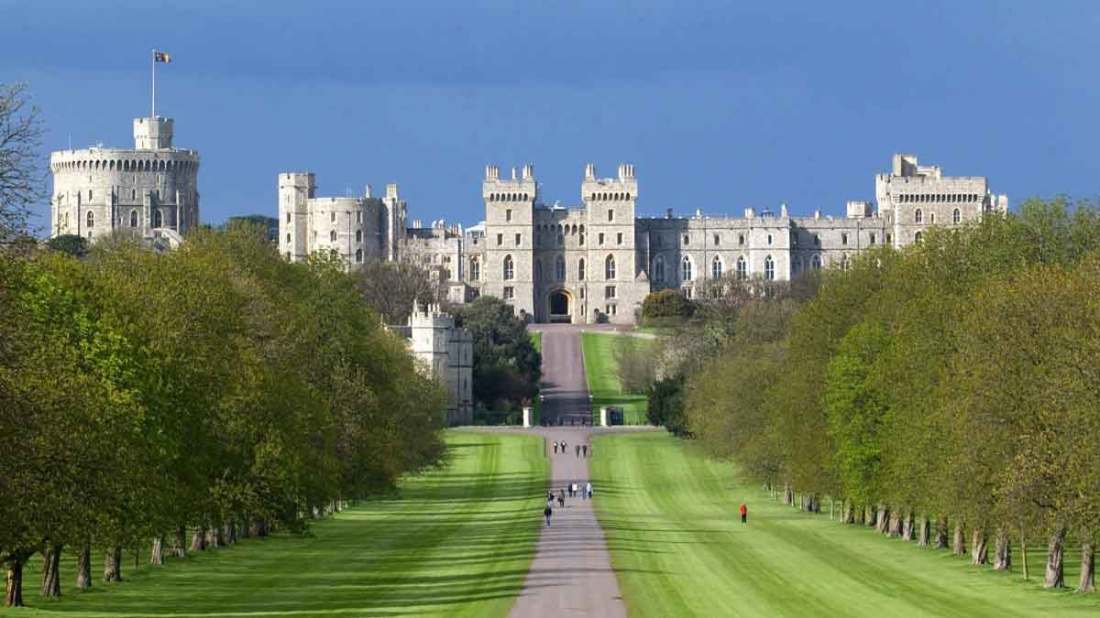
Rosa Christelow and I started work as housemaids at Windsor Castle on the same day. Rosa was older than me and had lots of experience. I had grown up in Oakley Mere, a small village on the outskirts of Windsor, and had lots to learn. Rosa also used to say I had a lot of cheek.

People couldn’t understand how we were such good friends; we were like chalk and cheese. Perhaps that’s why.

Rosa got me out of a lot of scrapes, I can tell you. And me, well I could always make her laugh. Once I demonstrated how to dance the Charleston in a corridor outside the library where some of the young royal cousins were playing a gramophone. I nearly lost my job over that, but Rosa managed to intercede for me.

It was a wonderful life working up at the Castle. The things we saw and the people we met. Well, not met exactly. Most of the guests barely noticed us, but we would peep round corridors and over the top of stairs to watch them arrive and depart. And of course, there were occasions when the household staff were presented to the King and Queen. And Christmas – oh Christmas was a wonderful time. Hard work, but wonderful.

And sometimes the staff had the place to ourselves. What we got up to then, well I couldn’t possibly tell you.

I left in 1913 when I married Robert one of the footmen up at the Castle, but I always kept in touch with Rosa. When she retired, I visited her once or twice at the house she shared with her sister in Swindon. Her home was as neat as a pin. You could tell she had been a housemaid; little touches I noticed, ways of doing things she had taught me. I didn’t envy the little girl who came in to clean for them. I bet Rosa put her through her paces.

Goddard 2
Goddard Avenue

The facts …

Rosa Harriet Christelow was born on October 25, 1879 the third child and second daughter of John Christelow, a boilermaker, and his wife Priscilla. Rosa was baptised at St Mark’s Church on November 30, 1879 and grew up at 42 Wellington Street, the family home for more than 70 years.

In 1907 she entered the Royal Household at Windsor Castle as one of the 38 Class 3 housemaids earning £25 per annum. Rosa was later promoted to a Class 2 housemaid on £30 per year. She was still employed at Windsor Castle during the First World War and records list her there in 1924, the date at which published figures close.

At the time of the 1911 census Rosa was one of 33 housemaids, a total of 51 female servants. Royals in residence in 1911 were Princess May of Teck who was five years old and her three-year-old brother Prince Rupert of Teck. These children were Queen Victoria’s great-grandchildren.

By 1939 Rosa was living at 42 Wellington Street with her sister Rhoda where she is described as a paid domestic servant. There are gaps in what is known about Rosa’s whereabout between 1891 to 1901 and 1924 to 1939 probably due to a mis-transcription of her surname.

Rosa’s parents, John and Priscilla, are buried with two of their daughters, Laura Priscilla and Rhoda Annie, in plot D1350.

Rosa eventually moved into 125 Goddard Avenue, a home she shared with her brother Samuel. After several years working in the railway factory, Samuel Christelow travelled to Zimbabwe where he was ordained. Widowed and retired he returned to Swindon where he lived with Rosa at 125 Goddard Avenue. He died in St Margaret’s Hospital in 1972 and is buried in plot D1587.

Rosa died at St Margaret’s Hospital in 1972. She was aged 92. She is buried with her grandmother in plot B1877.

Christelow - Copy
Rosa was buried with her grandmother

Samuel James Christelow
Samuel Christelow

You may also like to read:

Archdeacon Samuel Christelow – missionary

The Foyle and Finney families

The Radnor Street cemetery volunteers are a versatile group. Not only do they care for the CWGC graves and identify others with a military connection, but they mow and hoe, weed and clean and also locate lost graves. Bex recently helped Liz, a visitor to Swindon, to find her great grandparents grave and in doing so revealed yet another fascinating Swindon family history.

Liz helpfully had the cemetery paperwork concerning two family graves – plots D937 and D938. These proved to be the graves of two brothers, William John and James Henry Foyle with their respective wives, Margaret Ann and Mary Jane. The brothers were two of four sons born to Isaac and Rebecca Foyle. All four sons were born and raised in Swindon and all four followed their father Isaac, a labourer in the GWR iron works, into the railway factory; William as a boiler smith, James a brass finisher, George a railway clerk and Alfred an electrical fitter. William would eventually move to Wolverhampton, but following his death he was buried next to his brother James.

James’s grave with its elegant headstone was easy to locate. See below two before and after photographs taken by Bex.

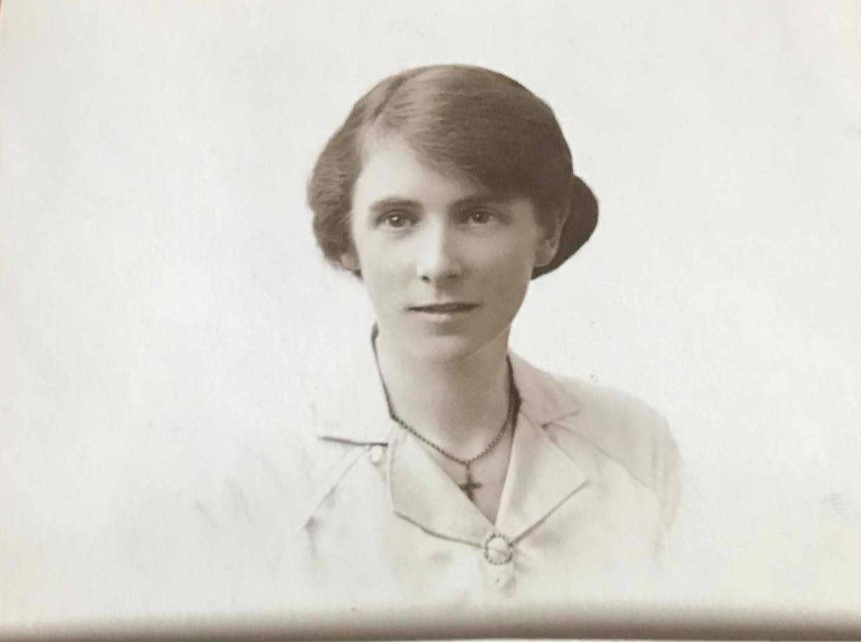
Liz was also keen to find other family graves, including those of Esther and Kate Finney. Research revealed that the two sisters were the daughters of William and Emma Finney.

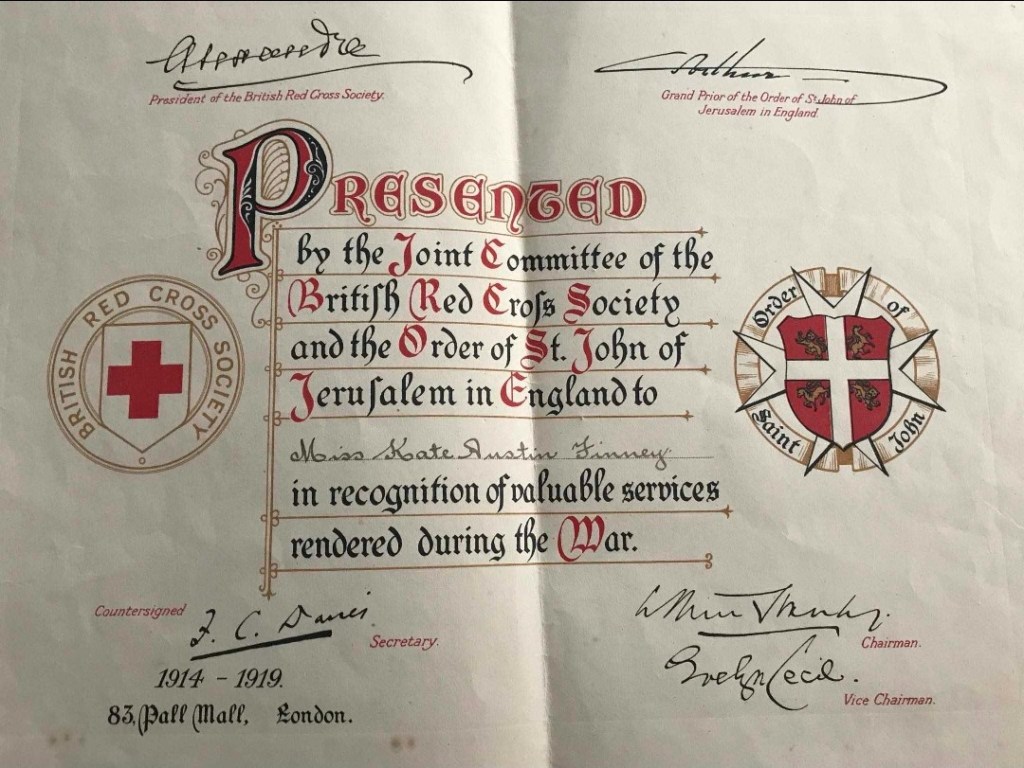
Esther and Kate both served as Red Cross nurses during WWI. Esther was a volunteer at the Red Cross Hospital In Taunton in 1917 while Kate stayed closer to home and served as a Ward Helper at the Red Cross Hospital in Stratton in 1918.

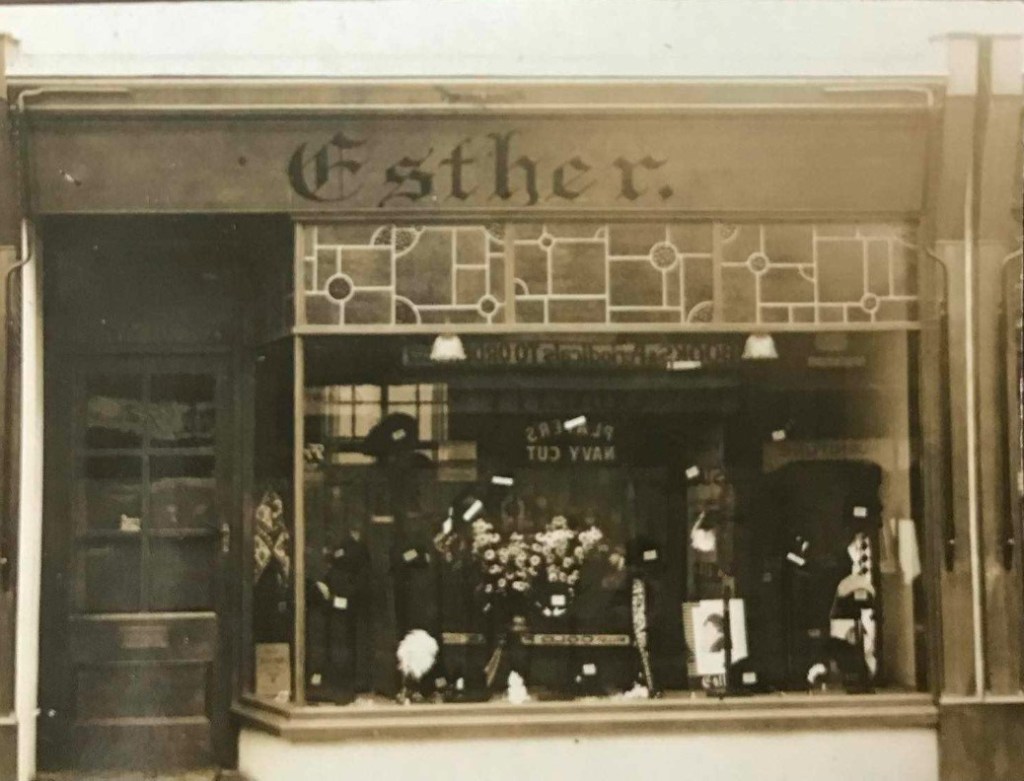
In 1939 Esther, Kate and their brother William lived with their widowed mother at 11 Clifton Street. Esther is described as a Shopkeeper (Gown and Millinery) and Liz was able to provide a photograph of the shopfront.

Esther died in 1959 and Kate in 1970 and they are buried together in grave plot E8298 with their brother William who died in 1957.

The connection between the Foyle and Finney family is that Esther and Kate’s brother John Marshall Finney, married James and Mary Jane Foyle’s daughter Elsie Gladys Foyle.

Hopefully Liz will keep in touch with Bex and even more family stories will emerge.

A literary legacy and the Misses Baden

The re-imagined story …

Everyone with the name Jefferies wanted to tell us their memories of the man, even those who were unrelated and had never met him. The Swindon Advertiser had already published a fulsome obituary notice on the local writer Richard Jefferies but Mr Morris wanted me to come up with something more, something from a different perspective.

I did a bit of research and discovered that Mrs Jefferies sisters lived in town, so I made an appointment to visit them.

Mrs Jefferies came from a large farming family. Her father had married twice and produced some fourteen children. Mrs Jefferies was the eldest of the second family. The sisters who lived at 20 Sheppard Street hailed from the first family and were considerably older than the recently widowed Jessie Jefferies.

Jessie Jefferies nee Baden
Mrs Jefferies, the former Jessie Baden

I was greeted at the front door of the red brick villa by Miss Blanche Baden who introduced herself as niece and companion to the Misses Baden. The two sisters were waiting for me in the parlour.

The ladies were dressed in the old country fashion and were frail and elderly. Miss Mary, the younger of the two, spoke for her sister Miss Emma, explaining that she had been deaf and dumb since birth.

Looking out across the road to the looming railway factory, Miss Mary talked about a childhood spent at Day House Farm and their near neighbours, the Jefferies family who lived on the farm at Coate.

In pride of place on the bookcase was a set of Jefferies books. I was invited to select a volume, each one a first edition, inscribed by their famous brother-in-law.

I wrote what I thought was an interesting piece about the Misses Baden and their literary legacy, but Mr Morris didn’t like it. I had missed the point of the exercise, I was told. He’d wanted more insight into Jefferies ambition, the political motivation of the man and what had driven him, not a non-story about two old ladies who had done nothing of note.

It was then that I decided the Swindon Advertiser was not the vehicle for my work and that I would devote my life to writing about the lives of women who had supposedly ‘done little of note.’

Richard Jefferies
Richard Jefferies

The facts …

Death of a Distinguished Wiltshire Man

A large circle of readers will be sorry to hear that Mr Richard Jefferies died at Goring on Sunday morning. He will be known to all classes of readers as the author of a charming series of books and fugitive articles on rural life and kindred subjects, that were as interesting to dwellers in town as to those in the country. He united to a singularly close insight into the natural workings of animal and vegetable life a power of description almost unrivalled. His books and articles were redolent of the air of the country, and dealt with nature in so picturesque and graphic a style that the dweller in a city might almost fancy himself in the midst of the scenes described. These scenes were mostly taken from his native county of Wiltshire. The son of a farmer, he soon fell to writing on his favourite subjects in local journals. He soon, however, went to London, where he at once made himself a name as a writer of books and contributor of essays to magazines and periodical literature. Many will remember the delightful freshness of “The Gamekeeper at Home,” which introduced him to the London public about ten years ago. This was followed at short intervals by “Wild Life in a Southern County,” “Round about a Great Estate,” “Hodge and his Masters,” “Nature near London,” “The Life of the Fields,” “Red Deer,” and “The Open Air,” the last of which was published two years ago. Mr Jefferies also wrote a number of works of fiction, which are certainly not so well known – and perhaps deservedly so – as his pictures on country scenes. Thus between 1874 and the present year he published “The Scarlet Shawl,” “Restless Human Hearts,” “World’s End,” “Greene Fern Farm,” “Wood Magic,” “Bevis, the story of a Boy,” “The Dewy Morn,” “After London, or Wild England,” and “Amaryllis at the Fair,” the last in the present year. Also he wrote in 1883 a work of great interest entitled “The Story of my Heart, an Autobiography.”

Extract from The Swindon Advertiser, Saturday, August 20, 1887.

Emma Jane and Mary Hannah Baden

Emma Jane Baden aged 76 years of 20 Sheppard Street was buried on March 24, 1894 in grave plot E7206. Mary Hannah Baden aged 79 years of 15 Avenue Road was buried with her sister on November 27, 1907.

Miss Blount’s tea party

The re-imagined story …

I really didn’t want to visit Miss Blount. I liked her well enough; she was a kind, patient teacher, but she was dying. We all knew it. She had been ill for a long time and this would probably be the last time anyone other than her family would be invited to visit.

As the senior pupil teacher I was selected to deliver the presents the children had produced. The infants had drawn pictures while the older children had written diary entries telling her what was happening at school. The girls in Standard IV had baked a Victoria Sandwich cake, named after the Queen who was known to have a sweet tooth. My contribution was a bunch of dahlias grown in my dad’s greenhouse.

The Blount family lived at 14 Park Lane. I expected the house to be shrouded and shuttered, the family sombre and in premature mourning, but it wasn’t like that at all. Miss Blount was sitting in the sheltered back garden where her mother served the tea. The flowers were placed in a cut glass vase and set upon the garden table while both ladies exclaimed over the lightness of the sponge cake. The younger children’s pictures caused much delight and the diary entries were pored over with great interest.

Our little tea party was so relaxed and jolly that I began to think perhaps the reports of Miss Blount’s ill health had been exaggerated. Then suddenly she was overcome by a paroxysm of coughing, and her mother rushed to her side. When eventually the attack subsided I noticed the handkerchief she held to her mouth was spotted with blood. She looked exhausted and Mrs Blount thanked me for calling, which I took to be my cue to leave.

Miss Blount was very pretty and so young, just 27, but of course as a 14 year old school girl I didn’t truly appreciate the sorrow.

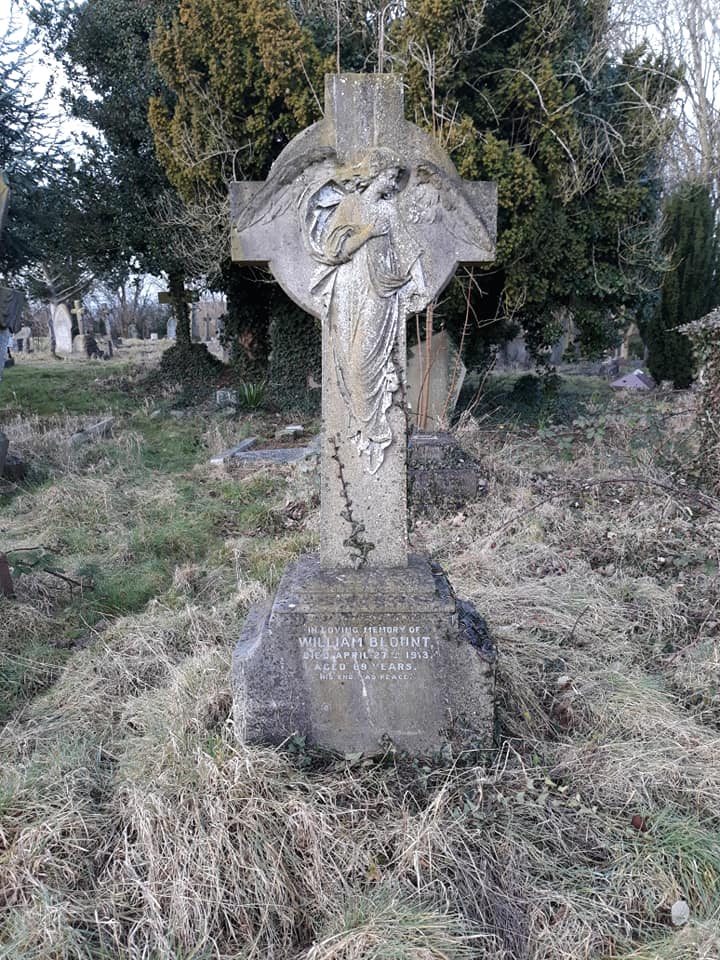
There’s a beautiful monument on her grave, a floating angel, delivering her soul to heaven. When I visit my parents’ grave I take some flowers for Miss Blount. She told me she thought the dahlias were a cheerful flower, that day of the tea party.

Blount family

The facts …

Eleanor Marian Blount was born in Hereford, the eldest of William and Ann Blount’s eight children, but she was not the first to die.

William married Ann Lane on August 6, 1866 at St Peter’s, Hereford. They moved to Swindon in about 1868 where William started work as a Moulder in the railway factory. Their first home was in Havelock Street in 1869 before they moved to 43 Cheltenham Street. Their third child, Mary Emma Blount was born in Cheltenham Street but died at 8 months old. She was buried on August 22, 1871 in the churchyard at St Mark’s. In 1881 the family were living at 22 Cheltenham Street and by 1891 they were living at 14 Park Lane.

Three of their children went on to become teachers, Eleanor, Lily and Edgar. William John Lane Blount turned up in the US sometime around 1888-91. George followed his father in the Works as a Brass Finisher, but later he also emigrated to the US. Alexander (Henry) Blount worked as a mechanical engineer in the railway factory. Youngest son Frederick Walter, also worked in the railway factory as a fitter.

William died on April 27, 1913 aged 69. Ann survived him by more than twenty years. She died in 1934 aged 87. They were buried with their daughter Eleanor in a large double plot E8158/8159.

Mrs Peddle and me

The re-imagined story …

Life’s circumstances can create some unusual friendships. In the case of Mrs Peddle and me it was the death of our husbands.

We didn’t have a lot in common. Mrs Peddle had money and I didn’t. I had a houseful of children and she had none.

I don’t think she much enjoyed living in Swindon. She told me she was born in a village called Keinton Mandeville in Somerset and she was a country girl at heart. Her back garden was full of old fashioned country flowers like night scented stock and grandmother’s bonnet. My garden was always full of washing.

I’d never known anywhere other than Swindon. I’d been born in the railway village and lived there until I got married. My dad was a railwayman and so was his dad and just about all the boys I grew up with ended up working in the railway factory. My husband Fred was a steam hammerman.

I don’t know why Mr and Mrs Peddle moved to Swindon in the first place. Mr Peddle had worked as a house painter and decorator. Perhaps he looked at all those red brick terrace houses and thought there would be plenty of work for him, but of course everyone took care of their own properties in those days. Few of us had the money for an interior decorator. So like every other man in town, Mr Peddle found himself sucked into the railway works.

Mrs Peddle would come across to my house most afternoons. She seemed to enjoy the noise and chaos the children created and I was grateful for someone to hold the baby while I caught up with some household jobs.

Then afterwards we’d have a cup of tea and we’d talk. We’d talk about really personal stuff, things I’d never spoken to anyone else about. She told me why she’d never had any children and I told her why I had so many.

Before the year was out I married William, one of Fred’s friends, and moved into his house in Clifton Street. He had lost his wife around the same time Fred died. I needed a breadwinner and he needed a mother for his children. More kids! And we soon had one of our own together.

After that I only saw Mrs Peddle occasionally. The intimacy of those few months in 1911 was gone. I’m not sure that either of us wanted to be reminded about some of those confidences we shared.

It’s a funny old world. Death drew us together but life pulled us apart.

James Peddle D (3)

The facts …

Emily Jane Louisa was baptised on August 27, 1865 at the parish church in Keinton Mandeville, Somerset, the daughter of John Cox, a labourer and his wife Matilda. Emily worked as a dressmaker until her marriage to James Peddle in the September quarter of 1887.

At the time of the 1891 census James was recorded as living at No. 12 York Place, Swindon, where he worked as a painter and glazier. On census night 1891 Emily was staying with her widowed mother back home in Keinton. By 1901 James and Emily were living at 76 Radnor Street, their home for more than ten years. On the 1911 census James is described as a house painter employed by the railway company. James and Emily had been married for 23 years and had no children.

James died on August 4, 1911 and was buried in plot D1473 on August 9.

In 1916 Emily married widower John Parker, a carpenter who worked in the railway factory. His wife Eliza had died in December 1914. John and Emily lived at 33 Wellington Street.

It was a brief marriage as Emily died on November 15, 1919. She was buried on November 21 with her first husband James Peddle in plot D1473.

John Parker outlived Emily by more than 30 years. He died on November 17, 1952 and was buried with his first wife Eliza in plot D1302, not too far from James and Emily.

John and Eliza Parker share their grave with their grandson Alan Parker who died in 1931 aged 8 years old.

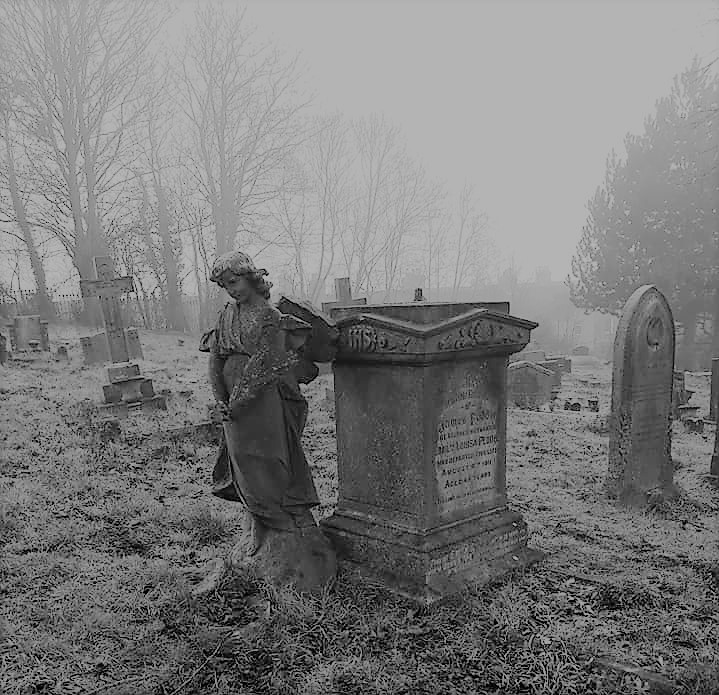
54518772_2657598597614608_8771014343094435840_n

Image published courtesy of Robin Earle taken in the 1980s.

Martha Hall – Richard Jefferies’ auntie

As part of our Swindon Suffragette festival in 2018 I conducted a ‘women only’ walk at Christ Church.

The magnificent Celtic Cross (see below) marks the grave of Martha and William Hall. The Celtic Cross is an ancient Christian symbol dating back to the 9th century and is particularly associated with Ireland. Martha’s husband William Hall was born in Longford, Ireland in 1815 and named his property on The Sands, Longford Villa after his birthplace.

Martha and William Hall

Martha’s father John Luckett Jefferies had left Swindon as a young man and moved to London where he worked as a printer. He married Frances Ridger in 1809 and they had five children born in London. But in 1816 John was forced to the leave job, the home and the life he loved in London to return to Swindon where the family farm at Coate was failing.

Today the farm at Coate is better known as the birthplace of naturalist, journalist and poet Richard Jefferies, the son of James Luckett Jefferies, Martha’s brother.

Martha was born on July 12, 1818, the first of the couple’s children to be born back home in Wiltshire. She was baptised at the old parish church of Holy Rood and married William there on June 30, 1849.

William Hall died on August 30, 1898 and Martha on January 22, 1902.

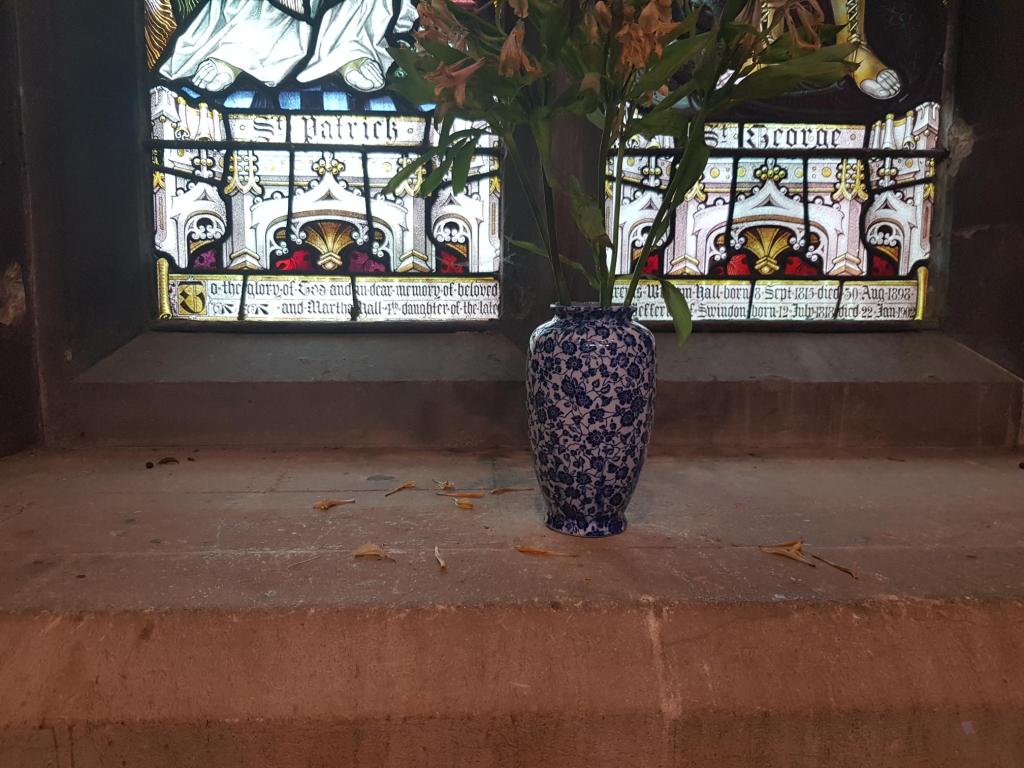
William and Martha Hall also have a stained glass window dedicated to them in Christ Church.