William and Jane Frampton

Continuing the story of Swindon Suffragette Edith New and her family.

Round the other side of Christ Church churchyard we met Edith’s four great aunts, the Frampton sisters. Here we meet her grandparents, William and Jane Frampton.

Jane was born in Cricklade in 1816, the daughter of John and Ann Akers and William was born in Swindon in 1813, the son of James and Ann Frampton. However, when the couple married it was at St. Mary’s Church, Whitechapel in the East End of London on May 24, 1837. The entry in the parish registers states they were married by banns, which had to be called over a three-week period, and that they were both said to be ‘of this parish.’

By the time of the 1841 census they were back in Swindon living in a house in Prospect Place and their eight children were all born and baptised in Swindon, the older ones in Holy Rood and the three younger ones at Christ Church.

William owned several properties in Old Town and you might have expected the family led a settled, prosperous life, but they were not without their problems.

In 1851 William declared himself bankrupt. The bankruptcy notice declared that he owned two houses and shops in Wood Street, two houses in Prospect Place, the Victoria Inn and an adjoining house in Victoria Street and four dwellings in Union Row.

Five years later he was back in business working as a carpenter, builder, appraiser and undertaker and by 1861 he was working as a builder and living in Wood Street.

Quite how he dealt with this set back in the 1850s remains unknown but it must have been a huge worry to Jane. Again, we know so little of her life. And again, I’m left wondering if all this made an impact on the way Jane raised her daughters, especially Isabella, Edith’s mother who was widowed young with small children. Was there always a sense of insecurity in the family with the women picking up the pieces? It would be so interesting to read first hand accounts of these women’s lives.

Perhaps we should all commit to writing down our own histories, not as a great work of literature but just to inform those that come after.
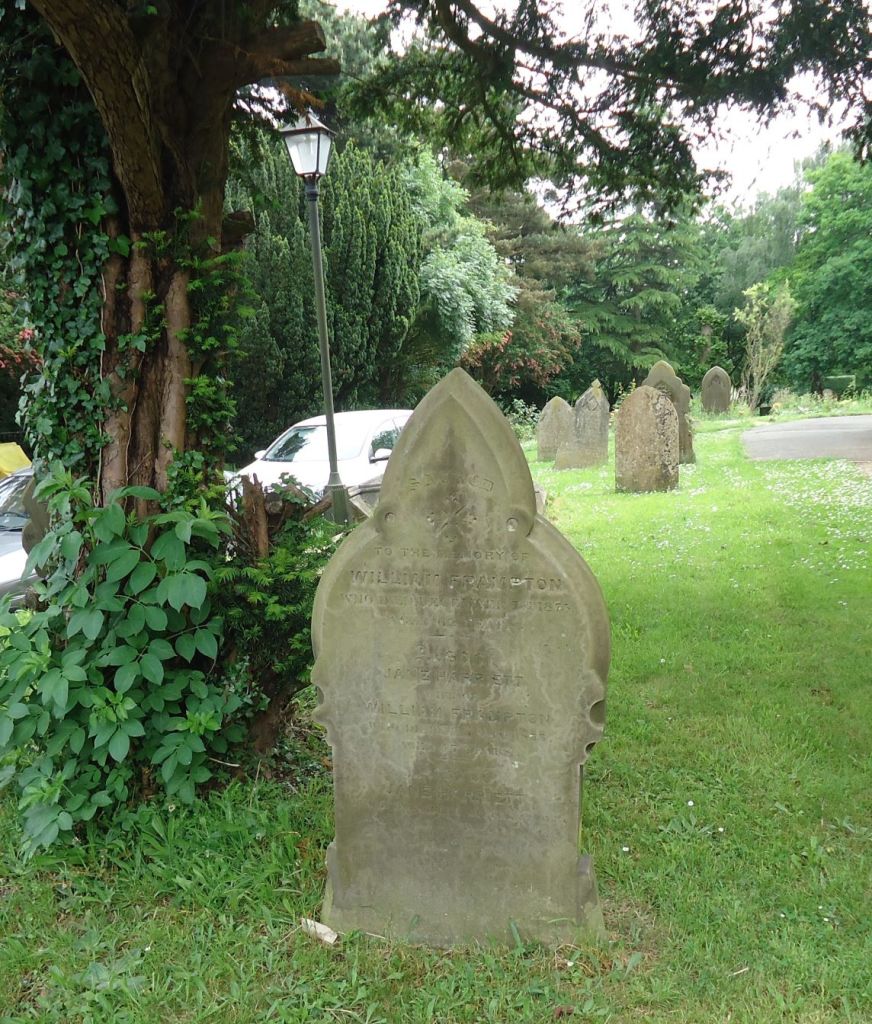
Jane died in May 1873 aged 57 and William died in December 1875 aged 62.

The Frampton Sisters

Another story from Christ Church churchyard…

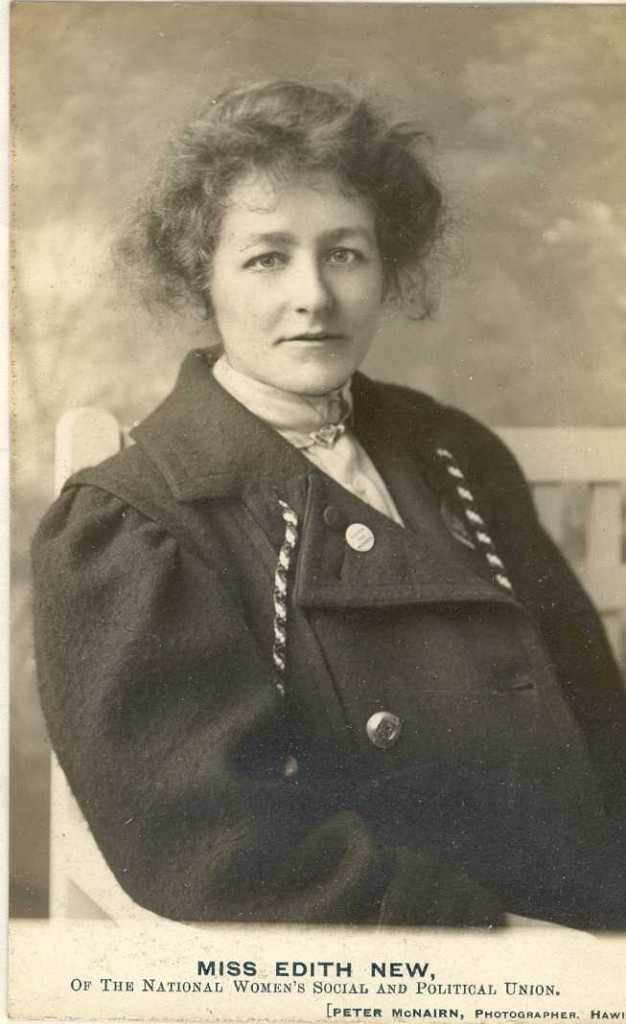
Swindon Suffragette Edith New came from a large family with a lot of maiden aunts. Her mother Isabella had four sisters and her grandfather William Frampton also had four sisters.

In 1861 the Frampton family occupied three properties in Wood Street. Edith’s grandfather lived at what is now Balula’s Delicatessen. To his right lived his married sister Catherine Sharpe and to his left his widowed mother Ann and those three unmarried sisters.

By 1871 the sisters were at 4 Victoria street where they lived and worked for more than 30 years. One was a milliner, another a dressmaker and one a mantle maker, which was a type of cloak.

Catherine was widowed in 1865 and returned to Swindon from Malmesbury with her daughter to live with her sisters.

Jane died first in 1880 and Emma, Catherine and Ellen all died in 1902.

Edith was born in 1877 and would have been just three years old when Jane died, so probably had no memory of her. However, she would have grown up knowing the other three sisters. According to the 1901 census the women worked up until the year before they died.

I wonder what impression their situation made upon Edith and whether it contributed to her long fight for equality in the teaching profession and her involvement in the Votes for Women campaign.

This weathered headstone, which no longer marks the actual grave, records the burial of William Frampton’s four sister, Jane, Emma and Ellen, who never married, and Catherine who married William Sharpe.

You may also like to read:

The New family memorial at Christ Church

The New family memorial at Christ Church

In June 2018 the small team at Swindon Suffragette organised a festival to celebrate the centenary of the enfranchisement of (some) women and the contribution to the cause made by Swindon born suffragette Edith New. Women who were over the age of 30 and met a property qualification were granted the vote, however it would be another 10 years before women received electoral equality with men.

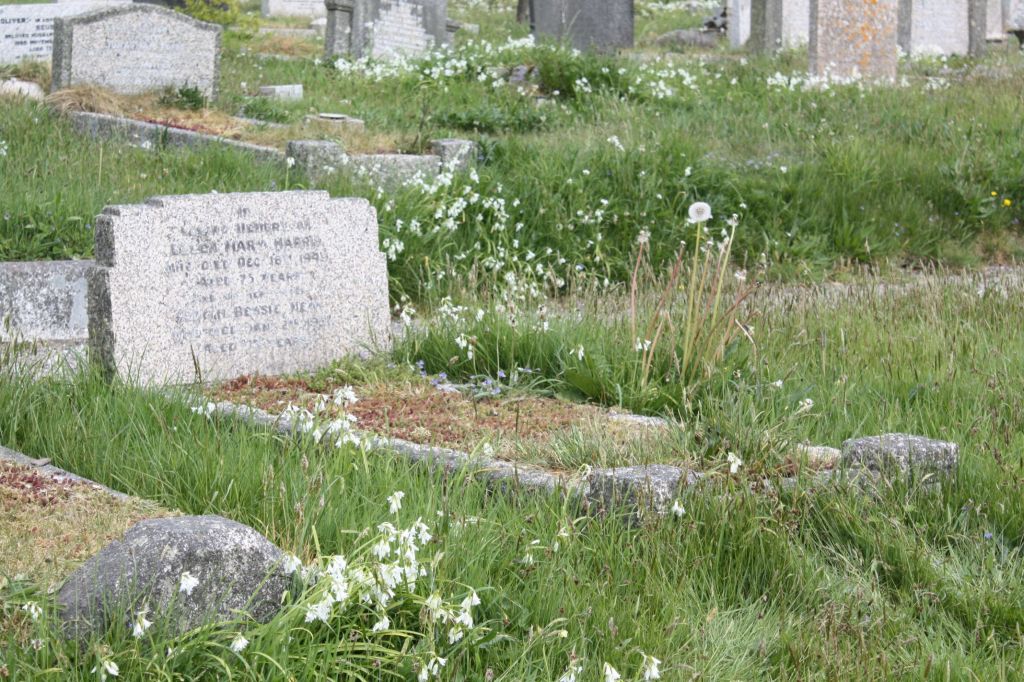
Edith moved to Polperro in Cornwall after her retirement from teaching. Her sister Ellen also bought a property in the village. Edith moved in with her sister after she rented out her cottage to a family who had been bombed out of London during WWII. Ellen died in December 1949 and Edith in January 1951. They are buried together in the cemetery just outside Polperro village.

The grave of Edith New and her sister Ellen

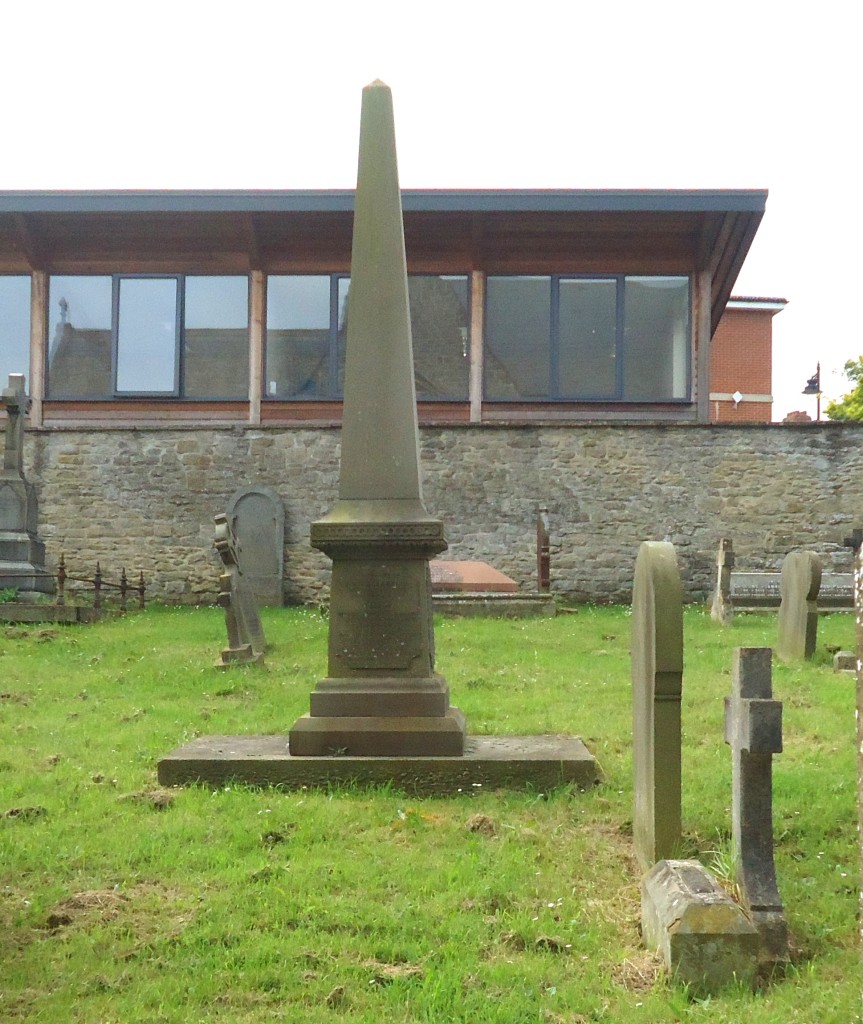
This impressive obelisk monument is the New family memorial in Christ Church churchyard. Remembered on this memorial are Edith’s parents and three of her siblings.

The New family memorial

Frederic James New was a clerk in the railway village. He married first Sarah Sophia Ball in 1870 and they had one child Frances Jane born the following year. Sarah died either in childbirth or shortly after and was buried in this family plot.

Frederic and several other members of the New family were Freemasons and it is likely the bereaved family received some help from that organisation. Frances won a place at the Royal Masonic Institution for Girls in Battersea. She died on October 27, 1889 and was buried with her mother.

Meanwhile, in 1872 Frederic married Isabella Frampton. They had five children, including Ellen, Frederick and Edith. Sadly, a daughter Annie Isabella died in 1876 aged 5 months and a son, Henry James Earnshaw died on February 6, 1879. These two babies are also buried here.

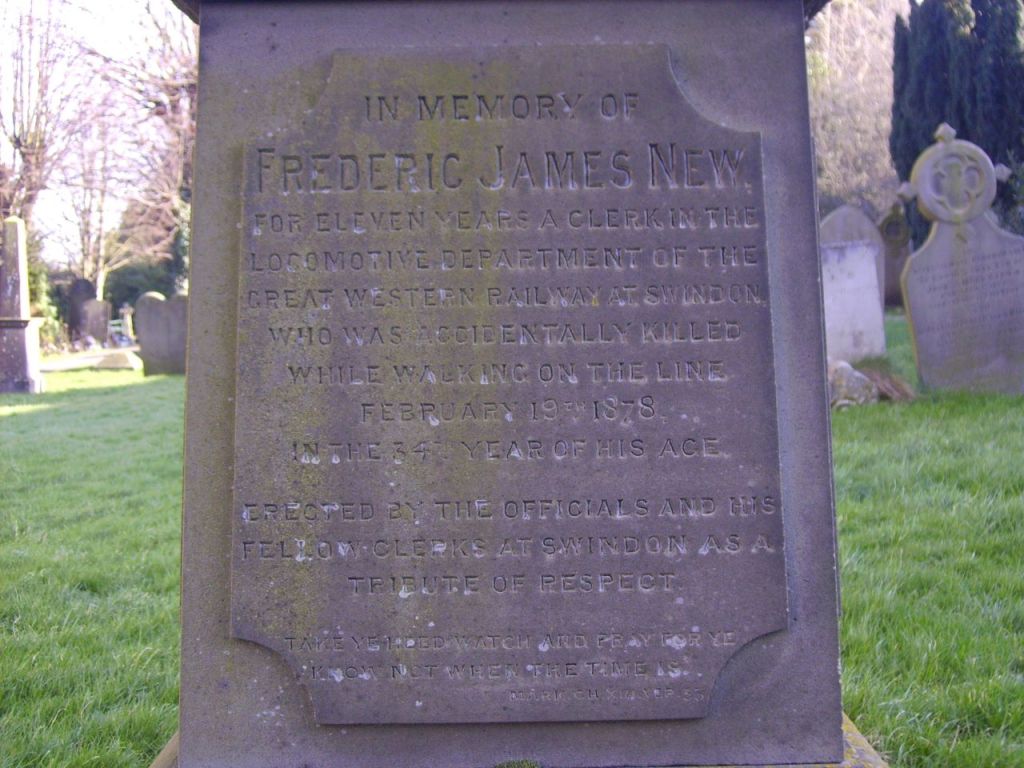
On February 19, 1878 Frederick was walking along the railway track to meet with his friend who lived at Toothill when he was struck by a train and killed. The inscription on this memorial indicates it was paid for by his colleagues in the GWR.

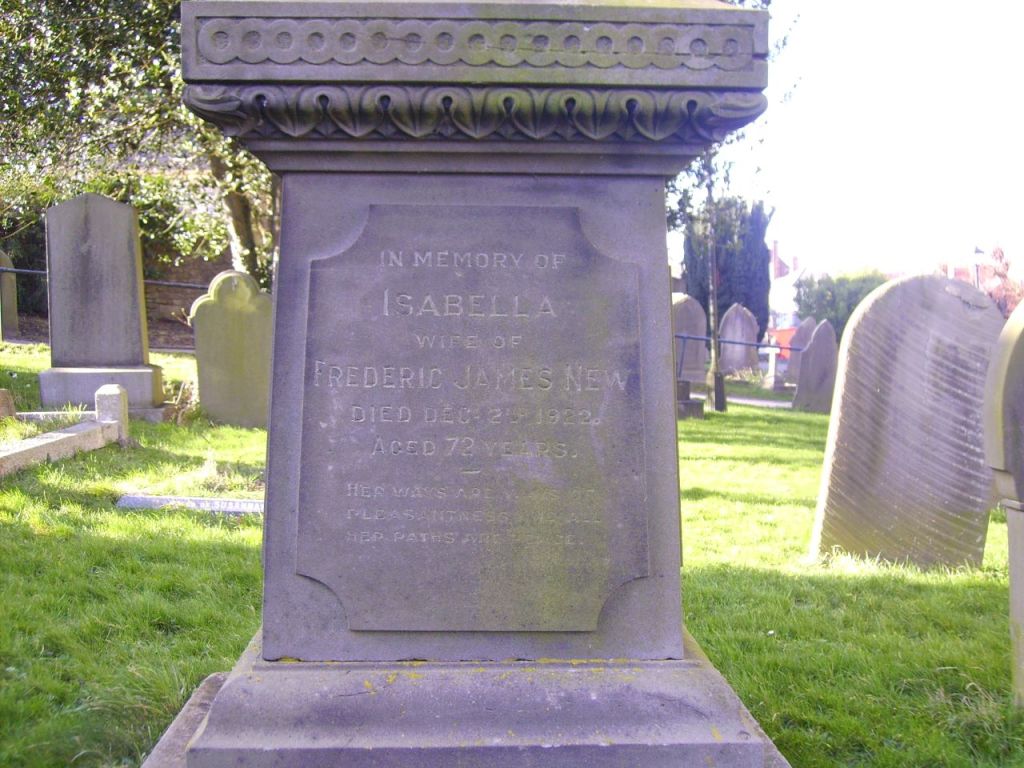
We know that Isabella never remarried and raised her three surviving children alone. She taught music to private pupils at her home and she had a property that she rented out. We know that she was supportive of Edith’s work in the campaign for women’s suffrage and that Edith came back to Swindon to recuperate at the family home in Lethbridge Road after one of her prison sentences.

The last person remembered on this memorial is Isabella. The inscription reads:

Her ways are ways of

Pleasantness and all

Her paths are peace.

You may also like to read:

The Frampton Sisters

Edith Stevens – Communist

“Don’t just say, what a world, change the world,” is the advice Edith Stevens would give to a disaffected electorate who complain there is no point in voting – quite an appropriate quote to begin with as we approach a General Election on July 4.

Born in Swindon in 1884, Edith Stevens was the eldest of railwayman George and his wife Harriet’s six children.  The 1901 census finds the family living at 11 Theobald Street where Welsh born George is described as an iron turner in the engine shop.  His 15 year old son Stanley worked alongside him as an apprentice turner, Edith, aged 17, was a pupil teacher; the four younger daughters were Elsie 14, Olive 12, Winifred 8 and five year old Edna.

Edith grew up against a backdrop of political awareness and activity.  Her father George was secretary of No 3 branch of the AEU and served as a Labour Councillor for eighteen years and Edith, a women’s rights campaigner, was one of the first women to record her vote in Swindon.
In 1903-05 Edith attended Southlands College, Battersea where she gained her certificated teacher qualification, after which she returned to Swindon to teach at Clarence Street School. Throughout the interwar years Edith worked with families battling against unemployment and poverty, organising food for the children in her care that frequently came to school hungry.
Edith served as president of the Swindon National Union of Teachers and was a member of the Retired Teachers Association.  She was also an active member of the Swindon branch of the National Federation of Old Age Pensions Associations.


During the 1930s Edith became involved in the Friends of the Soviet Union organisation.  A former member of the Independent Labour Party, Edith nailed her colours firmly to the mast, and subsequently joined the Communist Party.  She became one of the founder members of the Swindon branch and in 1942 along with Bill Sargent and Ike Gradwell, Edith secured party headquarters at 1 Bridge Street.  The house was named in her honour and when the party moved across the road in 1970 to 77/78 Bridge Street the new property was named Edith Stevens House.

Edith’s lifelong involvement with the former Soviet Union included fund raising efforts during WWII when she became secretary of the Swindon Anglo-Soviet Friendship Committee.  In 1968, aged 84, Edith took part in a peace tour organised by the British Peace Committee, attending a peace conference in Helsinki and making her sixth and final visit to Russia.

Edith died at Stratton St Margaret Hospital on September 10, 1970 aged 86. She remained president of the Swindon Communist Party until her death.

At a subsequent memorial meeting held for Edith in the Les Bates Hall at the AEU House in Swindon, Dick Pearce, one of the founder members of the Swindon Communist Party, led the tributes.

“Throughout my life, he said, “I learned that anywhere in Swindon in working class and progressive movements you would find Edith Stevens in the thick of the struggle.”

Unfortunately, Edith is not buried in Radnor Street Cemetery. Further research is required to establish where she lies.

The Astill dynasty continued

Yesterday we met Ellen Victoria Astill. Today let me introduce you to three more Astill siblings. Quigley, Ella and Annie occupied consecutive placing in the Astill line up. Quigley was born in 1878, Ella in 1880 and Annie in 1882.

Annie Kathleen Wootton Hall Astill

Quigley, along with his brothers, attended King William Street School. There is no mention of the girls in the family attending this or any other school. There were several private girls’ schools in Old Town at this time, so perhaps they attended one of these.

Annie in particular must have had some further education as she later became a nurse. The 1911 census records her working as a Rescue Worker at a home for unmarried mothers and their babies in Ladywood Road, Birmingham.

Quigley Wallace Astill seated in deckchair and surrounded by family members

Quigley trained as a printer, presumably in the family firm. However he later went on to work for the Swindon Press where an accident lifting heavy machinery left him disabled.

Ella Alice Ward Astill

The unmarried Astill siblings lived at a couple of addresses in Old Town including 14 Springfield Road, but by the 1920s they were settled at 28 Avenue Road. We have already discovered Ellen living here in the 1920s. Quigley and later Ella and Annie also lived at this address.

Apparently Annie and Ella had a volatile relationship. In old age the two sisters were admitted to St. Margaret’s Hospital where they had to be accommodated on separate floors because they argued so much. Annie died on February 14, 1966. Ella died just a month later on March 17. With the death of her lifelong adversary she lost the will to live.

The two sisters were buried together in Christ Church churchyard where they joined their brother Quigley who died in 1957.

Many thanks to Rhonda in Australia and the late Eric Barrett from Wroughton for information, photos and family memories.

You may also like to read

Continuing the Astill family story

The Astill dynasty

The Astill dynasty

Sometimes I get lucky…

A blogpost published last year about the Astill printing establishment was recently seen by Rhonda in Australia. Rhonda is the great great granddaughter of Robert and Margaret Astill and has an ongoing family history research project that she has been kind enough to share with me, including some fab photos.

Here is Robert Astill, founder of the printing business.

And here is Margaret, his wife.

Robert Astill married Margaret Hall on October 27, 1866 at the Baptist Chapel, Fleet Street, New Swindon.

The Astill family numbered 13. Two daughters died in childhood, Frances in infancy in 1881 and Emma aged 3 in 1870.

The surviving children were all baptised at Christ Church – eight in one go – on February 8, 1880! Ella Alicia Ward Astill was baptised the following year on August 28, 1881 and Annie Kathleen Wootton Hall Astill and Lily Blanche Astill on April 4, 1900.

In 1891 all 11 surviving siblings were living at 2 Bath Road – 7 sisters and 4 brothers – their ages ranging from the eldest Margaret Florence Marionne who was 21 to the youngest Lily Blanche aged 6.

Ellen Victoria, known as Nellie, was the sixth child, born on March 12, 1874. Family memories of Ellen speak of a charming lady who didn’t have much of a life. In 1911 she appears on the census returns as living at Roves Farm, Sevenhampton where she is described as a servant. Farmer Herbert Haine and his wife Edith have two young children and it is likely Ellen’s work was of a domestic nature.

By 1923 Ellen had moved to 28 Avenue Road, Swindon where she worked as a dressmaker and lived with various siblings across the years. In 1939 she lived there with her brother Quigley and sister Ella. It was there that she died aged 72 in April 1946.

And here is Ellen Victoria seated between her sister Mary and her niece Violet. Ellen is the daughter buried with her parents in grave plot E8601.

Many thanks to Rhonda in Australia and the late Eric Barrett from Wroughton for information, photos and family memories.

You may like to read:

Continuing the Astill family story

Lilium Lancifolium Warren – Forewoman

I’m on a roll with women who have unusual names. Meet Lilium Lancifolium Warren. And whilst census enumerators might record her name as Lilian L. she always took pains to spell it correctly and in full.

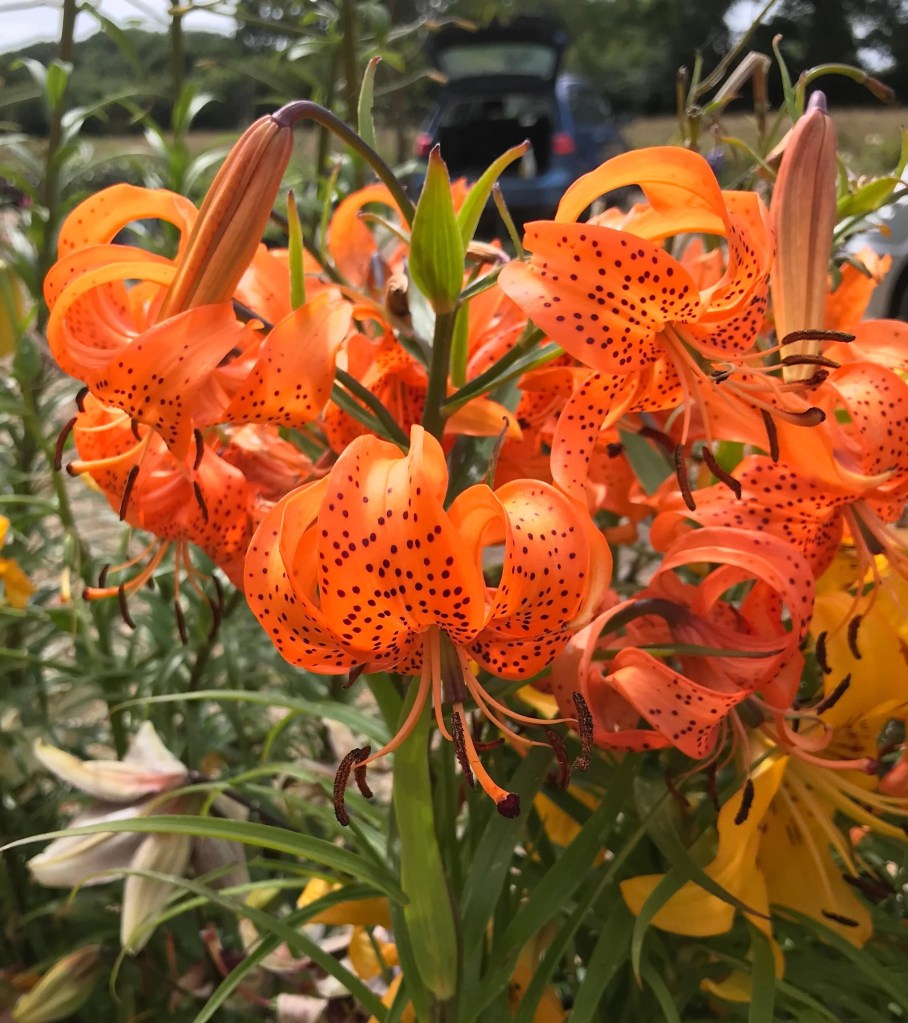
This is a Lilium Lancifolium (also known as the Tiger Lily). It is a plant native to Asia and the Russian Far East. Unscented and with distinctive orange and black flowers, the Lilium Lancifolium flowers in July. I wonder if Lilium Lancifolium’s parents were keen gardeners.

Lilium Lancifolium Warren was baptised at St. Mark’s Church on July 3, 1881, the daughter of Albert Warren, a goods guard, and his wife Marcellina.

Lilium Lancifolium began work as a French polisher in the GWR Locomotive, Carriage and Wagon Department on February 1, 1897 aged 17. During a long career in the Works she was recorded as Forewoman in 10A Shop in 1931. She never married, although her name occurs as a witness at several family weddings, spelt correctly and in full.

She appears on the 1939 List still working as a Forewoman Polisher in the GWR, living at 53 Princes Street with her niece Olive May Warren.

She died aged 85 in 1965 by which time she had moved out to the new suburb of Penhill where she lived in a bungalow in Somerford Close. Administration of her estate was left to her niece, Olive by then married, and her sister Catherine.

Lilium Lancifolium Warren was buried in grave plot C83 on January 31, 1965 where she joined her brother Herbert William who died in 1897 and her parents, Marcellina who died in 1921 and Albert who died in 1929.

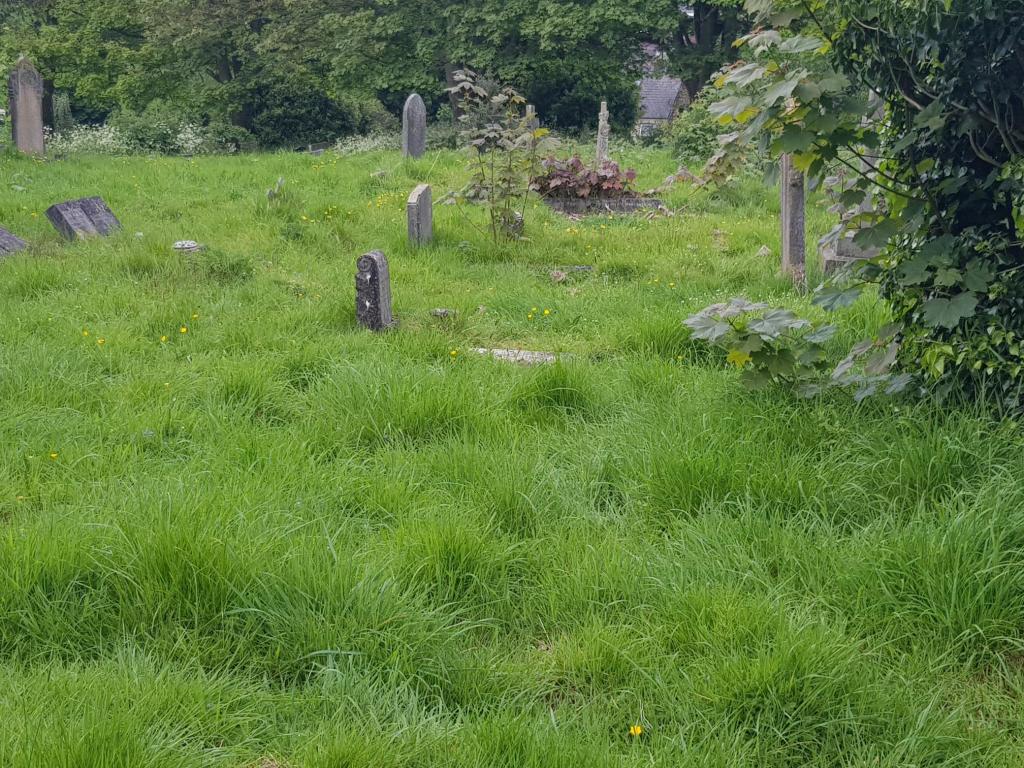
The Warren family grave is somewhere in this area. It may be an unmarked grave or it could be a kerbstone memorial that has sunk and become overgrown.

Another day, another churchyard – Christ Church

I am intrigued by the two spinster sisters with names that could come straight out of a Thomas Hardy novel, Tryphena and Hephzibah Evenden. 

Family historians researching the Evenden family have little information about these two unmarried sisters who left no descendants and apparently no photographs either. 

As is so often the case these women lived within a close knit family but when they died their life’s work disappeared into the ether. No doubt there were nephews and nieces who retained fond memories of their two aunts, but more than a hundred years later nothing is left of these women except a handsome headstone in Christ Church graveyard.

The two sisters were born in Wrotham, Kent the daughters of John Evenden and his first wife Naomi Frances. Hephzibah was christened on March 26, 1820 and Tryphena on July 16, 1826 in St George’s Church, Wrotham.

They first appear in Swindon on the 1881 census returns living at Ightham Villa, (a property named after their childhood home) Bath Road, but how did they end up here?

You would think that with such distinctive names it would be easy to track them through the census returns. In 1841 Hephzibah is living with her sister Ruth and brother John in Wrotham where he works as a grocer. In 1851 she is visiting the Leney family in Bow Road, Wateringbury while Tryphena is at home in Greenhithe, Swanscombe with her father, his second wife Sophia Sarah, her grandmother Elizabeth Evenden and three servants. 

I can’t discover what the women’s father did for a living as he describes himself variously as a ‘fund holder’ and a ‘gentleman’.

So, in 1881 the sisters are living in Bath Road where Tryphena died on August 1, 1889 and Hephzibah on July 21, 1905. Tryphena leaves effects valued at £5,398 2s 11d and Hephzibah £9,894 3s 1d. Both women leave their estates to the administration of Swindon bank manager William Wearing,

Tryphena is a Greek name meaning ‘delicate’.

Hephzibah is from the Hebrew ‘my delight is in her’

Beautiful names due for a revival.

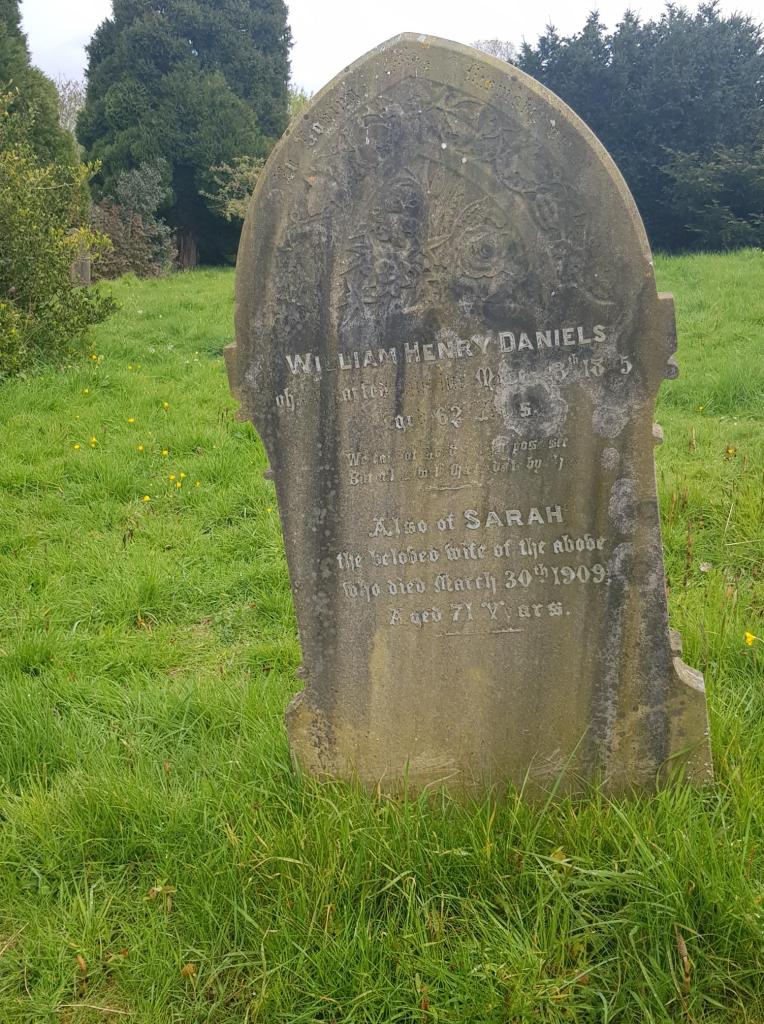
William Henry and Sarah Daniels

Most of us would extend a helping hand to a family member on hard times. Make sure they had food in the cupboard, perhaps lend them some money, maybe even put them up for awhile until they get back on their feet, but Sarah Daniels went way beyond this.

Sarah Bull married William Henry Daniels in 1855. By the time of the 1861 census they were living at 42 Westcott Place. William worked as an Engine Driver. They had a 4 year old daughter Dianah and living with them were Sarah’s elderly mother and William’s brother Samuel, an Iron Factory Labourer.

Ten years later Sarah and William had 3 children. Sarah’s mother died in 1867 but Samuel Daniels, now an Engine Driver, continued to live with them. Perhaps Samuel wasn’t down on his luck, perhaps he just liked living with his brother and enjoyed the home comforts.

In 1881 William and Sarah were living in Merton Street with their daughter Diana, now 24 years old and sons Mathew 19 and Frederick 16, both employed in the Carriage Works. Oh yes, and Samuel as well.

In 1891 the family were living just round the corner from the cemetery at 5 Clifton Street – they even employed a young servant girl to help Sarah with the housework. Only younger son Frederick continued to live with William and Sarah – and Samuel of course.

William Henry Daniels, Engine Driver, died aged 62 years old at 55 Farnsby Street in March 1895. In 1901 Sarah is living with Samuel at 22 Reading Street, where he is recorded as head of the household.

Sarah died in 1909 at Boxbush House, Brinkworth. She was buried on April 3 in grave plot B2414 with her husband William – but without Samuel!

Wild flowers

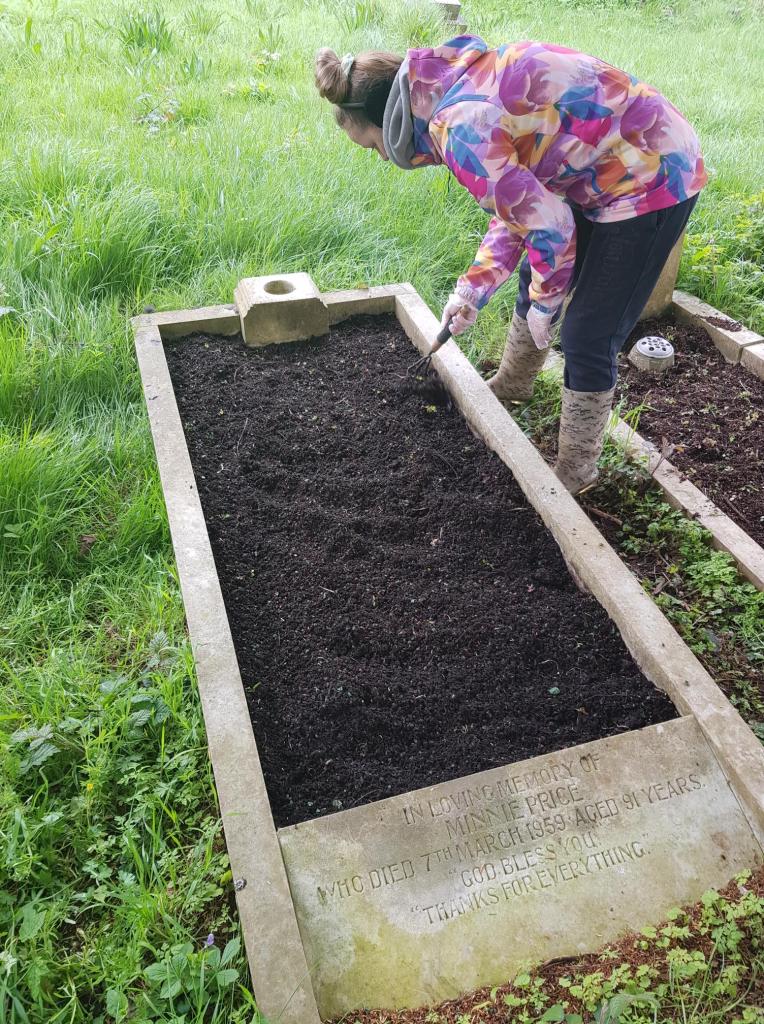
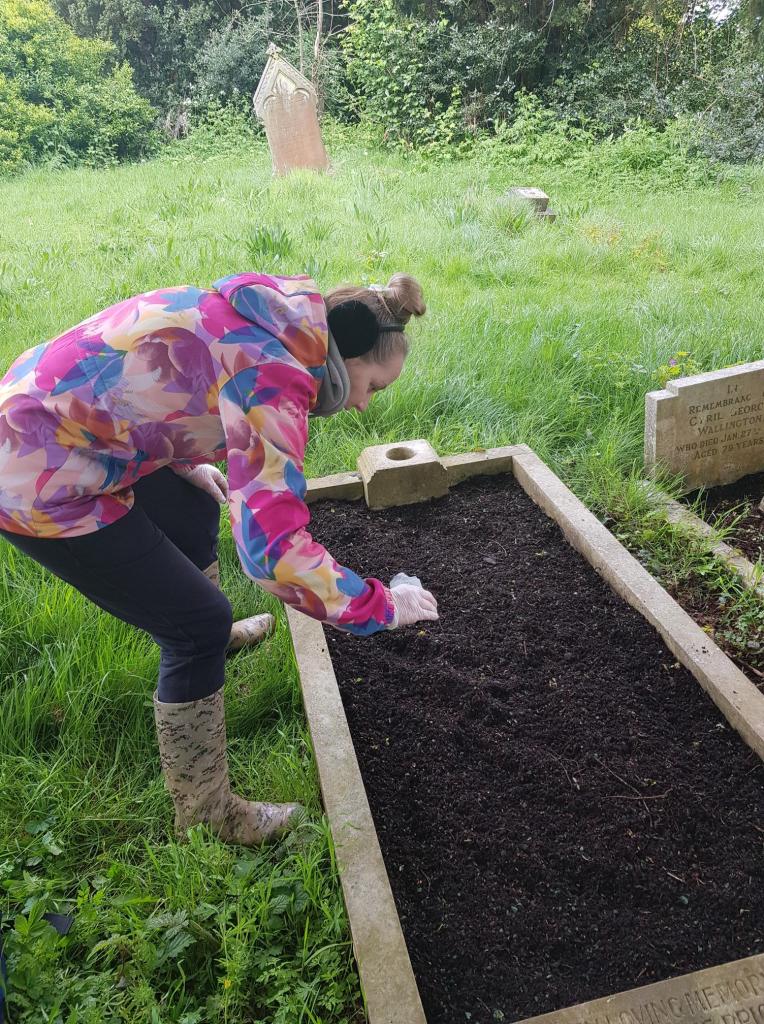
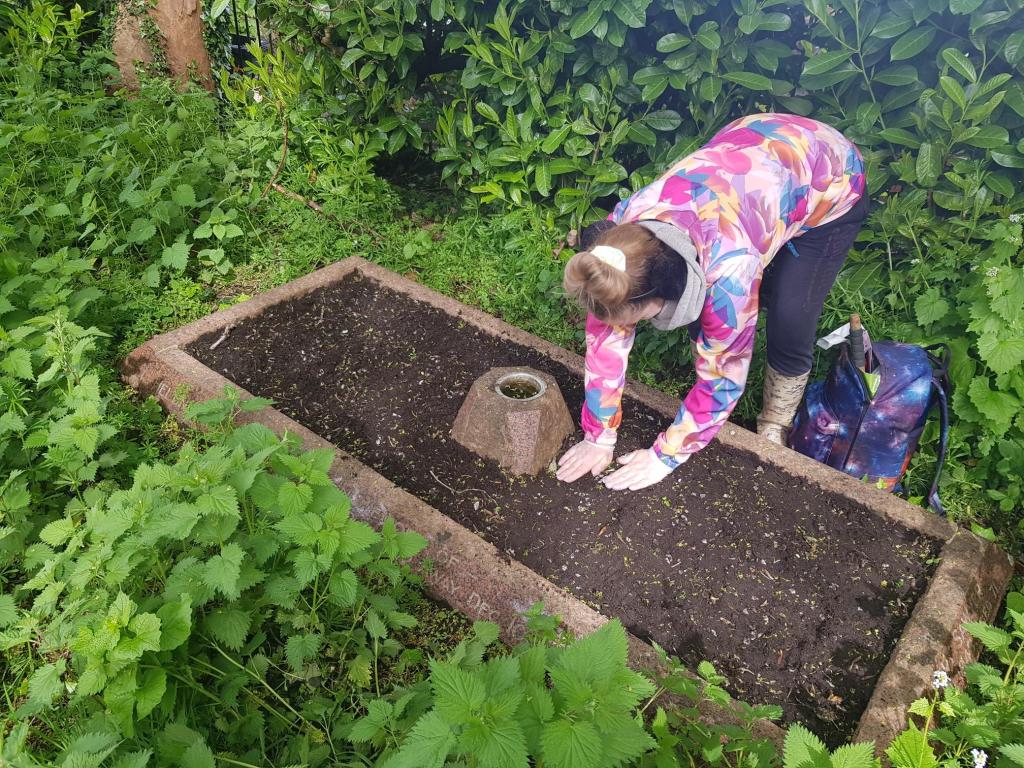
At the end of our cemetery walk yesterday one of our regular followers donated an envelope of wild flower seeds. She explained she had no garden of her own and that she would like them used in the cemetery, so today I accompanied cemetery volunteer Bex to scatter the seeds. We had decided on dividing the small envelope between two of our favourite ladies – Minnie Price and Helene Celine Sawyer – two graves that Bex regularly attends to.

We’ll keep you updated!