Sophie Wasser and the mysterious death of a lady at Swindon station

On Thursday November 1, 1888 a young woman was taken ill on a train travelling from Plymouth to London. She was removed from the train at Swindon and taken to the Queen’s Hotel at the station where she died the following Sunday at midnight.

A lengthy report was published in the Edinburgh Evening News and although very detailed there is no information concerning Miss Wasser other than some spurious conclusions. Some questions that in my opinion were not asked and should have been are: – What was the Hon Athol Liddell’s involvement in this case? How well did he know Miss Wasser? Having made her acquaintance in France some months previously, why couldn’t he provide more information about her circumstances? And why had he met her in Plymouth prior to her departure on the London train?

The story of Miss Wasser has recently been brought to my attention by local historian James Turner. James came across the grave of Miss Wasser and was greatly moved by the sad circumstances of her death. We both felt this was a story that needed to be told.

The Mysterious Death of a Lady at Swindon station

The Plymouth correspondent to the Bristol Times and Mirror telegraphing to that paper says, – A brief and mysteriously incomplete paragraph in a London evening paper on Friday was the first and hitherto the only information that has reached the public concerning the death of a young lady under circumstances of great mystery. The death occurred a week ago. There has been a coroner’s inquest, which did little to elucidate the real cause of death. The facts are as follows:-

Miss Dufin Wasser travelled from Plymouth on Thursday, November 1, by train due at Swindon at five minutes after four. At Swindon junction she was found to be so seriously ill that her removal from the train was imperative. By advice, Miss Wasser was taken into the hotel at the station and put to bed. All that the most watchful care and the best professional skill could suggest was done for her, but she died at Sunday mid-night. At the inquest, subsequently held, a verdict in accordance with the medical testimony was returned, the “medical testimony” being to the effect that death was due to apoplexy, arising from excessive vomiting. It was stated in evidence that amongst the effects of Miss Wasser was a bottle containing medicine, one of the ingredients of which was tincture of iron. This was contained in a bottle, on the label of which was written in French, “two or three teaspoonfuls in the day time.” The mixture could not therefore have been of a very powerful character, and it is unlikely that violent vomiting was due to it.  Dr Spackman says it is possible that some other drug might have been taken, but this theory was not verified or dissipated by a post mortem examination. Not a word was said as to what did or might have caused that vomiting. In the body of the dress of the deceased was found an unsigned letter, from which it was gathered that she was enceinte. This letter was in a gentleman’s handwriting, evidently a person of good education and epistolary facility. The writing is singularly large and of the “up and down” type. The place from which the letter was written was torn off, according to the expressed desire of the writer, who advised Miss Wasser, if she was in the condition she feared, to go to some secluded place. She was promised plenty of money, and was urgently entreated not to allow the name of the writer to transpire. In addition to the letter and medicine found was a good deal of money, about £50. Most of this was in French currency, the number of English coins being comparatively few. The deceased’s luggage comprised several articles, apparently presents, their quality and character marking them as not such as a person in the apparent position of the deceased would buy.

In the same third-class compartment in which Miss Wasser travelled from Bristol there were also another lady and gentleman, and Police Inspector Cruse, of Swindon. The lady appeared only faint at Bristol, but afterwards suffered great agony. She received with gratitude the attentions of the lady and gentleman, but hardly spoke one word. When she arrived at Swindon she appeared to be suffering from paralysis.

Inspector Cruse, before he knew the details of the case as disclosed at the inquest, formed an opinion as to the cause of the agony his fellow-passenger was suffering, and on reaching home informed his wife that something remarkable would happen before the train reached London. There was amongst her papers one which showed she had been staying at the Duke of Cornwall hotel, Plymouth under the name of Mrs Adler. A telegram elicited a reply from Mr Hellard, solicitor to the Hon. A Liddell, urging that everything possible should be done for her, and nothing that thoughtful consideration could do, or money could procure was wanting to bring about the ladies recovery.

Mr Liddell and Mr Hellard came to Swindon for the inquest. Mr Liddell stated that he made the acquaintance of Miss Wasser in France, in August last, and that he saw her at Plymouth on the day before she left for London to take up her residence for a time at the Swiss Home for Ladies, Mecklenburg Square, where she had previously stayed, and from which place she had obtained situations as governess. He also stated that she was of “Independent means.” It has since been ascertained that Miss Temple, sister of the Bishop of London, knew her in the capacity of governess with families she visited. The deceased was buried in Swindon cemetery on Wednesday. A headstone is to be erected, bearing the simple inscription. “Sophie Dufin Wasser, died November 4th, 1888.” While at the Queen’s hotel she never once spoke except in monosyllables in reply to questions. One of these replies was a sad “No” to the question, “Have you any friends?”

Edinburgh Evening News Monday 12th November, 1888.
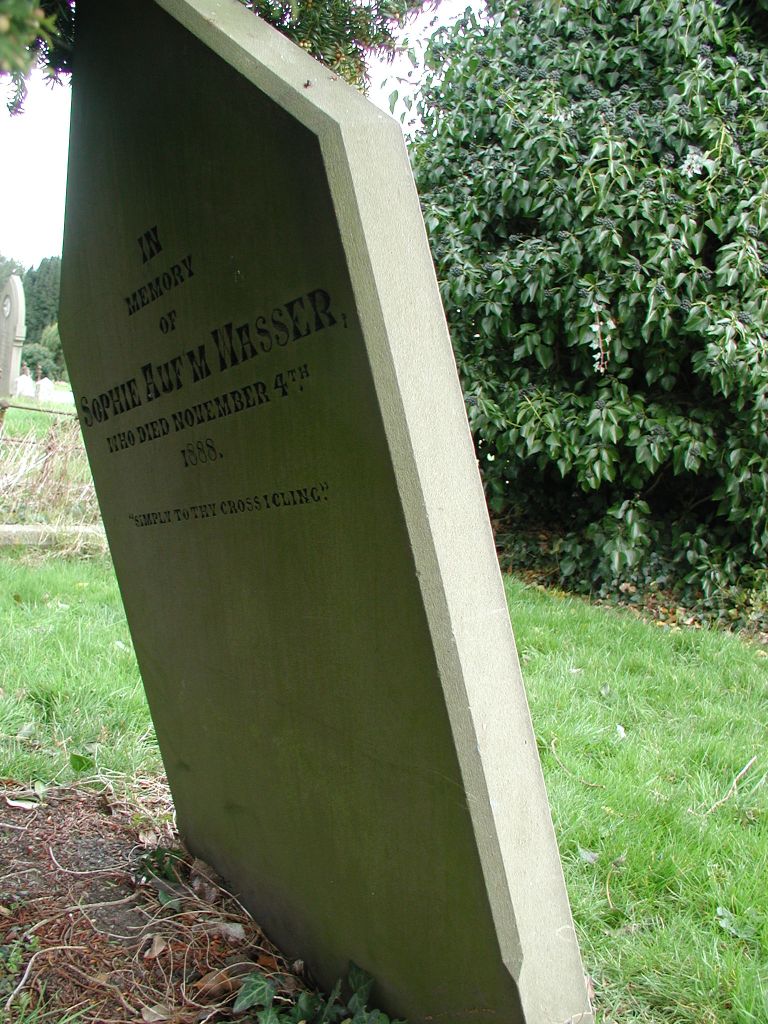
Image published courtesy of James Turner

The entry in the burial register reads:

Wasser Sophie A.M. 25 years 7th November 1888 grave plot E8300.
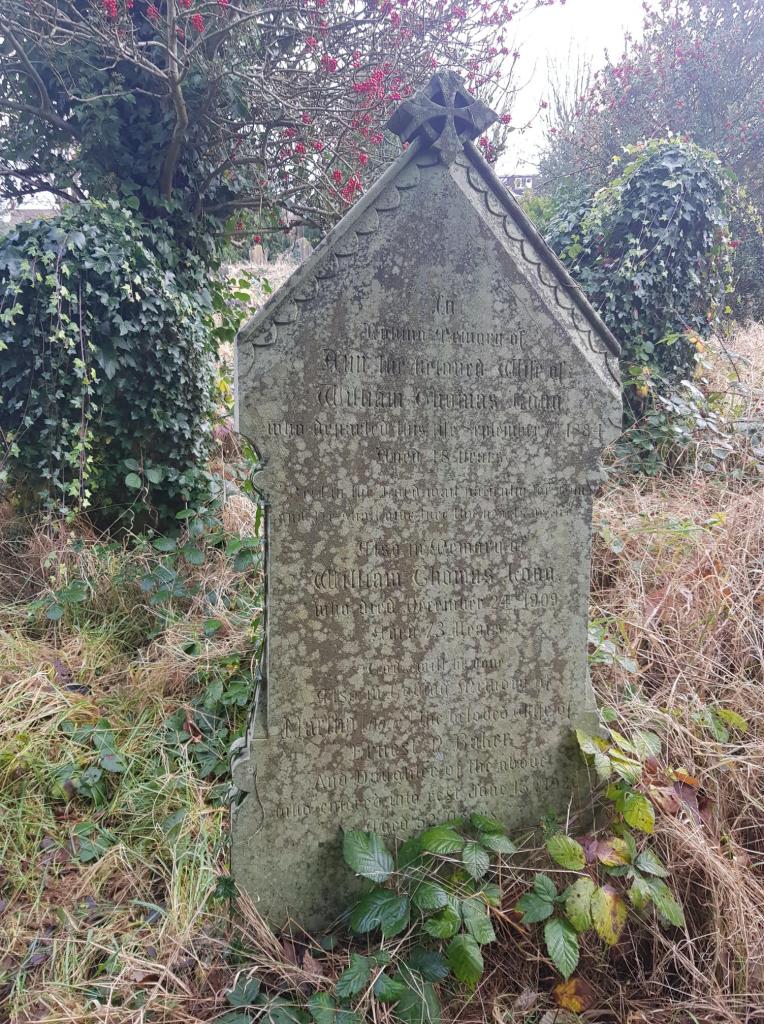
William Thomas Long – boilersmith

Death Notice – Swindon Advertiser Friday, December 31, 1909.

Long, Dec 24, at the residence of his daughter, 16 Curtis St. Swindon, William Thomas Long, aged 73 years.

When William Thomas Long died in 1909 his personal effects were valued at more than £900 – worth around £100k today. He had spent a lifetime working as a boilersmith, most of that in the Great Western Railway Swindon Works.

William Thomas Long was baptised at Holy Rood, the old parish church in Swindon, on July 31, 1836, the son of baker John Long and his wife Louisa. He grew up in Newport Street where his mother took over the business as Pastry Cook following the death of his father.

By 1861 William was a married man with two young daughters living in Newton Abbot where he worked as a boilersmith. William and Ann would complete their family with another five daughters plus Margaret born in 1879 who is first described as ‘granddaughter’ and later as ‘daughter.’

Yet, there is still so much we don’t know about Ann and William.

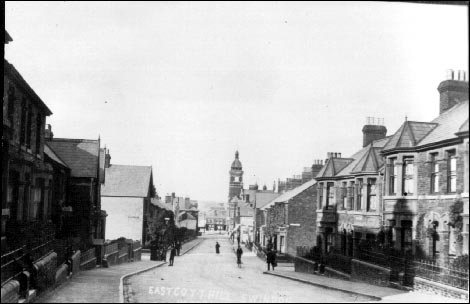
Looking down Eastcott Hill

For more than 20 years they lived at No. 8 Eastcott Hill – they may even have owned the property; Swindonians were renowned for investing in bricks and mortar.

Ann died in September 1884 aged 48. When his wife died William had been able to purchase a grave plot in Radnor Street Cemetery where an impressive headstone was later installed; not everyone could afford to do this. He didn’t remarry after Ann’s death, which was is also quite unusual. He still had young daughters at home but presumably the elder ones took over the household duties and childcare; perhaps he could afford to employ a maid-of-all-work.

Ann was buried in grave plot E8306 on September 12, 1884 where William joined her in 1909. The cremated remains of their grandson William Clarence Heath and his wife Alice Ruth were interred in the same plot some 60 years later.

Remembering the ordinary people of Swindon.

Florence L. Clapham – a case of mistaken identity

It’s not very often I find an error in the Radnor Street Cemetery burial registers, but this one could have proved rather confusing.

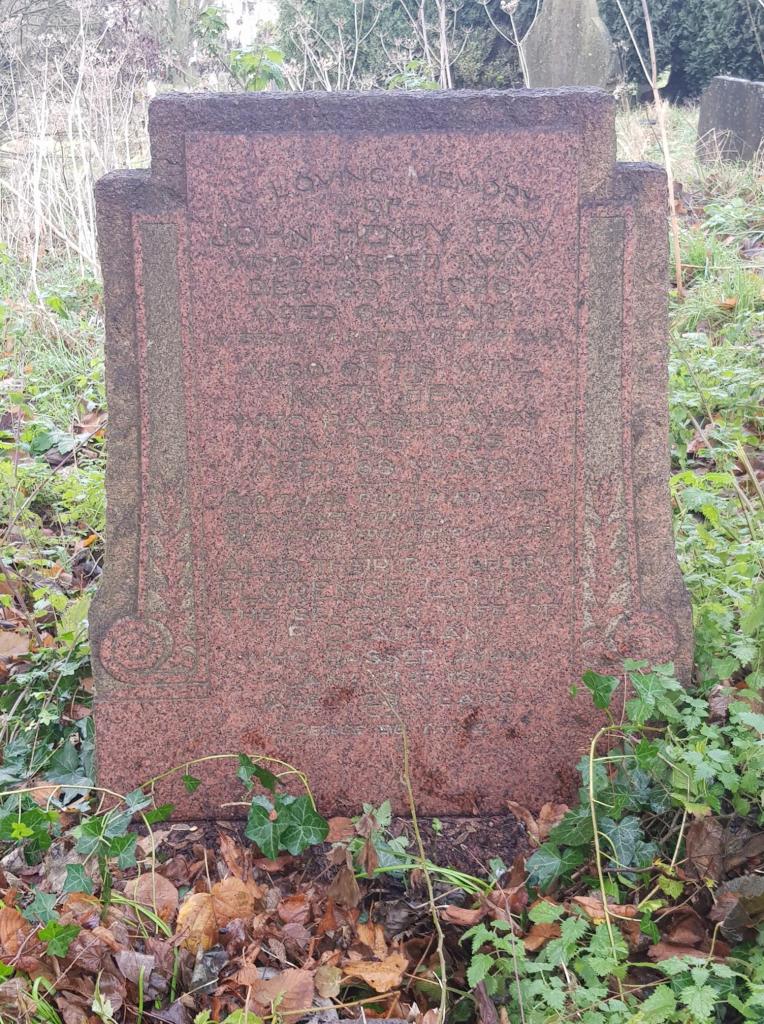
Florence Louise Few was baptised on August 27, 1888 at St. Mark’s Church, the eldest child of John Henry Few, a butcher and his wife Kate. John must have been a very enterprising young man as he was already in business at the age of 19 when he ran a butcher’s shop at 26 Prospect Hill. By 1891 he had moved the business down to New Swindon and a premises in Bridge Street. In 1891 he was based in at 59 Fleet Street and by 1911 he was at 61 Fleet Street (possibly some renumbering of Fleet Street had taken place).

In 1911 Florence was working as a shop assistant in the butchers. Her younger sister Freda was employed at ‘housework’ while 18 year old Gladys Elizabeth also worked in the shop. Younger brother Jack was still at school. Another brother, Harold Bastable Few, was born the following year.

Florence married Frederick Clapham, a Fitter, on November 17, 1913 at St. Mark’s Church and began married life in Weston Super Mare. She died there in January 1917 aged just 28 years of age.

Florence’s remains were returned to Swindon where she was buried on February 5, 1917. Her name is recorded in the burial registers as Florence Louise Clappen, which could cause confusion for those researching both the Few and the Clappen families. William Clappen had a Tailor and Outfitters shop in Wood Street, Old Swindon and another at the junction of Fleet Street and Bridge Street in New Swindon. This became known as Tram Centre where the tram drivers would check their departure times by the clock set in the shop front.

Florence lies in grave plot C2017. Her mother Kate was buried with her following her death in 1933, but there may yet be another mystery to solve. Although John Henry Few is remembered on the headstone, he is not buried in this plot. Only Florence and her mother Kate are buried here.

The Late Mrs F. Clapham – The funeral took place on Monday at Swindon Cemetery of Mrs F.L. Clapham, the wife of Mr F. Clapham, of Weymouth, eldest daughter of Mr and Mrs J.H. Few, of 61, Fleet Street, Swindon. The cortege left the residence of the deceased’s parents at 1.45 p.m. and proceeded to St. Mark’s Church (where the first part of the service was read), and thence to the Cemetery.

There were many beautiful wreaths and expressions of sympathy sent by relatives and friends. The coffin was made of polished elm with brass fittings and was inscribed: “Mrs Florence L. Clapham, aged 28 years, died Jan. 31st, 1917.” – Mr F. Clapham and Mr and Mrs J.H. Few desire to express their sincere thanks for the many expressions of sympathy received during their recent sad bereavement.

Extracts from North Wilts Herald, Friday, February 9, 1917.

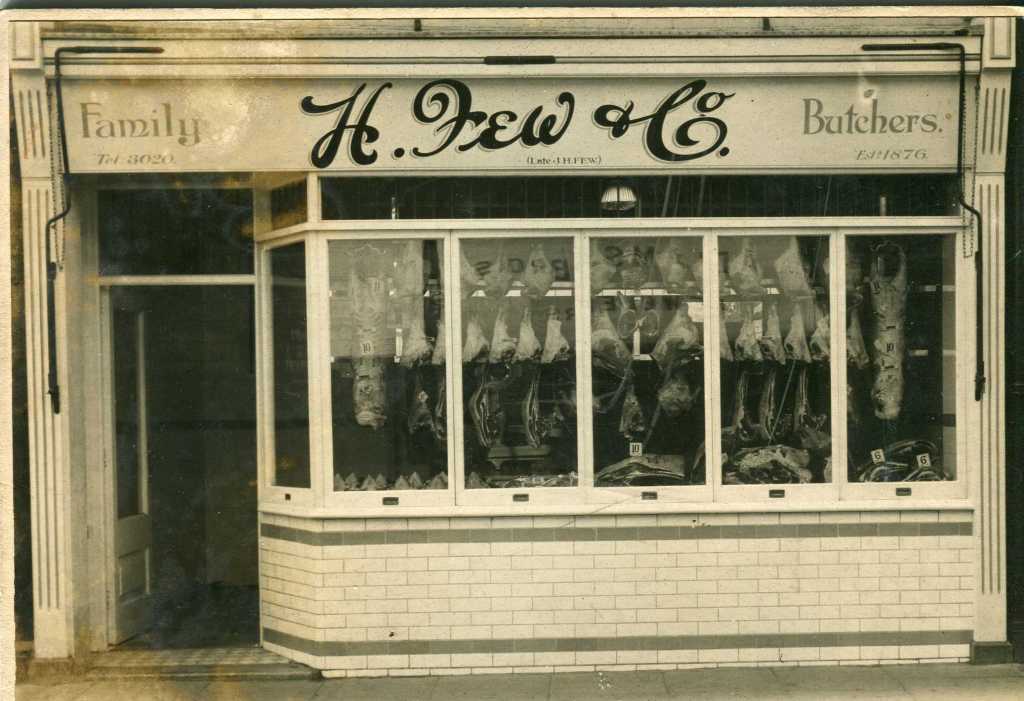
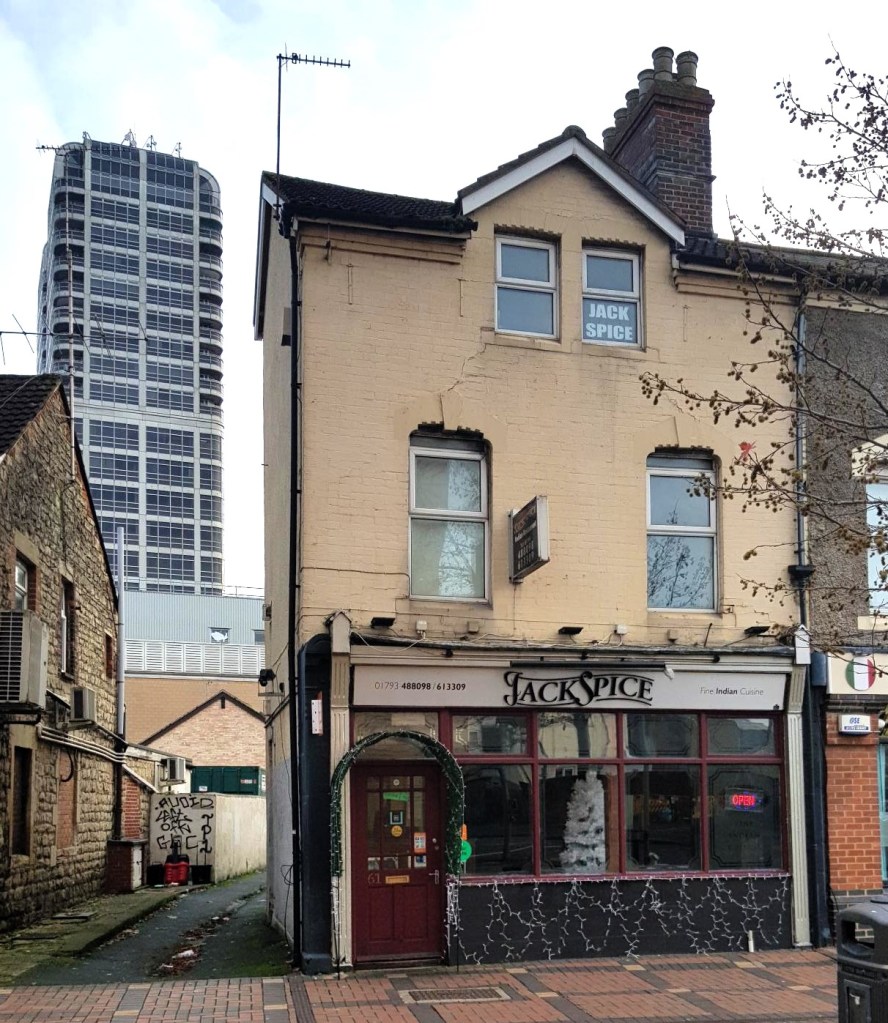
John Henry and Kate’s youngest son took over the business; the butchers’ shop is pictured here and we are able to confirm that the shop still survives.

Then …

and now

No 61 Fleet Street with the iconic David Murray John Tower in the background.

A propeller, a plaque and a piece of artwork

This year we have welcomed some significant additions to the cemetery chapel.

August saw the installation of the Airspeed Oxford propeller once mounted on the front of the RAFA Club in Belle Vue Road.

Then in November we were the proud recipients of another war memorial. Scout leader Steve Milner has placed in our safe keeping a plaque dedicated to the North Wilts Boy Scouts Association. The Roll of Honour commemorates those former scouts who lost their lives in the Second World War. We were proud to have this displayed in the chapel on Remembrance Day 2023.

We have also kindly been donated an original piece of art work made by local artist Lynette Thomas. The mosaic was inspired by a guided cemetery walk Lynette came on in July, where she describes the cemetery as ‘a tranquil place and a haven for wildlife with beautiful stone carvings and grotesques.’ To see more of Lynette’s work visit the Artsite website and her Facebook page.

William and Sarah Ann Giddins

This headstone with its elegant script contains a lot of information, even if at first it seems rather confusing, and the family history it conceals is even more fascinating.

The first person buried in this family plot was William Golosha Giddins (jnr) who died in 1917 aged 29. Next to be buried here was his married sister Gertrude Mary Whateley who died in 1930. Then in 1938 Sarah Ann Giddins, their mother, was buried here and just three months later their father William joined them.

William Giddins was born in Newfoundland St John in c1861 where his father Robert served with the 8th Kings 1440 Regiment for more than 20 years. Robert had previously served in British North America and the West Indies. Soon after William’s birth his father was discharged from the army as ‘unfit for further service in consequence of Chronic Rheumatism & general debility’ according to his military records.

Married with two children, Robert and his wife Catherine returned to his birthplace of Avebury where he worked as an agricultural labourer. Son William soon set out on his own adventure, joining the Wiltshire Constabulary and marrying Sarah Ann Cannings in 1885. By the time of the 1891 census the family were living at Martin, Fordingbridge.

William finished his career here in Swindon where the 1911 census returns record him at the Police Station, Swindon, an Inspector of Police. Sarah Ann, his wife of 25 years lives with him, their two children are both living elsewhere. Lodging with them are five police constables.

On their deaths Gertrude and her parents Sarah and William received lengthy obituaries published below, so I won’t repeat all the details here, but I would like to know more about the National Spinning Competition and Sarah’s royal audience!

Death of Sister Whateley

After an illness extending to about 12 months, the death occurred early on Sunday morning of Mrs Gertrude Mary (Sister) Whateley, wife of Mr A.J. Whateley of the Burleigh Nursing Home, 31 Croft Road. Sister Whateley was very well known in Swindon through her profession and much sympathy is extended to her husband. She took up nursing as a profession during the war, and afterwards opened the Burleigh Home. During the past twelve months she had been practically confined to her room. The funeral took place on Wednesday at Radnor Street Cemetery. The chief mourners were Mr A.J.Whately (widower), Mr and Mrs W. Giddings (father and mother), Mrs Jessop, Mrs Oliver and Miss Londen (cousins). Sister Whateley was the daughter of ex-Inspector Giddings, of the Wiltshire Constabulary.

North Wilts Herald, Friday, September 26, 1930.

A Conservative Worker

Swindon Funeral of Mrs S.A. Giddins

At Radnor-street cemetery last Thursday the interment took place of Mrs Sarah Annie Giddins, of 56 Cheltenham-street, Swindon, who died on 10 July at the age of 74. The service at St. Paul’s Church was conducted by the Rev. N.W.L. Auster, who also officiated at the graveside. Mrs Giddins was the wife of Mr William Giddins, who retired in 1911 from his post as police inspector in Swindon, and three years ago they celebrated their golden wedding anniversary.

Mrs Giddins was a Londoner by birth. Throughout her life she had taken a keen interest in the work of the Conservative Association. For over 30 years she was a member of the local association, and of recent years was vice-chairman. She was also chairman of the Whist Committee and President of the Central Branch of Young Britons.

She had the distinction, many years ago, of winning a National Spinning Competition in London, later going to Sandringham, where she instructed the late Queen Alexandra in that art.

Chief mourners; Mr W. Giddins (husband), Mr Donald Giddings (grandson), Mr Cannings (brother), Mr and Mrs Freeth (nephew and niece), Mrs Oliver (cousin), Miss Young (cousin), Miss London (cousin), Miss Ellis and Miss W. Smith, the committee of the Queen’s Ward Conservative Association. Among those present at church were; Sir Noel Arkell, Mrs Oliver Arkell, Mr Mayhew, Mr and Mrs Preater.

Funeral arrangements were carried out by Messrs A.E. Smith and Son, 24 Gordon-road, Swindon.

North Wilts Herald, Friday, 22 July, 1938.

Death of Mr W. Giddins

Former Police Inspector at Swindon

Funeral Tributes

The death has taken place of Mr William Giddins aged 77, of 56 Cheltenham-street, Swindon. He was a retried police inspector, having served 27 years in the Wiltshire Constabulary, from which he retired in 1911, after 27 years’ service. As a constable he was first on duty at Wilton, after doing a month’s training at Devizes. Later he was moved to Marten, still in the same division, where he remained for 5½ years. While here, P.C. Giddins made a successful capture, after a struggle with a burglar, on 13 December, 1886, for which he was commended by the then Chief Constable of Wilts Capt. Robert Sterne, R.N.

Constable Giddins’ next post was at Winterslow, where he was stationed for seven years, and he was then promoted to sergeant and removed to Chippenham, remaining for 2½ years. From there he went to Great Bedwyn, where he did duty for 4½ years, when he was promoted to inspector and went to Pewsey.

Later Inspector Giddins was removed to Swindon, and was in charge of the Police Station at Cheltenham-street which was the New Swindon Station until the erection of the police station at Gorse Hill. Here he remained until his retirement. He then went into business, taking an off-licence beerhouse in Regent-street, Swindon. After being there two years, he found that too much indoor work did not suit his health, and he left and took up duties as a rent and debt collector. In 1933 he retired from all public duties. Mrs Giddins, who instructed the late Queen Alexandra in the art of spinning, died as recently as last July.

The Funeral

The funeral took place on Monday afternoon. The first part of the service was conducted at St. Paul’s Church, by the Rev. N.W.L. Auster (curate), who also officiated at the graveside in Radnor-street Cemetery. Six members of the Swindon Police Force, under the direction of Sergt. Nicholas, acted as bearers.

The family mourners were: Mr and Mrs Donald Giddins (grandson); Bessie Young (Cousin); Mrs A. Oliver (cousin); Mr and Mrs H. Frith (cousin); Mr H. Canning (cousin); Mr Ed. G. London (cousin); Miss Dorothy Ellis, Miss Winnie Smith, Mr. Eastwell, Mr. H. Couling and Mr P. Ward.

Amongst other mourners were; Mr and Mrs A.G. Beard (friends); Mr R. Comer and T. Loveday, the two last named being ex-policemen and friends of Mr. Giddins.

The funeral arrangements were carried out by Messrs. A.E. Smith & Son, 24 Gordon-road.

North Wilts Herald Friday 14 October, 1938.

The busy Rye family

This attractive headstone drew my attention, partly because of the number of people recorded on it.

It is a scroll which in funeral symbolism can mean several things. It can indicate that the person buried had a religious conviction and a love of learning. When it is unfurling, like this, with the beginning and end rolled up it can mean a life half lived – the past is hidden and the future yet to be revealed. This is more often used on the grave of a young person, but no one buried here is particularly young.

Let me introduce you to Arthur Joseph Rye. The more I researched this family the more I pondered on the life led by Annie Rye, the last person recorded here who died in 1950.

This is the Rye family grave plot – Arthur Joseph Rye, his two wives and his eldest daughter Annie. The Rye family home had always been a bit crowded so their busy grave is no surprise.

We think 21st century family life is complicated …

Like so many Swindon residents, Arthur was an incomer. He was born in April 1856 in Irthlingborough in Northamptonshire but he didn’t come to Swindon because of the railways.

In 1871 Arthur was at a school in Spalding, Lincolnshire run by John C Jones, a Baptist Minister. Ten years later Arthur was in Swindon, newly married to Emily Beckingsale Greenaway and living at 1 Faringdon Road, employed as manager at the Castle Iron Works. In 1885 the Rye family moved to 55 Commercial Road.

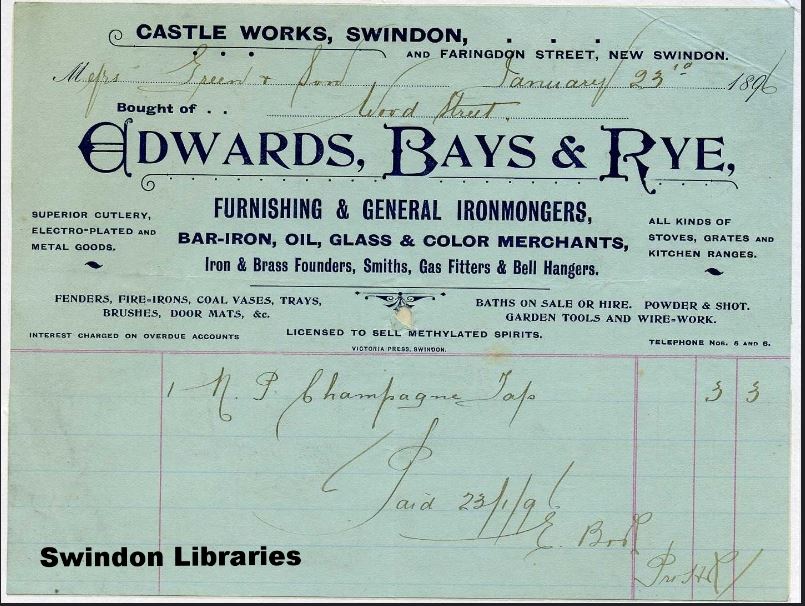
In 1892 Arthur was taken into the ironmongery partnership and the firm became Edwards, Bays and Rye, with the Castle Iron Works and shops in Wood Street and Faringdon Road.

In 1901 Arthur and Emily are living at 2 Devonshire Villas, The Sands with their four children, eldest daughter Annie who at 19 is working as a Telegraphist in the Post Office; Joseph 15; Margaret 7 and six year old Frank.

Emily died in the summer of that year but Arthur doesn’t hang around and in the summer of 1902 he married Adelaide Lucy Langfield and the Rye family part 2 begins.

In 1911 we find Arthur and Adelaide at 58 Upper Mall, Hammersmith with Adelaide’s brother Herbert, their mother, sister and two nieces. They are all listed as one large household – there’s no mention if they are just visiting. Arthur and Adelaide have just two of their five children with them, Olive 7 and Arthur E. 7 months (I think the baby’s name might be incorrectly transcribed as they already have a son called Arthur). But where are the rest of the Rye family.

Back home in Swindon 29 year old Annie is the head of a busy household at 100 Bath Road. She continues to work at the Post Office as a Sorting Clerk and Telegraphist. At home she is looking after her sister Margaret 17, who works as a milliner’s apprentice, her brother Frank 16 who is still at school along with her father’s three younger children by his second marriage Arthur 6, Herbert 5 and Kenneth 1. She has a live-in general servant called Clara Holland Mayling, but that’s still a pretty heaving workload.

Arthur Rye died here in Swindon in 1919 and Adelaide in 1922 but I can’t help wondering about Annie. Was she a career woman or did she miss the opportunity to marry and have her own family in order to help look after her father’s one?

Annie spent her last years at 89 Avenue Road. She died on October 24 and left effects valued at £3,347 7s 5d to the administration of her brother Joseph and her solicitor John Wignall Pooley.

The much travelled Criswick family

When Helen Criswick died in 1907 the first name placed on her headstone was that of her husband, although he was not buried with her.

Henry Charles Criswick died at Axim, West Africa on October 6, 1895. Henry, a civil engineer, had spent many years working in West Africa. Infact, he had only recently returned there just two months prior to his death.

Henry Charles Criswick was born in 1838 in Sherborne, Dorset, the son of James Criswick, a printer, and his wife Eleanor. By 1861 Henry and his brother George were lodging in a property in Greenwich where both brothers worked as assistants at the Royal Observatory. This is the last time Henry is captured on a UK census.

In 1868 Henry married Helen Elizabeth Ihler at Monrovia, West Coast of Africa and for most of their married life he worked in West Africa. The couple’s first child, Frances Helena, was baptised at St Alphege Church, Greenwich on March 21, 1871 but at the time of the census taken just a few days later she was living with her grandfather and aunt, without her parents. Perhaps they had returned to West Africa?

How Helen and her children came to be living at 41 Belle Vue Road, Swindon remains unknown. Was Henry working for the GWR at the time? He doesn’t appear with the family on the census returns. By 1891 Helen was living at 11 Claremont Crescent, Weston Super Mare. She must have seen her husband sometime during the intervening 10 years as by then she had two more children, Charles and Margaret. She declares that she was living on an allowance from absent husband – I’m assuming this means absent as in ‘working away’ and nothing more sinister.

On July 31, 1895 Henry sailed on the SS Nubia from Liverpool for Axim where two months later he died from tuberculosis.

So, how did Helen come to be buried here in Radnor Street Cemetery? Had her visit in 1881 endeared her to the town? In 1902 her daughter Helen married Frederick William Yoell, a watchmaker and jewellery dealer. By 1907 they were living in Swindon and premises at 25 Fleet Street, which is the address where Helen Elizabeth Criswick was living at the time of her death.

Helen Elizabeth Criswick was buried in grave plot B2692 on August 25, 1907 – without her husband.

Gloucester History Festival and the Smyth family

The problem with being steeped in the history of Swindon is that sometimes you miss the gems a short journey away. This week I have spent three glorious days at the Gloucester History Festival and heard talks by eminent historians such as David Olusoga, Michael Wood and the dynamic Janina Ramirez, Life President of the Festival.

The Gloucester History Festival events take place in the Blackfriars priory in Ladybellegate Street. Founded by Henry III in about 1239 some 40 Dominican friars lived in the priory during the Middle Ages. In addition to their ecclesiastical duties within the priory the friars were also involved with the community beyond its walls, preaching, hearing confessions and taking part in funeral processions.

The priory was closed during the Reformation and the Dissolution of the Monasteries when Henry VIII broke with the Catholic Church in Rome in order to divorce his first wife, Catherine of Aragon and marry his second, Anne Boleyn.

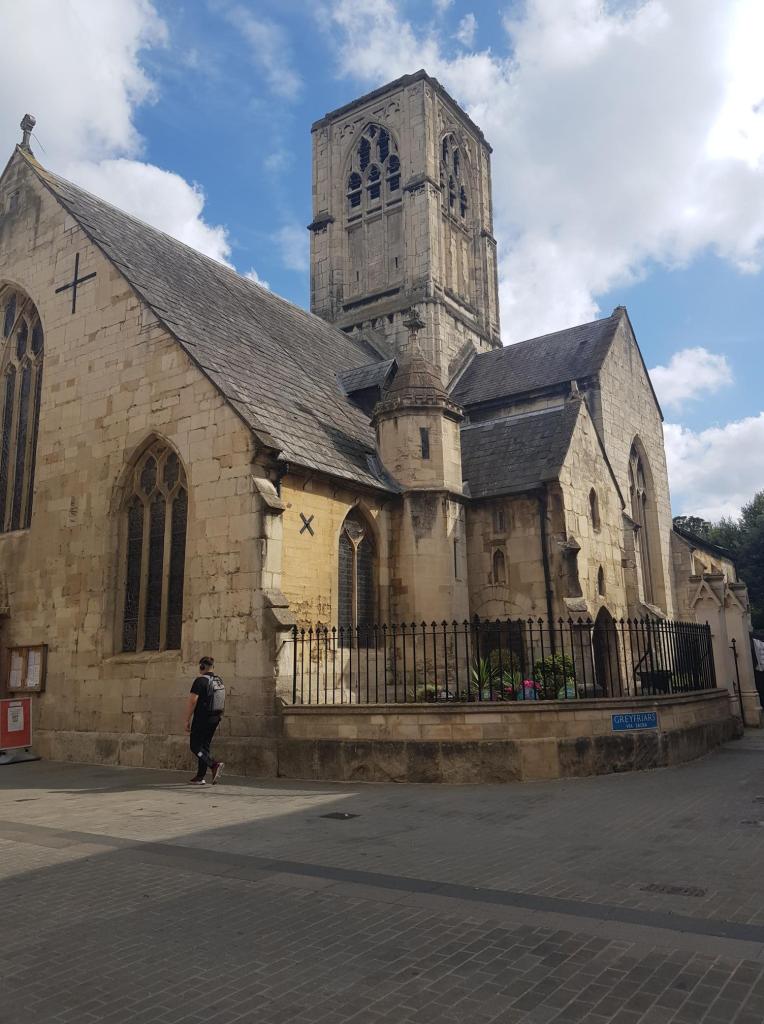
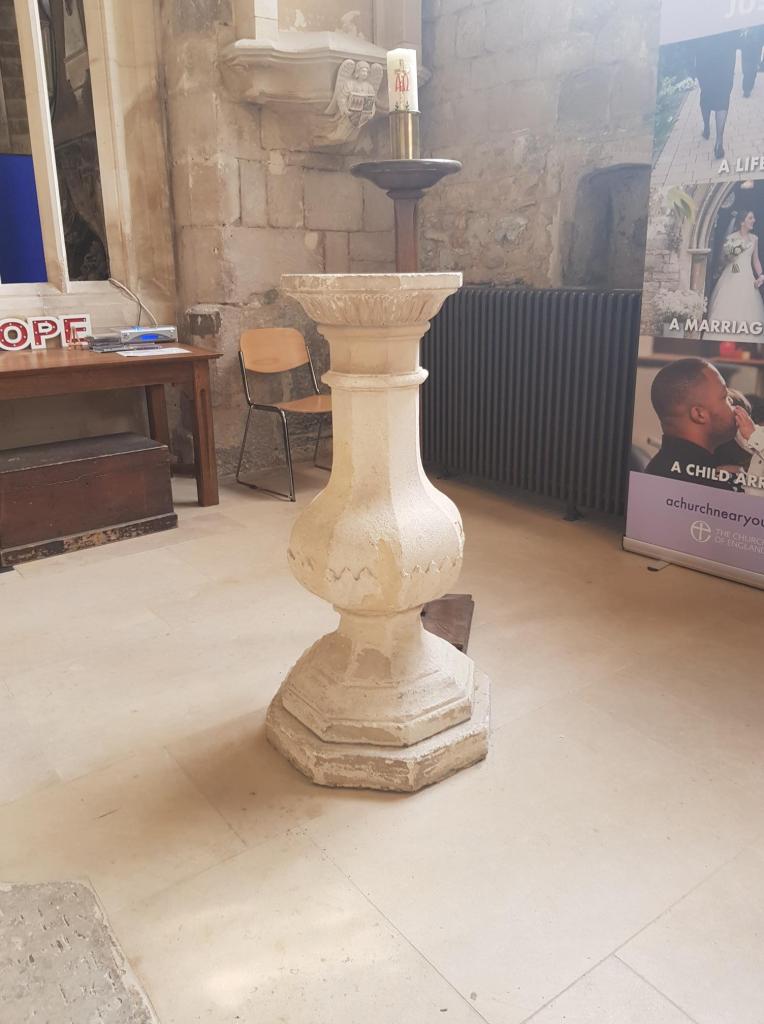
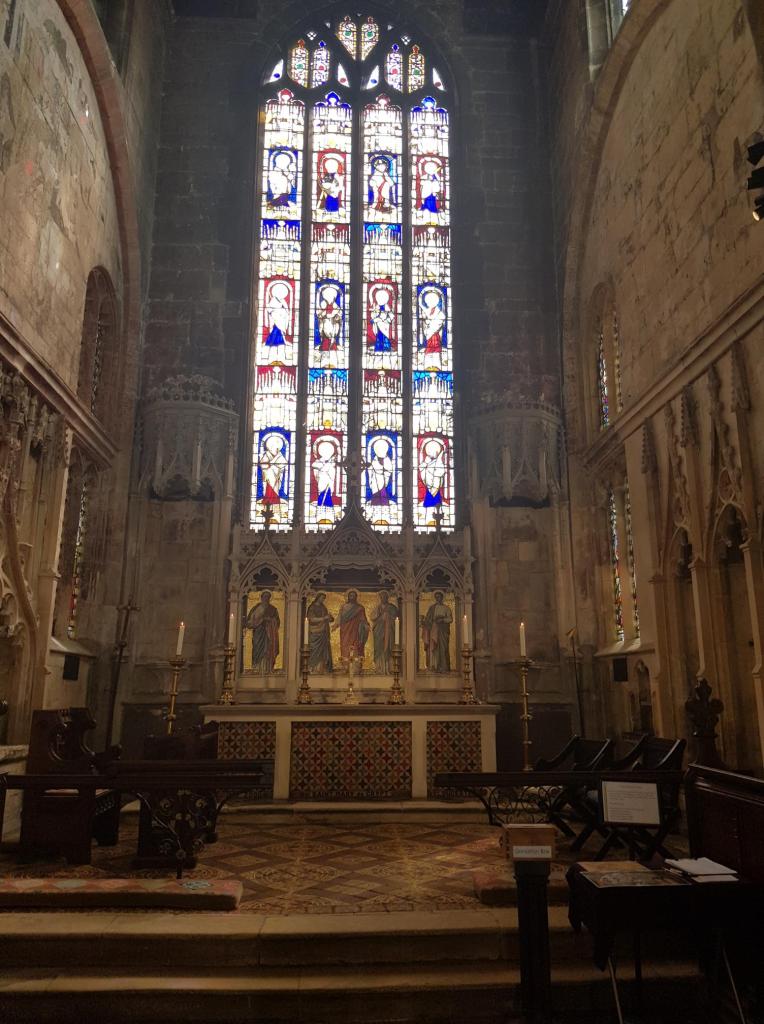
During breaks in the festival talks I took the opportunity to visit the church of St Mary de Crypt in Southgate Street. First recorded in c1140 the medieval church received extensive restoration throughout the 19th and early 20th century. Stepping out of the 21st century Southgate Street into the Grade I listed building, revealed a busy group of volunteers hard at work. However, there was plenty to see with 14th, 15th and 16th century features.

I don’t know if there was ever a cemetery around the church, but as usual those with influence (and money) were able to secure a burial inside the church.

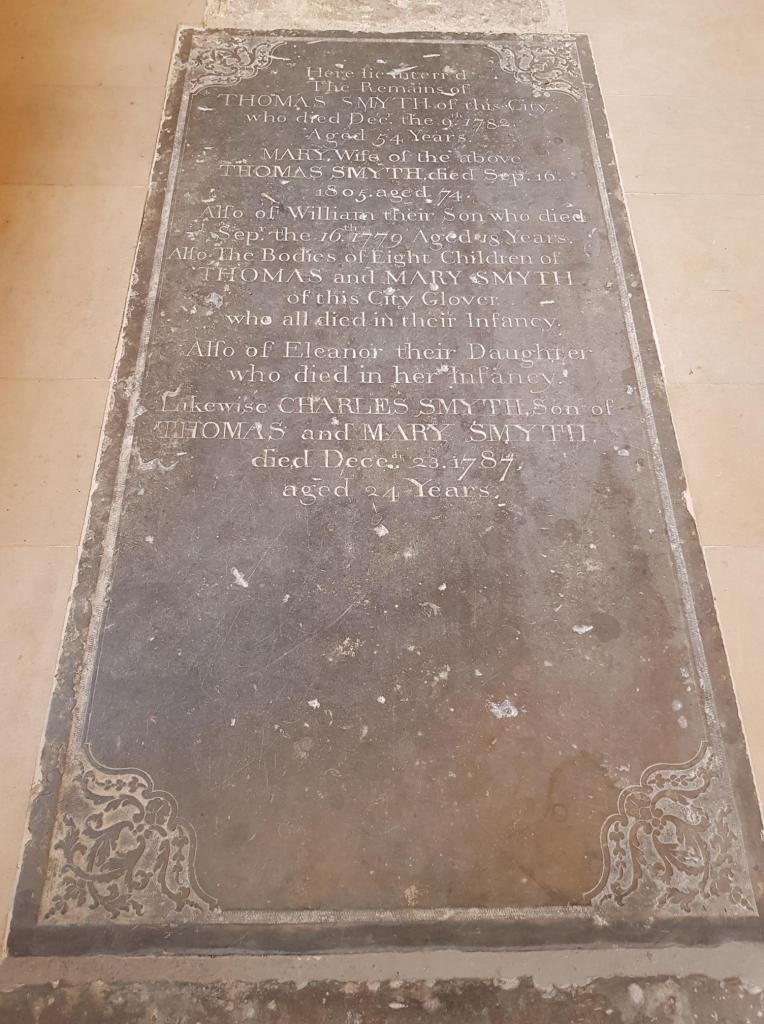
Remembered here is the Smyth family. Thomas who died on December 9, 1782 aged 54. Buried with him are his wife Mary, eight of their children, and a daughter named Eleanor, who all died in infancy, two sons, William who died in 1779 aged 18 and Charles who died in 1787 aged 24.

I would like to know more about Thomas and Mary Smyth and I’m sure someone has at sometime researched this family. I would especially like to know more about Mary, the wife and mother who lost so many children during her own lifetime and died in 1805 at the age of 74.

Margaret Ridley Preston – fragrant memories

Margaret Ridley Farr was born on February 28, 1902 in Swindon, the only child of Frank George Farr, a coach body maker in the GWR Works, and his wife Elizabeth.

Margaret was baptised at St Mark’s Church on March 31, 1902 when the family lived at 8 Westcott Place and by the time of the 1911 census the Farr family were living at 51 Exeter Street, one of the company-built houses in the Railway Village, with Elizabeth’s brother and his little daughter.

In 1916 the UK Railway Employment Records reveal that 14-year-old Margaret was working as a temporary clerk in the Loco Department, possibly employed due to staff shortages during the First World War. She left on August 2, 1919 again, possibly as military personnel began to return after the end of the war, but by March of the following year she was once more employed as a clerk in the Loco Department where she remained for five years.

In 1927 Margaret married William Alfred Preston, who worked as a coach body builder in the Carriage and Wagon Works. The couple do not appear to have had children and in 1939 they were living at 31 Westmorland Road, a leafy road just off the town centre with Queens Park at one end and Groundwell Road at the other.

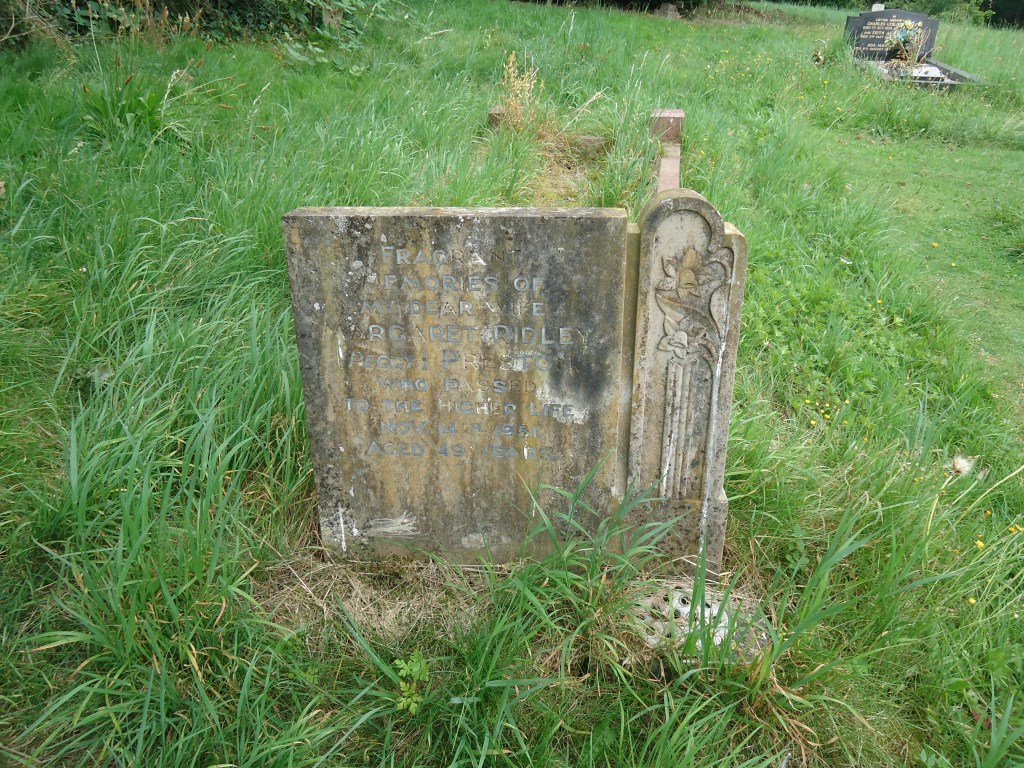
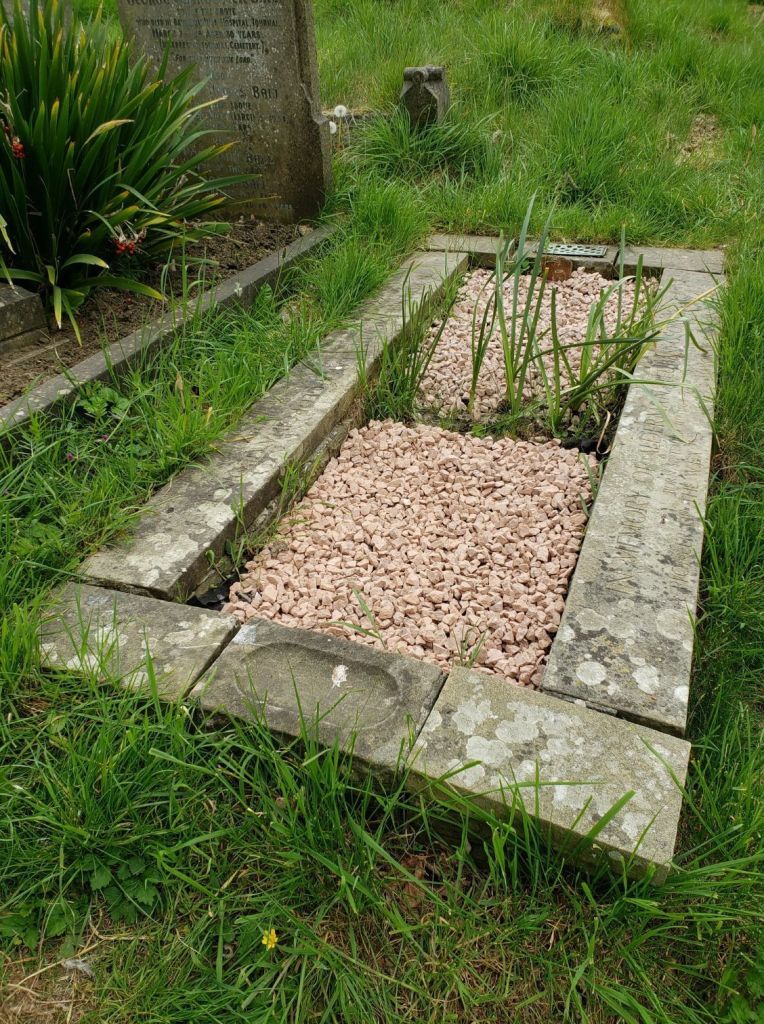
Then just when I thought I had it all nicely sorted out, Margaret’s grave presented a bit of a mystery. The cemetery burial registers reveal that Margaret died in the Victoria Hospital and that her funeral took place on November 17, when she was buried in plot C293. According to the registers this is a public plot and Margaret is buried with four other unrelated people. It is very unusual to have a headstone erected on a public grave and not something that routinely happens in Radnor Street Cemetery. And then I noticed that the neighbouring plot number C292, is that of the Preston family. The first burial in this plot took place in 1896 and was that of Ina Preston, the first wife of Alfred Ernest Preston (William Alfred’s father). His second wife (William Alfred’s mother) Maud Ellen Veal was buried in 1937 and Alfred Ernest himself in 1952. The last burial to take place was that of Irene Helen Preston (William Alfred’s sister) in 1962.

It would appear that William installed the stylish headstone with the sentimental inscription on his parents’ grave?

Fragrant Memories of my dear wife Margaret Ridley [Peggy] Preston who passed to the higher life Nov 14th 1951 Aged 49 years.

William died in 1969 and does not appear to be buried in the cemetery.

Clara George – Mayoress

Clara Acton was born in 1864. She married Rueben George in 1887 and the couple had three sons, Herbert, Granville and Stanley. By 1901 they were living at 132 Goddard Avenue.

Reuben George came from humble beginnings and spent a lifetime working for the good of the poor man. He became a local politician and founder of the Swindon branch of the Workers’ Education Association. Clara was described as being deeply interested in her husband’s work for the WEA and served on the Executive Committee for a number of years. Clara supported her husband as Mayoress during his mayoral year and reference is also made to the fact that she was connected to the Co-operative Society and also served on the Education Committee for some years.

But as we remember the great and many good works both Rueben George and Clara performed, there is no mention of the son they lost during the First World War. Their eldest son Herbert Gladstone George was a Battery Sergeant Major in the Royal Field Artillery, 6th Bde and serving in Lahore in 1917 when he took his own life. His military records state that he ‘Committed Suicide on May 7, 1917 whilst temporarily insane.’

Suicide, along with soldiers shot for military offences, was frequently seen to have brought disgrace upon their families. Today we are able to bring some humanity and compassion to the situation and on November 7, 2006 the British Government granted posthumous conditional pardons to all soldiers executed in WWI for military offences. It remains unknown whether Reuben and Clara were informed of the cause of their son’s death, and if so whether they would have been able to share that knowledge with anyone. The grief was probably too great.

Reuben George died in June 1936. Clara attended her husband’s funeral at Christ Church against the advice of her doctor. Just hours after the funeral on June 10 she was admitted to the Victoria Hospital where she lay seriously ill for several days. An emergency operation to amputate her arm was undertaken but Clara died hours later. She died on June 20, 1936, just 16 days after her husband.

Former Mayoress of Swindon

A large number of mourners attended the funeral, yesterday, at the parish church, Swindon, of Mrs Clara George, a former Mayoress of the borough, who died in Swindon Hospital exactly a fortnight after her husband, Alderman Reuben George, who died in the same hospital.

Mrs George was buried in the same grave as her husband. Both were 72 years of age, and had been closely identified with the Workers’ Educational Association and other social movements in the town.

The chief mourners were deceased’s two sons, Mr Granvill George, of Manchester, and Mr Stanley George, of Swindon; also a sister (Mrs Symonds) and three brother-in-law, all from Gloucester, of which city Alderman and Mrs George were natives.

Mr A.E. Douglas Smith represented Bristol University and the WEA (Bristol Centre), and Mr A.H. Shipman represented Sir James and Lady Currie.

Letters of condolence were received from the Archbishop of York and Mr Ramsay MacDonald, also from Miss May Morris of Kelmscott, daughter of the late William Morris.

Western Daily Press and Bristol Mirror, Thursday, June 25, 1936.

You may also like to read:

Reuben George and the Christmas card