Sometimes there is only so much information that can be found about the ordinary people buried in the cemetery and Catherine Jarman is one of them.
Catherine Jones and James Jarman married in 1842. The couple lived first in Panteg, Gwent before later moving to Swindon after the opening of the Rolling Mills in the 1860s.
By 1871 they were living at 21 Cambria Place next to the Greyhound pub. Living with them in 1871 was their son Josiah 21, a hooker in the Rolling Mills, and their daughters Catherine 16 and Annie, aged 9, the only one of their seven children to be born in Swindon.
James died in 1873 aged 57 and is buried in the churchyard at St. Marks. Catherine continued to live at 21 Cambria Place for the rest of her life.
Then, sometime before 1881 Catherine would appear to have married for a second time. In the census of that year she calls herself ‘Evans’ but there is no one by that name living with her and her daughter Annie at No. 21. Ten years later Catherine returns to the name Jarman on the census returns. However, in 1901 her son-in-law, Albert Smith, now recorded as the head of the household, names his mother-in-law as Catherine Evans. He states that she is married (not widowed) but her husband does not appear to be living with them at No. 21.
Her death was registered as Catherine Evans and the same name appears on the details of her will while the entry in the burial registers reads Catherine Jarman Evans.
Mr Evans remains a mystery.
Catherine was buried in grave plot D1564 on November 16, 1903. The first name mentioned on this elaborate headstone is that of her husband James Jarman, buried in St. Mark’s churchyard. She is buried with her daughter Annie and son-in-law Albert Smith.
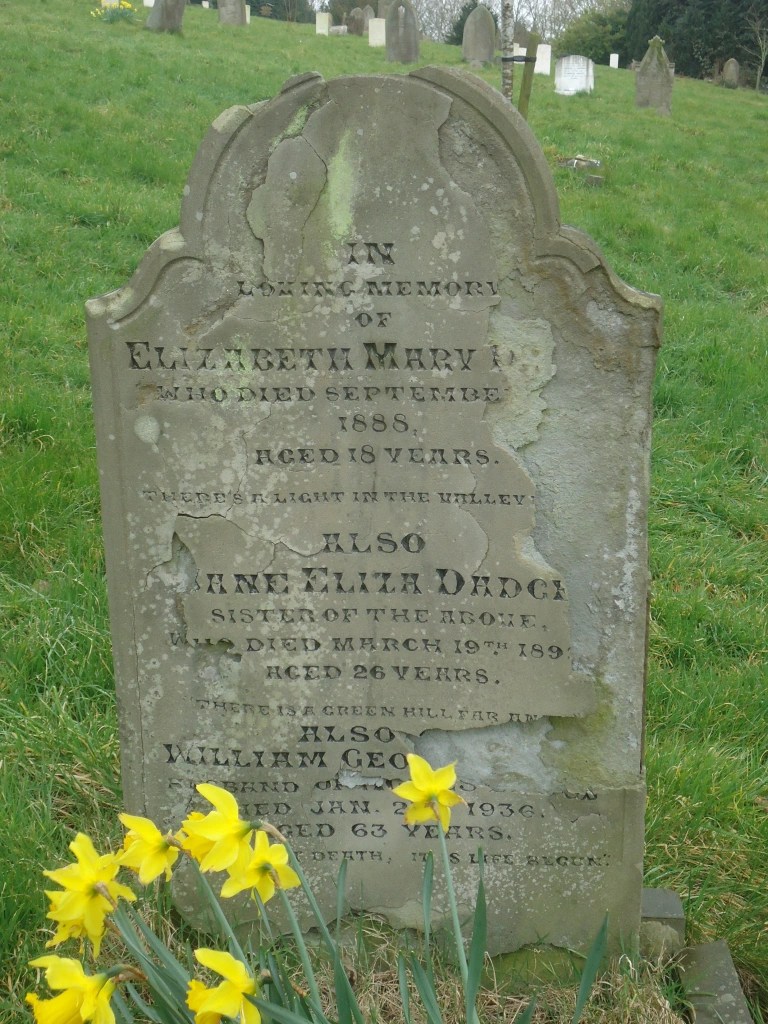
As you will see the front of the headstone with all the family details on it is gradually coming away. This is caused by frost getting into the stone and you will see many headstones like this in the cemetery. Sometimes the whole front comes away in one sheet.
Fortunately there were enough details left on this one to allow me to piece together the family history.
Elizabeth Mary Dadge was born in 1871 the daughter of William Dadge, a smith’s striker, and his wife Martha.
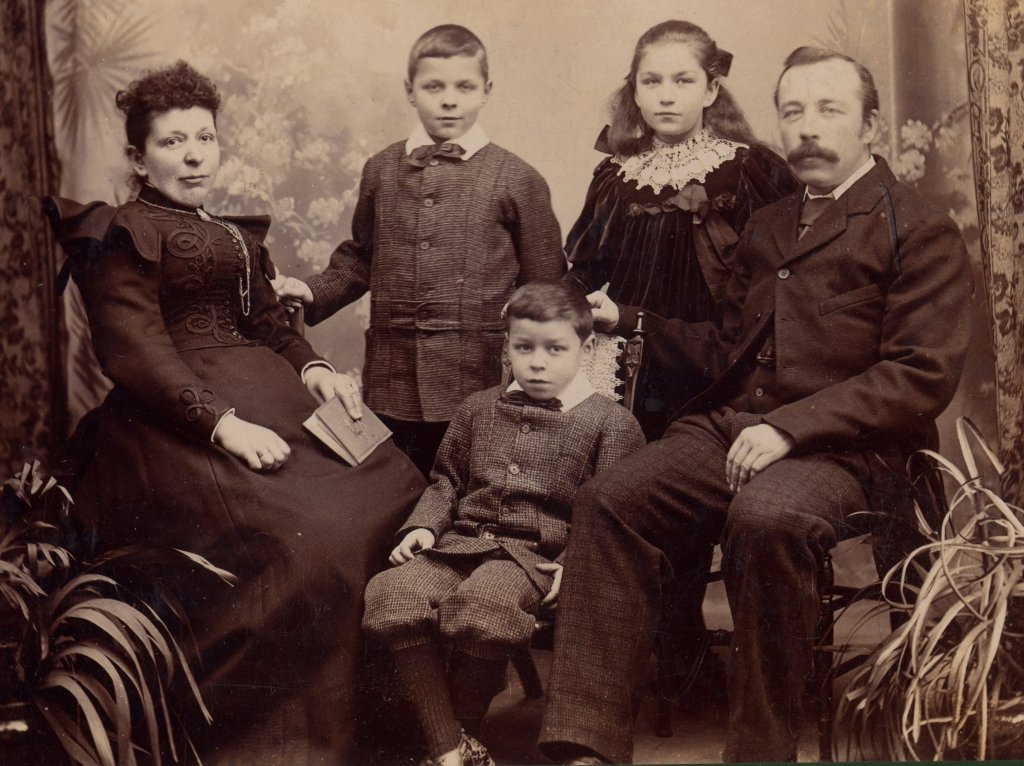
From 1881 to at least 1901 the family lived at No 3 Brunel Street, a town centre street that has long since vanished. For most of that time William had his brothers Albert and George lodging with the family. As young men they worked as iron dressers in the Works, then labourers until in 1901 Albert, then aged 41, was working as a storekeepers assistant. William meanwhile worked as a striker into his 60s.
Sadly, little is known about Elizabeth who died very young. As an unmarried young woman we can safely assume she didn’t die in childbirth, but without ordering her death certificate her cause of death is unknown. Next on the headstone is her sister Jane who died four years later at the age of 26, again unmarried.
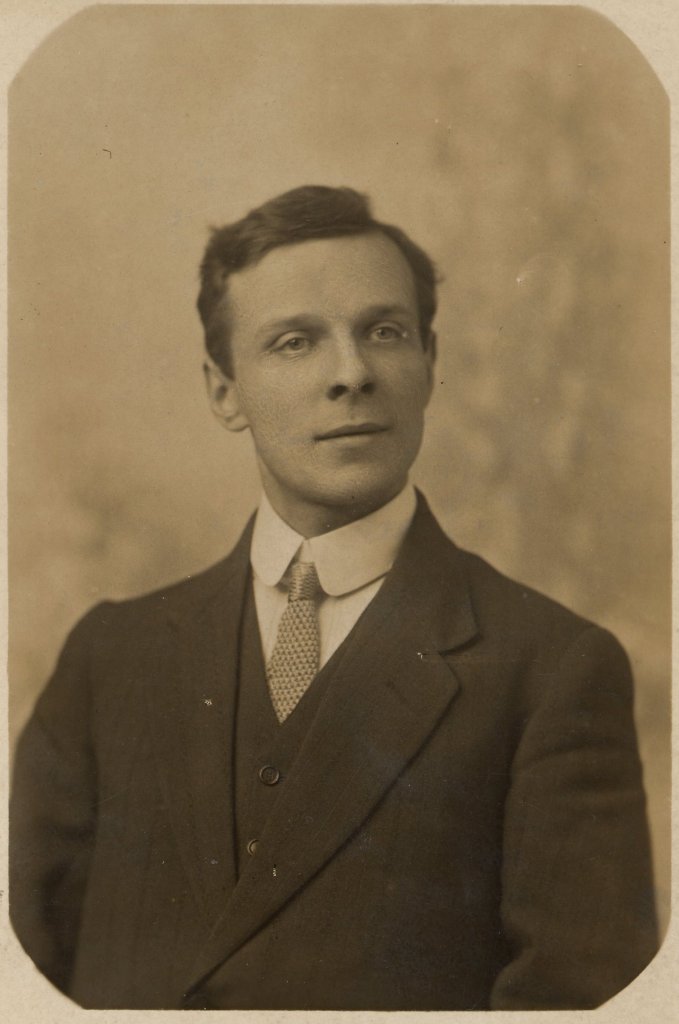
The last name on the headstone is William George Dadge the girls’ brother. At 15 years old he followed his father into the railway works to begin a 6½ year boilermaker’s apprenticeship. However the UK Railway Employment Records show that he absconded in January 1888.
I can’t find him on the 1891 census records. This may be due to a transcription error. Perhaps he called himself George. That and a spelling mistake would make it very difficult to find him.
Anyway, by 1901 he is back home with his parents living at No 3 Brunel Street where he is working as a joiner. In 1905 he married Agnes Brown and by the time of the 1911 census they were living with their baby daughter Winifred on the Hursley Park estate, Winchester where William was employed as estate carpenter.
In the last years of his life William was back in Swindon living at 74 William Street. He died on January 21, 1936.
I don’t think this stone will weather many more winters, but with the use of the cemetery records and online genealogy sites, the family will not be lost.
For so many women wartime losses came at an age when they would have expected, or at least hoped, that their life was entering a more peaceful phase; when the worry of raising a family was past.
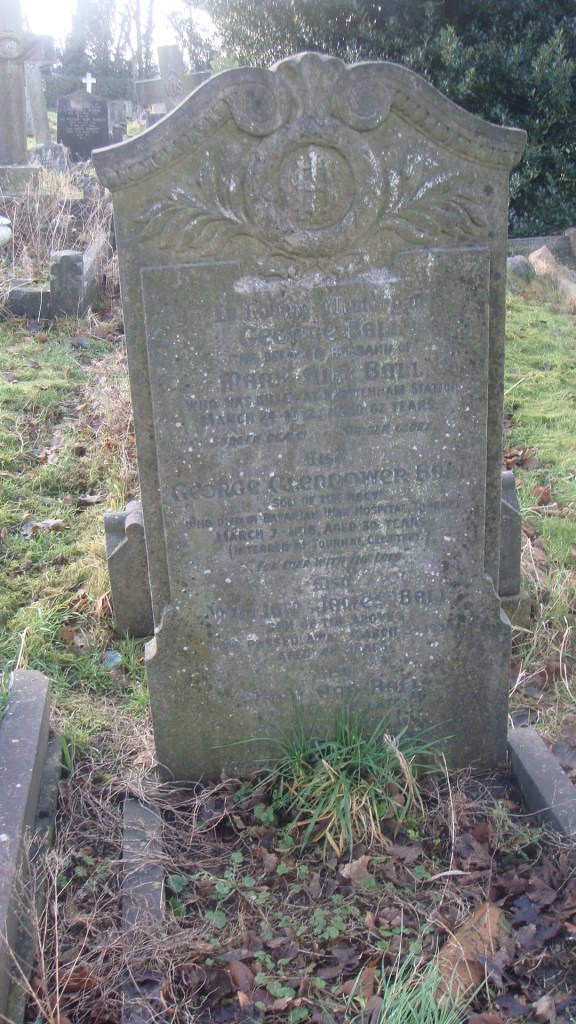
Mary Ann faced some tough challenges during her lifetime. She was 61 years old when her second son, George Glendower Ball, died in 1918 during the First World War. George Glendower Ball was rejected for military service twice before successfully enlisting with the Norfolk Regiment. 33800 Private George Glendower Ball died in the Bavarian War Hospital, Tournai on March 7, 1918, his 30th birthday. He is buried in the Tournai Communal Cemetery.
Born in Bristol in 1857 Mary Ann married George Ball in 1885 and by 1891 the couple were running the Temperance Hotel on Station Road. The census returns of that year record their four young children William 5, Millicent 4, Glendower 3 and Samuel just three months old. What the stark facts and figures of subsequent census returns are unable to convey are the tragic circumstances surrounding their eldest son. William had contracted measles at the age of two, which left him disabled; he never appeared in any family photographs.
This photograph of Mary Ann and her family is published courtesy of Duncan and Mandy Ball.
In 1922, when Mary Ann was 65, her husband George was killed in a railway accident when he was struck down while crossing the line at Shrivenham station. Then two years later her disabled son William died aged 48. Mary Ann died just a few months later.
Mary Ann is one of the extraordinary ordinary people buried in Radnor Street Cemetery.
The parents and their son are buried together in grave plot D1305. Their son George Glendower Ball is mentioned on their headstone.
One of the first guided cemetery walks I went on was at Arnos Vale in Bristol where the guide introduced us to a ‘husband sandwich’; a man buried with his two wives. As an inexperienced ‘apprentice’ I was slightly shocked (especially by the term), but since then I have come across numerous ‘sandwiches.’ People are ever pragmatic and burials were expensive, making for some unlikely grave companions. Death is a great conciliator.
Emily was born in 1869 in the parish of Lydiard Tregoze, the daughter of George and Martha Lovelock. George was an agricultural labourer and the family lived at Flaxlands Cottages. George most probably worked at Flaxlands Farm, then owned by Viscount Bolingbroke of Lydiard House.
Emily’s childhood was a rural one; Lydiard Tregoze was then out in the sticks, four miles from the industrial town centre of New Swindon. She married Albert James Fry on June 8, 1889 at the ancient parish church of St. Mary’s situated in the parkland next to Lydiard House.
But by 1891 Emily was living in busy Swindon at 22 Carfax Street with her husband James and baby daughter Florence. In 1901 James and Emily were living at 25 Turner Street. James worked as a rivetter in the GWR Works and the couple had five children ranging in age between 9 months and 11 years.
In 1911 the family were still at 25 Turner Street. On the 1911 census returns women were required to include details of their marriage and we can see that James and Emily had been married for 21 years and they had 7 children of whom two had sadly died. We also know more about the accommodation in which they lived – 5 rooms, not counting the scullery, landing, lobby, closet or bathroom.
As we can see from this headstone, Albert James Fry died in 1915, by which time the couple had been married 26 years.
Two years later Emily married her recently widowed near neighbour James William Covey and moved down the road to live with him at number 21 Turner Street. Emily had a long second marriage as well. When James Covey died in 1942 they had been married for 25 years.
Emily’s two husbands were buried together and when she died in 1951 aged 81 years she joined them in grave plot B3321, to spend eternity together, amicably.
This photograph was published in Swindon in Old Photographs collected by The Swindon Society in 1988. The pet tombstones were discovered in the grounds of the Goddard family home The Lawn, but it is unlikely they will be there now.
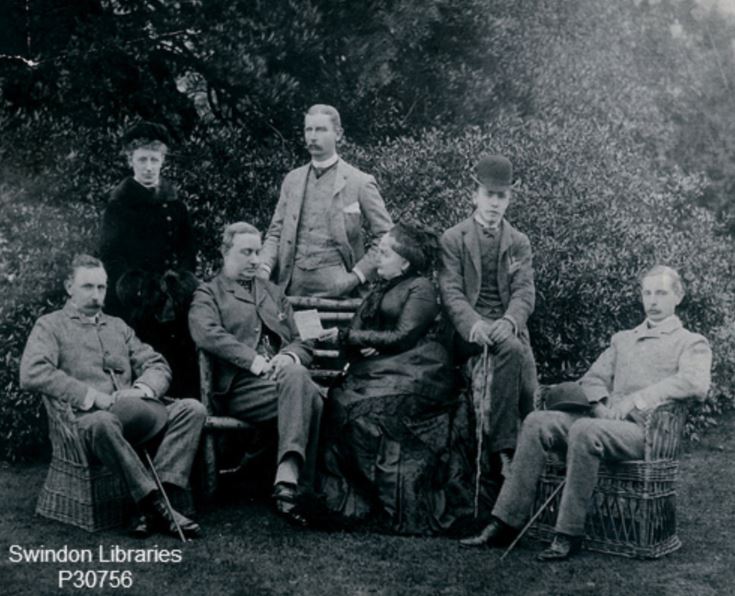
Jessie Henrietta Goddard was born in 1850 at the London home of Ambrose Lethbridge Goddard and his wife Charlotte. She was baptised in Swindon on June 7, 1850 in the old parish church of Holy Rood during a service to bless the building of the new one, Christ Church.
Charlotte Goddard died in 1904 and following a lifetime devoted to her mother, Jessie moved into Tollington House, Faringdon where she would spend her last years surrounded by her pets.
But, the instructions in her will may seem at odds with her reputation as an animal lover.
‘My dogs Jill and Gem, to be put to sleep when I die, and buried with me if possible.’ She added:- ‘I should like Mr Crundell to come and put to sleep my pony Kitty, and my dogs Jill and Gem and Jasper, if he is still here.’
Perhaps Jessie feared for the future of her much loved pets after her death. Who would take care of them? Would they pine for their mistress – perhaps they too were elderly.
Jessie was buried on September 23, 1920. Whether her beloved dogs were buried with her is not known.
Jessie is pictured here with her parents and her four brothers published courtesy of Local Studies, Swindon Central Library.
Sudden Death of Miss Goddard
We deeply regret to announce the death of Miss Jessie Henrietta Goddard, which took place with most painful suddenness at her residence, Tollington House, Faringdon, early on Sunday morning. It was the custom of Miss Goddard, who was a great lover of animals, to rise early in the morning and tend to the needs of her pets, often before the rest of the household was astir. On Sunday morning it was noticed that she had not performed her customary duties and about 8 o’clock, the maids having heard no movement upstairs, entered her room and were horrified to find their mistress lying dead on the floor in front of the bedroom window, which she had evidently been in the act of opening when seized with heart failure, which must have proved instantly fatal. Medical aid was sent for but Dr. Dornford, who was quickly in attendance, pronounced life to have been extinct for about two hours.
Miss Goddard, who was the daughter of Mr Ambrose Lethbridge Goddard, J.P., of “The Lawn,” Swindon, had resided at Tollington House for the past fifteen years and was held in high esteem by a large circle of friends. She was a great lover of nature and besides her animal pets, took a keen and personal interest in her garden, where it gave her much pleasure to welcome her friends and neighbours. A few years ago she took an active and practical interest in the advancement of the effort to encourage home industries, a movement, which it is to be feared, has not materialised, as she, for one would have wished.
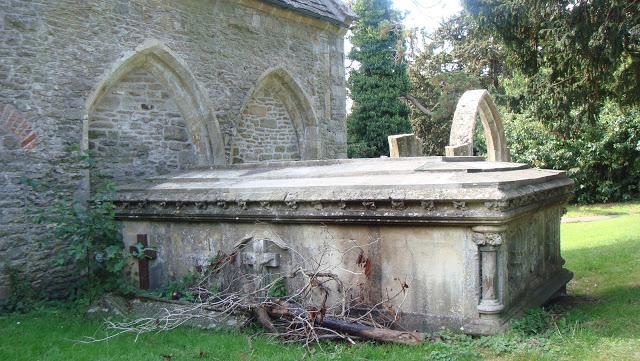
The funeral took place at Swindon on Thursday afternoon, when the remains were laid to rest in the family vault in the Old Churchyard, which immediately adjoins the family residence, in the company of numerous relatives and friends.
Extracts from The Faringdon Advertiser, Saturday, September 25, 1920.
There are no members of this branch of the Goddard family buried in Radnor Street Cemetery. They have their own mausoleum at the ancient Holy Rood Church.
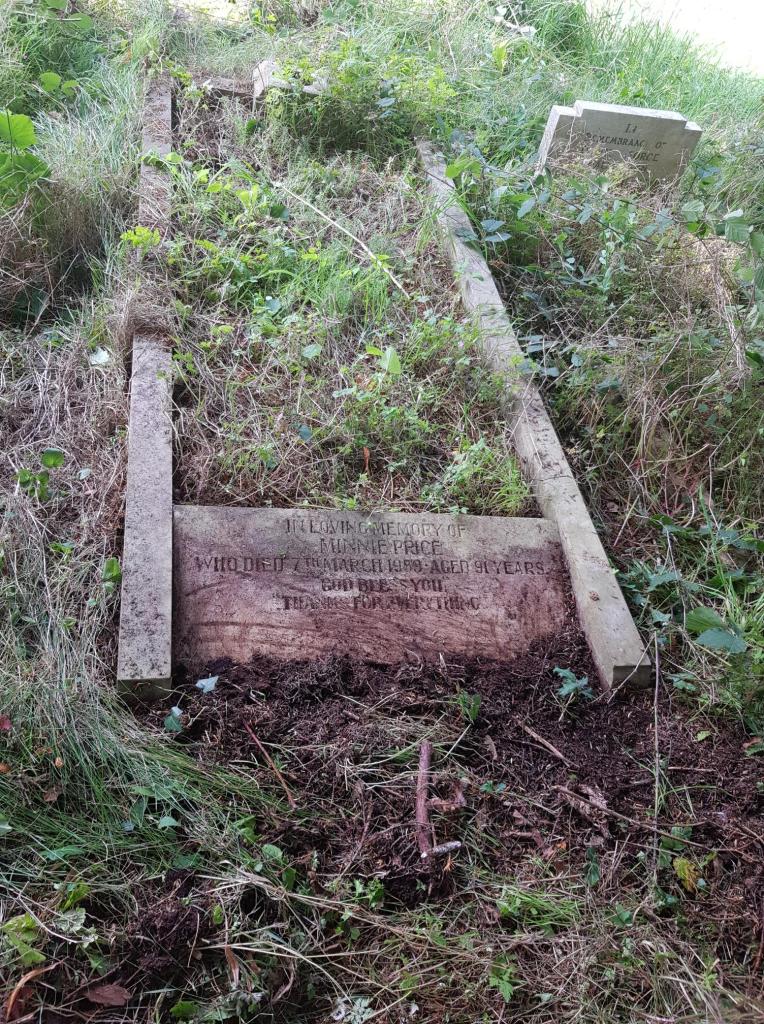
Minnie Price could so easily have slipped out of the pages of history. As a single woman she left no children to tell her story, but she did leave someone who remembered her with affection and made sure the world knew of their gratitude.
In loving memory of
Minnie Price
who died 7th March 1959 aged 91
God Bless You
Thanks for everything
Minnie was born on July 19, 1867 the daughter of John Price, a pudler in the GWR Rail Mills, and his wife Mary. By 1881 13 year old Minnie was out at work, employed by James Chisholm Wilson, a grocer with premises at 72 Regent Street. James’s wife Jane had recently given birth and young Minnie was employed as a nurse to care for both mother and child.
Minnie continued to live a life in service and in 1911 she was working as a housekeeper and recorded as a visitor at Richard Smith’s home in Didcot. Visiting with her was 10 year old Clifford Eugene Price. Clifford was born on November 19, 1900. He can be found on the 1901 census living in Barry – the 5 month old son of Arthur Price and his wife Jane. Arthur Price was Minnie’s elder brother.
The 1911 census finds Arthur back in Swindon and living with his father at 68 Curtis Street. Widower John Price is 82 years of age, a retired labourer who has several boarders living with him. Arthur is 49 years of age, also a widower and in 1911 has no job. He died in 1926 but cannot be found in the Radnor Street Cemetery burial registers.
In 1915 Clifford Eugene Price is also living in Swindon when he began work as a Machine Boy in the GWR Works Loco factory. By 1917 he was working as an engine cleaner and in 1918 he was a fireman, well on his way to becoming a loco driver. From July to September 1938 he was employed as ‘acting driver.’ At the time of the 1939 census he was living at 68 Curtis Street with Minnie and he states that he was working as a Loco Engine Driver. But by 1946 his mental health had taken a downward turn. His employment records reveal that at his regular annual medical examinations he suffered from ‘neurosis’, ‘nervousness’ and ‘nervous exhaustion’.
Clifford lived with Minnie for most of his life and I feel sure that he was the person who chose those words on her gravestone.
God Bless You
Thanks for everything
Minnie died at her home 48 Euclid Street and was buried in Radnor Street Cemetery on March 11, 1959. She shares this plot with her mother Mary, who died in 1900 and her father John, who died in 1920.
Clifford died at 48 Euclid Street on July 21, 1972. He is not buried in Radnor Street Cemetery.
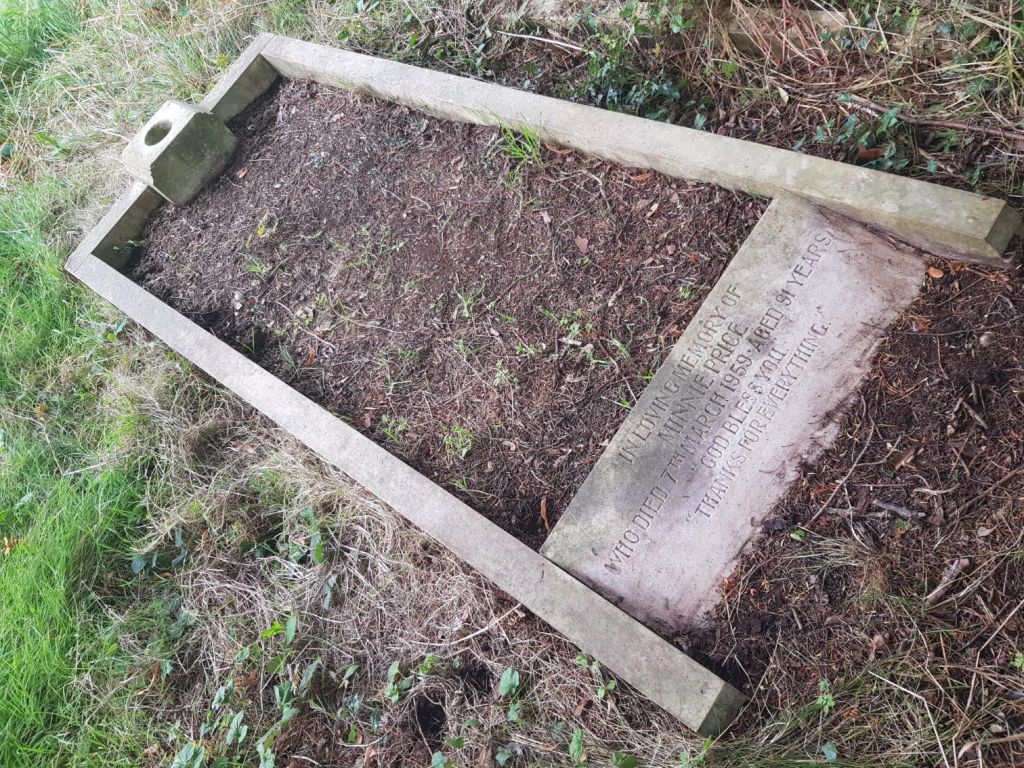
This gravestone, recently cleared by one of our cemetery volunteers, has saved the story of both Minnie Price and her nephew Clifford.
Our cemetery volunteer has returned and completed the clear up of Minnie Price’s grave.
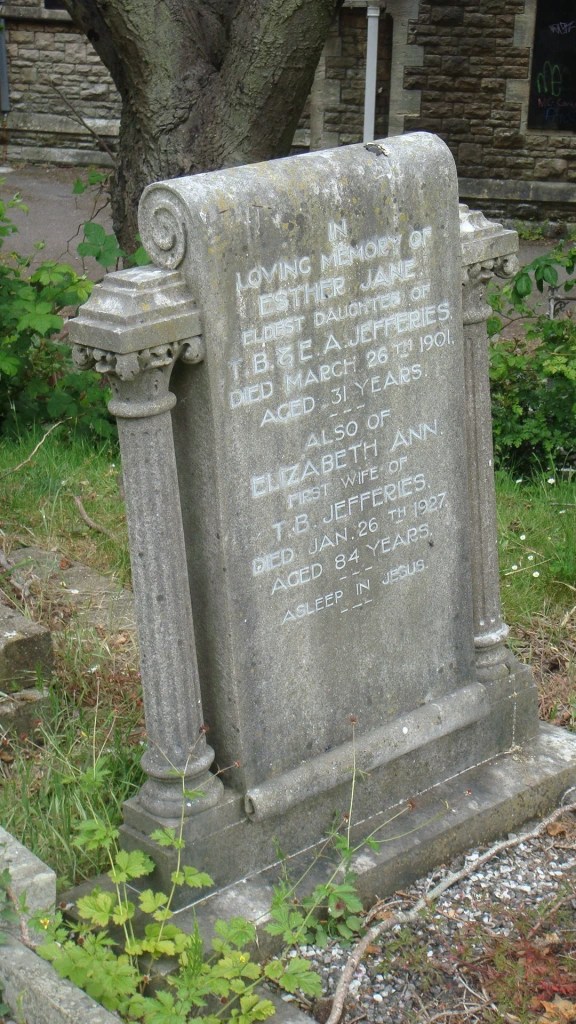
I chose to research this grave because I liked the typeface and all the funeral symbolism on the headstone.
A scroll can mean a number of things in headstone iconography including a love of learning and a religious belief, which is very appropriate for this family. It can also mean a life cut short with the past rolled up and the future yet to unfurl. This would make sense when you note that Esther J. Jefferies, the first person buried in this grave, was only 31 when she died. The pillars either side suggest an entrance and this symbolises an entry into heaven. At the top of the pillars are acanthus leaves, which have several interpretations symbolising the prickly journey of life to death and also enduring life. So, there’s a lot going on with this headstone.
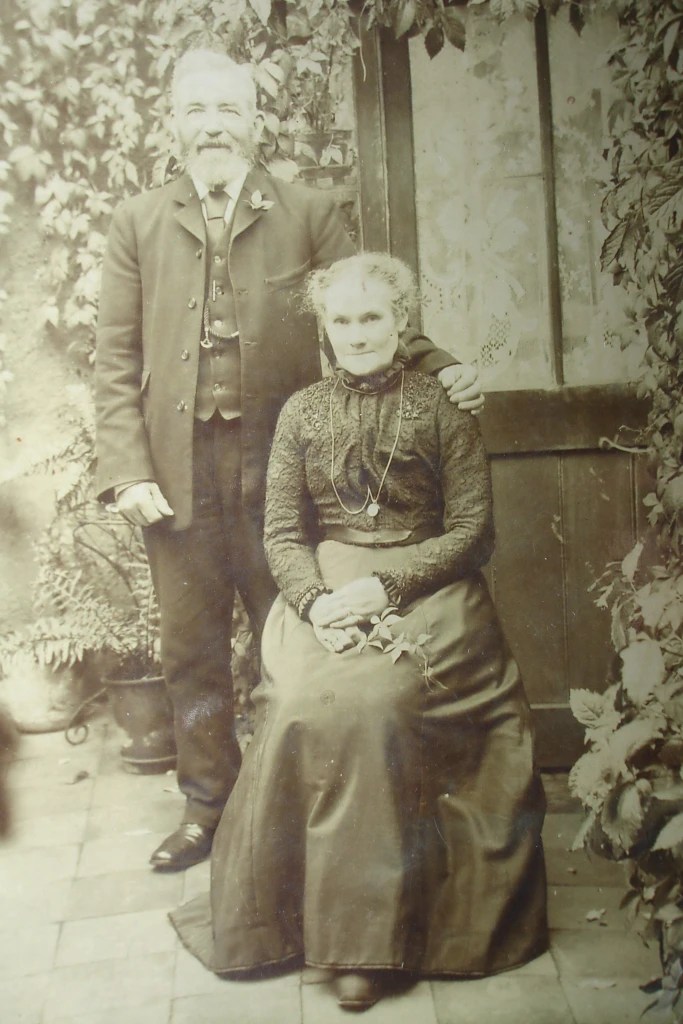
Elizabeth Ann was born in Cricklade in 1843. She worked in service as a young woman before marrying Thomas Bennett Jefferies, a slater and plasterer. Their first home was in Wootton Bassett where Thomas was born. By 1891 they had moved to 18 Union Street, Swindon where the elder sons were now apprentice plasterers.
The 1911 census finds them at 165 Victoria Road and on this census we get some more details about the family. Thomas and Elizabeth had been married 42 years during which time they had 10 children, four of whom had already sadly died. And then I found a fantastic photo of the couple’s five sons, thought to have been taken at the wedding of their sister Ellen to Harry Frederick Keene in 1906. They are pictured in order of seniority left to right – Joseph, Thomas, John, Winfrith Frederick (usually referred to as Fred) and Charles Wesley.
Eldest son Joseph Page Jefferies emigrated to Australia with his family in around 1913. Following his wife’s death, he married for a second time in 1936 in Sydney, where he died in 1939. The couple’s third son, John Nelson became the assistant borough surveyor here in Swindon and in 1903 lived at 2 Hunt Street.
Death of Mrs T.B. Jefferies
With the death of Mrs Elizabeth Ann Jefferies, of 1 Durham Street, there has passed away one of the best known figures in Wesleyan Methodism in the town. Mrs Jefferies, who was 84 years of age, was a native of Cricklade, being the daughter of Mr and Mrs Joseph Page. She married Mr Thomas Bennett Jefferies at Purton Parish Church on September 26th, 1868, and the couple came to live in Swindon 46 years ago. Mr Jefferies is the oldest local preacher on the local Wesleyan plan, and although he has been preaching for over 60 years he continues to take appointments.
Mrs Jefferies was taken ill with influenza, and pneumonia supervened with fatal results. The funeral took place at the Central Mission Church on Monday, and was conducted by Pastor A.E. Stocking, assisted by the Rev. W. Kelson and the Rev. H.B. Turner. The committal rites at the Cemetery were performed by Pastor Stocking. Among the mourners were Mr T.B. Jefferies (widower), Messrs. Thomas Henry, John Nelson and Charles Wesley Jefferies (sons), Mrs Ellen Elizabeth Keene (daughter) Mrs Eliza Priscilla Jefferies (daughter-in-law), Mr Joseph Jefferies (son-in-law), Mrs Cottrill (half-sister), Mr Jesse Jefferies and Mr E. Jones (representing the local preachers of the Circuit).
North Wilts Herald, Friday, February 4, 1927.
Thomas Bennett and Elizabeth Ann Jefferies
Esther Jane Jefferies (Thomas and Elizabeth’s eldest daughter) was the first person to be buried in grave plot D109. She died in 1901 aged 31 years old. Elizabeth Ann Jefferies (Thomas’s first wife) was buried with her daughter on January 31, 1927. Next came Ellen Jefferies (Thomas’s second wife) who died in 1931 and finally Thomas Bennett Jefferies who was buried on April 18, 1932.
And just when I thought I’d seen all the Alley family photos, along came two more.
George Richman Alley was born in Trowbridge in 1841, the son of Job Alley, a dyer. He moved to Southampton in around 1860 where he worked as a Coach Body Maker and in 1865 he married Emma Jane Ross, the daughter of a mariner. By 1881 they had moved to Swindon where George worked as a wheelwright body maker in the GWR Works. The couple lived first at 3 Carfax Street and then at 8 Merton Street where George died in 1925. Emma survived him by seven years.
George and Emma had one son, George pictured in the back row of this photograph, and seven daughters. Four of the daughters lived into their 90s and one reached her 100th birthday. Only one of the daughters left the Swindon area, of the other six, four went into business in the town.
Eldest daughter Emma trained in London as a ladies tailor before her marriage to Walter Lloyd Hull, a Bournemouth shopkeeper.
Following her husband’s death in 1947 Emma returned to live in Swindon. Then in her 80s she became a member of the Swindon Business and Professional Women’s Club and was active in many other organisations in the town, including the Richard Jefferies Society and the WEA.
In 1954 Emma gave a talk to the Women’s Club about her involvement with the suffrage campaign. when she had been an active member of the Women’s Freedom League and was arrested on several occasions and imprisoned. At these talks she was said to have worn a badge carrying an engraving of Holloway prison pinned to her dress. Other suffragette souvenirs she had were a cocoa mug and a salt pot smuggled out of Holloway and a Votes for Women banner.
Second daughter Maud, a dressmaker and upholsterer, married Henry John Lewis, a bootmaker and moved to Chippenham. Third daughter Mabel held the role of Postmistress at Westcott Place for more than 50 years and on the New Year’s Honours List of 1960 she was awarded the British Empire Medal in recognition of her service to the community.
Fourth daughter Amelia Ann, the only daughter to never marry had a milliners business at No. 90 Victoria Road which she ran with her sister Ethel (sixth daughter) until she married Wilfrid Hewer and together they ran the Oddfellows Arms in Cricklade Street. Fifth daughter Flora became a teacher. She married William Harold Hall and lived at 42 County Road.
Youngest daughter Eva pictured standing between her parents, married George Babington on March 1, 1911 at the Baptist Tabernacle. Eva and George ran a draper’s shop at 92 Victoria Road, next door to her sister Amelia’s millinery shop.
The following photograph was published following the death of George in 1925.
In reference to the death of Mr George Alley, of Swindon, the above photograph of members of the family is of interest from the fact that all were over 80 years of age. Left to right: Mr George Alley (85), Anna Alley (86), Louisa Alley (82), Martha Blatcher (84), and Fred Alley (80). Of the present living members the Misses Anna and Louisa Alley live at The Halve, Trowbridge, and Mr Fred Alley at 8 Merton Street, Swindon.
North Wilts Herald, Friday, December 4, 1925.
And so perhaps the reporter from the North Wilts Herald got a fact or two incorrect. With an exuberant and irrepressible family such as the Alley’s it’s easy to get confused.
The Late Mr G. Alley
A Well-Known Resident of Swindon
By the death of Mr George Richman Alley, of Merton Street, Swindon has lost one of its best-known residents. Deceased, who was 84, came to Swindon from Salisbury 51 years ago, when he entered the service of the Great Western in the Carriage Department. For nearly 25 years he was in charge of the road wagon department and he relinquished his position as foreman 18 years ago, when he entered upon a well-earned period of retirement. Had Mr Alley lived until Christmas he and his wife would have celebrated their diamond wedding, and a pathetic feature of his demise is that one of his daughters was at home at the time making preparations for the celebrations. Deceased leaves seven daughters, five of whom reside in Swindon, one in Bournemouth and one in Chippenham. His only son is a retired naval engineer, and lives in Suffolk. Deceased’s only brother, Mr Fred Alley, who is 80 years old, is the secretary of the GWR Retired Workmen’s Association. He celebrated his diamond wedding 12 months ago.
The funeral took place on Tuesday, a short service being previously held at the house. The coffin was followed to the graveside by deceased’s only son, his six sons-in-law, representatives of the Foreman’s Association and the Baptist Tabernacle.
North Wilts Herald, Friday, December 4, 1925.
George Richman Alley died aged 84 years at his home 8 Merton Street. His funeral took place in Radnor Street Cemetery on December 1, 1925. He was buried in grave plot D31A. Emma Jane Alley died aged 87 at 12 Park Lane and was buried with her husband on October 29, 1932.
My thanks, as always, to the lovely Alley ladies Di, Kay, Wendy and Christine for sharing their information and their photographs.
As you look across the cemetery, you will see large areas without headstones or grave markers. But we know there are no empty burial spaces here as the cemetery was full when it closed in the 1970s.
These empty spaces are graves where families were unable to afford a headstone or memorial of any kind. There are also a large number of public graves where families were unable to afford even a burial plot. These plots often contain numerous burials, usually of unrelated persons. And then there are also the infant burial plots where the babies are buried and there are a large number of those in the cemetery.
I came across plot C63 while was researching the death of Emily Hobbs. Emily had died at the Stratton Infirmary aged 75 years old. Her home address was given as 34 Linslade Street and she was buried here on September 24, 1938.
When I looked at the plot details I soon discovered that this was a public plot, so I knew there would not be a headstone. But what surprised me was that there were four other people by the name of Hobbs already buried here when Emily died in 1938.
Research revealed that this plot was originally designated as a babies plot. The first burial to take place was that of Edgar Henry Smith a 10 week old baby who died in June 1896. A week later another baby was buried here 17 month old Grace Emily Hobbs from 31 Linslade Street. In February 1897 Laura Louise Hobbs aged 5 years old from 31 Linslade Street was buried here. In November of that year Myra Agnes Smith, little Edgar’s sister, was buried here aged 3 months old. And on February 13, 1909 the last burial of a baby was that of three day old Violet Mary Bishop. However, nine years before that, William John Hobbs aged 15 months of Groves Street was also buried here.
Could it be a coincidence that so many babies by the name of Hobbs were buried in this plot?
Emily Leviss married Charles Hobbs at St Leonard’s Church, Blunsdon on December 22, 1883. The young couple were both aged 20 and had to obtain the consent of their parents to marry. On the marriage certificate Charles’s father is named as William Hobbs a labourer but Emily has given no father’s name or details, suggesting that she was probably born illegitimately.
The couple moved to Rodbourne where they lived at various address in Groves Street, Linslade Street and Redcliffe Street.
In 1891 Emily and Charles are living at 31 Linslade Street. Charles works as a Blacksmith Striker in the Works. The couple have two children – five year old Frederick Thomas and Henry James aged 3. Living with them is Emily’s grandmother Hannah Matthews aged 75 who works as a Laundress. Charlotte M. Willis is visiting the family on census night.
By 1901 the family are living at 31 Linslade Street and by then they have another son Reginald Charles who is 7 years old.
But it isn’t until we get to the 1911 census that the full tragedy of the family comes to light. Charles and Emily are by then both 48 years old. Elder sons Frederick and Henry have moved out and moved on. Still living at home are Reginald Charles, Edward Alfred and youngest son Norman Stanley Leviss Hobbs aged just 2 years old. Charles and Emily have been married for 27 years and during that time Emily has had 10 children and 5 have died.
As well as the three children buried here Hubert Robert Hobbs died in 1904 aged 10 months and is buried in plot B1318. Florence Maud Hobbs died in January 1907 aged one year old and is buried in B1845.
When Emily’s husband Charles died in 1913, he was buried in grave plot C63 with his children, presumably at Emily’s request, and then when she died 25 years later she joined them. This is quite an unusual situation for a public grave. Perhaps it shows a more compassionate side of an authority that allowed this family to be reunited even though they could not afford to buy their own grave plot.
This is a tale of two disintegrating headstones and a misplaced grave marker. What began as an attempt to trace the occupants of two neighbouring graves has involved some confusing paperwork, but I’ve got there in the end.
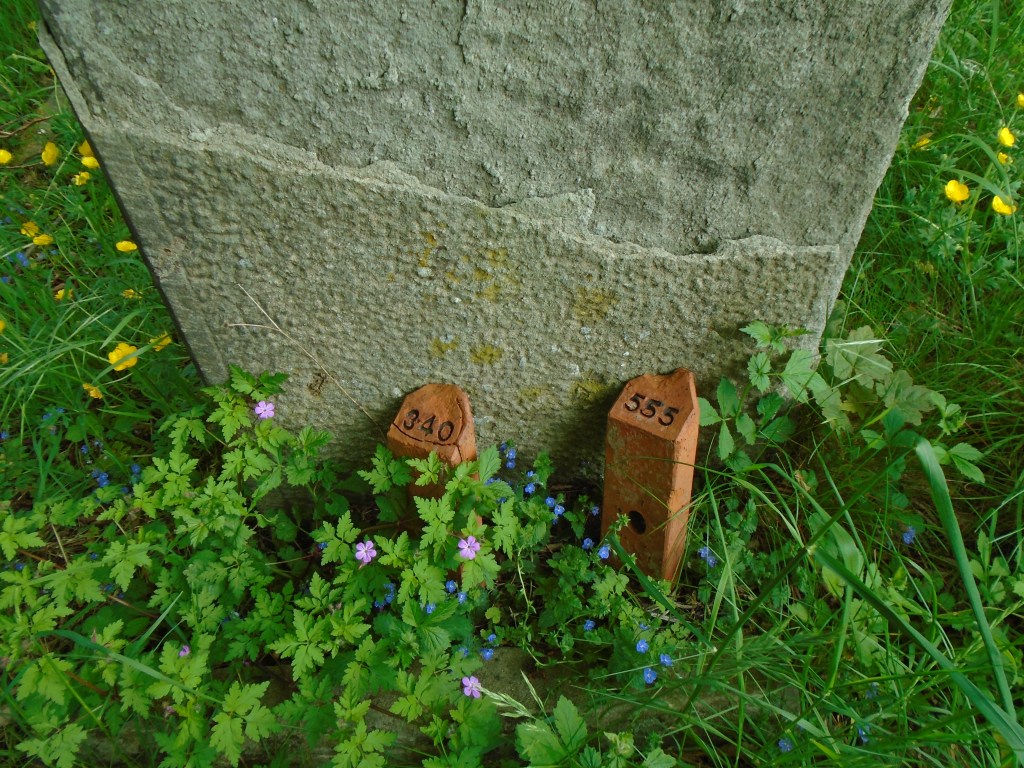
This is a cautionary tale of relying too heavily on the terracott grave markers in the cemetery. These portable brick like markers stamped with a letter and a number can be a big help when trying to pin point a plot, however they are very often in the wrong place. Perhaps back in the working day when there was a team of staff caring for the cemetery these markers were a useful identification aid. Unfortunately today they can be more of a hindrance, leading those searching for a grave on a confusing journey.
Many of the earliest burials in the newly opened cemetery took place here in Section A in the 1880s. In this area there are many public graves with numerous unrelated occupants. Funerals have always been an expensive business for the poor and frequently they had to bury their loved ones in a communal grave without a headstone. However, there are surviving headstones in Section A, among them several like these two badly weathered examples. Sadly, the inscriptions are completely lost and so it would appear is the identity and history of those buried here.
Someone has at some point propped up two of these grave markers at the back of one of the headstones, so I decided to see if they helped unlock the identity of who is buried here.
A consultation of the cemetery map quickly revealed that these are not the numbers of the two adjacent headstones. Grave plot A555 is a few rows removed from A340, as you can see from this image. However the marker for A340 is probably in the right location. The number of the neighbouring grave is plot A341 so now it was time to hit the burial registers, firstly the grave plot register.
After some research I was able to confirm that the two plots belong to the same extended family; the first of these to be buried in the new cemetery was Sarah Fortune, wife of William Fortune. She was 81 years old and her last home was at 1 Vilett Street, New Swindon where she lived with her daughter and her family. Her funeral took place on December 21, 1881 in plot A340.
The second family member to be interred in the cemetery was Mary Pickett, Sarah’s daughter. Mary was 67 years old and her funeral took place on May 3, 1890. Her last home had been Alderley, Gloucester, which has a connection to her husband’s family. Mary was buried in plot A340.
On October 11, 1904 Kate Minnie Brond was buried in plot A341. Kate was 35 years old and the granddaughter of Sarah Fortune. Her last home was at 25 Devizes Road where she lived with her parents Richard and Charlotte Fortune, her three younger sisters and her son Wilfrid Brond.
The last burial in this plot was on December 7, 1904. Wilfrid Percival Brond aged 5 years old died just weeks after the death of his mother.
Entries in the burial registers are slightly confusing. Sarah Fortune is described as being buried in plot A340 but the entry for her daughter Mary suggests she is the only one buried there. The details for plot A341 list Kate Brond, W.P. Brond and S. Fortune. All that we can be sure of is that Sarah Fortune is buried in one of these family graves. No doubt the lost inscription on the headstones would have settled the matter.
So, now all that is left to do is discover if there is a headstone on plot A555 and find out who is buried there.







 Radnor Street Cemetery