Mrs Annie Brooks – a remarkable family longevity

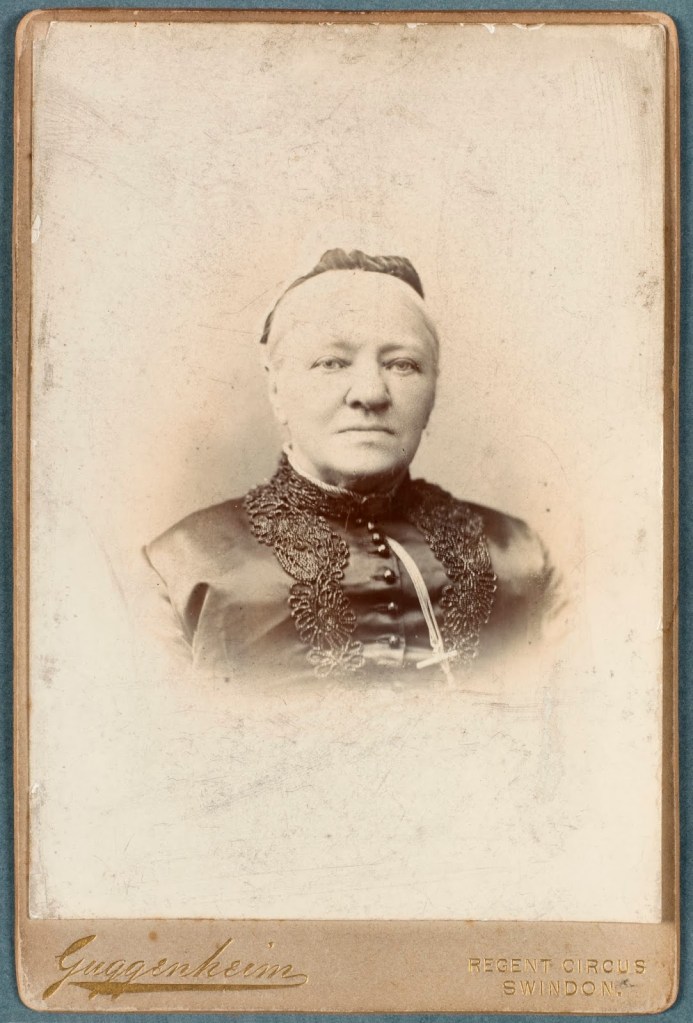
When Annie Brooks died in 1907 The Gloucester Citizen published some interesting facts and figures and it would appear that Annie came from a line of long lived ladies. Her mother died at the age of 98 and her grandmother at 105. Now of course, I wanted to know more about these women and it would have helped me enormously if someone had thought to insert a few names, but I was up for the challenge!

First I began to pin down Annie’s son George. George had been resident in Swindon since at least 1871 when he appears on the census returns as living at 20 Fleet Street with his first wife Elizabeth and their baby daughter Adelaide.

George was born in Bristol in 1846 the son of Joseph and Annie Brooks. In 1851 the Brooks family were living in Berkley Square, Bedminster and continued to live at various addresses in Bedminster through the 1850s, to the 90s when Joseph died. Annie moved to Swindon to live with George and his family and appears with them on the 1901 census returns. So now I needed to find Annie and Joseph’s marriage to discover her maiden name and possibly access her mother’s name.

Joseph and Annie were married in Bristol at the church of St. Philip and St. Jacob on September 4, 1842. Annie’s maiden name was Stock and when George gave her details to the enumerator at the time of the 1901 census he said his mother’s birthplace was Tidenham, Gloucester. It was here that I found her baptismal record on 29th December 1811. Her parents were Nicholas and Joan Stock so now I needed to find their marriage. This took place on April 4, 1795 at Kenn Juxta Yatton when Nicholas Stock married Joan Taylor.

Now you’d be surprised at just how many Joan [Joanna] Taylors there were living in Somerset/Gloucestershire in the second half of the 18th century (and we know this family moved about a bit) which rather put the kibosh on tracing the last lady in this trio of long lived lovelies. And I was beginning to wonder about the great ages too.

On May 24, 1841 the widowed Joan Stock (Annie’s mother) married William Rawling at Kenn. Widowed for a second time, Joan Rawling formerly Stock nee Taylor was living with Annie and Joseph Brooks in Bedminster at the time of the 1851 census when she was 85 years old. She died six years later, which would have made her 91 so not quite the legendary 98, but an impressive age nonetheless, don’t you think? And as to her mother, well I’ve had to give up on that lady for the time being, but I’d like to think she did make it to her 105th birthday!

Remarkable Family Longevity

There were laid to rest in Swindon Cemetery this week the mortal remains of the late Mrs Anne Brooks, mother of Mr George Brooks, a Great Western Railway official, of Park-lane, Swindon, who passed away at her son’s residence at the ripe age of 96 years. It is interesting to recall the fact that the deceased old lady’s mother died at the advanced age of 98 years, that that lady’s mother, Mrs. Brooks’s grandmother, lived to be 105 years old, so that the united ages of mother, daughter, and granddaughter totalled 298 years.

The Citizen, Friday April 5, 1907.

Burial Registers

Brooks, Annie   97 years   22 Park Lane  burial 30th March 1907  grave plot E8522

Mary Gibbs – A Swindon Octogenarian

The re-imagined story …

Do you believe that a house can retain memories? Have you ever visited a house and felt it had an atmosphere?

“Can’t you feel it?”

“All I can feel is damp. I bet this place hasn’t got a damp course.”

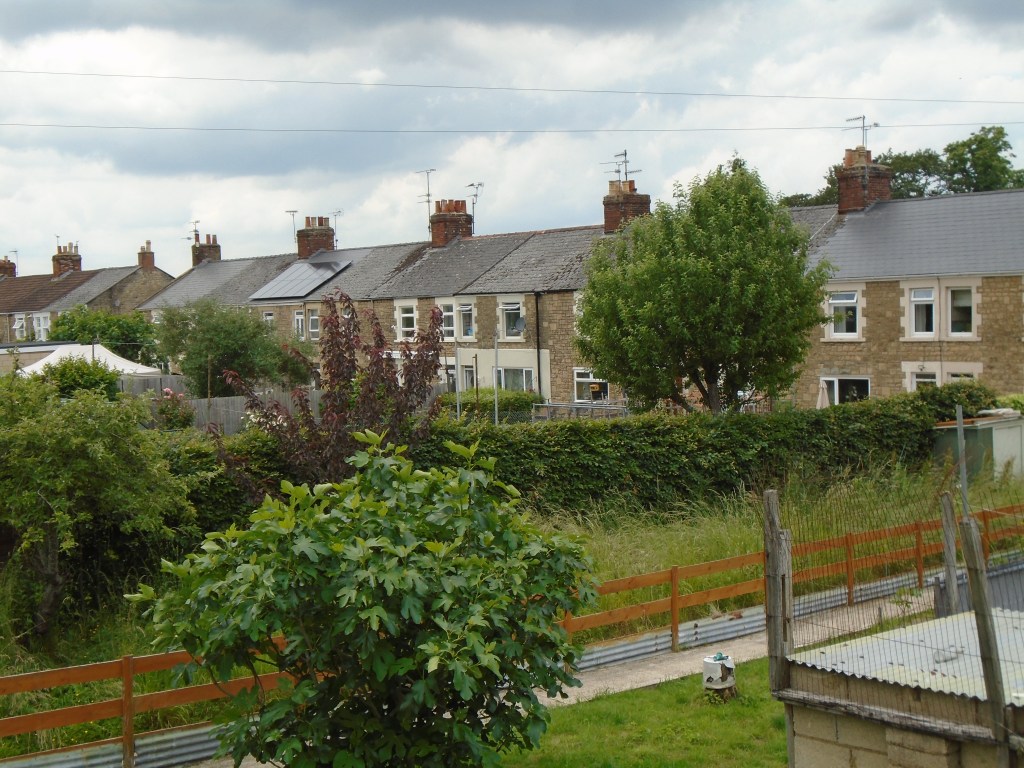
The row of stone-built cottages had once overlooked the canal before it was filled in, but it wasn’t damp that I was feeling.

“This could be a happy home,” I suddenly blurted out, but that wasn’t the plan. We were looking for a cheap property to renovate and sell on. “I could happily live here.”

“Really! Have you seen the bathroom?”

I wondered who had once lived here. Not recently, we knew who the vendors were, I mean in the past. Who had lived here when it was a brand-new property? How many children had squeezed into the bedroom upstairs, one of only two in the beginning? I bet there was a clothes line running the length of that long garden, full of washing every Monday; pinafore dresses and shirts, lots of shirts and overalls. I wondered how many meals had been eaten around the kitchen table? How many prayers had been said in this house?

I wasn’t quite sure what I was feeling – well, I did but if I blurted it out Darren would think I’d lost the plot. Ha, I know he sometimes has his doubts about me anyway.

This had been a busy house, but there was something else about the place, a sense of serenity. This was a house of God, a house where God had resided. I could just imagine telling Darren that.

“Let’s get back to the estate agent. See if there’s any movement on the price. Personally, I think they’re asking too much for it. And I bet it hasn’t got a damp course.”

The facts …

Death of Mrs Gibbs

Interesting Reminiscences

Rode on a Stage Coach and Electric Trams

There was laid to rest in Swindon Cemetery on Thursday in last week the mortal remains of Mrs Mary Gibbs, late of 120 Broad Street, and widow of the late Mr William Gibbs, who resided for many years at 46, Cambria Place, Swindon. The deceased lady, who had attained to the great age of 88 years, and retained all her faculties to the end, was an interesting personality. She was probably the oldest member of the Baptist community in Swindon, and was in the service of the Rev. Richard Breeze, before he came to Swindon and opened a Baptist Church here at the corner of Fleet Street and Bridge Street. Her late husband, who died 17 years ago, was one of the pioneers of the Ancient Order of Foresters in Swindon, and assisted at the opening of Court “Briton’s Pride,” A.O.F., and also the “Vale of White Horse” Court, Shrivenham. He was himself initiated a member of the Order at Abingdon, when he was residing at Sutton Courtenay, and remained a Forester until his death, having been a member for over fifty years.

The deceased lady was born at Lechlade, and her earliest recollections of Swindon was riding through this part of the country on a stage coach. What is now known as New Swindon then comprised only green fields. She lived to see the whole of the land built on, the electricity works opened in the neighbourhood where she resided, and more than once rode on the electric trams, notwithstanding her great age.

Her husband worked on the GWR during the construction of the line between Didcot and Swindon. He was connected with the Baptist Church, and took a leading part in the opening of the Rehoboth Baptist Chapel at the top of Rolleston Street, Swindon.

At the funeral of the deceased lady the burial service was conducted by Mr. S. Chappell, of the Rehoboth Baptist Church. The mourners included deceased’s five sons, Charles, William, Harry, George and John Gibbs, a grand-daughter, two grand-sons, and other relatives and friends.

There were many beautiful wreaths and other floral tributes placed on the grave.

The Swindon Advertiser, Friday, July 16, 1909.

Mary Gibbs 88 years 120 Broad Street burial 8th July 1909 plot number B2073

1871 census

Cambria Place

William Gibbs Head of household 47 Platelayer born Swindon

Mary Gibbs wife 49 born Berks Coleshill

Charles H. Gibbs son 21 Boiler Smith born Berks. Sutton

William J. Gibbs son 19 Boiler Smith born Stratton

Henry H. Gibbs son 17 Moulder born Stratton

Mary J. Gibbs daughter 15 Domestic Servant born Stratton

Edward J. Gibbs son 12 Scholar born Stratton

George Gibbs son 9 Scholar born Stratton

John Gibbs son 6 Scholar born Stratton

Disgraceful scenes in the cemetery

When my much loved Auntie Ruth died more than thirty years ago I was surprised at the number of ladies who attended her funeral and sang with great gusto. It was unexpected as I was her only living relative and she had few friends, so I was anticipating a small and sad funeral. I later discovered that these ladies were members of the church, and although my auntie had not attended for many years, they accompanied every funeral, adding their voices to the hymns and responses.

Andy Binks, my cemetery walk colleague, likes to read out a letter published in the Swindon Advertiser in 1902 where uninvited mourners were definitely not appreciated. Our next guided walk is on Sunday June 1, meet at the chapel at 1.45 pm for a 2 pm start. I’m sure Andy will ready out this letter; it’s the reference to womanly instincts that amuses him.

Correspondence

Disgraceful Scenes

To the Editor of the Swindon Advertiser

Sir, – It has been my sad duty to visit the Swindon Cemetery rather frequently of late, and I have been struck with what I can only call the disgraceful scenes which are allowed almost daily to take place in what should be a sacred ground. Whenever there is a funeral, one notices the same crowd of women trampling over the graves to obtain a sight of the mourners and to discuss the qualities of the deceased. One day last week I happened to be there whilst three funerals took place, and the crowd appeared quite to forget the sadness of the occasion, their only object being to get a glimpse of all three gatherings.

Surely the officials must know these heartless gossips by now, and they should be given the power to prevent their admittance to the Cemetery grounds.

To any person who has a dear one resting there, it is painful to think that his or her last resting place is being trampled upon by women whose curiosity tide what should be their best womanly instincts.

Thanking you in anticipation. – I remain, yours truly,

A RATEPAYER

Swindon Advertiser October 1902.

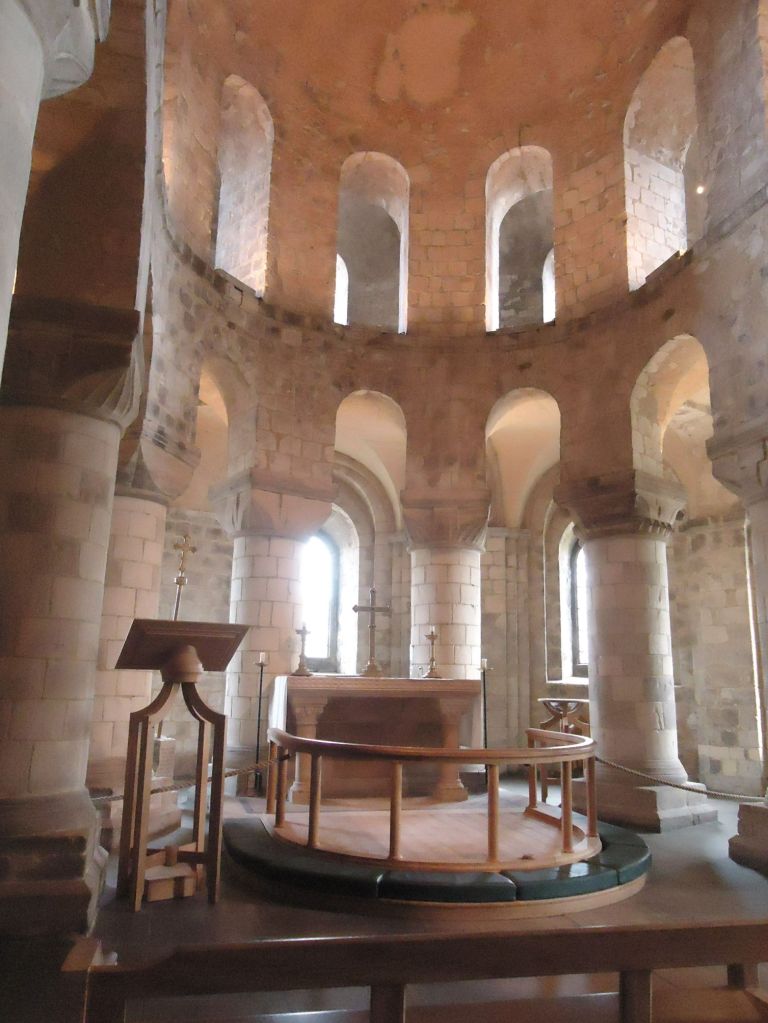
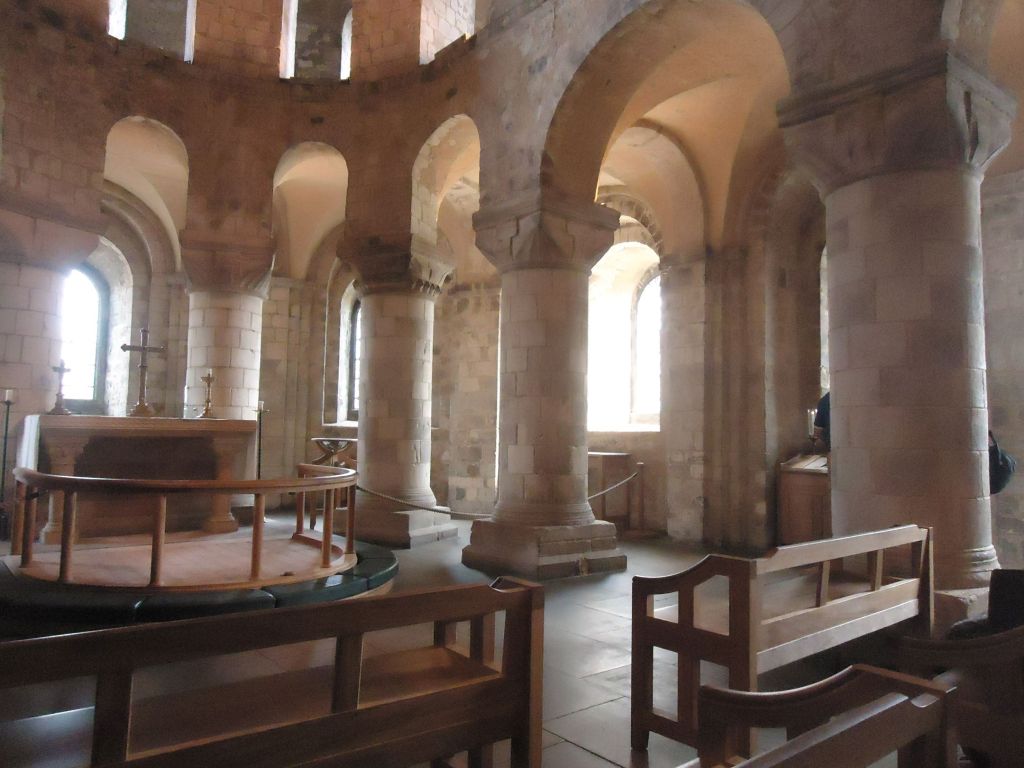
Chapel of St John the Evangelist

It’s an extraordinary fact that for more than 600 years the Chapel of St. John the Evangelist in the Tower of London was used to hold important documents. It has to be conceded that there was probably no safer place in London for them.

The 11th century chapel situated on the first floor of the White Tower was built for William, the conquering Norman king. However, by the 13th century the chapel was used less frequently until it became a repository for documents of national importance.

The chapel was restored in the 1860s and once again became a place of worship, used initially by non-conformist and Catholic members of the Tower’s community. It is now used by all members with regular monthly services.

Today the beautiful chapel is on the sight seeing tour and it is sometimes difficult to find the peace and quiet in which to appreciate the building. But visitors are suitably awed and generally more subdued when they come across the breathtaking Romanesque architecture with soaring columns and vaulted roof.

From May to November 2025 the Tower of London is yet again the setting for a national war memorial.

More than 30,000 ceramic poppies, made by the artist Paul Cummins, are displayed cascading from the Tower. Cummins and designer Tom Piper were the same team responsible for the Blood Sweat Lands and Seas of Red installation at the Tower in 2014 to commemorate the centenary of the beginning of WWI.

The new installation to commemorate the 80th anniversary of the end of WWII symbolises ‘a wound at the heart of the Tower’ which itself was hit by a bomb during the London Blitz on October 5, 1940, killing two people.

The installation opened on May 6 and will remain open until November 11. Visit https://www.hrp.org.uk/tower-of-london/whats-on/tower-remembers-2025/#gs.lrc6ji for further details.

Dibsdall family

Dibsdall 2

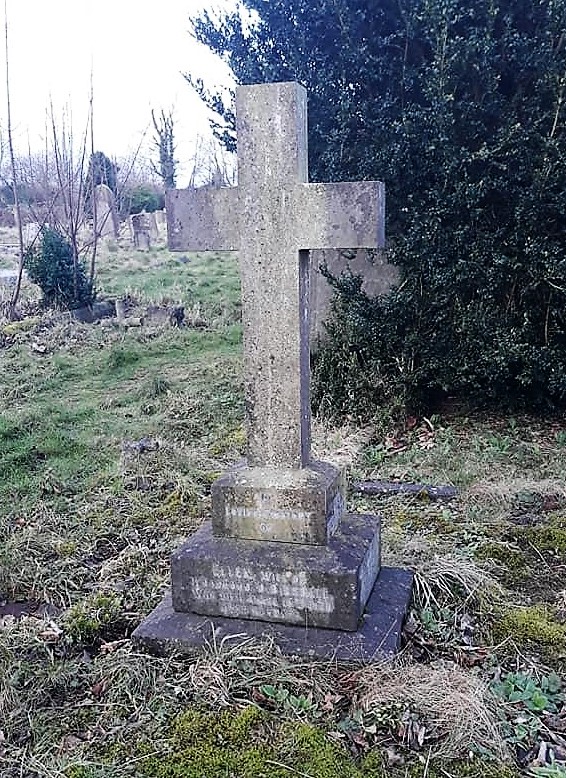
This magnificent cross is a memorial to members of the Dibsdall family.

Susan Dibsdall is the first member of the family to be buried here. Susan was baptised on November 8, 1809 one of James and Susanna Pope’s six children to be baptised in the parish church at Sherborne, Dorset. Susan married Thomas Dibsdall at the parish church in Bedminster on May 13, 1830.

At the time of the 1841 census the couple were living in Cheap Street, Sherborne with their seven children where Thomas worked as a smith. By 1851 they were living in the Parade, Sherborne where the couple’s eldest three sons, Thomas, Charles and William, worked alongside their father as smiths. The family now comprised 11 children, but Thomas would die shortly after the census was taken that year.

In 1861 Susan was living at Green Hill with her two youngest sons Henry and Godfrey. Ten years later she was working as a housekeeper for Mary Thomas, described on the census as ‘Lady’.

By 1881 she had left Sherborne, her home for more than 60 years, to live with her son Woodford Dean Dibsdall. Woodford, who was married with his own large family, had lived for a few years in Camberwell. It is thought he moved to Swindon and a job in the Works in about 1874.

The Dibsdall family have a double size burial plot in Radnor Street Cemetery and a large memorial. Edward Dean Dibsdall died in the University Hospital London aged 19 and was buried on April 30, 1902 alongside his grandmother Susan in plot E7039. Ellen, Woodford’s wife, died in 1920 aged 81 years and Woodford in July 1928 aged 83. They are buried together in plot E7040.

Susan Dibsdall – Personal Estate £966 3rd August.

The will as contained in Writings A and B of Susan Dibsdall late of 8 Vilett Street New Swindon in the County of Wilts Widow who died 1st January 1882 at 8 Vilett Street was proved at the Principal Registry by Thomas Dean Dibsdall of 28 Lambeth road Lambeth in the County of Surrey Blacksmith Henry Pope Dibsdall of 22 Denmark Street St Giles in the Fields in the County of Middlesex Carpenter and Woodford Dean Dibsdall of 8 Vilett Street Engine Fitter the Sons the Executors

Dibsdall, Woodford Dean of 4 Sheppard Street, Swindon, Wiltshire died 18 July 1928 Probate Salisbury 20 August to Arthur George Dibsdall railway works inspector Effects £1089 12s 4d.

Rehoboth Chapel

The Rehoboth Chapel following damage during major redevelopment at Regent Circus in 2014.

The dissenting congregation in Swindon was a relatively small one until the GWR Works came to town, attracting workers from across the country, many of whom were non-conformists.

By the end of the 19th century it could seem as if every street of red brick terraces had a chapel.

Many of these buildings still survive, some used as community halls, some occupied by small businesses and others converted into private dwellings. Perhaps even more surprisingly some continue to be used as a place of worship.

One of these chapels came under threat when the Regent Circus development shook the foundations of the Rehoboth Chapel at the bottom of Prospect Hill and almost caused its demolition.

The Chapel was closed for more than two years while the Regent Circus developers ISG undertook the extensive repairs needed on the 132 year old building. One of the corners of the chapel had subsided and had to be rebuilt while 38 new piles were driven into the foundations to which the walls were fastened.

The chapel reopened in 2016 and today looks good enough to last another 130 years.

Opening of a New Baptist Chapel

A new Baptist chapel which has been erected at the top of Rolleston-street, in an admirable position between Old and New Swindon, by a section of the Strict Baptist denomination, which seceded some four or five years ago from the church worshipping in Prospect, was open for public worship on Wednesday. Since the split the seceders have held their services in a hall in Bellevue-road, which has, however, become too small to accommodate the worshippers. The new edifice, which is a small, plain structure, in the Gothic style of architecture, will seat 200 persons, and is a light and well ventilated building. A considerable portion of the cost has yet to be raised. The opening proceedings commenced by a short religious service in the chapel, after which the worshippers adjourned to the Central-hall (which had been placed at their disposal by Mr C. Hurditch, of the Evangelistic Mission) where three sermons were preached in the course of the day to full congregations by Mr C. Hemington (Devizes) Mr W.S. Ford (Bath), and Mr A.B. Taylor (Cirencester). A tea meeting was held in the afternoon.

The Swindon Advertiser, Saturday, May 20 1882.

Margaret Davies – Late of Great Hoaten

A trip away from Swindon is a good excuse to go cemetery crawling and during a visit to Pembrokeshire I managed to squeeze in a quite a few.

The church of St Ishmaels was founded in the mid 6th century by the son of a Cornish prince. A notice in the church tells how Ishmael and two of his brothers along with SS Teilo and Aidan founded a monastery at St. David’s. The small church has been much enlarged across the centuries. A short walk leads to Monk Haven cove, named after a monastic settlement that once existed here.

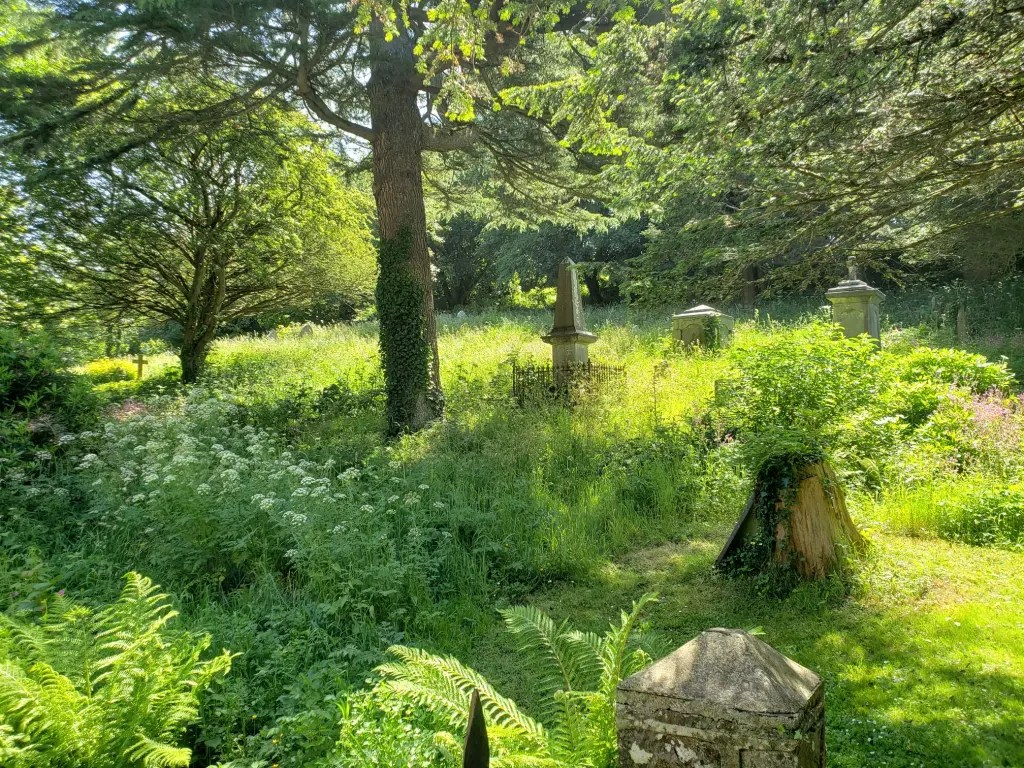
St Ishmael’s churchyard was very overgrown but it was still possible to catch a glimpse of some of the headstones. Online parish registers are available dating back to 1761 but I wasn’t able to see any memorials that old.

One that did catch my eye was a headstone dedicated to Margaret Davies who died in 1869. Someone had made sure that it was mentioned on her headstone that she was ‘Late of Great Hoaten.’ Great Hoaten Farm has been associated with the Davies family since at least 1792 and a mortgage drawn up by Joseph and Dinah Davies.

The last census on which Margaret appears is the 1861 when she was living at Little Haven and described as a retired farmer. Living with her was her 12-year-old son Thomas, the youngest of her 10 children.

Margaret was born at Penally Court Farm in about 1810, the daughter of Rev Thomas Rowe and his wife Patty (Martha) Cornock. Margaret married farmer Thomas Davies in the church of St. Ishmaels on August 17, 1829 and after several years living at Gilton Farm, Walwyn’s Castle, the family make their appearance at Great Hoaton Farm on the 1841 census. The establishment at Great Hoaton comprised approximately 140 acres and in 1841 Thomas employed four female servants, two male servants and a governess to teach his rapidly growing family.

When Margaret died in 1869 her last address is given as Bicton. Despite having such a large family, the sole executor of her will was William John, a grocer from Quay Street, Haverfordwest.

However, the Davies family connection with Great Hoaten Farm continued and in 1939 Margaret’s grandchildren were running the farm. Thomas 55 and his brother Claudy 51 along with their sisters Maud 54, who was housekeeper and Elsie 40, who worked as a dairymaid.

I’m not convinced that this headstone has not been moved. It looks as if it is leaning up against the tree rather than being in situ.

Reminds me how lucky we are to have access to so much information regarding Radnor Street Cemetery.

Celia Morkot – the first woman employed in the Works

The re-imagined story …

I started in the Works in the polishing department in 1937 and stayed for two years. I hated every day I was there.

French polishing sounds as if it might be a delicate, artistic occupation. I suppose there was an element of artistry about, it but it certainly wasn’t delicate. French polishing involved stripping back to the basic wood, making good any damage and then building up the polish again, brushing and sanding, brushing and sanding. A door could take you five days, on and off. We worked on anything made of wood, everything from panels and partitions to toilet seats.

12A Shop was in the Carriage Works along London Street and it was cold and filthy. We were quite separate from the men in the railway factory and had our own facilities. That’s a laugh, one toilet with two washbasins and some disinfectant soap useless at getting all the muck off our hands. Methylated spirits worked much better but it was hard on your hands and left them red and raw.

The mess room was under the workshop but no one wanted to spend their lunchtime there. When the weather was good me and Ivy used to walk to the GWR Park and eat our sandwiches on a bench. It got you out of the dirt and fumes for a bit.

In those days, just before the Second World War, jobs in the Works were few and far between for women. In fact, the polishing department was the first to employ women back in the 1870s. A big deal had been made about ‘the comfort of the women.’ Ha, well by 1937 that had all gone by the board.

My dad used to keep on about getting a trade and being set up for life, as if I were a man, but I couldn’t wait to get out of that place. All I wanted was a nice, clean little job before Ted and me got married. I looked forward to polishing my own furniture and it would be a sight easier than French polishing railway carriage doors, I can tell you.

London Street

The Carriage and Wagon Works, London Street published courtesy of Local Studies, Swindon Central Library.

The facts …

By the 1870s the railway factory had been in operation for some 30 years but the GWR were finding it difficult to recruit skilled men. The problem was a shortage of jobs in Swindon for young women, the railwaymen’s daughters. The men wouldn’t move their families to Swindon if there was no work for their daughters.

Joseph Armstrong, the Locomotive, Carriage and Wagon Superintendent, the top man, addressed the problem by extending the Carriage Works on London Street and creating a separate upholstery department for the employment of girls only. By the end of 1874 five women were employed in the new trimming department.

Celia Folland was born in Tredegar, Monmouthshire in 1857, the daughter of Richard Folland, a rail sawer, and his wife Margaret. By 1871 the family had moved to Swindon and were living at 1 Reading Street in the railway village.

Celia Folland was the first woman to be employed in a GWR workshop where she worked as a French polisher, checking in for the first time on July 18, 1874.

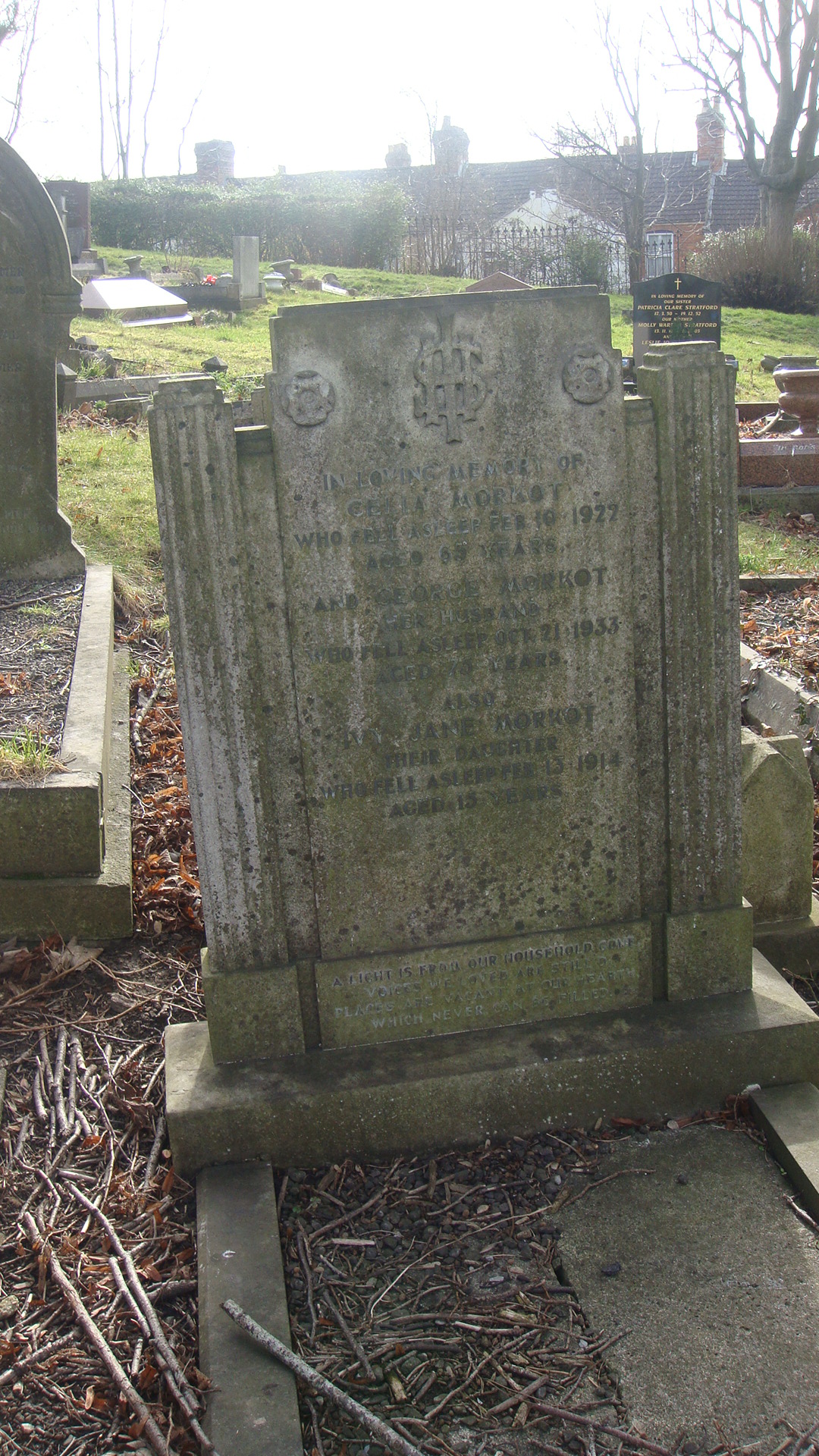
Celia married George Morkot at St Mark’s Church, Swindon on July 19, 1883 and by 1891 they were living at 31 Chester Street with their three children, Charles 6, Nellie 4 and George 2. Celia would go on to have another four children.

Celia died aged 65 years old in February 1922 at 31 Chester Street where the family had lived for more than 30 years. Her funeral took place at Radnor Street Cemetery on February 15 and she is buried in plot D1613.

Celia Morkot


Edith Whitworth – Mrs Great Heart

The re-imagined story …

It was a stupid thing to do, something I realised immediately. As I furiously pedalled home on the stolen cycle, I wondered what to tell my mum. Should I add to the litany of lies I had already told her or should I dump the cycle and the £5 note in a hedge somewhere?

As it turned out I was spared the dilemma as I had been seen climbing out of the window of a house in Tydeman Street and stealing the cycle – by a police constable.

My poor mum was beside herself with worry and shame. She struggled to raise four unruly sons alone after my dad was killed in the war. Just feeding us and putting clothes on our back was difficult enough without the trouble we kept bringing to her door. But this was the first time the police had been involved.

By the time I appeared at the Police Court we were both quietly resigned that I would end up in juvenile detention.

My mates all commiserated, but in fact it was the most fortunate thing that could have happened to me, and as a result, to my brothers as well.

My mum was heartbroken. She felt she had failed me, failed as a mother. She feared for my future. Borstal was seldom the cure-all for youthful miscreants. More often it set them on the path of a lifelong criminal career.

She was in the court room when I appeared – she looked small and broken, sitting there wringing her handkerchief in her hands.

The court officials all looked as I had expected them to – old, serious and not short of a bob or two. How could they possibly understand my life, the life I lived with my mum and my brothers?

Then I noticed the woman sitting at the solicitor’s table – the only woman, and I guessed that must be pretty unusual in itself. And she was knitting! While the men pontificated and poured derision on me and my family, that woman sat quietly knitting, barely paying attention, or so I thought.

It was Mrs Whitworth who saved me. She saved my mum and gave her the confidence to carry on being the best mum she could to us boys. She gave my brothers a wake up call and saved them as well. And she saved countless other lost boys, not just in Swindon and not just in that time.

She said I was an intelligent boy and I should use that intelligence to help others. I hope I have. Over the years I have sat in court rooms just like that one and looked at boys just like me and I’ve helped give them a second chance. And every time I do so I think of Mrs Whitworth – and her knitting!

Dixon Street, Swindon

The facts …

Edith Dawson and her husband Albert Whitworth were not from this neck of the woods. Both of them came from Lancashire. Albert was born in Rochdale and Edith in Bury, the daughter of John Thomas Dawson, a cotton merchant. In 1881 Edith was living with her widowed father at 129 Manchester Street, Heap.

Edith and Albert married in Bury in 1886 and in 1891 were living in Monmouth. In the 19th century most people moved to Swindon for a job in the GWR Works, but Albert was not a railway man. By the time the family moved to Swindon he was working as a Tailor and Draper’s Traveller. The couple had eight children and sadly by 1911 two of them had already died.

The family lived first at 109 Dixon Street, then at 112 Dixon Street and at the time of Edith’s death in 1925 they were at 26 Dixon Street.

The census returns of 1901 and 1911 tell us nothing of Edith’s occupation.

So, let’s run through a few of Edith’s accomplishments! From 1908 she served in a role described as ‘lady police court missionary’ later becoming a magistrate in 1921. In the obituary that appeared in the North Wilts Herald she was described as having a ‘broad minded disposition that fitted her eminently for the post’ and that there were ‘many young men and women in the town today who have reason to bless the name of Edith Whitworth.’ During the First World War she was heavily involved with the YMCA and working with the ‘Comfort for Soldiers’ volunteers. She was later awarded the MBE for her wartime work.

After the war Edith Whitworth continued to work with war widows and orphans and was a member of the local War Pensions Committee. She also worked for the welfare of the blind alongside Mr E. Jones who later became Mayor.

Edith Whitworth died at her home in Dixon Street following a short illness. She was 59 years old.

A Social Worker

Death of a Swindon Lady

Mrs. E. Whitworth

After a few days’ illness, Mrs. Whitworth, J.P., M.B.E. of 26 Dixon Street, Swindon, who was one of the best known social workers in Swindon, died on Saturday morning at the age of 59 years. She attended a concert at the Empire Theatre on the previous Sunday in aid of the British Legion’s Christmas tea and entertainment for the fatherless children of ex-service men. Next day she was taken ill, and collapsed whilst making preparations for a journey to London.

Medical assistance was called and Mrs Whitworth was found to be suffering from inflammation of the lungs. On Saturday morning she was found dead in bed by her married daughter, Mrs. Marsh.

Mrs. Whitworth was appointed a magistrate in July, 1921, the honour being conferred upon her, after she had relinquished the post, in recognition of her services as lady police court missionary under the Probation Act. It was in the latter capacity, perhaps, that Mrs. Whitworth was best known. Regularly, for 13 years, from the coming into force of the Probation of Offenders Act in January, 1908, she attended the police courts at Swindon, where, seated at the solicitors’ table, she could be seen industriously applying her knitting needles, but all the time following the cases closely, and there are many young men and women in the town to-day who have reason to bless the name of Edith Whitworth.

Mrs. Whitworth will also be remembered for the valued work which she accomplished during the war. Her activities at the Y.M.C.A. in looking after the comfort of the soldiers were very well known, and after the termination of hostilities they were rewarded by the award to Mrs. Whitworth of the M.B.E.

Since the war, Mrs. Whitworth had devoted a great part of her time to the welfare of widows and fatherless children of Swindon men who made the supreme sacrifice, and as a member of the local War Pensions Committee she rendered much useful service. The women’s section of the British Legion also claimed her interest and attention, and she worked wholeheartedly in co-operation with Mr. E. Jones, J.P., for the welfare of the blind, being one of the Swindon representatives of the Wilts County Association.

In the cause of temperance she was also an ardent worker, while in politics she served for a number of years on the Executive of the local Library Association.

Sympathetic references to the death of Mrs. Whitworth were made at Swindon Borough Police Court on Monday.

The Chairman (Mr. G.H. Marshman) said the Bench had lost a valuable colleague, and one who always did her utmost to help suffering humanity. All would mourn her loss.

The Magistrates’ Clerk said the public had lost a very able, experienced and loving public servant.

The Deputy Chief Constable (Supt. Brooks) associated himself with all that the Chairman and Clerk had said.

The Funeral

The funeral took place on Tuesday. The route of the procession to and from deceased’s late residence was lined with spectators, who stood with bowed heads as the cortege passed.

The Trinity Presbyterian Church, Victoria Road, where the first part of the service was conducted, was filled with a congregation of mourners. The Rev. J.H. Gavin, B.D., conducted the service, and special hymns were sung, “O, God, our help in ages past,” and “Now the labourer’s task is o’er.”

Miss Baden presided at the organ and played the Dead March in “Saul” as the mourners were leaving the church.

In a brief address Mr. Gavin paid feeling tribute to the work which deceased had always identified herself with, and said Mrs. Whitworth was a woman with a great heart. If he had to write a modern version of Bunyan’s “Pilgrim’s Progress,” he would describe Mrs. Whitworth as “Mrs. Great Heart.” She was the friend of widows and orphans of our soldiers who gave their lives in the war, and no-one could number the many acts of kindness on her part during that troublesome time in succouring the depressed and distracted. Ever doing good amongst her fellows, she had now passed to the Great Beyond, where he was sure she would receive the “Come, blessed of My Father.”

The interment took place in the Cemetery in the presence of a large number of people, the Rev. J.H. Gavin again officiating.

North Wilts Herald, Friday, December 18, 1925.

Cemetery volunteers have recently rescued Mrs. Whitworth’s headstone and restored it to it’s correct position on her grave.

The Airspeed Oxford propeller unveiled

The rain clouds parted and the sun made a plucky appearance during our guided walk yesterday when we were delighted to welcome Air Commodore Tony Keeling OBE, Commandant Royal Air Force Air Cadets, to Radnor Street Cemetery.

Following the closure of the RAFA Club in Belle Vue Road the propeller mounted on the front of the building faced an uncertain future. Then a group of concerned Swindonians, among them Carole and David Bent, Neil Robinson, Toby Robson and Graham Carter, stepped in to rescue it.

At Sunday’s event Air Commodore Keeling cut the ribbon and led the assembled visitors into the chapel to view the propeller, now mounted above the door. Cemetery volunteer Kevin, a member of the Eyes On Hands On team, gave an informative talk about the history of the Airspeed Oxford to a packed chapel, as you can see from Andy’s photographs. Then, accompanied by fellow officers and air cadets, Air Commodore Keeling joined us on our walk.

Guest speaker, Paul Gentleman, gave an account of the career of Wing Commander John Starr who is remembered on his brother’s (Squadron Leader Harold Starr) grave. Paul and his wife Caroline along with Noel Beauchamp have been researching the life and times of the two Starr brothers for several years. Paul, Caroline and Noel, in association with Green Rook and Swindon Heritage, organised the Swindon Remembers event to commemorate the Battle of Britain 75th anniversary held in the cemetery in 2015.

Our visitors at Sunday’s event donated generously to the memorial plaque for Mark Sutton. This will be unveiled at the Remembrance Day Service, an event Mark established many years ago.

Here are some photos of the day captured by Andy and myself.