Louisa Say – death from shock to the system

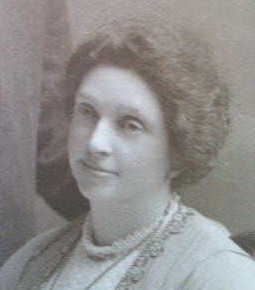
On August 26, 1891 Frederick and Louisa Say(e) took their baby son to be baptised at the Primitive Methodist Church in Regent Street when the seven week old baby received the rather grand name of Montague Frederick William Say.

Frederick was a blacksmith’s striker in the GWR Works and Louisa had been a needlewoman before her marriage. After the christening the little family returned to their home in West End Terrace, Westcott Place but just four months later a great tragedy struck.

In December 1891 Louisa, Frederick and baby Montague Frederick William were living at 13 George Street. Before she went to bed on the night of Wednesday December 21, 1891 Louisa hung her washing up on a line in the kitchen to dry over-night. But suddenly, the line gave way and as the washing collapsed the clothes knocked over an oil filled lamp setting Louisa alight. Louisa was dreadfully burned, and died that same night.

Louisa was buried in Radnor Street cemetery on December 26 in grave plot B1675, a public grave, where she lies with three other unrelated persons. She was 29 years old.

What happened to five month old Montague Frederick William? On the 1901 census he is aged 9 years old when he was living in Trowbridge with his paternal grandparents William, a woollen cloth dresser and Martha. His father was lodging with George and Mary Taylor at 6 Theobald Street, Swindon. In 1904 Frederick married widow Ada Maria Thomas and moved into her house in 101 Dean Street. By 1905 Montague, aged 14, was back in Swindon living with his father and step-mother. That same year he began a 7 year boiler making apprenticeship in the Works.

Frederick Say died in 1929 aged 64 and was buried in grave plot D98 with his second with Ada who died in 1923.

The little boy who lost his mother at just five months old went on to marry and have his own family. Montague was living in Kent in 1916 when he married Lilian Deeks. He died in Cosham, Hampshire in 1958 aged 67.  
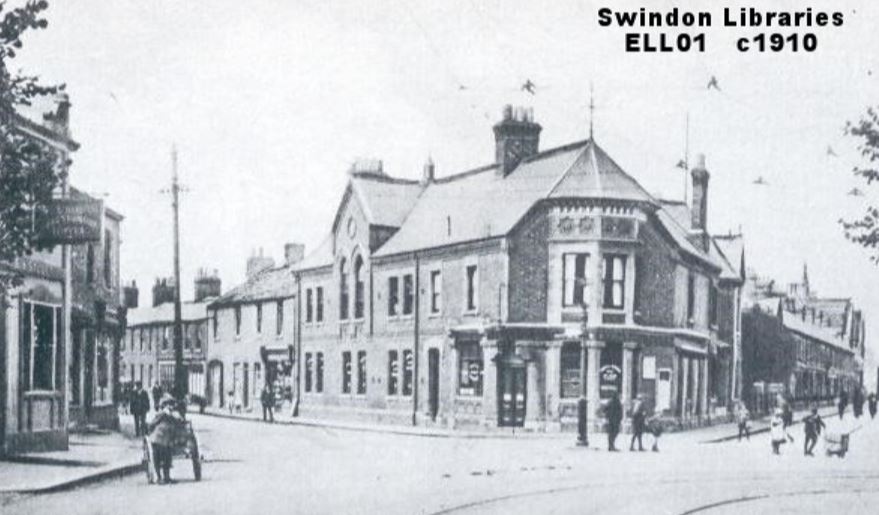
The New Ship Hotel more usually known as the Ship Inn published courtesy of Local Studies, Swindon Central Library.

Sad Death From Burning – Mr W.E.N. Browne, Coroner for North Wilts, held an inquest at the New Ship Hotel, New Swindon, on Thursday in last week on the body of Louisa Saye, wife of Frederick Saye, living at 13 George St., New Swindon. The evidence went to show that on Dec. 21st. about 9.30 p.m., deceased was hang some clothes on a line in the kitchen of her own house, when one of the nails to which the cord was attached gave way. The clothes in falling overturned a lamp on the table, with the result that the oil ignited, and the deceased’s wearing apparel was set on fire. Her cries for help attracted the attention of her husband, who was in bed at the time, and he ran down and with some difficulty succeeded in extinguishing the flames. Medical aid was obtained, but Dr Jones (assistant to Messrs Swinhoe, Howse and Bromley), pronounced the case hopeless, and the woman, who was dreadfully burned, expired on Wednesday night in great agony. After hearing the evidence the jury returned a verdict of “Death from shock to the system,” and, on the suggestion of the foreman, Mr. A. Webb, gave their fees to the husband.

North Wilts Chronicle Saturday Jan 2, 1892.

Stephen Chequer – butcher

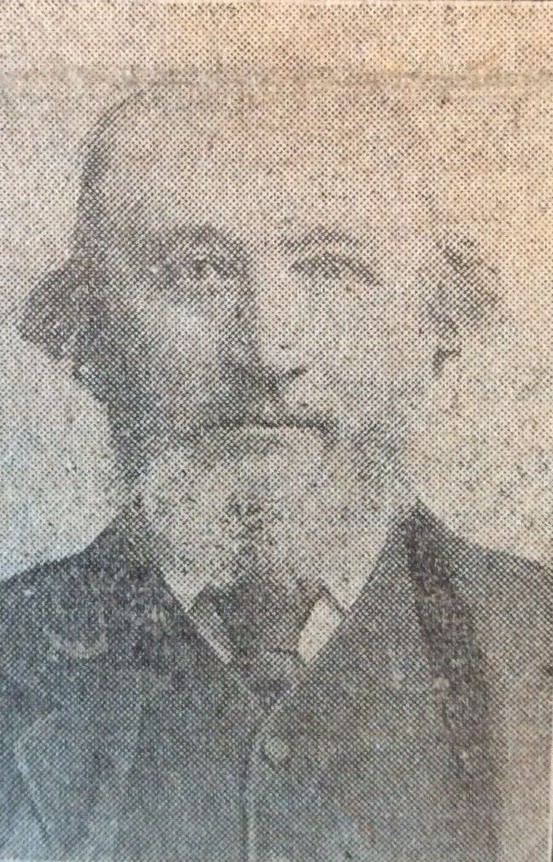
There was no lengthy obituary published in the local newspapers following the death of Stephen Chequer, just a brief death notice submitted by his family.

Chequer – March 17, at Westcott Place, New Swindon, after a long and painful illness born with great christian fortitude, Mr Stephen Chequer, butcher, aged 67. His end was peace.

Swindon Advertiser, Saturday, March 26, 1887.

So many of the inscriptions on headstones in Radnor Street Cemetery include a religious reference. In the increasingly secular age in which we now live, what sustains us at the end of our life?

When Stephen Chequer married Elizabeth Iles at St Mark’s Church in 1847 his occupation was that of labourer. Both he and Elizabeth made their mark in the marriage register, indicating they were not sufficiently proficient in writing to sign their names. Stephen obviously worked extremely hard to establish his own business with all the paperwork that involved.

By 1851 Stephen and Elizabeth were living in Westcott Place with their four children and Stephen’s widowed mother Mary. Stephen was 37 years of age and working as a farm labourer. It wasn’t until the 1871 census that we discover Stephen working as a Butcher in Westcott Place.

Stephen Chequer died aged 67 years and was buried on March 23, 1887 in grave plot E8466 which he shares with his wife Elizabeth who died in 1883.

Today Westcott Place is much altered and barely recognisable from this 1976 photo published courtesy of Local Studies, Swindon Central Library.

Stephen and Elizabeth’s daughter Emma Jane married Charles Edward Hall. You may like to read more about her family here.

Charles Edward Hall of 75 Morris Street, Rodbourne.

Rear Admiral Sir Arthur Hall – an extraordinary Swindon story

Rear Admiral Sir Arthur Hall – an extraordinary Swindon story

Sir Arthur Edward Hall KBE CB is not buried in Radnor Street Cemetery but his extraordinary Swindon Story deserves to be told.

Arthur Edward Hall was born on February 1, 1885, the son of Charles Hall, a boilermaker in the GWR Works, and his wife Emma. He grew up at 6 Andover Street, one of the streets that branched off the canal. A humble beginning for a man who went on to have a quite amazing career, as can be followed here in the obituary that appeared in The Times.

Adm. Sir Arthur Hall

Education in the Royal Navy

Instructor Rear-Admiral Sir Arthur Hall, K.B.E., C.B., who died at his home in London on Saturday at the age of 74, was a former Director of the Education Department of the Admiralty.  He was the first naval officer to hold that post and the first to have the rank of instructor rear-admiral.

Arthur Edward Hall was born on February 1, 1885, the son of Charles Edward Hall.  He was educated at Swindon College and the Royal College of Science, London.  He taught for six years in the physics department of the Imperial College of Science before entering the Navy as an instructor in 1915.  He served in the Inflexible during that war, was present at the Battle of Jutland, and was successively Fleet Education Officer to the Atlantic and Mediterranean Fleets, before he was appointed Deputy Inspector of Naval Schools in 1932.  Four years later he was promoted to the new post of Director of the Admiralty Education Department where he served until his retirement in 1945.  He was then for five years Director of Studies and Dean of the Royal Naval College, Greenwich.

Hall’s services to naval education were of the first importance.  Yet he was active in many other fields as well.  His connexion with the English Association was of long standing and he was chairman from 1951.  He was a governor of Imperial College and chairman of the Royal School for Naval and Marine Officers’ Daughters from 1943.  He was a member of the Hankey Committee on Further Education and Training (1943-45) and of the council of the Society for Nautical Research (1947-51).  Among other organizations to which he gave his time were the Institute of Naval Architects and the Navy Records Society, of both of which he was treasurer, and the RN Scholarship Fund and the RN Benevolent Society.

He married in 1920 Constance Martha Gibbens, by whom he had a son and a daughter.

The Times, Monday November 23, 1959.

You may like to read the following family stories:-

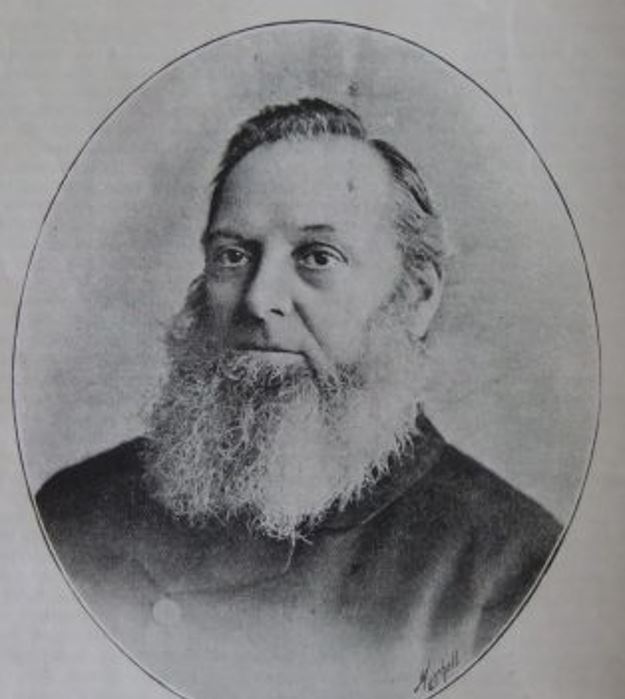
Rev George Hunter – Primitive Methodist Minister

Rev George Hunter and his daughter Edith

Charles Edward Hall – 75 Morris Street

The Rev George Hunter and his daughter Edith

The Rev George Hunter was buried in Swindon on June 14, 1916. The inscription on his headstone reads ‘For 55 years a Primitive Methodist Minister.’ Born in South Cave, Yorkshire in 1834 the Rev George Hunter married Mary Thompson and had two daughters. Rosanna and Edith. This is her story.

In 1911 the widowed George was living with his daughter Edith here in Swindon at 75 Morris Street, Rodbourne.

Edith married shortly after her father’s death in 1916.  Perhaps her role as her father’s housekeeper had prevented her from marrying when she was younger and then his age and infirmity had been an obstacle when she was older.

Edith was 46 when she married widower Charles Edward Hall.  Charles was born in Hook in the parish of Lydiard Tregoze.  He was a boilermaker in the Works. His first wife Emma died in 1915 and a year later Charles married Edith. When Charles died in 1935 he was buried in grave plot D951 with his first wife Emma Jane.

Although Edith would never have children of her own, she became stepmother to Charles and Emma’s son Arthur Edward Hall, who by the time of her marriage to his father had already made his mark on history. You can read his story here published tomorrow.

George died in 1916 aged 82 and is buried here with his two daughters.  Rosanna who died in April 1930 and Edith who died in 1941.

You may also like to read:

Rev George Hunter – Primitive Methodist Minister

Charles Edward Hall of 75 Morris Street Rodbourne

George Hunt – Swindon’s Oldest Man?

Swindon’s Oldest Man? Ooh it was a bold claim to make – even with the qualifying question mark. You can bet there was someone willing to challenge George.

George was born in 1834 in Wootton Bassett, one of Robert, an agricultural labourer, and his wife Jane’s eight children. At the time of the 1851 census he was 16 years old and described as a ‘scholar,’ meaning he was still at school, which was pretty unusual for the son of an agricultural labourer.

In 1853 he married Jane Baker at the parish church in Wootton Bassett. They both state that they are minors (under the age of 21) and both made their mark in the marriage register indicating they were unable to sign their names.

By 1871 George and Jane along with George’s 15 year old nephew were living at 1 Union Street, Swindon, where together they ran a beer house and grocers shop. And here they stayed in Union Street, all be it living at different houses, until we meet George in 1929.

George died on October 5, 1929 and left effects valued at an impressive £1,694 8s 7d. But was he the oldest man in Swindon? I suppose we’ll never know!

Swindon’s Oldest Man?

Mr George Hunt, of Avenue Road, Swindon, who has just celebrated his 95th birthday. He is believed to be the oldest man in Swindon.

Sadly, George Hunt died within weeks of the story appearing in the local newspaper. He was buried in grave plot E8155 on October 10, 1929. He joined Jane Hunt, his wife, who died at 7 Union Street aged 83 and was buried on March 6, 1917.

Albert and Elizabeth Beak – safe in the arms of Jesus

Albert George Beak and his wife Elizabeth (Eliza), devout members of the Baptist Church, died within 12 hours of one another. They were not old; he was 35 and she was 44. Without ordering their death certificates I do not know their cause of death. They left four orphaned children – Herbert 12, Albert 10, Clara 6 and four year old Sydney. I had hoped they were taken in by family members, but this does not appear to have been the case.

I discovered the two younger children Clara and Sydney on the 1901 census living in the Mueller Orphan Houses, Ashley Down Bristol. The Mueller orphanage was founded by Prussian born evangelist minister George Mueller. Mueller founded his first home for orphans in Wilson Street, Bristol in 1836. By 1870 the number of destitute children had increased to such an extent that Mueller built additional homes to accommodate more than 2,000 children.

The two older boys were more difficult to trace. I discovered two boys fitting their description on board the SS Sardinia with a number of unaccompanied children and young boys bound for Quebec on June 27, 1895. Could Herbert and Albert have been among more than 100,000 “home children” sent from Britain to Canada between 1869-1939 as part of a child emigration movement?

What happened to them is difficult to discover. There is a Herbert Beak who died in Devizes in 1909 aged 27. Could this be the elder brother, returned home? It would seem that Albert remained in Canada until 1946 when a man named Albert Harry Beak born ‘1 Feb 1883 New Swindon’ arrived in Buffalo NY.

Clara remained in Bristol where she died in 1907 aged 21. However, there is more reliable information available concerning Sydney, the youngest member of the family who was just 4 years old when his parents died.

Sydney Beak joined the Wiltshire Regiment as a tailor (most probably a trade taught him in the orphanage). He married Louisa Webber on August 2, 1917 in Lausanne, Switzerland. He was 29 and she was 22. Sydney died in Plymouth in 1962 aged 74.

Two in One Grave

A Sad Incident at Swindon

On Saturday last the funeral took place at New Swindon, of Mr and Mrs Albert George Beak, a married couple each about 40 years of age, who died almost within twelve hours of each other at the beginning of last week, leaving a family of four little children. Such an event as a double funeral, as theirs was, is not often seen in Swindon, and the ceremony at the graveside in the Cemetery was witnessed by something like 1,500 people. In addition to the relatives of the deceased, there were about 100 other mourners. Both husband and wife were ardent members of the Baptist Church, and the first portion of the funeral service was conducted at two o’clock in the Baptist Tabernacle by the pastor the Rev F. Pugh. There was a crowded congregation, and the service was very impressive. It commenced with the singing of a favourite hymn of the deceased persons, “Safe in the arms of Jesus.” After reading a portion of Scripture, the Rev F. Pugh offered a few remarks appropriate to the occasion, and then another hymn, “Oh, how sweet when we mingle with kindred spirits here,” was sung, and the concluding portion of the service conducted in the Cemetery.

Extract – Swindon Advertiser, Saturday, July 1, 1893.

Albert and Elizabeth Beak of 131 Princes Street, were buried together on June 24, 1893 in a public grave B1847, which they share with two others.

Emma Flower’s boy Edwin

If you are of a certain age you may remember Turn, Turn, Turn, a song released by The Byrds in 1965. The lyrics were written in 1959 by Peter Seeger and are taken from the book of Ecclesiastes Chapter 3 verses 1-8.

So, what do you think? Is there a time to be born and a time to die.

Emma Flower died in March 1912. She had lived to see her only surviving child, Edwin Brian Flower, marry. She was 49 years old. A tragedy to die at that age both now and then. Had she suffered a long, painful illness, in which case it might have been a time to die?

Emma Head was born in 1861 the daughter of John Head and his wife Hannah. She married Edwin Flower at the church in South Marston on Christmas Eve 1888. At the time of the 1891 census the young couple and their baby son were living at 36 Avening Street, Gorse Hill. By 1911 the family had moved to 23 Florence Street where their son Edwin Brian was married from on October 21, 1911 and where Emma would die five months later. She was buried on March 14, 1912 in grave plot B3209 where she lies alone. Her husband Edwin married again in 1913 to widow Jane Martha Stone (nee Head) most probably Emma’s elder sister.

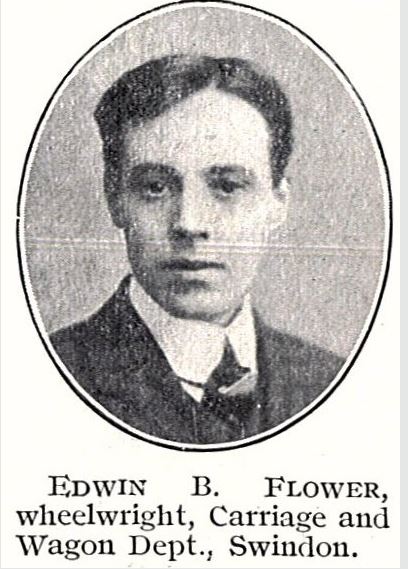
Edwin Brian Flower was the only one of Emma’s three children to survive childhood. He was born on September 23, 1889 and lived in Gorse Hill all his life. At the age of 13 he started work as an office boy/messenger in the Carriage Works, later transferring to the Wheelwright Shop. He married Ethel Woodman in 1911 and they had a daughter Iris Minnie born the following year. By 1917 Edwin was serving with the 9th Light Railway Operating Company as a Sapper in the Royal Engineers. He was killed in action on October 4, 1917 aged 28 and is buried in the Rocquingny-Equancourt Road, British Cemetery, Manancourt. Was it his time to die?

This is Emma Flower’s boy, Edwin.

Rev George Hunter – Primitive Methodist Minister

George Hunter was born in 1834 in South Cave, Yorkshire. At just 9 years of age he was working as an agricultural labourer to help support his widowed mother. At the age of 17 he converted to Primitive Methodism and spent the rest of his long life in God’s service.

George was described as ‘a splendid visitor, and a true friend and practical helper in cases of distress’ who ‘in the pulpit was earnest, simple, practical and good. He aimed not at display. He preached not to please the ear and tickle the fancy, but to touch the heart and reach the soul. His sole ambition was to save souls.’

He married Mary Thompson and the couple had two daughters, Rosanna born 1868 and Edith Mary born 1870.

In his retirement he made his home in Swindon with his younger daughter Edith where he continued to assist with the work of the Primitive Methodist church. He lived at 75 Morris Street, Rodbourne, where he died in 1916. A long obituary was published in the North Wilts Herald of which the following is an extract.

George Hunter

Death of the Rev G. Hunter

55 Years in the Primitive Methodist Ministry

The Rev. George Hunter, who was for 55 years a Primitive Methodist minister, died at his home, 75 Morris Street, Swindon, on Sunday. He was born in Yorkshire in 1834 and was 82 years of age. The greater part of his ministry was spent in the South of England, and when he retired from active service five years ago he came to reside at Swindon, and for some time continued to assist in Church work.

The funeral took place on Wednesday afternoon. The first portion of the service was conducted at the Primitive Methodist Church, Regent Street, by the Rev. S.A. Barron, who also committed the body to the earth at the Cemetery.

The Funeral Address was delivered by his old friend the Rev. J.H. Cotton …

As a pastor George Hunter had few equals. He knew his people, sympathised with them in their sorrows, advised them in their difficulties, comforted them in their sickness, and encouraged them as they drew near the eve of the great change. In the sick room nothing was more striking than his beautiful sympathy and tender handling of stricken souls. He could not refuse to help in a case of need, and often had made the widow’s heart dance with joy. Twenty years ago he heard friends talking about Mr Hunter’s kindness to the aged poor. In many circuits he would long be held in affectionate remembrance, though the majority of those who benefited from his ministry preceded him into the Great Beyond.

The great sorrow of Mr Hunter’s life was the passing away of the devoted wife who for over 35 years had lovingly shared his ministry. That was in 1900, during his second term at Stewkley. His elder daughter had to look after an aged aunt at Exeter; but the younger, since her mother’s death, had devoted herself to her father beyond all praise. During the coming years it would give to her deep and abiding satisfaction to know that she gave herself so lovingly to bring joy and comfort into her father’s life during his declining years. To these ladies in their intense bereavement and sorrow their sympathy went that day.

Advancing years ripened and mellowed Mr Hunter’s character, and considerably broadened his views. He was not sure that he was a man of the eventide after all. He often felt while in contact with him that he was a man of the morning. He passed away, after a brief illness, in the full confidence that death would be to him the gateway to a deeper, richer, and fuller life. To him, indeed, there was no death.

The Rev. W.L. Taylor said he knew Mr Hunter for a very long time. He often met him in the Brinkworth District and other circuits in which he laboured. He had that day seen some documents relating to his coming into this part of the country in 1861; and the people who had known Mr Hunter were thankful to the Hull Conference that day for having sent him. His work was a great success in the agricultural districts and his labours were equally successful in the industrial circuit in South Wales in which he spent a short period of his ministry. He asked the daughters of Mr Hunter to accept, in the sorrow which had overtaken them, the sympathy of the circuit he represented.

Extracts from the North Wilts Herald, Friday, June 16, 1916.

Rev George Hunter died aged 82 years at his home, 75 Morris Street. His funeral took place on June 14, 1916 when he was buried in grave plot C2016.

You can read more about the Rev Hunter and his family here:-

Charles Edward Hall of 75 Morris Street

John Glover Norman – builder

John Norman and his wife Eliza Loveday had a very long courtship. John appears on the 1891 census as boarding with the Loveday family at 26 Victoria Street North. John is 25 and working as a carpenter, Eliza Jane is also 25 and working as a dressmaker. The couple didn’t marry until the winter of 1906.

John Glover Norman was born in Chedworth, Gloucestershire in 1863 the son of Isaac Norman, a woodman and agricultural labourer, and his wife Mary. He completed his carpentry apprenticeship with a Chedworth carpenter but by the end of the 1880s he had moved to Swindon where he set up in business as a builder.

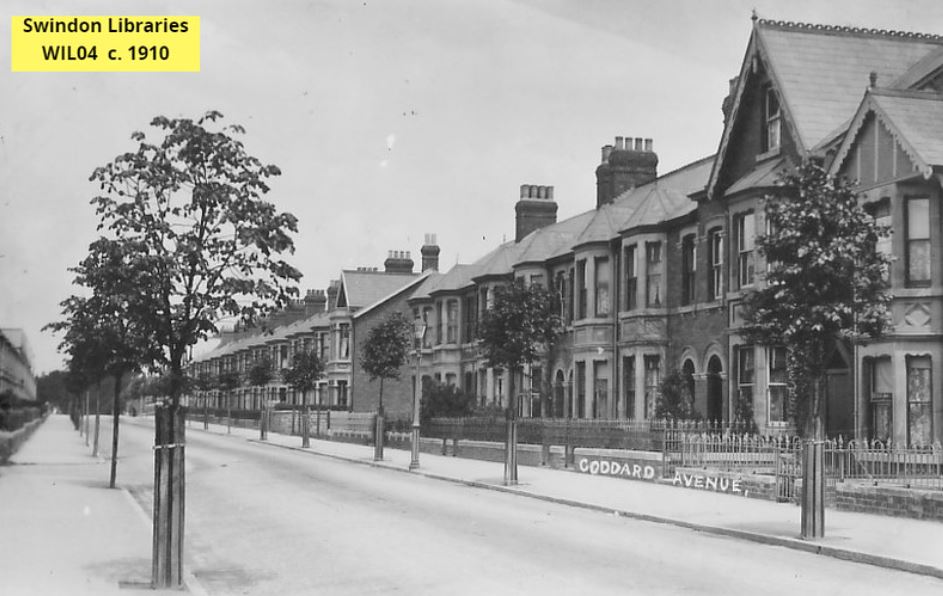
In 1898 and 1899 he was working in Goddard Avenue. He also built several properties in Westlecot Road and in 1906 he built 13 houses in the Mall. John built some classy properties but business was not straightforward and in the Spring of 1909 John Glover Norman was declared bankrupt.

At the time of the 1911 census, following his bankruptcy, John and Eliza are living in Victoria Road with a whole clutch of Loveday relatives. Eliza’s widowed mother lives with them as does two of Eliza’s nephews – Frederick Wm Loveday aged 22 a Law Clerk who describes himself as out of work, and Ernest Albert Loveday who was 24 and a carpenter, so most probably working with John. John and Eliza had two children, Beryl and a son Garnet.

John recovered from the bankruptcy crisis of 1909 and was soon back in business in Gorse Hill where he built a lot of properties including 44 houses in Caulfield Street and between 1926 – 1933 he built more than 60 houses in a road that would eventually bear his name – Norman Road.

John died in the Westlecot Manor Nursing Home in February 1954. He is buried in grave plot E8331 with his wife Eliza Jane, her mother Jane and 14 year old Dorothy Frances Reason the daughter of Eliza’s sister Mabel.

William Hooper image of Goddard Avenue taken around 1910 and published courtesy of Local Studies, Swindon Central Library.

Jane and Charles Wise – rediscovered

For a certain generation of Swindonians the name Wise will be synonymous with the bakery at Headlands Grove, established in 1938 and which went out of business in 2001. However, this Wise family are railway through and through.

Charles Wise was a Railway Signal Inspector. In 1903 he is recorded in the UK Railway Employment records as having been employed by the GWR for 30 years.

Born in Ufton, Berkshire in about 1848 he married Jane Smith at St Mary’s Church, Reading on December 29, 1874. Their first child Charles was born in Wargrave and their second Thomas in Devizes. By 1879 they had arrived in Swindon where they were living at 14 Sanford Street, their home for more than 10 years.

A daughter Alice Mary who died aged just a year old in 1880, before the cemetery opened, was buried in St Mark’s churchyard and is remembered on this headstone.

Their youngest daughter Gertrude Grace trained as a teacher before marrying in 1917. Her husband was architect Granville Walter Henry George the son of local politician Reuben George.

Jane Wise died at her home 62 Eastcott Hill in August 1920. She was buried in grave plot A238 which she shares with her small son Sydney George who died in 1886 aged 3 years 4 months and her husband Charles who died in 1933 aged 85. Their fallen headstone has been cleared and cleaned by our volunteers.