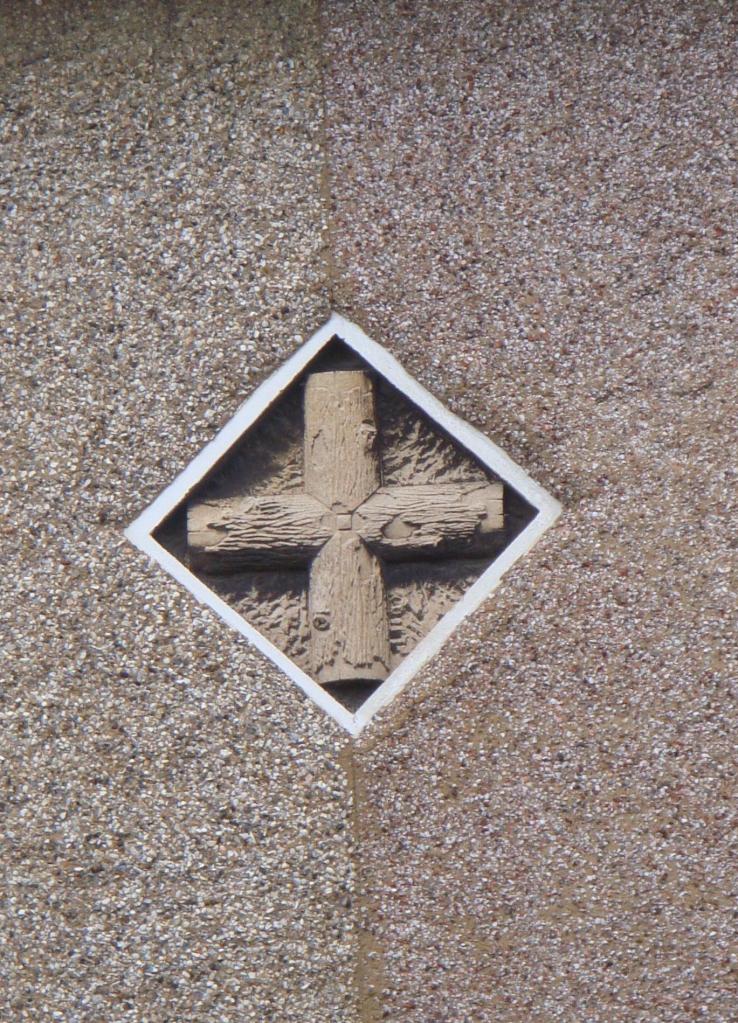
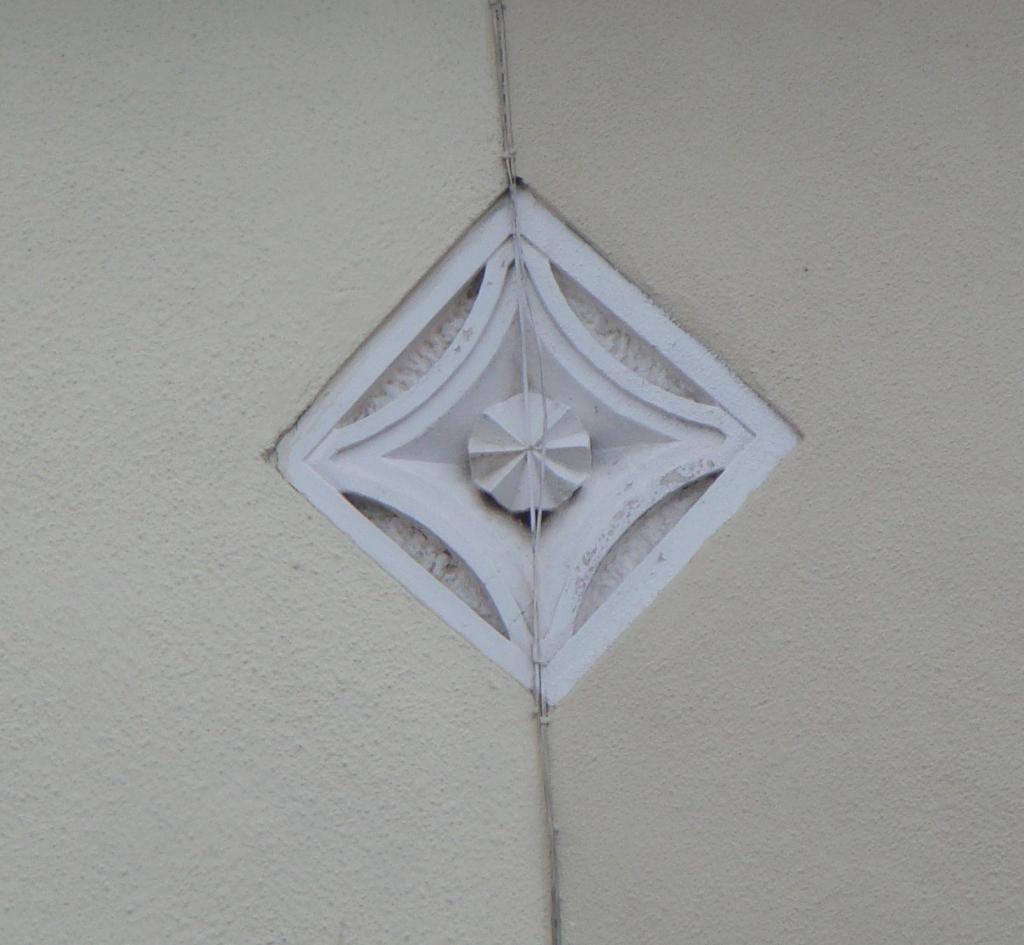
William Rowland Bird – chief chemist at GWR Works and scout leader

Members of the 18th Scouts join us every year for our Remembrance Day Service at Radnor Street Cemetery. I wonder if they know that a very significant man in the history of the scouting movement in Swindon is buried in the cemetery.

William Rowland Bird was born on August 19, 1865 and baptised at St. Andrew’s Church, Chippenham in September 1865. His parents were Robert, at that time employed as a Switchman with the Great Western Railway, and Frances. William was the eldest of their five children and spent part of his childhood at 13 Atchley Street, Bristol, but by 1891 the family had moved to Swindon and a home at 73 Albion Street.

William started work in the railway works aged 14. He later transferred to the laboratory where in 1900 he was appointed chief chemist.

William never married. In 1901 he was living at 125 Goddard Avenue with his unmarried sister Edith. By 1911 it looks as if the rest of the Bird family had moved in as well! William shared the house with sister Amy, brother James and his wife and two children, an aunt and a servant.

William’s life was equally fully. He was appointed Scout Master of Swindon Troop 2 in 1909 and the following year hosted Baden-Powell at a scout rally in the GWR Park. He served as Scout District Commissioner for North Wilts (including Swindon) from 1910 until his retirement in 1945 when he was appointed vice president of Wiltshire County Scouts. And that wasn’t all! He was one of the founding members and secretary of the Swindon and District Football League.  He was a referee and a member of St. Mark’s Young Men’s Friendly Society. He gave lectures at the Mechanics’ Institute on a variety of topics and in 1920 was a member of the Swindon Museum Committee.
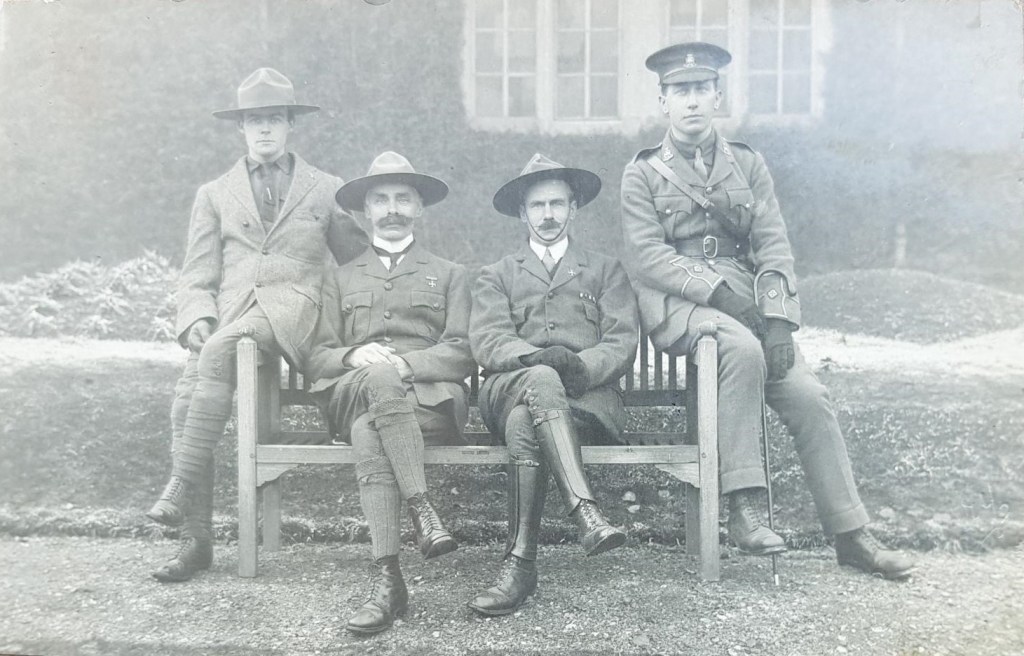
In this 1915 image District Commissioner W.R. Bird is seated 2nd on the left

Former chief chemist at GWR dies

A former chief chemist and superintendent of the GWR laboratory at Swindon, and for many years Boy Scout District Commissioner for North Wiltshire, Mr William Rowland Bird (85), of 125 Goddard Avenue, Swindon, has died.

A native of Chippenham, Mr Bird came to Swindon as a boy and entered the service of the former Great Western Railway Company when he was 14 as a fitter and turner. He attended the Mechanics’ Institute evening classes and won the Gooch prize, the premier award.

After serving his time in the shops, Mr. Bird was transferred to the laboratory, and in 1900 was appointed chief chemist. For 32 years he served on the Dangerous Goods and Chemists Committee of the Railway Clearing House. He was one of the first chemistry lecturers at the Mechanics’ Institute.

Church Interests

One of the promoters and first assistant secretary of St. Mark’s Church Young Men’s Friendly Society, he also helped found St. John’s Church Club.

The Boy Scout and Church Lads’ Brigade found a staunch supporter in Mr Bird and other deserving causes always commanded his sympathy.

He was a founder and vice-president of the North Wilts Field and Camera Club, a member of the first committee of the Swindon GWR Engineering Society, of which he became a vice president, a member of the Toc H executive and a vice-president of the GWR St. John Ambulance Association.
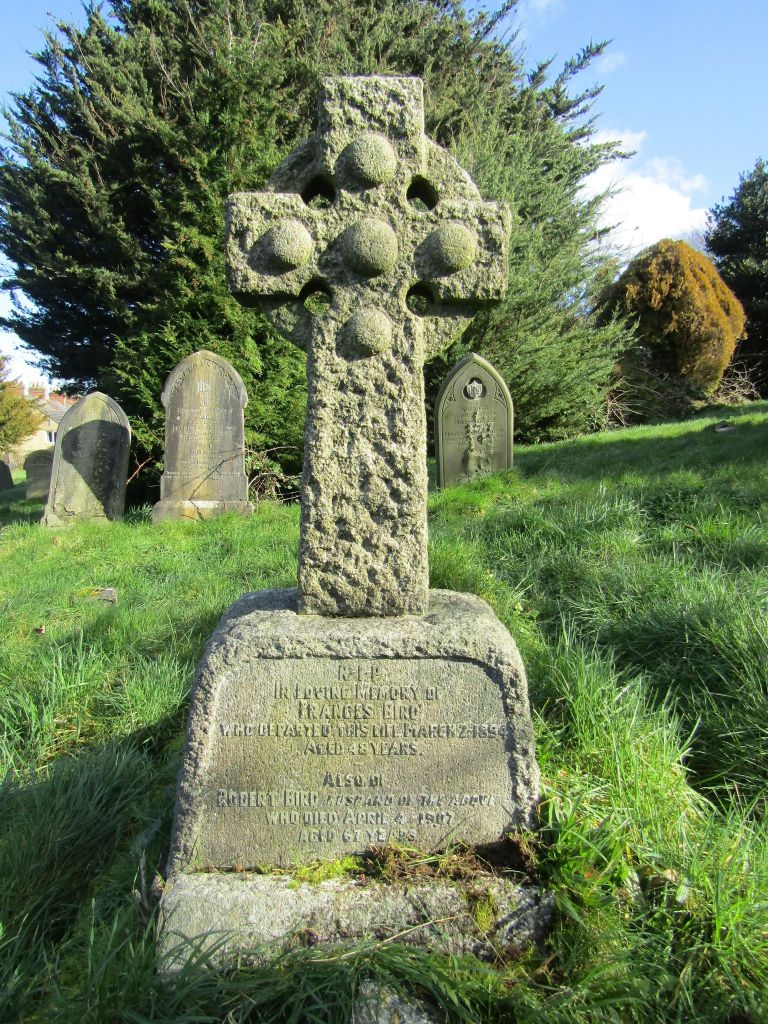
William Rowland Bird died on July 1, 1951 aged 85 years. He was buried on July 4 in grave plot A857 which he shares with his mother Frances who died in 1894 and his sister Maria May who died in 1972. His father Robert is remembered on this headstone but is buried in grave plot E7798 with other members of the Bird family.

My thanks to Steve Milner, Scout Leader at Wootton Bassett, who is presently working on an account of the life and times of William Rowland Bird and can be contacted by messaging via this blogpost.
Honesty

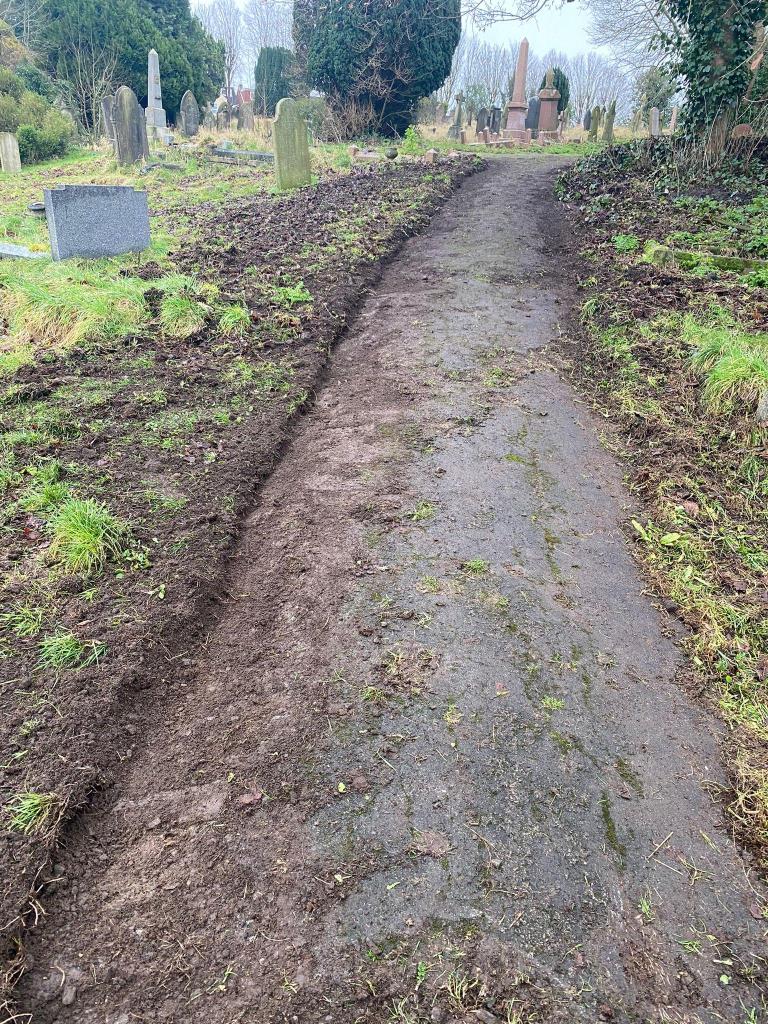
I took advantage of a dry spell in the recent turbulent weather to make a visit to the cemetery, my first this year.

Everywhere was look surprisingly unscathed by the recent tempest, although I didn’t venture far from the paths where I could see the work of the dedicated volunteers who have returned after the Christmas holiday.

It’s still rather early for the hardy little snowdrop to make an appearance, but I did see a single sprig of Lunaria, an old fashioned cottage garden plant more commonly known as honesty. And what more symbolic plant could there be for a burial ground, for at the end of life there can only be honesty.

Hubert Cyril Littleton Haggard – a promising career cut short

Hubert Cyril Littleton Haggard was born on May 23, 1889, the second of William and Sarah Haggard’s two sons. He began work with the Great Western Railway aged 15 as a ‘lad clerk on probation’ in the stores department before transferring to the laboratory as an assistant analysist on the junior staff then progressing to the senior staff. Hubert was a conscientious and meticulous student; sadly, it was this attitude to work, which contributed to his fragile mental health. In 1908 Hubert was signed off work and ‘on the club’‘required to be indoors at half past five in the evening.’ Today we have a better understanding of mental health but even now young people like Hubert are failed by an overburdened system.

Swindon Lad’s Sad End

Chemical Student’s Body found in the Canal

Promising career cut short

An exceptionally sad affair has occurred near Swindon. Last (Wednesday) evening a boy walking along the path by the side of the canal in the neighbourhood of Hay Lane, near Swindon, noticed a body in the water. He at once gave the alarm, and a man succeeded in getting the body out. It was apparent that life was extinct. Enquiries proved that deceased was Hubert Cyril Littleton Haggard, of 29 Chester Street, Swindon.

Our reporter made enquiries at the deceased’s home, where the news of the discovery of the body had come as a terrible shock.

Hubert, who was 19 years of age, was one of the brightest and best liked lads in the chemical laboratory in the GWR Factory. He was a lad full of promise, and most attentive to his work. He had been in the GWR laboratory as an analyst for between three or four years, and his exceptional progress and general aptitude for difficult and delicate work impressed those under whose directions he laboured. He held several certificates, and had won scholarships for efficiency in chemical science, being one of the foremost pupils when at the Swindon and North Wilts Technical School. Latterly he had exhibited signs of suffering from debility, which was attributed somewhat to an over application to his duties, for the father stated to our reporter that “Hubert was an extremely sensitive lad; he was conscientious to a degree, and once he applied himself to any piece of work he would stick at it until it was done to his best satisfaction.” The debility was not by any means acute, but it was decided that Hubert should take up no subjects this season, and he was himself agreeable to this. He placed himself under medical care, and being “on the club,” as the saying goes, he was required to be indoors at half past five in the evening. Before then, however, he generally managed to get in a little stroll.

On Tuesday afternoon he went for his usual stroll. He appeared quite fresh and happy when he went out. When he did not return at the usual time, some anxiety was felt, and as the night came on and he still did not return, the police were informed, and all night a search was kept up without avail, until the news came late on Wednesday afternoon that his body had been found in the canal. The deceased, apart from his work, was a cheerful, pleasant lad. He was a member of St. Mark’s Church, and was well liked and warmly respected by all who knew him. Much sympathy is felt with the relatives in their bereavement.

The inquest was held this afternoon and a verdict of “Found drowned” was returned.

Swindon Advertiser, Thursday, November 26, 1908.

Hubert was buried on November 30, 1908 in grave plot E7727. The burial registers include the comment – Found in Wilts & Berks Canal. His mother Sarah died in 1923 and was buried with him. William Haggard died in 1938 aged 85 years and was buried with his son and wife.

William Rickard Burn and the tree

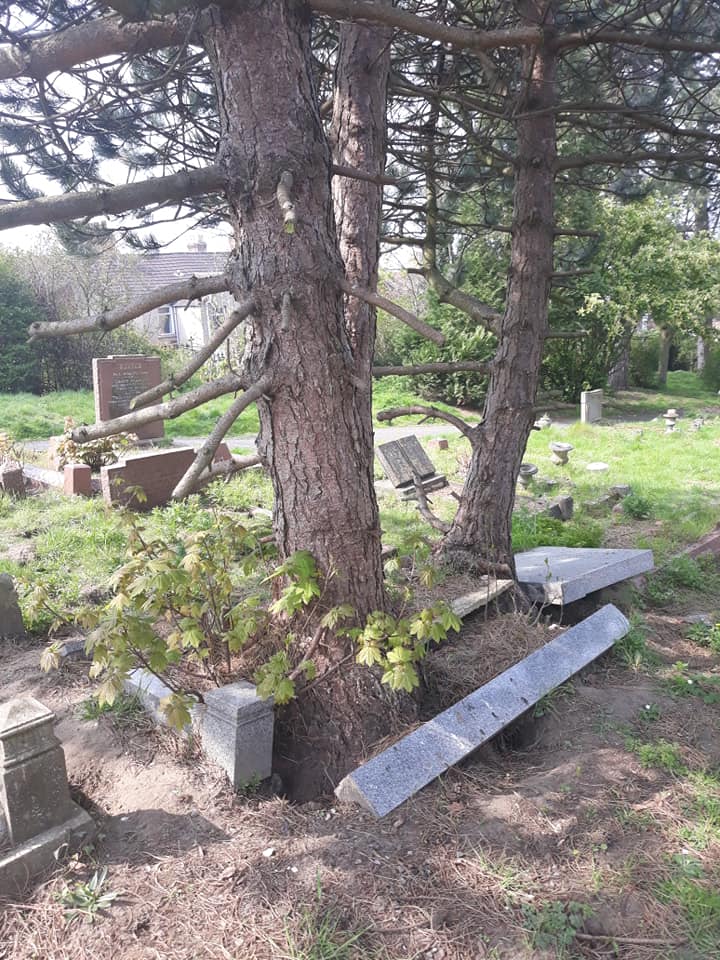
Could the person who planted this tree have imagined how big it would grow? Or perhaps it wasn’t planted but had self seeded and then grown to enormous proportions. This tree has quite literally burst open the grave.

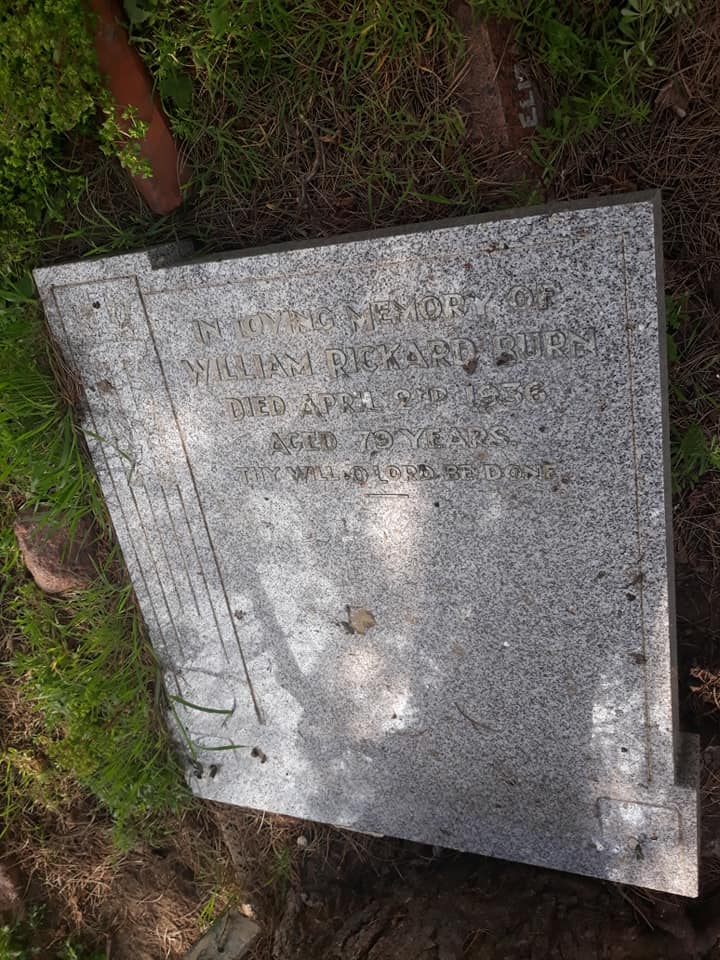
This is the grave of William Rickard Burn who lies alone in a privately purchased plot, surmounted by an attractive kerbstone memorial complete with elegant art deco headstone.

William Rickard Burn was born in Tavistock in about 1857 the son of John Burn, a copper miner, and his wife Mary. William married Lavinia Cross in 1880 and the couple would go on to have a family of seven children.

By 1901 the family had arrived in Swindon and were living at 2 Cambria Bridge Road, but by 1911 something had gone awry. Lavinia was living in Bristol. That year she filled in the census form including the names of her seven children, but later crossed it through. Someone in officialdom had also edited the details with a the stroke of a red pen. Meanwhile, William was lodging in Swindon with his two youngest sons, Charles 14 and John 12. What had happened?

Lavinia died in 1927 aged 70. Her death was registered in the Devizes area. Where was she living at that time? Could she have been a patient at the Wiltshire County Mental Hospital? Further research is required.

William died on April 2, 1936 aged 79 years. He is buried alone in grave plot D442.

Kate Romans – a very good servant

Wednesday January 3, and as promised I am working on my new book based on the diaries of Elliot Woolford, but as ever the residents of Radnor Street Cemetery continue to creep in.

Following the sudden death of his sister Ellen in 1905 Elliot was compelled to engage a housekeeper. He appointed Kate Romans who had plenty of experience of domestic service and had recently been employed as a housekeeper for widower James Harper and his three sons in Swindon.

Kate was baptised  on January 12, 1870 the daughter of Methodists William and Maria Romans. William states his occupation as labourer and in 1871 the family were living at 5 Eastcott Hill. So, I had to check the Radnor Street Cemetery burial registers and of course several members of the family were buried there.

Both William and Maria were from Chiseldon and their first child, Alfred James Leonard was born there in 1864 and was buried there in 1867.

By 1870 the family had moved to Swindon. William died in 1894 and was buried in grave plot A928 which he shares with his daughter Ada who died two years later.

Maria died at The Institution, Stratton St. Margaret and was buried on April 13, 1916 in grave plot C711. Like William and Ada’s grave, this is a public plot and Maria is buried with 6 others, although two of them are her sons. Ernest Edward Romans who died aged 17 in 1896 and Thomas Webb Romans who died in 1898 aged 38. A note in the burial registers reads – ‘fell down dead at Railway Wks Stratford S.’

I was able to locate various other members of the family – George Romans who died in 1926 and Alfred Henry Romans who died in 1934. Elizabeth Passmore nee Romans died in 1951 and was buried in plot C4677 with her husband and son and Sarah Ann Robinson nee Romans who died in 1913 and was buried with her husband in grave plot D1290. Youngest daughter Florence Jane died in 1963 – in Australia and I can’t find William Romans jnr either who died in 1936, but he maybe buried in Whitworth Road Cemetery.

But what about Elliot’s housekeeper Kate Romans?

On June 14, 1911 Elliot married Amy Newth. Kate had already handed in her notice as Elliot had recorded in his diary entry Tuesday May 23.

With just a day left of their honeymoon, Elliot writes in his diary on Tuesday June 20:

Miss Kate Romans left my employ today after 6½ years service as housekeeper. Very good servant.

So what happened next to Kate. Well, she’s proving to be a bit elusive. In 1939 there is a Kate Romans resident at St. Margaret’s Institution, Stratton St. Margaret. Her occupation is stated as Domestic Duties – Retired. In 1953 there is a death registered in Swindon for Kate Romans aged 81, which is roughly the correct age. Could this be Elliot’s Miss Romans? If anyone has any information I’d love to know.

Now it’s back to Hook Farm and Elliot Woolford’s diary.

Image of Hook Farm published courtesy of the Woolford family and the Friends of Lydiard Park.

Do you know where Carr Street is?

Do you know where Carr Street is? If someone asked you for directions, would you be able to help them? Today Carr Street runs behind the Waiting Room pub, an access road with parking for several businesses including Da Vinci’s Restaurant.

However, it wasn’t always so. Carr Street was built in around 1878/9 by the United Kingdom Land and Building Society along with Catherine Street and Farnsby Street. In 1881 Carr Street comprised 27 houses and cottages and was built in a most convenient situation.

In 1885 numbers 2-10 came on the market when they were described as four roomed cottages, ‘yielding the sum of £128 14s per annum.’ As today, investors bought property to rent and Carr Street was an attractive proposition. The advertising blurb stated ‘The Houses are only a short distance from the Great Western Railway Works, and therefore let readily.’

In 1888 numbers 11 and 12 Carr Street were also on the market when they were described as follows – ‘Each house contains Passage, Parlor, Kitchen with Cupboards, 3 Bed-Rooms, back kitchen, with fire-place and copper, coal house and, outside, a closet. The Houses have Gardens, and water is laid on.’

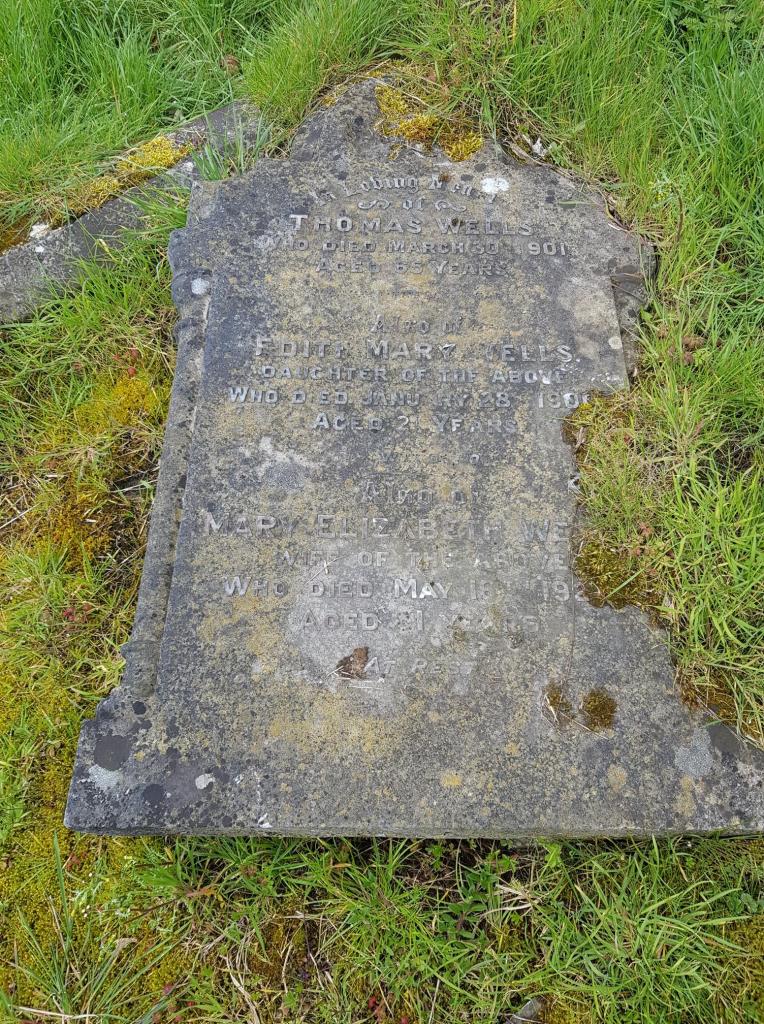
New-build number 13 Carr Street was probably of a similar design when Thomas & Eliza Wells moved there in 1879. Edith Mary was born that same year and Frederick James in 1883. Thomas was employed as a carpenter in the Works and by 1881 his two elder sons had already joined him there – George William 16 worked as a carpenter and 14 year old John as a railway clerk.

The Wells family lived at 13 Carr Street for more than 15 years. By 1900 they had moved to 5 Dean Street where Thomas died in March 1901. He was buried on April 3 in one of three Wells’ family graves, E7644, E7645 and E7646. He was buried with his wife Elizabeth who died in May 1924.

Happy New Year 2024

As we begin this New Year of 2024 I hope you will permit me a little self-indulgence.

This blog is dedicated to remembering the ordinary people of Swindon. There are more than 550 stories on the Radnor Street Cemetery blog. Stories about shopkeepers, boilermakers, loco drivers, coachmakers, fitters and turners and the women who, perhaps surprisingly, were social workers, J.P.s, magistrates and business women, as well as wives and mothers.

We have readers from across the globe, although this might just be Noel, who has done a lot of travelling in 2023. Our cemetery walks led by tour guide Andy (who manages to fit them in around his cricket watching calendar) continue to attract on average 50+ people. Our team of gardening volunteers continues to grow under the leadership of Jon. There are 104 Commonwealth War Graves, which the team care for in their role as Eyes On, Hands On volunteers. In recent months they have discovered the graves of veterans of the Crimea and Boer Wars and even the Zulu War.

It is hoped that Swindon Borough Council, in this new era of heritage awareness and appreciation, will recognise the importance of Radnor Street Cemetery and join us in preserving the history of this special place.

The inspiration for this blog has come from several sources – firstly The Gentle Author who has been writing the Spitalfields Life blog for more than 14 years, posting daily stories about London’s east end. Then there is Sheldon K. Goodman of Cemetery Club fame, a cemetery aficionado par excellence. And finally my friend Mark Sutton who sadly died in 2022.

George Restieaux and the French connection

Today it is so easy to begin your family history research. With a couple of clicks of a laptop mouse you can enter a whole world of internet possibilities. Of course, there are pitfalls one of which is mis-transcriptions with websites such as Ancestry and Find My Past littered with them. I came across some examples such as Rasticand and Reastreamy when researching the surname Restieaux.

George Francis Restieaux was just sixteen years old (the newspaper report says 18) when he died in 1881. George was born in Neath, Glamorgan but Restieaux was definitely not a Welsh name.  He was the son of coachbuilder/painter Edward Alban Restieaux and Susannah Matthews. Edward was employed in the GWR Works and in 1881 the family lived at 2 Bristol Street. Edward and Susannah had married in 1854 at St Pancras Church when they both lived in that London parish. By 1861 they were living in Neath, Glamorgan where George was born in 1865. His father Edward states that his own place of birth was Norwich in Norfolk and I wondered how the Restieaux family had ended up there.

With a few clicks of that laptop mouse I was able to find Edward’s parents Joseph Restieaux and Elizabeth Tidman who married in St John de Sepulchre, Norwich in 1804. Back one more generation and I arrived at the French connection; Andre Restieaux born in Bordeaux about 1740 who married Marguerite Magdalaine Mignot on January 6, 1766 at St Anne’s, Soho.

There is, however, only so far you can get with internet research and at some point you have to look at original documents. It would be interesting to discover what Andre’s occupation was and how he and Marguerite ended up in London, but that is a task for someone else out there. But beware of the pitfalls.

The first burial service in accordance with the rites of the Roman Catholic Church in the new cemetery was performed on Saturday last by the Rev Father Eikerling and the members of the St. Cecilia Society, of which deceased was a member. The body of deceased, George Restieaux, aged 18 years, having been removed from the house of his parents to the Roman Catholic Chapel in Regent Street, the service, which throughout was choral, commenced, lasting close upon an hour, when the body was removed to the hearse and conveyed to the cemetery, accompanied by the Rev Father Eikerling and his attendant acolytes, the relatives and friends and members of the choir and society. At the cemetery chapel the service was resumed by the singing of the Requiem aeternam of Cacciolini, at the close of which the officiating priest preached a brief sermon, in course of which he reviewed the life of deceased and his connection with the St. Cecilia Society. The procession having been reformed, the corpse was borne to the grave, the choir singing the “Miserere,” concluding with the Requiem aeternam. At the grave the singing, which was particularly effective, was brought to a close by the singing of the anthem “I know that my Redeemer liveth.”

The former Roman Catholic Chapel painted by local artist George Puckey in 1890

Despite a rather elaborate funeral service, young George was buried in Radnor Street Cemetery in a public grave, plot A353, where he lies alone.

His father Edward died 14 years later in 1895 and his mother Susannah in 1912. Both were buried in separate, public graves. Edward in B2434 and Susannah in B1609. George’s brother John Valentino Restieaux died in 1928 and was buried in grave plot C61, another public grave.

Swindon – more interesting than many towns which are more beautiful

John Betjeman (Poet Laureate 1972-1984) wrote an essay for a book entitled Studies in the History of Swindon published in 1950 to celebrate the fiftieth anniversary of the incorporation of the Borough. Betjeman’s ‘short architectural study of Swindon’ provides some examples of architecture (and yes, we still have some) but he also gives credit to the construction of the familiar red brick terraces, describing Swindon as ‘more interesting than many towns which are more beautiful.’

Much of 19th century Swindon, old and new, was built piecemeal in short terraces by individual builders; houses that are different styles and different sizes. Occasionally a terrace name survives in brick work such as Albert Terrace in Dixon Street.

Betjeman talks about ‘artisan buildings’ for ‘mechanics and handicraftsmen built consciously as such’ ‘well built and weatherproof,’ and he mentions Hawkins Street, Thomas Street, Charles Street and Manton Street in Rodbourne.

And more than 70 years later there are still interesting features to be found; the trick is to look up! Take a wander down any street in Rodbourne and you will see decorative plaques beneath the eaves. On the terrace between Linslade Street and Jennings Street there is a plaque – Lucknow Terrace 1880 – named to commemorate the Siege of Lucknow in 1857. Perhaps the builder, TP, was a veteran of that war?

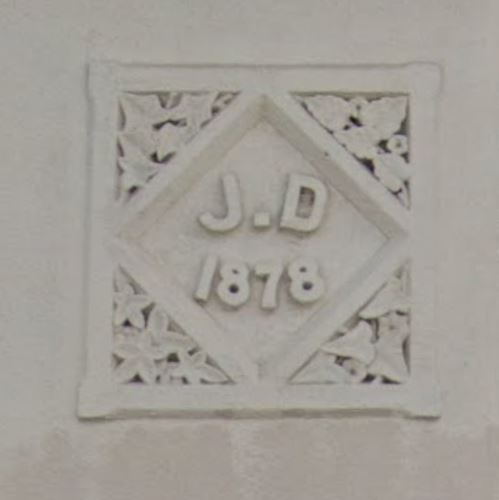
Closer to the cemetery is Albion Street where building dates from 1877. Between house numbers 9 and 10 there is situated a decorative plaque enclosing the initials JD and the date 1878.

Three years later, at the time of the 1881 census, Joseph Deacon, a carpenter and joiner, lived in number 9, (a property he probably built along with number 10) with his wife Eliza and their three young children Sarah Jane 3, Harry 2 and one month old baby William James.

For more than 70 years the Deacon family lived at numbers 9 and/or 10 Albion Street. In 1901 Eliza ran a general shop at number 10 where she later died in 1917 and youngest daughter Julia died at No 9 in 1955.

Joseph died in 1925. He was buried on June 4 and shares grave plot C3415 with his wife Eliza and daughter Julia.

Below – decorative plaques on Rodbourne streets

Albert Terrace, Dixon Street

Skerten family undertakers

The Skerten family of undertakers had a presence in Swindon for more than 75 years. For most of that time they were busy in Radnor Street cemetery and the early burial registers reveal the many funerals they performed there.

Carpenter and joiner Richard Skerten married Ann Brown at St Paul’s Church, Bristol in 1844 and by 1851 they had moved to Swindon and a home at 32 Reading Street with their three young daughters.

By 1871 Richard was established as both a joiner and an undertaker but his business very nearly came to an end when a disastrous fire totally destroyed his Regent Street workshops. It happened on Friday June 15, 1877 when it was believed the heat of the sun ignited oils in the workshop. Neither the buildings, the stock-in-trade nor the workmen’s tools were insured.

However, Richard re-established his business at 1 Queen Street where his wife Ann and younger son Richard continued to run the family firm after his death in 1886.

Meanwhile, by 1881 elder son Arthur had established his own business at 5 King Street. On April 29, 1887 Arthur had the sad task of burying his twin baby sons Richard and Joseph just 3 and 4 days old respectively. Perhaps surprisingly the babies were buried in a public plot with three others – burial conventions were different then.

Probably the most extraordinary funeral Richard Skerten junior arranged was that of gipsy patriarch Timothy Buckland. For about a month the terminally ill Timothy camped in a field near the Wharf, Drove Road with some nine other vans and tents and 50 members of his family.

According to the Swindon Advertiser the funeral attracted several thousand spectators to the churchyard at Christ Church.

For the funeral the arrangements were placed in the hands of Mr Richard Skerten, undertaker, of New Swindon, and a hearse and eleven mourning coaches were engaged, the adult members of the family occupying the latter. The coffin was of French polished oak, with brass fittings, and bore the simple inscription on a brass plate “Timothy Buckland, died 8th Nov. 1890, aged 70 years.

Extract from the Swindon Advertiser, Saturday Nov 15, 1890.

When their time came all three Skerten undertakers were buried in Radnor Street Cemetery, which seems very fitting.

Richard Skerten senior was buried on May 20, 1886 in grave plot E8434 where he was joined by his wife Ann who died in 1902.

His son Richard was buried on December 11, 1911 in grave plot D1319 where his wife Ann joined him in 1936. Buried with them is their son-in-law Leslie Ernest Adams, their daughter Annie Amelia’s husband, who died at 1 Queen Street in October 1959.

Arthur Skerten was buried on February 9, 1934 in grave plot C1785 joining his 12 year old daughter Isabella May who died in 1907 and his wife Betsy who died in 1930.