Charles Smart – Killed in Black-Out

In July 1939, as war became imminent, the Lord Privy Seal’s Office issued a number of Public Information Leaflets. Leaflet No. 2 contained information on ‘Your Gas Mask – How to keep it and How to Use It’ as well as instructions concerning ‘Masking Your Windows’ with the following advice:

In war, one of our great protections against the dangers of air attack after nightfall would be the “black out.” On the outbreak of hostilities all external lights and street lighting would be totally extinguished so as to give hostile aircraft no indication as to their whereabouts. But this will not be fully effective unless you do your part, and see to it that no lighting in the house where you live is visible from the outside. The motto for safety will be “Keep it dark!”

The ‘black out’ was yet another feature of wartime that impacted on everyday life. In the winter of 1940 these difficult conditions and icy winter roads resulted in a road traffic accident and the death of Charles Smart.

Image published courtesy of Local Studies, Swindon Central Library.

Killed in Black-Out

Inquest on Swindon Man

Against the wishes of his niece who thought the roads too treacherous for him, Mr Charles Smart, aged 68, a retired GWR employee, of 44, Curtis Street, Swindon, went out on Tuesday of last week to the Central Club. On his way home he was in the act of crossing the road when he was knocked down by a Corporation ‘bus receiving injuries from which he died in the GWR Medical Fund Hospital on Saturday night.

A verdict of “Accidental death” was returned by the jury at Tuesday’s inquest, conducted by the Wilts Coroner (Mr Harold Dale), and the driver of the ‘bus William John Snell was exonerated.

Mr Smart’s niece, Mrs Dorothy Kate Critchley, with whom he lived, said her uncle enjoyed good health, hearing and eyesight.

Dr Alister McLean said the cause of death was shock following injury to the brain due to a blow on the head.

Reasonable Speed

Walter Fred J. Ockwell, 10, Milton Road, Swindon said that last Tuesday night about 10 o’clock, he was in Curtis Street and just before reaching Whitehead Street he saw a form in the middle of the road. The form was not moving. When about 30 feet away he shouted to the object. A ‘bus came along but the object did not appear to move until the ‘bus was almost on top of it. As the ‘bus swerved to the right the object moved to the left. The ‘bus was almost in the middle of the road, and was being driven at quite a reasonable speed.

When he reached the spot, the driver and passengers were getting out of the ‘bus. The object proved to be a man lying a little to the centre of the road. It appeared as if the ‘bus had pushed the man forward. Witness said that as the man stood in the road he faced the direction from which the bus came.

Private James Lewis Warburton said he saw Smart leave the pavement and walk towards the centre of the road, where he stood still. He thought Smart was going to stop the bus, and he did not see him slip.

Driver’s Swerve

The bus driver, William John Snell, described it as a very dark night, with bad road conditions. When he first saw the figure in the road it was very close to the bus and well into the road. He immediately applied his brakes and swerved to the offside, but, owing to the condition of the road, the bus slipped along a little further, and the nearside headlamp struck the man, who was wearing dark clothing.

Questioned by his solicitor (Mr S.G.G. Humphreys), Snell said that had Smart remained where he was when he first saw him, the swerve would have avoided him.

The Coroner suggested that it might be that Smart found the road so slippery that he was afraid to move.

Sympathy was extended to the relatives by the Coroner, and by Mr Humphreys on behalf of the Corporation and the driver of the bus.

North Wilts Herald, Friday, 9 February, 1940.

Image published courtesy of the Dixon Attwell Collection, Local Studies, Swindon Central Library

Charles Smart 69 years of 44 Curtis Street died at the GW Hospital and was buried in a public grave, plot C149 on February 8, 1940.

Kenneth Scott-Browne

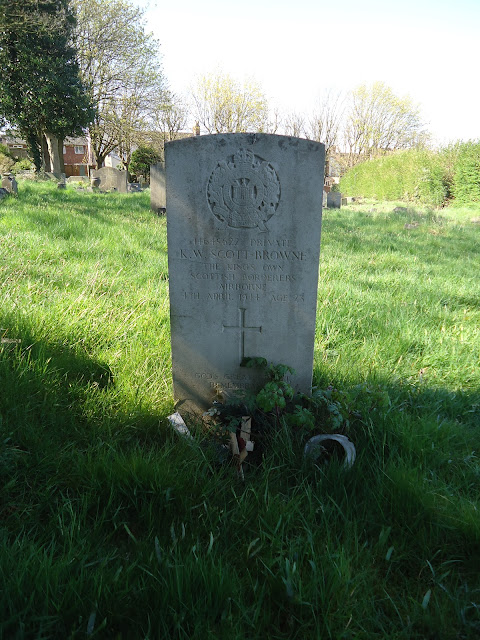
Kenneth Scott-Browne was a member of the King’s Own Scottish Borderers 7th Battalion. In November 1943 the 7th Battalion was converted into an Airborne Battalion and began training for the planned Normandy landings. During an exercise code named DREME a Stirling towing a Horsa glider carrying No 3 Platoon hit a tree and crashed. Scott-Browne was one of 34 military personnel killed that day in April 1944. His death was registered in Droxford, Hampshire and his body returned to his home at 85 Medgbury Road, Swindon for burial in Radnor Street Cemetery.

VE Day was a time for rejoicing but not for everyone. While the war in Europe had ended the one in Japan would continue for another three months. And what about the families who would never meet again their loved ones.

The Kenneth Scott-Browne’s wartime marriage to Elsie Herbert was a short one. The wedding took place in Swindon in the spring of 1941 and just four years later Elsie was a widow with a toddler, a son named Kenneth Frederick after his two grandfathers. By May 8, 1945 Elsie had remarried. She was still only 25 and had a three year old son to support when she married Leslie Jack Burnett. In 1954 she married for a third time.

Kenneth was buried on April 11, 1944 in Elsie’s Herbert family plot. Elsie outlived both her sons and died at the Kingsmead Nursing Home in Prospect Place, Swindon in May 2005, aged 84. She was buried in plot C4251 with her young, first husband Kenneth.

Nellie May Page – killed in WWII air raid

The cities of London and Bristol were heavily bombed during the Second World War yet Swindon, somewhere in between, went relatively unscathed. Despite its dominance within the railway industry it appears that Swindon was not on the Luftwaffe radar. There is a theory that Hitler was preserving the railway network for when he invaded Britain.

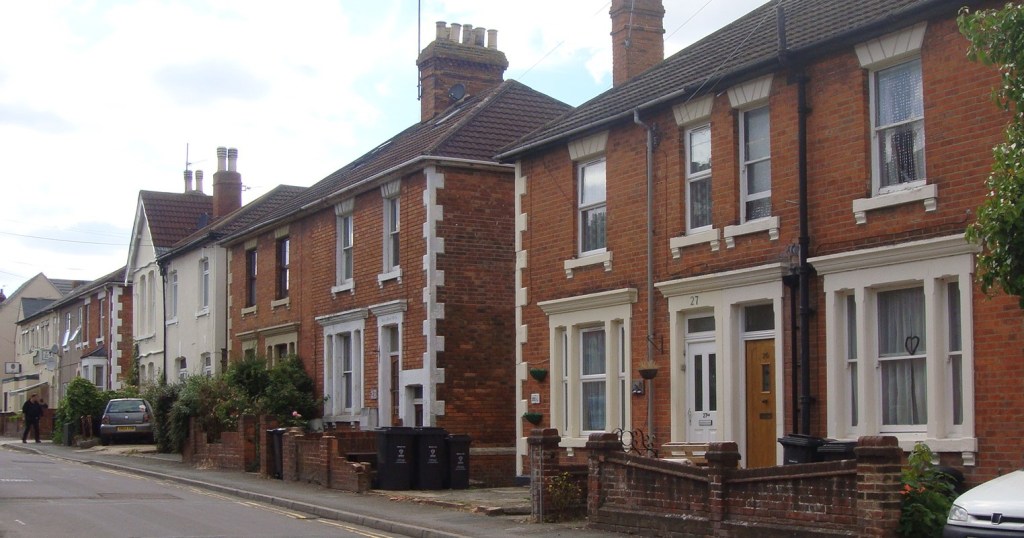
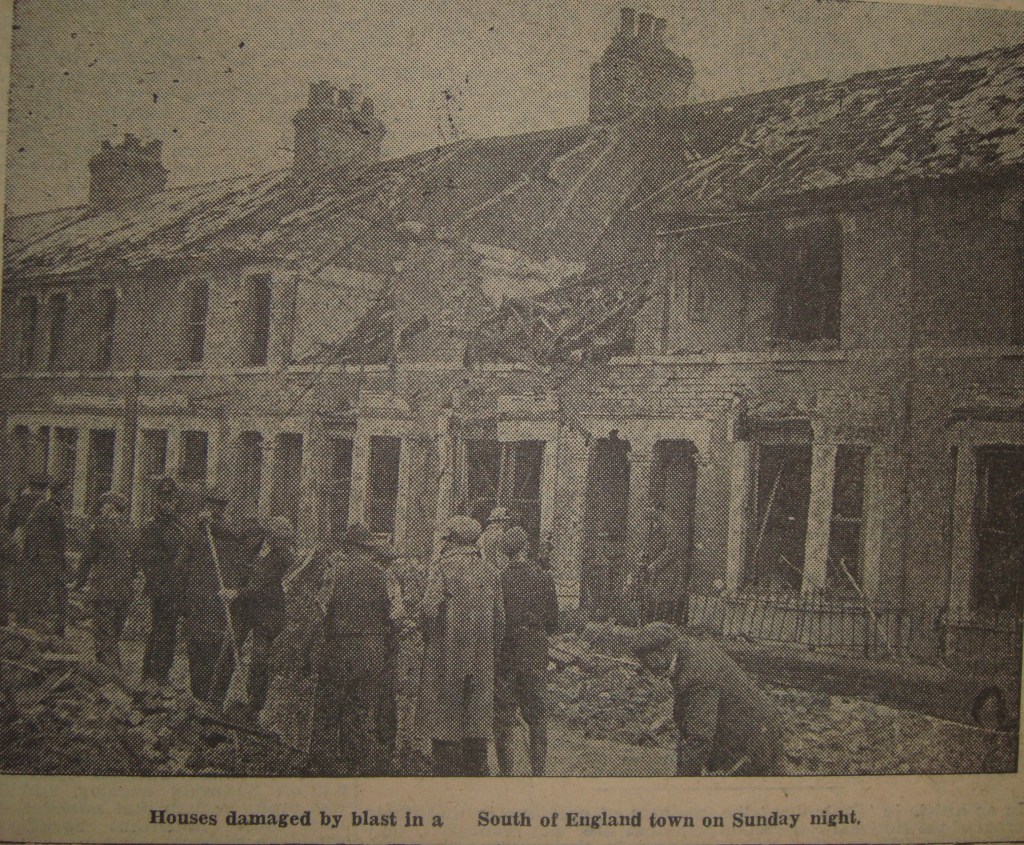
On the night of October 20, 1940 a lone bomber dropped three bombs (two high-explosive and an incendiary bomb) on the town, causing significant damage on Rosebery and Graham Streets in Broad Town. There were 10 confirmed fatalities, including Nellie May Page who lived at 35 Graham Street but was visiting friends in Rosebery Street that fateful night.

Workers’ Houses Wrecked

People Killed by Bombs in South of England Town

Having regard to the damage to working class houses caused by two heavy high explosive bombs that dropped on a town in the South on Sunday night, the casualties were comparatively few.

In one street six adjoining houses collapsed when a heavy bomb crashed through the roof of one. The second bomb dropped in the middle of a road in an adjoining street, leaving another huge crater and almost completely demolishing three houses.

The explosion threw the uppermost part of about a dozen houses out of the perpendicular. Pieces of masonry, rafter timber and other debris were rained down over a wide radius, holing roofs in many places and doing extensive damage.

Despite this damage fatal casualties were few. One of the persons killed was Mrs. Nellie May Page aged 47, who was visiting friends at the time. Her daughter, Miss Sylvia Joan Page, who was with her, was taken to hospital suffering from severe head injuries and shock.

Fractured Gas Main

An oil bomb which struck the rear of one house, partially wrecked the scullery and living room. A fire was started here, but it was dealt with very effectively by the fire-fighting services, and extinguished before it could get a hold. Gas from a fractured gas main also caught alight, but here again the brigade quickly had the situation in hand.

The situation provided a severe test for the various ARP services and police, but they all acquitted themselves remarkably well. Demolition and rescue squads, as well as first-aid parties and medical men, were at hand extricating residents trapped deep down in the wreckage and attending to the injured.

In Good Spirit

Gallant work was done by wardens and ambulance men, and they recount how two young girls were liberated, almost unscathed, from beneath a completely wrecked house. Falling beams had apparently prevented them from being crushed to death, and the rescuers were surprised to find that they were not only unhurt but in good spirit. One asked for a drink and when offered a flask of water observed, with a smile, “Is that the best you can do?”

Generally, the inhabitants displayed great fortitude and calmness, and seemed to be more concerned about the welfare of their neighbours than of their own interests.

Rapid headway was made in clearing away the debris. There were plenty of volunteers for the work of salving furniture and other belongs, and, in the same way, those whose homes were not so severely damaged found plenty of helpers to assist in covering up broken windows and doorways.

Extracts for the North Wilts Herald  Friday 25 October 1940.

Wartime publishing restrictions prevented newspapers from identifying the town and street names.

Nellie was born on June 4, 1893, the youngest of five children. Her father William James Hopkins worked in the Carriage and Wagon Works. When Nellie was baptised at St. Saviours on July 16, 1893 William and his wife Emma and their children were living at 78 William Street.

Nellie married at St. Marks on September 25, 1915 during the First World War when her husband Francis Vernon Page was serving in the RAMC.

Nellie was buried in grave plot E7491 with her husband Francis who died in December 1935.

Jane Elizabeth Hobbs – killed in WWII air raid

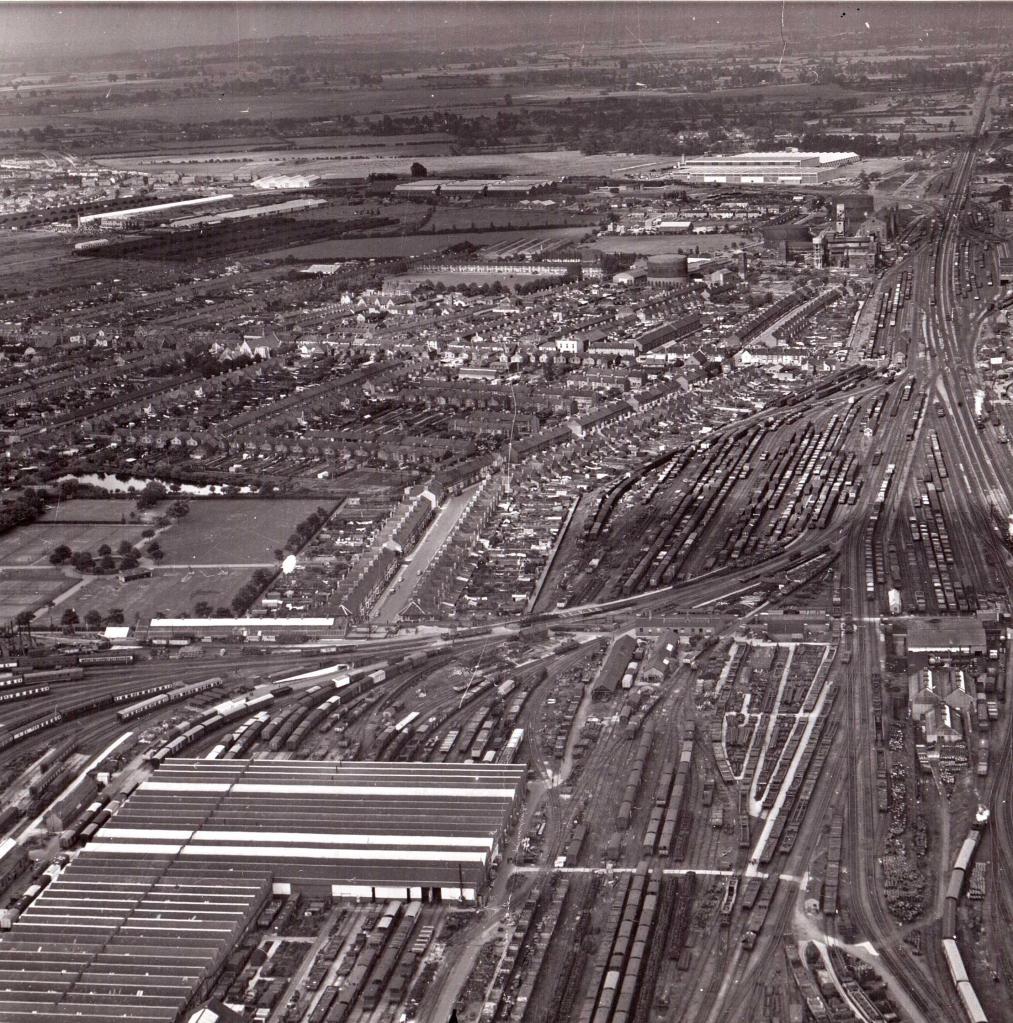
A lone raider on a bombing mission came dangerously close to the Great Western Railway factory during the night of Thursday December 19, 1940. But instead of hitting the Works the high explosive bomb fell on Beatrice Street, Gorse Hill.

There were several casualties and some miraculous rescues, but sadly Jane Elizabeth Hobbs died the following day in the Victoria Hospital.

Jane Elizabeth Miles was the daughter of a railway man; she married another railway man like so many women of her generation did. William John Hobbs had begun his working life as a cattleman on a farm in Calne but by the time of his marriage to Jane in 1907 he was working as a machineman in the GWR.

The couple lived their entire married life in Gorse Hill where they raised three children. William died in 1933 at 167 Beatrice Street; the house that was later destroyed by a bomb on the night of Thursday December 19, 1940.

Five houses were demolished and others damaged, but there were few casualties when a lone raider dropped bombs on a town in the South of England last Thursday night.

In one street where three houses were wrecked, the rescuers, who were on the scene within two or three minutes, were astonished to hear cries for aid.

Gaining a way through the debris from the back of the house they saw three or four heads protruding from beneath the collapsed stairway. These were the occupants of the house, who had rushed under the staircase as the building collapsed upon them and were thrown flat on the floor. They were all pulled out suffering from slight injuries.

Mrs Jane Hobbs, a widow, was the most seriously injured, and she died in hospital on Friday evening. Her 24-year-old daughter Jane, who was also seriously injured is still in hospital.

A Mr. Crook, who was on a visit from another part of the town, was also taken to hospital.

In another nearby street a bomb dropped in the middle of a small backyard at the rear of two houses. All the outbuildings were demolished and the walls at the back of the houses were fractured. Here again there were lucky escapes. Five or six occupants in the kitchen included a married couple who had twice previously been bombed in London.

Scores of houses in the neighbourhood were hit by flying masonry, and in this way, as well as through blast, many windows were broken.

Praise for ARP Squads.

Everyone was loud in praise of the magnificent way in which the wardens, the rescue and demolition squads. First-aid workers and firemen discharged their duties.

One resident observed: “They were here and hard at work almost before we could get out. Not a second was wasted, and I can tell you this fact was a great relief to us all.”

Extracts from North Wilts Herald, Friday, 27 December, 1940.

Gorse Hill

Jane was buried on December 26 in grave plot C3831 which she shares with her husband William and her parents Henry John and Fanny Miles.

Battle of Britain commemorations 2015

Ten years ago Radnor Street Cemetery volunteers in partnership with the Swindon Heritage Magazine commemorated another significant war time event – the 75th anniversary of the Battle of Britain.

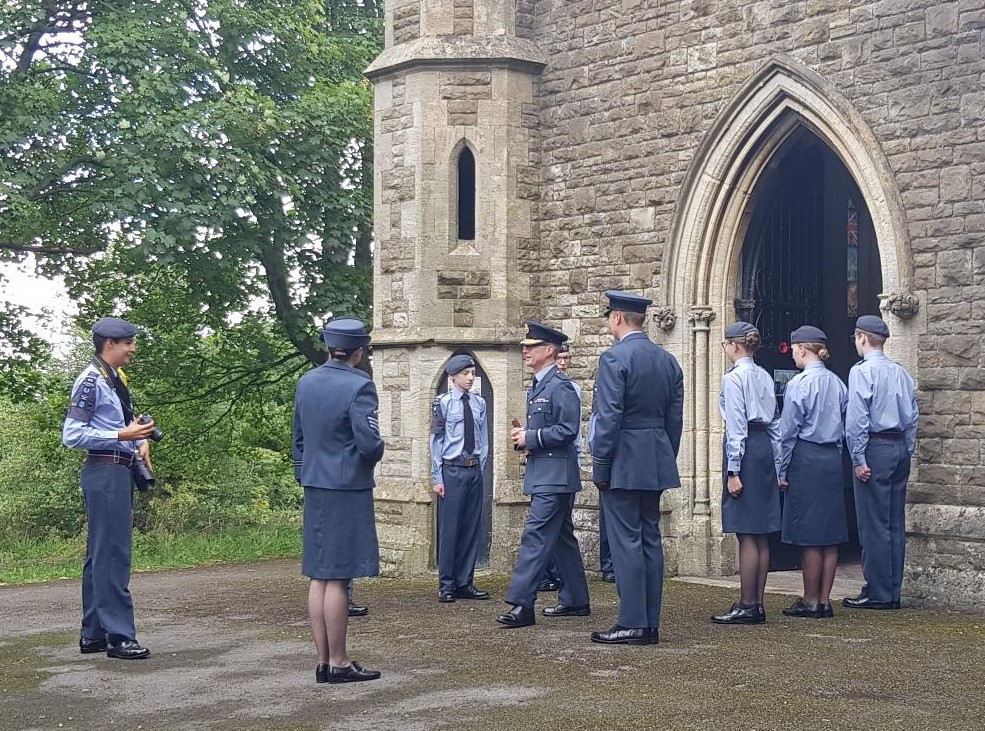
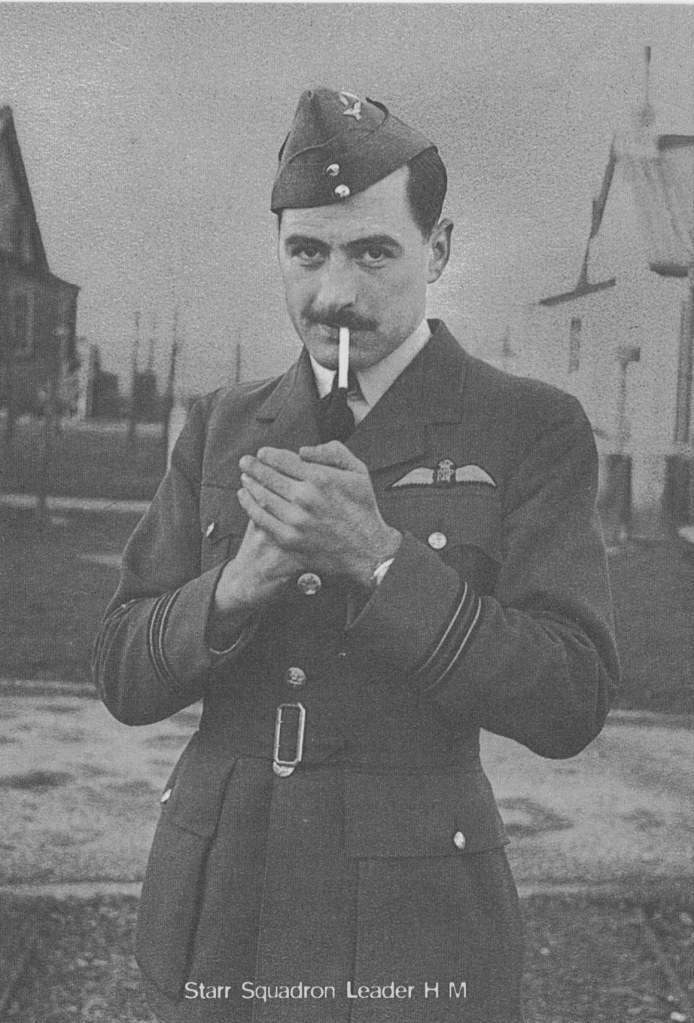
The Duke, in his role as Air Marshall, Royal Air Force came to commemorate the 75th anniversary of the Battle of Britain and one of ‘The Few’, Swindon born fighter pilot Harold Morley Starr. The week long Swindon Remembers commemorative festival concluded with a flypast by the Battle of Britain Memorial Flight and the Duke’s visit on Battle of Britain Day.

Harold Morley Starr was born in Swindon on September 8, 1914, the fourth of Ellen and Morley Starr’s five children. He grew up in the Central Temperance Hotel in Regent Street where his mother was the proprietor and his father worked as a shop fitter. Harold attended Clarence Street School, Swindon completing his education at Cotham Grammar School following the family’s move to Bristol.

While still at school Harold became a member of the Officers’ Training Corps and at the age of just 19 won an RAF scholarship and joined the air force as an acting pilot officer.

On August 31, 1940, at the height of the Battle of Britain, Harold’s Hurricane L1830 was shot down over Eastry near Sandwich during an interception patrol. The young fighter pilot successfully baled out at 15,000 feet but as he floated down three Messerschmitts circled him and opened fire.

Harold’s body was returned to Swindon where he was buried in a family grave in Radnor Street Cemetery. His funeral took place on September 6, two days before what would have been his 26th birthday.

Two blue plaques commemorate Harold and his brother Wing Commander Norman John Starr DFC & Bar. Visit the website for more details.

The Duke of Gloucester was then escorted to Swindon station where he unveiled a commemorative plaque to Sqn Ldr Starr on a First Great Western Class 43 locomotive.

Stanley William Ashton – pilot officer

Pilot officer Stanley Ashton married Josephine Loveday in December 1939. Josephine was the daughter of Frederick and Adeline Loveday. Frederick served as an Air Mechanic 1st Class during the Great War. He died in the King George Military Hospital in Stamford Street, South London. He was 29 years old and left a widow and two small daughters.

Stanley William Ashton and Josephine Loveday

Stanley William Ashton, who was born on 22nd August 1911, served an apprenticeship as an electrician. He joined the RAF and gained his Pilots wings in Nov 1938. In 1939 he was serving with 59 squadron in France where they were using Blenheim MIV aircraft. As the Germans pushed through France in 1940 the squadron was withdrawn to England and based at RAF Odiham Hampshire.  They continued to fly missions over France, mainly reconnaissance operations.

Stanley William Ashton

On Tuesday 4th June 1940 Pilot officer Ashton and his crew were flying R3697. They took off from RAF Eastchurch in Kent – There are 2twotheories as to what they were doing.  One is that they were on a transit flight to head back to their base in Hampshire. The other is that they were on an operational mission.

Neither have been confirmed but as the aircraft banked during take off one of the wings clipped the ground and the plane crashed killing all on board. Among those killed were Observer Sgt William John Wilson and Wireless operator/Air gunner Sgt Roland Wilson (unrelated). Stanley Ashton had been married just six months.

Josephine eventually remarried in 1955 and died in 1982 but is buried elsewhere. Although the cemetery was closed by then the burial registers indicate that there was room for one adult left in this plot.

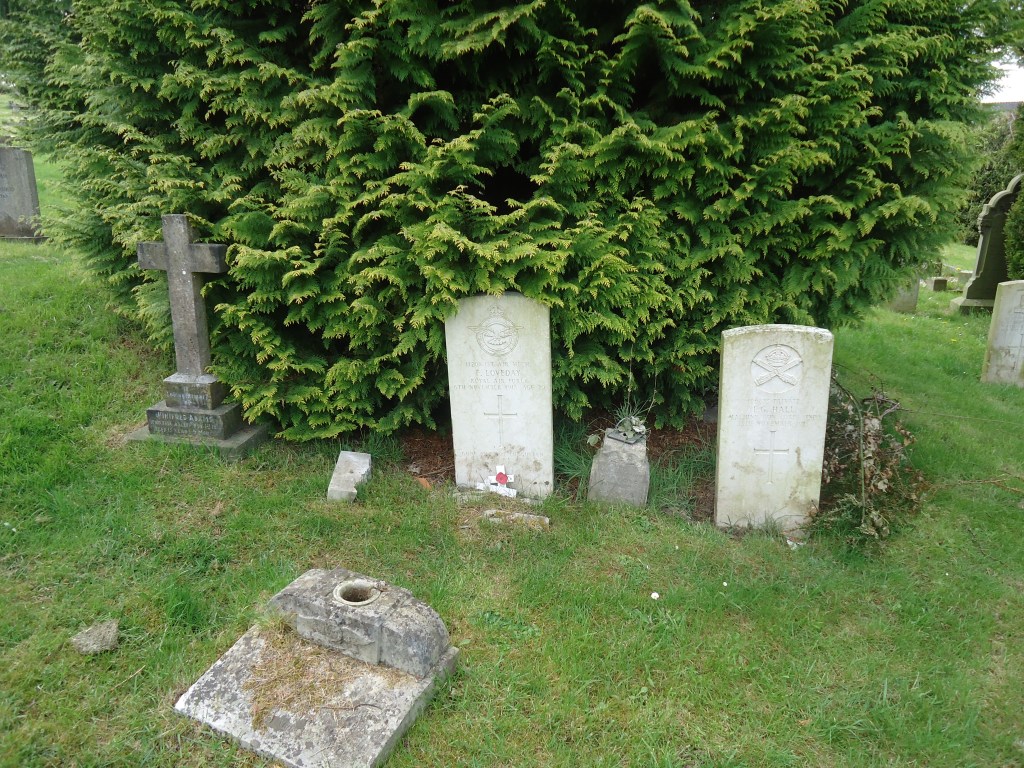
Stanley William Ashton is buried here in plot C3524 with Frederick and Adeline Loveday.

International Women’s Day

On International Women’s Day we remember some of the remarkable women who have contributed to Swindon’s history and now lie buried in Radnor Street Cemetery.

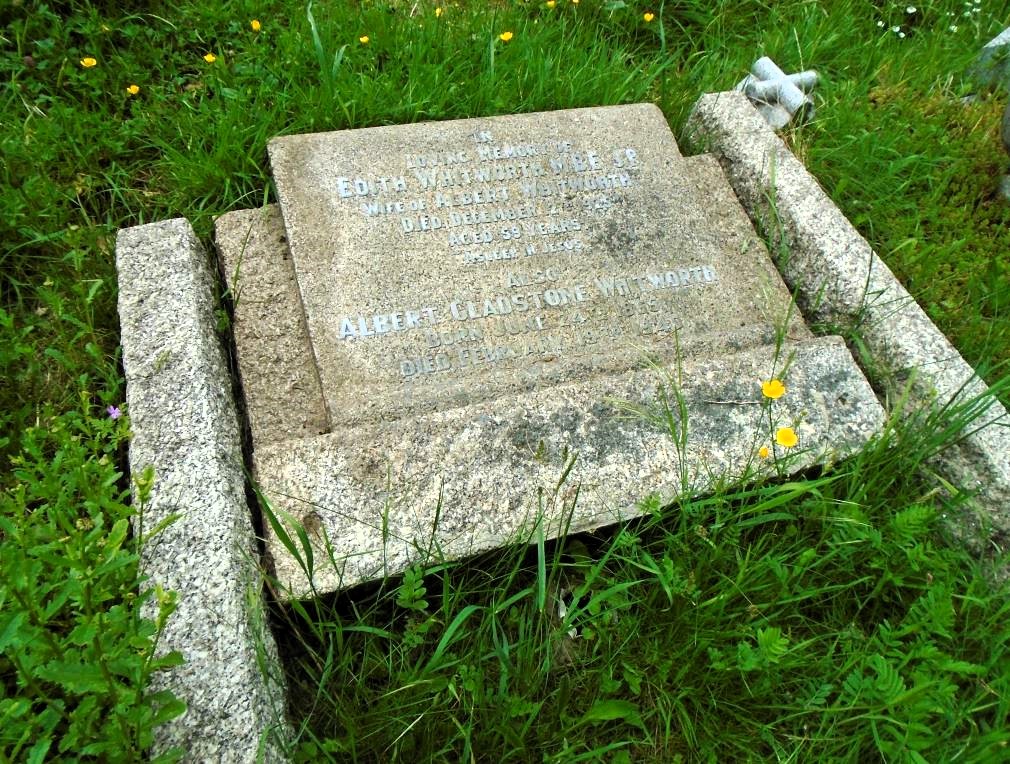
Read all about – Edith Whitworth – Mrs Great Heart

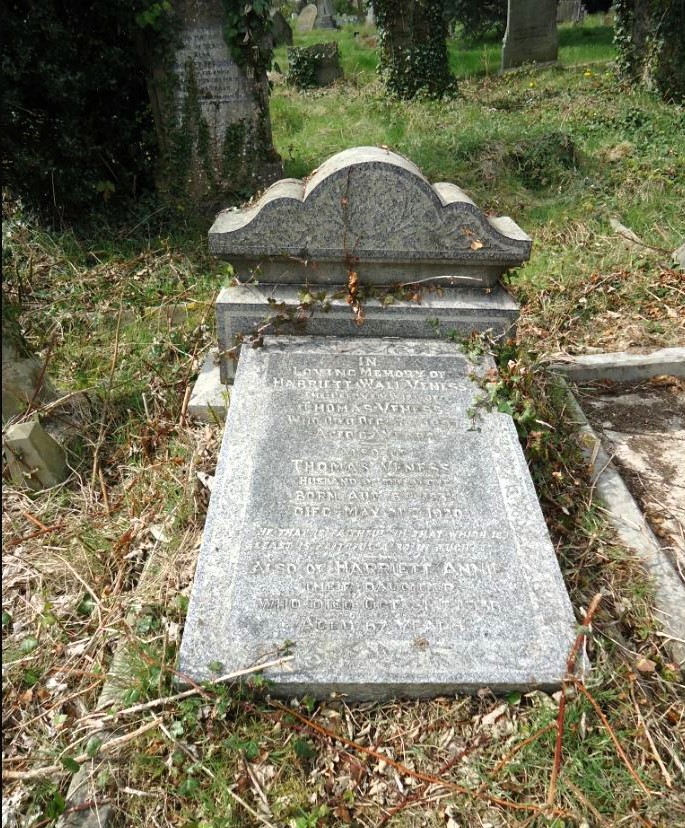
Read all about – Harriett Annie Veness – political activist

Read all about – Alice Arman

Read all about – Lydia Fry – For Services Rendered

Read all about – Joanna C. Lay – silent, quiet and faithful worker

Read all about – Elsie Wootten White – Wartime Volunteer

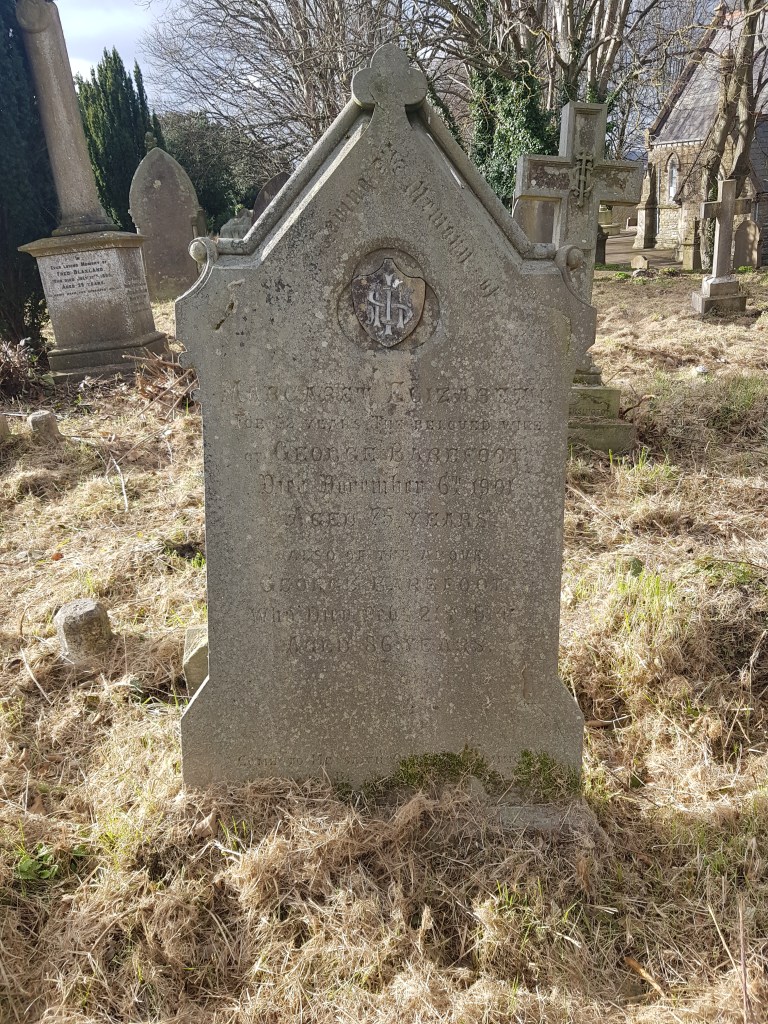
George Barefoot – an investor in people

The re-imagined story …

I’ve lived in New Swindon all my life. I was born in my gran’s bedroom in Bristol Street and I’ve never known anywhere else. But I’m tired of the close-knit railway community where everyone knows everyone else’s business, and a life confined to the Works and the railway village. I’m weary of seeing the same faces day in, day out, I don’t want to marry a boilermaker or a fitter and live the same life my mum and my Gran have.

“But that’s the strength of this place,” said Gran. “It’s knowing Mrs so and so’s baby is poorly or that Mr whatsit needs help with his shopping.” Gran was settling in for a long session, I could sense it. I offered her a piece of cake.

“When me and your Gramps moved here, I thought we had made the biggest mistake of our lives. All that was here was the Works and the company houses and that was it. No market, no shops, no church even, nothing.”

She took a sip of her tea.

“Is there any sugar in this?”

“Two spoons, Gran.”

“Your Gramps wanted to move out of London. He thought the kids would have a better future here. He thought living in the country would be healthy.” She shook her head sadly.

“The company houses looked nice enough from the outside but the railway village was worse than any East End slum. That first winter we lived here there was an outbreak of typhus. Six children died in Bristol Street. We were fortunate.”

She twisted the wedding ring on her gnarled finger, worn thin by hard toil.

“Did you ever consider moving back to London?”

“It wasn’t that easy and your Gramps had a good job in the Works here. He kept telling me we’d stick it out a bit longer, give it a chance, he’d say.”

“So, what persuaded you to stick it out?”

“Your grandfather and the men he worked with, they made the difference. Men like George Barefoot, elected on to the Mechanics’ Institute Council. Those men were investors; investors in people, they weren’t interested in share prices and profit. They wanted to protect their families and improve their standard of living. They wanted health care in a time when people didn’t call out the doctor because they couldn’t afford to. They were good men and they made the difference.”

“I’m glad your Gramps and George Barefoot gave New Swindon a chance.”

Gran spooned out the sugar from the bottom of her cup.

“Is there anymore tea in that pot? And make sure you put some sugar in this time.”

The facts …

George Barefoot was born in Maidenhead in 1828. He married Margaret Elizabeth Williams, a dressmaker, at Holy Rood on December 23, 1848. George was transferred to Gloucester where on November 12, 1865 three of the couple’s children, John James, William Alfred and Mary Ellen, were christened at St James’s Church, Gloucester. The family’s address is given as Front Terrace. By 1869 the family had returned to Swindon.

That same year George Barefoot was elected on to the Mechanics’ Institute Council with 166 votes. The following year he was re-elected with an increased number of votes, topping the poll with 281. Election results continue to show his presence on the Council and in 1873 he is recorded as ‘George Barefoot Locomotive Department K shop 296 votes.

George Barefoot died at the age of 86 years. He was buried on February 26, 1914 in Radnor Street Cemetery in plot E7936

Death of Mr George Barefoot

The death took place on Saturday, at the residence of his son-in-law, Mr F. Edge, “Inglewood,” Deacon Street, Swindon, of Mr George Barefoot. The deceased gentleman who was very well known in Swindon, was born at Maidenhead in 1828, and commenced his working career as an office boy at Paddington Station. In 1847 he came to Swindon, being then at the age of 19, and was transferred for a few years to Gloucester, and finally returned to Swindon.

It is interesting to note that he was married at the old Parish Church by the then Vicar (the Rev. H.G. Baily), and he has, therefore, watched Swindon grow from what were practically two large villages into the large and enterprising town it is to-day.

He was a chargeman in the GWR Works for over 30 years, and he won the esteem and respect of all who knew him. In recognition of his faithful services the company granted him a pension on his retirement, and he went to live with his son-in-law and daughter.

He was always a prominent Conservative, and the late Sir Daniel Gooch used to speak of George Barefoot as his staunchest supporter in the Works. He had been a regular attendant at St. Mark’s Church.

A few weeks ago Mr. Barefoot had a stroke, and took to his bed, the end coming peacefully on Saturday. He leaves five children to mourn his death.

North Wilts Herald, Friday, February 27, 1914.

George Bayliss – Your Majesty

The re-imagined story …

Swindon certainly pushed the boat out when King George V and Queen Mary came to town. The streets were all decorated and the people turned out in their thousands, cheering and waving their handkerchiefs as the royal car travelled down Regent Street.

The King’s first port of call on that April day in 1924 was to lay a wreath at the cenotaph, a gesture that gained him the respect of even the most anti royalist for the King was not that popular in some quarters so soon after the Great War. But not in our family – we were Royalists through and through – and after that visit in 1924 people used to call my Pops ‘Your Majesty.’

The Royal couple visited the Victoria Hospital and the Medical Fund building, but the highlight of the day for us was their tour of the Railway Works. I was working in the Carriage and Wagon Works, making luggage rack netting and we knew the Queen was going to be brought around. I don’t think I have ever been so nervous in all my life. She stood right behind me, watching me work. She smelt lovely, lilies of the valley. I didn’t dare look round, even when I heard her say ‘what nimble fingers you have young lady.’

But the star of our family show was my Pops, George Bayliss. Some 75 old railwaymen who had worked for the GWR for more than 50 years were introduced to the King and Queen that day and the King actually spoke to my Pops. It was all there, published in the Adver. He asked him how old he was – “I am 69, your Majesty, and I have had 58 years’ service,” to which the King replied “I hope to be as good a man as you are when I am your age.”

Afterwards a photograph was taken to commemorate the occasion. You can’t miss my Pops, sitting in the front row in his spotless white ducks, the white jacket and trousers worn by railwaymen in the old days. Pops took it all in his stride, but for me it was the proudest day of my life. The Queen admired my work and my Pops got to talk to the King. I wish I had a copy of that photograph.

The facts …

George was born in 1855 in Newark on Trent, Nottinghamshire the son of John Bayliss, a boiler maker and his wife Hannah. By 1881 he was living in Swindon and lodging at 17 Harding Street with Samuel Shallcroft and his wife and two daughters. He was 25 years old and working as an engine fitter.

George married Henrietta Kirby in 1882 and at the time of the census in 1891 they were living at 14 Charles Street, Rodbourne with their children William, Frederick, Walter, Lilian, Mabel and Edith. A seventh child, Beatrice May was born in 1893.

By 1901 the family had moved to 189 Rodbourne Lane, George’s home until his death in December 1926 aged 71 years old. George Bayliss was buried on December 11, 1926 in plot D760.

The home of George Bayliss in Rodbourne Road

The couple were non conformists and had children baptised on the Highworth Primitive Methodist Circuit and the Regent Primitive Methodist Circuit. George would no doubt have been happy to be buried in Radnor Street Cemetery where the burial ground was unconsecrated and the cemetery chapel non denominational.

Swindon Advertiser.

“He (Bayliss) is one of the old brigade and was conspicuous by the fact that he wore the old time white jacket and trousers. Though not worn nowadays, Mr Bayliss will not discard the old style and has a clean suit every week. His Majesty chatted with him for a few minutes and said to him “I hope to be as good a man as you are when I am your age.”

The photograph titled Swindon Works Veterans Inspected by Their Majesties the King and Queen on April 28th 1924 is published courtesy of Local Studies, Swindon Central Library, although the general consensus is that this is probably not the original. Carefully examination has revealed a couple of super imposed images, presumably those of men unable to attend on the day.

The lost village of Imber

A spur of the moment decision saw me and my two ‘grave’ friends Jo and Tania set off for a trip to the village of Imber. Deep in the heart of the Salisbury Plain MOD training area the village of Imber is inaccessible except on a few, rare occasions during the year and in 2022 volunteers were able to open the church of St. Giles during the late Queen’s Platinum Jubilee weekend.

In 1943 the village was occupied by the War Department for training purposes ahead of the D-Day landings. Already owned by the MOD, the village had long been under siege with villagers well used to a military presence all around them. But when the official order came to give up their homes, the patriotic Imber villagers complied with a heavy heart under the assurance that it would be for the duration of the war alone.

However, when the villagers prepared to return, they quickly discovered this was not, and never would be, possible.

For the story of the campaign to reclaim the village visit the Imber Village Facebook page and watch the video.

This stylish plaque inside the church is to the Wadman family of Imber Court, Lords of the Manor during the 17th and 18th centuries.

The text of Susannah’s last Will and Testament appears to have been a few informal words, which later required endorsement by two independent witnesses familiar with Mrs Wadman’s writing and signature.

My Son

I desire you will give to the poor of Road, five pounds and to the poor of Imber five pounds, and to the poor of Amesbury ten pounds each to be paid and distributed in a Nook after my Funeral. S:Wadman

My Son

I likewise give ye Servant ye is living with me at my death one years wages and as much of my Wearing Apparel of every kind as my daughter will not accept of

If Mrs Tayler will accept of such part of my Apparel as my daughter shall think proper to part with

(indorsed) This to my Dear Son

Visit the website for the opening dates in 2025 and do allow plenty of time – it maybe awhile before you can make a return visit.