Frederick Englebert Kny – Bohemian glass engraver

An episode of the Antiques Roadshow filmed at Kenilworth Castle and screened in 2021 featured two exquisite pieces of engraved glassware; a charming scent bottle and an ‘unfinished’ cameo plaque/plate. The visitor explained that these were two family pieces and that her great grandfather was Frederick Englebert Kny ‘a well known glass engraver in Stourbridge.’ Well, Roadshow expert Will Farmer lost no time in telling her what important objects these were, valuing the scent bottle at £1,500 and the ‘unfinished’ plate at a whooping £10-15,000.

The visitor was astounded, as we were when Noel found Frederick’s grave in Radnor Street Cemetery in 2019. What was he doing in Swindon at the time of his death in 1905?

Death of Mr F.E. Kny of Wordsley

The sudden death of Mr Frederick Englebert Kny of Camp Hill House, Wordsley, last week, came as a great shock to his family and friends. A short time since Mr Kny had complained of feeling somewhat run down, and on consulting his medical adviser, Dr. Grindlay, a change of air was recommended, and arrangements were accordingly made for a visit to his eldest daughter, Mrs Santley-Jones, Paradwys, Lansdowne Road, Swindon, Wilts, who came over this day fortnight and returned the same day with her father. During the ensuing week he took short walks accompanied by his daughter, and it was on nearing home, after one of these on Thursday evening, the 30th ult., that he suddenly stopped. Mrs Santley-Jones at once saw that her father was very unwell, and on his being conveyed to the house, medical aid was speedily summoned. Unhappily this proved of not avail, and he expired in a few minutes. The funeral took place at the cemetery, Swindon, on Monday last, amidst many manifestations of grief and sorrow.

Mr Kny was a native of Bohemia, and migrated to London in the sixties, where he shortly afterwards met the late Mr Wilkes Webb, at that time senior partner in the firm of Thomas Webb and Sons, Dennis Glass Works, under whom he held an important and responsible position for many years.
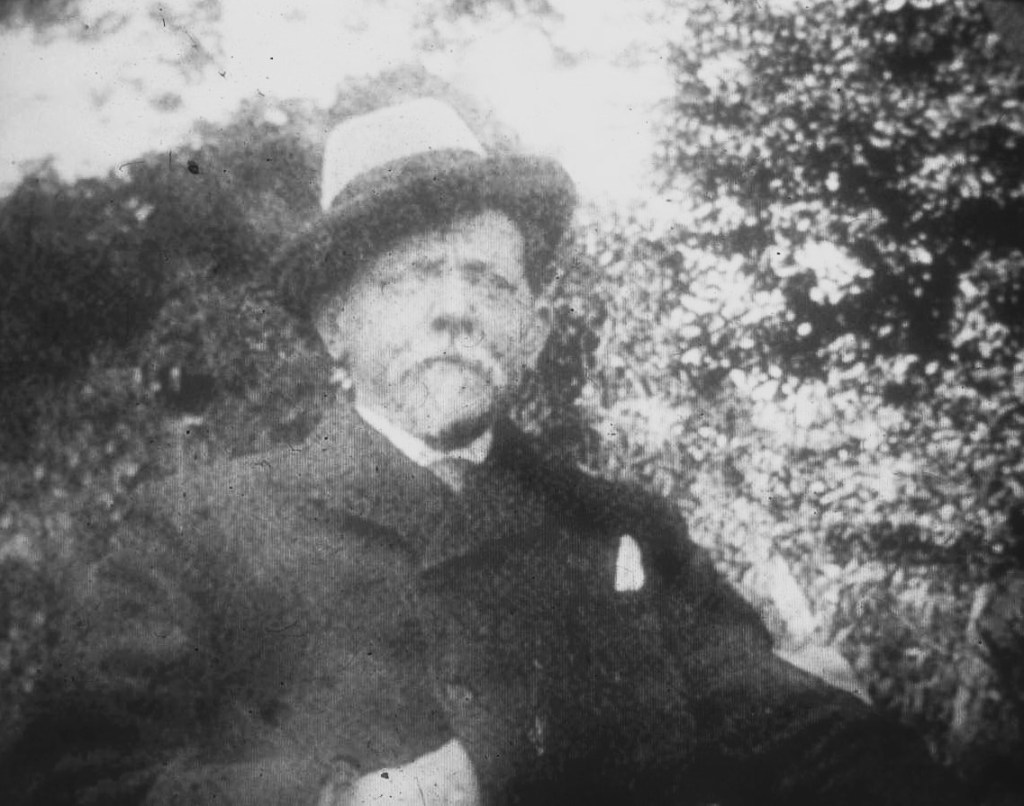
He was recognised as an artist of no mean ability, and by those qualified to judge was considered the best figure engraver yet known. His work was always of the highest order, and without doubt the local glass industry will be the poorer by his loss. Many of his designs were beautifully conceived and carefully executed, and it has often been said that the great care and attention he bestowed upon them never really brought its proper reward.

Among his numerous achievements may be mentioned that of the Halton Industrial Exhibition in 1868, when a piece of his workmanship gained the silver medal, and was purchased by Sir Anthony de Rothschild. At the Wolverhampton exhibition of 1869 the beautiful design representing the British Queen Boadicea resisting the Roman forces, was favourably commented on by the Daily Post in the following terms… “If the engraver is not English his influence is none the less valuable, and we honour those captains of industry in glass. The works of such an able artist will stimulate and instruct English artisans in the decoration of glass and educate them.”

Again in 1876 the Worshipful Company of Glass Merchants, of London, awarded a medal to him for his original and artistic work. Awards were also gained at Paris and London exhibitions, the most important piece of work being some copies of the Elgin Marbles engraved in relief and executed on a handsome claret jug. Another specimen greatly admired by most of the leading art critics at the time of its execution was one entitled “The council of the gods.”

Always of an obliging and unassuming disposition, Mr Kny never entered the field of politics or municipal matters. Although well informed upon all the chief topics of the day, his attention was solely devoted to the perfecting of new ideas in connection with his work. Deceased leaves a widow with fours sons and five daughters to mourn his loss.

The Advertiser, Saturday, April 8, 1905.

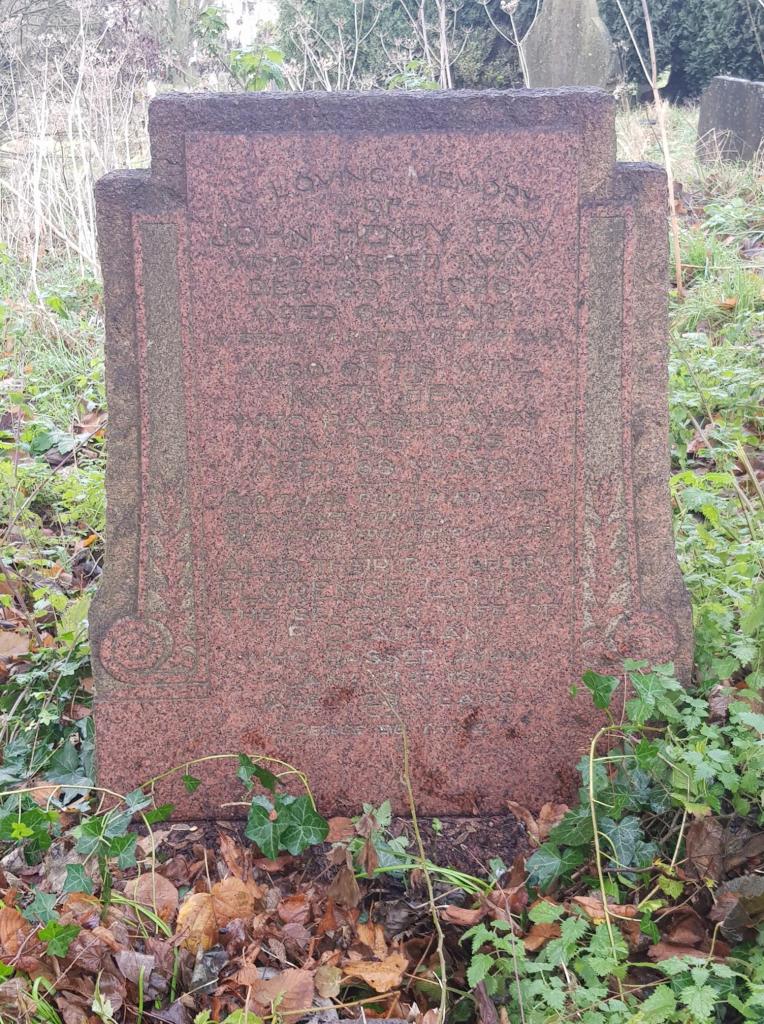
Frederick Englebert Kny was buried on April 3, 1905 in grave plot E8037 where he lies alone (and as Noel points out, the wrong date is inscribed on the headstone).
Florence L. Clapham – a case of mistaken identity

It’s not very often I find an error in the Radnor Street Cemetery burial registers, but this one could have proved rather confusing.

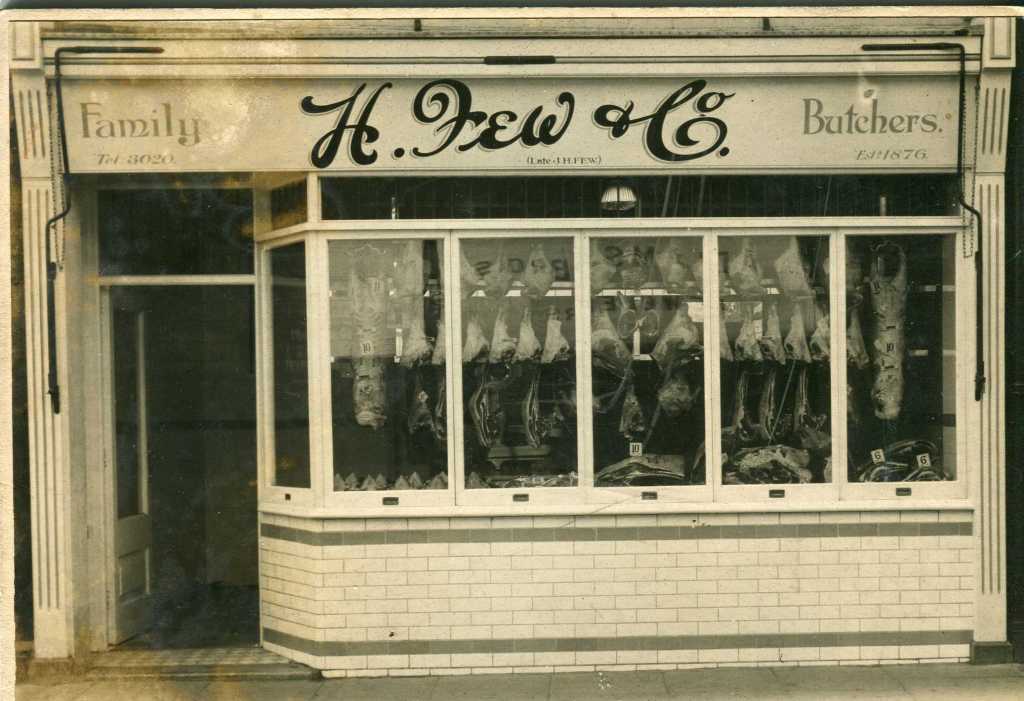
Florence Louise Few was baptised on August 27, 1888 at St. Mark’s Church, the eldest child of John Henry Few, a butcher and his wife Kate. John must have been a very enterprising young man as he was already in business at the age of 19 when he ran a butcher’s shop at 26 Prospect Hill. By 1891 he had moved the business down to New Swindon and a premises in Bridge Street. In 1891 he was based in at 59 Fleet Street and by 1911 he was at 61 Fleet Street (possibly some renumbering of Fleet Street had taken place).

In 1911 Florence was working as a shop assistant in the butchers. Her younger sister Freda was employed at ‘housework’ while 18 year old Gladys Elizabeth also worked in the shop. Younger brother Jack was still at school. Another brother, Harold Bastable Few, was born the following year.

Florence married Frederick Clapham, a Fitter, on November 17, 1913 at St. Mark’s Church and began married life in Weston Super Mare. She died there in January 1917 aged just 28 years of age.

Florence’s remains were returned to Swindon where she was buried on February 5, 1917. Her name is recorded in the burial registers as Florence Louise Clappen, which could cause confusion for those researching both the Few and the Clappen families. William Clappen had a Tailor and Outfitters shop in Wood Street, Old Swindon and another at the junction of Fleet Street and Bridge Street in New Swindon. This became known as Tram Centre where the tram drivers would check their departure times by the clock set in the shop front.

Florence lies in grave plot C2017. Her mother Kate was buried with her following her death in 1933, but there may yet be another mystery to solve. Although John Henry Few is remembered on the headstone, he is not buried in this plot. Only Florence and her mother Kate are buried here.

The Late Mrs F. Clapham – The funeral took place on Monday at Swindon Cemetery of Mrs F.L. Clapham, the wife of Mr F. Clapham, of Weymouth, eldest daughter of Mr and Mrs J.H. Few, of 61, Fleet Street, Swindon. The cortege left the residence of the deceased’s parents at 1.45 p.m. and proceeded to St. Mark’s Church (where the first part of the service was read), and thence to the Cemetery.

There were many beautiful wreaths and expressions of sympathy sent by relatives and friends. The coffin was made of polished elm with brass fittings and was inscribed: “Mrs Florence L. Clapham, aged 28 years, died Jan. 31st, 1917.” – Mr F. Clapham and Mr and Mrs J.H. Few desire to express their sincere thanks for the many expressions of sympathy received during their recent sad bereavement.

Extracts from North Wilts Herald, Friday, February 9, 1917.

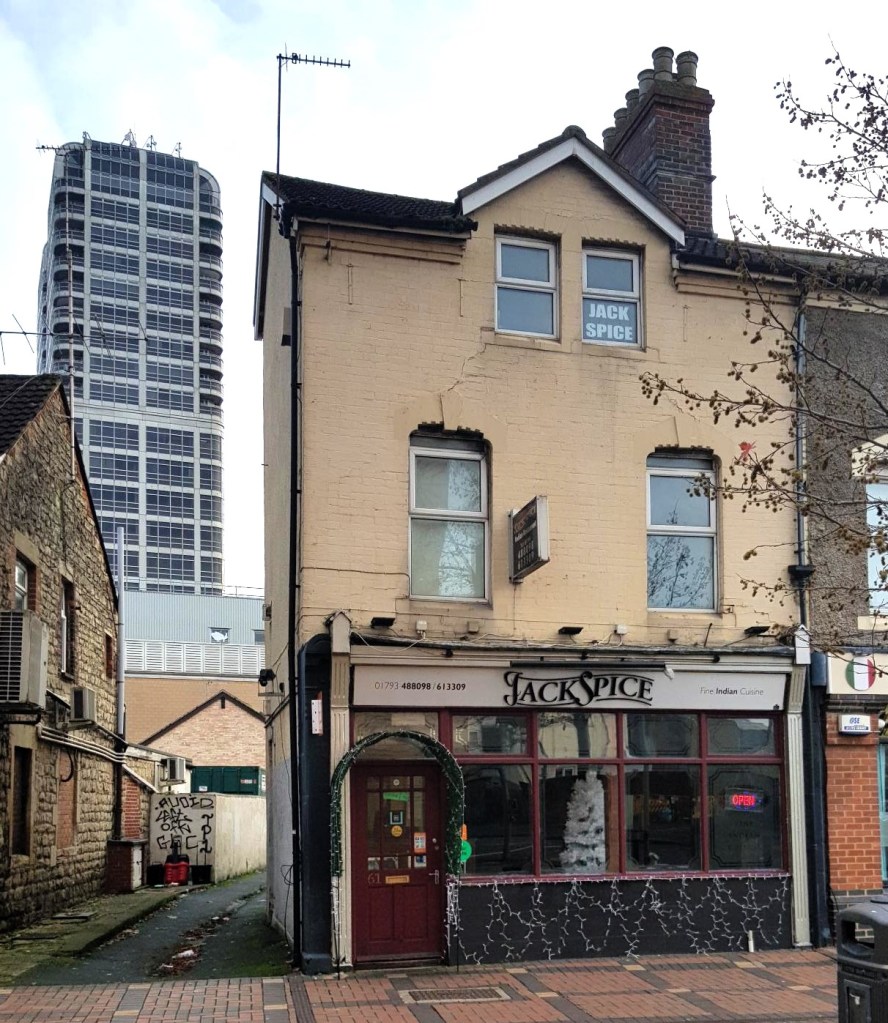
John Henry and Kate’s youngest son took over the business; the butchers’ shop is pictured here and we are able to confirm that the shop still survives.

Then …

and now

No 61 Fleet Street with the iconic David Murray John Tower in the background.

Ella Saunders

I am grateful for a lot of things, and like most of us I sometimes need to be reminded to stop moaning and reflect upon them.

Two of my children suffered an appendicitis in their early teens. It was a painful experience for them and an anxious time for me, but thanks to modern medicine and our marvellous NHS they both recovered.

Little Ella Saunders was not so fortunate.

Ella’s father was a Pork Butcher. The family business was a shop next to the Rolleston Arms pictured in this postcard view of Commercial Road. The 1911 census tells us that William and Maria had been married for 12 years and had four children, Ethel 10, Edna 8, Ella 5 and two year old Erica. The four girls were baptised together on May 1, 1911 at St. Mark’s Church.

Obituary – Much sympathy will be felt with Mr and Mrs W.T. Saunders, of 72 Commercial Road, Swindon, in the loss which they have sustained by the death of their six years old daughter, Ella. The child was operated upon for appendicitis at the Victoria Hospital, but died after a only six days’ illness. The interment took place at Swindon Cemetery on Good Friday amid many manifestations of sorrow, a very touching feature being the presence of a number of the deceased child’s fellow scholars.

The service was conducted by the Rev. E.F. Winnington-Ingram. There were a large number of beautiful floral tributes including one “With deepest sympathy from the staff, College Street Infant School” and “In loving memory to Ella from teachers and scholars, St. Mark’s Sunday School ‘Jesus called little children to Him’”.

North Wilts Herald April 12, 1912.

Image published courtesy of Local Studies, Swindon Central Library

Ella was buried on April 9, 1912 in grave plot B2938. William died in 1928 and Maria in 1953 and were both buried with her.

George and Clara Bosley – drapers

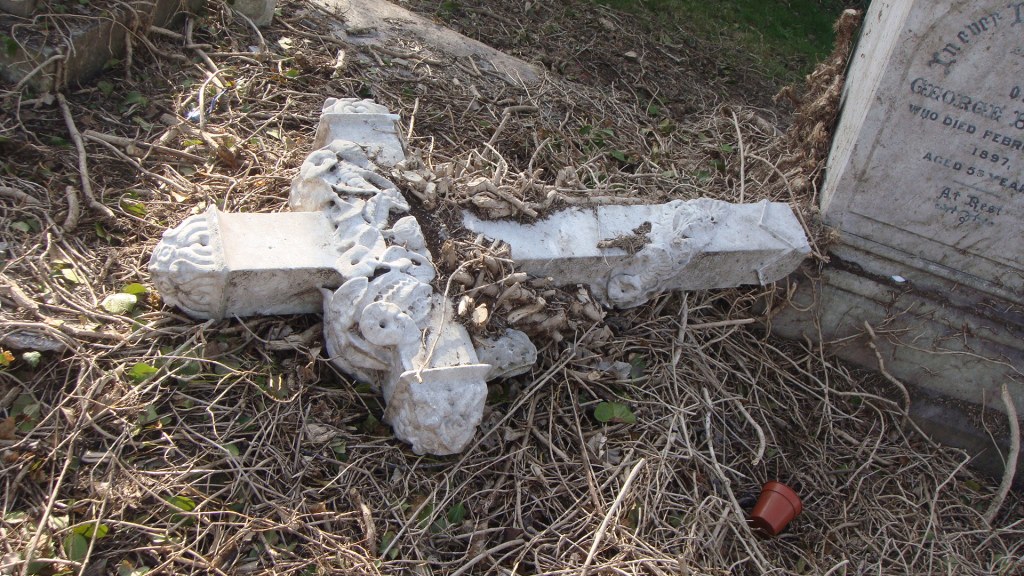
How magnificent must this memorial have looked when first installed?

In 2010/11 Swindon Borough Council conducted a major tidy-up at the cemetery. Memorials and monuments that had been hidden by ivy and brambles were seen again, possibly for the first time in years. And so the Bosley memorial was revealed, although unfortunately the ornate cross had already tumbled down.

The Bosley family ran a drapers shop in Fleet Street – an area of the town centre that has been significantly redeveloped (though not improved) in the 20th century. Their shop was numbered 55 and 57 so maybe renumbering took place even earlier.

Clara ran the business following George’s death and in 1911 she employed Charles Hiskins as manager.

Clara died on February 28, 1917. Administration was awarded to her daughter Clara Edith Burrows (wife of George Burrows) and her effects were valued at £7948 5s 8d.

Death of Mr G. Bosley – The hand of death has been busy amongst Swindon tradesmen during the last few months, as our columns have shown week by week. Today our obituary column contains the announcement of the death of Mr George Bosley, draper, who had been in business in Swindon for the past 23 years. Mr Bosley, who was 52 years of age, died somewhat suddenly at the residence of his brother-in-law at Ealing last Friday. Mr Bosley had suffered for many years from asthma, and left Swindon about three weeks ago to consult a London specialist. He had paid several visits to his doctor from Ealing, and it was thought he was improving, but he died somewhat suddenly in the presence of his wife and other members of the family. Deceased leaves a widow and nine children. The funeral took place at Swindon Cemetery on Wednesday last.

The Swindon Advertiser, Saturday, February 13, 1897.

This seemingly large burial plot contains the remains of just George who was buried on February 10, 1897 and Clara who was buried on March 5, 1917.

William George Driver – soldier

I am closing this month of remembrance with the story of William George Driver. Born in Torquay in 1892 William Driver had no obvious connections with Swindon but this is where he lies buried in an unmarked grave in Radnor Street Cemetery. Volunteers Jon and Kevin are presently making an application to the Commonwealth War Graves Commission to have his death recognised as being the result of his military service and to have an official headstone installed. We know this consultation is likely to take a long time so I am publishing William’s story now in hopeful anticipation.

William George Driver married Emily Dorothy Pretious at St. Anne’s Church, Wandsworth on August 21, 1911 and the couple had two children, George William and Patience. William and Emily were both 19 years old at the time of their wedding and William was working as a clerk in the Civil Service, although he apparently later set up business as a watchmaker and jeweller.

William enlisted at Hounslow on March 19, 1915. He served first in the Army Cyclist Corps and later transferred to the Yorks & Lancaster Regiment.

On William’s attestation papers there was no mention of any health problems but by January 1917 he was suffering from chronic bronchitis and asthma and by February he had been transferred to Bicester VAD Hospital. By June of that year he was in the 2nd General Hospital, Chelsea. His medical notes tell that he was admitted from the Expeditionary Force, France on January 1, 1917 with bronchitis & asthma. He looked ill and presented the usual signs and symptoms of an old standing Asthma & Bronchitis – his condition was not considered to have been caused by active service, climate or ordinary military service, although none of these symptoms had been evident when he enlisted. At the same time there was an enquiry received concerning his son. It appears that seven year old George William was in a home for Waifs and Strays at this time, so his wife was obviously in great distress.

Driver was discharged from the army on September 24, 1917 as unfit for military service suffering from Asthma & Emphysema aggravated by exposure on active service. By then William’s eyesight had also deteriorated and he was unable to resume his work as a watchmaker and jeweller. His service records show that he expressed a desire for outdoor employment in munitions work. He was awarded a pension of 11s 8d a week, which was later reduced to 11s.

William didn’t return to his wife who was then living in Plaistow, East London, but came instead to Swindon where he lodged with Mrs Howard at 49 Cambria Bridge Road.

William died aged 26 years old in the Victoria Hospital on November 14, 1918 from broncho pneumonia. He was buried on November 18, 1918 in grave plot C573.

A propeller, a plaque and a piece of artwork

This year we have welcomed some significant additions to the cemetery chapel.

August saw the installation of the Airspeed Oxford propeller once mounted on the front of the RAFA Club in Belle Vue Road.

Then in November we were the proud recipients of another war memorial. Scout leader Steve Milner has placed in our safe keeping a plaque dedicated to the North Wilts Boy Scouts Association. The Roll of Honour commemorates those former scouts who lost their lives in the Second World War. We were proud to have this displayed in the chapel on Remembrance Day 2023.

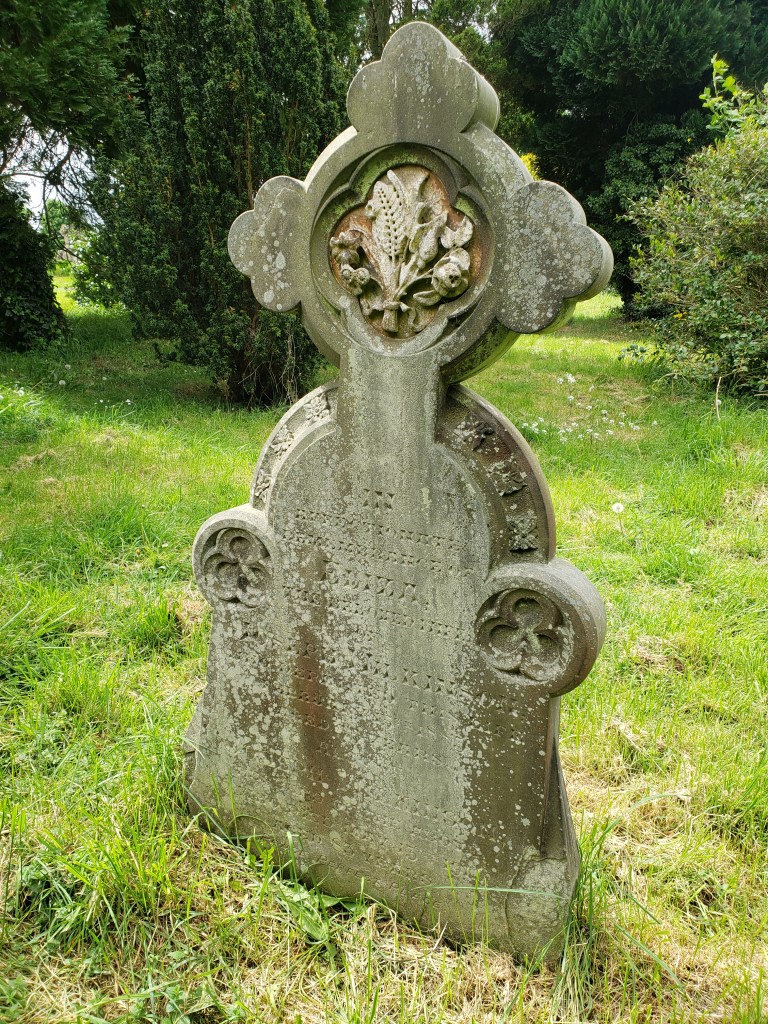
We have also kindly been donated an original piece of art work made by local artist Lynette Thomas. The mosaic was inspired by a guided cemetery walk Lynette came on in July, where she describes the cemetery as ‘a tranquil place and a haven for wildlife with beautiful stone carvings and grotesques.’ To see more of Lynette’s work visit the Artsite website and her Facebook page.

Joseph Wilkinson – a link with Swindon’s Past

Sometimes an obituary is written so evocatively that there is little I could possibly add. This is the story of Joseph Wilkinson who moved to Swindon in the 1870s and worked in the new Carriage and Wagon Works under Joseph Armstrong.

Death of Mr Joseph Wilkinson

A Highworth Octogenarian

Link with Swindon’s Past

By all the older generation of Swindonians, and especially by those who have been connected with the GWR Works, the news will be received with unfeigned regret that Mr Joseph Wilkinson, formerly a foreman over the Wagon Works, has passed away at Highworth, at the ripe age of 83 years.

Mr Wilkinson was an interesting link with Swindon’s past. Born at Marshe (Yorkshire), in 1828 he migrated at an early age to Chester where he followed his occupation as a coach builder. Thirty-five years ago he came to Swindon with the late Mr. Holden, and took up the position of foreman over the new wagon works, under Mr. Armstrong. Mr Wilkinson held the foremanship continuously for many years. Until 13 years ago he enjoyed capital health, even for his advanced age, and then, acting under medical advice, he retired at the age of 70 years. It is interesting to note that Mr. Wilkinson is believed to be the first foreman who received a pension under the superannuation scheme, which was initiated shortly before his retirement.

Upon his retirement the old gentleman went to live at Highworth, where he was liked and respected by all with whom he came in contact. Since this time Mr Wilkinson’s health had been gradually failing. He had been ailing off and on every since; and a couple of months ago he was taken ill with heart disease. Dr. Powell and Dr Lewty did all that medical skill could devise but inspite of their attentions Mr Wilkinson passed away on Saturday evening.

While he was in Swindon, Mr. Wilkinson took an active interest in the affairs of the Faringdon Street Wesley Church, where he was an assistant class leader but since his removal to Highworth failing health prevented him from participating in this branch of public service. His first wife predeceased him by 28 years, and it was while in Swindon that Mr Wilkinson married his second wife. Thirteen years ago Mr. Wilkinson’s second wife also died; but a family of one son and three daughters are left to mourn their loss.

The Swindon Advertiser, Friday, May 19, 1911.

Joseph Wilkinson was buried on May 17, 1911 in grave plot A641 where he joined his first wife Eliza who died in 1883

Lance Corporal Thomas Neate Harding – Tell Them of Us

The First World War was all about loss; loss of life and loss of prospects. Landed property was lost with the death of an heir; local businesses were lost when sons did not return, and in this case, families fell on hardship with the loss of a breadwinner.

Within the records of the UK World War I Pension Ledgers and Index Cards 1914-1923 published on Ancestry are claims mostly made by service personnel incapacitated by their military service, and war widows. However, Thomas Henry Harding, the father of Lance Cpl. T.N. Harding, made an application declaring he was a dependant of his son.

Thomas Neate Harding was baptised on July 15, 1888 in the parish of Holy Trinity, Slad. He was the only child of Thomas Henry Harding, a labourer, and his wife Caroline.

The family moved to Argyle Street, Gorse Hill, Swindon three years after Thomas’s birth. By the time of the 1911 census both father and son were employed in the GWR Works. Thomas Henry Harding worked as a wood sawyer and 23 year old Thomas Neate Harding as a Blacksmith’s Striker.

Caroline Harding died in March 1913 and is buried in a public grave in Radnor Street Cemetery. So now father and son carried on alone at home.

At the outbreak of war in 1914 Thomas Henry Harding was about 54 years old, his son 26. Thomas Neate Harding was not one of the early volunteers to join the army. Perhaps his responsibilities at home were too great. But with the introduction of conscription in 1916 he would eventually be called up, enlisting in July 1917 with the Royal Engineers and serving with the Inland Waterways and Docks.

Thomas Neate Harding died on February 12, 1920 at the Northern Hospital, Liverpool. He was 32 years old. His father made an application to the War Office for the cost of his son’s funeral expenses.

Administration of Thomas Neate Harding’s will was granted to his father in April 1920. His effects were valued at £173 7s 1d.

Thomas Neate Harding was buried in a public grave plot number B1271. The same grave in which his mother Caroline was buried.

Lance Corporal Thomas N. Harding is commemorated on plaque in St. Barnabas Church, Gorse Hill.

First published November 3, 2022.

Albert William Howard

We frequently receive comments on the condition of the graves in Radnor Street Cemetery. ‘Why is the cemetery not better cared for? Why doesn’t someone look after the graves? It’s a disgrace!’

The cemetery is more than 140 years old. It opened in 1881 and was full by the 1970s when it was closed to new burials. Today the finances of the local authority are severely constrained and restricted to essential services only. Where once there was a team of groundsmen and gravediggers employed in the cemetery now only essential maintenance takes place.

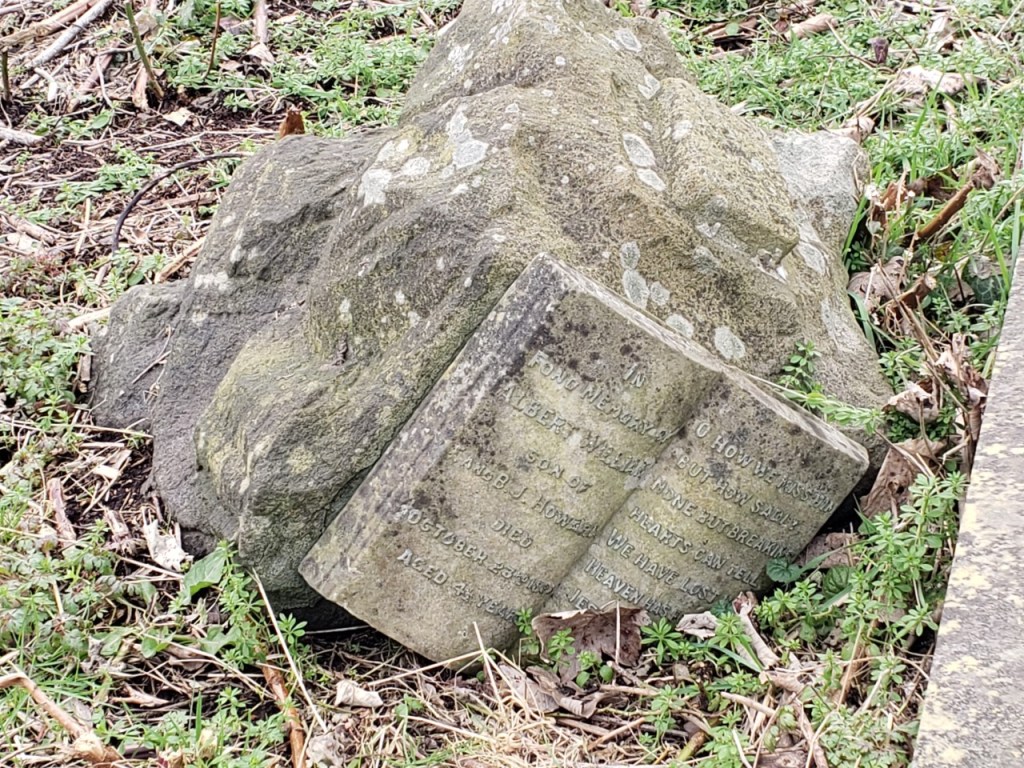
The graves were once cared for by family members, but circumstances change, people move away and I’m guessing that is the case with the grave of little Albert William Howard. Has the memorial always stood at this angle where now the inscription is sliding into the soil? His parents were able to purchase a grave plot (not everyone could) and this substantial memorial must have cost a fair bit of money. The inscription begins ‘O how we miss him’ the names of his parents weathered and difficult to read. A death certificate might provide further details but without financial resources this is not possible. The burial registers have already provided essential information – there is probably little more to learn.

When Albert died in 1899 the family lived at 13 Medgbury Road, but by the time of the 1901 census this was the home of Arthur Doell, a weighbridge clerk, and his family. What happened to Albert’s parents? Why did they move away from Medgbury Road? Where did they go? More than a hundred years later it is hardly likely there is anyone left who even knows about Albert or where he is buried.

It’s easy to put a disparaging remark on a social media platform, but not very helpful. Better still, why not join our dedicated band of cemetery volunteers? Contact us via this blog and we’ll get back to you.

Albert William Howard was buried on October 28, 1899 in grave plot C45. The burial registers state that he was 4 years old – his memorial says he was 4½.

The Pickett family

This week our volunteers uncovered a collapsed and partially buried headstone and in so doing revealed a whole family history.

The newly discovered inscription reads:

Thomas Pickett

Who entered into rest

March 19, 1903

Aged 65 years

Also of Lucy

The beloved wife of the above

Who died August 27th 1913

Aged 74 years

Also in memory of Elizabeth

Wife of Arthur Thompson

Their daughter

Who died March 20th 1948

Aged 77 years

Also Edith their daughter

Who died March 22nd 1955

Also two sons and two daughters

Interred in St Mark’s Churchyard

Thomas’s record of railway employment reveals he was employed as a fireman on February 4, 1864 on a daily rate of 3 shillings. By 1871 he was working as an Engine Turner and in 1873 as a Goods Engineman. He resigned on February 12, 1898 when he received a cheque for £70 ‘on account of old age.’ His service record includes a handful of disciplinary cautions and fines during a career spanning more than 30 years.

On the domestic front Thomas married Lucy Telling in 1858. By 1871 they were living at 42 Fleet Street with their three children Thomas 11, Emily 2 and Elizabeth 5 months. By 1881 they were at 15 Sanford Street with Elizabeth 10, Emily 7 (the earlier child by this name had died) and Edith 4 years old.

At the time of the 1911 census Lucy was still living at 15 Sanford Street. She states that she is a widow and that she has had 10 children of whom 4 are still living and 6 had died. She lives with her daughter Edith who states her profession as that of Head Teacher.

Lucy died at her home in Sanford Street on August 27, 1913. Her effects were valued at £208 15s with administration awarded to her son Thomas Pickett, also a schoolmaster.

Before and after photographs – an amazing discovery by our volunteers, enabling the story of the Pickett family to be told and remembered.