Rev John Sharman’s family

A Wesleyan ministry was not for the faint hearted and if it was a hard life for the Minister, imagine what it was like for his wife.
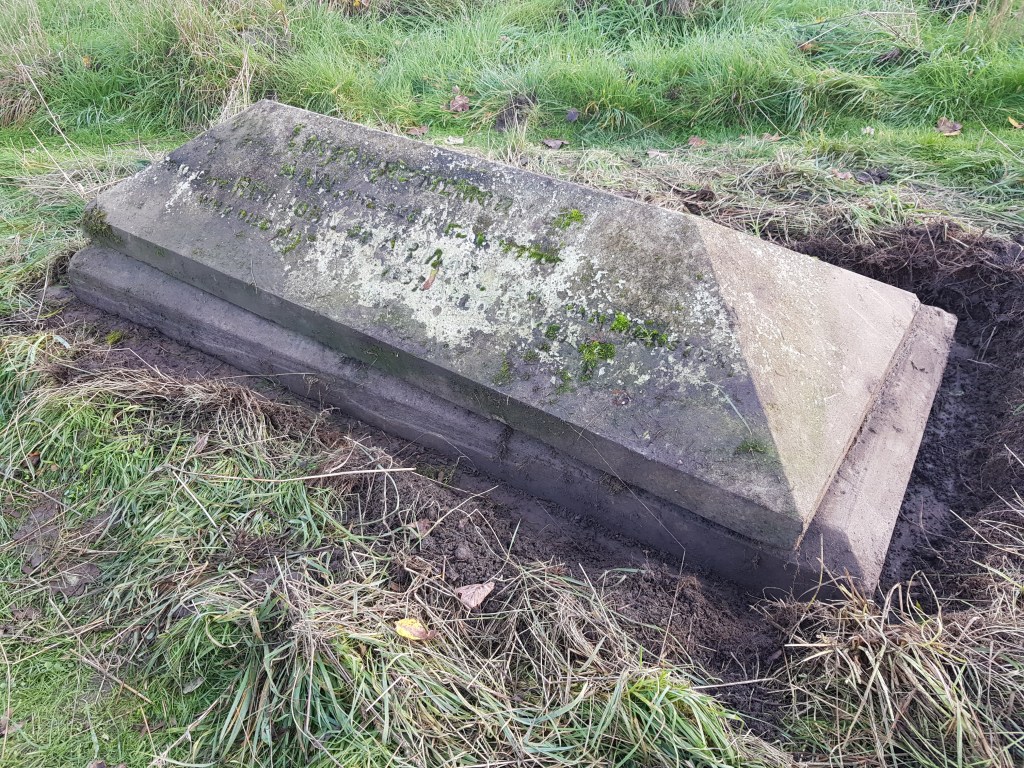
John Sharman was born on May 22, 1814 the son of Michael Sharman and his wife Hepzibah, in the parish of Walsoken, Norfolk. He began his ministry in 1835 and five years later married Ann Allen. Ann was born in 1840, the daughter of Thomas and Susannah Allen, themselves Methodists.

By researching the birth of John and Ann’s eleven children it is possible to map the many places where John ministered.

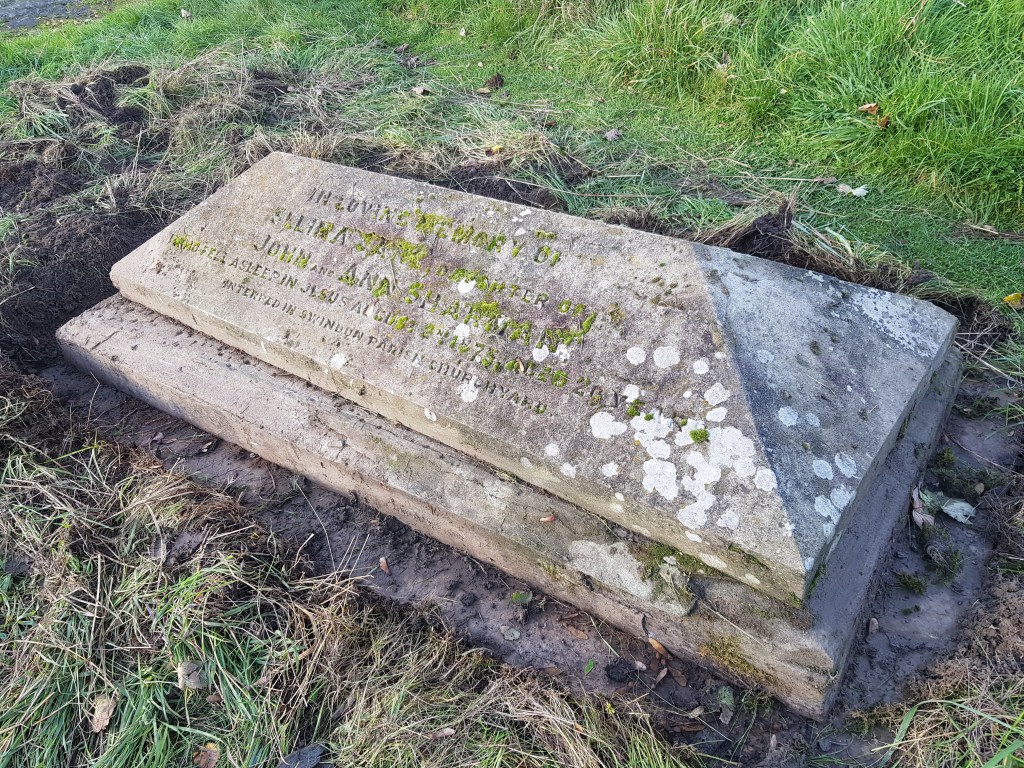
Their first child John Parker Sharman was born in Whitchurch, Hampshire on April 25, 1841. Annie Rebecca (1842) and Thomas Michael (1844) were both born in Ashford, Kent.  Selina Jane was born here in Swindon on January 31, 1846. She was baptised at the ‘Wesleyan-Methodist Chapel Swindon & at places in its Vicinity’ on May 16 with her brother John Parker Sharman. James Allen was born in 1847 in New Buckenham, Norfolk and baptised on March 19, 1848 at Attleborough, Norfolk. Frederick William was born in 1850 in Bury St. Edmunds, Suffolk. At the time of the 1851 census the family were living in the small hamlet of Botesdale on ‘the turnpike road leading from Scole to Bury Saint Edmunds.’ Elizabeth Hephzibah (1852) and Catherine Laura (1853) were both born in Botesdale. Frederica Allen was born in 1855 in Harwich, Essex as was her brother Frederick James born the following year. Mary Susannah was the last of John and Ann’s children. She was born in St. Just, Cornwall and baptised on July 12, 1859 at East Looe, just three months before John died.

At least seven different homes in 19 years of marriage (and child bearing for Ann) travelling England and Wales.

John died on October 11, 1859 at Holsworthy, Devon, aged 45.

By the time of the 1861 census Ann was living at Grove Street, Wantage with seven of her children and her widowed mother Susannah Allen. In 1871 she was living in Harwell Street, Harwell, Berkshire with her five daughters and by 1881 she was living at 65 Clifton Street, Swindon.

Ann Sharman died in March 1887 at 3 Graham Terrace, Clifton Street, aged 68. She was buried in grave plot E8500 where two of her daughters would later join her; Annie Rebecca Cole who died in February 1913 and Mary Susannah Richards who died in March 1924. Selina Jane Sharman is also mentioned on the memorial. The only child to be born and to die in Swindon was buried in the churchyard at Christ Church. She died aged 29 in 1875, before Radnor Street Cemetery was built.

Ann and John’s son, Frederick James Sharman, who died in 1916, is buried with his wife and daughter in grave plot E8515 just a short distance from his mother’s grave.
A few examples of the busy life of Rev. John Sharman.

“On Thursday morning at five o’clock, the Rev. John Sharman of Abingdon, preached to a large congregation.”  Newbury, Berkshire May 1839.

Rev. John Sharman of Tredegar preached at Nantyglo in October, 1846.

November 1846 – Tredegar. “In the morning of Sunday November 15, Rev. John Sharman, resident minister, preached in the morning.”

Wesleyan Missions – On Sunday, Feb 6th, two sermons were preached in the Trewelland Chapel, St. Just Circuit, on behalf of the above missions; viz., in the morning by the Rev. John Sharman, and in the evening by the Rev. N. Alston. On the following Wednesday, the annual public meeting was held, when the claims of missions were ably advocated by the Revds. John Hobson of Redruth, Sharman and Alston, of St. Just; William Trezise, Esq. in the chair. Collections were made, amounting to the same as last year.

Royal Cornwall Gazette, Friday Feb 18, 1859.

St. Just Institution

On Monday last, the Rev. John Sharman, Wesleyan Minister, of St. Just, lectured on “Druidism.” The Rev lecturer handled his subject in his usual masterly style, and delivered a highly interesting and instructive lecture, which was approved of by the audience in a cordial vote of thanks, on the motion of Mr John Boyns, seconded by Mr William Holman, and presented to the reverend lecturer by the Chairman, Mr A. Chenhalls.

Royal Cornwall Gazette Friday March 18, 1859.
George Ball – accident at Shrivenham

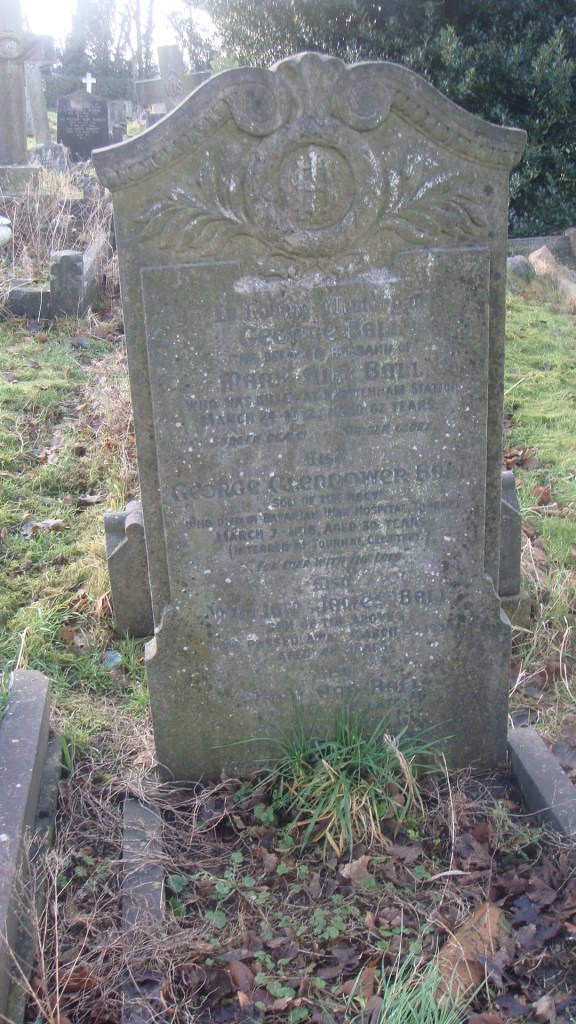
George Ball was the proprietor of the Victorian Temperance Hotel in Station Road for 30 years. At the time of his death in 1922 he was retired and he and his wife lived with their married daughter at 36 Cheltenham Street.

Although retired George remained a very active man and on the day in question had taken the 9.20 train from Swindon to Shrivenham on a visit to his wife who was staying with her sister at Somerset Farm, Hinton and also to take care of some business matters. Apparently George made this journey regularly as the Advertiser reported “on leaving the train at Shrivenham it was Mr Ball’s habit to cross the line in the direction of Bourton.”

However, on this day an upstopping train in the station obscured the view of William Herbert Ody, the driver of a train travelling in the opposite direction.

Mr Ody told the coroner’s court that as the stopping train passed him he saw a man walking across the level crossing. He shouted as loudly as possible and plied the steam brake at once, but it was too late. Mr Ball was killed outright. The line was perfectly straight and if it had not been for the train in the station he could easily have seen the man and the man him, he said.

The Coroner returned a verdict of accidental death and expressed his deepest sympathy.

Mr Ball’s son Samuel had told the court that his father had good eyesight but that his hearing was failing. Following the verdict Samuel suggested that a footbridge should be built across the line, as what had befallen his father might happen to anyone else.

George Ball died aged 62 years old. He was buried on March 29, 1922 in grave plot D1305 which he shares with his wife Mary Ann and his son William who both died in 1948.

You may also like to read:

Mary Ann Ball – a mother’s story

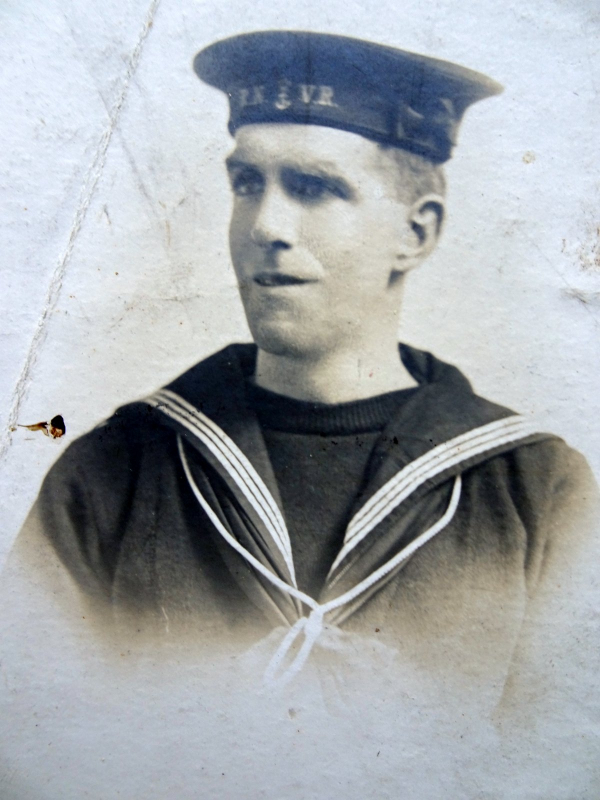
Charles Edwyn Jones – Royal Naval Volunteer

Tuberculosis was one of the main causes of death in the early 20th century and the most common cause for medical discharge from the armed services during the Great War.

Living in unhygienic close quarters, suffering from exposure and exhaustion, servicemen were prime candidates; becoming newly infected or suffering the resurgence of a disease lying dormant after a previous attack.

One set of records describe the death of Ordinary Seaman Charles Edwyn Jones as caused by pleurisy and pneumonia, another says empyaemia, which probably come down to the same thing – tuberculosis.

Charles was born on October 8, 1878 at 37 Reading Street, the son of Edwin Jones, a fitter in the Works, and his wife Mary.

Edwin had moved to Swindon from Bristol, but blinded in an accident in the railway factory, Edwin could no longer work at the job he was trained for. However, he went on to lead a full and active life and became Mayor of Swindon in 1920-21.

Charles Edwyn, the second of five children and the only son, chose not to follow his father into the railway factory but worked as a buyer of ladies clothing. At the time of the 1911 census he was working in London and boarding at 53 Eardley Crescent, Kensington. In 1915 he married Ethel Elizabeth Brown.

A Royal Naval Volunteer, Charles was based at the RN Depot Crystal Palace. He died at the Norwood Cottage Hospital on March 17, 1918 aged 39 years. Charles’s wife Ethel was pregnant at the time of his death and a daughter named Edwyna was born that summer.

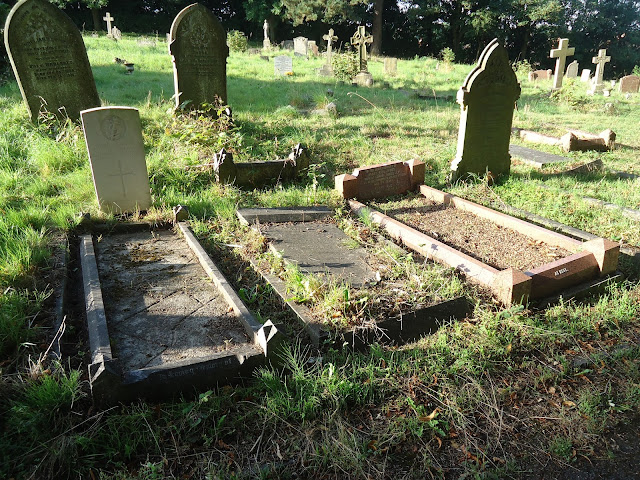
Charles’s body was returned to Swindon where he was buried on March 21 in grave plot D1575, next to two other Jones family graves.

The Radnor Street Cemetery volunteers

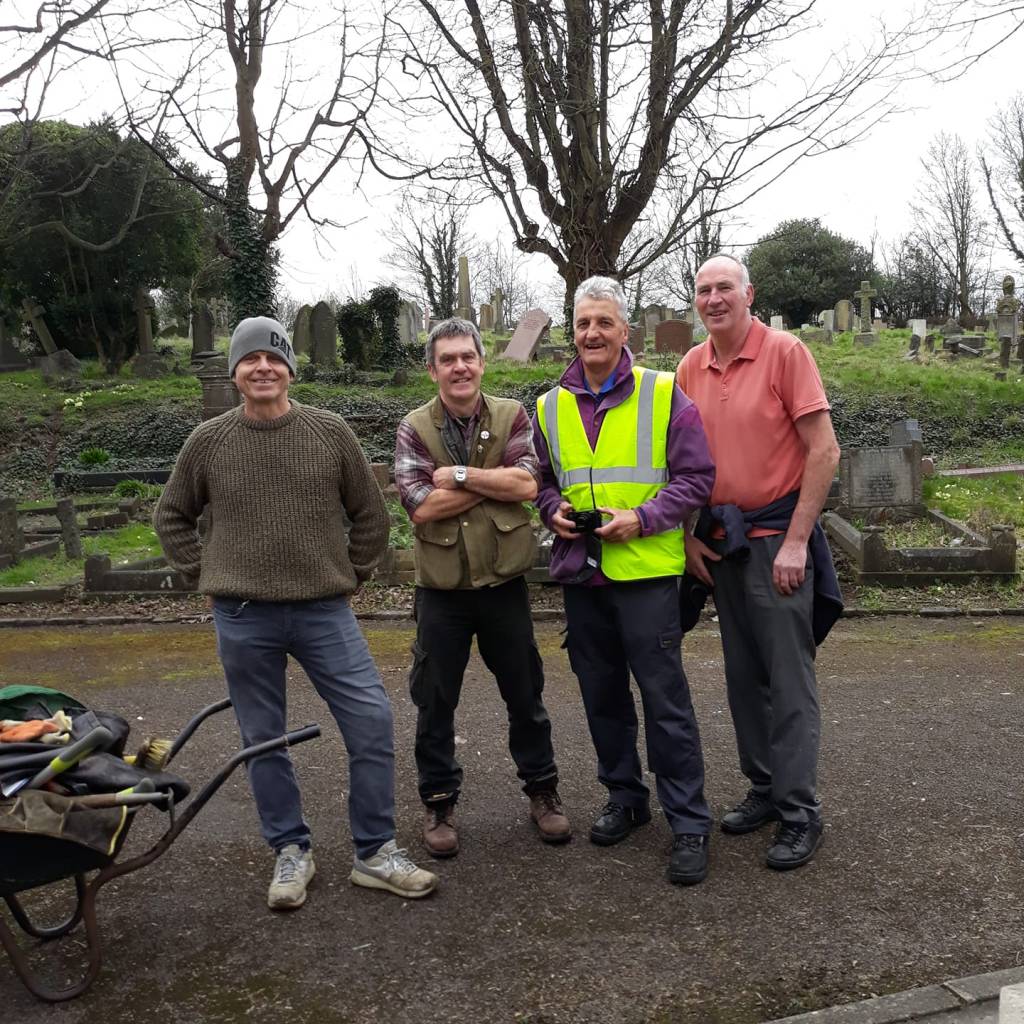
In the beginning there were just two members of the Radnor Street Cemetery volunteers. Pictured below with Andy are Jon and David shortly after appointing Brian as their new apprentice. More than six years on and the group is considerably larger and Brian has ‘done his time.’*

The original objective of the group was to care for the Commonwealth War Graves. Today the volunteers are members of the CWGC Eyes On Hands On initiative, keeping the area around the war graves clear and reporting any concerns over safety or damage to the headstones. They are also recording family memorials that mention service personnel lost or missing in war. Their latest project is an attempt to secure recognition by the CWGC for a soldier who died in the Victoria Hospital, Swindon in 1918 from broncho pneumonia having recently been discharged from the army as unfit for service. We believe that his death may have been as a result of his military service. If successful this will be the second WWI soldier to be so recognised in the past two years.

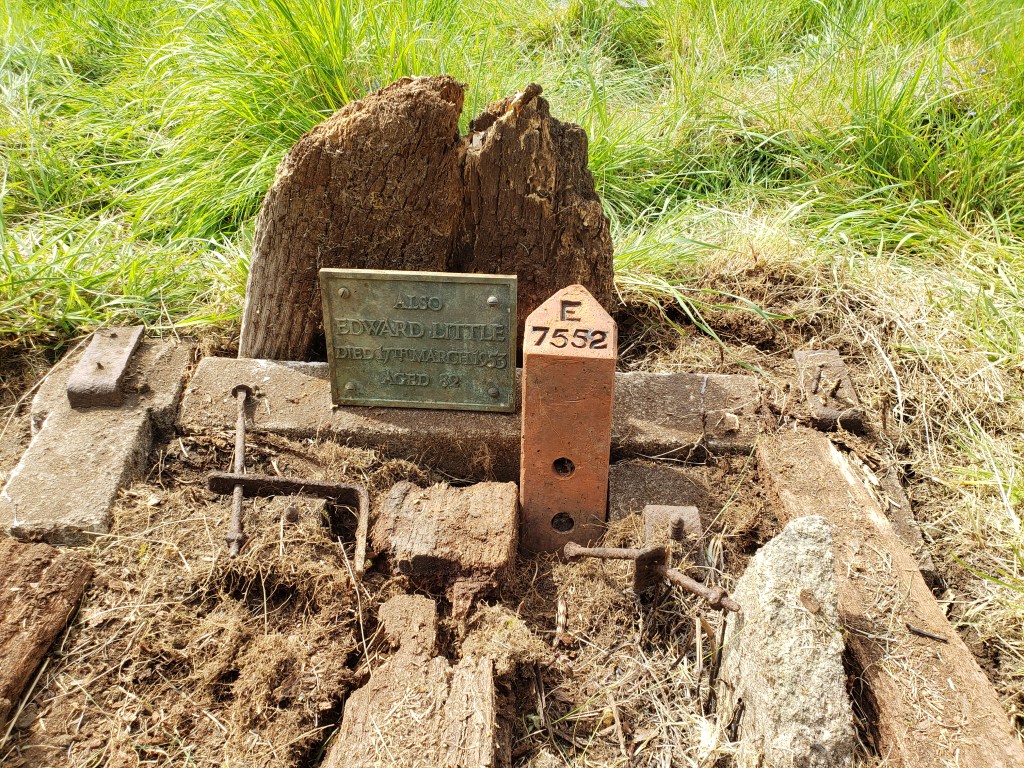
But this is only part of the volunteers work, as you can see from the photos below.

Would you like to join them?

You can contact us in a number of ways. You can leave a message here on this blog or on our Radnor Street Cemetery Facebook page and we also have a Twitter (now known as X) feed @StreetRadnor.

Why not come along to our next guided cemetery walk when Jon will be able to tell you more and answer your questions?

Our last walk of this season will be on Sunday October 29, meet at the cemetery chapel for 2 pm.

*finished his apprenticeship

Before and after … Kent Road gate

Read about Bob Menham, Swindon Town FC goal keeper.

Read about Edith Gay Little

Read about Joanna C. Lay

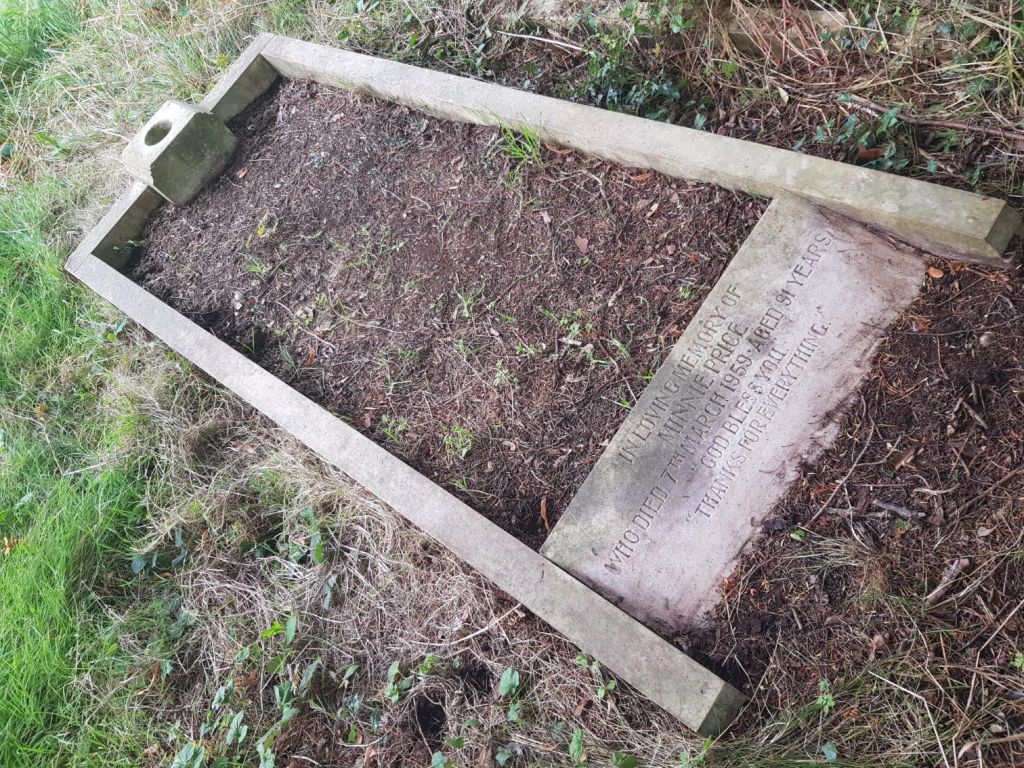
Before and after … Minnie Price

William and Sarah Ann Giddins

This headstone with its elegant script contains a lot of information, even if at first it seems rather confusing, and the family history it conceals is even more fascinating.

The first person buried in this family plot was William Golosha Giddins (jnr) who died in 1917 aged 29. Next to be buried here was his married sister Gertrude Mary Whateley who died in 1930. Then in 1938 Sarah Ann Giddins, their mother, was buried here and just three months later their father William joined them.

William Giddins was born in Newfoundland St John in c1861 where his father Robert served with the 8th Kings 1440 Regiment for more than 20 years. Robert had previously served in British North America and the West Indies. Soon after William’s birth his father was discharged from the army as ‘unfit for further service in consequence of Chronic Rheumatism & general debility’ according to his military records.

Married with two children, Robert and his wife Catherine returned to his birthplace of Avebury where he worked as an agricultural labourer. Son William soon set out on his own adventure, joining the Wiltshire Constabulary and marrying Sarah Ann Cannings in 1885. By the time of the 1891 census the family were living at Martin, Fordingbridge.

William finished his career here in Swindon where the 1911 census returns record him at the Police Station, Swindon, an Inspector of Police. Sarah Ann, his wife of 25 years lives with him, their two children are both living elsewhere. Lodging with them are five police constables.

On their deaths Gertrude and her parents Sarah and William received lengthy obituaries published below, so I won’t repeat all the details here, but I would like to know more about the National Spinning Competition and Sarah’s royal audience!

Death of Sister Whateley

After an illness extending to about 12 months, the death occurred early on Sunday morning of Mrs Gertrude Mary (Sister) Whateley, wife of Mr A.J. Whateley of the Burleigh Nursing Home, 31 Croft Road. Sister Whateley was very well known in Swindon through her profession and much sympathy is extended to her husband. She took up nursing as a profession during the war, and afterwards opened the Burleigh Home. During the past twelve months she had been practically confined to her room. The funeral took place on Wednesday at Radnor Street Cemetery. The chief mourners were Mr A.J.Whately (widower), Mr and Mrs W. Giddings (father and mother), Mrs Jessop, Mrs Oliver and Miss Londen (cousins). Sister Whateley was the daughter of ex-Inspector Giddings, of the Wiltshire Constabulary.

North Wilts Herald, Friday, September 26, 1930.

A Conservative Worker

Swindon Funeral of Mrs S.A. Giddins

At Radnor-street cemetery last Thursday the interment took place of Mrs Sarah Annie Giddins, of 56 Cheltenham-street, Swindon, who died on 10 July at the age of 74. The service at St. Paul’s Church was conducted by the Rev. N.W.L. Auster, who also officiated at the graveside. Mrs Giddins was the wife of Mr William Giddins, who retired in 1911 from his post as police inspector in Swindon, and three years ago they celebrated their golden wedding anniversary.

Mrs Giddins was a Londoner by birth. Throughout her life she had taken a keen interest in the work of the Conservative Association. For over 30 years she was a member of the local association, and of recent years was vice-chairman. She was also chairman of the Whist Committee and President of the Central Branch of Young Britons.

She had the distinction, many years ago, of winning a National Spinning Competition in London, later going to Sandringham, where she instructed the late Queen Alexandra in that art.

Chief mourners; Mr W. Giddins (husband), Mr Donald Giddings (grandson), Mr Cannings (brother), Mr and Mrs Freeth (nephew and niece), Mrs Oliver (cousin), Miss Young (cousin), Miss London (cousin), Miss Ellis and Miss W. Smith, the committee of the Queen’s Ward Conservative Association. Among those present at church were; Sir Noel Arkell, Mrs Oliver Arkell, Mr Mayhew, Mr and Mrs Preater.

Funeral arrangements were carried out by Messrs A.E. Smith and Son, 24 Gordon-road, Swindon.

North Wilts Herald, Friday, 22 July, 1938.

Death of Mr W. Giddins

Former Police Inspector at Swindon

Funeral Tributes

The death has taken place of Mr William Giddins aged 77, of 56 Cheltenham-street, Swindon. He was a retried police inspector, having served 27 years in the Wiltshire Constabulary, from which he retired in 1911, after 27 years’ service. As a constable he was first on duty at Wilton, after doing a month’s training at Devizes. Later he was moved to Marten, still in the same division, where he remained for 5½ years. While here, P.C. Giddins made a successful capture, after a struggle with a burglar, on 13 December, 1886, for which he was commended by the then Chief Constable of Wilts Capt. Robert Sterne, R.N.

Constable Giddins’ next post was at Winterslow, where he was stationed for seven years, and he was then promoted to sergeant and removed to Chippenham, remaining for 2½ years. From there he went to Great Bedwyn, where he did duty for 4½ years, when he was promoted to inspector and went to Pewsey.

Later Inspector Giddins was removed to Swindon, and was in charge of the Police Station at Cheltenham-street which was the New Swindon Station until the erection of the police station at Gorse Hill. Here he remained until his retirement. He then went into business, taking an off-licence beerhouse in Regent-street, Swindon. After being there two years, he found that too much indoor work did not suit his health, and he left and took up duties as a rent and debt collector. In 1933 he retired from all public duties. Mrs Giddins, who instructed the late Queen Alexandra in the art of spinning, died as recently as last July.

The Funeral

The funeral took place on Monday afternoon. The first part of the service was conducted at St. Paul’s Church, by the Rev. N.W.L. Auster (curate), who also officiated at the graveside in Radnor-street Cemetery. Six members of the Swindon Police Force, under the direction of Sergt. Nicholas, acted as bearers.

The family mourners were: Mr and Mrs Donald Giddins (grandson); Bessie Young (Cousin); Mrs A. Oliver (cousin); Mr and Mrs H. Frith (cousin); Mr H. Canning (cousin); Mr Ed. G. London (cousin); Miss Dorothy Ellis, Miss Winnie Smith, Mr. Eastwell, Mr. H. Couling and Mr P. Ward.

Amongst other mourners were; Mr and Mrs A.G. Beard (friends); Mr R. Comer and T. Loveday, the two last named being ex-policemen and friends of Mr. Giddins.

The funeral arrangements were carried out by Messrs. A.E. Smith & Son, 24 Gordon-road.

North Wilts Herald Friday 14 October, 1938.

A Tale of Two Towns

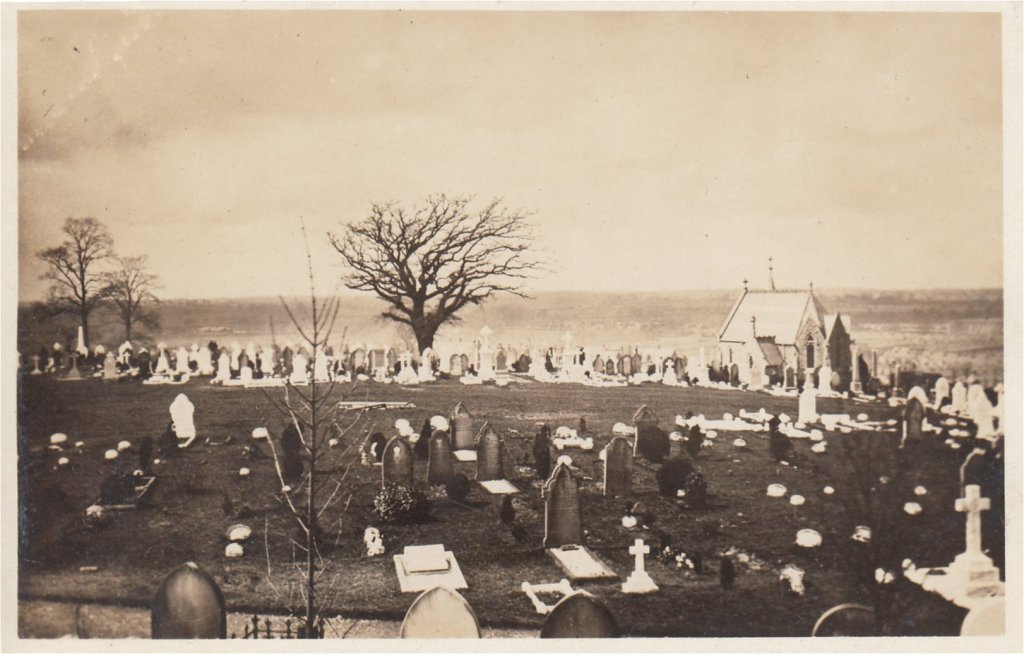
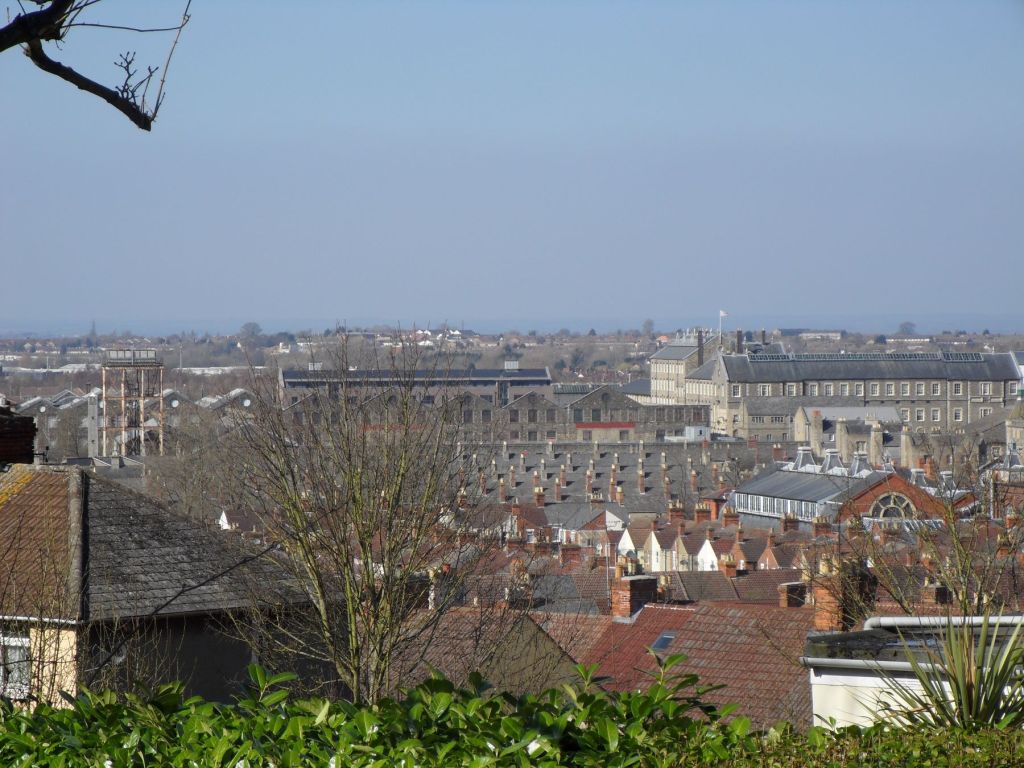
Until the Incorporation of the Borough in 1900, Swindon operated as two, quite separate entities. First there were the two Local Boards of Health (Old and New Swindon), then after the Local Government Act of 1894, the two Urban District Councils (Old and New Swindon). It was part of the reason the cemetery was so long in the consultation stage – neither of the local authorities wanted to pay for it!

One edition of the Swindon Advertiser, published on Saturday, November 23, 1895, included a Cemetery Committee report from the Old Swindon District Council while further down the page was a report from the Joint Cemetery Committee of the New Swindon Urban District Council.

How did local government ever get anything done?

Old Swindon Urban District Council

Cemetery Committee

This Committee in their report stated that during the last quarter 77 burials had taken place as against 72 in the corresponding period of last year. Dr Hoffmann, Her Majesty’s Inspector, had visited the cemetery and expressed his satisfaction at everything he had seen. The drainage at the Cemetery was now finished.

Swindon Advertiser, Saturday, November 23, 1895.

New Swindon Urban District Council

Joint Cemetery Committee

The report of this committee, among other items, contained the information that a sum of £79 15s 4d, was still unexpended of the £600 borrowed for draining the cemetery, the work having been completed. By this drainage scheme, the Surveyor reported that space had been made available for 6,996 more burials than was the case before, and that it was his (the Surveyor’s) intention of re-arranging the grave spaces, which would allow for about 800 more burials. Mr Longland, in moving the adoption of this report, expressed the indebtness of the Council to the surveyor and caretaker for the efficient manner in which the work was carried out at the cemetery.

Swindon Advertiser, Saturday, November 23, 1895.

published courtesy of Local Studies, Swindon Central Library.

Joseph Armstrong – Chief Superintendent of the Locomotive, Carriage and Wagon Departments

One of the most important people in Swindon’s history not buried in Radnor Street Cemetery is Joseph Armstrong.

Joseph Armstrong’s funeral was described as a spectacle seldom seen, with ‘the whole town and neighbourhood showing every possible honour to the memory of the deceased.’

Image published courtesy of Local Studies, Swindon Central Library.

The railway works closed for the day and an estimated 6,000 people lined the streets between Armstrong’s home at Newburn House, through Rodbourne and to the church of St. Mark’s.

During the first week of June 1877 Joseph Armstrong had left Swindon for a short holiday. He was suffering from heart disease and exhaustion exacerbated by his heavy workload. He died on June 5 at Matlock Bath.

Joseph Armstrong was born in 1816 in Bewcastle, Cumberland. Throughout his railway career he worked for the Liverpool and Manchester Railway, the Hull and Selby Railway, the London and Brighton Railway and the Shrewsbury and Chester Railway before arriving in Swindon in 1864. He was appointed the second only Chief Superintendent of the GWR Locomotive, Carriage and Wagon Works succeeding Daniel Gooch where he was responsible for the construction of all new engines, carriages and wagons and in charge of 12,900 employees.

A non-conformist, Joseph Armstrong was a staunch supporter of the need for a burial ground where non conformists could bury their loved ones according to their own beliefs and without the strictures of the established church. Sadly, at the time of his death just such a cemetery was still the subject of rancorous debate. It would be another four years before Radnor Street Cemetery was opened.

The strength of feeling at the time of Armstrong’s death is conveyed in the following extract from the editorial written by William Morris, published in the Swindon Advertiser.

Today an elaborate Grade II listed monument stands on the Armstrong family grave in St. Mark’s churchyard.

And this brings us to the lesson of Mr Armstrong’s death, and of the work and duty it has thrown upon us. We believe it was his desire to secure for others that liberty of religious thought which he enjoyed himself. And that this end might be secured he had taken an active interest in obtaining for the large and populous parish of Swindon that burial accommodation which the religious liberty of the subject demands should be provided for every parish, and the proposition to provide which for Swindon has been met and opposed by so many wretched subterfuges. We may treat with proper contempt the wretched work of bedaubing tombs and harrowing widowed hearts; but, as we have said we cannot afford to submit to such obstructions to our progress, to such evidences or the existence among us of a dogmatic priestly rule, altogether out of accord with the spirit of the age in which we live. This, then, is a work Mr Armstrong has left us to do – to provide a cemetery without priestly rule – a place of interment where we may bury our dead without the danger of having our feelings outraged by some impertinent and officious interloper who, by bell and book, would consign us to eternal punishment if we dared dispute his authority.

The Swindon Advertiser Saturday, June 16th, 1877

Extract from the editorial – written by William Morris

and a letter to which he refers in this lengthy editorial.

To the Editor of the Swindon Advertiser

Sir – Will you kindly allow me a space in your paper to lay before the people of Swindon the facts of a case upon which I think they should give judgment.

On Wednesday in Whitsun-week, (as you announced in your paper), a man named Benjamin Browning, of New Swindon, died suddenly, and his remains were interred at St. Mark’s on the following Sunday. His widow caused a tombstone to be erected to his memory, and underneath the usual inscription were placed the Latin initials R.I.P. Requiescat in pace or “May he rest in peace.” The Rev. George Campbell, vicar of St. Mark’s, seeming to consider these initials illegitimate, had them effaced with a covering of cement, and now in their stead there is a patch of a different shade to the stone.

I respectfully ask you, Sir, and the people of Swindon, if this is fair or Christian in a burial ground which, if it is not a public one, is the only one in the town for all denominations. And I ask also if the Rev. George Campbell has acted legally in defacing the property of another person?

There is something so simple, so sweet, and so impressive in the sentence for which those initials stand, that I think none could dislike it but those (if there be such a class of People) who do not wish the departed to rest in peace.

I am, Sir, yours respectfully,

James O’Connell,

23, Taunton-street, New Swindon, June 12th.

The busy Rye family

This attractive headstone drew my attention, partly because of the number of people recorded on it.

It is a scroll which in funeral symbolism can mean several things. It can indicate that the person buried had a religious conviction and a love of learning. When it is unfurling, like this, with the beginning and end rolled up it can mean a life half lived – the past is hidden and the future yet to be revealed. This is more often used on the grave of a young person, but no one buried here is particularly young.

Let me introduce you to Arthur Joseph Rye. The more I researched this family the more I pondered on the life led by Annie Rye, the last person recorded here who died in 1950.

This is the Rye family grave plot – Arthur Joseph Rye, his two wives and his eldest daughter Annie. The Rye family home had always been a bit crowded so their busy grave is no surprise.

We think 21st century family life is complicated …

Like so many Swindon residents, Arthur was an incomer. He was born in April 1856 in Irthlingborough in Northamptonshire but he didn’t come to Swindon because of the railways.

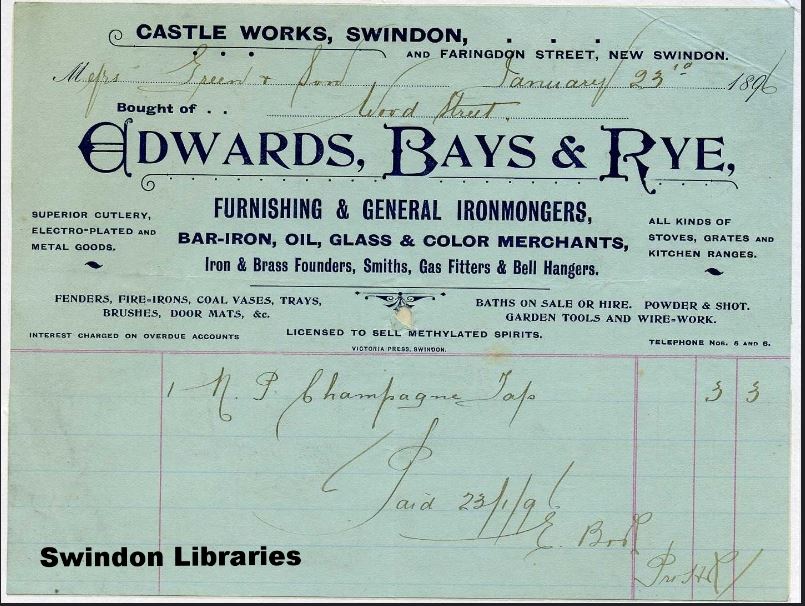
In 1871 Arthur was at a school in Spalding, Lincolnshire run by John C Jones, a Baptist Minister. Ten years later Arthur was in Swindon, newly married to Emily Beckingsale Greenaway and living at 1 Faringdon Road, employed as manager at the Castle Iron Works. In 1885 the Rye family moved to 55 Commercial Road.

In 1892 Arthur was taken into the ironmongery partnership and the firm became Edwards, Bays and Rye, with the Castle Iron Works and shops in Wood Street and Faringdon Road.

In 1901 Arthur and Emily are living at 2 Devonshire Villas, The Sands with their four children, eldest daughter Annie who at 19 is working as a Telegraphist in the Post Office; Joseph 15; Margaret 7 and six year old Frank.

Emily died in the summer of that year but Arthur doesn’t hang around and in the summer of 1902 he married Adelaide Lucy Langfield and the Rye family part 2 begins.

In 1911 we find Arthur and Adelaide at 58 Upper Mall, Hammersmith with Adelaide’s brother Herbert, their mother, sister and two nieces. They are all listed as one large household – there’s no mention if they are just visiting. Arthur and Adelaide have just two of their five children with them, Olive 7 and Arthur E. 7 months (I think the baby’s name might be incorrectly transcribed as they already have a son called Arthur). But where are the rest of the Rye family.

Back home in Swindon 29 year old Annie is the head of a busy household at 100 Bath Road. She continues to work at the Post Office as a Sorting Clerk and Telegraphist. At home she is looking after her sister Margaret 17, who works as a milliner’s apprentice, her brother Frank 16 who is still at school along with her father’s three younger children by his second marriage Arthur 6, Herbert 5 and Kenneth 1. She has a live-in general servant called Clara Holland Mayling, but that’s still a pretty heaving workload.

Arthur Rye died here in Swindon in 1919 and Adelaide in 1922 but I can’t help wondering about Annie. Was she a career woman or did she miss the opportunity to marry and have her own family in order to help look after her father’s one?

Annie spent her last years at 89 Avenue Road. She died on October 24 and left effects valued at £3,347 7s 5d to the administration of her brother Joseph and her solicitor John Wignall Pooley.

The story of the Davis family and their memorial

For some considerable time the Davis family memorial stood in a dilapidated, collapsed condition. This was one of the first restoration projects our dedicated team of volunteers undertook.

William Davis was born in Faringdon in 1856, the son of Joseph and Jane Davis. He married Agnes Greenaway, the daughter of John, a farmer in Stratton St Margaret, and his wife Susan. For most of their married life William and Agnes appear to have had a member of the Greenaway family living with them.

William worked as a draper’s assistant and the couple began married life at 14 Edgeware Road. By 1891 they had moved to Rose Cottage next to the catalogue houses on Drove Road.

On one side of the monument you can see the name of Reginald Ernest Davis, the couple’s second son. Reginald had a complicated personal life and a tragic death.

He worked first as a teacher at a local board school here in Swindon. In 1908 he married Rose Louise Gorton in the parish church in Clapham, South London when he described himself as a dairy farmer. Rose’s father was a farmer at South Marston.

The following year Reginald, now described as a clerk, and Rose, emigrated to Canada and in 1916 they were living in Regina, Saskatchewan with their six year old daughter.

The next time I find the couple is at the time of their re-marriage on December 7, 1923, describing themselves as divorcees on the marriage certificate, so presumably they divorced sometime after 1916.

Sadly it was not to be a happy ever after story as less than a year later Reginald committed suicide at his home in Toronto, which is where he is buried.

Moving around the monument we see a reference to William and Agnes’ eldest son. William Harold Davis worked as an agent for a British Merchant in West Africa. In November 1917 he was returning home from a business trip on the SS Apapa when the ship was torpedoed by a Germany submarine off the coast of Anglesey. William was one of 77 people lost.

Henry Clifton Bassett – Superintendent of the Swindon Wesleyan Circuit

Non conformity had a small presence in Swindon until the arrival of a large industrial workforce who came from across the country to work in the Great Western Railway. In fact the large number of nonconformists who wished to bury their loved ones without the rites of the Church of England was a contributing factor to the building of Radnor Street Cemetery.

This is the grave of Wesleyan Minister, Henry Clifton Bassett. Born in St. Stephens, Launceston, Henry was the son of agricultural labourer John Bassett. John must have been ambitious for his son as the 1871 census reveals that 12 year old Henry was a boarder at a school in Launceston.

By 1881 Henry, then aged 22, was a Wesleyan Minister lodging in Paignton with William Anderson, a joiner and carpenter, and his family. In 1884 he was employed at Lerwick with John H. Hooper, working on the Shetland Isles circuit.

He married Mary Ann Read in 1887 and the couple had three children – a daughter Hilda Constance and two sons, Clifton Read and Henry Norman.

Death of the Rev. H.C. Bassett

Swindon Circuit Wesleyan Supt. Minister

We regret to record the death of the Rev. Henry Clifton Bassett Supt. of the Swindon Wesleyan Circuit, which took place at his residence, Eastcott House, Regent circus, Swindon, last Saturday afternoon, at the age of 60 years.

The rev. gentleman was born at St. Stephens, Launceston, Cornwall, and had been in the Wesleyan Ministry for 36 years, holding important appointments in a large number of Circuits, more recently as Superintendent. Among the town in which he laboured were Newton Abbot, Lostwithiel, Northampton, Barton-on-Humber, Accrington, Sheffield, Darleston, Willenhall, Whitby, Selby, and latterly at Swindon.

The term of a minister’s tenure in a Circuit is three years. It speaks much for the popularity of Mr Bassett that after serving his full term in most of the Centres in which he has ministered he has been invited to remain for a longer period, so acceptable has his preaching and his work generally been to the people.

He came to Swindon from Selby in September 1917, as Supt. of the Circuit. His principal reason for coming South was the health of his wife, who had been in indifferent health for some years, Mrs Bassett being unable to withstand the rigours of the northern climate.

Mr Bassett had always enjoyed good health. He was an extremely hard and conscientious worker, a circumstance which in point of fact brought about the illness which ended in his death. He overtaxed his strength in visiting and preaching during the prevailing epidemic of influenza with the result that after preaching on Sunday, December 8th at the Wesleyan Central Mission, he arrived home from the evening service utterly exhausted. Dr. Lavery was summoned, and Mr Bassett was ordered to bed, from which he was never able to rise. His case was diagnosed at first as influenza. His heart became affected and pneumonia supervened. On Christmas Eve Dr. J. Campbell Maclean was called in in consultation, and his report as to Mr Bassett’s condition was grave.

Death took place on Saturday afternoon, in the presence of his wife and daughter and a trained nurse who had been in attendance.

Deceased leaves a widow, two sons, and a daughter. One of the sons is engineer to the Sunderland Corporation and the other is serving as an apprentice in the Great Western Works at Swindon.

Sympathetic references were made in all the Wesleyan Churches in the Circuit on Sunday to the great loss the Church had sustained in the Connexion by the death of the Rev. Clifton Bassett.

The funeral took place on Wednesday. There was a service at Wesley Chapel at 2.30, conducted by the Rev. H.W. Perkins, assisted by the Ministers of the Circuit and neighbourhood, and an address was delivered by the Chairman of the District, the Rev. Grainer Hargreaves of Oxford.

The Faringdon Advertiser, Saturday, January 25, 1919.

Henry Clifton Bassett was buried on January 22, 1919 in grave plot D1304 where he was joined by his wife Mary Anne in 1923. The cremated remains of their daughter Hilda Constance was buried with them in 1975 and their son Henry Norman in 1986.