This large family plot has many stories to tell. From Joseph Strong, a pattern maker, who moved to Swindon from Bolton in Lancashire in the 1850s to his son-in-law George Palphramand, who in retirement moved to Coventry and in death returned to Swindon to be buried with his family.
But I am beginning the story of the Strong and Palphramand’s with a family tragedy and the death of a little boy.
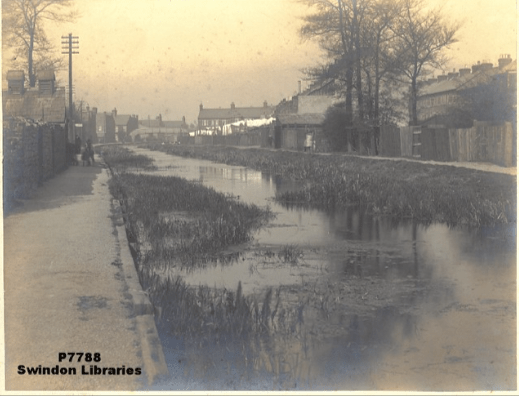
George Palphramand and Mary Ellen Strong married in St. Mark’s Church on April 13, 1876. Their first child Isabel was baptised on November 4, 1877 in the church where they were married. At the time of the 1881 census George and Mary were living at 24 Read Street with their three children Isabel 3, George 2 and 7½ month old baby Ernest. Mary’s brother Joseph Strong and his family lived next door at number 25. In the 1880s Read, Marlborough and Andover streets abutted the Wilts & Berks Canal.
Work began on the Wilts & Berks Canal at Semington in 1795 expressly for the transportation of Somerset coal to the towns in Wiltshire and Berkshire. However, with the completion of the Great Western Railway line from London to Bristol, trade on the canal diminished. It was closed by an act of parliament in 1914 and eventually filled in from about the 1930s. Today the short stretch of the former canal provides a route into Swindon town centre from the bottom of Kingshill.
At the inquest into the death of Ernest, a witness drew attention to the fact that there was really no fence there to keep little children from getting on the canal side, and ‘it was a great inducement for children to play there.’ Returning a verdict of accidental death the jury ‘expressed a wish that the Canal Company should endeavour to carry out such improvements to their fences that would hinder the occurrence of similar fatalities.’
Was this recommendation acted upon? Would this have been any consolation to the Palphramand family?
The Wilts & Berks canal looking east towards Marlborough Street footbridge c1914 published courtesy of Local Studies, Swindon Central Library.
Another Death From Drowning – On Tuesday afternoon, Mr Baker held an inquest at the Ship Inn, New Swindon, on the body of Ernest Strong Palphramand, aged three years and eleven months, son of George Palphramand assistant foreman in the P Shop, G.W.R. Works, of 24, Read street, who was drowned in the canal at the end of Read street, on Sunday afternoon. Mr George Thomas was foreman. The father of the deceased deposed that he last saw his son alive at about half past four o’clock on Sunday afternoon. The deceased was then playing with his brother in the backyard. The two children then went out at the back-gate, down the yard, and round by the front. The deceased went on to the path, and must then have fallen into the water. The other brother did not go on the path, but saw the deceased in the water, and gave the alarm. Witness ran up the street and jumped in, but could not find the child. His wife called the children back when they first went out of the gate, but they did not come; the elder of the children was five years old. When his older son came back from the water he seemed confused and could not tell where his brother was. No one really saw the child fall in the canal; and he must have been in the water for quite a quarter of an hour. Every effort was used to restore animation by those on the bank before the doctor arrived. Witness wished to call the attention of the jury to the bad state of the fences, and the path; there was really no fence there to keep little children from getting on the canal side, and it was a great inducement for children to play there. Henry Fraine, carpenter, of 44, Albion street, who helped to get the child out of the water, and Dr. Swinhoe also gave evidence. The jury returned a verdict of accidental death, but expressed a wish that the Canal Company should endeavour to carry out such improvements to their fences that would hinder the occurrence of similar fatalities. The jury also expressed their deep sympathy with the bereaved parents.
Wilts and Gloucestershire Standard, Saturday, July 26 1884.
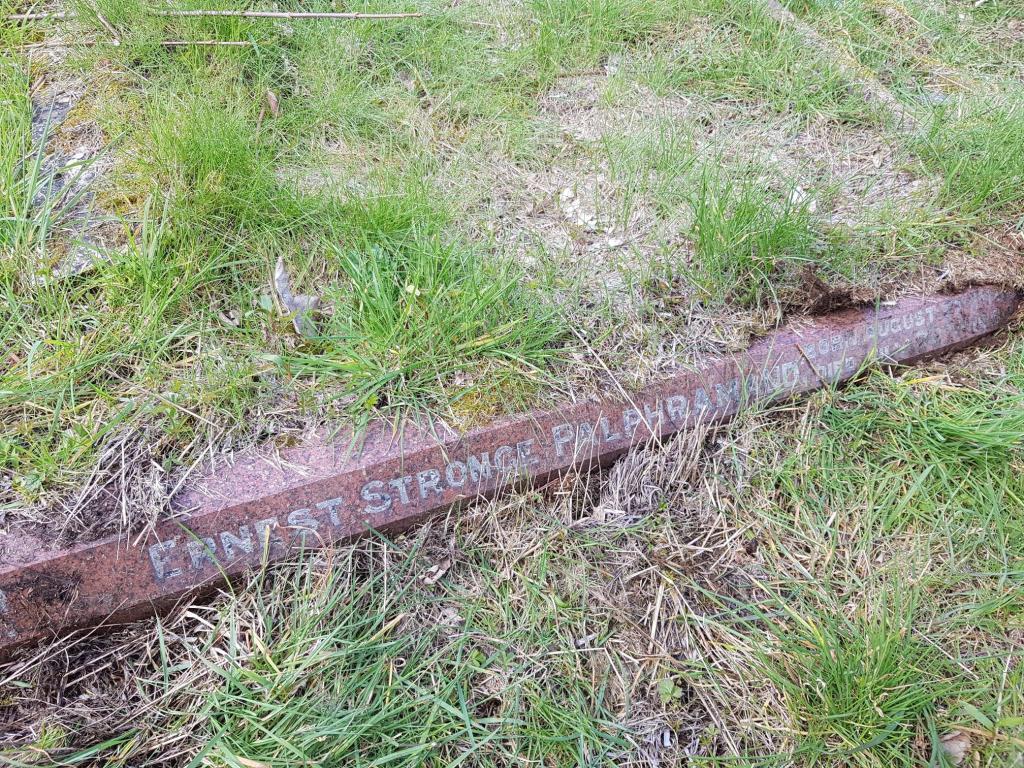
Ernest Strong Palphramand was buried on July 23, 1884 in grave plot E8469. The burial registers record that he was 3 years old and that his place of death was ‘The Canal near Read Street’.
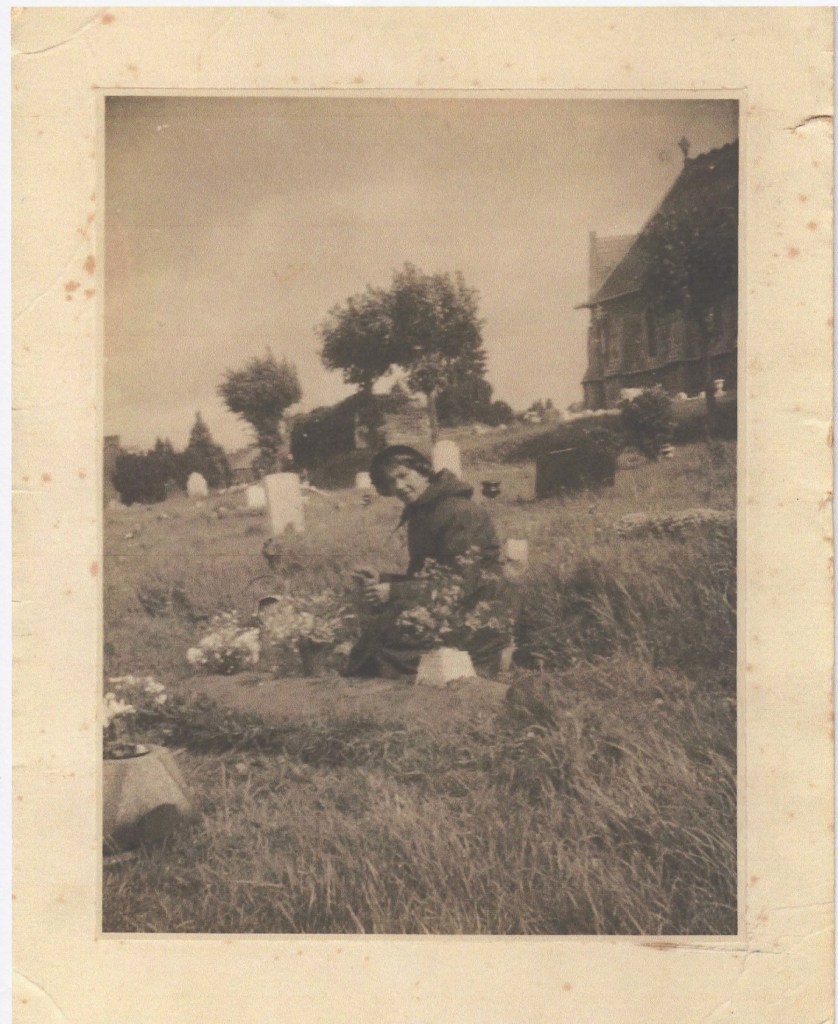
Old photographs of the cemetery are rare and always prove very intriguing and we don’t come across them very often. This one was sent to me several years ago by Sue and pictures her grandmother, Florence Sterry attending the grave of her husband John.
John Charles Howard Sterry, a rail carriage examiner, married Florence Nellie Hiscocks in St. Mary’s Church, Rodbourne Cheney on February 19, 1912. They were both 22 years old. Some Sterry family researchers with Ancestry online family trees record that John Charles Sterry served as a Driver in the Royal Field Artilery (RFA) during the First World War. However, a local source informs me that railwayman John was in a reserved occupation and did not go to war. The couple had three sons, Albert born 1914, William 1916 and Ronald in 1920.
At the time the 1939 List was compiled the family were at 129 Albion Street where John and Florence would remain for the rest of their lives. John died in St Margaret’s Hospital 1954 and was buried in grave plot C598. Florence died in 1957 and was buried in the same plot.
When I frst saw this photograph I was surprised at how long the grass was in the cemetery and that everywhere looked rather unkempt. This came as a surprise to me as I was under the impression that these were the years when the cemetery was still busy and where a staff (although probably small) of groundsmen were employed. If anyone has any memories (or photographs) of the cemetery in the 1950s and 60s we would love to share them here.
An extremely interestisng feature of this photograph is the glimpse of a small building in the background opposite the cemetery chapel. This building has long gone but appears on the map of the cemetery as ‘urinal’ – see below.
In her comprehensive and readable book Swindon Works – The Legend, Rosa Matheson devotes a section to the legend that was ‘Nicknames.’
She writes:
‘The Works’ sense-of-humour is a notrious legend in its own right from its earliest times.
And it came as no surprise to me that Andy Binks, cemetery guide and fellow volunteer at Radnor Street Cemetery, had contributed a few nicknames for Rosa’s book, for example – ‘Melvyn, otherwise known as Drill Head from when a drill fell on his head and floored him!’
From ‘the Clockie’ to Big Arthur, Arthur and Little Arth, all members of the same family, none of whom were called Arthur, it would seem every man in the Works had a nickname.
This is the story of George Bramley who hailed from Yorkshire. Guess what his nickname was?
George Bramley was born in Leeds in 1831, the second child of William Bramley, a weaver, and his wife Mary. George married Margaret Dunwell in 1852 and at the time of the 1861 census he was working as a labourer in an Iron Foundry and living in Tallow Hill, Worcester. By 1871 the family had moved to Swindon and were living at 10 High Street (later named Emlyn Square) with their four children James 16, Lucy 15, Maria 8, William 3 and three boarders. They later moved to 18 Oxford Street, which would be their last home.
Death of an old GWR Servant – The death took place on Sunday last, after a short illness of Mr George Bramley, of 18, Oxford Street, New Swindon. Mr Bramley passed away in his sleep at the age of 66 years. Deceased, who was better known throughout the Works by the soubriquet of “Yorky” (from the fact that he hailed from Yorkshire), came to Swindon in 1859*, and has been employed in the GWR Works, under the late Mr. Holden, and the late Mr Edward Brittain, ever since. He was one of the first Volunteers in the town, having joined the New Swindon Corps when it was formed in 1859, and did a considerable amount of work in assisting to make the first shooting range. He had been in failing health since the death of his wife last February, but continued to go to his work regularly up to last Saturday week. Deceased leaves two sons and two daughters. The funeral will take place on Saturday next, leaving the residence at 2.45 p.m., and proceeding to St. Mark’s Church at three o’clock. Friends will please accept this intimation.
Swindon Advertiser, Wednesday, November 22, 1899.
The backsies in the Railway Village
Margaret died in February 1899 and George in November of the same year. They are buried in grave plot C98 where their daughter Maria joined them when she died in 1933.
*census returns indicate that George may have moved to Swindon later than 1859.
As the UK prepares for the Coronation of King Charles and his wife Camilla on Saturday May 6, how did it all go back in 1911? The Coronation of King George V took place on June 22, 1911 and it all went very well here in Swindon. In fact, the Mayor Tom Butler said as much when he thanked the people of Swindon in the pages of the Swindon Advertiser.
The Mayor’s Thanks
His Worship the Mayor (Mr Ald. Tom Butler) desires to congratulate the inhabitants of Swindon generally on the success with which the arrangements for celebrating the Coronation in Swindon on Thursday last were carried through, and on the enthusiastic yet orderly way in which the inhabitants generally showed their loyalty and so readily assisted in making the day such an enjoyable one to all concerned, and especially to the old folks and the children.
The Mayor also desires to express his high appreciation of the decorations and illuminations, which were so artistically and beautifully carried out in all parts of the own.
In tendering his warmest thanks to all, he would also like to acknowledge the patience and courtesy with which the police carried out their duties during a long and arduous day.
The Swindon Advertiser, Friday, June 30, 1911.
By the time the newspaper was published Mayor Tom Butler’s much loved wife Mary Ann had died.
The Late Mrs T. Butler
Funeral
Impressive Scenes
The sad death of the Mayoress of Swindon has keenly touched the hearts of Swindon inhabitants, and when the funeral took place yesterday there was a demonstration of sympathy and respect almost without parallel in the town. In the streets, in the chapel, and at the graveside thousands testified by their presence and sad demeanor the sorrow they felt at the great calamity which had befallen the Mayor and his family and also the community at large, and representative men and women of all ranks and professions accompanied the remains to their last resting-place.
The first part of the service was held at Faringdon Street Wesleyan Chapel, where the late Mrs Butler had been a worshipper with her husband for many years. The Cortege left Ramsey House, Victoria Road, shortly after 2.30, the streets being thickly lined with spectators. The official representatives, who had previously met at the Town Hall, included Messrs. L.L. Morse, A.W. Deacon, J. Clark, J. Longland, S.B. Cole, W.H. Stanier, C. Hill and A.W. Haynes borough magistrates), Mr T. Free (Mayor of Marlborough), Mr W. Small (Mayor of Chippenham), Mr W.H. Lawson (Deputy Mayor of Swindon), Mr R. Hilton (Town Clerk), Prebendary W.B. Pitt, Messrs W. H. Williams, W.W. Dickson, J. Henderson, J. Spackman, R.W. Menham, G. Brooks, H.D. Piper, F.W. Marillier, A.E. Harding. T. George, J. George, J.G. Cox, W.E. Morse, A. Church, W. Sloan, W.H. Kinneir, A.J. Gilbert, A. Balch, R. Evans, A.H. Wheeler, J. Powell, J.J. Brown, W. Johnson, W.J. Bray and H.J. Gregory (members of the Town Council) cont…
The service in Faringdon Street Wesley Chapel, where from her youth onwards the late Mayoress had been a constant attendant, was of a painfully impressive character. Long before the cortege had reached the entrance, the side aisles had been filled by members of the congregation, the central aisles having been reserved for the mourners and followers.
In his address the Rev W.J. Chant said – ‘They were in the presence of a very great sorrow, a bereavement which was very mysterious, which was beyond them. Their deceased sister seemed to have been taken away at that particular time when she was very necessary; necessary for the home, for the church and for the town. But they could not raise God’s hands, and could only ask Him to help them to trust in their darkness.’
He continued – ‘It was with pleasure and encouragement that they thought of the kindness of the late Mayoress – ever happy when she was thinking of other people, trying to help them. The Lord of kindness was in her heart. They thought of her evenness of disposition. She was always the same, no matter when one met her. They also thought of the great love which she had for her home, how the heart of her husband trusted in her and her children rose up and called her blessed. They thought of her specially during the last few months, more than ever before, when she had been called upon to serve the town, counting no effort too great, no sacrifice too much, and her efforts culminated in that wonderful day of rejoicing so recent as Thursday week, when she was one of the most active, faithful, and unselfish and devoted workers in connection with the Coronation festivities.’
The cortege then left for the Cemetery, and as the sombre procession moved down the aisle the organist played Handel’s Dead March in “Saul.” While the body was being carried away practically every eye was tear-dimmed.
On leaving the chapel the procession re-formed and proceeded to the Cemetery, where a considerable space round the grave had been roped off. A dense mass of people witnessed the brief concluding ceremony. Supt. Robinson directed the arrangements. The grave was at the east end of the chapel. The coffin of polished English oak had an elm shell and brass fittings, and the inscription was:-
Mary Ann Butler
Born 14 July, 1862
Died 28 June, 1911
The coffin was borne upon a hand bier and was covered with floral tributes. Five mourning coaches followed, the family mourners being the Mayor (Mr T. Butler) and three sons – Messrs. R.W., T.R. and F.G. Butler – Mr Turner (brother of deceased) and Mr W. Watts (cousin). Amongst others following were Mr and Mrs A.G. While. The final portion of the service was said by the Revs J. Rodwell and W.J. Chant. At the last moment the Mayor, who had borne up bravely, was quite overcome with grief.
North Wilts Herald, Friday, July 7, 1911 (Extracts)
Mary Ann was buried on July 3, 1911 in grave plot A1033. She lies with her two young children, Hilda Mary who died in 1898 aged 6 years and Denis Stanley a 3 month old baby who died in 1899.
“He is active and decides what to do quickly, is a good punter, fists out well, and kicks cleanly and surely. – Sporting Life April 10, 1897.
Measuring 6ft 1ins tall, Bob Menham certainly stood out in a crowd!
Robert William Menham was born in North Shields in 1871, the son of cabinet maker Henry Menham and his wife Annie and grew up in Burley, Leeds. In 1891 he enlisted with the 3rd Battalion Grenadier Guards and in 1894 he married Bessie McKay.
Meanwhile, his football career quickly took off seeing him play for Luton Town, Everton and Wigan County before being transfered to Swindon Town where he is still considered to be one of the most talented goalkeepers the club has ever had. During the 4th round FA Cup replay against Staple Hill FC he even managed to score a goal, electing to take a penalty securing a 6-0 win for the Town.
And when Swindon Town F.C. found itself in dire financial straits in 1901, Bob joined a money saving initiative, which ultimately rescued the club.
Swindon Town F.C.
Players’ Wages Fund Subscription List
The following subscription list showing the amount received up-to-date has been opened on behalf of the Swindon Town F.C. Players, who a short time ago, when the financial condition of the club was in a very critical state, agreed to accept a greatly reduced wage in order that the club might exist, at least, till the end of the present season. As a matter of fact, the wage bill was reduced to practically half the former amount, and it is on that account that the players have been compelled to appeal to the public to assist them in carrying out their resolve. It is hoped that all lovers of sport will respond to the appeal, and all subscriptions and donations will be thankfully received, and duly acknowledged on behalf of the players by Mr R.W. Menham (capt.) Radnor Street, Swindon.
The Evening Swindon Advertiser, Saturday, March 16, 1901.
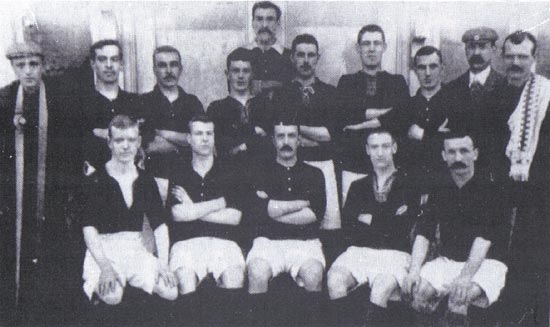
The Swindon Town FC 1902/3 squad
Bob retired in 1903, taking up a role on the team’s Board of Directors, while the family moved to the Castle Hotel, Prospect where he was licenced victualler for many years and was the president of the Swindon and District Licensed Victuallers Association. He served on the Swindon Town Council from 1907-1920 representing the East Ward.
Old-time Everton followers will regret to hear of the death of Bob Menham former Everton and Swindon goalkeeper, later a director of Swindon, and a well-known licensee there. He is still regarded at Swindon as the best goalkeeper the Wiltshire club ever had. His nephew Gordon, was also associated with Everton about twenty years ago.
The Liverpool Echo, Wednesday, January 31, 1945.
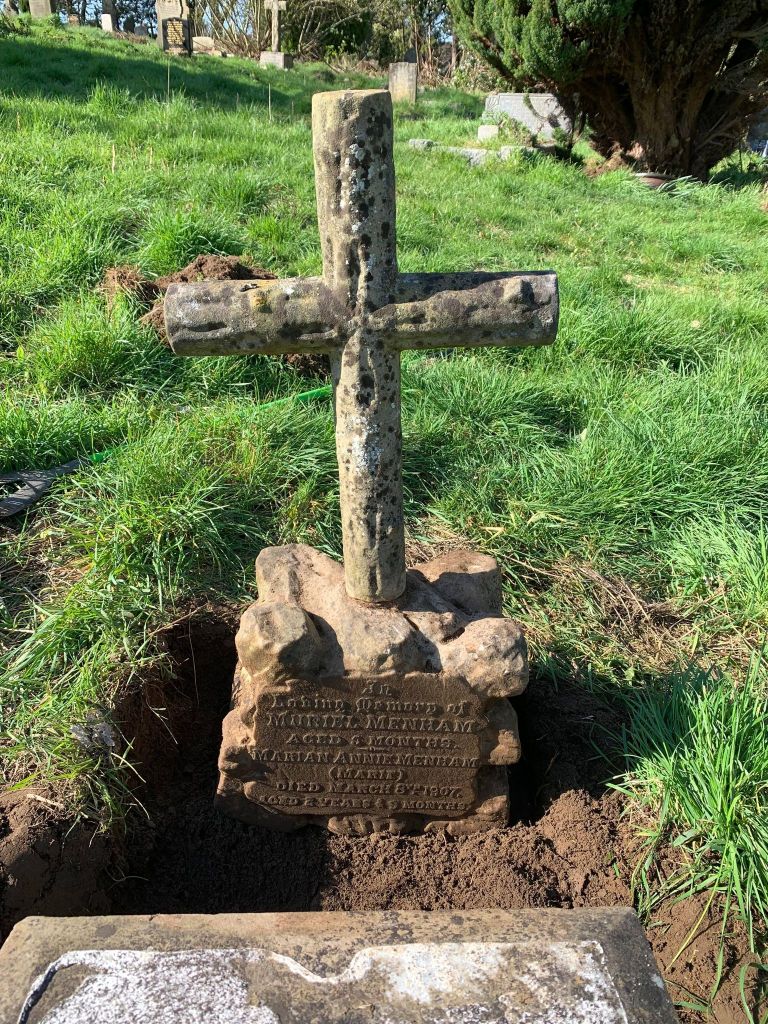
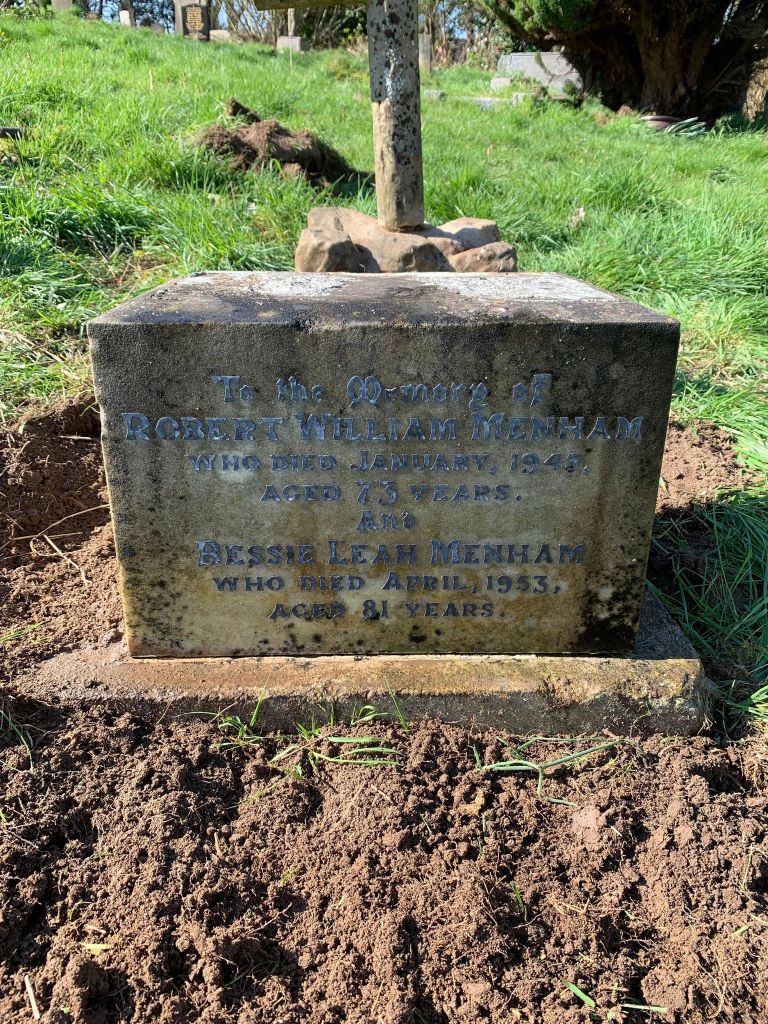
Robert William Menham died at his home, 67 Eastcott Hill, on January 30, 1945 aged 73 years old. His funeral took place on February 1, when he was buried in Radnor Street Cemetery in grave plot C1057 with his two little daughters, Muriel who died in 1900 and Marian Annie who died in 1907. Bessie Leah, his wife, died in April 1953 and is buried in the same plot.
Bob Menham’s memorial cleared and cleaned today by Kevin.
Philip Maddocks was born in St. Helier, Jersey in 1850, the son of Primitive Methodist minister Philip Maddocks and his wife Lucinda Beck. In fact, Philip junior would begin his own clerical career as a Primitive Methodist minister serving between 1868-1873 on circuits at Chippenham and Stroud (among others) before becoming an Anglican vicar.
In 1880 Philip married Florence Jane Sherrat at St Mary’s, Birkenhead and at the time of the 1881 census he was working as curate at St Peter’s Church, Burnley. He arrived at St Barnabas, Gorse Hill in 1883 and at the time of the 1891 census he is recorded as living at St Barnabas Vicarage, 268 Cricklade Road with his wife Florence and their ten year old daughter Florence Ida Louise. A son, Cyril, was born the following year but died in 1895 aged three years old. A second daughter, Philippa, was born in 1897. Florence died in 1902 and Philip married Blanche McGovern in 1918.
Philip served at St Barnabas’ for 48 years and at his funeral was described as Swindon’s oldest vicar.
Rev. P. Maddocks,
Funeral of Swindon’s Oldest Vicar
The high esteem in which the late Rev. Phillip Maddocks, the first and only Vicar of St. Barnabas’ Church, Gorse Hill, Swindon, who had held the curacy of souls in that parish from its formation in 1890 – he was curate from 1883 – was held, was shown by the large congregation at the funeral, which took place on Saturday morning.
A crowded congregation attended at St. Barnabas’ Church at 10 a.m., when there was Requiem Mass. The celebrant was Canon A.G.G. Ross (vicar of St. Mark’s) and the Bishop of Malmesbury also took part in the service. Canon Ross also officiated at the graveside in the Radnor street cemetery.
Choral Service
The choir were in attendance, and special hymns were sung, Mr. J. Padgett presiding at the organ.
The Young Men’s Guild, of which the Rev. P. Maddocks was president, was largely represented.
The funeral arrangements were carried out by Mr. A.E. Smith, of Gordon road.
Extracts from the North Wilts Herald, Friday, March 20, 1931
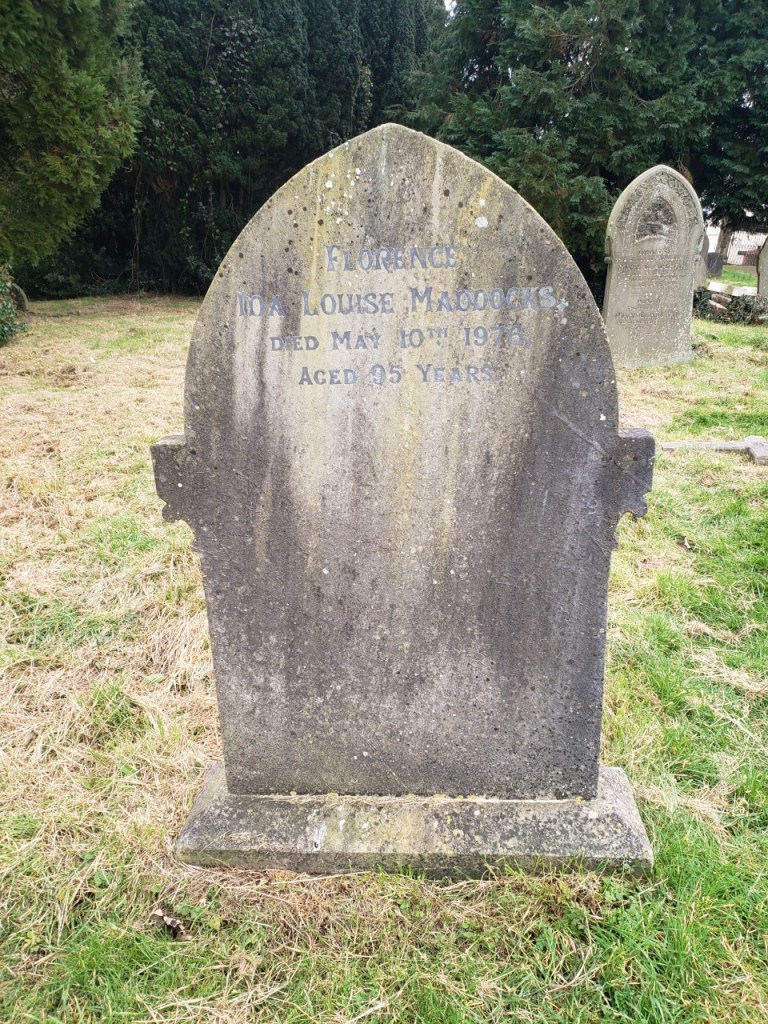
Rev Philip Maddocks two daughters both died in Roundway Psychiatric Hospital in Devizes. Florence Ida Louise was first admitted for a short stay in April-September 1912. She died there in 1976 aged 95. Younger daughter Philippa died in Roundway Hospital in 1926 aged 29. Both women are remembered on the headstone.
Philip was buried in Radnor Street Cemetery in a double grave plot A882/3 with his first wife Florence, their two daughters and their young son.
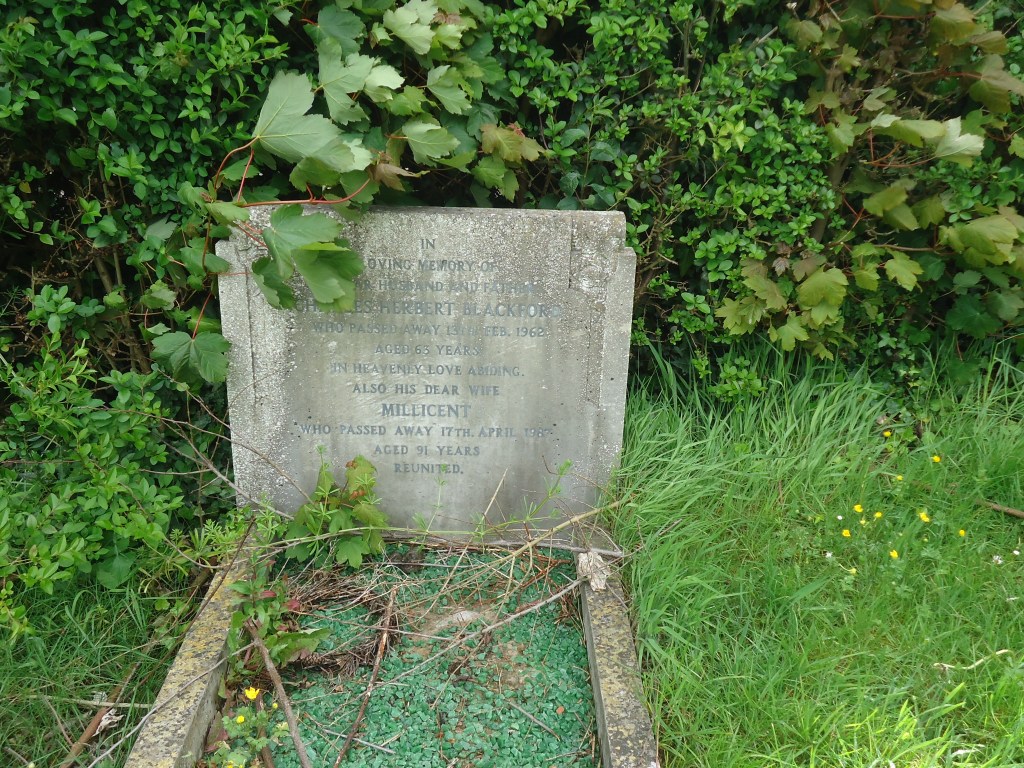
This is the last resting place of Charles and Millicent Blackford.
Charles Herbert Blackford was born on August 8, 1898 in Malmesbury, one of wheelwright and carpenter Daniel Blackford, and his wife Kate’s four children. Millicent was born in Polperro, Cornwall on January 5, 1897, the daughter of fisherman Richard Libby and his wife Ellen.
Charles enlisted with the Royal Naval Reserve in 1916 and served for three years during the First World War. Upon demobilisation Charles joined the GWR. Using the UK Railway Employment Records it is possible to follow Charles’ career on the railways.
He began work as an engine cleaner in January 1919 before quickly becoming a fireman. An entry dated December 14 1920 records that he was making the fire upon engine 3412 when his hand was pinned against a piece of coal. Top of middle finger on his right hand was crushed.
By 1939 Charles was working as a temporary Acting Driver at Didcot, after which he worked as a driver in Swindon. During the Second World War he was working as a temporary Relief Supervisor.
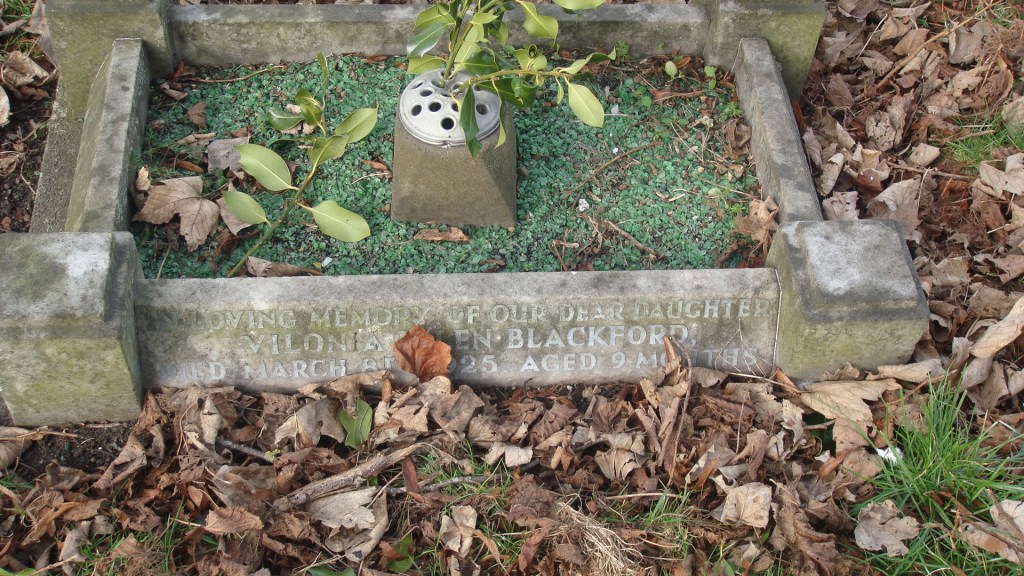
Charles married Millicent Libby in the June quarter of 1923 and the couple had two children, Vilonia and Royston. Vilonia died in infancy. Royston followed his father into the railway works as a coach finisher. Charles and Millicent lived at 23 Poulton Street, Gorse Hill until the time of Charles’ death in 1962. (Millicent may have remained at that address after his death.)
Charles died in February 1962. Millicent survived him by 25 years. She died in 1987 at the age of 91. They are buried together in grave plot C3351-0. This area of the cemetery has experienced some renumbering of the plots, but Charles and Millicent’s grave has an elegant headstone and is easy to find.
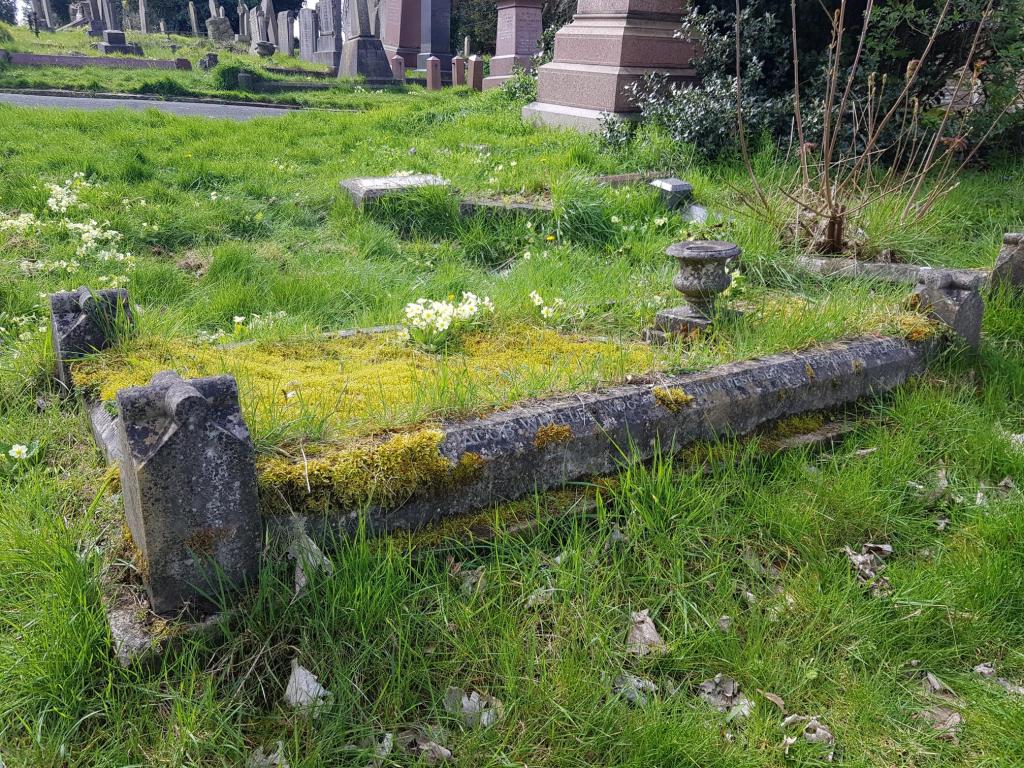
The burial of infants depended very much on the parent’s financial situation. In the past some babies were buried in a family plot, their names added to the memorial at a later date. Others were placed in a communal grave with other babies. Vilonia is buried in this beautiful little grave, close to the path leading to the cemetery chapel.
I have come to think of those buried in Radnor Street Cemetery as belonging to one, very big, family.
This week I have been researching the life and times of Jacob and Anne Wheeler and fortunately I have been able to discover a lot about them – see below the accounts of their Golden Wedding anniversary and their obituaries published in the local press.
Then studying their family tree, a name suddenly jumped out at me. When Jacob Wheeler died in 1936 Probate was awarded to his son Richard Wheeler, a fitter and turner, and to his son-in-law Frank James Richman, a grocer.
My friend and colleague, Mark Sutton, military historian and author of Tell Them of Us – Remembering Swindon’s Sons of the Great War 1914-1918, would often talk about the two Richman brothers, killed in action during WWI.
Graham Carter, friend and co-founder of the Swindon Heritage magazine published 2013-2017 recently wrote about Mark:
‘Nobody ever did more for preserving the memory of Swindon war heroes than Mark, or knew more about their sacrifices. Whenever I spoke to him about it, it was almost as if he had been there with them. Swindon owes him a debt for what he did for those men.’
And so it was with the Richman brothers.
Frank was the elder brother of Archibald David and Alfred George Richman. He started work in the GWR offices at the age of 13. In 1909 he married Annie Mary Wheeler and at the time of the 1911 census they were living at 86 Kent Road with their baby daughter Phyllis. The couple went on to have more children and eventually Frank would take over the family’s grocery business. He didn’t go to war. Annie died in 1957 and Frank in 1969.
Swindon Veterans
Golden Wedding of Mr and Mrs J. Wheeler,
Family Re-Union
Mr and Mrs Jacob Wheeler, of 12 Deacon Street, Swindon, celebrated their golden wedding on Sunday. They were married on 30 December, 1879, at the old Baptist Chapel, at the corner of Fleet Street and Bridge Street, by the Rev. Frederick Pugh, who was the last Pastor at that Church, prior to the building of the Baptist Tabernacle, in Regent Circus.
Mr Jacob Wheeler is a Wiltshireman, being a native of Trowbridge, and his wife, Mrs Ann Elizabeth Wheeler, is eldest daughter of Mr Richard Harris, is a Swindonian and has resided in the town practically all her life.
Coming to Swindon in 1873, Mr Wheeler entered the service of the GWR Company and was for 38 years employed as a machineman in the Locomotive Department. For over 40 years Mr and Mrs Wheeler – Mr Wheeler is 78 years of age, and his wife three years his junior – resided in Haydon Street and removed to Deacon Street seven years ago. Mr and Mrs Wheeler have a family of four children – three daughters and one son – and 13 grandchildren.
Family Congratulations
There was a happy family re-union at her eldest daughter’s (Mrs Richman’s) home, 86 Kent Road, on Monday, and the aged couple have been the recipients of many congratulations and presents.
Mr Wheeler is one of the oldest members of the “Briton’s Pride” of the North Wilts District of the Ancient Order of Foresters. Both he and his wife have been for many years members of the Baptist Church.
During their long residence in Swindon they have witnessed the wonderful growth of the town. The district in which they now reside was green fields when Mr Wheeler came to Swindon.
North Wilts Herald Friday January 3, 1930.
looking down Deacon Street
Mrs A. Wheeler
Funeral of a Swindon Baptist Worker
The funeral took place on Saturday afternoon of Mrs Annie Elizabeth Wheeler, wife of Mr Jacob Wheeler, of 12 Deacon Street, Swindon.
Mrs Wheeler, who was 77 years of age had resided in Swindon practically all her life. She was the oldest member of the Baptist Church, having joined it when the services were held in the old church at the corner of Bridge Street and Fleet Street, many years before the Tabernacle was built. It is not long since Mr and Mrs Wheeler celebrated their golden wedding.
The first portion of the funeral service was conducted at the Tabernacle, where there was a large congregation of mourners. Mr. A.E. Ford was at the organ and played the “Dead March,” and the hymn “For ever with the Lord,” was sung.
The Pastor (the Rev. E.W. Probert) conducted the service and also officiated at the graveside in Radnor Street Cemetery.
Extracts North Wilts Herald Friday November 13, 1931.
The Late Mr J. Wheeler
Funeral of a Swindon Octogenarian
The funeral of Mr Jacob Wheeler late of 12 Deacon Street, who died at his daughter’s residence 31, Downs View Road, at the age of 84 years, took place on Monday afternoon. The service at the Baptist Tabernacle was conducted by Rev. C.H. Cleal, who also officiated at the interment in Radnor Street Cemetery.
Mr Wheeler, who was a native of the Westbury district, had lived in Swindon over 60 years and retired a quarter of a century ago from his employment as a machinist in the old G Shop of the GWR Works. For over 50 years he had been a member of the Baptist Church. He leaves a son and three daughters.
Extracts North Wilts Herald, Friday, 11 September, 1936.
Anne and Jacob Wheeler are buried together in grave plot A1095.
The Swindon School Board formed in response to a growing demand for school places in the rapidly expanding towns of New and Old Swindon. In 1881 the Board began an impressive programme of school building. By 1892 11 schools with 26 departments were up and running with 2 more due to open at Westcott and Gorse Hill increasing the available accommodation to 6,500 children.
In 1894 Swindon Schools were all graded “excellent.” A report delivered by H.M. Inspector on the examinations of Board Schools for 1895 stated that “Queenstown – The infants are in very good order. They have been taught with great care throughout the year, and have made excellent progress.” At Even Swindon School, where extensive building work had taken place throughout the year, the report stated that teaching had been “carried on with considerable difficulty. But the teachers have worked very hard, and, under the circumstances, the infants may be considered to have made excellent progress.”
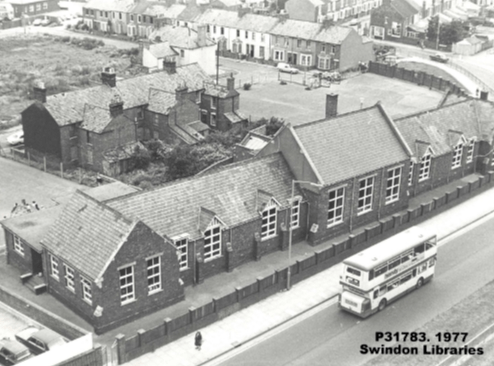
Photo of Queenstown School taken in 1977 and published courtesy of Local Studies, Swindon Central Library
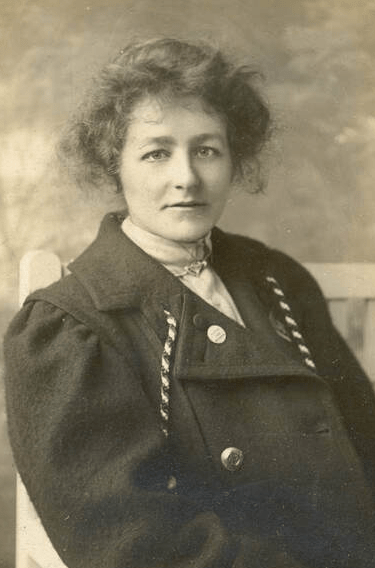
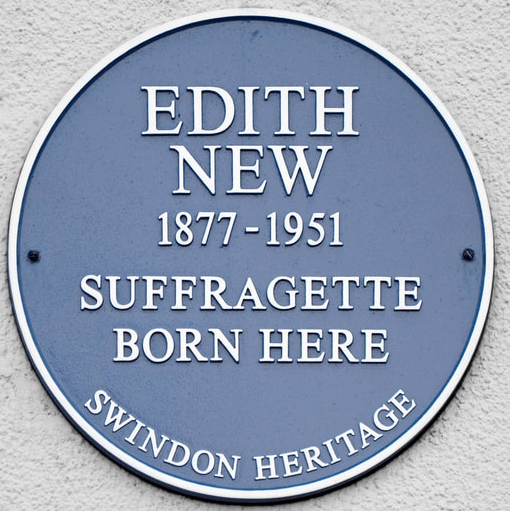
By 1897 there were more than 100 pupil teachers in Swindon Schools, a traditional route into teaching for bright children. Swindon Suffragette Edith New began her teaching career as a 14-year-old. This story is about Florence May Vivash, but there is a serendipitous connection to Swindon’s suffragette.
Florence May Vivash was the daughter of Jacob and Alethea Vivash. She was baptised at St. Mark’s Church on January 7, 1883. By 1891 the family were living at 9 Park Lane – Jacob, Alethea and their three children along with Alethea’s mother, Sarah Ann Bunce.
Florence began her teaching career as a pupil teacher at Even Swindon School. (The original building in Rodbourne was demolished in 2013. A new school with that name opened in 2007). In 1897 Florence passed an exam for Elementary School Teachers at the Swindon & North Wilts Technical School in Geometrical Drawing (Art). She later moved to Queenstown Infant School where she remained until her death in 1909.
Edith New was Assistant mistress at Queenstown Infant School from 1899-1901. Did their paths cross? Edith left Swindon for London in 1901 to teach in the deprived areas of Deptford and Lewisham. She resigned from teaching in 1908 to join the Women’s Social and Political Union and the campaign for Votes for Women. She returned to teaching in 1911, eventually retiring to Polperro, Cornwall where she died in 1951.
I’d like to think that Edith’s work and her involvement in the suffrage campaign were known to Florence. Sadly, Florence was unable to achieve her full potential. She died in 1909 as Edith was about to earn a place in history.
A Young Lady’s Death. – After a brief illness of a month Miss Florence May Vivash, of 9 Park Lane, Swindon, passed peacefully away in the early hours of Tuesday morning at the age of 26 years. The deceased was for some time a pupil teacher at Even Swindon School, and afterwards received two years’ training at the Home and Colonial College. She then became a teacher at Queenstown Schools, where she had been engaged for nearly six years. The funeral took place to-day.
Florence May Vivash, School Teacher, 26 years, was buried on May 28, 1909 in grave plot C1326. She is buried with her grandmother, Sarah Ann Bunce, who died in 1903, her mother, Alethea who died in 1913 and her father Jacob who died in 1917. A baby sister Alice, who died in April 1881 aged 8 months old, is buried in the churchyard at St. Mark’s.
New Year’s Eve 1915 and a ferocious fire swept through an out building in Eastcott Hill. A local businessman, Gabriel Morrell lost his life. Neighbours and six police officers fought the blaze, passing buckets of water hand to hand. Despite numerous calls to the Fire Station in Cromwell Street, no help arrived. The newspaper account stated that “the system of fire calls in the borough appears to be antiquated.”
Eastcott Hill
Tragedy
Swindon Tradesman Burnt to Death
A Mass of Fire
Fire Brigade Hear Nothing of Calls
New Year’s Eve in Swindon was marked by a shocking tragedy in which a well-known licensed victualler lost his life, and in connection with which the public will demand an enquiry into the system of Fire Brigade calls in vogue in the borough.
The victim of the tragedy was Gabriel Morrell, living in Eastcott Hill, where he had carried on a grocery and off-licensed business for four and twenty years. At half-past ten on Friday night the police were informed that Mr Morrell’s premises were on fire whereupon P.S. Molden, with P.C.’s Harris, Cowley, Mitchell and Stoper, at once hurried to the scene, where they were quickly joined by other members of the force. They were taken to the back of the premises, where they found a shed, used for storing lumber, on fire. The seat of the outbreak was evidently inside the building, and P.C. Harris proceeded to force open the door. The moment he succeeded a huge mass of flames burst forth, forcing him and the other officers standing near to retire for some distance. The policemen, setting to work with a will, seized buckets and such other vessels as they could lay hands upon, and began to dash the water they found in the soft water butts upon the flames. When that supply was exhausted they turned to the slower method of filling the pails from the taps on the premises and in the adjoining houses, work in which, under the guidance of Supt. Moore, who had now arrived, they were energetically assisted by a number of civilians.
A Shocking Discovery
Nearly half an hour passed by before they got the fire under control, and could venture into the shed. Then a shocking sight met their eyes. On the ground in the middle of the structure was a huddled up mass, which in spite of the dreadful manner in which it had been charred, was recognised as that of a human body. At once it was concluded that it was that of Mr. Morrell, who during this period of excitement not been seen, and further enquiries and search elicited the fact that he was nowhere to be found. A closer scrutiny showed that all the clothing had been burnt from the body except a belt which went round the waist. The body was lying on its back with the knees and arms tucked up over the trunk. The remains were carefully lifted on to sheets and blankets and removed by the police to the mortuary.
Calls for the Fire Brigade fail
In the meantime calls were made from the fire signal posts to the Fire Brigade, who, however, never arrived, but even if the Brigade had come upon the scene they would have been too late to save Mr. Morrell’s life, as there is little doubt that he was in a dead or dying condition at the time the police broke open the door of the burning shed.
After the removal of the body the shed, which was built of wood and had a slated roof, continued to burn until its existence became a source of danger. The remaining supports were then pushed away, and it collapsed. The building was 12ft long by 9ft wide, and 7ft or 7ft high at the eaves. It was not used for storing any of Mr Morrell’s stock-in-trade, but was employed for the storage of empty boxes, old newspapers, account books and rough lumber.
The Deceased Missing
It seems that at ten minutes past ten Mr Morrell took a candlestick to go out, as the family thought, to the lavatory – and thinking that his wife and two daughters, who were the only other occupants of the house, were going to bed, he wished them “Good night.” To this Miss Morrell replied. “We are not going to bed yet, dad; we are going to watch the old year out.” While Mr Morrell was out they had a light supper, after which they went upstairs to prepare for bed while witing for the passing of the old year. They noticed a slight odour of burning, but it was not until Miss Frances Morrell drew up the blind and saw smoke issuing from the shed that they were aware that anything was amiss. Mrs Morrell then called her husband, but got no answer. She and her daughters thereupon rushed out of the house seeking help, which promptly arrived. Some neighbours went to alarm the Fire Brigade, while others fetched the police.
Failing Health
The deceased, who was 57 years of age and a native of Chippenham, before coming to Swindon 25 or 26 years ago, was canteen steward to the Wiltshire Regiment, in which he enlisted many years ago at Swindon Fair. Having decided to settle in Swindon he went to work at the factory until he was able to secure a business suited to his taste. After a time he secured the license of the Railway Hotel; but he and Mrs Morrell did not care for the business and three months later removed to Eastcott Hill. Until recent years the deceased enjoyed good health, but latterly had complained of feeling unwell, and of pains in the region of the heart, telling his daughter on one occasion that no-one knew what he had suffered. He refused to see a doctor, saying that he could best doctor himself.
In addition to the widow and daughters living at home, there are two sons, both of whom are married and reside in distant towns.
The Brigade’s failure explained
With regard to the failure of the Fire Brigade to respond to the calls made by P.S. Pickard and others, our representative had an interview with Chief Officer J.N. Jefferies today. He said that he heard nothing of the matter until he reached the Town Hall this morning, and until he had made further enquiries could say nothing definite on the subject.
Other enquiries, however, have elicited the fact that the electrical call arrangements are in a condition far from satisfactory. Although calls were made from several stations the only one which proved to be in working order was that in Cromwell Street, which commenced to ring at 11 o’clock. The horse was got into the hose cart at the Fire Station and was ready to start, when an intimation was received that the fire was under control.
It is said that in process of time some of the wires of the alarm posts have become unreliable and that the recent storms have damaged overhead lines. The system of fire calls in use in the borough appears to be antiquated, and, judging by last night’s experience, and that of a previous occasion, when two motor-cars were destroyed, is unreliable and should give place to a better one.
Civilian Helpers
Amongst those who rendered valuable assistance were Mr. Walter Gregory, 7, Stafford Street, Mr Bernard Woodbridge, 129, Stafford Street, Mr William Gillett, 17 Dowling Street, Mr Johnson of the George Hotel, Eastcott Hill, Mr F.W. Trineman, greengrocer, Eastcott Hill, Mr William Rich, 10, Eastcott Hill, Mr Frederick Eagleton, 16 Eastcott Hill, Mr George Smith 42 Pembroke Street, and Mr Porter, hairdresser, Swindon Road.
Funeral of Mr Morrell
The remains of Mr Gabriel Morrell of Eastcott Hill, Swindon, who was burned to death in a shed on New Year’s Eve (as reported on page 2), were quietly laid to rest in Swindon Cemetery on Wednesday afternoon. The mourners – Mr Gabriel Morrell, Mr B.G. Morrell, Miss Morrell and Miss Frances Morrell (sons and daughters) Mr T.C. Boxall, Mr W. Boxall and Mr H.W. Coale (representing the Lamb Brewery, Ltd) – left the house at half past two, and met the hearse, which conveyed the coffin from the Mortuary to St. Saviour’s Church, where the service was conducted by the Rev. J.H. Kemmis, who also read the committal sentences at the graveside. Flowers were sent by the widow, the sons and daughters, Mr. and Mrs J. Franklin and family (Chippenham), Mr and Mrs A. Seale and family (London), Mr and Mrs Winchcombe and family, Mr T.C. Boxall and family, Mr J. Hill and family, Miss May Fowler, Mrs Smith and Miss Dolly Smith.
Since the sad occurrence it has become known that, at the time of his death, Mr. Morrell was wearing a coat in the pockets of which he carried recently-issued Treasury notes representing a considerable amount. These were, of course, completely destroyed, and it unfortunately happens that Mr. Morrell kept no record of them.
In November 1911, Mr and Mrs Morrell’s house was burglarously entered, and money and a quantity of goods stolen. It was after this that Mr Morrell, who had eccentric ideas concerning the banking of money, procured a revolver for self protection.
We understand that the question of the failure to get into communication with the Fire Brigade is being investigated and that a report will be presented to the Town Council in due course.
North Wilts Herald, Friday, January 7, 1916.
The Fire Brigade pictured outside the Cromwell Street Fire Station in about 1910. Published courtesy of P.A. Williams and Local Studies, Swindon Central Library.
Gabriel Morrell, aged 57, was buried in grave plot E7596 on January 1916. Frances, his daughter, married Percy William Martin later that same year. Percy died aged 25 and was buried with Gabriel on November 5, 1918.









 Radnor Street Cemetery