Lorna Dawes – in her own words

Last year I published on this blog an article about Miss Lorna Dawes and her memories of working ‘inside’ (that is inside the GWR Works). Yvonne Neal, of the Swindon branch of the Wiltshire Family History Society, has managed to collate the articles Lorna wrote for that Society’s newsletter and has kindly given me permission to print them here. Yvonne also contacted Lorna’s brother Ken who has supplied this photograph of his sister. So, published here in three instalments is a piece of Swindon’s history – Lorna’s story – in her own words.

GWR Memories – Lorna Dawes

Swindon Railway Works grew over many years and became the site of a fantastic organisation, with many sub-sections and with everything needed to support and organise the volume of work, i.e. possibly more than one locomotive a week. Even had its own window cleaners, clock man and master clocks connection to Greenwich time, ambulance, fire engine etc. all in situ.

As a shy 14 year old, I came for interview with my mother, but really wanted to work in a flower nursery, not that there was any work experience in those days.

I joined an army of boy and girl office messengers, some in the main offices and others in workshop offices, dealing with immediate personnel. I ended up in No. 13 Staff Office (see further information below); the hub of the Works and in control of quite a few events all over the West and Wales. One small element was the letting of railway houses and cottages, which included a crossing cottage in the west, which carried the comment ‘water in churns’. It set me wondering at the possible difficulties.

I’ve realised lately that, whilst someone must have introduced me to my job, I actually ended up running it all myself as regards programming. It was extremely busy and most of it physical as I went to so many areas and hardly stopped. It was a job I loved and led on to all kinds of interests, so I never regretted it and I’ve always had friends.

The whole background was a pride-based one and it wasn’t unusual for new engines to bring an admiring crowd along the lines.

The messengers went on to apprenticeships for the boys and office jobs for some of them also, as well as clerical posts for the girls.

I had already started shorthand and typing privately, and it became a condition of work to proceed so I went to night school three nights a week 7.00 pm to 9.00 pm at the college in Sanford Street, which included Commerce, English and Arithmetic. The work-related ones were sometimes taught by men (Clerks) from the Works. I managed 130 wpm shorthand and really loved it.

The only way I was ever given ‘instructions’ was as part of a bell system for individuals, and I was about four or five rings to go to an officer at post time. For instance:

Early morning:   sorted copies of last night’s post and distributed

Every morning:  Bank bags to Railway Bank on London Street

                                Sometimes called into the Railway Union Group in next street, or Railway Club, Bridge Street.

                                On return every day, collected Time Book at main entrance. This contained information on anyone leaving/returning from outside the Works.

                                Then round the offices obtaining signatures to cover reasons given i.e. dentist, surgery, etc.

                                Then made coffee, individual cups for about 25, and washed up downstairs.

I was responsible for obtaining and distributing dusters, towels, soap, string etc. to ‘my’ office, around 25, and sometimes to General Stores, which was between the Main Offices and the Station. It was a large building with three floors and I had to find the correct location.

The Stationery Office and another office was accessed by crossing all the lines in front of the Engine Shed where engines were being shunted and men cleaning. (Graded – cleaner, fireman and then driver.) The Stationery Office had typing paper, some water-marked, ink pens and also confetti from punch cards!

The Duplicating Office was in the wall of the Body Shop. Here there was the traverser hazard and I quite often had to divert. I had to go there a lot and quite often in a rush with special or urgent notices. Printing was slow and with a hand roller, one at a time, which meant I had to wait around.

At Park House I saw drivers with piles of coloured wool which were used to give vital eyesight checks. Yes!! Also went into the cellar for old files, some were accident originals.

At the Mechanics Institute, I had to transport books to and fro between ‘Officers’ who read and vetted books before they were put on display in the Mechanics Library (may be something no one knew).

I took ‘travellers’ to the Loco or Carriage Works and also interviewees to the Carriage Canteen.

Sometimes I was sent to the Loco Canteen, for clerks who needed sandwiches because they had unexpectedly to work overtime. The Loco Canteen was underground and in electric light.

The Works had its own Telephone Exchange – push/pull units.

The Head Messenger’s office, Mr Bill Ferris, was where the postal boxes were kept.

The Storehouse consisted of three floors and was to the rear of the offices. Very creepy there as it was quite often empty except for files.

I also had to go to the Laboratory at Church Place.

The Drawing Offices were on the third floor, main building – you could see Purton from the landings.

The above were my duties, and places I had to go in the mornings. In the afternoons:

                                Make tea and wash-up.

                                Get post signed and despatched – that was very busy

                                Works Cash Office

                                Visit to the fourth floor – no lift, exhausting!

                                Mileage Office – SPL, toilet for older women in this office!

                                Extra jobs would include advertisers and lardies

A little story: I was sent in search of saccharines (sweeteners) for a desperate officer one day after Bank duty!

These are all rough memories but my work seemed to get more and more interesting all the time.

I spoke before about No. 13 Office. The layout in 1945 was:

Boss of Staff Office – Percy Mills

Deputy – Ted Click – in the corner was my bit of desk and a cupboard

Four typists – I was one here, later. One of the typists was a big fan of WEA Hikers and I joined. Another was the daughter of Louis Page, Football Manager. She took me to the Isle of Man, with two others, when I was around 14½.

Then there were row of Clerks.

More than once I passed F.W. Hawksworth, Chief Mechanical and Electrical Engineer, in the tunnel. My wages in 1945 were 18/- a week. (approx. 90p).

I probably have enough to fill my own book with my very wide GWR experiences and, in fact, Rosa Matheson has used a lot of my information. I once gave an hour’s talk to the Railway Lounge Group.

To be continued …

You may also like to read:

Miss Lorna Dawes and a life ‘inside’.

First Day of Spring

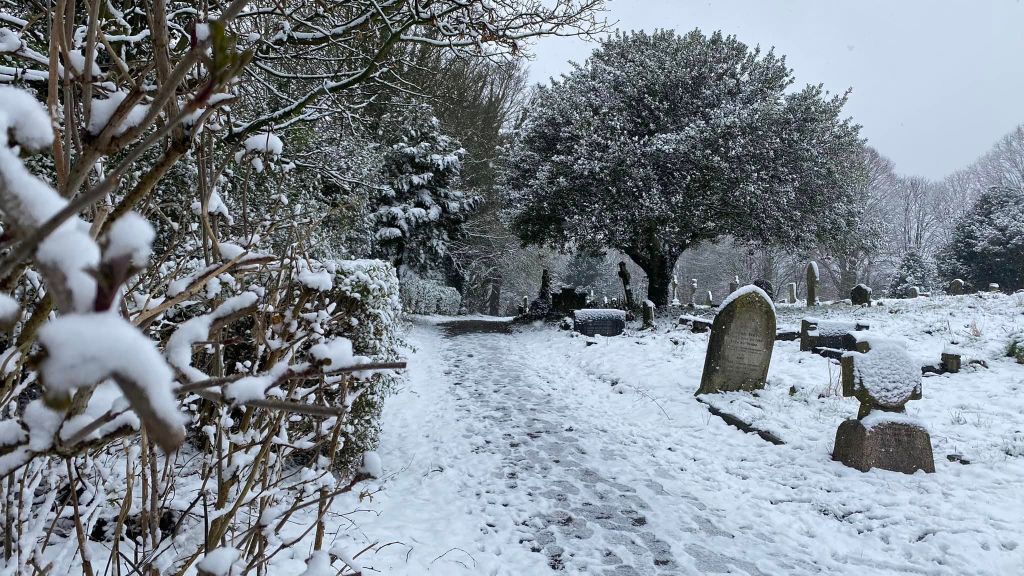
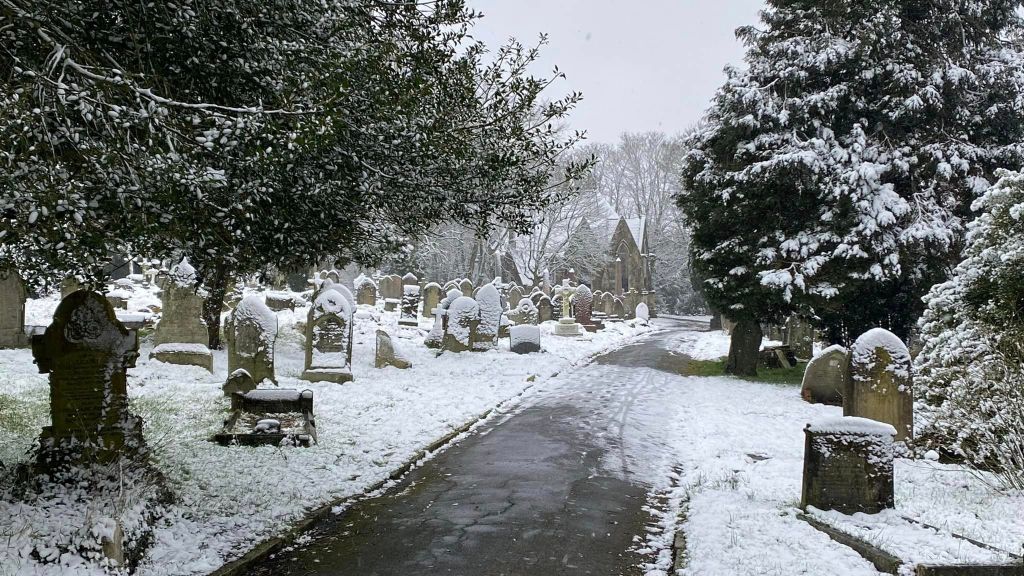
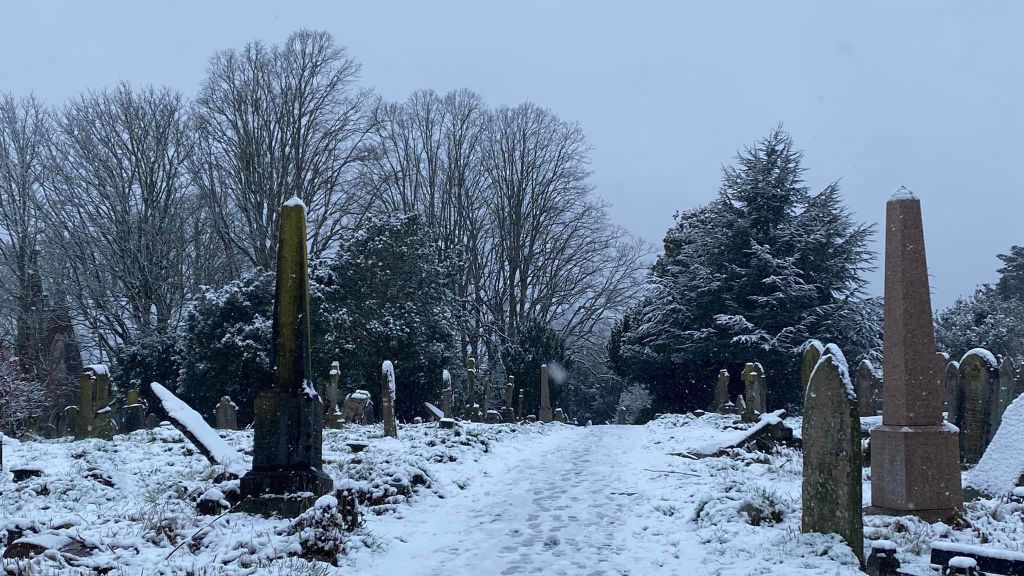
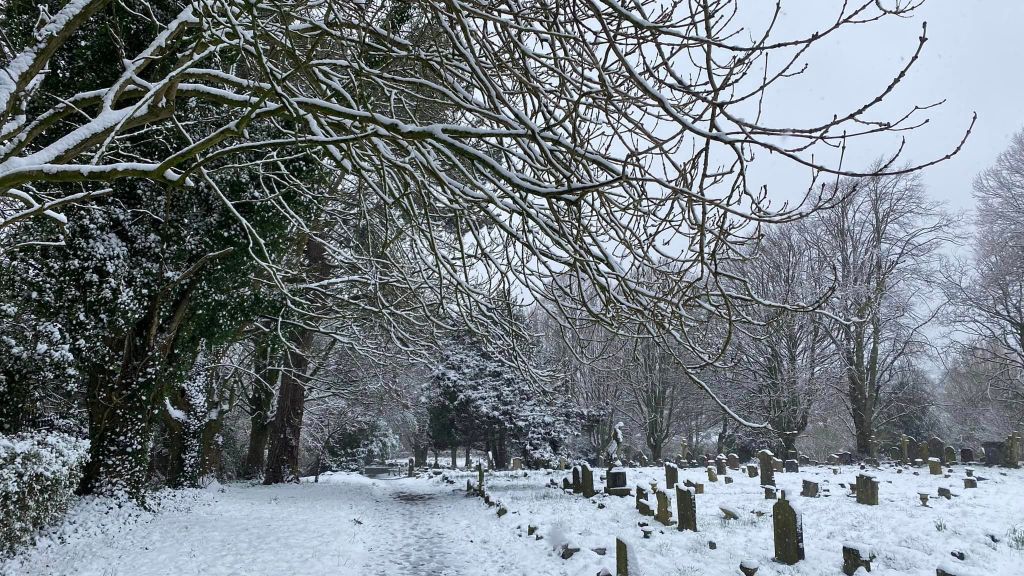
In 2005 Radnor Street Cemetery was designated a Nature Reserve. A team of Rangers worked to promote the benefits to Swindon residents of having a green oasis on their doorstep. With an earlier band of volunteers they worked on a Garden of Remembrance close to the Radnor Street entrance. They plotted an area in which to grow meadow flowers. They organised events, installed bat and bird boxes and led guided walks. Then came the financial crisis of 2007-8 and subsequent cuts in council budgets and soon Swindon was relying on the work of volunteer rangers, and Radnor Street Cemetery became a casualty of those cuts.

For me, Radnor Street Cemetery is all about the people and the history of Swindon but Spring is most definitely in the air and every good cemetery guidebook (or website) has a section on flora and fauna. As a townie and non-gardener I’m probably not the best person to write this and there are many in our little band of volunteers who would make a much better job of it, but it will be selective, brief and beautifully researched. Please feel free to add your own more knowledgeable comments.

I’ll begin with the snowdrop – everyone knows the humble little Galanthus Nivalis that flowers in late winter and heralds the coming of spring. The snowdrop has inspired stories and poetry, music by Johann Straus II and Tchaikovsky and was a nickname for the US Military Police stationed in the UK during WWII.

The daffodil belongs to the Narcissus genus and is recognisable to even a horticultural ignoramus such as myself. The daffodil has migrated from North Africa and Southern Europe and was adopted by the Welsh as their national flower, although when and why seems largely unknown. The leek has a much older association with Wales, but to the best of my knowledge, we don’t have any in the Cemetery.

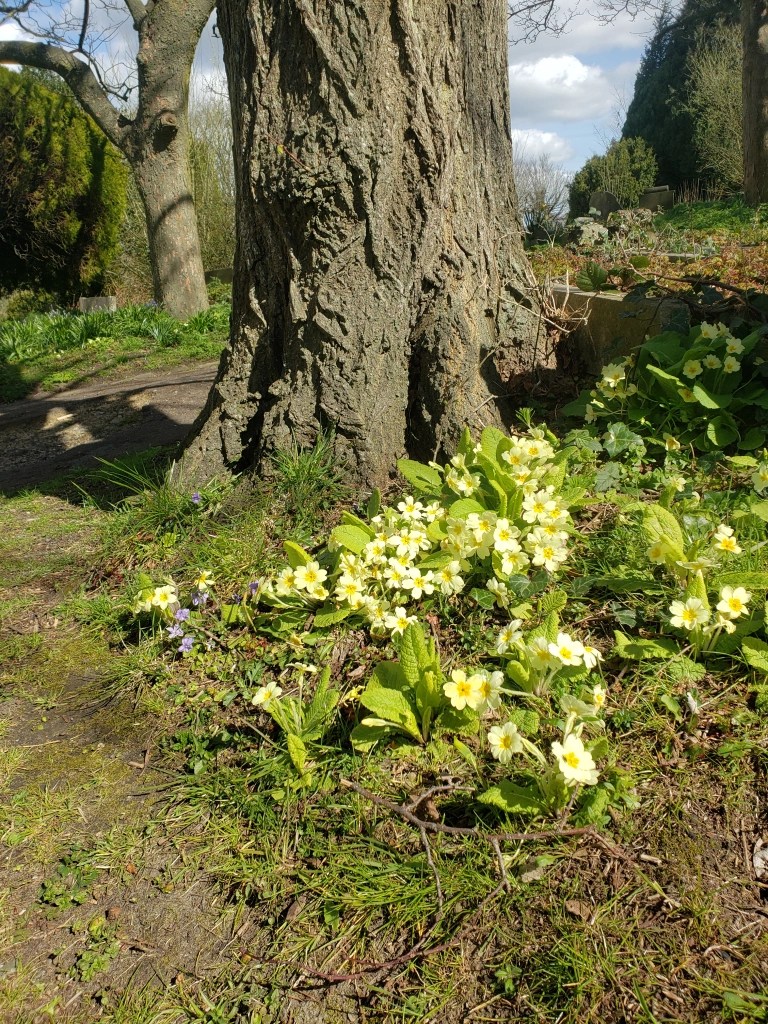
The Common Primrose, Primula Vulgaris, is to be found by streams, in orchards and woodland and grows in profusion in Radnor Street Cemetery. Edible, drinkable (primrose wine and tea) and the roots are considered to have an analgesic property – but don’t take my word for it. Apparently the primrose was Benjamin Disraeli’s favourite flower (Conservative Prime Minister in 1868 and 1874 to 1880).

And what about the Muscari Grape Hyacinth (are you impressed – I had to look it up?) The Wikipedia description is of a plant that produces “spikes of dense, most commonly blue, urn shaped flowers” so very appropriate for a cemetery. The Grape Hyacinth is one of the earliest garden flowers to bloom in the spring.

So that is probably the sum total of my flora and fauna knowledge. Is it too early for bluebells – probably? I’ll let you know when I see them. What else should I be looking out for? What are the names of the trees and shrubs – come on cemetery followers, help me out here.

But I do have some pretty photographs for you.

Miss Beatrice Wall

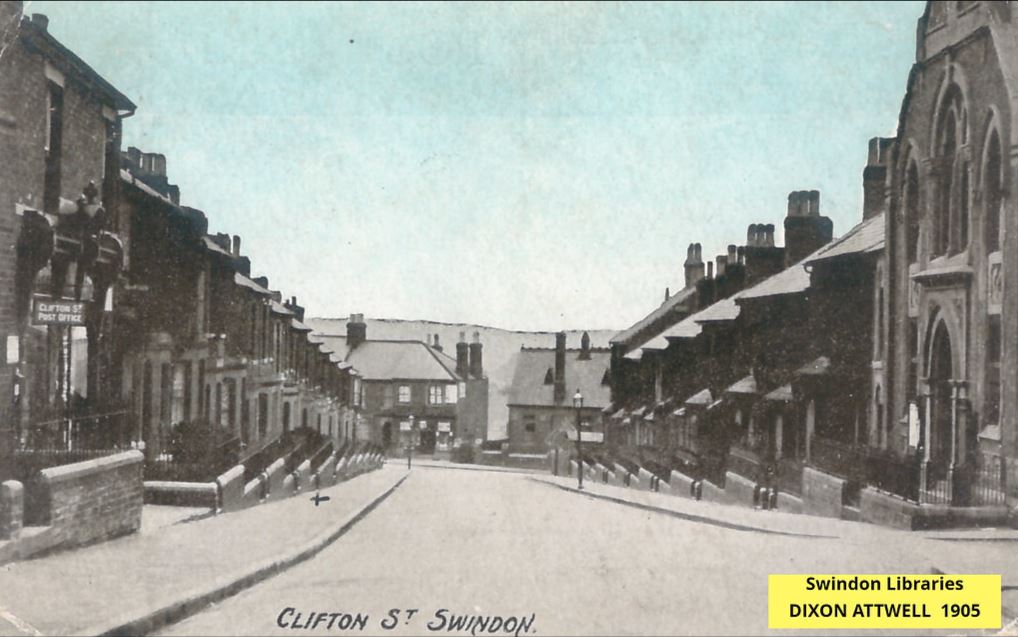
The shop in Clifton Street has had many different owners and many different shop fronts. In 1905 when Sarah Jane Wall was the Grocer and Subpostmistress it looked like this.

Swindon streets built in the 19th century grew piecemeal with each terrace built by a different builder. In 1883 E. Harvey was busy constructing eleven houses and a cottage in Clifton Street. James Hinton was also busy in this area of Swindon and in 1884 father and son firm, C. & G. Pettifer built a house and shop in Clifton Street. Could this be the premises the Wall family were living in at the time of the 1891 census?

Across the road once stood the Clifton Street Primitive Methodist Chapel. The original chapel was built in 1882 on land given by James Hinton. A much larger chapel was built in front of this in 1900, which can be seen in this photo. The chapel was still open in 1970 but was demolished soon after. Next to this are the Clifton Street gates to the cemetery.

This image has an empty alt attribute; its file name is clifton-street.jpg

Published courtesy of Local Studies, Swindon Central Library.

John Wall, Grocer and Dairyman moved to Swindon to run the General Shop in Clifton Street with his wife Sarah Jane and four of their six children. He died in 1899 and was buried in the cemetery just across the road from his shop. Sarah Jane carried on running the business with her two sons George and Charles and her daughter Beatrice.

Beatrice died in 1914 and was buried with her father in grave plot E8596. Sarah Jane died in 1935 and was buried with John and Beatrice.

The late Miss Wall – Residents in that district will miss the familiar figure of Miss Wall, of the Clifton Street Post Office, who has passed away after a long and painful illness.

The deceased lady was the daughter of the late Mr John Wall, who came to Swindon 30 years ago, and for a very considerable period she has been prominently identified with the business connected with the oldest sub-office in the town.

The funeral took place on Monday, the service at St. Saviour’s Church and the last rites at the Cemetery being conducted by the Rev. H.C. Brocklehurst.

A large number of friends assembled, and the principal mourners were: Mr and Mrs Loxwell Wall (Exmouth), Mr and Mrs Frank Wall (Swindon), Mr and Mrs Charles Wall (Swindon), Mr and Mrs Arthur Wall (London), Mr George Wall (Swindon), Mr W. Davis (Stonehouse), Mr V. Broadsmith (Cirencester), Miss E.J. Wall (Exmouth), Miss H.G. Wall (Swindon), Nurse Butcher and Mr. E. Higgins (Swindon).

Mrs Wall and family are very grateful for the loving sympathy extended during Miss Wall’s long and painful illness, and the kindness of neighbours is especially recognised.

Extracts from the North Wilts Herald, Friday, February 27, 1914.

The Clifton Street shop in 2023

Frank Morris – bowls player

The re-imagined story …

So, Mr Morris has died. I remember Mr. Morris.

It’s years since I’ve been to the Bowls Club. As a nipper I used to go regularly, most summer Sunday afternoons, with my dad. I used to enjoy the escape from my Granny’s house. Granny was a devout Primitive Methodist, which I didn’t object to – except on a Sunday. Then it was all prayers and meetings and no hot dinner. I don’t know how we managed to escape – my dad and me.

Dad was one of the first members when the bowls club was formed in 1912 – before the Great War. He was one of the many men who never came home and afterwards I had no desire to see the place where we had enjoyed so many summer Sunday afternoons. All those prayers Granny offered up came to nothing after all.

These days people tend to think of bowls as a game for old men, but my dad wasn’t an old man. He didn’t get to enjoy that luxury.

Perhaps I should get myself down there – to the bowls club – just for old times sake.

Death of Mr F. Morris

A Former Town Gardens Bowls Captain

Mr Frank Morris at one time a popular member of the Swindon Town Gardens Bowling Club, died on Saturday after a long illness at the home of his wife’s parents, 15 Prospect, Swindon.

He came to Swindon 16 years ago as manager of Pearks Stores and was associated with the Town Gardens club for many years, being captain in 1924.

Seven years ago he left Swindon for Redruth to take up a managerial position and after a year or so was transferred to Torquay.

Ill health overtook him and he returned to Swindon at the beginning of this year and was confined to his bed for most of that time. He leaves a widow.

A large congregation attended the funeral service at the Swindon Parish Church on Wednesday afternoon.

The first portion of the service was conducted by the Rev. H. Spence. The interment took place in Radnor street cemetery. The grave was lined with mauve and white chrysanthemums.

The chief mourners were Mrs F.J. Morris (widow), Mrs E. Ackerman, Mrs A. Tanner and Mrs A. Walker (sisters), Mr Alf Morris (brother), Mrs E. Morris and Mrs L. Morris (sisters-in-law), Mr and Mrs John Caudle (father-in-law and mother in-in-law) Mr and Mrs C Hope (brother-in-law and sister-in-law) Mr and Mrs Len Caudle (brother-in-law and sister-in-law) Mr and Mrs Fred Jones (brother-in-law and sister-in-law) Mrs W. Caudle (aunt), Mr and Mrs J.J. Carey (uncle and aunt), Mr Tom Neville and Mr Will Neville (uncles) Mr Geo. Neville and Miss D. Bennett (cousins), Mr A.H. Paget, chief inspector (representing Messrs Pearks Ltd.) Mr Swan (branch manager), Miss M. Hope, Mr G. Hope, Mr. Geo Heath and Mr T. Vallance.

North Wilts Herald, Friday December 16, 1932.

Francis Josiah Morris, aged 42, was buried on December 14, 1932 in grave plot D1081 which he shares with his first wife, Alice Maud Morris, who died in 1918.

William Henry Gladwin – accordionist

William Henry Gladwin (known as Bill) was born in Malmesbury in 1883, the eldest of three children. His father died when Bill was a child and his mother married two years later. Her second husband was Albert Lea and they went on to have a further six children.

Bill was well known for playing his accordion, even taking it with him to the trenches of the First World War. One of the family stories is that along with entertaining his fellow soldiers, the German soldiers could also be heard singing along to his accordion.

Bill never married or had children, but was much loved by his large family, close to brothers and sisters, nephews and nieces, which makes the circumstance of his burial so surprising and still the cause of a deep family sadness to this day.

Bill was struck by a bus and killed after coming out of Bright Street Club in Gorse Hill on February 19, 1954. His burial took place a few days later, attended by members of his family.

Bill was buried in a public grave. This burial is when a person has insufficient funds to pay for the cost of the funeral and the expense is met by the local authority.

Bill’s surviving family members still find the circumstances of his burial upsetting and surprising and have numerous questions that sadly remain unanswered. They wonder why the large extended family didn’t club together to cover the cost.

Bill left a will in which his effects were valued at £32 14s 9d.

Many thanks to Mandy who told this story on one of our cemetery walks.

John Jones – Rolling Mills foreman

The re-imagined story …

When the Rolling Mills opened in the 1860s the large contingent of incoming workers from Wales were housed in a building better known as the Barracks. The story goes that the Welsh women couldn’t get along together and that they used to fight and argue, but my Nana didn’t hold with that.

Wesleyan Chapel

The former GWR lodging house, known as the Barracks, later became a Wesleyan Chapel image published courtesy of Local Studies, Swindon Central Library.

“We had to live in dreadful conditions; if it hadn’t been for the other women, I don’t know how I would have survived. Two years we were there. It felt more like ten.

“We couldn’t keep the place clean, the water closets were permanently blocked and we had nowhere to put our rubbish or the ashes from the fire. There was always someone sick. It was all down to the water see, ‘unfit for drinking purposes,’ the public health inspector said. Two days a week we had water, Wednesday and Saturdays, and then it came from the canal.

Five hundred people there were crammed into that building. I had small children, why we all did, I don’t know how they all survived, many didn’t, I know. My sister Gwen gave birth in that place. I don’t know how they expected people to live like that.

The company cottages were bad enough, but that building. In the early days the men used to call it the Barracks. I don’t know about barracks, more like a prison it was.

When they started building the cottages at Cambria Place I used to go along every day. I used to will that little house along. I loved every square inch of that place. Mind after two years in that hell hole it was like living in heaven.”

Cambria Place

Cambria Place

The facts …

“I consider this building in its present state quite unfit for human habitation and dangerous to the health of the district,” Inspector Henry Haynes wrote to the monthly meeting of the New Swindon Local Board held on 2nd August 1866. What had once been intended as a model lodging house for the single men in the railway village was an unmitigated disaster.

Designed to accommodate young men in single rooms with a variety of communal facilities the lodging house, complete with Gothic turrets, was built to ease overcrowding in the GWR company houses. Unpopular from the outset, the building soon became known as the Barracks. Constrained by GWR rules and regulations the young men moved out, preferring to lodge in the cramped conditions of the railway village cottages instead.

The building stood empty until the construction of the new Rolling Mills in 1861 saw an influx of migrant Welsh workers and their wives and children. The GWR Company responded by converting the Barracks into supposedly family friendly accommodation.

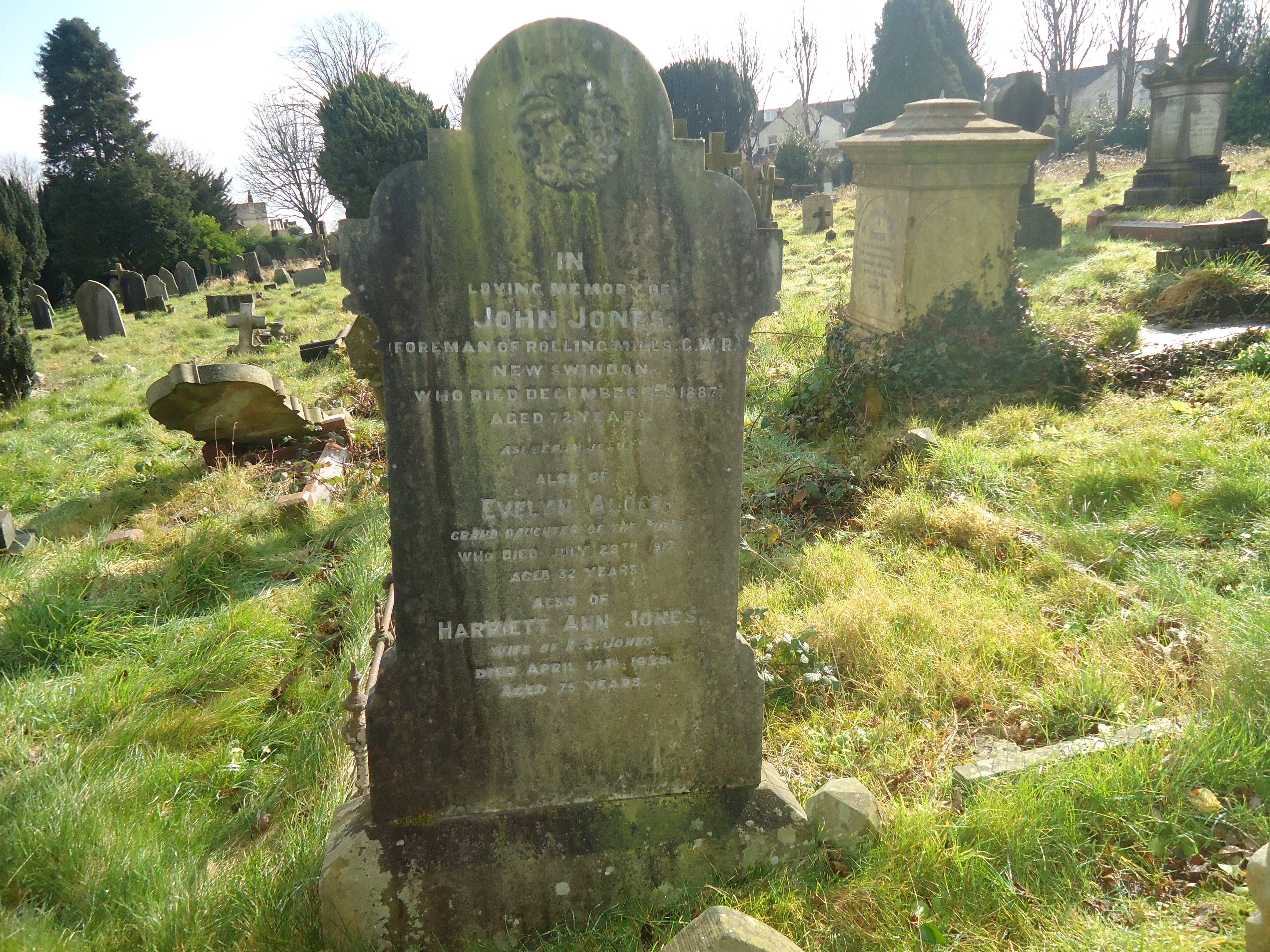
This is the final resting place of John Jones, who as can be seen from the inscription on the headstone, was foreman of the Rolling Mills. John was born in Tredegar, Monmouthshire on March 13, 1815.

In 1851 John was living at Thomas Road, Llanelly with his wife Sarah, and their children. Edwin 14, (already working as a forgeman), Elizabeth 13, Isabella 11, Ephraim 9, Emma 7, Enos 5 and Elijah S. who was 5 months old.

John was a highly experienced worker by the time he entered the GWR service here in Swindon on May 25, 1861. As a Foreman Roller he was paid 7 shillings a day (that’s 35p) although worth considerably more 155 years ago.

The Rolling Mills opened in the 1860s and saw the arrival of a large Welsh community in Swindon. In 1869 the manager Mr Ellis told the Advertiser there were about 310 men employed in the Rolling Mills, divided into a day and a night shift working alternate weeks.

The arrival of so many families placed huge pressure on the available accommodation in New Swindon. The first Welsh families in the Barracks lived in appalling, insanitary conditions, and work soon began on Cambria Place and it was here at No 22 that we find John and his family living in 1871.

John died in December 1887 and is buried in Plot E8296 in Radnor Street Cemetery with his granddaughter Evelyn Alder who died in 1917 aged 32 and his daughter in law Harriett Ann Jones (Evelyn’s mother) who was the wife of Elijah Stockham Jones, John’s youngest son.

John Jones

Private Frederick William Darling

Unfortunately Frederick William Darling’s military records have not survived. We do know, however, that he served with the Royal Army Ordnance Corps in France during the First World War. The RAOC was responsible for supplying weapons, ammunition and equipment to the British Army. It has to be asked if his wartime experiences contributed to the state of his mental health and the onset of neurasthenia.

Neurasthenia is described as an ill-defined medical condition characterized by lassitude, fatigue, headache, and irritability, associated chiefly with emotional disturbance.

Frederick was born on March 22, 1888 the son of Richard and Louisa Darling and baptised at St. Marks Church on April 16. Frederick William was one of eight children and grew up in Horsell Street. His father worked as a blacksmith in the GWR Works as did Frederick and his elder brother Charles.

Frederick married Ella F. Wills at the church of the Holy Apostles, Charlton Kings, Gloucester on August 1, 1921. The couple later moved to Cardiff where Frederick died on September 2, 1927.

Cardiff Man’s End

Neurasthenic Poisoned By Gas

Dr R.J. Smith, the Cardiff Coroner, on Monday enquired into the death of Frederick William Darling (39), a blacksmith, who was found dead near a gas oven. Darling had suffered for two years with neurasthenia, and his widow, Mrs Ella Fanny Darling, informed the Coroner that he was in Whitchurch Mental Hospital last May, but was discharged on probation in July, when he seemed much better. During the war he served with the Royal Army Ordnance Corps.

Cecil Elder deposed to finding Darling in a house at Bloom Street, Canton, Cardiff and Dr. Pittard said death was due to coal gas poisoning.

A note left by Darling, addressed to his mother, read: “Don’t worry; I cannot live this life any longer.”

The Coroner returned a verdict of “Suicide while of unsound mind,” and expressed sympathy with the relatives.

Frederick was buried on September 7, 1927 in grave plot C1889. He is buried with his parents Richard, who died in 1926 and Louisa who died in 1945.

Arthur Lancelot Darling was Frederick’s younger brother. He was born on June 14, 1894. Aged 16 he was working as a machineman in the Works.

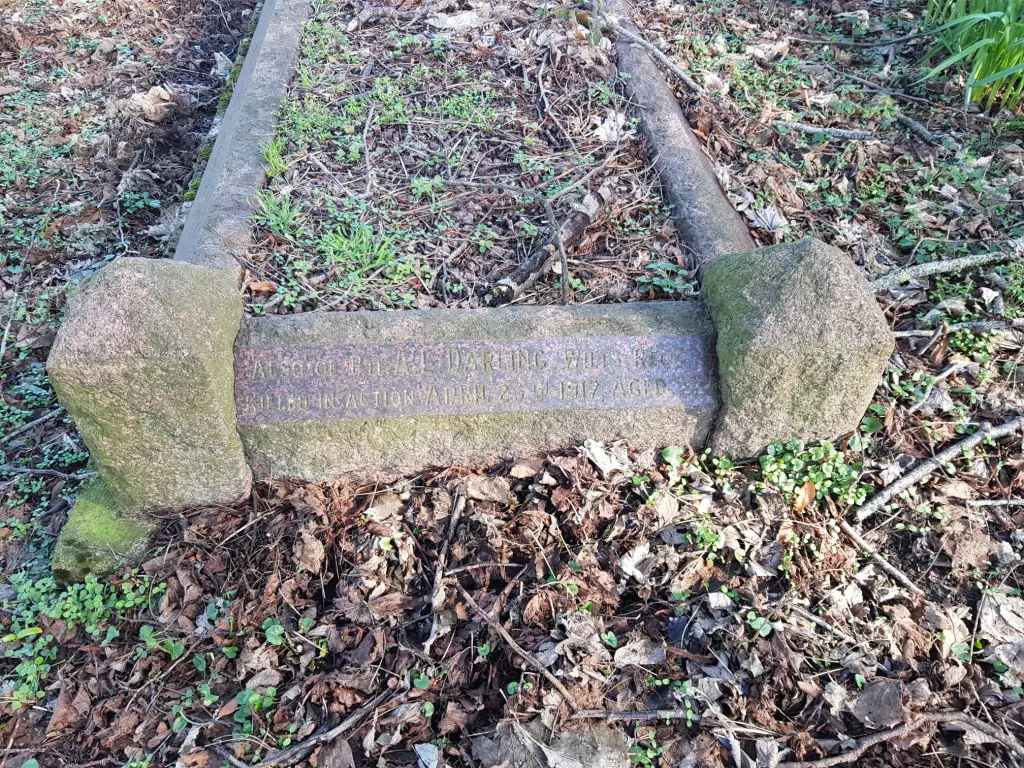
Arthur served in the 7th Battalion of the Wiltshire Regiment and was killed in action in Salonika on April 24, 1917. He was 22 years old. There was no body to bury – he was presumed dead. Arthur is commemorated on the Dorian Memorial in Greece and on his parent’s grave in Radnor Street Cemetery.

Frederick O’Conor – devoted servant

The re-imagined story …

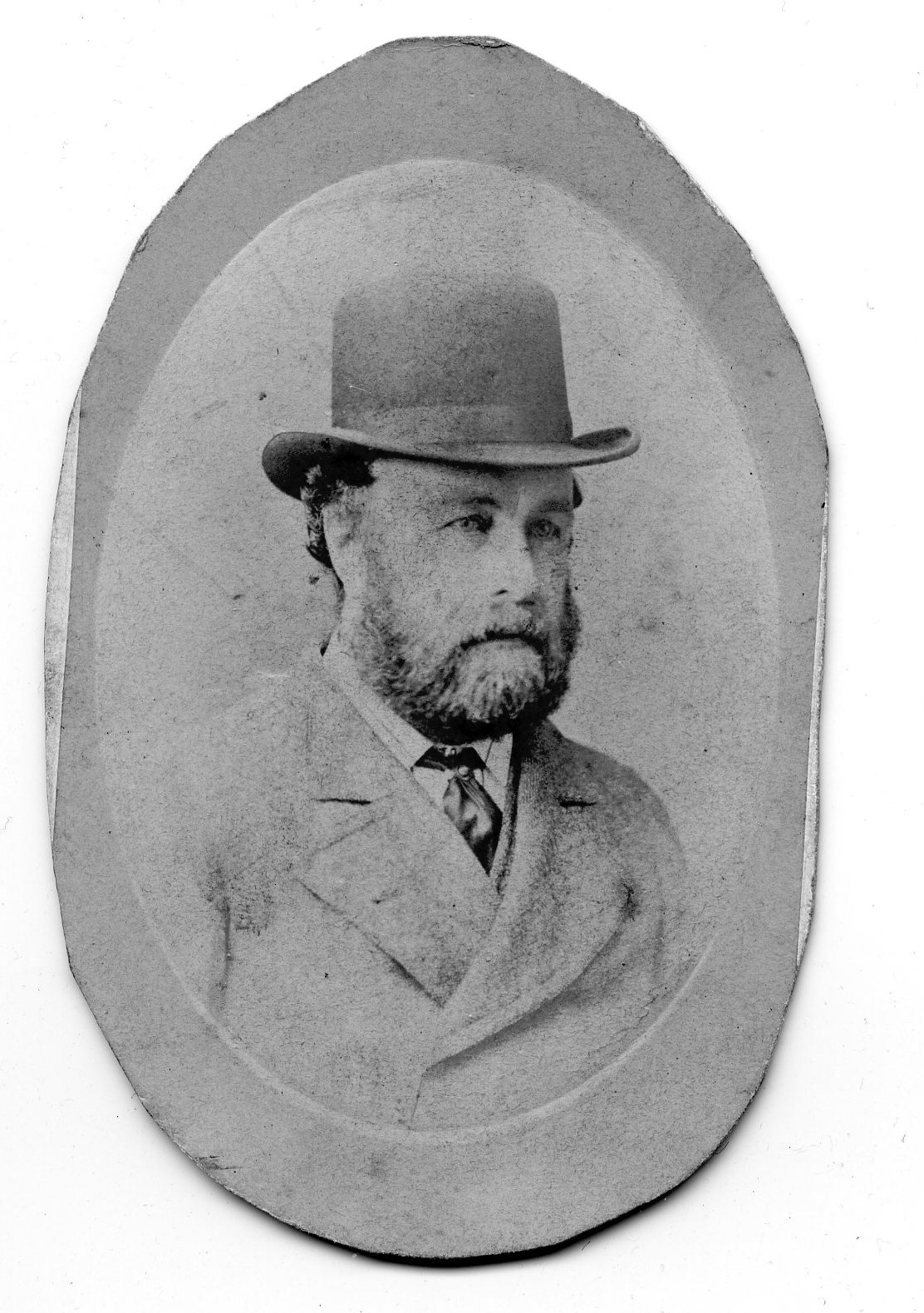
Word quickly travelled around the Works. Lord Bolingbroke was trying to silence the hooter. The Swindon Advertiser had published in full his application for the abolition of the Works hooter. This wasn’t his first attempt. In 1868 he successfully forced the GWR to dampen the noise by erecting a screen around the hooter. However, the workmen complained that this rendered the hooter ineffective and the screen was removed.

Now his Lordship was at it again, complaining that the early morning call disturbed his sleep and was injurious to his health.

DSC07211

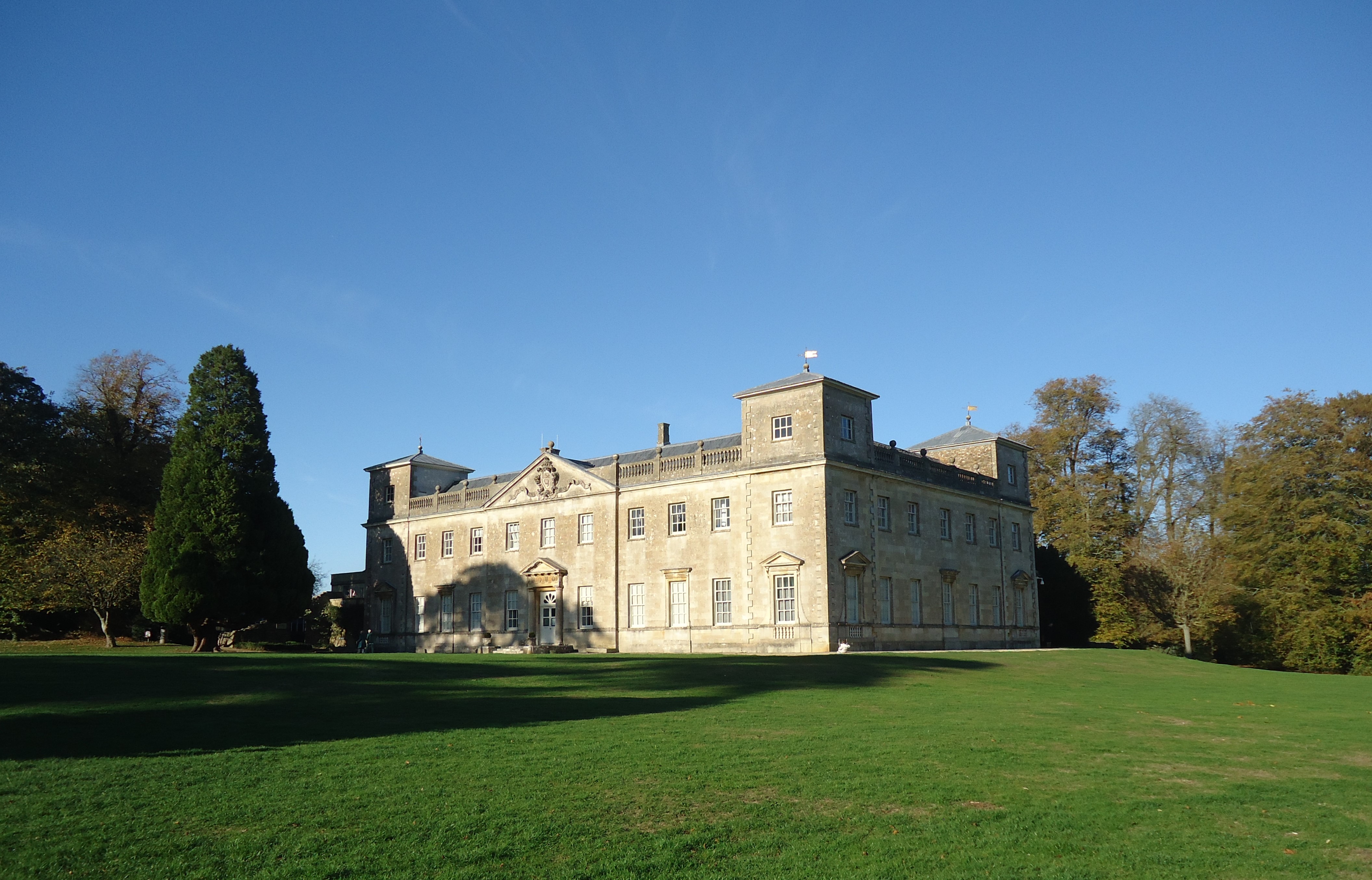
Lord Bolingbroke lived in a mansion at Lydiard Park, about 2½ miles west of the railway works, as the crow flies, but you could hardly describe him as a resident. For many years he had lived on the continent returning to Lydiard Park for barely two months of the year during the shooting season.

Unlike us working men Lord Bolingbroke could lie abed as long as he liked. To be late to work for us was to lose pay and unlike his lordship we do not have fancy timepieces to waken us. I am sure without the blast of the hooter I should lose many morning quarters.

The hooter punctuated the daily routine of the railway factory and we depended upon it. And not only us railway workers. Other employers such as Arkell’s brewery in Kingsdown supported keeping the hooter. It was even suggested that Lord Bolingbroke’s tenants probably found it useful.

We resolved to challenge his lordship and who better to lead us into battle than Mr Frederick O’Conor, a newly elected member of the Mechanics’ Institute Council.

A campaign headquarters was established at the Mechanics’ Institute and a petition was drawn up. More than 4,335 signatures were obtained and when the pieces of paper were pasted together they measured 43 yards in length.

Henry, 5th V Bolingbroke - photo owned by Nellie

The matter went to Whitehall and despite the fact that Bolingbroke was the only complainant, he won the day and the licence to operate the hooter was revoked. But with Mr O’Conor at the helm we were not to be defeated.

Despite the decision by Whitehall, the Mechanics’ Institute Council and the working men of Swindon united and carried on the battle for the hooter.

We held another protest meeting at the Mechanics’ Institute where the case was reassessed, and reason won over entitlement. The hooter was reinstated.

The facts …

Frederick George O’Conor was born in Swindon in 1843 the son of John and Mary O’Conor. In 1865 he entered work in the service of the Great Western Railway as a clerk in the loco office at Swindon Works.

In April 1876 he married Mary Adelaide Kerr. The couple had two daughters, Mary born in 1878 and Adelaide born in 1879. His wife died shortly after the birth of their second daughter.

Frederick died on February 19, 1892 following a long illness, most likely tuberculosis. He was just 48 years old.

In a lengthy obituary the Advertiser referred to his many other involvements. He was chairman of the local education committee, a member of the Wilts Archaeological Society and a prominent member of St. Mark’s Church.

The funeral at St Mark’s was attended by a large congregation and members of the Mechanics’ Institute Council followed behind the hearse as the cortege made its way to Radnor Street Cemetery where the service at the graveside was concluded by Rev. Ponsonby.

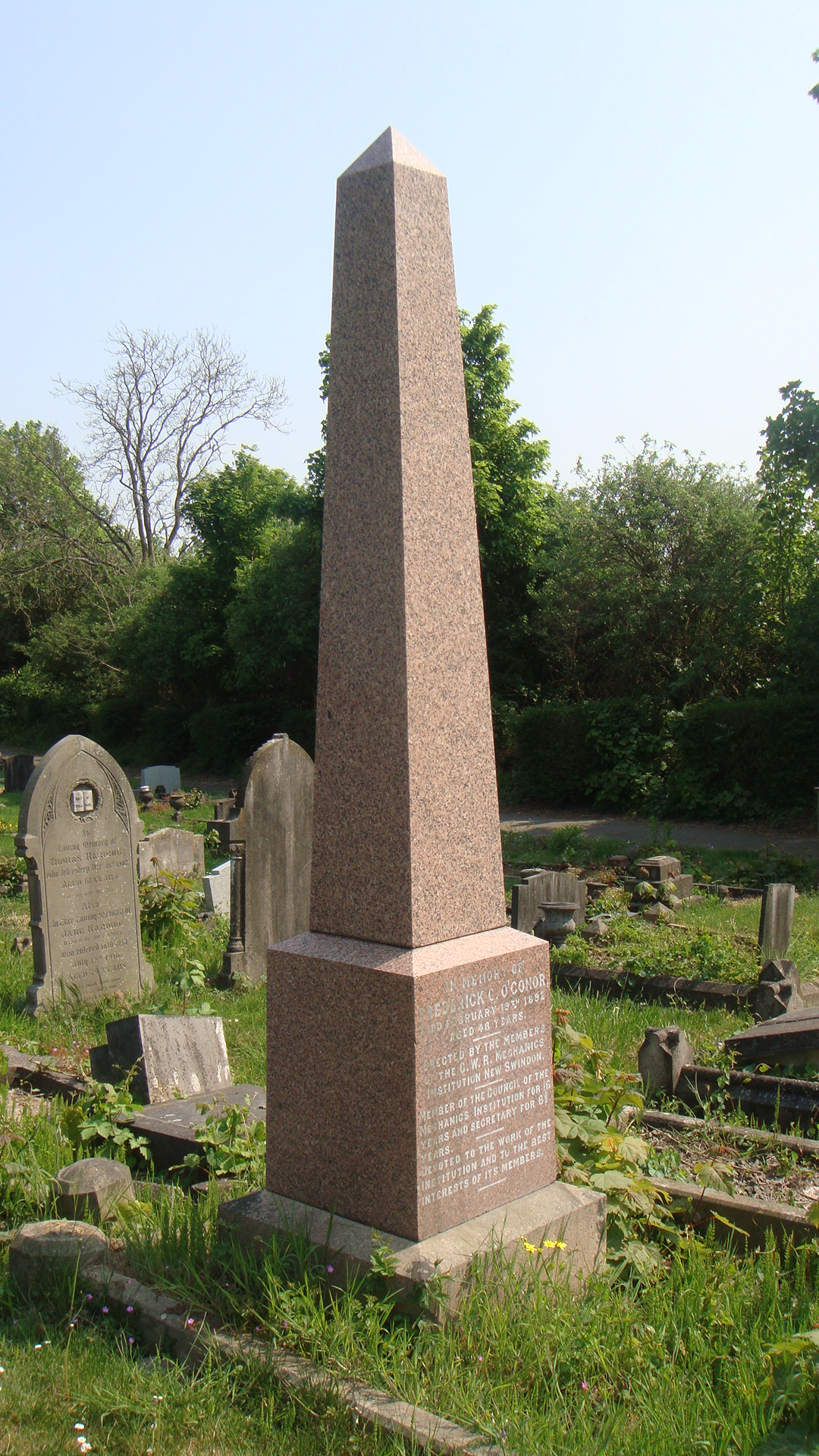
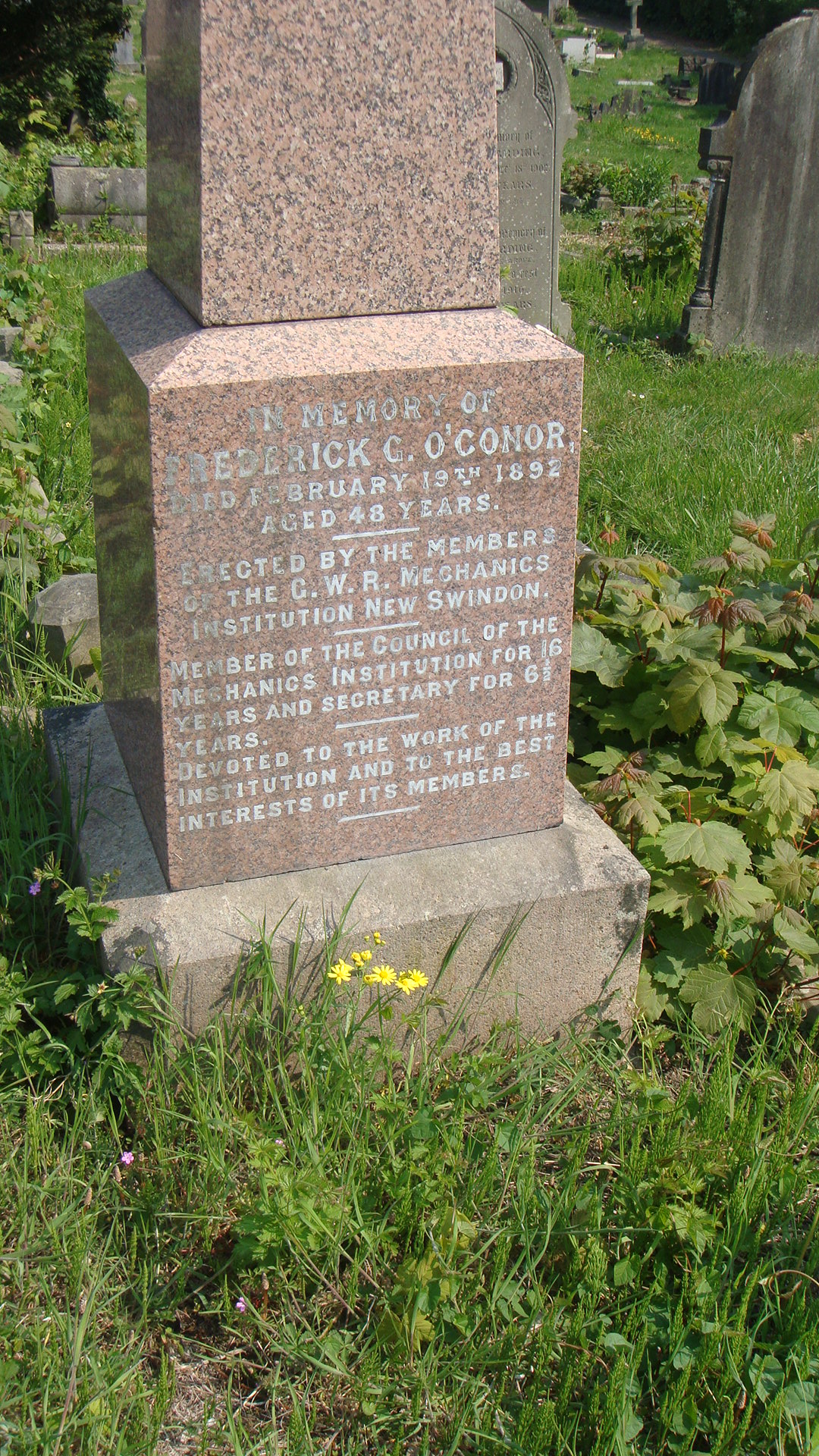
The magnificent pink granite obelisk was erected by the members of the GWR Mechanics’ Institution.

Frederick O'Conor D (3)Frederick O'Conor D (2)

Enoch Wall – apprentice

Today it comes as something of a shock when we read about boys as young as 13 and 14 employed in the railway works. The work was heavy, the working day long, and it was a dangerous environment. Accidents were frequent and sometimes fatal.

Rumour circulated throughout the Works that young Enoch Wall had lost his life due to the negligence of a fellow workman. Do you think the jury came to the correct verdict?

Enoch Wall was born on February 19, 1871 the second youngest of James and Elizabeth’s fourteen children. The UK Railway Employment Records state that he began a fitters apprenticeship on his fourteenth birthday earning a daily rate of 10d (about 4 pence) and that he was ‘Killed 15/10/85.’

The Fatal Accident in the GWR Works

On Saturday morning Mr Coroner Baker opened an enquiry at the Cricketer’s Arms inn, New Swindon, on the body of the lad Enoch Wall, aged 14 years and 8 months, son of Mr Wall, permanent way inspector, GWR, who was killed in the Works on the previous Thursday under circumstances briefly reported in these columns. The body was lying at the mortuary attached to the Accident Hospital. A good deal of interest appeared to attach to the proceedings, in consequence of a rumour being circulated that the deceased lost his life through the carelessness of a fellow workman. Mr W.E. Morris was elected foreman of the jury. Mr E.C. Riley attended and watched the proceedings on behalf of the GWR officials, and the deceased’s brother was also present. The first witness examined was,

Arthur Thos. Gillmore, of 24, Eastcott Hill, a fitter in the GWR Works, who said he knew the deceased, who was an apprentice with the engine fitters. On Thursday morning the deceased was assisting him, at about 10.45, to put in a left hand distance buffer to an engine tender. Deceased was at the end of the buffer holding it up with his two hands, the end of it being against his chest. Witness was in the pit under the tender working at the spring of the buffer. The first warning he had of anything moving was the engine striking his head, and then he heard some one call out. He dropped into the pit immediately, at the same time putting out his arm and pushing the deceased out. Witness noticed then that the tender was moving, and saw that the deceased had been jammed by the engine. The tender moved on from the engine and deceased staggered out, crying out “Oh, oh,” once or twice before he fell.

In answer to the foreman, witness said he heard no warning at all of the engine coming up. Men were always working about there, and there should be a warning given. The first he heard was someone crying out “hey,” after he had been struck by the moving engine; it was a lad who called out to him. The deceased had been jammed before witness knew the engine was moving.

By the jury: His work was generally in a most dangerous place. He had heard that there was a man to give them warning, but he did not know if this was so in this shop – there was in the shop he generally worked in, but this was in the paint shop, where he had been sent to look to a weak spring. Was sure no signal was given him or deceased to look out on this occasion.

Peter Neal, Eastcott Hill, labourer in the Works, said he was employed to get engines in and out of the paint shop. On Thursday morning he was in charge of the traversing table, and had orders to get three engines out. After they had moved one engine on to the table he went into the shop to see if there was anyone in the way. Not seeing anyone he gave the signal to the engine driver to move, at the same time calling “Look out,” in case there was anyone working where he could not see. The engine moved against the one deceased was working at, and he got caught.

By the Foreman: Generally he went up the shop to see if anyone was working before shunting. It was his duty to do so. He did not go all the way up this morning. He scarcely ever did go all the way unless he knew there was someone in the way.

By the jury: If he had gone up to where the deceased was the accident would not have happened, but he did not know there was anyone there.

At this point the coroner said the evidence was taking such a turn that he thought it most desirable that the jury should view the spot where the accident happened. This the jury did, and saw the working of the table. On returning to the jury room, the Coroner said he was glad this course had been taken. He had no idea when he commenced taking Neal’s evidence what the nature of the case was. Under the circumstances he thought it best to adjourn the enquiry until Tuesday, when all the evidence possible to get would be taken. The witnesses and jury were then bound over in the sum of £10 to appear on Tuesday.

On the enquiry being resumed on Tuesday, the witness Gillmore was re-called, and his evidence was read over to him.

Walter Hunt deposed: I live at 11, Cromwell Street, and am foreman of the west yard, GWR Works. I have been so employed over five years. Peter Neal has been employed there all the time. When I receive orders from any of the foremen to move engines from the paint shop I invariably give Neal orders to do it, and it is then his duty to get the engine out on to the travelling table and run it up on to the bank. He has entire charge of the table for the time being, and his instructions from me are to stand between the engine to be moved and the table, and give the signal. He has not to go into the shop. There is another man to go round and see that no one is in the way.

The witness Peter Neal was re-called, and repeated his evidence on oath, after having been cautioned by the Coroner. He said it was his duty to see the road clear before he gave the signal to the engine-man to move. He did so on this occasion to the best of his ability. He went into the shop and looked down the engines, but could see no one, so he gave the signal to move. The engine ran freer than usual. There was generally another man to look to the inside of the shop, but this man was not present when this engine was moved. There generally were four or five men to move an engine, but on this occasion there were only three. He had done the job hundreds of times, but never had anything happen before. He never remembered men working at buffers in this shop. He should like to add that before he commenced to remove these engines he went to the chargeman and asked him to send another man to help him, but he refused to let him come.

William Thrush, labourer, of Shaw, said he generally assisted in moving engines from the paint shop, but on Thursday, when the accident happened, he was sent to another shop. When he was present it was his duty to look round and see that no one was in the way. He took his instructions generally from Jesse Townsend, the chargeman, but was often called by Neal. He always went down the shop to see if anyone was working between the engines, as men were often up underneath the working parts. On Thursday he was not sent for at all.

The Jury said they would like to see the chargeman, Townsend, and he was sent for. In the interval the evidence of

Dr. Bromley was taken. He said he was called to see the deceased at 10.55 a.m. on Thursday in the paint shop. He found him on a stretcher, dead, and had the body removed to the mortuary, where he found his ribs fractured and lungs punctured, injuries which would cause instantaneous death.

Jesse Townsend, residing at Even Swindon, foreman of labourers in the west yard, said when the accident happened he was engaged in the Paint Shop moving a lathe. Neal come to him and asked for Thrush to help move some engines. He told him he did not think Thrush was in, but on Neal saying he knew he was he said “All right, he would send him directly.” He did not send him, as it slipped his memory. Had never neglected to send before.

By the foreman: It was necessary to have four men to move an engine out – not less.

This was the whole of the evidence. The Coroner briefly summed up, asking the jury to pin their attention to what they heard there, and disabuse their minds of anything they had heard outside. Neal was in charge of the shunting engine in question, and was evidently trying to do four men’s work with three men. He had looked down the shop and given warning, and it was for the jury to say whether in their opinion Neal was guilty of negligence; if he was not, he was not responsible, and it was a clear case of accident. If, on the other had, they considered he was guilty of gross negligence, then it was a clear case of manslaughter. Those were the two points for the jury to consider. – The jury deliberated for about a quarter of an hour, and brought in the following verdict: – “That the deceased was accidentally killed by being crushed between an engine and tender. The jury are of opinion that the witness Townsend was guilty of some negligence in not sending help when asked by Neal, and that Neal exceeded his duty in attempting to do two men’s work.” The jury also added a rider to their verdict recommending the officials in the Works to arrange for a better system of scotching wheels, to prevent engines bumping as in this case.

The Swindon Advertiser, Saturday, October 24, 1885.

Enoch was buried in Radnor Street Cemetery on October 19, 1885 in grave plot E8580 where he would lie alone for almost 40 years years. His brother Lewis was buried with him on February 2, 1924 aged 56. Lewis’s wife Anne joined them in July 1935 when she died aged 71 years. Enoch and Lewis’s parents are buried in the neighbouring plot. In all those years the family had lived at 5 Wellington Street.