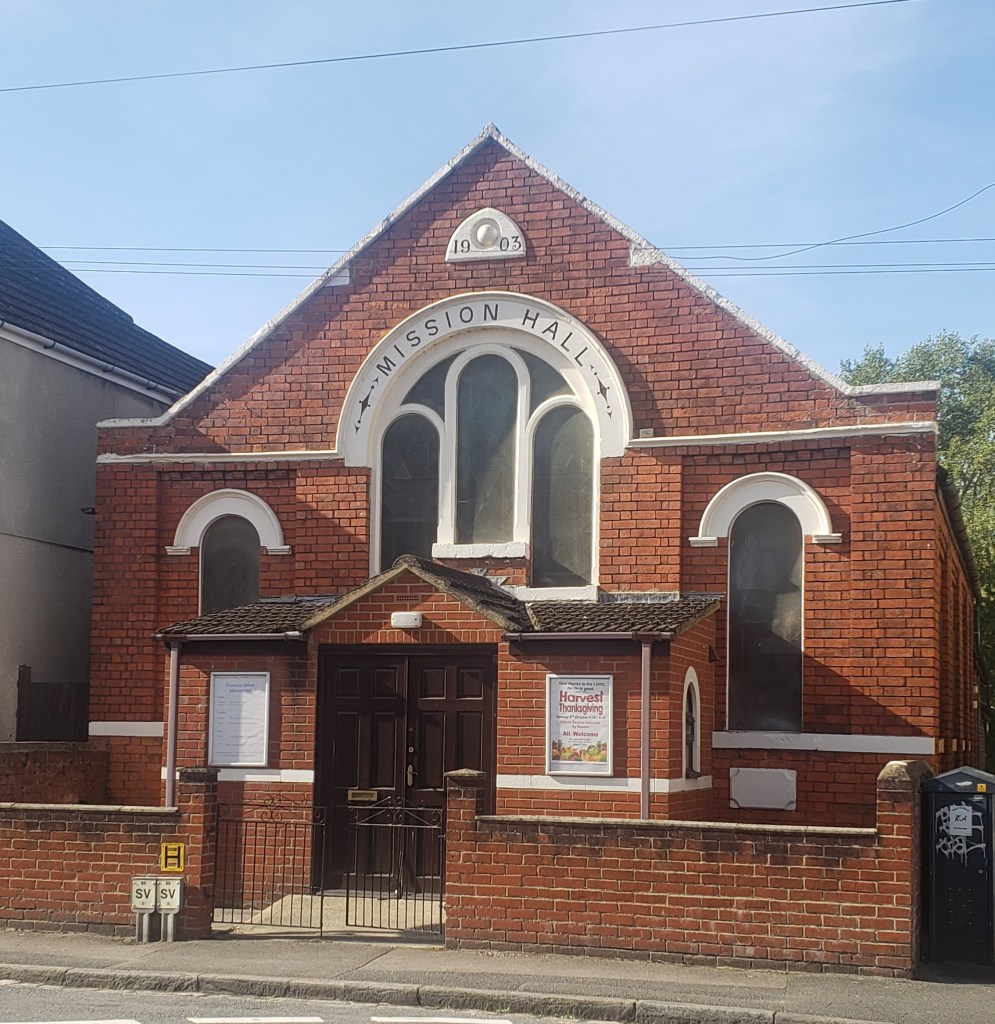
Daniel Skinner – Florence Street Mission Hall

In 1903 baker Daniel Skinner decided to “build a place of worship free for the unfettered preaching of the gospel.” He engaged architect George Davis and local builders Colborne to build his Mission Hall in Florence Street, Gorse Hill. He also built several houses in the same street and moved into No 27, next to the Mission Hall.
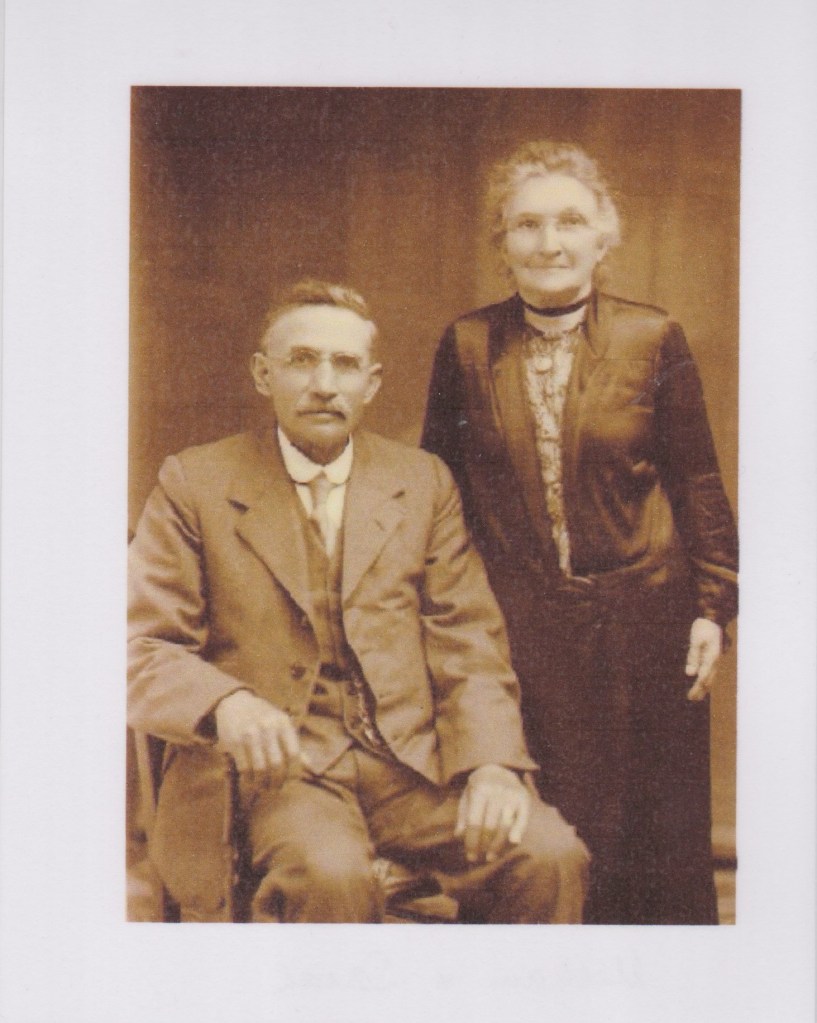
Daniel Skinner was born in Whelford, Kempsford, Gloucestershire in 1861 the son of William and Mary Skinner. In 1889 he was working as a baker in Stratton St Margaret when he married Jemima Day Clack in the parish church in Lechlade. The couple had four children who survived to adulthood, William born in 1890, Lilian Mary in 1892, Frank Edward in 1893 and Ethel May in 1896. Jemima died in the summer of 1897. At the time of the 1901 census the Skinner family were living at 198 Cricklade Road, Gorse Hill. Jemima’s sister Fanny Evans Clack was living with them, caring for the young children aged 5-10 years old.

Daniel and Fanny were married in 1907 and the 1911 census finds them living at 27 Florence Street, next door to the Mission Hall. The four surviving children still live at home. William George is 20 and working as a railway clerk, Lilian May is 19 and a dressmaker, Frank Edward 18, works as a shop assistant and 15 year old Ethel May is still at school.

New Mission Hall – The Florence Street Mission Hall was opened on Saturday last. The proceedings commenced with a tea meeting, when about 180 sat down to an excellent repast, the following ladies and gentlemen waiting upon their visitors:- Mesdames Clack, Wakefield, Norton, Rouse, Williams, Elliott, Powell, Flowers, Willis and Harrison. Misses Clack, F.E. Clack, and Richens, the fair sex being ably assisted by Messrs Clack, Beasant, and Norton. After tea a public meeting was held, Mr G. Davis, of Swindon, presiding, supported by the Rev. J. Sprunt (Mission Preacher, of London), Mr J. Stranger (Evangelisation Society, London), Mr J. Stanger (Evangelisation Society, London), Mr Daniel Skinner, and others.

The meeting opened with the hymn, “All hail the power of Jesu’s name,” followed by an address from the Chairman extending a hearty welcome to all present. At the same time he informed his hearers that that Hall was the third it had been his pleasure to assist at the opening ceremony. The Rev Sprunt then offered the dedicatory prayer, and also later in the evening gave an interesting address. Mr J. Stanger also delivered a very interesting address. Mr. Daniel Skinner, of Crichdale [Cricklade] Road, then said it afforded him great pleasure in returning his hearty thanks to so many friends who had so generously responded to his appeal for assistance at the opening ceremony, more particularly those ladies and gentlemen who so kindly got up and waited upon the tea table. He had no doubt many of those present would like to know what induced him to build this hall.  (Mr Skinner built the hall at his own expense). Some three years ago mission services were held in a small room at Gorse Hill. Then, at a later period, tent services and camp meetings were held. He believed that on this side of the railway bridge there were about 10,000 souls, and only church and chapel accommodation for 2,000. Consequently, he felt inspired to do what he could in his power. He added that the building cost £500.

The hall was built for all denominations, and members of all churches were cordially invited, and a hearty invitation would be given to all-comers. In conclusion, Mr Skinner said he felt it his duty to express his entire satisfaction in which the building had been carried out by Mr. Thos. Colborne, of Swindon.

During the evening Miss Clack gave a solo. Master Willie ably presided at the organ. The new edifice is built of red pressed brick, with bath stone dressings. In the interior of the building the walls are plastered, with yellow deal at the sides, and with ornamental dado, the ceiling being of the same. There is a large rostrum and boarded floor. The building is well lighted with twelve incandescent burners. The dimensions of the building are 40 feet by 24 feet, by 20 feet high. The building was designed by Mr George Davis, of Swindon.

Swindon Advertiser, Friday, October 30, 1903.
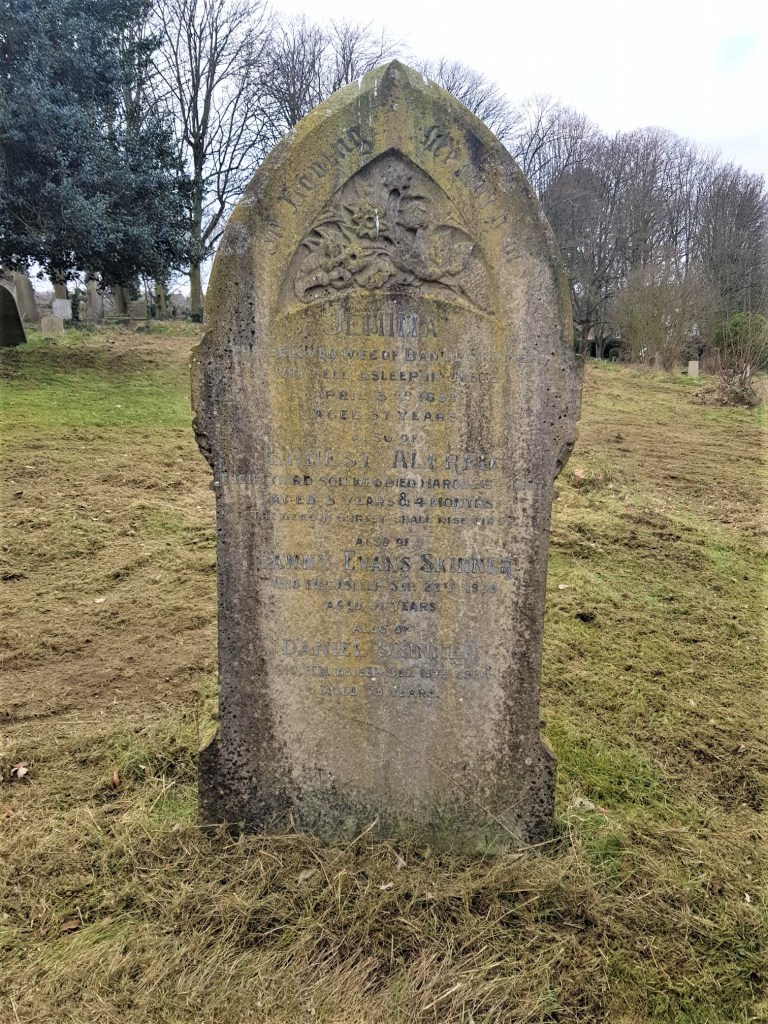
Jemima is buried in Radnor Street Cemetery, grave plot C477. Fanny died in 1928 and Daniel in 1934 and both were buried with Jemima. Daniel and Jemima’s third son, Ernest Alfred, is remembered on the headstone. He died in 1897 aged 3 years and four months and is buried in a neighbouring grave.
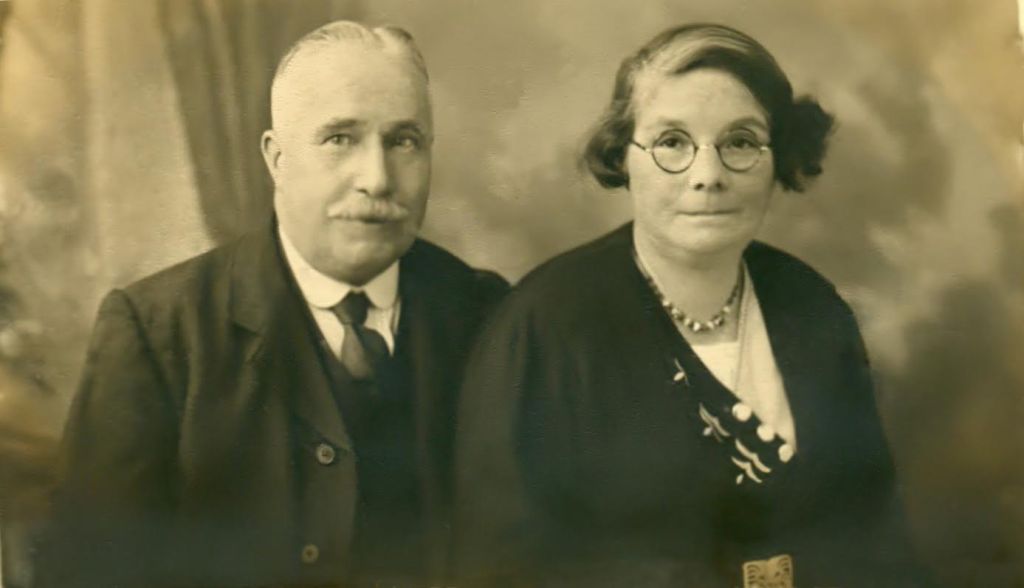
John and Alice Hayes

This story was submitted by their great-granddaughter.


‘John Henry Hayes was born 2 Nov 1872 to parents William (ox carter) and Mary of 27 The Street, Broad Hinton. He was the 7th of 8 children, having 3 brothers and 4 sisters.

Living in a rural community he initially trained as a blacksmith before entering the Great Western Railway as a springsmith. (1911 census gives his occupation as Blacksmith Striker GW Railway).

Circa 1898 John Henry, aka Jack, married Alice Maude Mary (nee Pyke born 1879 Wroughton).

They moved to 50 Summers St. Swindon and he became a churchwarden at the Rodbourne Road Methodist Chapel.  My father remembers having to play quietly on Sundays whilst his stern granny read her bible. He also remembers she didn’t cook on a Sunday so there were only ‘cold cuts’ for lunch.

I understand he taught other railway employees in his front room. I don’t know whether this was religious studies or reading/writing.

Their family expanded and by the 1911 census they had 3 living and 2 deceased children. To my knowledge there were a further 2 girls and a boy, 6 in all surviving to adulthood.

My grandfather, imaginatively named Thistle Ewart aka Tom, was his second child. He, together with his only child my father Barrie John, and myself all in our turn ‘went inside’ GWR/BREL.  We have a 4 generation plaque on the wall at Steam.

John Henry lost his wife in 1939 and passed away 11 Feb 1951.  He was buried at Radnor Street Cemetery Swindon, plot C4160′

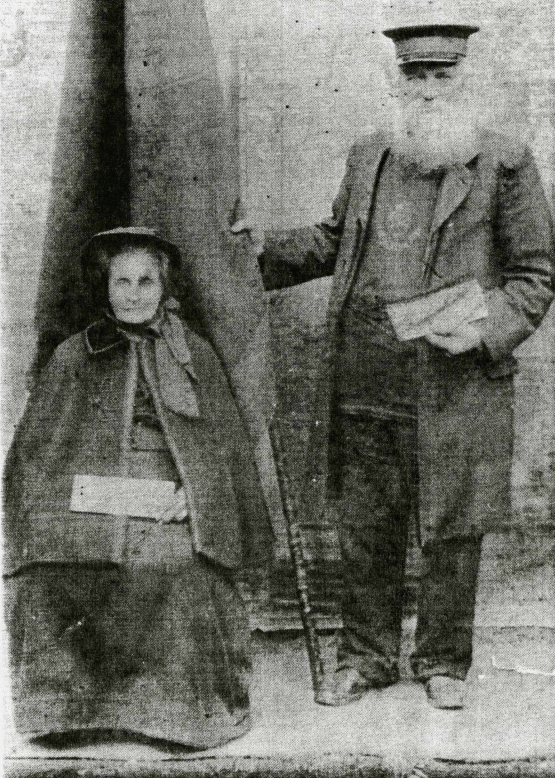
The attached photo is of John Henry and Alice taken in approx. 1934.

*The couple share their grave with Alice’s mother Jane who died in November 1926. Her last address was given as 50 Summers Street.

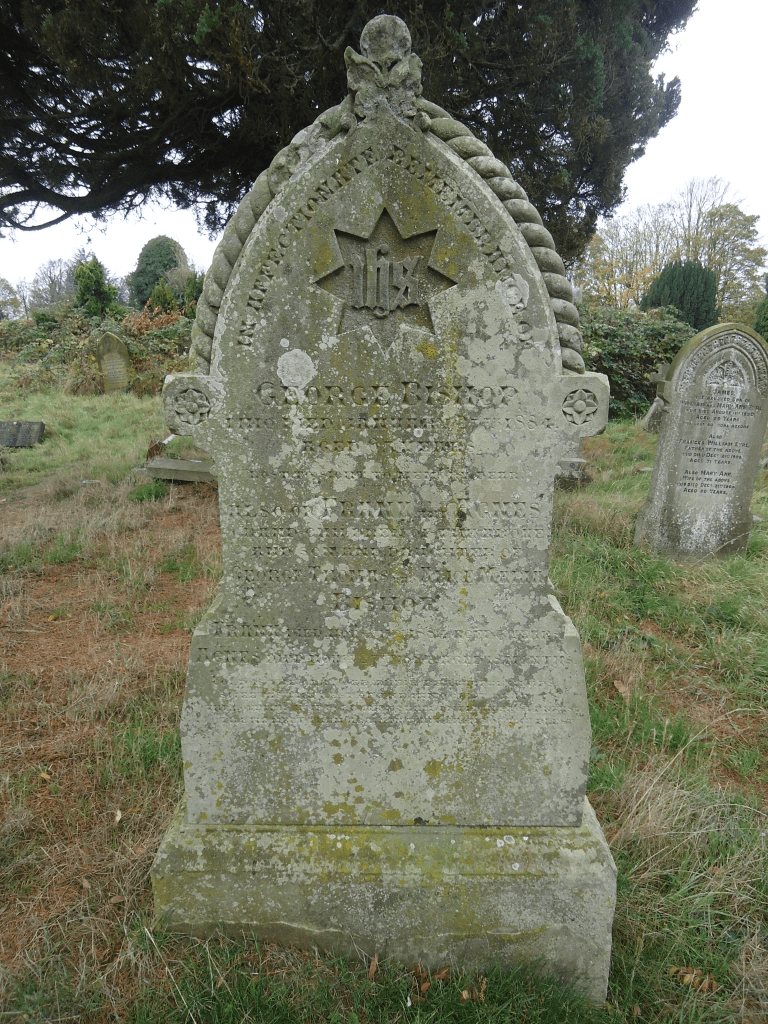
George Bishop – publican turned farmer

Sometimes a headstone can tell you a surprising amount of family history, although this one is becoming rather difficult to read.

Here is the story of a publican turned farmer and his two little grandchildren who were born and died during the 10 year gap between the 1881 and 1891 censuses.

George Bishop was baptised at the parish church in Wroughton on December 9, 1821, the son of Elizabeth Bishop, a servant, who did not provide a father’s name for the entry in the parish records. However, when George married Sarah Turner in 1846 he submitted his father’s details as George Gardener, a gardener.

Image of Bridge Street taken in c1925 published courtesy of Local Studies, Swindon Central Library.

At the time of the 1851 census George was recorded as a beerhouse keeper living on Eastcott Hill. A beerhouse was a premises licensed to sell only beer (no spirits). Beer could be brewed on the premises or purchased from a brewer. By 1861 George was landlord at a pub in Bridge Street, presently unidentified. (Could it have been the Sun Inn whose first recorded landlord was Robert Bishop – see Last Orders by John Stooke?) 

George and his family were still at No 55 Bridge Street in 1871. It must have been a large establishment as the census records for that year show the names of six boarders living there on census night.

George Bishop had been a publican for more than thirty years when at the end of the 1870s he gave it all up to become a farmer. At the time of the 1881 census George was farming 10 acres at Nore Marsh Farm in Wootton Bassett where he died on January 27, 1884. The cause of death was recorded as ‘syncope owing to diseased heart.’

His personal estate was valued at £126 14s 2d, administration of which was left to his only son George Thomas (his wife Sarah died in 1872 and is buried in St. Mark’s churchyard.)

Just months after George’s death the family were to gather again for the funerals of two little children. Three year old Frank Bishop was buried with his grandfather on November 21, 1884 and just eight days later one year old Agnes joined them. Frank and Agnes were the children of George Thomas Bishop and his wife Alice.

Almost 80 years after the sad events of 1884, a fourth and final burial took place in the Bishop family grave plot. On November 20, 1963 William Henry Bishop was buried alongside his grandfather and the remains of his little brother and sister, Frank and Agnes. He was 85 years old.

George Henry Flewellen – one of the best known locomotive railway inspectors on the GWR

George Henry Flewellen was born on August 4, 1861, the youngest of John and Betsy Flewellen’s five children and grew up in the hamlet of Ford, Wiveliscombe Somerset. He began working for the GWR in June 1878. At the time of the 1881 he was living in Bristol with his mother and stepfather. Aged 19 George worked for the GWR as an engine cleaner.

On August 12, 1889 he married Ada Elizabeth Horton at St Luke’s Church, Bristol.  By 1891 the Flewellen family were living in Devonport and George states his occupation as railway engine driver. The couple had two children who survived childhood, Henry born in Bristol in about 1895 and Winifred born in Taunton in about 1897. By the time of the 1911 census the family had settled in Swindon and were living at 23 County Road.

This photograph was taken by Swindon photographer William Hooper, it is believed, in the garden at the back of his studio at 6 Cromwell Street. It was taken on the occasion of the marriage of Henry John Flewellen and his bride Elsie M. Parker in 1917. This may have been a regular ‘professional’ assignment for Hooper, but I wonder if the two families were possibly friends of Hooper’s through his membership of the Open Brethren Movement.

The groom’s father, George Henry Flewellen, is pictured standing left, his hand on the shoulder of the seated woman in front of him, his wife, Ada.

The photograph is kindly published by P.A. Williams on the Local Studies, Swindon Central Library flickr page, among more than 1,131 images by William Hooper and other local photographers.

George had a long and illustrious career in the GWR (see below). He retired in 1926 and enjoyed a retirement of some 15 years, relatively unusual as many old railwaymen died within a year or two of finishing work.

Inspector George Henry Flewellen, who retired on August 4, is one of the best known locomotive railway inspectors on the G.W.R., which company he has served since 1878, when he commenced as an engine cleaner. He had thus completed 48 years’ service. Mr. Flewellen had been associated with many of the most notable developments in locomotive operation and train running on the G.W.R. He was on the City of Truro when it gained the world’s highest authenticated speed record, touching 102.3 m.p.h. down Wellington Bank with an Ocean Mail special. This was in May, 1904. He continued on the same train, but with the old single locomotive, No. 3065, Duke of Connaught, which ran the 118 ½ miles from Bristol, to Paddington, via Bath, in 99 min. 46 sec. start-to-stop, incidentally covering the 81 ¾ miles from Wootten Bassett to Westbourne Park in 62 min. 55 sec., maximum speed 91.8 m.p.h. He was in charge when H.M. the King drove the engine Windsor Castle for a short distance in 1924. The photograph reproduced shows him standing alongside the engine which inaugurated the Swindon-Paddington run at an average speed of 61.8 m.p.h.

newspaper cutting

George and Ada’s last home together was 23 Wills Avenue. George died at St Margarets Hospital, Stratton and was buried in Radnor Street Cemetery on April 30, 1941. He was 79 years old. Ada died less than two years later, also at St. Margarets Hospital. She was 77 years old. She was buried with her husband in grave plot C4863 on December 22, 1942.

You might also like to read:

William and Mary Hooper rock up at Stonehenge

David Uzzell – a bit of a country rogue.

On his frequent visits to his grandmother Rachel in Swindon, Edward Thomas, literary critic, journalist, poet and biographer of Richard Jefferies, met David Uzzell – a man he referred to as ‘Dad Uzzell’

Uzzell was born in Ewen, Kemble, Gloucestershire in 1841 the son of John and Sarah Uzzell. He married Fanny Holliday on December 25, 1863 at Stratton, Gloucestershire. By 1871 they were living in Cirencester where David worked as a labourer. The couple had a six year old son William. By 1881 they were living at 95 Gloster Street, Cirencester where they would remain for many years before moving to Swindon by 1901. The couple lived at 6 John St Terrace where David worked as a Caretaker for the Salvation Army Barracks.

Uzzell has been described as a countryman, but also as a bit of a rogue. He taught Edward Thomas about country folklore and came to epitomise the agricultural labourer/poacher and fisherman that Edward later wrote about.

David Uzzell died at his home, 6 John St Terrace in December 1919 and was buried in grave plot B2190, a public grave, with four others. Fanny died three years later aged 85. She was buried on December 8, 1922 in grave plot C503, another public grave. She is buried with four others including her son William who died in 1925.

David Uzzell may have been a bit of a ‘country rogue’ but he has earned a place in literary history.

David Uzzell and his wife Fanny pictured holding their pension books.

You might also like to read:

War Poet Edward Thomas and his Swindon family

Georgina Frances Verschoyle

On the perimeter of the cemetery in Section E is the grave of Georgina Frances Verschoyle.

Georgina was born in Dublin in about 1831, the second child and eldest daughter of Robert Verschoyle and his wife Catherine Curtis. Robert and Catherine were married by licence on August 20, 1824 at the parish church of Bathwick St. Mary, Somerset. By the time of the 1841 census they were living in Eaton Square that exclusive housing development once known as a ‘City of Palaces’ owned by the Grosvenor family and laid out by T & L Cubitt in 1827.

The Irish Verschoyle family were of Dutch origin. Some sources say they were Huguenots who fled to Ireland to escape religious persecution others that they had travelled to Ireland with William of Orange.

Georgina’s grandfather was the Rev James Verschoyle, Bishop of Killala, described as reforming and innovative and the last bishop to hold the title in that diocese. Her father Robert was a wealthy landowner with property in Ireland although he lived most of his adult life in England.

Transcription errors in the spelling of the unfamiliar Verschoyle name make it difficult to track Georgina through the online census returns, but by 1881 we find her living at 1 Victoria Cottages, Tormoham, Devon in a lodging house run by Jane Gardner.

In 1891 she was living with her youngest sister Augusta and her husband Alfred M. Drummond, a retired Army Captain, in Fitzjohns Avenue, Hampstead.

So how did Georgina come to be living in Swindon for the last years of her life? For a possible connection we have to turn to her brother, Henry William Verschoyle.

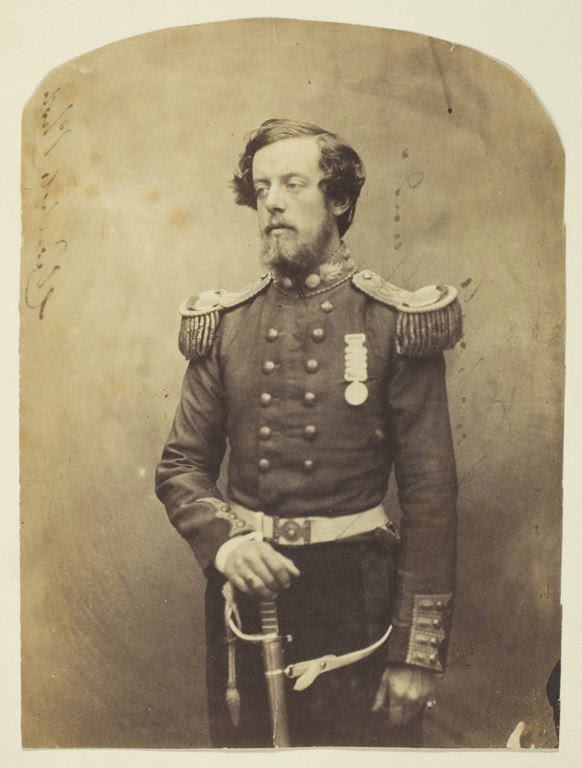
Captain Henry William Verschoyle served in the Grenadier Guards in the Eastern campaign of 1854-55, probably better known today as the Crimea War. Henry saw action in the battles of Alma, Balaklava and Inkermann where he carried the regimental colours. He fought at the siege and the fall of Sebastopol and was wounded in the trenches on September 5, 1855. Captain Verschoyle was promoted to Lieutenant Colonel on January 15, 1861. He died on August 21, 1870.

But how does this explain Georgina’s presence in Swindon more than twenty years later?

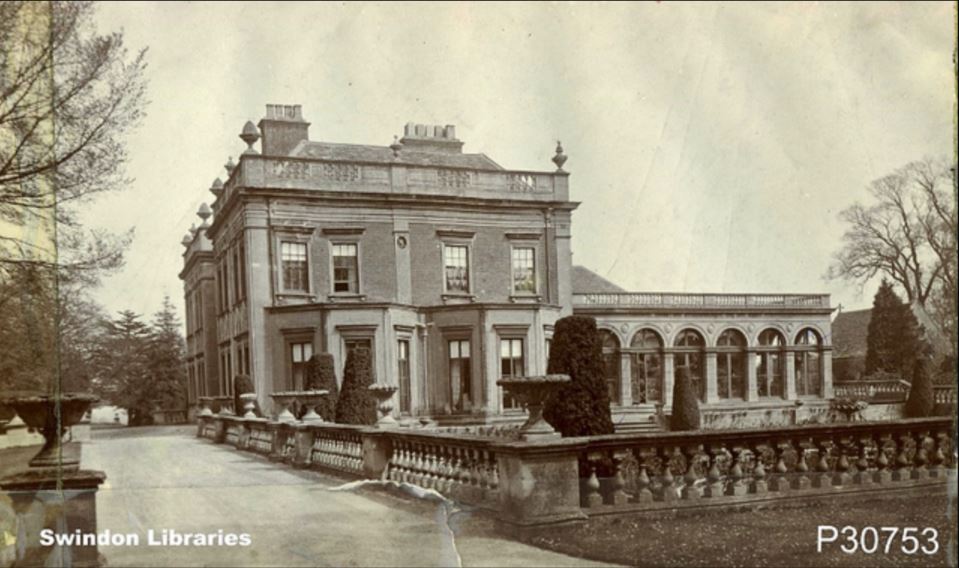
In 1856 Henry William Verschoyle married Lucy Clarissa Goddard in Christ Church, Swindon. Lucy Clarissa was the daughter of Ambrose Goddard, Lord of the Manor, and his wife Jessie Dorothea Lethbridge. In 1851 Lucy Clarissa was living at The Lawn, the Goddard family home, with her father and three sisters, Emma, Julia and Adelaide.

Lucy Clarissa and Henry William Verschoyle went on to have a family of four daughters and a son and lived at 6 Wilton Crescent, Belgrave Square, so were near neighbours of Henry’s mother Catherine in Eaton Square.

But even this doesn’t answer the question of how Georgina spent the last years of her life in Swindon.

Perhaps Lucy Clarissa had returned to stay at the Goddard family home in the 1890s but would that have been encouragement enough for Georgina to move to Swindon, and if so why didn’t she stay in The Lawn, it would have been plenty big enough?

The Lawn, Swindon published courtesy of Local Studies, Swindon Central Library.

My research into the life and times of Georgina Frances Verschoyle continues, but for the time being this is all I can discover about her.

The facts …

Death announcement

Verschoyle On the 20th inst at New Swindon, Georgina Frances Verschoyle aged 64.

Reading Mercury Saturday December 30, 1893.

Radnor Street Cemetery Burial Registers

Verschoyle Georgina F. 64 years 6 Queen Ann Buildings burial 23rd December, 1893 plot E8474

Probate

Georgina Frances Verschoyle of 4 Queen Anne’s buildings, Farringdon Street, New Swindon Wilts Spinster died 20 December 1893 Probate London 19 November to Arthur Robert Verschoyle esquire Effects £6560 3s 2d

You might also like to read:

The Goddard family tomb and Swindon’s first ‘modern’ burial ground

John Whitehead Spargo – a popular pastor


Central Hall, Clarence Street published courtesy of Local Studies, Swindon Central Library.

Rev John Whitehead Spargo was born in 1875, the eldest son of Samuel Spargo, a joiner, and his wife Maria Ann. He married Isabella Maud Walford in 1904 and the couple had three children, one of whom died in infancy. At the time of the 1911 census Pastor Spargo was working as a Wesleyan Methodist Missioner in Reading. By 1917 he had moved to a post at the Central Mission Hall in Clarence Street, Swindon.

Pastor Spargo’s name appears frequently in the Radnor Street Cemetery burial registers during his seven year ministry in Swindon. In 1919 he conducted the funeral of Frederick Cosway 14, Frederick Rawlinson 14 and Stanley Palmer 13, three boys killed in an explosion at the Chiseldon Military Camp.

A Popular Pastor

Mr Spargo Leaves Swindon Brotherhood

After seven years’ work in Swindon as missioner to the Central Mission, Pastor Spargo has left to take up his duties in a new sphere of work at Finsbury Park, London. He gave his farewell address at the Brotherhood on Sunday.

Speaking to a large audience, Pastor Spargo said he was sorry that his long connection with the Swindon Brotherhood was coming to an end. He was grateful to have had the opportunity of being connected with the various societies and organisations identified with the Swindon Brotherhood. If there had ever been a cry for help and need in Swindon, the Brotherhood always heard and responded to that cry.

The Pastor took as the subject of his address, “God’s Fellow Workers.” He remarked that as members of the Brotherhood it was their high privilege to labour for Jesus Christ and to promote the principles laid down by Him. It was a mistake to think that everlasting happiness meant contentment and rest, for there could be no happiness without work.

In his opinion, lasting happiness would be having a vocation, and understand work in the right spirit. All the great men of the past had been people with great tasks, and the glorious heroes of the faith had been men and women with something to do.

But before the Brotherhood as a movement could get to work, the individual member must himself work, and before they could bring repentant sinners to Jesus Christ they themselves must first come repentant to God. He (the speaker) believed that Christ came into the world to pardon sin, but that belief was not one iota of good to him or to any-one else unless he possessed a practical experience of that belief.

Brotherhood’s Work

Continuing, Pastor Spargo said that he did not believe the world of to-day was in the state which God meant it to be, for He could not be satisfied with a world in which there was so much sin abounding. There was, then, a glorious work before the Brotherhood, although it might not be a romantic work. But every man in the Brotherhood could help to make Swindon a better town with the help of God, for if God made a man, then surely He could use him, although he might possess but one single talent. The speaker concluded by saying that if they of the Brotherhood could but appreciate the height, the depth, the strength and the glory of God, then they could make this world a place in which it would be more difficult to do evil, and more easy to follow the right.

Pastor Spargo was then presented with a cheque for £5 on behalf of the Brotherhood Committee by Mr Cotsell, and with a further £5 which had been given by private subscription as tokens of the great esteem in which the missioner was held by all members of the Brotherhood.

In presenting the gifts, Mr. Cotsell said that Pastor Spargo’s presence created an atmosphere, and he always felt that something was missing when the pastor was not on the platform. He expressed his heartfelt gratitude to the retiring missioner for all the work which he had done for the Swindon Brotherhood.

There was a crowded congregation at the evening meeting at the Mission, when Pastor Spargo delivered his farewell address on “God’s way of working” to a company numbering over a thousand.

North Wilts Herald, Friday, August 22, 1924.

William and Sarah Tydeman

Although Rev Spargo left Swindon in 1924, he retained his connection with the congregation at the Central Mission Hall, particularly with the Tydeman family and in 1935 he returned to conduct the funeral of Sarah Tydeman.

Rev John Whitehead Spargo died in 1960 in Ware, Hertfordshire.

William Joseph Hobbs – during a fit of temporary insanity

The re-imagined story …

I went to school with Lucy Hobbs. She lived with her dad and her uncle’s family at 13 Omdurman Road. The two brothers were well known in Gorse Hill. Lucy’s dad was a bricklayer and his brother John was a carpenter. I never knew Lucy’s mother, she had died when Lucy was very young.

It always appeared to be a happy, busy home but you can never tell what pain and sorrow people live with. Neighbours said William had never recovered from the death of his wife. Williams’ bereavement might seem in the past to others, but for him it must have been a daily presence.

I lost touch with the family as we all grew older. I heard that the eldest son, William joined the navy and Beatrice went into service but I don’t know what became of the other son. My friend Lucy married and left Swindon to live in London.

We’ve had tough times as a family, but I can’t imagine the desperation Lucy’s father must have felt. How does anyone do what he did, he could have seen no hope for the future.

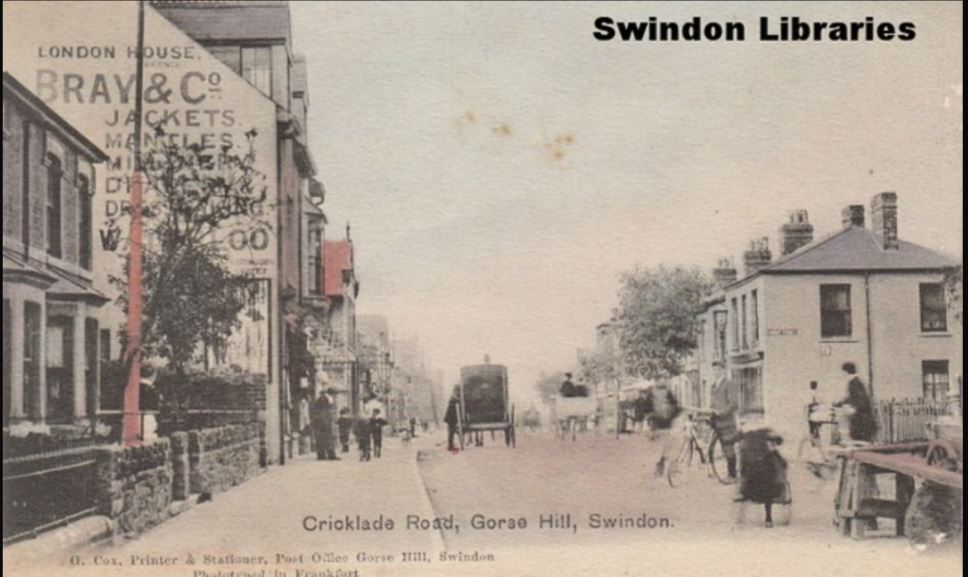
Cricklade Road, Gorse Hill.

View of Cricklade Road, Gorse Hill published courtesy of Local Studies, Swindon Central Library.

The facts …

William Joseph Hobbs was born in 1868 in Poulton, Gloucestershire, the eldest of William and Sarah Ann’s nine children. William senior worked as a stonemason and both sons William Joseph and John William followed him into the building trade.

William Joseph Hobbs married Jennetta Williams on October 4, 1890 at the parish church in Poulton and by the time of the 1891 census the couple were living at 3 Ferndale Road with the two younger Hobbs brothers, John William and Tom.

William and Jennetta had four children, William Joseph, Henry Charles, Beatrice May and Lucy Amelia Jennetta who were all baptised at St Barnabas Church, Gorse Hill. The youngest child, Lucy, was baptised on April 7, 1911 aged 14 and is described in the register as ‘Candidate for Confirmation.’

Jennetta’s death was registered at Marylebone district in the June quarter of 1899. She was 34 years old and died leaving William with four children to raise. Somewhat surprisingly William did not remarry as most men left in this predicament usually did. At the time of the 1901 census he is living at 53 Ferndale Road with his four children aged 8, 7, 5 and 3, with a housekeeper Emily Button.

The newspaper account reads:

Railway Tragedy

A terribly mutilated and decapitated body of a man was found on the GW Railway Highworth branch line at Swindon at 5.30 Saturday morning. The discovery was made by a shunter, the body lying across the six foot way with the neck across the metals in such a manner as to indicate deliberate design. Enquiries set on foot by the police led to the identification of the body as that of a bricklayer named William James [Joseph] Hobbs, a widower, who, up to a fortnight or so ago, had been lodging in Cheltenham Street, New Swindon. He was stated to be in comfortable circumstance, although he had not been at work lately.

The [Gloucester] Citizen Monday 30 September 1912.

Swindon

A Case of Suicide

During a fit of temporary insanity was the verdict at which a coroner’s jury arrived on Monday, when sitting to inquire into the death of a man whose decapitated body was found on the GWR line near the Swindon goods station on Saturday. It was said that the deceased – William Joseph Hobbs, a bricklayer, 44 years of age – had behaved somewhat queerly of late, but beyond being irregularly employed there was little to worry him. He was a widower.

The [Gloucester] Citizen, Tuesday October 1st, 1912

The entry of William’s death in the Radnor Street Cemetery burial registers reads:

William Joseph Hobbs 44 found on GWRailway 13 Omdurman Street 1st October 1912 plot A5.

William was buried in a public or pauper’s grave with two other unrelated people.

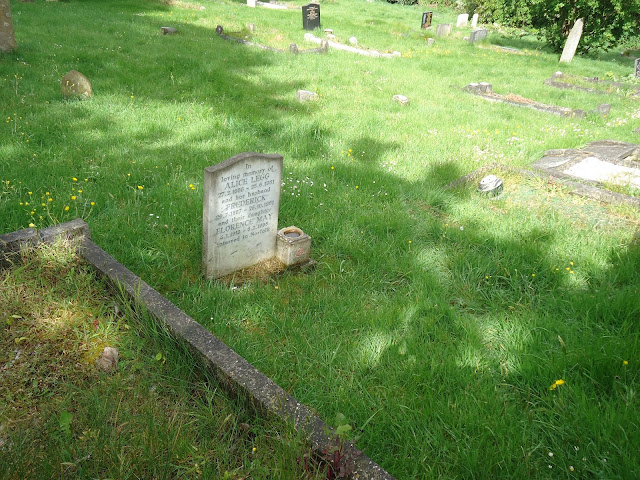
Alice and Frederick Legg

This is the story of Alice and Frederick Legg.

Alice Legg was not a local girl. She was born in Wimbledon in 1886, the daughter of Frederick and Catherine Lovegrove.

Her first job was as a kitchen maid at a private girl’s school in Wimbledon. The duties of a kitchen maid were many and varied and involved a lot of cleaning and some cooking under the supervision of the cook. In this her first job, Alice was roughly the same age as the pupils at the school.

At the time of her marriage in 1911 Alice was working as a domestic servant for a Wine & Spirit retailer. Her husband Frederick was born in 1887, possibly in Faringdon.

They married at All Saints Church, Wimbledon on June 5, 1911. Both Alice and Frederick give their address as 65 Norman Road. The UK Railway Employment Records state that Frederick had begun working for the GWR here in Swindon on May 29, 1911 as a Boilermakers Helper, just weeks before his wedding.

Frederick later worked as Watchman in the Loco Manager’s office. He left the Works on Jan 4, 1943. The couple’s last home together was at 75 Okus Road.

Alice died at the Isolation Hospital. Frederick died at 432 Ferndale Road, most probably the home of one of their children.

The couple died within months of one another. Alice in June 1961 and Frederick in October of the same year.

Alice and Frederick’s story was kindly given to me by a Radnor Street Cemetery follower who joined one of our guided cemetery walks some years ago.

William Graham Little – Swindon philanthropist

Faringdon House

W.G. Little’s shop on the corner of Fleet Street and Catherine Street.

William Graham Little left a legacy that lived long in Swindon’s history.

William Little was born in Chippenham in 1856, the son of George Little, a linen and woollen draper, and his wife Dinah. William was the fourth of eleven children.

He moved to Swindon when he was 18 and began business as a door to door salesman. His first shop was at 32 Fleet Street where he sold clothes and fabrics.

At the time of the 1881 census he was living at 31/32 Fleet Street, his home for more than 40 years, where he employed his 19-year-old brother Albert as a tailor and cutter and his sister Sealy Anne 23, as his housekeeper.

As the business prospered he was able to build a shop in Faringdon Road. The ghost of an advertisement on the side of the building can still be seen – WGL 1892 draper, milliner.

Little served as a Councillor, a JP and an Alderman during the same period as Reuben George and James ‘Raggy’ Powell.

William Little died in 1927 aged 72. He left an estate of more than £56,000 worth today in the region of £2.5 million.

Little never married and seemed to be distanced from his family. He left his sister Frances (who had been his housekeeper at one point) £100 and the rest of his estate he left to Swindon. His family unsuccessfully contested the will but in 1932 the WG Little Scholarship and Band Concert Fund was established. His money was left in trust ‘for the promotion and advancement of education and recreation among the youth of the town.’

In 1965 an article in the Swindon Advertiser said that grants of £52,000 had been made since 1938. In 2012 a grant of £6,000 was paid to help recreate the Children’s Fete at Faringdon Road Park.

In the past, grants have gone towards helping support students at university but more recently payments have been made to buy uniforms for children of needy families transferring from primary school to secondary school.

William Graham Little was buried on May 10, 1927 in plot D47A Radnor Street Cemetery.

William Graham Little

You might also like to read:-

Reuben George and the Christmas card

James ‘Raggy’ Powell – one of nature’s princes