Visitors walking around the Avebury landscape today can only wonder at its significance and marvel at its continued survivial. Burial ground is now at a premium but back in the Bronze Age there was no such problem. The Avebury area was a desirable and important site for burials and evidence remains in the surrounding countryside. A hundred round burial mounds have been identified, some raised over an individual burial others over multiple occupancy graves, many of them ploughed almost flat during agricultural activity across the millennia.
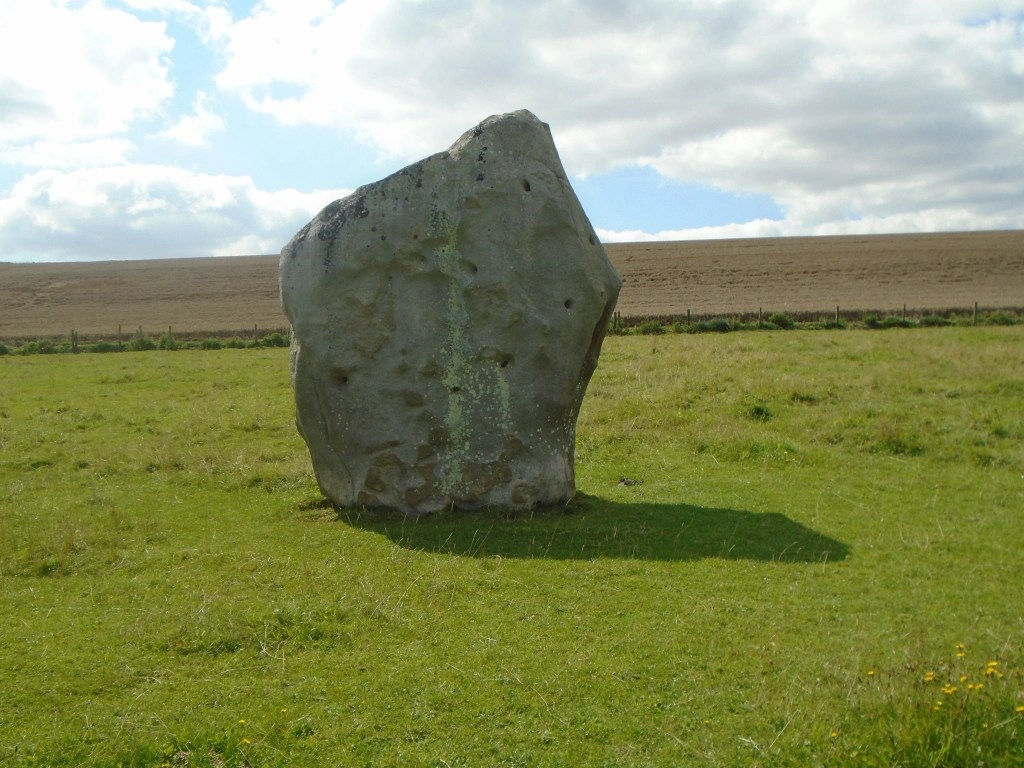
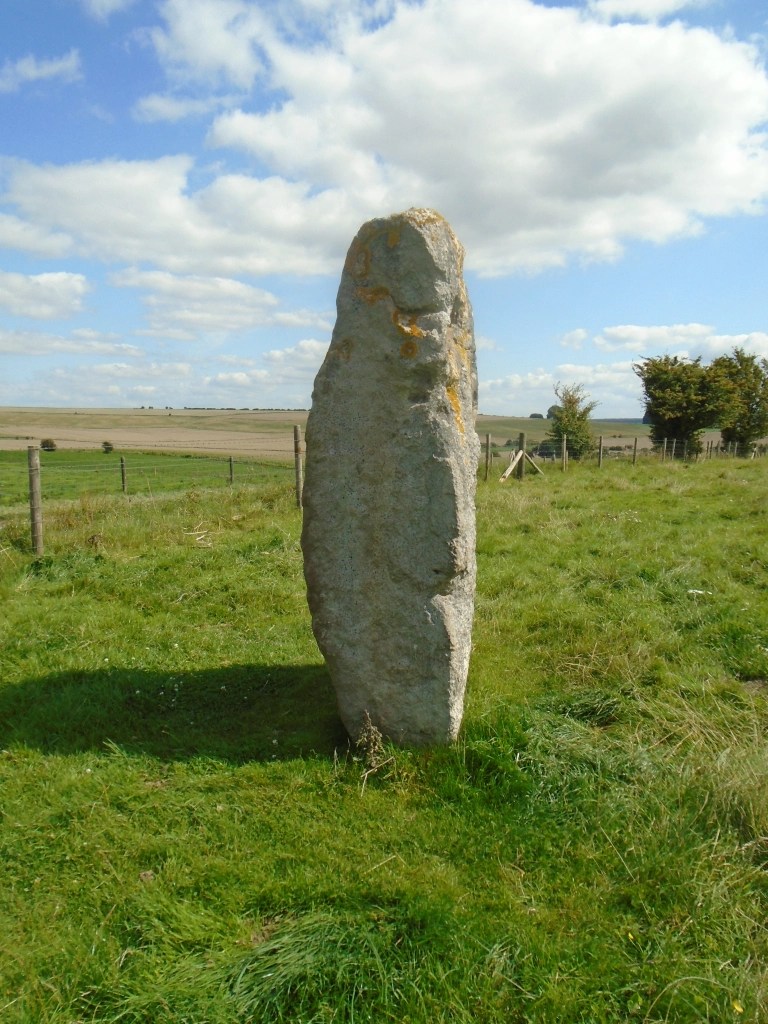
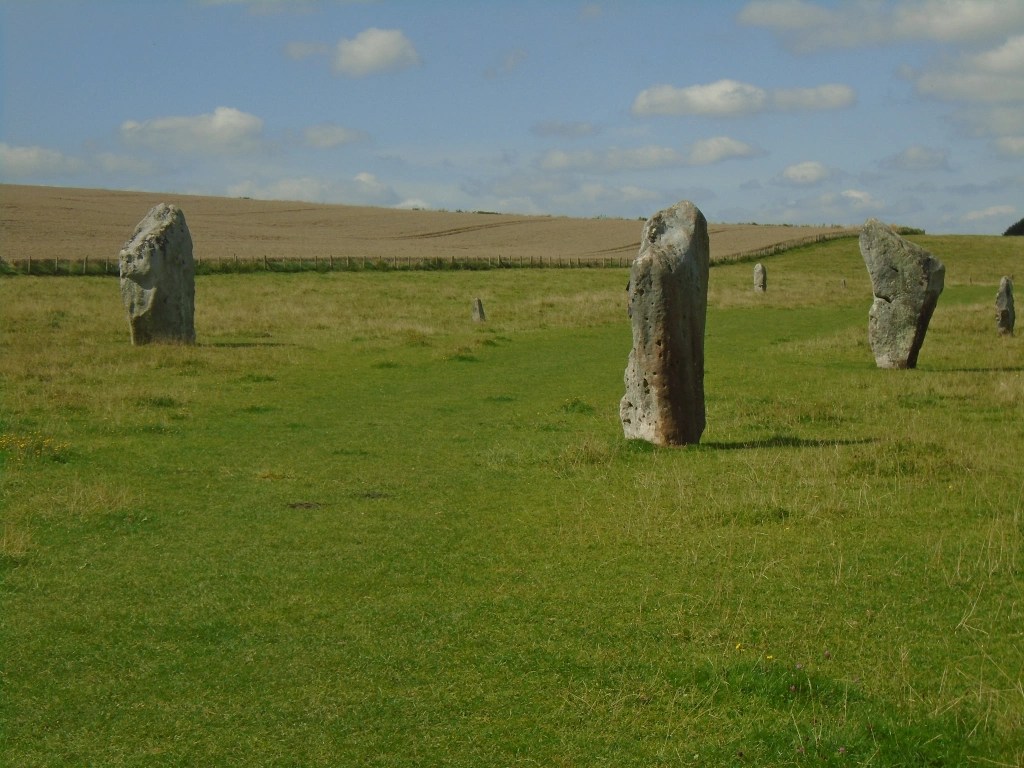
Travelling the West Kennet Avenue is a journey back through time, despite the busy roads which run parallel. Approximately a third of the avenue is flanked by pairs of stones, one diamond shaped, one straight and it has been suggested that these shapes may represent the female and male form. This avenue continues for more than a mile and a half from the southern entrance of the Avebury henge to a double stone circle on Overton Hill, now known as the Sanctuary. Built more than 4,000 years ago, the burial of a young man was discovered here, next to one of the stones.
Nearby West Kennet Long Barrow is the longest of around fourteen long barrows in the Avebury area and is believed to have been constructed in around 3700 BC. It has been excavated just twice, once in 1859 and again in the 1950s. West Kennet Barrow contains five chambers linked by a corridor and contains a total of 36 burials.
But there was another type of burial at Avebury, which is both surprising and shocking to the modern visitor – the burial of the stones. Across the centuries some of the stones were destroyed for practical purposes – to make more easily workable agricultural land and to provide building material – but less obvious and more intriguing is the burial of numerous stones. There was a time, probably from the 5th century through to the turbulent religious Tudor period, when the stones were regarded as a shameful relic of our pagan past and the theory is that the residents of Avebury were encouraged to bury theirs.
William Stukeley, an 18th century antiquarian first recorded that stones at Avebury had been buried in great pits. Then two nineteenth century clergymen A.C. Smith and W.C. Lucas came to the same conclusions and in the 1930s Avebury resident Alexander Keiller went a step further. Keiller was responsible for excavating and re-erecting 50 stones in the henge and the West Kennet Avenue.
Despite the throng of visitors and the persistent traffic, Avebury retains its mystical and mesmerising atmosphere and one blog visit is nowhere near enough. See tomorrow’s instalment for my visit to St. James’s churchyard.
I still visit the cemetery angels once in a while, just to check up on them. There are a couple that are badly damaged but I still like to pay my respects. They were a great comfort to me when I used to doss in the cemetery.
My usual pitch was a bender under the bushes near the Polish doctor’s grave. Sometimes I’d go down by the hedge that backed onto Fairview but it was too close to the houses and people used to report me.
I tried getting into the little building at the top of the cemetery but it was boarded up too well. The druggies used to go round the back there, but I didn’t want to get involved with any of that shit, I had enough of my own to get on with.
I’ve met a few angels since then – of the flesh and blood variety. There was Lesley who found me a room in a hostel and Steve who got me on to a counselling programme. I can do without the booze now, well most the time I can.
I don’t know a lot about my own family. I turned out to be a big disappointment to my mum and dad. Never did the right thing, not even as a kid. I know they were ashamed of me, they told me so often enough. I was lazy, had no backbone, no morals.
These days there’s a big emphasis on mental wellbeing, but my parents were of a different generation, obviously, but you know what I mean. They’d lived through a world war, they didn’t have a lot of time for mental wellbeing or depression and anxiety.
One of the angels I like to visit is down on the lower section of the cemetery on the way to the Clifton Street gates. She’s a particular favourite of mine. I wonder why we always think of angels as female. After all, the archangels were all male, Gabriel and Michael; and Lucifer, well he had to be a male. That’s about all I can name. It’s a bit like Santa’s reindeers, after Rudolph and Donner and Blitzen, who are the others?
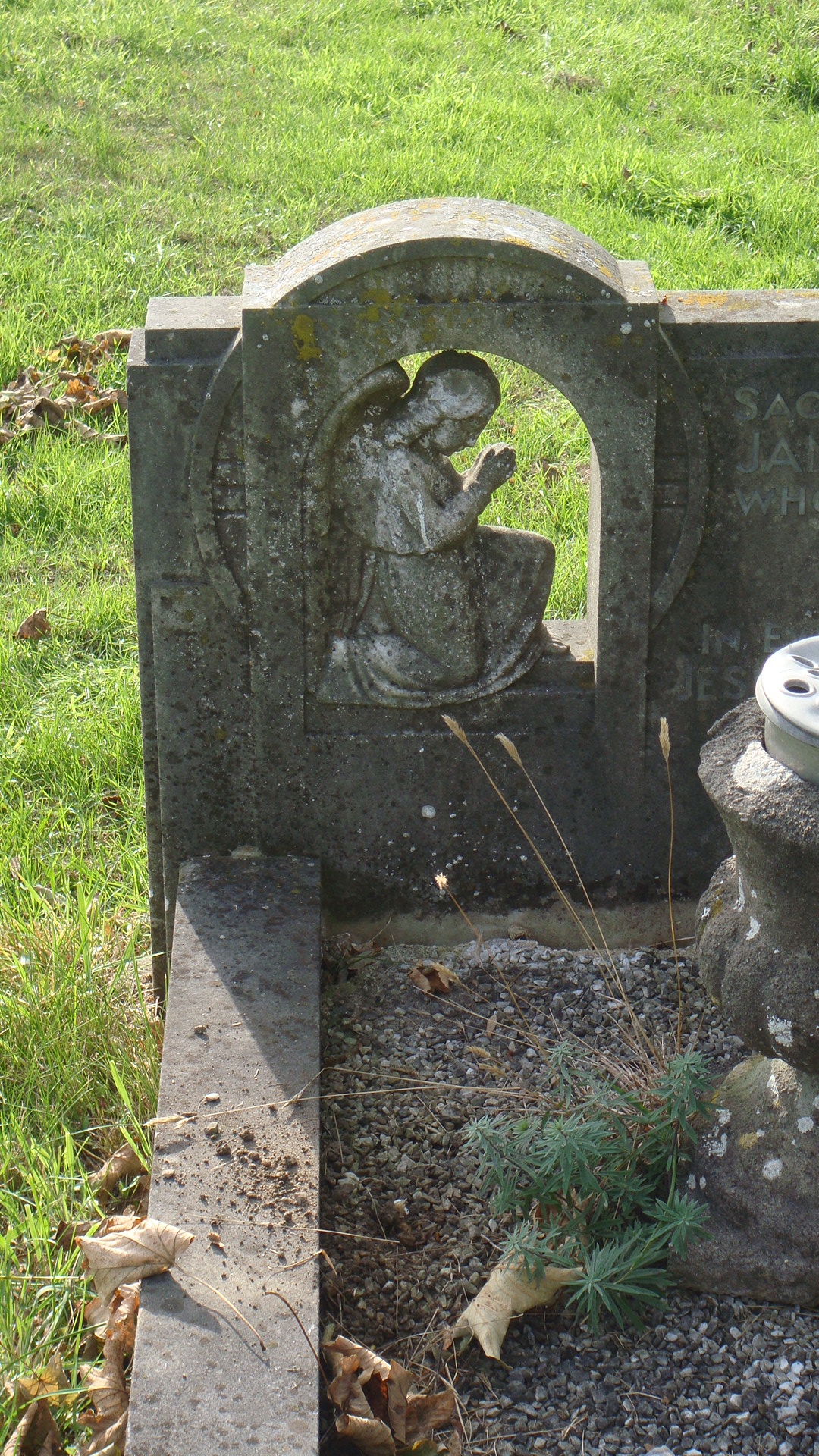
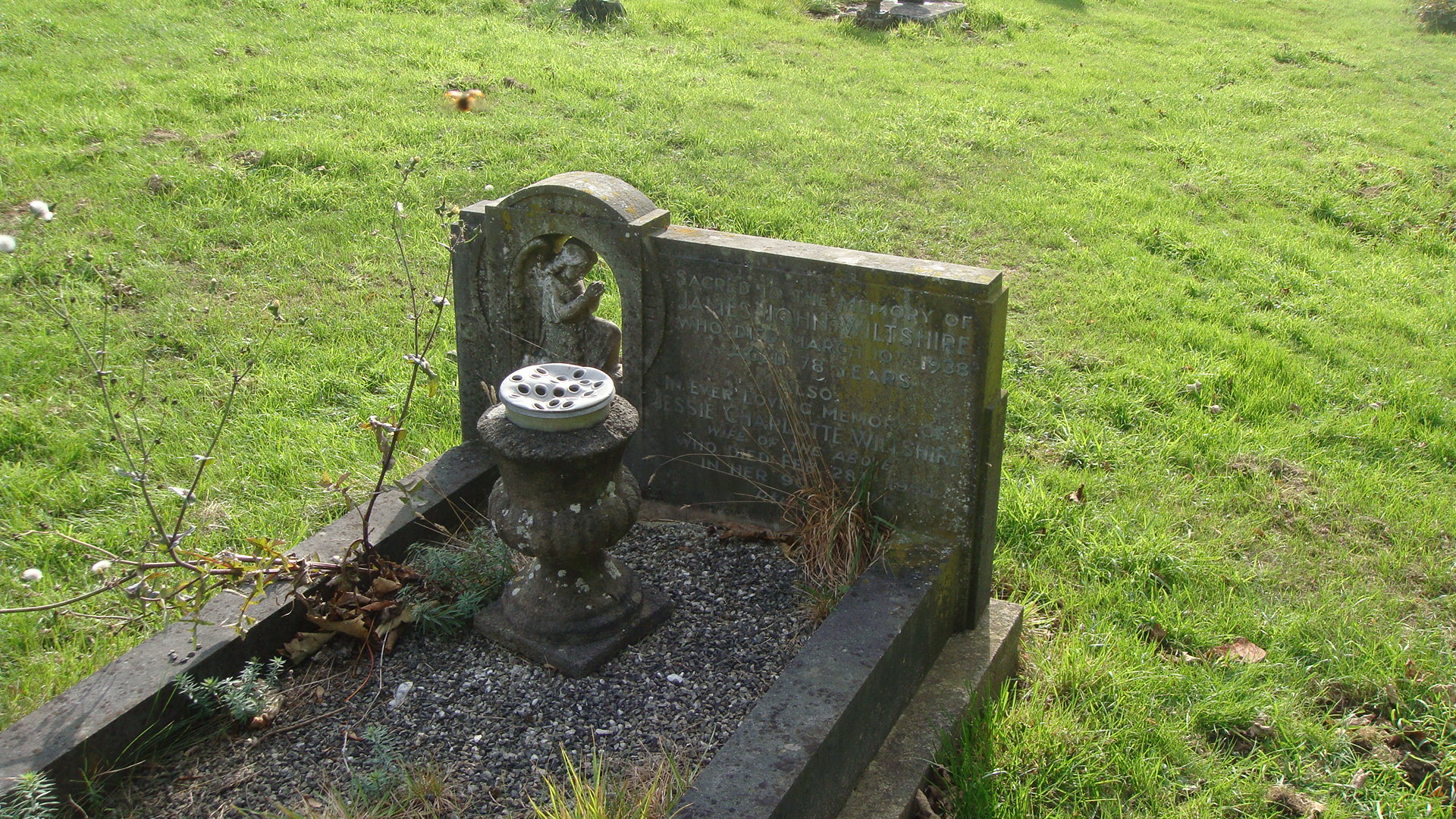
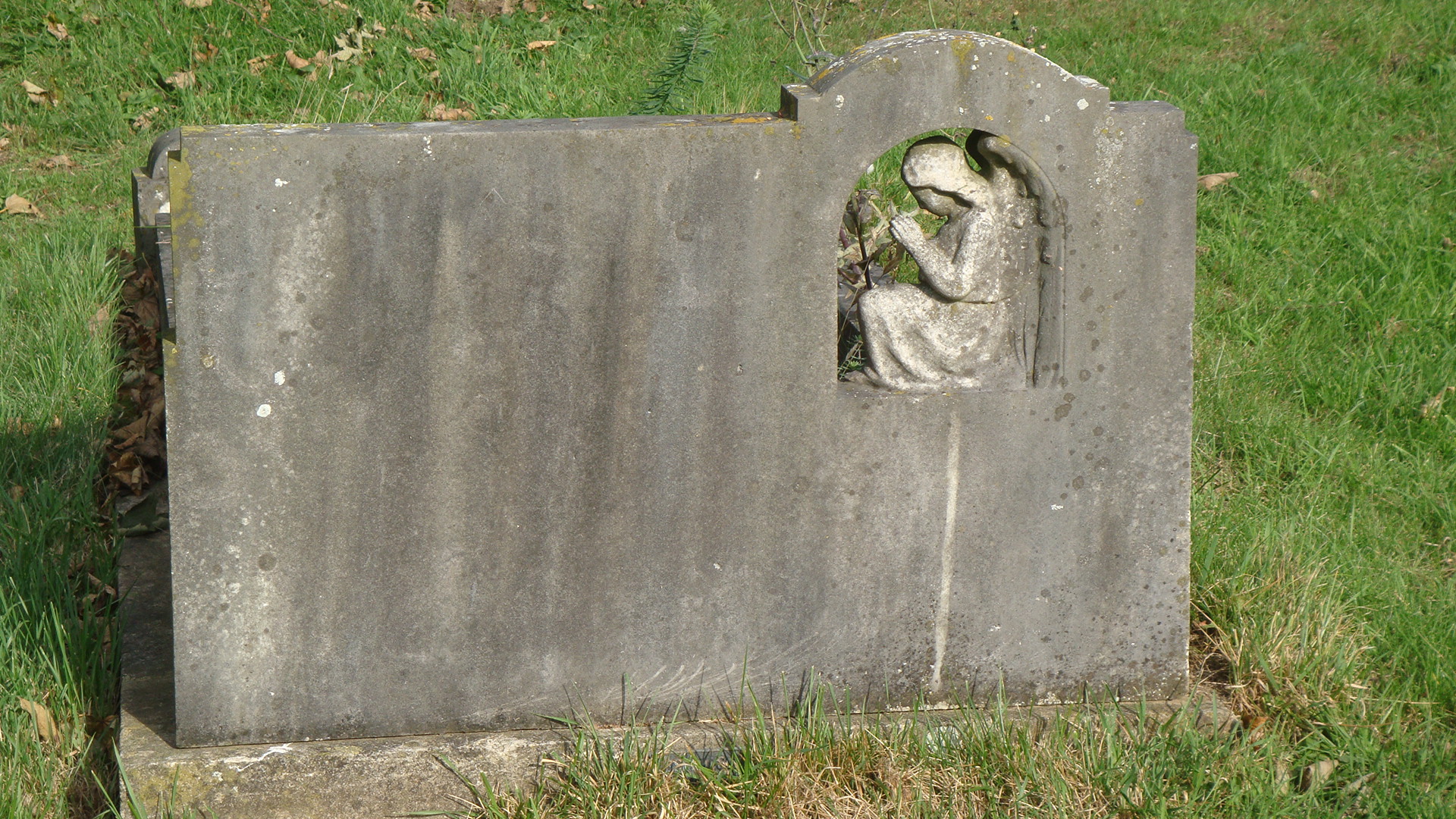
This little angel is tucked into a window-like space in the stonework, a young angel knelt on one knee praying, her wings following the curve of the opening. Is there such a thing as a young angel, or an old one come to that? I suppose you get cherubs, but they are usually chubby, babylike figures with short curly hair. No, this one is definitely a young angel, her little hands clasped together and her bare toes peeping out from her dress.
Well, that little angel got me thinking. The inscription on the headstone is to an old couple. James John Wiltshire who died in 1938 aged 78 and his wife Jessie Charlotte who died in 1954 aged 90 and I got to wondering who had chosen the headstone.
I even went up to the crematorium where they hold all the burial registers. Of course, I could tell they thought I was a nutter, but fair play to them they were very kind and helpful. A young woman looked up the grave details for me and what a surprise we both had.
Before the Wiltshire family bought the grave for old James and Jessie, it had been a public grave and buried beneath them were four little children. Charles and Louisa Wright, who both died as babies in 1900 and 1901 and Amy and Vera Taylor who had died in 1900 and 1906.
We looked at each other in silence.
I wonder if the Wiltshire family knew all this when they bought the plot; now that little angel makes sense to me. I like to think of her praying for the little children who never had a life, and it helps me cling on to making some value out of mine.
The facts …
James John and Jessie Charlotte Wiltshire lived at 36 St Margarets Road at the time of James’s death in 1938 and Jessie continued to live there until her death in 1954. The 1939 list, available on Ancestry, reveals that Jessie was living with Emily B. Warren, also a widow and quite possibly her sister.
The children …
Charles Tilley and Louisa Caroline H. Wright were the children of Thomas and Mary Ann Wright. Thomas worked as a Smith’s striker in the railway factory. The couple were originally from London but moved to the Swindon area in about 1890. Louisa appears on the 1901 census as a one month old infant, the youngest of eight children still living at home in Byron Street with their parents. Born in between census years little Charles doesn’t appear on official records other than the birth and death indices and the burial registers.
Amy Blanche Taylor was born on January 16, 1900 and baptised on February 11 at St Augustine’s Church. She was the daughter of George Taylor, a clerk in the Works, and his wife Blanche who lived at 67 Dean Street.
Vera Grace was born in 1904 and was also baptised at St Augustine’s. By then the family had moved to 14 Jennings Street. She died in 1906.
By 1911 the little family had prospered and were living in Goddard Avenue. The census returns for that year include not only the details of their two living children, Raymond George 10 and Gladys Elsie 4, but the two children who had died, Amy Blanche 3 months and Vera Grace 2 years. The names had been crossed through. It was enough for official purposes just to state how many children had died.
Blanche died in 1918 and was buried in plot E8376 on March 28. George outlived her by more than forty years. He died in 1959 and was buried with his wife on April 2. Their grave is on the opposite side of the cemetery from their two little daughters.
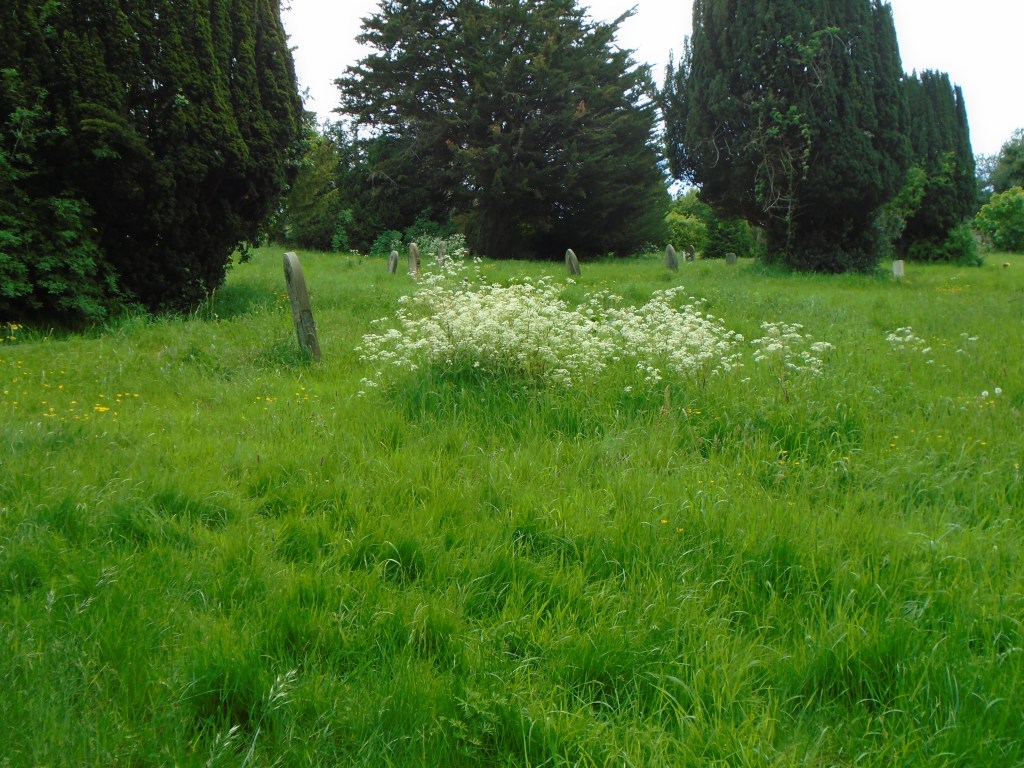
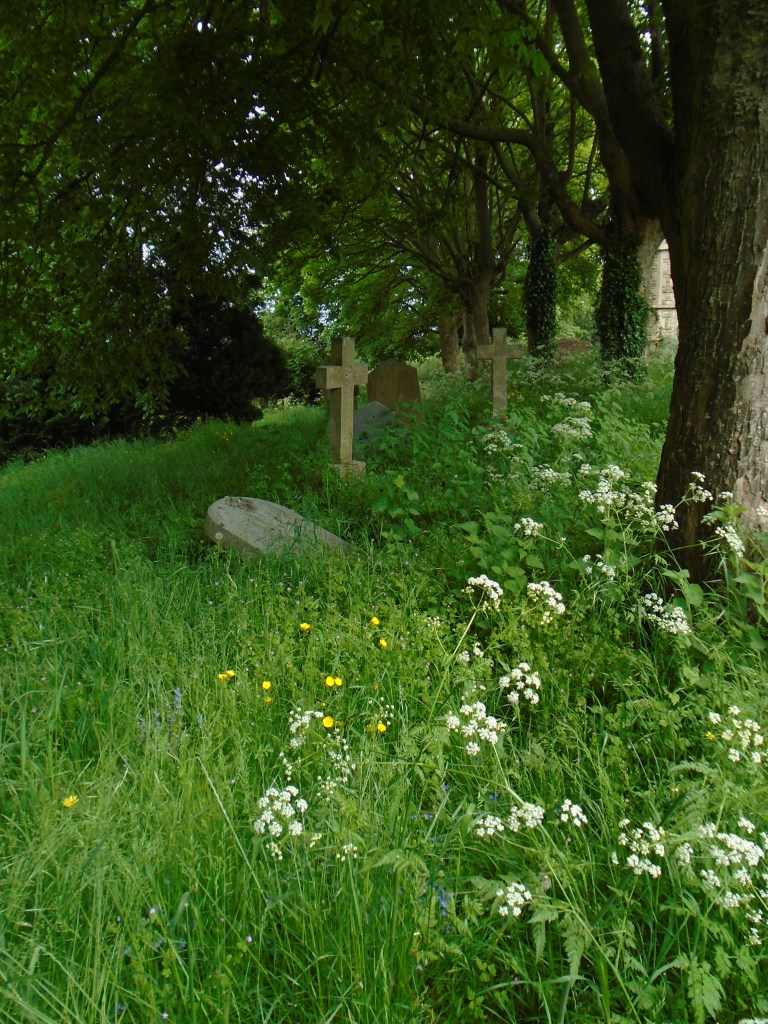
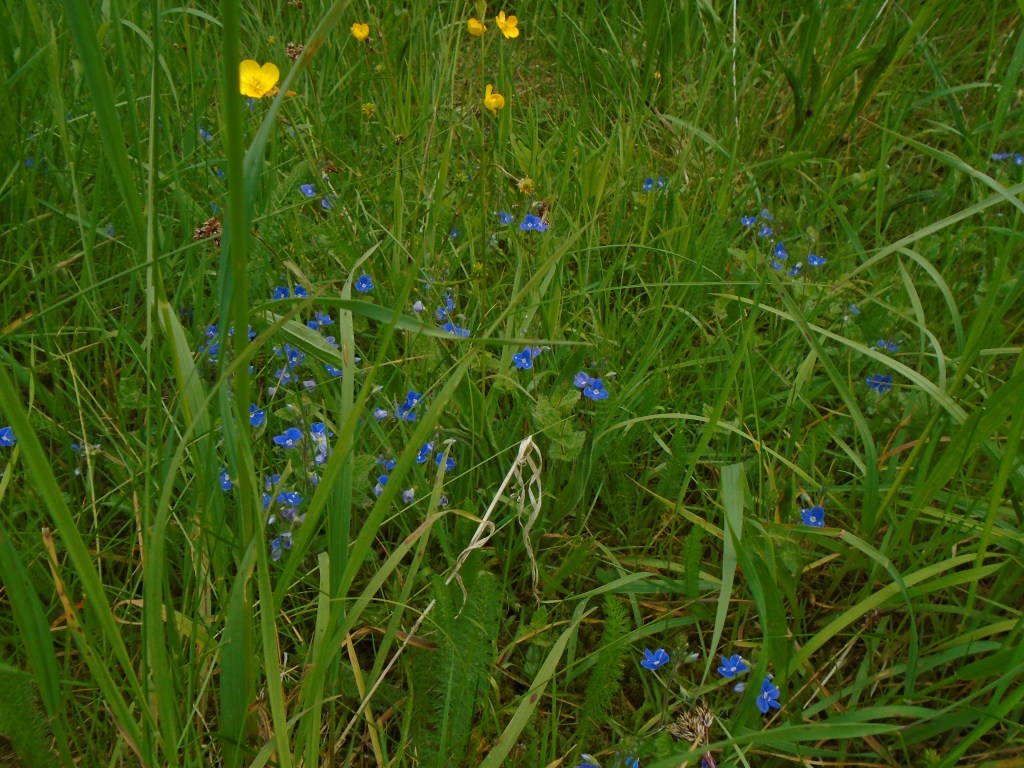
Today let’s celebrate the summer loveliness of the cemetery where swathes of daisies and long legged buttercups and clouds of lacey cow parsley float among the gravestones.
Radnor Street Cemetery closed to new burials in the 1970s and after that interments could only take place where there was space in an existing family grave. This still applies today where burials are most usually those of cremated remains.
In 2005 the cemetery was designated a local nature reserve and the value of this area was widely promoted. Bird and bat boxes were erected and areas of grass were left to grow long to provide habitat for insects. Led by Swindon Ranger’s team and members of a community gardening group called LEAVES a pond was created in what was to be a wildlife memorial garden. It was hoped that the installation of a water feature would encourage dragonflies, newts and frogs and would enhance the biodiversity of the cemetery site.
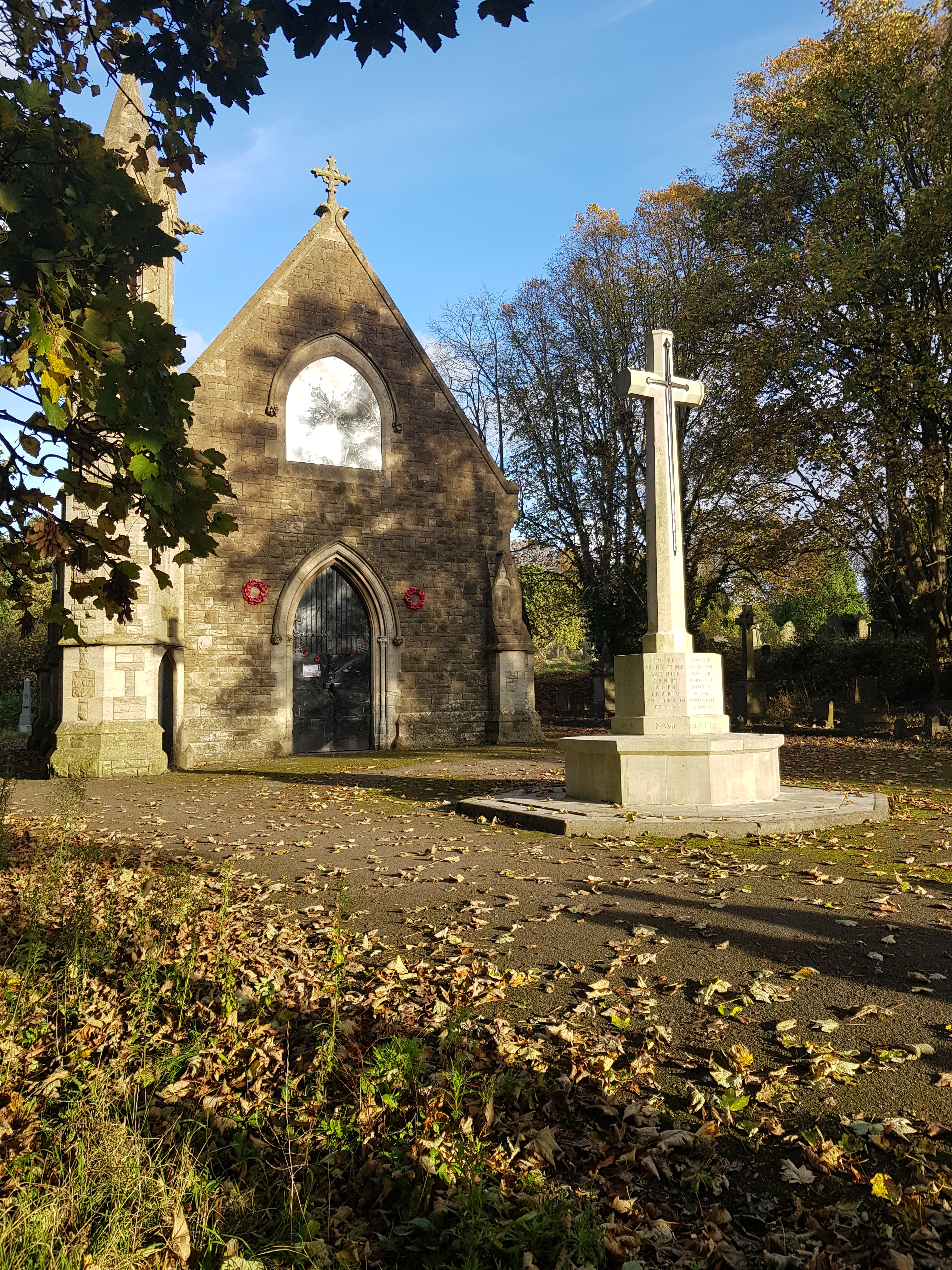
Sadly, local government cutbacks and the diminishing number of Rangers saw these plans falter, but a growing team of new volunteers is now at work in the cemetery on a regular basis. Their initial interest was to keep the area around the Commonwealth War Graves clear and accessible but in recent months they have extended their work to other graves, revealing yet more fascinating Radnor Street Cemetery stories.
I was in my last year at school in 1983, trying to decide what I wanted to do with the rest of my life. I knew I definitely didn’t want to go into the Works like my dad, but then it looked as if the days of the mighty railway factory were numbered anyway. It had to be something interesting, something exciting.
What I would really have liked was to join XTC. For those of you who missed the 70s and early 80s for whatever reason, there was punk and prog pop, new wave and New Romantics and, if you came from Swindon, there was XTC.
What was it about them I liked? Was it their sense of fantasy and psychedelic wonderment, to steal a quip from founder member Andy Partridge? Or was it because they were cool and came from Swindon? It was exciting to know that the members of the band had walked the same streets I had. As Andy once said, ‘Swindon was a bit shit but there are worse places and everyone has to come from somewhere.’
I knew I didn’t have any musical talent, but I was sure there was a job I could do as part of the XTC entourage; a technician or press officer, or maybe a photographer, something like that.
In the summer of 1983 word went around school that the members of XTC would be filming a music video somewhere in Swindon for a track on their upcoming album. It came as no real surprise that they should chose the old cemetery, just the crazy kind of thing they would do. Here was my opportunity.
There was no special treatment for the guys the day they filmed at Radnor Street Cemetery. I was among a handful of fans there and as long as we kept out of the way, no one seemed to mind.
This would be my first foray into photography. I had a goodish camera, a present from my granddad. I got what I anticipated would be a couple of good shots of Colin wandering among the graves, looking contemplative and rock starry and several of Dave and Andy dressed in military uniforms and misbehaving in the background.
The cameraman spent a long-time getting shots of individual headstones and memorials, in particular a magnificent guardian angel, which became the opening shot of the video.
It was several weeks before my film came back from Boots the Chemist.
Even now, more than 30 years later, I can remember the heart squeezing disappointment as I opened the envelope and looked at the prints. My first photographic assignment, a total disaster. But as Colin blurred across the foreground, an image appeared in the background, close to the old mortuary building. At first, I assumed it must be the indistinct image of another fan, out for a glimpse of the band, but I began to see the outline of what looked to be a soldier, head bowed, wearing an old-fashioned army uniform and a tin helmet. He carried a kit bag on his back and held a rifle at his side. It was the silhouette of a Tommy from the First World War, there, but not there.
No one could see what I could see, not my parents, not my friends. And after a time I could no longer see the invisible soldier.
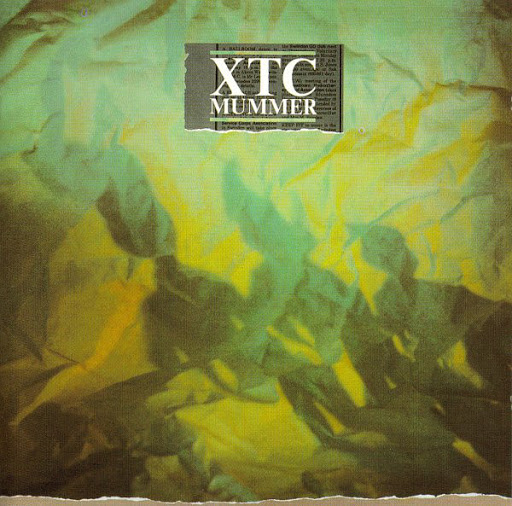
In Loving Memory of Name was written by Colin Moulding, but it turns out it wasn’t among his favourites in the band’s back catalogue. He was to later describe it as being about “moping ‘round a graveyard and just remembering the lives of the people there.”
It was several years before I returned to Radnor Street Cemetery. I stood in the place where I had watched Dave Gregory and Andy Partridge and taken my photographs. And then I walked around to the old mortuary building where I imagined I had seen the First World War soldier, there but not there.
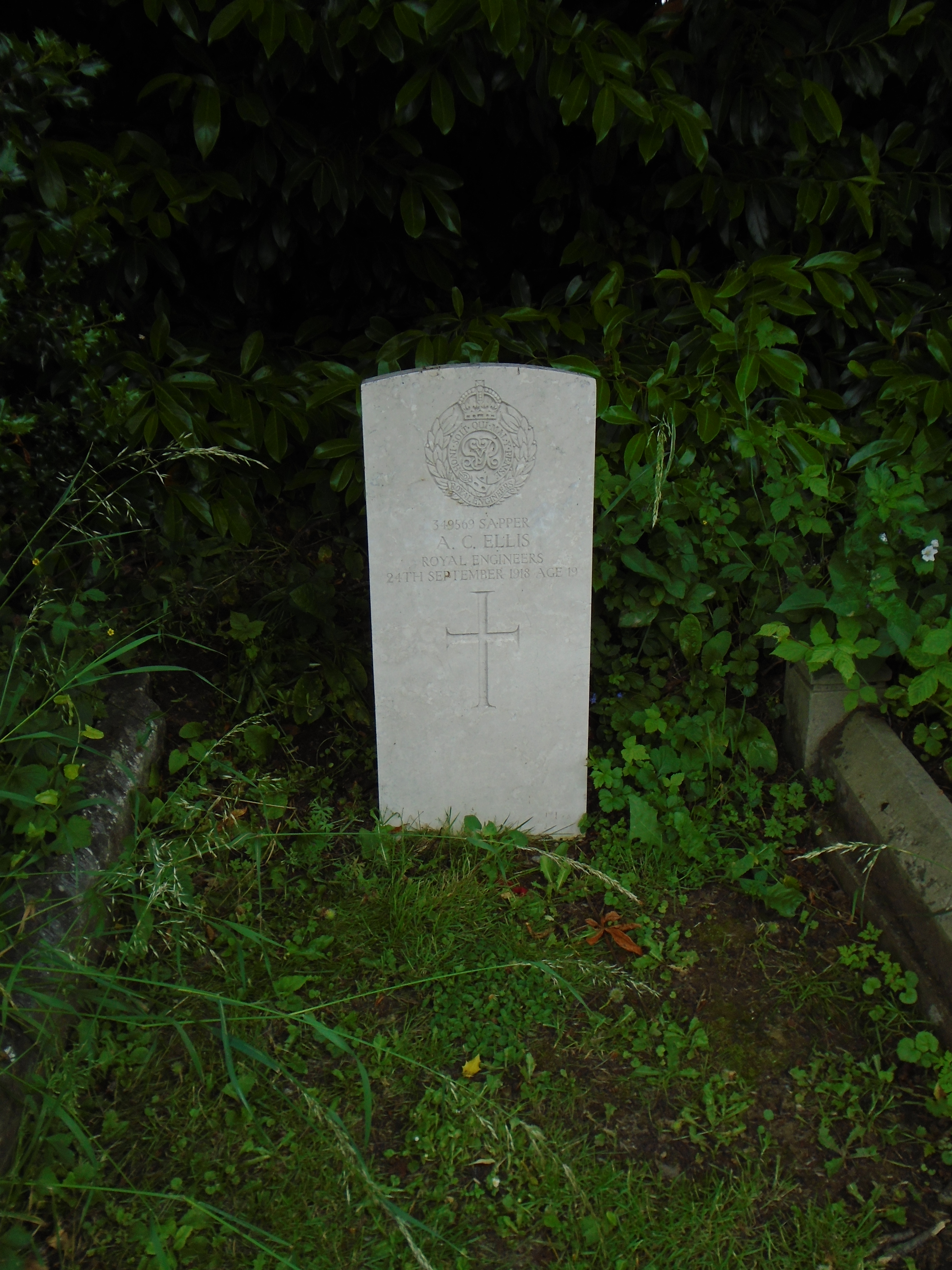
I noticed for the first time the official Commonwealth War Graves headstone, discoloured and dirty. The inscription read Sapper A.C. Ellis, Royal Engineers, 24th September 1918 Age 19.
The Mummer album came after a long XTC hiatus. I recently returned to the cemetery after my own period in the wilderness. The guardian angel still looks good. And someone has propped up against the war grave headstone a small photograph of the young soldier.
There, but not there. Photograph published courtesy of Andy Binks.
The facts …
Arthur Cecil Ellis was born in Swindon in 1899 the only surviving son of Thomas George Ellis, an engineer in the railway works, and his wife Annie Maria. He was baptised at St. Mark’s, the church in the railway village, on February 20, 1899 and for all his young life he lived at 38 Farnsby Street.
Arthur Cecil Ellis served in ‘C’ Company of the 6th Reserve Battalion of the Royal Engineers. The 6th Reserve Battalion was located at Irvine and was formed in January 1918 from what had been the reserve Field Companies grouped in Scottish Command.
Arthur died on September 24, 1918, according to the UK Register of Soldiers’ Effects 1901-1929 at Kilmarnock Hospital where he had £3 2s 9d (about £3.20) in pay owing to him, which would go to his mother Annie.
His body was returned to the family home at 38 Farnsby Street and he was buried at Radnor Street Cemetery on October 1st.
More than 50 years later, in the summer of 1969, Arthur’s sister, Dorothy, who worked as a dressmaker when Arthur went to war, died aged 74 and was buried with the teenage brother lost during the final weeks of the First World War.
I stood in front of the Baptist Tabernacle and watched the crowds gather, ten, twelve, fifteen deep in some places, packing all the approaches to the Town Hall.
Hundreds upon hundreds of people had come to pay their respects. Grieving parents stood next to those who had welcomed home their shattered sons, everyone touched by the horror of four long years of war.
Soldiers on crutches, soldiers with no obvious injuries. Widows holding the hands of little children, who even at such a young age appreciated the solemnity of the occasion.
Gathered immediately around the shrouded war memorial were the Mayor and civic dignitaries standing next to members of the clergy from the various Swindon congregations. Alongside detachments of the local military units were a group of Boy Scouts and Girl Guides, all standing to attention.
I went to school with the Preater brothers. I was in the same class as Bert, the youngest. Six sets of brothers were lost from Sanford Street School and I knew them all. Reginald Corser, an Engine Room Artificer who died on board HMS Defence in 1916. His brother Horace died on the Western Front two years later.
The Leggett brothers both served with the Wilts 1st Battalion and died within three months of each other in 1915. Bill was shot through the stomach. He was 22 years old. Ern was also killed in action. He was 21.
I went to school with the Preater brothers and Bill and Ern Leggett and the Corser brothers, but I didn’t go to war with them. The British Army wouldn’t have me. I tried to enlist twice, but each time I failed the medical.
The ladies used to wait outside the Works with their white feathers. I keep mine in an envelope in my sock drawer.
And then it was time for the service to begin. The Mayor unveiled the Cenotaph as the Last Post was sounded.
The band of the Comrades of the Great War played the introduction to the hymn “Nearer my God, to Thee” and a great swell of voices carried the words heavenwards on that serene and sunny day in October 1920.
After the prayers the short service closed with another hymn, “For all the saints who from their labours rest” and as the voices stilled, relatives made their way to the war memorial to lay their flowers. The silence only broken by the sound of sobs. How many more tears could we shed?
Mrs Preater leaned heavily on the arm of her son John, the only one of four who went to war and returned home. She looked frail. Three sons lost and no grave to visit for any of them.
The war had been over for almost two years but for families like the Preater’s it would never be over.
It took a long time for the crowd to disperse. People were reluctant to leave this place, this time.
I stood and watched and wondered how I could continue to face the men who had returned home broken. The war casualties continued long after the armistice.
I am writing my memories of that day. Maybe in the future someone will be interested. At the moment I can’t see a future.
These words were found with a white feather in an envelope in his sock drawer.
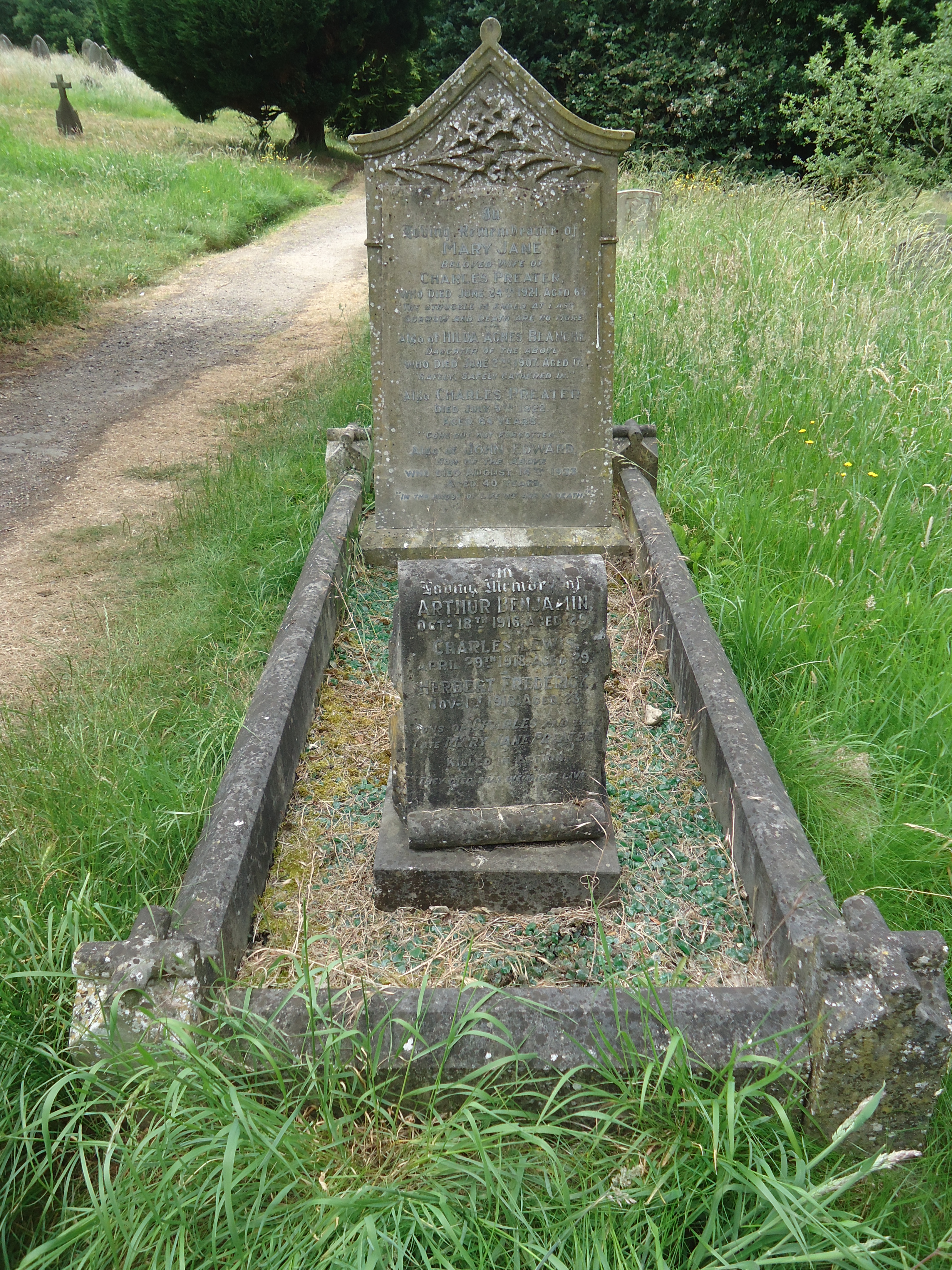
The Preater family grave in Radnor Street Cemetery
The facts …
Buried in this grave are Charles and Mary Jane Preater, their daughter Hilda who died in 1907 and John Edward Preater, the son who survived the First World War.
A memorial to the three sons who died stands on the grave.
Arthur Benjamin Preater was born in 1886 and served in the 2nd battalion of the Wiltshire Regiment. The battalion had been involved in the Somme battles since July 8, 1916. On October 18 they were in the line along with the 2nd Liverpool, 2nd Manchester Pals and the 2nd Yorks and attacked the German positions not far from Flers. The attack was not successful and the battalion reported casualties of 14 officers and 350 other ranks. Arthur was among those killed. He is remembered on the Thiepval memorial and has no known grave.
Charles Lewis Preater was born in 1889 and served in the 6th battalion of the Wiltshire Regiment. In April 1918 the 6th were in the Messines area of Belgium about seven miles from Ypres. The 2nd part of the great German offensive took place on the night of the 9/10 and the objective was Ypres again. In the path of this onslaught was the 6th Wilts. By the time the battalion was relieved on April 20 they had lost over half their strength. Charles had been severely wounded and died as a result on April 29. His grave was lost due to constant shelling and he is remembered on the Tyne Cott memorial.
Herbert Frederick Preater was born in 1896 and served with the 2nd/8th Battalion of the Worcestershire Regiment. He was killed in action on November 1, 1918 and is buried in France in the Cross Roads Cemetery Fontaine au Bois.
John Edward Preater was born in 1893. He served with the Worcestershire Regiment. He survived and returned home. He took over as landlord at The New Inn following his father’s death in 1922. John collapsed at the GW Railway Station, Chippenham on August 14, 1933. He was travelling with a group of friends and his fiancée. They were off to Weymouth for a short holiday. He died on the platform before a doctor could arrive. There was no inquest as John was under the care of a doctor at the time of his death. He is buried with his parents and his sister.
Two elder sons didn’t serve.
There were two daughters. Eva Emma Leah Preater who married James Ernest Wood, an Engine Erector, in 1909. Eva died in 1974 aged 90 and is buried close to the Preater family grave. Youngest child, Ada Cora Preater, never married. She took over as proprietor of The New Inn after her brother’s death in 1933. She died on February 26, 1956 at the pub where she had lived all her life. She is also buried in Radnor Street Cemetery in plot D65A.
Resources include Tell Them of Us by Mark Sutton
Swindon’s War Record by W.D. Bavin
The Leggett Brothers – William (left) Ernest (right)
Sanford Street School Memorial, Radnor Street Cemetery chapel
Join us in a Service of Remembrance at Radnor Street Cemetery on Sunday November 10. Meet at the Cross of Sacrifice memorial for 2pm.
The Weight family were a restless bunch – well some of them were anyway.
In 1911 Albert John Griffiths Weight aged 59 made the decision to emigrate to Canada. With his wife Emma and their daughter Elsie Pauline, a teacher aged 25, they boarded the Royal Edward setting sail from Bristol for Montreal on May 3. Albert’s name appears on the Manitoba, Saskatchewan and Alberta, Canada Homestead Register dated 1872-1930. Emma died in 1937 at Shamrock, Saskatchewan and Albert died in 1942.
But it would be their son Clifford who led the most memorable of lives and left his mark on the art world.
Clifford Seymour Weight was born in 1891, the youngest of Albert and Emma Weight’s four children. In 1901 the family were living at 17 William Street and Albert worked as a Saw Mill Machinery Fitter in the GWR Works. By 1911 they had moved up the social ladder to Old Town and lived at 32 The Mall. Just weeks after the census was taken in 1911 Albert, Emma and Elsie left for Canada.
Clifford remained in England, leaving two years after his parents when he set sail from Liverpool to Maine on the MS Canada. He spent some years in California where he trained as an architect and in around 1925 he travelled to Mexico where he met Diego Rivera and Frida Kahlo.
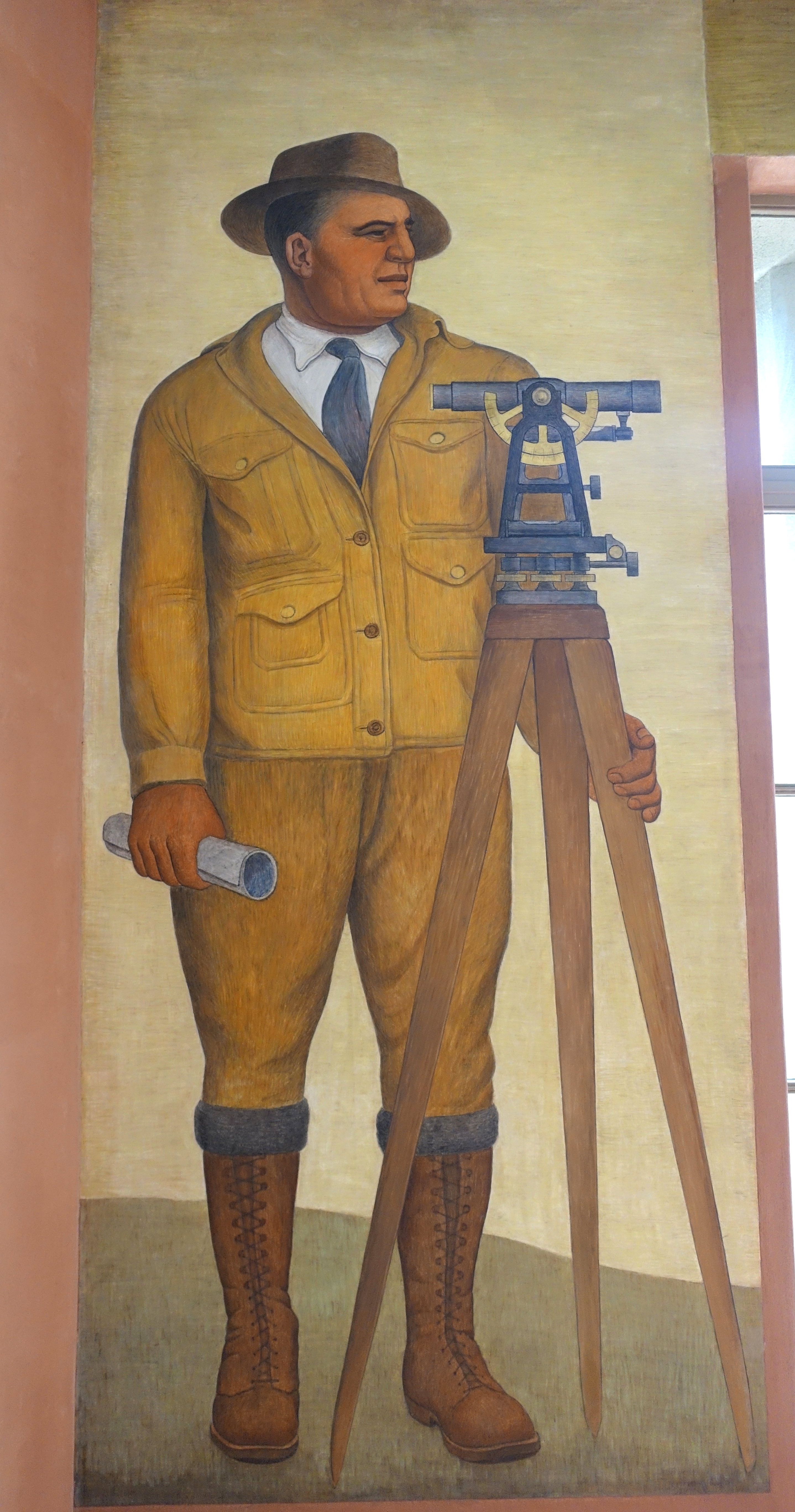
By 1929 he was better known as Clifford Wight. Whether the name change was a deliberate decision remains unknown, just another facet of this man’s extraordinary life. At this time he was working as a technical assistant, translator and secretary to the Mexican muralist Diego Rivera. Clifford worked on murals for the Detroit Institute of Arts, the Rockefeller Centre in New York (later destroyed) and the Coit Tower in San Francisco.
Surveyor by Clifford Wight – Coit Tower, San Francisco.
Clifford led a fascinating life, full of action, adventure and political intrigue. Read more on the Swindon Library website and the Syracuse University website.
Clifford’s death, like his life, is shrouded in mystery. He died on May 7, 1961 at the Hospital Clinico Barcelona Spain, apparently having fallen from a tram. Or was he pushed?
But getting back to the Weight family in Radnor Street Cemetery …
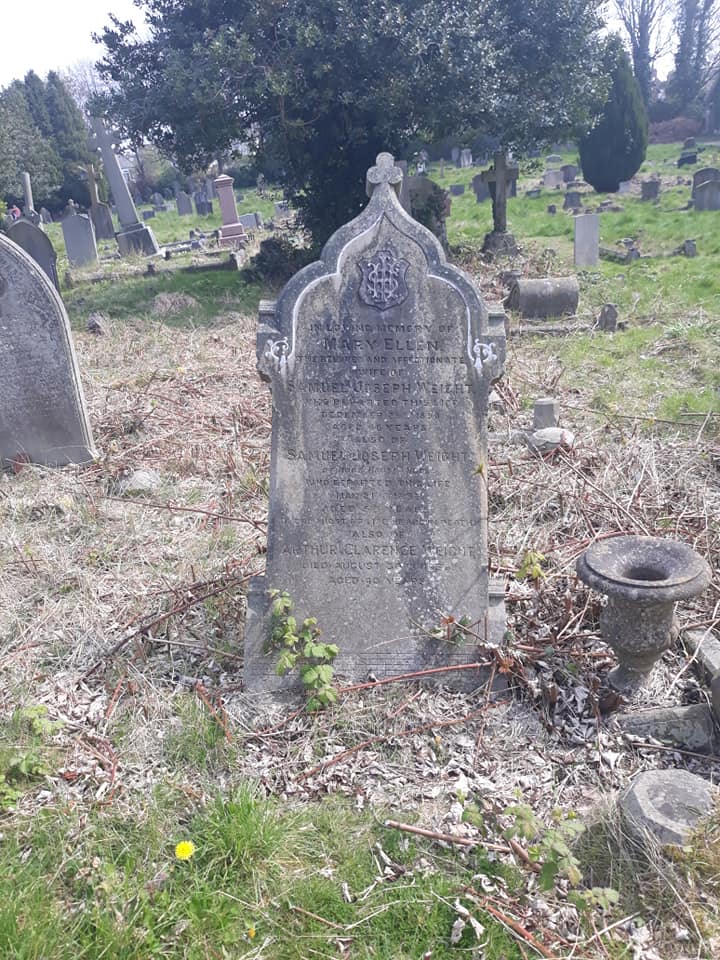
This is the grave of Samuel Joseph Weight and his wife Mary Ellen, a more settled couple.
Samuel J. Weight was typical of most newcomers to Swindon. Born in Gloucestershire in about 1839 he came to New Swindon in the 1860s to a job in the Works. At the time of the 1861 census he was lodging with his brother John and his family at 17 Reading Street where both brothers worked as fitters and turners in the railway factory.
Two years later Samuel married Mary Ellen Ford at St Mark’s Church on July 16, 1863. By 1871 the couple were living at 5 Cromwell Street with their five year old son Ozias Enoch, Samuel’s widowed mother Mary and nephew Albert John, the son of Samuel’s brother John.
By 1881 Samuel had left the Works and was licensed victualler at the Golden Lion Hotel, a pub on the Wilts and Berks canal, which lent its name to the iconic Golden Lion Bridge. It was here that Mary Ellen died on December 26, 1890. At the time of the 1891 census Samuel was still living at the Golden Lion Hotel with his sons Ozias, Bertie and William and daughter Emma, but soon after this he retired to Hook House in the parish of Lydiard Tregoze where he died on May 21, 1897.
Only one of Samuel and Mary’s children remained in Swindon – Bertie Charles Weight. Ozias ended up in Liverpool where he died in 1922, Samuel jr moved to Balham while William died in Bromley in 1960. Daughter Emma married and died in Heston in 1912. Little Polly, a baby daughter who died at the Golden Lion in 1881 aged three weeks old, was one of the first burials in the new Radnor Street cemetery on August 18.
Although Arthur Clarence Weight is remembered on Samuel and Mary Ellen’s headstone their grandson is not buried with them. He lies in plot E8548 with his parents Bertie Charles and Edith Eleanor and a brother Reginald Charles Frederick. A branch of the restless Weight family who stayed put.
For ten years I have been a member of a small but perfectly formed team of cemetery enthusiasts. We research and write about the people in the cemetery and throughout the summer months conduct guided cemetery walks.
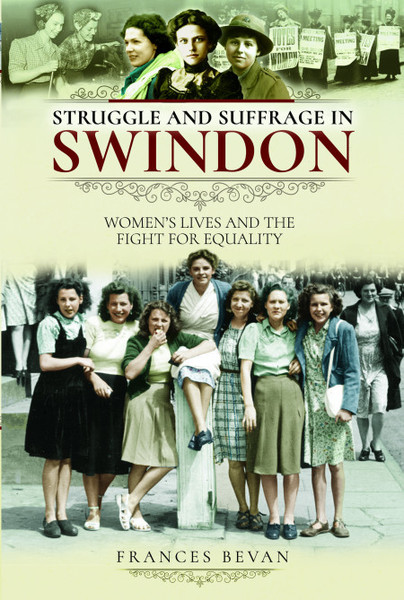
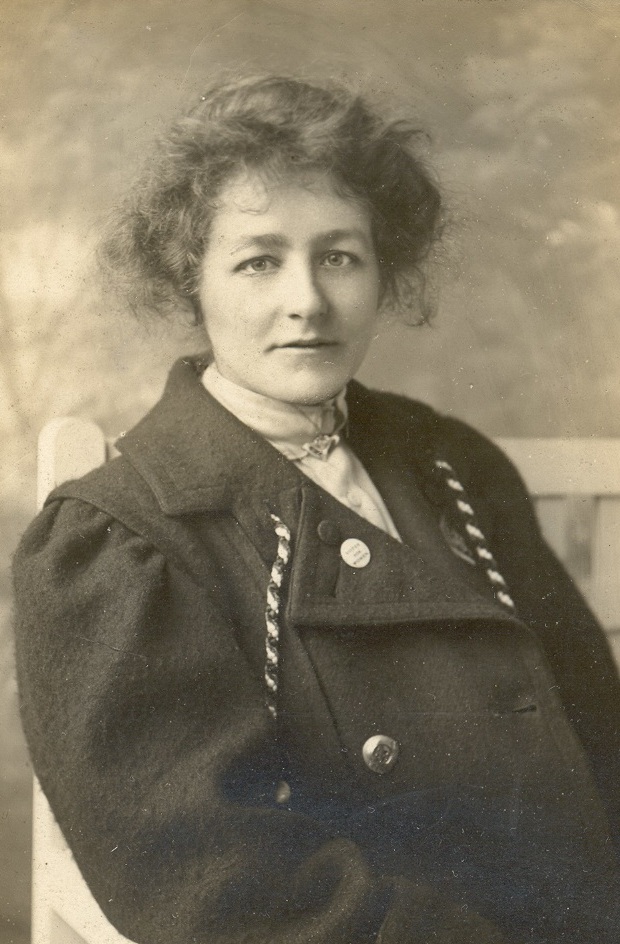
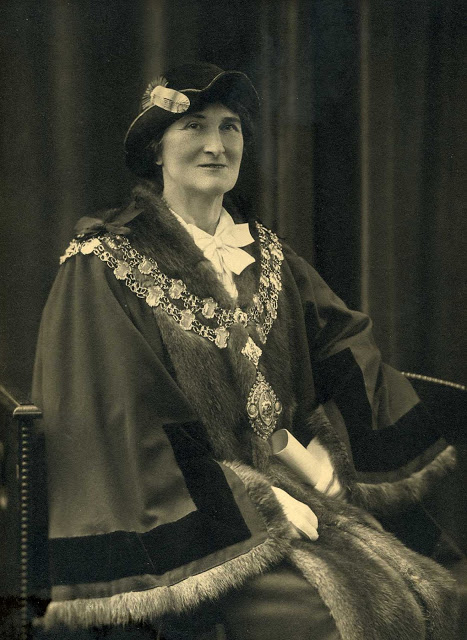
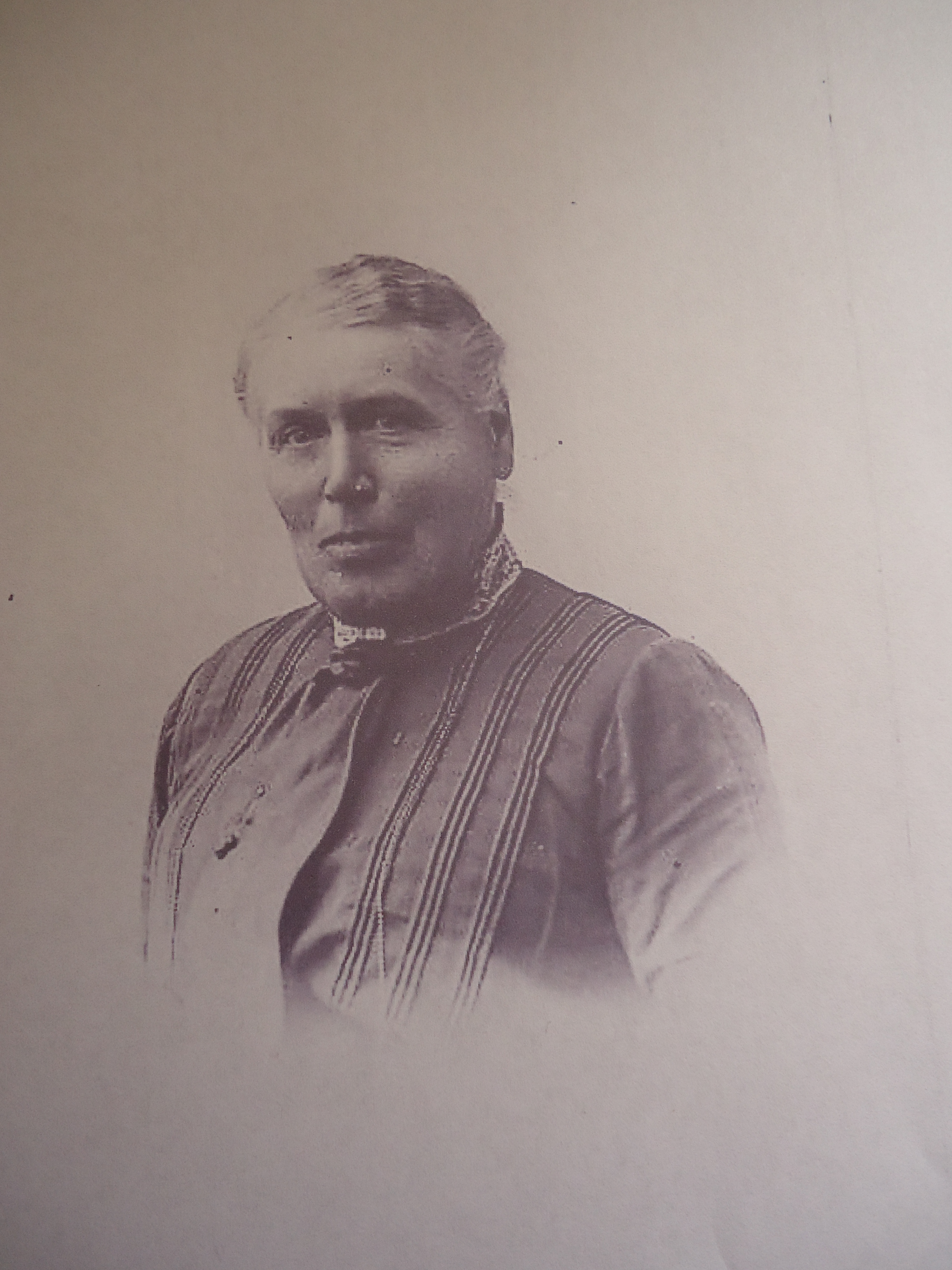
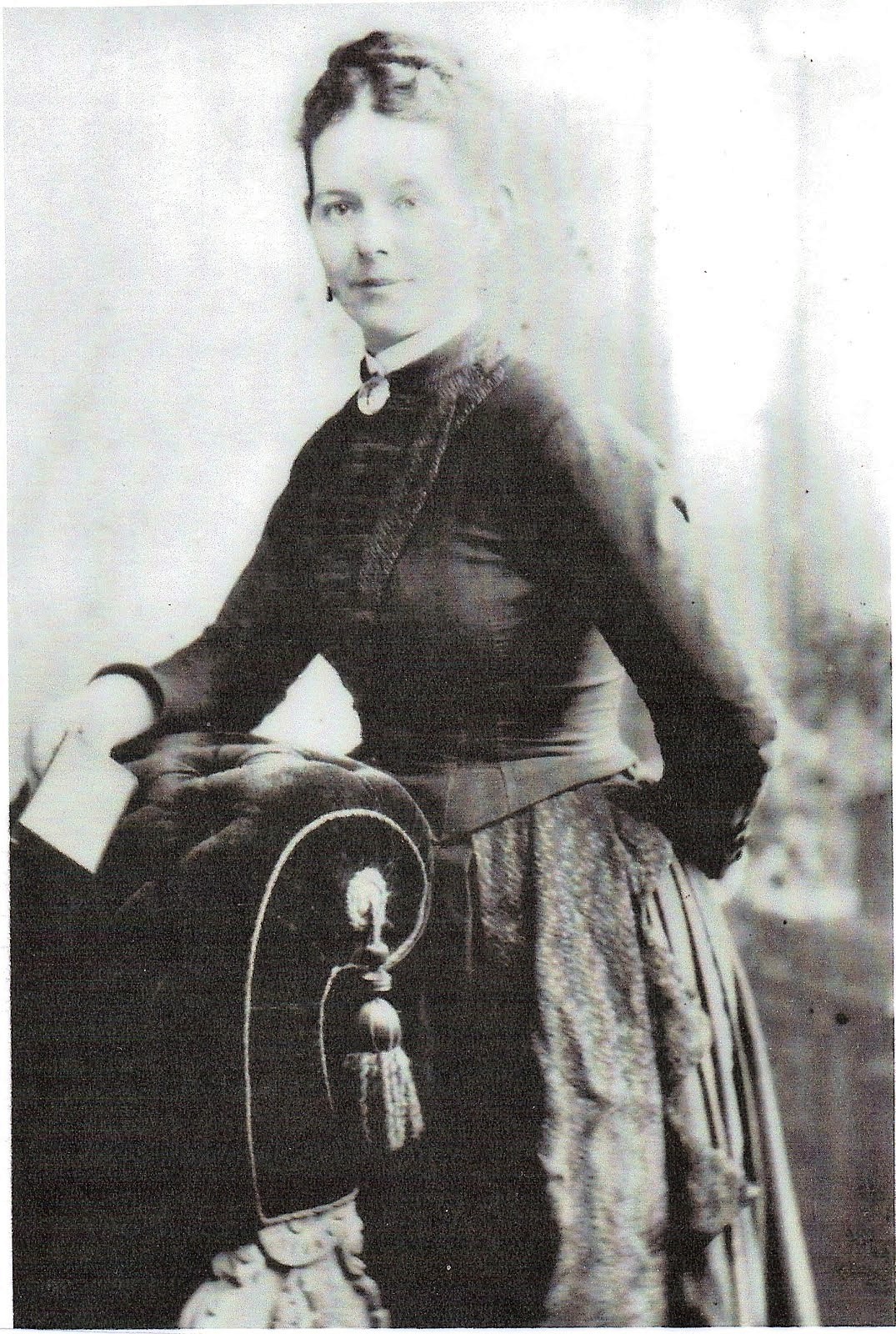
Our next walk on Sunday June 23 will include the launch of my recently published book – Struggle and Suffrage in Swindon – Women’s Lives and the Fight for Equality.
The cemetery opened in 1881 and closed in the 1970s. There are more than 33,000 people buried there and I think its probably a fair estimate to say that half of those are women.
The vast majority of the women buried in the cemetery were only remembered by their families, until they too passed out of living memory. Thousands of them have no headstones and no memorials.
The timeline for my book is 1850-1950, a period of incredible social and political change for women – yet it is still often difficult to find out about the lives of ordinary women.
When you are tracing your Swindon family history in the 1851 census you will most likely find your female ancestors recorded as ‘boilermaker’s wife’ or ‘carpenter’s wife’ or more often than not there will be just a blank space under occupation.
In 1851 the census enumerators were instructed not to record women’s work if it was part time, seasonal or if they worked in a family business, which pretty much rules out most of the jobs in which women were employed.
Working class women didn’t leave memoirs or books or letters. They didn’t have the time or the opportunity. These ordinary women, the ones who didn’t do anything life shattering (except raise the next generation) leave little evidence of their existence.
It is the story of these women that I like to tell, and I’ve made some extraordinary discoveries during the course of my research.
Join me at Radnor Street Cemetery on Sunday June 23 for a book launch followed by a guided cemetery walk with Andy and Noel. Meet at the Cemetery Chapel for 1.45 pm.
Edith New – Swindon born Suffragette
Sheila White – Factory girl
May George – Swindon’s first female Mayor
Fanny Catherine Hall – School teacher
Jane Dicks nee Tuckey – buried in a pauper’s grave
published courtesy of Local Studies, Swindon Central Library
The re-imagined story …
I will admit to having a grudging admiration for Mr. James Hinton, but I wouldn’t say I actually liked him. We’ve done business together on a couple of occasions and he’s very shrewd. He strikes a hard bargain and you have to respect him for that. And he works hard; the stamina of the man!
He’s been in the news most recently for offering up a piece of land on which to build the new cemetery. Some say he has gifted the land, but in fact he has sold it to the Burial Board. He’d probably like it to go down in history that he was a generous benefactor, but he’s sold it at a very competitive price. As the debacle of the cemetery question needs a quick resolution his fellow members on the Board were happy and grateful to accept the offer.
I’m quite surprised he didn’t win the contract to lay out the cemetery and construct the requisite buildings, but perhaps he didn’t put in a tender. Perhaps that would have been an audacious step too far. Next would have been a vote to name the new burial ground the James Hinton Municipal Cemetery.
But I will admit, I secretly quite admire the man.
The facts …
‘Mr Hinton stated that he would assure to the Board a free right of way to the proposed site for a cemetery over Stafford St., and Dixon St., and a right of way over Lansdown Road (from the Sands to cemetery over or 11 feet road) marked green on plan & over Radnor Street & Cambria Bridge Road to Fleetway.’
Swindon Advertiser July 1, 1880
The Cemetery – The Clerk reported that the Cemetery Committee had accepted the tender of Messrs Phillips, Powell and Wiltshire for laying out the cemetery and doing the necessary buildings for the sum of £5,390 10s. Detailed plans of the works were placed on the table and it was said the same was now in active operation.
Swindon Advertiser April 9, 1881
Death of Ald. J. Hinton
A painful sensation has been caused throughout the town by the news of the death of Alderman James Hinton, of The Brow, Victoria Road, Swindon…
For some time past it had been known that Mr Hinton had not enjoyed what may be termed the best of health, and on several occasions recently he had to resort to medical care, but no one, even those nearest to him, ever thought for one moment that he would be stricken down with such painful suddenness…
The deceased Alderman was 65 years of age. He was essentially a native of Swindon having been born in Newport Street in 1842. He had been for very many years intimately connected with the moving forces of the Borough, and took a keen practical interest in its commercial developments. There is not a class in the town, no matter what their religious or political opinions may be, but what will deeply deplore the loss of a public man whose best energies were given to the service of the community in which he lived.
The deceased Alderman’s career was one characterised by much interest, inasmuch as by his own industry and business acumen he rose from a somewhat humble position to one of comparative affluence…
The deceased Alderman became well known too, for his judicious speculative undertakings. Important estates, capable of considerable developments, were laid out by him, notable amongst which was the Kingshill building estate laid out in 1879. He became a large owner of land, enterprise dominated his thought and action followed; money flowed in and accumulated, and by dint of patience and perseverance Mr Hinton emerged from the obscurity with which Newport Street and the butcher’s shop had somewhat enshrounded him into the full light of prosperous, active life…
As Mr Hinton became absorbed in the growing interests of the town, further important undertakings came in his way. In conjunction with Mr Haines, he had the contract for constructing the Swindon and Highworth railway, which upon its completion was acquired by the GWR Co. During his speculative undertakings Mr Hinton did not at once relinquish the auctioneering profession, in which he was eventually succeeded by his son, Mr Fred Hinton…
It is about 30 years ago that he was elected on the then New Swindon Local Board, taking the place of the late Mr J. Armstrong, who was for some time Loco. Superintendent at the GWR Works, Swindon…
The old Local Board existed up to the year 1894, when the District Councils’ Act came into operation, and Mr Hinton then succeeded Mr T. Brain as the Chairman of the Council. He represented the East Ward, and did not suffer defeat until 1896, on which occasion he was touring in Australia, and was as a matter of fact unaware that his name had again been submitted to the electors…
In 1900 the Charter of Incorporation was granted to Swindon, and that august body, the Town Council, was constituted. Mr Hinton once again entered the arena of active local life, still representing the East Ward. He was elected a member of the Wilts County Council on its formation in 1889, and was a member of that body up to the time of his death. It was only the other week that he was returned unopposed for the East Ward. He was for four years a member of the Board of Guardians in the time of the late Mr William Morris, who was then the proprietor of the Swindon Advertiser. He was Swindon’s fourth Mayor, and it was, of course, largely in consequence of his associations with the almost phenomenal development of the town that his acceptance of the Mayoralty was invested with exceptional interest…
Mr Hinton was a Freemason, and was a member of the Gooch Lodge. He was also a Forester, being initiated an honorary member of “Briton’s Pride” Court at the Eagle Hotel during his year of Mayoralty…
He was raised to the Alderman’s bench on the same occasion that he was elected to the Mayoral chair. He was a man who possessed a broad and liberal mind, and by his death the town has lost a good and trusted and esteemed servant…
Extracts taken from James Hinton’s obituary published in The Swindon Advertiser, Friday, March 15, 1907.
James Hinton’s memorial in Radnor Street Cemetery
Coming next …
A Nice View – “It’s going to be an expensive business, getting buried in the new cemetery.”
published on Radnor Street Cemetery blog January 24 2019
William Morris – published courtesy of Desmond Morris
The re-imagined story …
Father adjusted his spectacles and carefully turned the pages of the Swindon Advertiser. “Mr Morris has written an excellent editorial,” he said. “I’d like to read it aloud to you.”
I sat in Mother’s chair by the kitchen range and picked up the mending from her workbox.
Tom and Owain looked up from their books; both were studying for a mathematics qualification at the Mechanics’ Institution. They had precious little time for their studies after a long day in the Works, but we all knew how important this matter was to Father.
He began reading in his measured, melodious voice, his Welsh accent still rich and strong after so many years living in Swindon.
“…But Swindon, as we have said, has drifted into that unique, and we do not hesitate to say disgraceful, position of having literally no place to bury its dead.”
The ‘cemetery question’ as it had become known, had raged for many years and was particularly personal to our family.
We worshipped in the Britannia Chapel, better known now as the Cambria Baptist Chapel. In the early days, when Father and Mother first moved here from Tredegar, the services were still delivered in the Welsh language. That was not the case so much now, but whenever the congregation met for social events the conversation in Welsh still buzzed around the room.
The stone-built chapel backed on to the canal and had no burial ground, which was a source of great sorrow to those who worshipped there. The same could be said for the members of the numerous other non-conformist chapels and churches across the town with no special place to bury their dead.
But now the problem had become even greater. The burial ground at St Mark’s was to be closed and there would then be no burial places in Swindon at all.
Mr Morris explained the long history of the cemetery question in great detail in this week’s edition of his newspaper. Anyone unfamiliar with the disgraceful story would find it difficult to believe, but for my family it was close and personal.
Father had long been a member of the community who agitated for a separate burial ground where non-conformists could bury their loved ones to our own traditions by one of our own ministers.
When Mother died, we had no option but to lay her to rest in the waterlogged and overcrowded churchyard at St Mark’s. And when my eldest brother Gwyn passed away there was no room for him to join her.
“So now the Local Board members are rushing around like headless chickens, writing obsequious letters to the Queen’s ministers while the burial ground at St Mark’s is closed and the people of Swindon have nowhere to bury their dead,” said Tom.
Father folded the newspaper and placed it in his lap. He removed his spectacles and I noticed again how careworn he looked these days, much older than his years.
“My greatest sorrow is that when my times comes, I shall be unable to lie at rest with your mother.” I reached across to touch his hand. “But God willing, Swindon will eventually get its own burial ground, free from the constraints of the established church.”
Victorian non-conformist churches and chapels in the Swindon district.
Top row, left to right: Salvation Army Citadel, Devizes Road; Railway Mission, Wellington Street (demolished); Primitive Methodist Chapel, Butterworth Street.
In 1869 the people of New Swindon went to the polls to vote upon the question of a new cemetery. More than 480 votes were cast, 153 in favour of a new cemetery, 333 against, influenced no doubt by the Great Western Railway Company’s announcement that they intended to oppose the proposal.
The Wilts & Gloucestershire Standard reported – ‘The question, therefore, resolves itself into a sentimental grievance on the part of the Dissenters, who object to be buried in the churchyard. The proper course to have pursued would doubtless have been for the Dissenters to form a company, as was suggested by one of the speakers at a former meeting, and not to put an unnecessary tax on Churchmen and Dissenters alike.’
But the cemetery problem did not, and could not, go away. There were more meetings and discussions and William Morris continued to publish letters in his newspaper, the Swindon Advertiser. Then, more than eleven years later a crisis situation was reached.
The Editorial
“Swindon, with its eighteen or twenty thousand of population, is drifting, or rather had drifted, into a position which even the smallest of communities might desire to avoid. For long anterior to the time when it was counted a public duty to decently house the living, the work of providing a last resting place for the dead was undertaken, and has always been most religiously adhered to. But Swindon, as we have said, has drifted into that unique, and we do not hesitate to say disgraceful, position of having literally no place to bury its dead.
A fortnight since we published in these columns a letter addressed to the vicar and churchwardens of St Mark’s, New Swindon, from the Home Secretary, in which the following sentence occurs. – “I hereby give you notice by direction of the Right Honorable Sir William Vernon Harcourt, one of her Majesty’s Principal Secretaries of State, that it is his intention to represent to Her Majesty in Council, that for the protection of the public health no new burial ground shall be opened in the parish of New Swindon, in the County of Wilts, without the approval of one of such Secretaries of State, and that burials be discontinued forthwith and entirely in the parish church of St Mark’s, New Swindon, in the County of Wilts; and also in the churchyard, except as follows: “In such vaults and graves as are now existing in the churchyard, burials may be allowed, on condition that every coffin buried therein be separately enclosed by stonework or brickwork properly cemented.”
This, we know, is practically to close all means for burying the dead in the ecclesiastical district of St Mark’s, New Swindon, for there is absolutely no other place beside the churchyard of St Mark’s in which interments can take place.
Then, as to the churchyard of the Old Town district. It has but very little more burying space left than has the churchyard of St Mark’s. So full has the yard become, and so far have the graves advanced westwards, the interments having been commenced in the eastern part and gradually worked on westward, that poor Cook, the unfortunate man who, the other day, was found dead in the snow at Walcot, now lies in his grave within ten or twelve yards of the very spot where he left his cart in Brock-hill on the night of the dreadful snow storm.
It cannot be long before, in the interest of the public health, this burying place also will be peremptorily closed. And what have we then? Absolutely nothing in the shape of accommodation for the burial of the dead out of the population of a parish of from eighteen to twenty thousand inhabitants: Is there in the whole country another town in such a pitiable, or, rather, disgraceful, position?
In addition to the two churchyards, there are, or rather have been – for the bodies have been sometime since removed from one of the places, the ground being required for building purposes – four other burial places connected with Non-conformist chapels – if, indeed, a strip of land, about ten feet wide, between the front of a chapel and a public street, can be called a burial ground. And, then, one of the two remaining graveyards – the old Independent yard, in Newport street, has been closed for very many years, thus leaving one place only in the parish in addition to the two churchyards – the small yard in Prospect belonging to, and exclusively used by, the Particular Baptists, for the interment of the dead of the whole parish, which, on a very moderate computation, cannot be less than from two hundred and fifty to three hundred per annum.
We believe we are within the mark when we say that by utilizing every foot of ground in all the available graveyards in the parish there could not be made room enough for the decent burial of one year’s dead without using ground “over again” and disturbing the remains of those who have pre-deceased friends and relatives still living only a few years.
And this is what a place like Swindon has come to! We hesitate not to say it is simply disgraceful, and when the reason for it all is understood, no right minded person can help pronouncing it contemptible. In answer to this it may, no doubt, be said Swindon has a Burial Committee of the two Local Boards, to be some day converted into a Burial Board, and that the two Local Boards are acting in concert with a view of providing a Cemetery, that they have submitted plans, and have made an application to borrow ten thousand pounds sterling for the purpose of carrying out the works.
But what can all this be worth in the estimation of those who are acquainted with the parochial history of Swindon for the past ten or twenty years. What, indeed, can it be worth in the face of such reports of the proceedings of the Local Board as we had to publish in our last issue? The question of providing a public Cemetery is no new thing in Swindon. Twenty years ago it was regularly and persistently advocated on the ground that without such a convenience the inhabitants did not enjoy that full religious liberty to which they were entitled, and which the providing of a public Cemetery would give them. But the insidious priestly intrigues of those who are interested only in the narrowest and most exclusive of sectarian bigotry always succeeded in crippling every effort that was made.
In Swindon, for many years past, there has appeared no possible chance of carrying out so important a work as that of providing a public Cemetery on the simple basis of the duty we owe each other on the platform of equal rights in all matters of conscience and religious liberty. There would seem to have been a sad falling off in the stuff of which the present race of Nonconformists are made compared with that of those days when the oldchapel and graveyard in Newport street was first built and opened. There must have been a time in the history of the place when men were ready, if need be, to suffer for conscience sake. But there also has been a time when those who dared to resist the fascination of the sanctimonious look, the hypocritical whine, or an imaginary wishing of saintly hands, have had to submit to a social ostracism, and to find themselves the subject of lies and slanders innumerable, and of all uncharitableness.
But it has not been in the interest of an arbitrary and dogmatic religious intolerance alone that the providing of a public Cemetery for Swindon has been opposed. For the past twenty years or more no plan or scheme for the general benefit of the parish has been brought forward without its being met by the claims of certain property in the parish to be exempt from liability to contribute to any of the costs that might follow. In the interest of these claims the parish was divided into two Local Board districts, with a rural district outside of both districts, but still within the parish. We doubt if another such extraordinary division of a parish containing an area of 2,766 acres only is to be met with in the United Kingdom. And the same thing is now being suffered in the matter of the Cemetery question. The two Local Board districts are united for the purposes of a Burial Board. But the Walcot and Broome Farms are excluded, and by means those living on these farms are going to obtain their right of burial we are at a loss to know. This, however, may be a small matter compared with the all important one of the present position of the parish with respect o the burial of its dead. Again and again, for years past, efforts have been made to avoid the difficulty in which the parish is now placed. Public meetings were held, resolutions passed, and committees formed, but it was always so managed that nothing further could be done. At one time elaborate statistics and statements were read to show that the existing burial space would be sufficient for years to come; at another time the always “sure card” of increased rates and unnecessary expense was played, and always, with the same result as now, a great deal being done “on paper,” but nothing anywhere else. The present position of the parish in the matter is so well described in the pathetic appeal addressed by the Swindon New Town Local Board to the Local Government Board in London that we cannot do better than reproduce it in this place. It was as follows:-
1. That your petitioners, the Swindon New Town Local Board, in conjunction with the Old Swindon Local Board, have, subject to the approval of the Local Government Board, agreed for the purchase of a plot of land within their district to form a cemetery for the use of the inhabitants of their district and of the district of the Old Swindon Local Board, which site has been approved by Her Majesty’s Home Secretary, and a local enquiry was held by an inspector, appointed by the Local Government Board, on the 23rd of November last, in reference to the application of the said Local Board for the sanction of the Local Government Board to a loan for the purpose of laying out and construction of such cemetery.
2. That, in accordance with the instruction of the said inspector, on the 24th day of December last your petitioners, the said Local Boards, forwarded plans with estimates in details of such cemetery, and at the same time applied to the said Local Government Board for sanction for loans amounting to £10,000 to enable them to lay out and construct the said cemetery, but no answer has as yet been received to their application.
3. That your petitioners are only waiting for the sanction of the Local Government Board to such loan for the purpose of enabling them to carry out the necessary works, to at once commence the laying out of such cemetery, and the preparation of the same for the reception of interments.
4. That your petitioners have been shown a notice sent to the vicar and churchwardens of the parish of St Mark’s, New Swindon, informing them of the intention of Her Majesty’s Principal Secretary of State to apply to Her Majesty in Council for an order discontinuing burials forthwith and entirely in their churchyard, except as therein mentioned.
5. That as there is no other burial ground within the district of Swindon New Town (which contains a population of 15,000), there will be no place for the inhabitants to bury their dead until the proposed new cemetery has been laid out and prepared for interments.
6. That the closing of the said churchyard before such cemetery has been laid out and completed will cause great inconvenience and hardship to the inhabitants of the district of Swindon New Town.”
It will be in the recollection of our readers that this was to have been a joint memorial by the Local Board and the Vicar and Churchwardens of St Mark’s. But for a reason which will be found embodied in a letter, which we publish in another column, the Hon. and Rev. M. Ponsonby refused to sign the memorial. Indeed, it is clear from the letter that it is due to the Vicar’s action that the order for the closing of the churchyard for interments has been brought about.
We admit we cannot read the terms of the order “that burials be discontinued forthwith and entirely” as the Hon. and Rev. M Ponsonby interprets them when he says – “The order for closing will probably not be issued for a few months,” theordinary meaning of the word forthwith being given in our dictionaries as immediately; without delay; directly. But otherwise the Vicar’s letter is most satisfactory, and enunciates a doctrine in every way more satisfactory than that taught in the time of his predecessor to the effect that “when the yard was full the ground might be gone over again.” The Hon. and Rev. M. Ponsonby has come very recently on the scene of action, and is therefore untrammelled by the course hitherto so persistently pursued by those who, in the interest of Mother Church, have disregarded an absolute sanitary requirement, and have so successfully played the part of the dog in the manger for no better purpose than that “the Church” might have the exclusive right of burying the dead.
But again we ask: How does the parish stand in this matter? A loan of £10,000 has been applied for, and that sum the parish – that is, the parish less Walcot and Broome Farms – will have to repay. Land has been secured upon which this £10,000 will be expended in a hurry, and money spent in a hurry on public works is too often little better than squandered. But worse by far than this is the prospect of the parish having a year’s dead thrown on its hands with nowhere to place it. Progress is bound up hand and foot in that most tenacious of all bondages – red tape; on sanitary grounds every burying place in the parish ought to be peremptorily closed forthwith, and men, women, and children will continue to die. The work has now to be done under the most ruinous of conditions, and under the most unfavourable of all circumstances, and for no better reason, we hesitate not to assert, that in the past, reasons, which should have had no influence with reasonable and rational men for one moment, have been allowed to be all powerful and to stand in the way of anything and everything being done.
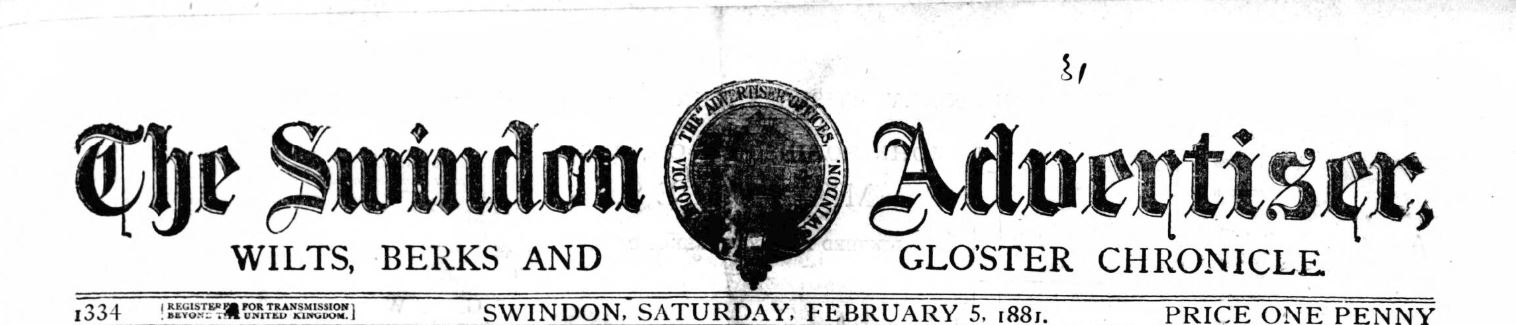
The Swindon Advertiser – Saturday, February 5,1881.
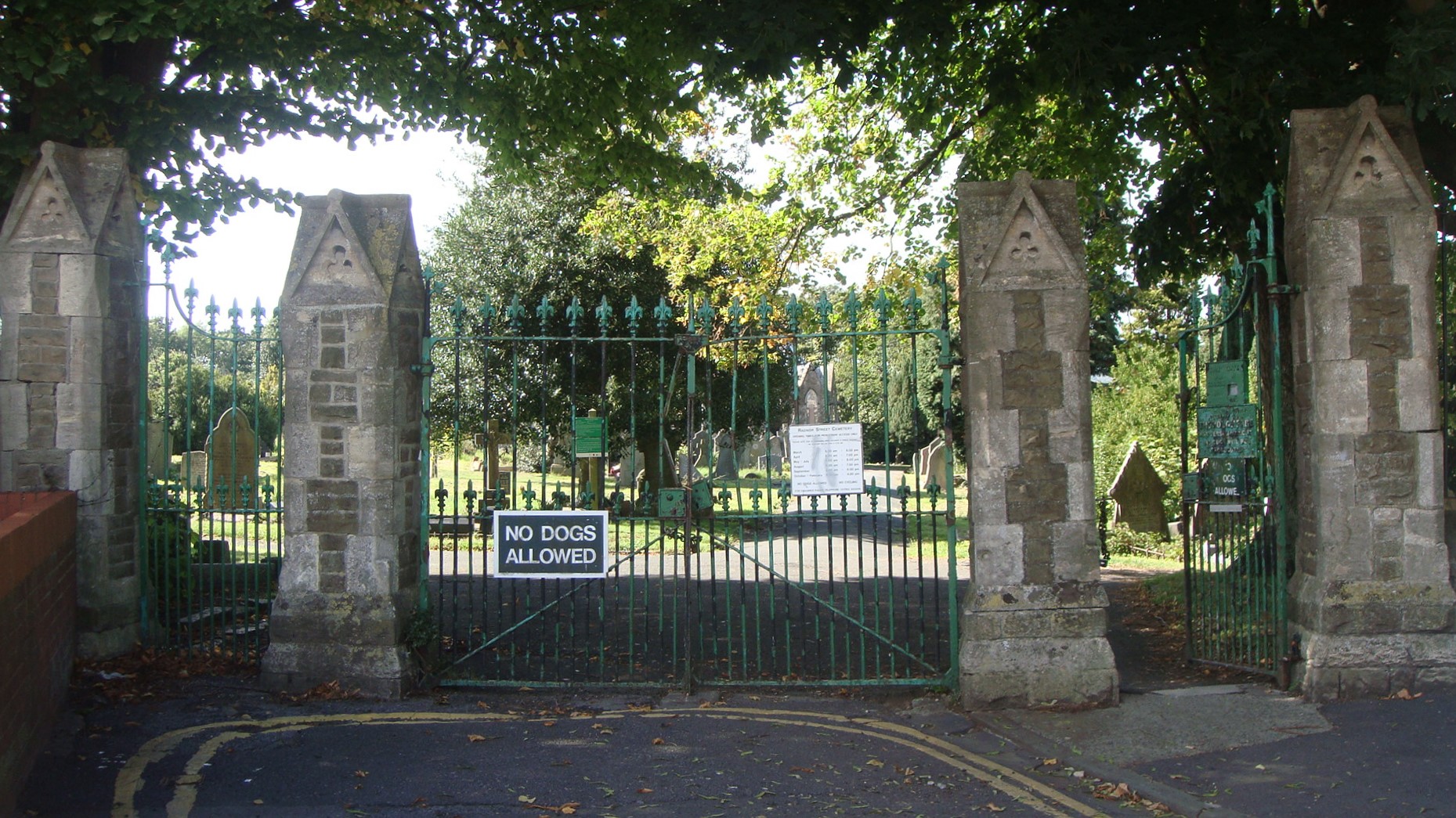
Kent Road Cemetery gate
Coming next …
James Hinton – a good and trusted and esteemed servant – I will admit to having a grudging admiration for Mr. James Hinton, but I wouldn’t say I actually liked him.
published on Radnor Street Cemetery blog January 17, 2019.
Welcome cemetery followers to this new blog launching today.
Radnor Street Cemetery tells the history of Swindon. The civic dignitaries and members of the Great Western Railway hierarchy; the boilermakers and platelayers; the philanthropic benefactors and trailblazing women; the teachers and tradespeople and the 104 servicemen who lost their lives as a result of their military service in two world wars. The ordinary men, women and children of the town.
This blog will combine research and fictional, re-imagined stories to create an account of those lives.
So, if you enjoy local history with a different slant, please read on. You might like to read the ‘essential information’ first.
The re-imagined story …
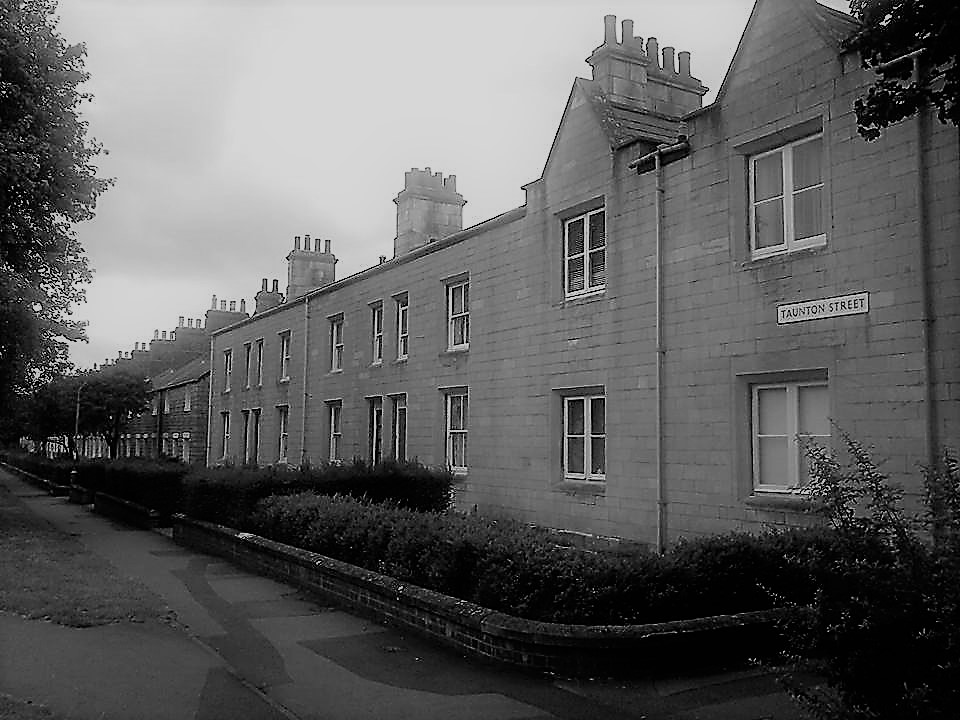
Night had drawn in early on a grey, sullen afternoon. A biting, north easterly wind accompanied me home on the walk from Old Swindon to Taunton Street, chilling my body but not so much as the events of that afternoon had chilled my heart.
A lamp was lit in the front room window. Emily opened the front door, clutching her shawl about her. I removed my coat, shaking off a dusting of snow. My worn garment served little protection against the elements and I badly needed something thicker, newer, but the boys needed boots and they must come first.
I took my seat before the range and warmed my hands as Emily brewed a fresh pot of tea.
“How did the meeting progress?”
“There were a great many people there. The meeting had to move from the Vestry to the Town Hall to accommodate the crowd,” I cradled the warming mug in my cold hands.
“Was Mr Morris there?”
“He was, and so was anyone of importance. Mr Hill had a lot to say as did Mr Hurt. And a lot of opposition to raising the parish rate was made in consideration of the poor people.”
“So little heed was made of our wishes?” Emily sat down wearily on the chair opposite and I wished I could have brought her better news.
“There was some mention of dissenters objecting to the burial of their dead in the parish church yard. However greater emphasis was given that it was the gentlemen’s considered opinion there was sufficient burial space in Swindon for years to come and the condition of the waterlogged graveyard in Old Swindon was an exaggeration.”
“That is an end to the matter then.”
“There is to be a poll next Saturday at the Mechanics’ but I am not hopeful.”
We sat in silence.
Twelve dissenting chapels, Mr Pruce had noted at the Vestry meeting. Swindon had two churches and twelve chapels. I could name them all. Chapels with a growing congregation, a Sunday School and Bible classes and volunteers who helped where there was a need, not only in the New Town but in the poor streets of Old Swindon, and yes there was poverty in prosperous Old Swindon. Twelve chapels but nowhere to bury our dead in the beliefs we held dear. Local dignitaries boasted that Swindon had an ethos of acceptance and tolerance but maybe that did not extend to religion. I considered that at the meeting this afternoon there had been more than a whiff of prejudice.
“So that’s an end to it then,” said Emily as she dampened the hearth and made everything safe for the night.
“Let us see what the result of the poll will bring,” I said, but I feared she was probably correct.
The facts …
A CEMETERY FOR SWINDON. The question, shall Swindon have a cemetery, and in this matter be put on a par with other towns and villages? has again cropped up.
There no single question where the principles of right and good taste are more clear than they are in this question of a public cemetery. There is no call made by the religious liberty we as a nation enjoy more emphatic than is the call that each religious denomination should enjoy the right to consign its dead to the earth after its own fashion. Yet there are to found those who can stand in the way of this right being granted, and who can prate loudly about increased burdens on the shoulders of the poor, and such like prattle, without the real interests the poor being for one moment seriously thought of, and we are therefore to see a pretty squabble before this question, ” Shall Swindon have a Cemetery” is settled.
A short time since a proposition was before the nonconformist bodies of our town for providing a purely unsectarian cemetery, open to all parties, influenced by none. This plan it was perfectly within the power of those whom it would have served to have adopted, and have made successful. Had it been adopted it would have carried with it this recommendation—it would have been in strict conformity with the very principles of nonconformity: it would been established on purely independent grounds, and no man against his will would been compelled to pay a single farthing.
But no sooner was this independent course suggested to those who profess to love and live by independency, than there were found those who could cry out most lustily, “We don’t want to be independent; let tax others for that which we are asking.” The scheme was in consequence knocked in the head, and now we have the question, “Shall a cemetery be provided by a rate on all property within the parish claiming the attention of ratepayers.”
There is this to be said in favour of the proposition as it now stands before ratepayers: a public burying place is a public necessity, and should, therefore, be provided for out the most broadly collected public fund we have. The public weal demands that the dead body should be at once consigned to the earth this being so it surely can be no act of injustice if we call upon the public purse for funds to accomplish that which the public weal demands.
There is another aspect to this question to which we need not refer beyond this: In a town like Swindon, with its two churches, established as by law, and its twelve chapels, established in conformity with the consciences of men, that religious liberty upon which we so much pride ourselves, and which has been fought for, through many generations, cannot said truly to exist among us long as we are deprived of the opportunity of burying our dead after our own fashion; so long as it remains the power of one man to harrow and distress the feelings, by an arbitrary act. Of those who dare to hold independent views on some mere matter of detail in the great scheme of God’s religion. But, as we have said, we are to have a fight over this cemetery business, and Saturday next is appointed for the first great marshalling of the forces.
There was a skirmish on Saturday last, but it was mere babbling piece of business; the fight has yet to come.
Extracts taken from a report in The Swindon Advertiser published Monday February 1, 1869
Coming next …
Mr Morris’s Editorial – The ‘cemetery question’ as it had become known, had raged for many years and was particularly personal to our family.
published on Radnor Street Cemetery blog January 10, 2019.
















 Radnor Street Cemetery