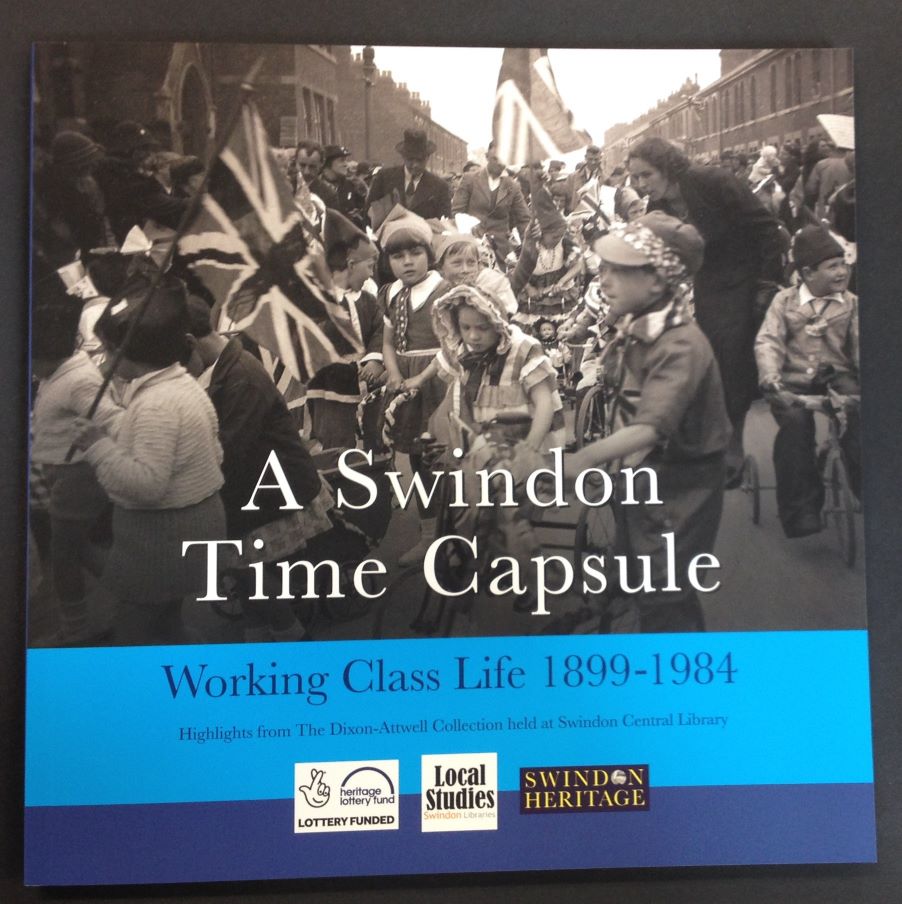
If you’re looking for a last minute Christmas gift for a history loving member of the family then I can recommend A Swindon Time Capsule.
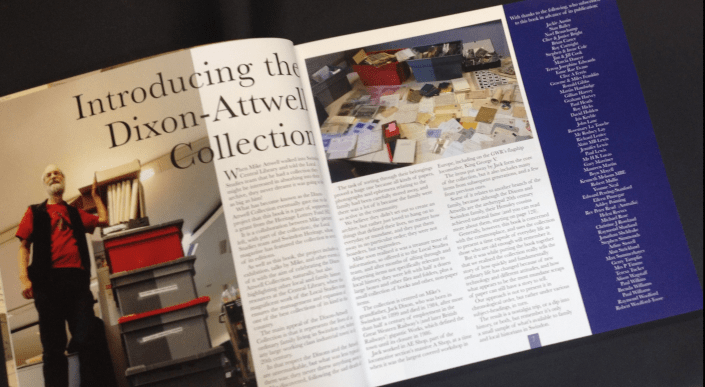
In 2018 the Swindon Heritage team in partnership with Mike Attwell and Local Studies, Swindon Central Library (supported by funding from the HLF) produced an *award winning book entitled A Swindon Time Capsule: Working Class Life 1899-1984.
The book came about following a donation to the Swindon collection made by Mike Attwell when he cleared his family home following the death of his mother Audrey.
Audrey was the daughter of Jack Dixon, a second generation Swindonian whose grandparents George and Mary Hemsley and Francis and Martha Dixon migrated from the North East of England between the years 1840-1850.
George Hemsley worked as a fitter and turner and Francis Dixon as a boilermaker who with their wives were pioneer residents in the new railway town. Both men were active members of the New Swindon society, George was a member of the Liberal & Radical Association and co-founder of the New Swindon Industrial Co-operative Society. For more about George’s life see.
Francis Stephenson Dixon married Martha Charlton at the church of St. Andrew, Newcastle on May 21, 1843. By the time of the 1851 census they were living in Taunton Street with their two children, John 7 and 11 months old Ann.
And like so many of the early railway settlers in Swindon, members of the Hemsley and Dixon families found their final resting place in Radnor Street Cemetery. Francis died at his home, 10 Faringdon Street, on January 2, 1884 aged 63. The cause of death is recorded as cardiac disease. He was buried on January 3 in plot D8283 where his wife Martha followed him the following year.
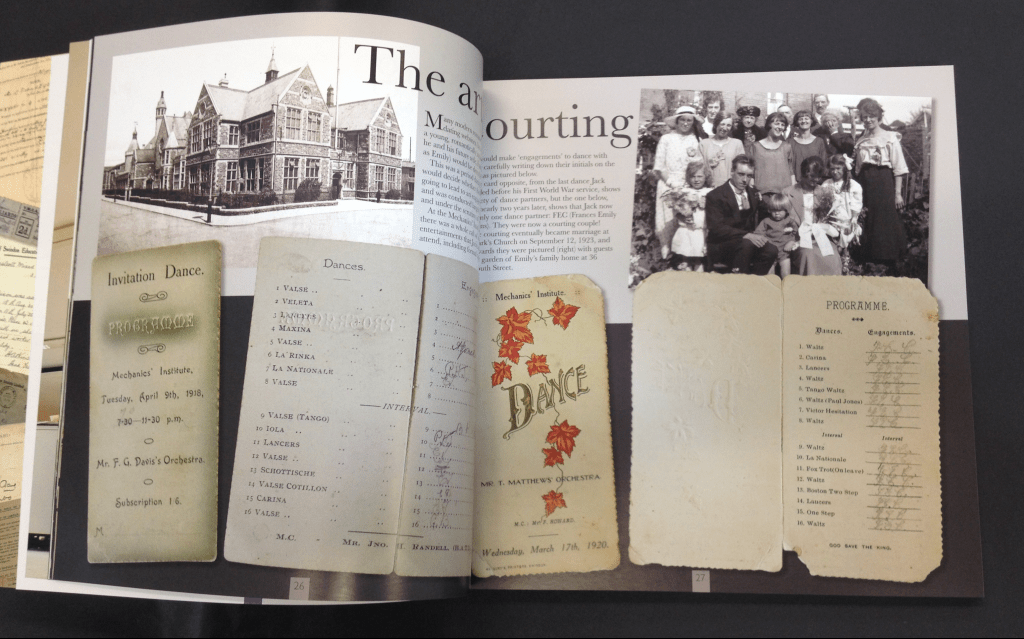
The Dixon-Attwell family, apparently threw nothing away. As a result ordinary ephemera such as clothing catalogues and dance cards have survived along with apprenticeship indentures and military service records and provide a unique example of everyday life from 1899-1984. A selection from this vast collection can be viewed here.
*In 2019 a Swindon Time Capsule won the Alan Ball award, which rewards local organisations for their work to promote and share local history. Copies of the book are available from the Library Shop.
My mum had a fantastic memory. She never forgot a birthday or anniversary and she could remember her Co-operative Dividend Number until the day she died.
She used to shop in the Co-op in East Street and knew Mr Hemsley, the secretary, well. George Hemsley was a railwayman from Gateshead and an influential character in the early days of New Swindon.
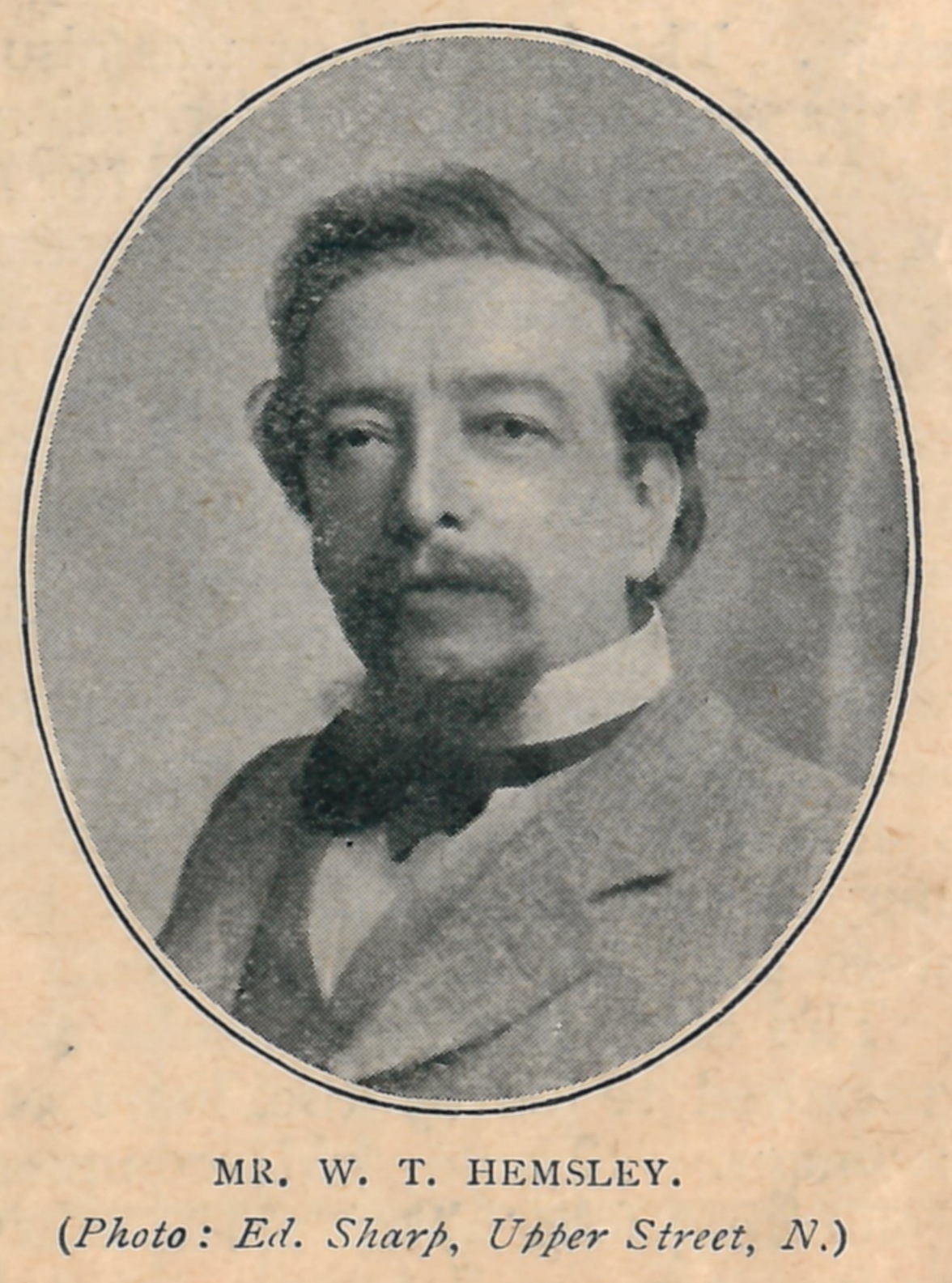
I began my fitter’s apprenticeship on the same day as Mr Hemsley’s son William, but while I spent 50 years in the Works, William Thompson Hemsley went on to enjoy a very different career.
I was pretty good at sketching (I’d even considered a draughtsmen’s apprenticeship at one point) so when William told me he was starting drawing classes at the Mechanics’ Institute I decided to join him. I had no idea just how good he was though, and before too long he was actually teaching the drawing classes.
He began his scenic art career at the Mechanics’ and it was my proud boast that I helped him paint the theatre scenery on one occasion. I had little to do with the design, just followed instructions, but it was an interesting project to be involved in and something to tell the grandchildren.
William kept in touch with Swindon, even after he became famous. We used to meet up for a pint in the Cricketer’s when he came back to visit family.
George Hemsley died on November 12, 1888. My mum always mentioned him on the anniversary of his death. My mum had a fantastic memory.
George Hemsley with his daughter and an unidentified man
The facts …
George Hemsley, a fitter and turner was an early arrival at the GWR Works, Swindon.
George was born on January 17, 1822 in Gateshead the son of William and Anne Hemsley. At the time of the 1851 census George was living at Quarry Field, Gateshead with his wife Mary and their 10-month-old son William. George most probably worked at The Quarry Field Works, a marine, locomotive and general engineering firm established by John Coulthard & Son in 1840.
By 1861 George and Mary were living at 6 Westcott Place with their six children, four of whom had been born in Gateshead. John Robert Hemsley, was the first to be born inSwindon in around 1858 which places the Hemsley family’s move to Swindon sometime between 1854 and 1858.
Tracking the family through the census returns we find them at 22 Reading Street in 1871. William Thompson Hemsley has followed his father into the Works where he is a fitter and younger brother John Robert’s job description is boy in foundry.
George was also co-founder of the New Swindon Industrial Co-operative Society.
George died at his home 22 Reading Street on November 12, 1888 aged 66. He was buried in Radnor Street Cemetery and his funeral arrangements were performed by Richard Skerten, a carpenter and undertaker.
Mary remained in the family home following George’s death, living with her widowed daughter Mary J. Rollins and her two granddaughters, plus Frederick Birch, a Grocer’s Assistant who boarded with the family. Mary died on December 19, 1899 and is buried with George.
‘Mr Hemsley was a staunch supporter of the local Liberal and Radical Association, frequently appearing on the platform at public assemblies and often putting his signature to the Nomination Papers of Liberal candidates at Parliamentary elections. He played a prominent part in the election campaign of Mr B.F.C. Costello in 1886, when the latter gentleman was opposed from the right by a Liberal Unionist and from the radical wing of the party by the Independent Liberal Sir John Bennett.’
A Drift of Steam by Trevor Cockbill
George Hemsley’s name appears on a list of more than 130 who formed a local committee at New Swindon to secure the election of Daniel Gooch in May 1865.
Swindon Advertiser May 22, 1865
Hemsley George
9 March 1889 Personal Estate £558 18s 11d
The Will of George Hemsley late of 22 Reading-street New Swindon in the County of Wilts Engine Fitter and Turner who died 12 November 1888 at 22 Reading-street was proved at the Principal Registry by William Thompson Hemsley of 57 Belvedere-road Lambeth in the County of Surrey Scenic Artist the Son and William Simpson of 7 Bangor terrace Jennings street New Swindon Engine Fitter two of the Executors
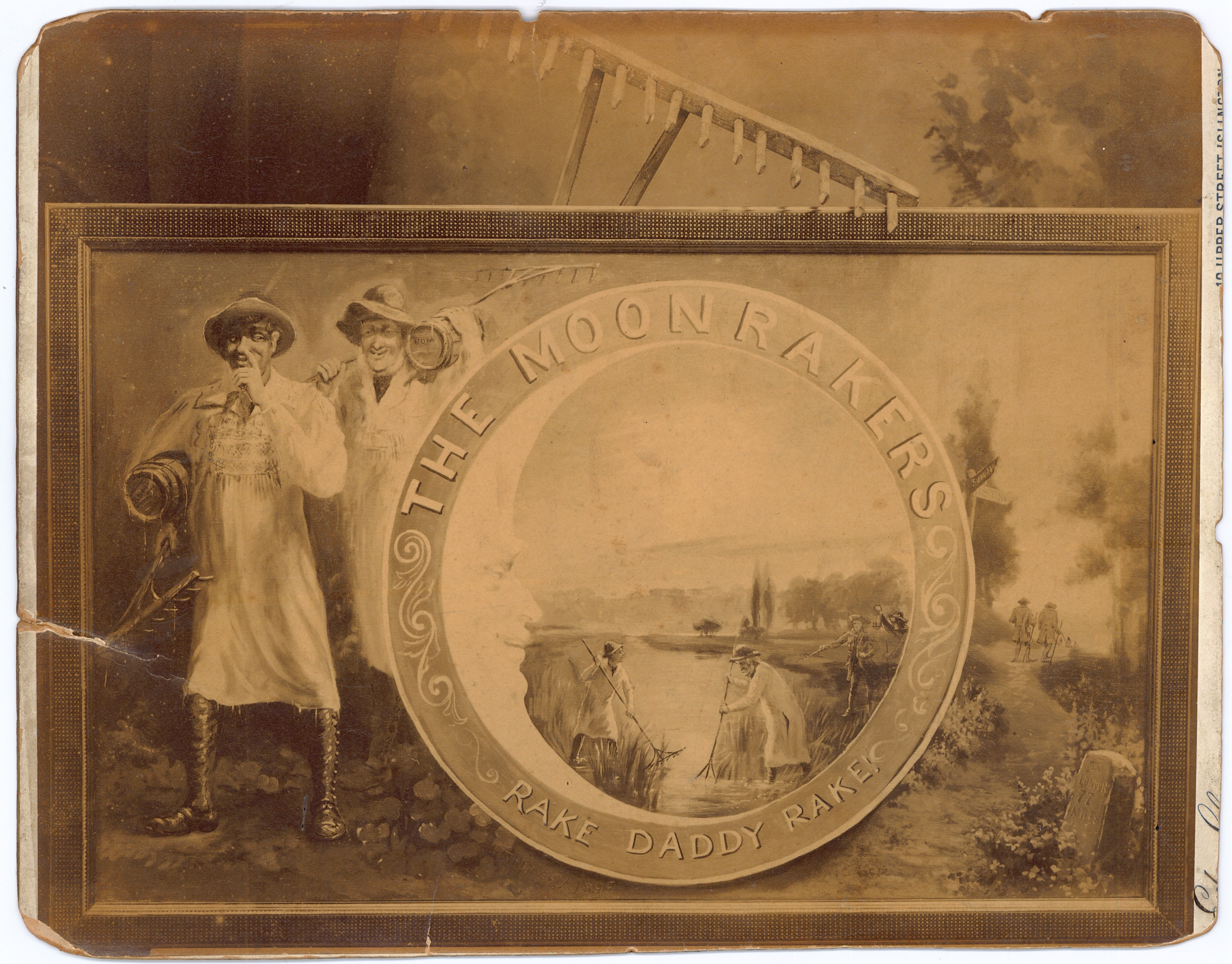
Probably W.T. Hemsley’s most celebrated local work was a painting of the Wiltshire Moonrakers that hung in the reading room at the Mechanics’ Institute for at least 35 years. This painting of Wiltshire yokels raking the pond to recover the contraband hidden there accompanied the Moonies Association when they met for their annual gathering in London.
Photographs published courtesy of Mike Attwell and Local Studies, Swindon Central Library.
Frank Nutbeem was born in Wroughton in 1895 the youngest son of Robert William and Mary Nutbeem. By the time of the 1911 census Frank and his two brothers were living with their widowed mother at 24 Shelley Street. All three young men were employed in the Works, Frederick 20 as a Coach Finisher; Claude 17 as a Brass Finisher and Frank 16 as a Screwing Machine boy.
Frank had begun work as a 15 year old machine boy on August 8, 1910 at a daily rate of one shilling and two pennies. He would remain working in the Machine Shop (No 15) his entire working life, except for his service in the RAMC during the First World War.
Mr G. Culling, chairman of the GWR Swindon Division of the St. John Ambulance Association stated that the tragedy of this accident was one with which, ‘had it been required of him, he could have so efficiently dealt.’
Fatal Accident in Swindon GWR Works
Death of Mr F. Nutbeem: Ambulance Stalwart
A verdict of “Accidental death” was returned by Mr. Harold Dale, the Wilts Coroner, at the inquest at Gorse Hill Police Station, Swindon, on Tuesday, on Mr Frank Nutbeem (45), of 61 Grosvenor-road, Swindon, who was killed instantly when he was drawn into a machine while at work in the Swindon GWR works on Saturday morning.
Evidence of identification was given by his brother, Claude Nutbeem, who said his brother had been in good mental and physical health before the accident.
Fractured Skull
Dr. Frumin, GWR Medical Fund, said that he was called to No 15 Shop in the GWR works about 11.10 a.m. when he found Nutbeem lying entangled in a machine. His head and face was crushed and his body was acutely bent. He was dead.
His injuries were a severely crushed dome, and fractured skull in front and behind.
Samuel John Owen, Highworth-road, Stratton St. Margaret, a machine foreman in No. 15 Shop, said that Nutbeem, who was a chargeman machinist, had been working a Holroyd four spindle axle-box boring machine for the past 18 months. He had complete charge of the machine.
Owen said that about 10.55 on Saturday morning he was told that Nutbeem was caught in his machine, so he telephoned from his office for ambulance men. A doctor was called, and soon arrived.
At the scene of the accident he saw Nutbeem had been carried into his machine.
He was on his back, and his head was underneath the “bar.” He appeared then to be dead.
Nutbeem was wearing a warehouse jacket of a grey coarse canvas material. These coats were long, and were worn by all the machinists, though it was not compulsory. The costs were bought from a private concern by the men themselves.
Nutbeem’s coat was found round the “bar,” which had a protruding cutter.
Heard a Shout
Stephen John Hunt, a machinist, of 15, Alfred-street, Swindon, said that he worked by Nutbeem.
On Saturday morning he heard a shout, looked up, and saw Nutbeem was in the machine. He rushed round, and stopped the machine, when he found that Mr. Nutbeem had become entangled.
Regret and sympathy was extended to the relations by Mr. Ray Hobbs, representing the NUR (Swindon branch). Mr Hobbs paid high tribute to Mr. Nutbeem for his work in connection with the GWR No. 3 Division of the St. John Ambulance Brigade.
Mr Dale said that it was an unfortunate case in which a very good worker who was thoroughly used to his machine, had been accidentally caught in it.
Mr. Nutbeem, who was married with a family, was a prominent St. John Ambulance Brigade worker. During the last war he was a sergeant in the RAMC and was attached to the Swindon Unit of the Field Ambulance.
An Appreciation
Mr G. Culling, chairman of the GWR Swindon Division of the St. John Ambulance Association writes:
By the death of Mr Frank Nutbeem, the GWR Swindon Division of the St. John Ambulance Association has suffered a great loss.
Qualifying for his first ambulance certificate in 1912, he served during the last war with the Swindon unit of the Field Ambulance of the RAMC, attaining the rank of sergeant. Upon the formation of the Old Comrades Association he became a popular member and retained his membership until his death.
Upon returning to civil life he became closely associated with those who at the time were organising the local division of the St. John Ambulance Brigade and was quickly promoted to the ranks of Sergeant, Ambulance Officer and Brigade Superintendent – a position he held until his retirement from that body a few years ago.
Frank held a remarkable record in competitions and for some years captained teams which were successful both in local contests and those organised by the GWR Company, and his Swindon team has on two occasions been one of the representative teams of the Company in the inter-railway annual competitions in London. He was leader in 1928 of the local Great Western team, who succeeded at Paddington for the first time in winning the Directors’ Shield, and they won the same trophy again in 1936.
During the years 1932-1936 he served on the Swindon Divisional Ambulance Committee, and shewed great ability in organising classes and instructing pupils in first aid, and was instructor to the Great Western Ladies’ Class when this was formed. These abilities were recognised by the local authorities, who since 1938 had utilised him as instructor at classes organised under the ARP scheme. He was also a keen worker in similar services organised by the GWR Company.
“Nutty,” as he was familiarly known to a wide circle of friends, has passed over – the victim of an incident of rare tragic intensity – in circumstances with which, had it been required of him, he could have so efficiently dealt. The esteem and regard in which he was held was shewn on Sunday morning, when over 150 ambulance men at the Bridge-street Institute joined with Dr. Hick and the Ambulance Committee in paying a silent tribute to his memory and as an expression of their deep sympathy for Mrs. Nutbeem and her two daughters in their loss.
He held gold awards for prolonged efficiency in first aid to the injured. Of him it can truly be said that his life was dedicated to the service of others, thus upholding the motto of the Order of St. John: “For the benefit of humanity.”
North Wilts Herald, Friday, 25 October, 1940.
Frank Nutbeem 45 years old, of 61 Grosvenor Road, died at the Great Western Works. The funeral took place on October 24, 1940 when he was buried in grave plot C1682.
You may be interested in reading about another St John Ambulance stalwart, Jack Dixon. It is more than likely that Jack and Frank Nutbeem served alongside each other, taking part in the various competitions at which both were so successful.
You can read about the life and times of Jack Dixon and the Dixon/Atwell family in the award winning book A Swindon Time Capsule – Working Class Life 1899-1984 by Graham Carter available from the Library Shop.






 Radnor Street Cemetery