Thomas Durkin – Irish haymaker

Image published courtesy of the Dixon-Atwell Donation and Swindon Local Studies

Sad death of an Irish haymaker

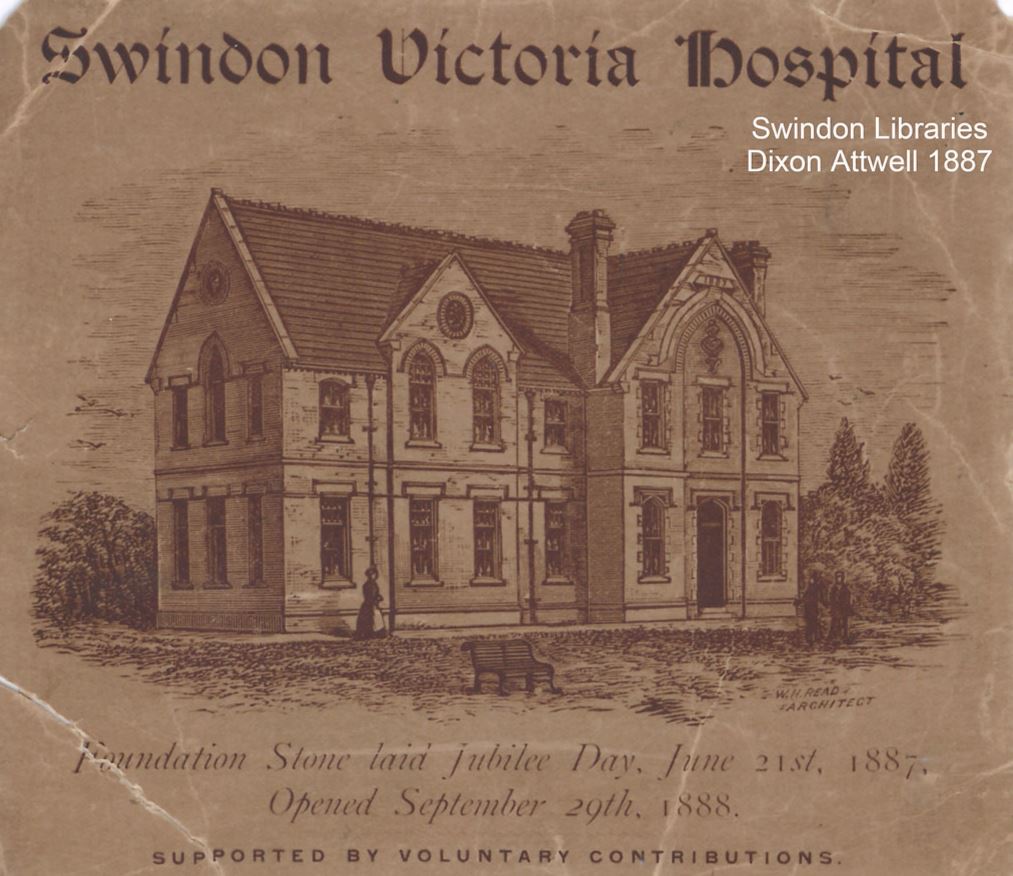
Mr Coroner Browne and a jury, of whom Mr George Wiltshire was foreman, held an inquiry at the Swindon Victoria Hospital on Tuesday evening into the cause of the death of Thomas Durkin, an Irishman, who died at the hospital the morning from injuries to his spine, received whilst at work the previous Thursday, under circumstances given in the evidence below.

William Durkin, deceased’s brother, said he and deceased and two other brothers came over from County Mayo, Ireland, last month to work for Mr S. Davis, of Rove’s Farm, Sevenhampton, Highworth, where deceased had worked each haymaking season during the past six years.

The accident to deceased happened last Thursday. Witness was working with him in the hayfield. Deceased was on the top of a load of hay, and, as it was leaning over somewhat, they decided to bind it before leaving it for the night. Three men, including witness, were pulling at the line on the ground to tighten in, and deceased was also pulling at it on the load, when suddenly the rope broke and deceased fell backwards from the load on to the ground. There was some knots in the rope, but he had not known it break before.

Deceased had been working as usual all day, and the accident happened late in the afternoon. Deceased must have been close to the edge of the load or he would not have fallen right off. After the accident deceased was attended by Dr Rowatt, and on Friday morning Mr. Davis had him removed to the Victoria Hospital.

A juryman expressed his opinion that the rope should have been produced for inspection by the jury.

George Fisher, farm labourer, in Mr Davis’s employ, said he tied the line on the waggon before commencing to bind the load. It was a “regular cart line,” and strong enough to have “stood a smartish weight.” Mr Davis explained to the jury that deceased was standing too near the edge of the load. Had he been in his proper place when the line broke he would have fallen on the load.

Dr J.C. Maclean said he was called to see deceased at the hospital at eleven o’clock on Friday morning. He found him suffering from spinal injury. All that could be done was done for deceased, but he did not get better and died that morning (Tuesday) about four o’clock. The immediate cause of death was injury to the spine caused by the fall.

This was all the evidence, and the Coroner briefly summed up, observing that he did not think any blame could be attached to anyone. The jury concurred, and returned a verdict to the effect that the immediate cause of death was injury to the spine caused by a fall from a waggon accidentally.

The jury expressed their sympathy with deceased’s brothers in their bereavement under such singularly sad circumstances.

The Swindon Advertiser, Saturday, July 14, 1894.

Undated postcard of Seventhampton published courtesy of Swindon Museum and Art Gallery

Thomas Durkin 38 years, who died at the Victoria Hospital, was buried on July 12, 1894 in grave plot B2269. This was probably a public grave which was later purchased by the Holmes family in 1909.

Death of Mrs R. Brunsden

By 1911 the population of Swindon was more than 50,000 with the Great Western Railway the largest employer by a country mile. You might think that the Radnor Street Cemetery residents would probably have a history of employment in the Works, and of course you would be correct. But just occasionally I discover a family with a history seeped in Swindon’s agricultural past.

Chiseldon Church by Kate Tryon

Rachel Hancock was baptised at the parish church Chiseldon on April 24, 1836, the daughter of William Hancock, an agricultural labourer, and his wife Mary.

By 1851 Rachel aged 15 was working as a house maid for Thomas Choules 60, a farmer at Badbury. Choules farmed 326 acres and employed 13 labourers. Living with him was his wife Mary 68 and his nephew Robert 24, a farm bailiff.

An entry in the Chiseldon parish registers record the baptism of Alfred Thomas the son of Rachel Hancock Single woman on April 25, 1851. (Could this be our Rachel?) At the time of the 1861 census Thomas is living with William and Mary Hancock in Badbury (Rachel’s parents). In the 1871 census I discovered Robert Choules living with his family in Swindon where he worked as a Railway Watchman. Boarding with him was Thomas Hancock 19, (is this our Alfred Thomas?)

Rachel married close neighbour Henry Brunsden on October 14, 1858. The couple married at St. James’s Church, Paddington, perhaps because they didn’t want a big, local wedding, perhaps because their first child (John) Henry Brunsden had been born the previous year.

I can’t discover the whereabouts of Rachel on the 1861 census (possibly a mis-transcription) but by 1871 the family are at Snodshill Farm where Henry employs 5 men and a boy, along with two live in servants – Mary Cox 17, a general domestic and Elizabeth Cook 15, a nursemaid. Henry and Rachel have seven children and Henry’s brother John also lives with them.

And Rachel’s life continues to be mis-recorded, right up to the very end.

Inquest at Coate

On Wednesday morning, with painful suddenness, the death occurred of Mrs Rachel Brunsden, widow of Mr Henry Brunsden* of Lane Farm Coate.

Deceased had not been ill for quite three years although she was 75 years of age, and therefore it was found necessary for an enquiry into the circumstances to be held.

Mr Brunsden and his wife have been well known and respected in the neighborhood for many years, and there are a number of grown up sons. Prior to their retirement for their active agricultural pursuits they tenanted the land adjoining the homestead in which they have resided for so many years.

An inquest was held the same evening by Mr A.L. Forrester at the farmhouse.

Ernest Brunsden (son) said his mother went to bed the previous night apparently in her usual health. She rose at 7 o’clock that morning and went downstairs, where she prepared breakfast.

She then took it upstairs on a tray for her husband, who was in bed. Afterwards, when she brought the tray down subsequent to partaking of her own breakfast, she complained of a pain round her heart, and almost immediately after fell down dead.

Dr Beatty said he was sent for, but could only pronounce life extinct. Death was due to heart failure.

A verdict was returned in accordance with the medical evidence.

North Wilts Herald April 12, 1912.

*Henry Brunsden was still alive at the time of Rachel’s death.

Lower Snodshill Farm where Rachel lived for most of her married life

Rachel was buried on April 13, 1912 (when the burial registers record her home address as Love’s Farm) in grave plot C1856. Henry died the following year, aged 88, and was buried with Rachel on October 25, 1913.