A name to grow into

The re-imagined story …

William John Josiah Fellowes Thomas. What a long name for such a small person. It was a name to grow into. Sadly, he never had that opportunity.

The inscription stretched the length of the small kerbstone memorial. ‘William John Josiah Fellowes Thomas who died March 1892 Aged 8 months.’ They had lived at No 4 Albion Street then, their first home together. Such a happy time, waiting for the birth of their first child.

She had prayed she would never have to bury another child in the cold earth and for several years it seemed as if God had heard her; spared her. Two daughters survived and thrived and then another son; a small, sickly baby.

‘Also of Cyril Thomas who died Feb 1907 aged 9 months.’

Why had they named him Cyril; she couldn’t remember now. Why hadn’t they given him a more impressive name. Cyril; not much of a name. She didn’t even care for it now. Cyril.

The little grave was the size of a cot. She wished John hadn’t chosen this plot in the lower half of the cemetery. She wished they had buried the babies up on the higher ground, near the other family graves, where the early morning sun peeped through the trees. The boys always woke early. She remembered that, watching the sunrise at the bedroom window, rocking them, trying to soothe them.

She looked across the cemetery. Some of the mourners were still standing at the graveside. This was where she would be laid to rest when the time came, buried with John, next to her parents, close to her brothers. She wished she could have her sons with her.

She left a spray of flowers on the small grave. Two daughters survived and thrived, two sons died.
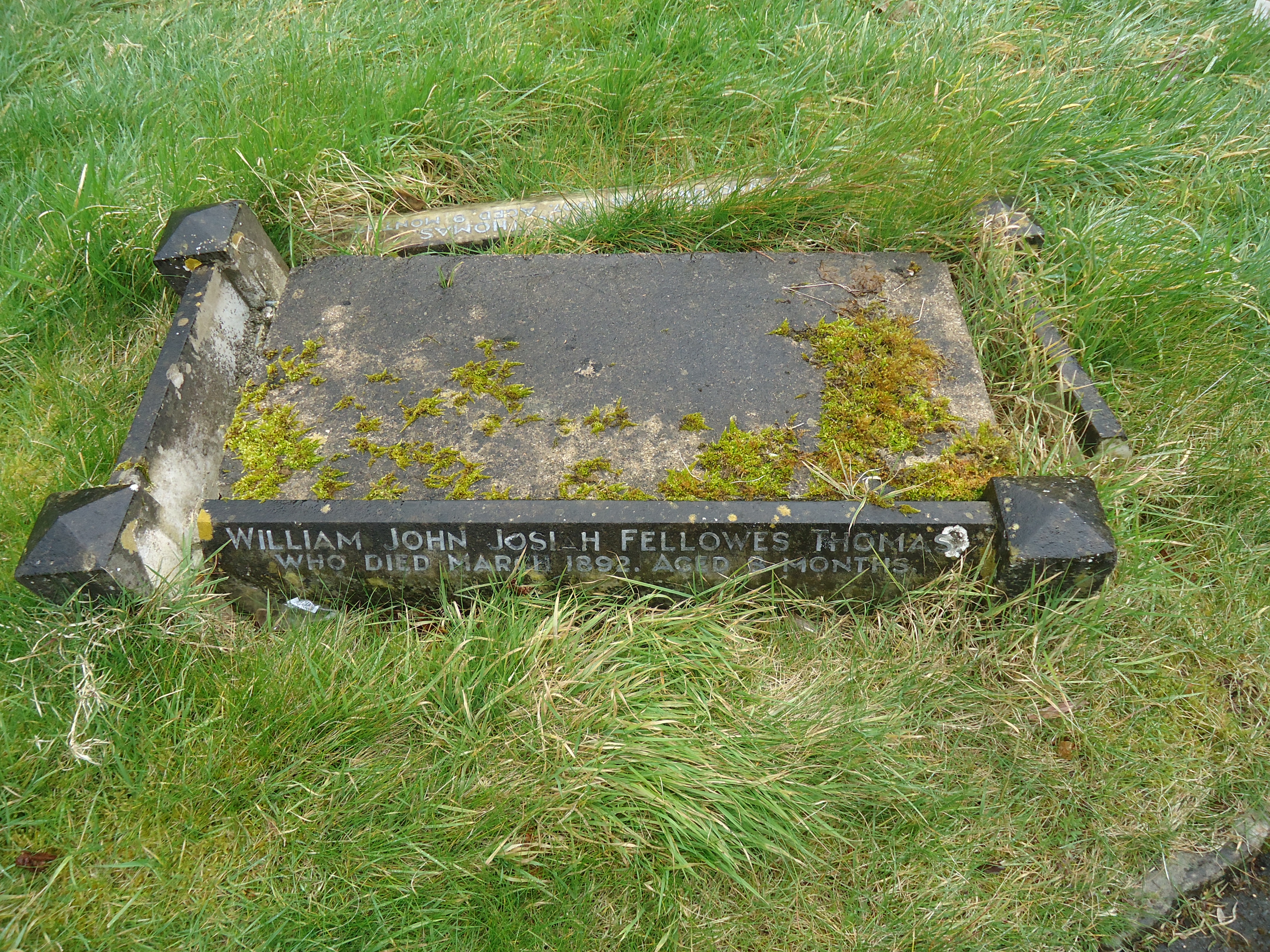
William John Josiah Fellowes Thomas 1892

The facts …

During the 1870s William Fellowes, an iron moulder, brought his family down to Swindon from Wolverhampton. By the time of the 1881 census William and his wife were living at 22 Albion Street. His sons William and Josiah had followed their father into the railway works while their sister Adelaide is working as a dressmaker.

On July 9, 1890 Adelaide married John Thomas, a widower with two young daughters. Her first child, a son named William John Josiah Fellowes Thomas, named after her father and three brothers, was born in 1891 and baptised on November 3. A daughter named Adelaide Fellowes Thomas was born in 1896; Gwendoline was born in 1900 a second son Cyril  in 1906.

By the end of the 19th century William and Sarah were running a grocer’s shop at 35 Commercial Road, a property that would remain in the Fellowes/Thomas family for more than forty years.

William died at his home in Commercial Road in May 1905 and was buried in plot E7812. The burial registers include the following information – ‘Exhumed 14th March 1906 Re-interred in 7741E.’ His wife Sarah died nine years later and was buried in the same plot on October 22, 1914.

Adelaide and John were buried next to William and Sarah in plot E7740 and brother William and his wife Mary were buried in plot E7742.

Josiah died in 1902 aged just 37. He is buried in plot E7955 with his brother John who died in 1910 aged 50. Their grave is just two plots away from their sister Adelaide. 

The Fellowes family remained close in life and death, except for the two little babies buried together on the other side of the cemetery.

DSC08999

Section E 1 of 3

Joseph Deacon “in a passion”

It took local residents living in the Kingshill area a little while to get to grips with the rules and regulations concerning the new cemetery. And the ever vigilent caretaker Charles Brown was always keen to enforce them.

Joseph Deacon found himself in trouble with the Burial Board barely four months after the opening of the Swindon Cemetery after finding himself locked in the burial ground. But the full story may have been left untold.

Damaging the Cemetery Fence – Joseph Deacon, 36, carpenter, 6, Albion Street, was charged with committing wilful damage to the rails enclosing the Swindon Cemetery. Mr J.C. Townsend appeared to prosecute on behalf of the Burial Board. On Monday, the 5th inst. The defendant was in the cemetery and went to the Clifton street gates to leave. He was told by John Bastin, a man working there, that the gates were locked, and that he would have to go to the lodge entrance. The gate had been locked by order of the board. Defendant replied to Bastin that he should not go any further round, but should get over the rails. He was told not to do so, but he went up to near the mortuary, and climbed over the rails, scratching off the paint, and telling witness that he could go and tell Brown (the keeper) if he liked. The damage was estimated at 1s – Defendant said he did what he did in a passion. He never heard that the lodge gate was open or he should have gone out by it, that being his nearest road. He should like to know if a person could go through the cemetery? – The Chairman said certainly not; the cemetery was a sacred place and must not be trespassed on. If he was to send defendant to gaol for two months, or fine him £2 and costs, as he could do, every man in Swindon would know that it was a private place. – The defendant said he did not know this. – The Chairman fined defendant and costs, in all £1 8s.

Swindon Advertiser Monday December 19, 1881.

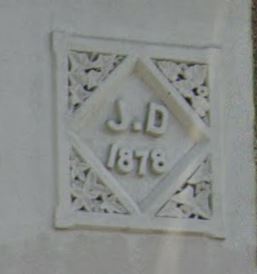
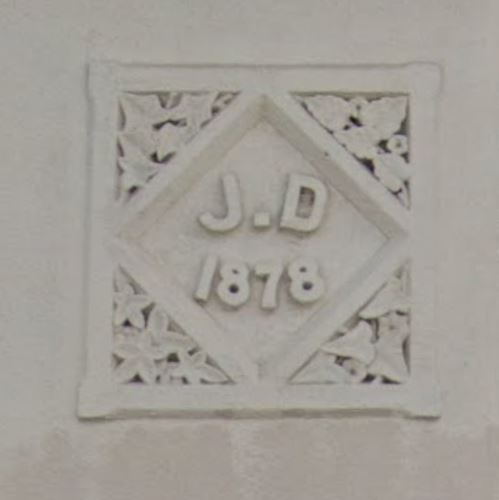
Plaque above No. 9 Albion Street

So how had Joseph come to find himself locked in the cemetery on Monday December 5, and why had he acted “in a passion” as he told prosector Mr J.C. Townsend.

Joseph Deacon married Eliza Wakefield in 1875 at the parish church in Dauntsey. Their daughter Sarah Jane was baptised at Christ Church, Swindon on July 25, 1877 and by the time of the 1881 census Joseph and Eliza with Sarah 3, Harry 2 and one month old William were living in Albion Street.

At the time of the 1891 census Joseph and Eliza’s family had increased with the birth of Julia, then aged 8 years old – but what had happened to little Harry, not mentioned on the census returns of that year.

On October 11, 1881, just weeks before Joseph’s cemetery crime, he had buried his 2 year old son in a pauper’s grave in the new cemetery. Could it be that Joseph was visiting the child’s grave that day when he discovered he had inadvertantly been locked in? Was this why he had acted “in a passion” still mourning the death of his little boy? We’ll never know, but it is worth a consideration.

Numbers 9 and 10 Albion Street

Eliza Deacon died in February 1917 aged 74 years and was buried in grave plot C3416 where Joseph joined her upon his death in 1925. Their daughter Julia was buried with her parents when she died in 1956.

You may also like to read:

Swindon – more interesting than many towns which are more beautiful

First Caretaker – Charles Brown

Swindon – more interesting than many towns which are more beautiful

John Betjeman (Poet Laureate 1972-1984) wrote an essay for a book entitled Studies in the History of Swindon published in 1950 to celebrate the fiftieth anniversary of the incorporation of the Borough. Betjeman’s ‘short architectural study of Swindon’ provides some examples of architecture (and yes, we still have some) but he also gives credit to the construction of the familiar red brick terraces, describing Swindon as ‘more interesting than many towns which are more beautiful.’

Much of 19th century Swindon, old and new, was built piecemeal in short terraces by individual builders; houses that are different styles and different sizes. Occasionally a terrace name survives in brick work such as Albert Terrace in Dixon Street.

Betjeman talks about ‘artisan buildings’ for ‘mechanics and handicraftsmen built consciously as such’ ‘well built and weatherproof,’ and he mentions Hawkins Street, Thomas Street, Charles Street and Manton Street in Rodbourne.

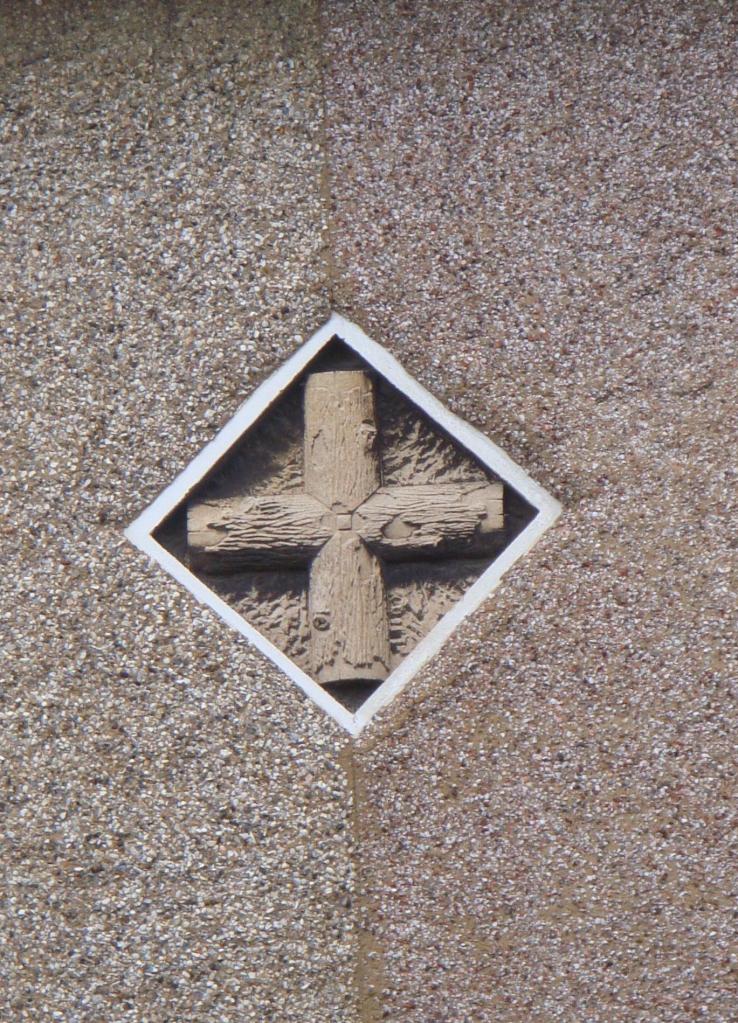
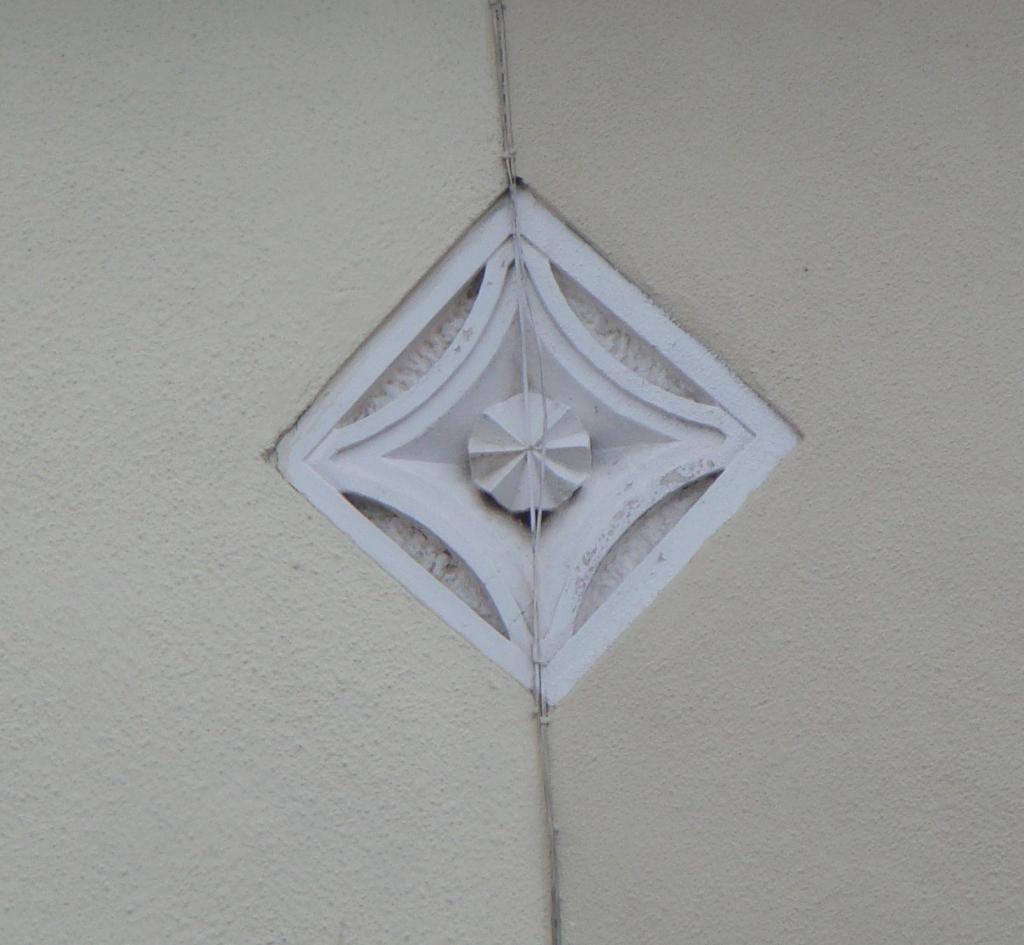
And more than 70 years later there are still interesting features to be found; the trick is to look up! Take a wander down any street in Rodbourne and you will see decorative plaques beneath the eaves. On the terrace between Linslade Street and Jennings Street there is a plaque – Lucknow Terrace 1880 – named to commemorate the Siege of Lucknow in 1857. Perhaps the builder, TP, was a veteran of that war?

Closer to the cemetery is Albion Street where building dates from 1877. Between house numbers 9 and 10 there is situated a decorative plaque enclosing the initials JD and the date 1878.

Three years later, at the time of the 1881 census, Joseph Deacon, a carpenter and joiner, lived in number 9, (a property he probably built along with number 10) with his wife Eliza and their three young children Sarah Jane 3, Harry 2 and one month old baby William James.

For more than 70 years the Deacon family lived at numbers 9 and/or 10 Albion Street. In 1901 Eliza ran a general shop at number 10 where she later died in 1917 and youngest daughter Julia died at No 9 in 1955.

Joseph died in 1925. He was buried on June 4 and shares grave plot C3415 with his wife Eliza and daughter Julia.

Below – decorative plaques on Rodbourne streets

Albert Terrace, Dixon Street