John Glover Norman – builder

John Norman and his wife Eliza Loveday had a very long courtship. John appears on the 1891 census as boarding with the Loveday family at 26 Victoria Street North. John is 25 and working as a carpenter, Eliza Jane is also 25 and working as a dressmaker. The couple didn’t marry until the winter of 1906.

John Glover Norman was born in Chedworth, Gloucestershire in 1863 the son of Isaac Norman, a woodman and agricultural labourer, and his wife Mary. He completed his carpentry apprenticeship with a Chedworth carpenter but by the end of the 1880s he had moved to Swindon where he set up in business as a builder.

In 1898 and 1899 he was working in Goddard Avenue. He also built several properties in Westlecot Road and in 1906 he built 13 houses in the Mall. John built some classy properties but business was not straightforward and in the Spring of 1909 John Glover Norman was declared bankrupt.

At the time of the 1911 census, following his bankruptcy, John and Eliza are living in Victoria Road with a whole clutch of Loveday relatives. Eliza’s widowed mother lives with them as does two of Eliza’s nephews – Frederick Wm Loveday aged 22 a Law Clerk who describes himself as out of work, and Ernest Albert Loveday who was 24 and a carpenter, so most probably working with John. John and Eliza had two children, Beryl and a son Garnet.

John recovered from the bankruptcy crisis of 1909 and was soon back in business in Gorse Hill where he built a lot of properties including 44 houses in Caulfield Street and between 1926 – 1933 he built more than 60 houses in a road that would eventually bear his name – Norman Road.

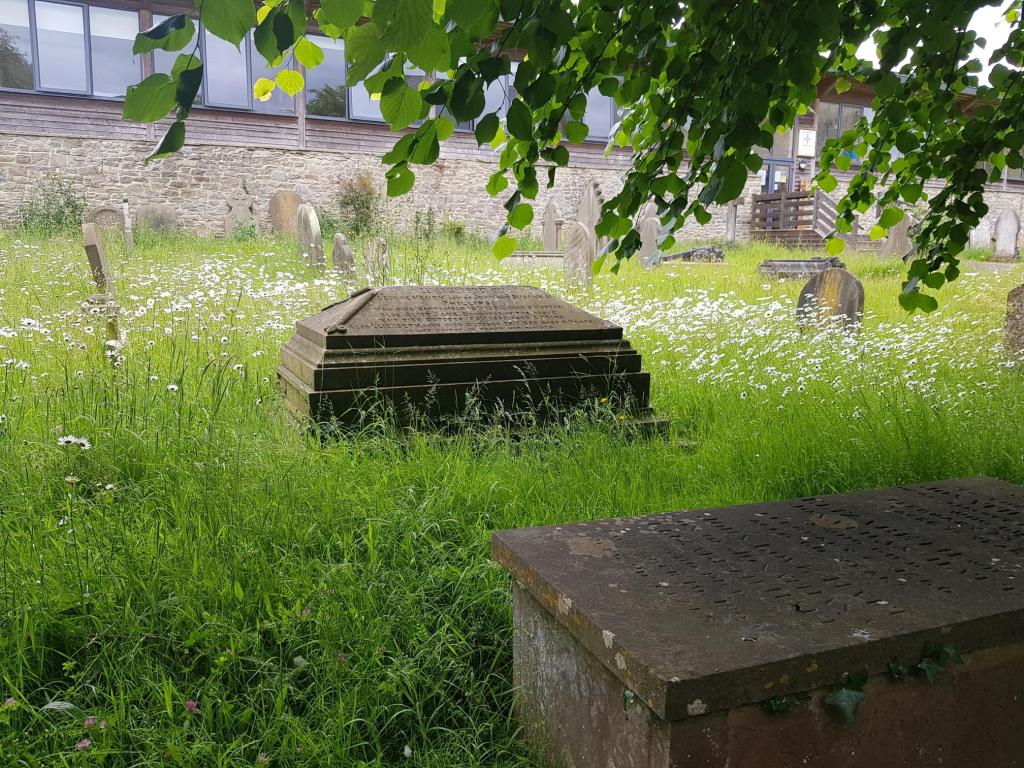
John died in the Westlecot Manor Nursing Home in February 1954. He is buried in grave plot E8331 with his wife Eliza Jane, her mother Jane and 14 year old Dorothy Frances Reason the daughter of Eliza’s sister Mabel.
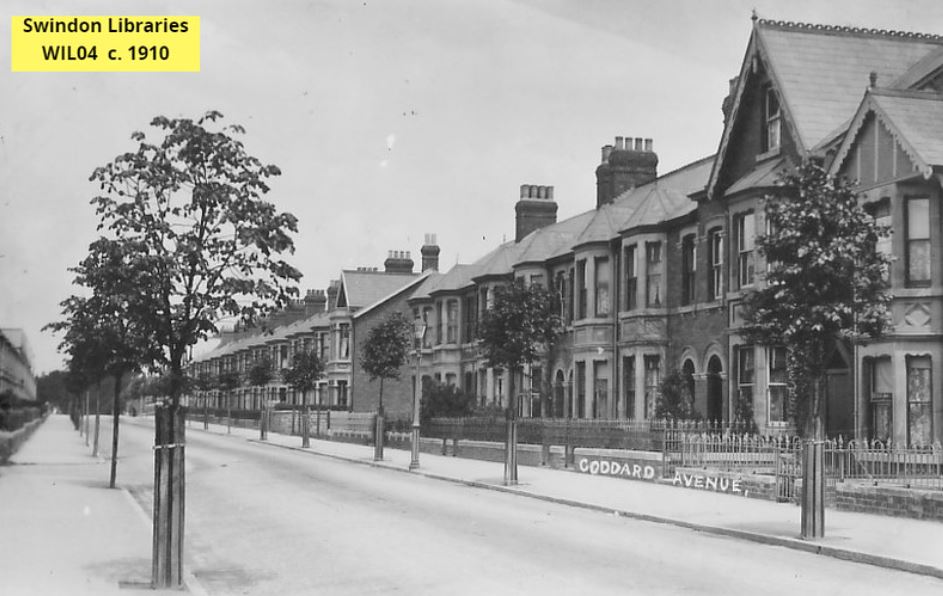
William Hooper image of Goddard Avenue taken around 1910 and published courtesy of Local Studies, Swindon Central Library.
Edwin Harvey – builder

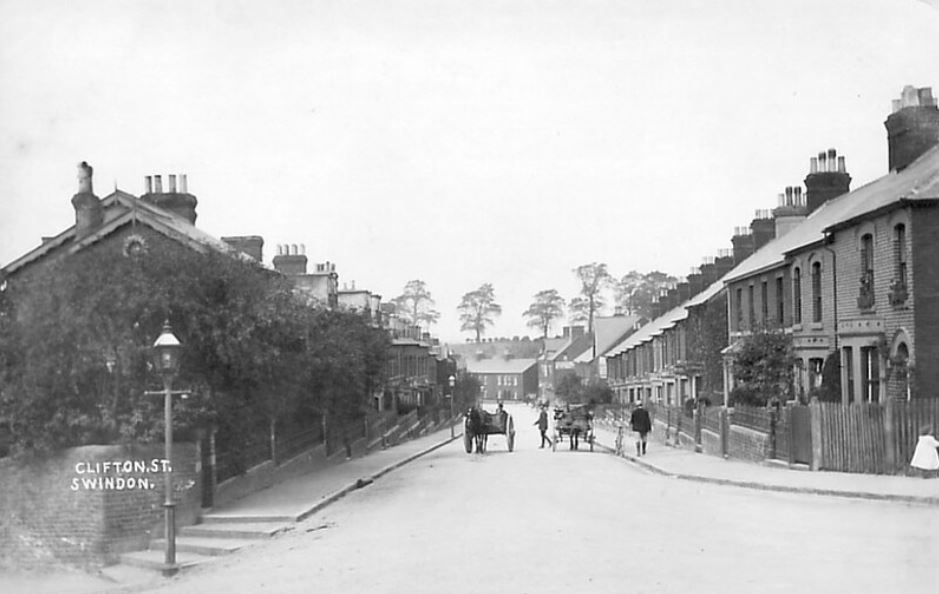
Clifton Street published courtesy of Mr P. Williams and Local Studies, Swindon Central Library.
It’s surprising that there is no road named after the entrepreneurial Edwin Harvey.

Edwin Harvey was born in Keynsham in 1843 one of William and Mary’s large family of 12 children. Edwin began his apprenticeship in the building trade working as a plasterer, most probably alongside his father, a plasterer journeyman. By 1871 aged 28 Edwin describes himself as a painter.

He married Alice Elizabeth Baker at St. Paul’s Church, Bath on November 26, 1878. Edwin, aged 36, then described his profession as Builder and his place of residence as New Swindon where he had already begun to make his mark!

In 1877 he was building a hotel and cottages on the Kingshill estate and in 1878 he built 4 houses and shops on Cambria Bridge Road with business partner William Crombey.

In 1879 he describes himself as builder and beerseller when he makes an application for a license to “Sell by Retail Beer and Cider, to be consumed on the House and Premises thereunto belonging, situate at William Street.” This beerhouse was most probably built by Edwin and occupied the corner plot of William Street and Cambria Bridge Road. It was owned by his deceased brother William and in 1879 by his widow Ann.

William Street and Park Hotel

Edwin was a busy man during the 1880s building houses in Albion Street, William Street, Clifton Street and Exmouth Street where he would eventually make his home. In addition to his building work he was elected a member of the New Swindon Local Board in 1885 and in 1887 a member of the Swindon Hospital Committee, acting on behalf of the Building Committee.

In 1881 he lived at William Street with his wife Alice and their baby daughter Ethel. By 1891 they had moved to 50 Exmouth Street where the family had grown considerably and then numbered 6 children. Edwin’s brother John lodged with them. By 1911 No 50 Exmouth Street (now named Glenthorne) was still a busy household with 4 twenty something children still living at home with Alice and Edwin, now aged 68 and retired.

Edwin Harvey died at his home in 50 Exmouth Street on October 21, 1925. He was 82 years old. The funeral took place on October 24 when he was buried in grave plot D1525 with his wife Alice who died in 1917.

With no street named in his honour, I’m hoping there will be a headstone on his grave when I find it.

You may also like to read:

William Crombey – builder

Ann Harvey – Inn Keeper

*Harvey Grove off Cheney Manor Road, was built in 1936 and named after Albert Harvey who once farmed at Manor Farm, but so far I haven’t come across a road named in honour of Edwin Harvey.

Susannah Phillips – builder, contractor and marble mason

It wasn’t that unusual in Victorian Britain for a woman to head a family firm, which is exactly what Susannah Phillips did after the death of her husband John.

Susannah was born in Chatham, Kent on January 21, 1816, the daughter of George Reynolds and his wife Zipporah. Susannah married John Phillips, a carpenter, on December 25, 1845 at St Nicholas’ Church, Rochester. By the time of the 1851 census the couple were living in a house next door to the Victoria Inn on Victoria Street, Swindon with their two young daughters.

John’s building projects in Swindon date from about 1852 and the census of 1861 records him as employing 27 men, so a not inconsiderable size business.

As well as houses in the Quarries and King Street, John’s firm built some significant and now sadly lost buildings. In 1866 he built not only the Congregational Church on the corner of Bath Road and Victoria Street, demolished in the 1940s for road widening purposes, but also the now derelict Corn Exchange in The Square, Old Town. In 1873 John built the Belmont Brewery, thankfully still standing, just behind his former home.

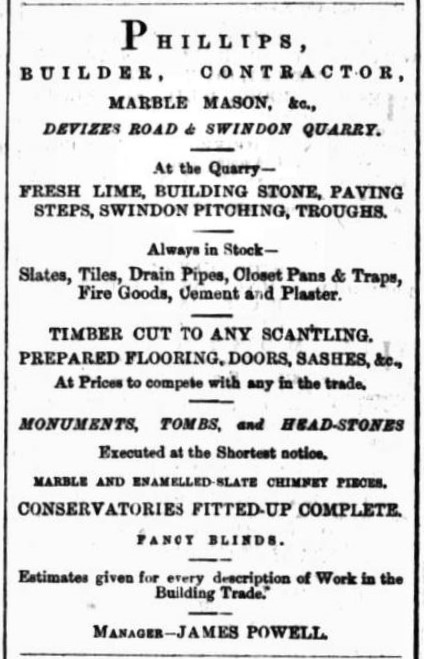
On June 18, 1874 John announced in the Swindon Advertiser that due to failing health he was retiring from business, leaving it in the capable hands of Mr Powell and Charles Phillips (his son). Just weeks later John died and was buried at Christ Church churchyard on July 28. Susannah carried a regular advertisement for her business in the Swindon Advertiser and then in the newspaper dated November 8, 1880 she announced her retirement.

Susannah Phillips,

Builder, Contractor, Marble Mason, etc.,

Devizes Road and Swindon Quarry,

In retiring from the old established Business for so many years carried on by herself and late husband, begs to return her sincere thanks to customers and friends for the kind patronage which has been bestowed upon her, and to inform them that in future the business will be carried on by her Son, in conjunction with Mr James Powell, who has for a long time successfully acted as her manager.

S.P. Trusts that her successors will meet with the same support which has hitherto been conferred upon her.

In 1881 Phillips and Powell along with George Wiltshire put in a successful tender to lay out the new Swindon Cemetery, better known today as Radnor Street Cemetery.

Swindon

The Cemetery works – In reply to advertisements six tenders were sent in for laying out, draining, fencing, and doing the necessary work for the Swindon Cemetery. The Cemetery Committee met on Thursday evening to open these. The tender of Messrs Phillips and Powell and Mr George Wiltshire, who sent in a joint tender was accepted. The tenders were as follow: John Richings (Faringdon) £5,647; John Webb (New Swindon) £5,510; Thomas Barrett (Swindon) £5,562; W. Maxwell (London) £5,450; A.J. Beaven (Bristol) £5,442; Phillips and Powell and George Wiltshire (Swindon) £5,393 10s.

Western Daily Press April 7, 1881.


Susannah died at her home, Clarendon House, Devizes Road on April 24, 1894. The announcement of her death appeared in the Swindon Advertiser on April 28, the day of her funeral. She had decided to be buried in the churchyard at Christ Church, with her husband, and not in the cemetery her family firm had built.


Clarendon House, the Phillips’ family home. The lane way alongside was named Phillips Lane in the 1970s.

The Phillips family grave in Christ Church churchyard

William Grainger – Builder with nothing to do

Manchester Road c1912. For more images of the Broadgreen and Queenstown area of Swindon visit the Local Studies flickr page.

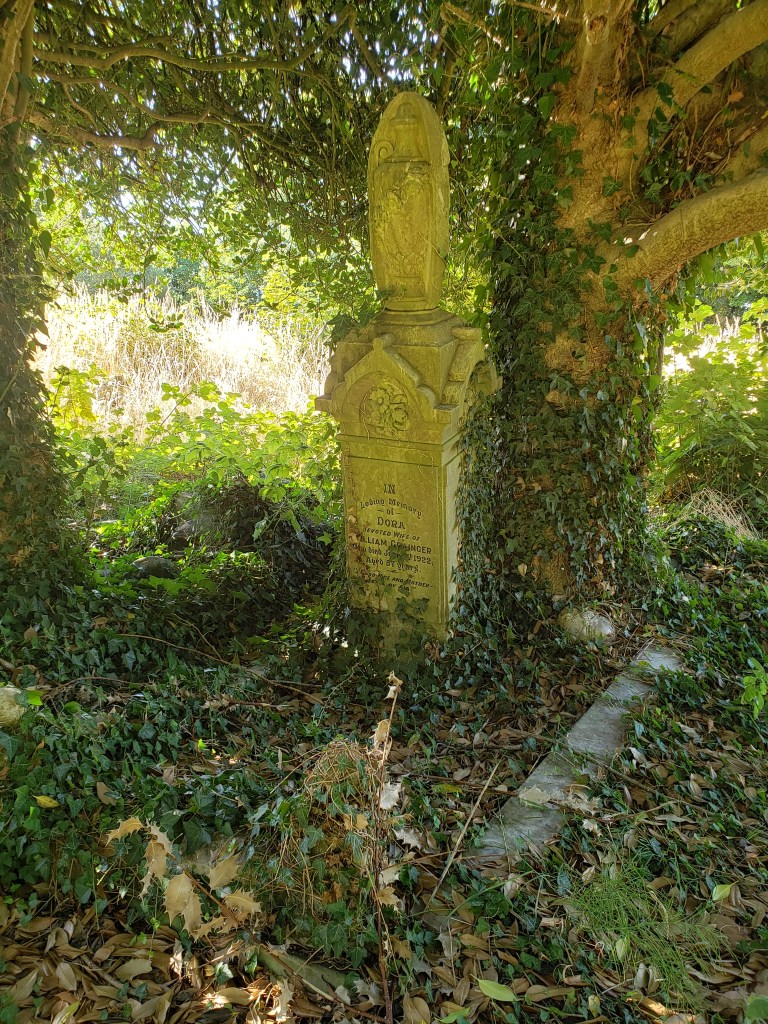
Nestling beneath the shade of a tree is this attractive memorial to Dora and William Grainger, a restful place to lie during the current heatwave.

The report of William Grainger’s death (see below) includes an account of his business career, but a rather vague version.

William Grainger was born in about 1865, the second son of Edward Grainger and his wife Sarah. He grew up in Quenington, Gloucestershire and followed his father into the building trade working as a plasterer. By 1887 William was living at 35a Cheltenham Street when he married Dora Ockwell at St. Mark’s Church. The couple had four children but sadly only two daughters survived to adulthood – Emily born in 1891 and Helen in 1893.

George’s business premises were first located at 60 Dryden Street before moving to 141 Manchester Road and spanned the years 1891-1907. During this time he did indeed build a great many properties. In 1897 alone he built a stable and traphouse in Dryden Street; 12 houses numbered 15-26 on the east side of Gladstone Street; 12 houses numbered 107-118 on the west side of Salisbury Street and 12 houses numbered 1-12 on the south side of Elmina Road.

In 1898 he was even busier. The Eastcott Hotel in Manchester Road was built in this year by Strong & Co Brewery of Romsey, most probably with the work sub contracted out to William. In 1898 William built 147 properties in Salisbury Street; Manchester Road (which included his own home); Edinburgh Street, Elmina Road, Graham Street and Rosebery Street.

He appears to have finished work in around 1907 when he was about 41 years old. At the time of the 1911 census he states his occupation as ‘builder with nothing to do.’

Dora died at the family home at 141 Manchester Road and was buried on this spot on June 7, 1922. Perhaps William planted this tree to shade her grave during the hot summers to come. William died five years later and was buried with his wife on May 18, 1927.

Death of Mr W. Grainger – The death took place on Saturday at 141, Manchester Road, at the age of 62 years, of Mr William Grainger. The deceased formerly carried on an extensive business as a builder, and was responsible for the erection of between 400 and 500 houses in Swindon. Among his large contracts was the building of the Eastcott Hotel in Manchester Road. He retired from business at an early age. He was a keen sportsman and was a popular member of the Swindon Town Bowling Club and was also a member of the North Wilts Constitutional Club. He leaves two daughters, who are living in Swindon, and two brothers and two sisters, who reside out of the town. His wife predeceased him some years ago.

North Wilts Herald, Friday, May 20, 1927