Joseph and Charles Williams – busy building Swindon

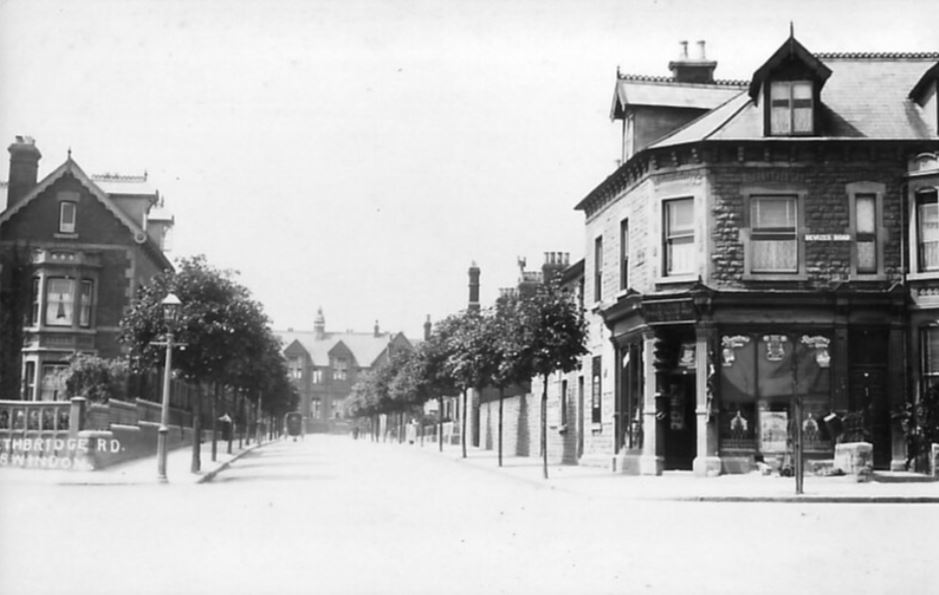
Lethbridge Road published courtesy of P.A. Williams and Local Studies, Swindon Central Library.

After a lifetime of hard graft, Joseph Williams had to face the humiliation of bankruptcy and the end of his business. Ultimately it proved too much to bear.

Joseph Williams was born in Shrivenham in 1841, the second son of Charles Williams, a carpenter and joiner, and his wife Lucy. He married Sarah Jane Painter at Christ Church on December 26, 1866 and the couple had two children, Frederick born in 1870 and Florence born five years later.

Joseph’s brother Charles combined two jobs, recorded as the licensee at the Dolphin, Rodbourne in 1881 but also working as a builder.

Both brothers worked hard, building their business, and building Swindon. By the 1880s both were well established. Elder brother Joseph was working in Stafford Street, Lethbridge Road, and Springfield Road. At the beginning of the 1890s he built more houses in Lethbridge Road, 17 in Albion Street and 22 in Morrison Street.

Charles was equally busy where he built 24 cottages in 1888 on the newly available Rolleston Estate. During 1897 he built a school in Euclid Street, 7 houses in St. Paul’s Street and 40 Houses in Redcliffe Street.

Perhaps the brothers were over ambitious. Perhaps they were not fully acquainted with their financial situation; too busy working.

In 1902 Charles built 28 houses in Morrison Street and in 1905 Joseph built 12 houses in Lansdown Road and that seems to be the end of the Williams’ building empire.

In 1906 Joseph sadly took his own life.
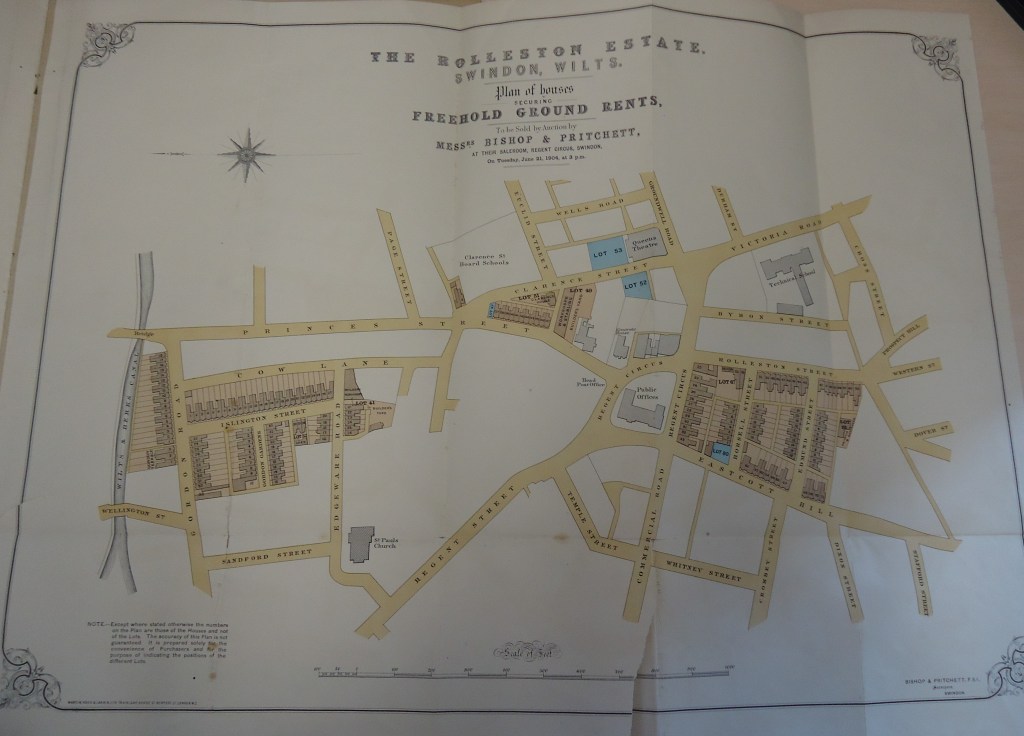
1904 map of the Rolleston Estate held in Local Studies, Swindon Central Library

Suicide of Mr Joseph Williams

Found Hanging in a Loft

Inquest and Verdict

Shortly before 11 o’clock on Friday morning a shocking discovery was made in a loft adjoining Clifton House, Devizes Road, [Lethbridge Road] Swindon, the body of Mr Joseph Williams being found hanging from a beam. Immediately the tragedy was revealed, Mr S.W. Filtness, who was engaged at his oil stores opposite, was summoned by Mr Williams’ daughter, and he at once proceeded to the loft and cut the body down, life being found to be extinct.

Mr Williams was missed for about half an hour. He had partaken of breakfast, and appeared as usual, and in cheerful spirits. After the meal he read his newspaper and shortly afterwards went out to fetch some wood. As he did not return, his daughter – Mrs Dismore – went to search for him. When the dreadful discovery was made, Dr. Lavery, who happened to be attending a case in Winifred Street, was called in and subsequently Dr. Reid, but they were only able to pronounce life extinct.

Needless to say, the news caused a good deal of sensation and spread with remarkable rapidity through the town. The deceased’s recent misfortunes have for some time been occupying general interest, and the incidents associated therewith had gained him the greatest sympathy. There is not the slightest doubt but that his mind had become seriously affected as the result of his troubles in this direction, and it will be remembered that prior to his examination in the Bankruptcy Court the state of his health was so distressing that he was compelled to leave the town to recuperate. He never completely regained his physical and mental strength, however, and, although his relatives had never heard him threaten to take his life, the news of his untimely end did not occasion absolute surprise amongst those who were painfully aware of his state of mind.

Mr Williams had resided in Swindon nearly the whole of his life, and, as a builder and contractor, was widely known and respected. He had, until latterly, led a very active life – in fact, his career had been one of hard work, with no indulgences, which makes his tragic end the more painful. Mr Williams has been responsible for many extensive contracts in Swindon and district, and was of course, a large employer of labour. Until within the last twelve months his upright, active and almost youthful bearing hardly betokened a man who had left three score years behind him. For the relatives of the deceased the deepest regret is felt.

Deceased, who is 63 years of age, was prominently connected with the Victoria Road Congregational Church, and was for many years a superintendent of the Sunday School.

The enquiry into the sad circumstances was held at the Fountain Inn, Devizes Road, on Friday afternoon. Mr Alfred Bowker was chosen foreman of the jury. Mr G.M. Butterworth watched the case on behalf of the relatives, of whom Mr C. Williams, deceased’s brother, was present. Supt. Robinson was also in attendance.

The formalities were of the briefest possible description, and the Coroner dispensed with his usual preliminary address to the jury.

Mrs Sarah Jane Williams was the first witness, and said: I live at Clifton House, No. 1 Lethbridge Road, Swindon, and I am the wife of the deceased, whose name is Joseph Williams, and his age was 63 last birthday. He was a builder and contractor. He has been ill for more than twelve months. At times he has been very quiet, and very depressed. He has never expressed the intention of doing harm to himself. He was perfectly well last night, and at breakfast time this morning, only depressed. He had been attended by a doctor, who saw him either on the previous Monday or Saturday.

Stephen William Filtness said: I was in a yard opposite to where Mr Williams lives, on Friday morning, when the deceased’s daughter, Mrs Dismore, came and fetched me about 11 o’clock. She asked me to see what was the matter with her father. I went into deceased’s workshop and up the ladder into the loft. I saw Mr Williams with the rope round his neck. He was suspended, and his feet were touching the ground. I cut him down, and went and found a policeman. Deceased was just warm, but I am quite certain he was dead.

P.C. Walter Shergold said: From information I received I proceeded to Joseph Williams’ loft I found the deceased lying on his back with a rope tightly round his neck. I slackened the rope round his neck and examined him to the best of my ability, and I found he was dead.

P.S. Buchanan said: From information I received I proceeded to the house where Mr Joseph Williams had lived. I found these papers written for his wife. I have read the papers.

Dr Charles Lavery said his partner (Dr. Rattray) had been in medical attendance upon the deceased for some time, chiefly for nervous breakdown. He never expressed any intention of taking his life.

The jury returned a verdict of “Suicide whilst temporarily insane.”

Extracts from the Faringdon Advertiser, Saturday, April 14, 1906.

Joseph was buried on April 11, 1906 in grave plot D1578. His wife Sarah Jane died in April 1929 aged 85 years and is buried with him. Their daughter Florence Mary Dismore joined them when she died in 1956 aged 80 years.

When probate was granted to his widow in 1919 Joseph’s effects were valued at £15.

At the time of the 1911 Charles Williams, Joseph’s brother, appeared living at the County Ground Hotel with his son, another Charles, who was the Hotel Proprietor. Charles was 62 and still describes himself as a builder. He lives with Mary, his wife of 43 years and the couple declare that of their five children, Charles (the hotel proprietor) is the only one still living.

Season of mists – last day

Sadly, we have arrived at the last day of our virtual walk through Radnor Street Cemetery – it’s been fun, hasn’t it and the weather wasn’t too bad? It could have been worse. We conclude by stopping off at the grave of William Chambers.

Despite a shortage of readily available building land and a depression in the railway industry during the 1870s, Swindon enjoyed a building boom throughout much of the late Victorian period.  Many of our street names bear testimony to a number of local builders, George Street, Crombey Street, Colbourne Street, Ponting Street, Turner Street.

William Chambers lived and worked as builder and funeral director in the end house in Ashford Road, the one with the Calvary cross in the brickwork.  The silhouette of the shop sign can still be seen.  As we have already discovered William Chambers was building on the Kingshill estate in the 1890s.

William was born in Stroud in 1839 the son of Samuel, a handloom weaver, and his wife Maria.  In 1859 he married Sarah Tyler and the couple raised their family of eight children in nearby Bisley where William then worked as an agricultural labourer.

In 1871 he was working as a bricklayer and by 1884 the family had moved to Swindon where William established himself as a builder and contractor.  His four sons would eventually join him in the business, William and Alfred both bricklayers and Robert and Samuel who were joiners.
From 1884-1897 William was engaged in building projects in Stafford Street and Hythe, Kent and Maidstone Roads.  In the last decade of the nineteenth century William was also busy building in Ashford Road.

At the time of the 1891 census eldest married sons Alfred and William both had homes in Stafford Street.  Family folklore tells how so many relatives once lived in Stafford Street that it was known locally as Chambers Street.

William’s son Samuel took over the family business after his father’s death.  A 1906 trade directory entry describes the business at 1 Ashford Road as under new management – S. Chambers (late W. Chambers) builder & contractor, dealer in all kinds of building material, funerals completely furnished, repairs promptly attended to at moderate charges.

William died in 1901 and Sarah in 1926.  I think this stylish headstone befits a couple who spent their lives in the funeral business.

I’ve very much enjoyed your company this week. You may like to join us for ‘an in person’ cemetery walk this Sunday September 29. Meet at the chapel 1.45 pm for a 2 pm start.

Extracts taken from To Autumn by John Keats

Richard James Leighfield – Master Builder

This is another magnificent pink granite memorial full of funerary iconography.  The fluted pillars or columns at the top symbolise the door to heaven and the passageway to eternity.  The letter L is displayed prominently passing through this entrance. The thorny acanthus leaves symbolise the prickly path of earthly life to death and eventual eternal life.

This is the last resting place of the Leighfield family. Firstly, of Elizabeth, ‘the devoted wife of Richard James Leighfield of Witney Street, Swindon who died after a long and painful illness after which she sweetly fell asleep in Jesus on February 2, 1910 aged 49 years.’ Elizabeth was buried with the couple’s second son David who had died aged just 3 weeks old in 1892.

The inscription on this memorial is the first verse of a hymn called The Christian’s Good Night – lyrics by Sarah Doudney and music by Ira D. Sankey.

Sleep on beloved sleep and take thy rest,

Lay down thy head upon thy Saviour’s breast.

We love thee well but Jesus loves thee best.

Good night, good night, good night.

Richard was born in Wootton Bassett in 1859 the son of postman James Leighfield and his wife Ann. At the age of 12 Richard was already working as a mason’s labourer, later becoming a bricklayer and by 1891 he was a Master Builder.

In 1887 he married Elizabeth Hunt and at the time of the 1891 census they were living at 83 Clifton Street with their two year old son James. 

Richard built houses on Clifton Street, Whitney Street* and Ponting Street. At the turn of the century, encouraged by the growth of New Swindon, he purchased a parcel of land on the east side of Whitney Street on which he built a house known as 1 Whitney Street. Behind the house he developed office accommodation, yard, stables and a workshop from which he conducted his business. On the rest of the land he built 6 cottages which he let, principally to members of his staff. Between 1901-1916 the family firm built 39 houses at St Mary’s Grove.

Following Elizabeth’s death, Richard married Clara Williams in 1913. The couple married at the Primitive Methodist Chapel in Regent Street where they were both members. Clara was a descendant of John and Mary Pike who opened their home on Eastcott Hill for meetings during the early days of Primitive Methodism in Swindon.

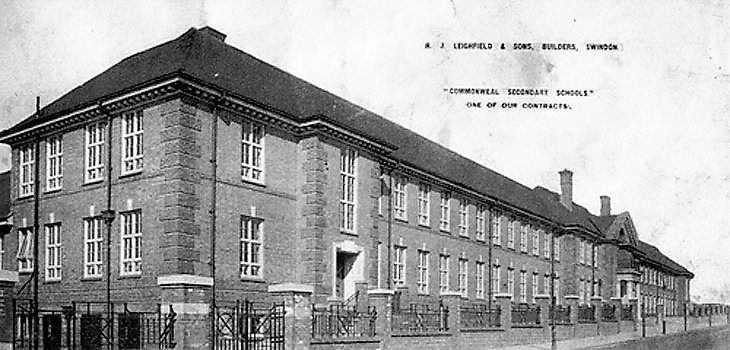
The Leighfield family firm continued to be busy during the 1920s and 30s when among their projects they built the Primitive Methodist Church at The Circle, Pinehurst; Commonweal School, The Mall, Old Town; the Co-op on Groundwell Road and the Swindon Corporation Electricity Dept showrooms at Regent Circus.

Richard died at his home 109 Bath Road in 1948 aged 89. His funeral took place on April 22 when he was buried in grave plot E8440 with his first wife and son. His second wife Clara died in 1964 and was buried in the family plot.

The Leighfield business continues today at the Coped Hall Business Park in Royal Wootton Bassett.

*The spelling of Whitney/Witney Street varies.

George Kilminster – neighbourhood builder

William Street published courtesy of P.A. Williams and Local Studies, Swindon Central Library.

In 1950 Sir John Betjeman, Poet Laureate 1972-84, described Swindon as a town with very little architecture and a great deal of building – and you’ve got to take his point. There has never been a time when Swindon was not desperate for housing and the basic red brick, utilitarian terrace house is a feature of our town.

There were a lot of builders in 19th century Swindon, all buying up pieces of land for development. Some bought great swathes of land such as James Hinton who laid out Dixon, Stafford, and Clifton Streets in 1879 and the Gorse Hill housing estate in 1889. Others worked on a smaller, though no less productive scale, sometimes entering into short term partnerships, later creating what would become a family firm employing more than one generation.

George Kilminster was one such builder, working with a Mr Ball on several properties in Swindon Road before establishing his own family business. And between 1893 and 1921 George Kilminster worked close to home – very close.

George Kilminster was born into the building trade in 1857, the son of Cricklade slater and plasterer Robert Kilminster and his wife Maria. By 1871 fourteen year old George was working with his brothers Joseph 18 and Alfred 12 as slaters alongside their father.

George married Mary Ann Hart in Cricklade St Sampson in 1880 and by the time of the census the following year they were living in Upper Stratton. In 1891 the census records the family living in William Street, which became their permanent home and George’s workplace. Between 1893 and 1921 George built in William Street a toolhouse and store; 2 cottages; a schoolroom at the Wesleyan Chapel; seven houses and a villa.

In Roadways – The History of Swindon’s Street Names, authors Peter Sheldon and Richard Tomkins list William Street as being named after builder William Crombey with work beginning in 1878. Street numbering begins and ends at Cambria Bridge Road with more than 160 properties extending to the Kingshill Road. Today there is some new building half way along and alterations to properties at either end of the street, most especially the demolition of the Wesleyan Methodist Chapel. But to stand in the street on a quiet day when there aren’t so many cars parked there, well it could look quite similar to the street George would have known.

George died in 1941, leaving his business in the hands of his sons Arthur and Harry. He was buried on February 15 in Radnor Street Cemetery in plot D1037 which he shares with his wife Mary Ann who died in 1946 and their daughter Iris who died in 1978.

Wesleyan Mission Hall

William Street, New Swindon

Such has been the growth of the cause of Wesleyan Methodism in West Swindon that it was found necessary to contemplate the erection of a hall in which to hold the services. A suitable piece of land having been procured at the west end of William Street situated immediately on the south side of the Wilts and Berks Canal and close to the Wootton Bassett road, the erection of a mission hall was very soon commenced. The erection of the building is being accomplished by Messrs J and C Williams, builders, of Swindon, to the specified plans of Mr Davis, architect. The dimensions of the hall will be 35 feet in length by 24 feet breadth, and 13 feet in height. In addition, there will be the necessary out-offices. The building will be of brick, with freestone dressings to windows and piers. Inside, the roof will be match boarded, with worked principals. So far has the erection of the building proceeded that the ceremony of laying the foundation stones was gone through on Wednesday last.

Extract from the Swindon Advertiser, Saturday, October 8, 1887.

William Street published courtesy of P.A. Williams and Local Studies, Swindon Central Library.