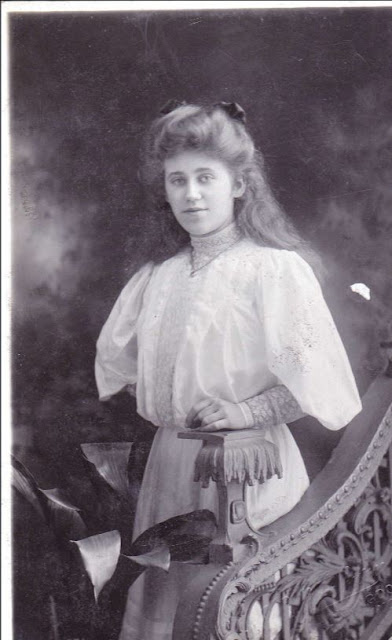
Samuel Johnson Pocock – butcher

The re-imagined story …

Mother liked to favour Mr Pocock with all her butchery requirements. She said he knew a thing or two about beef, which you would rather hope so, as a butcher and a farmer, but my sister thought there was more to it than that.

My sister believed that Mother might be ‘sweet’ on Mr. Pocock.

“He does have very twinkly eyes – for a butcher,” she added.

My brother and I looked up from the copy of the newspaper we were perusing at the kitchen table.

“Father passed away several years ago and Mr Pocock is also a widowed gentleman. There would be nothing inappropriate in a ‘friendship’ developing.” said my sister. “And as the eldest I think you should suggest that she invite him to Sunday lunch,” she declared.

“Yes,” my brother piped up. “I think you should take the bull by the horns.”

I remember mother being very upset when Mr Pocock passed away. Perhaps my sister was right after all.

The facts …

Death of Mr S.J. Pocock

Swindon has lost a well-known resident by the death of Mr. Samuel Johnson Pocock, who passed away at his residence, 17, Wood Street, on Saturday night.

Mr Pocock, who was 68 years of age, came of a well-known family of farmers in West Wilts, and more than half a century of his life was spent in that part of the country. In 1900 he came from Melksham to Swindon, and in conjunction with is son, Mr Percy Pocock, took over the old-established purveying business of Keylock & Co. The deceased was acknowledged to be one of the best judges of cattle in the district, and his services as an adjudicator were greatly in request at the Christmas shows. He was the first president of the Swindon Master Butchers’ Association.

Some six months ago Mr. Pocock’s health showed signs of failing, and it became necessary for him to go to London to undergo an operation. This proved so far successful that the patient experienced considerable relief and was able to return to Swindon. He did not, however, resume business pursuits, but for a while took up his residence with some friends at Corsham. Eventually he came back to Swindon, and it has for some time been apparent that his life could not be prolonged. He finally took to his bed about a fortnight since.

Mr Pocock, whose wife pre-deceased him 14 years ago, leaves a son and a daughter.

North Wilts Herald, Friday, February 9, 1917.

Burial Registers

Samuel Johnson Pocock 68 years 17 Wood Street burial 7th February 1917 grave plot E7508
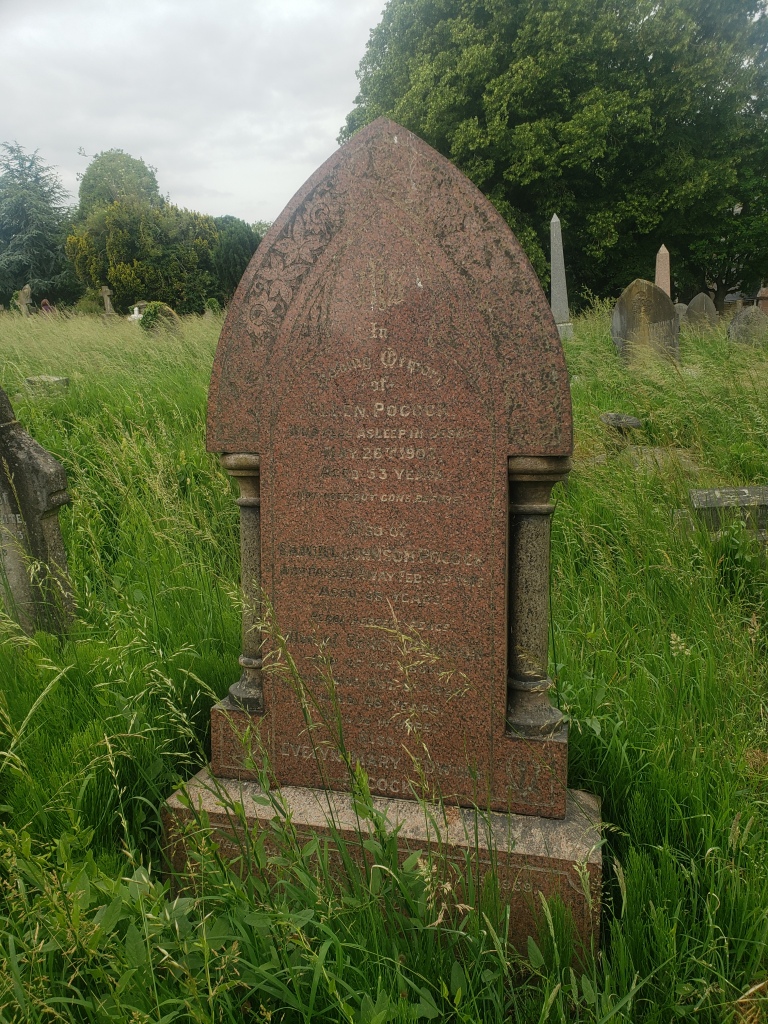
He is buried with:-

Evelyn Mary Edwina Pocock 81 years died St Margaret’s Hospital, Stratton – home 72 Croft Road, Swindon. Burial 5th November 1969.

Percy Johnson Pocock Butcher 48 years 17 Wood Street, burial 11th October, 1925.

Ellen Pocock, wife of – Pocock 53 years 17 Wood Street, burial 29th May 1902.

Stephen Chequer – butcher

There was no lengthy obituary published in the local newspapers following the death of Stephen Chequer, just a brief death notice submitted by his family.

Chequer – March 17, at Westcott Place, New Swindon, after a long and painful illness born with great christian fortitude, Mr Stephen Chequer, butcher, aged 67. His end was peace.

Swindon Advertiser, Saturday, March 26, 1887.

So many of the inscriptions on headstones in Radnor Street Cemetery include a religious reference. In the increasingly secular age in which we now live, what sustains us at the end of our life?

When Stephen Chequer married Elizabeth Iles at St Mark’s Church in 1847 his occupation was that of labourer. Both he and Elizabeth made their mark in the marriage register, indicating they were not sufficiently proficient in writing to sign their names. Stephen obviously worked extremely hard to establish his own business with all the paperwork that involved.

By 1851 Stephen and Elizabeth were living in Westcott Place with their four children and Stephen’s widowed mother Mary. Stephen was 37 years of age and working as a farm labourer. It wasn’t until the 1871 census that we discover Stephen working as a Butcher in Westcott Place.

Stephen Chequer died aged 67 years and was buried on March 23, 1887 in grave plot E8466 which he shares with his wife Elizabeth who died in 1883.

Today Westcott Place is much altered and barely recognisable from this 1976 photo published courtesy of Local Studies, Swindon Central Library.

Stephen and Elizabeth’s daughter Emma Jane married Charles Edward Hall. You may like to read more about her family here.

Charles Edward Hall of 75 Morris Street, Rodbourne.

Rear Admiral Sir Arthur Hall – an extraordinary Swindon story

Florence L. Clapham – a case of mistaken identity

It’s not very often I find an error in the Radnor Street Cemetery burial registers, but this one could have proved rather confusing.

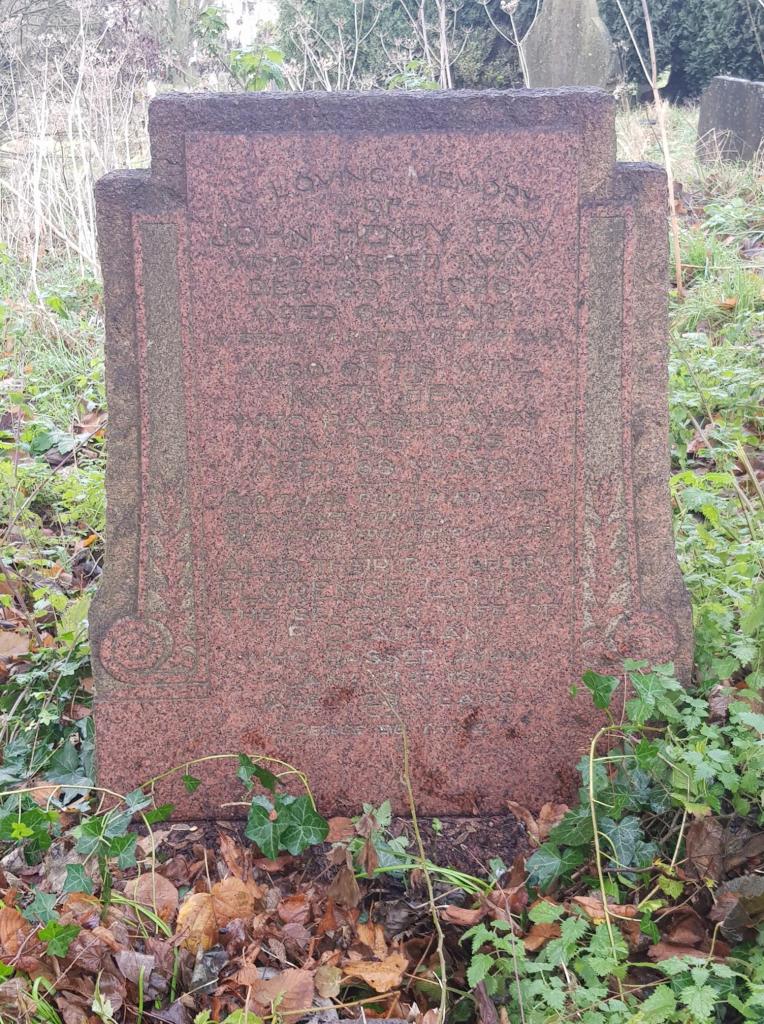
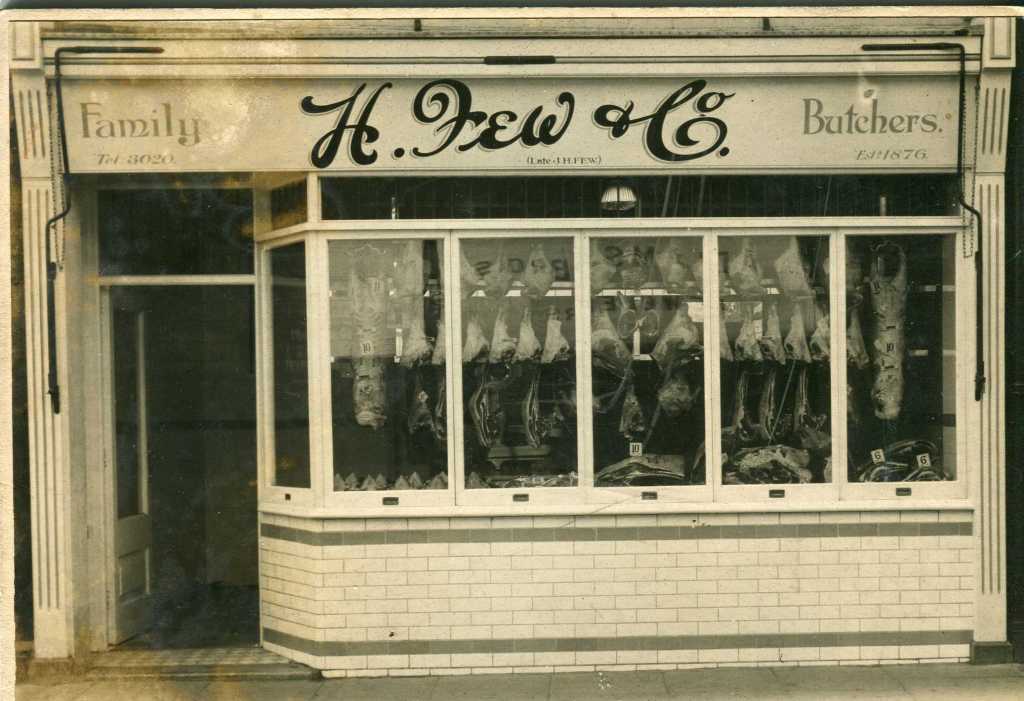
Florence Louise Few was baptised on August 27, 1888 at St. Mark’s Church, the eldest child of John Henry Few, a butcher and his wife Kate. John must have been a very enterprising young man as he was already in business at the age of 19 when he ran a butcher’s shop at 26 Prospect Hill. By 1891 he had moved the business down to New Swindon and a premises in Bridge Street. In 1891 he was based in at 59 Fleet Street and by 1911 he was at 61 Fleet Street (possibly some renumbering of Fleet Street had taken place).

In 1911 Florence was working as a shop assistant in the butchers. Her younger sister Freda was employed at ‘housework’ while 18 year old Gladys Elizabeth also worked in the shop. Younger brother Jack was still at school. Another brother, Harold Bastable Few, was born the following year.

Florence married Frederick Clapham, a Fitter, on November 17, 1913 at St. Mark’s Church and began married life in Weston Super Mare. She died there in January 1917 aged just 28 years of age.

Florence’s remains were returned to Swindon where she was buried on February 5, 1917. Her name is recorded in the burial registers as Florence Louise Clappen, which could cause confusion for those researching both the Few and the Clappen families. William Clappen had a Tailor and Outfitters shop in Wood Street, Old Swindon and another at the junction of Fleet Street and Bridge Street in New Swindon. This became known as Tram Centre where the tram drivers would check their departure times by the clock set in the shop front.

Florence lies in grave plot C2017. Her mother Kate was buried with her following her death in 1933, but there may yet be another mystery to solve. Although John Henry Few is remembered on the headstone, he is not buried in this plot. Only Florence and her mother Kate are buried here.

The Late Mrs F. Clapham – The funeral took place on Monday at Swindon Cemetery of Mrs F.L. Clapham, the wife of Mr F. Clapham, of Weymouth, eldest daughter of Mr and Mrs J.H. Few, of 61, Fleet Street, Swindon. The cortege left the residence of the deceased’s parents at 1.45 p.m. and proceeded to St. Mark’s Church (where the first part of the service was read), and thence to the Cemetery.

There were many beautiful wreaths and expressions of sympathy sent by relatives and friends. The coffin was made of polished elm with brass fittings and was inscribed: “Mrs Florence L. Clapham, aged 28 years, died Jan. 31st, 1917.” – Mr F. Clapham and Mr and Mrs J.H. Few desire to express their sincere thanks for the many expressions of sympathy received during their recent sad bereavement.

Extracts from North Wilts Herald, Friday, February 9, 1917.

John Henry and Kate’s youngest son took over the business; the butchers’ shop is pictured here and we are able to confirm that the shop still survives.

Then …

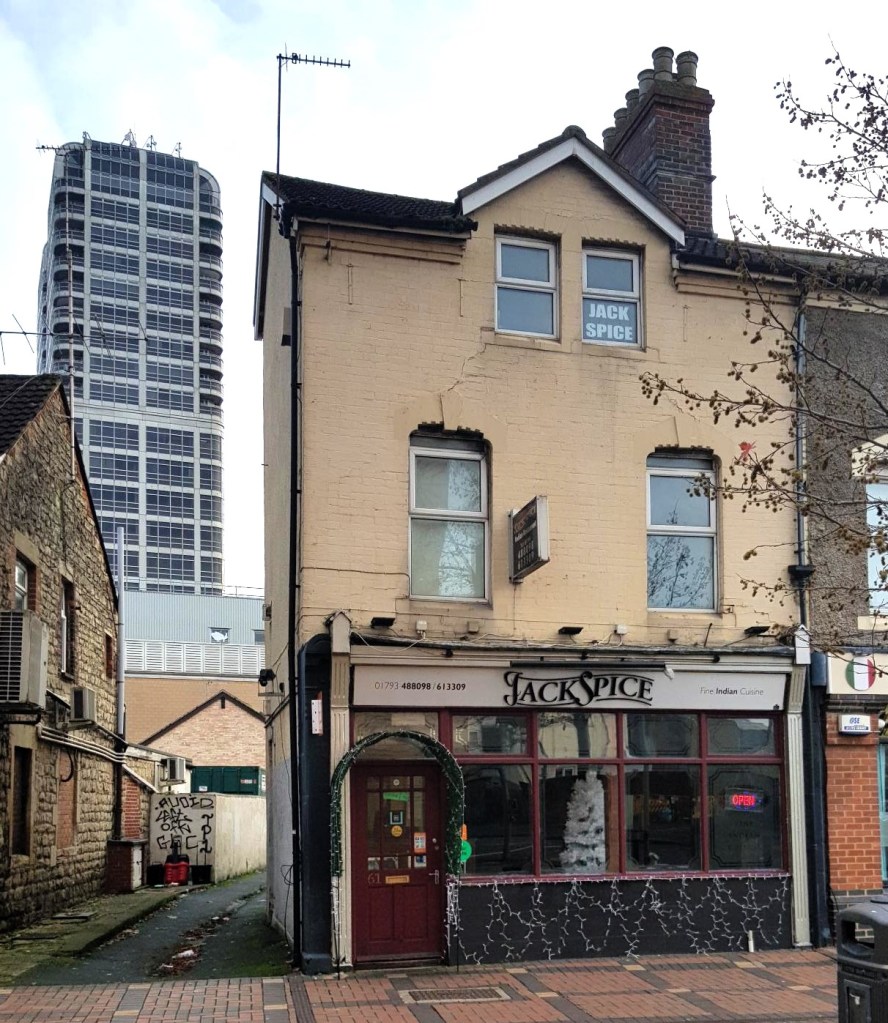
and now

No 61 Fleet Street with the iconic David Murray John Tower in the background.

Backswording and the Blackford family

The re-imagined story …

Of course, you are too young to remember Blackford’s the butchers. They used to have a shop on the corner of Wood Street and Cricklade Street, but that’s long gone. I can recall going to the shop in Bridge Street with my mother, although it could be quite a scary experience as old man Blackford was a bit erratic. He’d been a famous backsword player in his day and they said he’d been seriously injured several times during his fighting career.

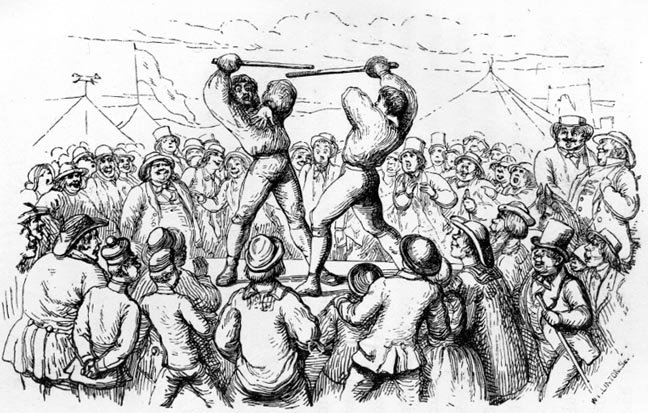
I don’t suppose you know what backswording is either; no one plays it anymore. It was a brutal sport. Players had one arm restrained and with the other they beat their opponent about the head with a wooden stick, the aim to land a blow causing the blood to run for one inch.

There was some decent prize money to be won mind and more if you liked to gamble. Those old gamesters were made of stern stuff but they paid a high price. Joseph’s father Robert suffered from the frequent blows to his head and died from an accidental drug overdose of the laudanum he used to manage the pain.

Joseph concentrated on the butchery business, though and by the time he was raising his family backswording was a thing of the past. Joseph named one of his sons Brave – perhaps he thought he had the makings of a gamester.

Backswording – wood engraving by Richard Doyle (1824-83)

The facts …

Joseph Blackford was baptised at Christ Church, Swindon on March 24, 1830 the younger son of Robert Blackford and his wife Anne. Robert came from a long line of butchers and at the time of the 1841 census the family were living in a property on the corner of Wood Street and Cricklade Street. In 1851 Joseph was running the butcher’s shop on Bridge Street with his sister Mary. He married Mary Ann Holdway and by the time of the 1861 census they were living in the railway village at 10 High Street [later named Emlyn Square] with their two children William and Mary Ann. A third child, Elizabeth, was born in 1864. Mary Ann died in August 1865 and was buried in the churchyard at St. Mark’s.

Robert died in 1867 probably as the result of injuries sustained during his backswording career. The verdict of the coroner’s court was that he had “died from taking an overdose of laudanum, whilst labouring under a fit of temporary insanity.”

On February 27, 1867 Joseph married Rosanna [Rosina] Woolls, a widow who describes herself as a butcher. The couple set up home in Purton where they raised their family.

Joseph died in September 1906 aged 76 and was buried in plot D1447 with his son Harry Bath Blackford who had died just weeks before him. Rosina died in 1923 and their daughter Alda Priscilla Bamford died in 1932 joining her parents and brother Harry in plot D1447.

The Blackford family grave

Newspaper proprietor William Morris was particularly opposed to the sport of backswording, writing in his newspaper The Swindon Advertiser:-

And I recollect that this was particularly the case at the New Swindon sports. The left arm and side and thigh of one of the players was so cut and bruised that it had the appearance of raw meat, and although the man himself kept on, and always came up to time, the spectators became so alarmed at his terrible condition and lacerated appearance that some attempt was made to get him to leave the stage and insisted that a medical man should be requested to attend him …

Shrivenham was one of the places noted for its backsword players, and I have been told that on one occasion a player in that village continued to play after one of his eyes had been cut out and lay on his cheek, and slices of flesh had been cut off his arms. Of course, such a one would receive much encouragement from the spectators as being a “good plucky fellow,” and the flow of pence into his basket at the close of each bout would be most liberal…

The Popular Amusements of our Grandfathers -The Swindon Advertiser, Saturday December 6, 1884.

Bessie Symons Sparkes and the restored headstone

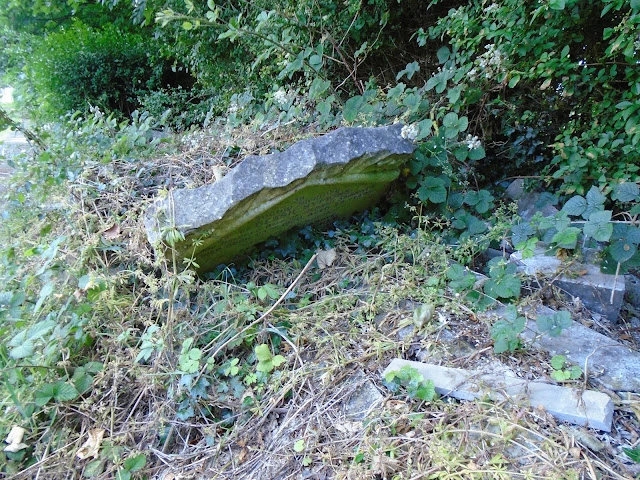
After more than fifteen years of research at the cemetery, I had never before seen this headstone, dumped in one of the cemetery’s peripheral verges.

In Loving Memory of Bessie Symons the beloved wife of Albert Sparkes died April 23rd 1920 aged 53 years. The rest of the inscription is difficult to read. The headstone was not far from its original site on plot E8516, removed for who knows what reason.

The Sparkes family were well known Swindon butchers at the turn of the 20th century. Frederick Sparkes had a shop at 47 Regent Street while his cousin Albert’s shop was at 60 Fleet Street.

The census returns reveal a large household living over the Fleet Street shop in 1911. Albert and Bessie with their three daughters – Gladys Delia Alberta 19, a student teacher, Elsie Muriel Bessie 17, still at school part time while working as a book keeper for her father’s business and nine year old Dorothy Irene Audrey, still at school.

George Howard, a butcher’s apprentice, Ernest Salter, an assistant in the shop and May Beard, butcher’s book keeper, all lodged with the family along with Winifred Hunt, a domestic servant. The property  comprised nine rooms, not including the scullery, warehouse, shop and office, so quite a squeeze to accommodate eight adults and a child.

According to the headstone and burial registers Bessie died at her home at 15 Okus Road, Swindon on April 23, 1920 aged 53 and was buried four days later on April 27. However, confusingly the entry in England & Wales, National Probate Calendar (Index of Will and Administrations) 1858-1995 states that she died on 19 May 1919 and that administration was awarded to ‘Albert Sparkes butcher’ on 30 December 1926 when her effects were valued at £45 2s 6d.

Bessie was buried in plot E8516 with her husband Albert who died in 1937 and their daughter Gladys Delia Alberta who died in 1970. Is it possible the headstone was never replaced on the grave after the burial of Gladys?

And then I came across the Sparkes family tree published on the Ancestry website by philipacore and some fab photos.

Bessie and Audrey Sparkes
Gladys Delia Alberta Sparkes
Elsie Muriel Bessie Sparkes

The Radnor Street Cemetery volunteers have rescued Bessie’s headstone and it now sits on her grave.